
In marketing there´s a kind of goal, any brand developer or marketer – at least inwardly and in secret – hopes to achieve: Making their product or brand synonymous for a whole class or products or services. Just as Xerox did in the US, where “I just xerox this …” has become synonymous for making a copy, “can you hand me a Kleenex” is widely used for paper tissues. Even when I do a search in YouTube, I “google” it. There is indeed one product in the world of sailing and boating that has achieved this status. It´s the good old Windex.
As I have just bought mine for the Omega 42, I was literally thinking about exactly just that: Why has this little thing become so popular and so mighty powerful so that it became a synonym? And more important: Why did this product manage to conquer the whole market for these things, because this is at least my impression: Is there a competing product anyway? So, arriving back home, I did a little research, and it turned out that the pointy Windex-arrow is not only absolutely appropriate for a Swedish icon like my Omega 42, but it´s backstory is a gripping as so many others about people having an ingenious idea.
How does a Windex work?

Let´s start with the obvious: As a sailor, you absolutely need to know where the wind is blowing from. In particular, the apparent wind, which is a a resulting vector of the true wind-direction and its more or less diverted resulting wind direction that comes from your moving boat. Unless your yacht is tied to the pier or at anchor, the Windex will always show the apparent wind. Which is what you want, because you need exactly this information to apply the fine trimming to your sails.

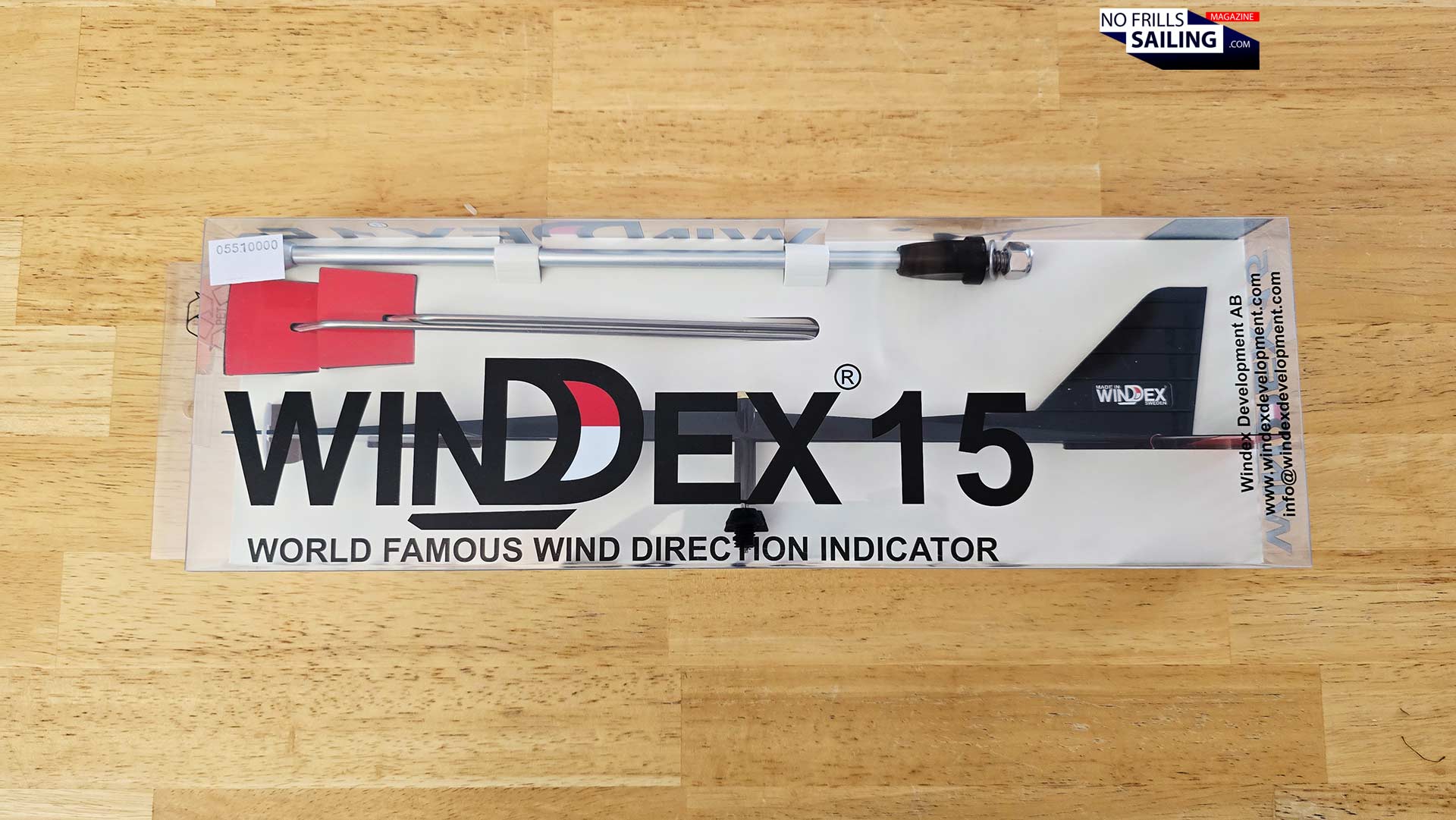
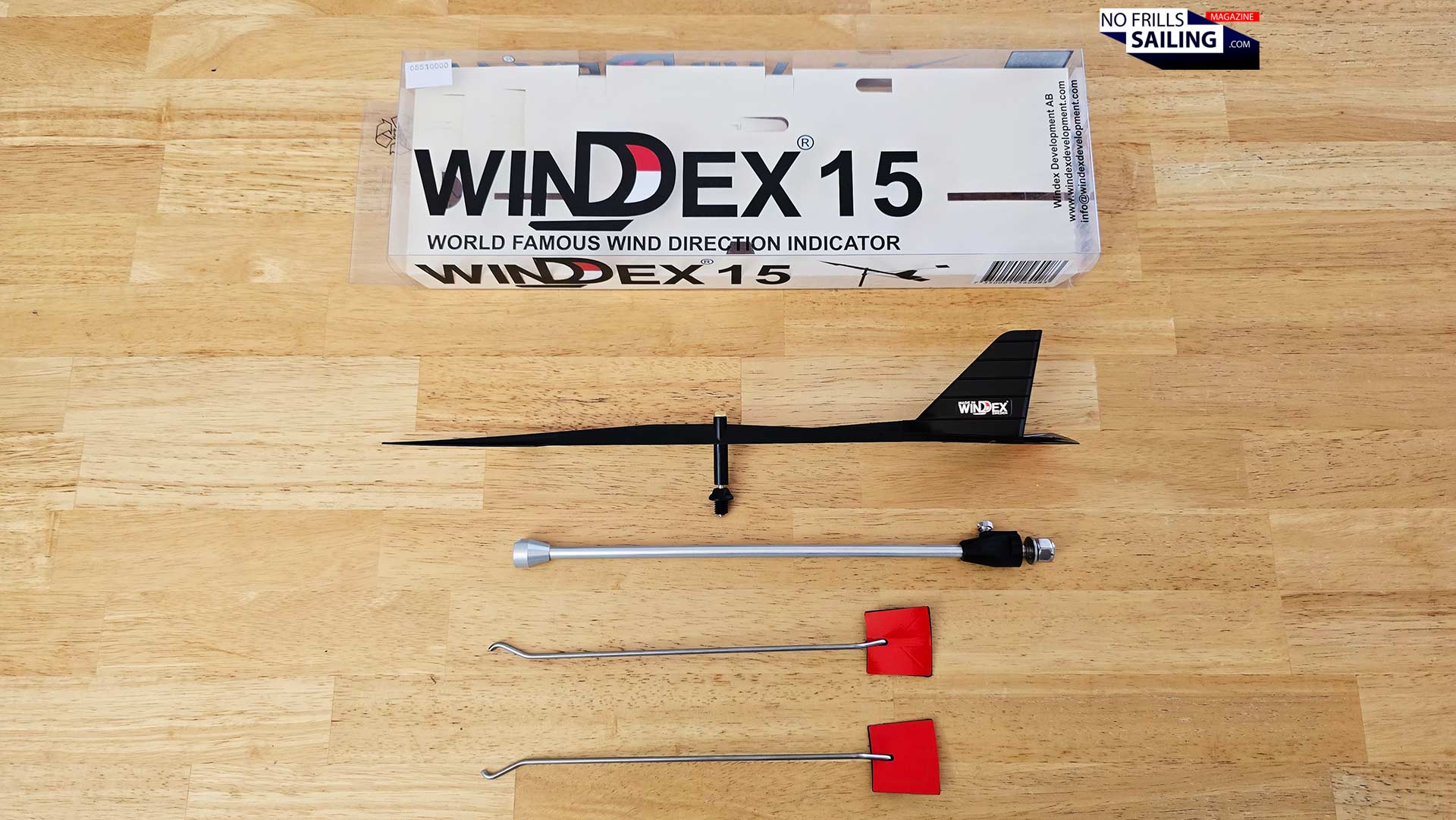
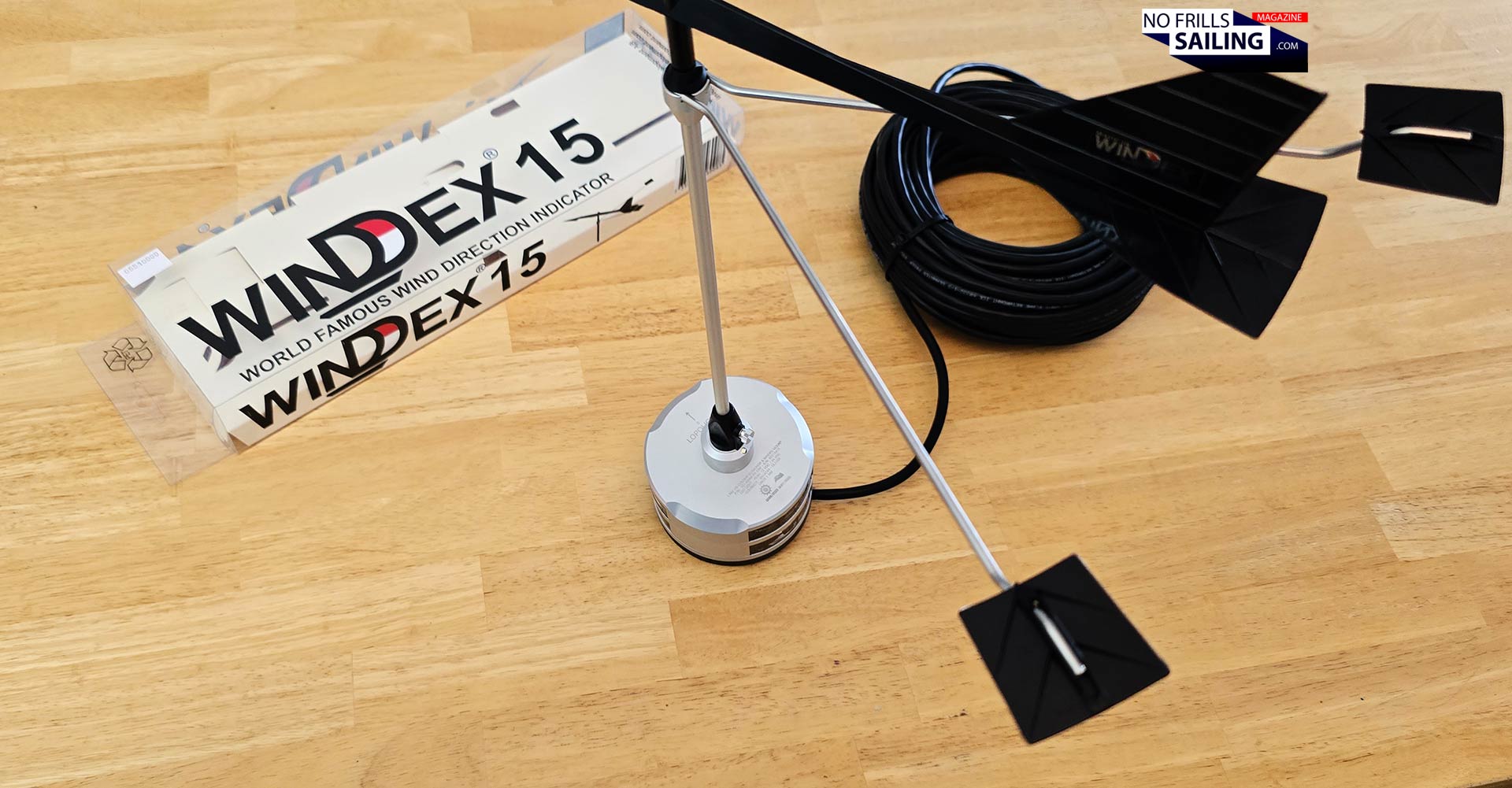
The Windex is indeed a very simple construction, but as often, the devil lies in the details. Unboxing the Windex 15, the whole product consists of only four parts: The arrow, which has a pointy spearhead and an airplane-like tail, two “tackings tabs” – later more on these and the mount. Simple, right? So what´s all the fuzz about then? Well, as it turns out, it took quite some brain power to come up with a design that would be both durable and precise, which was up to this point not achieved.
For centuries I shall say sailors attached little yarns or ribbon strips (preferably in red) to their shrouds. Those would flow with the wind, like the tell-tales on your sails, to make visible the apparent wind direction. The problem with these yarns, often made of wool or other light-weight materials: They would wear off quite fast, ripped apart by stronger wind speeds and get coiled up around the shrouds. I even know skippers who utilized magnetic tape from the old cassettes. Well, that´s not the solution.
So, as three Swedish guys around Sven-Olof Ridder started to think about wind direction visualization for sailboats, they quickly came up with what later would be the Windex: Just as people had done for centuries (think of the good old weather-cock on old buildings), it needed an arrow that would align itself with the wind. In order to stabilize this arrow in the wind, it needed “steering” wing flaps, like ailerons on a plane. Now that´s the basics – just an arrow that is constantly aligning itself with the wind direction. But here the trouble started …
Balance, lightweight and durability: The Gordian knot
So here´s the problem: In order to show wind speeds starting at very low grades, like “a whiff from cigarette smoke”, as one of the inventers used to put it, it needed to be very, very nimble and lightweight. Plastic is a perfect material, which became abundantly available back when the Windex was invented. After all, it was the year 1964 and composites still was in it´s infancy. Yet, at the same time, the Windex needed to withstand the challenges of weather at sea.
We are talking storm-force winds here! The three friends needed to find a combination of products and materials that could withstand the highest windspeeds: Today, a Windex is rated for TWS of up to 80 knots! I mean, I have sailed in winds exceeding 40 knots, but never 50 – I guess you have other problems than defining the exact wind direction in +50 knots. Nevertheless, you just want your equipment storm proof, much more if it is mounted literally on the highest spot of your yacht, which is the mast top. So, after years of trying out, building prototypes and selling first versions, in 1972 the company invested in state-of-the-art production facilities dealing with plastic-compounds, which marked the breakthrough for the Windex.
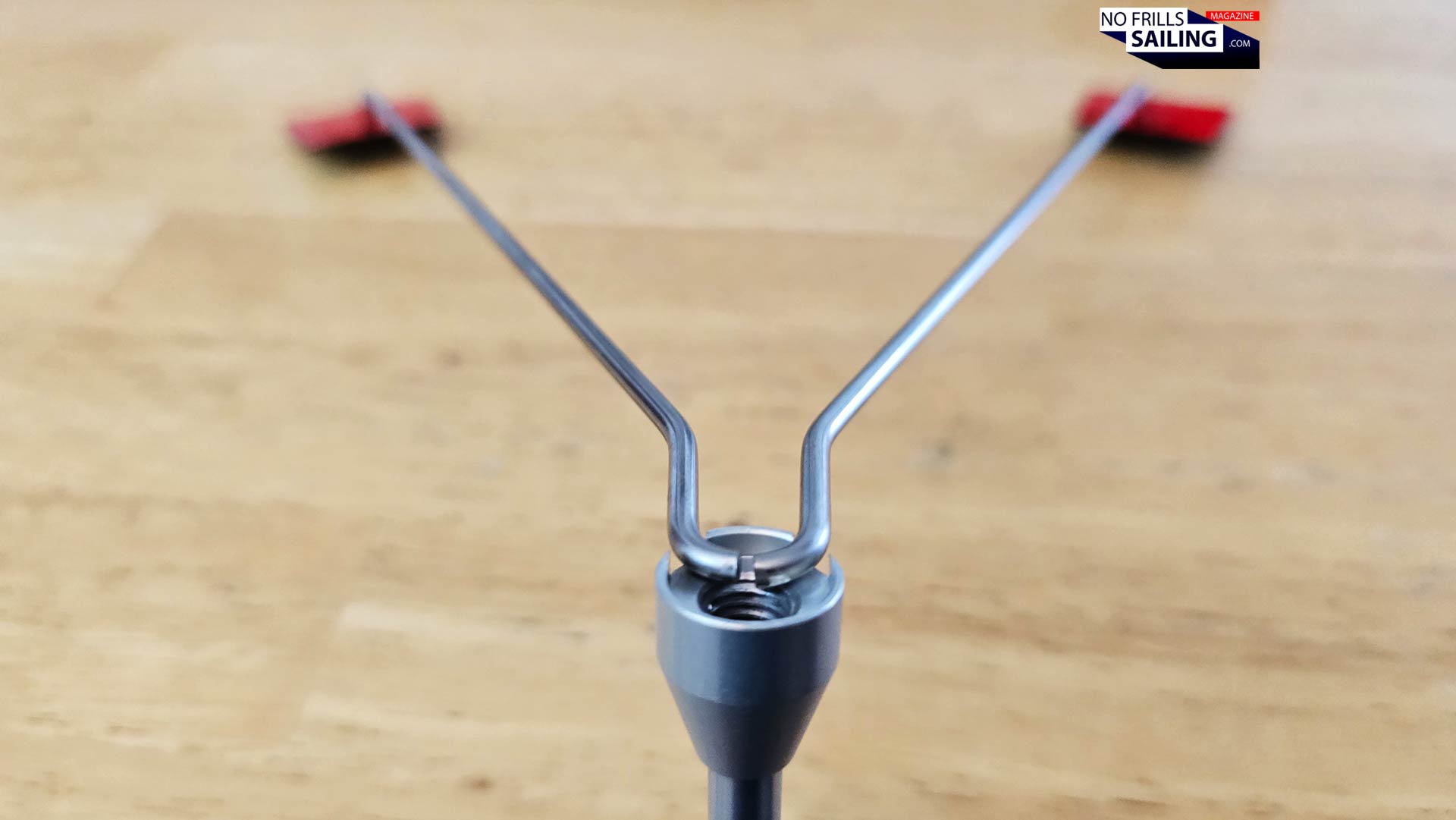
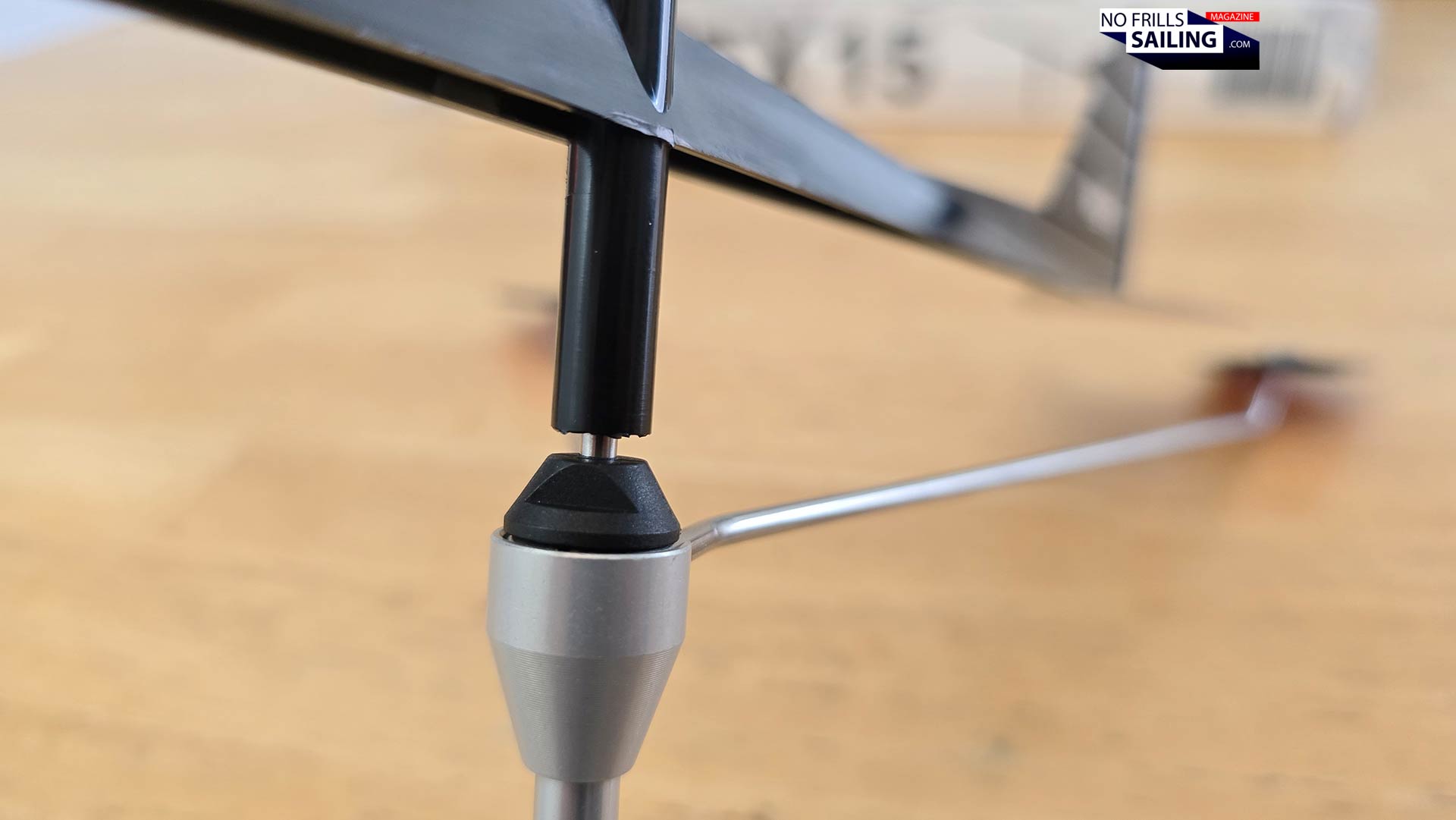
The one tiny, but all-so deciding detail which made it really work though is hidden within the pivot of the Windex: Just as John Harrison did with his first ever real ship´s chronometers, a little sapphire makes up the bearing of the Windex´s arrow. It is almost frictionless and therefore makes it so incredibly responsive due to its balance and very low inertia. It´s this idea that defines the advantage for Windex and quickly makes it appreciated by sailors. This sapphire jewel suspension is the “magic trick” of the Windex which makes it work in extremely light puffs as well as in stormy gusts. The plastic and aluminum-parts are both durable and lightweight, making this instrument work in high UV-radiation as well as in areas with constantly high wind pressure.
Incorporating smart details
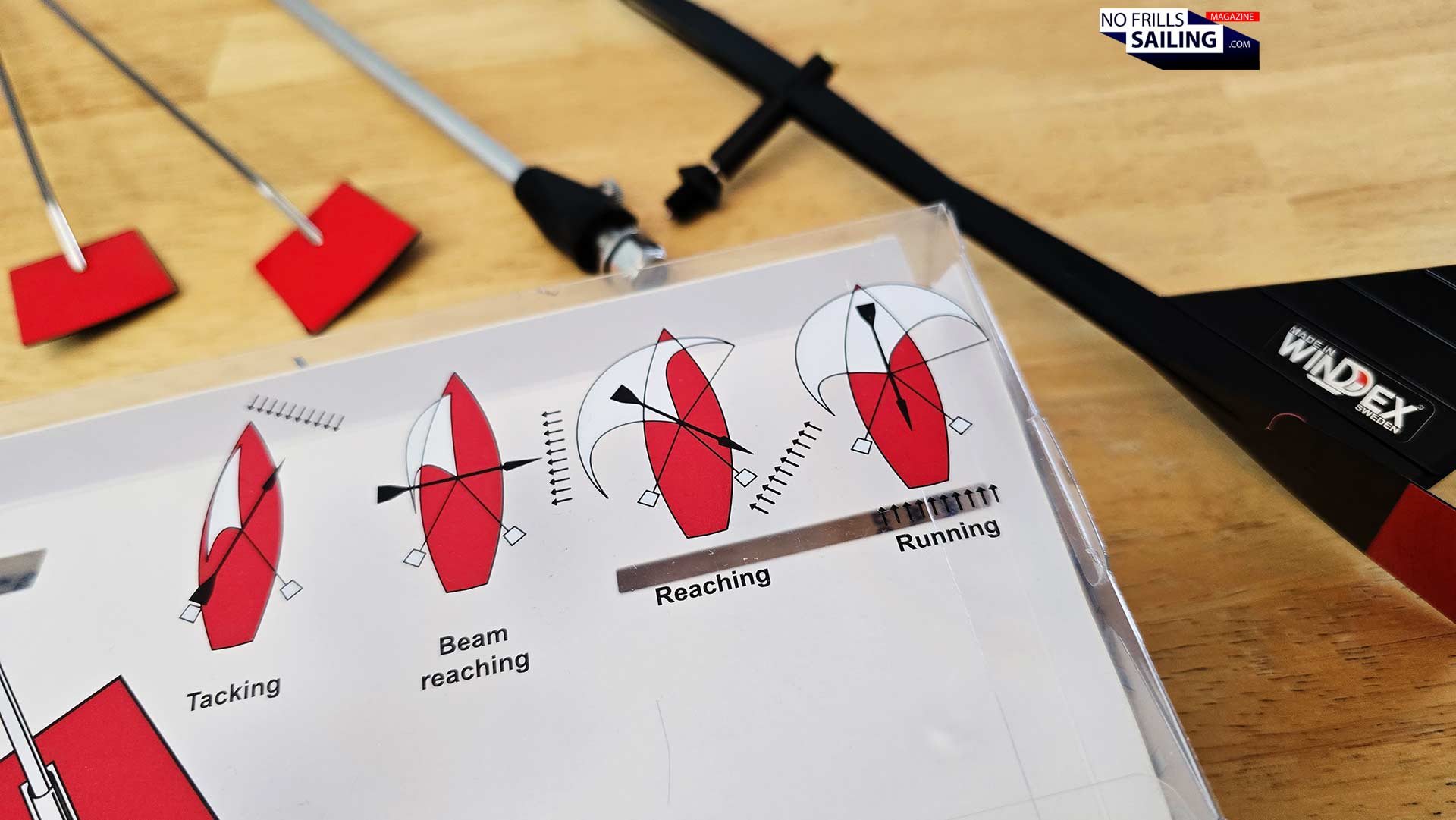
But there´s even more. At first, the two “fins” mounted slightly underneath the arrow, are “tacking taps”. Now what are these? Well, the V-shape indicated the “dead sector” in which the boat is head-on to the wind direction – and therefore will not sail. When I explain points of sails to newcomers aboard and how a Windex works, I always tell them to make sure that the tail of the arrow is not inside the “V” between the taps. It´s simply the dead zone. Whilst tacking you want to make sure that the arrow spins through this area very fast.
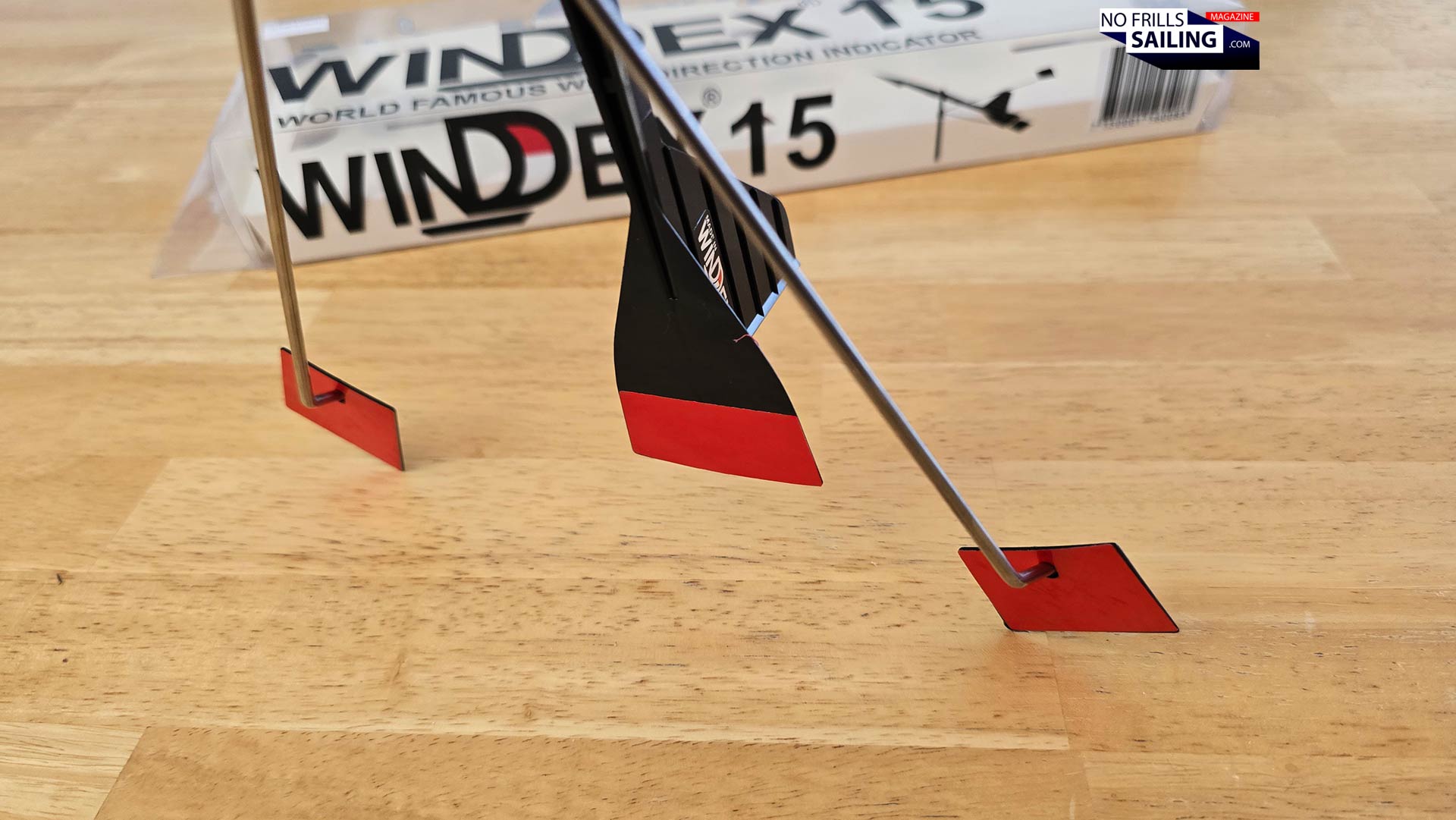
The nice thing about the Windex is, that likewise steering in such a way that the arrow is in line with one tap means that you´d be keeping your boat right on the edge of the sailable upwind angle. This in turn means that you should adjust the angle of the taps – meaning the wideness of the “V”- to the actual tack angle of your very boat. The packaging of the Windex has nice 1:1 scale graphics with 65, 60 and 55 degrees tack angles for different types of boats, but you can fine-trim the Windex according to the individual upwind-angle of your yacht. Nice!
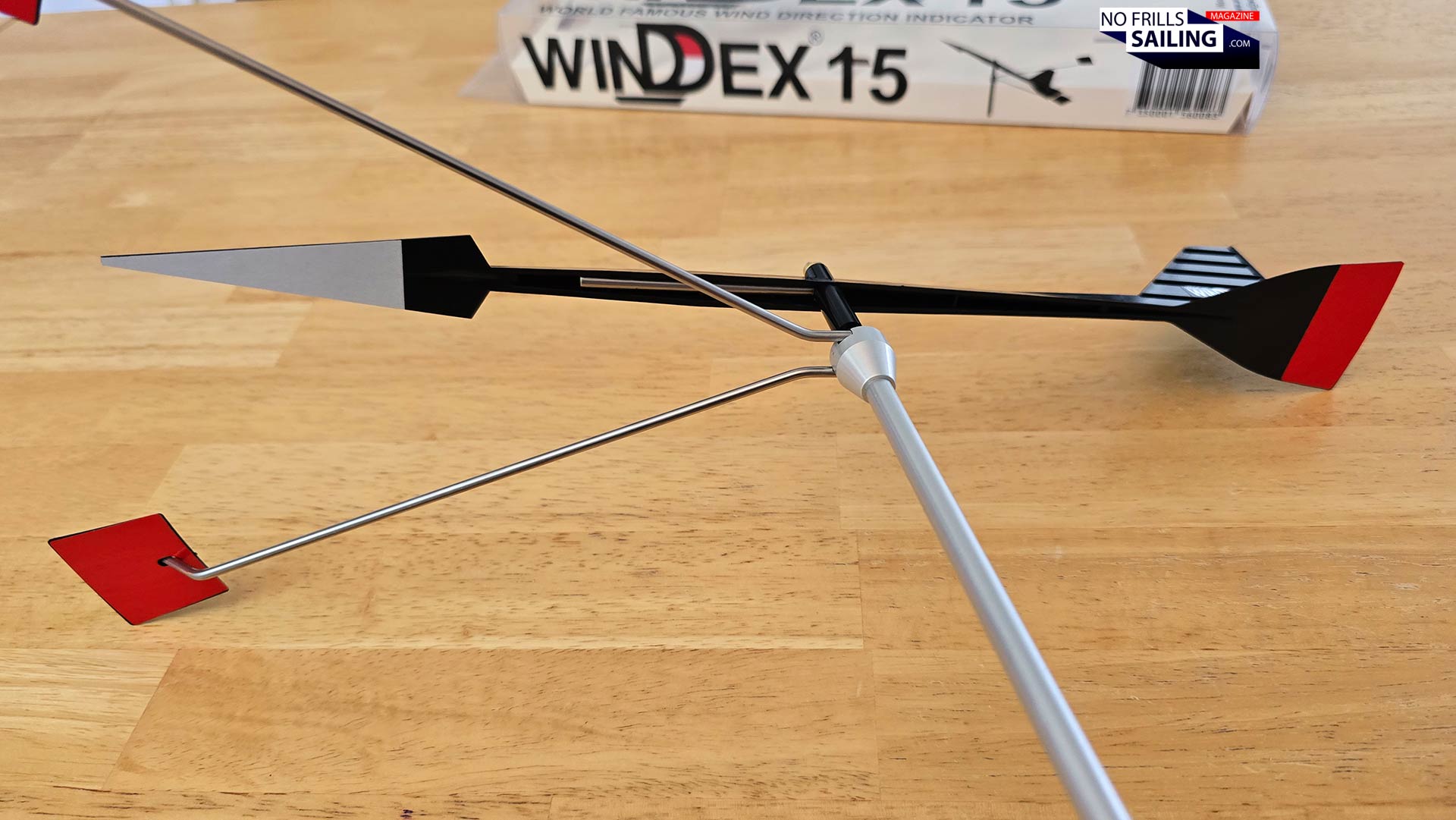
Another nice detail is the reflective tape on the undersides of both the arrow and the tacking-taps. There are red tapes for the “rear” ends, the taps and the arrow´s tail, and a clear white reflective sticker for the arrowhead. This way, you just take out your flashlight at night and quickly determine the correct apparent wind angle. What I love so much about it: It´s purely mechanical, no electricity needed and – best of all! – I don´t have to download another freaking app!
The “gold standard” of wind direction indicators
Windexes been have been sold more than 1.5 million times so far. Can you imagine? This is huge. It is used by dinghy skippers, all-out racers and cruising-sailors alike. The products can be found on the smallest boats as well as on luxurious superyachts. It´s a product made for and used by literally everyone! Many of these last well over 20 years (with zero maintenance needed), which speaks for the product´s quality. Its early inception into the market more than 60 years ago, the ingenuity of the construction paired with the maximum of simplicity makes it a prone to become market leader. Which Windex indeed is to this day. Is it alone though on the market?
No, it´s not. First there are electronic ways of measuring the apparent wind speed. We all know it. Most modern displays show the AWD-arrow along with the TWD-arrow. But I feel these are too slow and reacting even slower to course changes. Often it is much, much quicker to just look up and see what´s going on. Secondly, there are indeed some competitors. Schaefer Marine makes the “Hawk” wind indicator, “Blacksmith” carbon fiber vanes from Davis Marine are available as well. Their market share is much smaller, Windex still is the ultimate wind indicator for sailboats on the market.
Getting a Windex that suits your boat
There is not the one Windex, albeit most skippers go for the Windex 15, which I have too. The company offers four sizes for little jollyboats and dinghies, the Windex 10 C is for sailboats between three and six meters, the Windex 15 for yachts and a Windex XL for boats bigger 40 feet or 13 meters. There is a version with a bird-spike that is meant to repel birds from damaging your Windex and also one version that can be mounted on top of a VHF-antenna. As for my Omega 42, I went for the classic Windex 15.
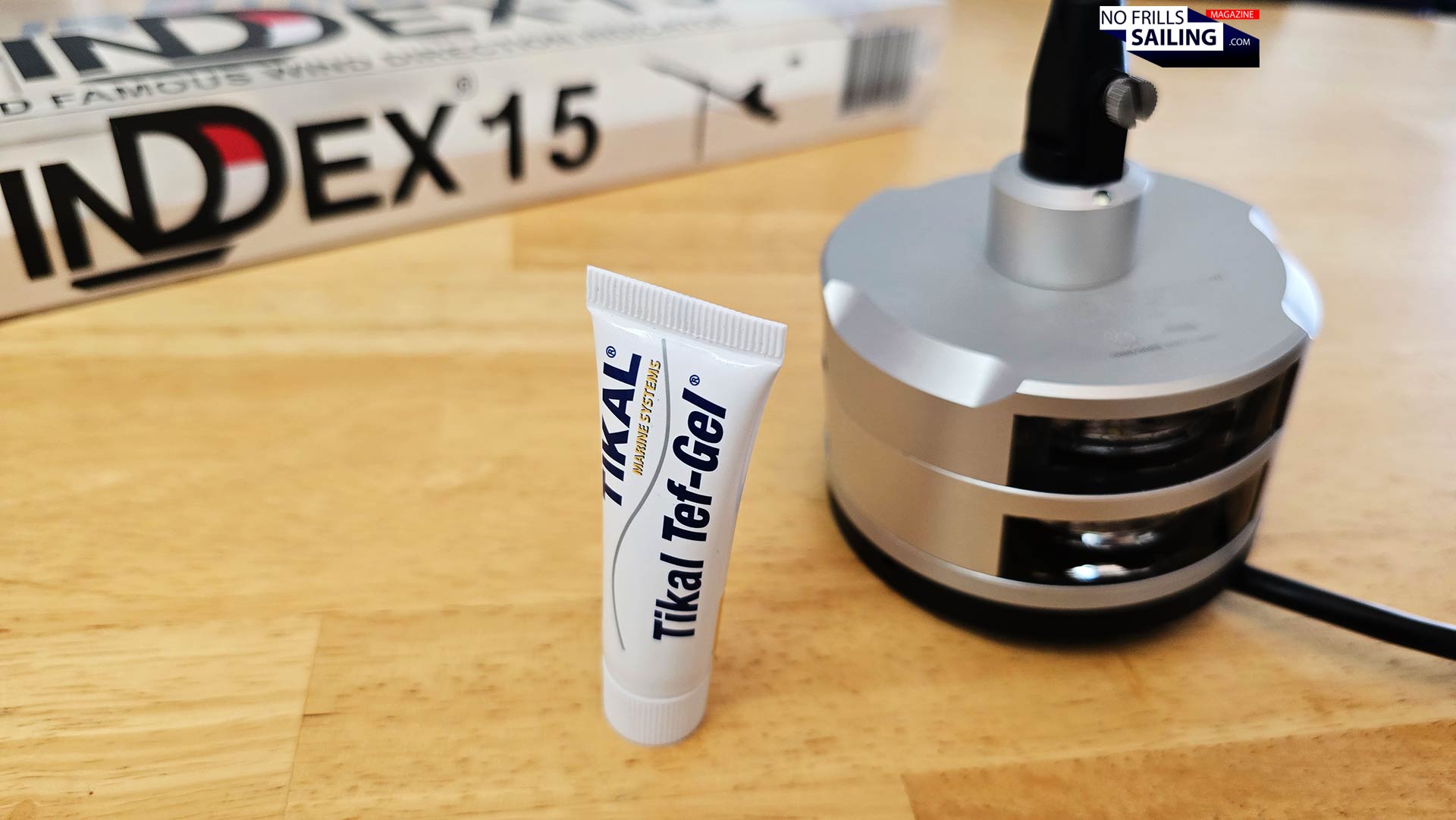
As the mast top of my boat´s mast is crowned by the Lopolight navigation top-light, I am thankful for my dealer that he emphasized to put Tikal´s Tef-Gel into the thread. The Lopolight´s massive casing is made from aluminum, the screw of the Windex-mount is steel. We don´t want to have contact corrosion between these two very different metals, right? So, for now I am happy that another little part for the equipment has arrived. But it´s always amazing which stories are there behind such seemingly “simple” products like a Windex – best choice for sailors since decades.
Other articles, interesting as well:
From a chicken-house to superyachts: The best cleat of the world
Re-inventing Teak – the story of Tesumo
What´s inside an EPIRB?