
Things started to pace up a bit in the shipyard. The clock is ticking: I´d love to be sailing with my brand new Omega 42 end of June, start of July this year. As you may have seen in the last building progress article, the works on the basic interior and boat´s joinery are nearly finished. It´s merely details which are now open to being build. One of which is a very deciding one. And as we all know, often, most of the efforts are needed to make the small details work.
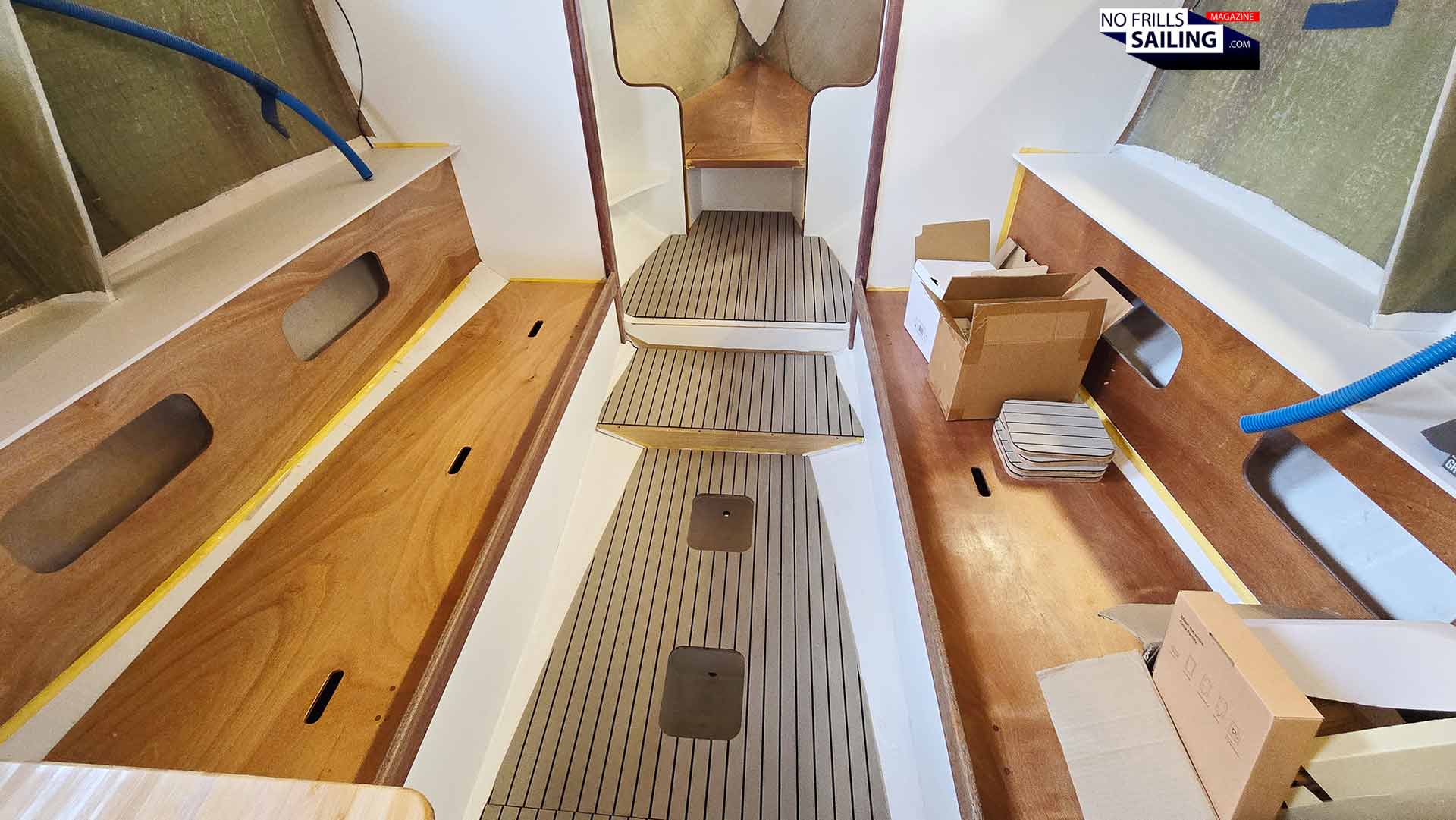
As for the salon of the yacht, it´s still two things which need a lot of attention: That´s the entryway-ladder leading down from the cockpit for once, and the salon table. The entryway is in the works and that will be one of the next in-depth articles, for today, I´d like to focus on the salon table. “Why is that?”, you may ask: “It´s a simple thing, just a table …” Well, no, not quite. So let´s delve right into it.
Decisions between classic design, usability and budgetary restraints
Looking at the old brochures of the Omega 42 build back in the Eighties, there´s a nice picture showing the boat´s salon. You can see that there´s a salon table already. A classic, bit bulky, not very gracious but decently sized table with two tabletops that can fold up. Two triangles underneath hold up and stabilize the worktops.
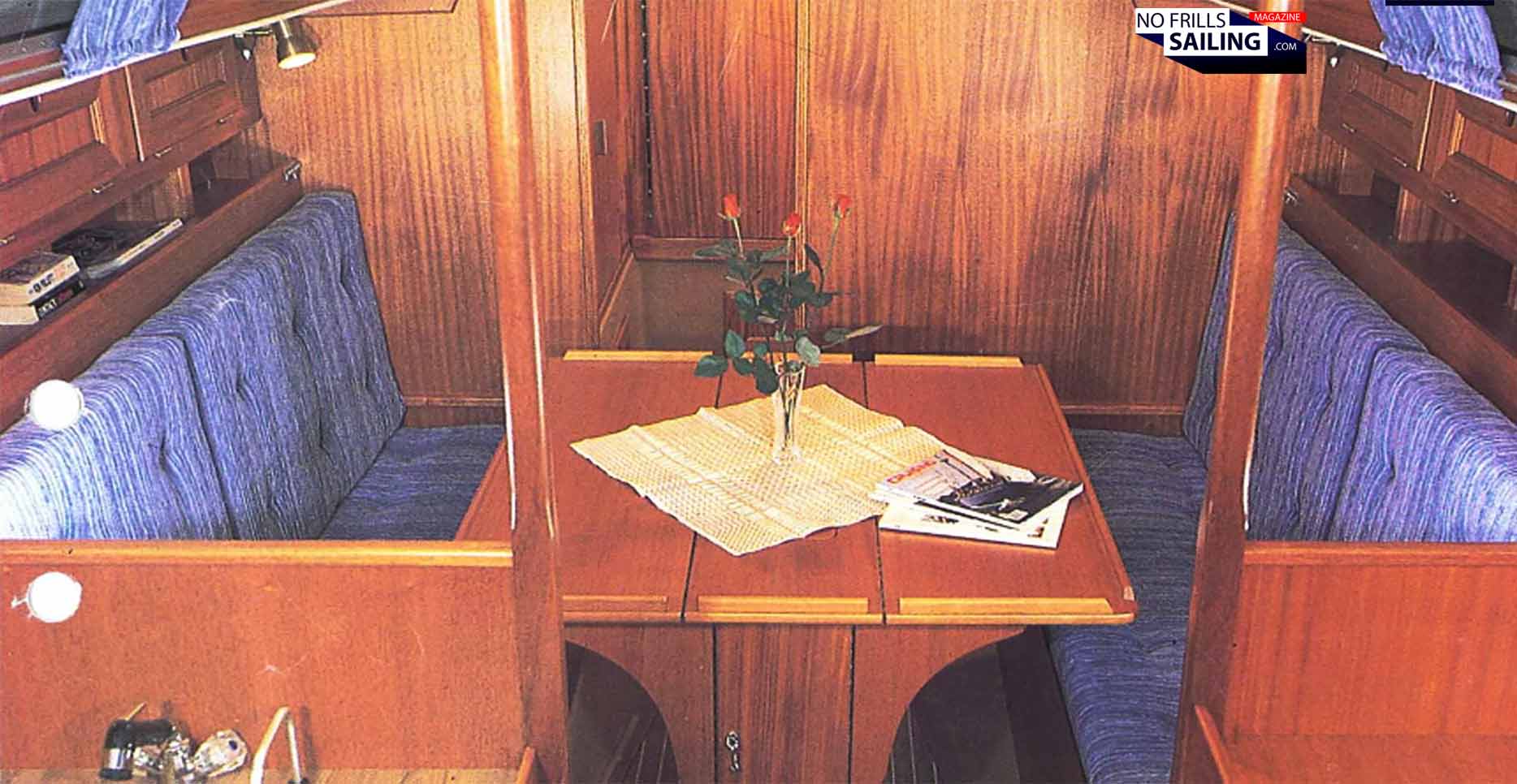
The table is positioned in the longitudinal centerline of the yacht with two equally sized tops. The original Omega 42 salon table is made of massive wood, as you can clearly see. Altogether, the interior back then was quite dark and sported much more stowage than my yacht will have. I simple want to keep the boat as clean an neat as it can be: If there´s stowage, it will surely be used and filled up. Often with unnecessary stuff. I don´t want that.

Looking at the finished interior of hull #001 of the new Omega 42 project, Stefan´s WINDFAENGER, it becomes quite clear that the boat has become much, much lighter and brighter in terms of colors but also in terms of narrowness. Stefan´s table still comes in a very classy design language and keeps the same style. Yet, it´s a bit less “bulky” or “heavy” in its appearance. I really like this!
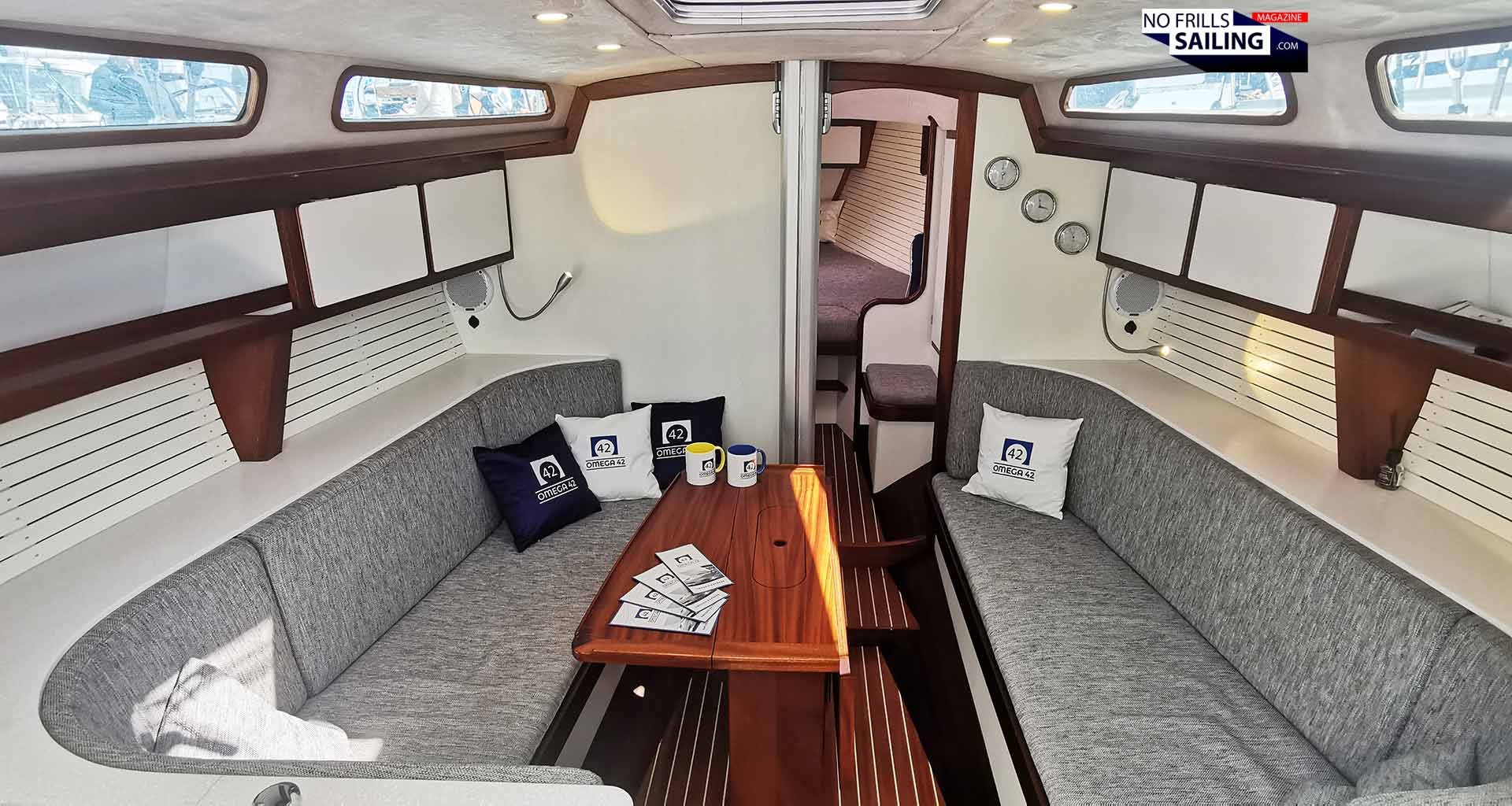
For my boat, hull #002, I wanted to be much more “aggressive” in terms of modernity and also in terms of weight. My aim is to have the lightest interior fitting of all Omega 42 yachts ever made. Also, because of my limited budgetary margin, we also came up with a concept of reducing the use of expensive massive wooden parts and introducing more modern materials and clever ideas. Also, lastly, all of the horizontal parts of the yacht – meaning all worktops of the Omega 42 – are to be made of Bamboo.
What a salon table should do – and what not

So, for my yacht, we need a modern, lightweight and priceworthy solution for the salon table. “Modern” in terms of its style, perfectly mirroring the reduced design of the entryway-ladder (which, again, you will get to know in an upcoming article). “Lightweight” in terms of materials: Reducing the amount of heavy, massive wood, also switching from exotic precious timber like Mahogany or Teak to more simpler materials, including Bamboo for the worktops. And lastly, “priceworthy” in terms of reducing the working hours needed to make the table. That´s a must. But there´s also another thing that really grinds my gears: The stability of the salon table. In this respect, I´m a burned child.
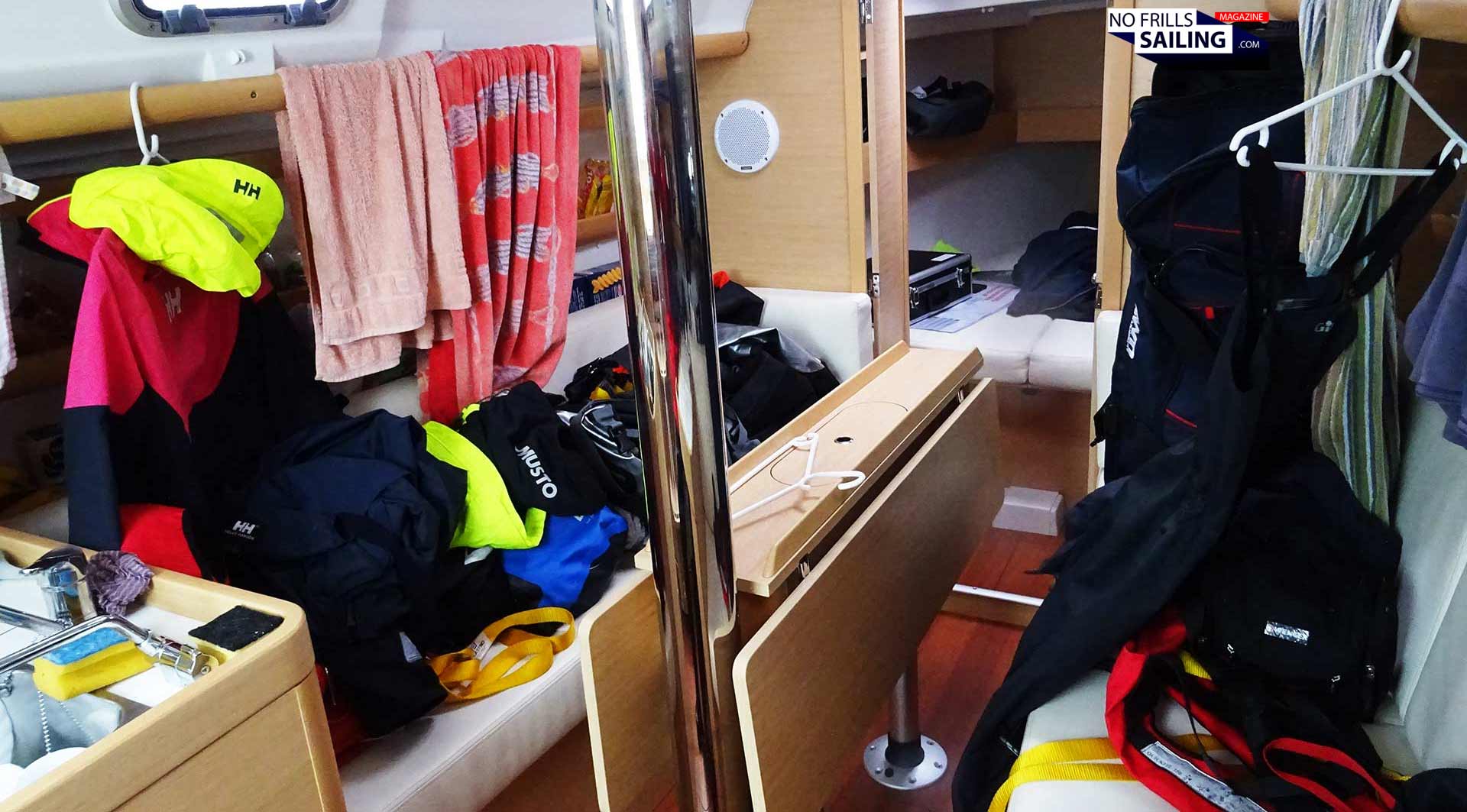
Back in 2017 (which by the way is almost 10 years ago, which is a great shock!) I was sailing with two friends on a First 30 (Juan K designed) on a nice little one week-trip through the Baltic Sea. As you can see in the picture above, there was a very simple and generic salon table installed. A two folding worktops central installed table. The tabletop was fixed in two aluminum stands which themselves were fixed by screws from the foot to the fixed floor boards of the boat. Well, and then this happened:
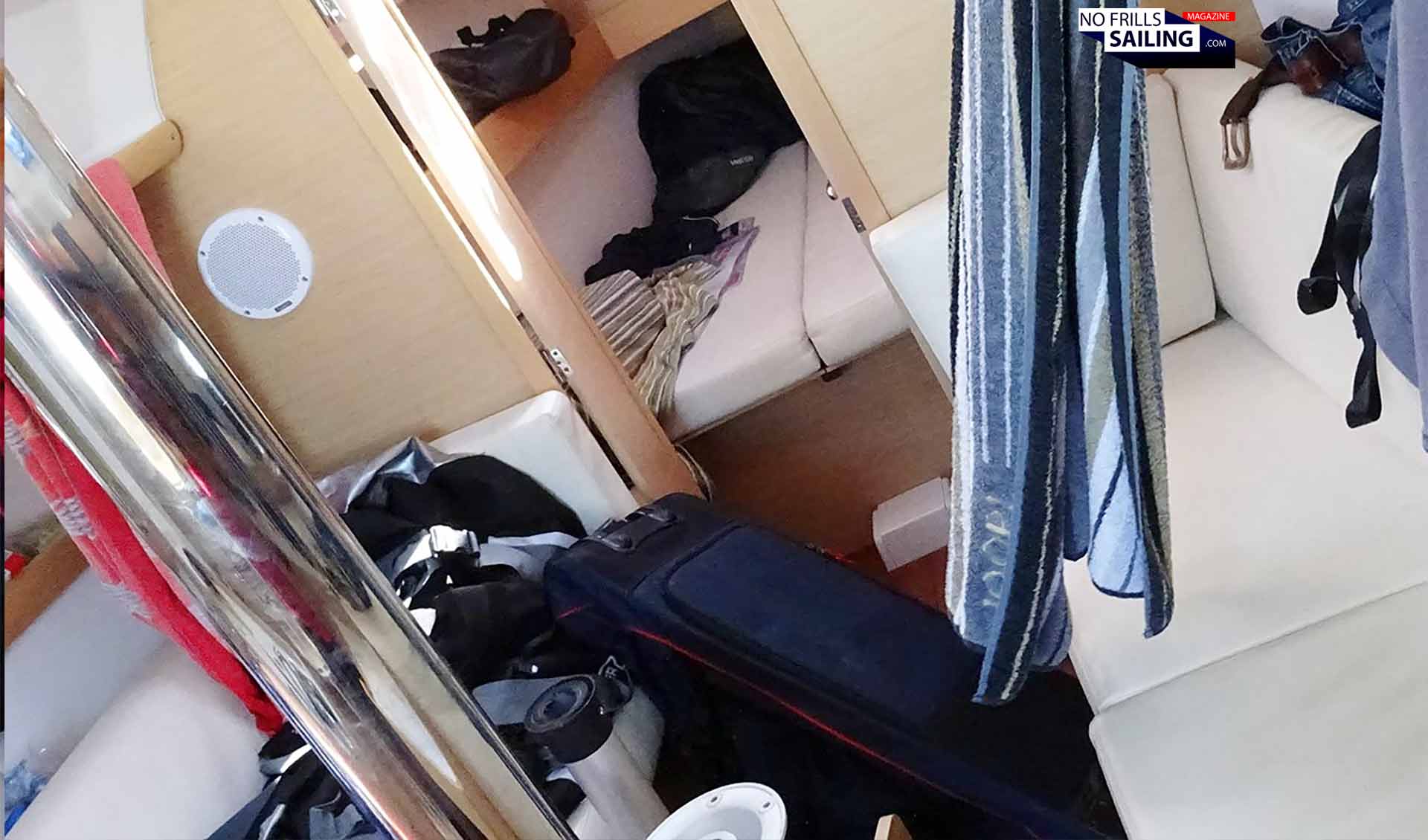
As we were sailing in quite some shitty weather, my sailing friend had to grab the table in a fierce heeling. The table just ripped off. One of the table stands was rooted out from the floorboard, even the six screws couldn´t hold up against the leveraged force of a human body leaning over it. Secondly, the whole worktop-construction was ripped off from the upper mount of the other stand. That´s just five seconds of carelessness that was costing me my charter bond. That´s definitely something I do not want to have for my new yacht. So what´s the solution of my shipyard in this respect?
The mock-up for my Omega 42 salon table
First: they don´t build the things just out of the blue. We love to work with gauges and mock-ups, with models to play with. That´s a great approach, because that way I can come over, check the size, the idea, the functionality and also the design. For my yacht, we will also have a simple system of two metal table legs. Their diameter will be sufficiently thick to make for a lightweight but stable base mount.
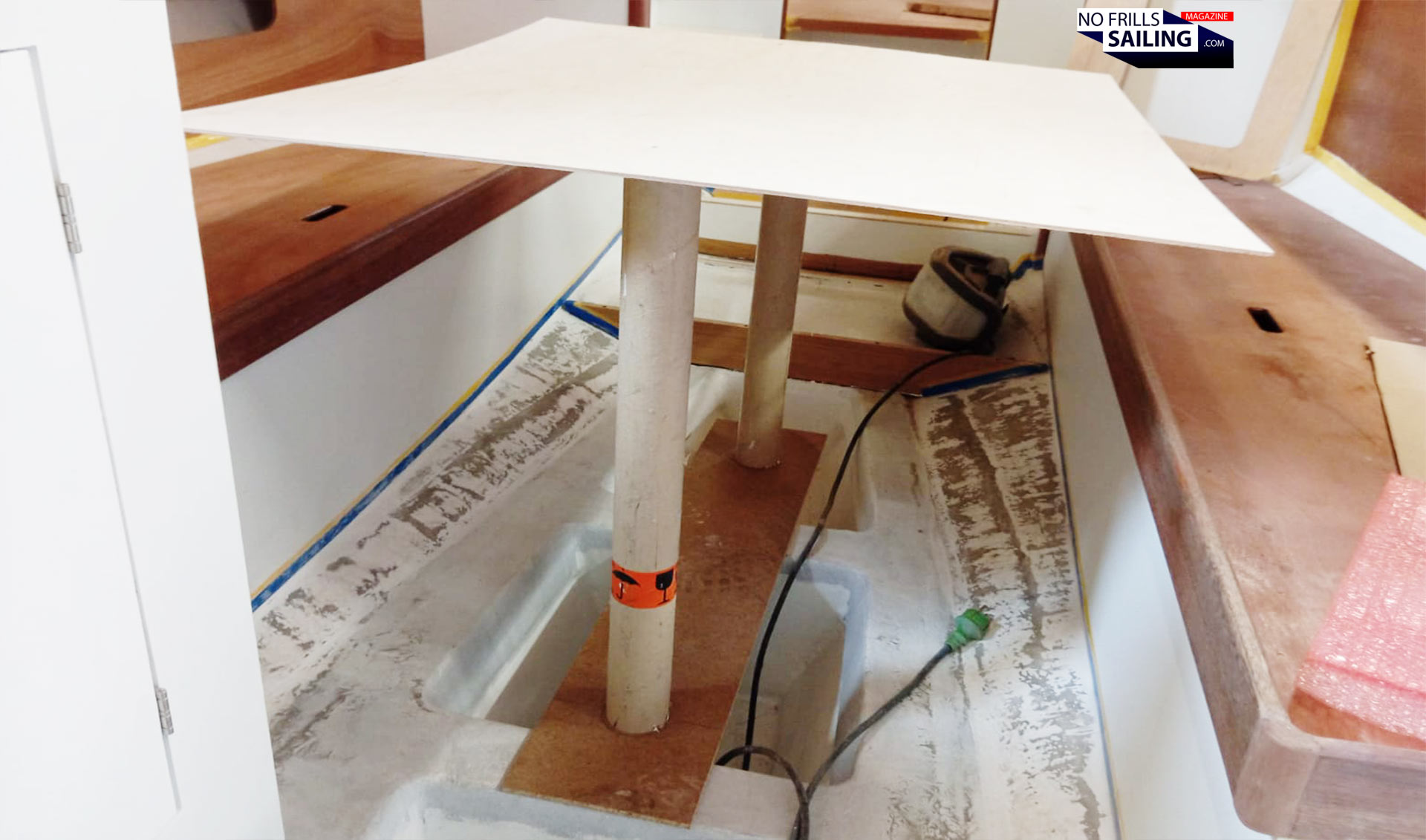
We´ve decided that any metal objects mounted below deck will be painted in a matt black color. This goes for the entryway ladder, the boat´s sinks and their taps and also for the table legs. Secondly, as you can see in the mockup picture, these legs won´t just be screwed to the floor boards, but placed onto a massive base-plate that itself is fixed to the boat´s GRP hull structure. The floorboards a few centimeters above will add surplus stability, like a secondary mounting point.
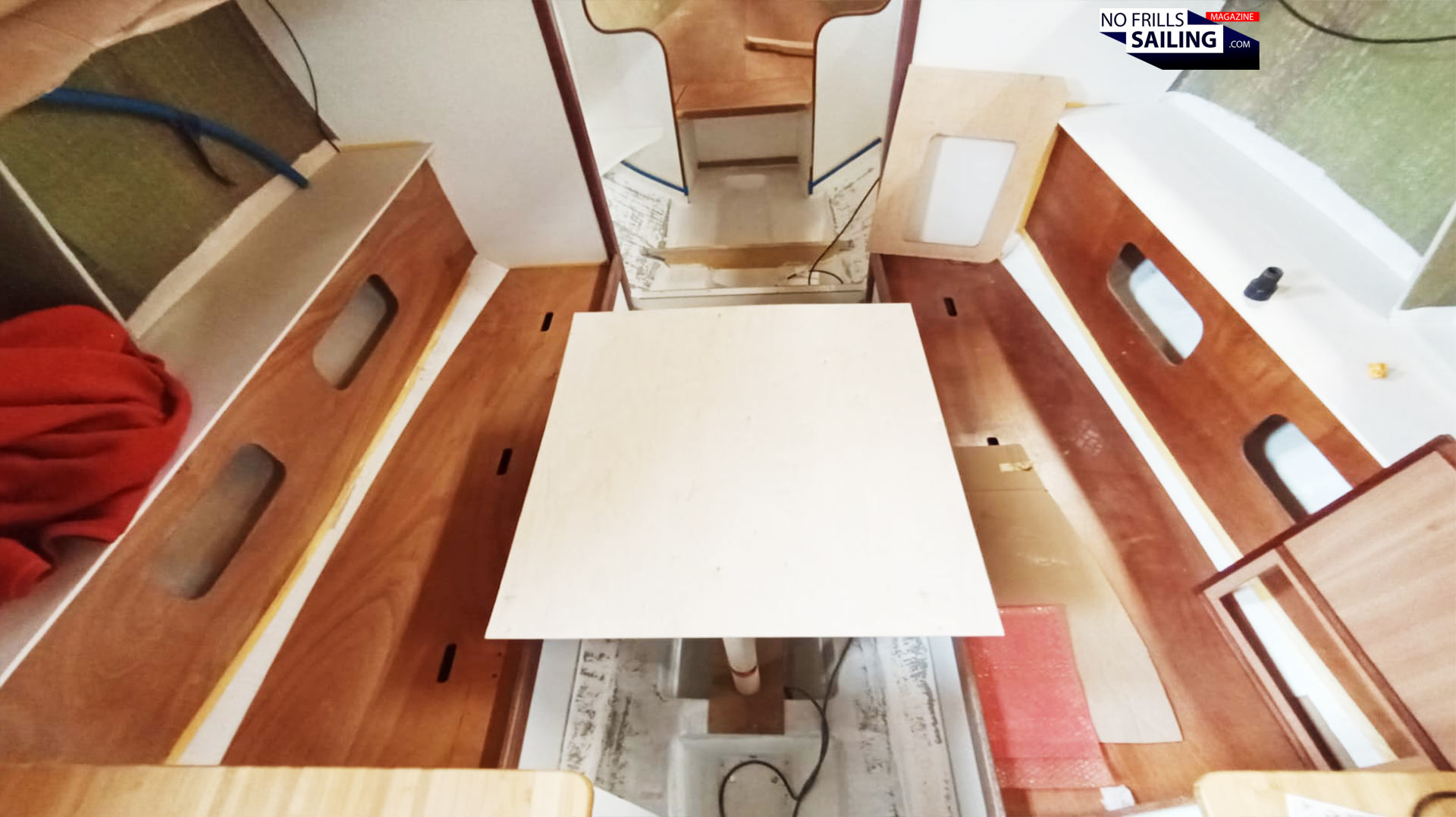
As for the size of the table, it´s pretty standard: We will be able to sit as four persons down here and enjoy a nice meal together. To save costs, I decided that only the portside part of tabletop should be lowerable. The starboard-side is fixed. That´s perfectly fine for me as most of the time I will be sailing alone. Also, I always found it a bit silly to have no table-top area available anyway, right? I am very happy with this solution and cannot wait to see it being turned into reality.

Still quite some things to do …
The table is in production now and I hope to being able to show you the final outcome very soon. You may look forward to the second detail that´s left to do down here, which is the entryway ladder, also currently in production. Other than that, the guys are going on painting the last few layers for the furniture, putting in the wires for the NMEA 2000-network and my Garmin electronics as well as finishing setting up the engine room.
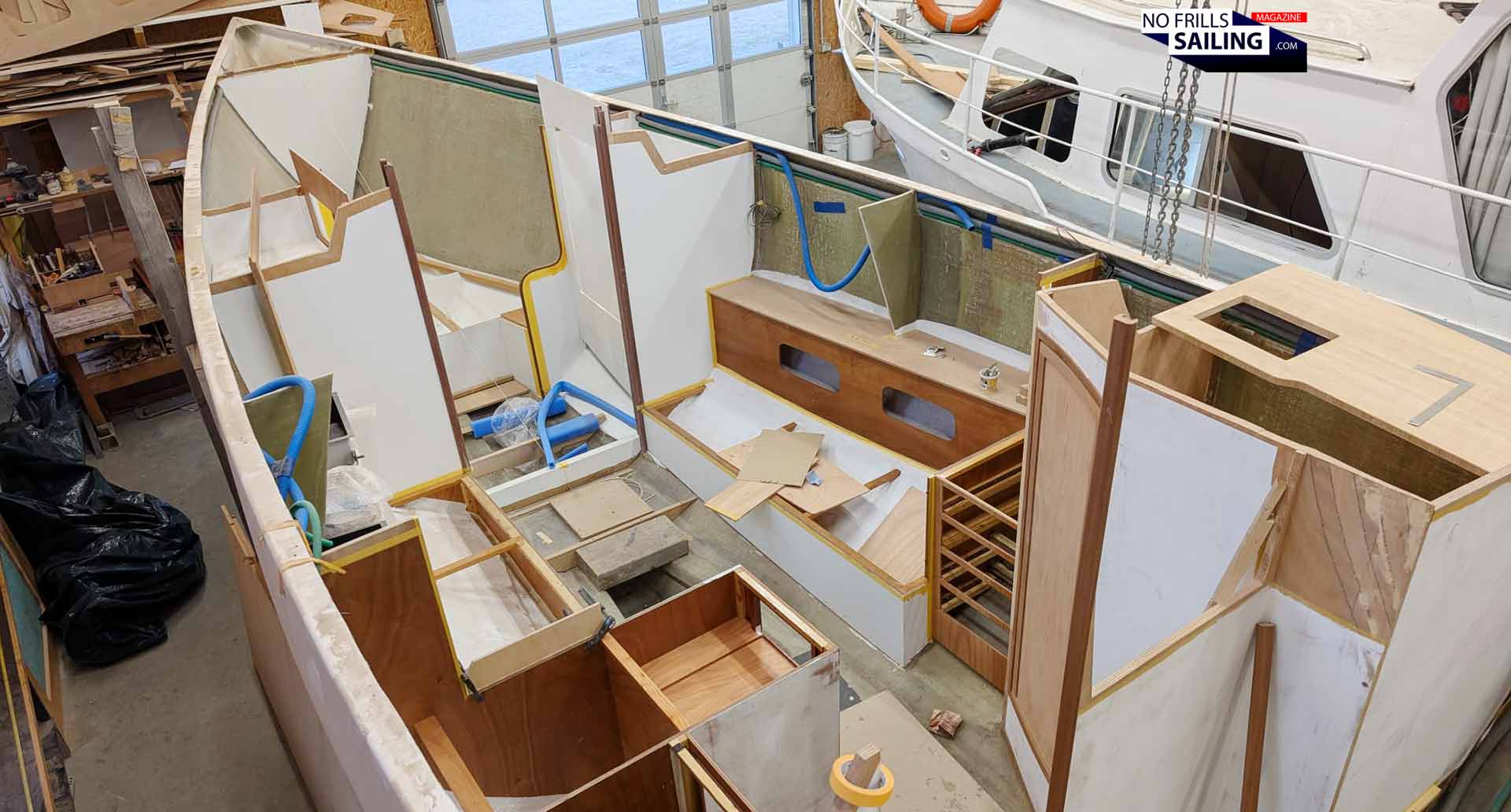
Looking at the schedule, end of this month (which is March), the mating of the deck and hull is up on the horizon: This will be the absolute first big thing after we´ve commenced the building process almost three years ago! I cannot wait to be there in person, watching how the guys put together the boat and finally form one big unit. Until then, stay tuned – I hope these insights into the making of such seemingly small details does not bore you. Which details would you like me to explain in more detail? Feel free to comment, your input is much appreciated!
You might as well be interested in these articles:
All building-progress articles of the Omega 42
What´s the fuzz about the Omega 42 all about?
She´s a great sailing yacht – even for racing! Parts 1 and 2