
Running aground does happen occasionally: There´s not a single skipper I know who at some point didn´t had to cope with that situation. Though most groundings would have been preventable, when it happened, no matter what, the question is always the same: What should a competent sailor do? This article delves deeper into dealing with that mishap and how to prevent too much damage to the boat.
Since this happened to me the second time this year (which is even more impressive realizing how seldom I´ve had the pleasure to actually be on a boat and sail!), I thought it might be interesting to talk about running aground and how to deal with this. I mean, often times this is treated like some sort of “no talk about”-topic. Does it have to do with being embarrassed? Well, I´d say as long as nobody gets hurt and everything play out relatively well, there´s no need to hush it up, right?
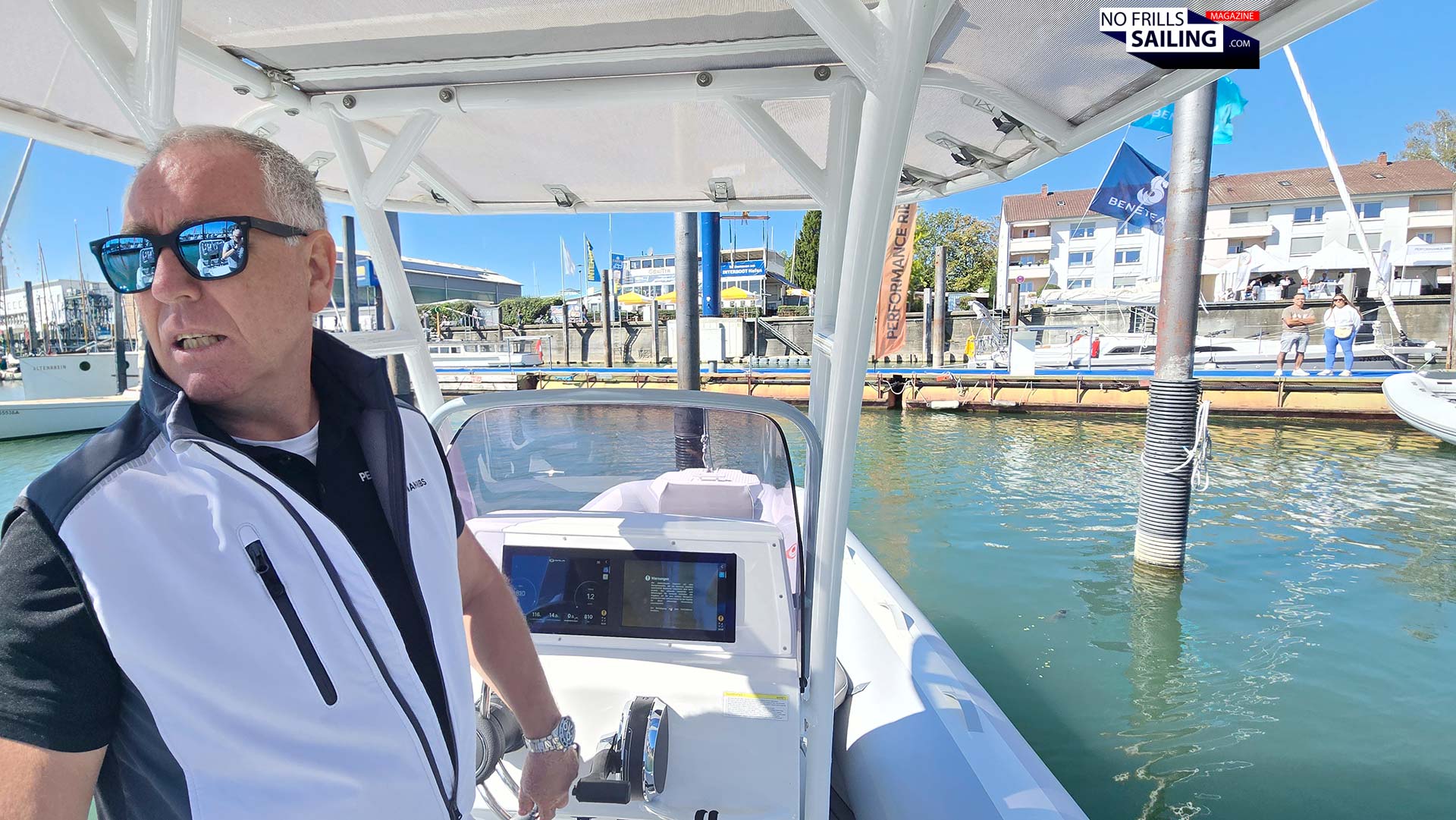
So, here´s the situation: Preparing the Lake Constance boat show a few weeks ago, I was in the midst of polishing an Oceanis 30.1 when the transfer-skippers of another boat we wanted to exhibit called us up on the phone: “We ran aground, directly in front of the harbor! No chance to move … help us please!” Well, so we did: Asking one of the other exhibitors – Performance Ribs – I quickly organized a rescue operation. So, let´s go and pull the boat off the sandbank, shall we?
Stay calm – analyze the situation!
If you run aground, what should you do in the first place? Well, the first thing I´d do is to shut down everything that propels the boat: Kill the engine when motoring, open the sheets immediately and take down the sails when under canvas: Don´t induce any further stress into the system until analyzed! Secondly, you tell your crew what happened. Depending on the hardness of the impact and (most important!) the type of seabed, you should check for damage. If there are stones underneath and the underground is rocky, there might be a good chance that the keel-hull-joint has suffered some damage, maybe also the bolts. Take away the corresponding floor boards and check the bolts, bilge and structure. If there´s no water ingress, that´s a good sign!
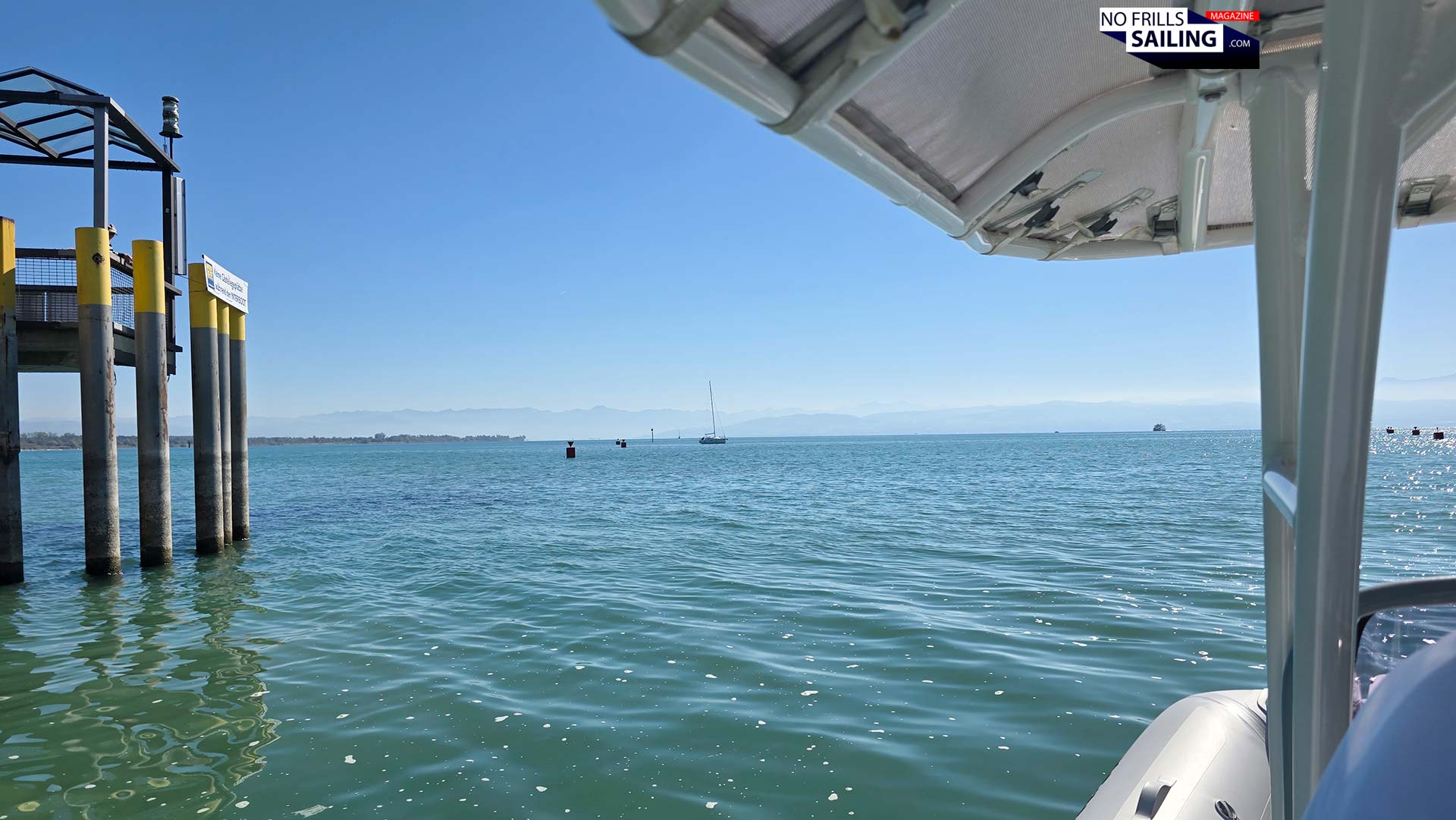
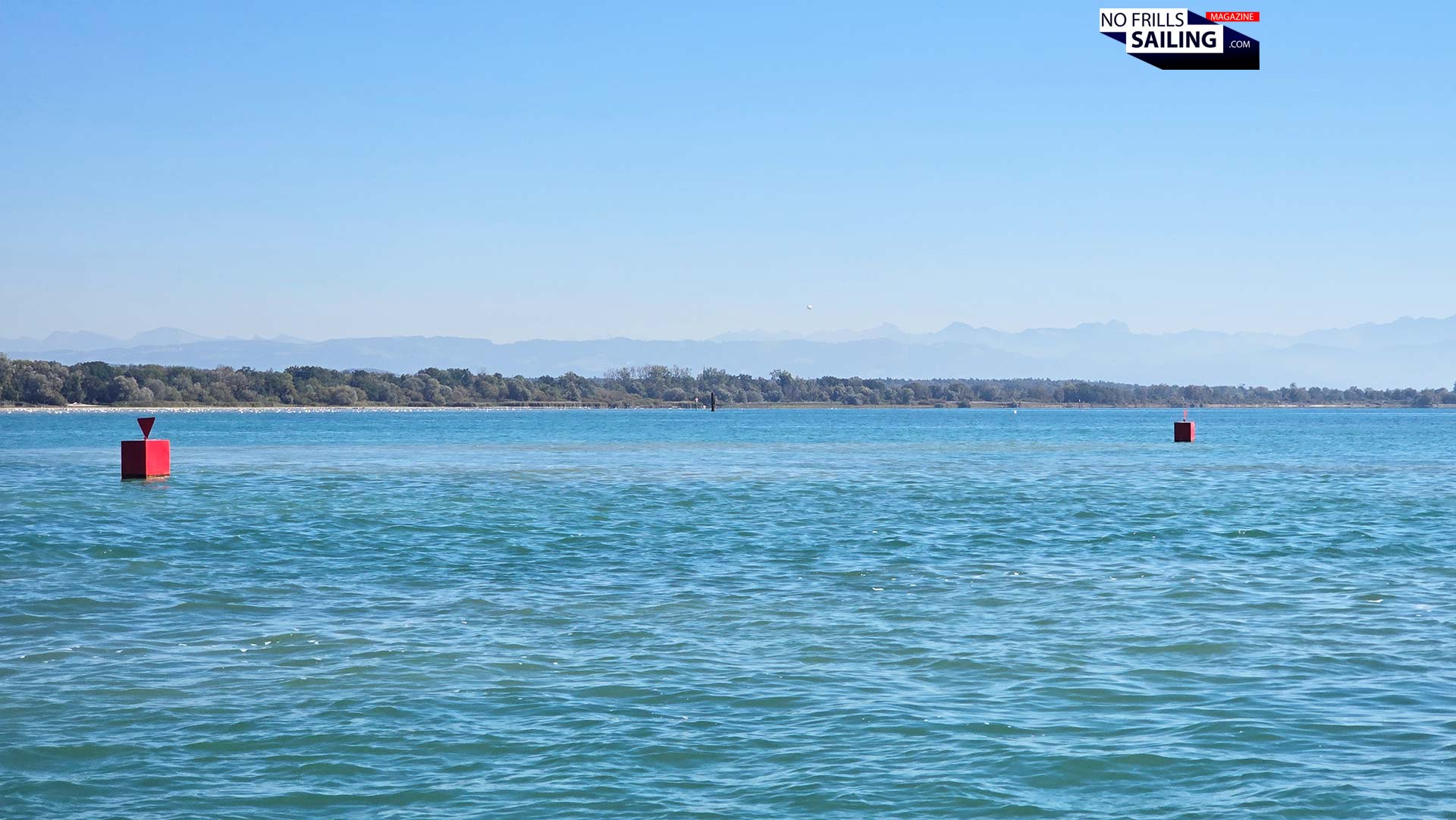
Mostly, boats ran aground in muddy or sandy water. Usually, the boat will slowly glide onto the sandbank, slowing down ever so slightly. Sometimes, when gliding, hard rudder away from the shallow area may recover the boat in the last second. Often, the “shock” prevents helmsmen from such fast reactions and the boat will be stuck after a few seconds. Again, if there´s no visible or palpable immediate danger, calm down and check: Zoom into the chart to determine the location of your boat. Where´s the shallow area and most important: Where´s the best direction off the sandbank? As for our First 30 stuck in the mud, the situation was as following: Aground within the buoyed waterway leading into the harbor with frequent commercial traffic. Not a good spot, certainly, but luckily they were at the side of the waterway, not directly blocking the harbor.
Can you call for help?
After having determined the situation, cleared the damage-question and informed the crew, you should check if you by any chance may get off the hook by yourself or if you need external power. If your boat is still moving with the incoming swell albeit being stuck, meaning it is partially afloat, that´s a good sign. Considerate heeling angle is a bad one. Hard bumping and bouncing is not good for the boat´s structure: Now, every minute counts as all too violent hacking can damage the kell-hull-joint and the hull itself!
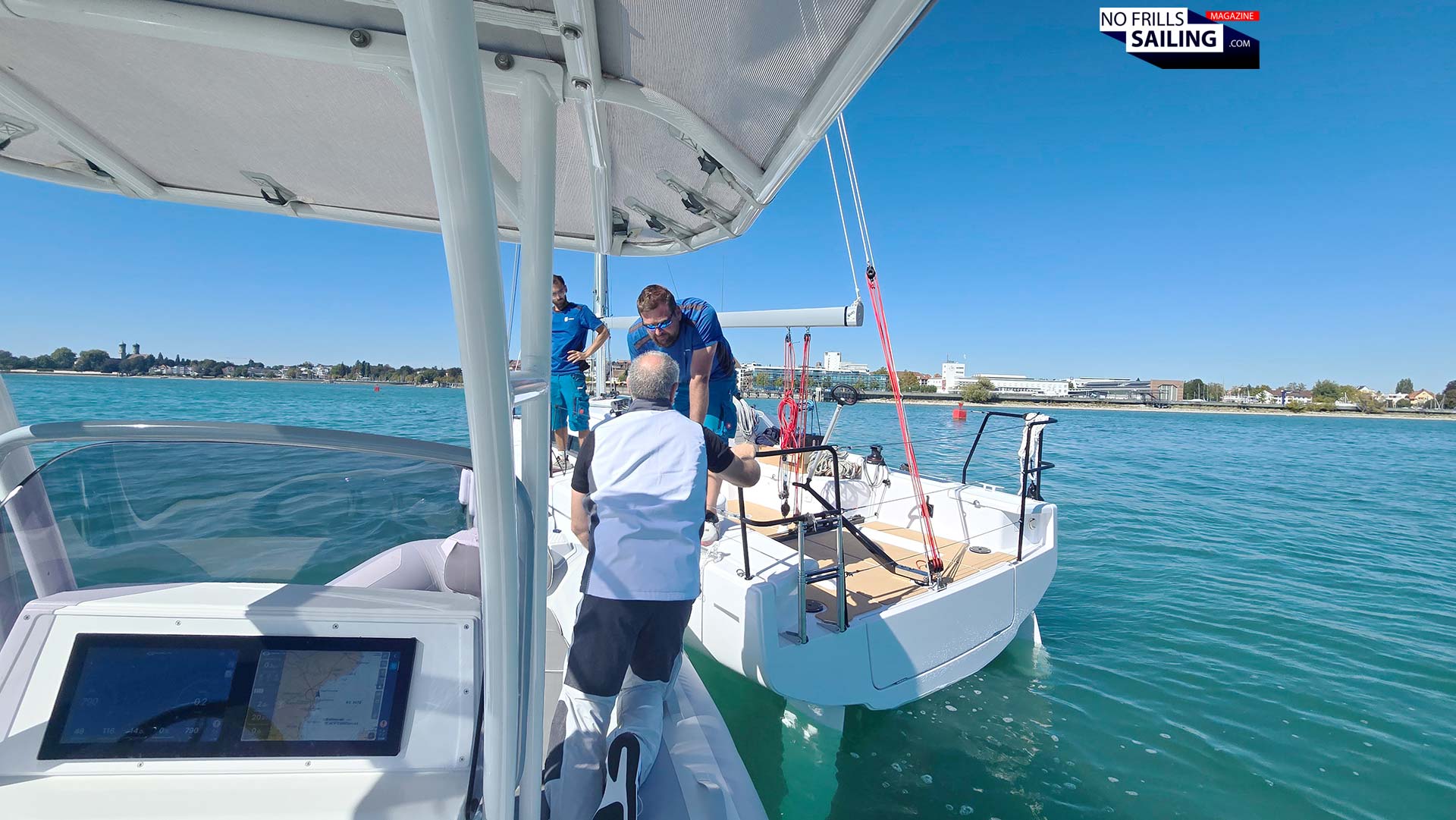
If you decide to call for help (we´ll talk about trying to free yourself later), you should check two things: First, is there an immediate danger for traffic, nature and the crew of your boat? Then it´s best to call for help via VHF and channel 15. Not a “Mayday”, of course, but a “Pan Pan”-call for urgency. If life is at risk or the danger of sinking, “Mayday” is the call of choice. In case of our grounded First 30, nothing all too dramatic was happening: 25 degrees, sunshine, no wind, perfect weather. So they decided to go for the informal way and try to organize private help. Being within cell phone range is a plus, definitely. What you´d be asking for would be a power boat with shallow draft – calling in other sailboats is often a futile attempt as these won´t be risking to run aground themselves. As said, I embarked a few minutes after the private-Pan Pan aboard a Performance Rib. Some 200 meters after leaving the breakwater, we reached the poor guys.
Pulling off a grounded boat: Pros and cons
Now here´s the thing: For whatever reason many skippers – both the ones aground and the ones trying to help – think that their proceedings might worsen the situation. “What if I damage the boat?” or “What if something happens?” Now, relax. Be reassured that legally – at least here in Europe – helping others can never be used to pull you into something. For example, if you to the best of your knowledge, try to pull a grounded boat off a sandy cliff and this might result in a cleat ripped out of the boat or even a damaged keel, that´s not your fault! As long as you don´t act willful. That´s the case if you come to help as a private person. It´s a bit different when the helping party is a commercial salvaging service.
If you order in a commercial salvage company, than the basis of the operation is a form of (also oral) contract with this company. Terms and conditions of that company apply, potentially incorporating disclaimers (tackling exactly this, resulting damage to the salvaged boat) but it also comes with professional obligations for the company. Also, your and their insurance company might have a saying in this. Well, I know, sitting on the sandbank half in panic mode is the worst time to think about legal implications, but it is what it is. In any case: Make sure you have a good feeling about the salvaging tactics you will talk about. How are these guys trying to get me off that sandbank? Do they have a clue, do they know the local conditions, are they engaged in frequent of such activities?
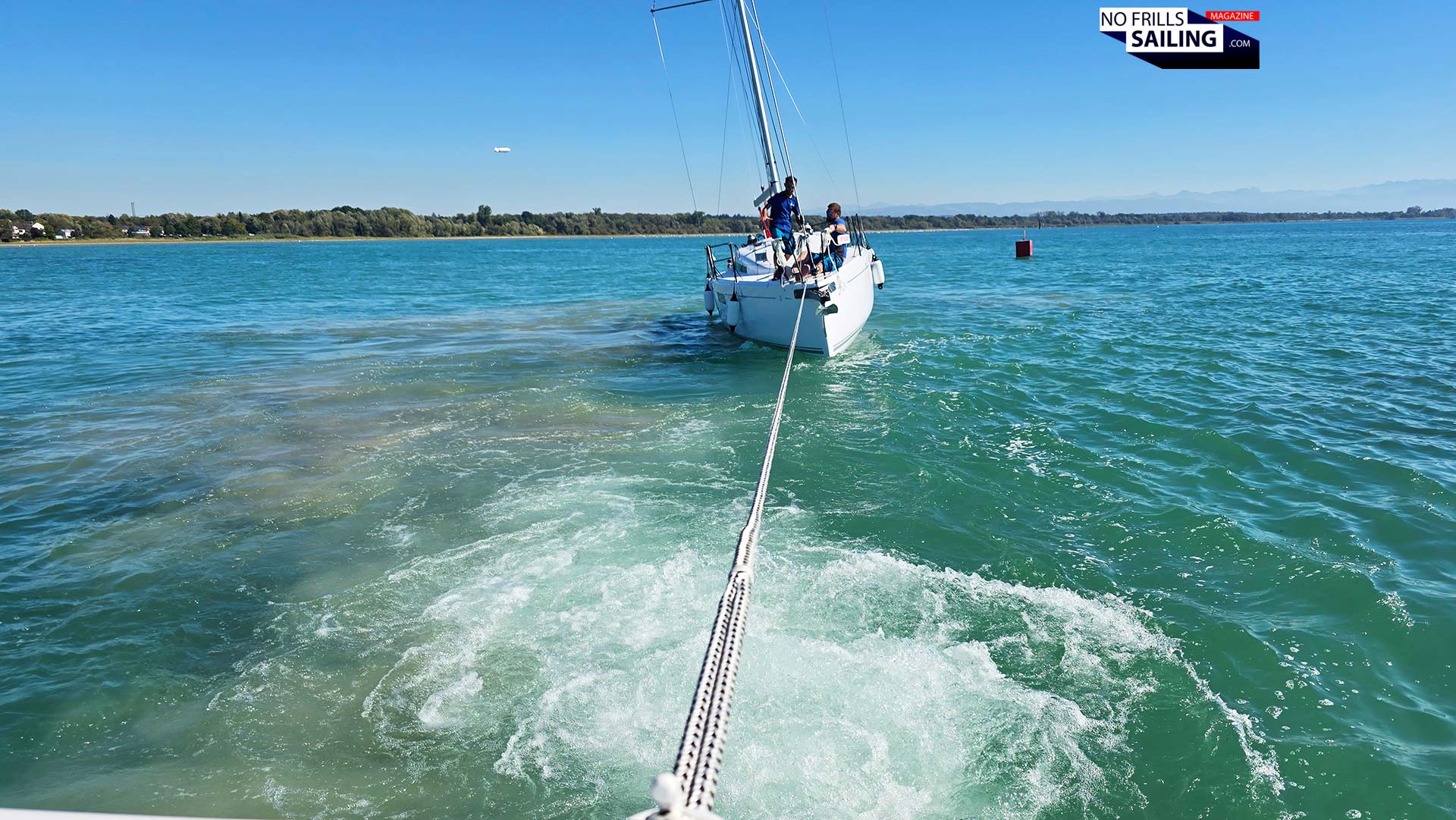
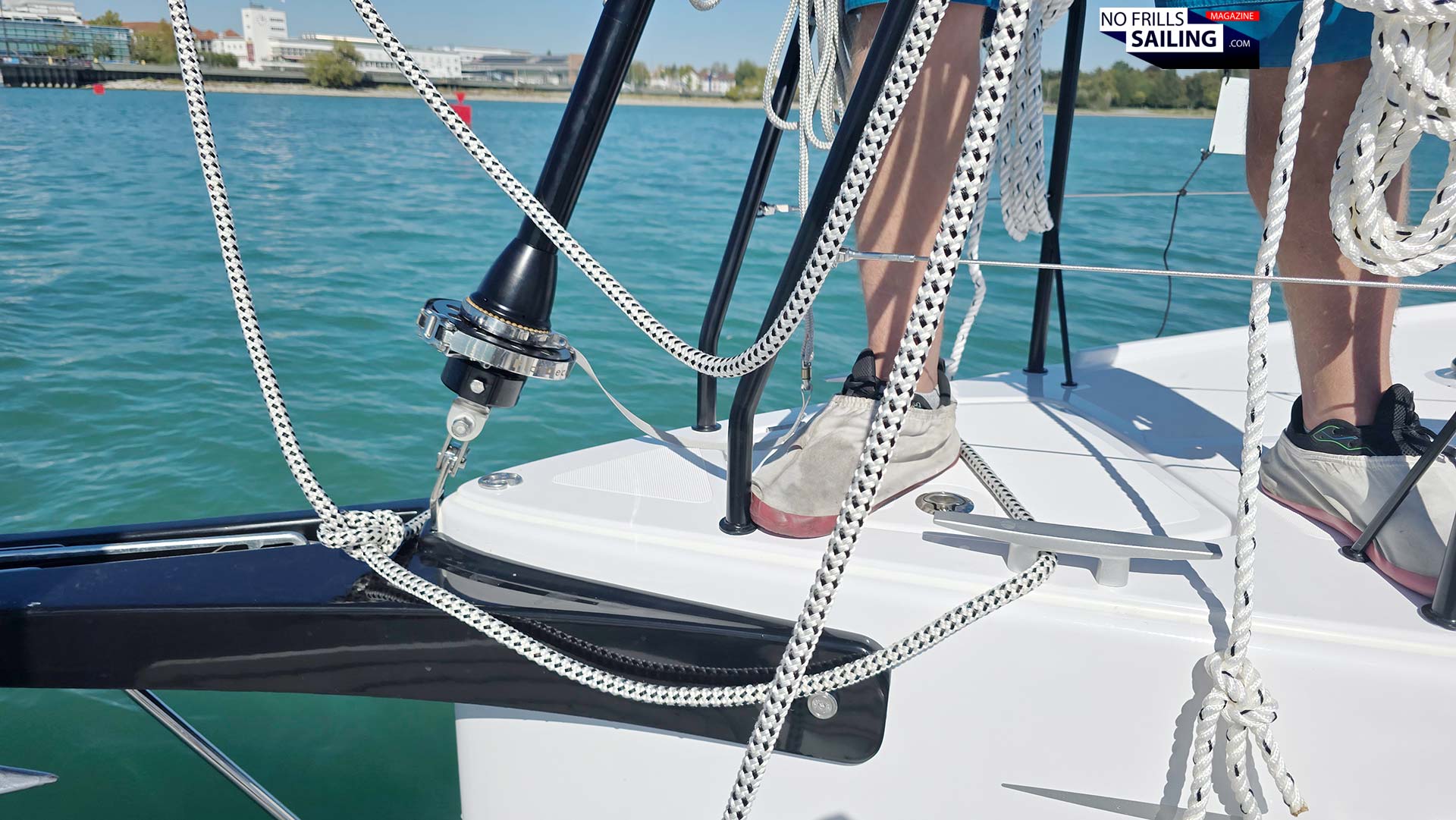
In the case of our First 30, the Performance Rib-skipper did indeed know his way around. He guided the crew how to fit the towing rope, where to fit it and in which manner – so that the pulling forces would be equally induced over the front mooring cleats into the hull – and how to act. We´ve had a good feeling about this. If the one coming to your rescue is overwhelmed by the situation, doesn´t have a clue anyway … well, reconsider your decision. Because, really, your boat weights some tons! And there will be lots of force generated to move it. Wrongly applied, this force can indeed seriously damage your boat and the one coming to your rescue. Including physical injury due to a snapping tow-rope! Now, for our First 30, the rope had been professionally fitted and we started to fire up the engines of the rib …
Freeing yourself without external help
On the other hand, you might come to the conclusion that you may have a good chance to free yourself without external help. In order to do so, your boat needs to be partially floating. Everything external helps: Wind and waves can be used to work in your favor. The first thing you should do is to determine the best way back into deep water. Sometimes, simply going backwards may work. Often, the shape of he keel will prevent you from doing so as it works like a plow when going backwards through mud. Sometimes, straight on will be the best way – as long as it doesn´t get more shallow. So, check for the shortest and most probable course off the sandbank.
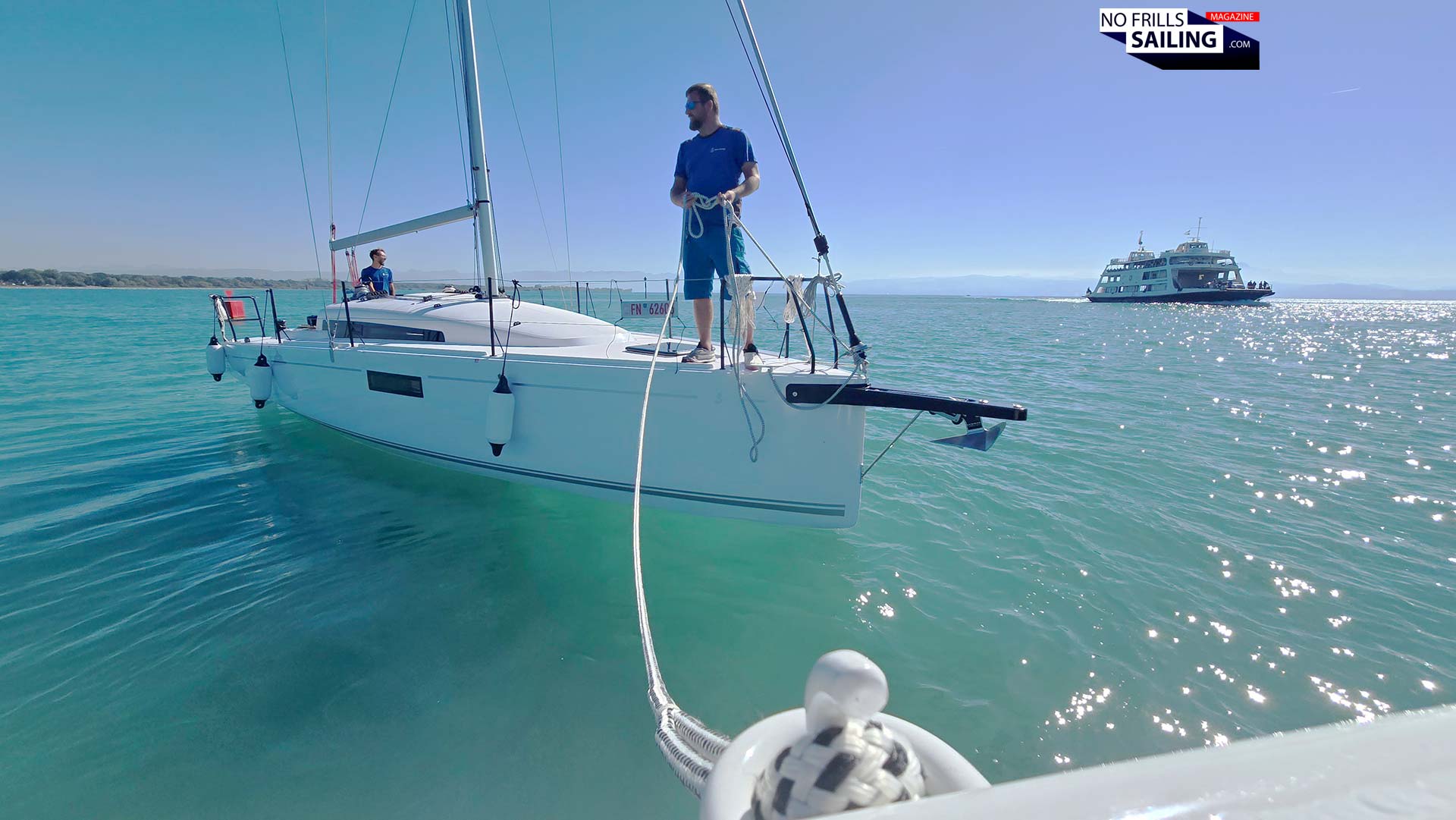
Then use the boat´s engine and her rudder to move the boat. Yachts with a single rudder where the stream of water ends up directly on the rudder blade have a big time advantage: Often, the sheer force of the water flow will make the boat “turn” on the spot. Even if it doesn´t move, by making it turn – slowly and with care – you may point her nose in the right direction. Now you would add heeling angle. Open the main sheet and put the boom to a 90 degree angle – send one or two persons into the boom all the way to the end so that their weight would make the boat tilt. This will “shorten” the draft. If there´s wind, you may get out the jib – the wind pressure adds further to the heeling angle. And, by any chance, use the crests of any incoming wave to increase power by the engine. Slowly, step by step, the boat may free itself now. I´ve done it twice, it worked just as fine! This was of course no option for our First 30 that sunny day: No wind, an empty Torqeedo-battery already and just tiny waves. But we´ve had plenty of horses coming out of the rib´s engines …
It´s not just only brute force!
But here´s the thing: Sheer force and engine power won´t solve the problems at once. See, either way, it´s also best to make the boat on the sandbank move and change course as well. That said, our rib´s skipper indeed pulled not just in the one direction, but applied the force in such a way that we tried to pull the yacht in roughly a 45 degrees angle – sometimes more to the left, sometimes more to the right. Like a zig-zag course.
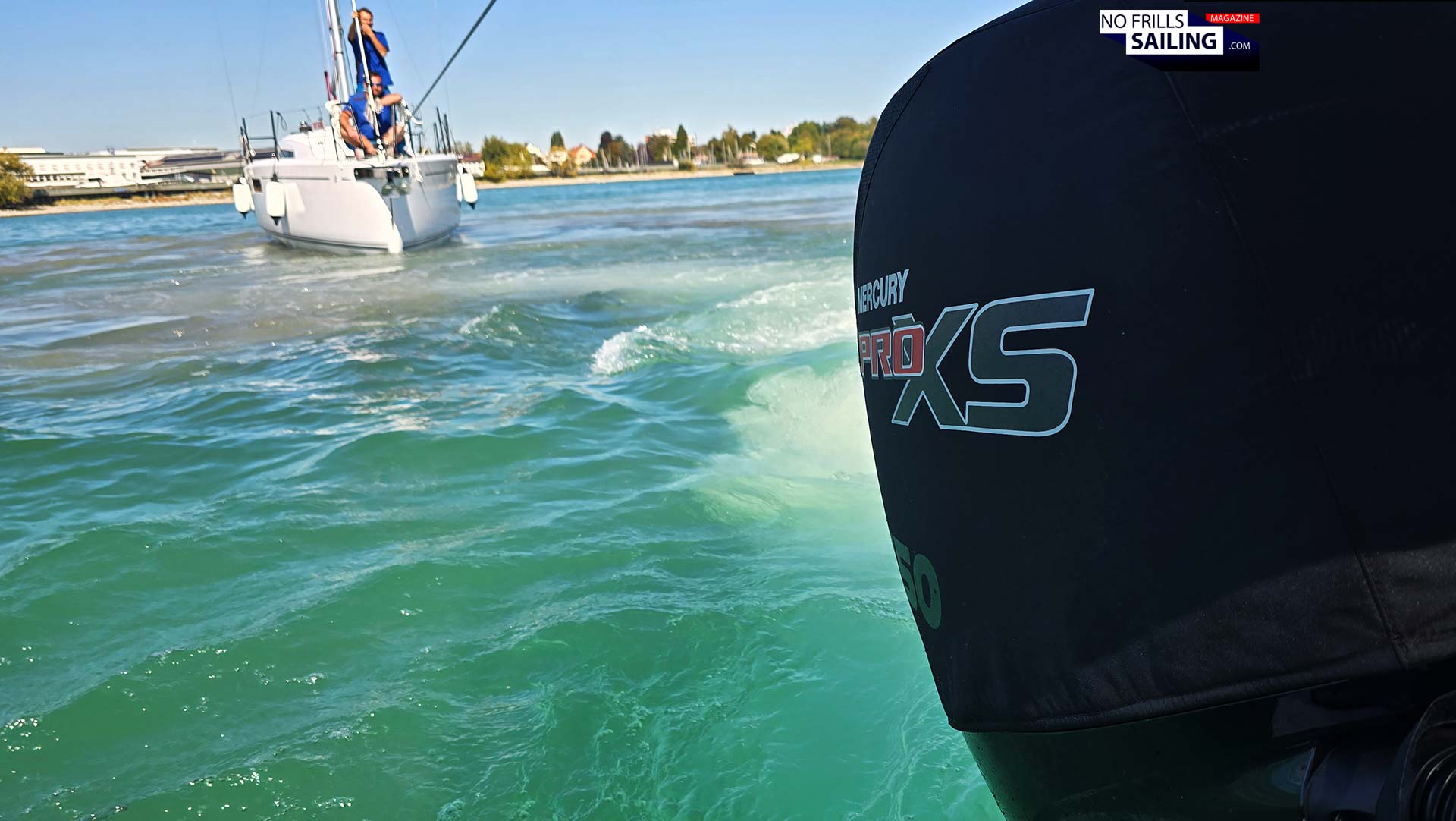
And then, luckily, the commercial traffic helped us. Just by creating waves. First a big ferryboat would steam by. In its wake, four or five nice waves. So our skipper applied full power every time a wave would hit the sailboat and leastwise raising it a few centimeters. Wave by wave we managed to pull her a few centimeters off the sandy hook. Another ferryboat left, and we again utilized its wake. Every time the skipper put the lever to the table, it was done with utmost care. He really had a plan. And it paid off.
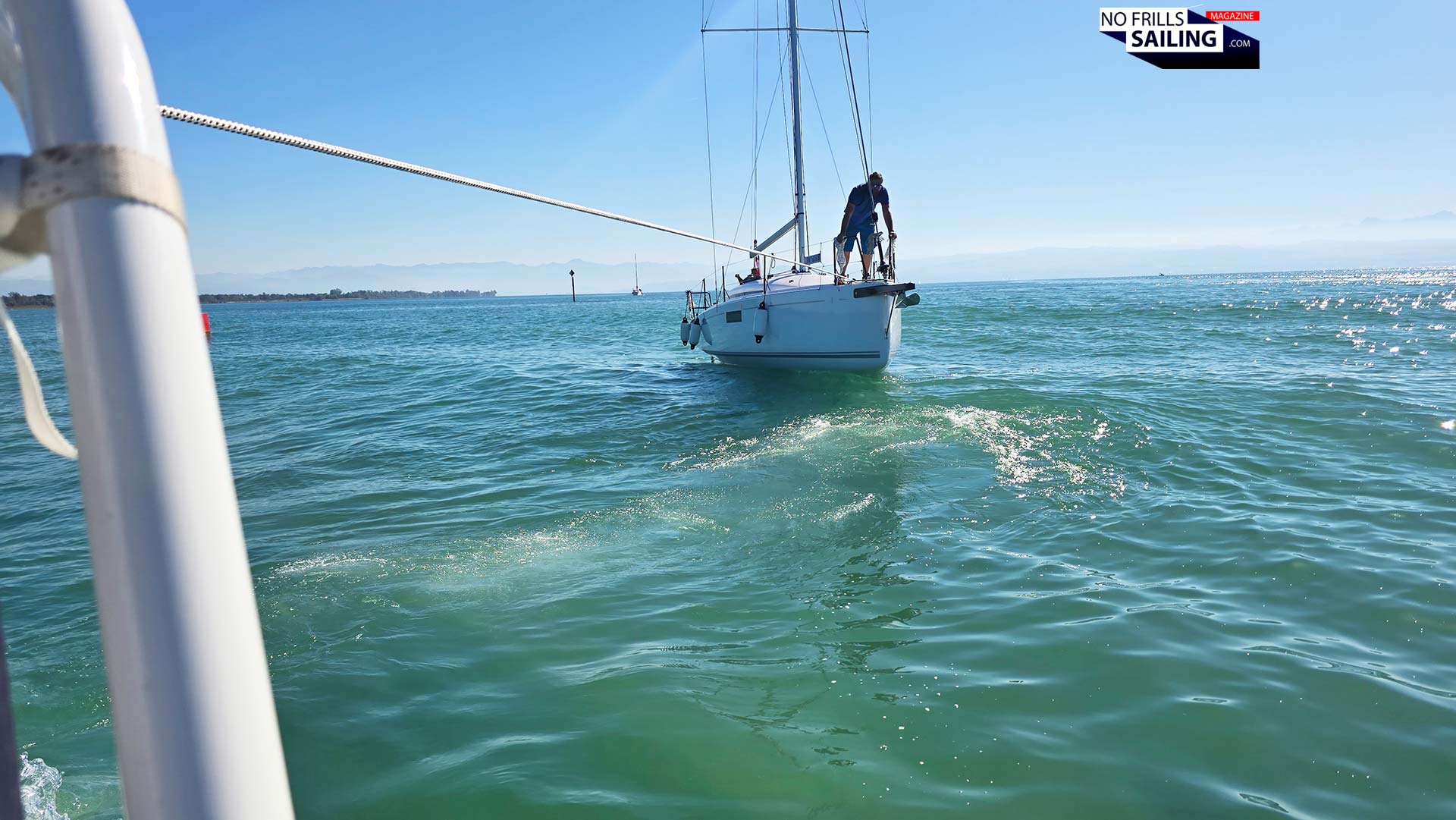
Shifting weight on the towed vessel can help too. For example, depending on the design of the boat, putting all hands up on deck and concentrate them in the bow area. This will make the boat tilt a bit forward, maybe creating a favorable momentum in the direction of the towing course, when it moves. Having everything back there in the cockpit, where anyway the heavy engine is located, may hinder this. And so it took us about 20 to 25 minutes, pulling, trying, balancing, making waves, changing course … until eventually we finally had her freed! What a great moment, what a rejoice!
Learning in hindsight
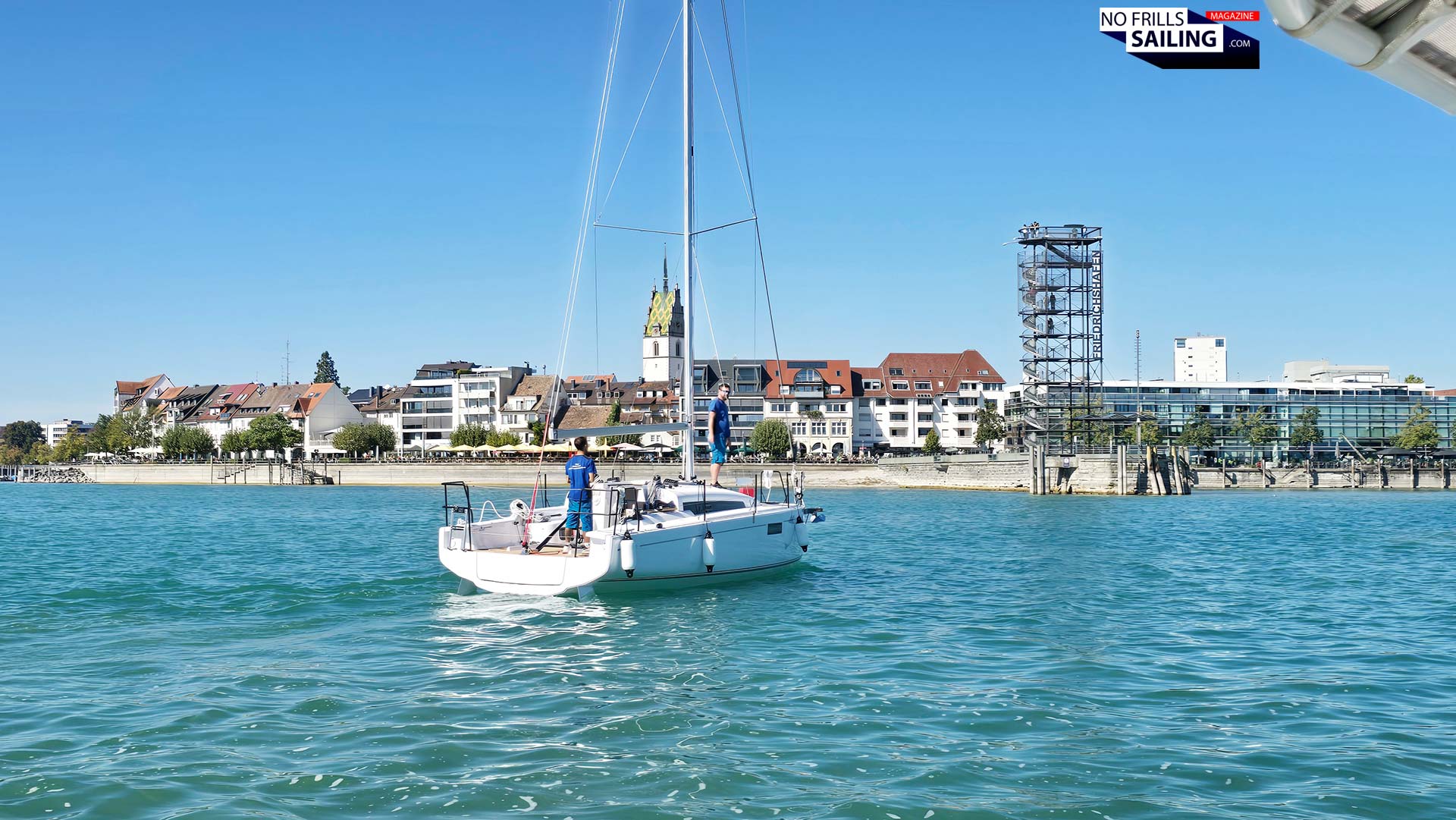
With her last battery power the First 30 entered the harbor and pulled into her berth. We shook hands and thanked the skipper and some cash was exchanged for the fuel and efforts, along with many thanks. Now, although the boat had safely reached its berth, the incident was far from over. First of all, after having her tied up properly, maybe a day after, a thorough check-up of all areas impacted by the grounding should be a matter of course. That said: Keel, keel-hull flange and bolts are to be checked. Also, the area around the cleats where the towing rope had been fitted. Often also the rudder blade and steering mechanism should be checked.
This might be done by hauling out the yacht. Structural damage can best be seen with the boat on the dry. If the grounding was hard, take her out for sure! If the grounding was very soft and gentle, keep the boat under close observation at least. Now that the boat is vetted, it´s time to analyze the circumstances under which the grounding happened. Because, of course you would want to at least learn something – sometimes, for example if that happened to a chartered yacht, there´s a legal or at least financial aftermath. So, what made you disregard the shallow depth and run aground in the first place?
I´ve done this for my first ever grounding very extensively in this article, you should check it, because it´s maybe part 2 of this series. As for our First 30, the reason for the grounding were of multiple causes. First, Lake Constance was very, very low on water this season, which offset any experience even for the “old salts” here. Second, being a brand new boat in the water for less than 24 hours, the guys hadn´t even put in the depth sounder, which of course was a grave mistake. No knowing the depth as a skipper? No go! Third, there wasn´t a chip with the electronic chart in the plotter. With just the rough basic chart available, no chance to determine your position in relation to an actual, accurate depth. And fourth, last not least, the poor guys didn´t even know the actual draft of the boat! Assuming it was 1.60 meters, but it was 2.00 meters in reality. Well, well. This is what happens if you hurry, improvise and tell the wrong people to “just drive it here quickly”, right?

No compromise, at least when it comes to your favorite sailing blog: Instead of checking frequently if there´s a new topic that might be of interest for you, why don´t you just quickly instead subscribe to the monthy newsletter? It makes life so much easier. Just an email every month, you click only on those articles which are of interest. Easy. Back to the story, anyway …
Shit happens …
In hindsight you are always smarter than before. Of course, we talked about this incident in length and I guess every party learned their part of it. Luckily, the seabed consisted of very fine soft sand so that there wasn´t any damage at all to the boat´s keel or structure. They all escaped with a fright. That´s a good thing, because that way I was able to welcome visitors aboard the yacht for the duration of the boat show. All too often, groundings are resolved without or with just minor damage to the bottom paint or some slightly deformed lead in the keel-bomb. But sometimes, a grounding leads to much more damage – and even serious repercussions.
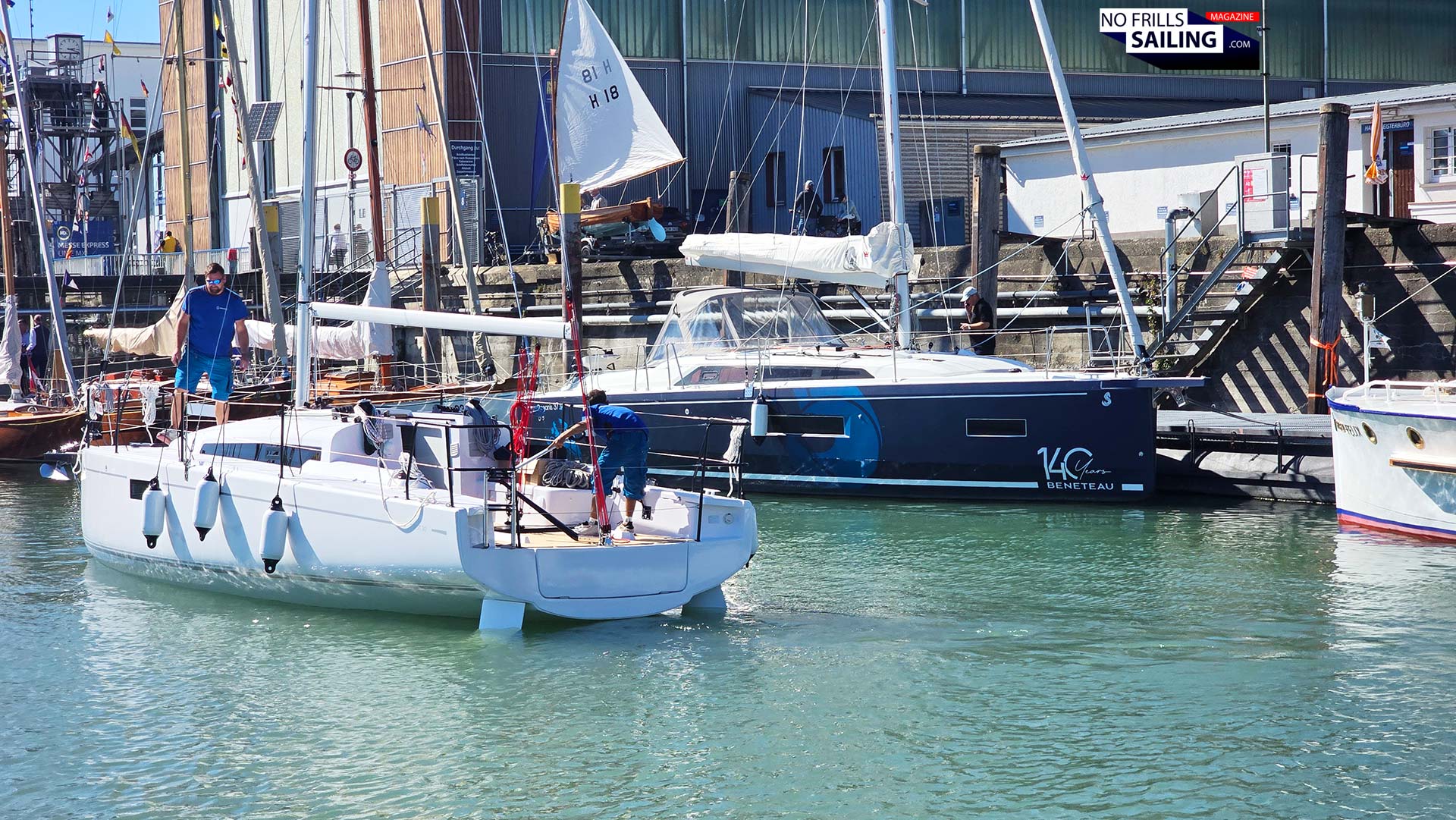
So I´d say, it´s the same thing as MOB – you shall never ground! Check your boat before casting off if the depth sounder works properly and delivers conclusive measurements. Have the chart plotter fed with the latest charts, especially if you are sailing in coastal areas or areas with quite a lot tidal change. Make sure to have the helm manned at any times properly with people who know what it takes to steer a ship safely. And lastly, fit a depth-alert to the chart plotter that leaves enough room (underneath your keel) before the grounding happens. Even 2, 5 or 10 seconds can be quite enough to alter course at last resort to avoid a grounding. Be safe out there, folks!
Here´s more on the little and big catastrophes on sailboats:
Practicing the MOB code of conduct
How I ended up in a mutiny …