
The past Boot Duesseldorf-edition was a bit ambivalent for me in terms of collecting interesting stories for you about interesting sailboat. Why? Frankly, because there were none, at least not so many boats made by the usual suspects, the bigger and the smaller brands. Instead, a bit off the beaten tracks of this boat show, I indeed found the stories I was looking for. A few meters next to the foiling Mini 650 of youngster Jannis Llull I noticed a carcass. Quite familiar lines though … let´s take a closer look!
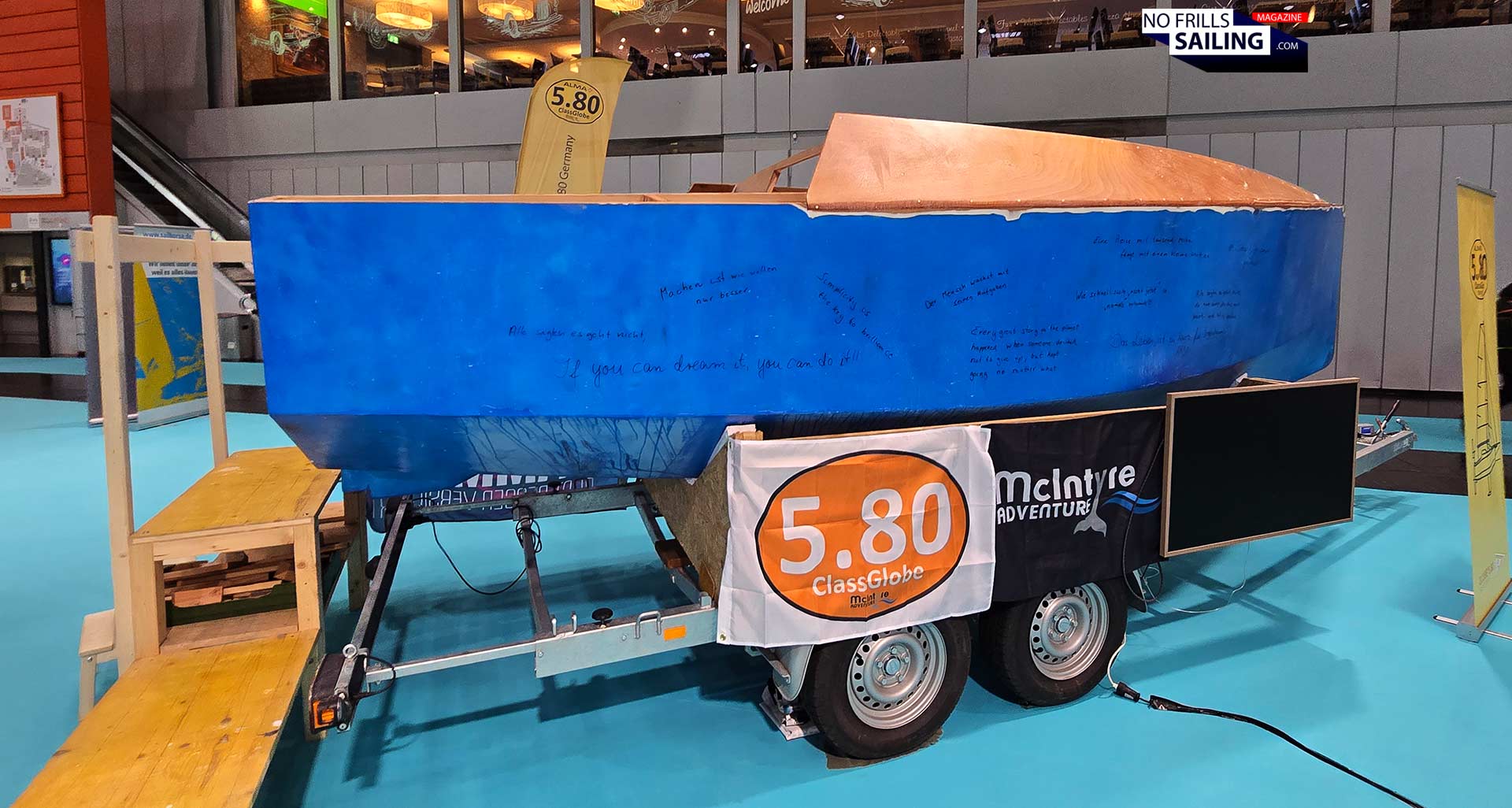
It is, of course, the raw built of a Class 580 Mini racing boat. Yep, you got it right, 5 meters and 80 centimeters. Racing boat. Made out of plywood and destined to sail all around our planet in a biannual regatta-event. This event is organized by legendary Don McIntyre, called the Mini Globe Race. The current edition is still ongoing with fleet of the remaining eleven contenders having finished leg 3 from Cape Town to Brasil (Recife), currently waiting to cross the Atlantic Ocean back to Europe again.
A rare insight into DIY boatbuilding
On display in Duesseldorf: ALMA. As the guys tell me, she is a kind of “buddy boat” that was constructed by the owner together with Christian Sauer, who currently sails his ARGO on sixth place around the world, some sixteen days behind current leader, the Swiss sailor Renaud Stitelmann on CAPUCINETTE. Anyway, ARGO sails around the world, ALMA does not. But she offers a chance to get a rare insight into how such a boat is being built.
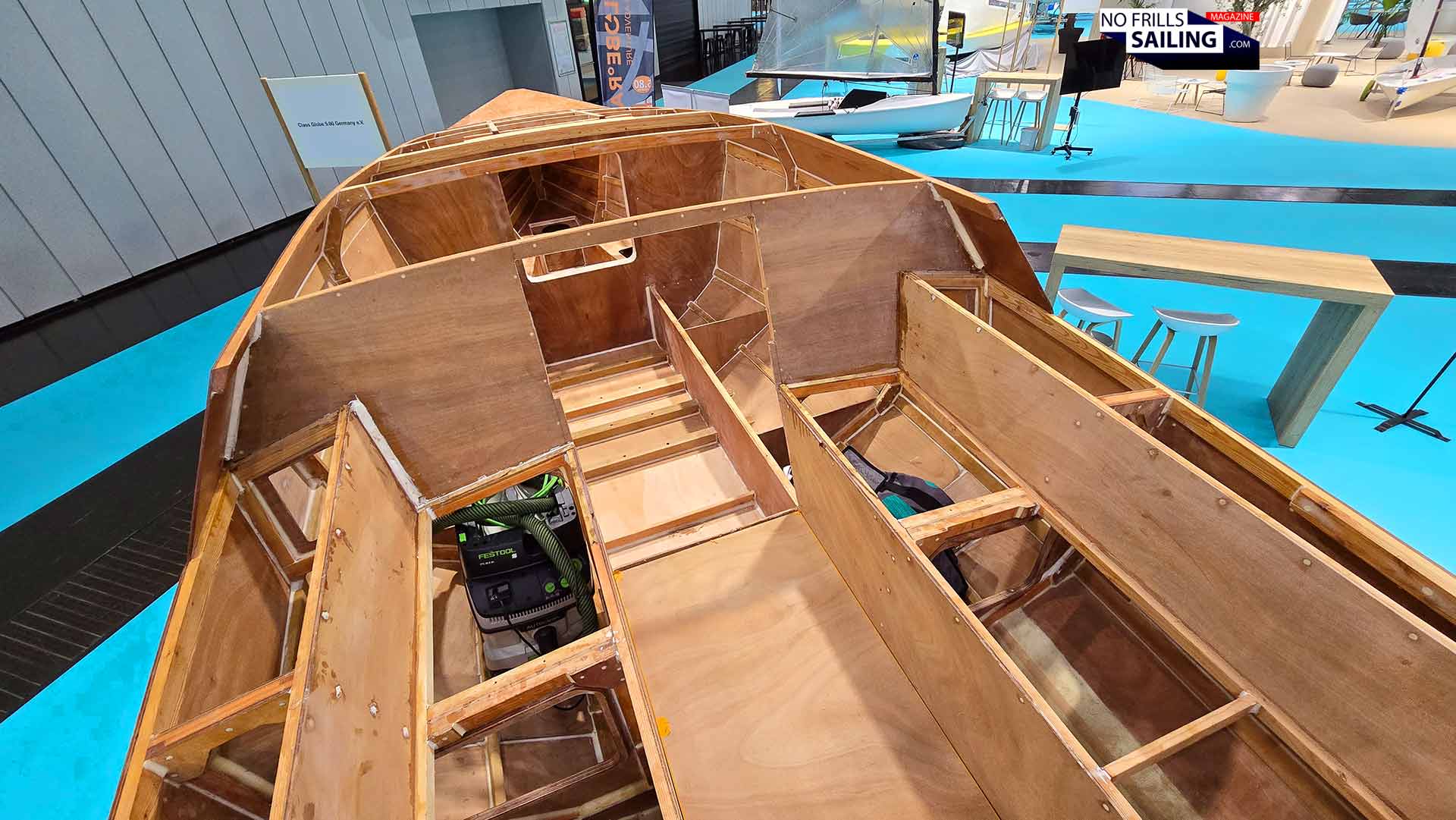
I am greeted by Tobias, who is running the exhibition booth during this time of the day. The idea is to make Class 580 sailing more widely known and maybe attract more people into joining the class. The idea behind the Mini 580 class is fundamentally different from what the Classe Mini 650 is all about, starting with the very boats, comprising the events and also the type of people it attracts. Very different. Tobias, who currently builds his own boat with his wife Simone, invites me to check out ALMA from bow to stern as I please.
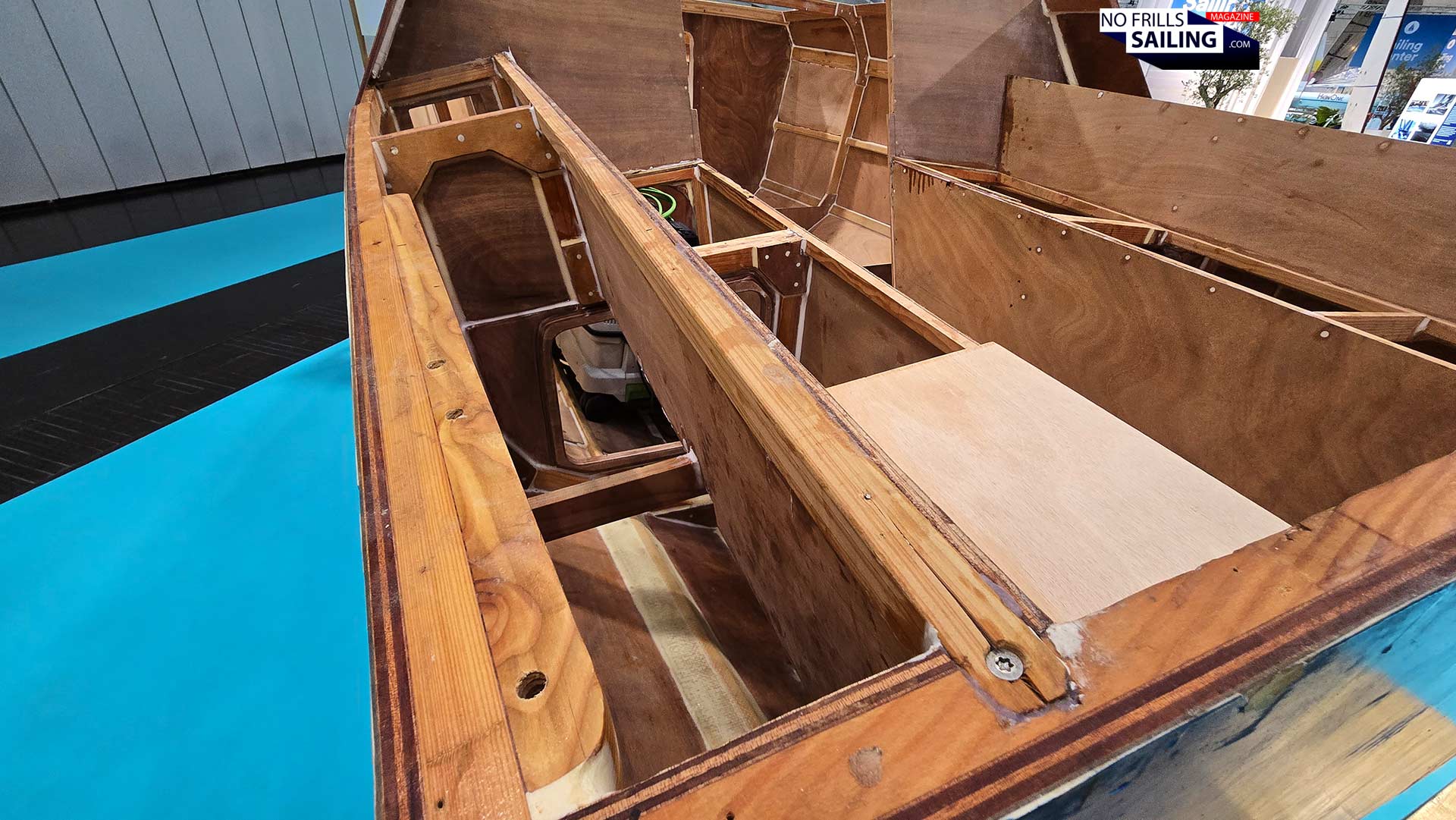
Of course I cannot say no: I am deeply interested in construction details of any ship or boat. So I slip out of my boat show-shoes and climb onto the little ramp that leads into the boat itself. I am particularly interested in seeing the details, the different parts out of which the boat is made and how these are joined to form a sturdy, offshore-capable sailboat that apparently can indeed tackle the world´s oceans and sail around our planet.
Wooden boatbuilding – (relatively) easy and sustainable
Of course have you recognized this one and most important detail by looking at the very first picture: ALMA, as every other boat as well, is made of plywood. This is the basic premise when looking at Class 580 boats. This material is comparatively cheap, can be cut and sanded into size easily, is forgiving and relatively easy to work with and – best of it – is sustainable. Timber is a resource that naturally regrows, so the use of carbon- or oil-based materials is minimized for wooden boats. I find this very important to emphasize, as I think that wooden boatbuilding may be one very realistic way out of the material-dilemma even for mass-produced yachts.
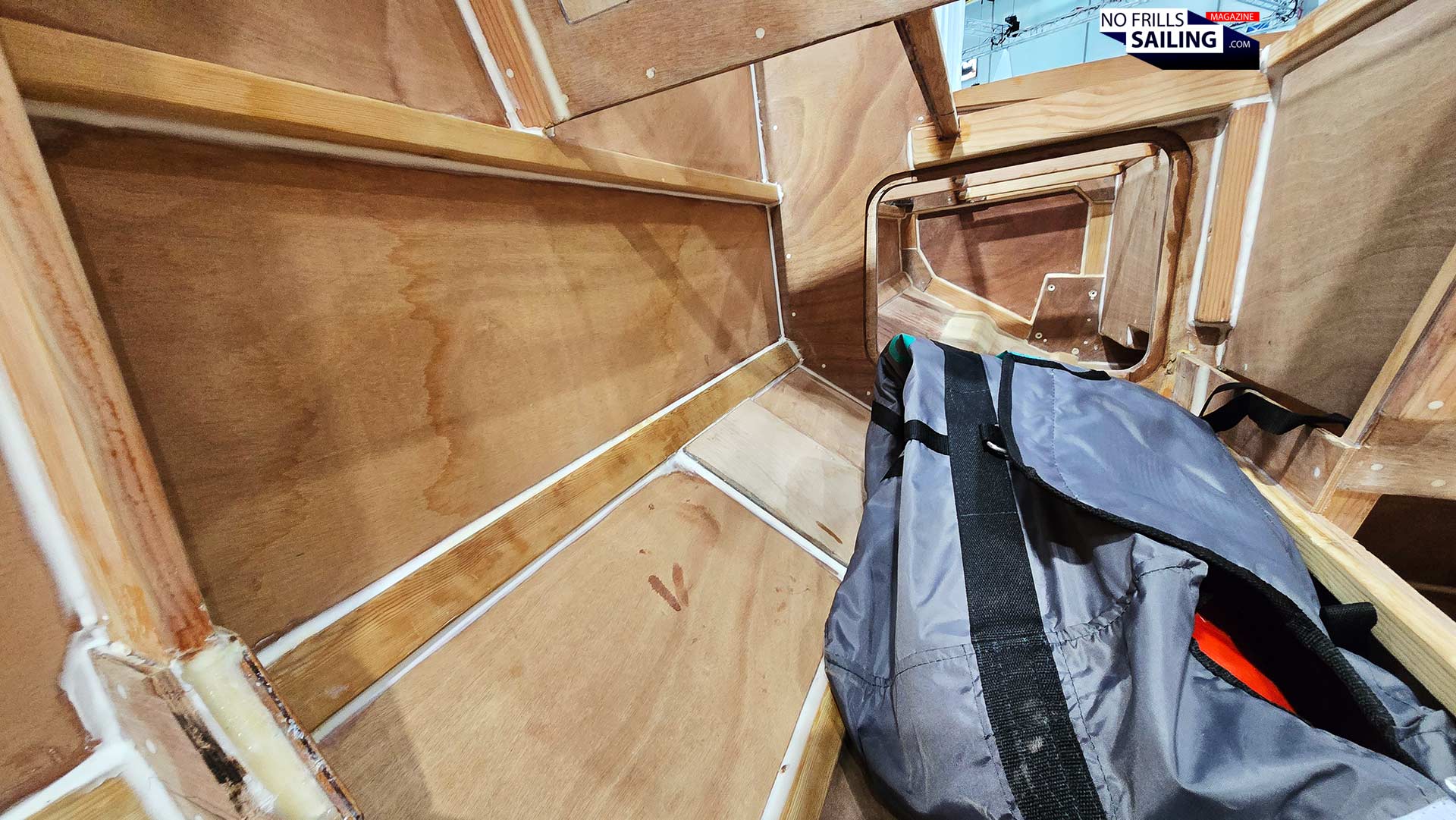
The Class 580 boats are hard-chine hulls on a wooden frame. Designed by Polish designers and sailor Janusz Maderski, the idea was to come up with an easy to build design that reduces shapes and surfaces to the minimum so that even un-skilled people could make them by their own hands. At the same time, he wanted to ensure maximum sailing performance, safe and easy single-handling of the boat and of course, maximum safety when underway.
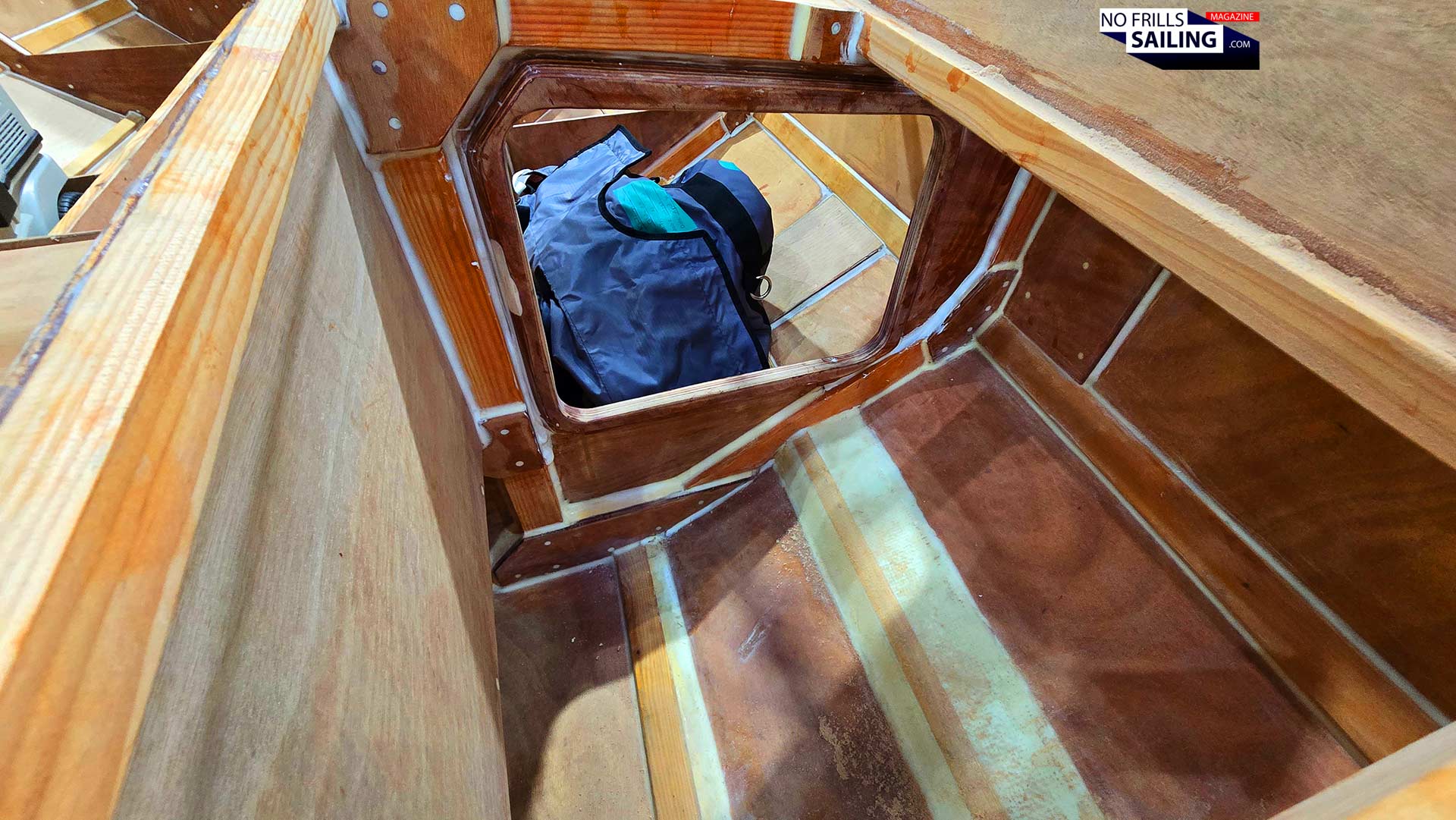
By looking at the planking, the joints, the screws and the epoxy-seams I begin to fathom the craftsmanship and work that went into this boat. To making a Class 580, one needs to acquire the construction plans the least. As it is a one design class with a box rule, it makes sure that every boat is (almost) the same. Rigging and sails are also compulsory, so that a relative parity between the contenders is maintained. So, what´s it all about?
The beauty of the Class 580 sailing concept
Class 580 sailing is much more than just the race itself. Don McIntyre´s premise is that before you join the starting line and race against the others, you should experience the act of building the boat with your own hands first. This takes some time, of course. One, two, maybe more years. By that, you as the later skipper will not only get to know your boat inside out, you will make sure, that everything is fine: Sailing a boat you have built before, likewise, building a boat you will be sailing later … you absolutely will not cut corners or do a sloppy job!
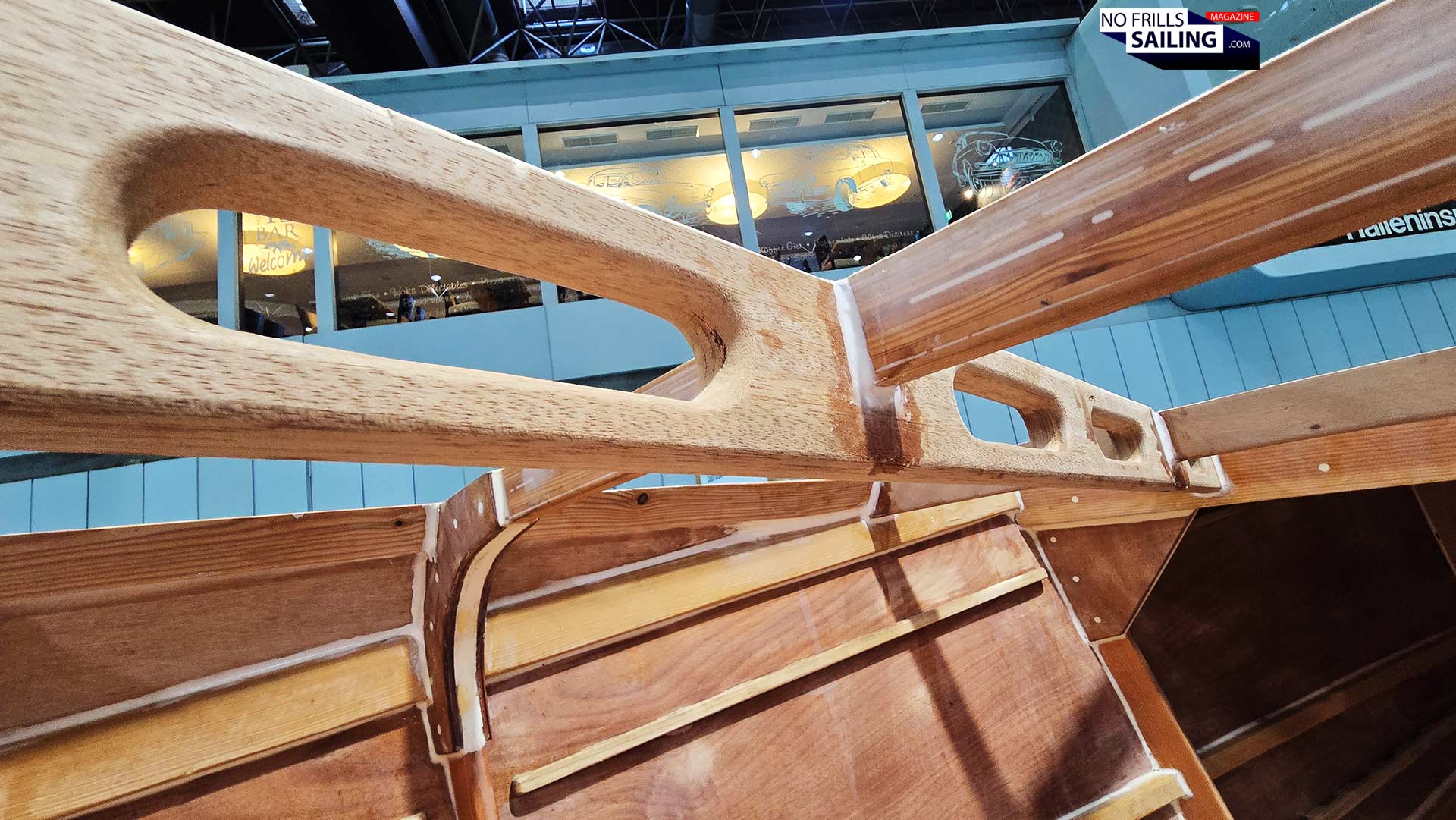
I can see it in ALMA as well. I don´t know the owner (he wasn´t present on the stand when I was there), but I could clearly see how much effort he was putting into making the boat. The system of Class 580 Mini boats makes it easy even for non-trained carpenters or boatbuilders to actually set up a shipyard in their backyard-garage: You can buy almost the complete boat in form of CNC-cut parts. This kit costs around 5.000 Euros. Together with the rest, like filler, epoxy, some fiberglass, paint and such, a finished Mini 580 including rigging, sails, trailer, electronics and such will end on a budget of some 35.000 Euros.
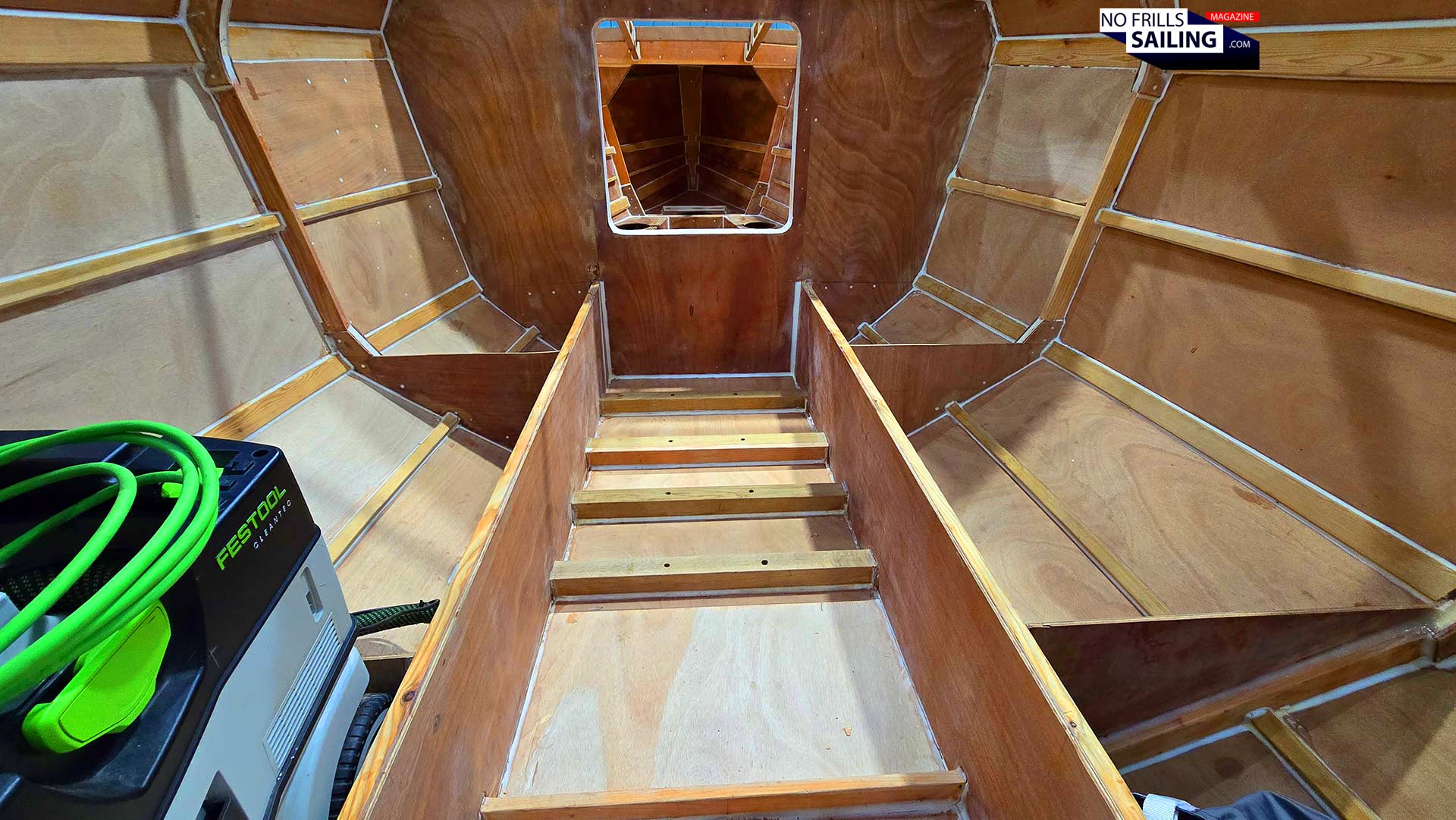
So that´s a lot of money, yet it is just a fraction of what a new Mini 650 costs, let alone the campaign to sustain it. The Class 580 is not about high-tech. It´s even not about high-speed. It´s a more laid-back experience. A self-experience, I´d say. Although you are indeed sailing around the world with the Mini Globe Race (which is much, much more than most of the Mini 650 will ever do in their lives!), I´d say it´s a voyage to yourself even more. And building the boat in the first place is a crucial, very important und unforgettable part of it. In some places I can see fingerprints of ALMAs owner. Friends have written greetings with an Edding on her hull. This boat is full of life. And even in her rough, naked and raw status-quo, she exhibits more soul than most series production yachts.
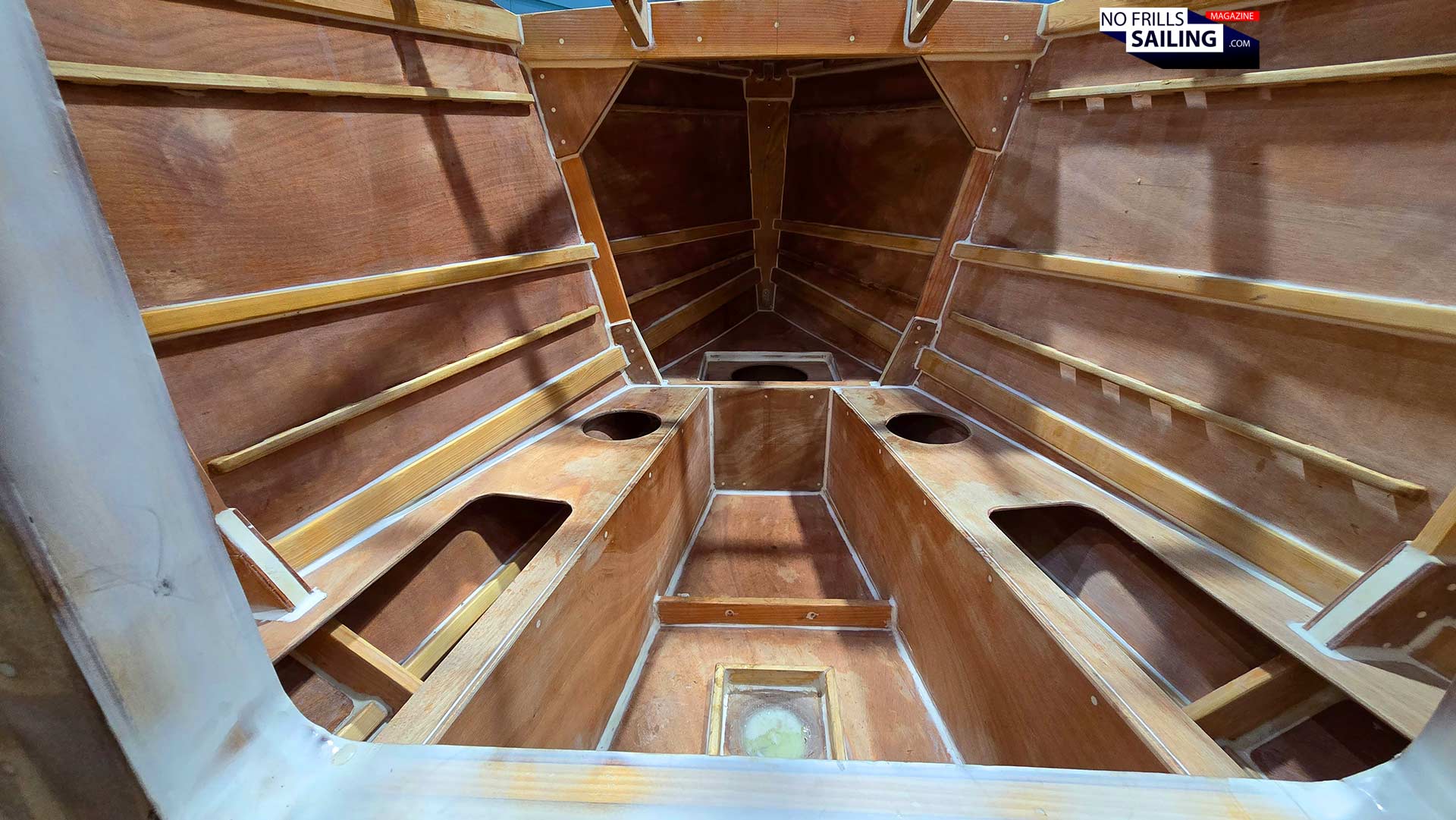
Could you imagine sailing around the world in a Mini 580?
I roam little ALMA from bow to stern. It´s a very interesting and in some way also touching experience. Never before have I been inside such a small sailboat since I learned how to sail in a small keelboat. It´s unimaginable how even a single person could sustain living aboard this boat during weeks and weeks on the open ocean. It´s really cramped, tiny. You really have to think very hard, what to bring aboard and what to let back on shore: Water or clothing? How much comfort do you really need, what can you let go of, what is so dear you´ll never leave it ashore? These thoughts, born out of sheer necessity, can quickly become deeply philosophical questions: Now that I am trying to squeeze myself into the “salon”, I really understand what Christian was telling me when I spoke to him via Starlink last time.
It´s really amazing, how profoundly your perspective changes when suddenly the boat is not a product anymore you can readily buy at your nearest dealership, but is something you are actually building with your own hands. With every plank you fit, with every frame you set up, every single screw your drive into the wood you determine your own fate. I mean, the Atlantic Ocean is up to 4.000 meters deep. And you are on top of it. Alone. This is fundamentally different from “normal” sailing. Together with the camaraderie and a more on fellowship than contest based “race”, Class 580 Mini is truly something very, very special and unique in the colorful world of sailing.
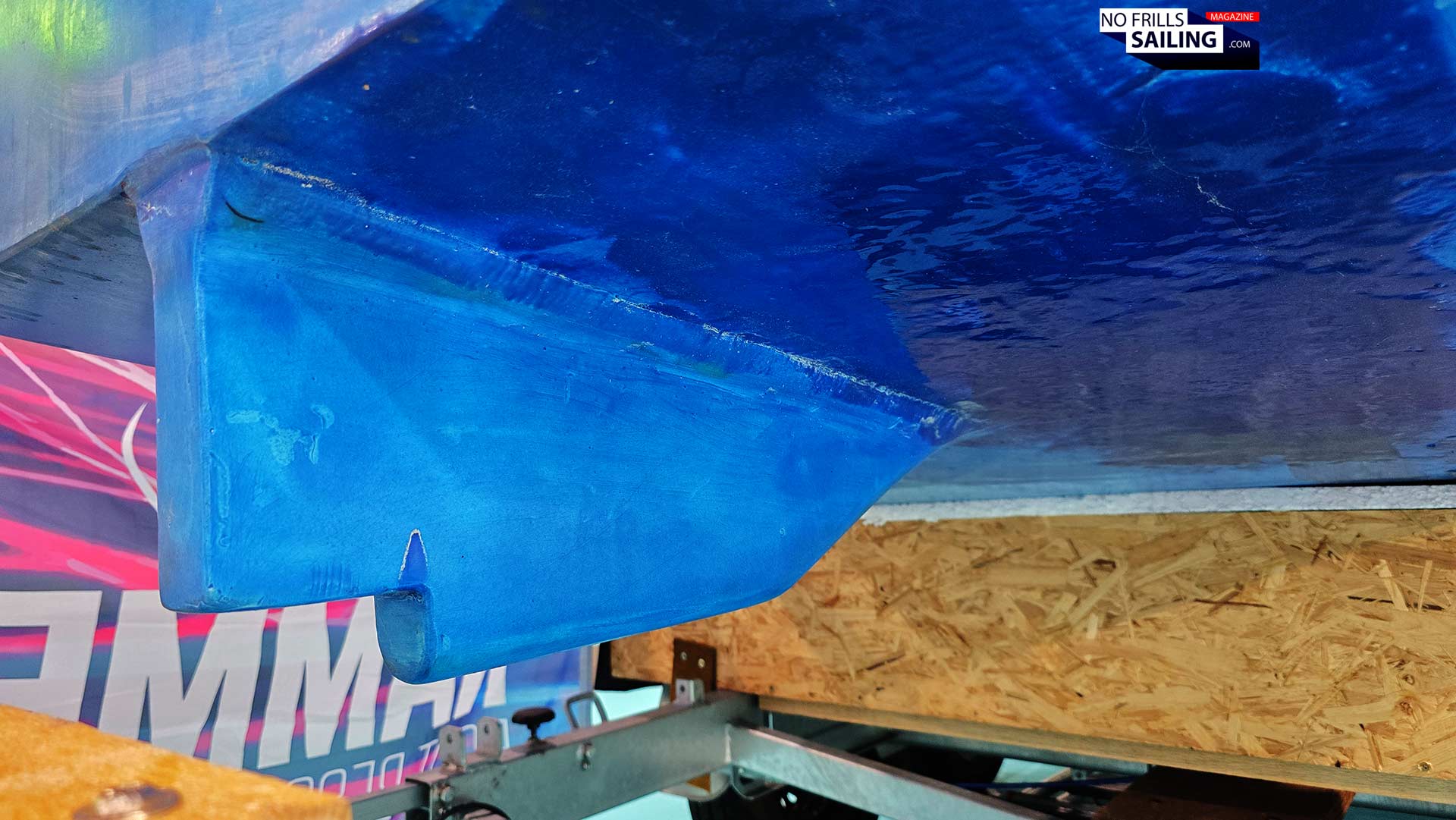
I thank the guys from the German and international 580 class-association and take a final look at ALMA. She is not even half-finished and it will take some time for her, but maybe we will see her in full grace, nicely painted, with mast and sails up for the next Mini Globe Race that is set to commence in early 2027. I will also hold contact with Tobias and Simone who are hopefully finishing their MAKANI this year as well – they want to take on the circumnavigation as a double-handed crew. Which is even more unimaginable. Thanks, ALMA, all the best and see you soon …
Other related articles which might be of interest for you:
My interviews with Mini 580 ARGO-skipper Christian Sauer on his circumvention, Parts 1 and 2
Tailwind for MAKANI: How a couple build their Mini 580 for a double-handed circumvention
Future fibers: Is wooden boatbuilding the future for yachting?