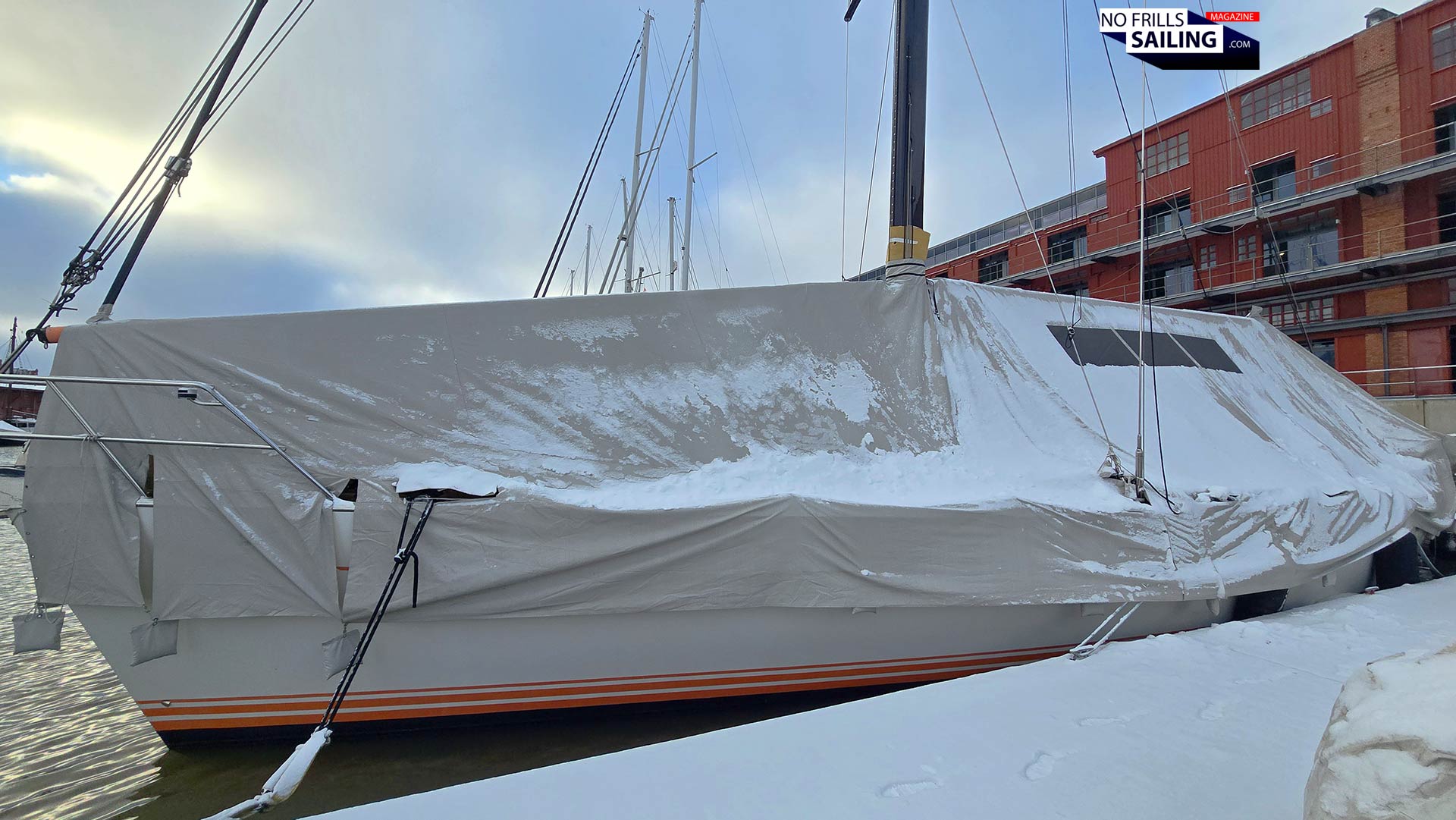
I know it´s maybe a bit too late to talk about the topic of winterizing your sailboat now that we are in the midst of the cold season. But apparently this one struck me just as I was on my daily walk today. I decided to deviate from my usual route around Luebeck´s old town and went into the city marina, called “The Newport”. A very nice spot with a breathtaking view on the marvelous old town. Why? Because after three days of unusually thick snowfall I wanted to roam through the untouched whiteness: Proper winter with snow are very seldom nowadays. And as I was walking past the surprisingly properly booked jetty, it became apparent that I should talk about winter tarps and sailboat storage in the water. So, here we go.
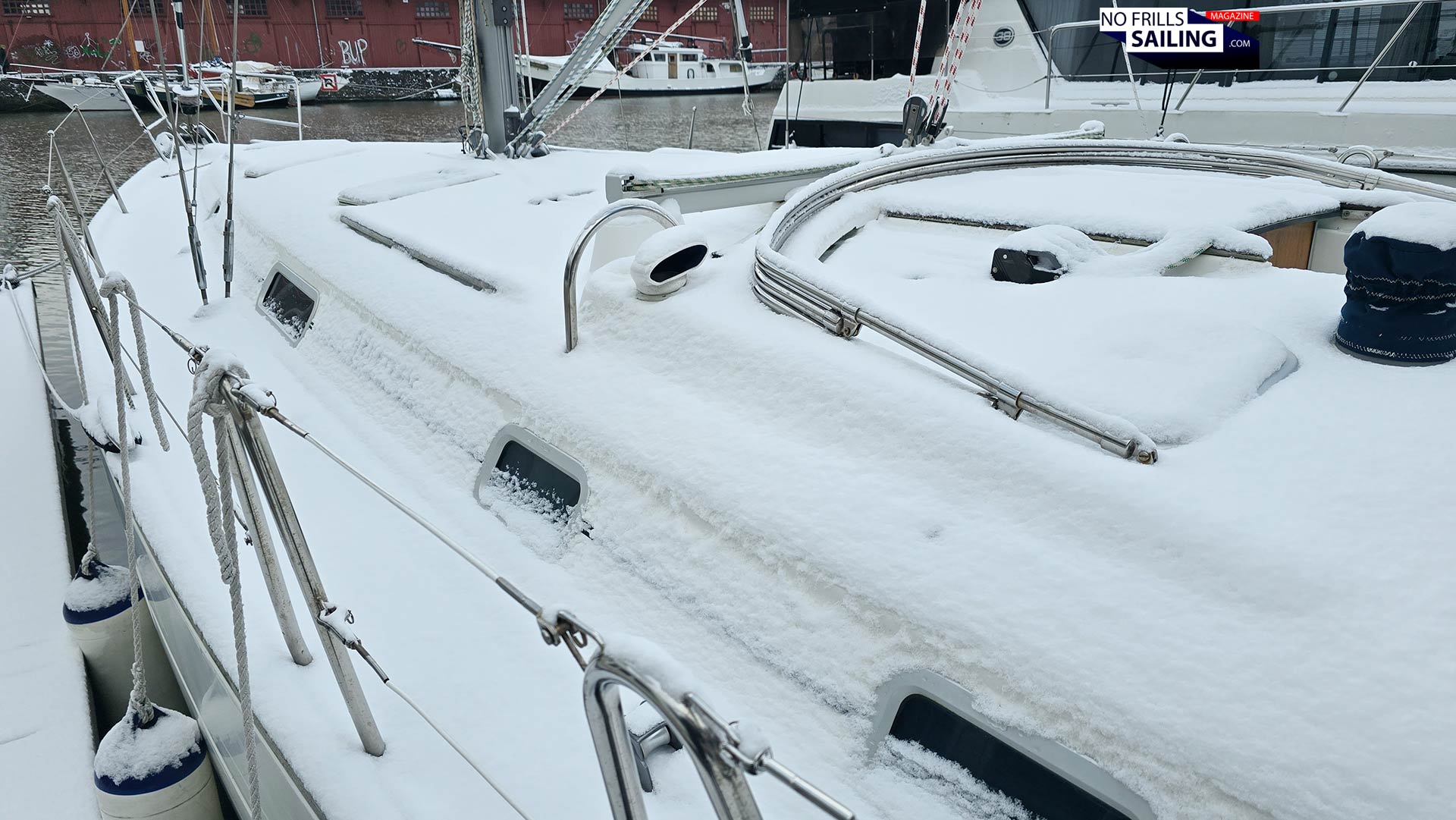
Lots of snow on deck!
First of all: As winters get milder and milder each year even in Northern Germany, the prospect of a frozen marina are miniscule. Even having prolonged periods of freezing temperatures well below zero is something I can´t remember having had in the past 10 years or so. Maybe one week of -5 Celsius, that´s basically it. So the question arises: Why should we pay a lot of money to put our boats on dry land during winter time? Each year more and more boat owners decide to let their boats in the water. Maybe they are transferred to places where there´s zero chance of freezing – such as the “Newport” in Luebeck.
Keeping your boat in the water during winter
Advertisement
The pros on the one hand are pretty obvious: No hustle in autumn with taking down the mast, organizing a cradle, a crane appointment and even paying for the dry stand inside a hall or outside. You just empty the boat, make sure it´s dry inside and put it where it is safe from the winter-storms and the prospect of freezing waters. That´s it. I doubt that the budget for a wintertime berth is significantly less than a dry stand (outside), but this way you can also use the boat. If you have a heater, of course.
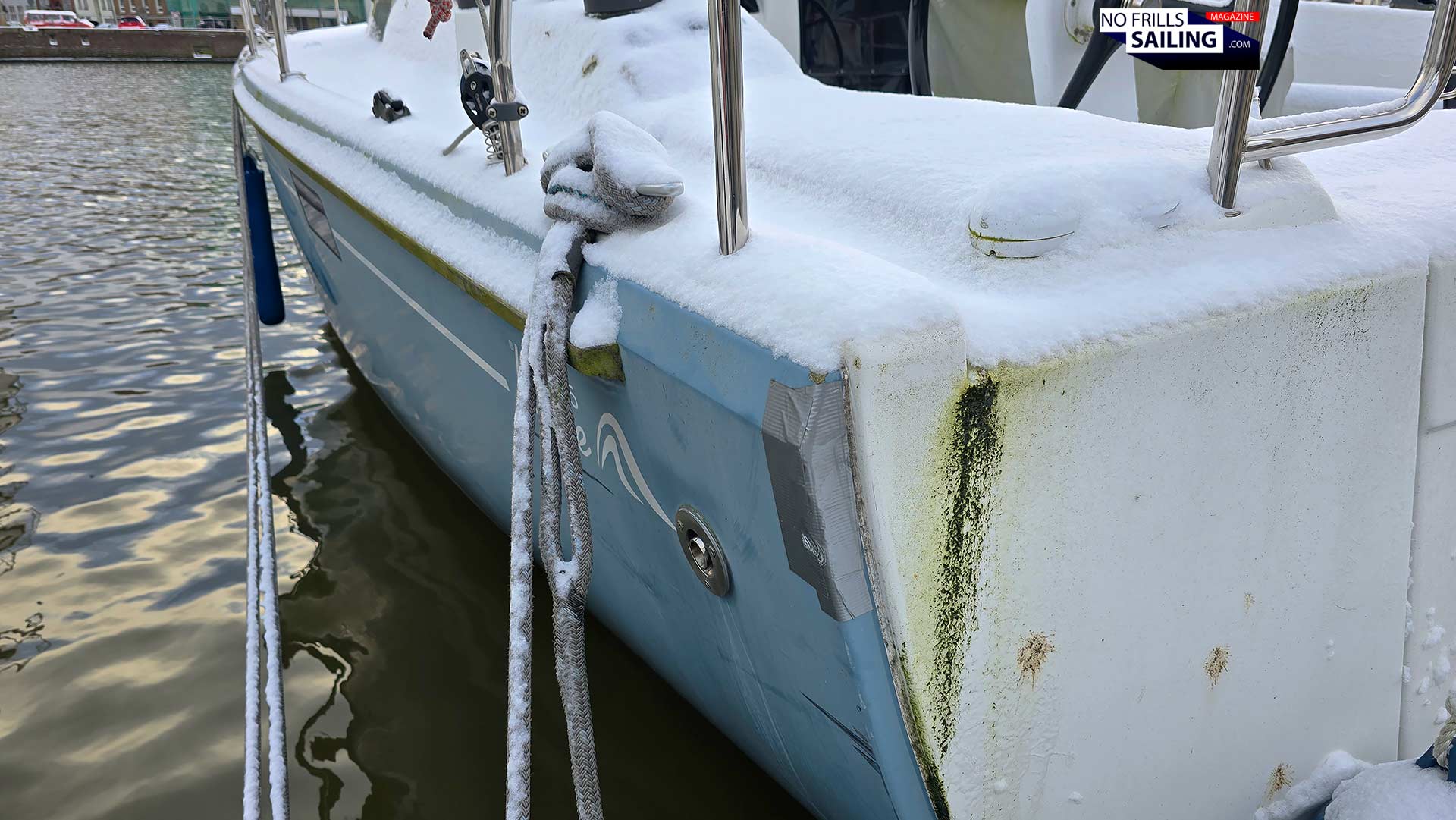
This just hurts to see!
So, if you decide to let it in the water, the location of the berth is paramount: It should be a protected place, maybe a bit upriver and inland, maybe as protected as the one shown in my pictures: Even if there happens to be winter storm with high wind speeds, the surrounding houses of the city will be more protective than an open marina directly by the sea – Luebeck is one hour by boat from the Baltic Sea, no way any harmful waves could reach this place.
Better to protect your precious sailboat!
Secondly, the question arises if you should invest in a proper tarpaulin. Which is the topic of this article. My answer: Yes, you should! Back in the day when I was refitting my first ever boat and budget was very tight, I went for the DIY-method and made a winter tarp myself. As it turned out, it held its ground and for most part was a pretty good protection, but as I learned later and know for sure now, it also failed in quite a few very important areas as well. Such as water-ingress, moisture aboard, dirt protection and chafing. Later more on this.
What makes a good winter tarp for your sailboat?
That´s the question, right? As you can see on my pictures of the various boats in this marina alone, there are many shapes and forms for winter tarps for sailboats. But they all have a few main characteristics in common – and so should your new tarp as well. First and foremost of all, the tarp should enclose the whole boat´s deck but also granting a certain amount of air ventilation. This is important to make sure that there is no mold nor mildew developing underneath. Don´t underestimate the heat which can develop underneath during sunshine periods even in freezing temps! It indeed can turn into a greenhouse.
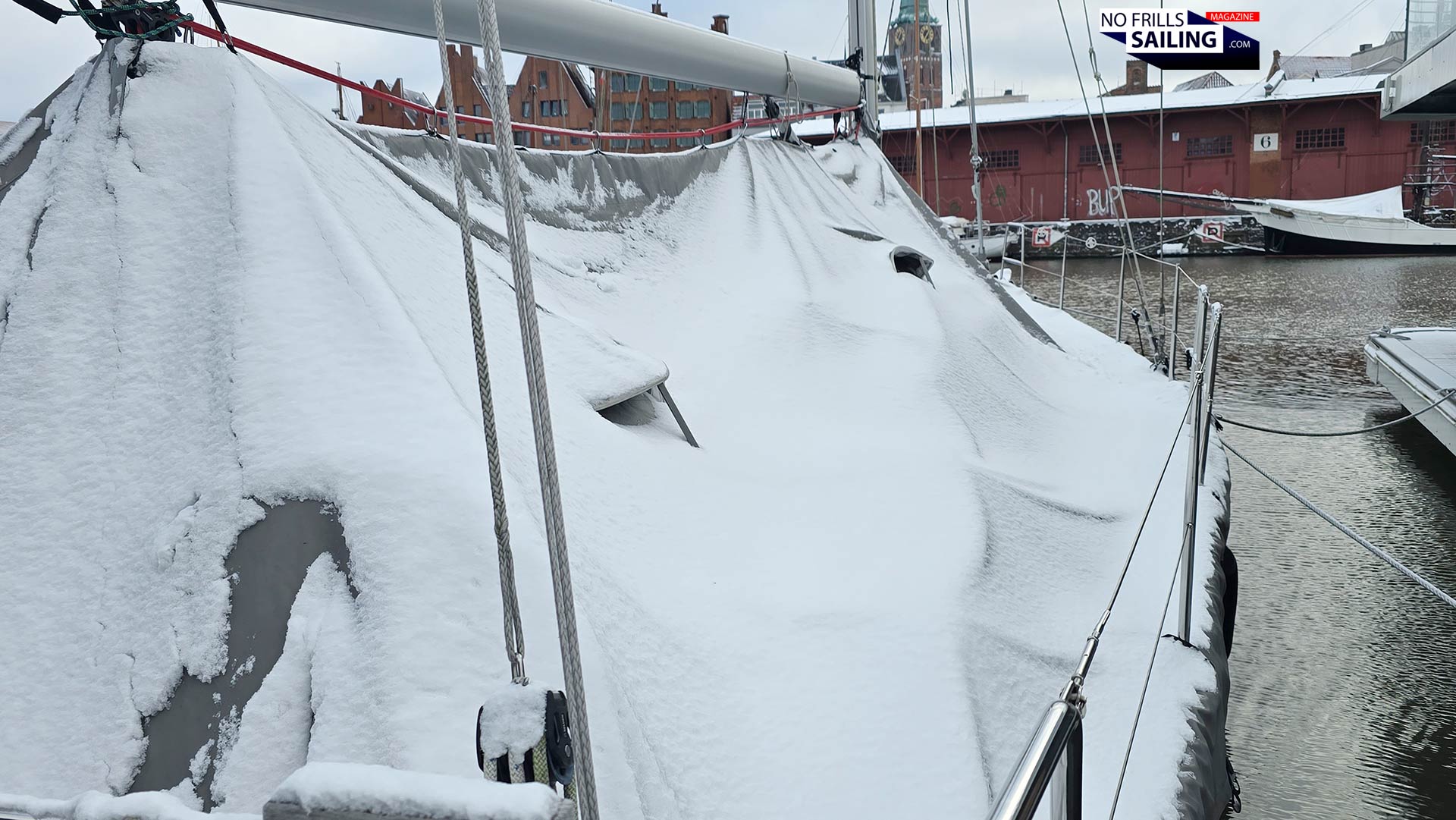
That´s a lot of weight!
Secondly, depending on the latitude you are having your boat stored and the probability of snowfall, it is absolutely paramount that the angle of the “tent” that your tarp will form is steep enough so that snow can slide down from time to time. In the picture above you can see how it shouldn´t be: This tarp´s angle is too flat. Snow can pile up. And because it is also way too loosely fitted, “pockets” of snow have already formed. It´s all not a big deal as long as the snow remains in this condition, but it becomes really dangerous when it melts to water – and freezes over at night again.
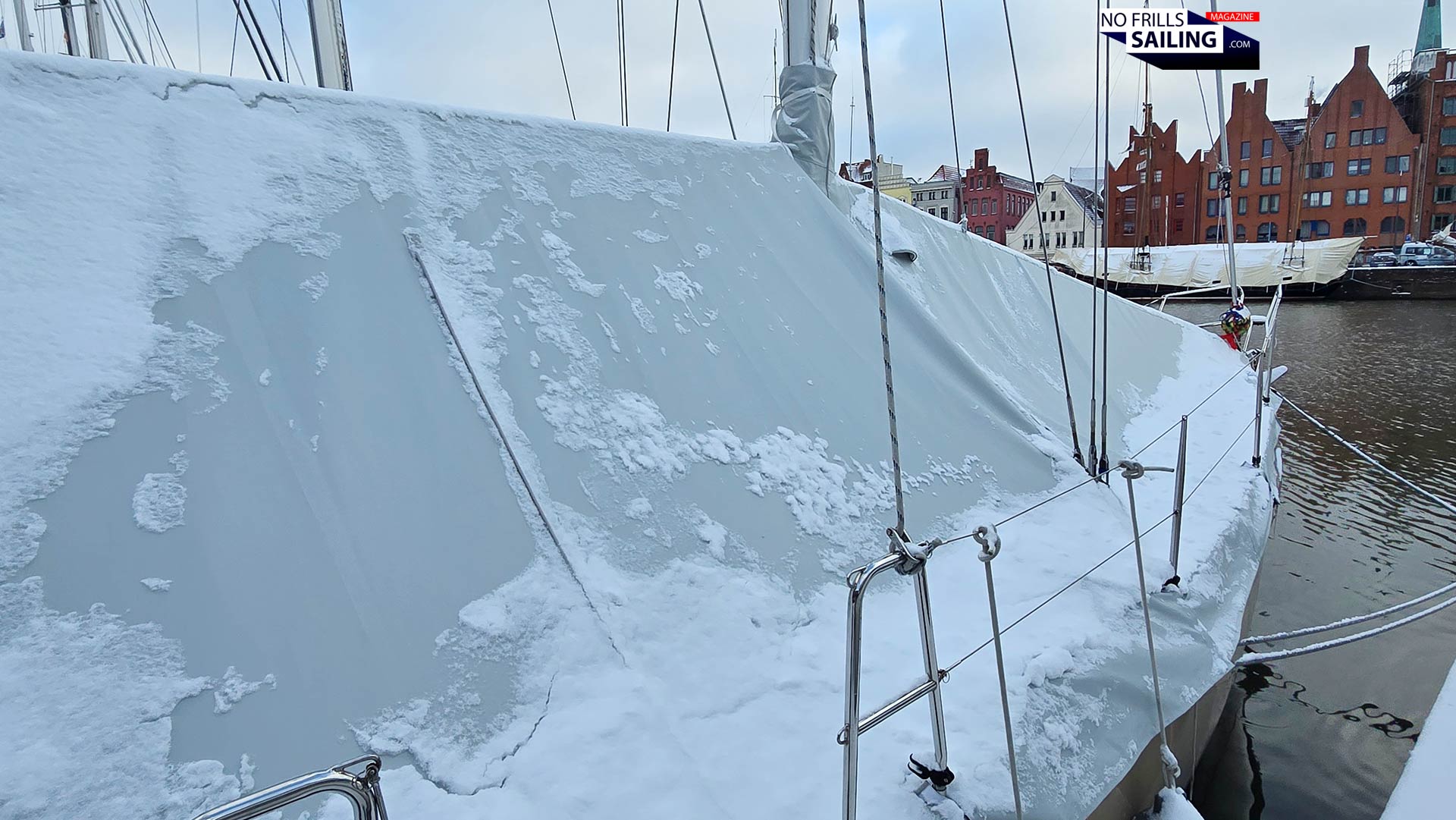
Nice and steep!
When this happens, the pockets now contain huge chunks of solid ice. These can be as long as two meters, weighing well over 100, 200 and even 300 kilograms. This happened to me in my first boat with the DIY-tarp. At some point I couldn´t get rid of these huge chunks anymore because even when I was pushing against these oversized ice-cubes from underneath, I couldn´t get them pressed over the reeling. On one occasion the tarp finally ripped under the pressure and the large ice-block fell down onto the deck. I was lucky because nothing got hit, but such a block could break a hatch. And now imagine this thing entering your boat´s salon … So, let´s have a properly slackened, steep tent over the boat!
The tender points of a yacht´s winter tarp
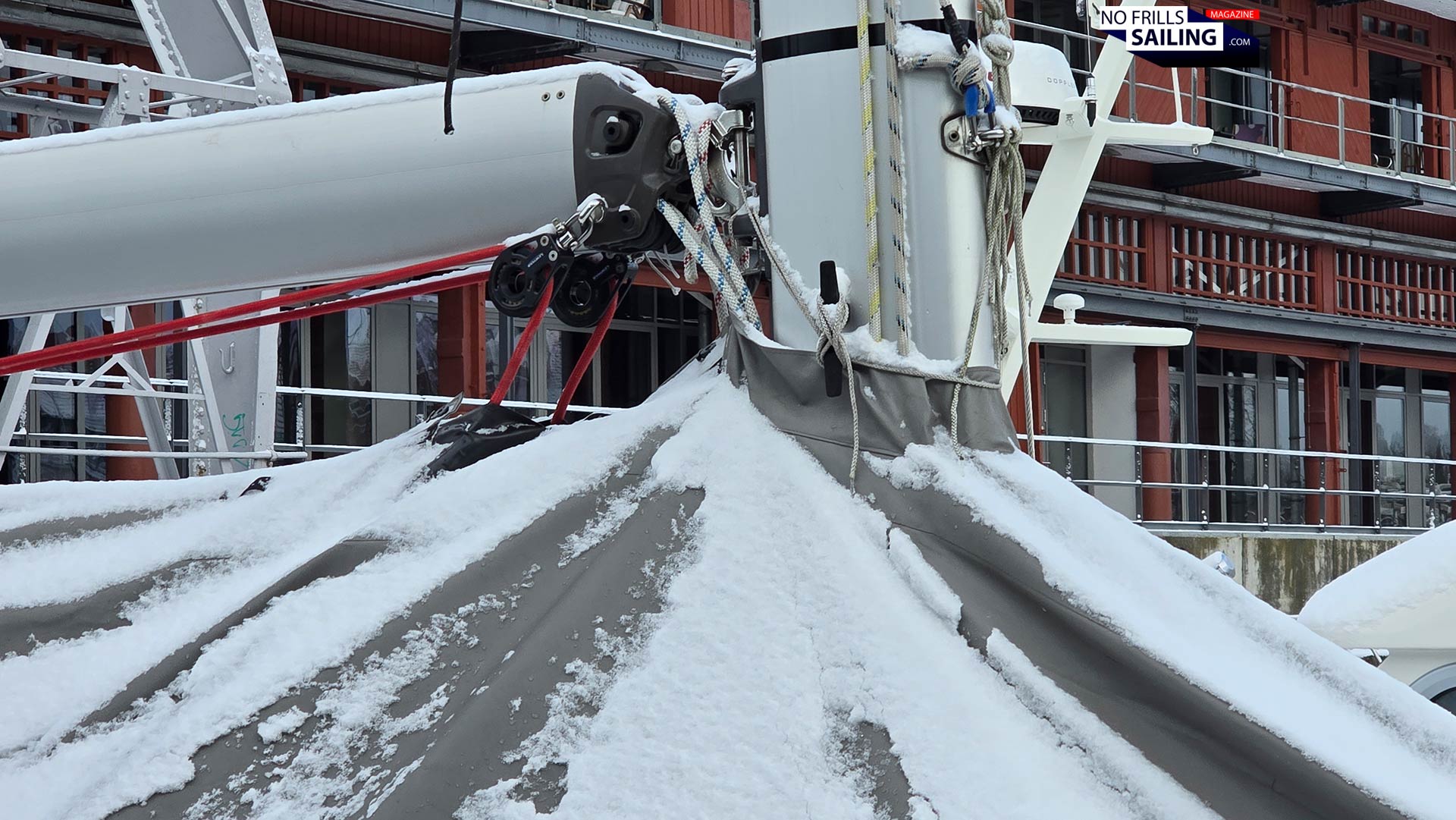
Which brings us to the weak points of a winter tarp – here you have to make sure that your tarp is working properly. Number one is the “collar” sleeve around the mast. As you look on the picture below, you may understand why this area is so sensible: The collar is a wide-radius, often closed by velcro or lashing. Lots of water will come down the mast, because at least where I live, there is much more rain than snow.
Lot of water can enter through here
Water usually finds it way, no matter what you do. Even more so if you realize that during winter time there is constant mechanical strain on the tarp due to wind and gusts, which are pushing and pulling, gripping and ripping on the weakest parts. Up here at the collar, the chance of your tarp becoming a gaping wide open hole letting in the moisture is very high. Once fitted, most tarps have no means of re-arranging the tight fit of the collar: So when ordering or making one, make sure there is a mechanism to re-arrange and set up the collar again.
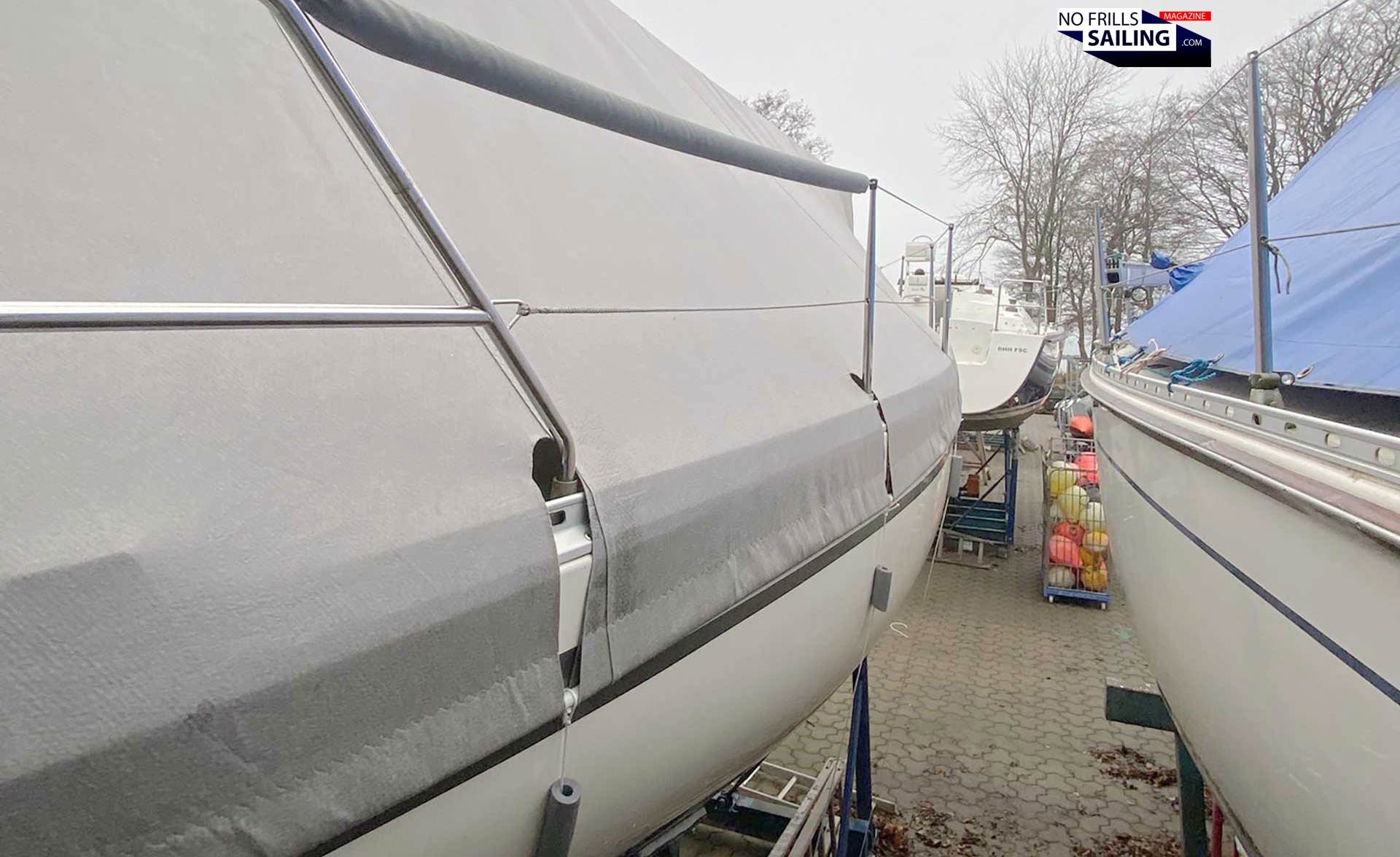
Tight tarp collars: Nice!
A second very important thing is ventilation. We do not want a completely airtight tarp. This is impossible to achieve on the one hand, but also, counterproductive. A certain flow of fresh air underneath the tarp as well as into the boat itself must be guaranteed. This way, no mildew or mold can develop. By the way, here´s an article how you can keep your sailboat dry inside for the winter time – spoiler: That´s at least two dehumidifiers per cabin, frequently checked and emptied of collected water.
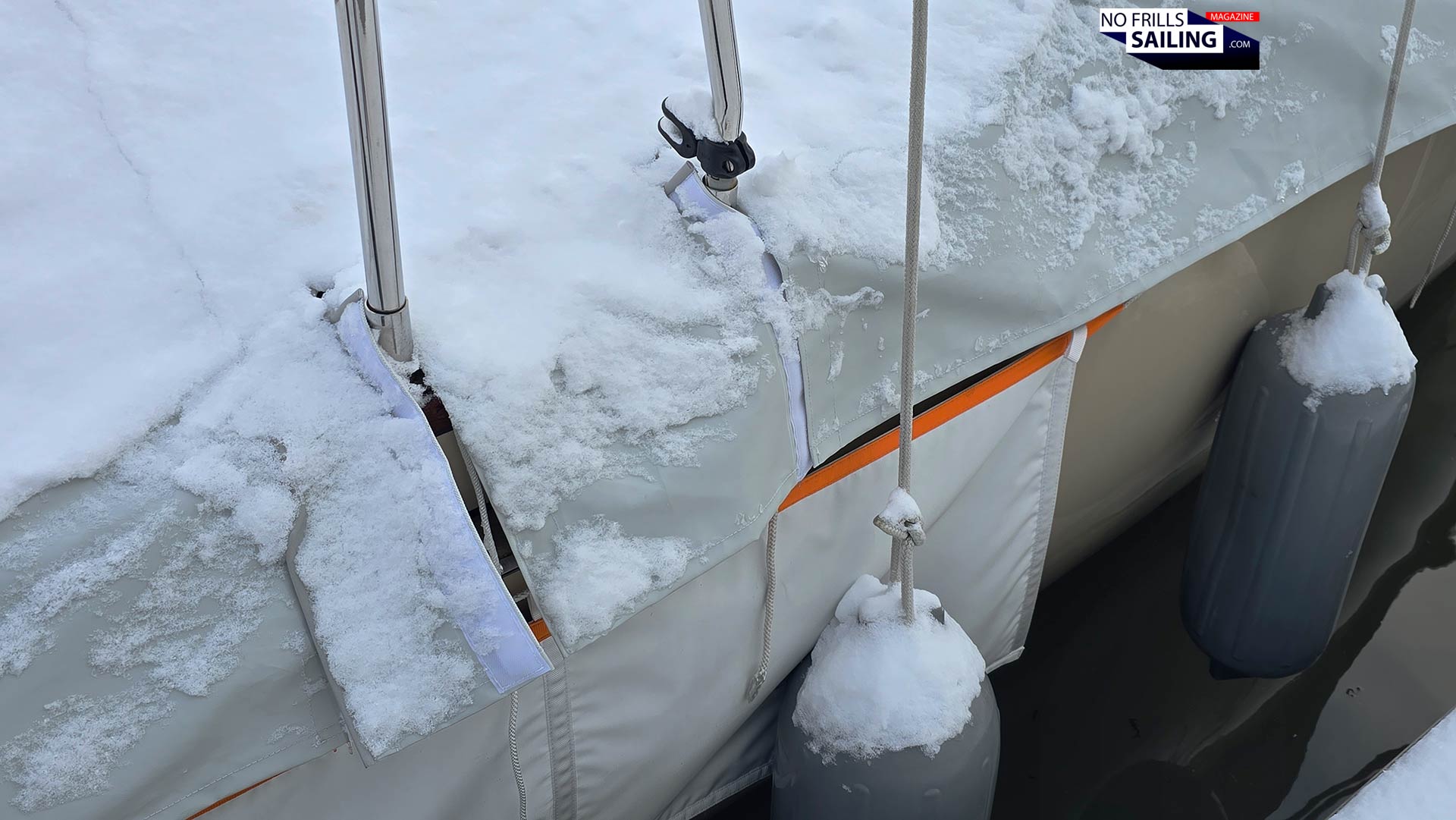
Protection agains chafing
Your tarp should have a few openings which allow air to get inside and outside. Many DIY-tarps and not so-custom fitted tarps leave large openings on the bow as well as in the back section of the boat. This indeed is good for the ventilation, but bad for the boat: This way, dirt, dust, lots of moisture (rain) and even animals can get inside. A green Teak deck may be the nicest, a full breed of incubating sea birds the other end of the spectrum. Also, don´t underestimate the amount of sand and dust that can pile up in your cockpit during winter time. Of course, you´ll have to properly clean the whole deck after winter, but I´d prefer my boat as clean as I can get it. So: Don´t leave too many large openings on the bow and stern!
Winter tarp basics: A proper subconstruction
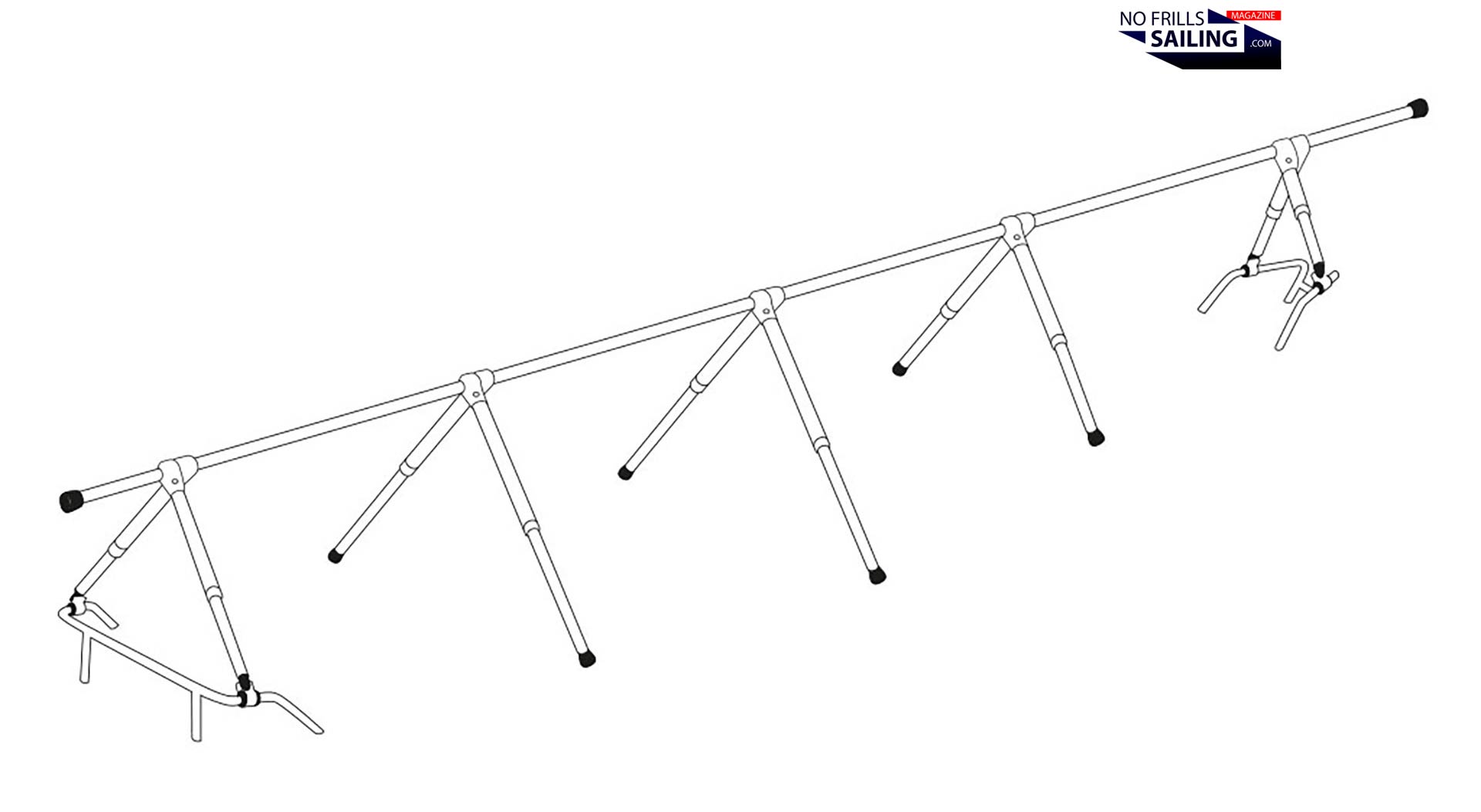
Back in the day I built my own tent over which I placed the cheap Amazon PVC-tarp. But there´s a great product you can use to set up a custom-fit subconstruction for your tarp too. It´s a Swedish company called Noa Aluminium SE. Many wholesalers offer their system which, I am sure, many fellow skilled sailors will also endorse if you ask them. It´s a system that can be set up easily by yourself, can be custom fitted to suit the individual measurements of your boat and which is scalable.
This is how the Noa-system works
Also, this system is made of aluminum, which makes it very strong and durable on the one hand, but also lightweight on the other. It will withstand high wind speeds and even storms (when secured properly), and you can re-use it for many, many, many years. My wooden DIY-tent showed signs of ageing and deterioration soon after the first season and needed constant re-adjustments, repair work and even reinforcements.
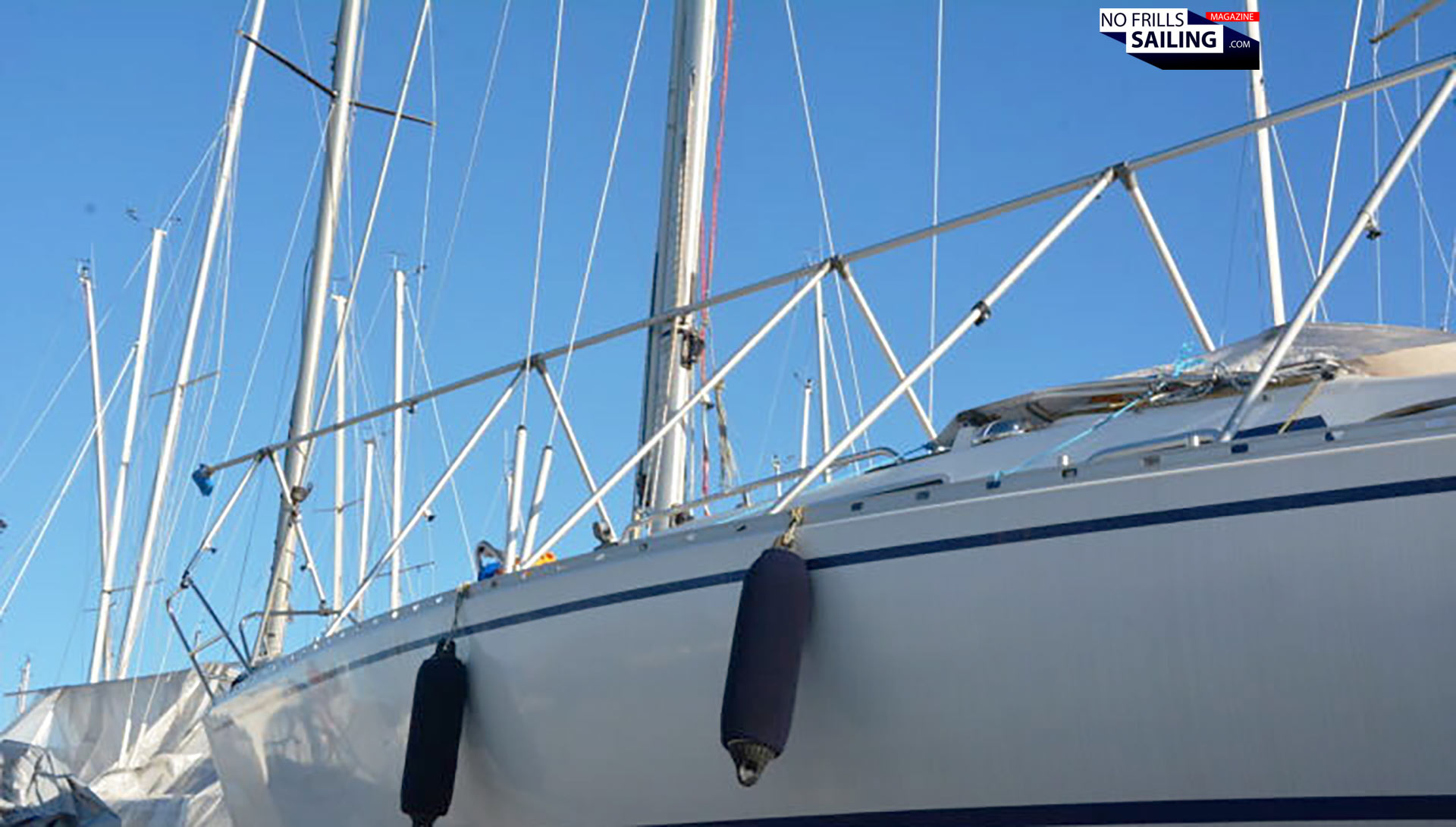
A Noa frame set up
If you order you new sailboat winter tarp at your local sailmaker shop, you either advise your service provider to order and custom fit such a subconstruction for you or you already have it and he will tailor-fit the tarp according to the aluminum-frame. It really makes sense to invest in something that is as rugged and high quality as the Noa-frame, because … winter is every year. Once acquired and fittet, it will hold up as long as you own the yacht.
What´s the best material for the sailboat tarp?
Most winter tarps for sailing yachts are made of simple PVC. Like the ones used for trucks. Many have reinforcements and really hold up against the challenges of extreme winter weather well. But PVC has two major downsides: You need a really heavy quality to make sure it won´t rip in a storm, so the weight of the tarp itself is great even before snow makes it even heavier. And secondly: PVC is airtight. But there´s an alternative.
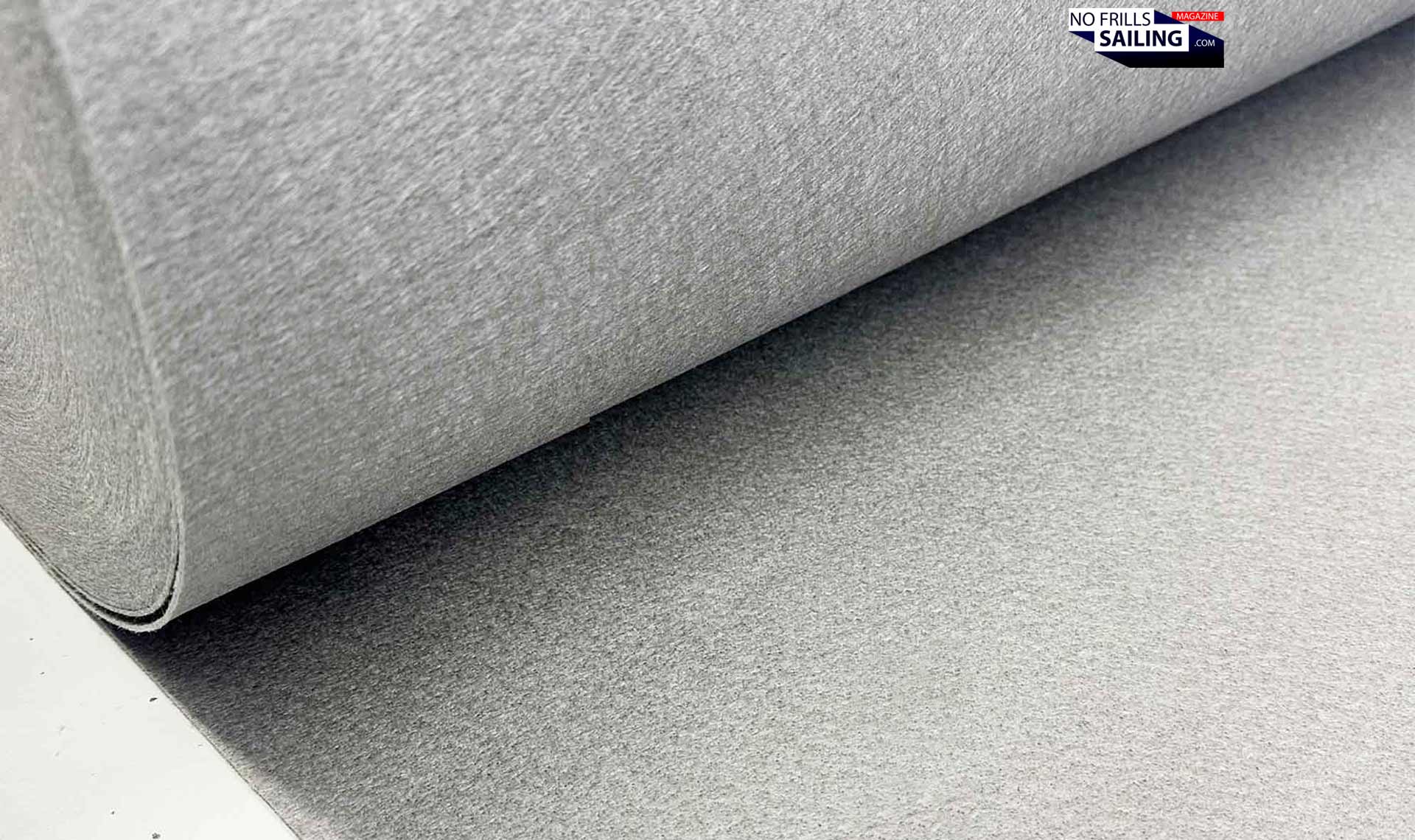
Lightweight, air-breathing fleece: Perfect!
My local sailmaker happens to be Quantum Sails, as you know. These guys git inspired by Danish sailors, who discovered a material that is preferably used in construction to wrap buildings. It´s a kind of fleece-like material made from a polypropylene-polymere. They call it “CoverTexx”, which is not its trademark name, but maybe you ask your sailmaker if he knows. This fleece has a thickness of only 1.8 millimeters and weighs just about 300 grams per square meter: Which makes it far lighter than PVC. And it is as strong as you want it to be!
Left: A custom made tarp with CoverTexx
Best part: It´s water-repellant, can ventilate air (so that you do not necessarily need to fit air vents). It´s a joy to work with, says the sailmaker, which makes it easy to custom fit and stitch together to fit your boat´s shape. It also has a certain property to being stretched (not so with PVC): Hence the nice look and steadfast fit. Last not least, this material is recyclable, which is a plus for our environment. So maybe you ask your sailmaker if he can get hold of this not-so-new material when ordering your sailboat´s new winter tarpaulin. I´ve seen this and held those tarps in my hand, it´s definitely a difference like day and night.
Custom made winter tarps: Worth their invest!
Which brings us to the last chapter of this article: DIY or professional service? The cool thing about this blog is that I myself can look back onto my own history with sailboats, sailing and equipment. That´s almost 10 years now since I started this project. And by looking back I often see myself trying to save money, to cut corners, to be “smart” and do stuff with my own hands. Nothing against DIY, don´t get me wrong, but unless you aren´t a skilled craftsman (which I am definitely not!), do-it-yourself and sailboats usually turns out bad.
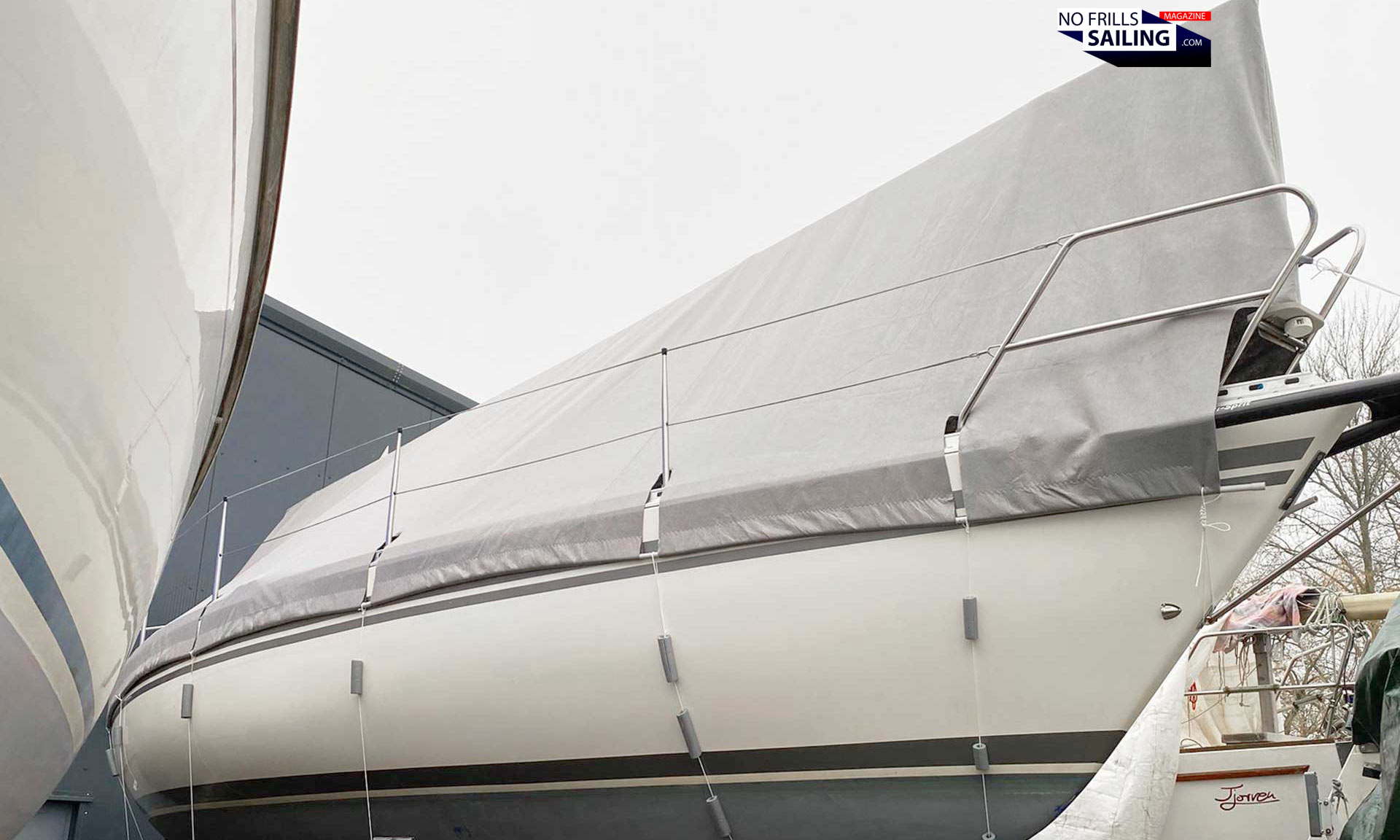
This is how a proper tarp should look like
I mean, look at the picture above: How perfectly tight, flawlessly fitted and straight this Quantum Sails CoverTexx winter tarp sits on its frame. It´s just as perfect as you can imagine it! This is the standard you will receive if you order it from a skillful master sailmaker. And now just briefly scroll through this article and compare it to my DIY-bargain-tarp. No further comments needed, right?
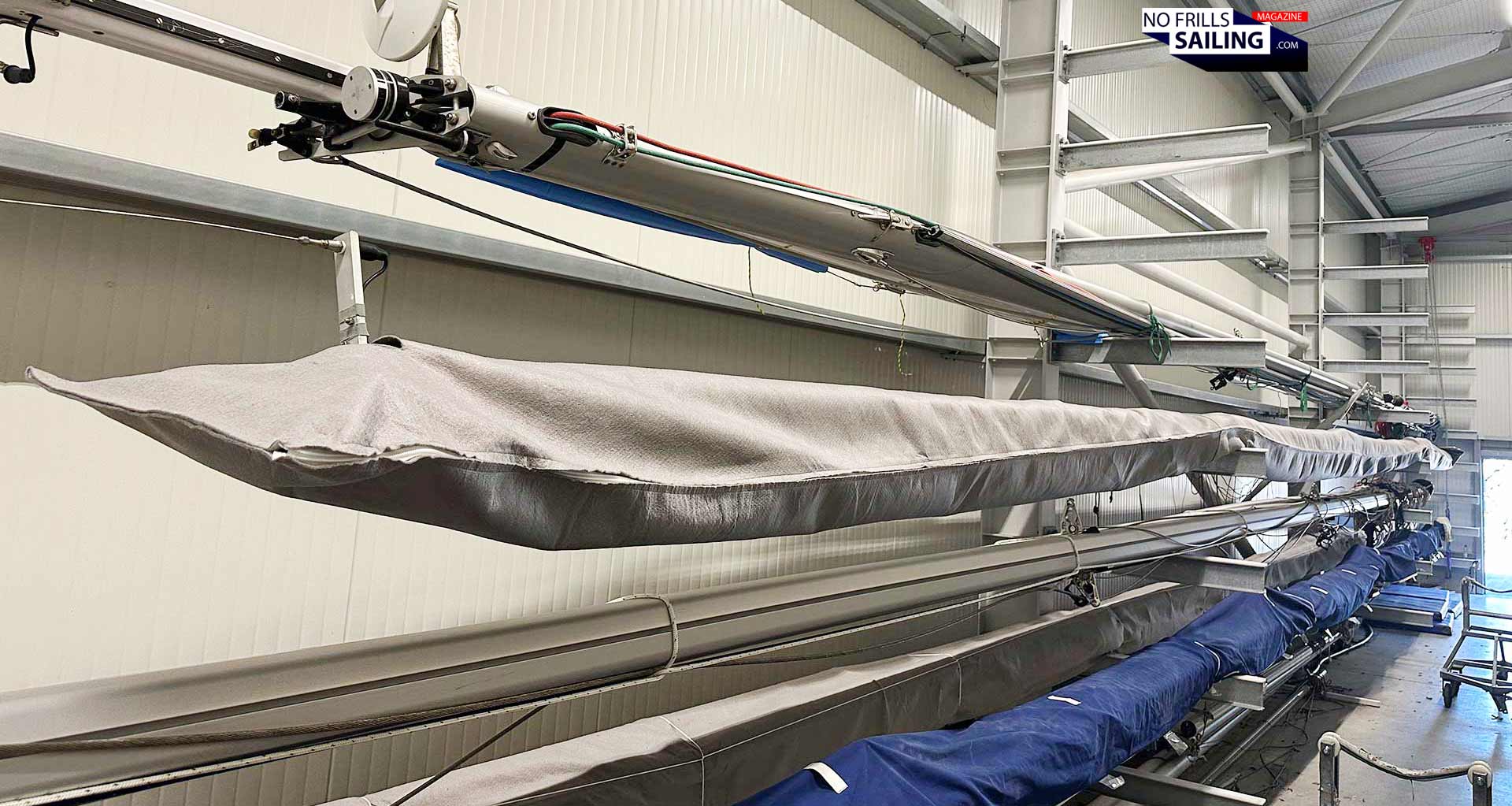
Even for your rigging!
If you want to make sure that your boat is fine during winter, don´t cut corners, don´t save a few hundred bucks on a proper tarp. I´ve seen many PVC-tarps ripped open by winter storms, even damaging neighboring boats. I´ve repaired my own tarp too many times as well and – the worst about it – when at home, I could never be sure if my boat was safe during a winter storm. So, also for your peace of mind, it´s really worth to spend the budget needed for a proper, safe, rugged, durable custom fitted winter tarp – made by your local professional sailmaker.
Advertisement
What does a professional winter tarp for your sailing yacht cost?
This of course depends of the size and the complexity of your boat, right? Also, a tarp can have many shapes and even purposes: For example, I´ve seen two-parted tarps where the rear half could serve as rain-cover in summer as well. You can have proper doors and even windows in your tarp if you like. The number, shape and complexity of the tarp´s openings for shrouds, clamps and other things also increase or decrease the efforts needed to produce one.
Tarps can be very expensive, sure.
For sure, a skilled craftsman´s work has its price. For a 40-feet sailing yacht you should have a budget from 4.000 to 10.000 Euros or Dollars at hand – as said, depending on the complexity of the construction. No matter what, I am sure that in the end this invest will pay off over the many, many seasons you have a carefree tarp that is fully reusable, easy to set up, repair and maintain. Much better than year by year fumble and twiddle with your shaky wooden self-made makeshift tent.