
“History always sails with you.” This is as true as it can get: Since humans are on boats for more than 6.000 years now, a ship carries centuries of seafaring, adventures, hardship and stories. Even our modern day cruising yachts bear witness to the Vikings, the Galeons, the pirate ships and countless seamen who roamed the seas. That said, the transatlantic slave trade, initiated in the 16th Century, was funneling 12 to 14 million Africans to the “new world.” A colossal crime. And the base for “our” western rise. “The Slave Ship” by Marcus Rediker is a not one, but maybe the most important and detailed standard work in this field – here´s my book review.
To be honest, I have searched for this book for a long time. Of course, there is so much literature and movies about the transatlantic slave trade, many of you may have heard about the insurrection of the slaves aboard the LA ARMISTAD in 1839 or have seen the Brad Pitt-produced movie “12 years a slave.” As there is a lot to read and sea about how the slaves had been treated in the plantations, I always felt that there was very little about the story before: The so-called triangular trade, the “middle passage” in special and how an African ended up being caught and sold in the first place.
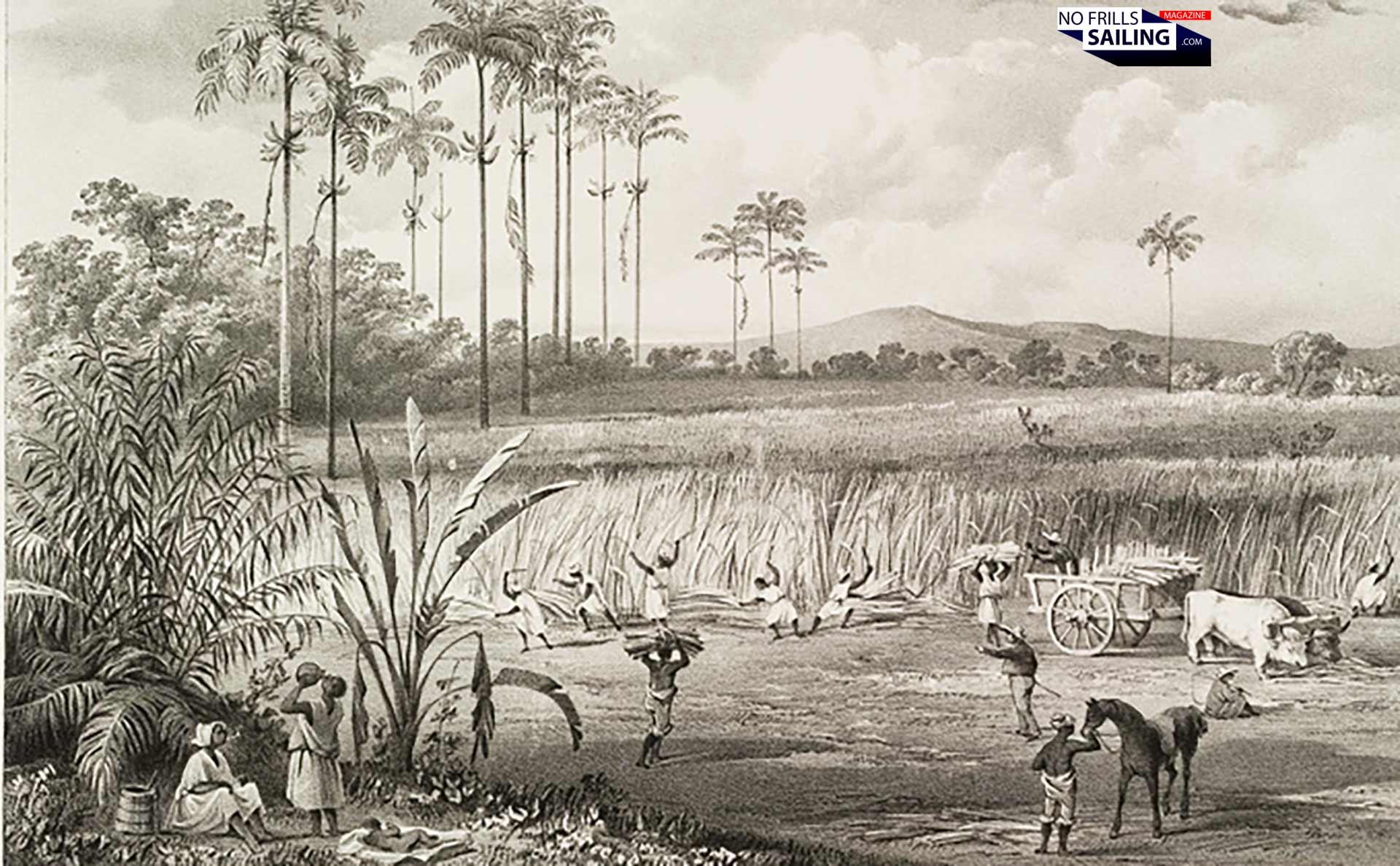
I also have the feeling that much of the available general sources – including what I had been taught in school – is by far not “romanticizing” the matters, but maybe a bit whitewashed or glossed over. I missed the greater picture, and was very much interested to learn where the slaves came from in the first place, how their capture had been organized and how – seen from a very practical standpoint – the slave trade was pulled off for almost 300 years but the major players Great Britain, Portugal, the Netherlands and finally the young United States. So here we are, this is the book!
Marcus Rediker´s “The Slave Ship”

I discovered this book, which had already been written and first published back in 2007, by chance. “How did the slave traders organize the catching, the loading, the transport and the selling of slaves?”, may have been my search inquiry to Google. The Amazon-printed book was recommended and a quick research about it revealed the significance of its author, Marcus Rediker, as well as his special and intimate knowledge of the matter. Marcus Rediker, born in 1951 in Kentucky, is a well-known history professor at the University of Pittsburgh.
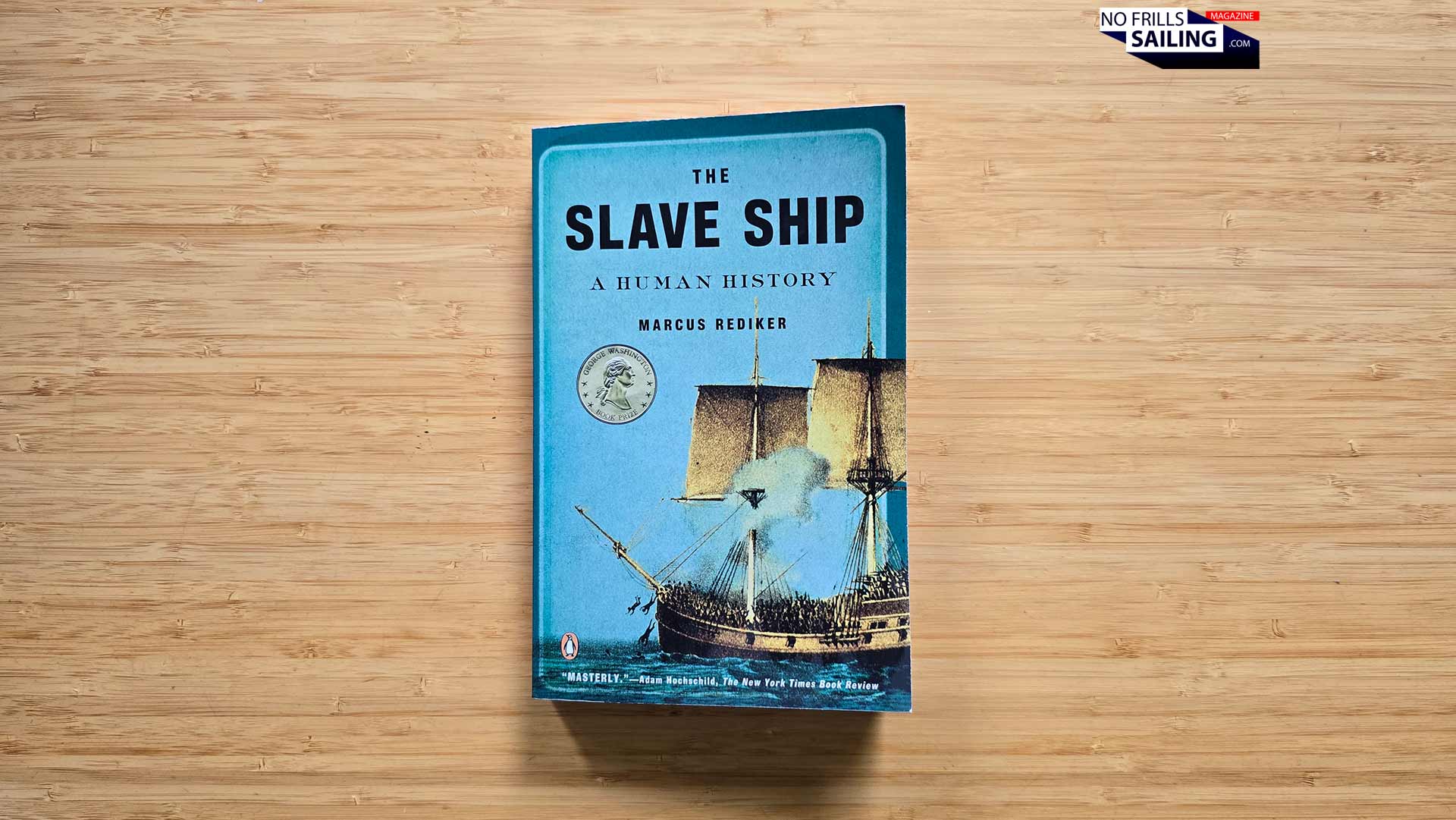
Apparently, “The Slave Ship” hasn´t been his first book on this special topic: “The Many Headed Hydra” from 2000 earned already a lot of praise, fostering his work as an author. To date, Professor Rediker has published twelve books. The +400 pages thick “The Slave Ship” finally centers around the very machine, that made the slave trade possible, that hauled millions of enslaved away from their home continent into a life of captivity and misery, that made a few merchants rich and took the lives of uncounted seamen as well. So let´s take a look what makes this book so special.
Where did all the slaves come from?
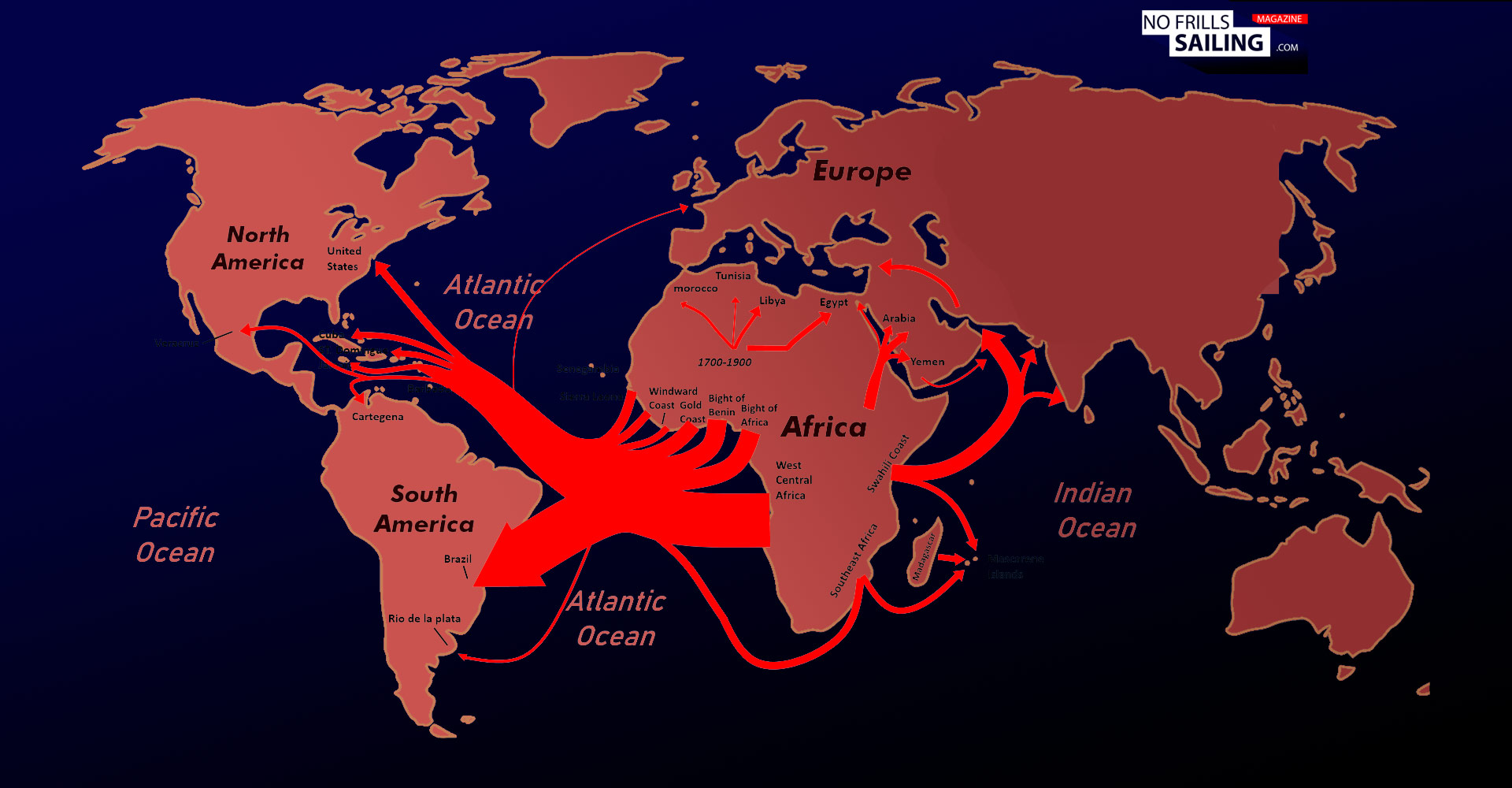
That´s one of the big questions. There are indeed a lot of maps and graphs showing the origin of all those millions who had been captured and sold into slavery between the 16th and 19th centuries. Rediker takes you to the West coast of Africa, where the slave ships dropped their anchors to receive their “cargo”. I found it most interesting to understand that practically from modern-day Senegal (called “Senegambia”) all the way down South to modern-day Angola practically the whole Western coastline of this continent was engaged in slave trade.
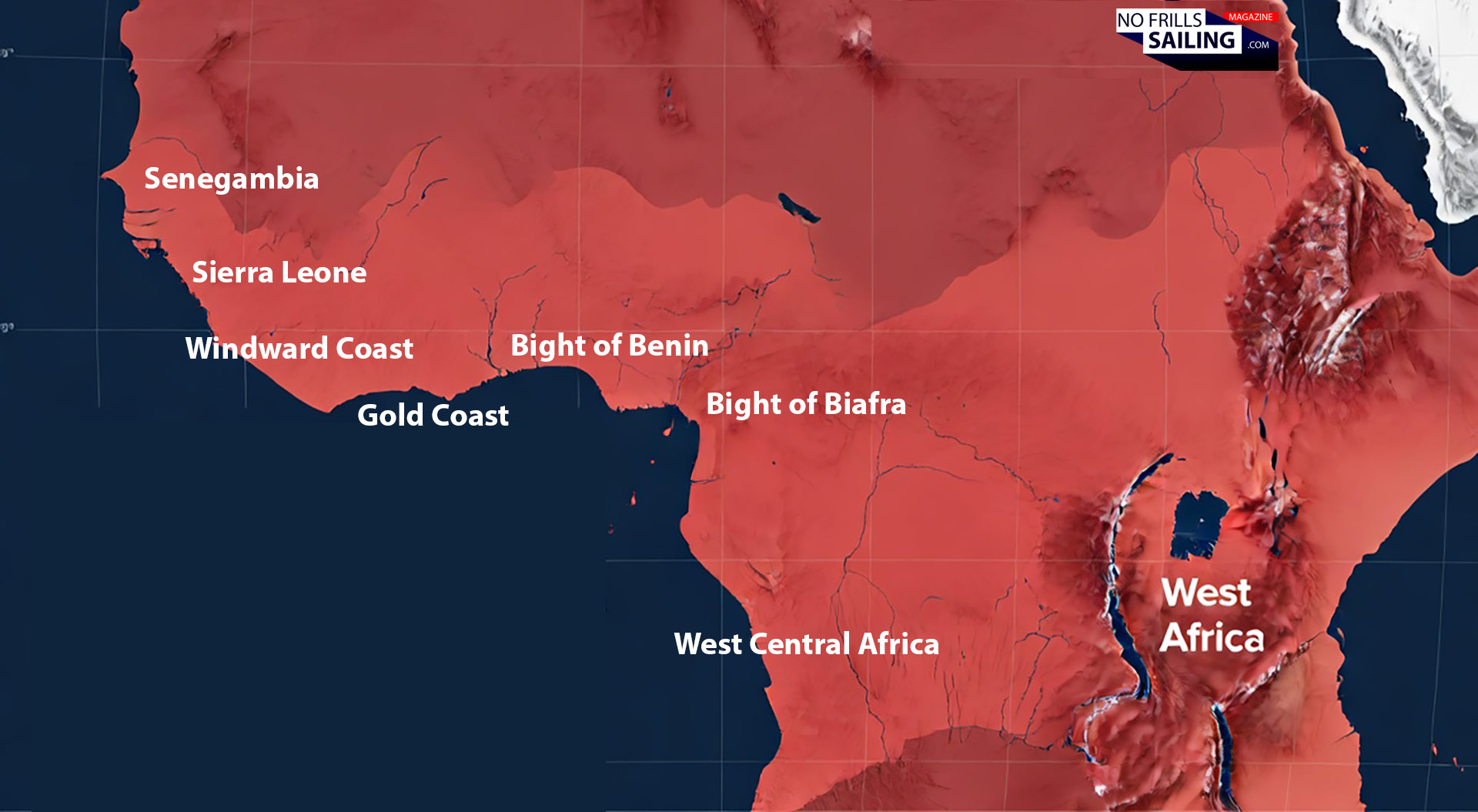
By that it may astonish you, but the white men from Liverpool, Bristol or Charleston did not invent slave-trade by any chance. They found a very vivid and intact system of capture and merchandize of slave: Arabic and African tribes had already long been active in this business. The white men just funneled the stream of people to the West coast – and increased the trade volume manifold. Professor Rediker explains in great detail how the different areas, from North to South, emerged, developed, specialized and worked as principal embarking points for the transatlantic slave trade. In this, he takes us far into the hinterland, realizing that the horrors and started way, way earlier than “just” aboard the so-called “Guineamen”, as the slaver would be called.

In fact, the Senegal coastline, upriver Gambia, the European forts of the Slave and Gold Coasts and all the other locations of embarkment had been so heavily used – like modern day fishing grounds being “overfished” – that the hotspots of slave trade slowly decended further down South along the treacherous, infectuous and hazardous coast of Africa.
How did the slave traders practically manage the whole operation?
As a sailor myself, interested in all sorts of ships, types and iterations, it was of utter interest for me to get to know more about the slave ship as a means of transport. Have they just taken old freighters and modified them to carry as many people as possible? Did they construct and build slavers on the shipbuilding yards of the UK and in America with the clear aim of being able to haul people? Again, my general knowledge was pretty thin, but “The Slave Ship” delves very deep into this question.
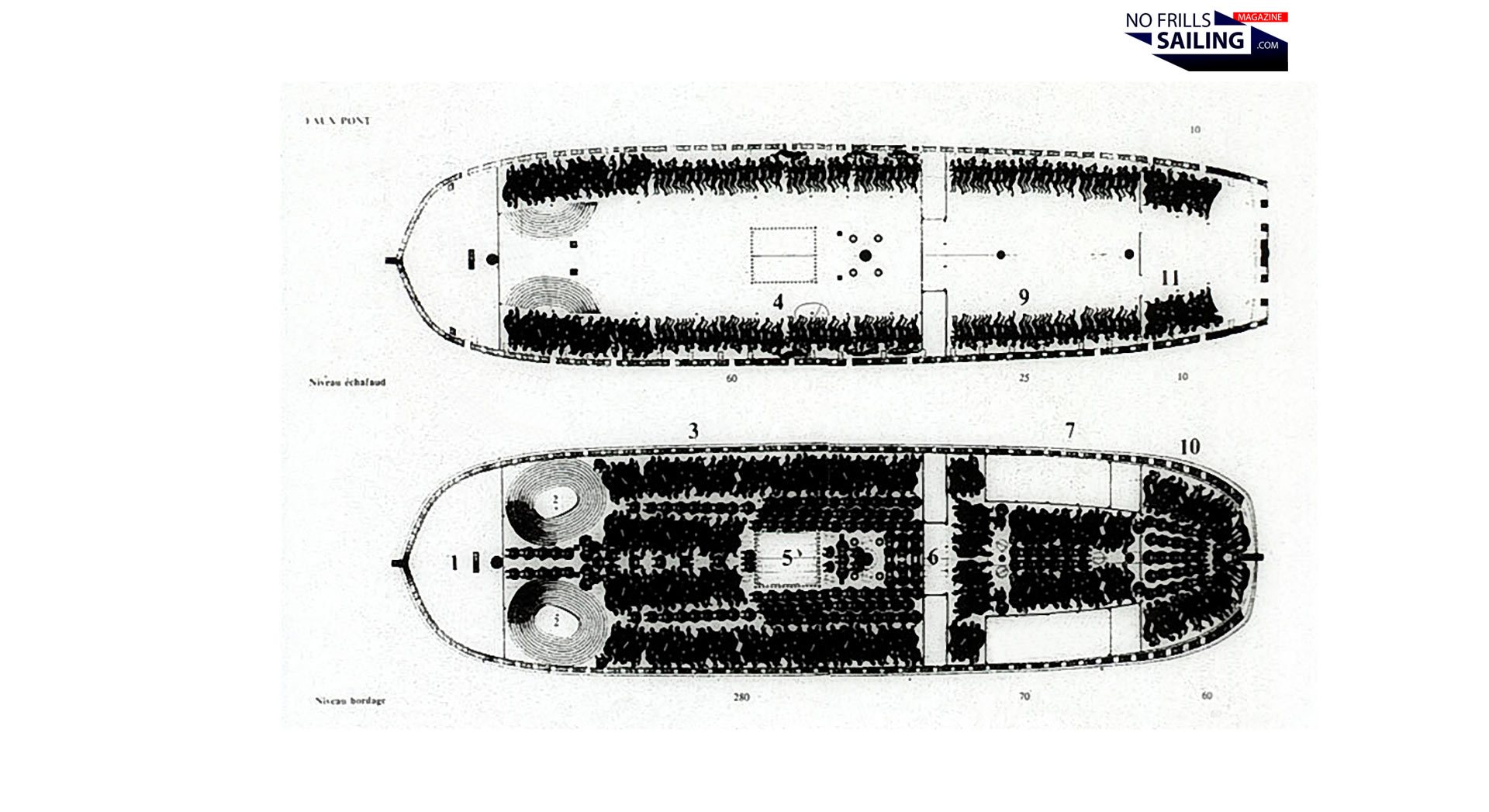
We learn that there were a many great deal of different types of slave ships, coming in various sizes. Albeit the big, three-masted deep-water ships are amongst the most know, most of the slaver fleet consisted of two-masted Schooners and “Snow” (or “Snauw”) called ships of a medium size of some 100 tons. And of course: Those ships, be it the converted ex-cargo freighters or the purpose-built slave-haulers, had very special “modifications” and peculiarities, which are described both in plain objectivity as well in all the horrors these directly caused in the book.
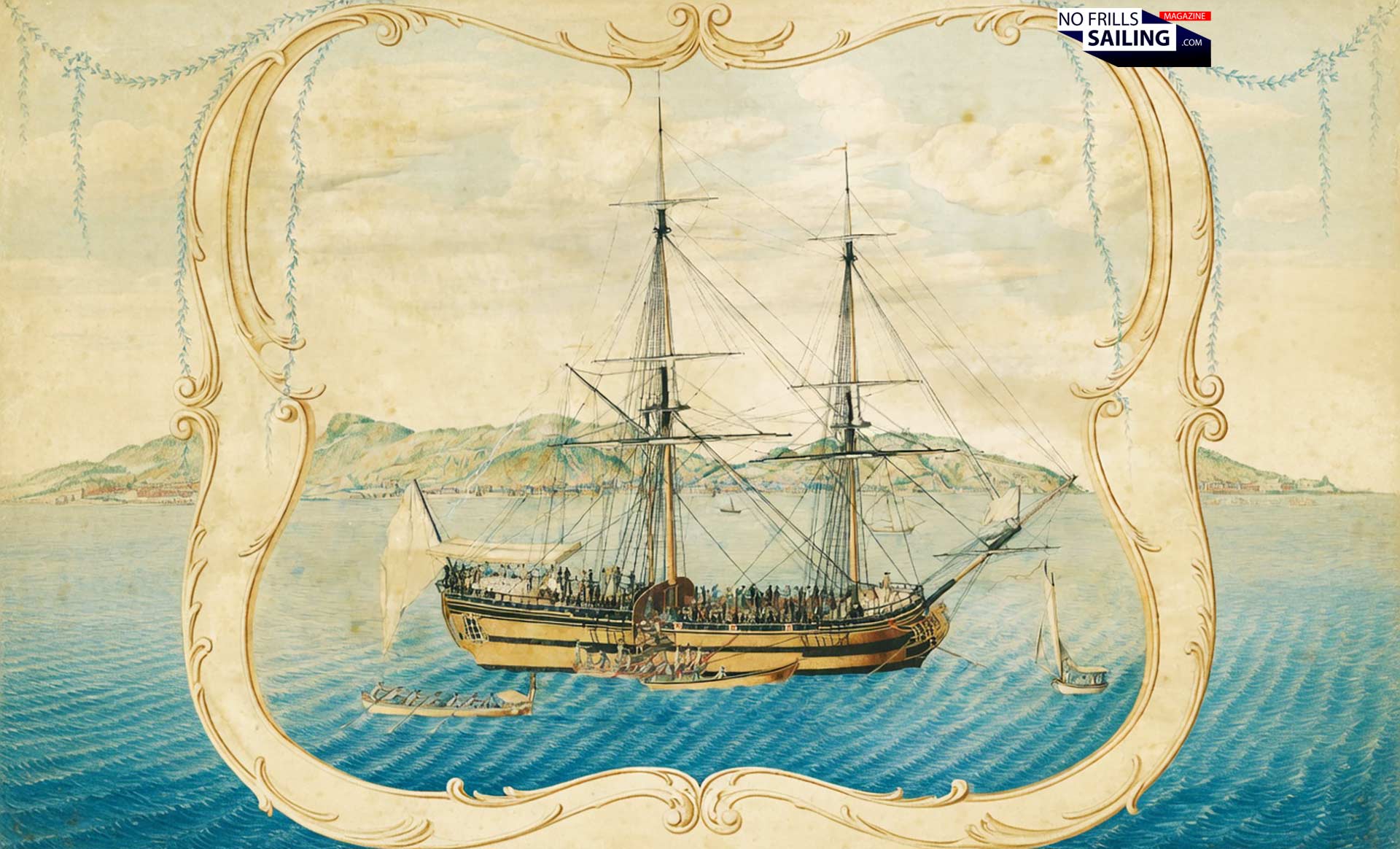
Be it the horrendous state of sanitation (if there was any), the nauseating stench from below decks, the means of fixing the slaves with irons and shackles, of storing them in “bunks” or the infamous erection of the spiked “Barricado”, fitted with small cannons and weapons, separating men from women and children. Marcus Rediker takes us aboard the various types of slavers, cautiously and meticulously explaining what live (and more of it: death) aboard these hellacious vessels was like.
The Slave Trade in an historical context
In the face of the staggering number of 12 to 15 million people being siphoned off out of Africa and thrown into the mercantile economies of the United States and the overseas colonies, the question I was wondering about was just how to organize such a vast venture? How was it possible to literally catch so many people? Professor Rediker has a “wonderful” style of writing, if one can call it this way. His texts are interwoven with quotations from primary sources, both slaves, slave traders, captains and witnesses. We learn in horror, that for many slaves their ordeal began months before casting off the African coast, being marched hundreds of kilometers across Africa. It is unknown how many millions more have died in that early phase …
I found it particularly interesting to realize that slave ship Captains often had to sail up and down the coast, dropping anchor at forts (run by Europeans or African intermediary slave traders) or in open bays, just to fill up their “cargo” one by one. It was seldom the arrival of hundreds of poor souls, but merely in small groups. That said, it could take up to eight months (!) before a slaver had been filled up and was ready to set sails. Can you imagine? Being forcefully marched through half of Africa, sold many times over, just to be brought aboard this vessel and having to endure more than half a year down in the dark, moist, stinky dungeon of a slave ship?

This might be the standard work of its topic
It is a horror-tip of its own. And honestly, apart from the rich merchants far away who funded this ordeal, it´s not quite clear if the executors of the slave trade were better off. This is certainly valid for the ordinary seamen and officers of the slave ships, who were as well just a number, disposable tools, dying at a similar rate as their “cargo” did. These poor lads had been pressed or blackmailed to become part of the crew, often subject to the cruelty and perversion of their bloodthirsty Captains. Victims and culprits in unison. Rediker shows the sad reality of being a crew member aboard a slaver as well as the borderless, sickening cruelty of many Captains.

In the end, reading “The Slave Ship” is captivating: I read through this thick book in just four days, devouring the pages. In its blank, rough and unpolished honesty, there is no whitewashing, no romanticizing and no mercy, especially not for the readers. By diving deep into the blood, suffering and death of millions, by understanding just how simple, yet intricate this system of the transatlantic slave trade was, we come to realize just how monstruous this phase of Western history was. And finally, how much transformative the slave trade has been to this day for the USA, for Europe and ultimately, for Africa as well. It´s a must-read for anyone who is interested in this topic, a true standard work.
My assessment of “The Slave Ship” is 10 out of 10 points.
Pictures, if not shot or made myself, under creative commons by Wikipedia
You might as well be interested to check out these relating articles:
Modern slavery: A shocking documentary about India´s “ship recycling”-industry
The triangular trade and the British economy
Fiction, but pretty good depicted: “Black Sails” series is a must-watch!