
Internet connectivity is a must-have on sailing yachts nowadays: Apart from Netflix streaming, modern navigation equipment, the latest weather forecast and even berth reservations are no-brainers – provided there´s enough down- and uplink capability. Starlink proves to become the threshold for internet on sailboats. And I happily join the users club.
I know, I know, it´s the gazillionth Starlink-article, probably the news value of yet another unboxing flick is deemed zero, but don´t be so fast! For me it is indeed more than just clicking on the “buy” button and receiving my setup a few days later: I have really invested a lot of time and research (by reading through a gazillion unboxing articles and watching a bunch of YouTube tutorials by fellow sailors) to finally being able to make a more or less educated decision for my setup.
In this series I invite you to follow me from the decision making process (current article), to the finished raw setup aboard, the installation and – hopefully – the final first live test. After all, it´s this hardware and the impressive, awe-inspiring network of thousands of satellites that will make sure that you receive the latest in yachting, cruising and sailing. So, let´s start where al of you have started and maybe some of you will begin their journey to finding the best, most practical and effective solution for onboard-connectivity.
Why is internet on board so important?

My heart jumps a bit, the DHL-guy rings at my door and hands me the Starlink package. Finally it´s there, my own piece of the sky! With my new boat in its final construction phase, I have to get all the stuff needed to make it sail ready, internet is one of these functions I cannot skip from day one. Why? Because not only does my income rely on proper internet connectivity, but I´ve switched the whole navigational part from classic chart-plotter to the internet-fed Orca system. I can´t and won´t download all the electronic nautical charts at once, so constant uplink is paramount.
Secondly, it´s a matter of safety: Why not cash in on the opportunity of seizing the latest weather data and forecasts in real time? I mean, it would be stupid not to take the advantage. Weather planning and weather routing has become an easy issue even for non-racing skippers. I am planning to sail a lot with my kids, and of course I will sail a lot single handedly. So reliable weather and wind forecasts are an important issue here. I won´t need a 24/7 connectivity, but I want the best possible solution, and that is why I went for Elon Musk´s Starlink-service.
Starlink Mini, High Performance or Standard?
Was SpaceX the only solution? No, of course not! There is still Iridium. In fact, people who may ave hoped for falling prices for Iridium-Go had are left disappointed as these did not go down (although now more up- and download-data are included). Iridium, to be honest, was never a question for me. I consider this maybe a more reliable service, but more for the “pro” users. On the other side, I as well looked at GSM-based services. I have many boats sold with the Yacht Sense-system by Raymarine and it works absolutely nicely. The downside: You need to be in coastal areas within GSM mobile phone networks. So that´s nothing for an offshore-crossing. Even my relatively small Baltic Sea home turf has a lot of white spots. Again, nothing for me really.
So that´s just Starlink left then. But which one? There are basically three hardware setups currently available. The Starlink flat/high performance dish is the recommended one when it comes to stable connectivity in motion and unlimited coverage worldwide. It´s relatively large, bulky and heavy. Current consumption is high, as the initial setup-budget. Starlink Mini is favored by many fellow sailors, for its price, it´s handy size and the nice data-plans (cost). But worldwide coverage may be unsuitable, it is indeed not recommended for offshore use. That leaves the standard dish, a kind of “happy medium”. It´s current consumption is fairly good, output and reliability, even offshore, is deemed acceptable by many blue water sailors. So I went with this.
Unboxing the Starlink package
In fact I was happy to even being able to get one. For some reason (maybe Gen 4 is due to being released?) the Gen 3-set wasn´t available in all-too many German online stores and I couldn´t order it directly from Starlink without a data-plan. This is something I will need in a few months, so I wanted to get the hardware without a subscription first. According to my research, the price was around 280 Euros from Starlink directly, the few shops still having the dish on stock charged 450 to 550 Euros. I was happy when I found one selling it for 350 bucks. That´s for capitalism …
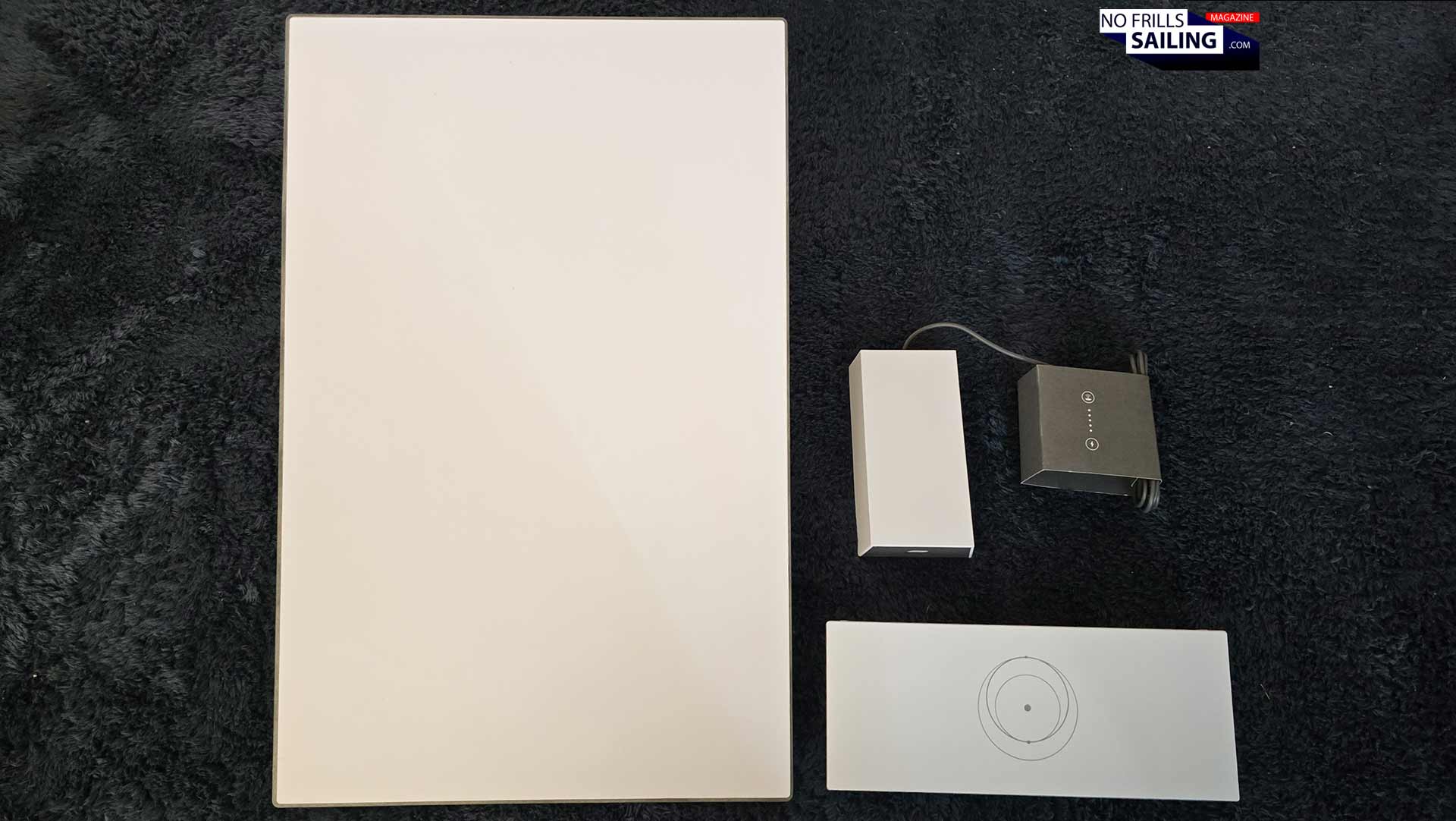
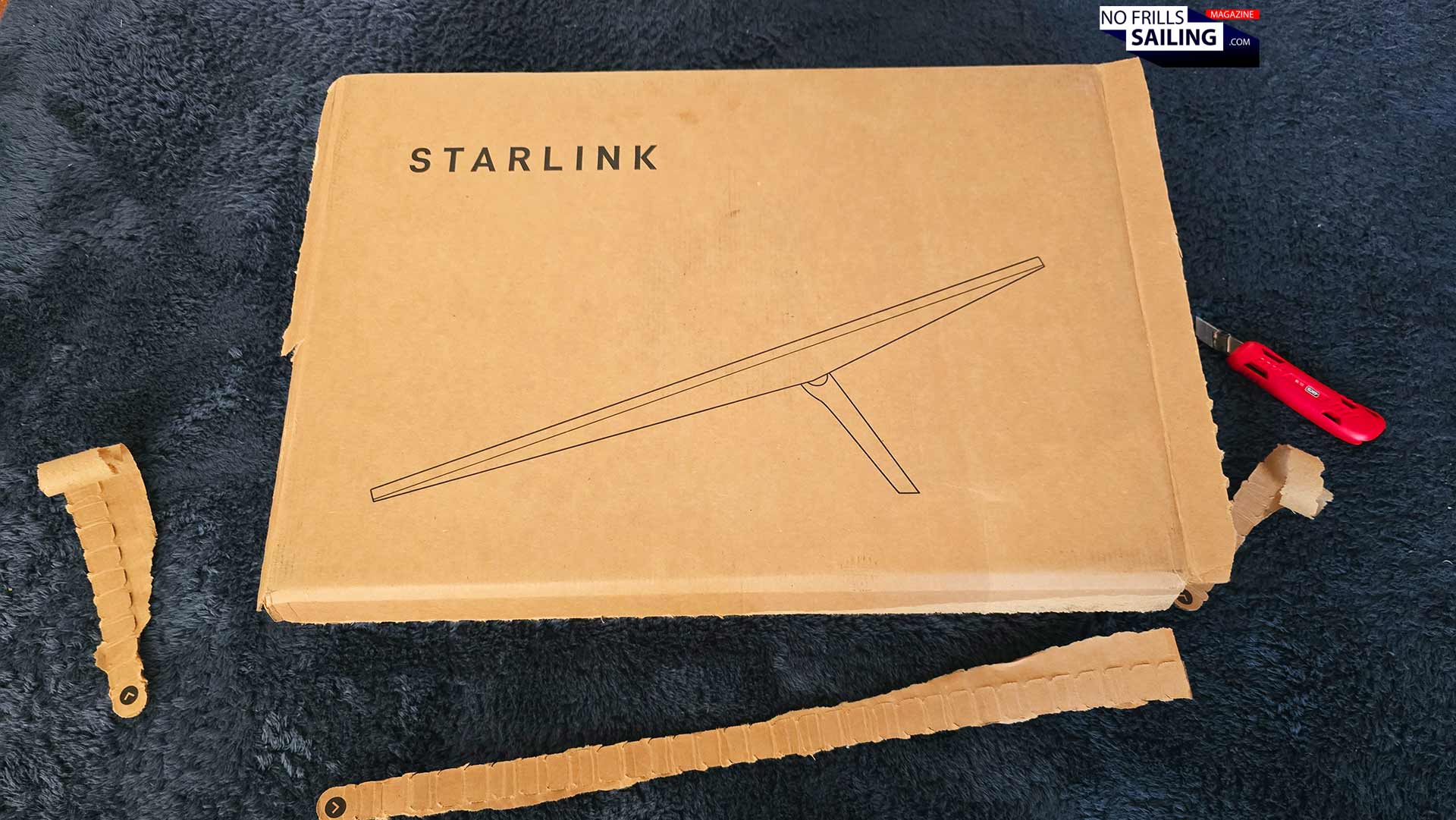
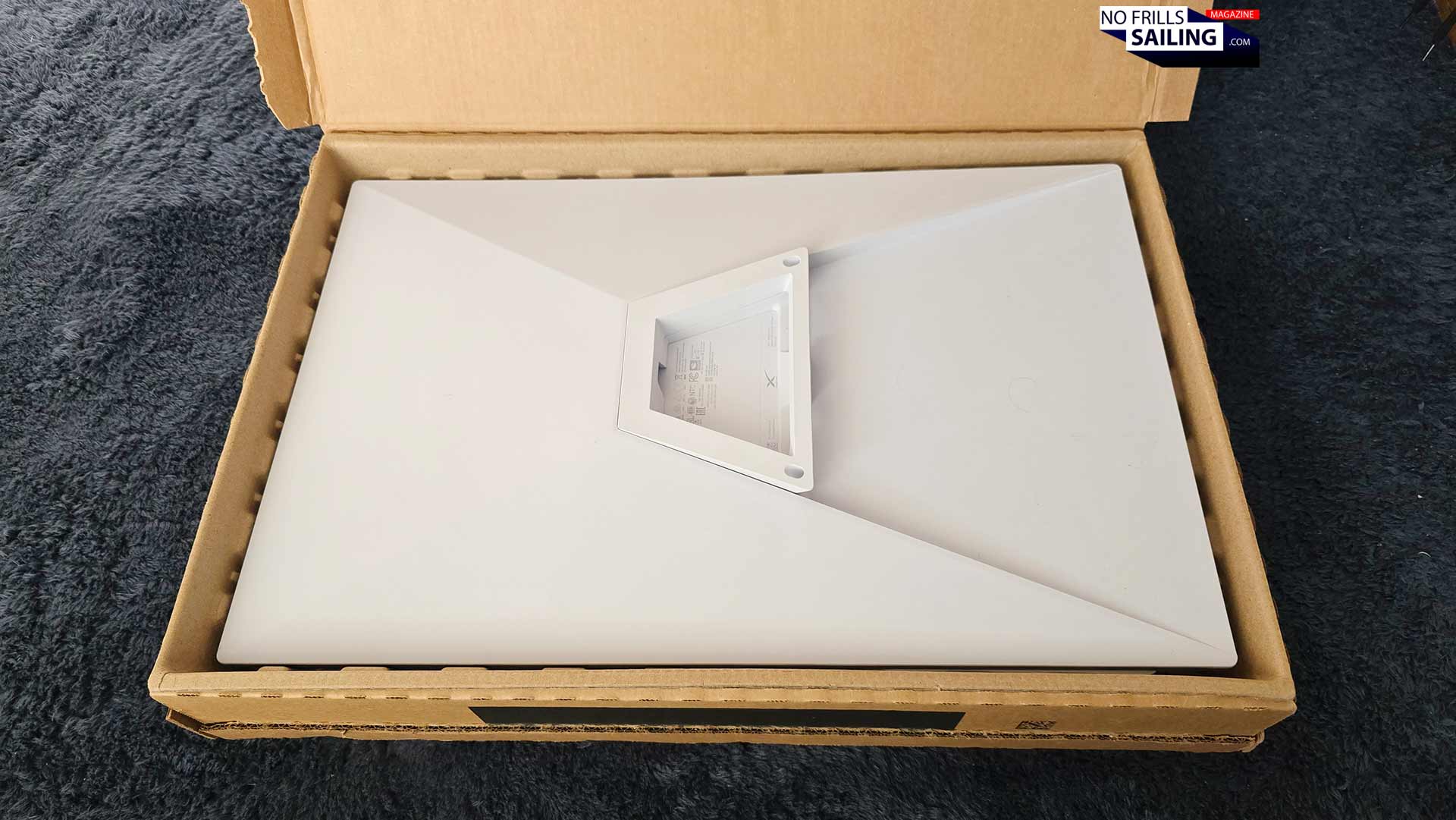
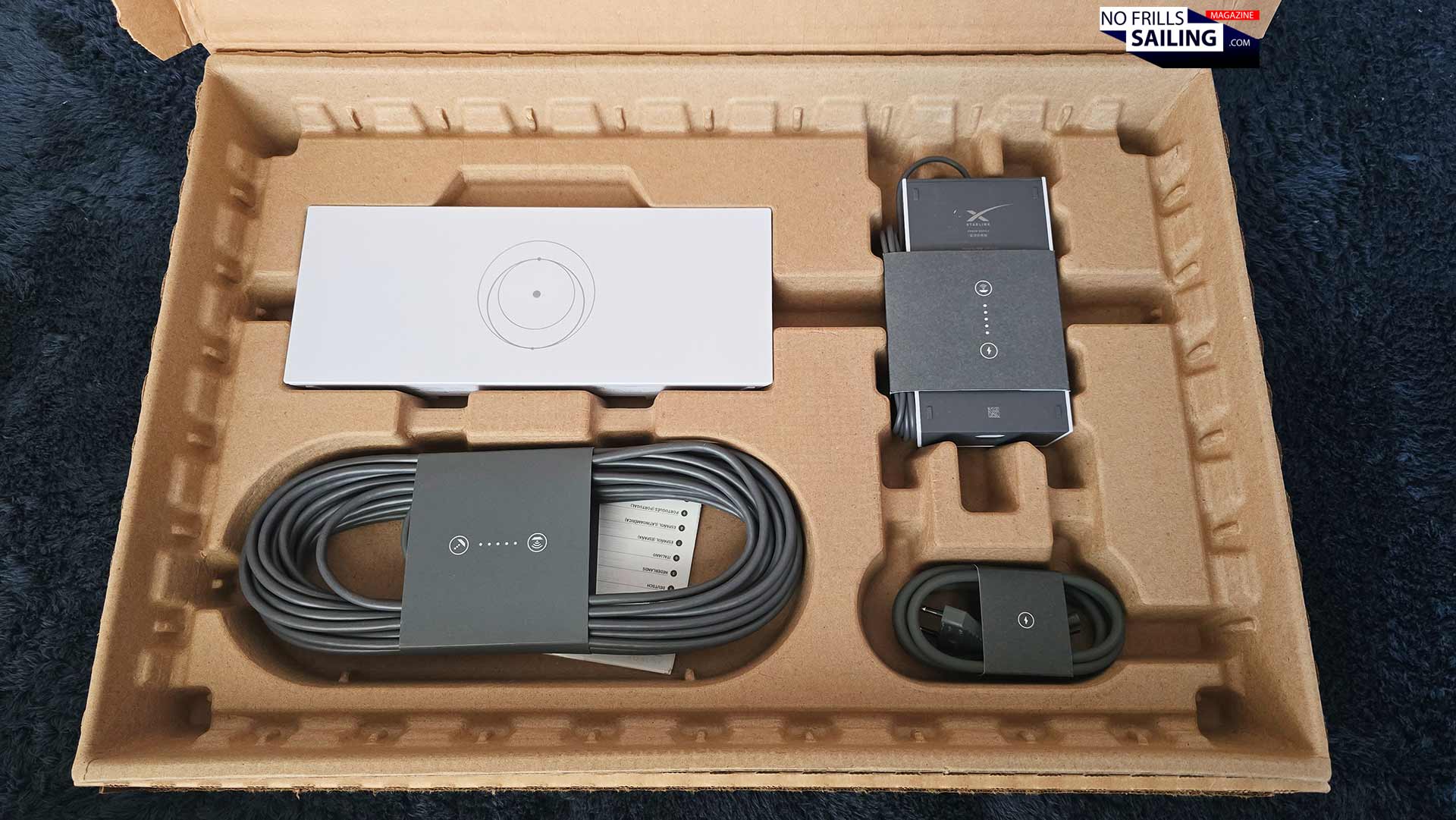
The box arrived a few days after order in perfect shape. As a die-hard Amazon-fanboy I really love those pull-up packages and immediately ripped open the cardboard box. First thing on top is the satellite dish, which is surprisingly lightweight. That´s a good thing because we don´t want to have heavy stuff mounted to our pushpit, right? Underneath are the secondary devices: The WiFi router and the DC current adapter. As well in the package are two cables. The first one is a standard 230 Volts AC-plug, converting this current down to 57 Volts DC. Later more on the currents-issue.
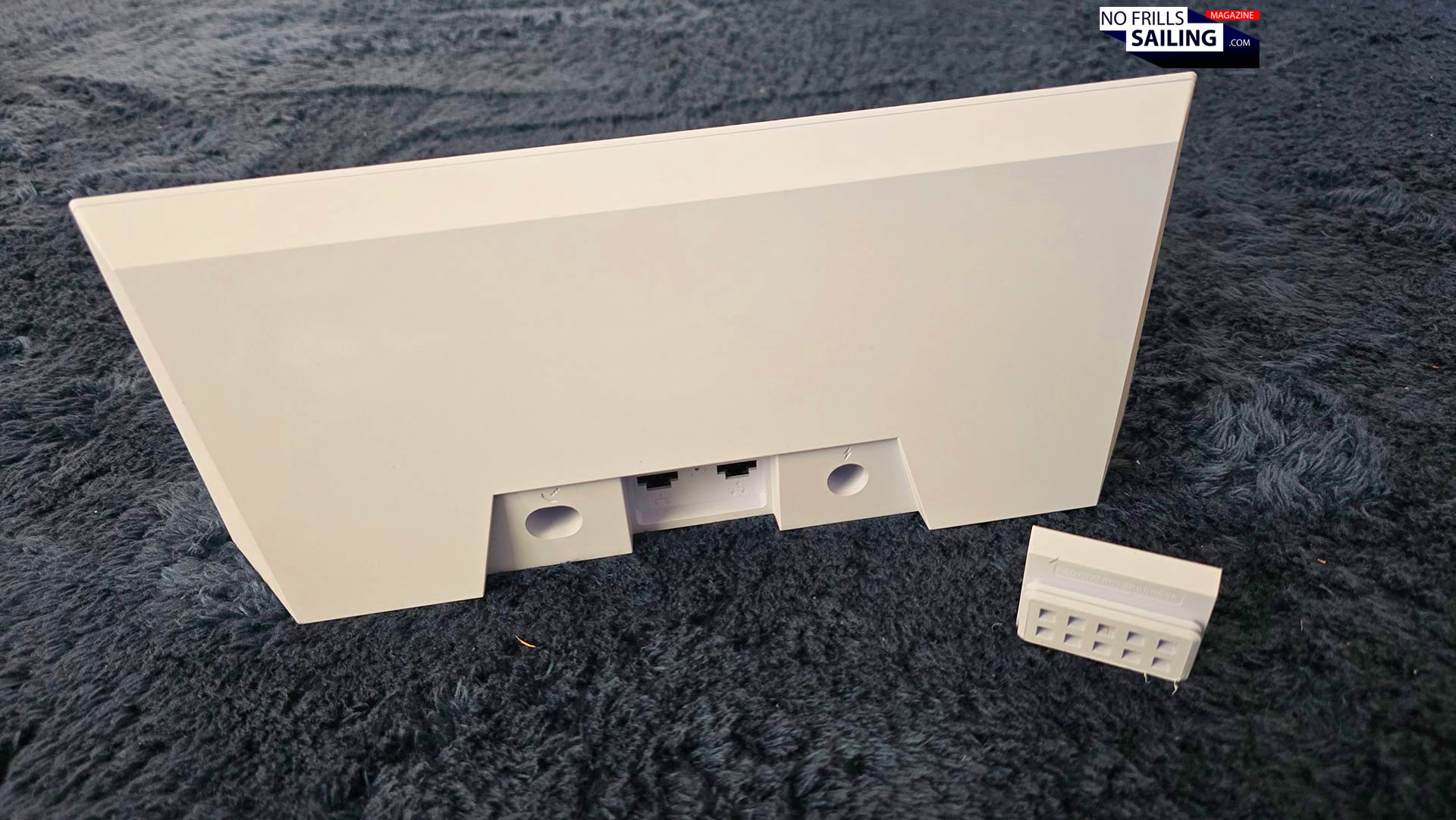
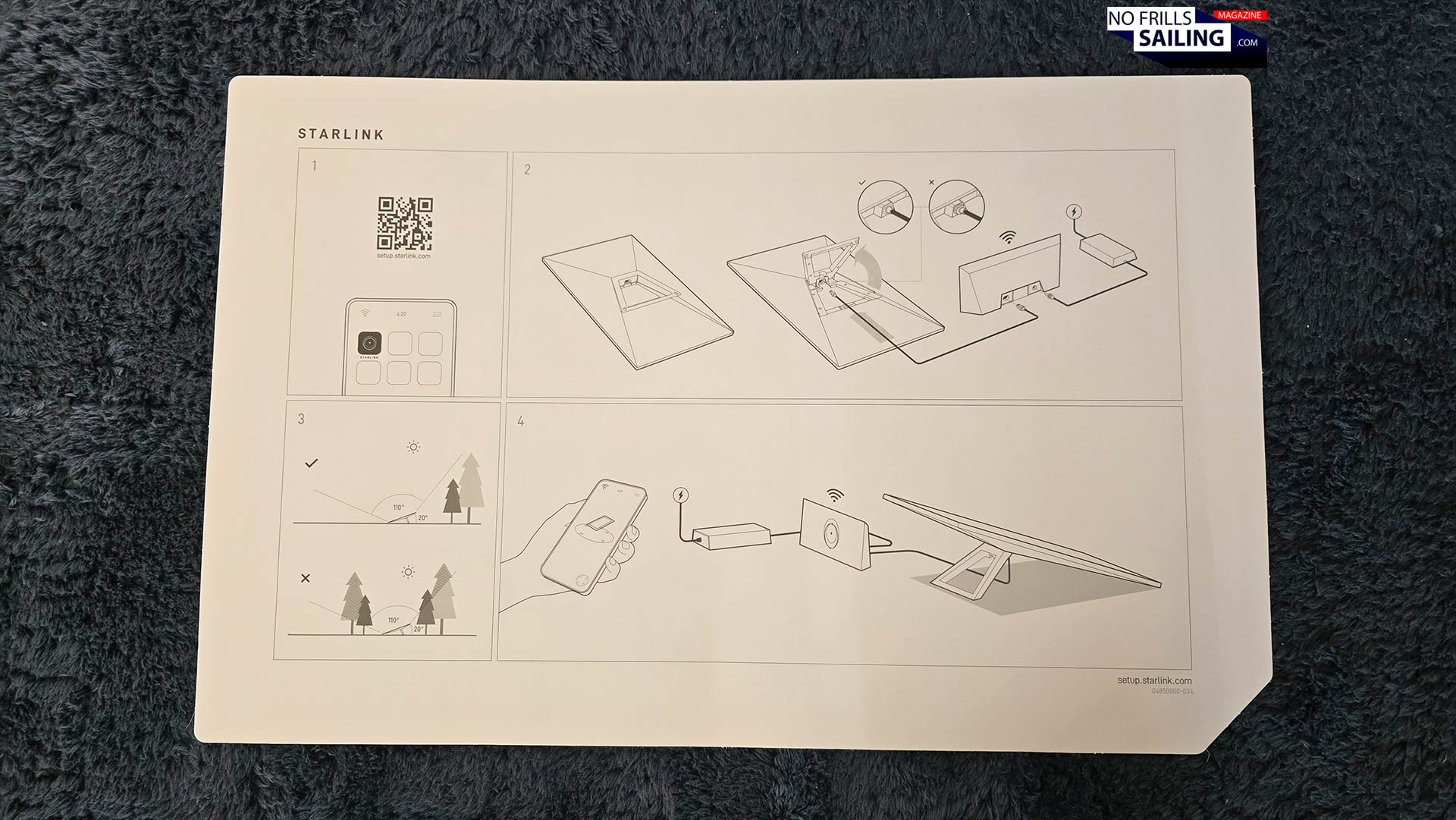
All of those parts make a very nice impression. Apart from the light and a bit fragile appearing dish, especially the router and the power supply brick appear being made of good quality. At least the label tells me it has been “Made in the USA”, we will see if this is a quality sign or if I wish for the good old Chinese high-tech quality again. Lastly, there´s a huge assembly “manual” that shows a very, very simple plug & play-sketch of how to connect Starlink and get started. I I had a data plan, I would have, but in not having one now, I put everything back into the box again.
“Keep it simple!” – especially with onboard-internet
So, the basic setup is there. As a keen reader of NO FRILLS SAILING you already know that the single most important motto for my new sailboat is to keep her as simple as she can be. That said, I´ve reduced her digital NMEA 2000-network-based installations to a bare minimum, completely killing the chart plotter as mentioned earlier, throwing out a liquefied gas stove in favor of a more simpler method or skipping traditional marine WCs in favor for a no-mix toilet. I wish the same approach for my onboard-internet!
This means that I will probably have a secondary, portable power supply in form of an EcoFlow-system: this can be recharged by solar, shore power and even alternator. The nice thing about those is that they can function as inverters – prop up to 230 Volts – or deliver 12, respectively 24 Volts. Starlink will nicely work with 24 Volts and that´s probably the direction into which I am going here.

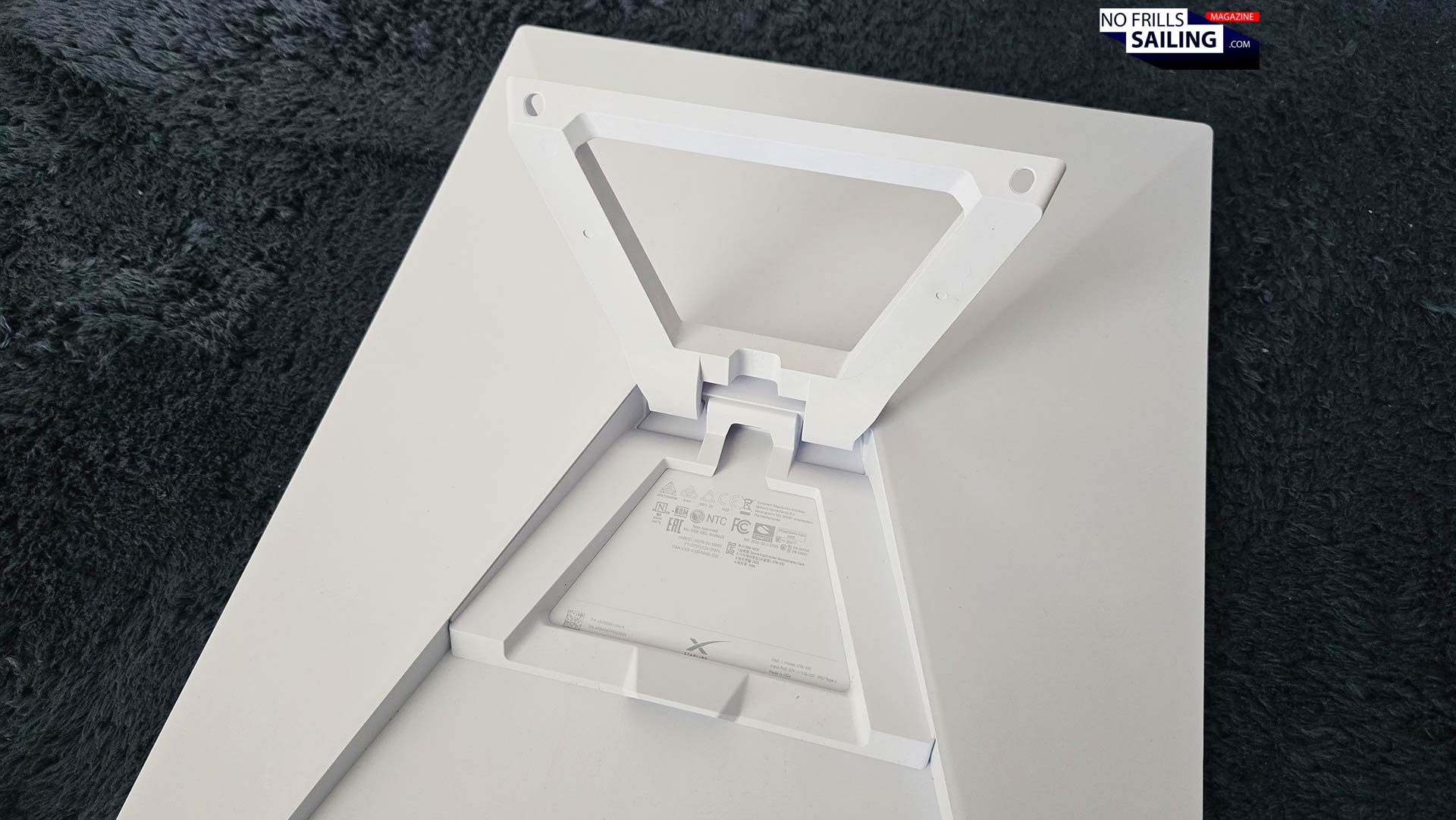
Leaves the last question: Where and how to fit the starlink system? You see, again, I want it easy and simple. I have checked multiple setups, most widely used is a permanently pipe-mounted dish on the pushpit of the yacht at her stern. At least, a 110 degrees free vision of the sky should be provided in order to get a nice connection quality.

Coming up next: Planning the installation on my boat
I am not sure if I´d go for a permanent mount. For once I don´t need to stay permanently online. For me it would be perfectly fine to have a quick fix at the stern, possibly pipe mount, with setting up the wiring to the router from the dish down the entryway to the little white box every time when I need to go online. I´d be perfectly fine with this. I want to avoid drilling holes into the boat and casting cables. This, by the way, would keep the Starlink setup itself mobile as well, for a possible (temporary) installation ashore.
I will be in the shipyard next week again for the mating of deck and hull. Starlink is one of the other points on the agenda to discuss with the boatbuilders there. We will see if and how my idea will become reality, if the guys have clever alternatives or if I even have to revisit my demands. Stay tuned! For now, am happy that another big item of the “to buy”-list is crossed off.
You might also find interesting to read:
Starlink for sailboats, first contact
Digital weather routing and cruise planning
Death of the chart plotter? Investigating the Orca system