If you plan to visit the paradise island of Mauritius, you may come across a rather unexpected suggestion for a visiting destination: A ship model factory. In fact, Mauritius seems to be famous for its small but distinguished modeling manufacture, especially when it comes to the world´s famous sail ships, like HMS VICTORY, the CUTTY SARK, the BOUNTY and many more. I´ve visited one of these ship-factories and try to answer the question: Is it really worth to visit one of these?
Usually I bring many more stories back from my vacations, like I did after visiting New York City two years ago, but this time, I´m blatantly honest here with you, it´s just this one single story. Why? I just needed a true vacation – with no appointments, no writing, no storytelling and no laptop open. It has been a very stressful year, so I hope you understand that. Nevertheless, this one story I´ve brought is really exciting – as it hit me very unexpected. Here´s what happened …
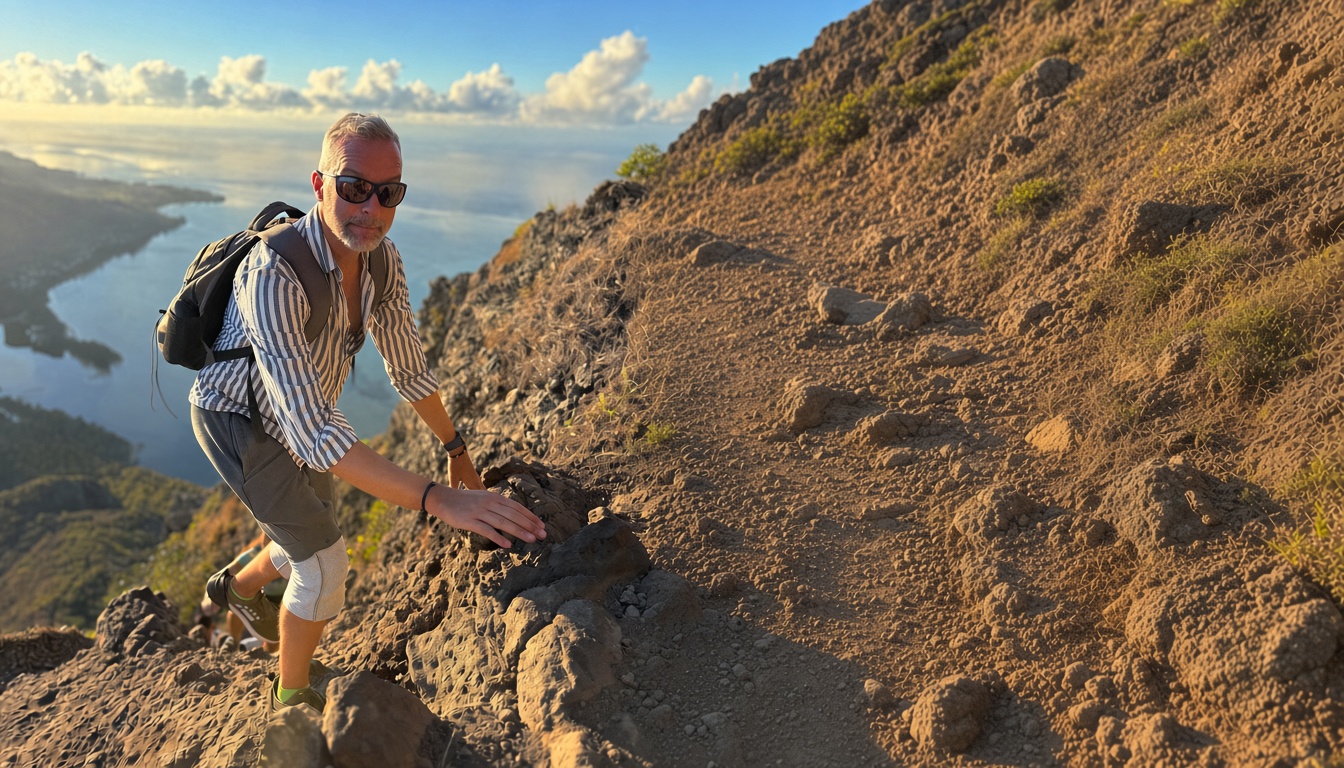
Climbing iconic Le Mourne mountain
I am a fan of GetYourGuide, the app or platform where local professionals offer a great variety of events, day trips and action-packed activities to sprinkle your vacation with some true local colors and must-do´s. This way I booked a hiking tour on top of the famous Le Mourne Brabant, the “slave mountain” of Mauritius. Within a small group of no more than eight people we met at 4 o´clock in the dark morning and climbed the very demanding, very (!) steep, totally unsafe and – by European standards – completely nuts iconic mountain towering over the world´s famous “underwater waterfall” of Le Mourne beach. That said, it was a wonderful, exciting, hair-raising and happy event. Thanks, GetYourGuide. Keep that in mind for later.
Seafaring, slavery and ships: An interconnected history
Advertisement
Now, as fantastic the beaches of Mauritius are, as friendly and welcoming its people, as dark is the history of this island. Uninhabited until 500 years ago, it was the Dutch, the French and the English who “conquered” the island, killed off the Dodo for example, deforested the jungle and cultivated the island for sugar cane, tobacco and coffee plantations. “Cultivation” being a nice word, covering up the dark history of slavery. It is said that some 200.000 slaves had been brought here.
The Intercontinental Slavery Museum of Port Louis
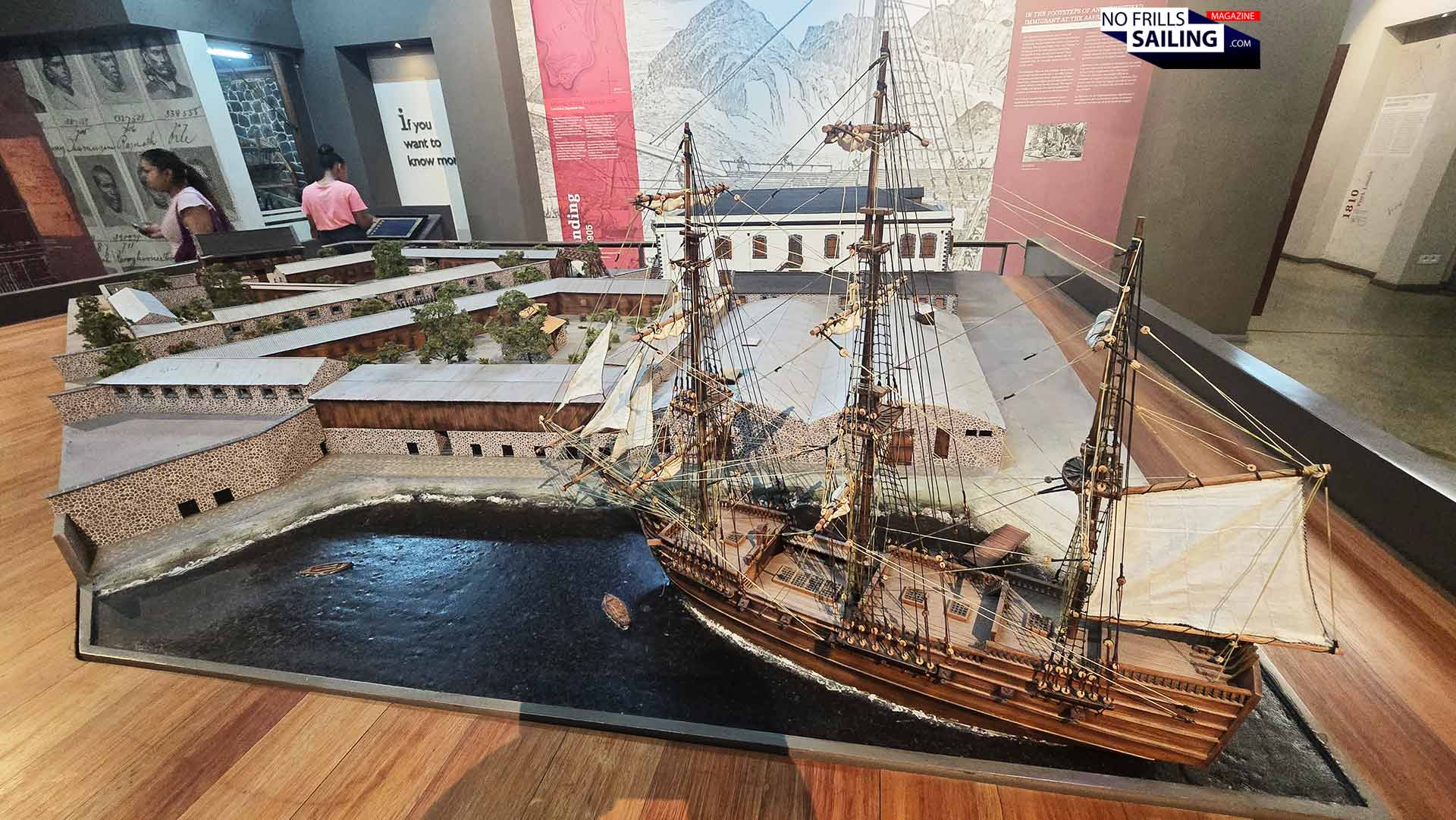
There aren´t all too many places left on Mauritius where you can actually see what slavery was all about. The capital, Port Louis, features a very good museum which is built on top of the former “Immigration Depot”, a kind of transit facility for quarantine and market place for the slaves. By the way, this museum does not have any entry fee and it should be a must-see on your visiting list when coming to Mauritius. Anyway, there is a large model showing the depot. From the arrival of the slaves by ship to their detention. This was the first occasion I got in touch with Mauritius´ famous model ship tradition, of which I´ve never heard of before.
Which model ship factory is worth a visit?
If you do your research, even on GetYourGuide, you may come across this phenomenon as well. As it seems, Mauritius does have a flourishing model ship “industry” that is famous for large scale models of traditional and historic tall ships. Since I love model ships myself and I am a sucker for the classy lines of BOUNTY & Co, I persuaded my spouse to visit one of these factories at least. But which? A quick research on Google tells you that there are no more than four of those factories, luckily, they are all located in the same town: Curepipe.
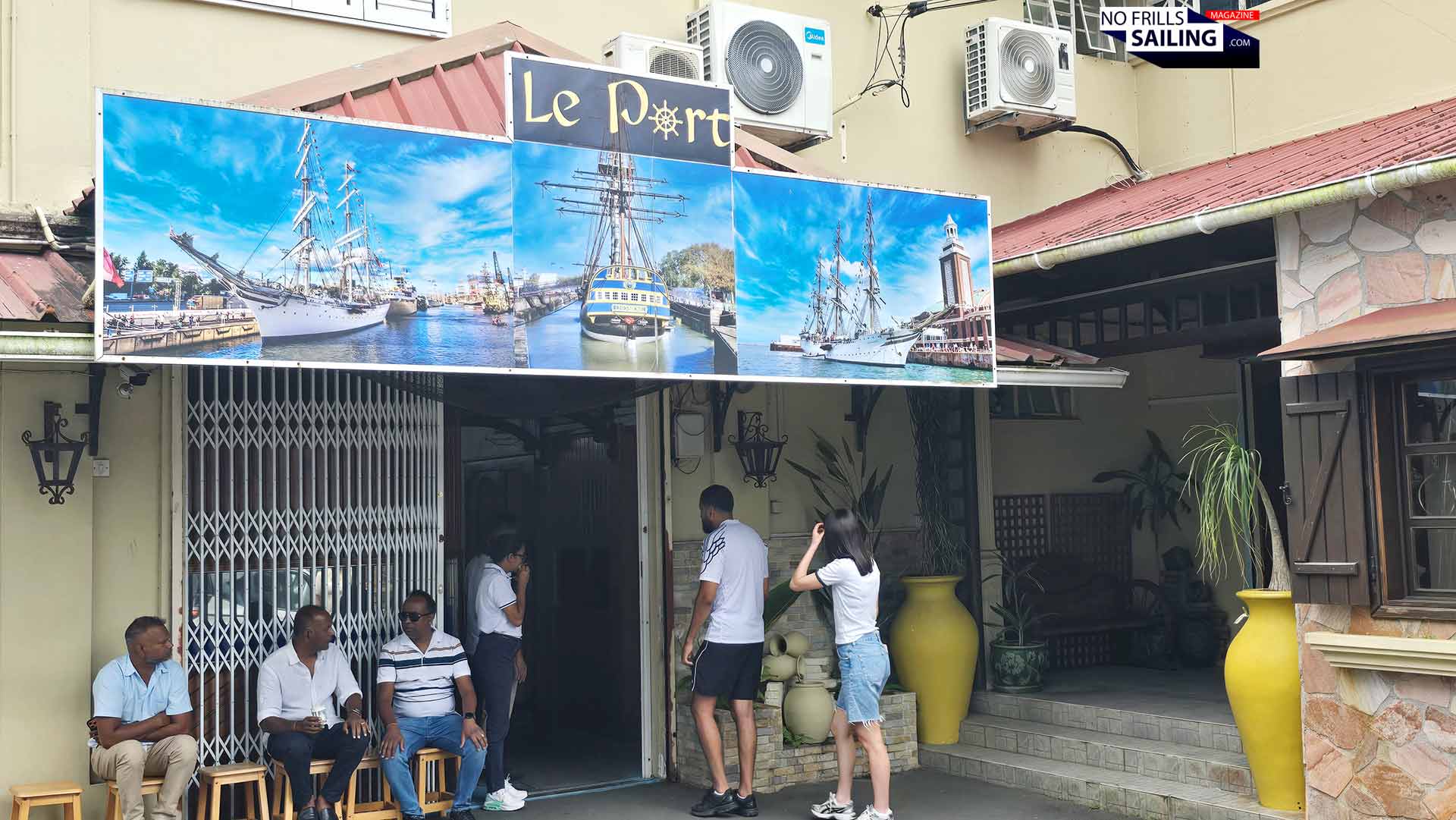
One of the big names: “Le Port” model factory
Curepipe is nevertheless worth a visit. It is located in the so-called highlands of Mauritius. Here, the hot climate of the dream beaches is usually three to five degrees colder, which in high summer can be a blessing. Also, there is mostly overcast so that there´s seldom direct burning sunlight. So, if you look for a welcome off-time from the beach laziness, that´s your trip then! Out of the four brands, I chose “Le Port” by random and because of the reviews in favor of this manufacture. The location is, honestly, not very promising, a kind of backyard parking lot, no fanfare, no bling. But hey, it´s a factory right? Not a flagship store on the Champs Elysees …
A quick tour through the model ship manufacture
Just as we entered through the main entrance, a woman dressed in working cloth asked if we´d wanted the tour in French or in English. Right away. So, English please. We were asked to go to a certain corner where another five or six English-speakers already waited. This all took no more than two minutes. At the same time, three to four other employees welcomed and “sorted” the newly arrived tourists. Very fast, no frills. Then a warm welcome and an invitation to follow our guide opened up the workshop for us.
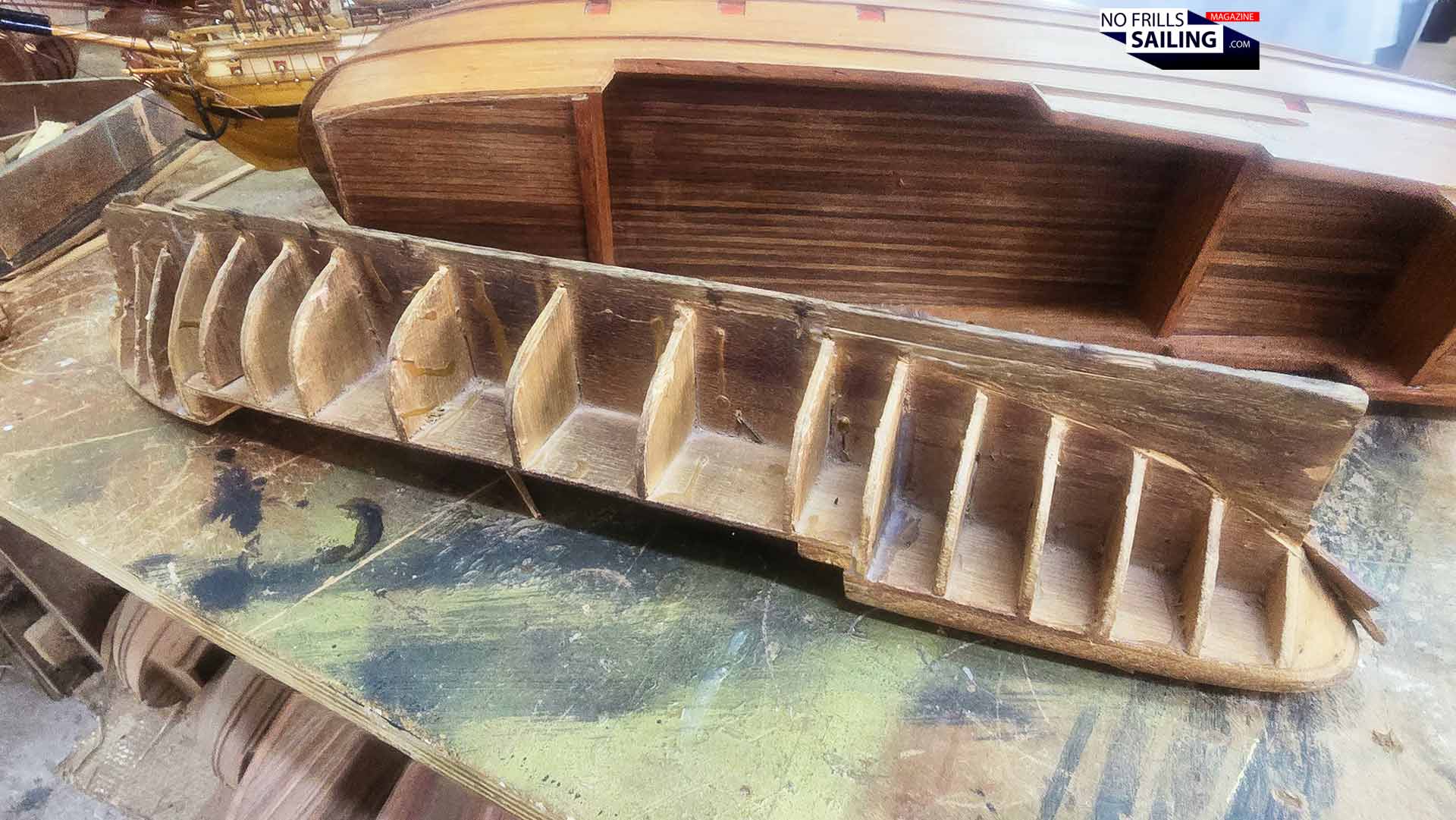
The raw hull frame
Just when one group leaves one of the “station” of the model ship manufacturing process, we would follow suit and enter in. The workshop was sparsely lighted, it smelled pretty intensively: Wood and glue. Behind large worktops craftsmen were sitting, each one treating a ship model for a certain stage. We began, obviously, with the brute for the ship´s hull.
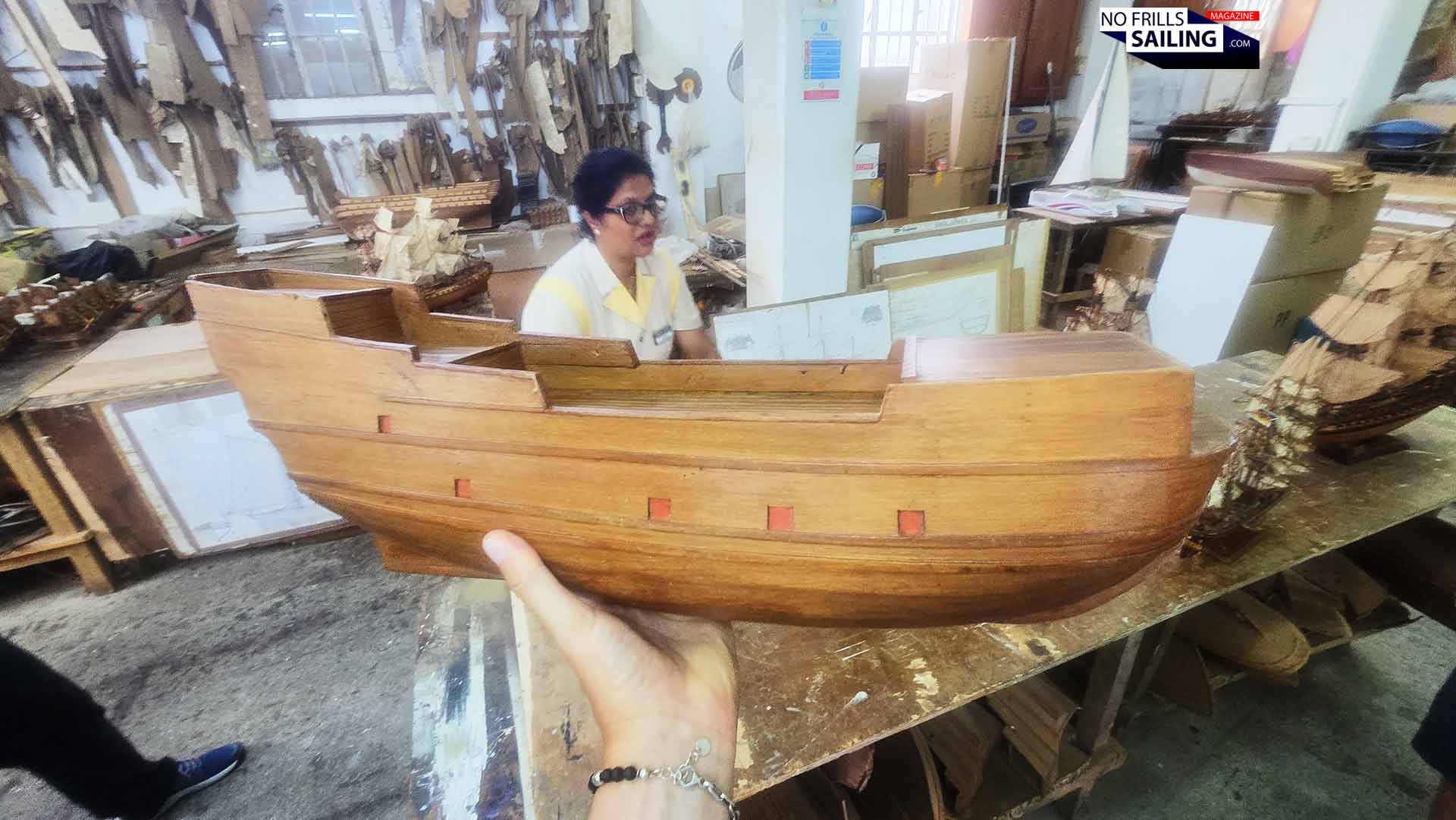
Or guide explains how the models are made
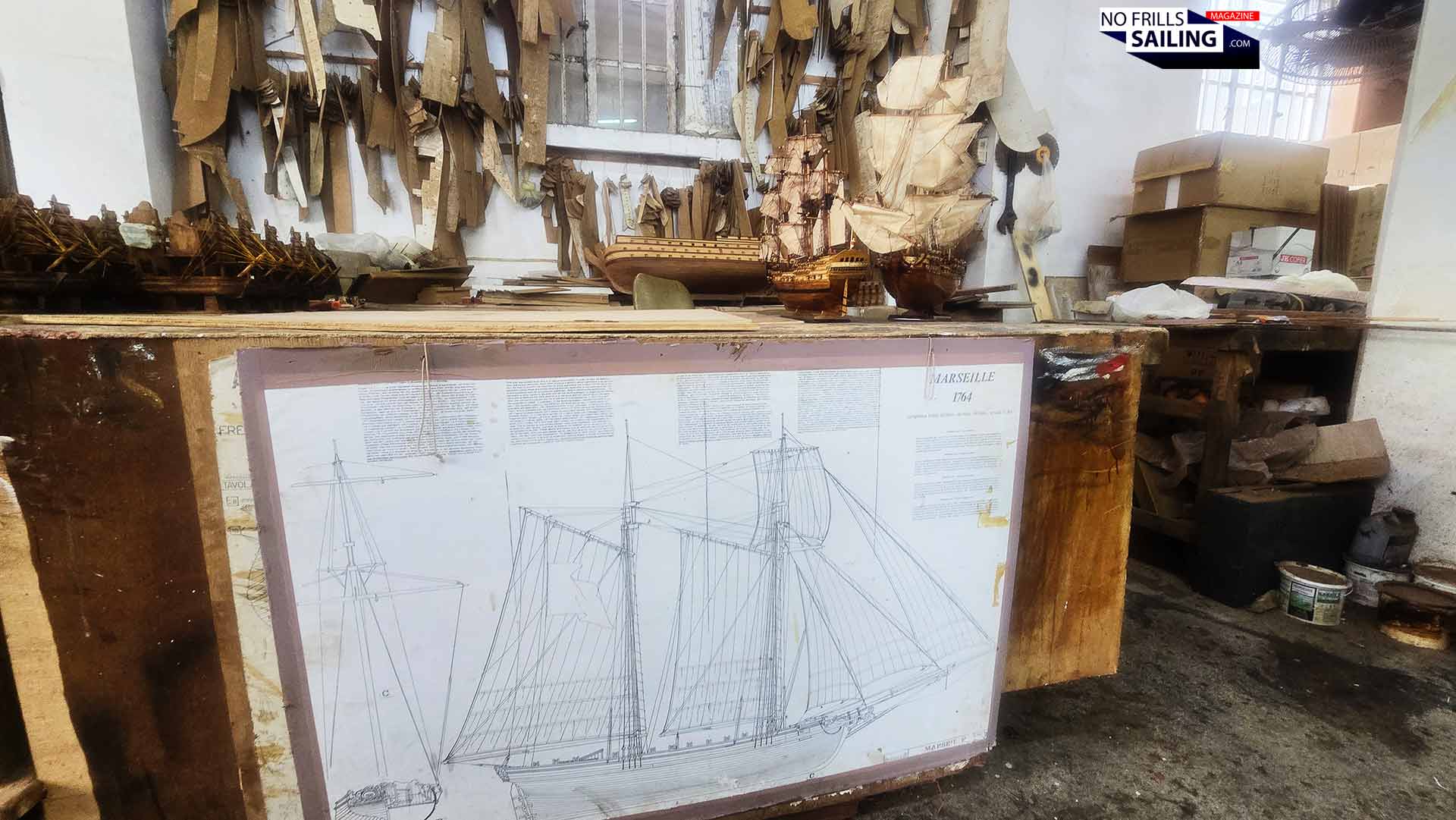
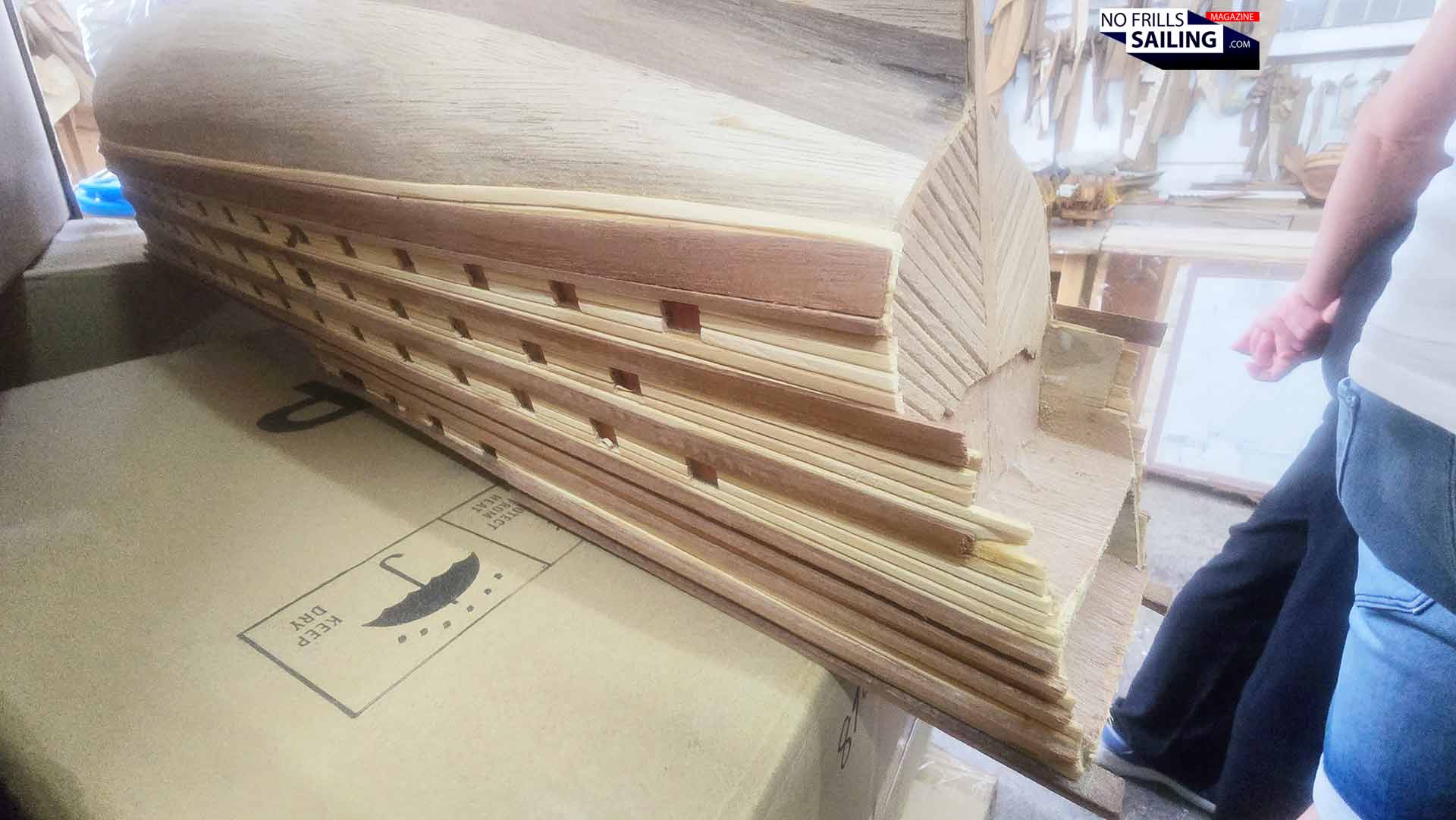
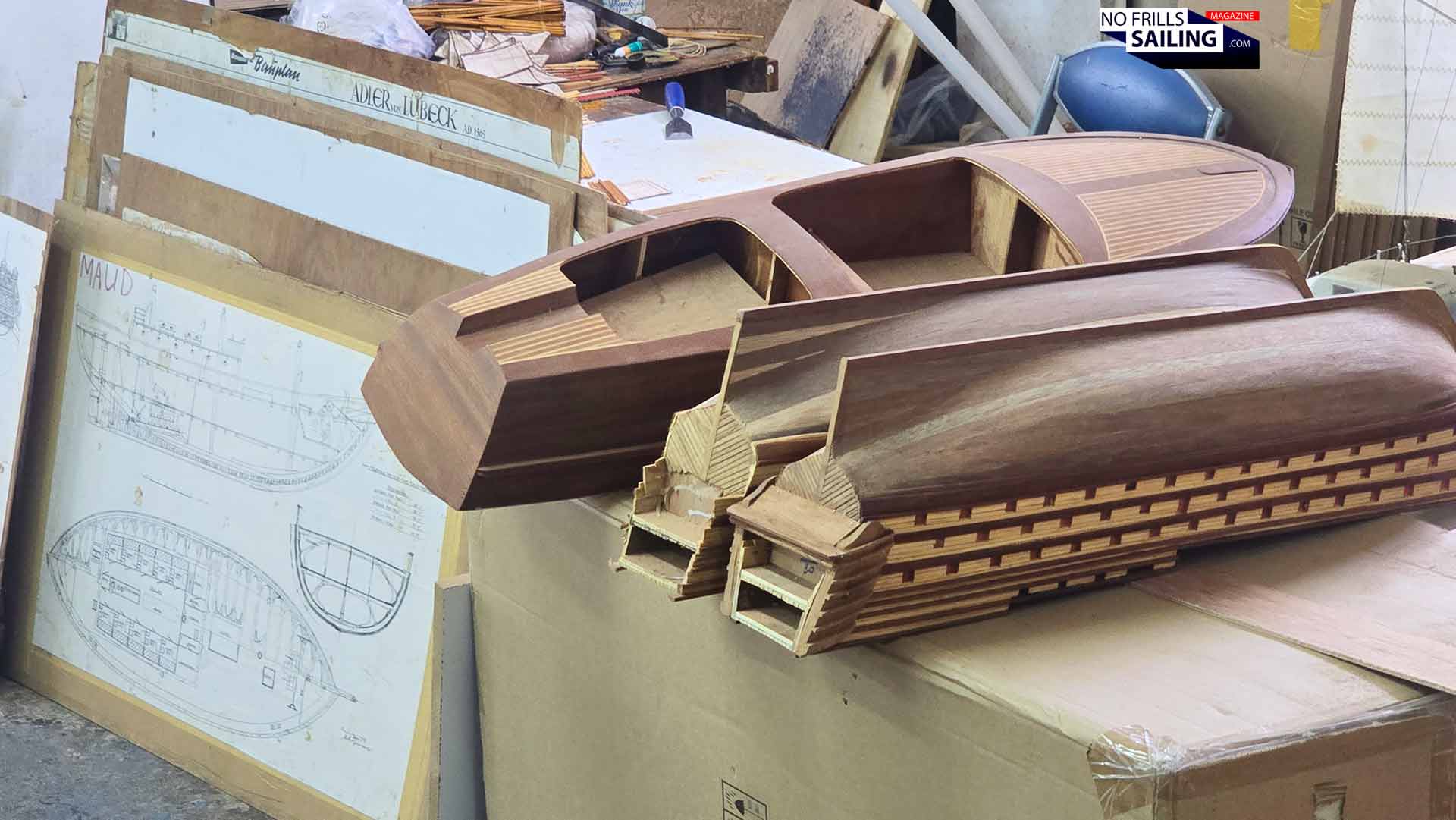
The lady explained that each ship is being built to scale according to plans which the company buys predominantly from European companies. At the walls and all over the place I could see large drawings, rigging plans and layouts for all different kinds of sailing ships. It all starts with a frame of rough wooden plywood-parts put together to form the frame for the boat. That´s basically the mid-section and the frames from bow to stern.
Lots of plans and gauge models
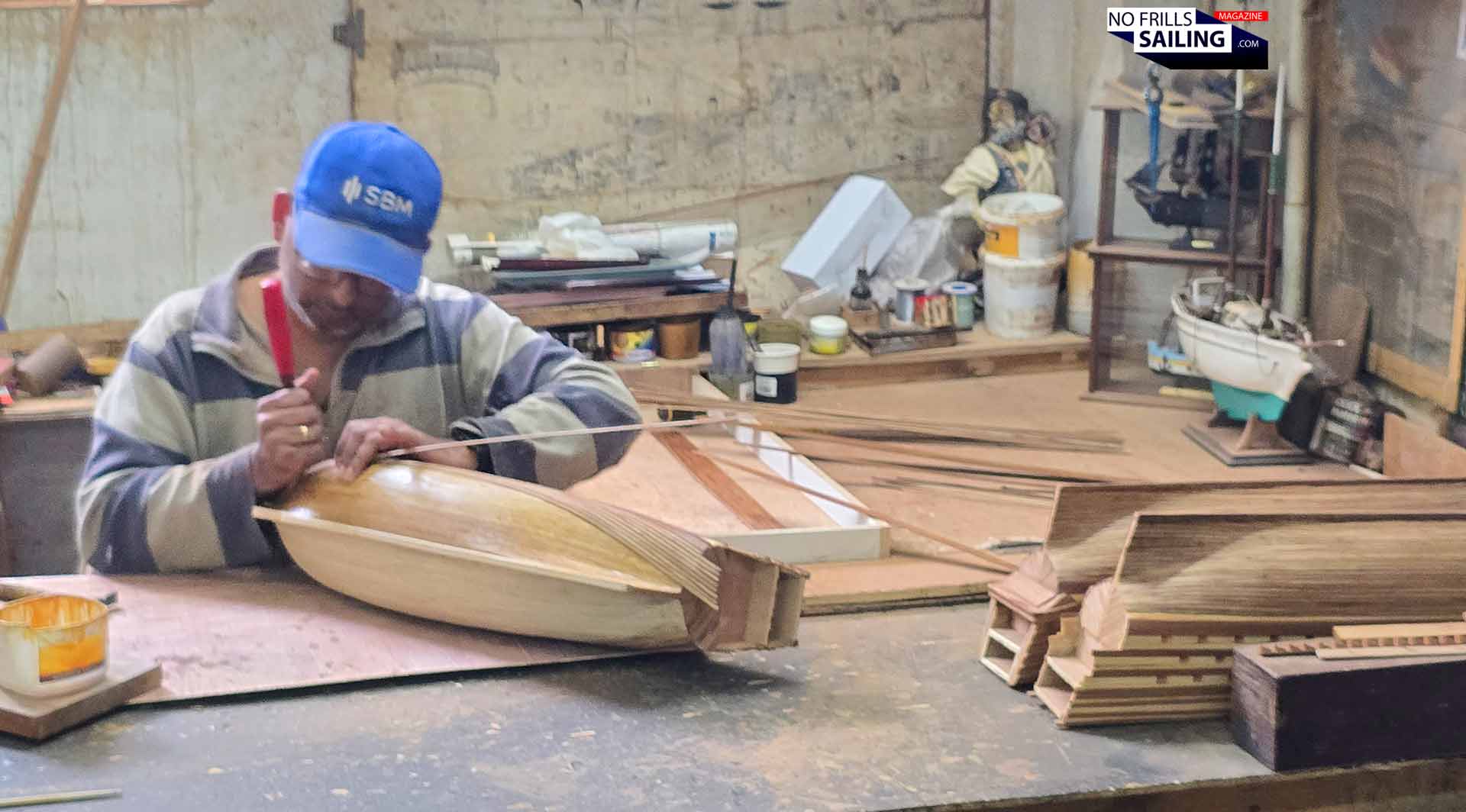
In a next step, a worker would glue the planks onto it. Starting at the coamings, working his way down to the keel. Whilst the frame, which will never be seen again once the model is finished, is made of lightweight, relatively cheap marine plywood and Campher, the planks are made of higher grade timber. The first layer, which gives the brute its shape, consists of Maranti from Indonesia or Balsa wood. The final planks are made of Teak, Rosewood, Ebony, Oak or Beech, depending on the type of ship.
Wooden ships to scale: Accuracy and quality
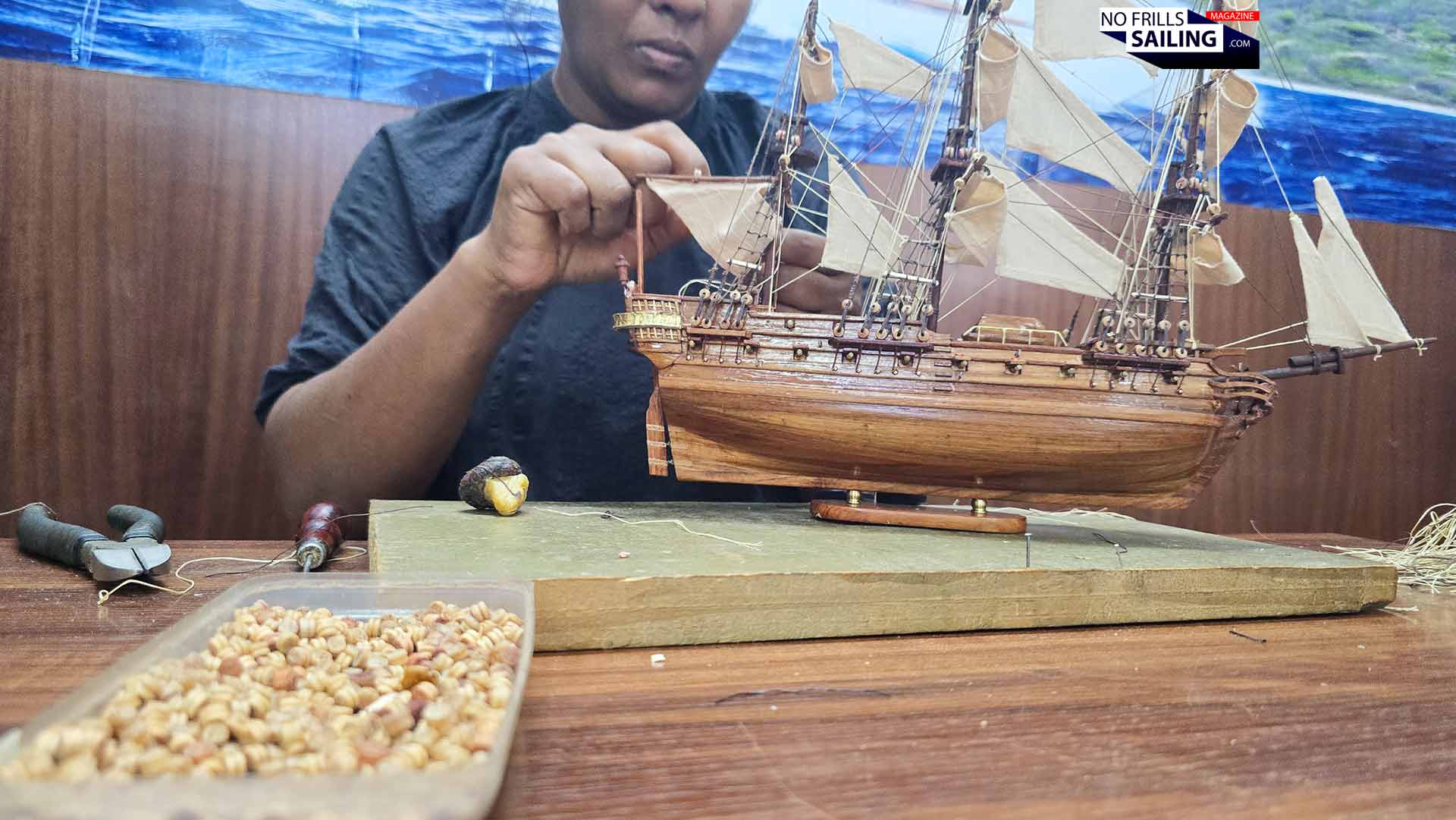
As it seemed, each of the work stations treated one special step of the production of every boat. In this, the people working here are apparently specialized in doing this one job: Planking, appendages, rigging and sails or decorative works. At the planking station I stopped and watched the guy for a while, who smiled and happily shared some insights with me. If you happen to be here, I can only encourage you to ask the people, the are willing and happy to answer.
It´s all 100% handcraft
As for the woodworks, the bigger (and later: the more expensive) the model is, the more details and quality you can expect. This of course has something to do with the scale at first, as in bigger models more details and accuracy can be achieved – and hence more efforts and quality can be expected. As there are no scales nor any explanations apparent for the scales, let´s tackle it this way: The smaller, 15 to 30 centimeter models are quite nice to look at, but don´t have all too many details. Models bigger than 50, 70 centimeters: That´s a different story!
Te raw planks applied
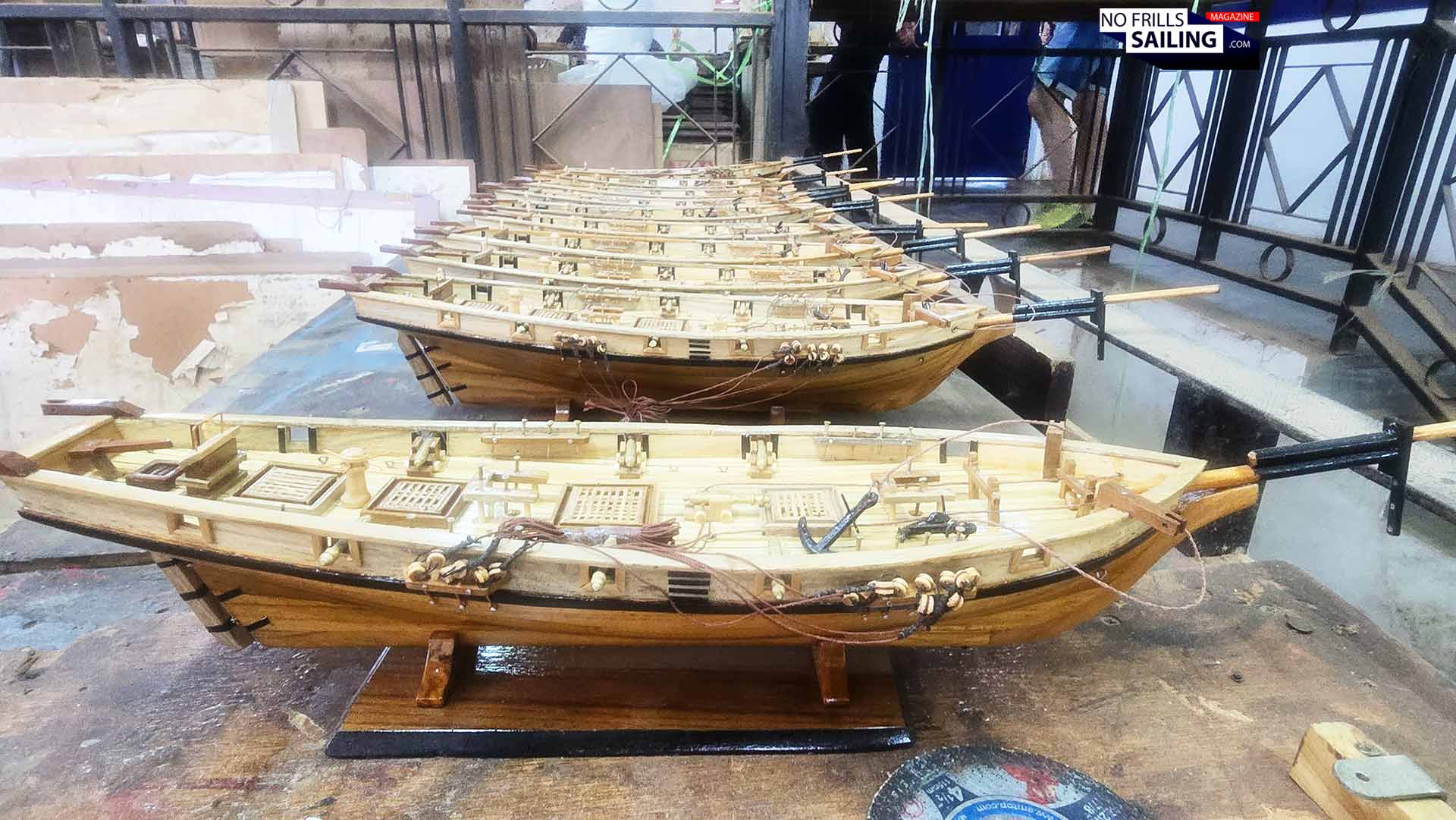
After the basic planks and the nice outside planks have been glued to the brute, the hull has to thoroughly dry. It seems that in this manufacture the guys work on batches. This means, that the ships are no custom or individual products, but made in larger batches. On one station, for the bigger models, I counted three to five hulls, for smaller scaled ships, up to ten and more hulls. Which absolutely makes sense: I can imagine that switching from design to design may be confusing for the guys while making five or ten times the same boat is quicker and more efficient.
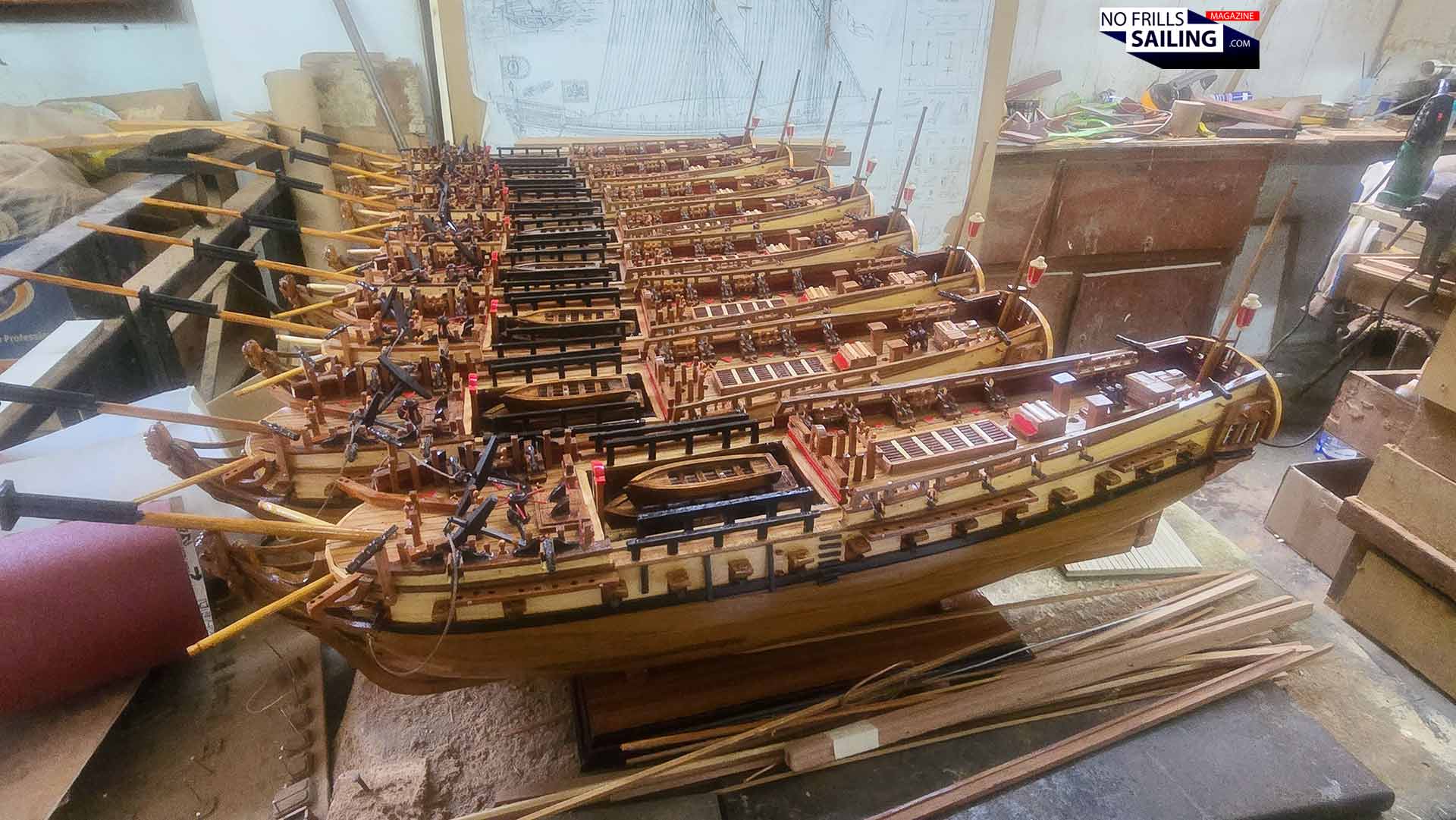
Classy 3-deckers in the making
I found the quality of the hulls amazing in each production step. As I said, the bigger the model – meaning, the smaller the scale – the more accuracy and details. Some of the biggest models even come with small people staging as crew, nicely painted and dispersed on deck and in the rigging as if the ship was about to perform a gybe. Nice!
True handcrafted model works and an impressive range
So, which ships can you buy here? The range, at least here at “Le Port” manufacture, is pretty versatile. It contains the who-is-who of classic sailing tall ships: From BOUNTY to VICTORY, from SOLEIL ROYAL to CUTTY SARK. There´s even a model available depicting the fictional BLACK PEARL or, as she especially pointed out to me as she knew I was German, another model showing the GORCH FOCK. The tragic Swedish VASA is also available – together with a multitude of other ships as well.
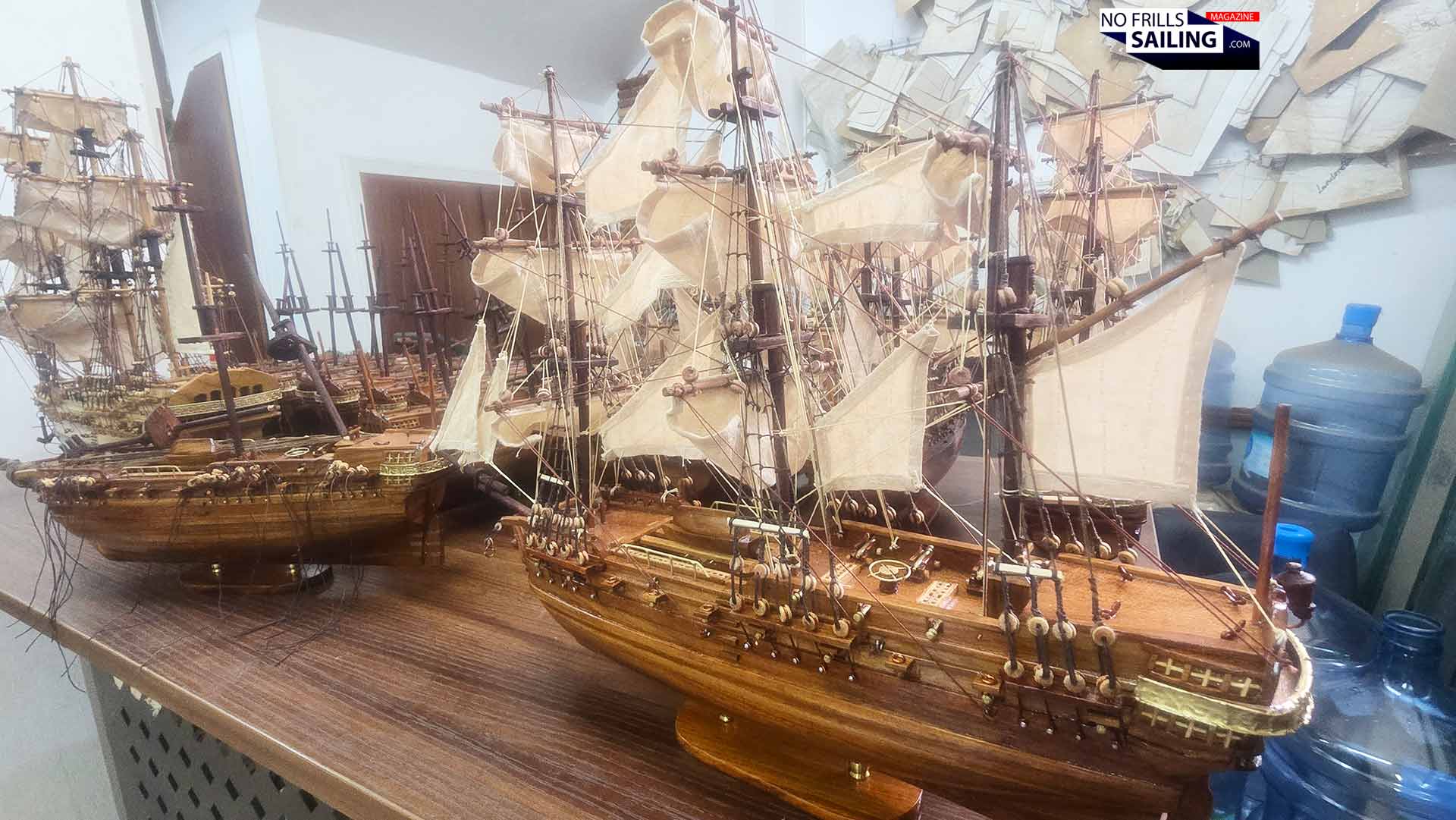
Another batch of hulls
Some of the manufactures, though not “Le Port”, are even accepting custom jobs. So if you have a special request and maybe also the plans, you can have your dream ship being built here. I was honestly contemplating if I´d go for a model of the BOUNTY, but since I am planning to give up my flat in the near future for my next sailing adventure anyway, I refrained from doing so. Anyway, after the hull has been completed, the model switches to another room of the workshop.
looking for a BOUNTY, anyone?
Here, the stench of glue is far less apparent and there´s no noise of Dremels or other tools in the air. Here, the rigging is applied to the models. The guys make the masts, the spars, attach the standing rigging and the sails, with the materials laying flat on the worktop in front of them. Only when all two or three masts are completed, they will be placed into the holes in the decks of the hulls, with halyards and sheets attached.
Attaching the rigging
This way, dozens of hulls of one ship or type are awaiting their rigging. If I was a small ant, I´d be thinking to roam a proper historic shipyard here. All that´s needed is some water … It´s a fascinating tour, showing handcraft skills, batch-working efficiency and dedication to the products. Our guide leads us through each of these manufacturing stations or steps, explaining everything, waiting for questions from us and then quickly leads us to the next station. That´s because behind us the next groups are already coming up. I don´t know if we were visiting during a busy day or a rather quiet one, but I can imagine that all in all, on a normal workday, at least 200 and even more tourists are funneled through this factory. And this is, as you know, only one of four I know of!
Don´t fall for the scams!
Which brings us to the downside. Although I have nothing but good to say about our guide and her tour, it was quickly very apparent that the aim of this free tour is to quickly transfer the groups into the adjoining model shop. Here, the trained and experienced eyes of the guides will quickly determine who may be interested and who is not. As I had been taken a lot of pictures (far more than I used for this article), she thought I´d might be willing to buy a model. So she did not move away from my side once we´ve entered the shop. Of course, they want to sell their products, no problem. But you should be aware that once you set a foot into the shop, a more “pressing” selling process will start.
One after the other …
But that´s not the scam. The scam is on GetYourGuide – and you shouldn´t fall for it. There are offers for tours in these shops, costing between 35 and 55 Euros. At least when I was on the island on October 2026. If this “tour” doesn´t include the shuttle transfer to and from the shops, it´s a scam. Because: These tours in the shops are totally free! So please don´t fall for this. If you have a rented car, go there by yourself: You don´t need an appointment and really, you are through the manufacture in about 20 minutes. Even as an interested ship-lover, as I am, you won´t need more than 30 minutes at best for the shop itself.
What´s the price for a Mauritius model ship?
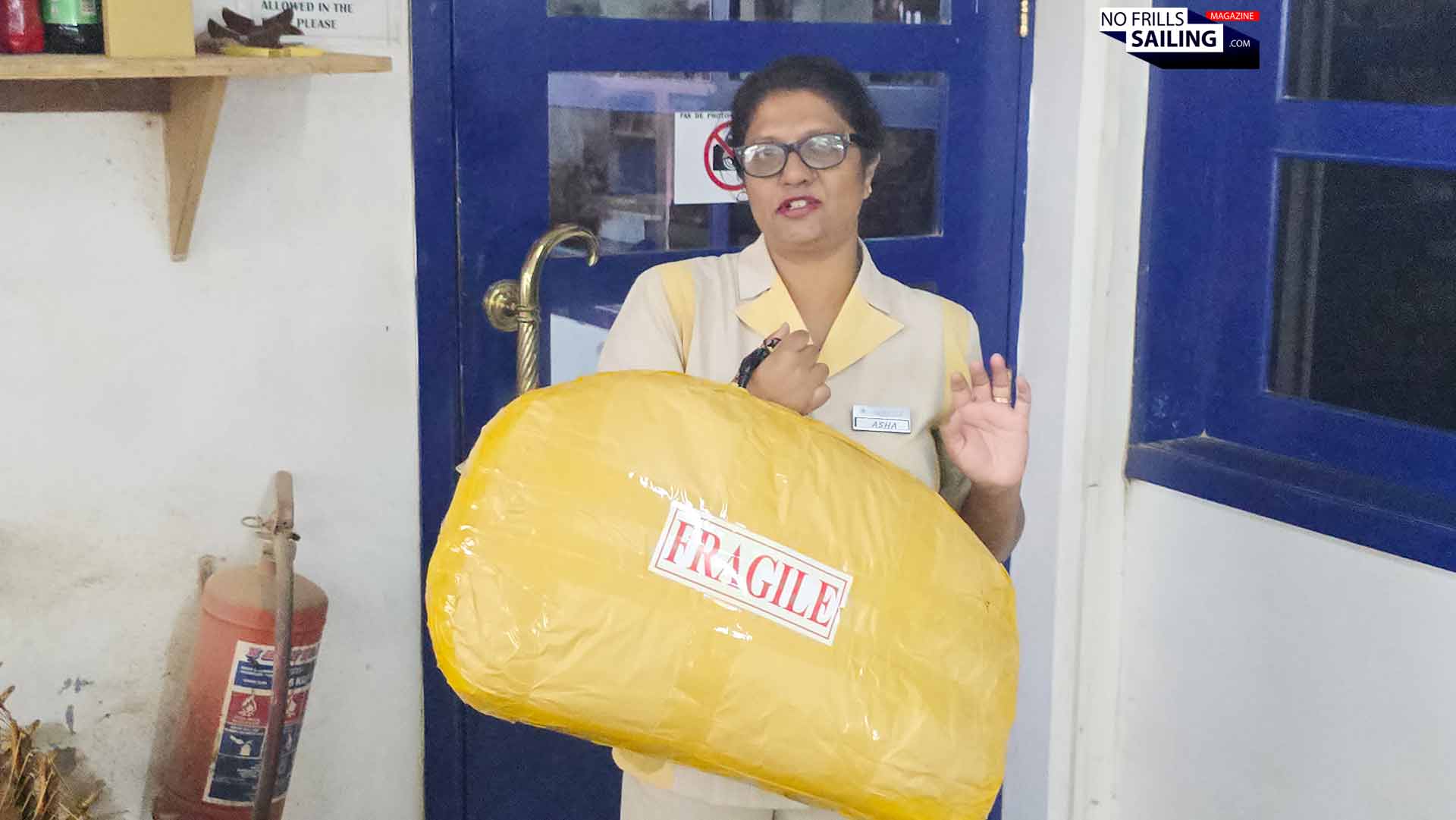
If you are indeed interested to buy one of these nice models, I would say it is worth it. All of the models are 100 percent handmade here on Mauritius, no cheap China-imports or fake stuff from India. The sizes start with very small ships in a bottle to the XXL-sized tall ships you can see in the pictures. Most of the models, preferably the smaller ones, will be packed for you and prepared for the long flight home and could even be stored within your luggage and hand-luggage. The bigger models will be shipped by the company to your home address for a fee – according to the reviews, those models arrive undamaged, though often partial demounted.
This is how a shipping package looks like
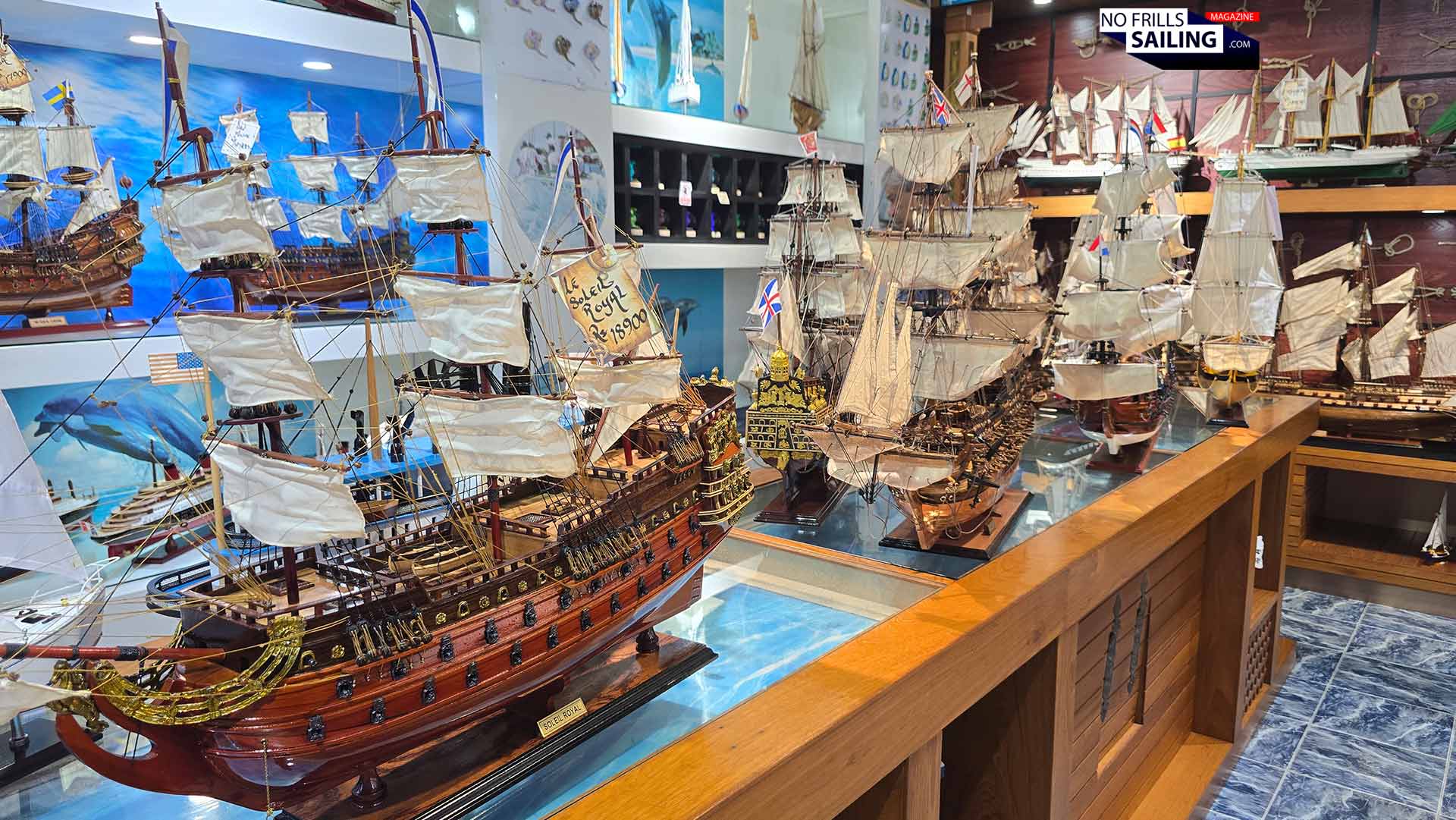
As for the prices, that´s the nicest thing: I found the ships were especially price-worthy and attractive. A large SOLEIL ROYAL or VICTORY costs well under 400 Euros or US Dollars. This is an absolutely amazing price offer, I´d say! If you are looking for an impressive historic ship model for your office or home, this might be a chance for a true bargain. Of course, I can only speak for the prices I have seen in the “Le Port” shop, but I guess it´s overall the same level in the other three companies as well. So, what do you think?
Advertisement
Respecting the history
I found it very refreshing and interesting to pay a visit to “Le Port” model ship factory. In fact, the model ship tradition isn´t an old tradition of Mauritius. It came into existence rather by chance, as around 1960 the French ambassador to Mauritius discovered a very impressively detailed model made by a local craftsman. Encouraged and supported by the the ambassador and some governmental funding, the this guy opened the first factory in the 1970ies, with the others following after this product has been established as a nice Mauritian souvenir. In any way, it´s now part of the culture.
In the model shop!
To close the circle, driving by the sheer endless sugar cane fields of Mauritius, I cannot other than recall the history that is connected with these beautiful and glamorous ships. Which is more often not so glamorous nor making you proud in any way. So much agony and suffering, it´s palpable here on Mauritius, everywhere you go. Behind the open, honest and heartwarming smiles of the locals a dark fact is lumbering: Inhabitants who aren´t white, are most likely descendants of the slaves. Even nowadays, where cheap labor from Bangladesh or Africa is still coming. The medal has always two sides, and it is good to be aware of both of them.
More articles on ship models and classic sailing ships: