
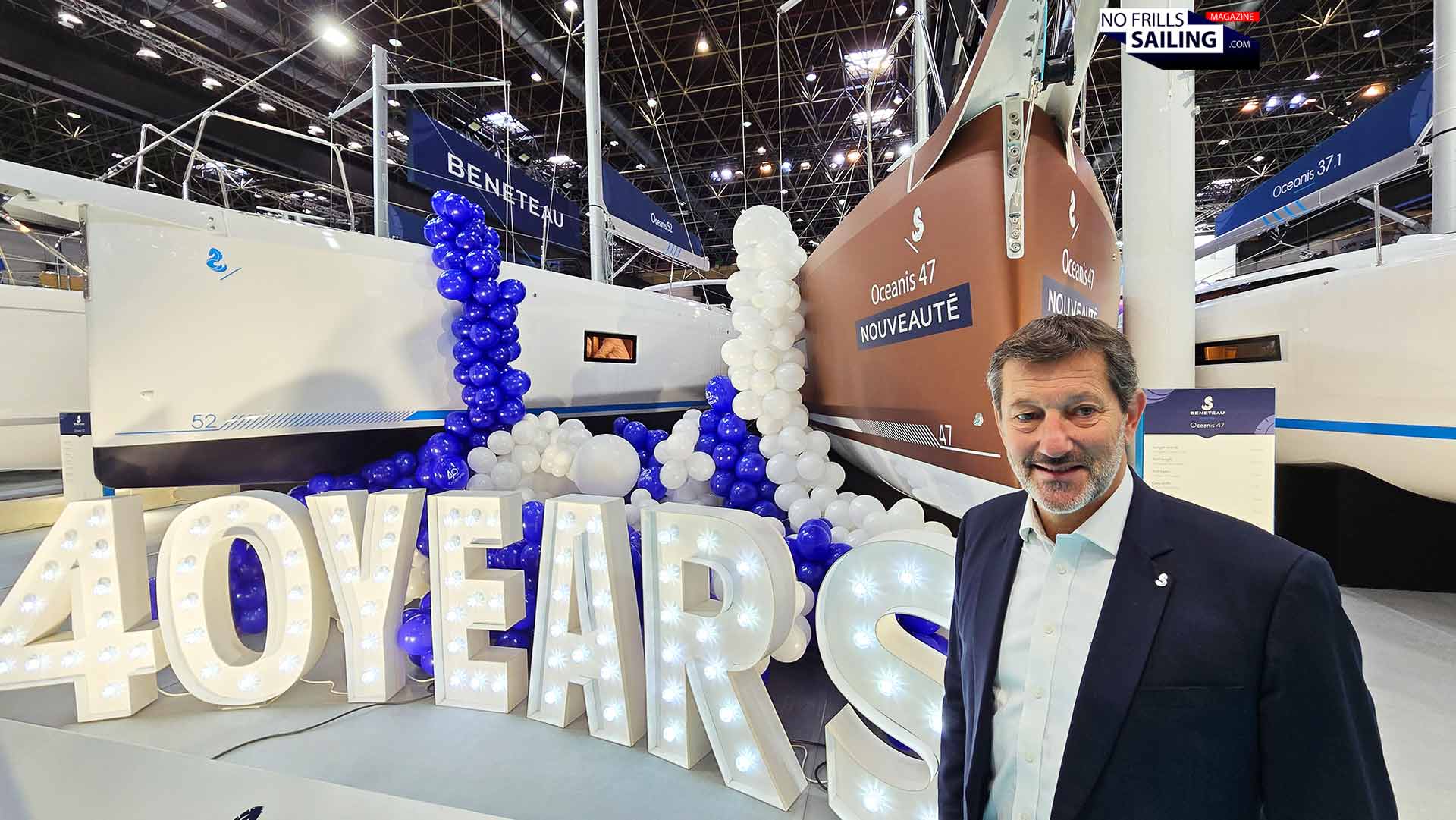
You probably wonder what a little legendary French sweet sin might have in common with the 40 years anniversary of the a boat-series? Well, frankly, nothing. I just thought it´s a great picture and a nice arc to tell this exciting story with. So, be sure that the solution to this riddle will be given to you right at the end of this article. In reality, this is about my interview with Yann Masselot, chief of brands and communication at Beneteau. It has become a nice tradition to talk to the shipyard-bosses – even more since this time we´ve had quite a great topic to talk about.
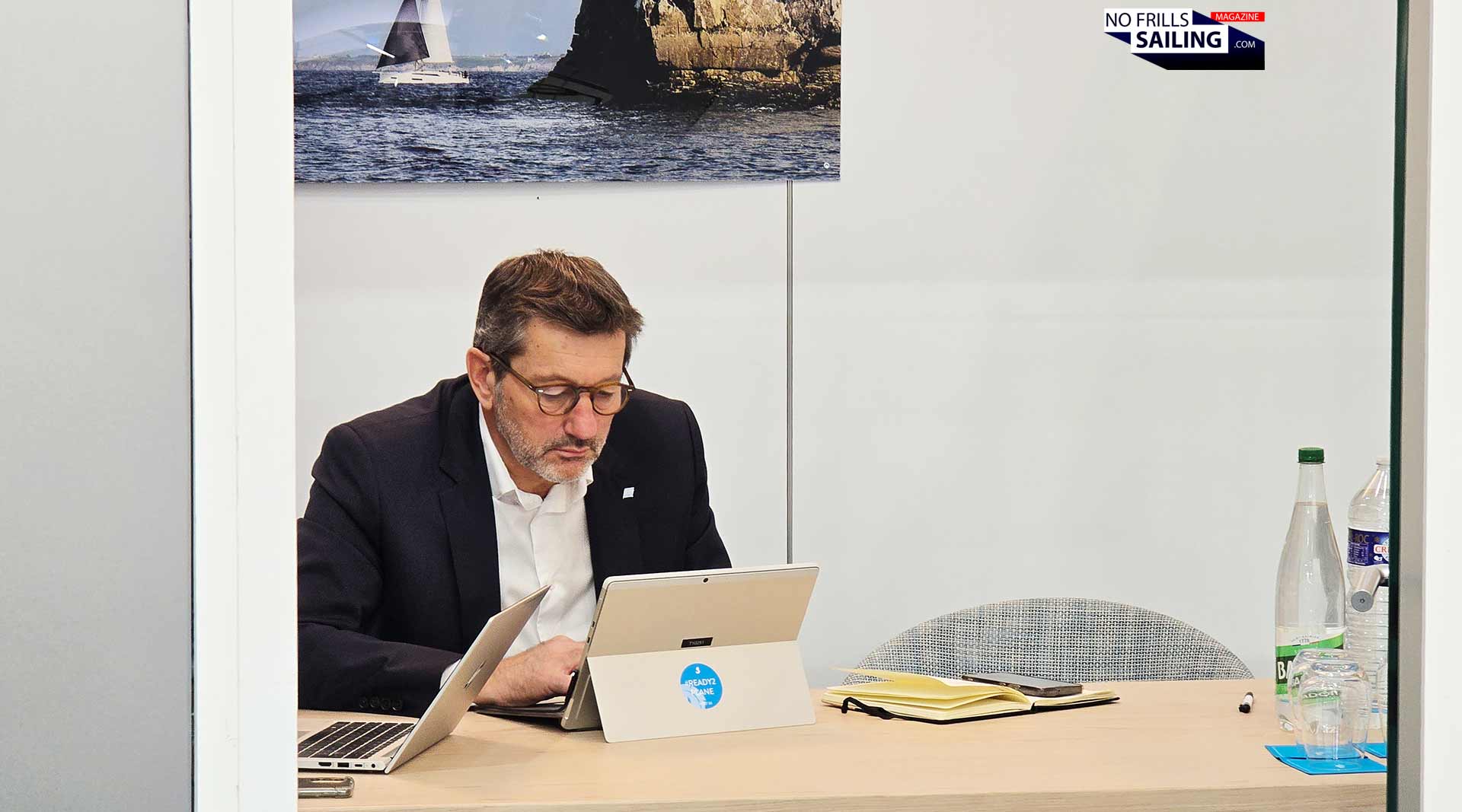
Yann is a very busy man, obviously. In his position, even boat shows become task-filled busy days overseeing his company. I was lucky, because apparently Yann is an early riser. Often we were among the very first on the Beneteau booth, he literally switched on the lights on the stand. So I asked him to sit down for twenty minutes and talk about this very special occasion, unseen so far in the boating history: The Oceanis celebrates her 40iest birthday!
What an exciting vita: Yann Masselot
Lars Reisberg | NO FRILLS SAILING.com: “Yann, please tell my readers first of all who you are and what´s your current position within Beneteau? I know you from CNB, quite some time ago … so, how long are you with the company, maybe also 40 years?”
Yann Masselot | Beneteau: “Sure, Lars. So I joined Beneteau back in 1992. So I am not quite as long with the company as the Oceanis is old. A long time ago, when I first started, we´ve had a subsidiary in England. I worked there for two years, came back to head office in Saint Gilles and France where I was director of what we called the “professional boating” part of Beneteau. You know, making vessels for professional fishing is origin of our company. In that division we also built fast patrol boats for police and customs. And also little passenger ferries. Quite different from what we do now, you know? I was there for six years. But I wanted to go back to sailing, which is where my heart is and I was offered two solutions: One was to become sales director for Wauquiez which the company just had acquired. And secondly, there was this little thing nobody wanted to take care of that time, which was the catamaran-branch. Well, I didn´t knew anything about cats, but it sounded quite interesting, so I thought, let’s go there! This is how I started with Lagoon.”

Lars Reisberg | NO FRILLS SAILING.com: “… aaaah, I didn´t knew that!”
Yann Masselot | Beneteau: “Well, I took over from Bruno Belmont, who is still with us and Excess. We´ve had only eight dealers at that time who were doing just about 1.5 million turnover altogether. Can you imagine? And so I did that for some 20 years. After this, Beneteau decided to take over CNB because they wanted to make large semi-custom units, it was in 1990 if I remember correctly. Later I oversaw the launch of out new catamaran brand Excess and now I´m back with Oceanis. It has been quite a ride.”
How the Oceanis was born
Lars Reisberg | NO FRILLS SAILING.com: “Absolutely, Yann! Now, let´s stick with the Oceanis. As far as I know, this class of sailboats was born out of a sheer necessity, is that right? Can you elaborate a bit on the story how and why Oceanis was invented?”
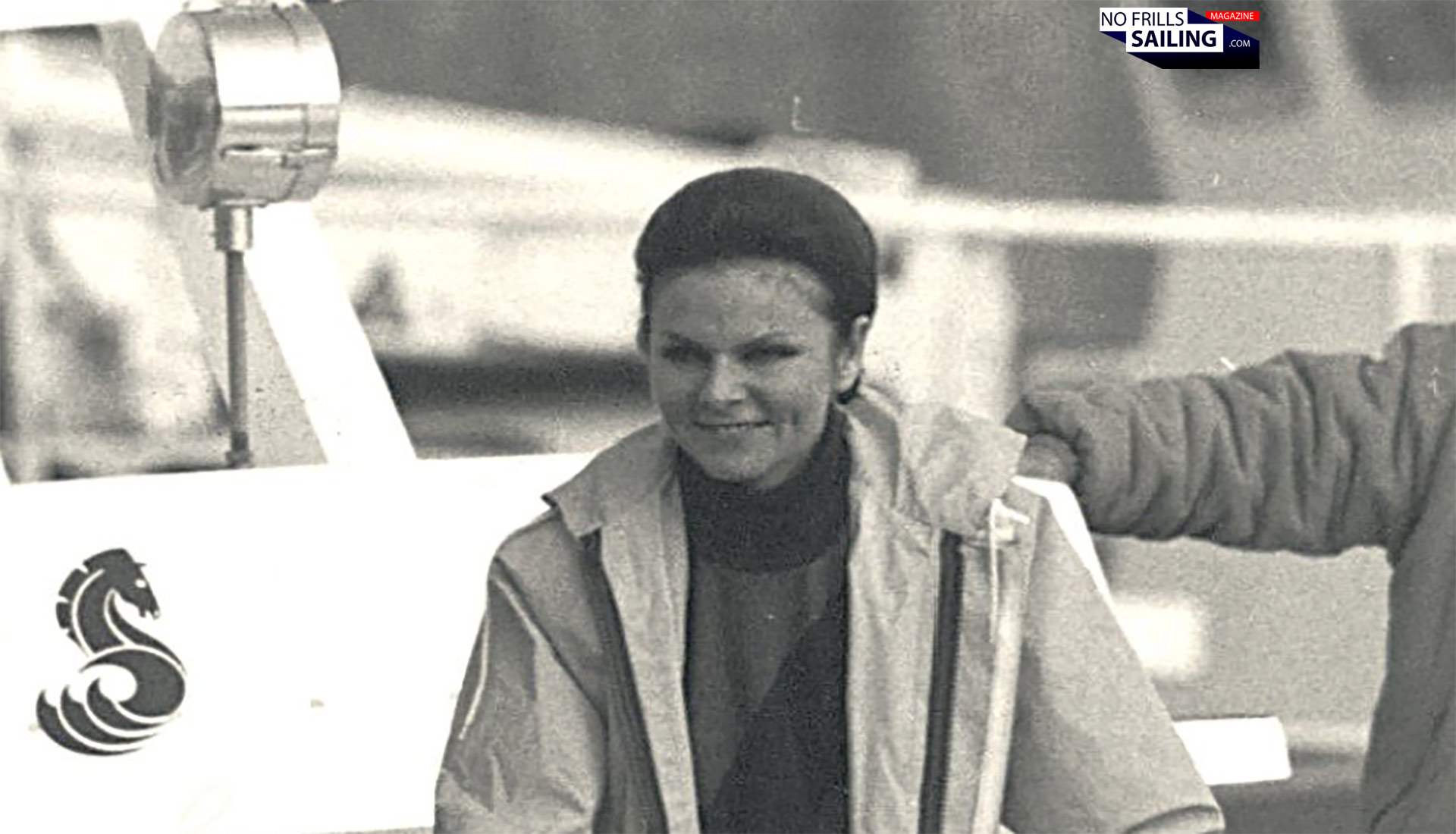
Yann Masselot | Beneteau: “Yes, sure, it´s a fantastic story! The original plan to do these boats came from a Madame Roux. You now it: She is the granddaughter of Benjamin Beneteau, who founded the shipyard back in 1884. So, in the early Eighties she had this business meeting with an American couple. They had just founded a small company in the USA for renting out sailboats. When they met, they explained that they wanted to grow, but they couldn´t find a boat on the market that suited their needs. At that time, you know, sailing was much more performance oriented. This is, by the way, the reason, why our First-series is a older than the Oceanis. So this couple said: “We need a real cruising boat. Why don’t you come up with a suggestion how a sailboat might look like, that has a stringer focus on easy sailing, accessibility and comforts for the whole family?” And this is what she did … the Oceanis was born.”
Lars Reisberg | NO FRILLS SAILING.com: “So the, let´s call it “spark” to create this boat came from the US?”
Yann Masselot | Beneteau: “Yes, you can call it a spark. As the story continues, the CEO of Beneteau of that time was a very clever guy. Very product-oriented. Francois Chalain is the one who created the First. And now he came up with this concept of a cruising yacht. She was called like this right from the start. And so we started like that: Because this small US-based charter company which at the time wanted more boats from us. We built a factory in the States and began working. You know, this small company was called “The Moorings” (he smiles).”
Lars Reisberg | NO FRILLS SAILING.com: “How cool is that? I didn´t knew this! So tell me, was Oceanis a success from the beginning? If so, what was the “secret” ingredient that no other boatbuilder had at that time?”
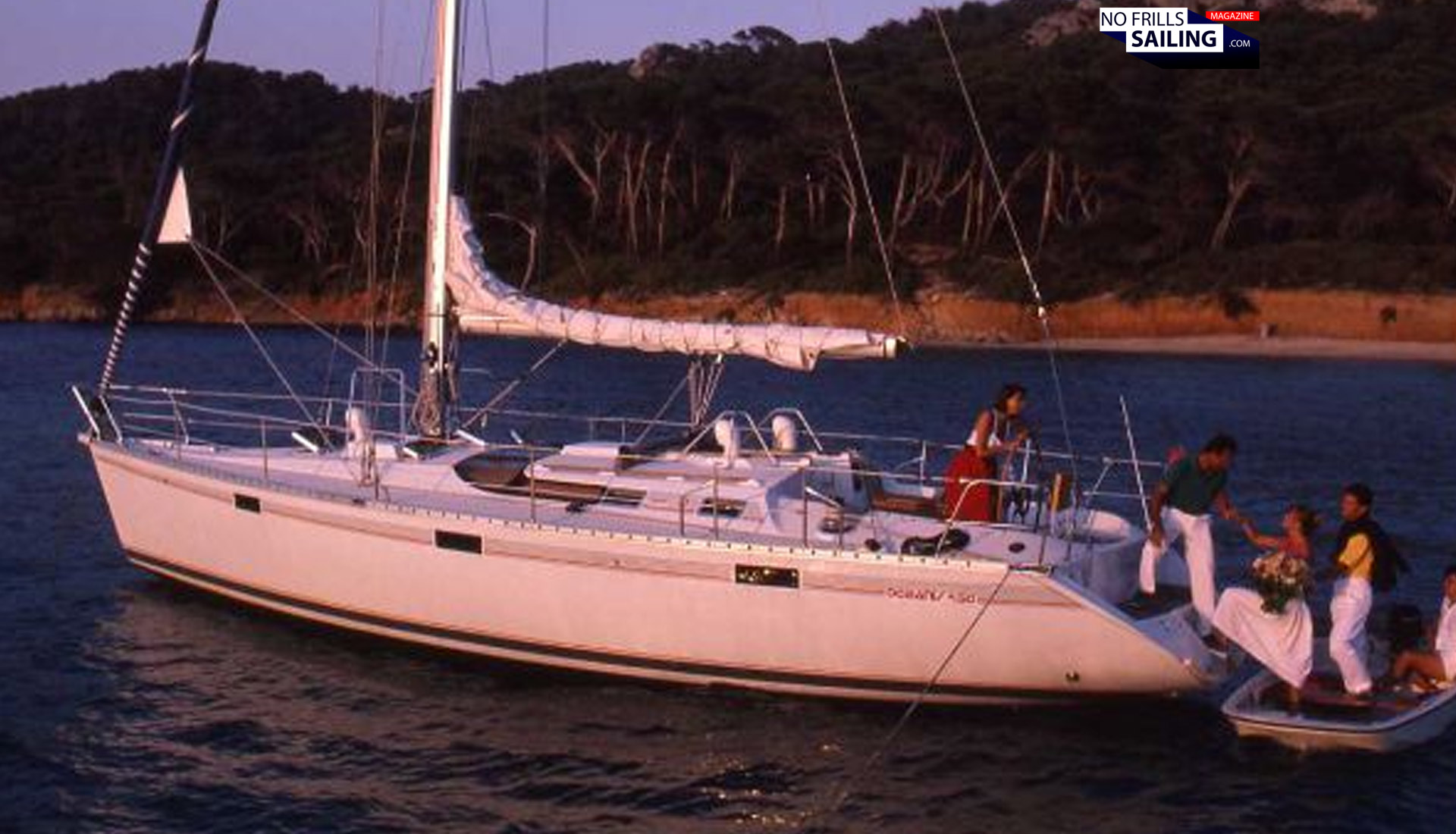
Yann Masselot | Beneteau: “This is a very good question, Lars! Because, when Beneteau decided to make the Oceanis, it was a really big bet at that time. As I mentioned before, all sailing boats at the time were kind of performance-oriented. Now we brought something to the market that had more volume inside, a much larger cockpit, better access to the sea via platform. If you look at boats from that time, most of the transoms were very sleek. Going into the water was not easy as there were no platforms. And so it was a big change in the yachting world. And I think it appealed to the market very quickly. In fact, we started with Oceanis in 1986 and I think that probably from around 1995, 1996, I can’t remember exactly, Oceanis suddenly became much bigger than our First in terms of units and turnover. So pretty quickly, in less than ten years, the market shifted towards a pure cruising yacht!”

Lars Reisberg | NO FRILLS SAILING.com: “I can imagine that many, many more people want a vacational cruise rather than a winning in a regatta …”
Yann Masselot | Beneteau: “Maybe. But somehow our industry often also follows the car industry for some reason. If you remember in the 70ies, 80ies, all the “cool” cars were these smaller GTIs, nice sports cars and such. Then, suddenly, it changed: Everybody moved to a station wagon and then on to big SUVs. There´s also a trend towards more space, more family-connection, more comfort. And now? Small sports cars are a very small segment of the market. Same with boats, I guess.”
Why designers are so important for Oceanis yachts
Lars Reisberg | NO FRILLS SAILING.com: “Madame Roux from a very early stage on insisted on employing the biggest names of their time in terms of designers: Philipp Starck, et cetera. Why was this so important and new?”
Yann Masselot | Beneteau: “The background of the Beneteau Group was more, as I told you, fishing boats and professional boats. When we started for private owners, it were smaller power boats. This was well before sailing. And so Madame Roux´s brother André Beneteau, was in fact a naval architect. And at that time he was designing all the power boats. All of them. And the decision was made to go into sailing, he said: “Well, we don’t know anything about sailing! So we better work with a naval architect and designer who knows about this, right?” So that’s how they developed the first First in 1977. Initially she was an all-out racer. A very successful racing boat! She won the Halfton Cup and everything at the time. It was really a big thing. And they took this design, gave it to a naval architect and he made the first First 30 out of it. From a racing boat to a First. It started like that: We always worked with naval architects from outside the company. And that’s where Madame Roux was very talented with!”

Lars Reisberg | NO FRILLS SAILING.com: “And so she brought the designers into the team?”
Yann Masselot | Beneteau: “Yes! The CEO, Chalain, and Madame Roux decided to add an exterior designer to the work of the naval architect. The first was Starck. So, we called the boat the “S-line”. The first on was the S5 series. The 32 S5, then the 35 S5 and so on. All of those were designed by Philippe Starck. Then we started working with Pininfarina. We called the boats “F”. We built the 45-F5, the 53-F5 and so on. It was done this way only by Beneteau. We were the first to really do it. Now everybody does …”
Mastering crisis
Lars Reisberg | NO FRILLS SAILING.com: “How was Oceanis able to cope with so many crisis during the decades?”
Yann Masselot | Beneteau: “Beneteau and our Oceanis in fact managed to remain powerful because in terms of markets, Oceanis relayed always on two main legs: First of all there is our strong connection with the charter market. And secondly, we are strong in retail to private customers. And it´s interesting to see, historically, when we had a crisis, there was always one leg doing better than the other one. That helped us to go through those low market times. It’s a bit different now, to be honest. Because now the charter market is also going through a crisis. But we reacted by slowing down. The crisis now is in my opinion mainly coming from the inflation. We´ve got high boat prices!”
Lars Reisberg | NO FRILLS SAILING.com: “… and people are reluctant to spend their money, right? They are scared of all the stuff going on in the world.”
Yann Masselot | Beneteau: “It’s crazy, yes. But if you look at some other countries, people are not that scared. I would really say currently the biggest hurdle is a question of the boat price. We have such high prices because of inflation and the rising cost of energy and labor. That´s the main driver of the price increase. This leads to the exclusion of a large number of people from the market. People, who ridiculously enough could afford to buy a boat five years ago. But now they can´t. So they keep their old boat if they have one. Many of those go on the secondhand brokerage market. Or they just charter a yacht. I don’t think that the slowdown we have now is coming from high interest rates. I also don´t think it´s coming from the war in Ukraine. It might sound cynically, but the people got used to it. The big crash didn´t materialize and people still have their money at the bank. “I’m still here”, they think. And life goes on. So, in my opinion we have to work really hard on the issue of the cost of a boat! Getting prices down, increase the quality coming with new models and finding smart financing solutions. Stuff like that. That’s what we’re working on. ”

Lars Reisberg | NO FRILLS SAILING.com: “Which brings us to the DNA of the Oceanis. What´s in those new yachts that still could be found back in the old “grandmother”-boats?”
Yann Masselot | Beneteau: “Oh, yes! No doubt. Comfort and easiness of use is of utmost concern in any Oceanis. That’s clearly number one! An Oceanis has always been easy to use. So for example, when we launched the first Oceanis, we put in the Genoa furling headsail as a standard. At that time, this was a revolution! It was not common. On all the Firsts and most of the other boats on the market, you had to hook your Genoa to the forestay. It was not very compliant. And then we came with inmast furling for the mainsails as well. So yeah, the Oceanis for me is about Comfort. If you go back to 1986 with the first Oceanis, the this line has not changed until today. Okay, there is more as you said, perception of luxury and quality. Everything changes over time, like trends and taste. But what stays is comfort, every time we create a new Oceanis.”
The most successful cruising yacht series of all time
Lars Reisberg | NO FRILLS SAILING.com: “So is it true that the Oceanis is the most successful series of cruising yachts on the planet? Or just marketing …?”
Yann Masselot | Beneteau: “No, no, it´s true! We have sold over 30.000 units up until now. Can you imagine? No other sailboat has sailed more nautical miles. How many times around the world? I don´t know. We have so many people going round the world. Even back then in the 80ies when we started. I remember when Beneteau became famous in France with our new Oceanis, we sold a boat to a very famous French actor: Thierry Lhermitte. He was young at that time and decided to go around the world with his Oceanis and his family. He agreed that we could publish some photos of him and his family. Like an influencer today. He became very quickly the cruising brand´s face of that time. So even in this area Oceanis set some standards, you know?”
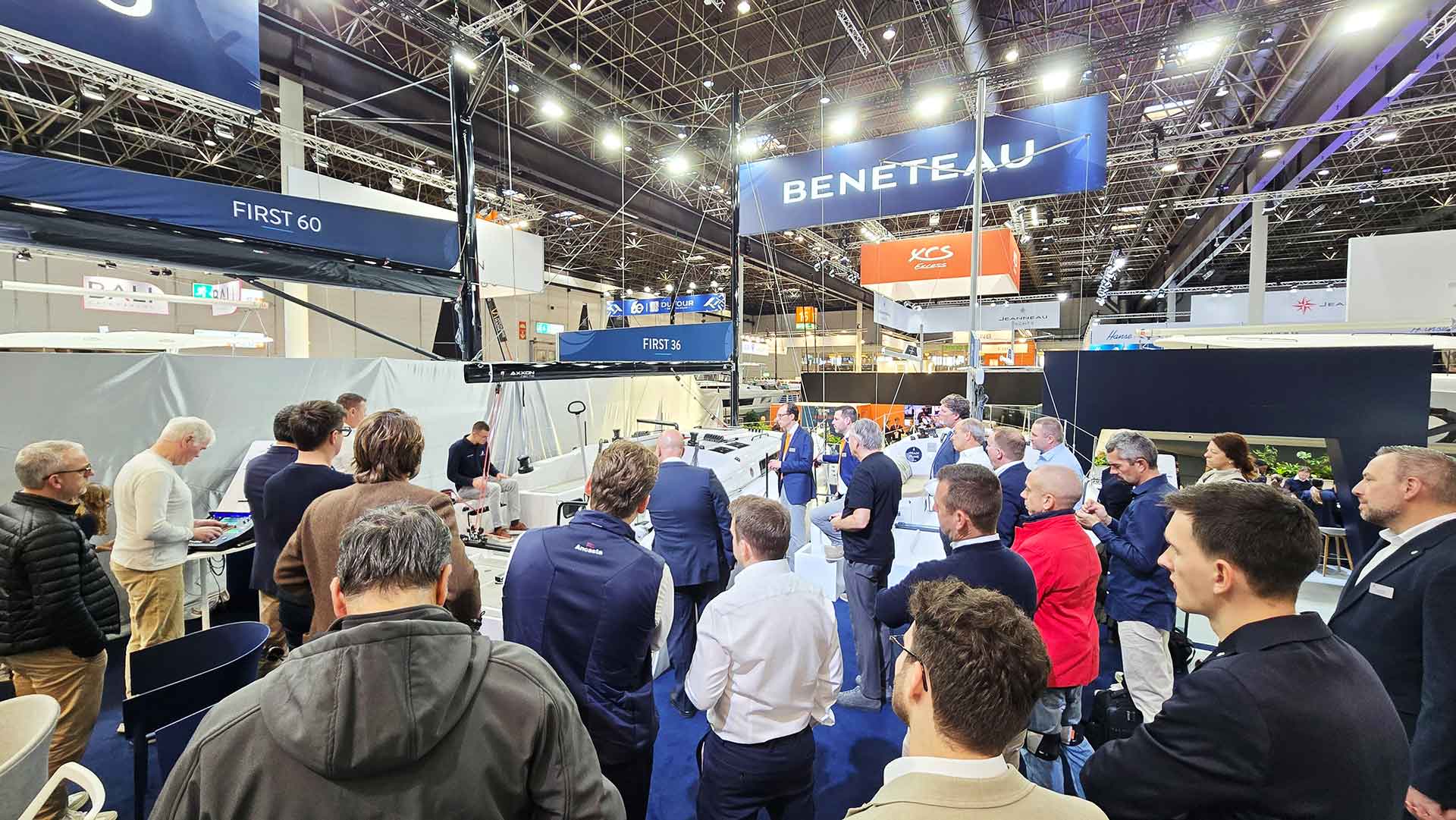
Lars Reisberg | NO FRILLS SAILING.com: “Last question, Yann – with the new 47 and 52 the 8th generation has been launched. I assume the rest of the fleet follow in the coming years. Let´s try and look into the future: What will the 9th generation Oceanis on 2035 will look like or feature?”
Yann Masselot | Beneteau: “That´s another good question! Well of course, we have what we call in the “Group Design Center”. It´s like the “skunk works” of the US Air Force, our in-house research and development division. We always work on the future, with many designers around the world. We exchange a lot of ideas. And then, sometimes, we pick up something. We say: “Ah, yeah, here there is something to be done!” Usually such stuff doesn’t exist on the market before and it will bring a new benefit to the customers. So, yes, we have our mind always 5 to 10 years in the future. But at the moment, the cost is too high for smaller boats, which is our greatest challenge. We always as what does a customer want on board? What does benefit him? So, yes, electric propulsion is interesting. But only if it brings a benefit. Maybe a long-range of electric power becomes feasible? So that they can stay anchored for longer periods of time.”

Lars Reisberg | NO FRILLS SAILING.com: “Electric is something you work on?”
Yann Masselot | Beneteau: “Yes, one of many topics. I mean, it would be very comfortable if you don’t have to start an engine to recharge your batteries, right? Another thing is stability at anchor. Like with power boats. There are a lot of ideas going on to reduce heeling. Or to have balconies in the cockpit, folding platforms increasing the lounging areas when you’re anchored, that can open like you see on powerboats. You know, the reals sailing time, the underway-time, is usually around only 10 percent. The rest, 90 percent, you’re at anchor. So we have to keep developing the usage of the boat that fits the needs of customers at anchor. Like improving stability. Also when you sail. Because for some people going sailing can be a bit scary. I cannot disclose more, but there´s interesting stuff in the pipeline, I promise.”
… and now, let´s have some Macarons!
This was such an interesting interview, Yann – thanks so much! I am sure that in some way or the other the Oceanis will be around in another 40 years of time. Maybe built with greener materials, like Elium resin or other, maybe naturally sourced stuff. Maybe we will see new shapes and forms emerge, AI-based assistants for sails trim or the mentioned stabilizers which are quite common in power boats today. Maybe the Oceanis of the future will park herself into her box in the marina – or maybe we will see a trend towards more simpler, based systems? Whatever the future will bring, I am sure a sea horse will proudly canter at the bow. We shake hands and part: Yann heads off to his office, which is the whole booth at the boat show, I go and greet the first visitors of the day.
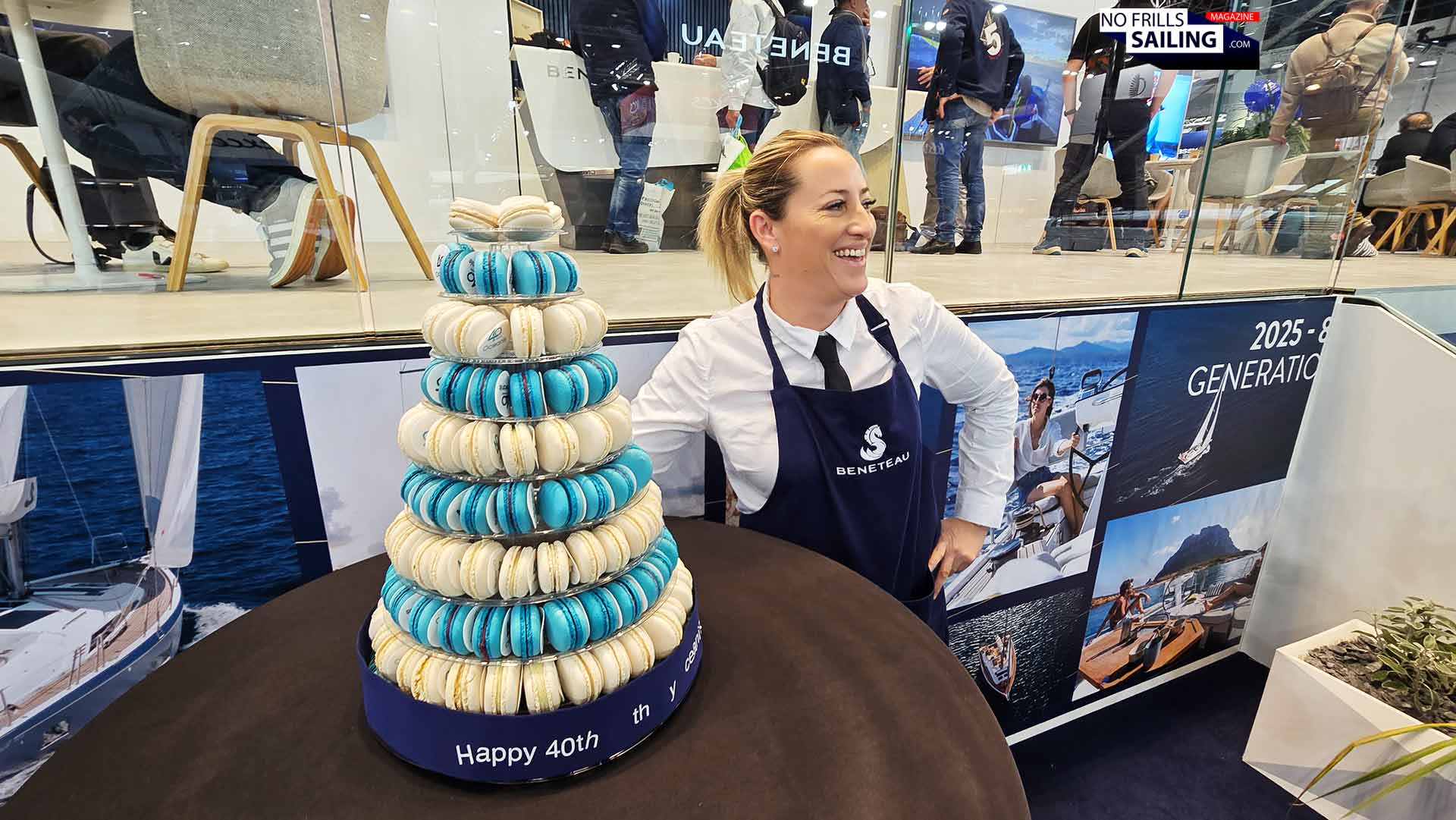
Only to meet him and all the guys from the shipyard again a few hours later. Because as a “Thank you!” from the shipyard, a big pyramid of tasty brand-colored Macarons is ceremonially brought onto the stage every day during the boat show at exactly 5 o´clock: Eagerly devouring the much needed sugar-shock, we bring out a toast to the Oceanis, indulge into the fine art of French patisserie and maybe think back to this bold American couple, who by chance triggered the invention of the most successful cruising boat of the world. What a story!
Also interesting to read:
“Let´s start building memories!”, talking to JF Lair of Beneteau 2025
Do Trump´s tariffs change the game?
Like a sparkling Rosé wine: Aboard the brand new 8th gen Oceanis 52