
Chapters in this post
You may have read my past interview with interior yacht designer Luca Ardizio. In this flick we were discussing his approach to the project and how he comes up with idea to fill the interior volume created by the hull shaping naval architect. Now, sadly, Luca wasn´t able to attend Boot Duesseldorf boat show, because I asked him if he´d give me a “room tour” through his latest designs. Anyway, with the Dufour 48 and Dufour 54 being presented there, it was my task to do it alone.
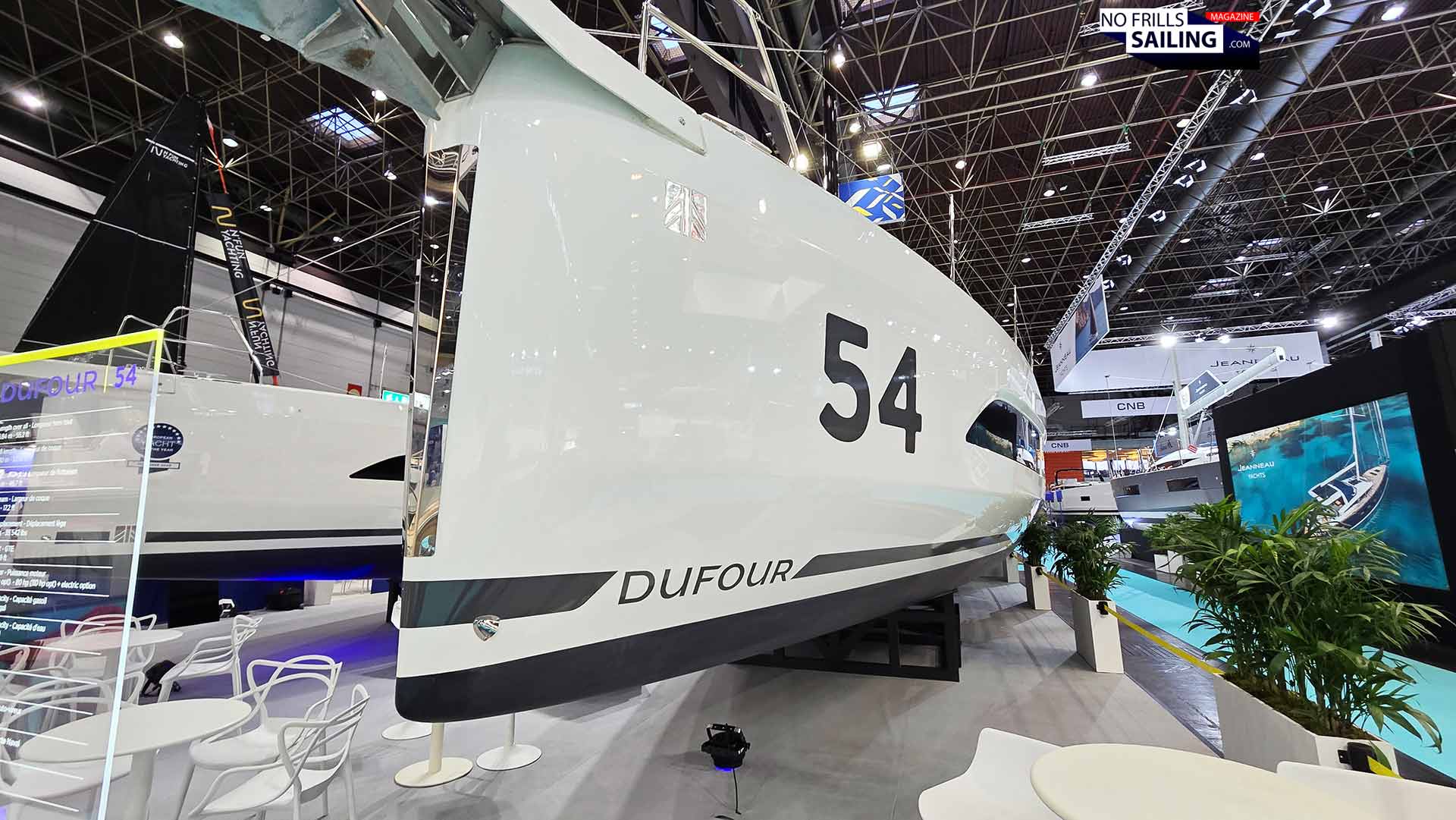
Every day I am on the premises approximately one to one and a half hours before the show opens for the public. This not only gives me the chance to prepare myself thoroughly for the oncoming appointments on my own booth, but also to roam the halls and see the boat I find interesting. Just after the cleaning and polishing crews leave, with permission by the shipyards, I board the yachts and take my pics. So here we go, welcome aboard the all-new Dufour 48 and the Dufour 48 – let´s see how Luca´s work looks in reality.
Luca Ardizio´s bold proposal

You may remember that the initial occasion why I contacted him was my kind of surprised reaction when writing about the current line-up of Dufour: Apparently, Luca was able to motivate the shipyard to do something unseen of in series production boats before. I found this highly unusual and notably because usually (the big) shipyards tend not to do something all-too unique.
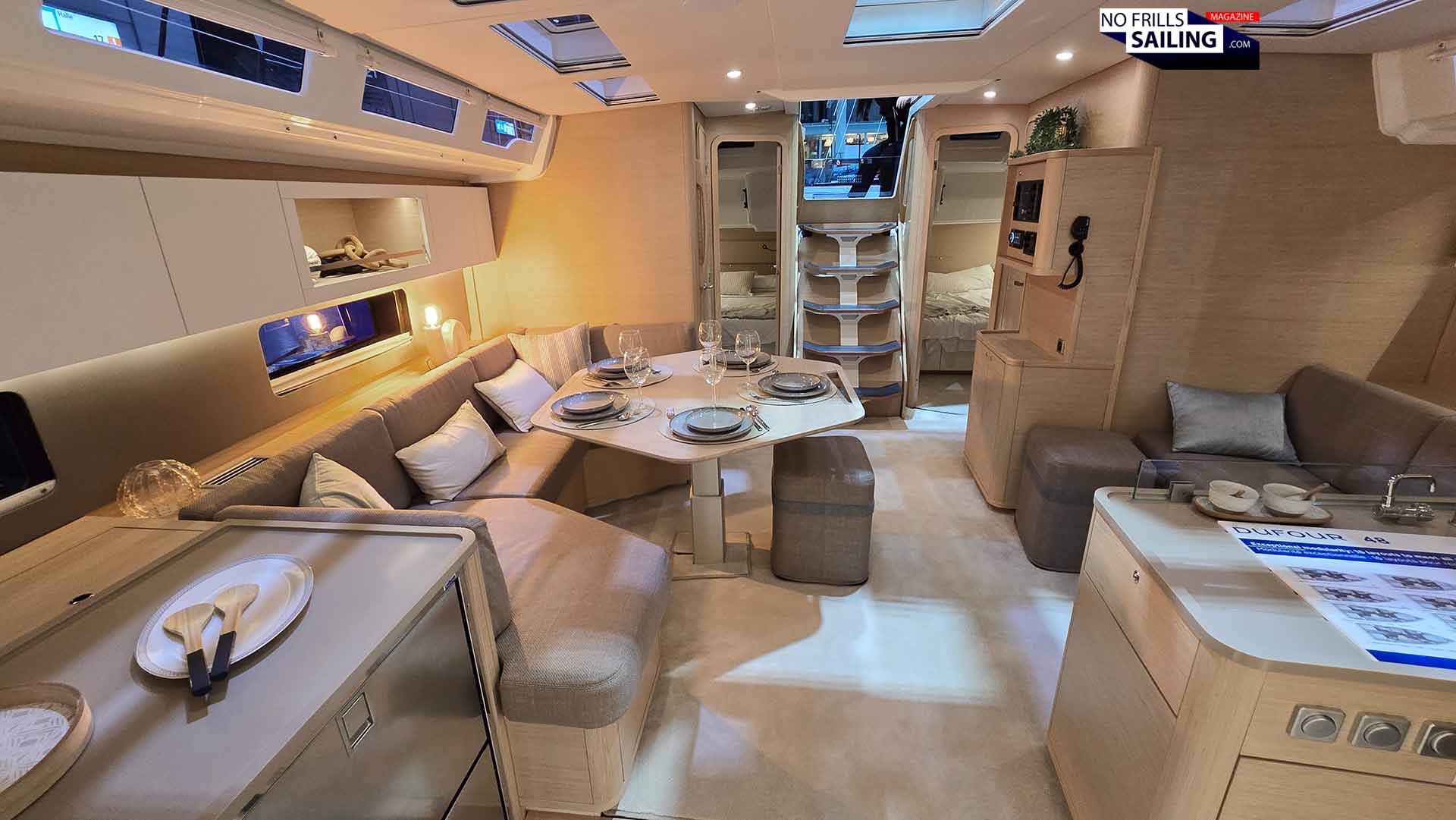
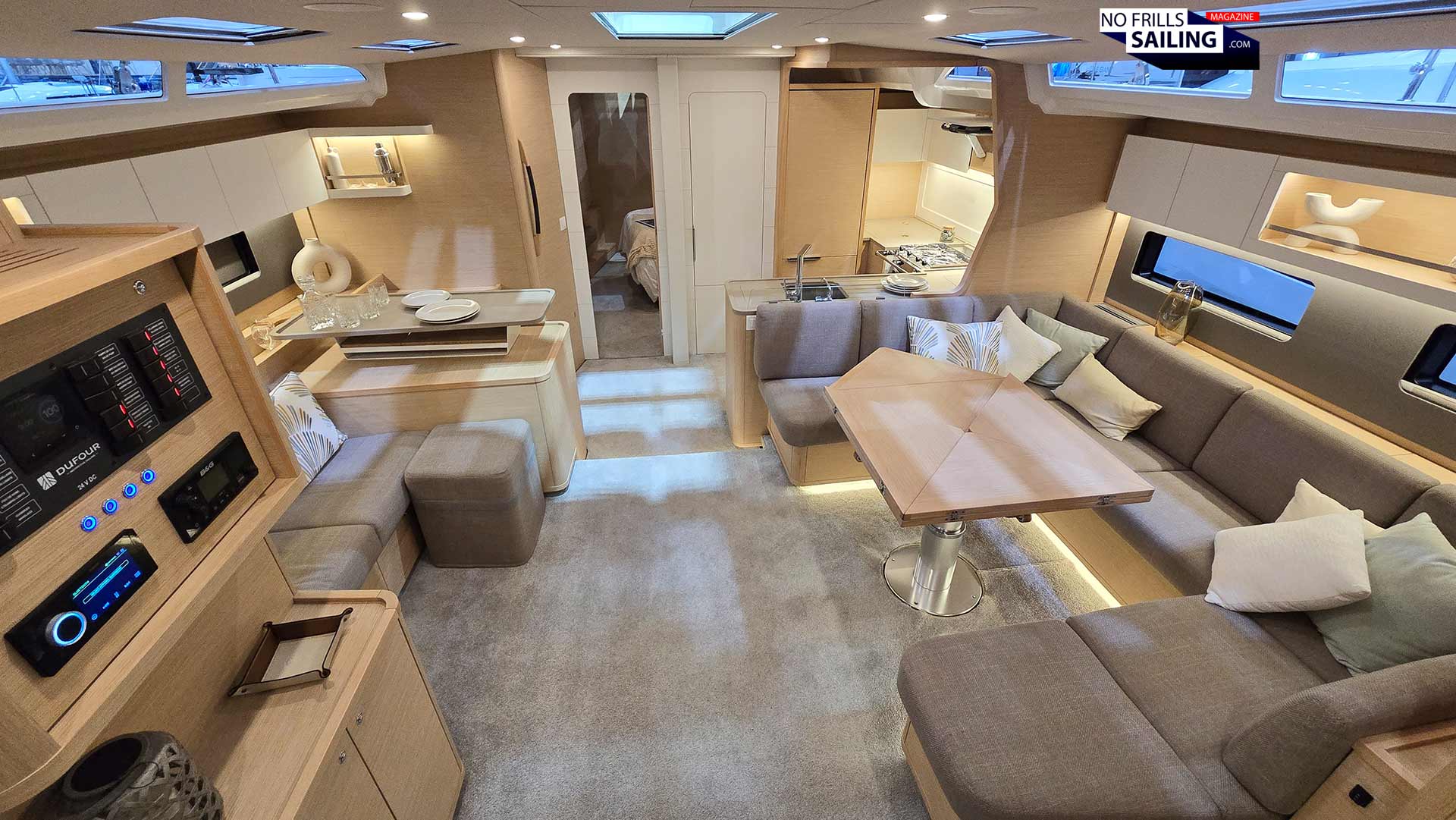
Why? Because they have to make products which appeal to a broad range of clients. As a series production company, only large sales quantities make profit. What struck me most in Luca´s design were the hexagons, especially the large dinner table of the Dufour 48. This shape, as he explains in our interview, may be unusual, but it was “inevitable” and kind of logical given the briefing and task. Now, there it is: The famous hexagonal dinner table of the Dufour 48.
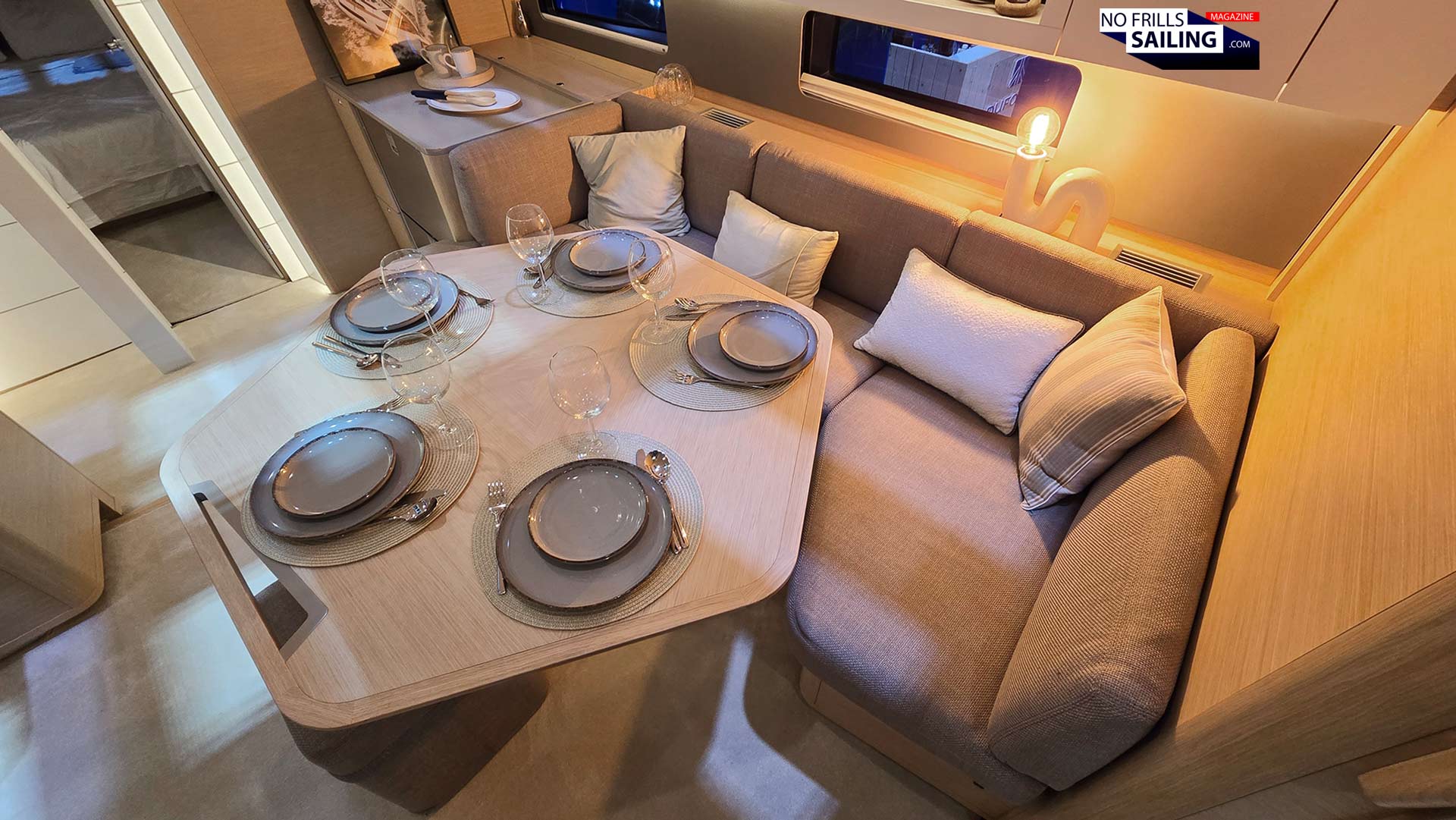
At first glance, I am honest, I didn´t like it very much. This is just my personal taste: I am really more the rectangular guy. But objectively, what Luca did was very clever: Filling the limited amount of space with the most practical shape. The Dufour 48 is a mid-size cruiser which, like all other big production boats, will approximately sold half to private customers and half to charter fleets. This means, down in the salon a table is needed where both a small family or the sailing couple could be seated comfortably, but also the 12 people charter-party. The hexagon is simple, easy to make and will manage this task nicely.
Design shall always follow its function …
… at least that´s how I see it. But Lucas isn´t one of those designers who has to push through his ideas. Switching to the larger sister ship of the 48, the all-new Dufour 54, there´s a different shape apparent in the salon. Here, Luca decided to have an ordinary rectangular shaped dinner table. Why? I guess this is because of a different set of demands for the table. This table is modifiable – smaller “coffee table” version for less people, bigger “dinner table” for more people and also acting as large “playground” or makeshift central berth when lowered.
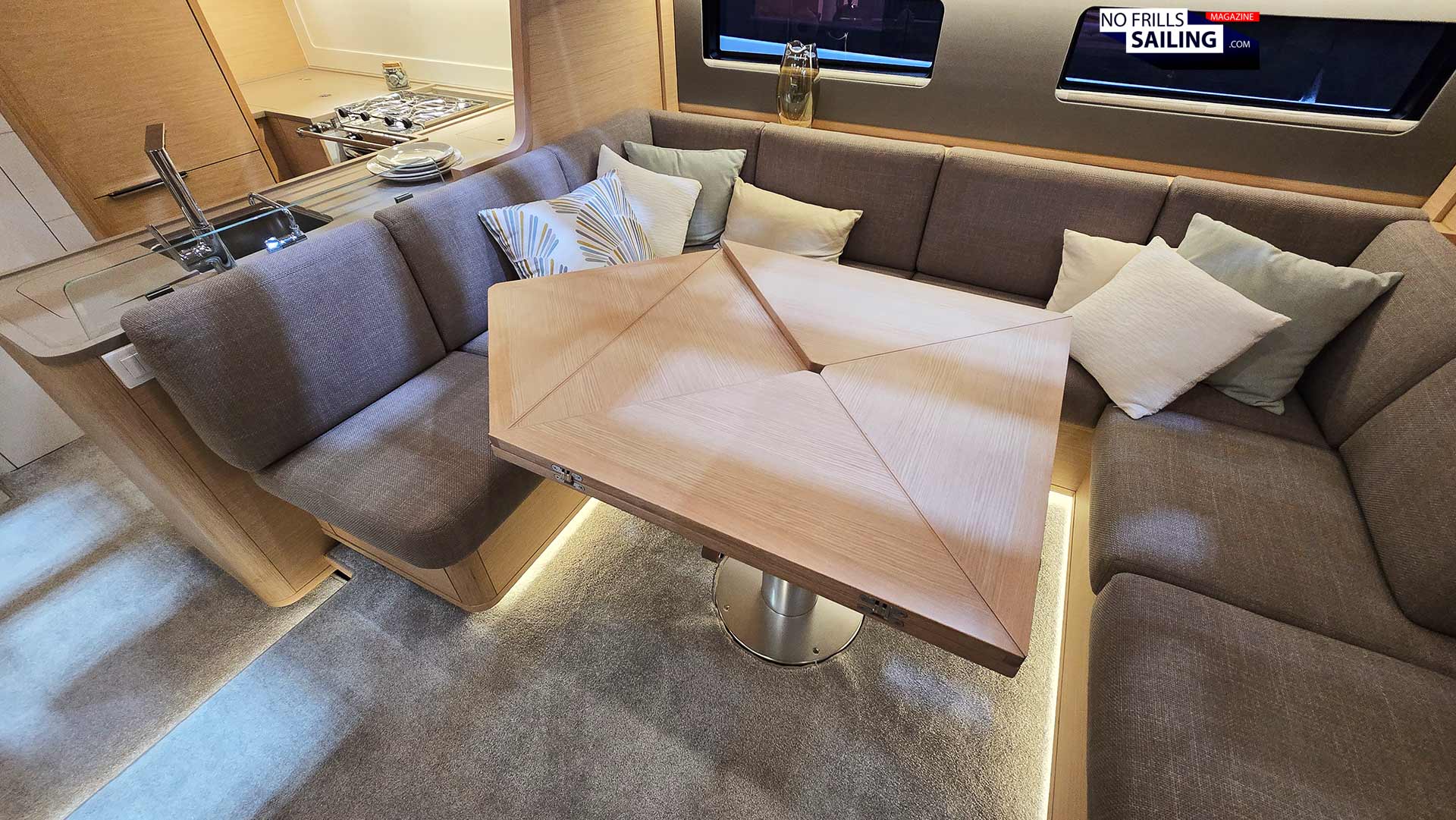
In this case, the usual rectangular shape turns out to be more versatile, easier to make and to integrate. I like design that is not imposing. Understatement where possible, not the loud screaming stuff that is so impertinent. Such a design might be trendy and exciting on the first glance, but it often will wear off and become obsolete very fast. Design should always follow the function, not dictate it. At least in terms of the dinner table aboard the Dufour 54, Luca behave like this.
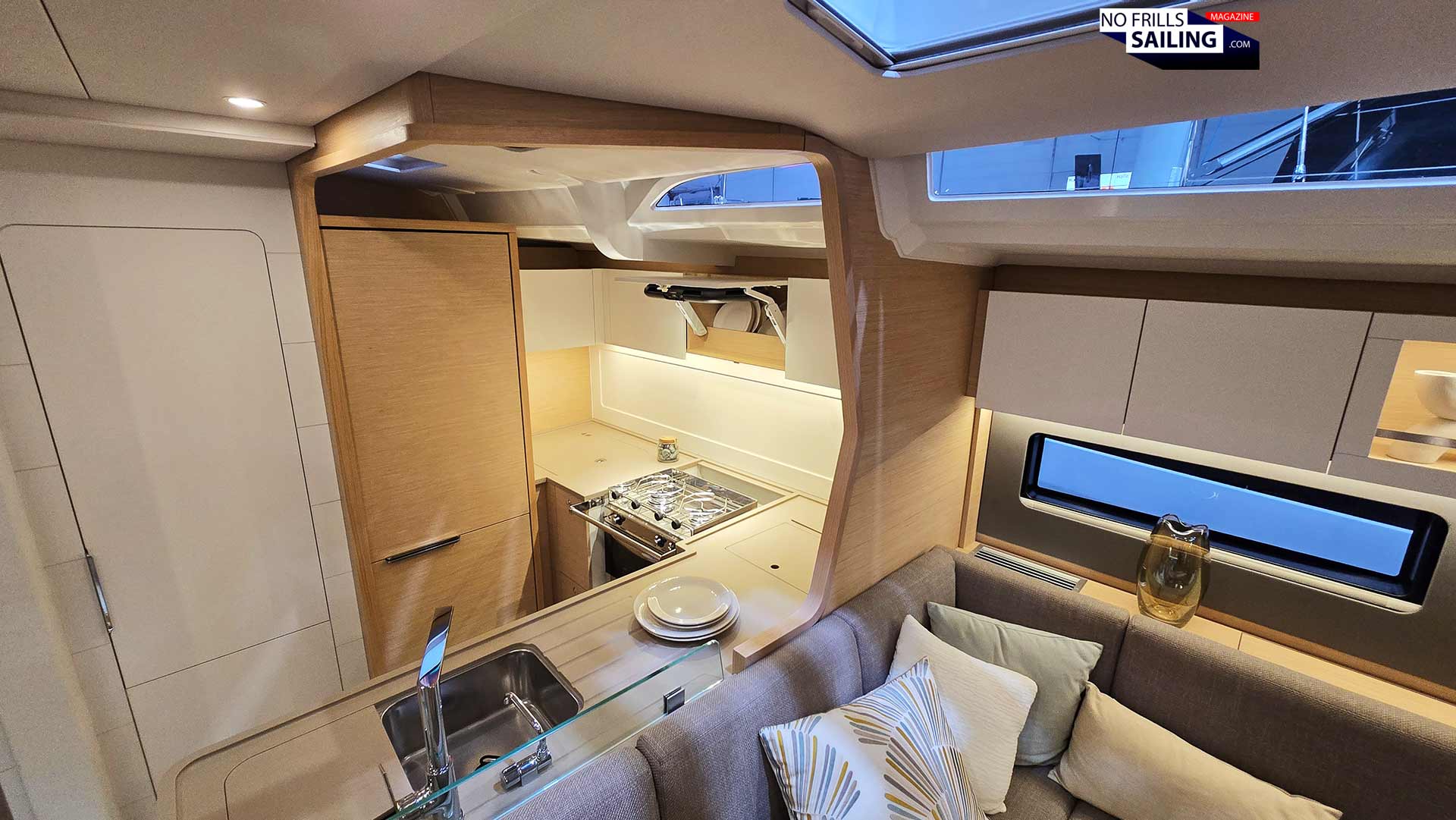
But it doesn´t mean that he doesn´t play with his shapes. Looking around – more on the second glance – the Dufour 54 reveals some little design peaks here and there. Luca, at least for this brand, turns out to be the master of the hexagonal shapes, which he lets appear now and then inside the boat. Let´s take a look at these little tweaks, which are used sparsely but yet manage to define the overall feel down below deck in this boat.
A balancing act between practicality and style
I call them “sentry boxes”, as these little wall-less “chambers” remind me of the guard boxes in front of military installations. Inside the Dufour 54 there are some of them. Look at the picture below: On starboard side, adjoining the salon´s main seating area, is the first of such sentry boxes.
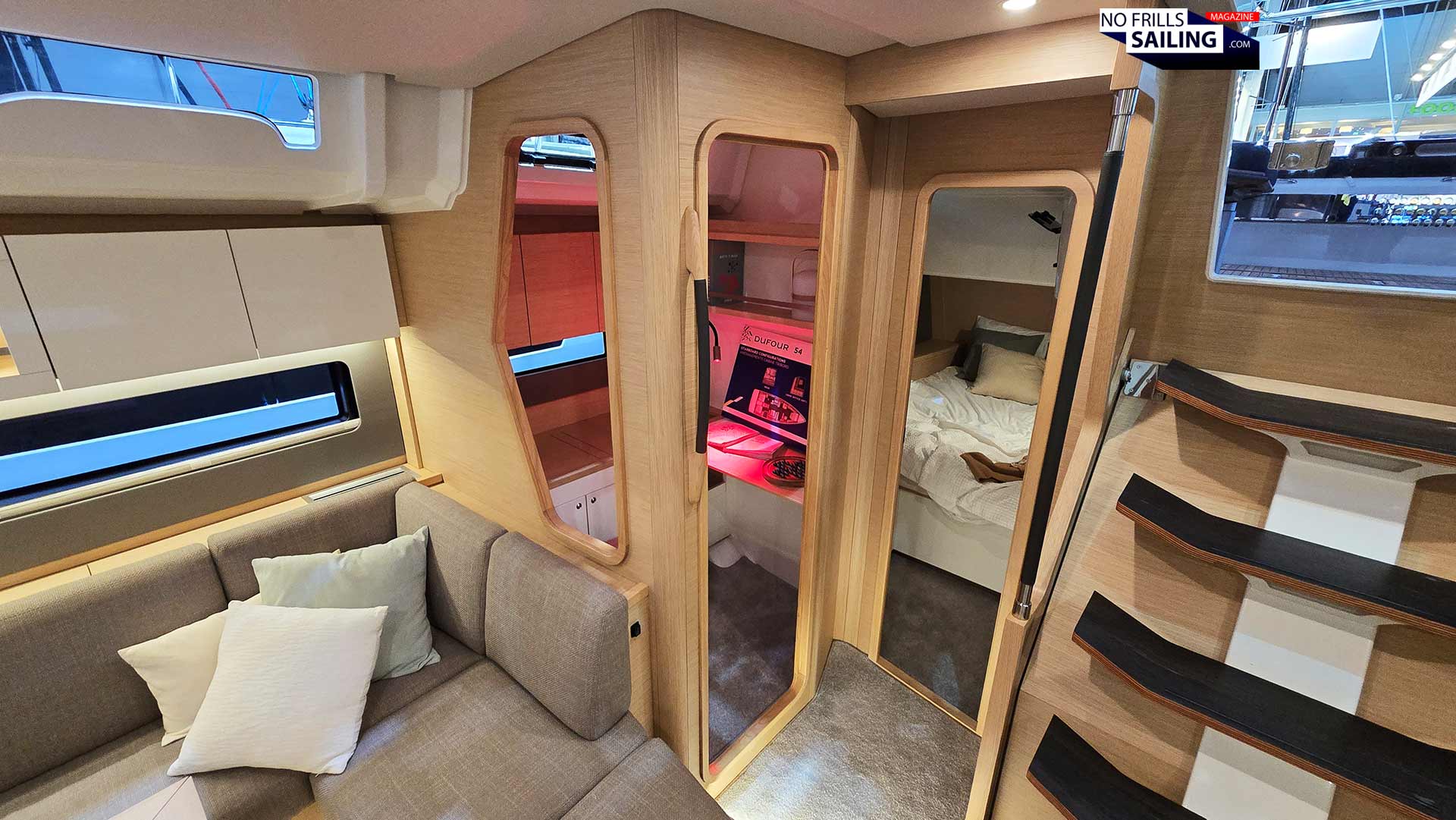
In the version on display at the boat show, this chamber is specced to act as a surplus stowage area or maybe an onboard office, perfect for the sailing couple. In other layout-versions, this becomes a full-fledged bathroom. Then, of course, the openings with the hexagonal shapes will be “filled” by proper bulkheads and walls, making a fully enclosed wet cabin. Why isn´t Luca taking out the walls completely but instead comes up with these “sentry box”-style?
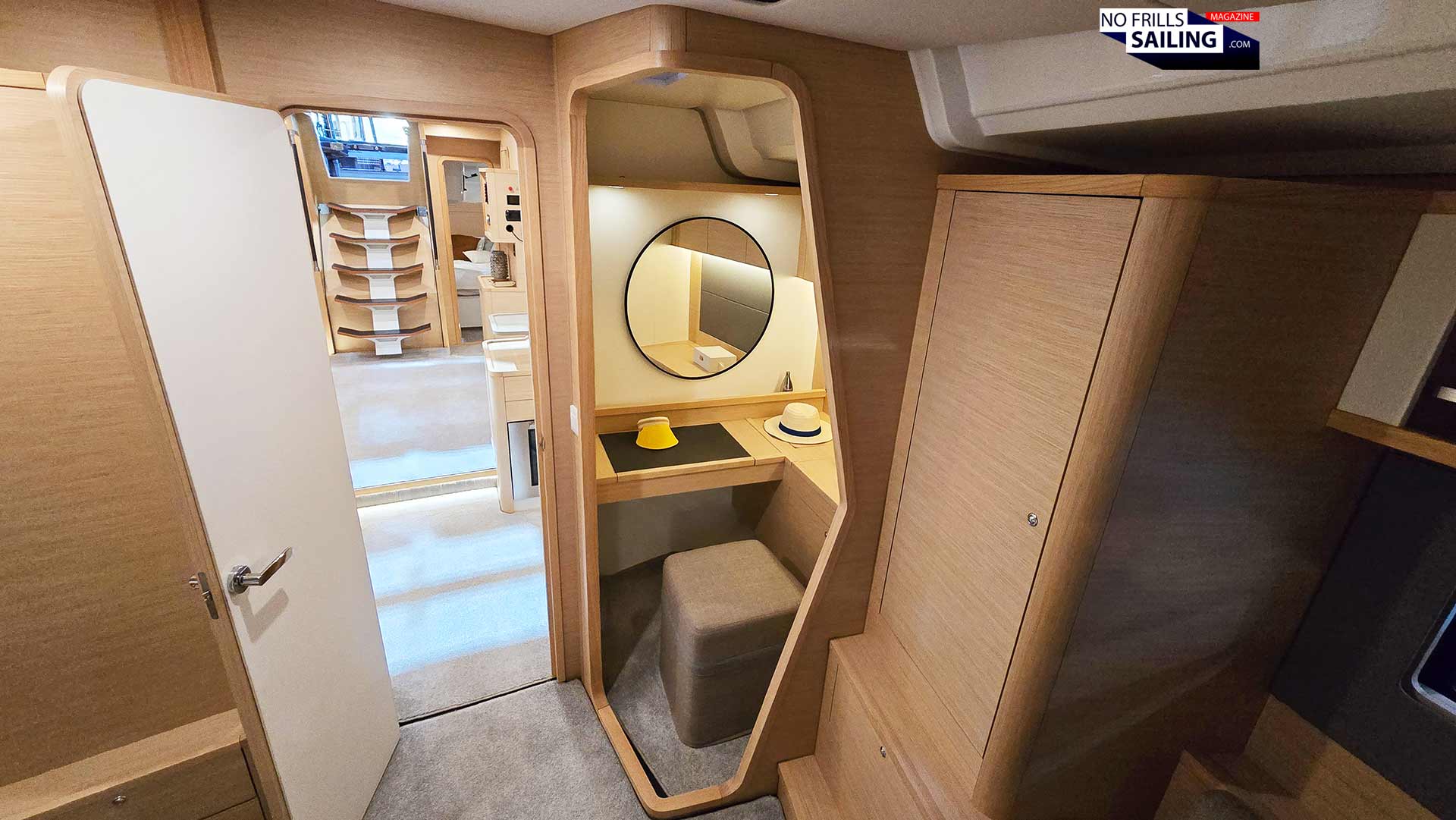
Well, that´s a question I would hade surely asked him if he would have been around personally. I can only guess: Maybe it´s structurally more sound to have at least a kind of “rump”-bulkhead when those cabins aren´t used as cabins? There is another one of those sentry boxes aboard the Dufour 54, in the bow section.
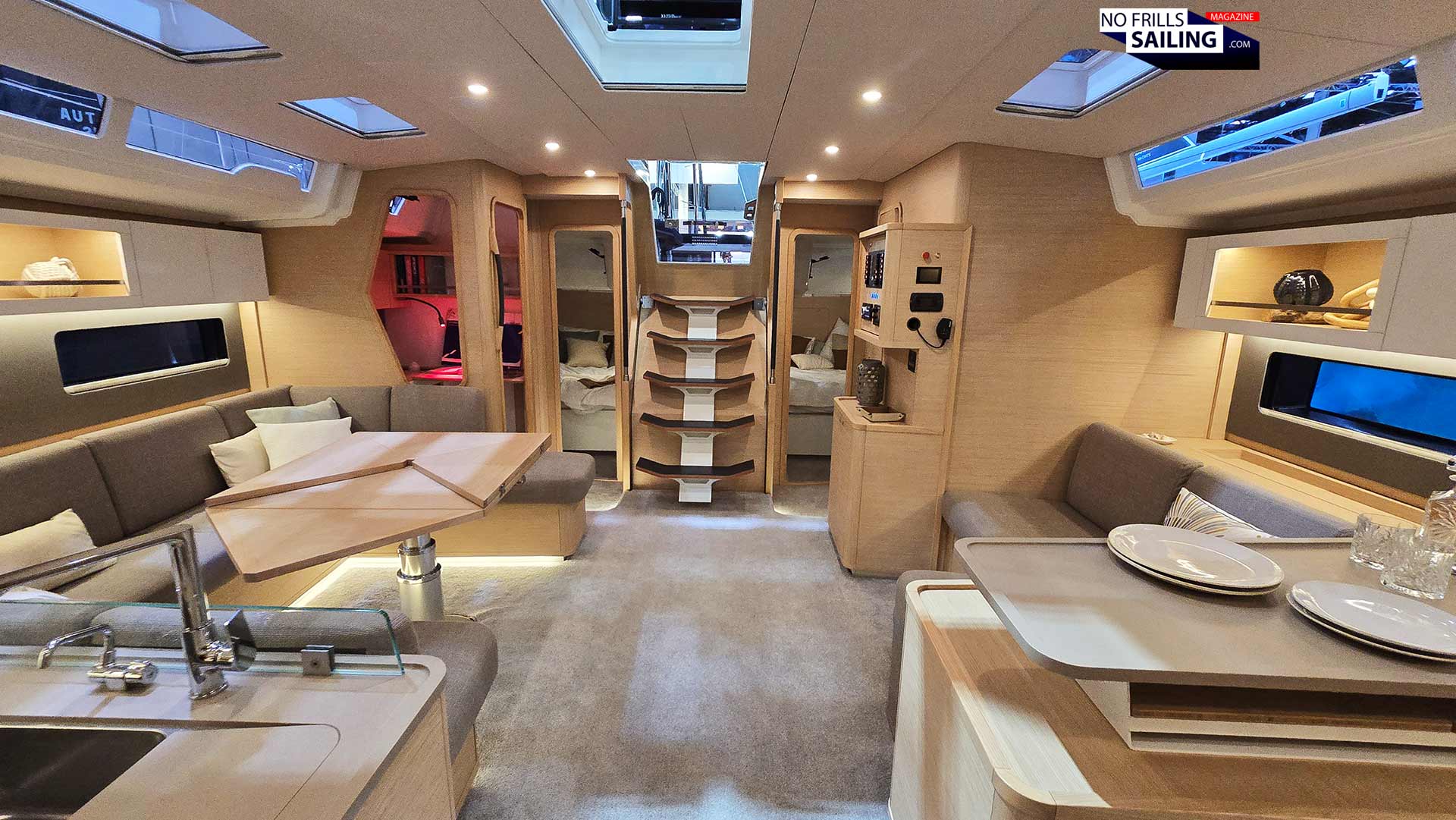
When used as four-cabin version, the portside bathroom will also not be fitted. Instead, occupants will get another office-like box, maybe for getting dressed or acting as makeup-table for the sailing ladies. What initially might look a bit over the top, really makes sense at second glance: All of those areas which must work in every of the five different internal layouts for the boat, will either function as full-fledged cabins (with proper, closed bulkheads and cabin walls) or as semi-open spaces, then decorated with hexagonal structures. Those flatter the eyes and – I suppose at least – support the structural integrity of the boat.
My impression of the new Dufours
I haven´t been working with Dufour yachts for almost 9 years now. You may know that I have been a Dufour dealer for the inaugural first year right after joining the boating industry. Back then – I suppose it was two generations of yachts ago – the “Grand Large”-called boats were already designed by Umberto Felci, who is still in charge of the naval architecture and exteriors, but those boats were different from the present generation of yachts. The new Dufours are fundamentally different, I´d say.
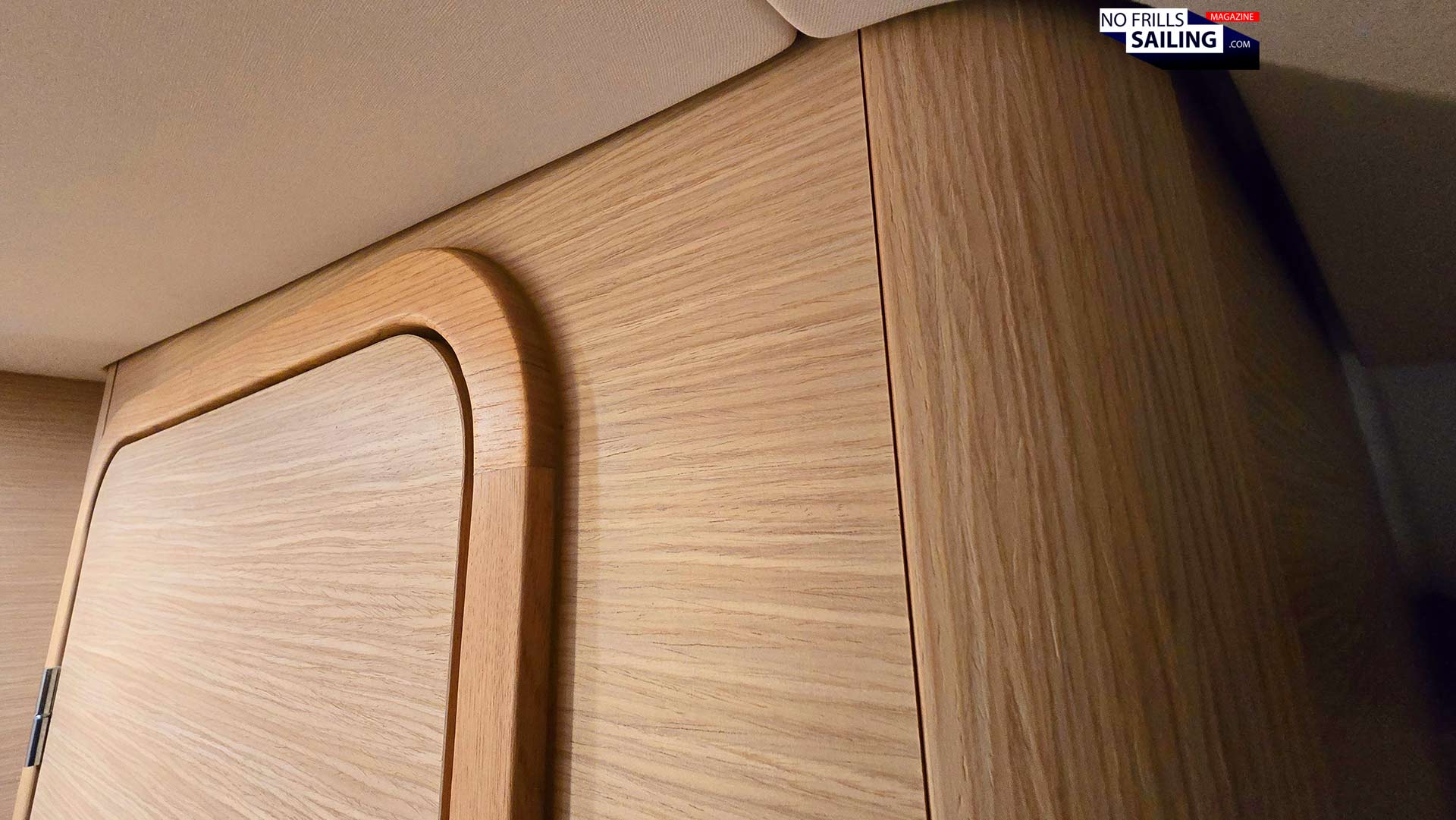
Before I look at the general facts, I´d like to point to a few details. First of all, the finishing quality. Woodworks and joinery is a huge thing in boats. For almost all sailors and owners I know this is one of the most crucial points when opting for or against a brand. The companies face a dilemma here: The more individually you become, the more solid and massive wooden parts you install, the more you increase the quality of the joinery, the less (financial) room is there for the rest: Lamination, equipment and such. Because: Still, they are fighting a fierce budgetary battle!. Dufour in this respect seems to have improved joinery quality since we quit selling this brand. A fact that I fancy very much.
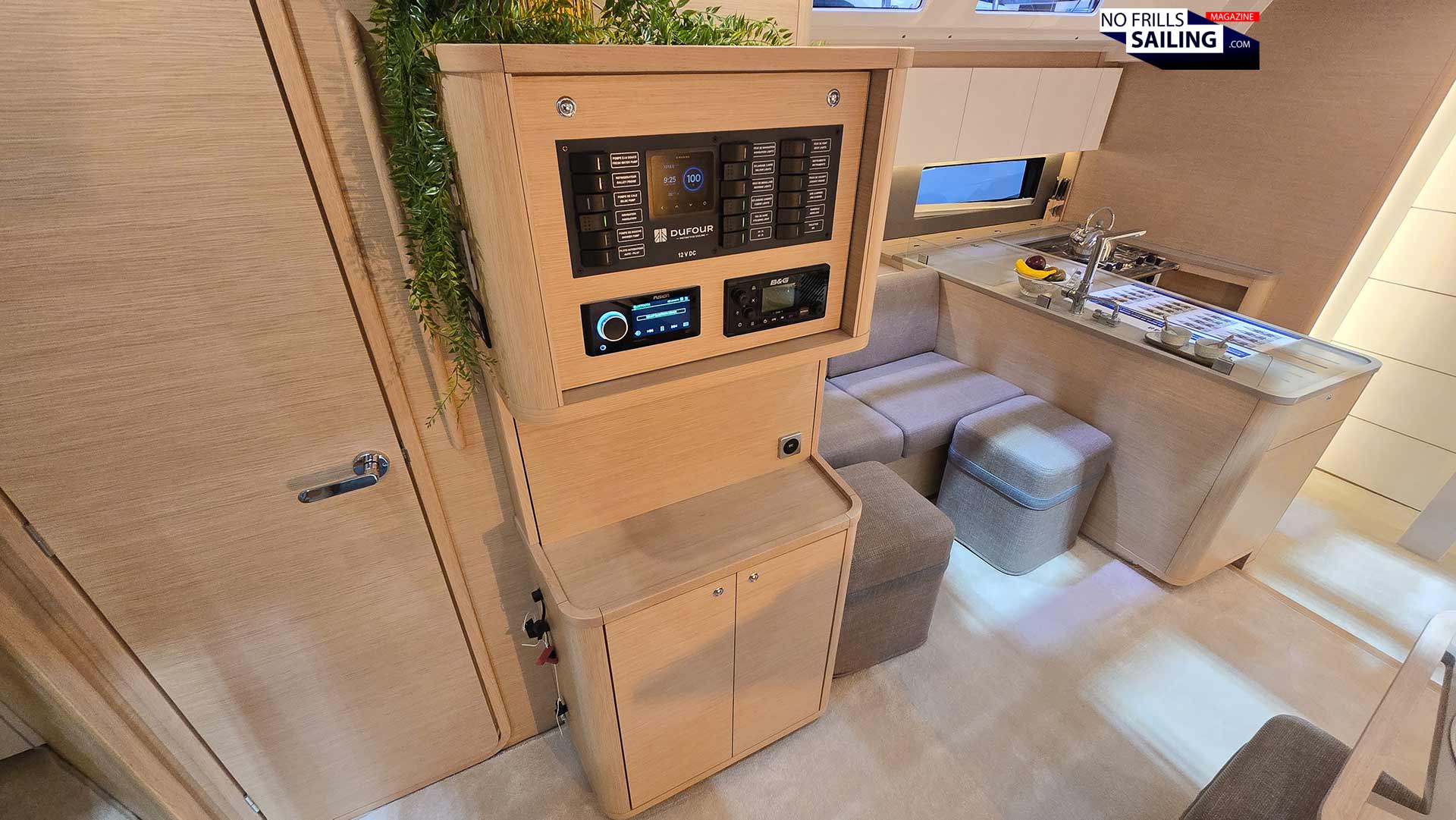
But Dufour also seems to have changed the focus group for their boats. In the past, at least during my time with Dufour, sailing, power and performance had been the prime selling point for the old Grand Large-boats. Just in line with the philosophy of late Michel Dufour, founder and eponym of this shipyard, when sailing performance and sailing fun was in the foreground. Now that has changed dramatically: The “navigation cabinet” in the picture above is exemplary for this. These boats are solely made for vacation, fun cruising, family sailing and, of course, charter business.
Which is not a bad thing, don´t get me wrong here: The companies make what the market asks for. And the “market” is not a faceless thing. It´s us! The boat you rent for your sailing vacation, the boat you buy for your family. What sells is successful. It´s as easy as this. During the boat show I of course encountered many of those “spare time yacht designers” who roamed the boats just to show me al the “stupid” things the shipyard made (or didn´t make), pointing to the shortcomings. Yes, I know. But: This is what sells. If you want to get better quality, more grab rails, more hooks, a chart table … well, pay for it.
This is modern cruising
It´s hard to accept, but that´s the way it is. I mean, the Dufour 54´s salon is so big and wide that I myself do not understand why the shipyard hasn´t installed at least one grab rail on the ceiling. And there are many, many more examples for this – not only in Dufours, but in all production boats on the market. But summing up and mending those shortcomings would make those boats so much more expensive. It´s just like that: In the production boat market, price sensibility dictates more than anything else what the boat is like and how it will be equipped.
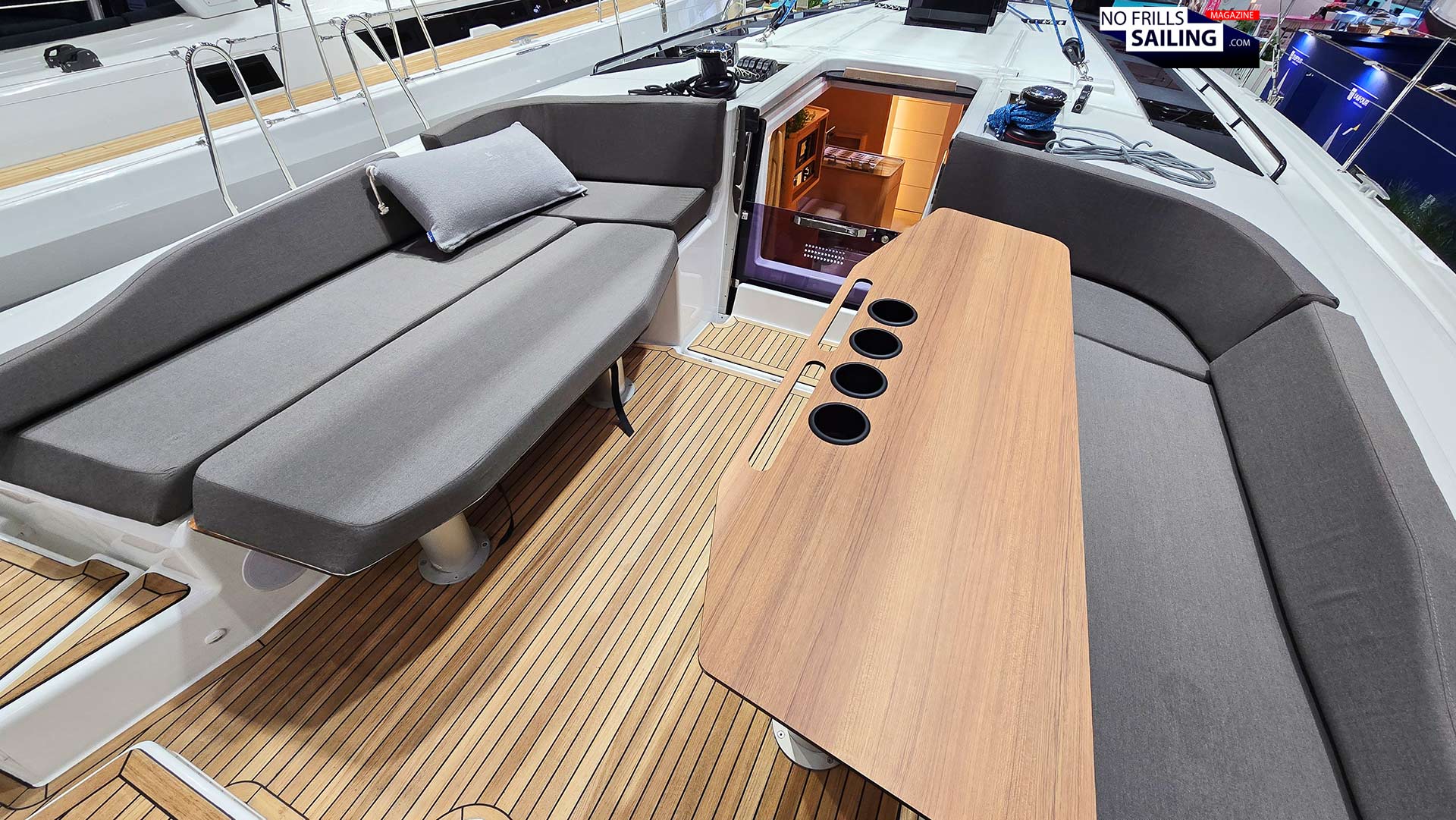
And that is modern cruising: Mostly short term trips along the coast line in predominantly well protected areas. The Mediterranean (despite recent storm surges) is such an area, the Caribbean another. This is what these yachts are mainly made for. No matter of they are rated CE-category A, the Dufour 54 and almost all of her sister ships will never sail around the world, let alone see real offshore conditions off the beaten tracks. This is why modern cruising yachts look the way they do now: Lots of space, lots of lounging and sunbathing, lots of cushions.
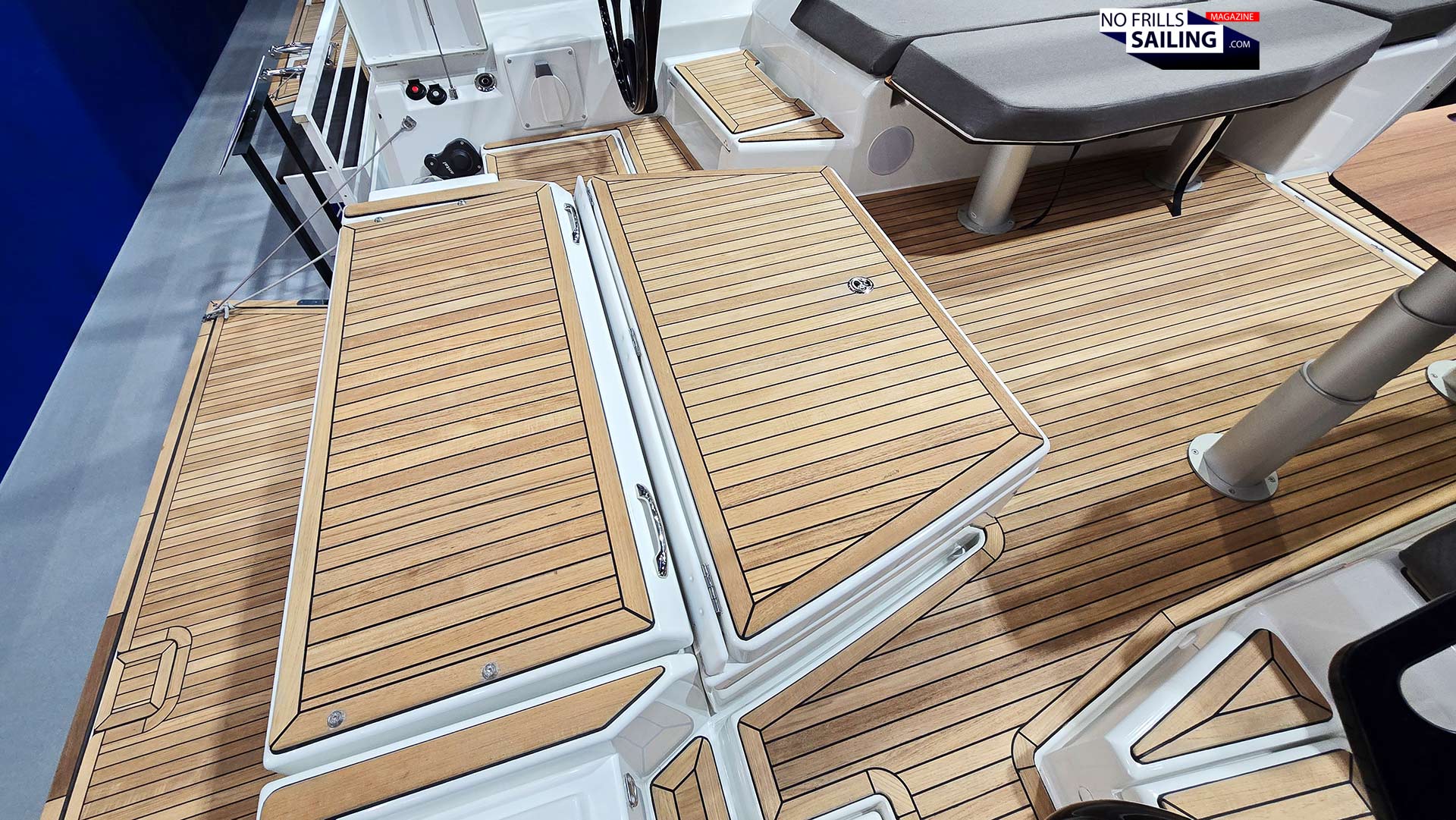
This amounts to a paradox: Sometimes the level of comfort and onboard luxury is taken to such extremes so that the prime and initial purpose of the boat becomes literally impossible to being carried out properly. Example? Take this central sunbathing area aboard the Dufour 48. Clearly, this idea has been borrowed from the power boats, where the aft sunlounge is one of the staples of onboard-luxury amenities even on smaller boats. Now, there´s an option for this yacht to integrate such a raised sunbathing lounge at the transom as well. This also goes for the larger 54, where we see another trend … BBQs.
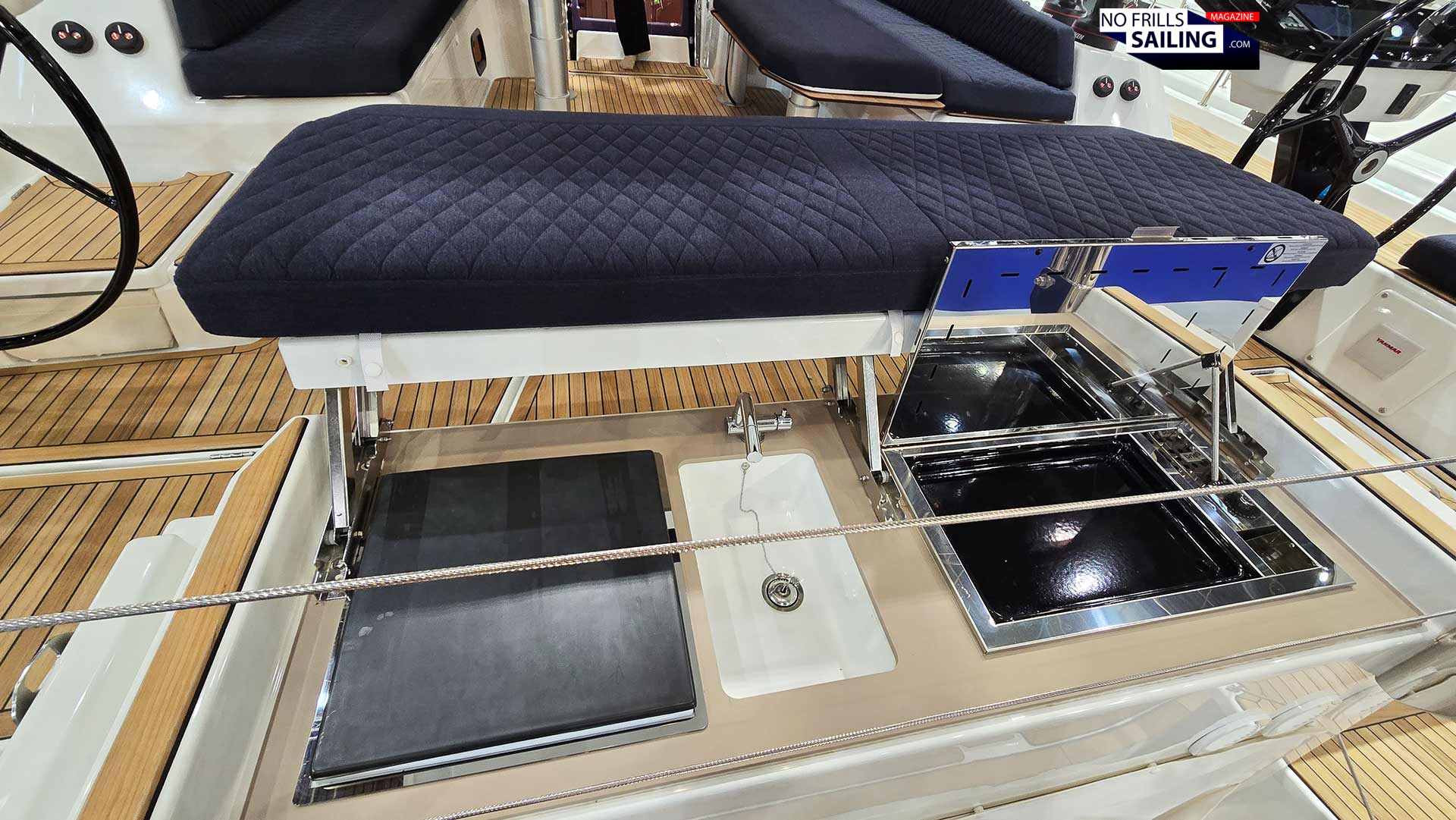
I mean, I am a big, big fan of onboard-BBQ and often nothing tastes better than a freshly grilled steak or Bratwurst off the heat. So-called “wetbars” are another must-have and staple of power boat-luxury which are more and more becoming standard on sailing yachts as well. Fridges for ice-cold drinks in the cockpit and your full-fledged “plancha”-BBQ-station at the back. I personally don´t like them as gas-powered plancha-style cooking has nothing to do with real coal-powered BBQ, there are better alternatives in my view, but apparently, this is what people love to buy. Otherwise shipyards like Dufour wouldn´t integrate those. But here we go:
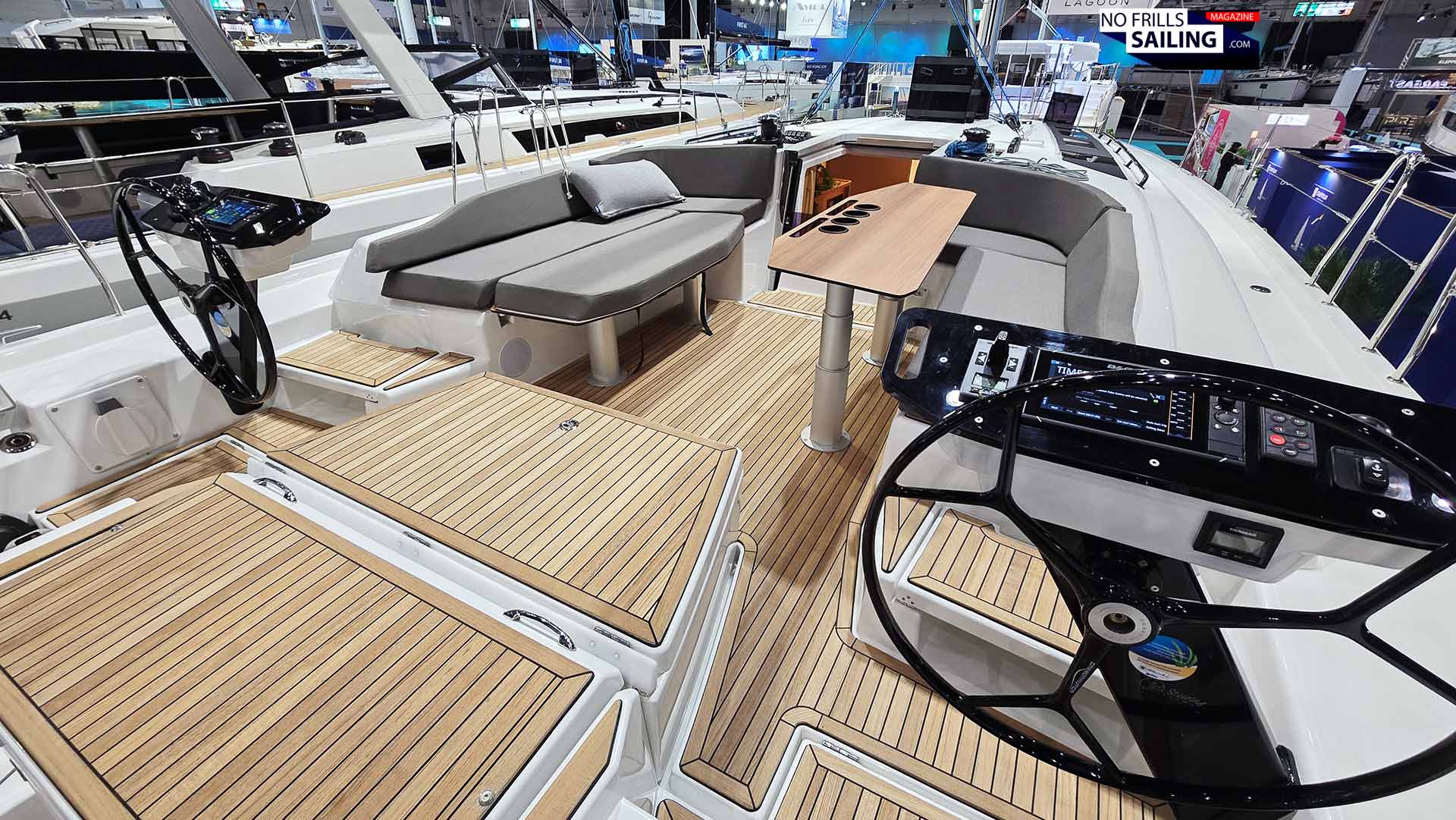
Imagine being the helmsman of this yacht, cruising along. One or two crew members are lounging on the aft mattresses. But for some reason, you suddenly have to quickly change steering wheels, from port to starboard. I don´t know, maybe a malfunction, maybe a sudden gust … whatever. Well, this is impossible now: The whole transom area is build up and cramped. It´s kind of a slalom, an obstacle course. The helmsman has become secondary, wedged in between luxury amenities. Well, apparently this sells.
More volume, more lounging – less sailing?
Boats become bigger and bigger. I remember talking to the first owner of my first ever boat, the King´s Cruiser 33. He vividly told me that back then, in the late 70ies, a 34 feet sailboat had been considered absolute luxury. Working as a commercial ship-broker, he invested his first real big money in acquiring this 11 meter-yacht – deeming it “big” at that time. 34 feet is considered a small-size boat nowadays. People want more. People want bigger.
Again, during the whole boat show, this was so apparent for me when I greeting the guests on our booth: Most of them weren´t even interested to see our Oceanis 37.1, they wanted the big ladies: 47, 52 and even 60! Now, again: Companies only make what sells best, so the trend to making bigger and bigger boats isn´t created by the designers and shipyards, it´s something their charts and real world numbers clearly show. If you have read the last article where I spoke with Beneteau-boss Yann Masselot, he clearly stated that live-tracking data clearly shows it: It´s just 10 percent sailing and 90 percent lounging for sailing boats nowadays.
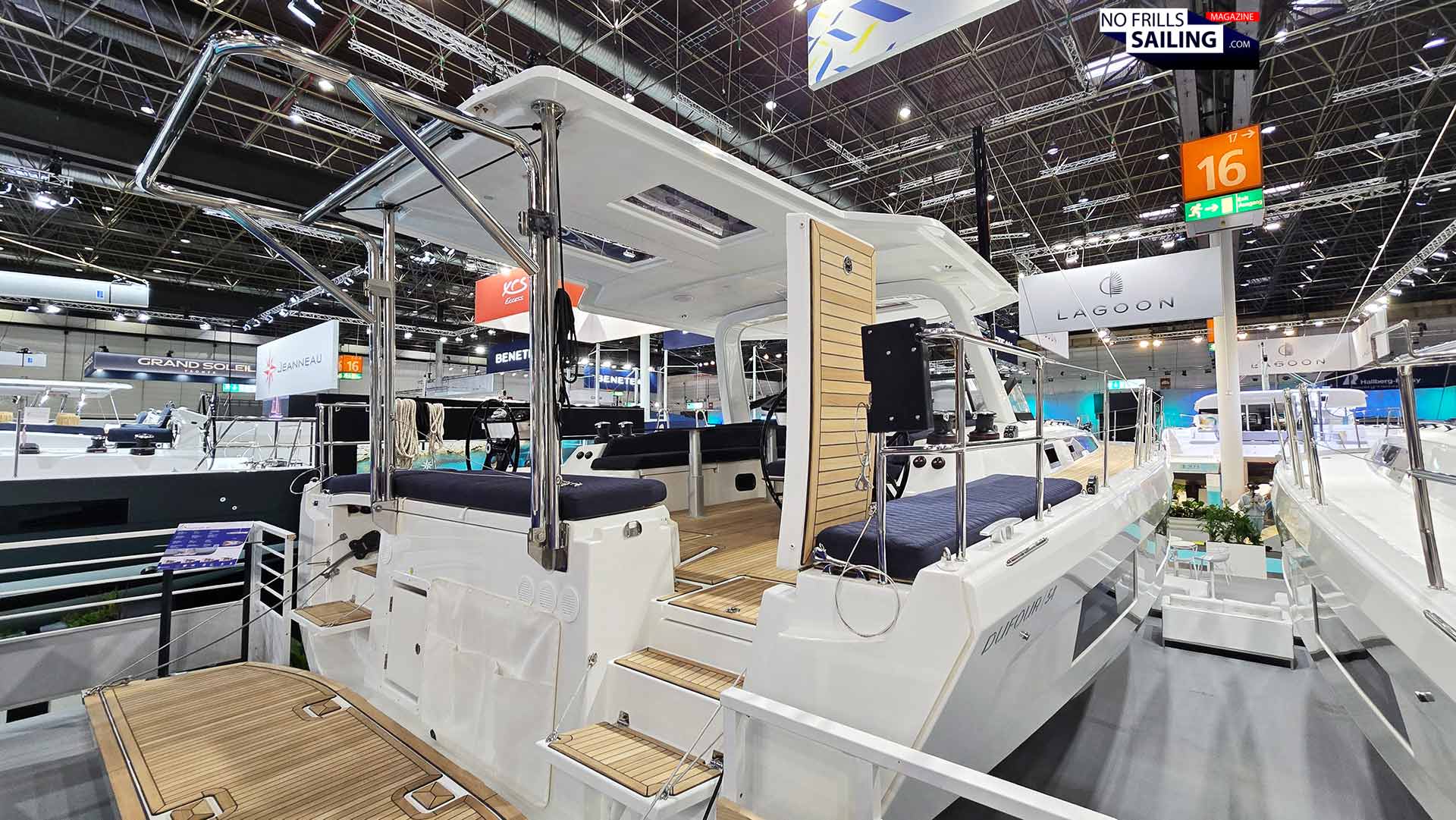
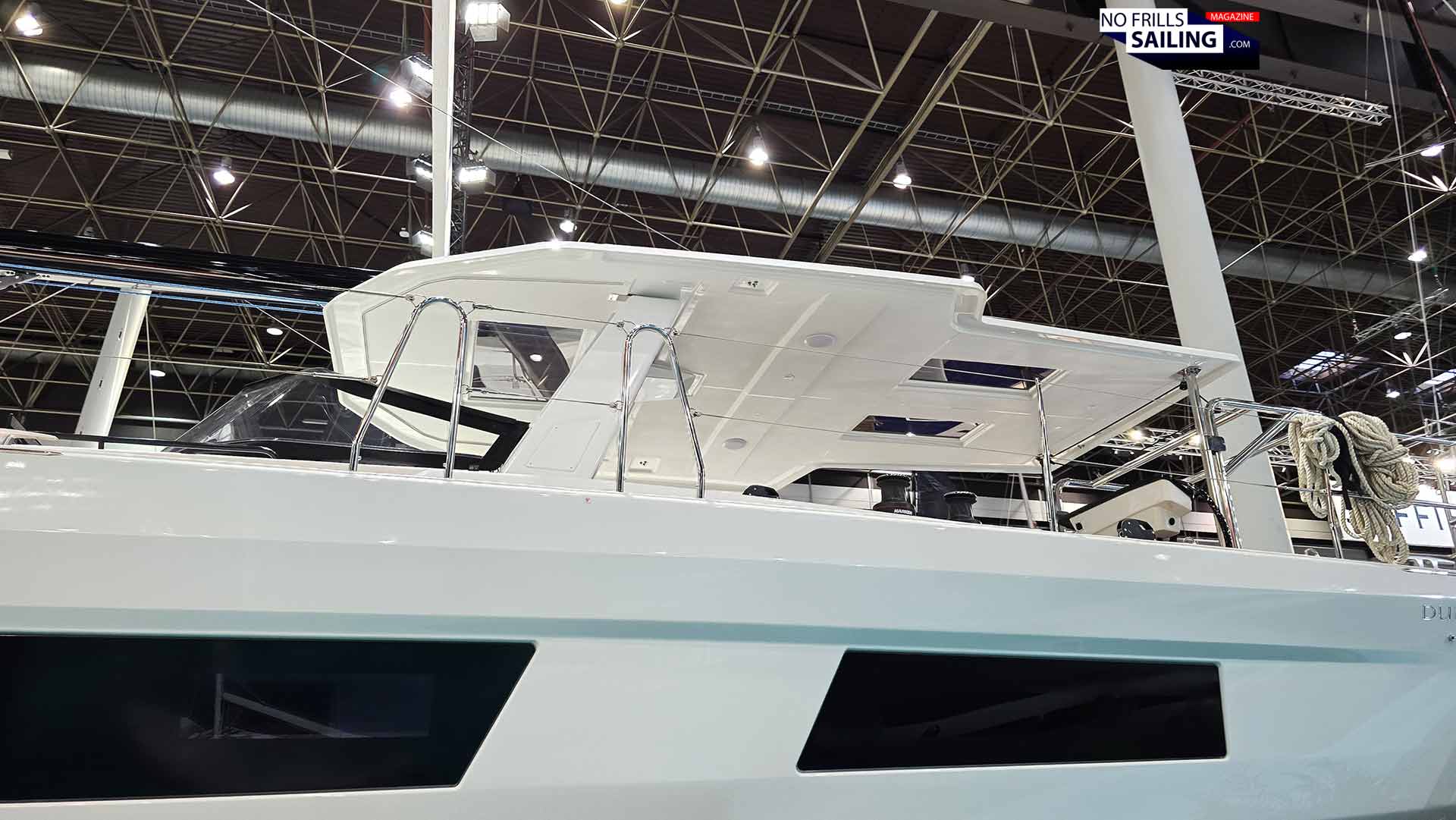
Shipyards only react. Like to be seen on the Dufour 54 nicely: Sun protection is a huge thing. Again, power boats paved the way with their big, rigid T-tops, sailing yachts join in. The classic bimini and sprayhood – at least for units bigger 50 feet – seem to have been going out of fashion. Now the solid GRP-laminated big rigid T-tops are en-vogue in almost all brands. I find they look ugly and are devastating to the fine lines of the naval architects, but here we are. Easy to use, perfect for attaching full enclosures and also for installing additional solar panels, this is how modern production cruising yachts look like nowadays.
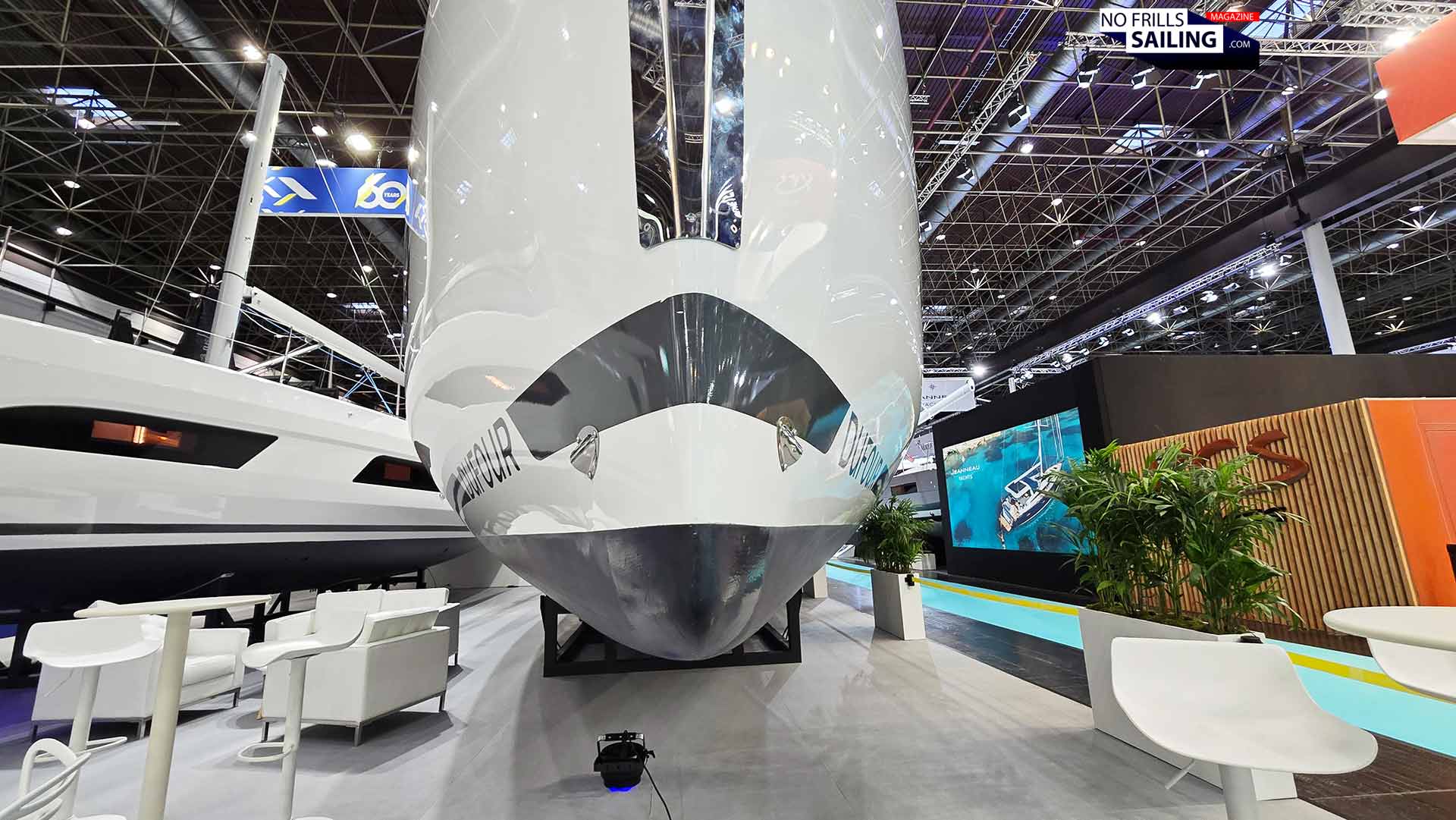
Same goes for the internal volume, which closes the circle to Luca and his design now: Looking at the bow section of the Dufour 54 you can clearly see the massive, voluptuous bulges. It´s even present in the latest Solaris! Combined with the “tulip shape” fore chines above the waterline, those yacht create even more interior volume inside: Owner´s suite become bigger and bigger, even multi-cabin layouts for charter become more attractive, as this Dufour 54 clearly shows. I´m not a fan of demonizing the shipyards for this – as I understand that this is what they have analyzed sells best.
It´s your choice – the diversification of series production yacht brands
The good news is: It´s up to you, of course! Luckily, even among the five big production boat brands there is still more than enough difference looking at their boats. You can have the full-fledged bathing island with huge cabins – spearheaded in my view by the Jeanneau Yachts 55 – or the more sailing-oriented boats by Hanse and Beneteau. The current Dufours, as I see them now, may reside somewhere in between: Umberto Felci still stands for great sailing performance, but the focus clearly lies on comfort, luxury and all sorts of vacation amenities.
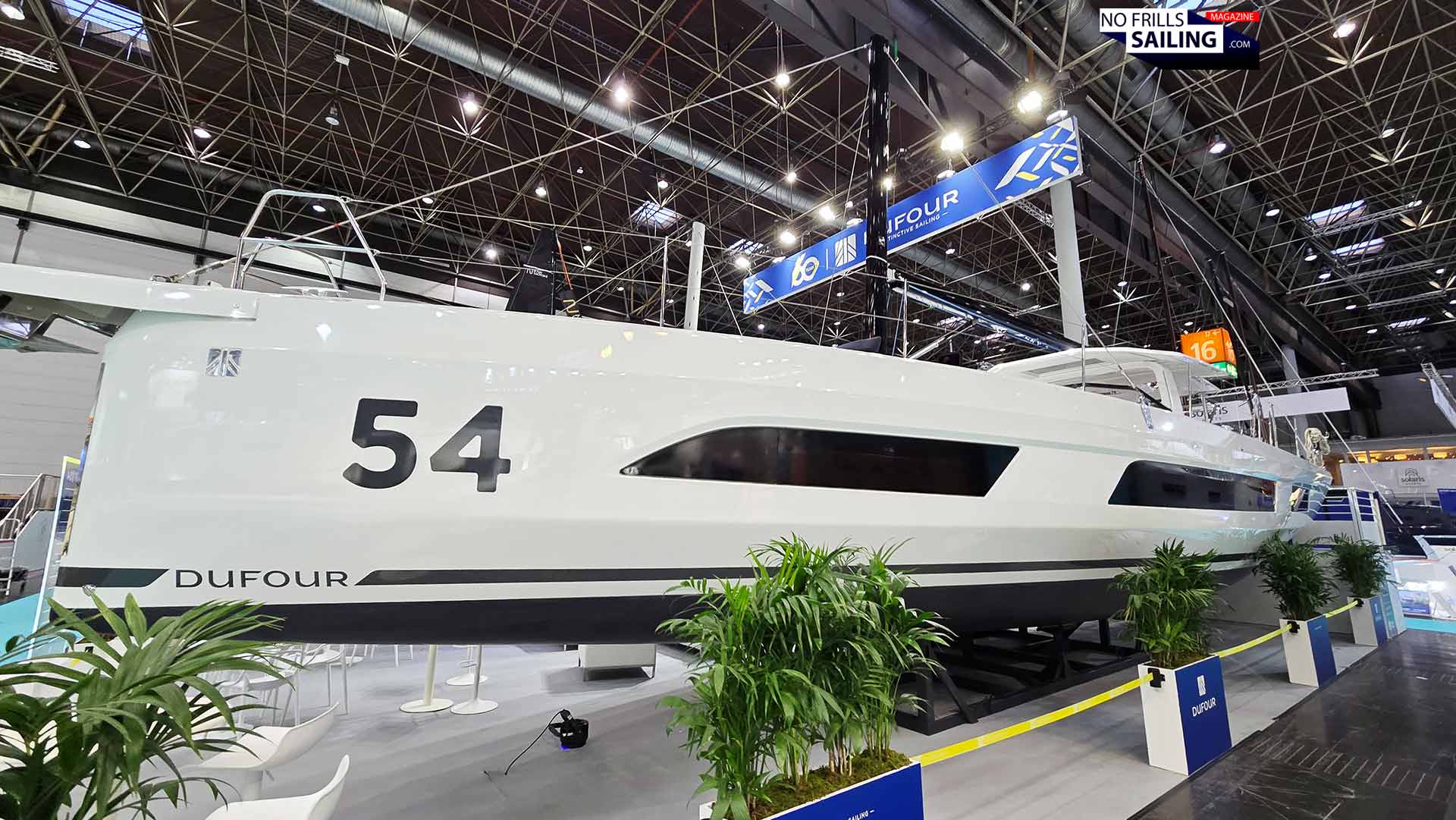
Luca Ardizio however manages to wrap this nicely into a design-approach which clearly sets Dufour apart from all the other brands. There is a signature language apparent, backed by his faible for hexagonal shapes, which makes Dufour appear a bit “extravagant”. Something I like. Maybe the Dufour-sailor nowadays compares to the Lancia- or Saab-driver on the motorways. A bit different, a bit more eccentric, a bit more attention-seeking. In this respect its kind of re-assuring, that by no means the production boat industry always comes up with the same old story! Luca Ardizio´s influence on the current Dufours is a good example.
You might as well find interesting – connected articles:
Talking about his work for Dufour with interior designer Luca Ardizio
At the Dufour shipyard in La Rochelle
Umberto Felci on his approach to designing sailboats