
Last Friday the master boatbuilder of the shipyard where my new sailboat is currently under construction sent me two pictures. Just so that I knew. I suppose it was just intended as purely informative, that is why these pictures are shot quickly, no efforts taken to make them look nice or anything. The comment said “windows arrived”. That´s it. Well, Jonas, you couldn´t have made for a better weekend than this! These pictures, as amateurish these had been shot, just made my heart jump for joy! Oh boy, how cool are these?!
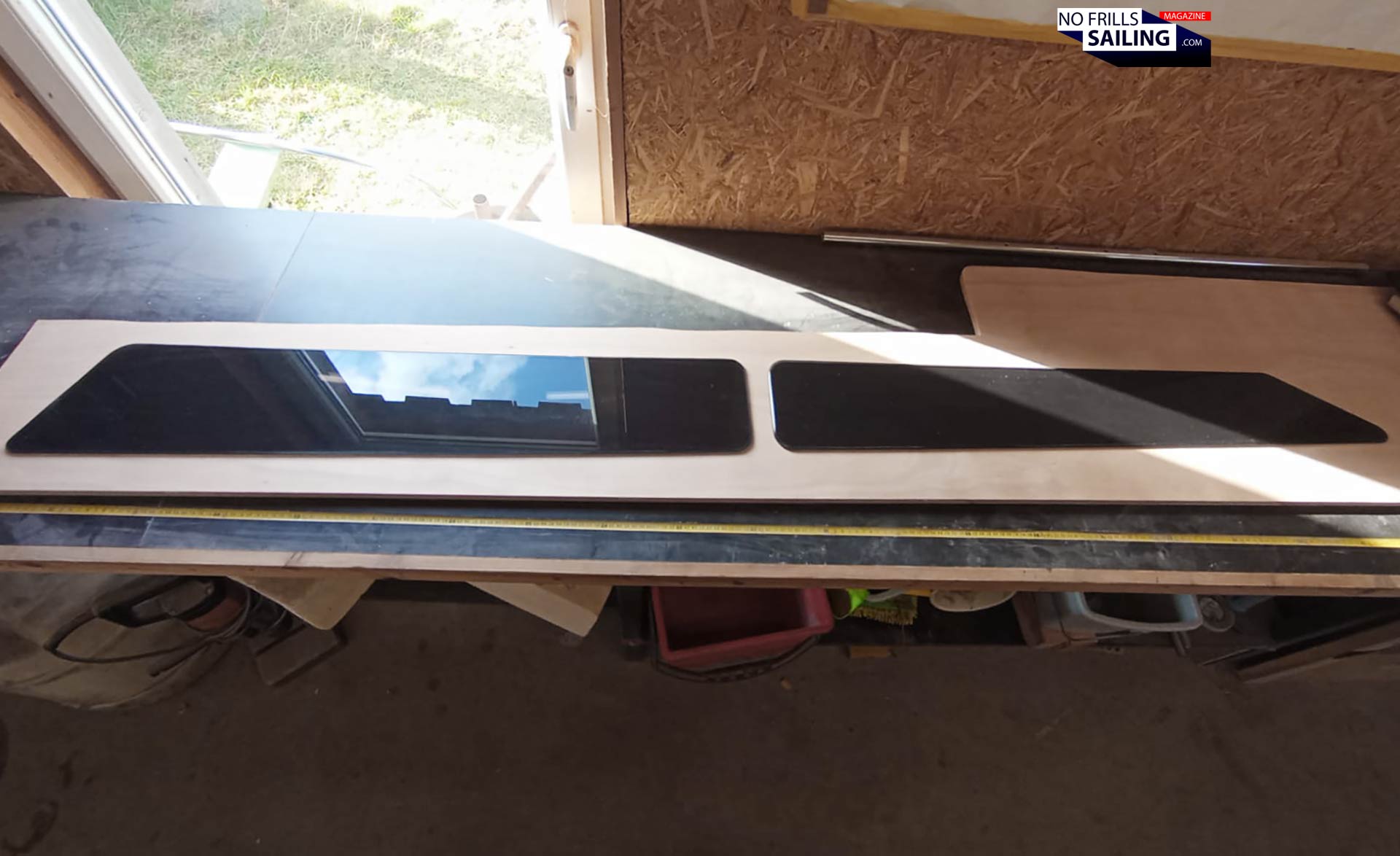
He didn´t answer to my euphoric reply anyway, I guess he thought I was making a joke on him. But really, I was happy and also kind of relieved to see the glazing arrive in such a manner. The shape, which was a long way to find and define, and also the level of finishing of the panes themselves was exactly what I was hoping for. A huge weight had finally been lifted off my shoulders and because of the fact that I am so relieved, I can´t wait until these windows are fitted to the deck, I must publish now. Here we go.
Why I make such a fuzz about those windows

Just to recapitulate why this seems to make the world for me: As you can see on the cover picture of this article and in the picture below, the new-build revived Omega 42 hull #001 features one continuous window for the deck´s coachroof. I think this decision between the owner and the shipyard had been made to maybe achieve a bit of a modern touch for the iconic Norlin design.
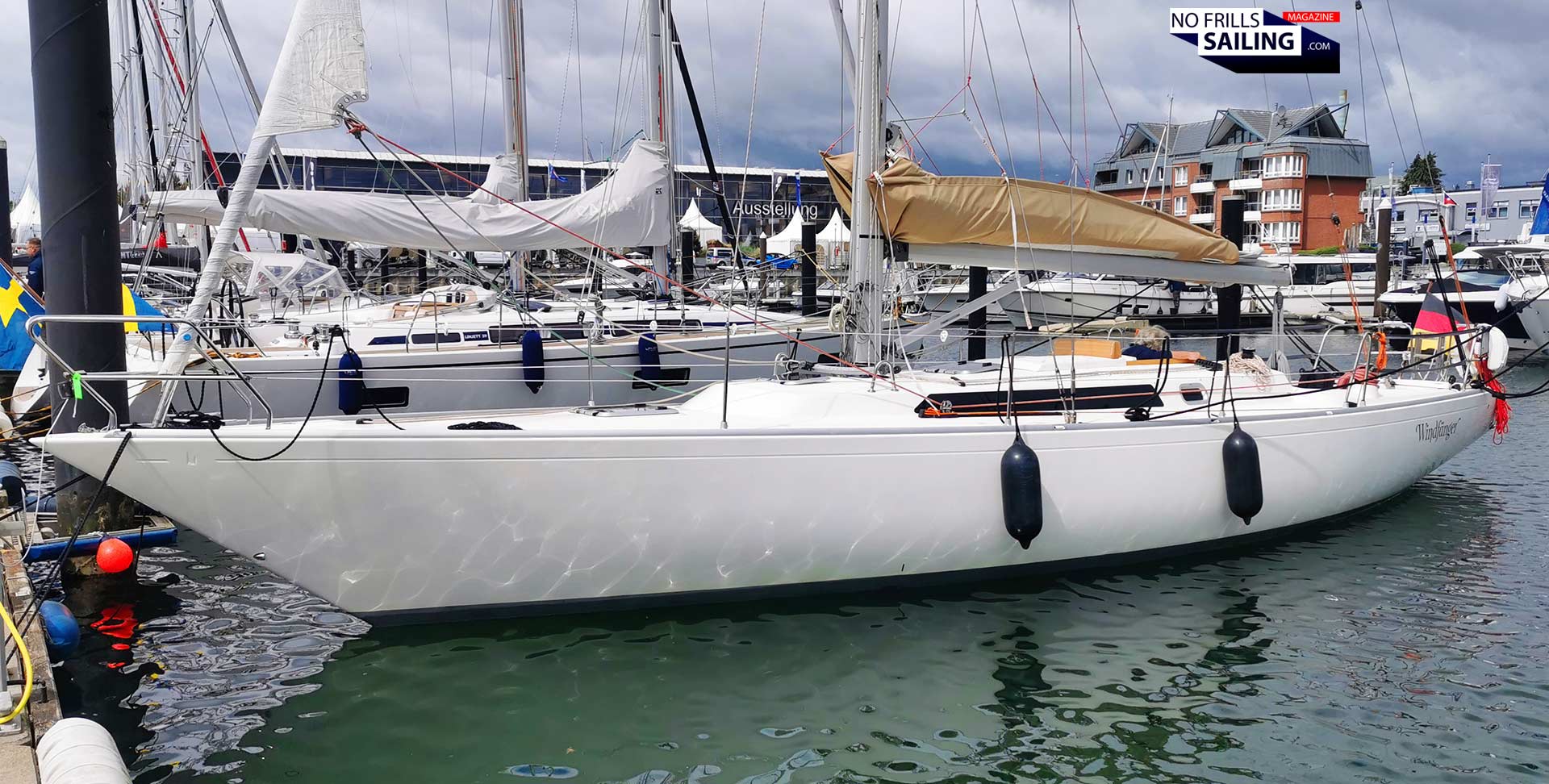
From my point of view, this is a no-go. It´s really something that breaks up the boat´s looks for me. It´s too modern, too angled. I know, this is personal taste and the guys like it, but when I signed my purchase contract, I insisted on changing this detail back to the original shapes. Although I quite like the idea to apply modernistic touches here and there, these windows need to stay true to Norlin´s intended design! But here´s the thing: Even among the original Omega 42 yacht built in the 80ies and 90ies there´s no coherence.
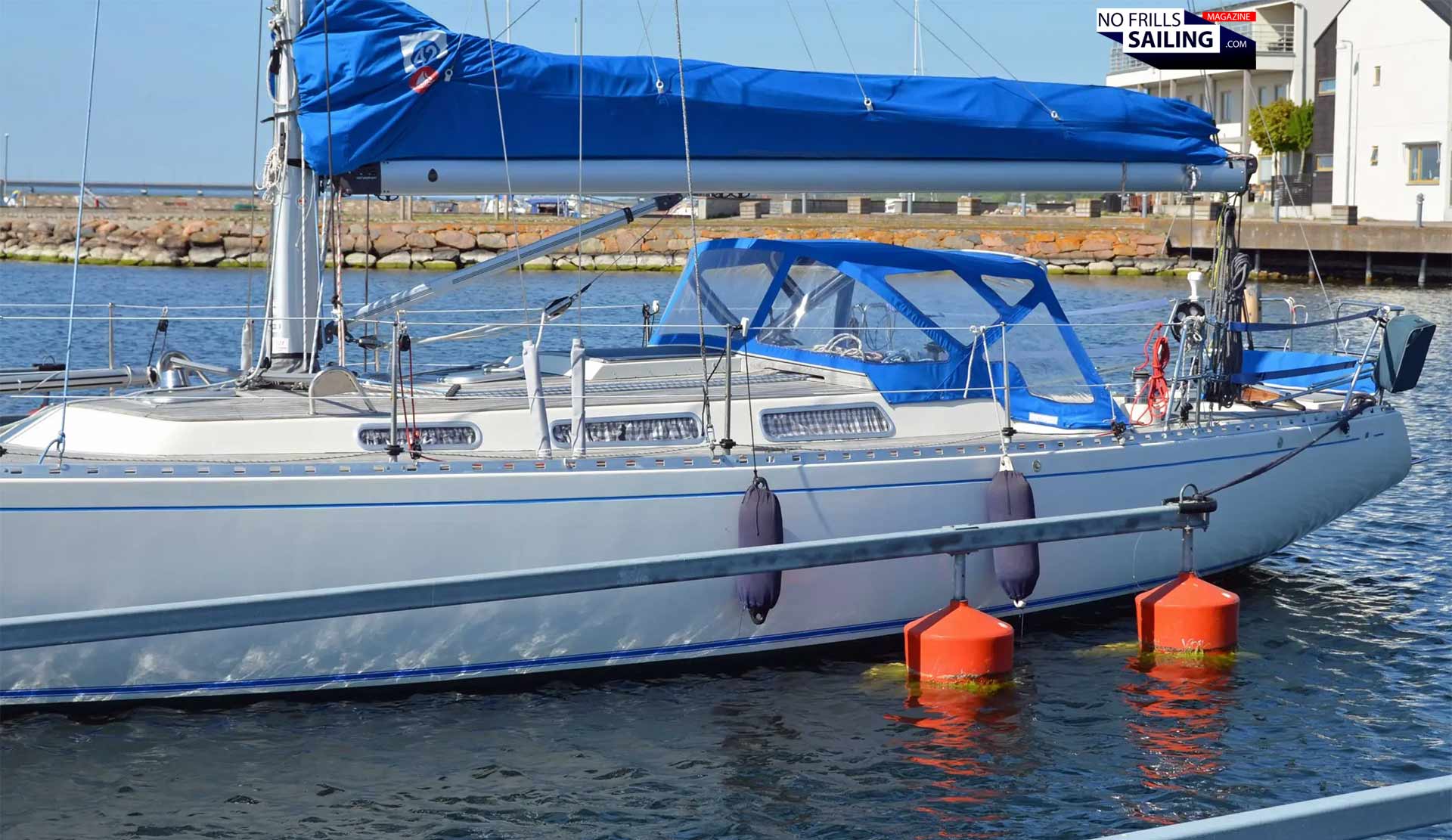
As you can see in the picture above (taken from Badagent used boat platform), there are yachts with the original two-window setup, but also boats with three windows! Likewise, the size of the windows vary as well. Some are as narrow as arrow-slits, some are wider. Then there are angular, edgy shapes and more rounded ones too. So, apparently, there´s some freedom in how to make them look “credible” and stay true to Peter Norlin´s design. What´s good though is, that underneath the large one-piece windows of hull #001, the cutouts quite nicely resemble the shape I fancy:
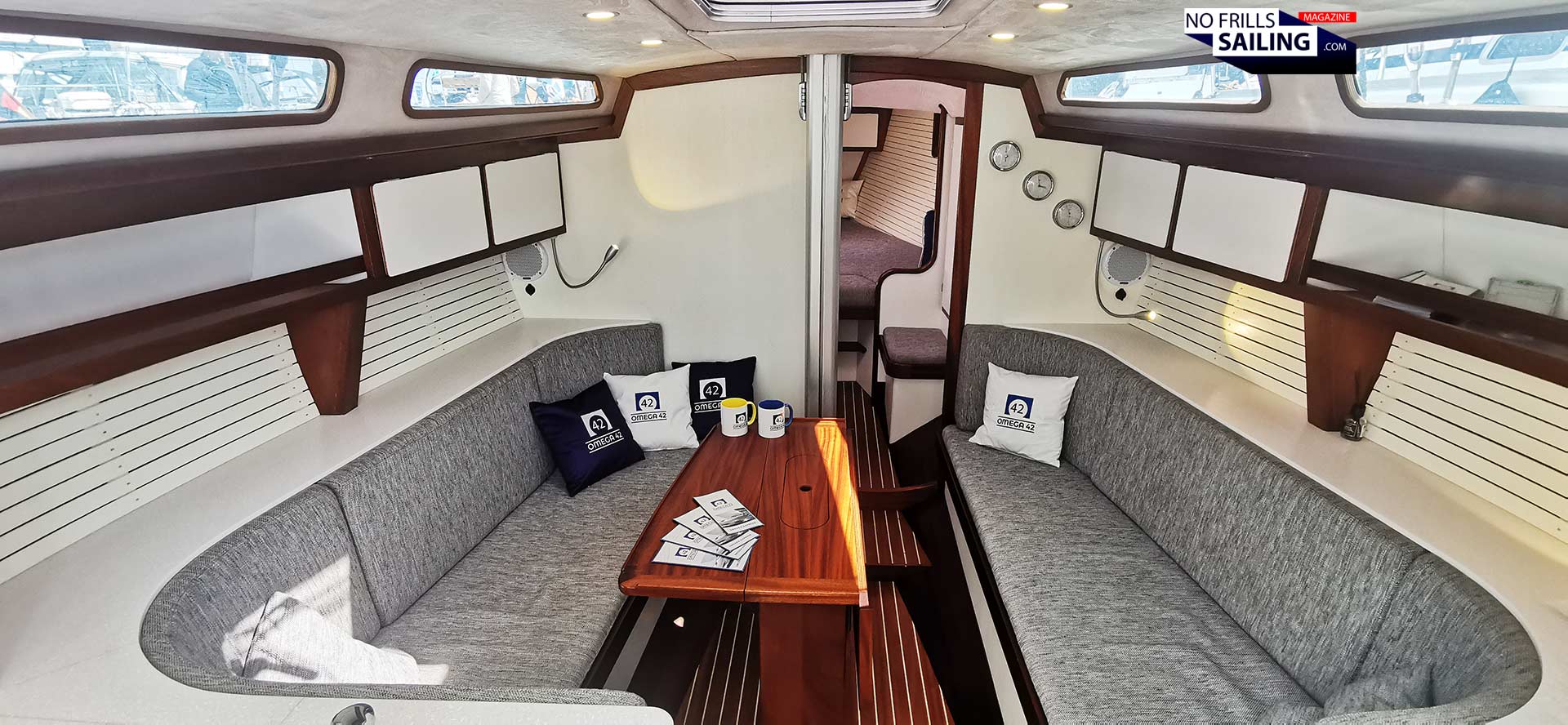
That is what I asked the guys in the shed to make: Use the same cutouts but put a glazing on those that reminds on the original design. Sadly – or let´s say maybe lucky for us? – Gebo marine glazing in Holland where I bought all the other portholes and hatches for the boat, wasn´t able to manufacture those. I originally wanted those windows to feature the classy aluminum frame as well. Shipyards like Faurby and Luffe which utilize similar windows for their yachts didn´t even bother to answer my calls and requests, which is silly and a bit disappointing, but that´s another story. That´s the reason why the solution for my ALPHA is this: Classic shape, modern frameless glazing.
Finding the right shape and size
Before we could do that it took some time. As you proceed with any bigger design choices in semi- or full-custom shipbuilding, you start off with a gauge model. Usually cheap cardboard cutouts (as you may have read in the past article about the salon table or Edding marker on plastic film. We chose the latter for finding the right shape and, more important, the right size:
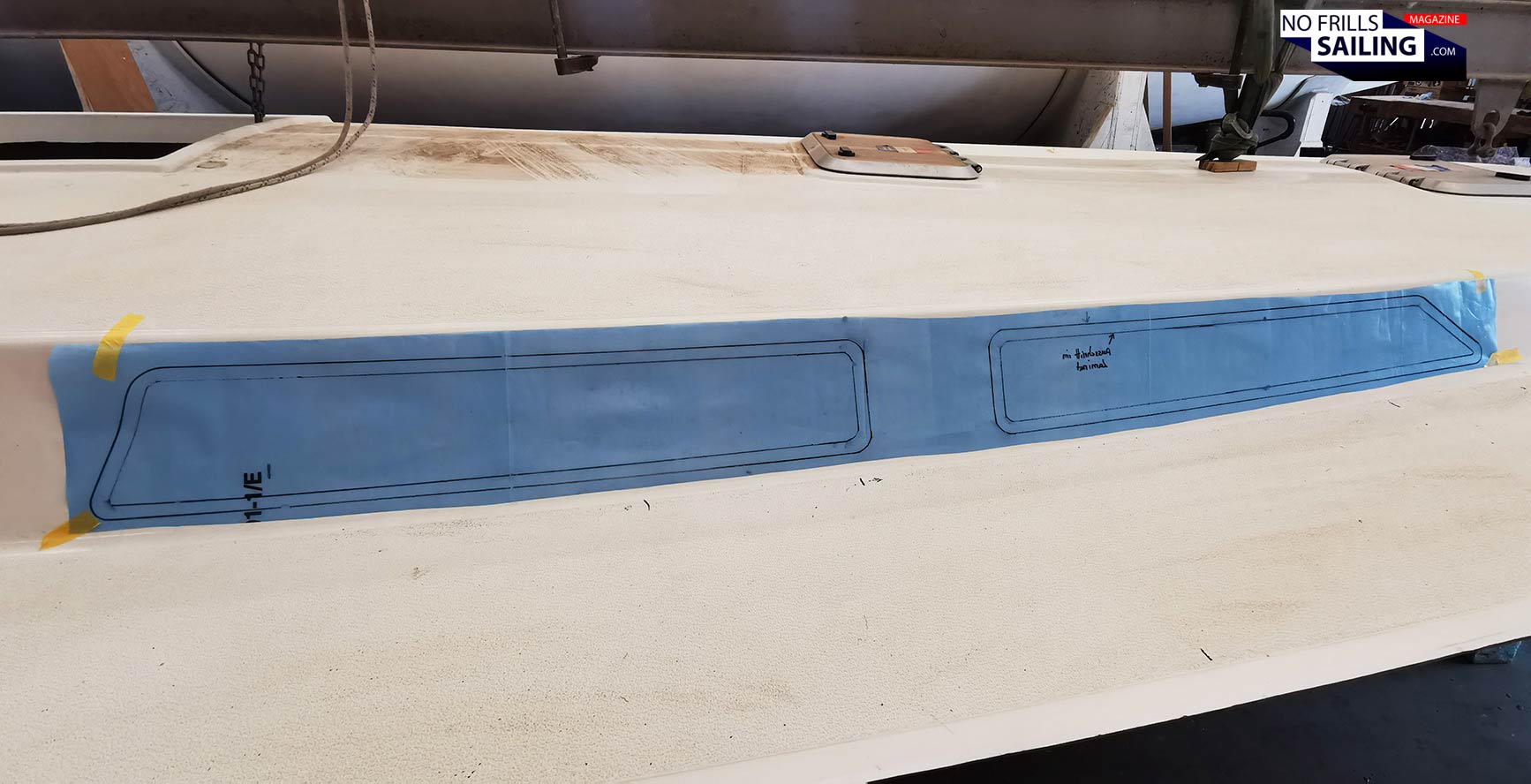
By the way: Isn´t that cool? I mean, you get a call from your shipyard, asking you to come by to discuss the window shape and size. With a fresh brewed cup of coffee in your hands you casually sit next to your boat and engage in a sometimes heated, but always friendly, super creative and solution-oriented discussion. In the end, there´s a solution that is usually beautiful, practical from a craftsman´s standpoint and feasible for my budgetary situation. Nice! You may check this article for the whole backstory of the window-issue.
Drilling holes into the boat
As I said initially, I wanted to collect the stages of production for this matter to present a fully “From A to Z”-article of how the windows are designed, produced and finally fitted. But as I am so enthusiastic, I just cannot wait. This means also that there will be a final last part showing this stuff nicely mounted. Just off topic: I hold back my enthusiasm for a similar topic, involving the making of the rudder for my yacht. Already live, a first article, but I´ll wait until the whole section is finished. But back to the windows …
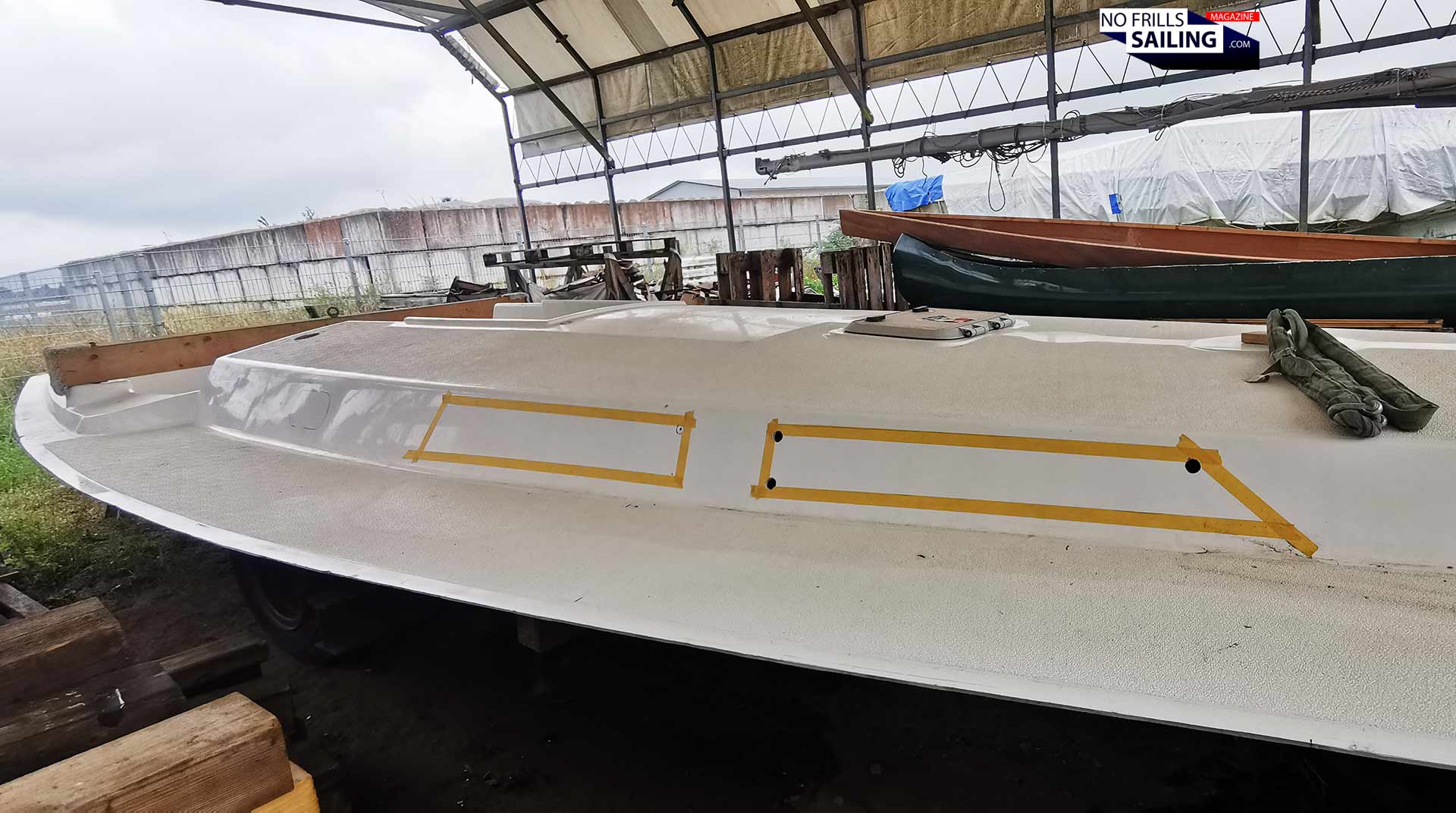
In order to nice and neatly cut out the windows, the guys brought the deck outside of the shed so that the rest of the workshop wouldn´t be buried underneath a layer of GRP dust. After transferring the outlines of the window shapes from the blue plastic film onto the deck, the cutting are was masked with some tape. On the one hand this is a nice indicator where to cut, on the other it prevents the remaining laminate from shattering at the cutting edge. They start by drilling holes, then the one guy with the calmest hands will use a saw to cut the straight, connecting lines.
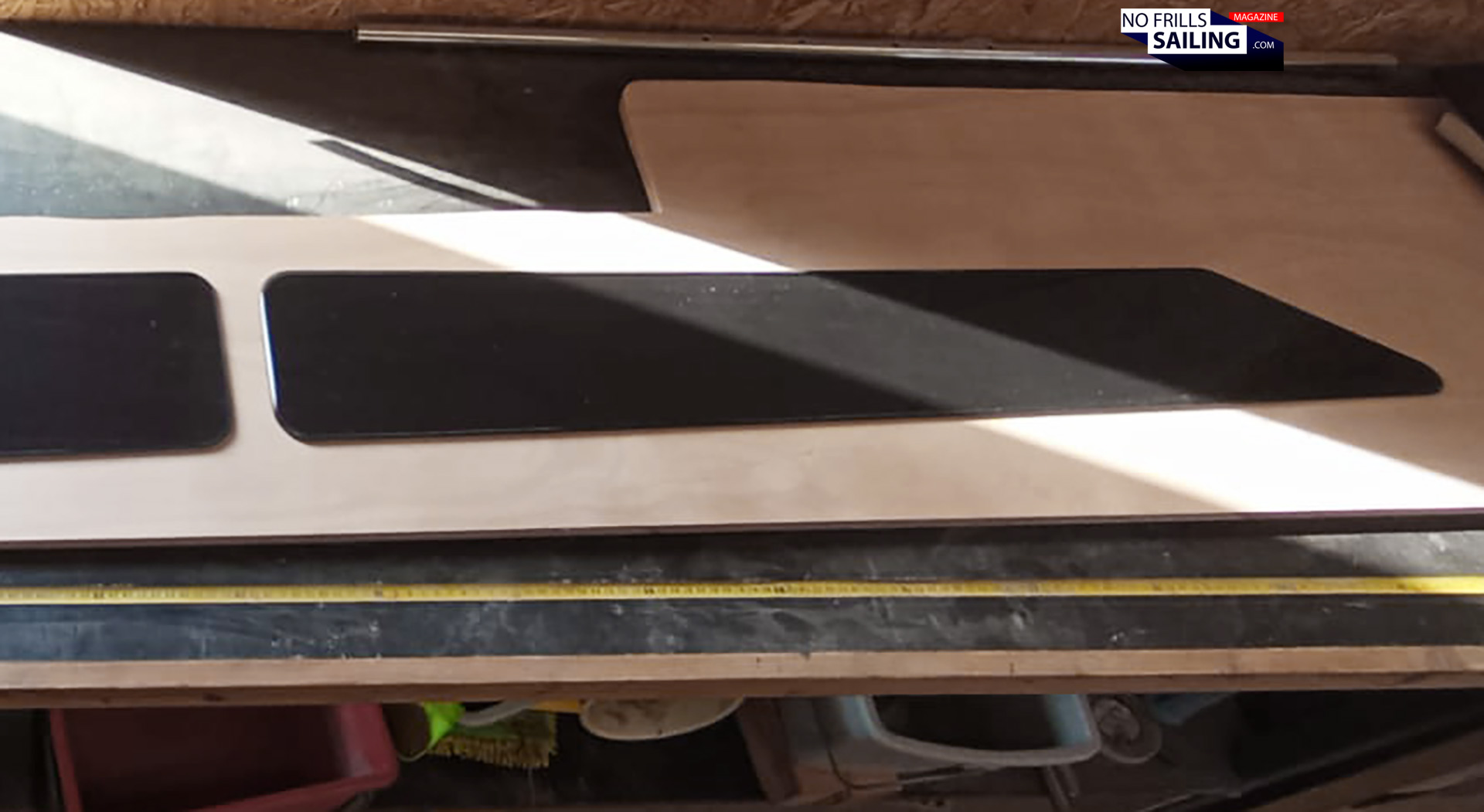
In the meantime, the glazing is awaiting its fitting. Zooming in to the pictures I can clearly see how nicely the edges have been softened and rounded – a detail rarely seen these days. Many contemporary series production boat builders using the same technique do not soften their windows that much. The windows are tainted, because I will certainly not fit drapes behind those …!
Speaking of drilling holes …
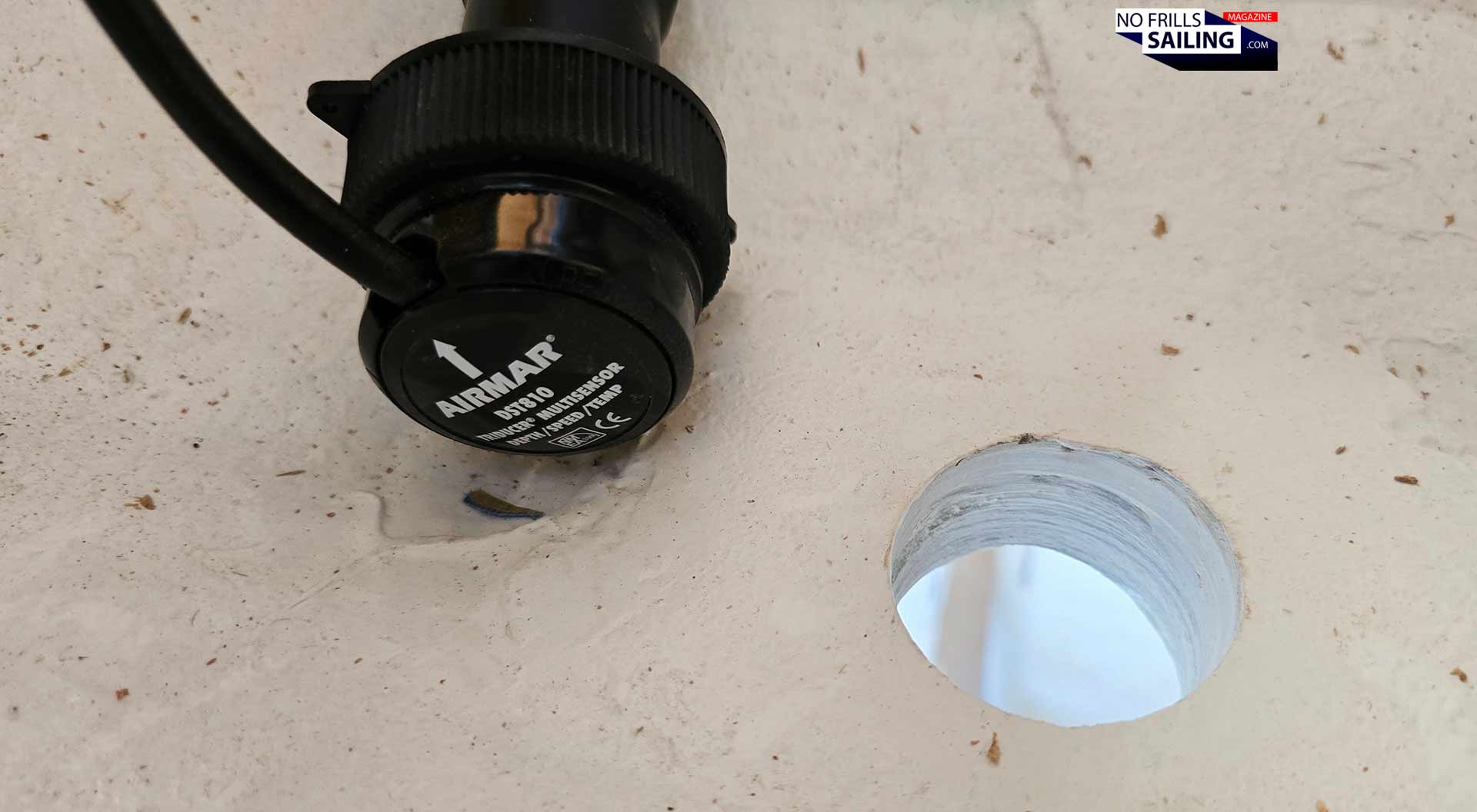
So that´s the status-quo for the windows. What else is going on? I guess the drilling party was already moving so they thought to keep it going: The hull-thru for the Airmar transducer unit had been bored. The guys also already sealed it with some fresh gelcoat as well. That said, looking at the hole reveals the thickness of the GRP-laminate in the bow area of the Omega 42, which is around two centimeters – back in the day, the boats were a bit more sturdy, for sure.
Also, the complete wiring for the NMEA-2000 network has been fitted and now the guys start to set up the Garmin equipment. First they do it “rough” to check it everything works out, then the cables go live and disappear in the ducts behind the panels and underneath the furniture. Although I tried to reduce all of my electronics to a minimum, there´s a number of displays for telemetrics, the VHF of course and a little central display to run the network´s updates and calibations, because I do not have a dedicated chart plotter aboard the boat.
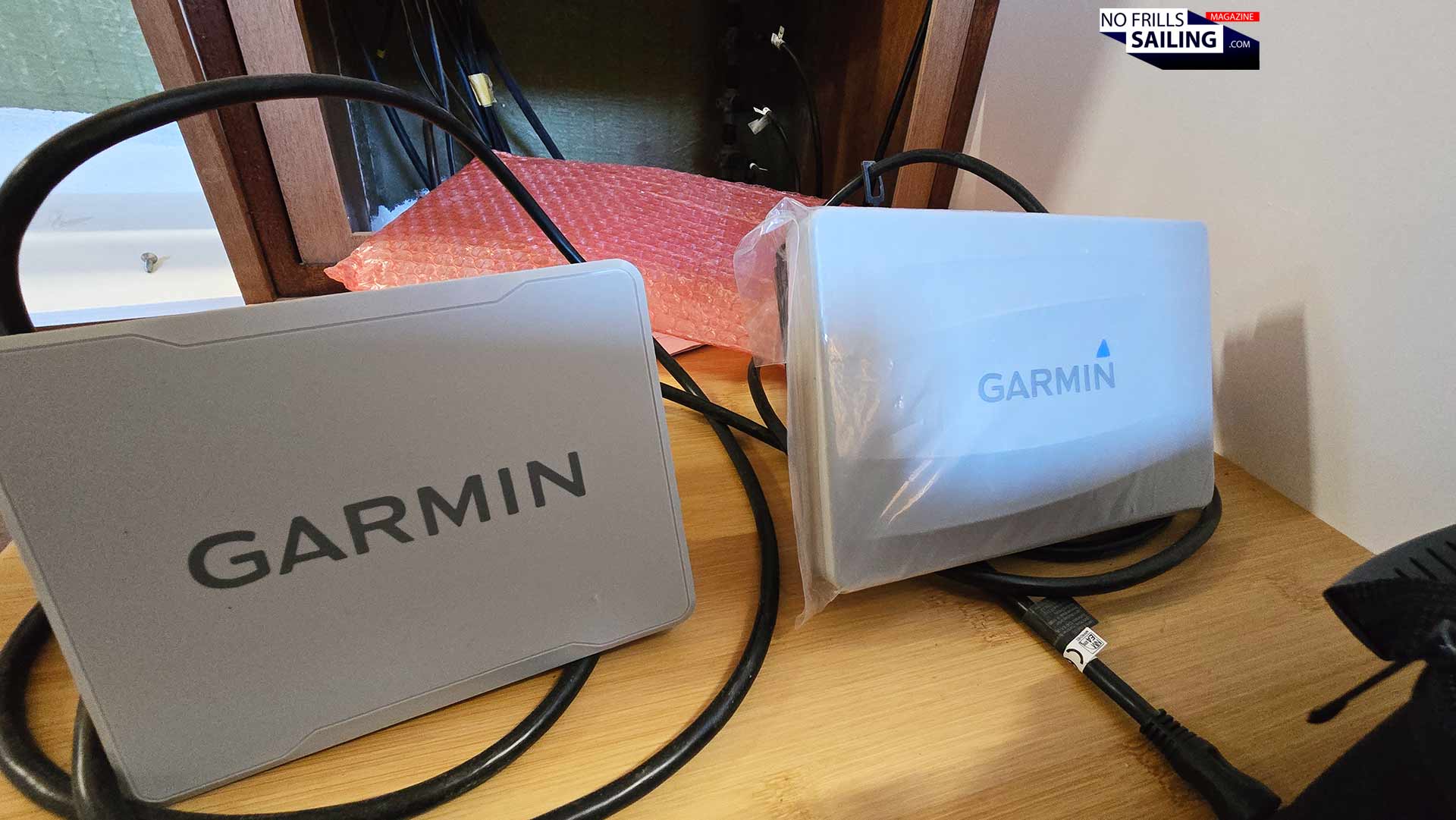
Instead, I shifted the complete electronic navigation to the Orca, which essentially is a marinized Android-based tablet PC with a proprietary navigation software and charts. It connects to the Orca “Core”, which is the central unit and working as a processing hub and connection to the NMEA-2000 network. I “dry” tested the Orca already and it´s really handy, intuitive, very cool looking and practical.
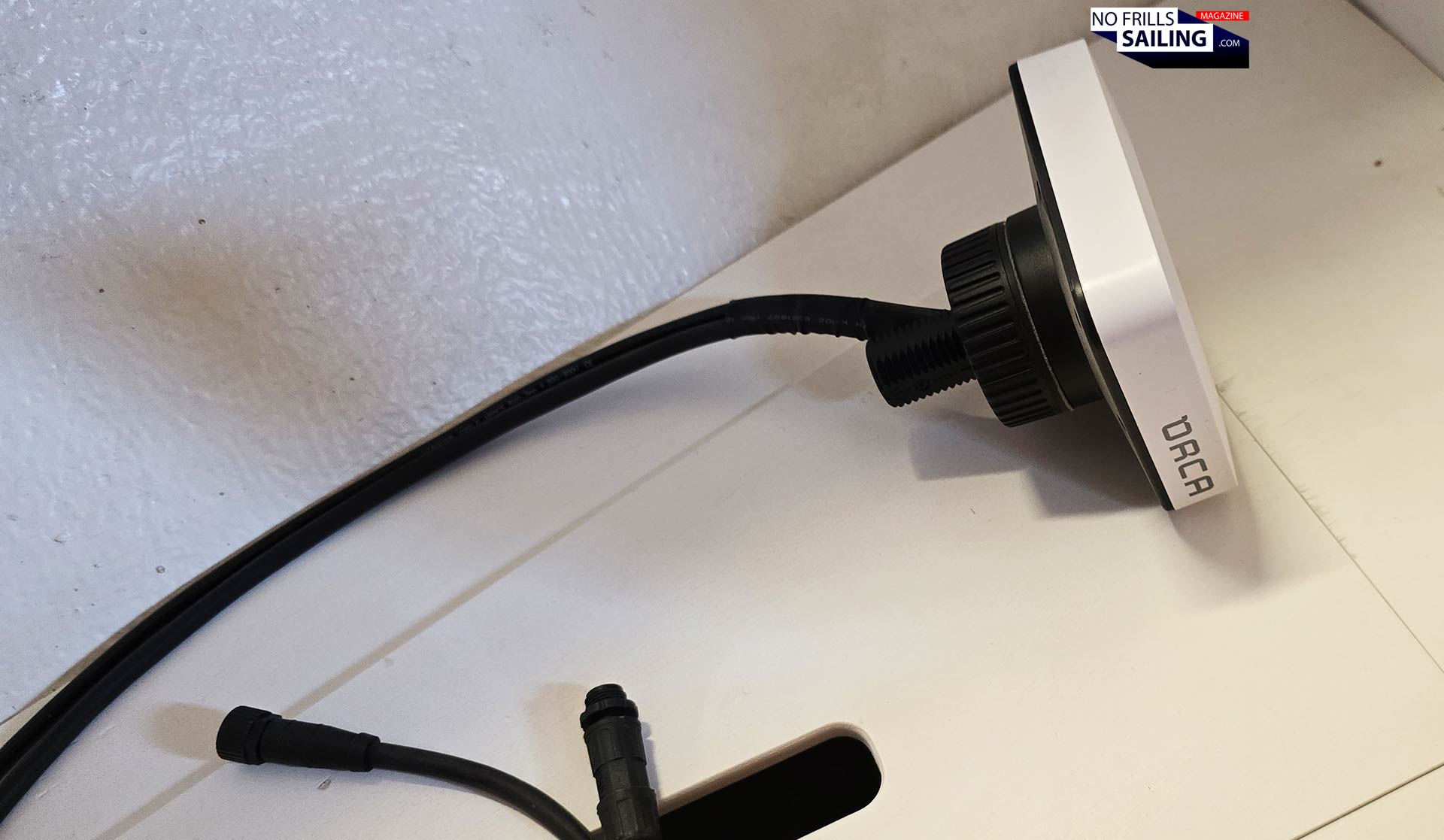
Why no chart plotter? Well, I don´t want to cut another hole in the boat. The Omega 42 cockpit is not conceived to feature a full-sized plotter. I looked for a place to set it up, but all I found was just compromises. Now, with the Orca, I have a very elegant, highly mobile and also versatile solution, because I can take this thing down below, can take it back home or even with me into the bunk: Plan the next legs or just watch a Netflix-movie. You can´t do this with a chart plotter that is fixed in the cockpit, right?
Hot April upcoming!
So that was just a short article on the work-in-progress of the new Omega 42. But be strapped to your seat, because end of March and beginning of April will be a very hot phase for the new yacht: Electronics fixes, engine compartment including auto pilot finished, fresh water and Diesel-tanks fitted and connected. The interior (furniture and panels) will be finished as well and – the highlight definitely – the mating of hull and deck is upcoming!
As little content I was able to publish over the course of the past winter, as much more will be there in these final months of the building of the yacht. I am very happy how fast the frequency of stuff getting finished has become. With the sails ordered and the rigging in production, the last two bigger parts are underway as well. I am already putting away three days in May for the antifouling, something I am doing myself and really looking forward to. That said, if all goes as planned, the boat will be floating end of June. Hallelujah!

You may as well like to read these related articles:
All work-in-progress articles from start to now
How does an Omega 42 sail? Parts 1 and 2
At the Gebo marine glazing factory in Holland