
As long as your sailboat isn´t an all-out racing machine where mainsail and headsail will be completely taken off after sailing, you will need to store the sails folded on the boom and when furled around the forestay. This is, of course, the famed lazy bag and the jib-bag, called “jib sock”. This article delves a bit deeper into that topic, emphasizing on a few details you should look out for if you happen to buy this essential sail-equipment in the near future.
You´ve probably read the last article about me taking delivery of my brand new standard sails setup for the Omega 42. Some readers have send me comments and notes, asking about the contents of the smaller bags shown in the last picture of that article:
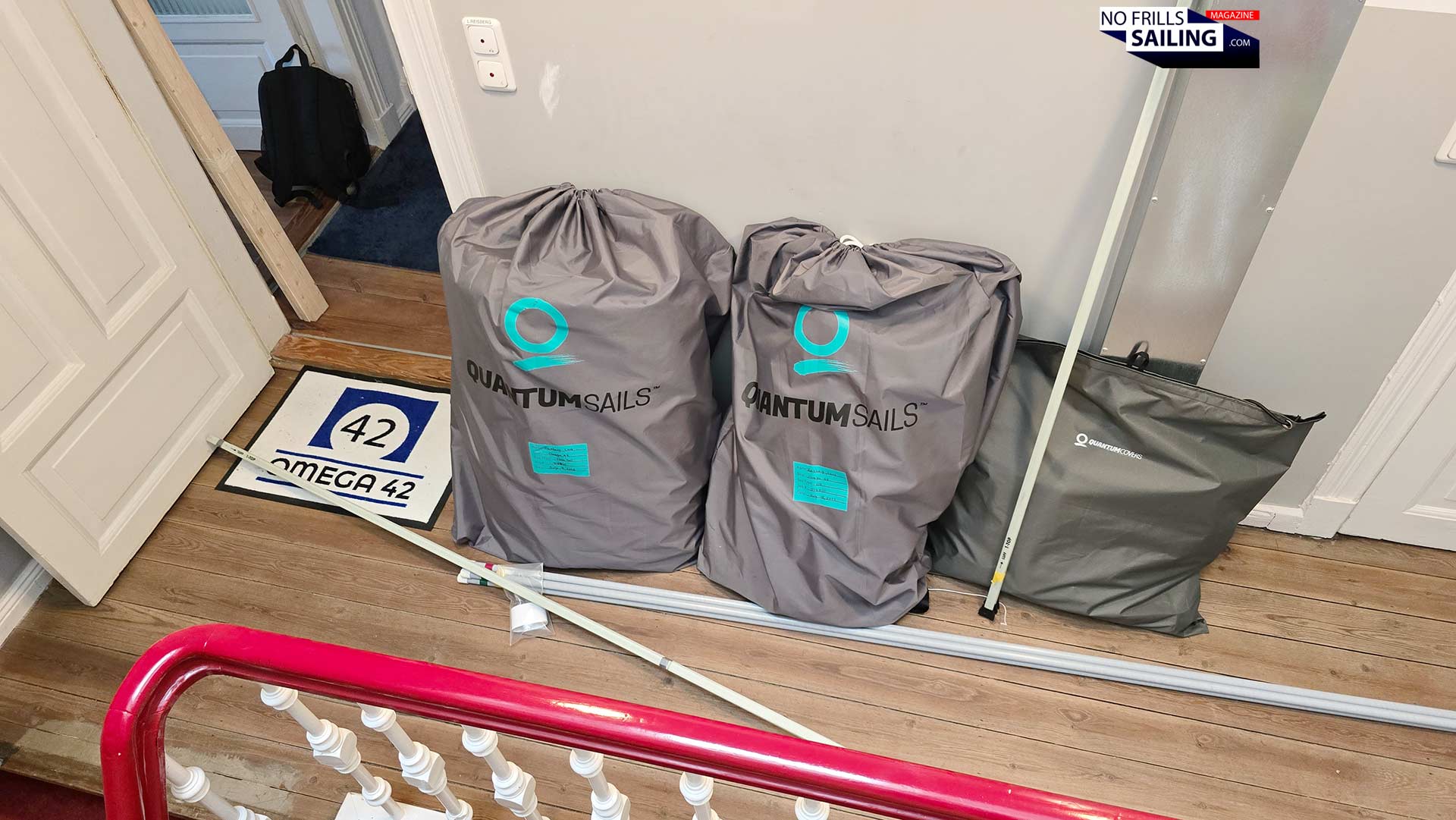
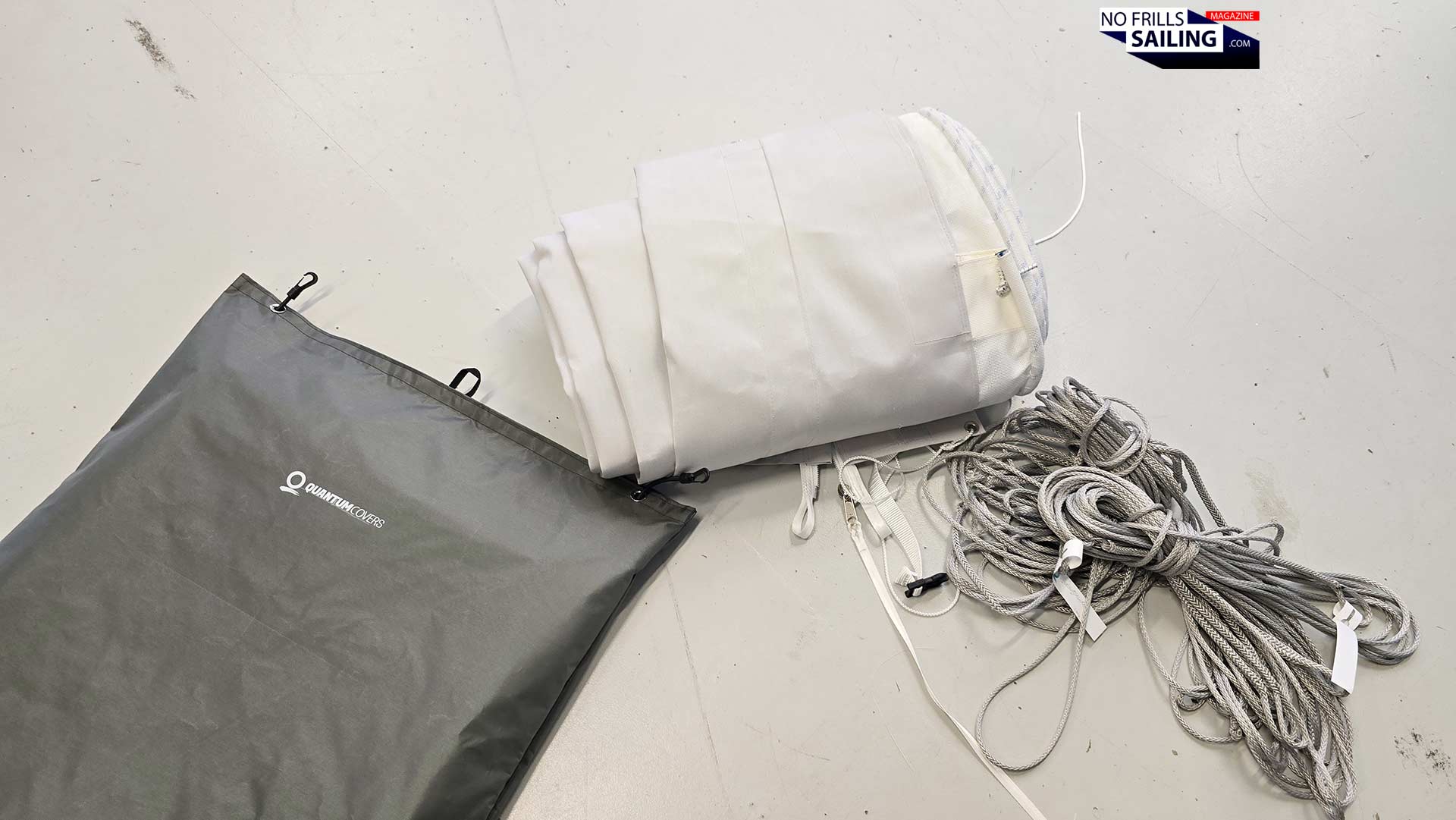
Well, next to the large sail bags on the left, there´s a little rectangular one containing the new jib cover and then there´s also the lazy bag, of course. As there is apparently some interest in these details, I thought it might be interesting to show you some of the specialties and features of these essential parts of the sails setup so that you might not make the same mistakes I have seen on boats of so many sailors. Let´s start right away.
Why a proper mainsail´s lazy bag should be custom made

You mainsail needs to be protected and safely stored away after sailing when you leave the boat, unless, as said earlier, you have a racer where all canvas is taken off and stored below decks or in the yacht club. These covers are usually called lazy bags. “Lazy”, because if manufactured properly and – most important! – supported by the rightly sized and fitted lazy jacks, your mainsail will for the most part just fall down along the mast and only needs a bit of manual correction to being folded the right way on the mainsail´s boom. In order to being able to protect the expensive laminate material against UV-sunlight and most of all rain and moisture, the lazy bag should be made of a UV-resistant, water-repellant strong material. Most people fancy market leader Sunbrella, which is a high-class fabric. I went for Spanish nautic-garment specialist Sauleda with their famed Masacril, acrylic-denim.
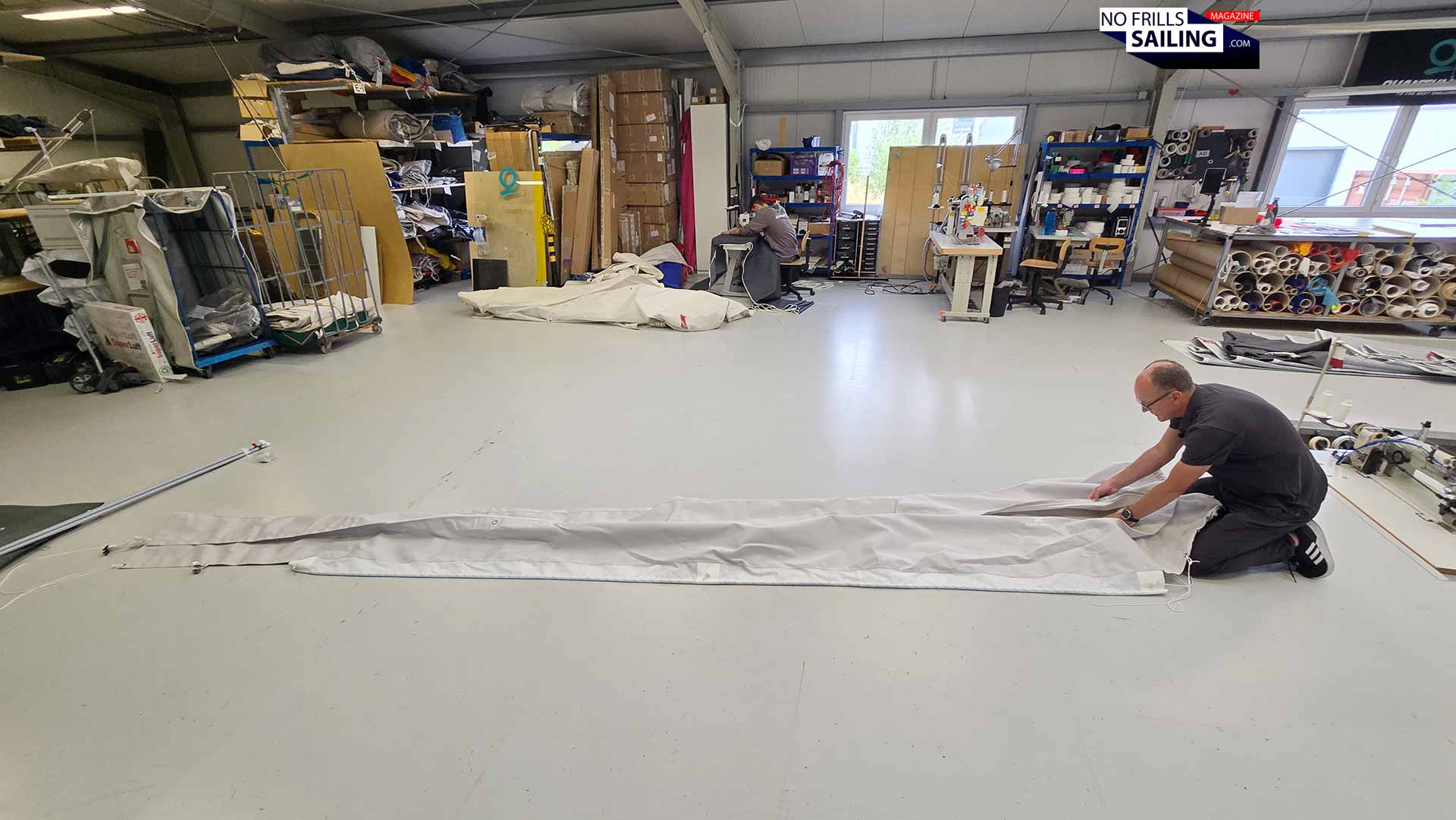
As you can see in the picture above, the lazy bag had been manufactured according to the individual dimensions of both my mainsail´s boom (which determines the length) and the actual dimensions of my mainsail. Why this is important? Because the sailcloth of your sail, it´s thickness, determines the height of the sail when fully retrieved and folded on the boom. This is called the “stack” – it´s most important to have it seized properly as the lazy bag must not be too narrow, so that it´s too tight when closed, nor do we want it to be too loose. That said: Always have it made by your local sailmaker custom-sized fitting your individual boat and sails.
Look out for these essential features for your lazy bag
Apart from a robust base material, there are some other features a good lazy bag should have. First of all – I haven´t photographed it properly, sorry – there should be some form of ventilation. In my case that´s a band of mesh stitched to the bottom-most part of the lazy bag. This is so that if your mainsail is wet or it starts to rain, air can circulate freely and thus dry the sails, prevent mold and mildew. Another feature is the ergonomic construction of the lazy bag. Don´t go for lazy bags where the closing zipper is placed along the upper middle axis of the bag! Why? Because here water can form pockets, constantly keeping seams and the zipper wet, causing for much fast wear and tear. Also, and that´s where the ergonomics come into play, in order to close the zipper, you will always have to work above the lazy bag, which not only backbreaking, but at times also dangerous.
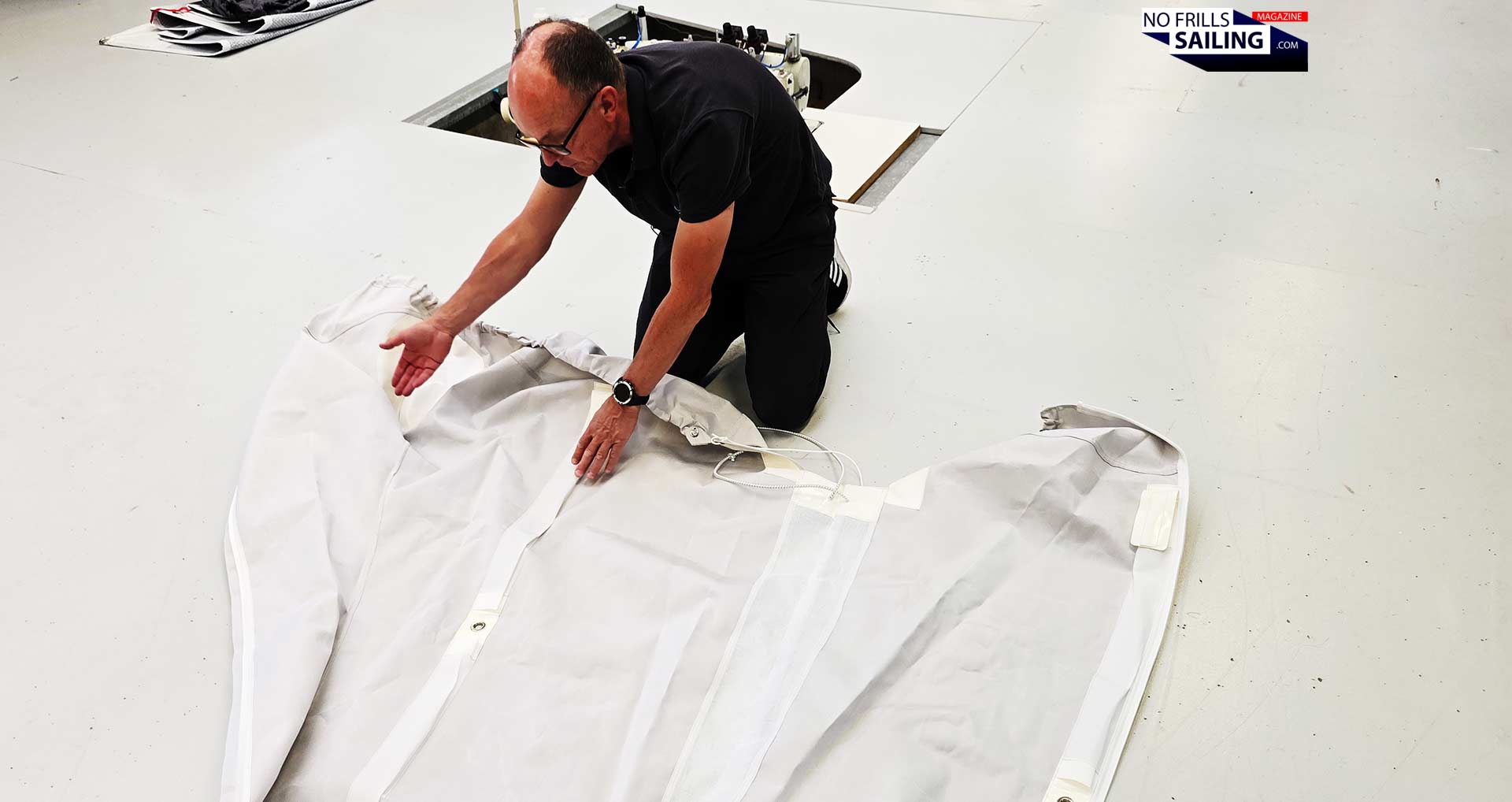
As Sven Krause from Quantum Sail´s Sailworks-loft shows here, my lazy bag has an asymmetric setup. You can clearly see that the starboard side of the back is shorter than the portside. This is deliberate: Once the sail is folded and packed nicely, the left part is wrapped to the right side. The zipper is not placed on top of the lazy bag forcing me to close it along the longitudinal axis. I can rather reach it very comfortably at waist-height on the starboard side of the bag. Making it especially easy for shorter sailors and – much safer! – on big boats towards the rear end of the boom where there´s no coach roof you can stand on but a cockpit table or the toes of your feet. That´s an essential feature!
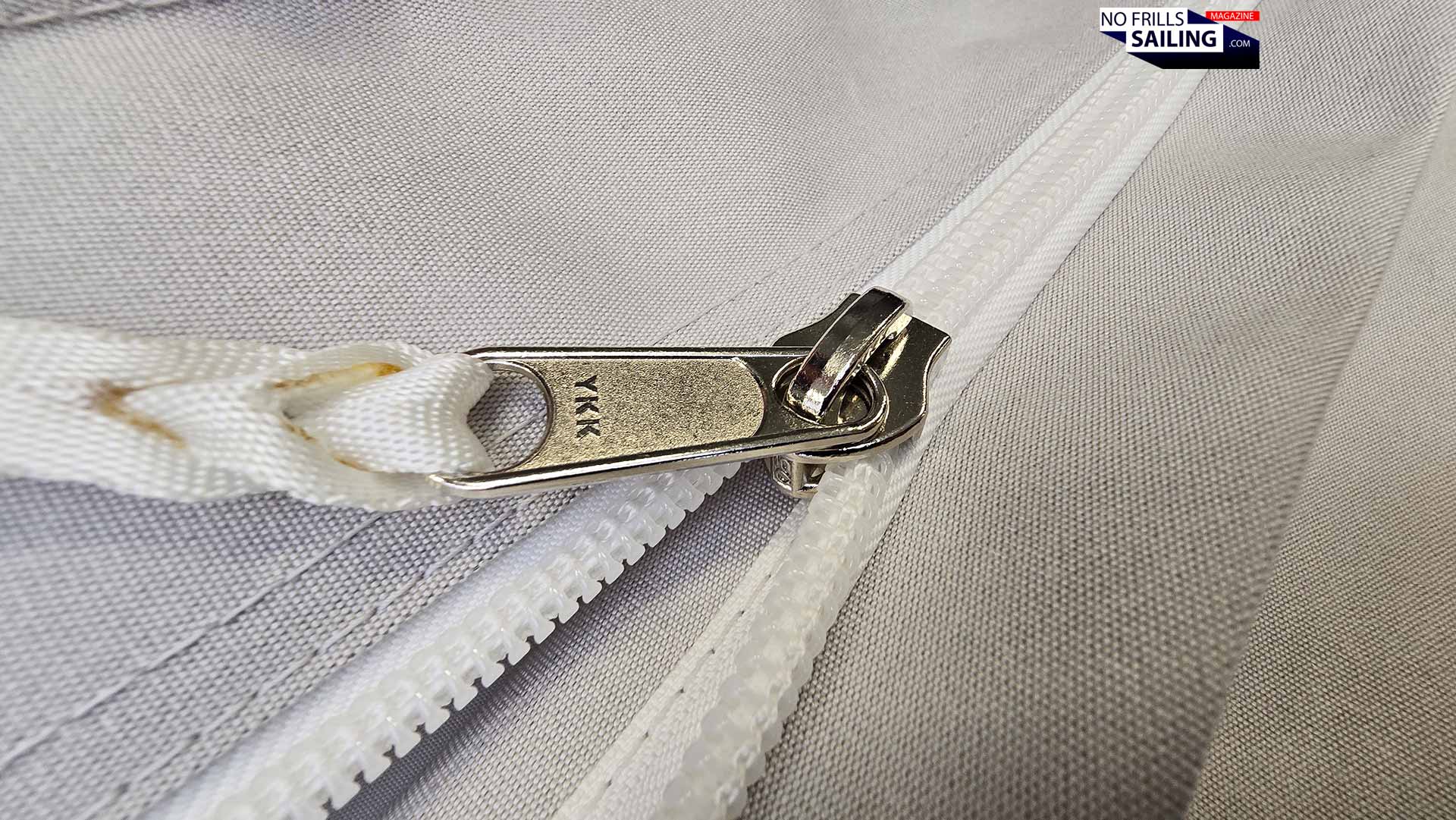
Regarding the zippers, here the opinions diverge a lot. With our Beneteau boats in the past, the shipyard usually delivered simple, but effective, lazy bags with side release buckles. See a picture here. This is a very simple system that definitely has it´s advantages: It´s very fast to utilize, no jamming of the zipper and it´s cheap. The downside is, that the fasteners of the side release buckles tend to rip off quickly, calling for utmost care or constant repairs. Better work with a zipper here. But beware: There are differences in zippers as well! I went for a spiral zipper (also called “coil zipper”), which is said to be exceptionally robust and durable. In more southern areas, the (cheaper) tooth zipper (also called “element-” or “vislon-zipper”) is very famed. Ask your sailmaker what he is emphasizing.

I am emphasizing that you subscribe to my monthly newsletter quickly because this enables you to not miss any new article again. Just check you inbox once a month, browse through the articles´ thumbnails and click on the topic that is of interest for you. It´s so easy, I just love newsletters! But now, back to the bags …
Storing the headsail properly: The jib sock
Having looked at the mainsail´s lazy bag, let´s go to the forestay and look at the jib sock. My jib, as well as your fore sails I guess, comes with a UV-protection all along the foot and the leech of the sail. You can of course leave your headsail in the marina like this, furled and secured with a few more turns on the furler (coiling up two, three rounds of sheets). But if your boat´s jib or genoa does not have a protective layer, for example if you sport performance laminate or membrane sails like I had on my previous boat (check out this picture), a jib-cover is an absolute must! It´s the only protection against UV-rays, which can really damage the laminate in a short matter of time.
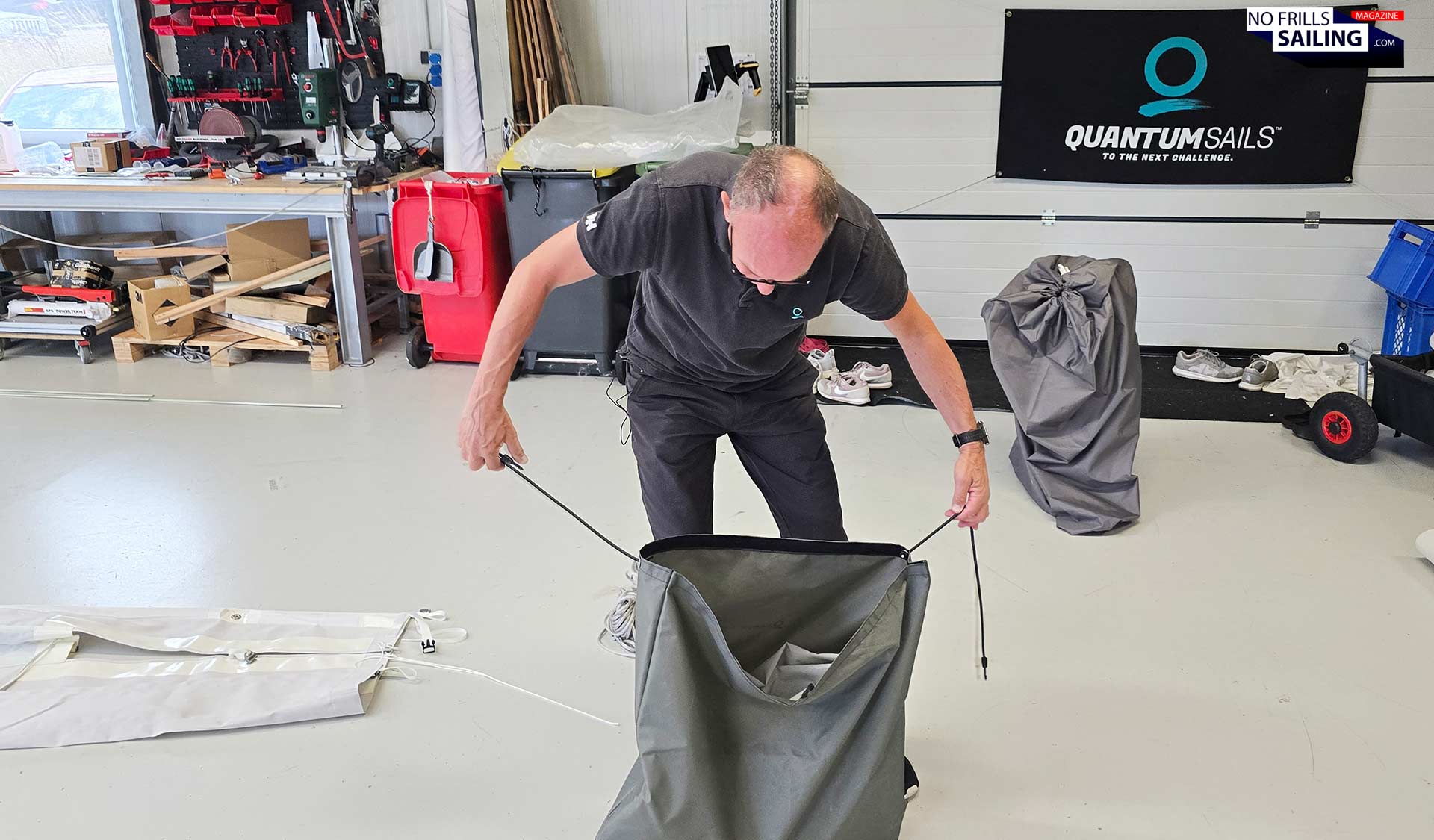
The nice thing about my custom sized jib sock is that Sven incorporated some neat features which he derived from many, many years of active sailing and providing his clients wit products like these. First of all, when bringing up the sock after a nice day out, I will place it on the bow (probably the anchor chain locker lid) and fix it to either side with the two clips to the pulpit, as you can see in the picture. Now the sock-back stands upright and won´t move. In a second step, I´ll fit the sock´s head to the spinnaker halyard and close the zipper. Can you see the white elastic rubber band Sven holds in his left hand? This is essential: Because this band is now knotted to the pulpit as well.
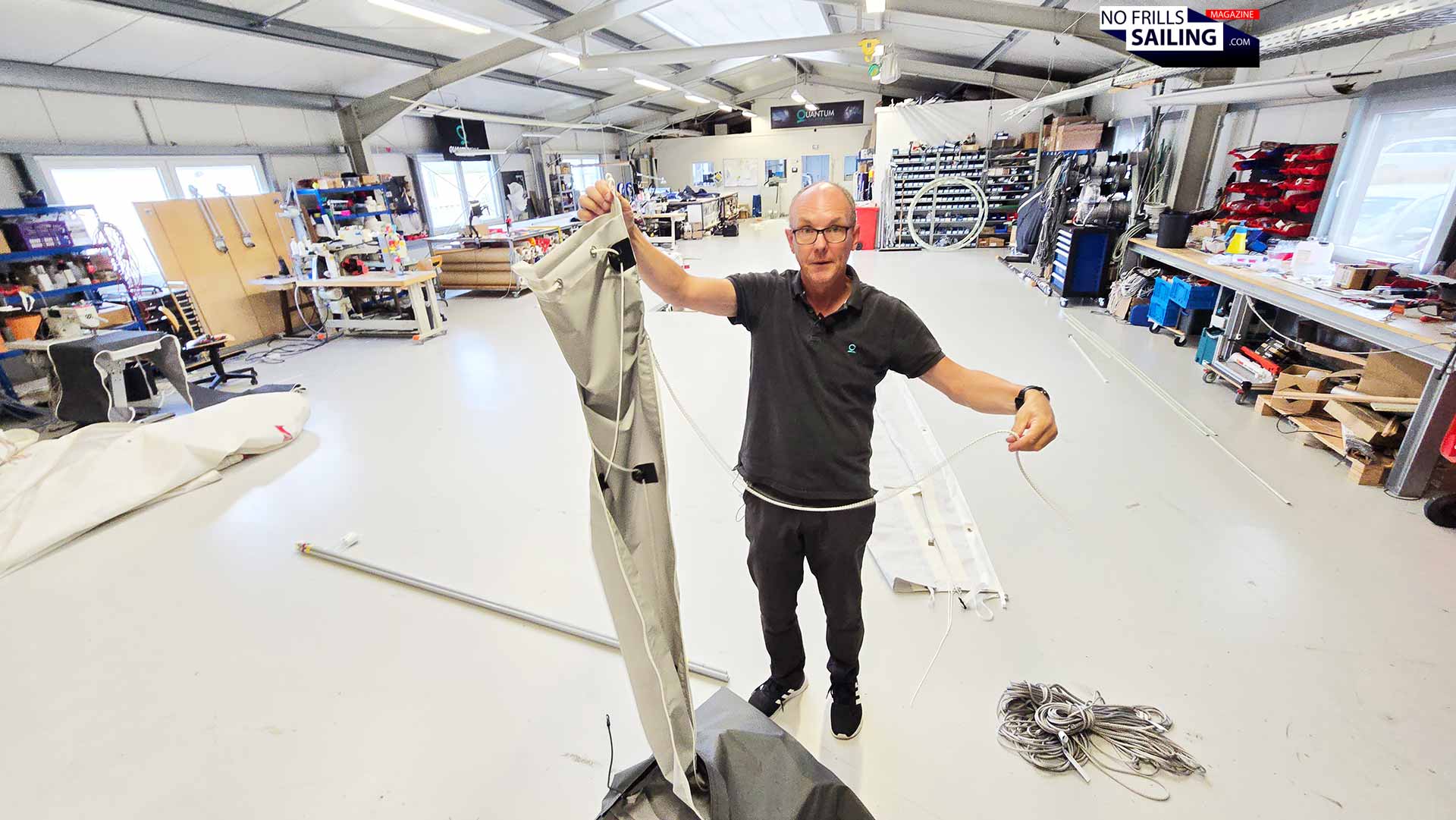
I can go back into the cockpit and gently pull on the halyard. As the zipper is fixed to the pulpit, it will stay in place, while closing the sock on its way up around the forestay. This is a true single-hand approved mechanic – simple, but very effective! It works the same way around when taking down the sock: By stacking it into the bag as it comes down, it will go up the next time ever so slightly. How many times have I lost my sock overboard in the marina, both when hoisting and whilst taking it down?! This is now a thing of the past.
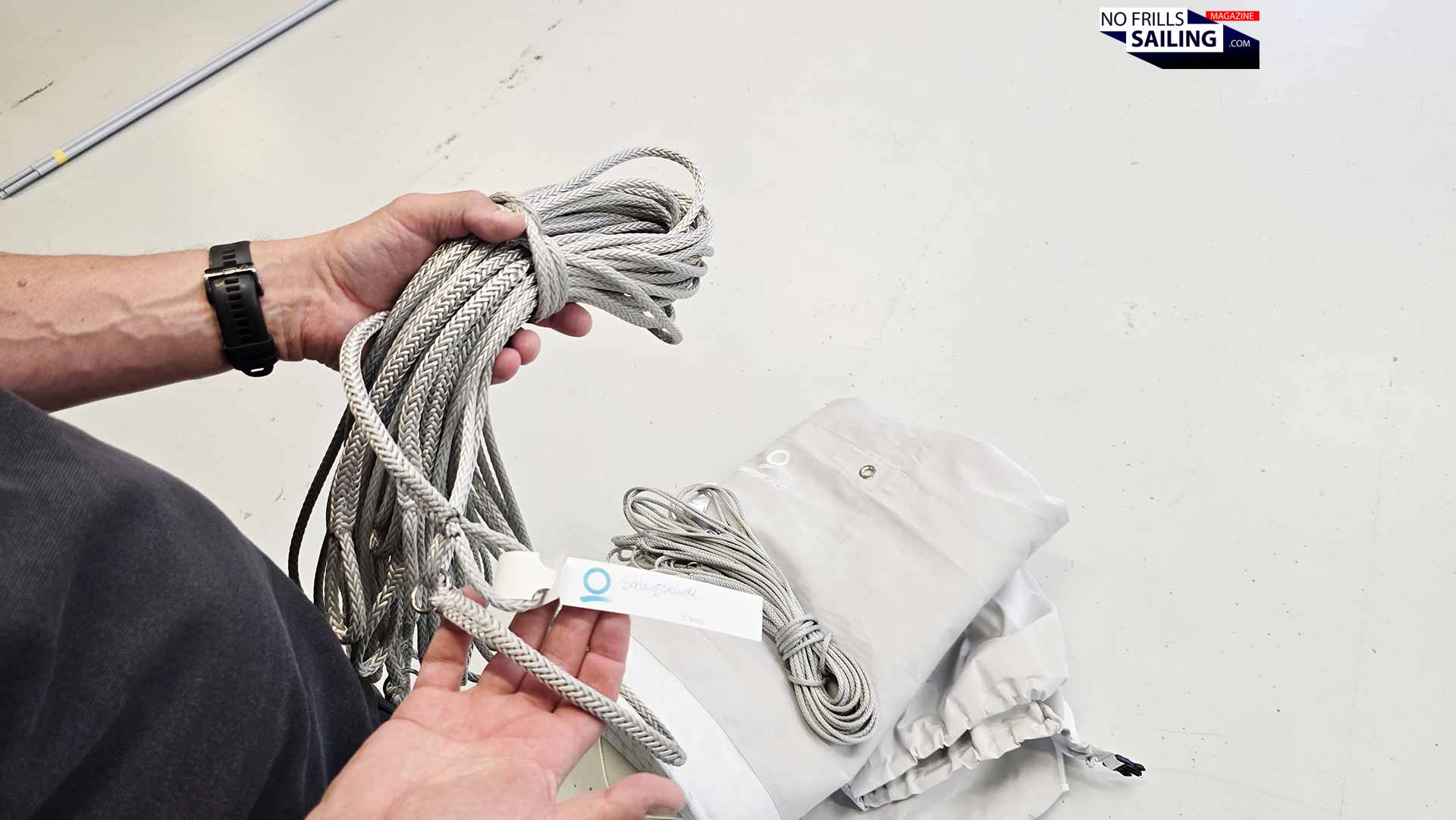
Last not least, the lazy jacks. These are more than just a pair of ropes. Basically, the lazy jack-lines prevent the mainsail from falling to the side of the boom and onto the deck, into the cockpit or on the coach roof of the yacht. If fitted properly, they make a single-hand operation of your full batten mainsail possible, even on large yachts. That said, they must be cut to size and fit properly, which is not an easy task if you do it yourself. At least this was my impression every time I had to set up these things myself during a new boat delivery. Sven´s sailmakers have already sized my new lazy jacks according to the specifics of my boat´s rigging. They´ve also applied a nice splicing to the ends: Handcrafted quality as it should be!
Don´t cut corners where it matters!
Which brings us to the conclusion of this little Sunday´s read: If you are also seeking a renewal of your sails, order custom made lazy bag (with corresponding jacks) as well as a custom sized job cover for your sails along. It makes sense, because your local sailmaker will know not only about the actual size of your rigging (which he needs in order to shape the sails and size them for a perfect fit) but he will also know about their pack size when stored, hence, being able to perfectly size the sail-bags. Don´t go for a bargain here, remember that the amount of time your sails spend aboard your yacht stored is much more than that of the propelling your boat.
Support your local sailmaker, have trust in their craftsmanship and finishing quality! Don´t fall for the cheap internet-offers which will be produced by nameless and faceless people you´ll never need. Which have no connection or any relation to you or your boat whatsoever. In this, I hope this little excursion in yet another detail of a sailboat´s rigging and outfitting was of interest for you. Have a nice Sunday, y´all!
Here´s more on sails and sail-equipment:
Taking delivery of my brand new Quantum sails
Setting up a new Gennaker for the first time
A day at Quantum Sails