Choosing the right set of sails is a very vital decision which every sailor will have to make: There are as many brands as there are different types of sails and sail cloths. So which one is best? In terms of performance, durability and price of course. This article explains why I went for Quantum Sails, for which type of sail-cloth I opted and what stands out in terms of quality, service and their price-performance-ratio.
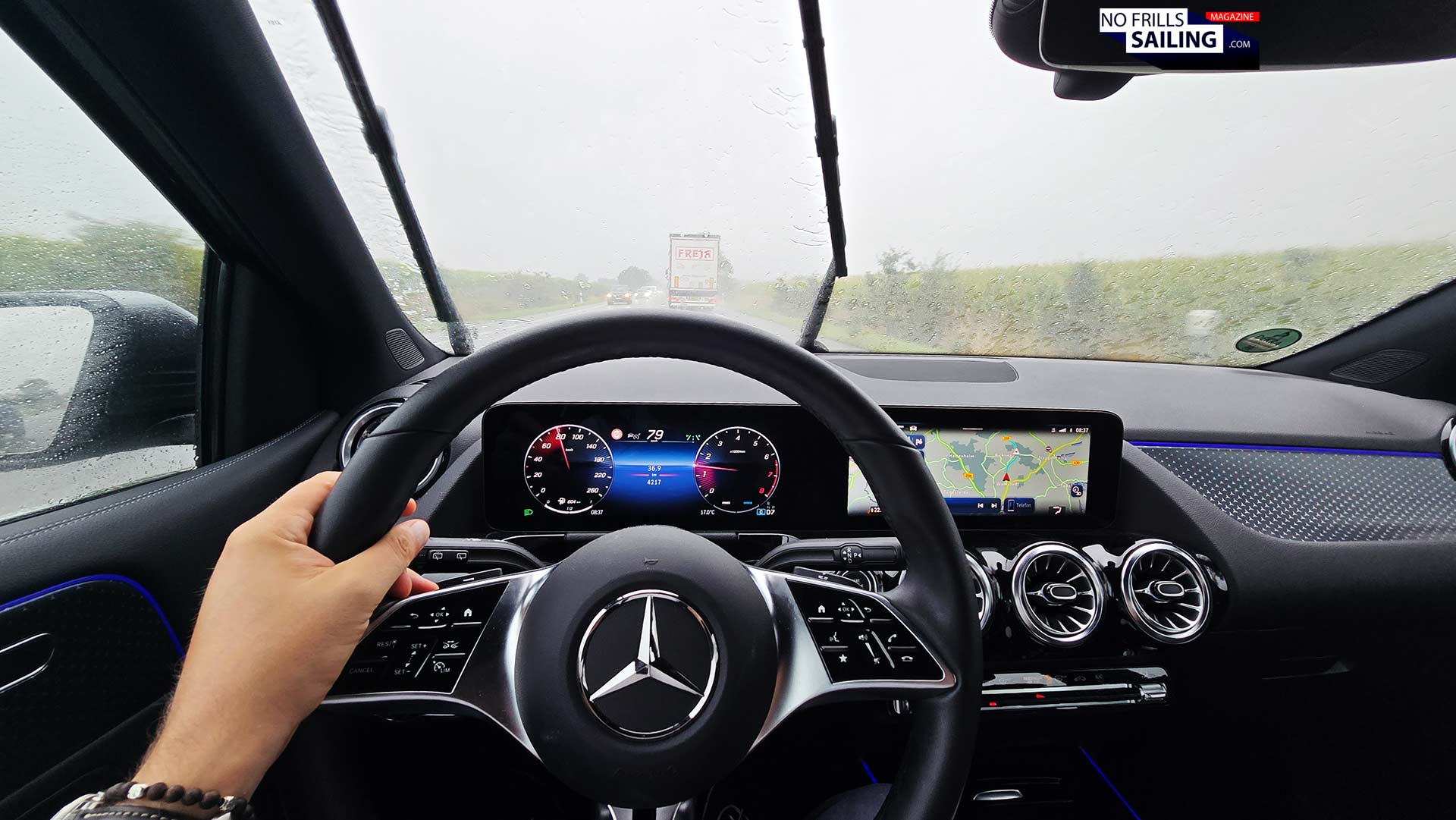
Ah, there we have it: The classy “Hamburg Summer” with 15 degrees Celsius and heavy downpour! After the long weeks of Caribbean-style summer I had nearly lost my faith in my country´s weather, but here we are: Creeping along with 80 kilometers an hour on the autobahn, prolonging an already two hour drive for a further half an hour or so.
Where is the summer?!?
But it was worth it, and besides, just half an hour later, the sun would come out again with the strong winds having blown away the black, rain-heavy thick clouds. European summer at its best. All of this couldn´t spoil my good mood, because I was in my way to Flensburg, the farthest northern town of Germany right there at the Danish border, to collect another very, very important part of my new sailboat´s equipment: It´s engine.
Why I decided to buy Quantum Sails
Advertisement
Of course I mean her sails, not the Diesel-engine, which is already mounted in the yacht. After long planning and consideration, I had finally confirmed my order with Quantum Sails and now, a few weeks later, I received an email announcing delivery of the sails – ready to collect them! And of course I insisted not to have them shipped by DHL, but to come and get them personally!
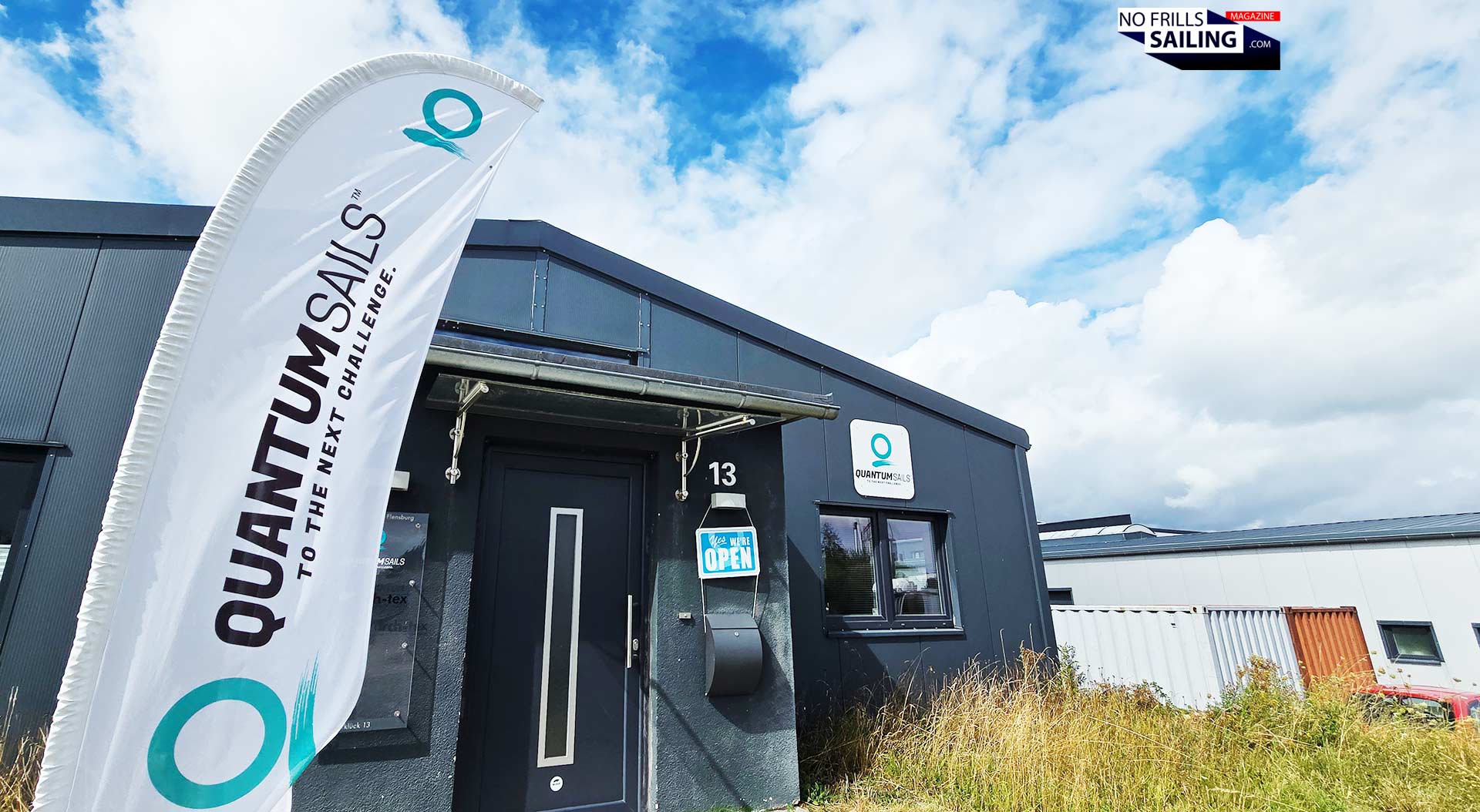
Arriving at Sailworks – the Quantum Sails loft
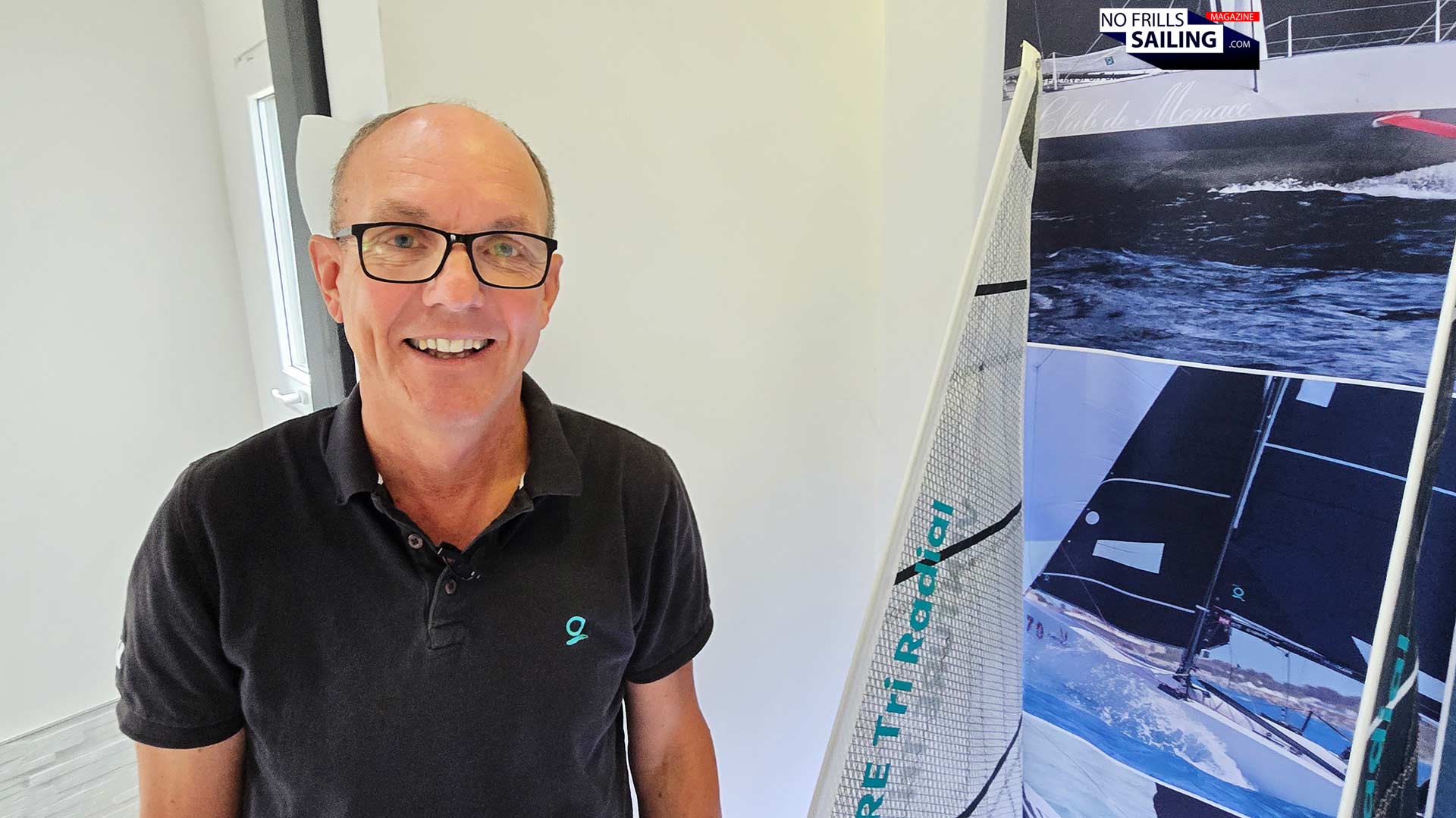
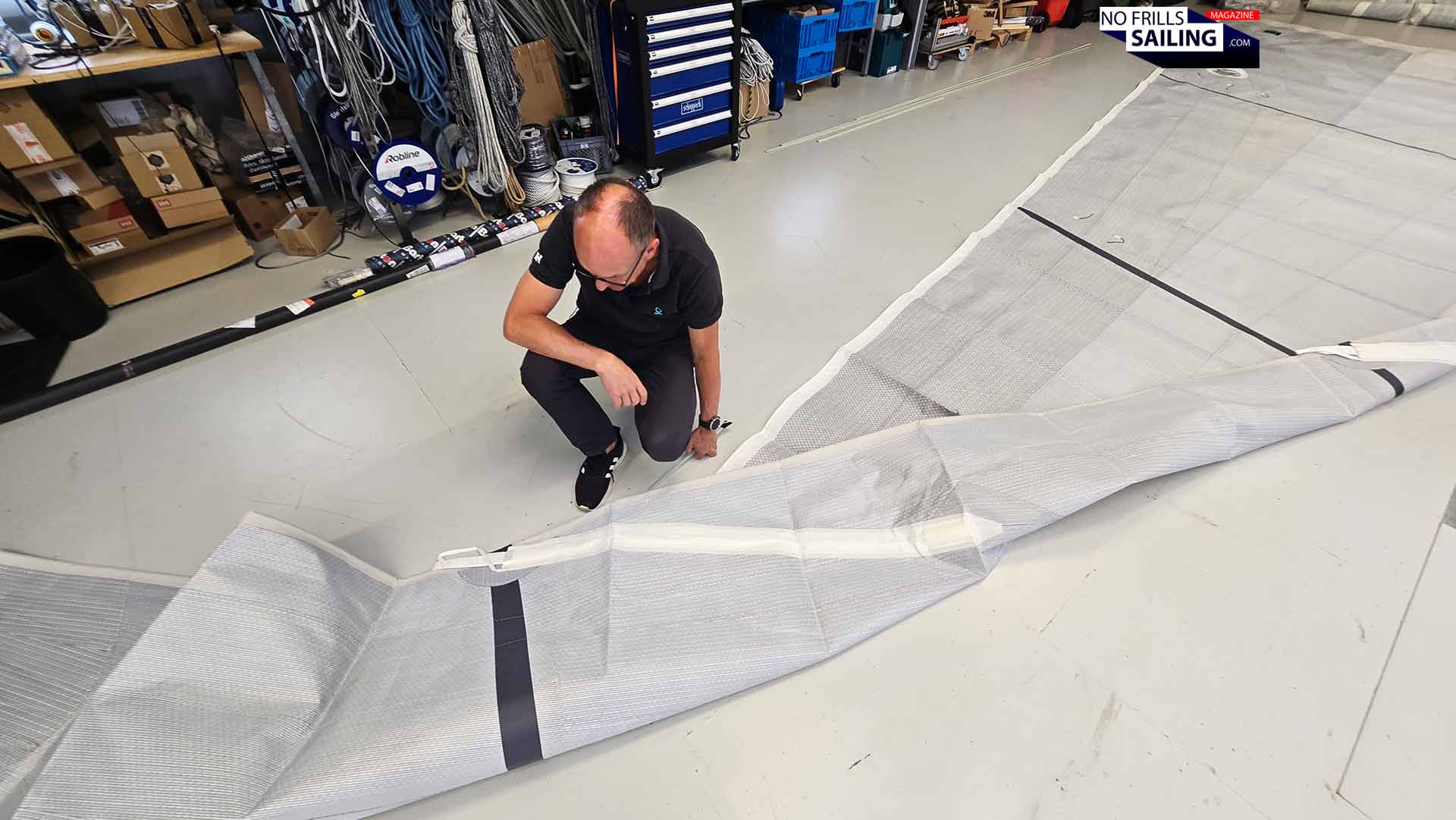
This has two reasons: First of all, it´s a perfect occasion to quality check the product before accepting them. As a any sail, naturally, covers a large area, only a sailmaker´s loft – in terms of Sailworks here in Flensburg even heated! – has a clean, large enough surface area or worktop where the sail can be fully spread to be inspected. And secondly, well, I was keen on receiving a full-blown product briefing by Sailworks´ boss and highly competent Quantum Sails Germany sailmaker Sven Krause.
Sven Krause, luminary, expert and sailor!
You, dear reader, might be familiar with Sven as I have already posted a number of articles featuring him: In fact, back in March 2024 I sat down with Sven to plan the sails setup needed for the Omega 42. But I´ve also delivered a number of sailing yachts to my clients back in the days of my active time as boat dealer, when I suggested Quantum Sails to all of my clients who wanted to upgrade from the simple Dacron OEM-sails delivered with their boats. And that´s the answer to the question: Why not North Sails? Why not Elvström or One Sails or any other brand?
Here they are … my brand new sails!
I know Sven Krause for more than ten years. He is one of the most prolific and renown sailmakers of Germany. What sets him apart is his huge knowledge of sail cloth, garments, laminates and such as he used to work for many, many years for Dimension Polyant. Which, along with Challenge, is one of the most important sail cloth producers for the boating industry. He is a boat owner himself and keen sailor, with a long track record of high-class racing (including America´s Cup) and Corinthian racing (for example solo taking on the Silverrudder).
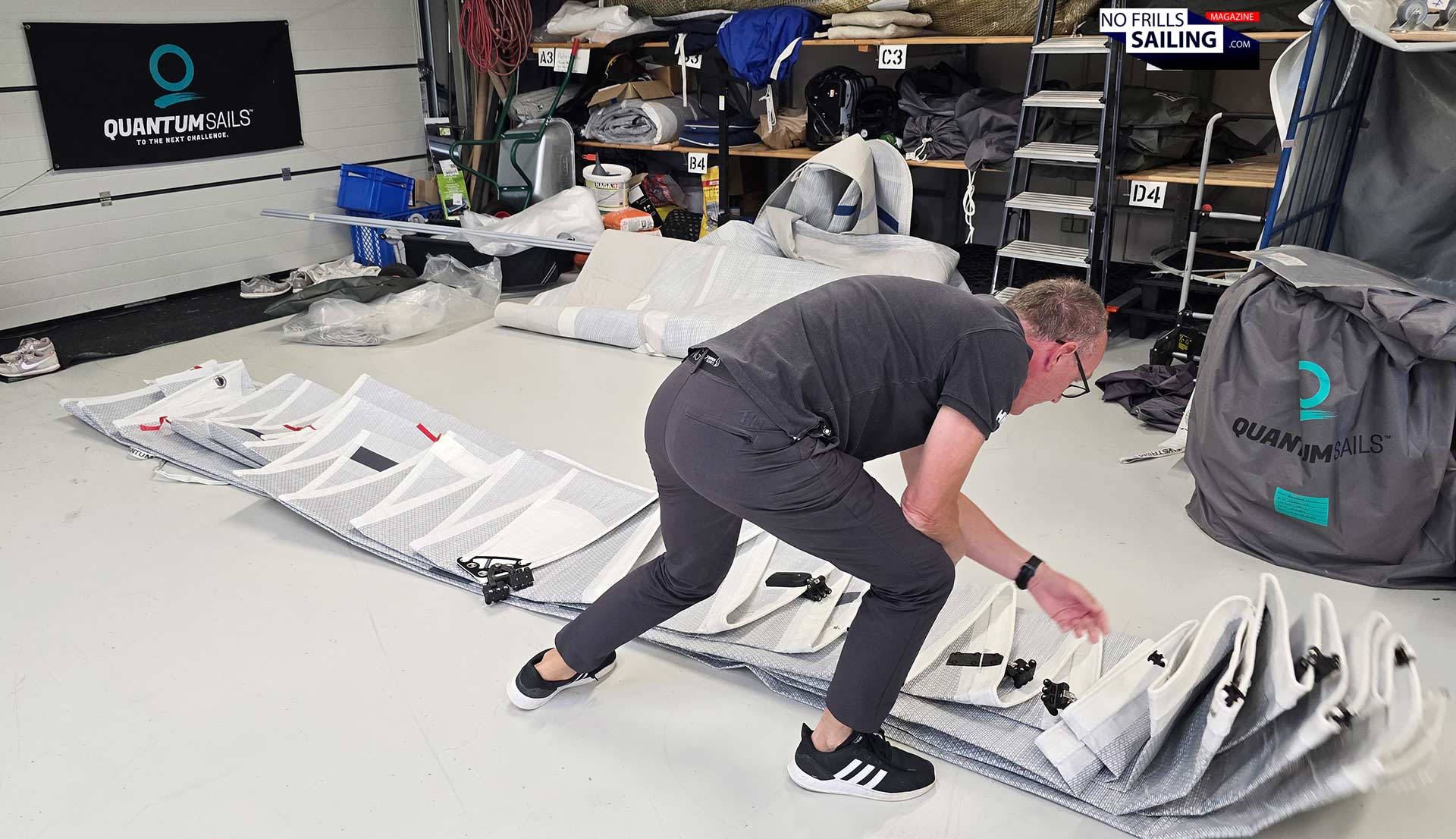
Unboxing the mainsail
That said, it´s rather Sven´s personal qualities and my trust in his capabilities, his decisions and suggestions, which brought me to go for Quantum Sails. Of course, being one of the – in my opinion – only two really innovative sails brands in the world (along with North Sails), Quantum for me embodies the perfect mix of high quality, best production technology and proven sail shape designs. I am a Quantum-fanboy, I admit. Although I also have nothing but praise for my One Sails-setup which was aboard my last boat. But now, let´s take a look at my brand new sails, shall we?
Full batten mainsail: The motor of my sailboat
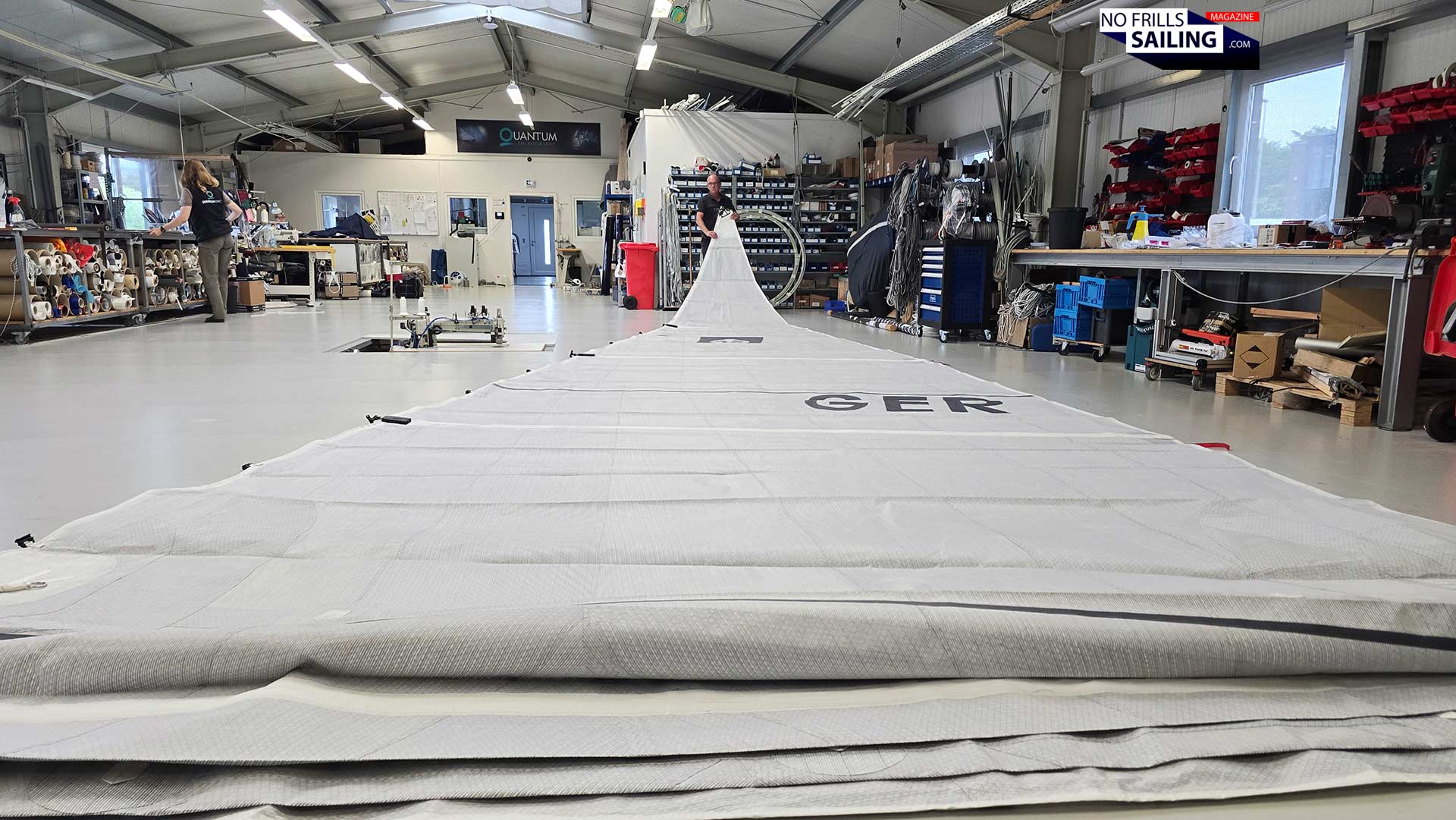
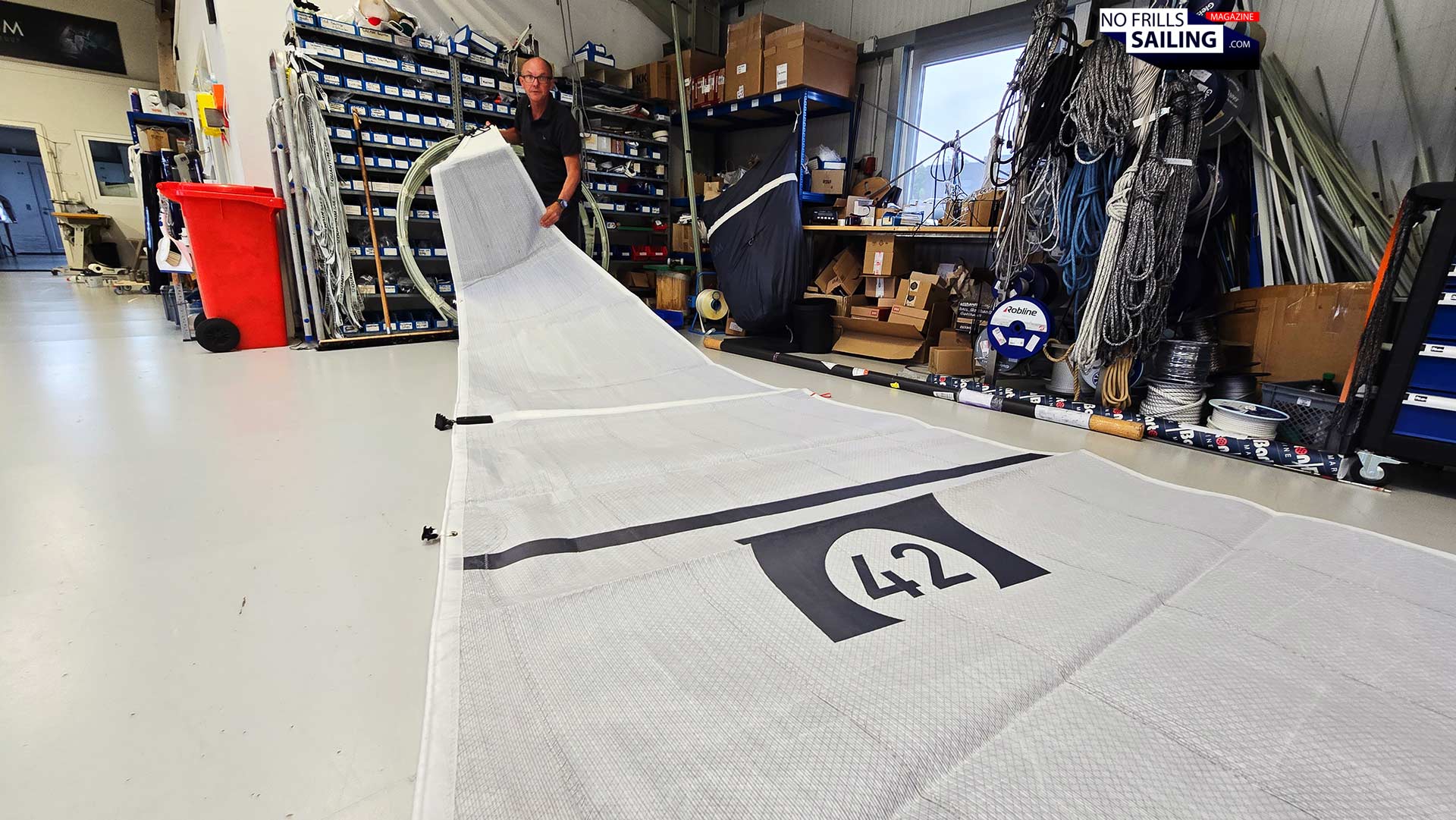
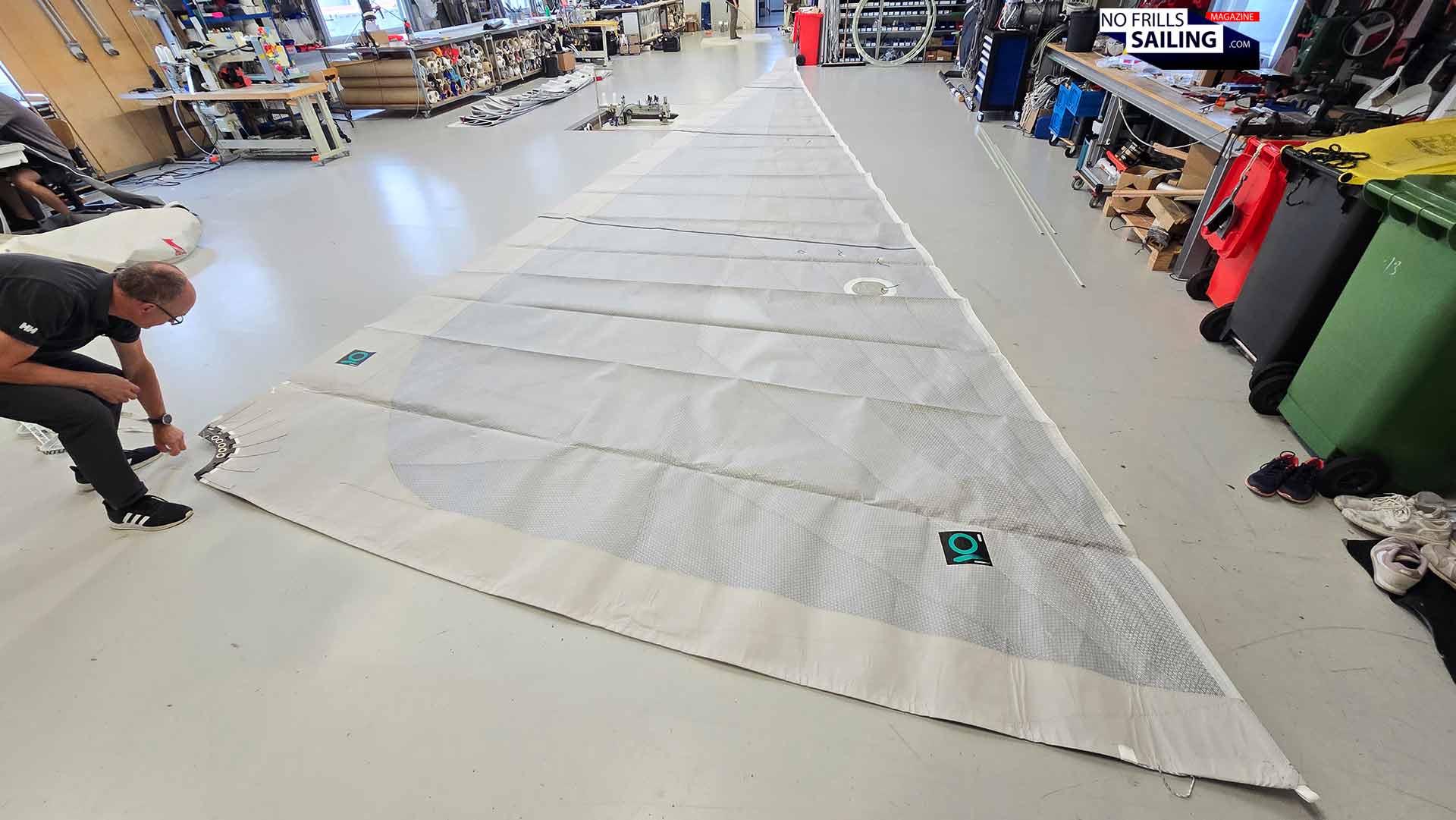
One of the most fascinating things about the Omega 42 for me is that every time again she proves to be much bigger than I had her in my mind! This goes for every visit to the shipyard itself, but also for her mast, which overwhelmed me in its size when I saw it the last time. And now, as Sven was unfolding the mainsail on the loft floor, it didn´t even fit completely! It´s a huge piece of canvas, indeed!
This. Thing. Is. Huge!
The mainsail of my new built Omega 42 covers 45 square meters of sail area. Other than in modern yacht designs, most lift for my boat is generated by this sail. With my boat I wanted to stay true to Peter Norlin´s original sail plan which called for a small jib and the mainsail only. So, here we are! I need a few minutes to fully appreciate this awesome sight! As I had promised a few weeks ago: This autumn everything comes together with the Omega 42 project. The sails are a huge milestone indeed!
What about Quantum Sails quality?
Of course I went for a classic full batten mainsail, and thoughts on a furling main are forbidden. That said, the custom made Seldén two-spreader mast had been redesigned and freshly re-calculated by the rigging experts in Sweden, because frankly, the original one-spreader masts tended to break under high excess loads or when driven too harsh. My sails had been shaped with the help of Quantum´s iQ-technology, which is the most modern sails-design software incorporating the whole knowledge and experience of all sails ever made plus the competence of their sail-designers.
Dacron or laminate: Which one to choose?
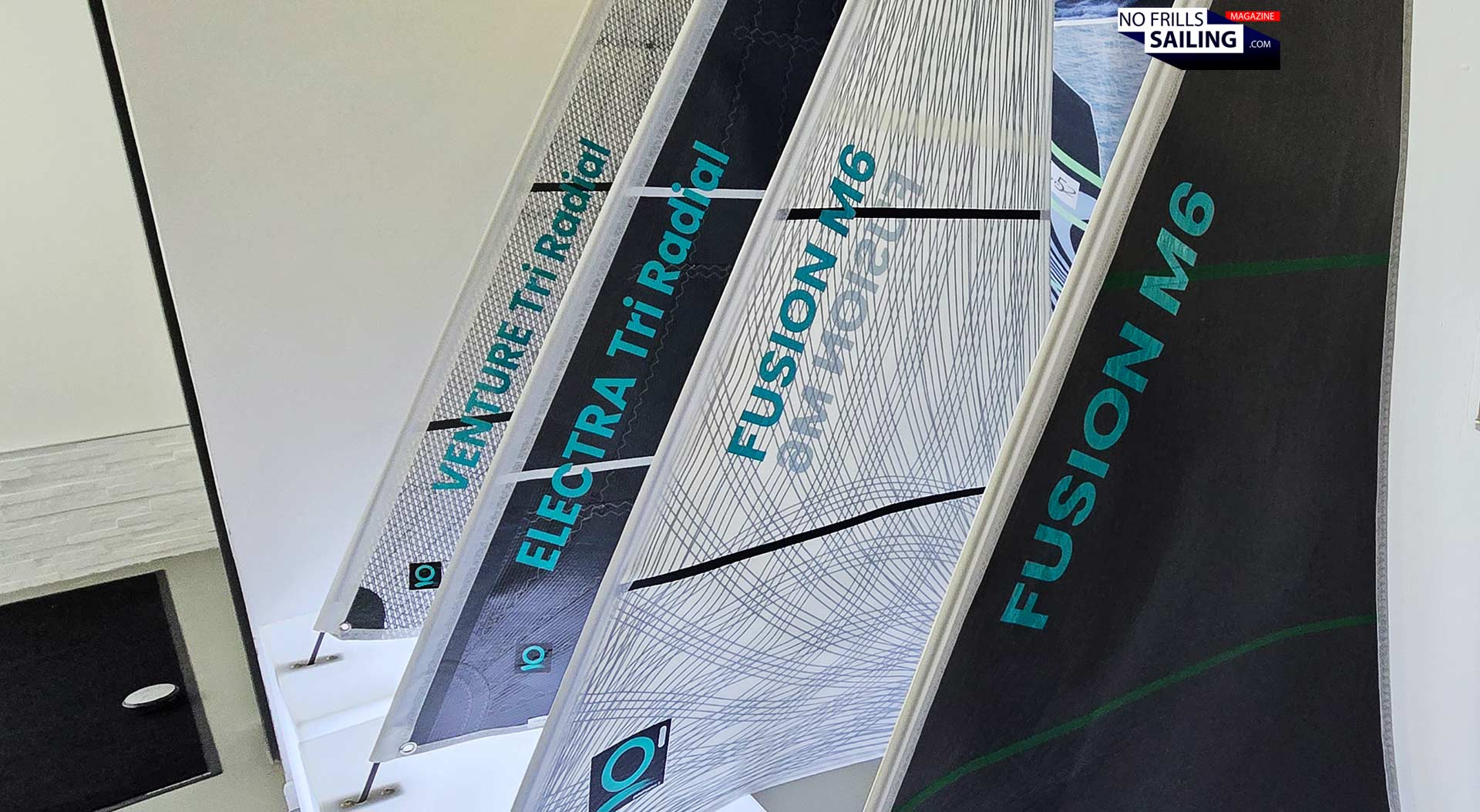
One of the biggest questions when choosing new sails is the type of cloth you want to go for. Skippers who don´t have any clue order “those black sails”, which of course is a joke. Basically, as with everything connected to a sailboat, your type of usage, your plan what you want to do and which part the sails will play should decide the material choice for your new sails. As I have already forgotten for which material I opted in the end, Sven takes me to his Quantum Sails product display in the welcome area of his loft to give me a quick tour.
Free choice: Which cloth to go for?
On the lower end of the sailcloth product range is Dacron. This is a woven product made from PET-fibers. Usually, Dacron is impregnated with a resin for UV and weathering protection. The cheapest and simplest Dacron sails are made in a horizontal “cross cut” pattern, usually, this is the standard sail equipment when you buy a Beneteau, Dufour or Hanse. Dacron can also be put together in a tri-radial pattern, following the force lines within the sail. Dacron has an exceptionally long life: It´s durability is unmatched and if treated well, Dacron sails can last a dozen seasons (and more). The downside: Dacron will lose its shape relatively fast, one or two seasons, so the performance-life is rather short. On the other end of the range, here at Quantum, is their Fusion laminate. A high-grade high-tech mix of Technora and Carbon-fibers, a special setup of membranes and shape-giving production technology.
Quantum Sails Venture, my choice
Whilst a Fusion-sail has the best performance and shape-keeping properties, their lifespan (of course depending on how hard you drive the boat!) is considerably shorter compared to Dacron. If I was a racing guy, surely, Fusion M is the way to go! But for me, as a, let´s say, quick sailing-oriented cruising guy, this material would not only be overly exaggerated for my use case, but in all likelihood blowing up my budgetary capabilities. In this, something in between would be nice, right? A cruising sail that will last long, but also keep it´s shape and make for a great performance. May I introduce: Venture.
Laminate plus X-Ply
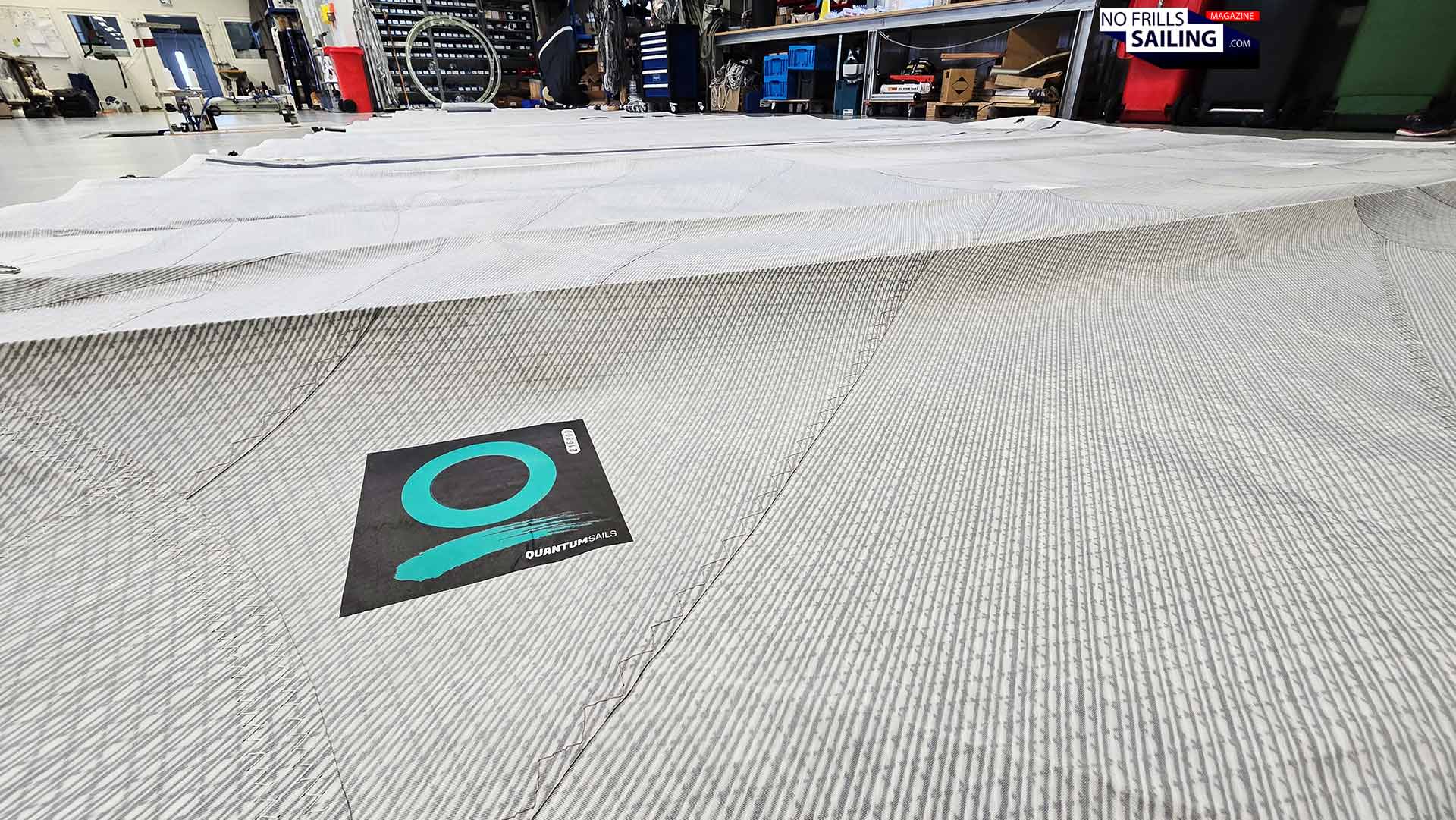
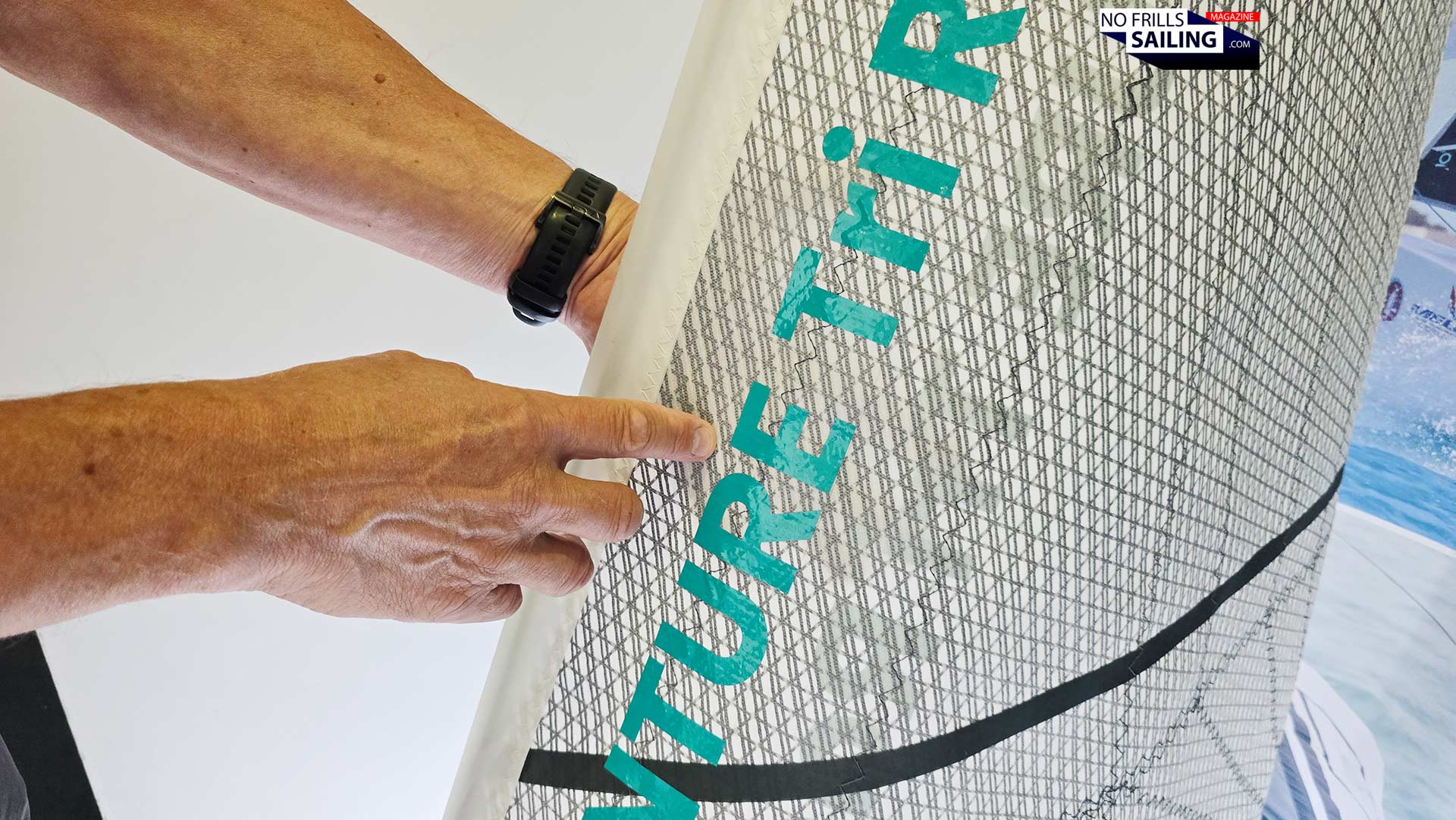
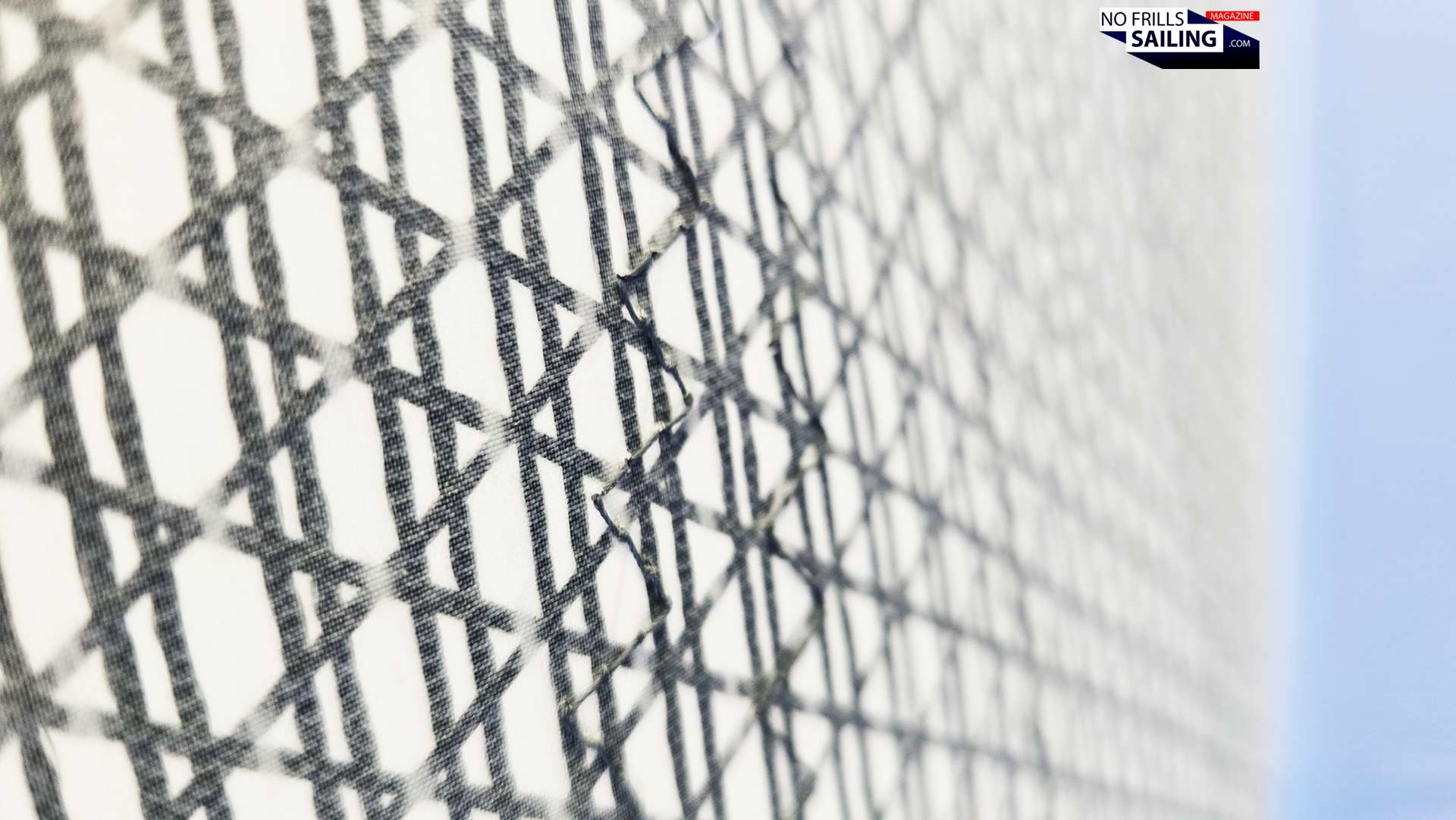
Quantum´s “Venture” is made by the American company Challenge Sailcloth, which they call “Ultra Palma”. As there are basically only these two major sailcloth producers (the said Dimension Polyant and Challenge), it may very well be the case that your local sailmaker and even one of the other big brands will utilize Ultra Palma in their sails, re-labelling it. Venture, to stick to Quantum´s name, is a highly modern laminate sail made of high-modulus UPE fibers. It´s very (!) lightweight, has exceptionally good shape-keeping properties, comes with double Taffeta-layers and the X-ply fiver-grid (the black fibers).
Quantum Sails product highlights
These, especially for demanding cruising sailors developed, sails are said to be the best combination of performance, weight and handling as well as budget. But choosing the right sail cloth is only one step. Another – and here, craftsmanship and innovation of the individual brand or sailmaker comes into play – deciding factor is how these base materials are brought together to make the sail itself. Because, sure, Challenge only produces large webs of cloth. It´s the sailmaker who brings everything together.
Let´s check the mainsail
Asking Sven about the “highlight” of my sails, it´s really a no-brainer for him to show me his top 5. One of which is the overall weight. I will later have to haul the large sails from my car up into the second floor where my flat is to store them until needed for boat launching. A 45 square meters mainsail usually calls for two grown up men. I can carry it myself. It´s heavy, of course, but not at all impossible for me to move. That said, less weight in the rigging, more stability for the yacht, right?
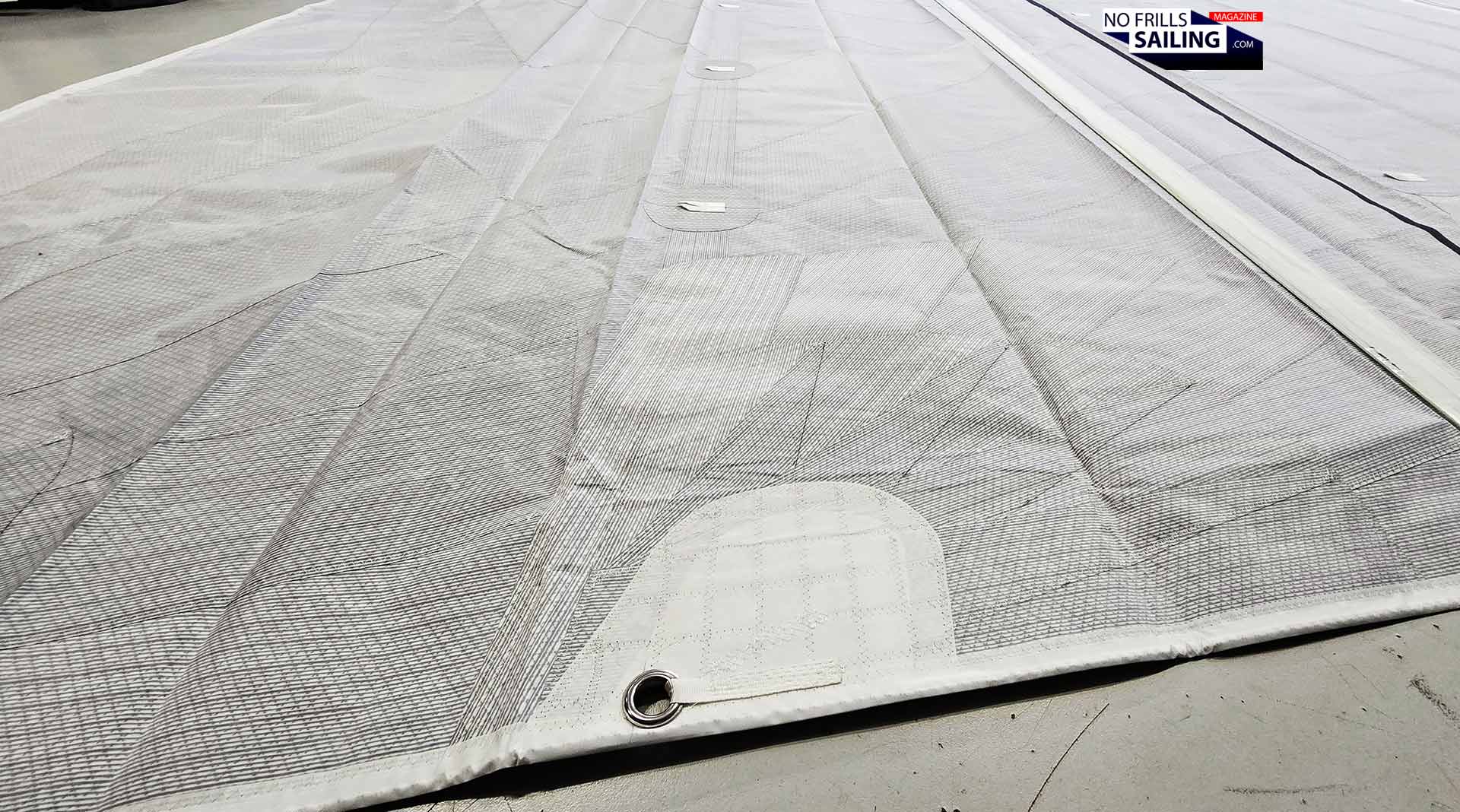
Tri-radial cut, strong & durable
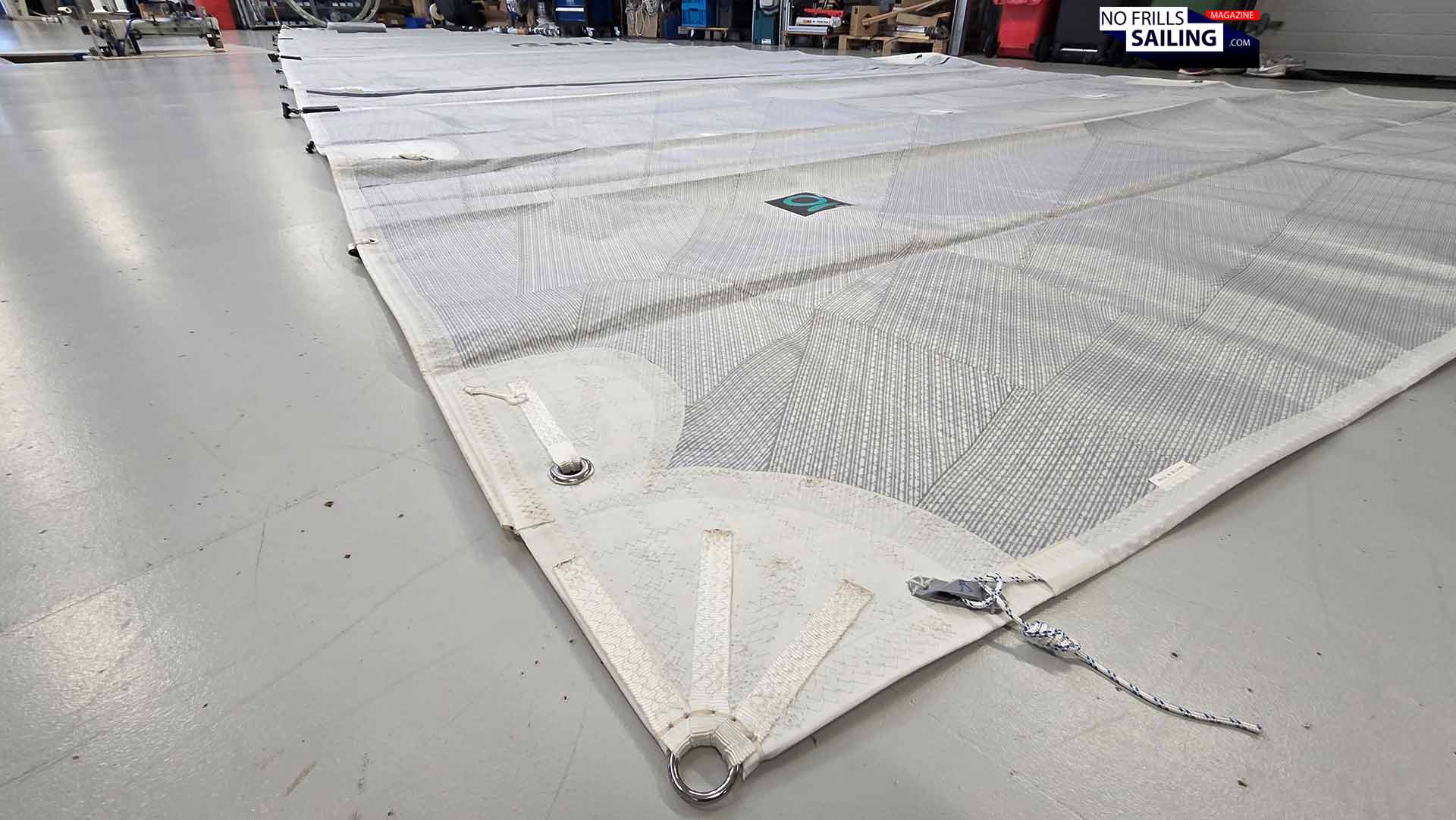
Utilizing Quantum´s expertise both in professional racing and in outfitting thousands of yachts all around the world, every mistake made, every feedback received will finally be incorporated into their products. Sven assures me that even the most basic and standard Quantum sails will already come with a lot of things you´d naturally call “add ons”, but they aren´t. For example: The webbings for the clews of the sails are protected: Much less prone to chafing, UV or other external wear and tear.
Wearing through reefing: A remedy
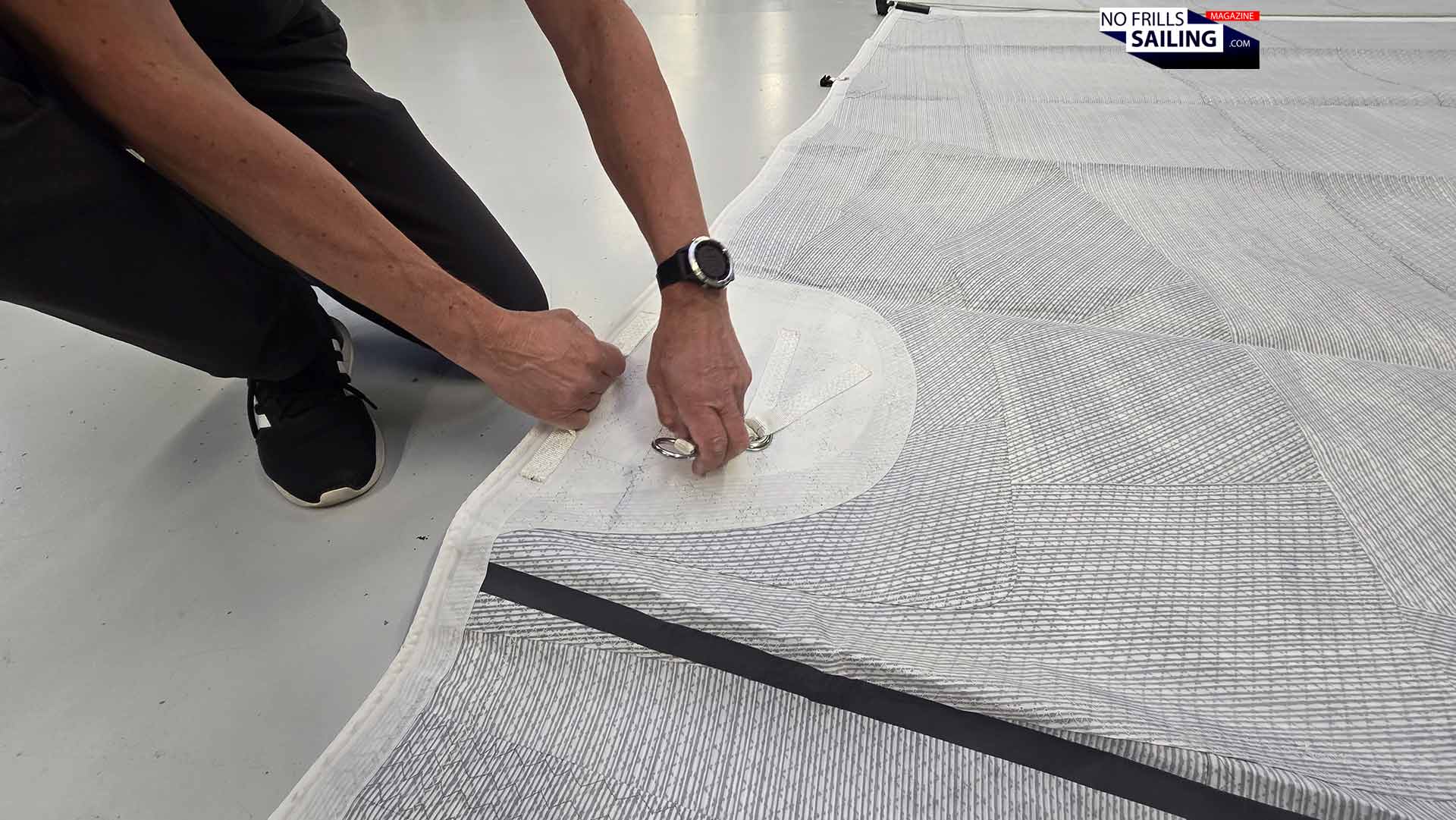
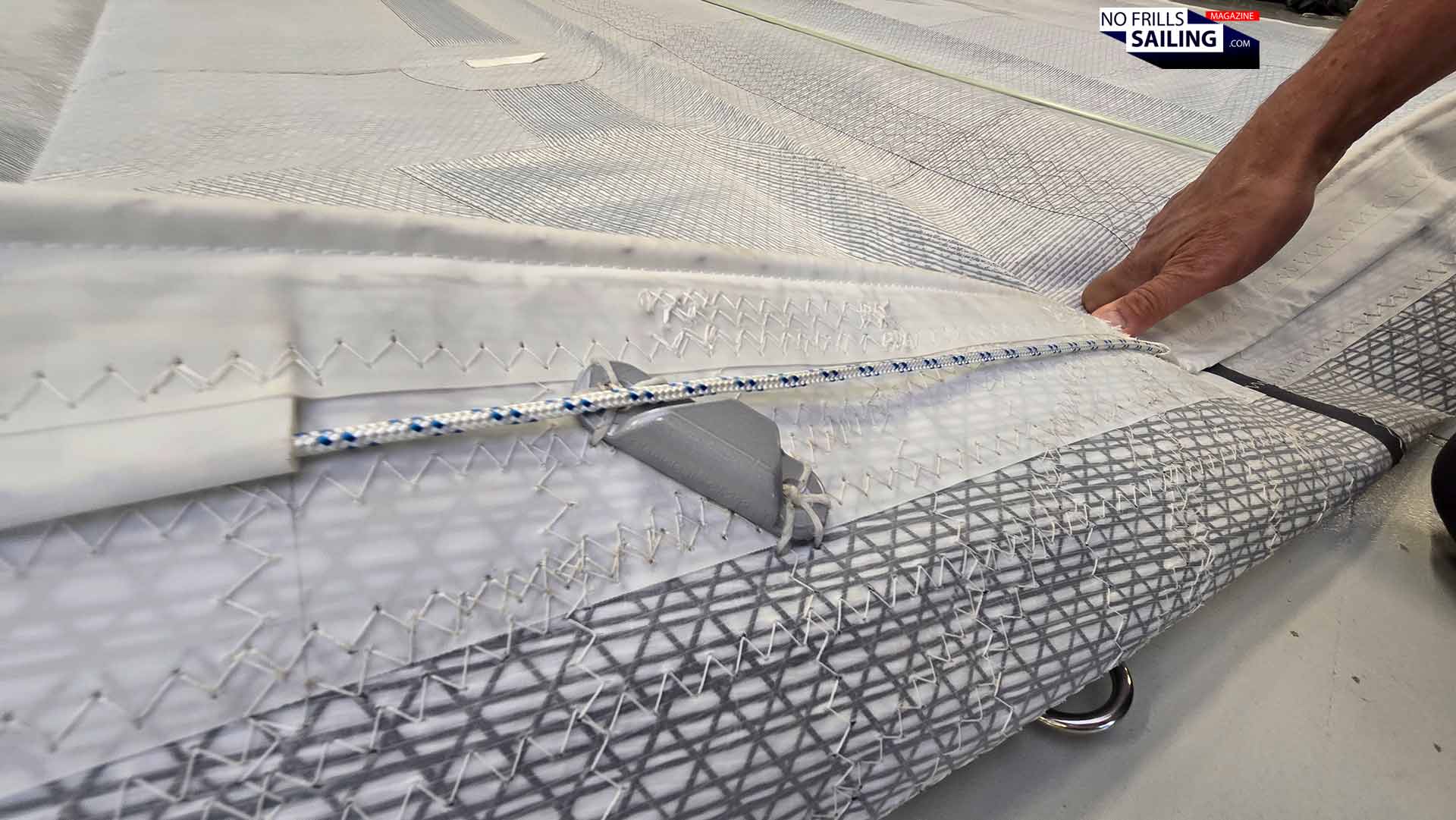
Another example are the reefing points. My mainsail comes with two reefs. By the way, I refrained from a third reef as I have never-ever needed to put in a third on my last boat whatsoever. Less hustle with lines, less cost. Anyway, look closely at the picture below, showing the reefing point at the mainsail´s luff: Theres the attachment ring for the one-line-reefing system, but also a handle …
Reefing strongpoints and handle
In practical sailing it turns out that often sailors still go to the mast foot to help to get down the sail. Or, in case the one-line-reefing system is jammed for whatever reason, you need to apply extra effort to fix the luff to the boom. This handle makes sure you have a safe grip and get it down even in heavy weather or when its wet – otherwise, you´d have to try and get a firm grip on the bare laminate or the thin luff. So I think this little detail is a nice example.
Note the bracing
Another nice detail is the chafing protection all along the reefing level of the mainsail. You can clearly see in the picture above that there is an extra layer of material applied to the sail horizontally. It protects the cloth from being squeezed and maltreated under load when reefed and reduced wearing through chafing. Again, would you have thought of such a feature in the first place? See, me neither. But they have. Which is a very reassuring feeling, I´d say.
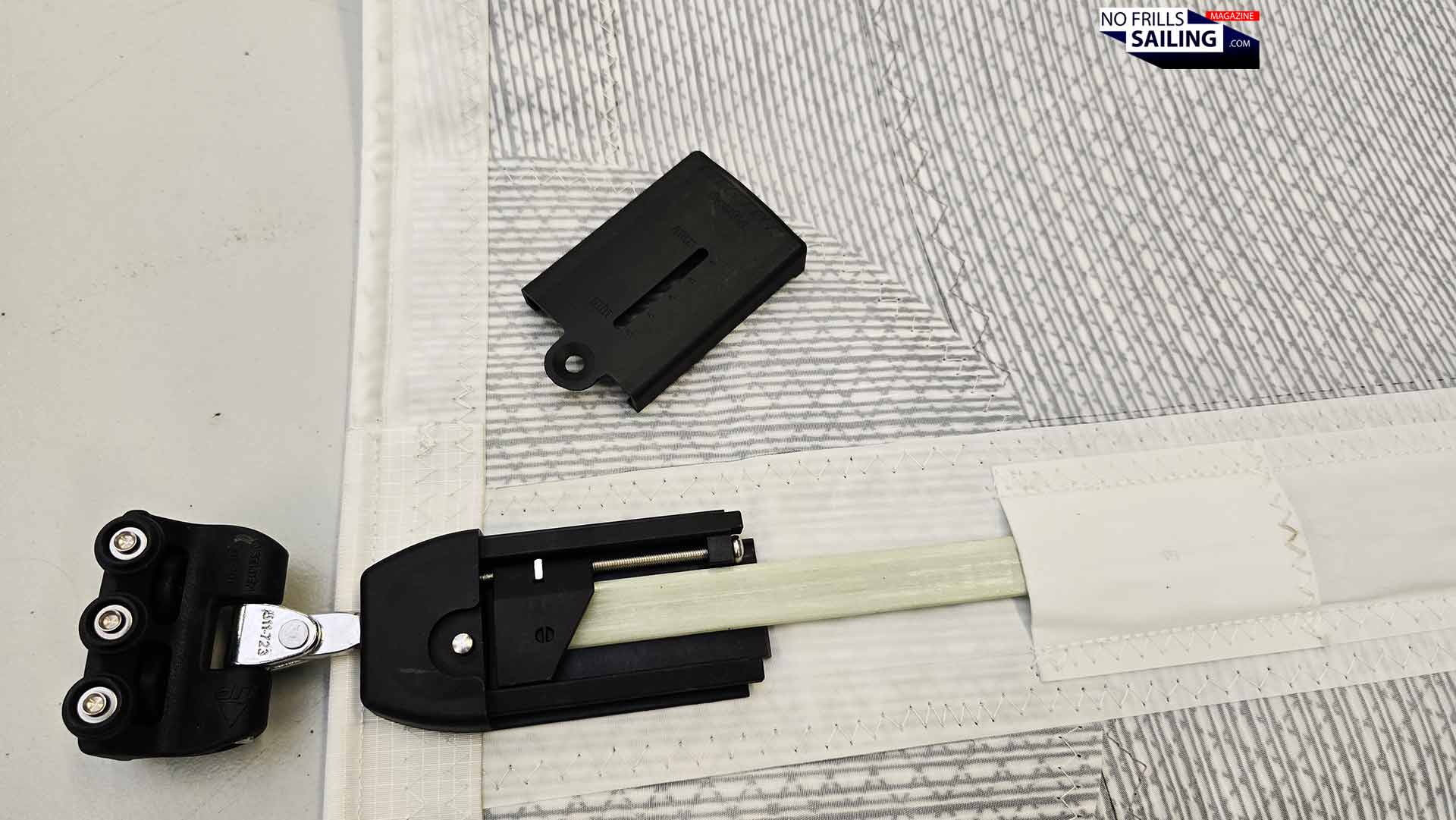
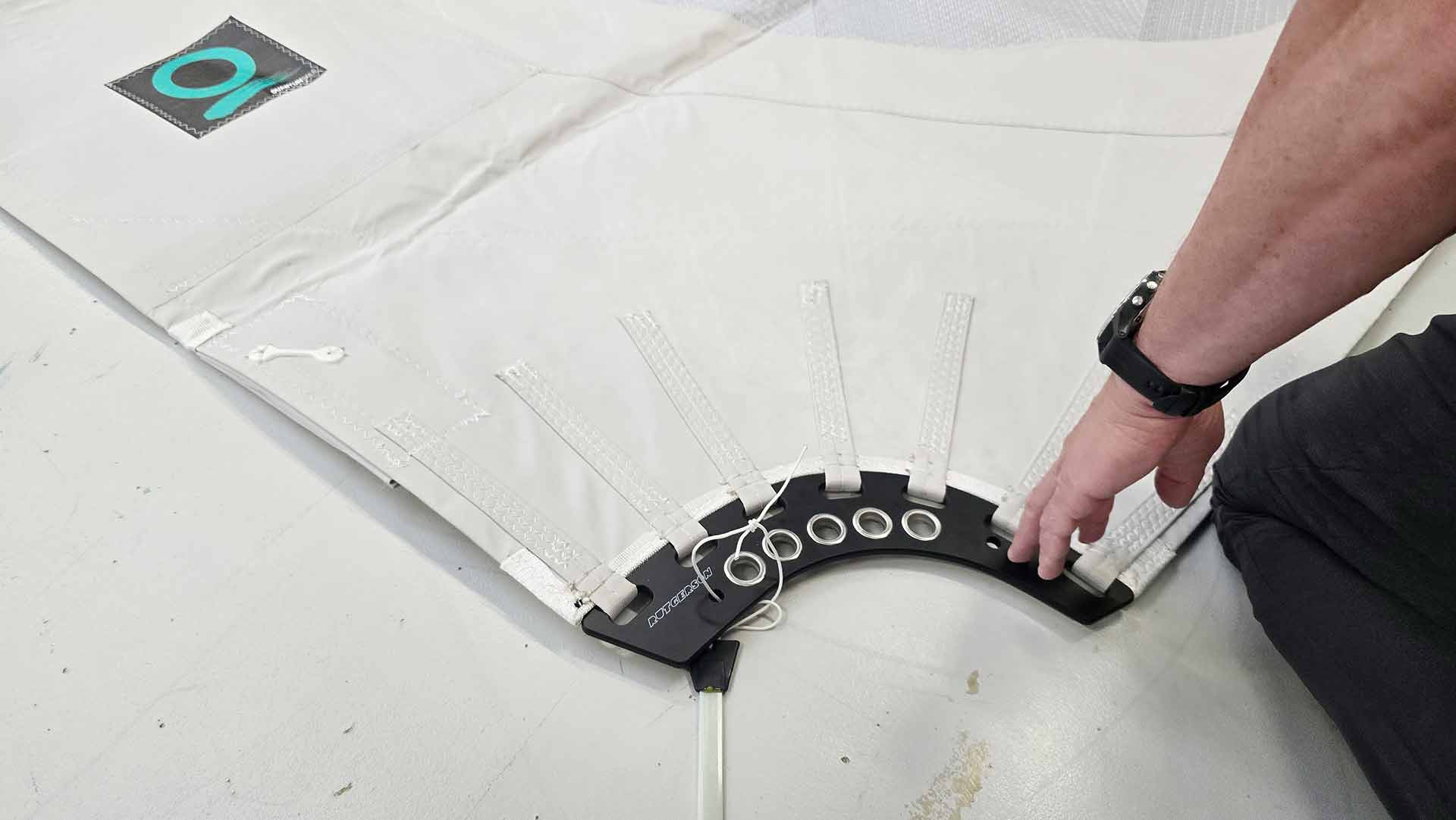
The Rutgerson batten box: Nice!
Lastly, the mast sliders. This is a very important part of the mainsail. I´ve been sailing on many boats with the cheapest slugs, we´ve also lost some off Madeira in a gust, but the most enervating thing is that under load, heavy seas, being wet, mainsails often do not come down as easy and trouble-free as they should. In my last boat, I invested a lot of money in high-grade mast slides. For my new Quantum mainsail, we´ve fitted Seldén battcars where batten are mounted and went for standard slugs along the luff. Let´s see how that works out.
Looped leech cord: A deciding detail
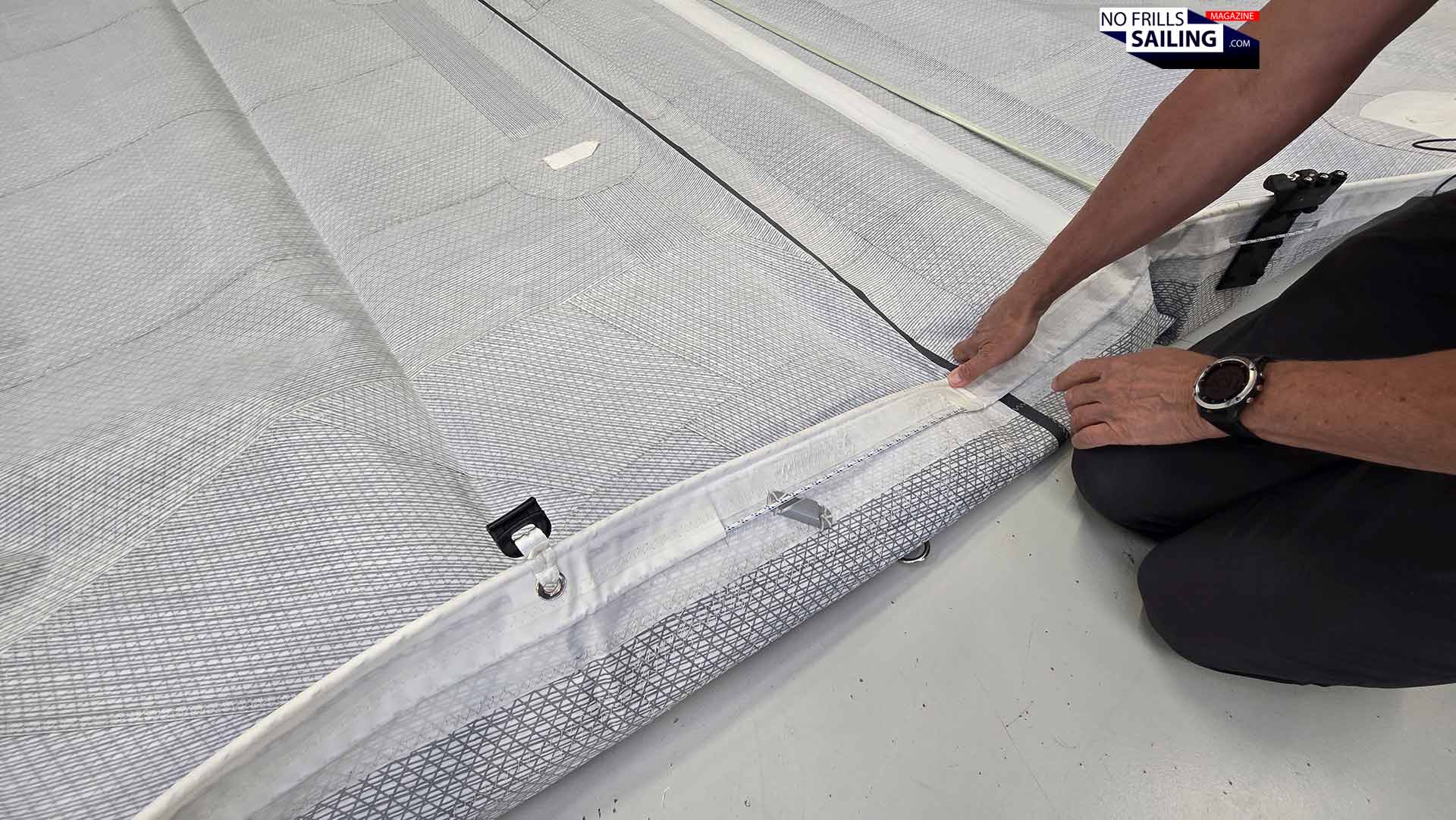
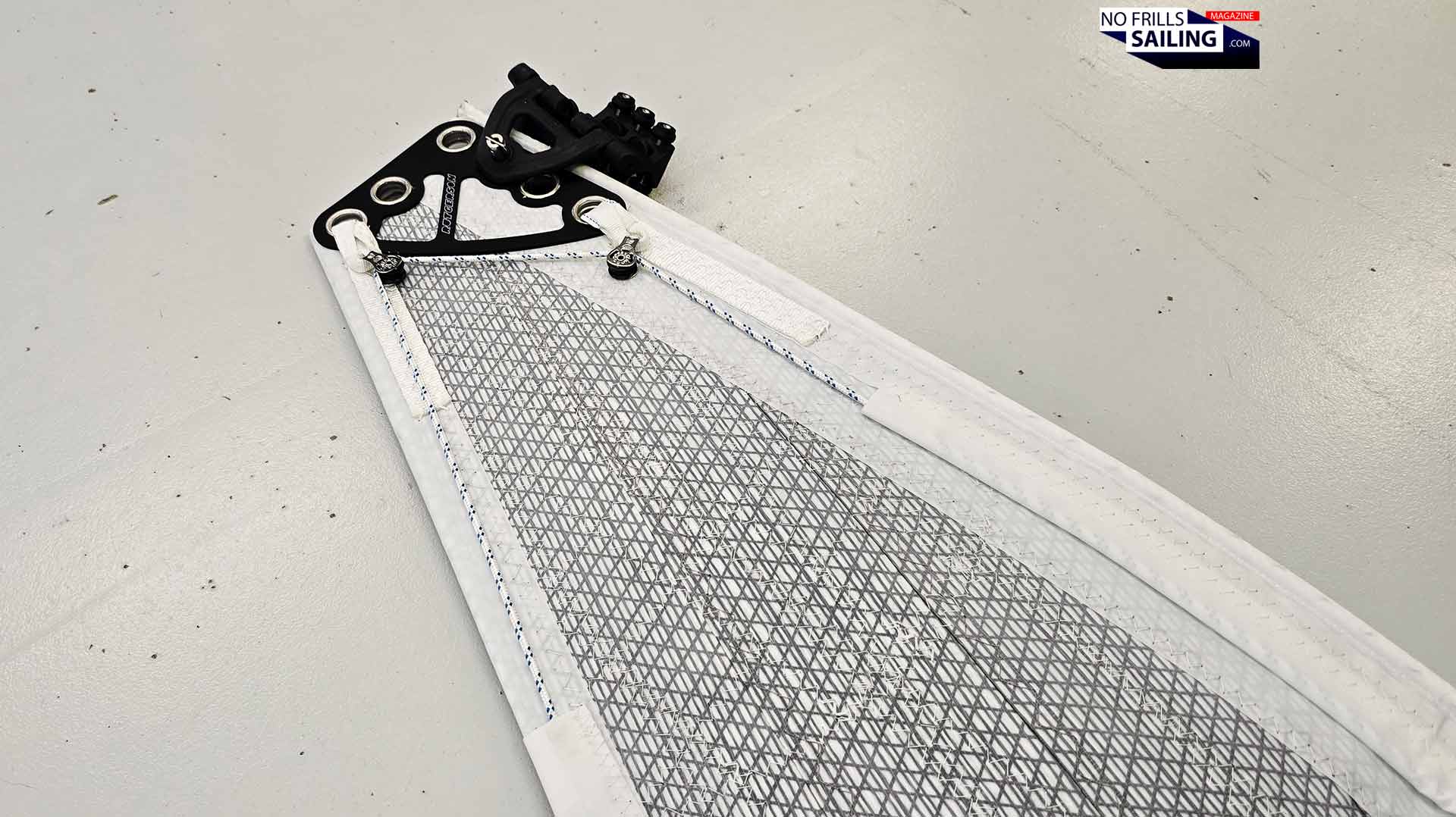
Sven then shows me a very cool detail. I often see boats going by with their mainsail leeches rattling and flattering. One of the reasons can be a poorly trimmed leech, which is the “outside edge” of a mainsail. Even the cheapest sails therefore have a leech line which can be pulled and fixed. That way, the leech line will put in some more tension, stopping the rattling.
Checking the leech line
But in many sails the problem is that on reaching points of sail, when the boom is further out from the longitudinal axis, you simply cannot reach the leech line anymore: It´s way outside of the boat over the foamy waters. So, usually, you´d have to steer more upwind and pull in the boom to fasten the leech line … which for obvious reasons nobody does. But here´s Quantum´s solution: The whole leech line is not operated at the rear end of the boom, but from a much safer position.
Elaborate, but so clever!
By leading the leech line all the way over the sail´s head and down again all along the luff, the leech line can be operated safely from the mast foot. No upwind pointing, no acrobatics over the railing anymore, just a clever and simple solution with a block-guided line. I really appreciate this as it shows that someone had really invested in thinking about real situations and how to solve them. Again, this is standard here at Quantum Sails …
Leech trim made easy!
Nice side-kick: The fastener of the leech line is mounted a bit tilted, as you can see in the picture above. This way it will unfasten automatically the next time your mainsail hoisted, restore basic settings of the sail when you go out the next time or shake out a reef. Isn´t that a cool feat?!
Another nice detail …
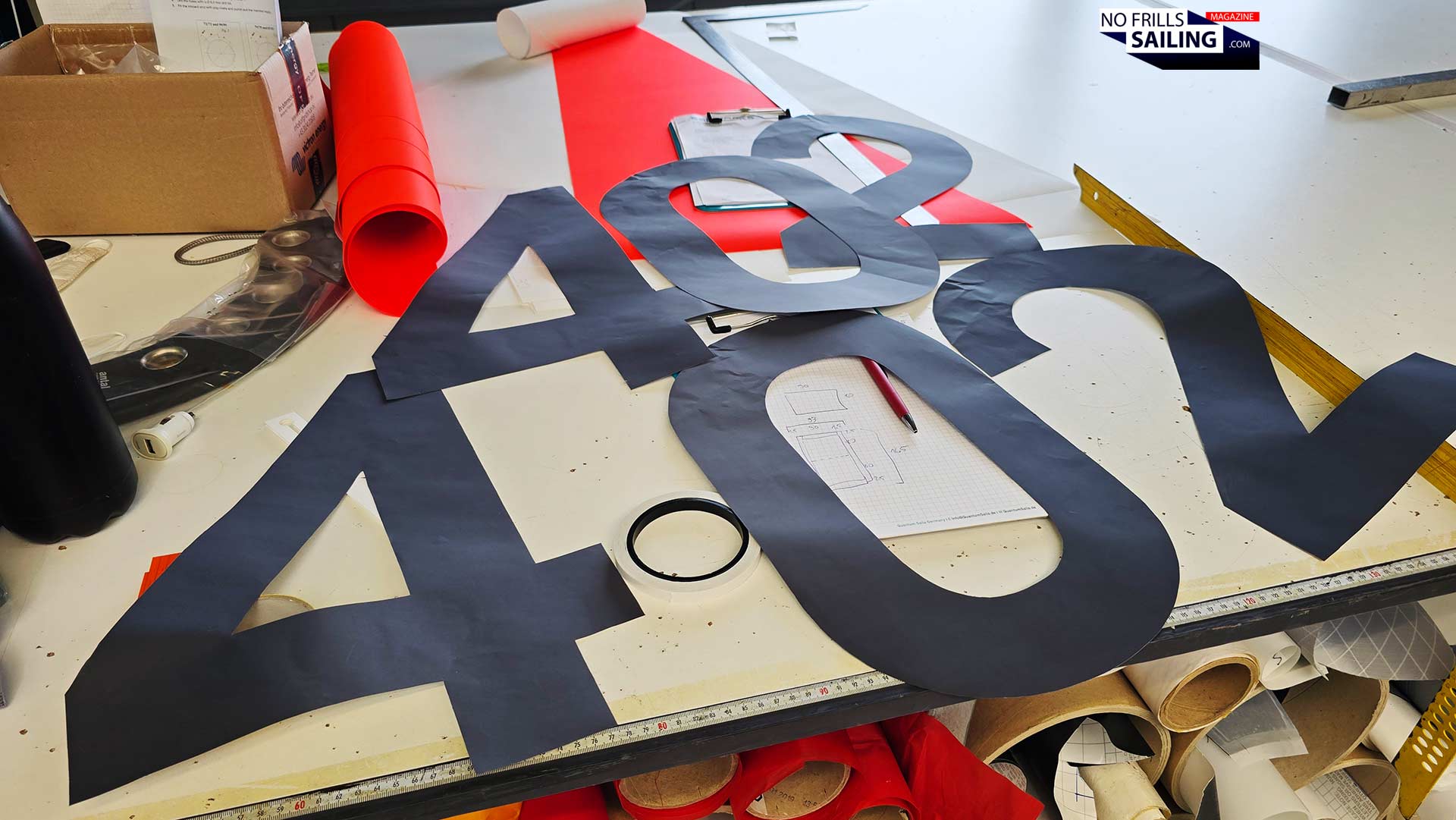
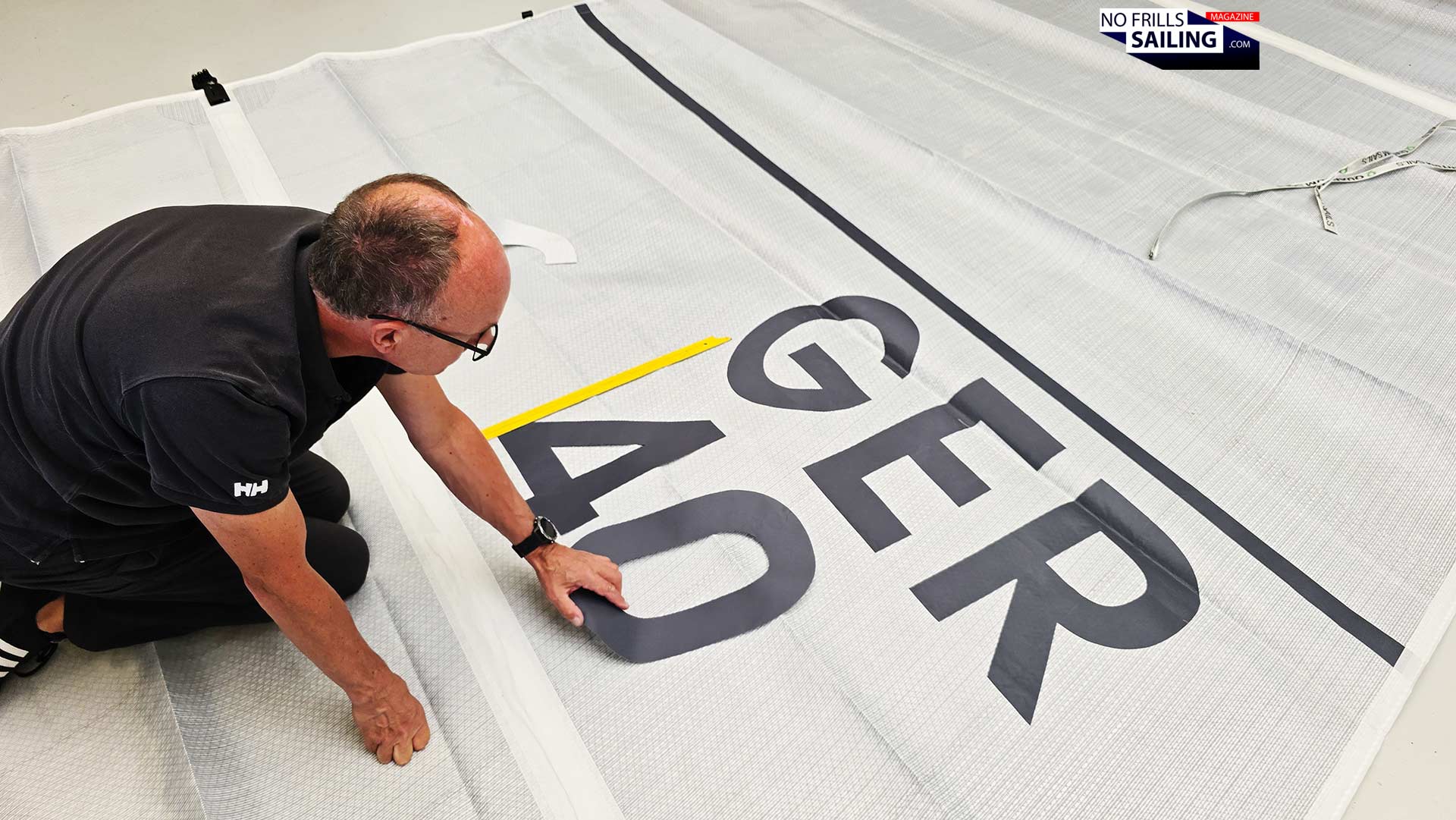
It is! But we are far from finished with our little mainsail tour here. Included in my price was the class sign – or in your case, the logo of your boat´s brand – and the sail number. The Omega 42 class signet had already been put on the sail, as well as GER for my country, Germany obviously, but the guys were a bit unsure with my sail number. So here´s the thing. Most people think it´s the hull number, but that´s technically only half of the truth.
What´s the thing with sail numbers?
Whilst most of the boats just fly their hull number, the guys back in the shipyard told me that the “real” thing would be to have a three-digit number, in which the first of which stands for the flight or type series. In that case, the classic Omega 42 has been built in three series. Mark 1 and 2 during the “classic” times and there was a third flight licensed to Lidköpings Båtsnickeri around 2000, launching hulls 301 to 304. Which makes our new build Omega 42 the Mark 4.
Accurate fit on the mainsail
That said, my sail number has to start with a 4. As I have bought the second hull of that fourth flight, it´s the 402 then. Sven personally arranges the numbers on the mainsail while one of the apprentice sailmakers is tasked to stick then to the sail. Usually, my boat´s sail number should have been 168, because 160 units of Mark 1 and 2 plus the four Mark 3s and hull #001 WINDFAENGER, makes 167. But honestly, I like 402 much better … so, I guess you´ve learned something new about sail numbers today, right?
Speaking of “something new” – if you still haven´t, you should subscribe to my monthly free newsletter. That way, very conveniently, you will never ever miss any new article. Just check your inbox once a month, browse the mail and look for a topic that suits you. If you are already on the mailing list, never mind, let´s go on with our sails-tour …
Taking a look at my brand new jib
Many Omega 42 do sport an overlapping genoa sail. Some even have the rigging for both self-tacker and the genoa. Peter Norlin´s original sail plan only proposed a small jib and the mainsail for the standard setup. For downwind and light wind sailing, the original Omega 42 sported a 109.4 square meters spinnaker. You know me already, I am more of a “stick to the OG”-guy, and so I went for the Norlin-jib-only setup.
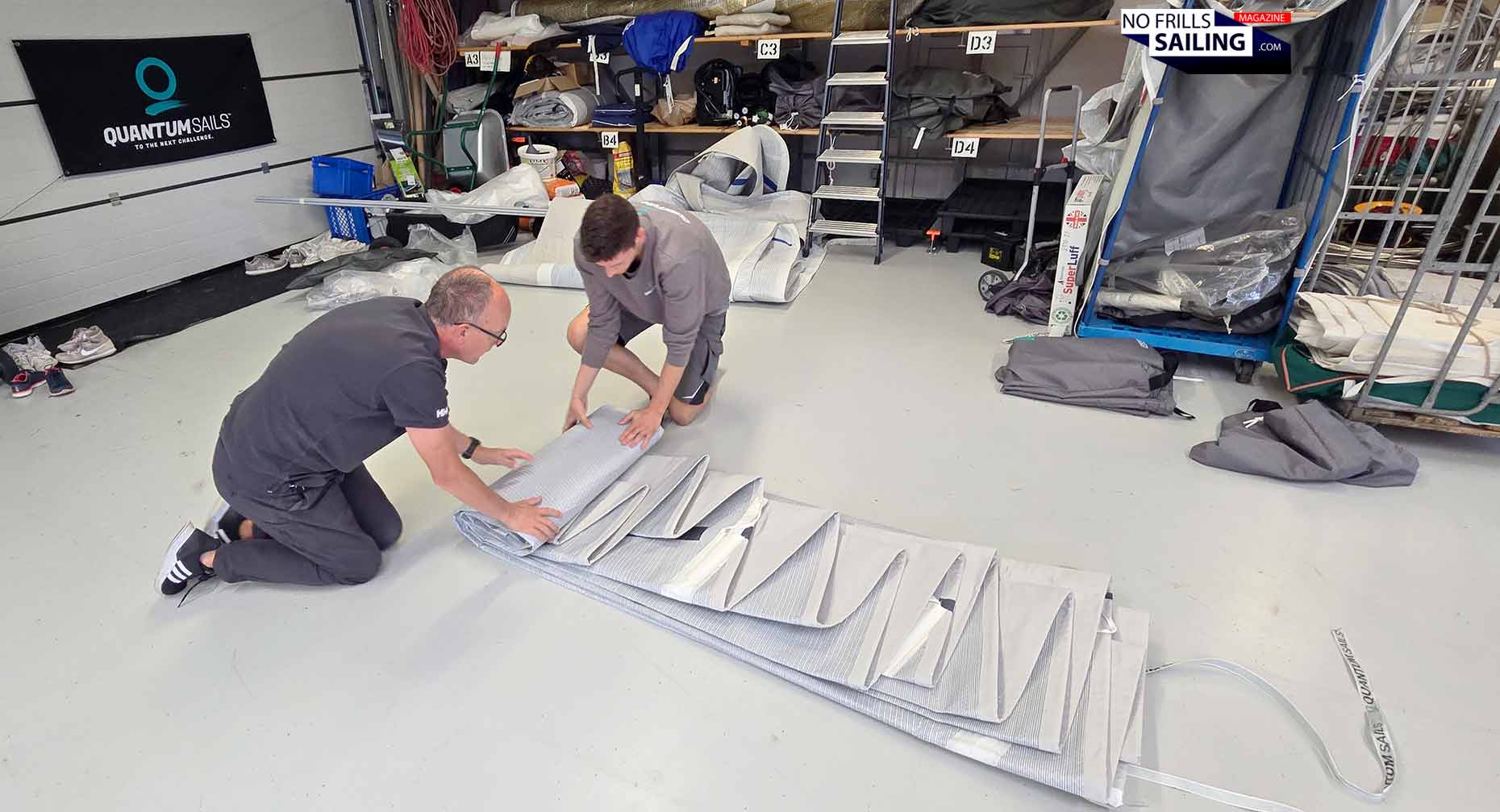
Let´s get it back into its sail bag.
I am sure that in normal winds on upwind to close- and maybe also beam-reach points of sails the jib plus main-setup will do perfectly fine! I want to keep my boat as simple as possible, so opting out the genoa sail will spare the traveler tracks, the sheet lead-lines, one sheet of course and all the hustle connected with it. The boat will stick to its clean, neat design and the deck won´t be as much cluttered. What´s in for the reaching courses and light wind situations? Later more on that. Let´s look at the jib for now.
Now it´s time for the new jib
This is of course also made with Venture sail cloth and sports a triradial cut. As it is a furling jib, the luff and roach are protected by “Weathermax” UV-protection. Here – nice detail – this layer is put around the luffs, not stitched onto just one side. You can also see the large Rutgerson clewboard for fitting the self-tacker. Again, all webbings are covered and therefore protected against weather and chafing, further prolonging the life of this sail. Everything comes with a “heavy” quality, nothings feels weak or undersized.
The clew-board: Massive!
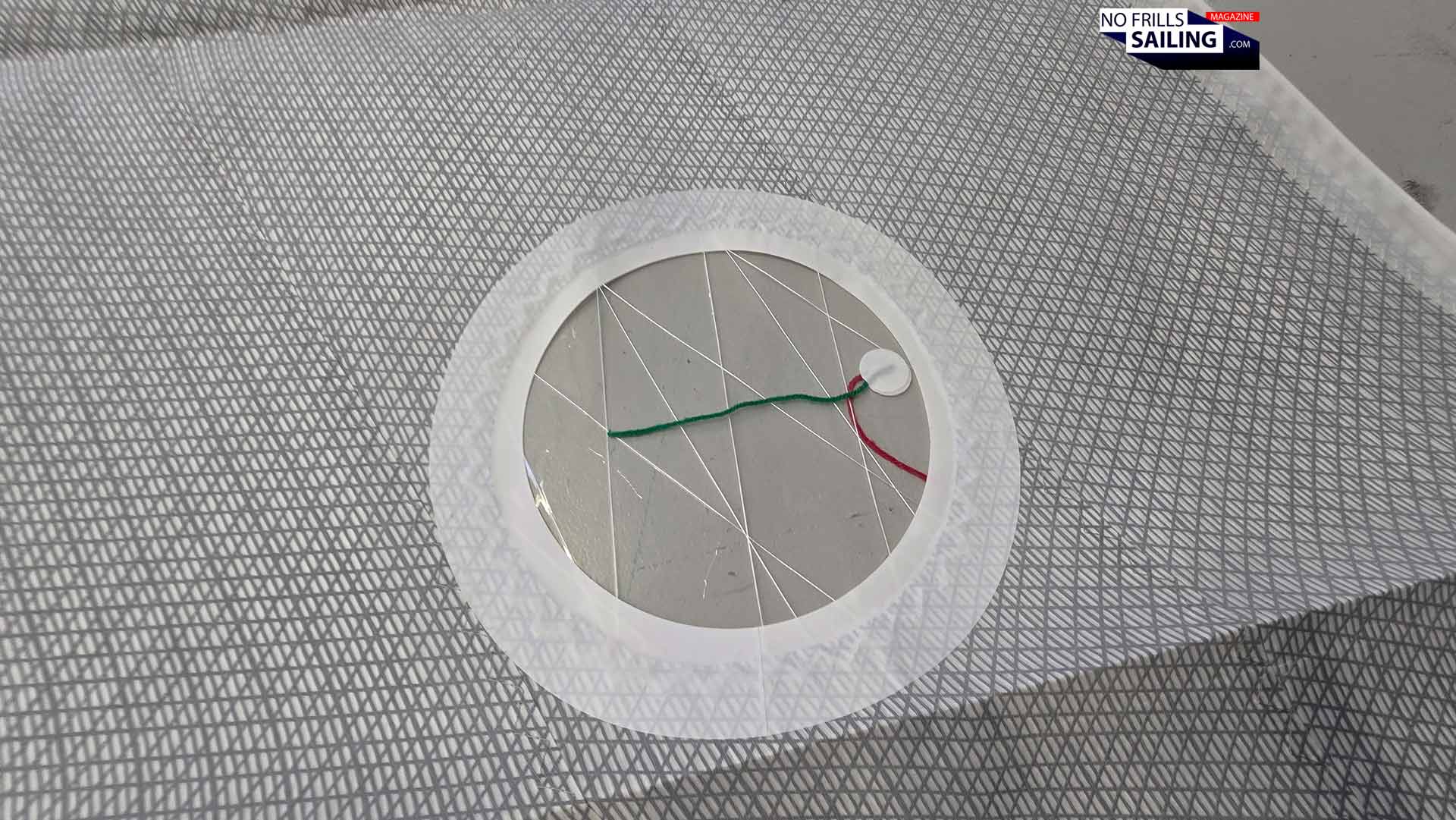
The jib also has the tell-tales, as well as the mainsail of course, I like the fact that they´ve introduced a clear see-through “window” for the tell tales which will make it much easier to fine tune the jib. I know, I know, many of you ask why I didn´t go for the genoa, which in most cases indeed is the better choice for a headsail. Well, apart of the already said reasons, I figured that the Omega 42 is mainly driven by her mainsail. The fore sail merely contributes. Remember my articles on racing the Omega 42? During the pre-start phase, the boat already sailed at 7 knots with mainsail alone in the first reef! So that´s plenty of power already there.
Nice see-through window
As for the reaching and running courses as well as the light wind situations, I´ve already talked with Sven about a gennaker (A3, possibly, sporting some 110 square meters) and a Code 0 for these conditions. But as my budget for now is a bit weak and there are two bigger items on the list with more priority, we´ve postponed these sails to next year. So, no worries, ALPHA won´t be a sitting duck at all!
A word on the battens
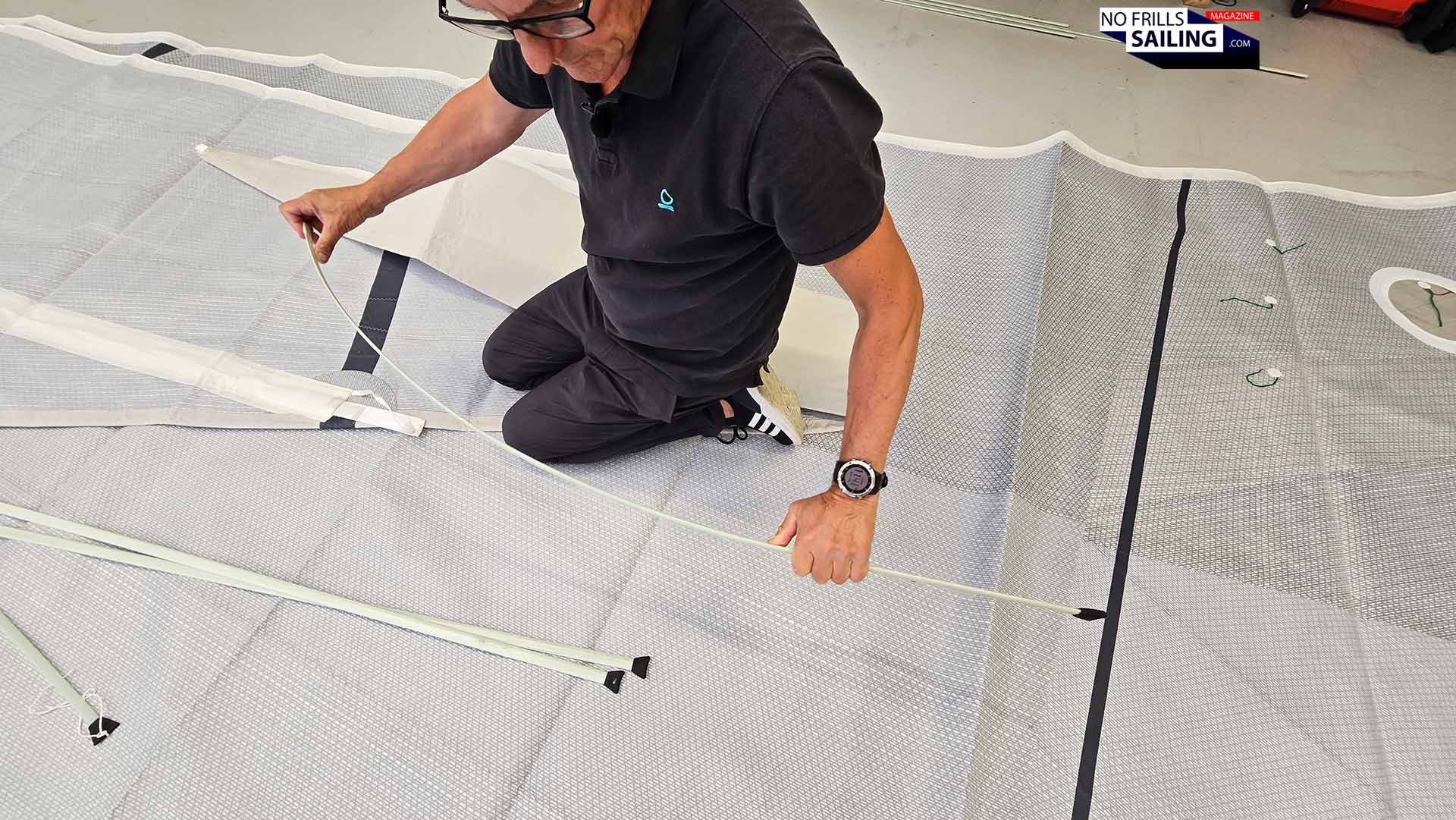
Of course there are battens in the mainsail as well as three smaller, vertical ones in the jib. The battens and the batten pockets are luff loading. You may have already noticed further up in the article that the mainsail comes with the latest Rutgerson batten box (model 1587), which is easy to set up, easy to tune and easy to dismount again. I really like that one! Back for the battens: For the mainsail these are standard flat glass fiber battens, the one in the jib are a but exceptional.
Sven shows me the vertical jib battens
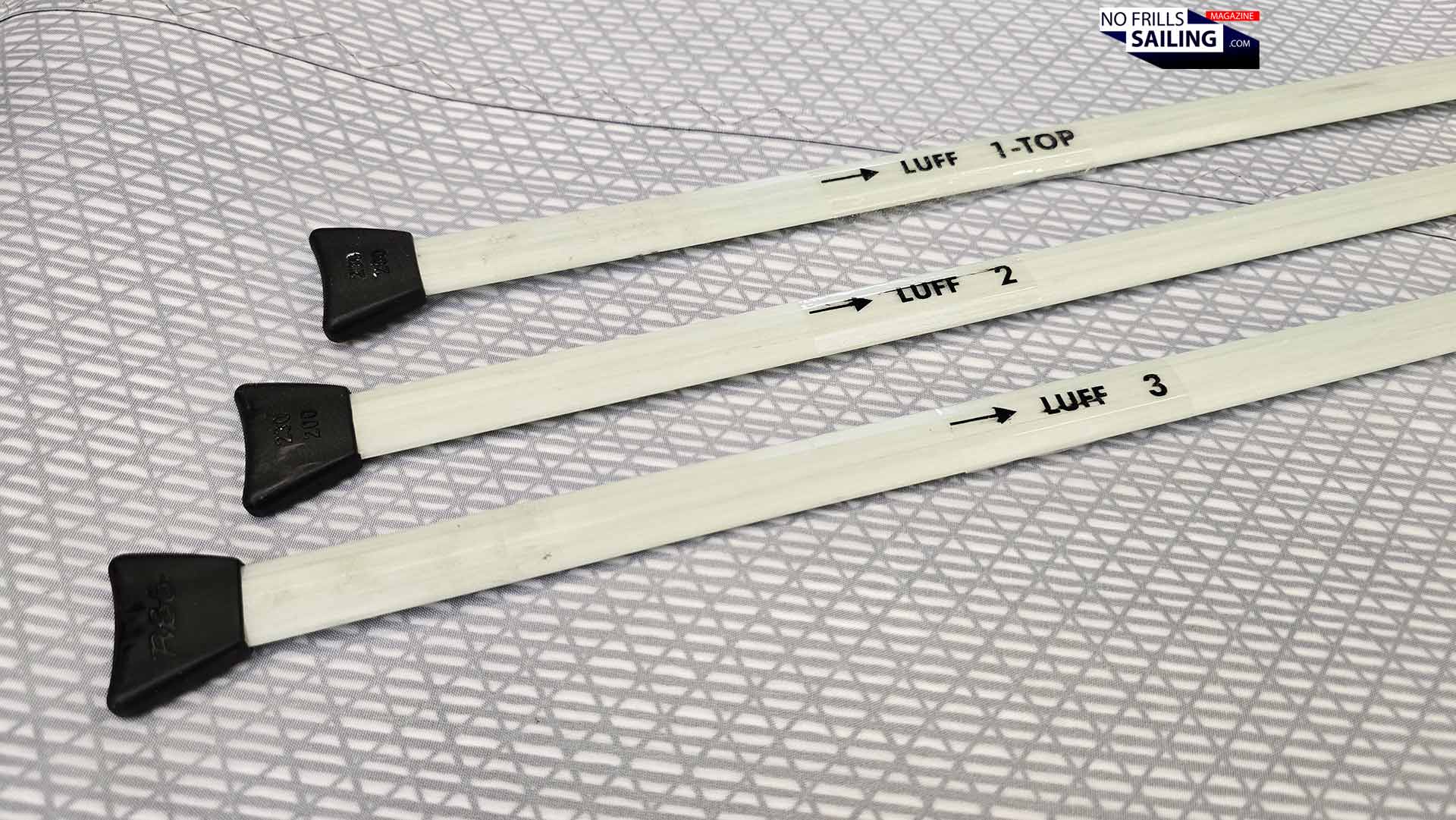
As for the jib-battens, these are tapered, meaning a bit thicker at the luff, becoming thinner towards their end. This makes them a bit better flexing and helps to create a nice wing shape for the jib. But one thing is still not solved: Once touched with bare hands, you will feel these enervating stings by the tiny glass fiber-remnants in your skin, right? Well, there´s a price to pay everywhere, I guess …
Nice bending: Tapered battens!
I also liked the fact that each batten is clearly marked to where it belongs and how it is to be inserted. This is only a small thing, but it makes life so much easier, right? We all know about the stresses when rigging up your sailboat after winter storage again, and traditionally, at least one batten must be inserted either the wrong way or at the wrong position! That said, I´ve had to take down sails frequently after noticing my wrongly placed batten far too late. This is a thing of the past: If you still insert the battens wrong although you have these clear markings, you are officially retarded.
… for idiots
Anyway, that´s for the jib. What do you think? Did I make the right choice? Where would you have decided differently and why? I am looking forward to your constructive comments under this article! As for now, after a full 3 hour detailed tour, I felt very satisfied: Both sails showed no visible production flaws, Sven briefed me in detail about every nook and cranny and so it was time to pack it all up and leave the guys.
Support your local sailmaker!
That said, here´s a pledge from my side, and I really mean it! I know that there are many companies offering “internet sails” for much, much lower prices. And I am also aware of the fact that many of those utilize the same basic materials as the big brands and your local sailmaker uses. Some sailing acquaintances of mine as well use those online services and only a few of them have serious issues. But I have a problem with these: See, as with everything that is ordered via internet, digitally sized and specified, you have no assurance whatsoever in terms of fit, quality and service. There is no counseling, no brain-power going into your sail and nobody really caring for you, your boat and your plans.
Let´s support this!
I used to be a race bike sportsman before becoming a sailor. It was the same with internet carbon bikes and repair-shops. Many of which simply refused to service or repair internet bikes. And I fully understand that. Your local sailmaker – be it somebody like Sven, representing a big brand like Quantum Sails, or a “no name” local craftsman, will always listen to your wishes, will know your local sailing area and its specialties and can adjust the sail-shape, sail-setup and sail-extras to your individual needs. His expertise is a warranty for quality, craftsmanship and above all – service! Because, your sail will need care, repairs and maybe professional winter storage.
That´s one fully loaded car!
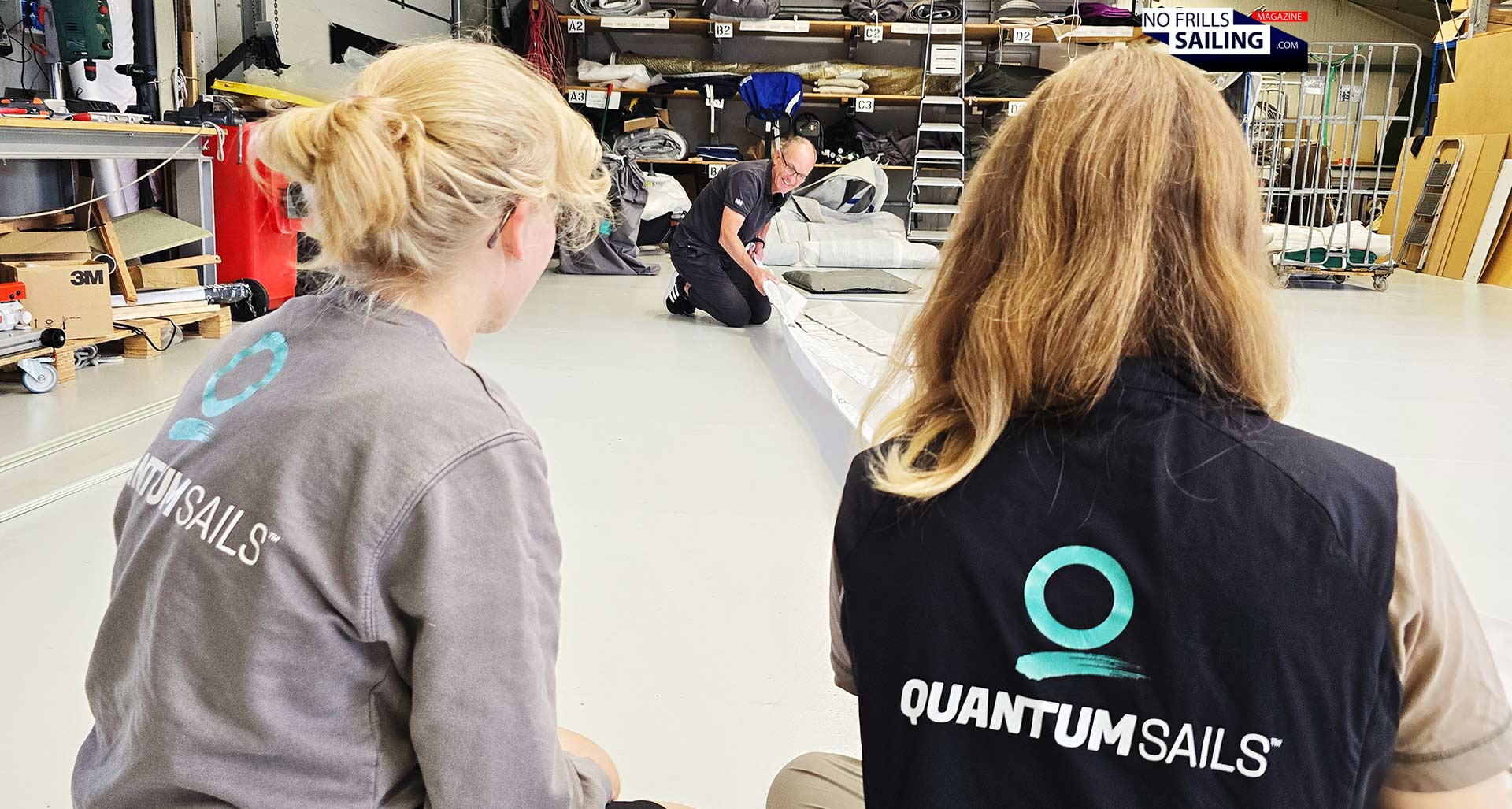
Sven and his Sailworks is a company that not only employs people, skilled craftsmen, he serving the local sailing community. A website does not. And then, he is also an apprentice employer. Year by year he invests a lot of effort, time and money to train young people to become sailmakers, many of which are girls. It´s really important to strengthen those business, to keep the money in a regional loop if possible and make sure that there is a future: Squeezing out the last bargain, saving money on cheap China made canvas is not good style. I know, I know, Quantum Sails are made in Sri Lanka, not in Flensburg, but even securing humane working conditions there and supporting my local sailmaker is a good thing. Please consider this, if you think about upgrading your sails.
Advertisement
What´s up next?
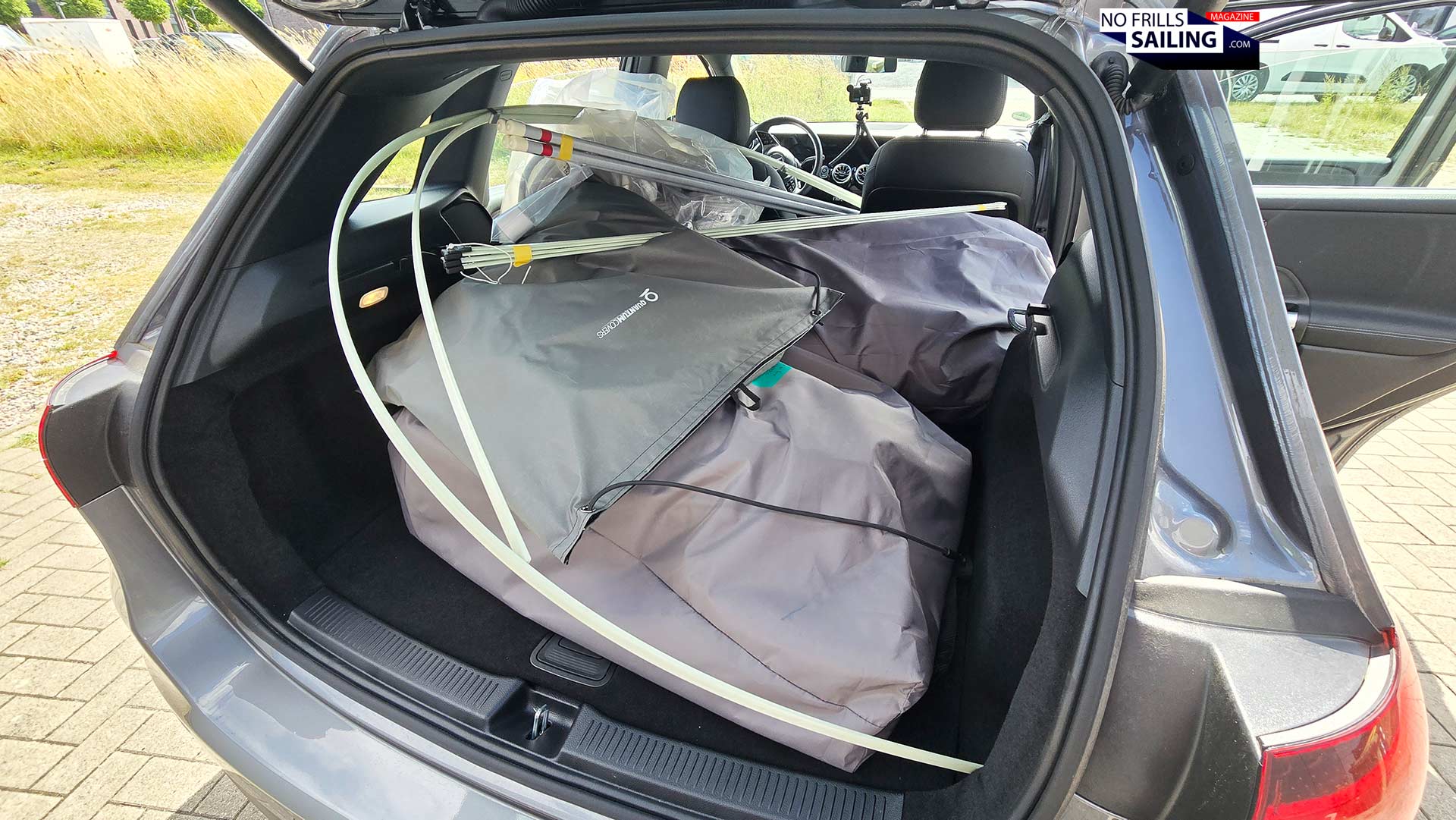
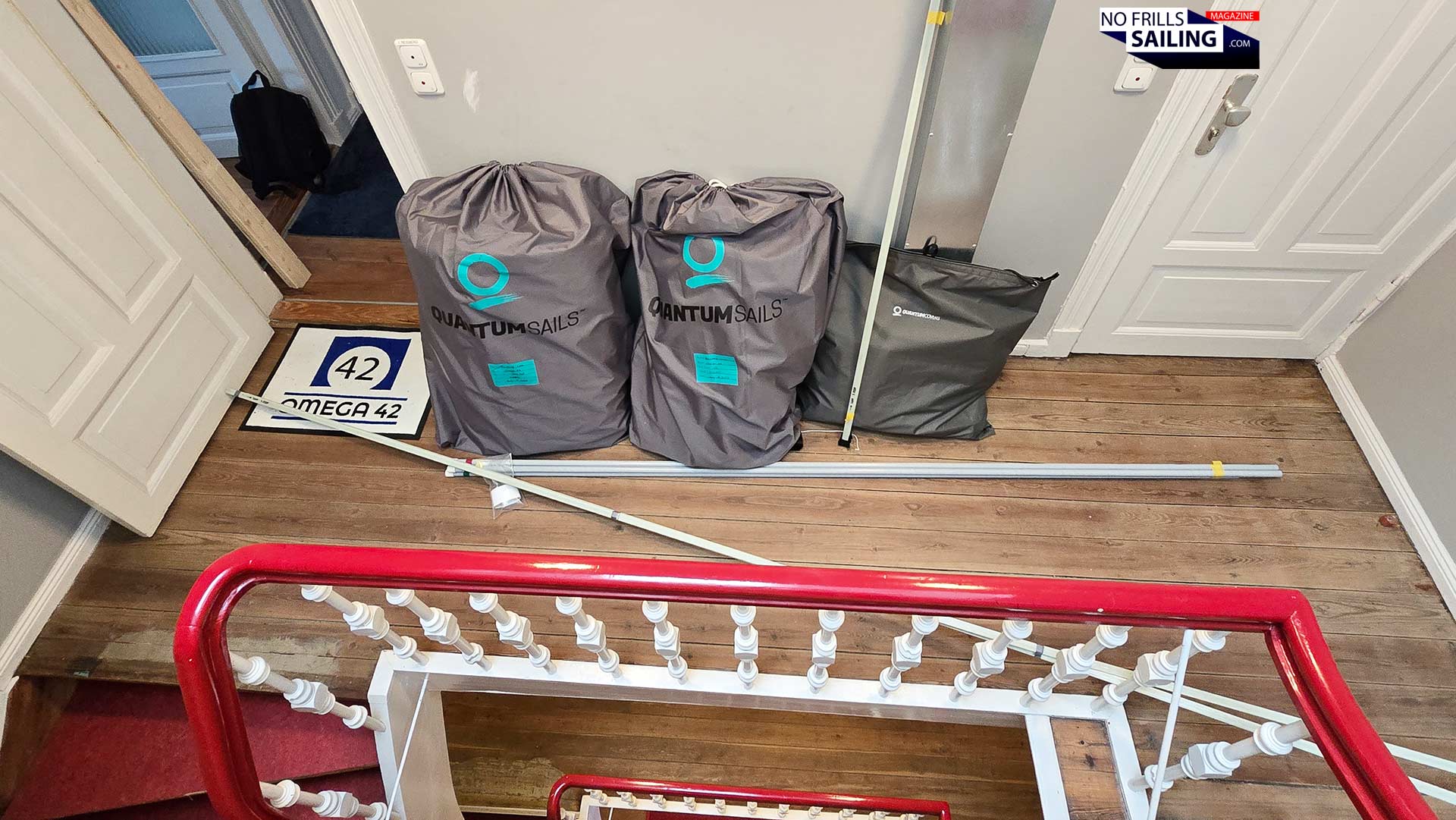
It´s a little adventure to squeeze in the large sail bags, the lazy bag and jib-socket (more on these items in a later article) and above all, the battens, into my little car. I am astonished about the bending capabilities of these GRP-battens anyway … Arriving back home, I store the sails setup in my flat. Obviously I can´t wait to haul them for another time next spring when we rig the yacht for the first time and hoist her proud new sails! This will be – God willing – in spring, April or May 2027. I am really excited!
Back at home …
Next coming up in the building process will be the making of the custom pushpit and pulpit, which is another exciting story! Obviously, I cannot fit a simple standard product here to my boat, nor does any recent shipyard offer suitable products for my classic boat. So I had to employ a steel-manufacture to produce custom parts. That´s a hefty invoice again, but both inevitable and absolutely worth the efforts. So, stay tuned for this story.