
Another huge leap in the Omega 42 new build-project has been made: With delivery of the brand new custom made mast from Selden in Sweden, the rigging is now produced and complete. I am very happy that Selden Sales Manager Karl Rasmussen of Selden took some pictures of my mast being built by the specialists in Sweden – a rare insight into how a sailboat´s essential propulsion equipment!
It is indeed really a rare occasion that in such a high-pace business as the boating industry talking pictures of the products you have ordered is done upon request. Having bought a brand new rigging from world´s leading spar maker Selden surely puts me in a queue with hundreds of other clients. Knowing this, it is of much greater joy and excitement that the guys over there in Sweden really took their time to photograph exactly my mast as it was running through production. Thanks so much for that, Karl, I really appreciate it!
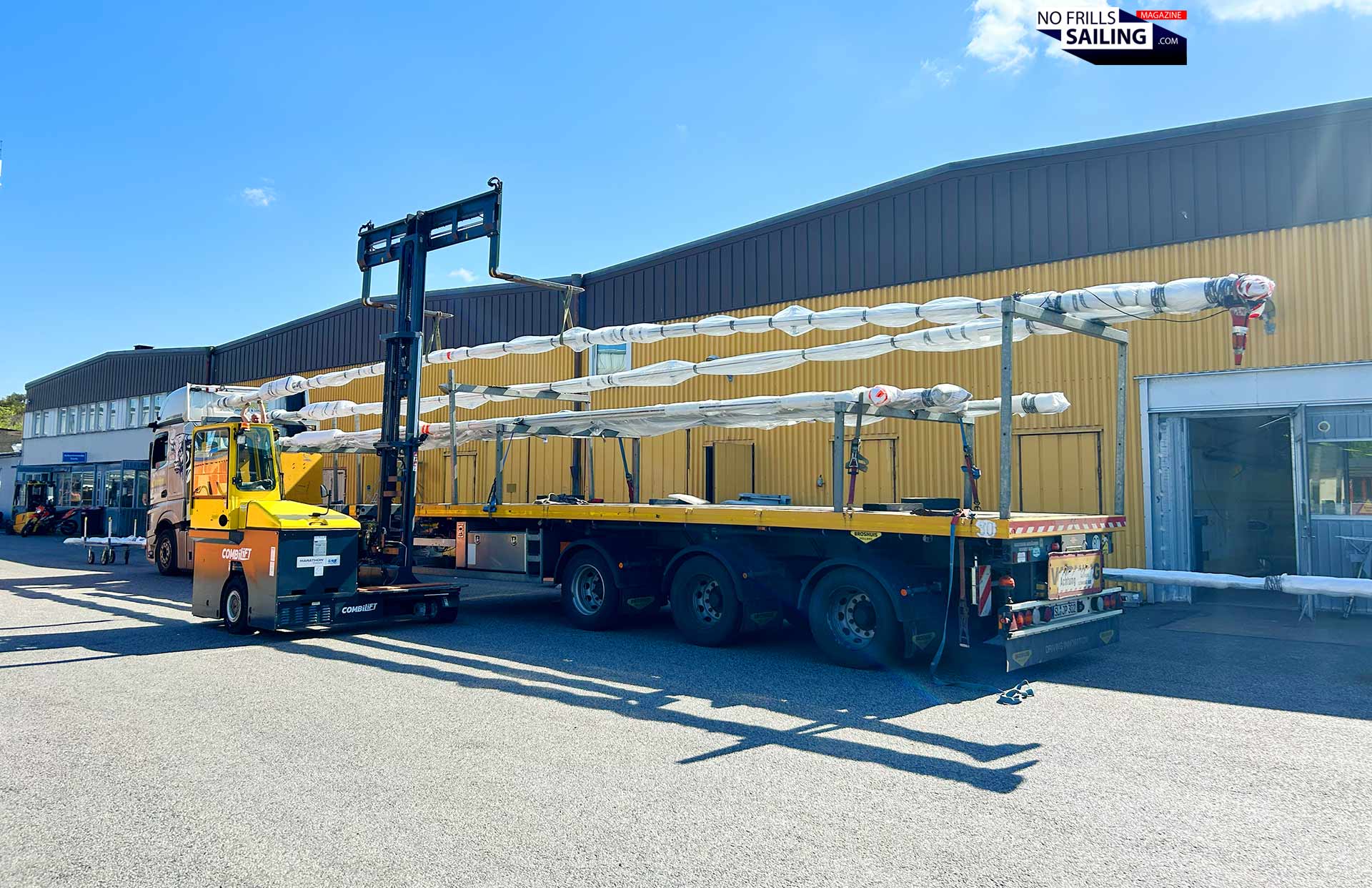
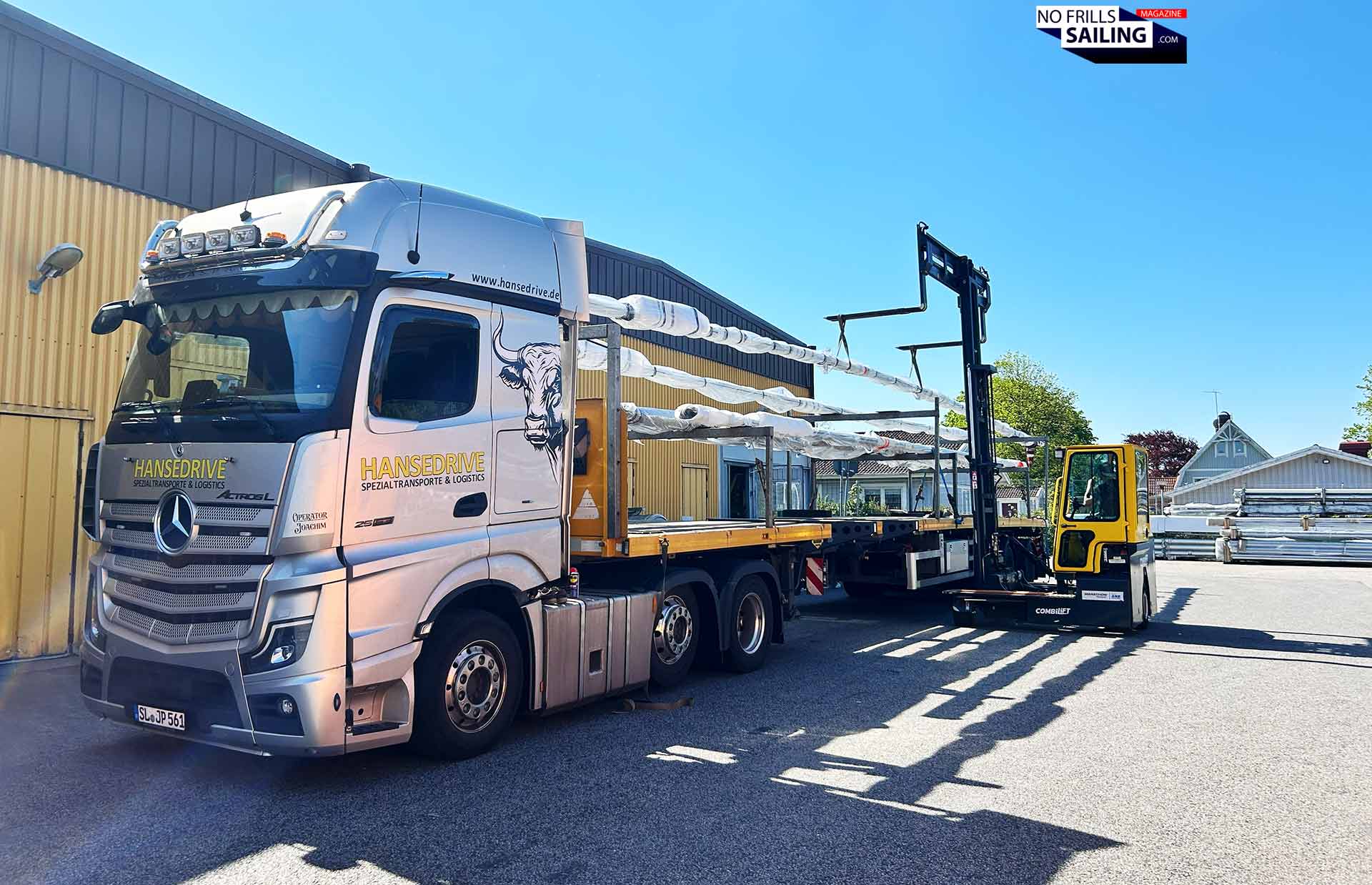
Furthermore, I must say that it´s not just the depth and level of documentation that stuns me, but also the sheer speed in which my order had been proceeded. You might as well remember my last article when Selden-importer Gotthardt – in form of rigging specialist Sören Matthiessen – met me in the building shed where my Omega 42 is currently under construction. This article dates back less than 20 days! Now I receive pictures how my mast was made, loaded and transported to Germany, no three weeks after we started the whole machinery. Isn´t that amazing?!
Custom masts versus standard rigging
But let´s start at the beginning. For those of you who haven´t been following the semi-custom build of my new yacht all the time, you might be wondering why I was ordering such a special and expensive piece of equipment as a custom mast in the place, right? “Why didn´t you just opt for any 18 meters standard mast and just go with this one?”, not a few people asked me. This is a valid questions and surely I know of quite a number of sailors who bought (even a second hand) standard mast that would fit at least the approximate measurements of the hull. It might work. But hey, we are talking about a very, very special yacht here!
In fact, the old Omega 42 rigging used to be the Achilles´ heel of Peter Norlin´s iconic and most beautiful boat: The first rigg was a one-spreader mast that had the tendency to break and come down if pressure in sudden gusts would suddenly build up. Only later versions came with a reinforced two-spreaders rigg. The Omega 42 is a performance yacht, intended to race. Therefore it is paramount to fit her with a strong, reliable and sturdy mast for once; and with a mast that will allow for fine tuning of the sails and forestay-tension secondly.

Frequent readers may know it: I am very open for making things easy. For example my toilet is a solid-separation “No Mix”-system that is easy, convenient and supersedes piping, blackwater holding tanks and seacocks. “Keeping it simple” is the motto of my boat indeed, but this applies only for things which had grown out of proportion in modern yachts, such as electronics and all sorts of onboard “comforts”. I certainly will not keep the sailing capabilities down: This is why I opted for the Omega 42 in the first place as she is a proper sailboat! So, no question about this – no bargaining or foul workaround for its propulsion, which of course is, the wind!
How a mast is made at Selden in Sweden
I know in principle how a modern mast is made: I´ve had the pleasure to receive a detailed and full factory tour through the Selden plant in France in 2024. Thanks to Selden France Manager Leon Lampter I got a pretty deep insight into the proceedings, including their huge and then brand-new carbon fiber mast machinery with the big conclave “oven” where the composite rigging had been “baked”. Quite interesting, you should check this one out if you want to dive deeper.
As for my mast, the manufacturing process was similar. After Sören of Gotthardt had submitted the gauged data from the shipyard to Sweden, Selden´s rigging engineers were running the numbers through their computers. In fact there was a last open question whether we would be able to go down one “size” of the mast´s profile, at least for Sören the data he took suggested such an alternative. This – seemingly tiny step in reality – would have saved some weight and probably some money. But after thoroughly checking and some discussions, we decided to stick with the “proper” profile. Something, I must admit, that also feels as the better decision.
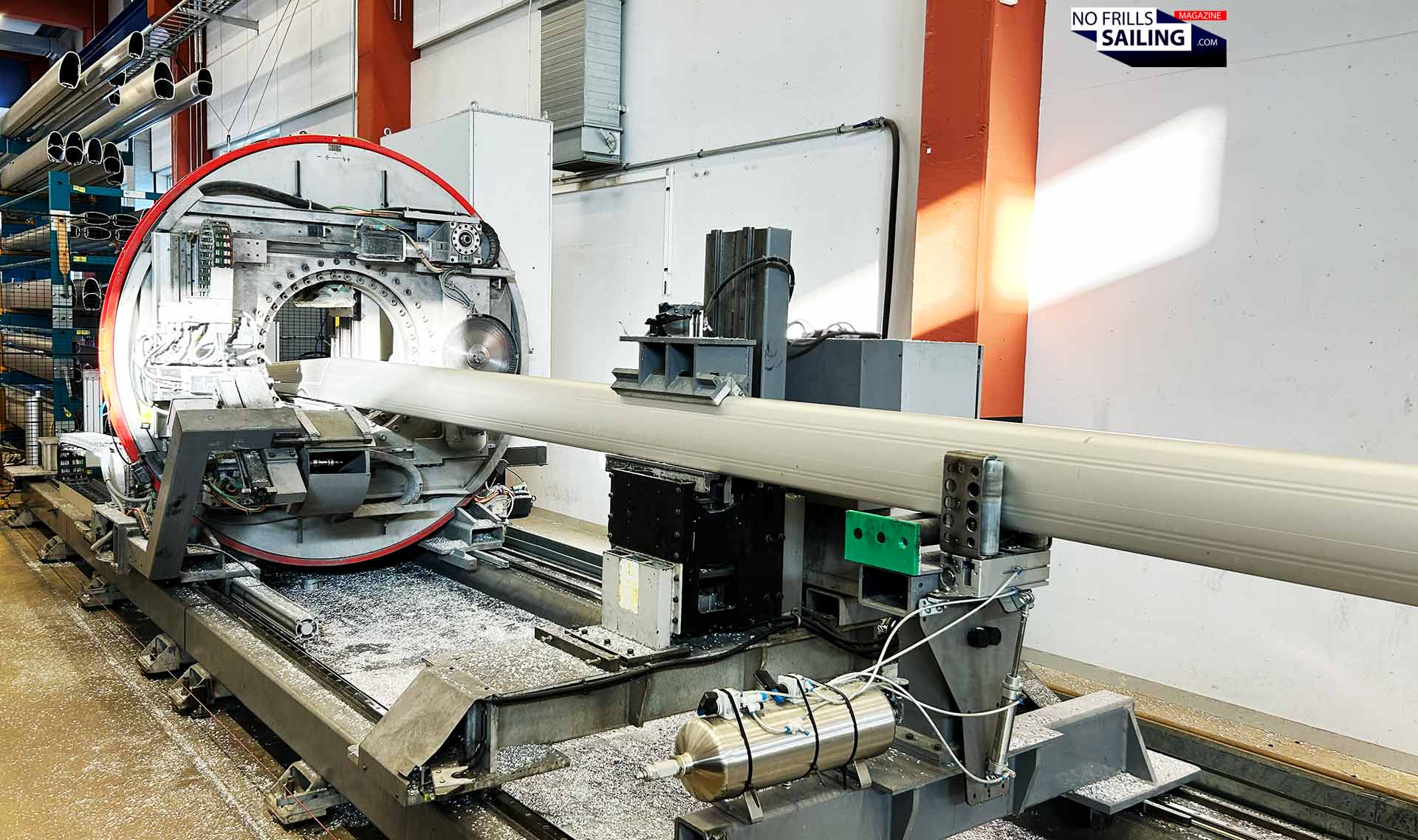
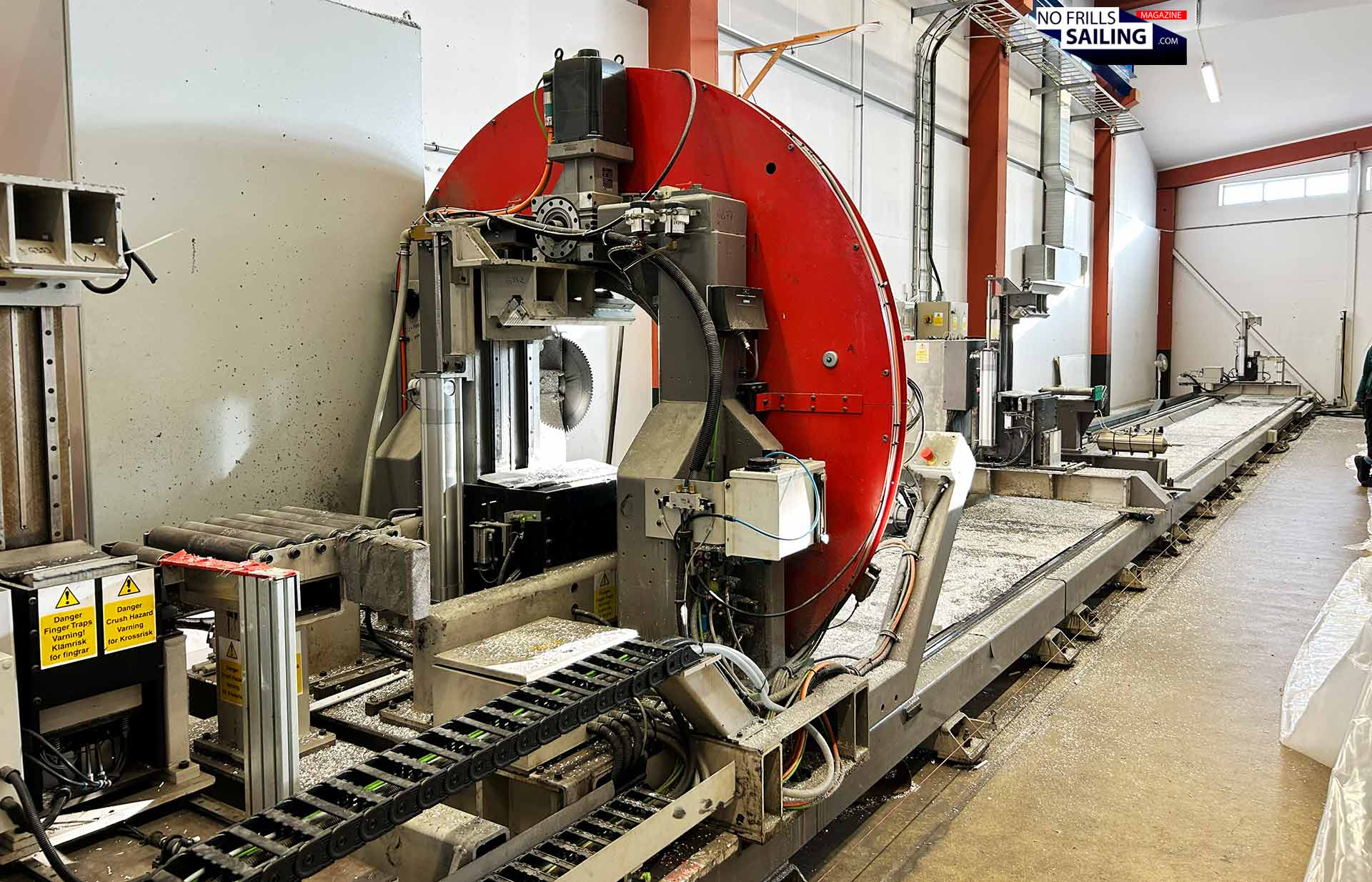
The pictures Karl took are centered around a special tool or piece of heavy machinery Selden utilizes to make the masts. It´s a complex CNC-milling machine that is used to perform a multitude of production steps. The raw profile is put on the rack, data is fed into the computer and the CNC-robot will basically perform most of the work by its own. The level of accuracy is stunning, as is the speed in which this machine is working. I begin to fathom the importance of taking correct measurements as Sören had insisted two weeks ago: Without those, the accuracy of this incredible machine would be a waste.
Custom specialties: Tapering a new mast
My Omega 42 mast comes with two extraordinary features, at least that´s what I think. The first is a detail that will be only apparent and visible once the boat is fully rigged and she has received her sails and lazy bag. Because the lazy jack lines are “hidden”, running inside the mast´s profile. It is a tiny and maybe purely visual detail, but I required some custom applications in the first place. The second specialty is more important for the overall feel of the boat: The mast top.
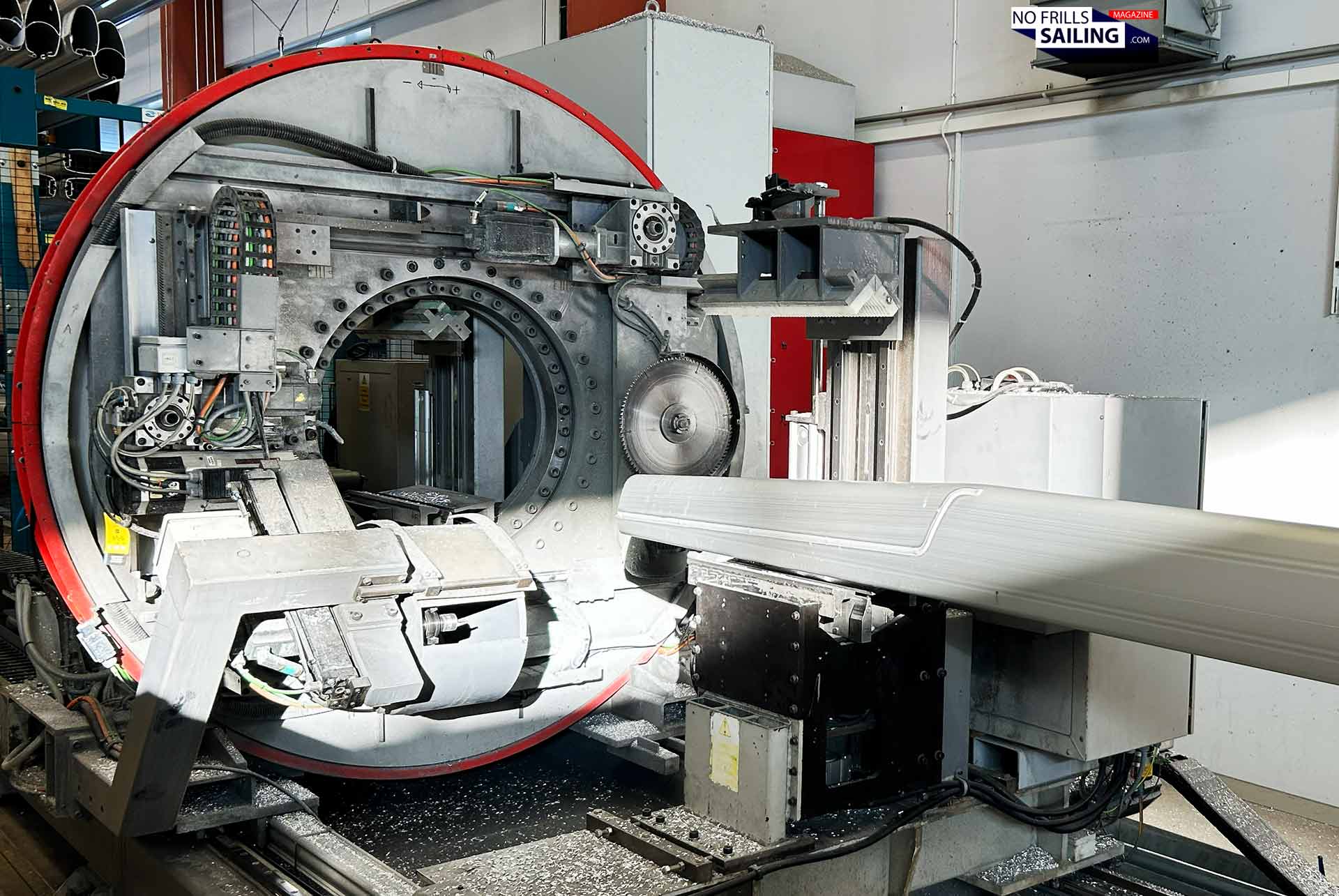
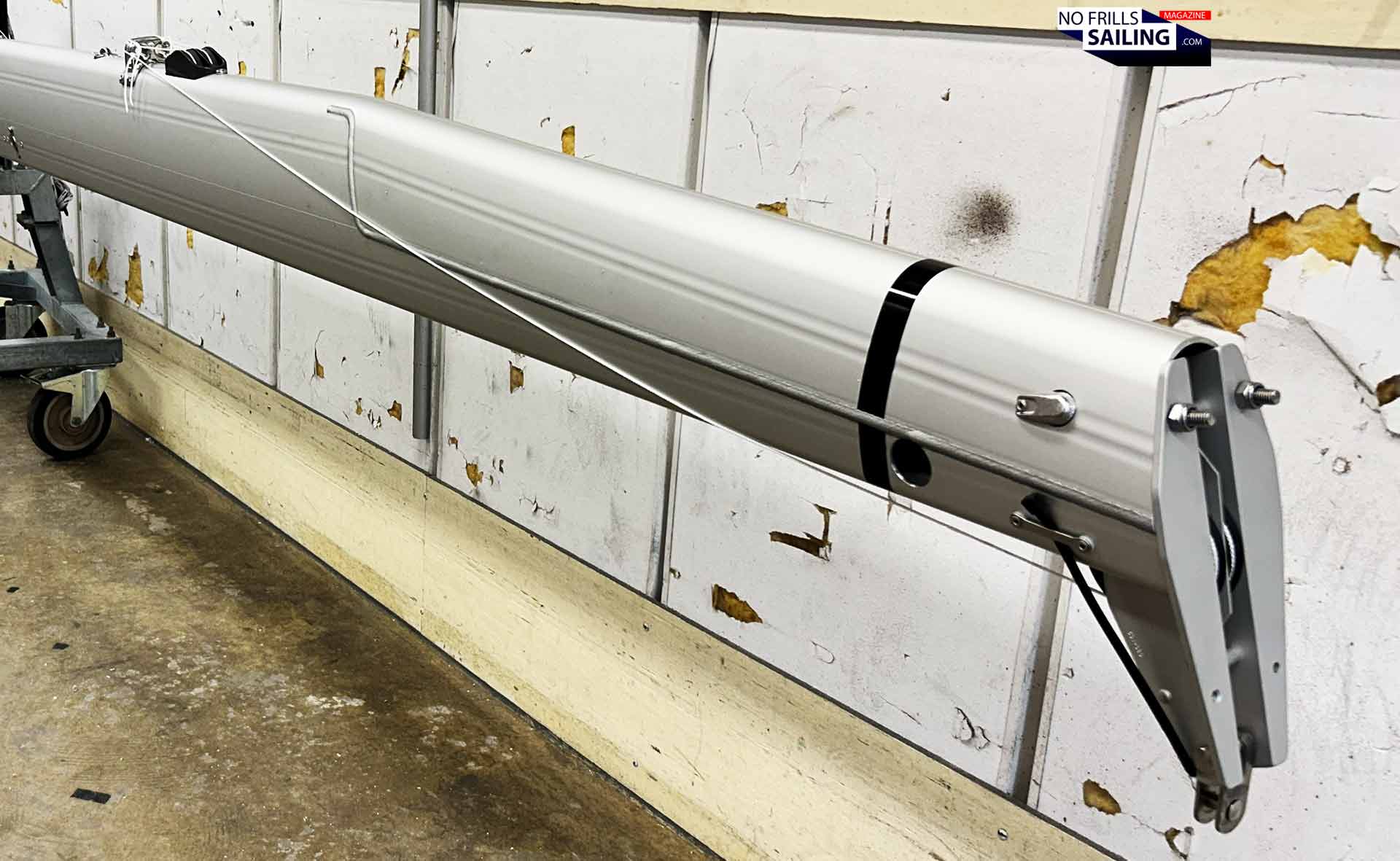
As you can see in the pictures, the top is “tapered”, as they call it. It means that the profile´s diameter shrinks towards the top, the boat´s mast received a narrow tip. This tapering has many reasons and is nowadays typically only seen on performance-yachts, cruising boats usually have straight, uniform masts. The tapering reduces weight in the top and also windage up there. It may sound not much, but given the immense leverage such an 18 meters mast has, even the reduction of a few kilograms of pressure or wind force can make a lot of difference! Another reason for tapering is trimability.
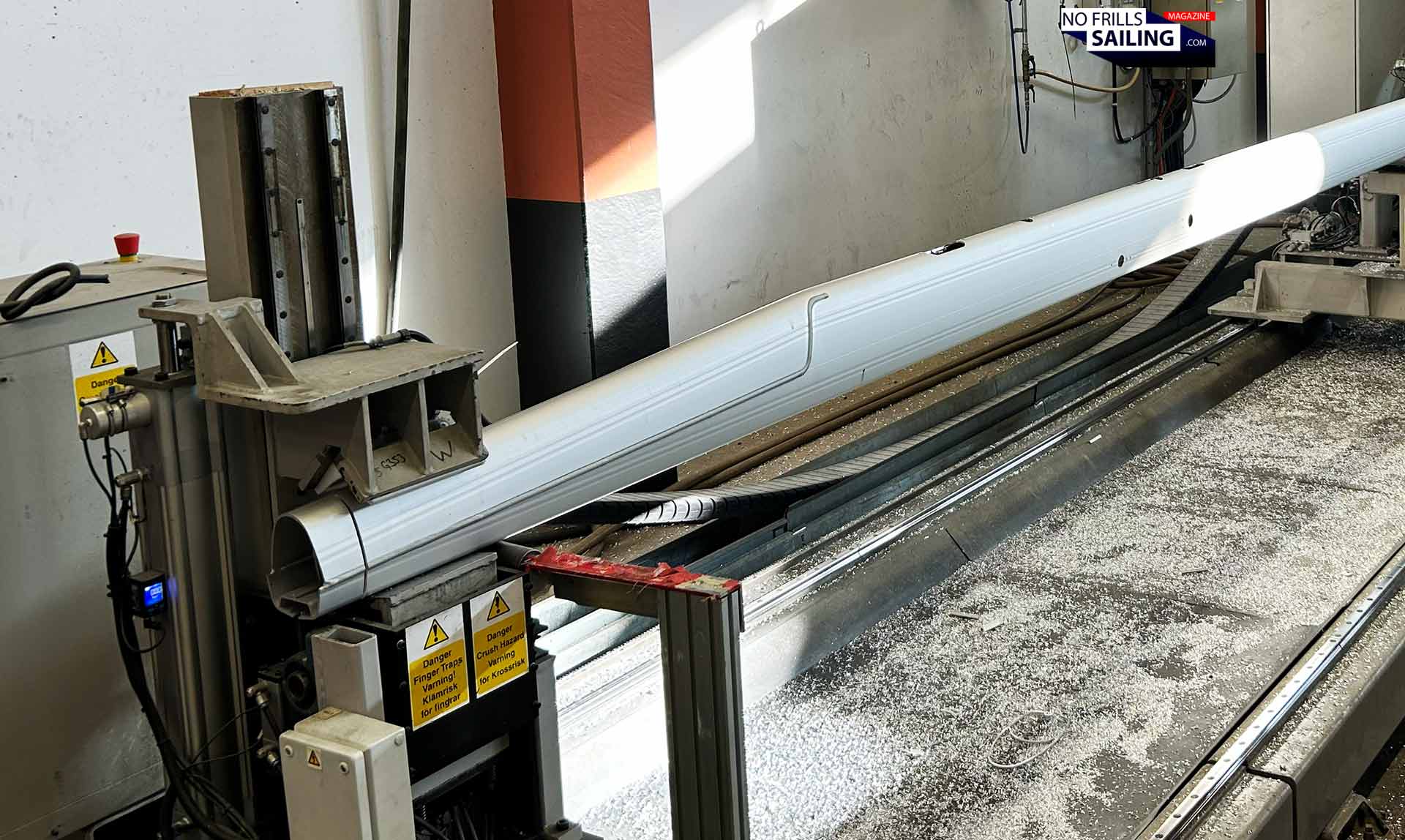
A tapered mast offers excellent bending control, especially for fractional riggs such as the one of my Omega 42. I skipped the fitting of a mainsheet traveler for my boat as I consider this tool too weak, the cockpit´s size and hence the length of the traveler are too small. Nevertheless, forestay trimming via backstay and flying backstays is a big thing: It can protract the reefing point in strong winds significantly. A tool I definitely want to skip. And let´s be honest: It would be a shame to fit a non-tapered mast to this beauty, wouldn´t it?
A question of millimeters: Mast fittings
Karl also sends a photograph of all the mast fittings, probably a working desk getting ready for a new day´s shift. On the picture I can see the mast´s headbox with the two top pulleys for the boat´s halyards, the outlets for the running rigging such as halyards and the sheaves and their boxes.
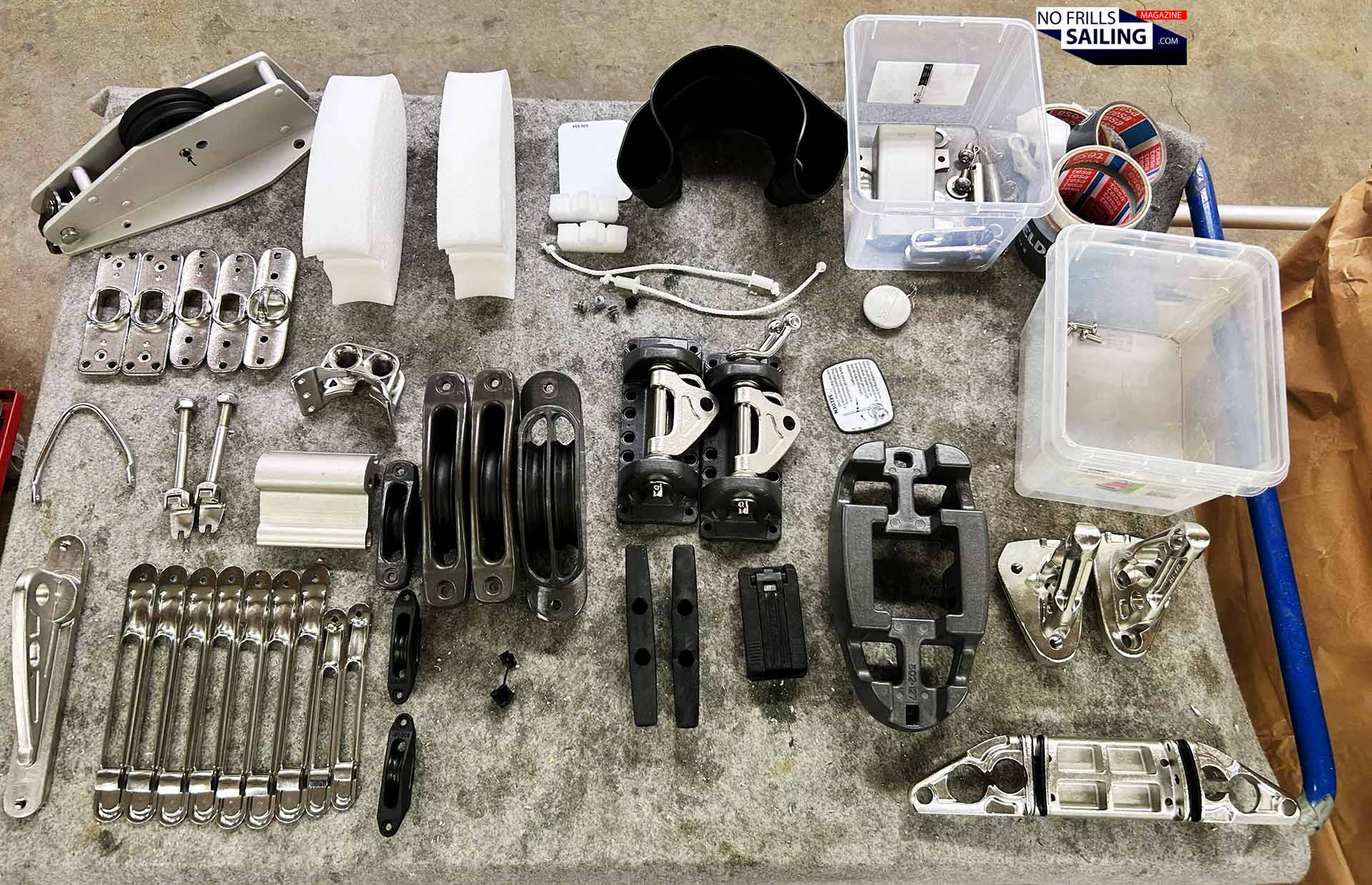
Another picture shows the mast with all fittings, including the forestay and spreader attachments, the rat-lines and electric cables fitted as well as spacers for the inside of the mast. It´s really a question of millimeters here: As it turned out, it had been the accurate measurements of Sören Matthiessen of Gotthardt Germany in the first place which revealed slight – but deciding – inconsistencies of the hull: The Swedish shipyard back in the day had apparently laminated the attachment for the chain plates a few centimeters too far aft, causing an unnaturally big spreader angle.
This is of utmost importance! It concerns safety and also the very manufacturing of the mast. Only by direct exchange between Selden engineers and the shipyard could this mistake be wiped out and follow-up steps planned accordingly. It´s a bit sad though, because this operation will cause a multi-week delay in the building process. But there´s no alternative, and it is certainly much better to wait for a few weeks more than to “find out the hard way!” In any case, I am very thankful for the insisting and inquire of Gotthardt and Selden, potentially saving my ass here!
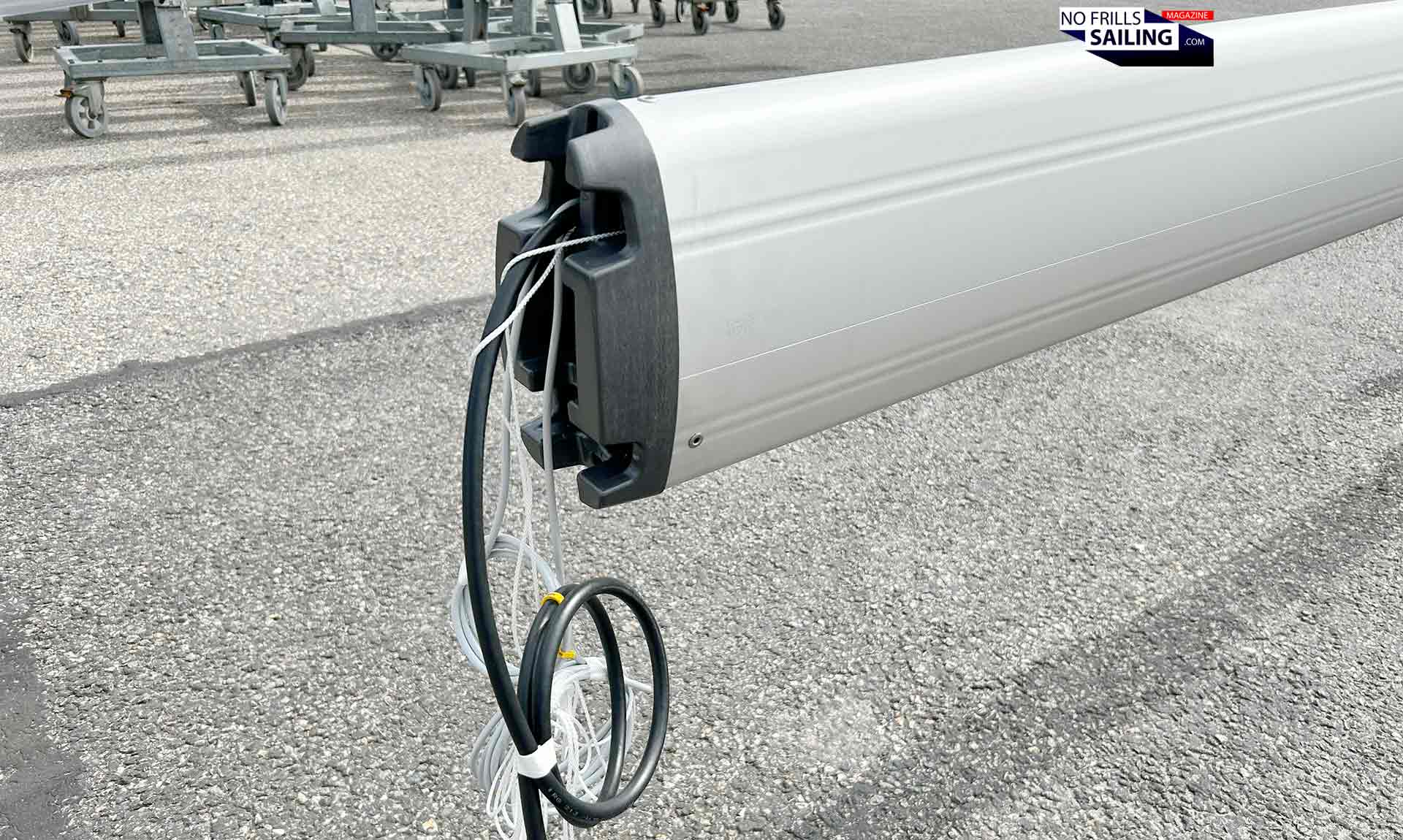
One of the last steps of making the mast are the cables and wire-ducts. For my yacht I went for a combined 3-color-navigation light and 360 white anchor light by Danish manufacturer Lopolight, the headbox is ready to take on this one. There´s of course also the VHF-wire for the antenna pre-set and – just in case – a wire for a deck light. This one I won´t fit, but maybe go for it later, so that’s a nice and clever move to already have it ready to being connected inside.
Quick production and perfect service
Have I mentioned how fast it all was? From taking the measurements to receiving the “it´s one!”-pictures no more than 19 days went by. This is stunning! Moreover since I frequently hear my sailing friends and also some boat dealers complain about exactly the opposite from the other big names in the aluminum mast industry: Sparcraft is said to have 16 to 18 weeks of delivery time after receiving an order! And I doubt they will go around and take pictures …
I am sure that the other bigger and smaller names and brands of the rigging-business make goo products too, but I must say that my customer experience from A to Z with Selden is exemplary! Remember when I wrote about the first hull being exhibited at last year´s Hamburg in-water boat show? Sören, knowing that I will order a mast with his company, appeared at the show, visiting the yacht and taking pre-measurements even without me inviting him or asking him to come! And I am by far their biggest nor most important client. Again, the whole chain of events from first meeting, the ongoing conversation until now, the production and delivery of the mast was pure joy! If you are thinking of ordering a brand new mast, opt for Selden, guys, they know how to do it and they really care for the best possible outcome. If I could, I´d reward you 5 stars.
What are the next steps for the Omega 42?
As mentioned before, because of the necessary more or less excessive GRP lamination-works for the chainplate-mountings down below decks, I will be losing a couple of weeks. Sawing off the old ones and laminating the new ones will produce a lot of dust and dirt again, partially offsetting the progress already made. I guess we are talking of around one month of setback. But anyway, things will proceed. That said, the deck-flooring is under construction now and I guess I can show you the outcome in 10 or so days.
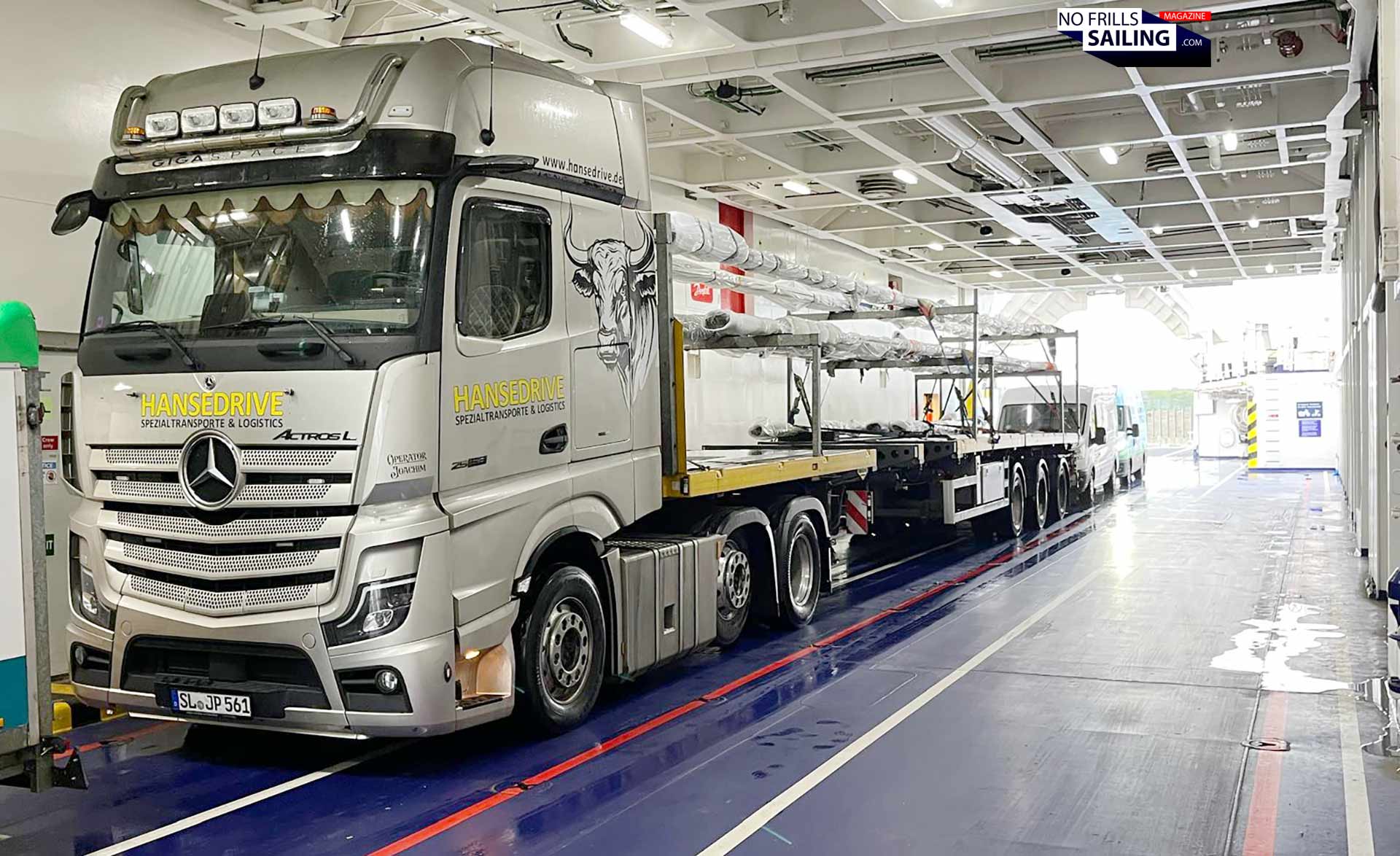
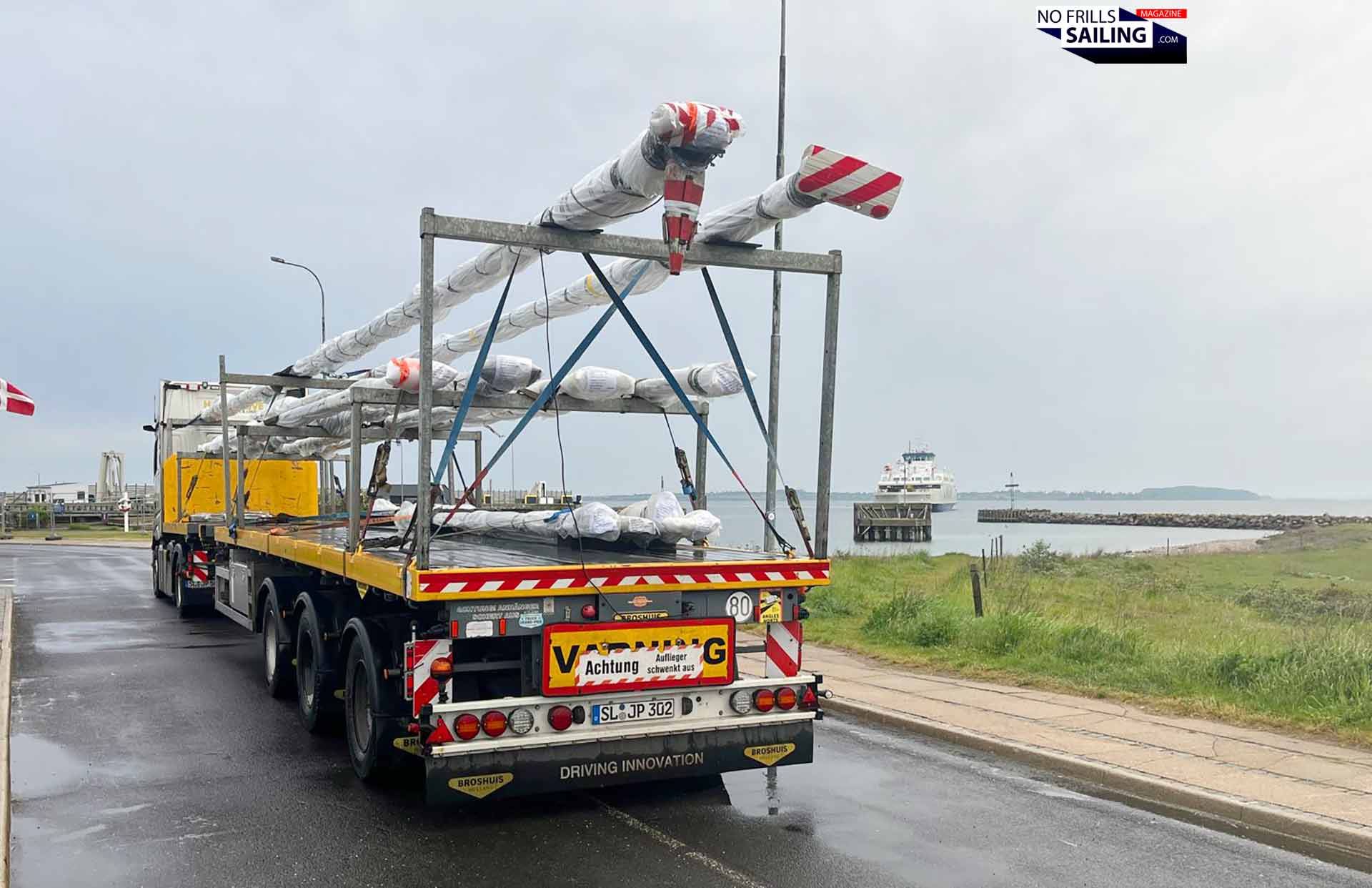
I will also start to do the boat´s bottom paint, at least for the primer and bonding layer, very soon, probably beginning of June. Apart from this, Quantum Sails is currently also producing mainsail and jib and I am preparing very interesting articles regarding the running rigging for the boat. Be ready for some really interesting and rarely seen insights dealing with ropes and Dyneema, folks. But for now: The mast is here, another big item to cross off the list, yeah! Thanks also to Joachim from Hansedrive for safely transporting and just-in-time delivery!
Related articles on the topic of masts and rigging:
At Selden factory in France: Aluminum masts and custom carbon fiber rigging
Which inmast furling system is preferable? Sparcraft versus Selden
Professional measurements for my new sailboat´s rigging