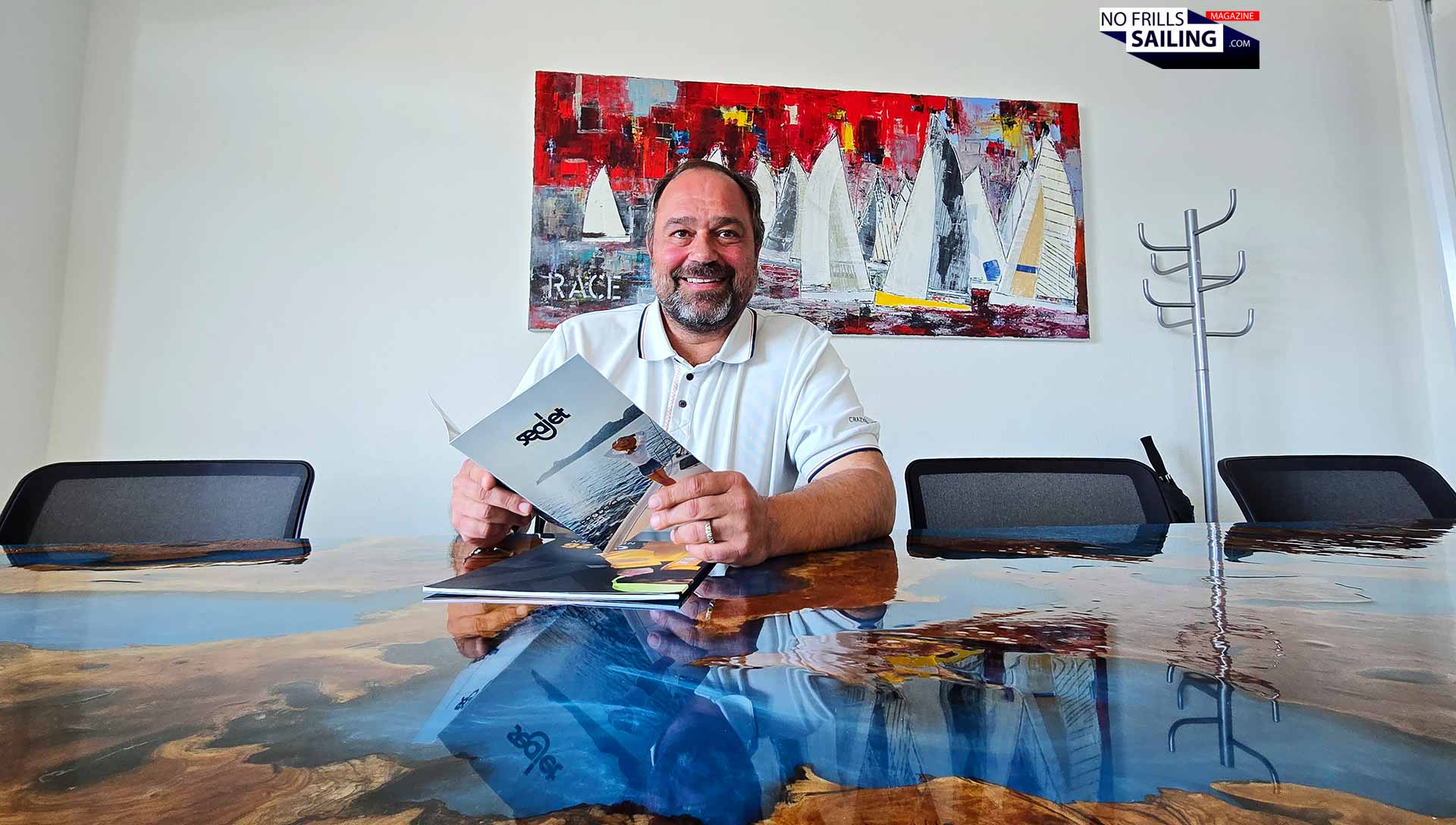
Deciding which bottom paint to utilize for your sailing yacht and from which brand to buy is all-too often a kind of habituality for most, for some it´s a decision of almost religious importance. And yet it could be so easy, because free from any myths or misconceptions, there is a set of clear factors which should guide your buying decision for the perfect antifouling for your yacht. I´ve met with Yachticon general manager Andreas Tegeler who welcomed me for a proper crash course.
With my Omega 42 in her last weeks and months of construction, it was time to think about her bottom paint. We all know and accept the fact that crustation and other marine life will surely discover our boat´s hulls, keels, rudder blades and propellors as attractive areas of settlement. And we all understand that getting rid of them is paramount to conserving sailing performance and boat safety. Through a hint by a friend of mine within the boating industry, I established contact with Andreas Tegeler, general manager and sales of Yachticon, Germany´s importer for Seajet bottom paints.
Meeting Andreas Tegeler of Yachticon
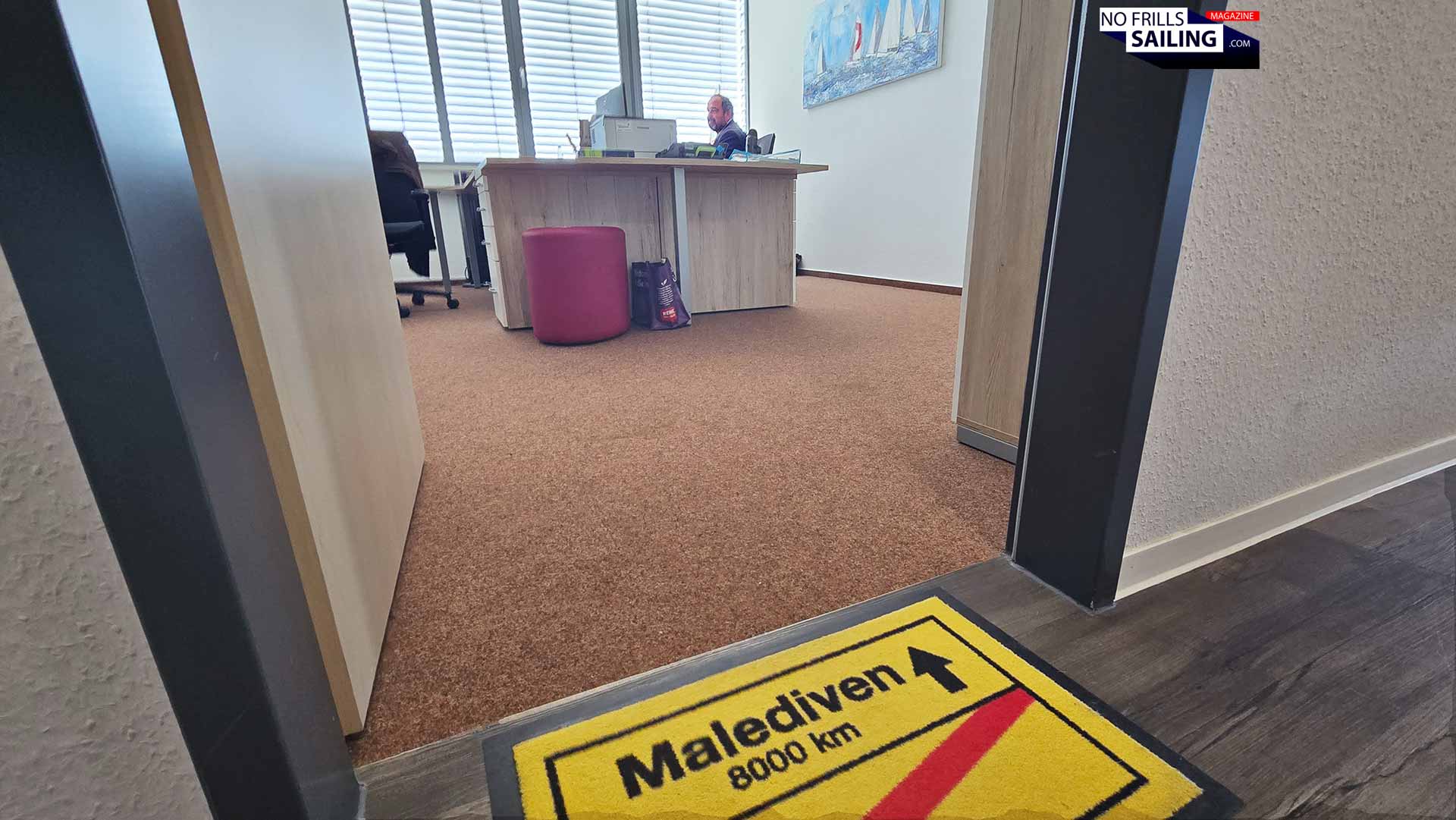
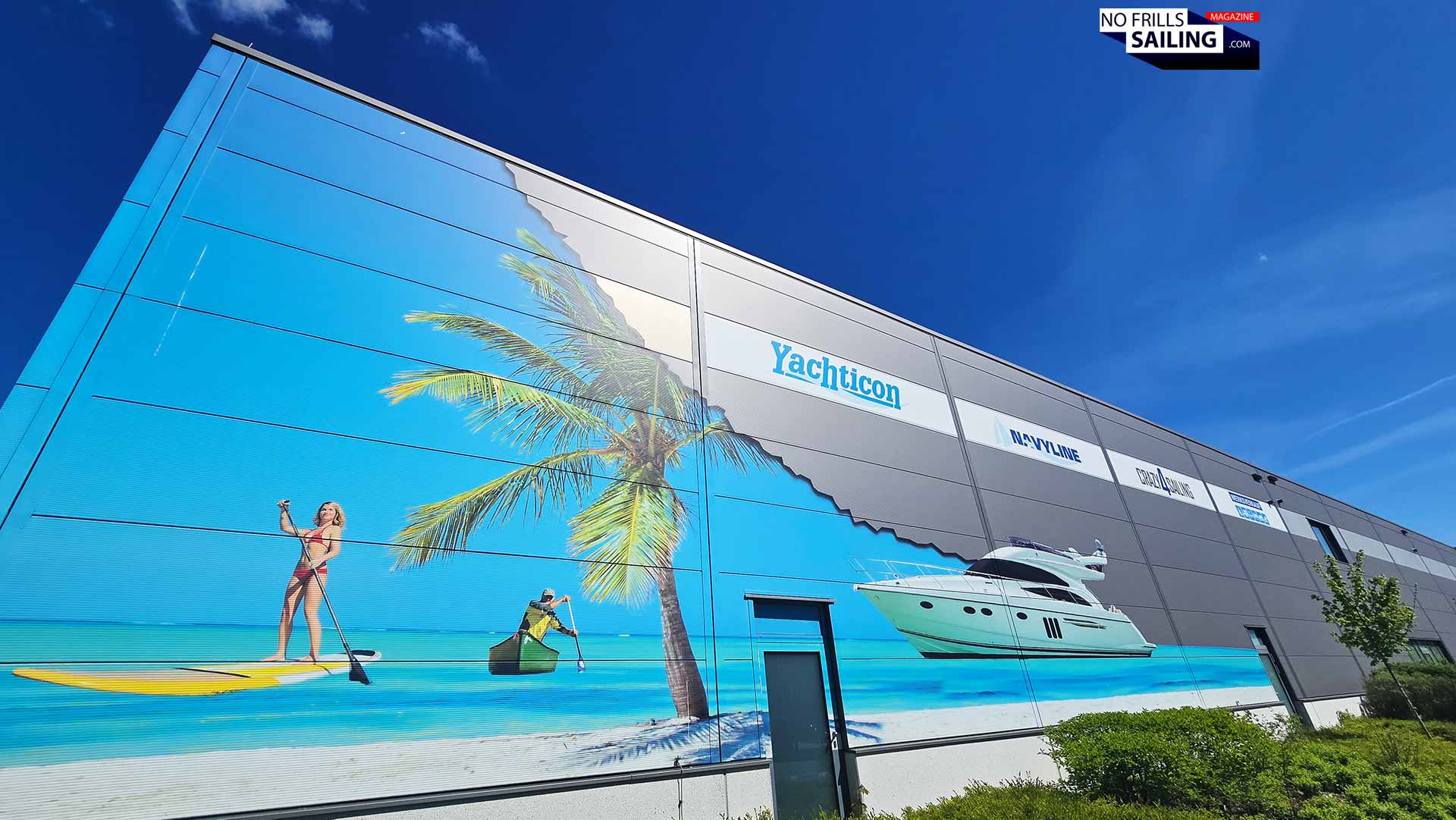
He immediately agreed to meet me and invited me right away to Yachticon´s impressive headquarter, which is located near Hamburg. As I entered the building, his office couldn´t be missed: A bright yellow doormat signaled I was on the right track. The die-hard Maldives fan switched off his laptop to giving me a warm welcome. “Before we start, I´ll show you around”, he insisted – and boy would I have missed something!
Yacht accessories by passion: Yachticon
Advertisement
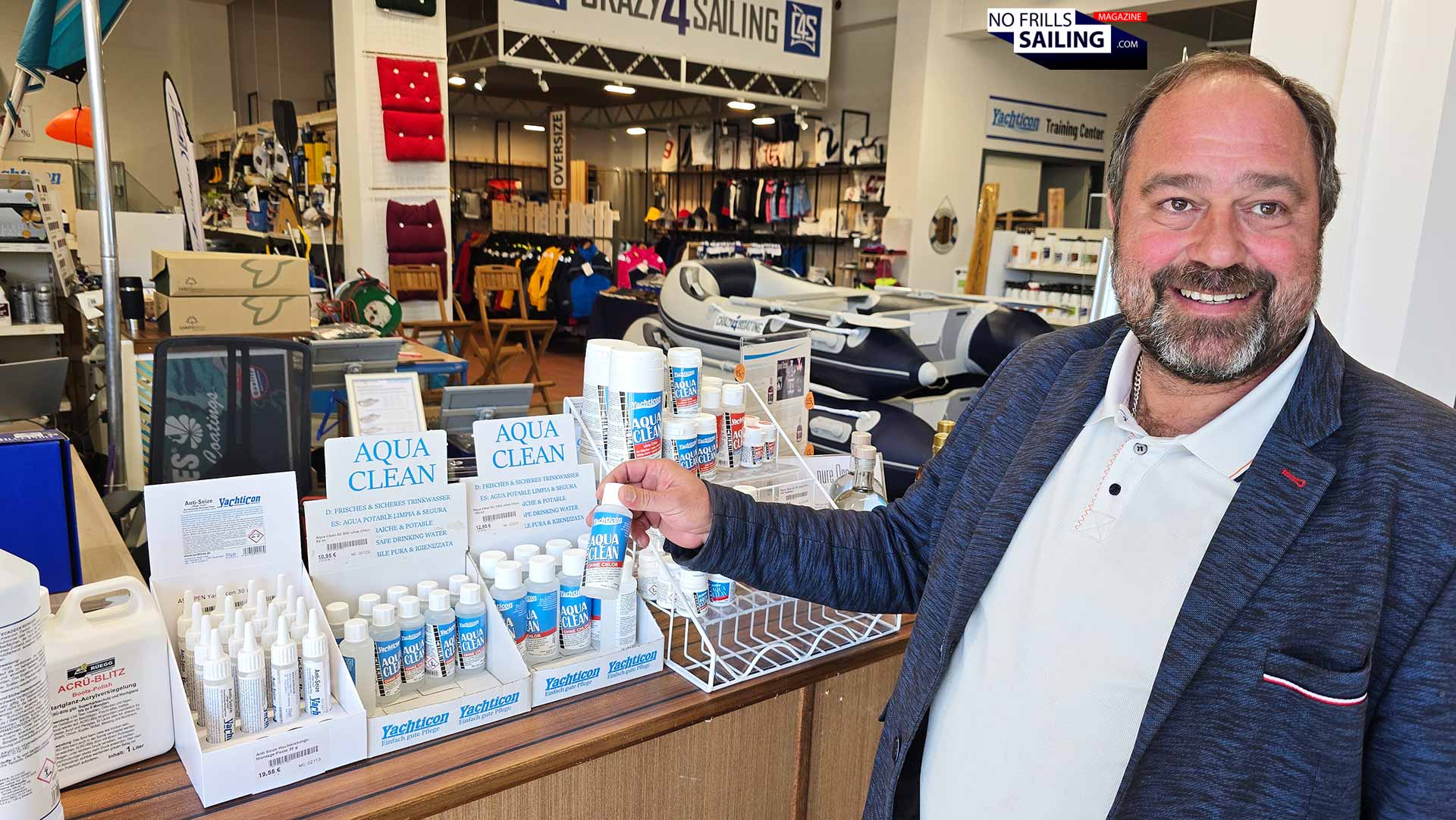
Yachticon is a well-established, family founded and still family owned business that is engaged in yachting accessories. Down in the showroom, Andreas grabs a seemingly little, a bit unimpressive flask and shows it to me: “This is how it all began back in 1982! This is the germ cell of our company.” And you may take it literally, because getting rid of germs inside a sailboat´s fresh water tank was exactly what this innovative product tackled. It was among the first worldwide to introduce a chlorine-free silver-ion based regiment to kill microorganisms within the resh water tank. “The first batches had been produced in the basement of our founder´s private house …”, he tells me, seemingly proud.
This is how it all began …
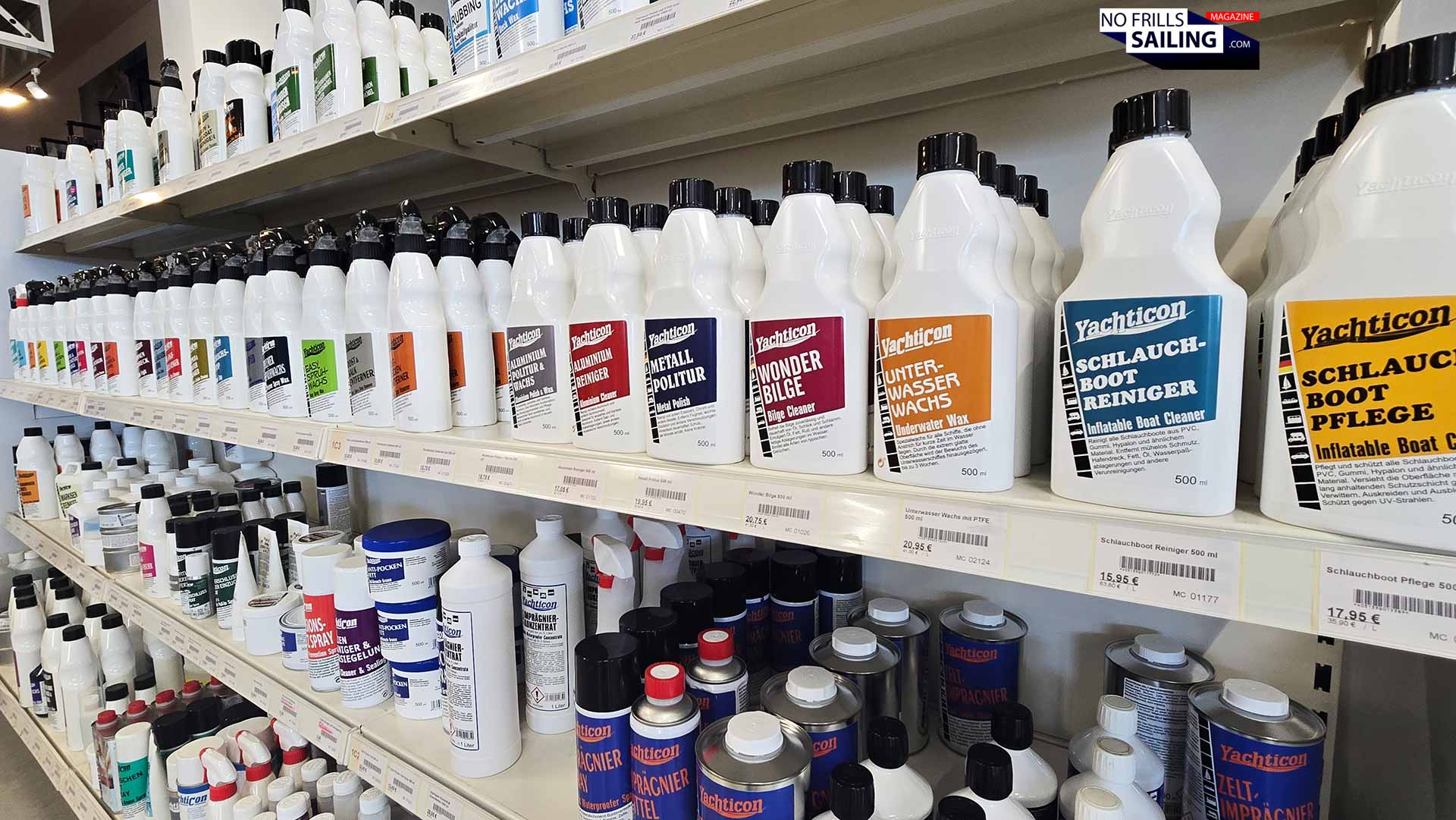
Today Yachticon is undeniably one of the biggest producers of boat-accessories for maintaining, cleansing and refurbishing any surface areas in any material or shape apparent on yachts. The product range contains well over staggering 10.000 products! Starting with their core segment, which is fresh water systems, over to cleansing and boat care, polishing and surface conservation to adhesives (they are Sika wholesaler too), resins and winter storage-products. Widening their markets from boating to caravaning and car care, Yachticon is indeed a major player. “We are exporting to 47 countries, even taking on the mighty US-markets now”, Andreas explains. And then there´s a lot of private-label production for other brands or big home depot chains. “We are proud to say that everything we do is really made in Germany!” And then there´s the bottom paints …
Just a few of the huge product range
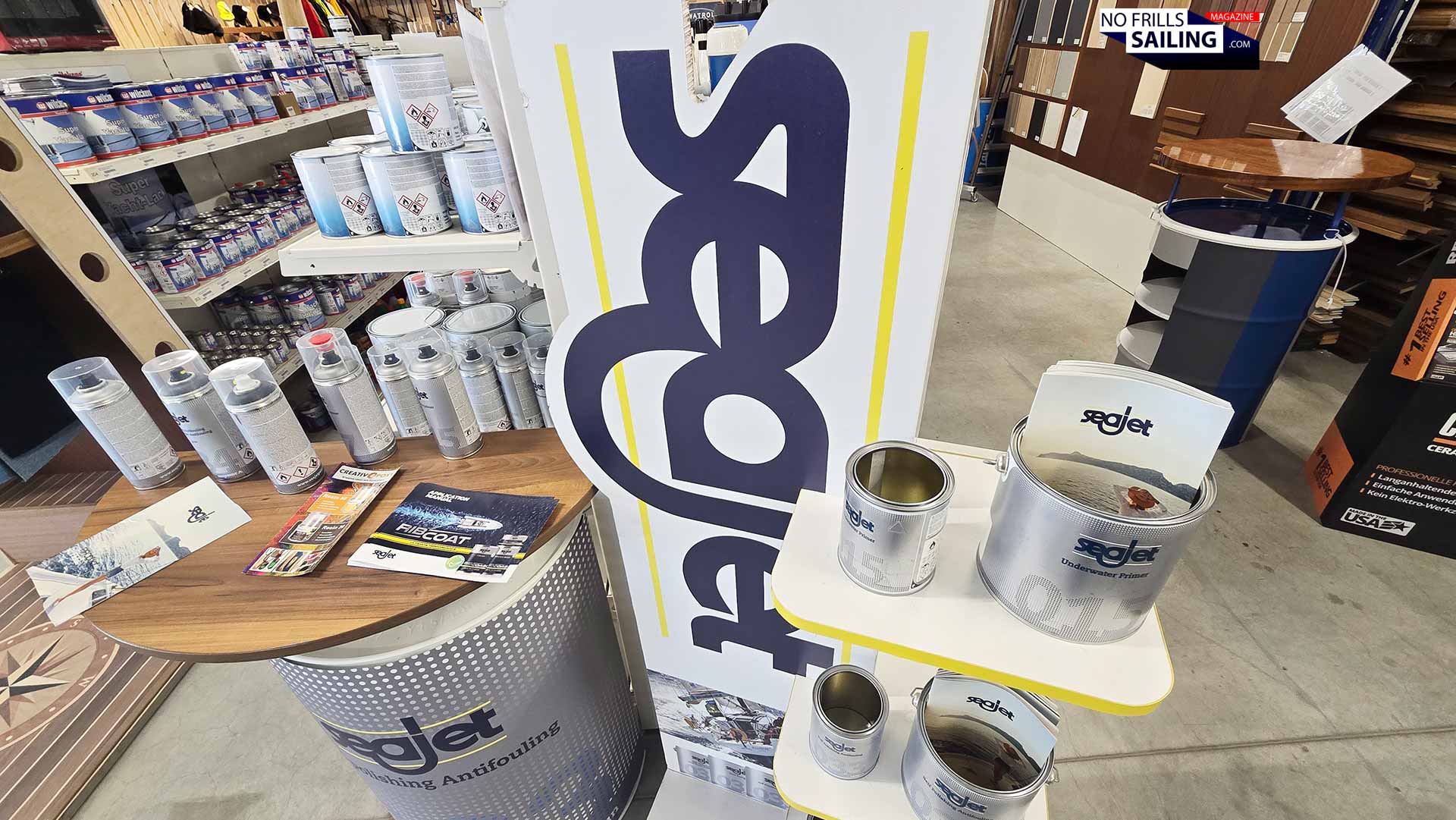
We arrive at a promotional stand showing Seajet products. As a matter of fact, Yachticon is general importer of this brand. Why Seajet? Andreas smiles, he thinks about it and finally says: “Let me put it in short: When Japanese accept a job, or a challenge, they don´t just tackle it – they do everything they can to do it the most perfect way possible! It´s just like that: For us, the Seajet products are the best available bottom paints! The quality is awesome.” And, he adds, the Japanese company adheres to similar work ethics and basic principle which also guide Yachticon – it just fits perfectly, he says: “You will understand, what I mean, when we are finished today.”
Why professional guidance for boat bottom paints is advisable
Most decisions on which bottom paint, which brand and which product might be used are made on the jetty, Andreas says: “It´s strange, but I´d say that the bulk of people are putting the stuff on their boat which had been always on there. It´s a kind of tradition, you know?” Either the father or the best sailing mate used to use the product, or – another classic – it´s at the crane when season is over, when the people standing around are “evaluating” the state of the hull when your boat goes out of the water and is pressure-cleaned for storage. “It´s crazy how much ignorance and urban myths are connected with bottom paints!” Few make educated decisions, at least that´s his opinion, most are guided by non-educated traditions.
Wholesaler for Seajet boat bottom paint
“When it comes to bottom paints for sailing yachts and power boats, there are basically only four big players around on the market”, Andreas tells me. That will be Akzo Nobel with their brand International, Danish Hempel, Sigma and Seajet. International´s Micron is one of the most used bottom paint products in Europe, Hempel benefits from the “professional” aura. “Seajet, however, is part of the Chugoku CMP group, founded back in 1917 – a huge player in commercial shipping, oil-rigs and such.”, Andreas explains: The leisure-boating division is just a tiny fraction of the company´s activities, but it profits from the insane amount of research and experience of the mother company. To find your way through the apparent jungle of different products, you really need to ask a professional who knows his way around and deeply understands how antifouling paints work. And why some other don´t.
The factors influencing skipper´s choice for a bottom paint
We sit down in the company´s meeting room. I am impressed how much time Andreas takes off of his valuable day as general manager, caring for such a small customer like me. Maybe that´s also what makes this company special, I think. “First of all there is no magic potion, no incantation: As much as you can choose a product that suits your needs, as much can external factors exert influence over its effectiveness.” But of course, there are general factors which should be taken into account when opting for or against a brand and certain product.
Andreas explains antifouling
These factors are basically the type of boat, the speed with which it is cutting through the water and the frequency of use. Then there´s of course the sailing area in which the boat is used mostly, fresh or seawater, inlets/river deltas for example. The area also determines what Andreas calls the “encrustation pressure”. There are areas with little marine life and in some it literally takes only a few weeks to fully cover a hull in a thick living crust: “My beloved Maldives for example!” And then there is the level of salt – one of the lesser known factors, but one of the most important!
A wide choice of different products
Andreas explains that it is basically the salt, which is dissolved within the surrounding water, that “activates” the antifouling paint. Areas with a high salinity need different products, than areas with a lower. “But now imagine your marina is based in an inlet, or a delta where a river flows into the ocean. It´s getting complicated now, because depending on the season, the temperatures and other factors salinity can vary greatly. One year your antifouling works just as perfect, the other it may completely fail.” That is why professional guidance from people who know the products and (!) the regional specialties of the sailing areas are so important.
Talking cancer and other health issues connected with antifouling
Yes, of course, this is one of the most important questions when it comes to bottom paints. Especially for owner´s wives, I shall say: When I told my fiancé that I would love to do the bottom paint of my new Omega 42 by myself, just for the fun of it, this was exactly her first reaction: “But isn´t dealing with antifouling dangerous? Cancerous?” Andreas smiles again, leans back – this is going to be a longer explanation. He suggest we´d start at the beginning, talking health effects of antifouling. “First of all, as with every other chemical product as well, there are particular ingredients and compositions which have been labelled potentially harmful to your health.” Understood!
So what´s about toxicity?
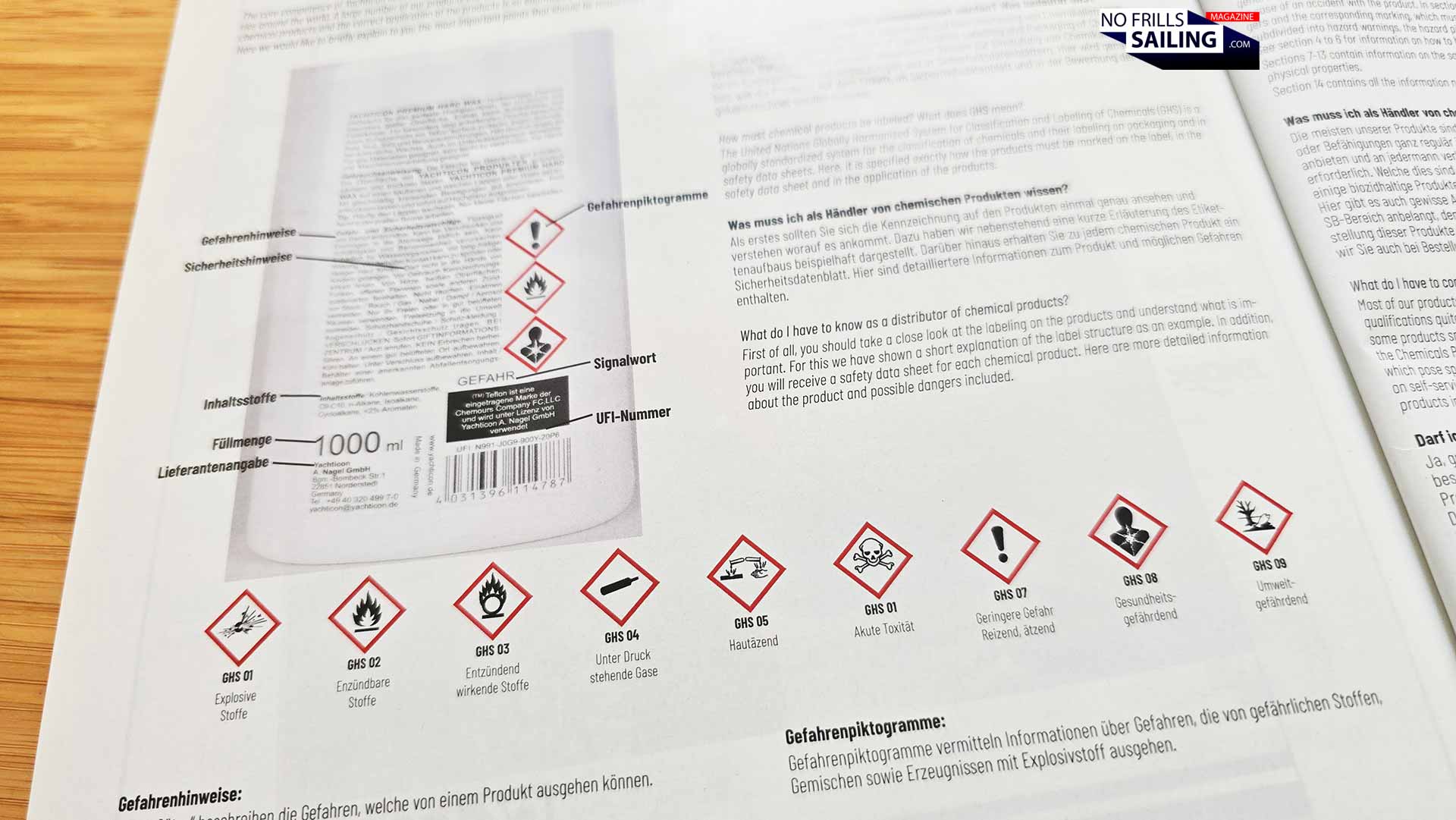
“When it comes to all these alarmingly red icons printed onto the products, what they mean is that these indicate a specific target organ toxicity, short STOT.” Meaning, that for example of harmful dust may enter your lungs, it triggers the specific marking. If a product may swallowed, it may damage the reproductive organs. And so forth. “That is the reason why any chemical product contains these icons, representing the risk of harm to specific organs of a body if misused.” But what´s about cancer now? “As for carcinogenic potency, it´s the same: The risk must be made public due to clear legal requirements, which, by the way, are similar in Europe and the US. “But for products sold on the American market, these specific warning notices do not have to be apparent of the products itself, but a mere advise to go and check them online.”
But yes, dealing with antifouling paints is a potential risk to your health, no doubt about it. Andreas says, that´s right in the name: “A biocide is by definition a substance that kills life or at least suppresses or completely hinders its reproduction and growth. Of course you should be protecting yourself when working with these products!” Most emphasis should be put on your breathing organs: Wearing a thorough breathing mask is an absolute must! Same goes for direct skin contact with those substances. “But it´s by far not as risky or deadly as many think, really!”, he re-assures me. “I have painted our family boats since the age of 10. And of course I did not lick on the brushes, as well as you do not chew on urinal cakes! Nobody should be that stupid!” So, with precaution and care taken, bottom paint is perfectly fine to work with. I note to myself that apart from choosing the right product for my boat, I will take special care for the tools I am going to use.
Case example: The antifouling for my new Omega 42
But now let´s talk straight: Which bottom paint would Andreas suggest for my new yacht? The premise is as following: Once receiving the yacht in the waters of the Baltic Sea, I am planning to bring her up to Sweden straight away, enjoying the summer holidays with my kids in the archipelago. I am trying to discover more of Sweden, Finland and the Baltic states. She will stay there for winter 2026/27 and then I am planning to smoothly and slowly sail her down to the Canary Islands in 2027. Quite an itinerary, right? So what´s Andreas´ suggestion?
Available colors …
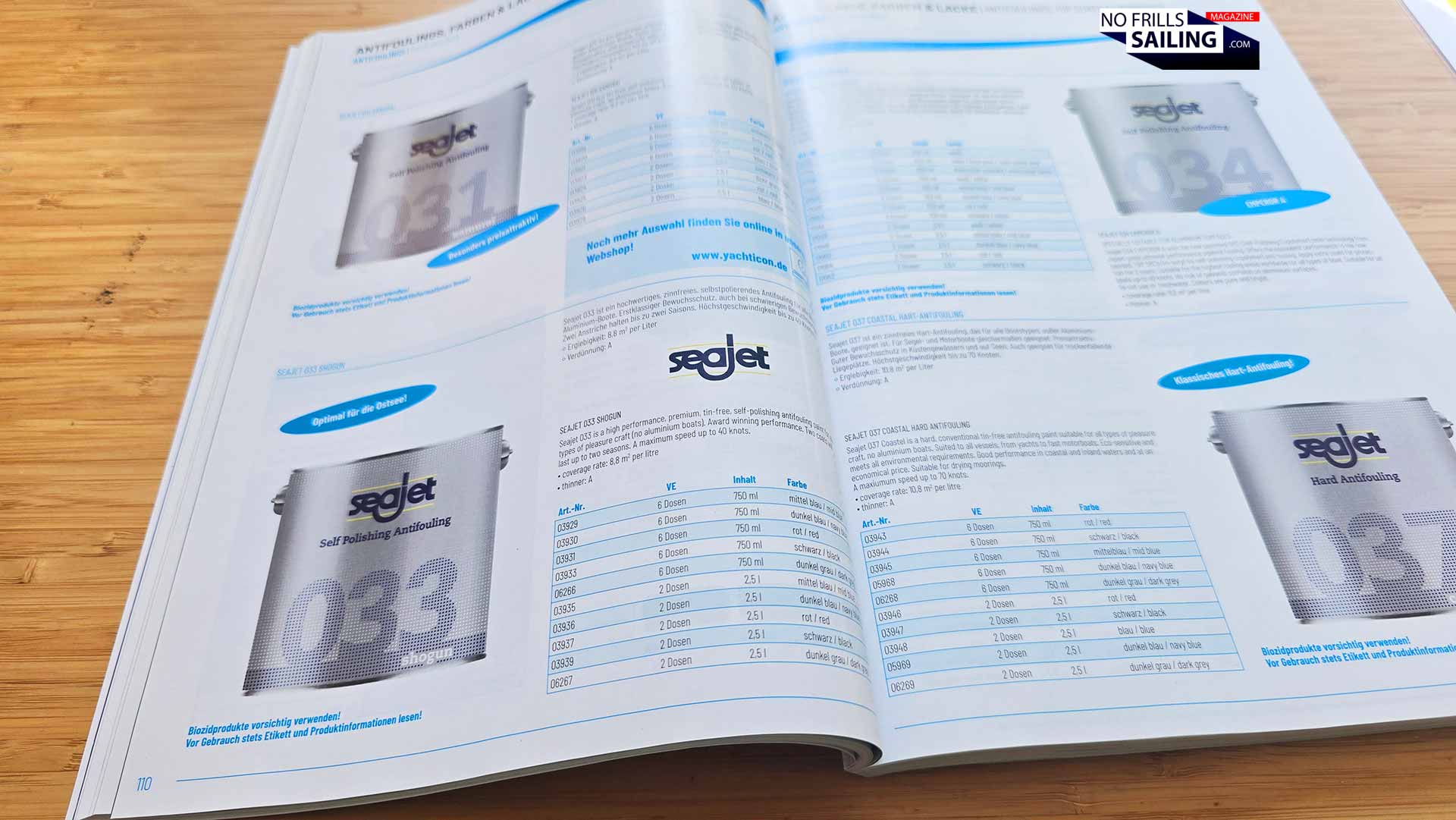
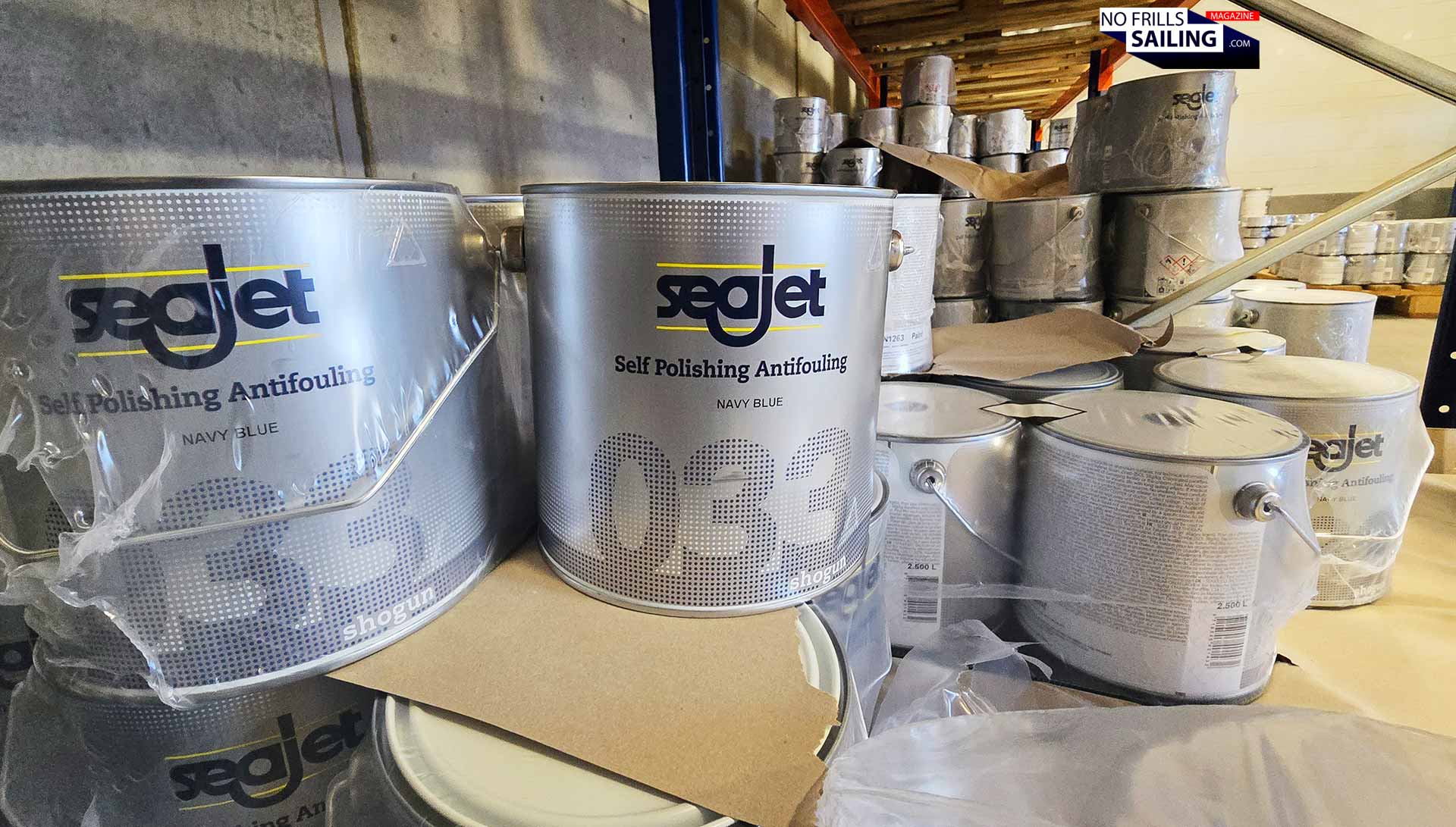
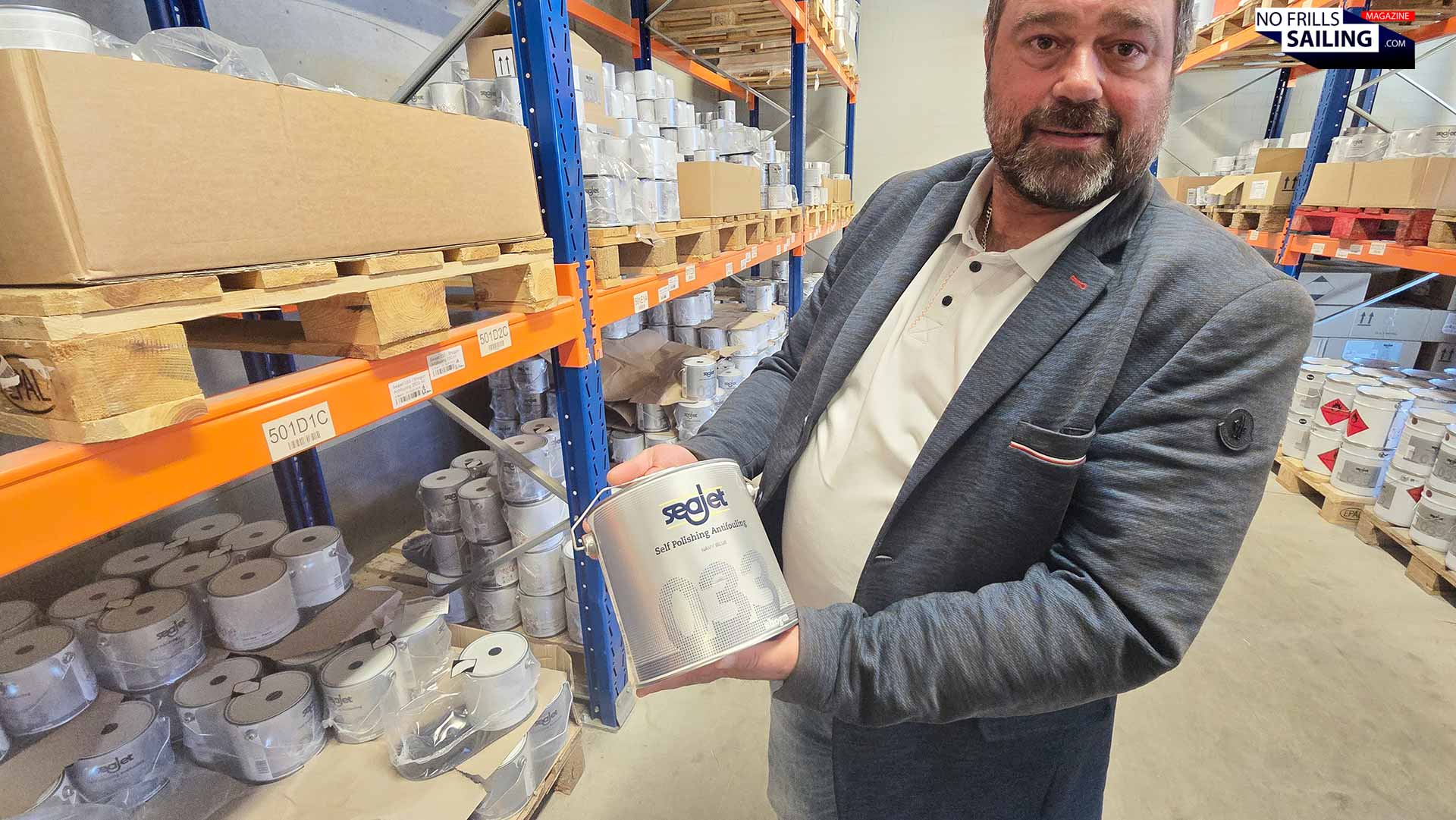
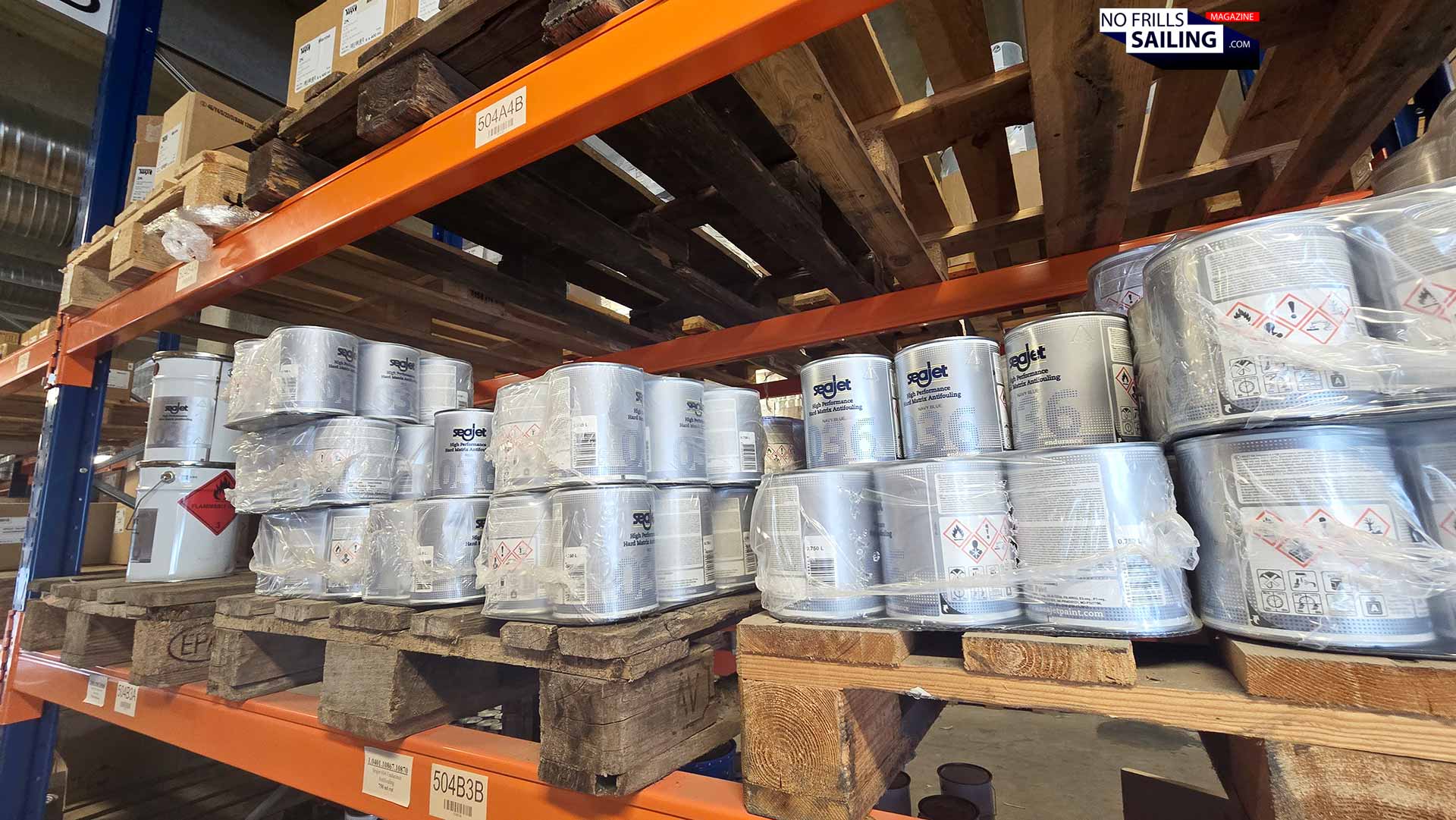
“For sailing in the Baltic Sea, which is relatively low in salinity, but has quite a substantial marine growth …”, he thinks about it, “I´d suggest you take the Seajet 033 “Shogun”-paint!” This is truly an award-winning all-round bottom paint, especially for demanding surroundings. Andreas assures that it will cope perfectly with the variations in temperature, which can be quite stunning in the Baltic Sea, as well as with marine growth. Seajet 033 is a high-performance, self-polishing antifouling paint. Its coating erodes slowly while the boat is moving, which ensures a constant release of fresh biocides over time.
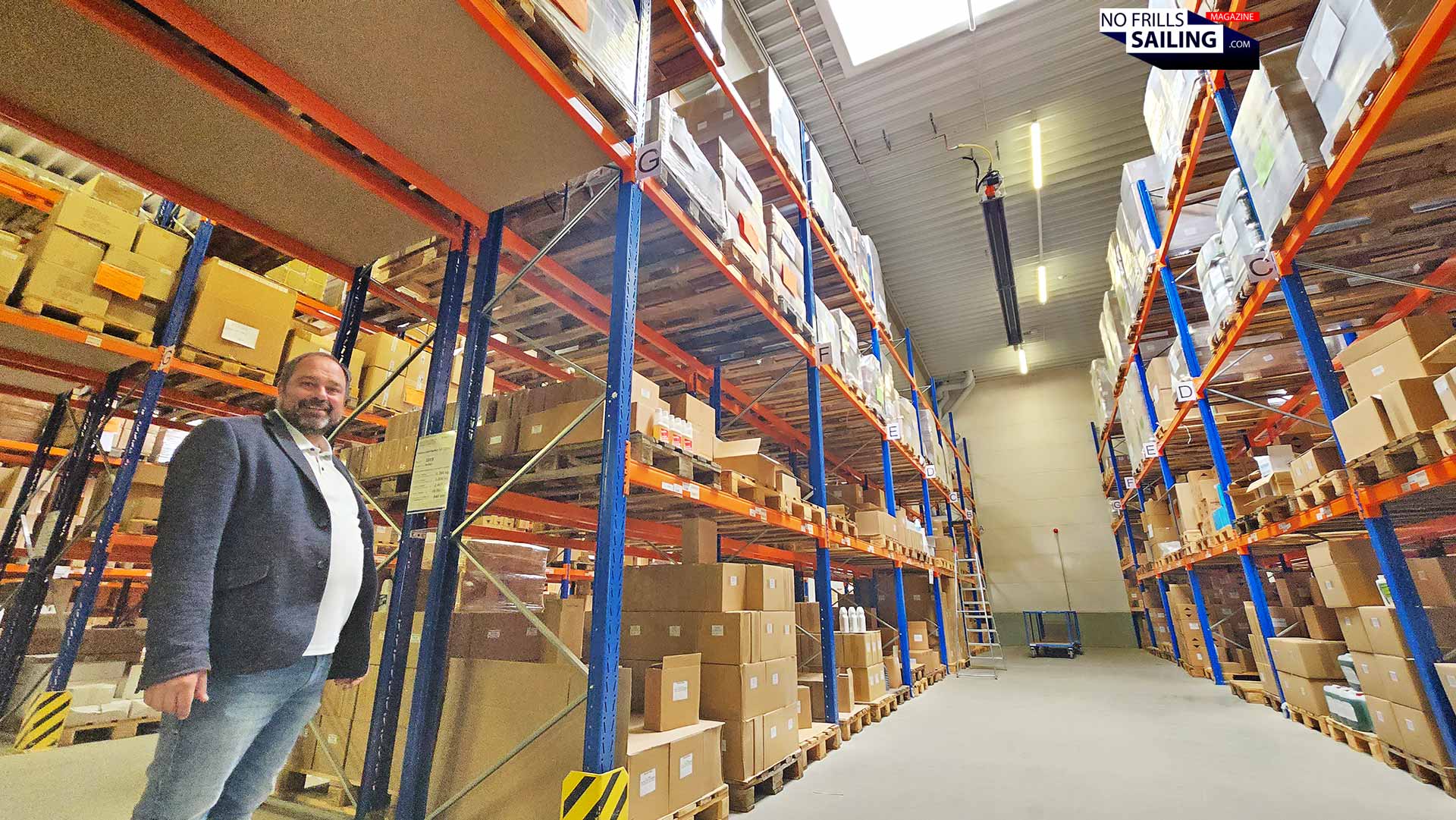
Inside the holy halls
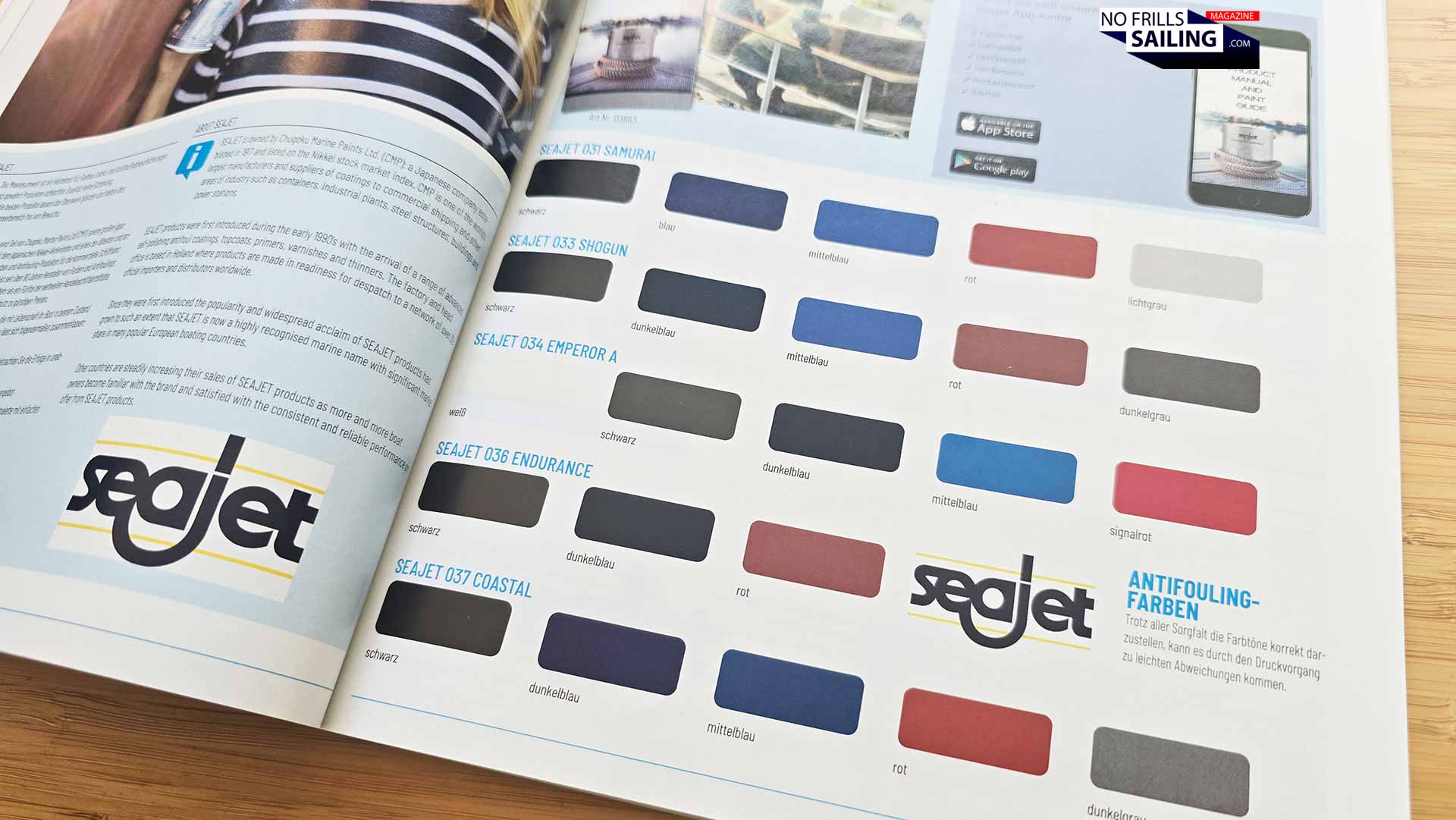
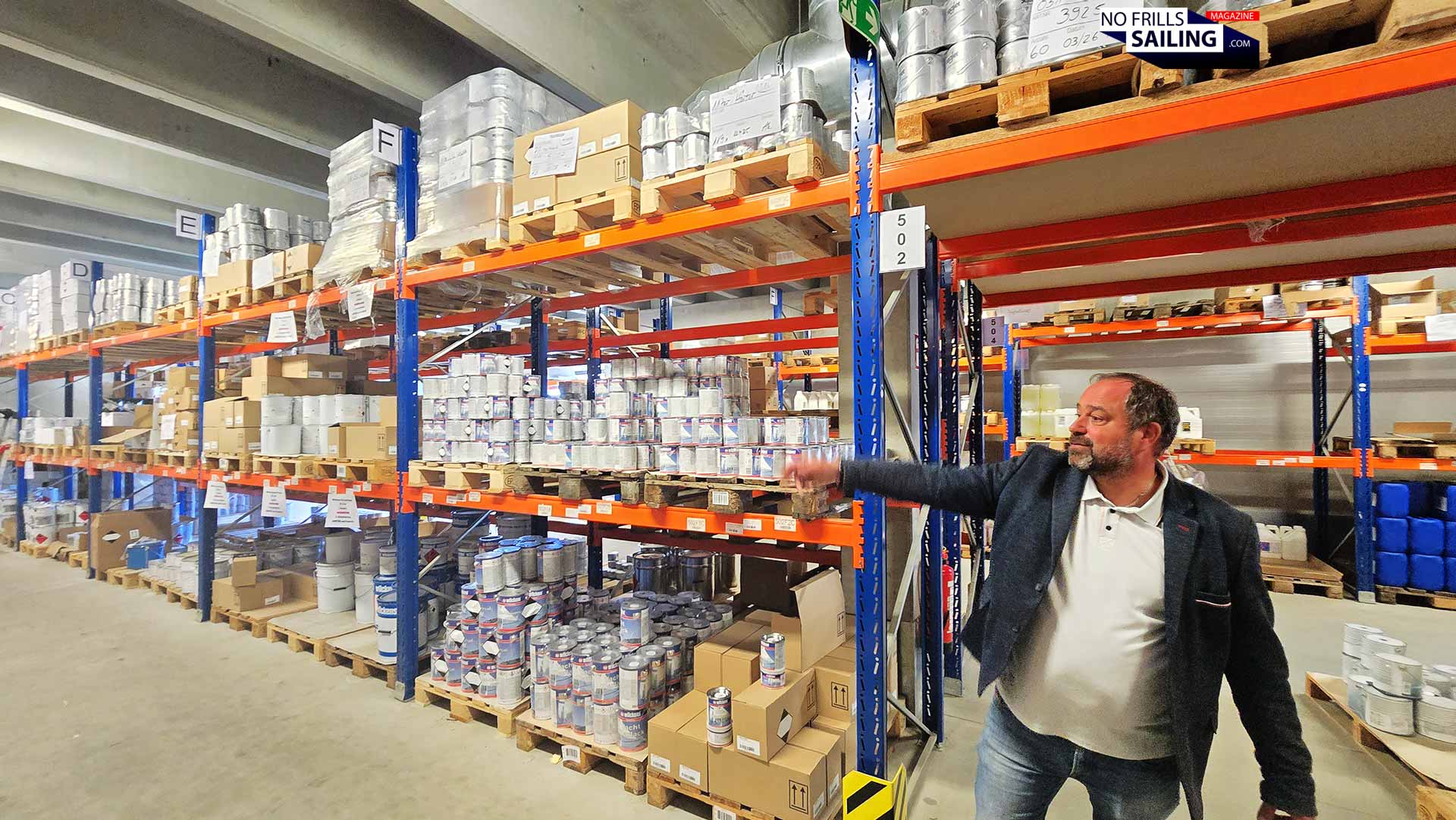
The concentration of the said biocides is fairly high, release slow, so that – depending – it will last surely for two full seasons of intensive sailing, Andreas says. The only downside for me is that Seajet 033 is not available in light grey or even white, which I had wished for my yacht. Instead, I will choose grey as the color for the second layer, red as the color for the indicator-layer. Andreas jumps out of his seat: “Come on, I show you our large storage, there should be a lot of Shogun for you to see!” And so we take off.
How bottom paints generally work
I don´t know what I was expecting, but entering the huge storage of Yachticon, a special hall dedicated to house the chemicals, it did not smell at all! Just a cool fresh breeze, but not the stench I had supposed here. We quickly find the storage with a mountain of Shogun-kegs of all sizes. In order to calculate the assumed amount of bottom paint, there´s a simple formula: Length x width x 0.85 = the roughly to bottom area of the wetted surface of a sailboat. In my case, that´s 34.55 square meters. This means, I´d need no less than 4 liters for one layer. Easy. “You´d need two layers, so that´s four 2.5 liter boxes of bottom paint. Plus the primer.”
Can I just take some for me, please?
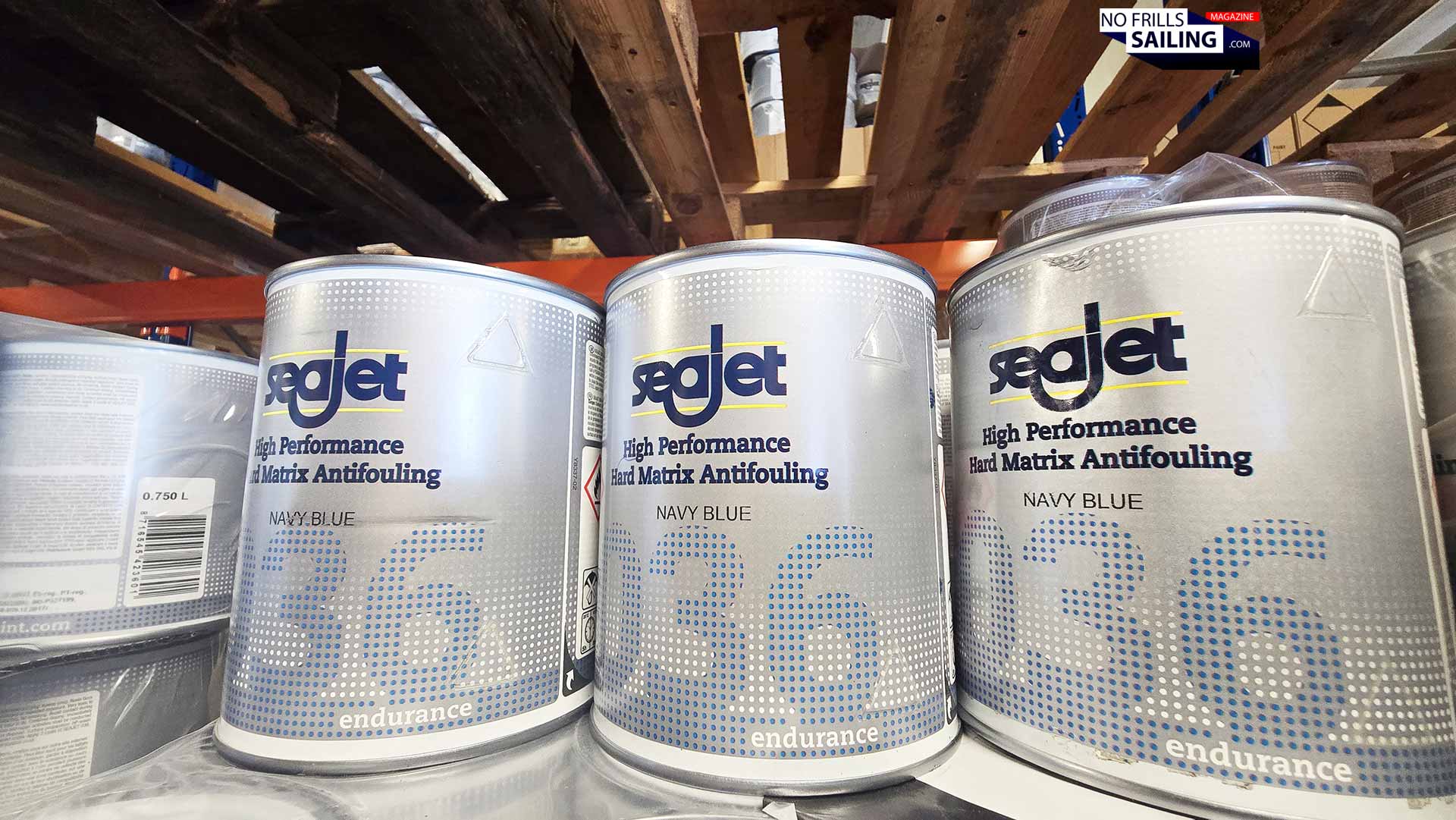
But how does an antifouling work anyway? It´s easy, Andreas says: “Basically most bottom paints are self-polishing or abrasive. Meaning, by abrasive action the biocide will set free and create an environment that marine live hates.” There are two main branches of antifouling: Hard and soft polishing. The softer variant – such as my Seajet 033 – doesn´t need a certain speed of the vessel going through the water. The friction of the water along the hull will set in motion the process. Soft polishing antifouling don´t even need that, all it takes is the normal motion of waves, ebb and flow of the water, to trigger the ablative effect. Such antifouling is best for boats which remain moored for longer periods or travel at lower speeds. Most biocides currently in use are derivates of copper (which is under extreme pressure) and zinc-oxides. Often it’s a mix of both: Hard antifoulings need a certain speed and friction, so are more common for faster boats like powerboats. Self- polishing bottom paints will be too soft and will not last as long as hard bottom paints when travelling at higher speed.
Four of these and my boat is fine
And then there are “special” bottom paints, such as Coppercoat, which have – like all products – their pros and cons. Biocide-free coatings are a growing market, but still cannot reach the sales figures as traditional paints. Seajet offers a silicone-based biocide-free bottom paint as well and Andreas confirms that those perform quite well if utilized on boats and in areas where suitable. Traditional or not: Manufacturers strive to reduce the biocides to a minimum needed. “They all try to further minimize biocide-input into the water, of course: At last they are living from people who want to enjoy nature!”
Fostering a culture of thrift and reasoning
And this is what he believes sets Chugoku, or its leisure-branch Seajet, apart from other manufacturers. The constant strive to further optimize their products not only in terms of performance, which by definition of an antifouling means “killing of living organisms”, but in terms of efficiency and the use of lesser and lesser harmful ingredients. Silicone based bottom paints may be the future, he agrees. But as of today, there are no real long-term studies for these products, there are too many variants and it´s not uncomplicated to thoroughly apply them. “And silicone, by the way, is not without its own harmful substances.
How does a bottom work anyway?
Whilst it avoids the issues with forever chemicals, it still can leach cyclic siloxanes, like D4, D5, or D6. “There just plain and simply is not a “net zero” in nature! Everything comes always at a certain price. If you want to protect your boat from marine growth, well, you have to get rid of it!” Antifouling bottom paints have become significantly less toxic and harmful in the past decades – the input into the water is minimal, as Andreas tells me: “Many wives fear that their kids get sick when coming up from a swim, often rubbing their knees on the hull turning black, blue or whatever the color of the paint. That´s nonsense. Again, you shouldn´t lick it off, but rinsing the knee will do.”
It´s chemistry, nevertheless.
It is poison. That´s what it is. But with every poison, it´s in the dosage. I quite vividly sailing with my kids a few years ago from Bornholm island back to Germany. The Baltic Sea was green from the algal bloom, powered by blue algae. We could not swim at all. It was a very depressing sight (click here for the article). And guess why this happened? Nitrates, utilized in thousands of tons each year by the agricultural industry, washed into the sea in spring, triggering the escalation and upshoot. Guess what? Nobody is talking about limiting or finding alternatives for the use of nitrate-based fertilizers. No net-zero, there you have it.
DIY antifouling? Some practical tips from the pros
So in essence, I am happy: Andreas made me truly understand the working mechanisms of boat bottom paints, explained the differences, advantages and downsides of each product category and even came up for a perfect solution for my new boat. I´ve learned a lot during my visit at Yachticon, gained insights into the history and future of antifouling bottom paints, so what´s next? He points to a another storage building: “All you need is there!”, he says.
Truly a wonderland for me …
He is referring, of course, to the equipment needed to apply a thorough, professional bottom paint. It all starts with utilizing the proper tools to sand the hull, in order to “open” up the gelcoat sealing for better adhesion. It´s also crucial to de-dust and de-grease the hull before painting, he insists. “A minimum of five layers of epoxy primer is needed to protect your yacht from possible water ingress, osmosis!”, Andreas reminds me, before even thinking of applying the Seajet 033. “And don´t forget a high-great breathing mask!” I won´t, sure.
Advertisement
Chemistry and sailing indeed go together …
After some three hours touring the premises and receiving a free intensive course in bottom paints, it´s time to say goodbye. I thank Andreas for taking his time and sharing his knowledge and insights with me! Truly, not every general manager will be that dedicated to educate an ordinary client like me. I am impressed and a bit moved about the fact how deeply a chemical company like Yachticon is involved in protecting the environment and urging their customers to use the products sparingly. And how much of an effort is undertaken to further improve this!
I am deeply amazed!
It´s again a story of your “next door” hero: I mean, I know Yachticon and their products for a long time and have used them on all of my boats, but I wasn´t aware that they had been developed and produced right here, just a 45 minute drive away from my home town. And again, I am astonished of the heritage of this company – founded in 1982 because the founder´s wife didn´t like the brackish taste of their boat´s “fresh” water. How cool is that?
Connected articles you might find interesting too:
Speaking of chemistry and bottom paints, here´s a great one on “new flavors.”