Before you opt for a boat in your buying decision adventure, a proper sea trial should be paramount. Determining how a boat sails, how she fells at the helm can have a significantly important impact on your decision, as well as how she feels under deck, how her cockpit layout and the control elements are designed. This article takes you on a sea trial with the Bente 28, showing what amount of information can be drawn from just a little two-hour dash out.
I have a little history with Bente Yachts, knowing their key players since the inception of that brand back in the day, some ten years ago. It started as a young, kind of “rebellious” startup, initiated by Alexander Vrolijk, yes, the Vrolijks, and Stephan Boden, a German-wide well known sailor, journalist and book author. He wrote a very nice book about the relief and ease of sailing a (very) small sailboat. One that turned out inspirational for not a few people shifting their view from dreaming about big boats but rather fulfilling their ambitions with a compact, less expensive, less complicated yacht.
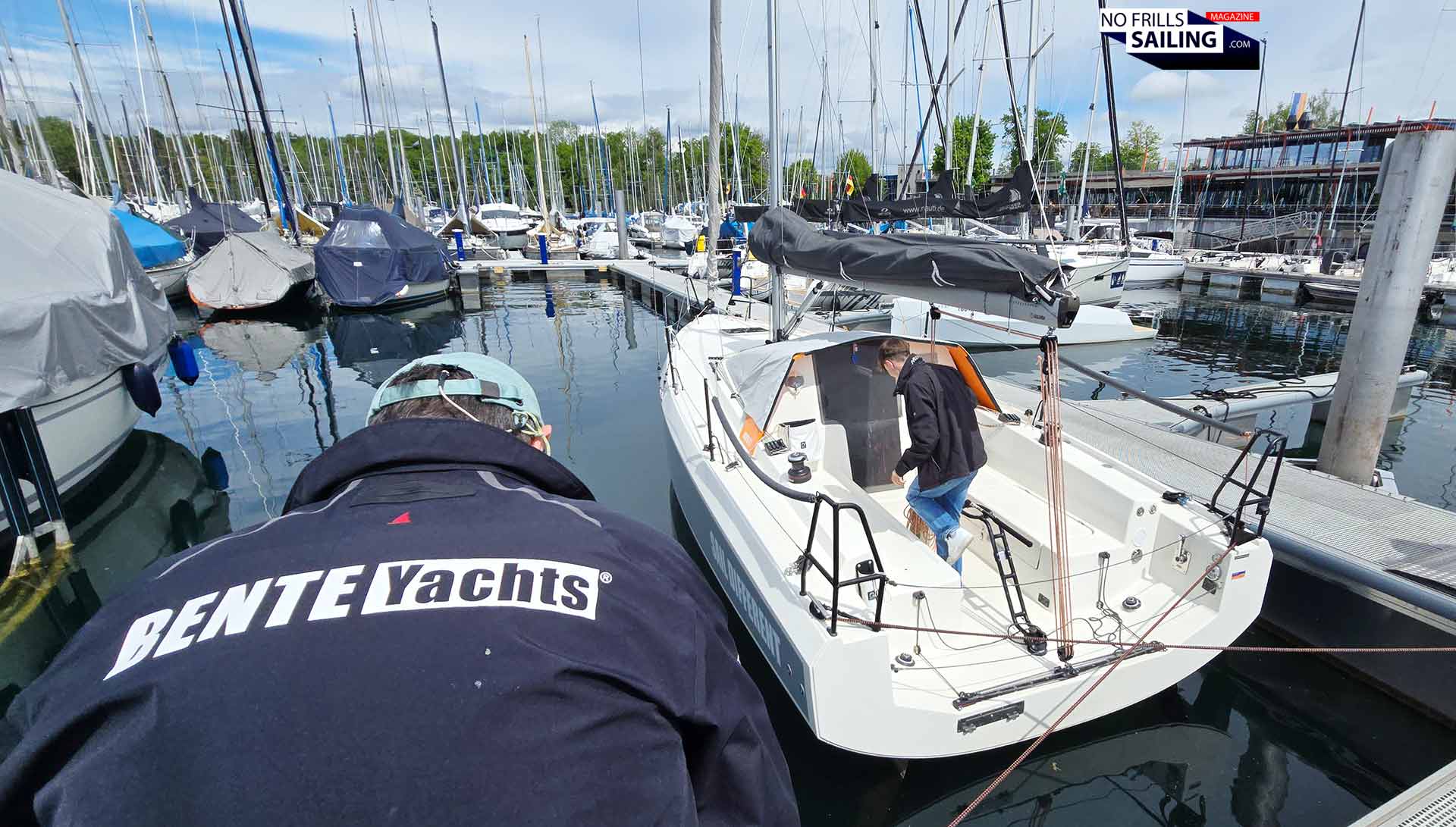
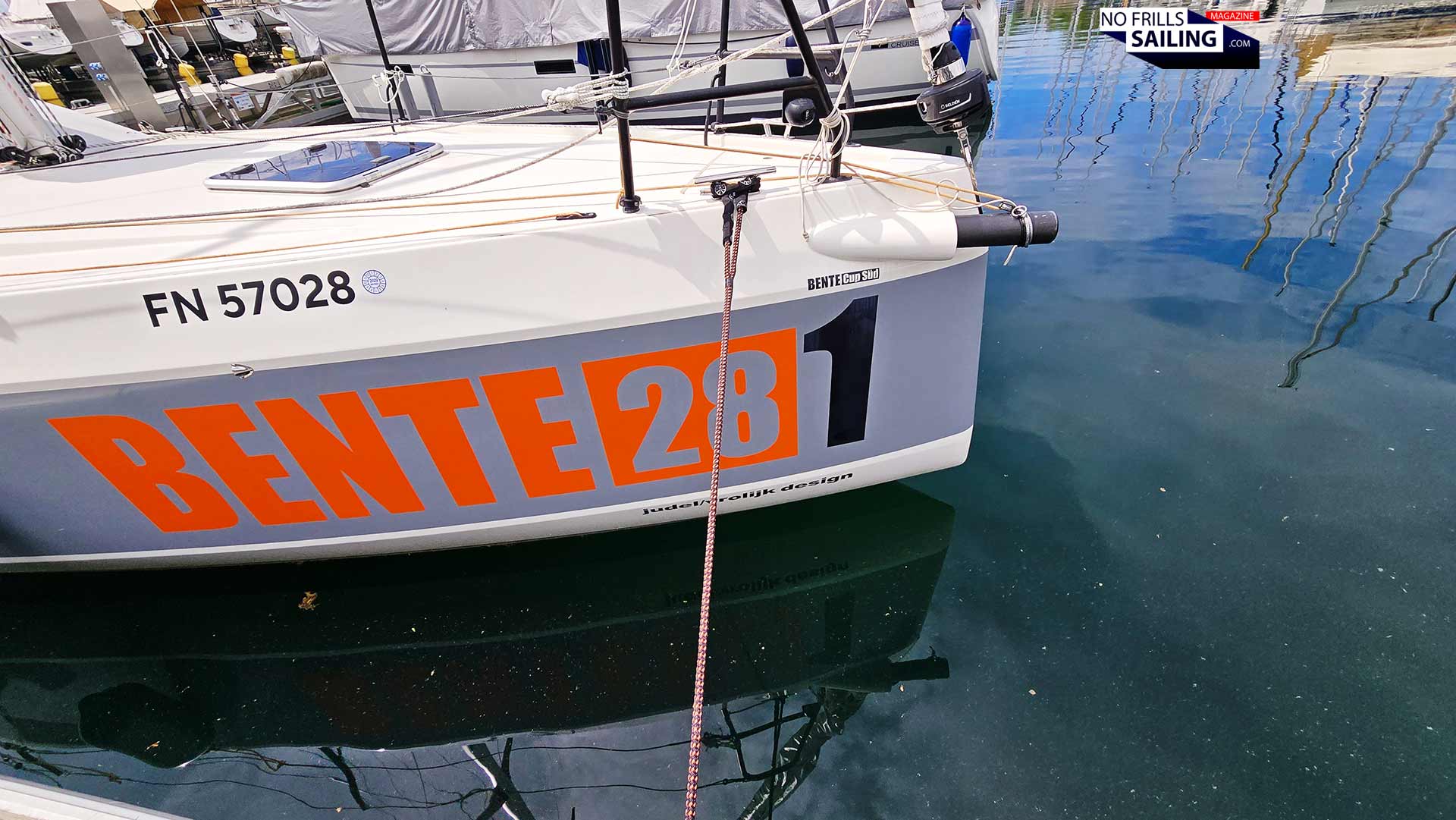
Arriving at the pontoon
As “go small, go now!” was the motto, Bente Yachts with their debut boat, a 24-footer, became the fresh “punks” of the business. Much has changed since then: Both Alexander Vrolijk and Stephan Boden have left the company, which suffered from a bankruptcy in 2020. It was thanks to the passionate fight of Christian Daum, one of the first to join Bente and since then head of the shipyard, a new investor was found quickly: The Meichle + Moor Group. Brand and production got saved. That´s the backstory guys, now you are aboard.
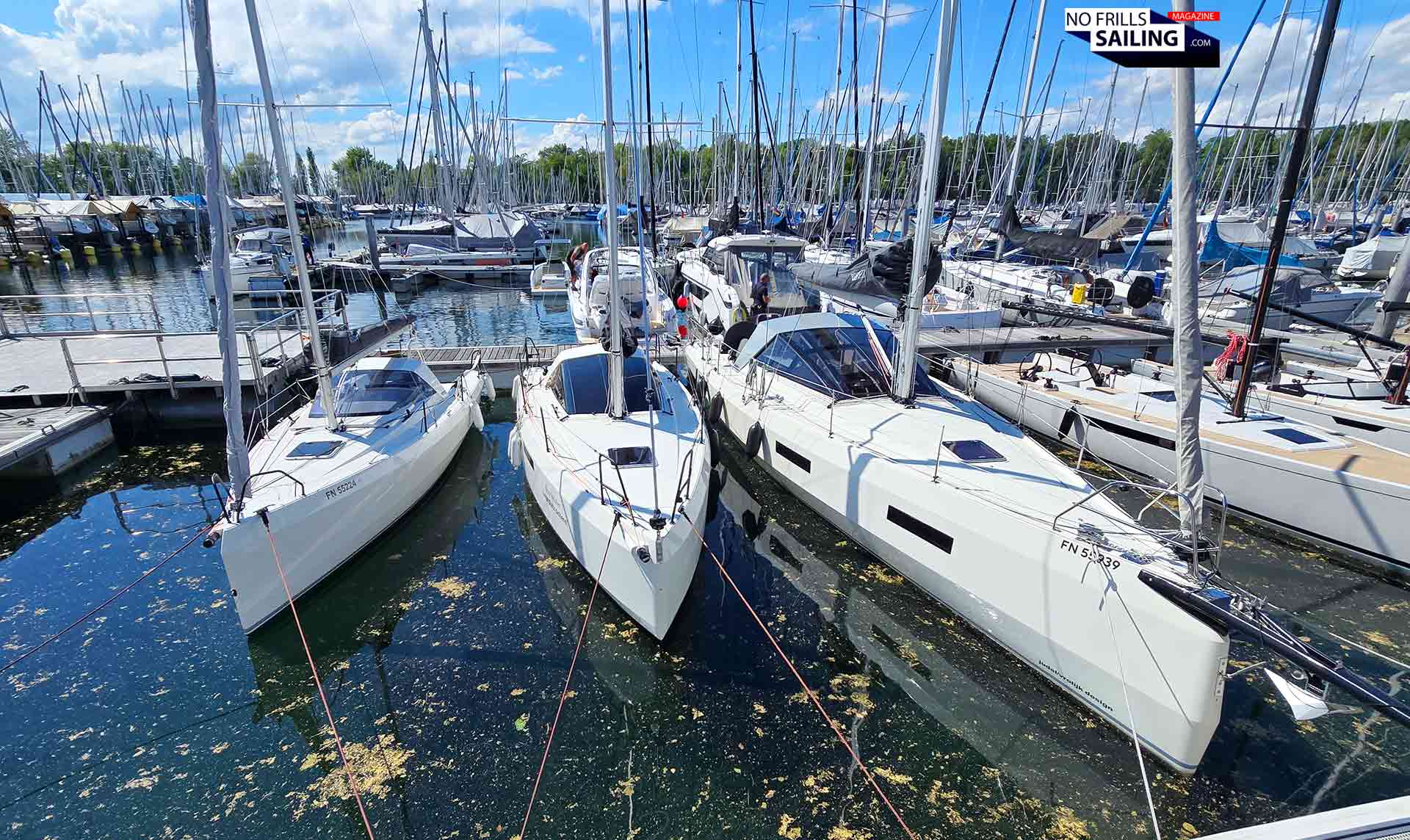
At the pontoon: The boat in context with your future berth
Advertisement
I meet Christian a few days ago at the Ultramarin, the biggest marina of the Lake of Constance, preparing for the annual boat show. As I had done an in-depth walkthrough of their Bente 28 sailboat three years ago already, I was now keen to see how she sails. Eventually it fitted perfect and so I found both Christian Daum, head of Bente Yachts, and the young skipper, Finn, readying the boat at the pontoon. This article shall paint a picture about how this boat sails, but also should work as a placeholder so that you get a few tips of what a proper sea trial should be like and which information you can squeeze out of it, guiding you towards an educated buying decision for your next sailboat.
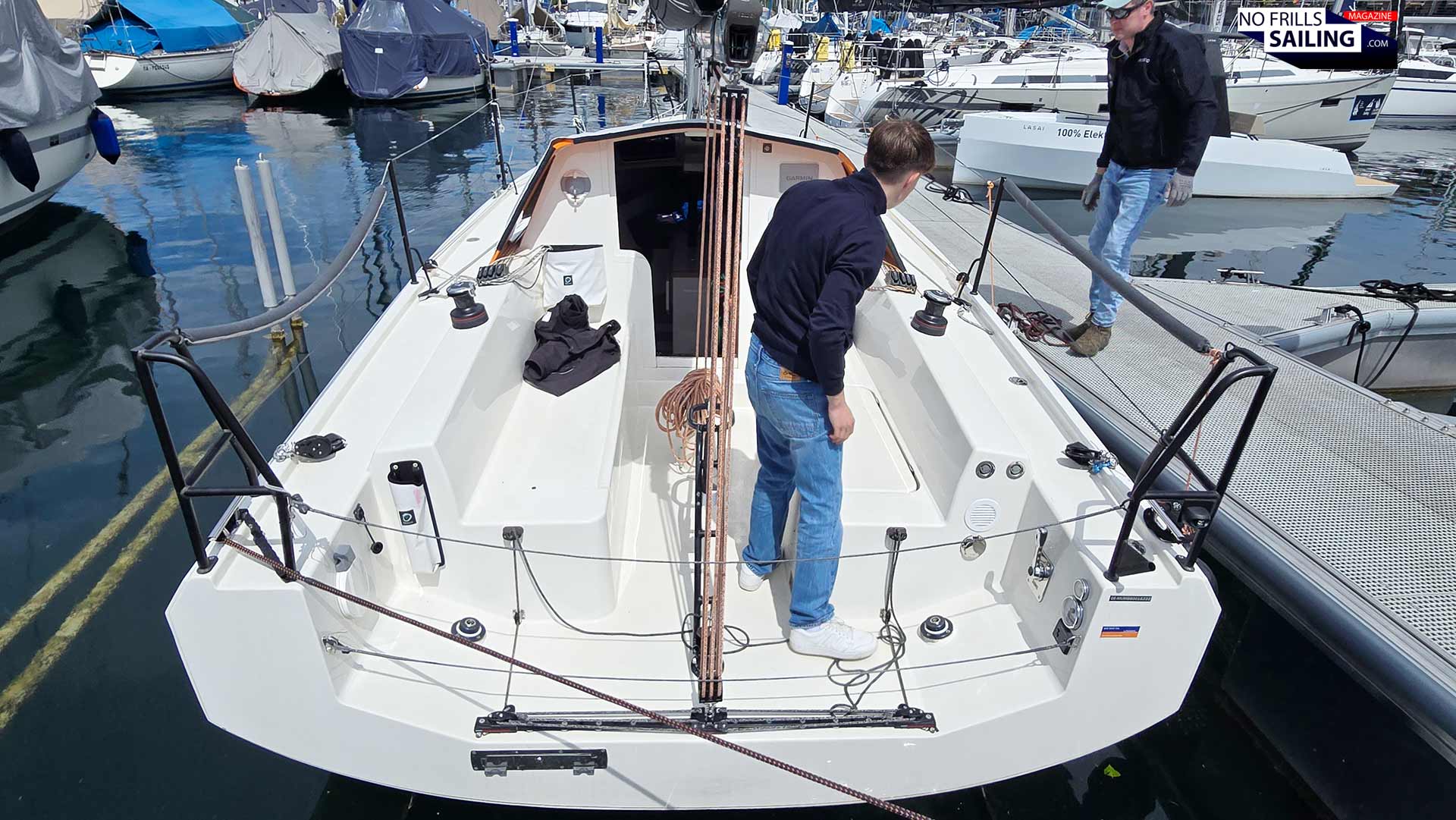
Wide stern modern hull shape
Every yacht, no matter which brand, which size or material, needs a berth. This is often overlooked and underestimated! The boat must fit into the berths provided by her future home port, must be able of safely entering and navigating the waterways inside the marina and the surrounding area. Manuevering space, the width of waterways leading up to your berth, but also to the refueling station or other crucial facilities is paramount. If you can, choose a sea trial location that possibly at least resembles partially the situation in your home marina. Maybe ask the skippers to recreate those conditions. As for our Bente 28, we´ve had some nice sheer winds – not much, but affecting the boat – so it was interesting to watch how the guys managed to launch the boat from the berth as she wasn´t equipped with a bow-thruster, of course.
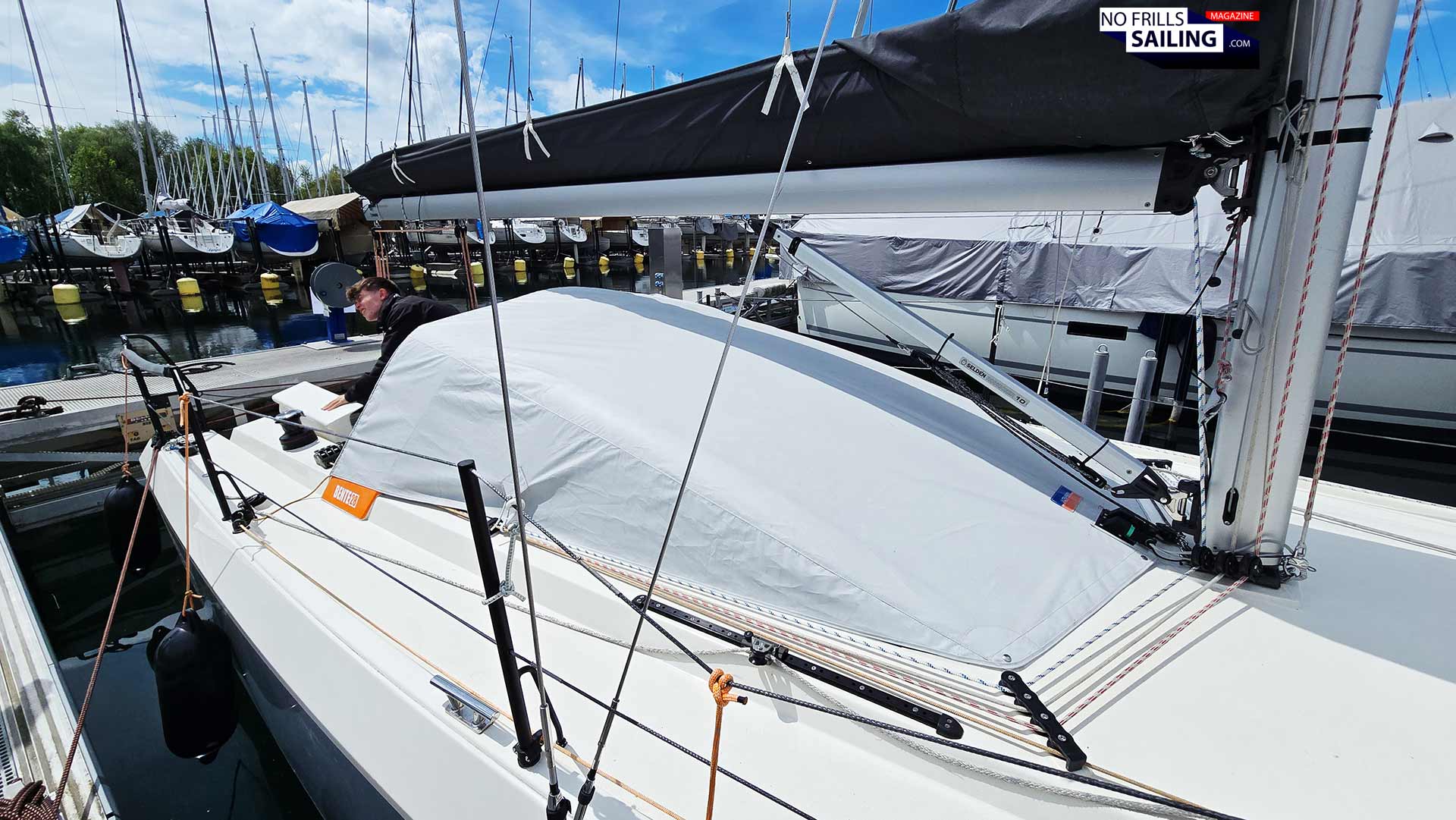
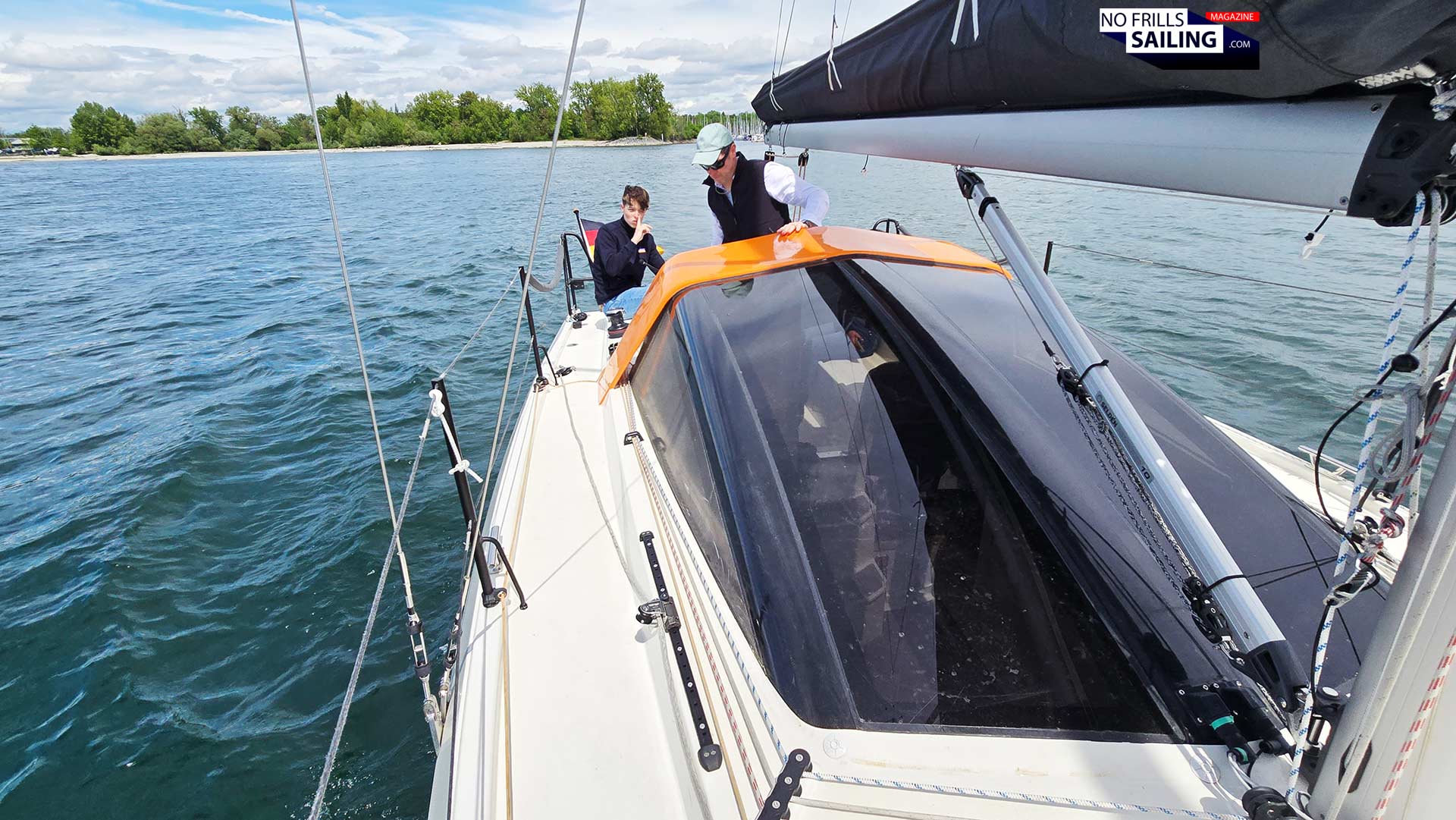
Bente´s signature detail: The huge glass coach roof
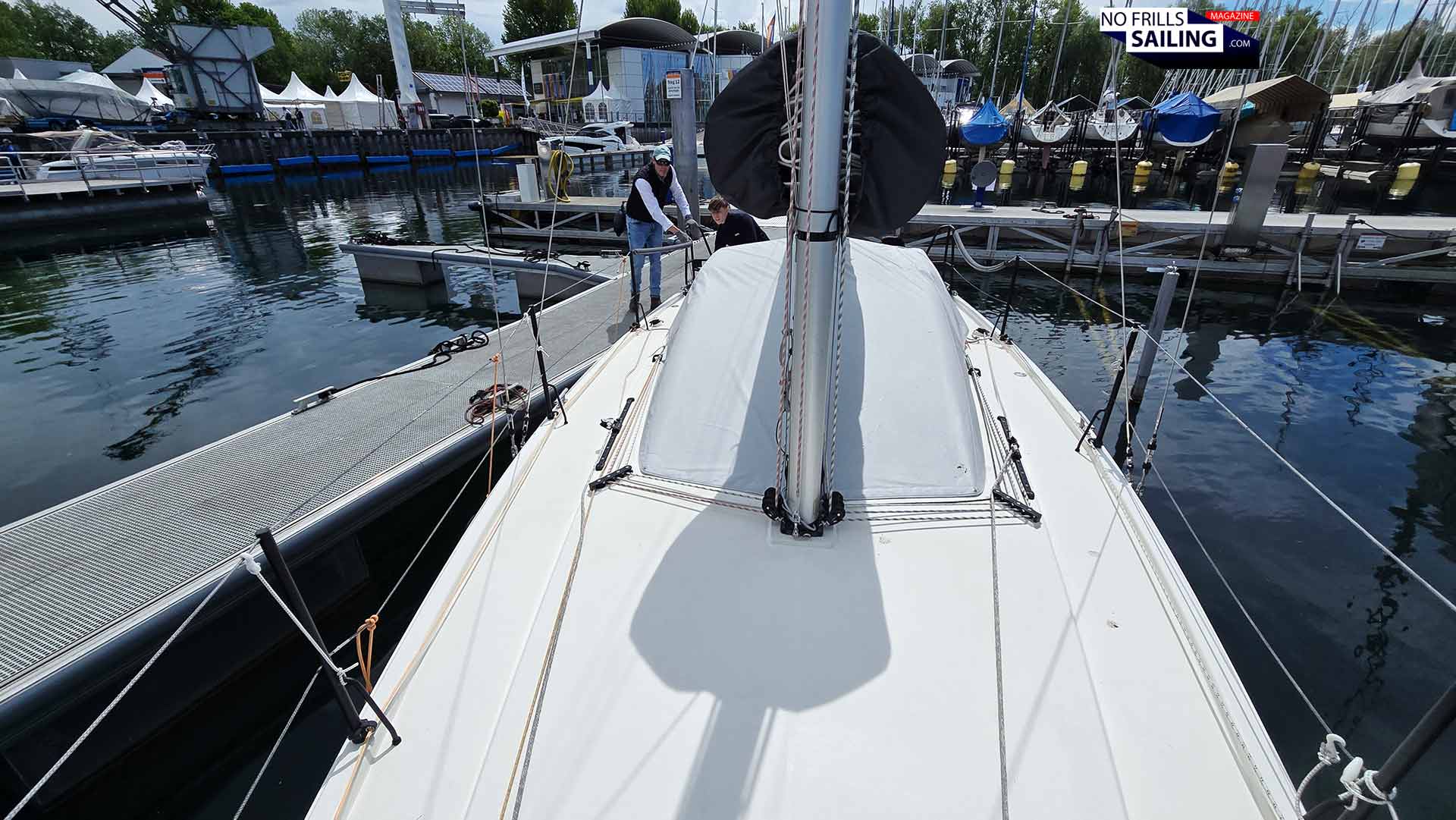
The most deciding detail and signature style detail of each Bente is the huge transparent coach roof. It´s the roof, the dodger and a light source for the salon, three things in one. Back in the harbor, one bug single protective tarp had been pulled over the roof, protecting it from dust and dirt, but also from all too much heat. A detail we will later discuss a bit further.
Casting off
As with everything Bente, both fitting and removing it was easy: Simple, practical solutions is in the DNA of Bente Yachts. We´ve had it stowed away in just half a minute. The Bente 28 is powered either by a 16 horse power Vetus Diesel engine, which comes with a 60 liters fuel tank, or by an all-electric Torqeedo Cruise 6.0 FP engine, essentially the bigger brother of the Cruise 4.0 engine which powered my old boat, but this time it´s a fixed pod-drive under water. Probably the best choice for CE-Cat C and D inshore boats, the combustion engine is advisable for use in coastal and offshore areas.
The huge glass coach roof …
After freeing the coach roof from the tarp and preparing the boat, we jumped aboard and the guys launched her. Usually during sea trials, the boat is moved by a professional skipper or the boat dealer/owner. This is for safety reasons (as you do not know boat nor harbor usually) and also for insurance-reasons. If you want to check the qualities of maneuverability of a yacht, you should ask specifically for this.
Casting off, talking to the Head of Bente
Steaming out of the harbor, circling the narrow waterways between hundreds of moored boats, it took us a few minutes to reach the main waterway and pass by the breakwaters. The Lake of Constance presented itself in perfect conditions. Clear blue sky with occasional clouds and a light breeze, crowned by a glorious sunshine and temperatures around 20 degrees: Cocktail weather!
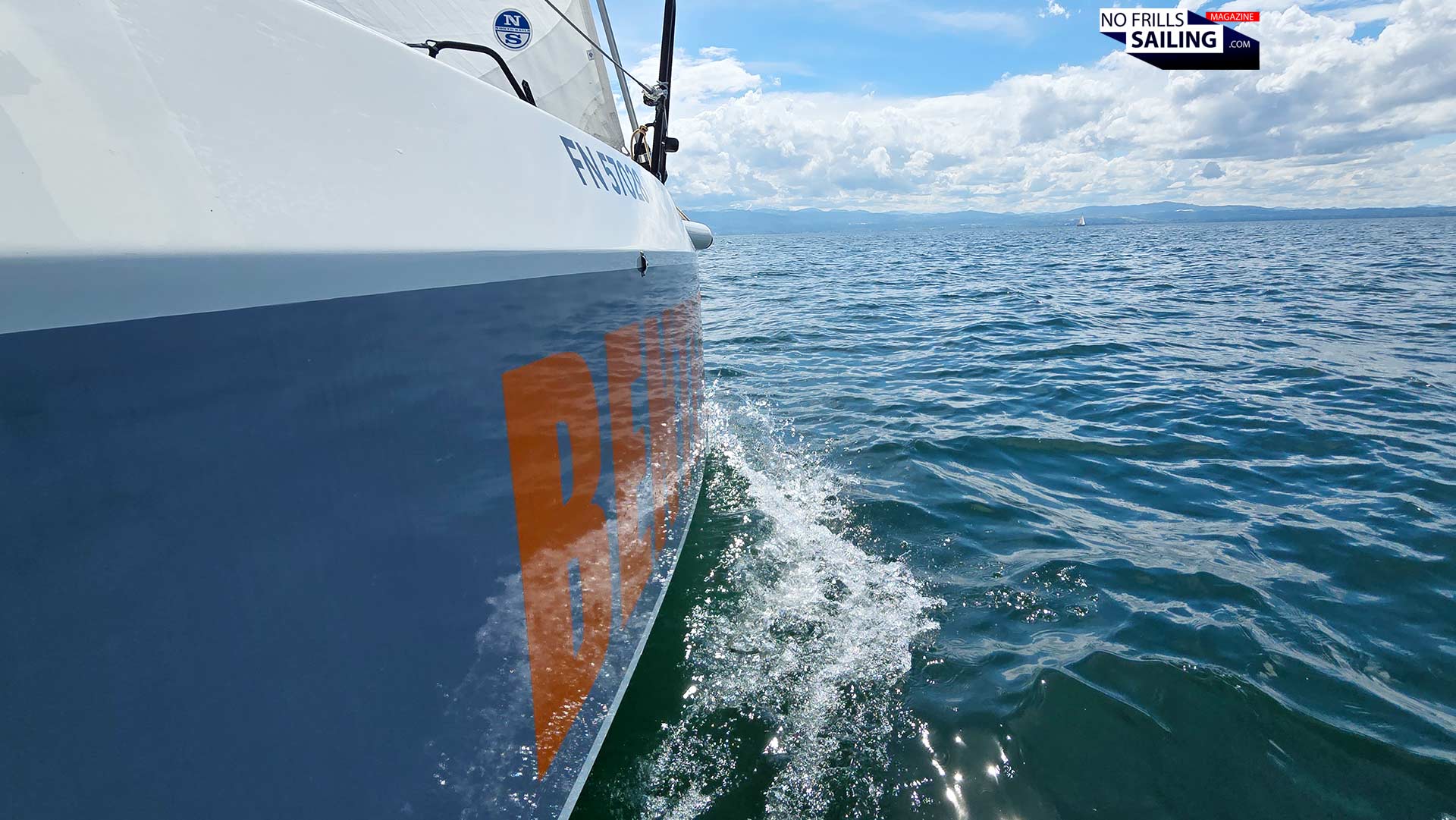
BENTE´s signature design feature
We had to steam clear of the entrance to the harbor as this place, even so early in the season, is heavily frequented and we do not want to bother around with hoisting sails and stuff blocking the way. So I had time to do a bit of chit chat with Christian. As with any other brand in the boating market right now, Bente Yachts is suffering from fewer sales. Post-Covid price increases due to ever rising raw material prices, labor costs and the loss of value of the Euro as currency has weakened the industry. War- and fear-mongering especially in Europe results in very reluctant spending by the broad target group. Bente suffers as well.
Christian Daum, Head of Bente Yachts
Christian says that there are frequent talks with prospect buyers, but especially within the small boat-segment high prices lead to very, very restricted sales. Millionaires who have plenty of money aren´t that much affected of the rising prices of the past four to five years, whereas budget-sensitive buyers in the range of 50.000 to 200.000 Euros (or Dollars, if you like) suffer the most from the current price surge. A well-stocked Bente 28 comes with a price tag of some 160.000 to 170.000 Euros exVAT. This is quite a sum, hence quite a decision!
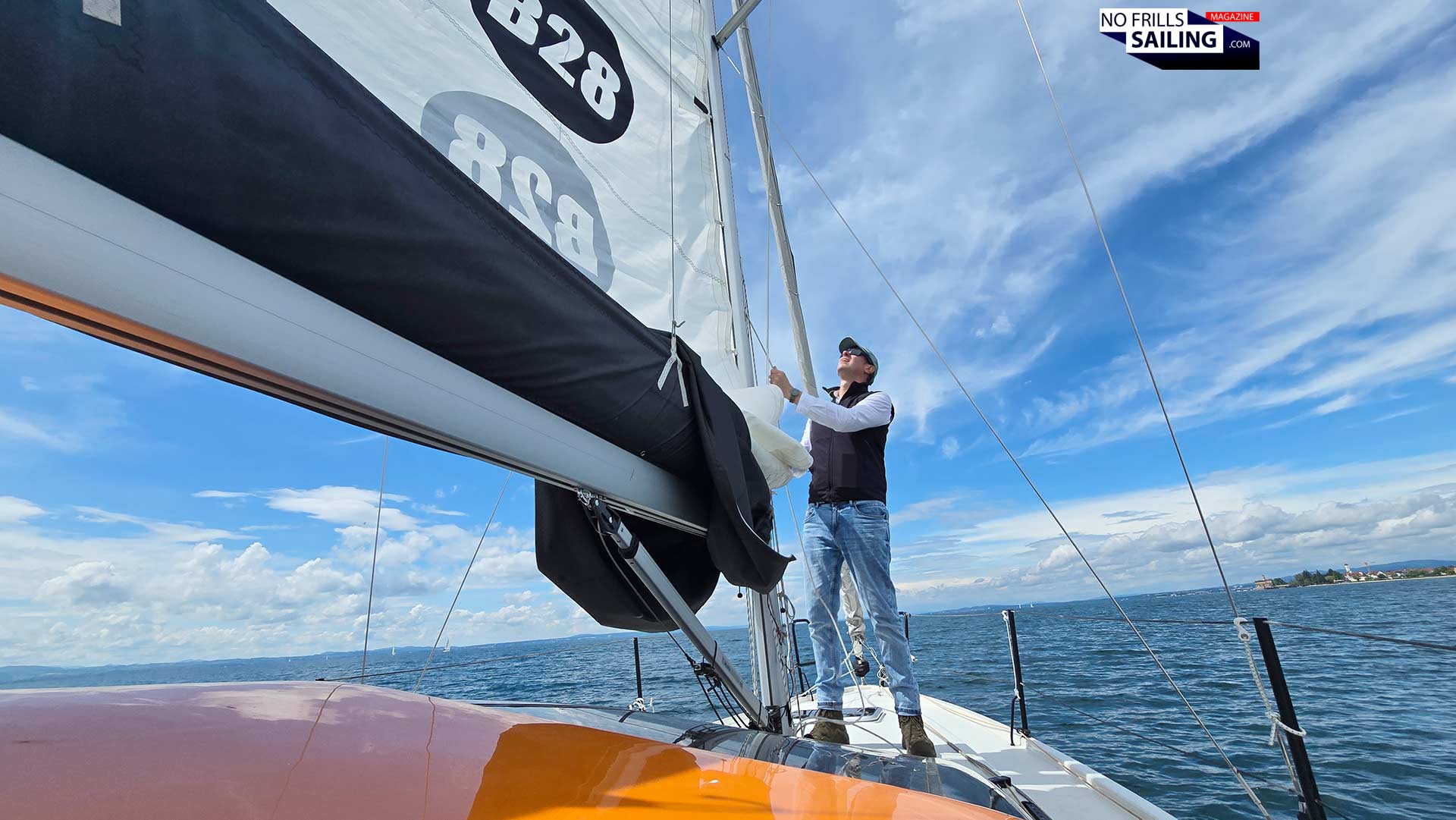
Hoisting the sails, off she goes
Having put a mile or so between the harbor´s entrance and our boat, it was time to put her nose into the wind and pull up the sails. This particular Bente 28 is a very special boat: Hull #001, the prototype. Christian explains that many details have been changed to the production yacht, one of the most important and prominent being her weight. “She is a bit heavier than the series-production boats”, he tells me. As the boat out there for sale are lighter, weight distribution and balance had also been a factor for improvement. He insists that the real 28s out on the market will sail significantly better. Okay, let´s see then …
Let´s get up the sails!
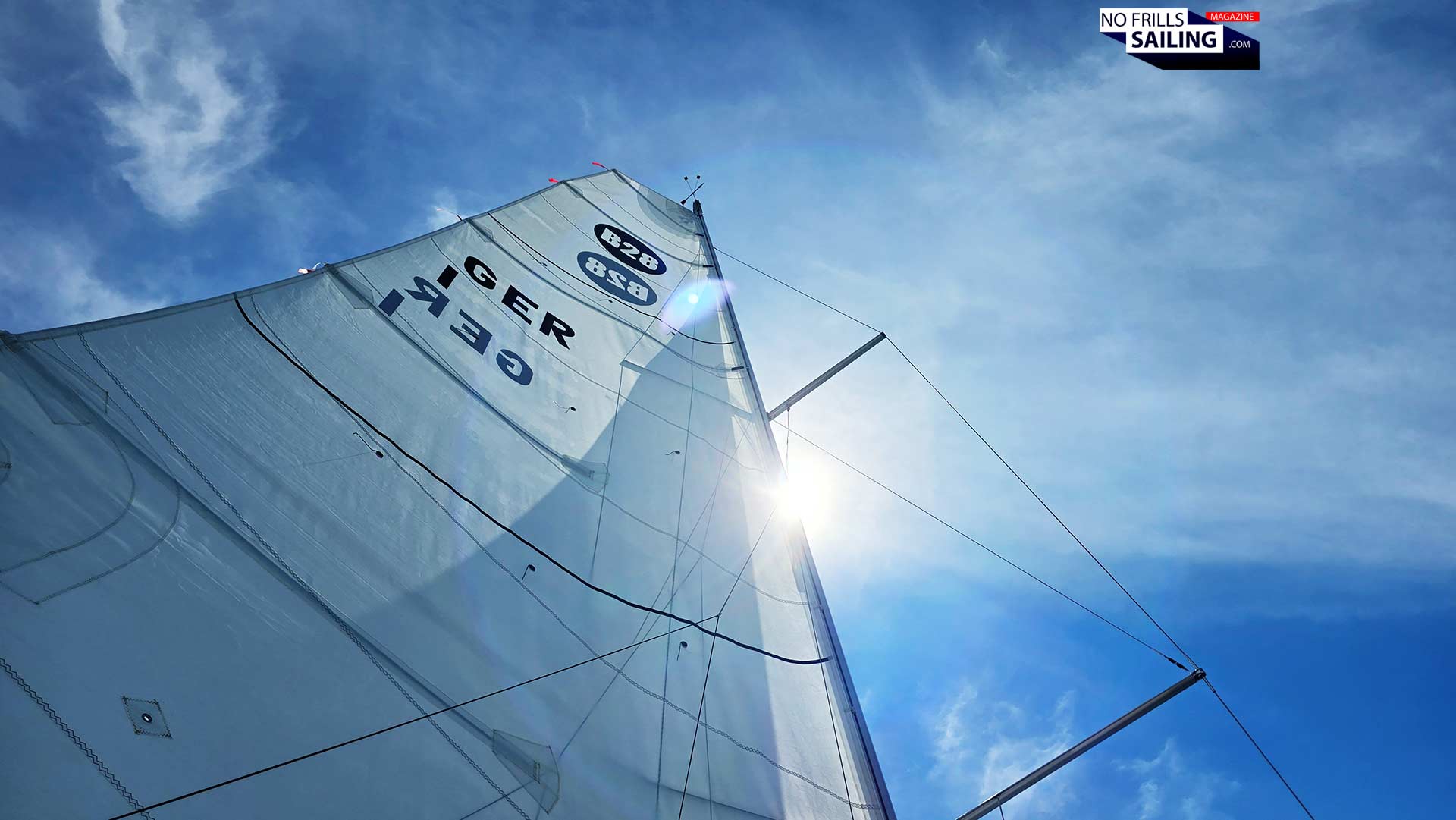
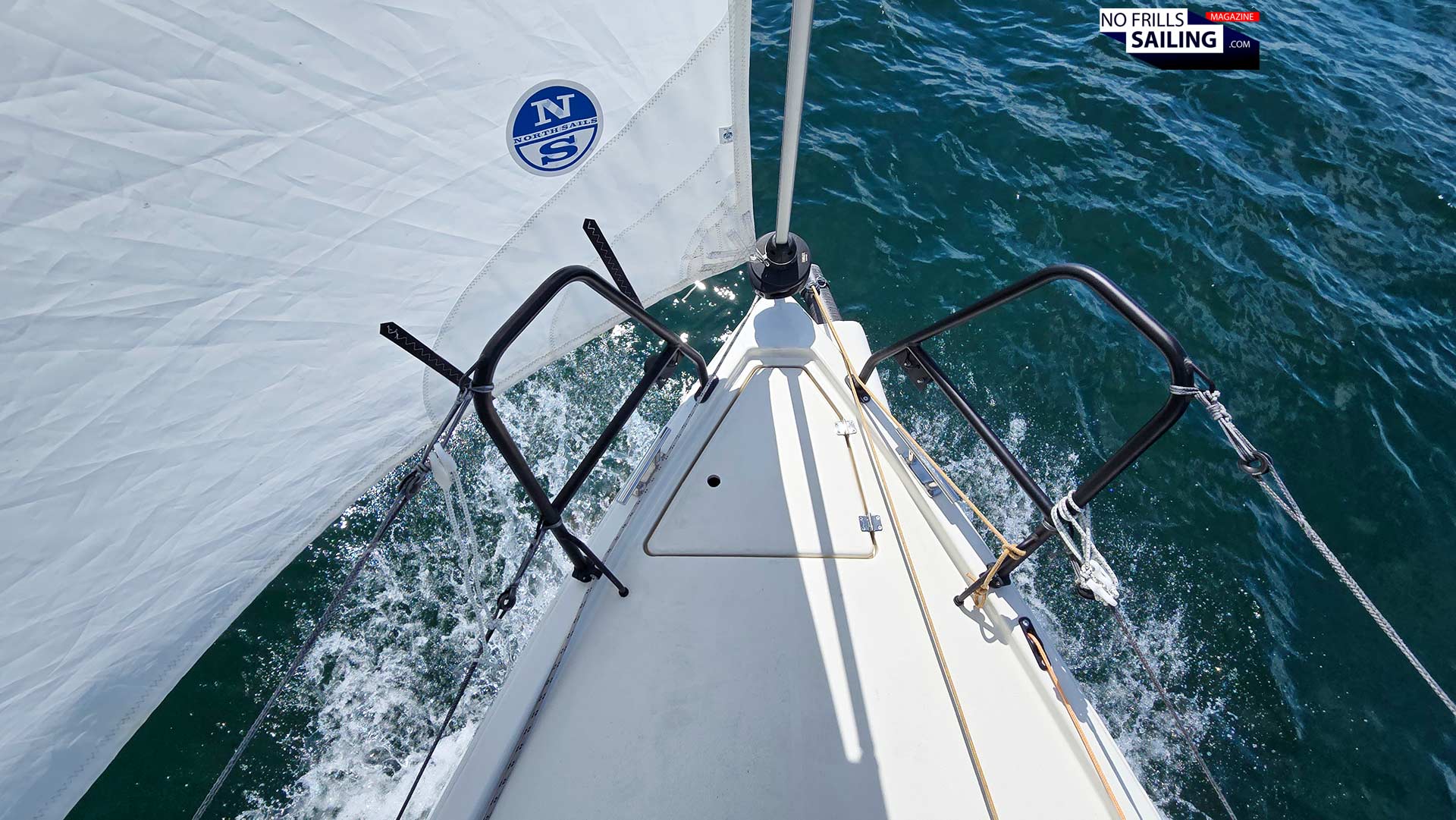
Our sails for today are the standard Dacron cross-cut OEM sails from North Sails. A flat-head type main and simple furling genoa. There´s an upgrade pack available with a higher quality North Sails package together with a retractable carbon fiber bowsprit. Sails area upwind is 55 square meters, downwind sails area amounts to about 100 square meters, sporting a 70 square meters gennaker. We´ve had both gennaker and Code-0 light wind sails aboard the boat and I initially wanted to set at least one of both, but it turned out that going on to sail under standard sails was much more interesting, as you will shortly get to see.
13.50 air draft with 55 sq meters upwind sails area
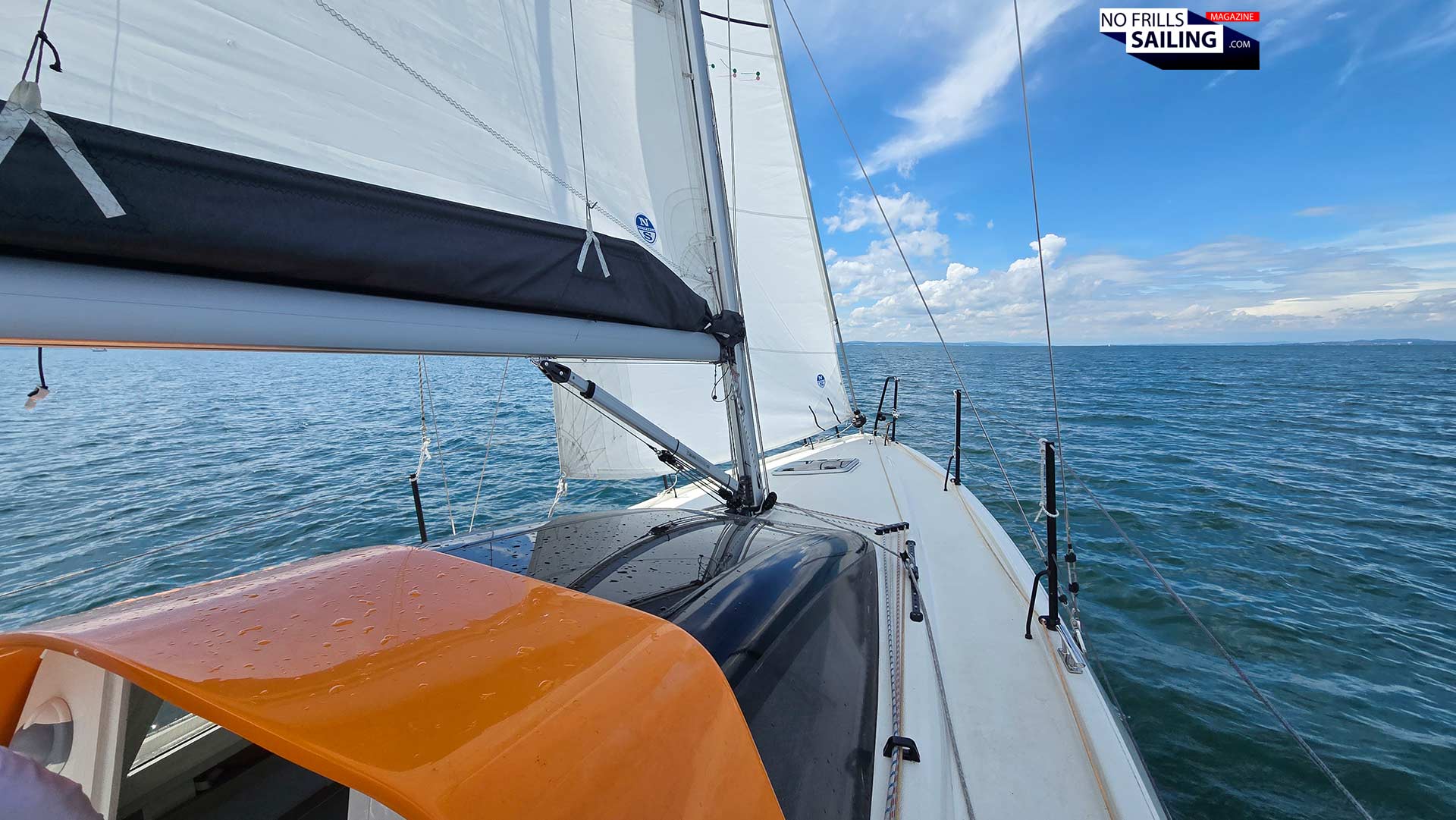
It took us less than three minutes to hoist the sails and luff the boat. The Bente 28 sprung to life, heeled over a bit and began to sail. Conditions were very, very light: Just under seven knots of true wind, no significant wave patterns, no gusts. Surely not a fun or even “exciting” premise, but the old saying that it´s the light wind that proves a worthy sailboat, that is particularly true. In strong winds, literally anything that floats will sail somehow, but the exploit of less and less wind power available shows the greatness of a hull shape and its corresponding sail plan.
How to sea trial a boat
And here´s my next tip for you sea trials: As much as you would like to have fun and experience a day full of action, spray and heeling, try to find a date where conditions are moderate or even below moderate. Really: In strong winds, most boats perform much more impressively as the surrounding “noise”, the wind, the waves and the joy of sailing in extreme heel angles will blur your impressions of the boat. The action will paint over and cover apparent shortcomings of a yacht.
Not all too much wind …
If you are interested in sailing properties and capabilities of a yacht, check her out in conditions at the lower end of the “recommended” wind speeds in the polars. Responsiveness (both of the sails reacting to the wind and creating lift and for the steering properties) is best tested in very, very light conditions. Such as we´ve had that day with the Bente 28: 7.2 to 7.4 knots TWS, that´s what mighty Poseidon had for us that day, and I found that it was most interesting to see how the boat managed to transform this little amount of energy into lift – hence, speed.
But she sails!
Not bad, not bad at all! We tried her in all points of sail, putting most emphasis onto upwind, 90-100 degrees AWA and some downwind running at some 160 degrees. And this is exactly what I would emphasis you do as well when on a sea trial: Don´t let the broker “entertain” you, as he will probably stay on the “chocolate” wind angles, but insist on tryouts of the yacht from upwind to downwind. Take notes (or plotter-screenshots) of the TWS and SOG numbers, as these could be put into the polar diagram of the boat to check your curve matches the shipyard-numbers.
Sailing properties of the Bente 28
As for the Bente 28, I must say, the outcome of my sea trials were pretty impressive! I admit that I am not the greatest fan of the 24 and therefore I was a bit skeptical, but as with almost every prejudice and biased opinions, I got taught a lesson. In fact, the Bente 28 sailed very smooth and managed to acquire quite impressive speeds in relation to the low wind available. I want to add that I am not the most accurate fine trimmer when it comes to sails, so my trimming-“capabilities” might match those of a very average sailor.
Very responsive and nimble on the rudders
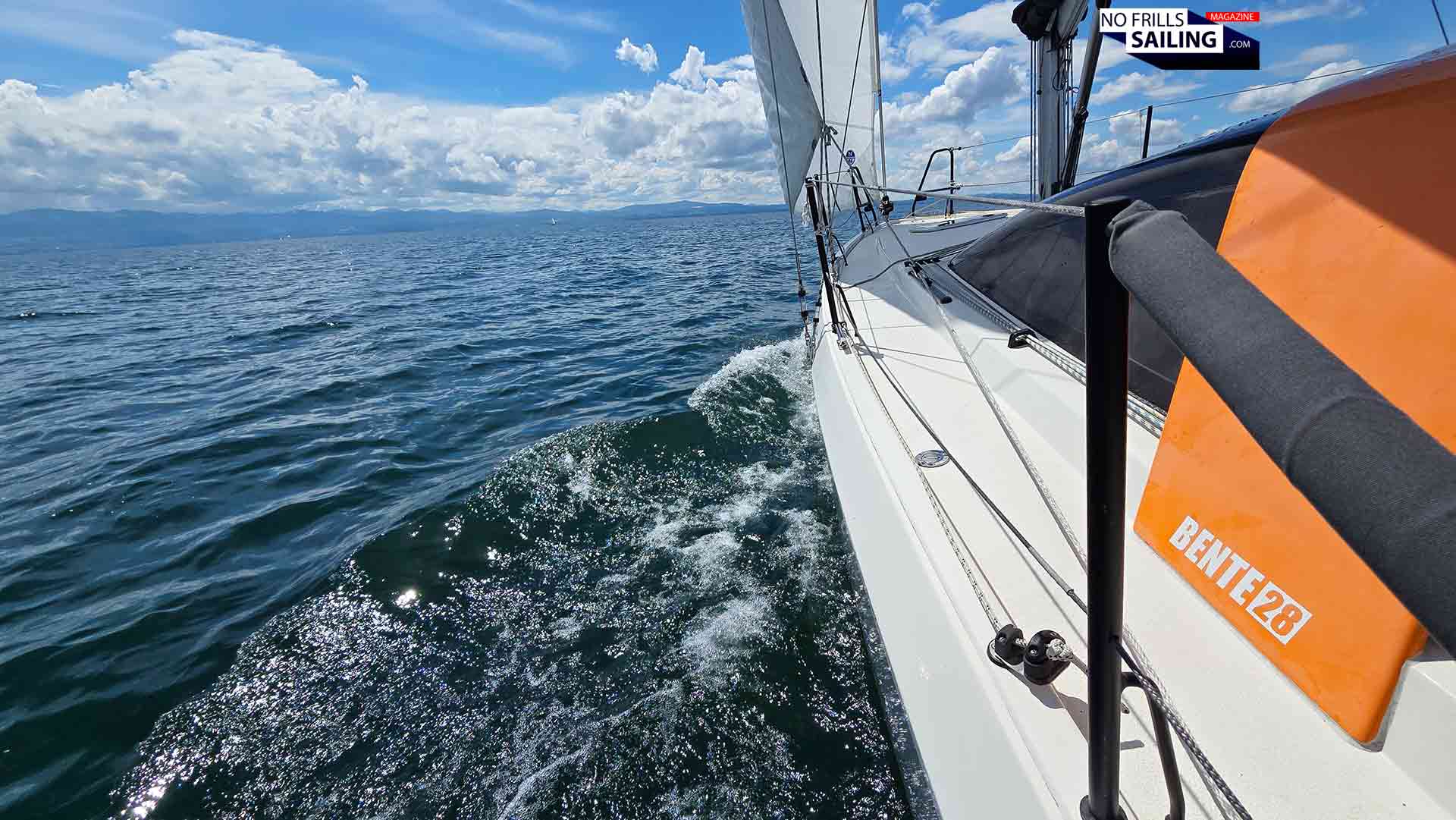
The Bente 28 sailed upwind in 45 degrees AWA with 5.2 to 5.3 knots SOG – in a 7.2 to 7.5 light breeze. She acquired a slight heel, but not all too excessive. This is really not bad, as this boat is advertised and intended to be a fun-to-sail daysailer or weekender, but namely not a performance-oriented nor regatta-winning yacht. We veered off a bit to a 90 degrees AWA beam reach. Speed increased as anticipated, she clocked out at 5.8 to just under 6 knots, which was also nice. Then we went the other direction to a broad reach, which made the boat sail with 4 to 4.5 knots.
At least over 5 knots!
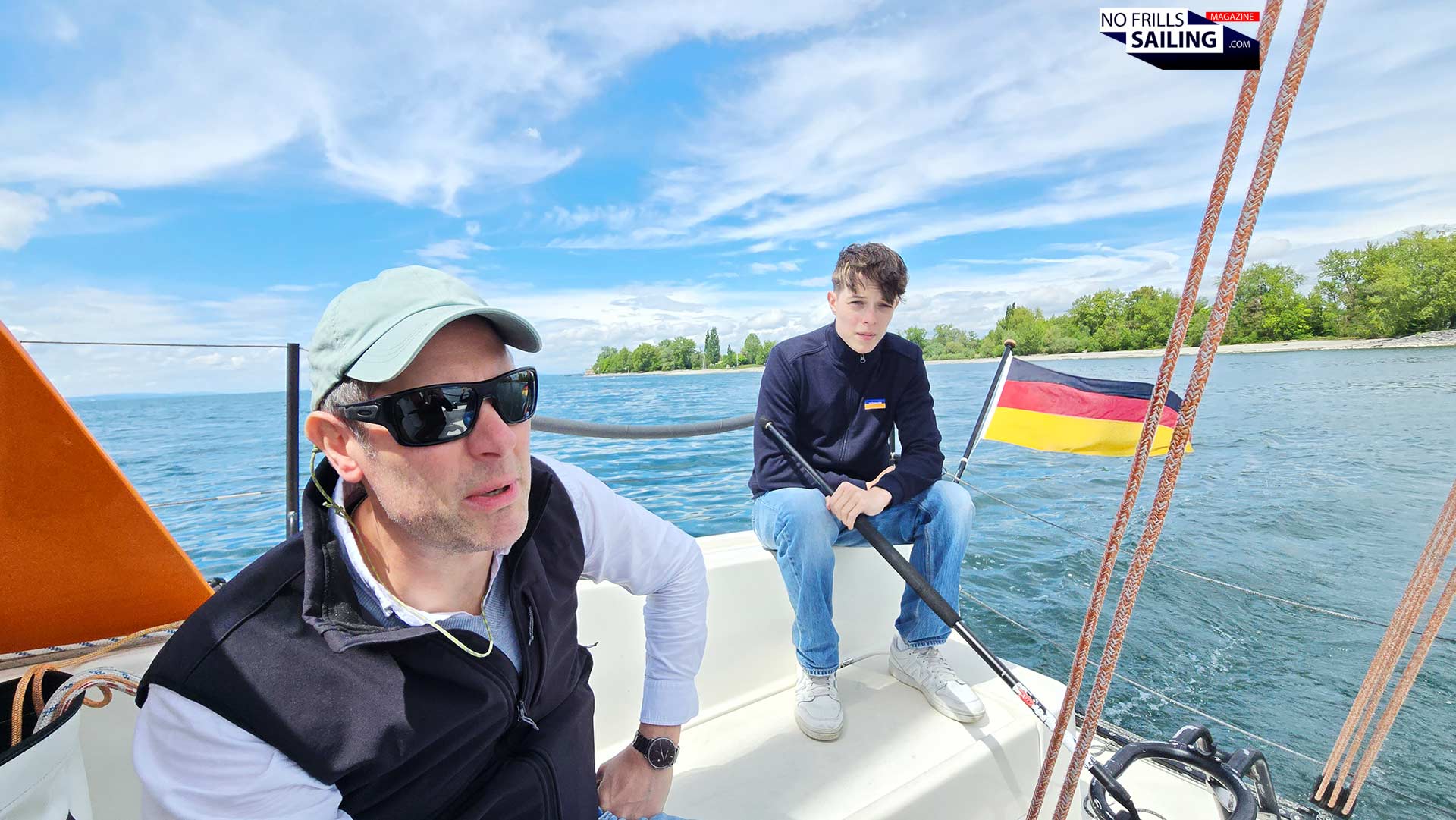
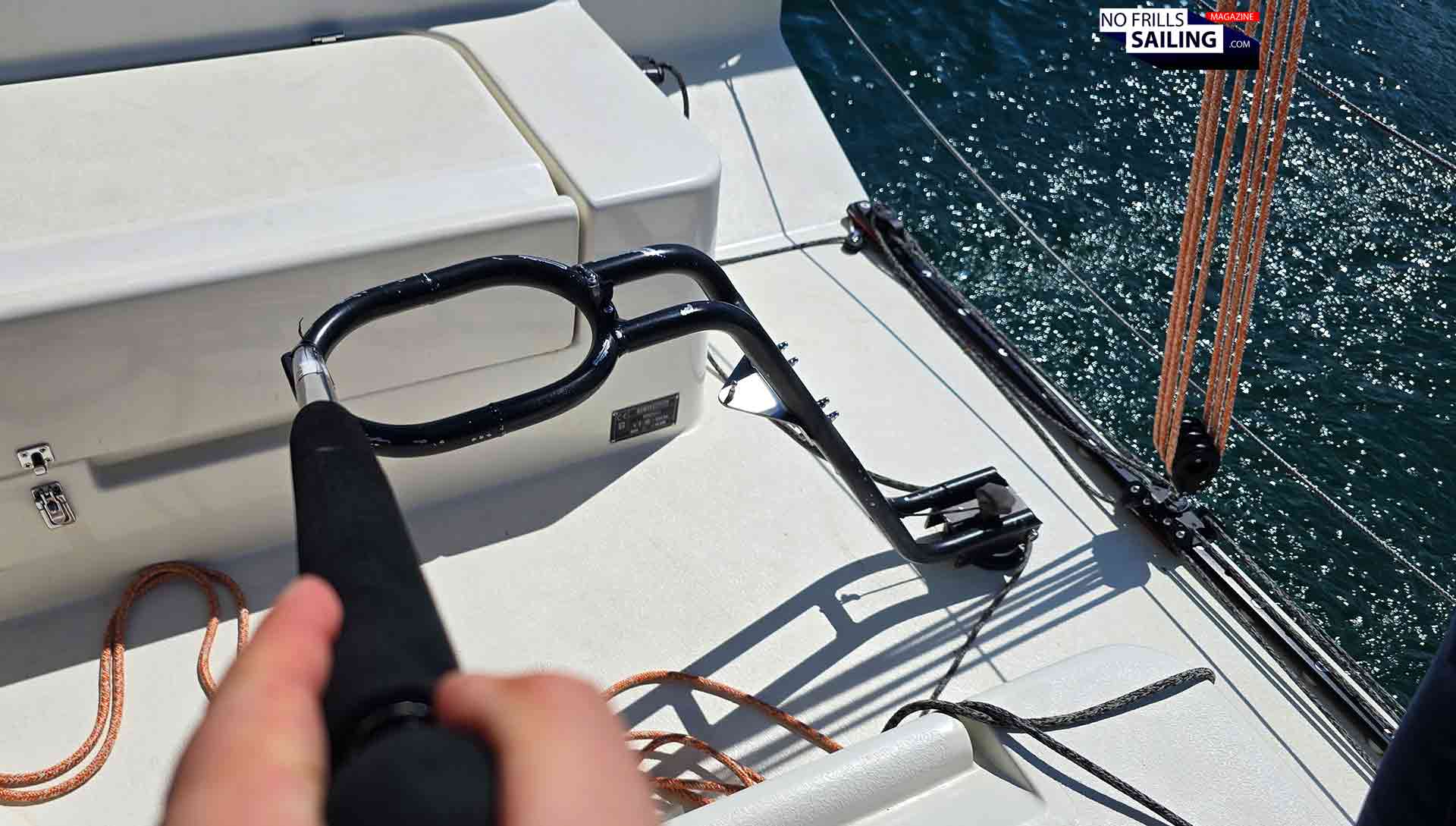
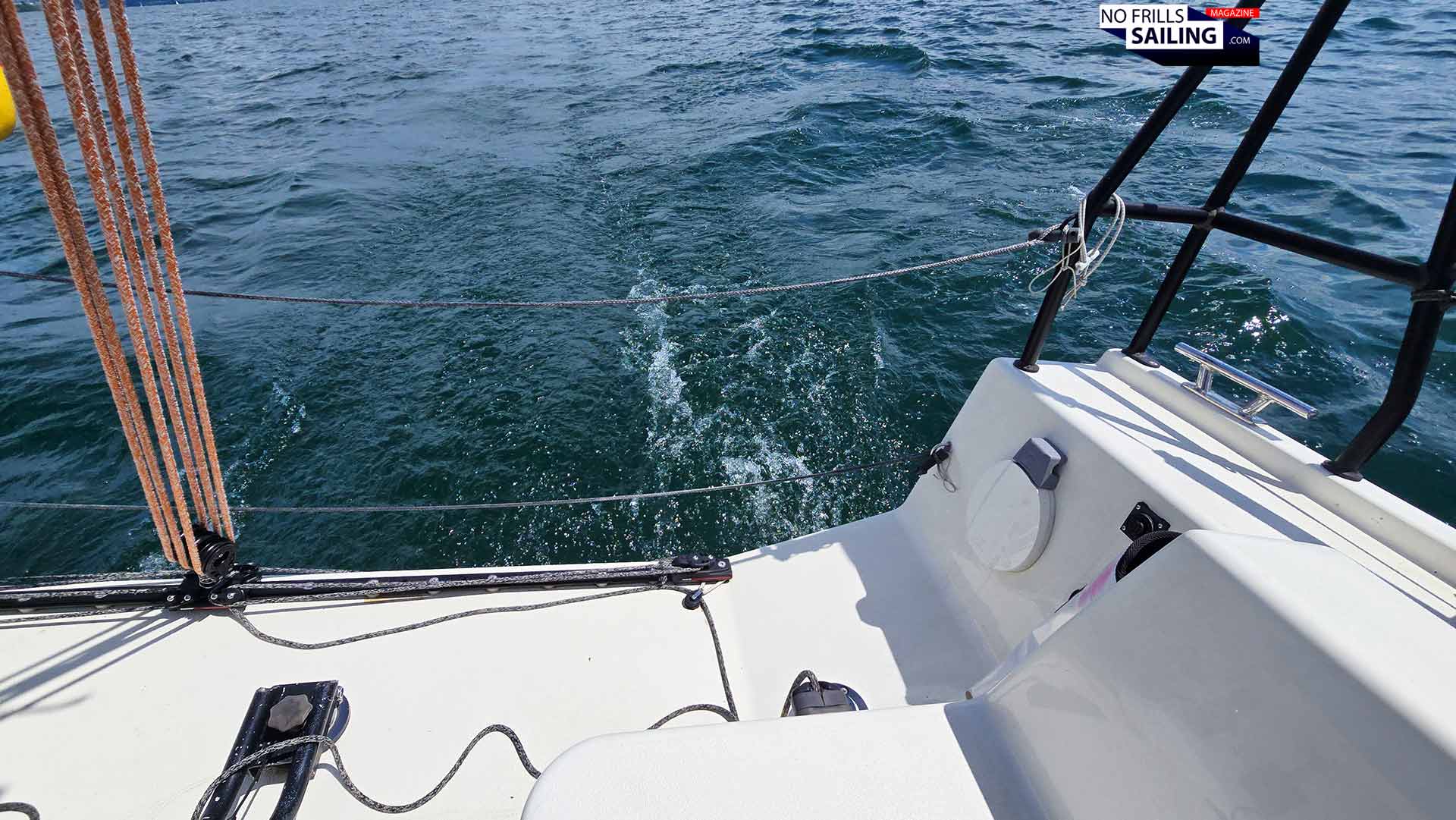
As I happened to be at the helm the whole time, I found the boat to be very light-footed and responsive. A thing, almost tiller-helmed small boats have in common. She responded very nicely to my commands, be it the finer tuning corrections or the the hard rudder inputs. The Bente 28 comes with a short, robust metal tiller and has a simple but effective telescopic extension. The double mainsheet rund through two cam cleats, making it easy and simple to sheet in or open the main. Sitting high up on the coamings, view over the boat is perfect, although the leeward side is obstructed by the genoa, which is a normal thing.
Will she suit your demands?
This is how we sailed along. It was a glorious summer´s day, with temperatures hitting 21 degrees Celsius. My fiancé was having fun, the two guys from Bente Yacht enjoyed their lush hour and I was able to perform my “tests” to determine how the boat feels. This is what I would suggest you to do as well: Try out gybes and tacks, see how she puts her bow through the wind and how you can manage to get her boom from one side to the other.
North Sails Dacron standard
I tacked a few times to se how she would perform when pushed a bit more aggressively, as well as I gybed the Bente 28 a few times to see how she felt whilst running before the wind, this magic moment just before the wind catches the main from the other side. All in all I was very pleased with the sailing properties and the handling of the boat. Christian helped a bit with the fine tuning: For example, bringing the weight from the stern to the front of the cockpit shifted a lot.
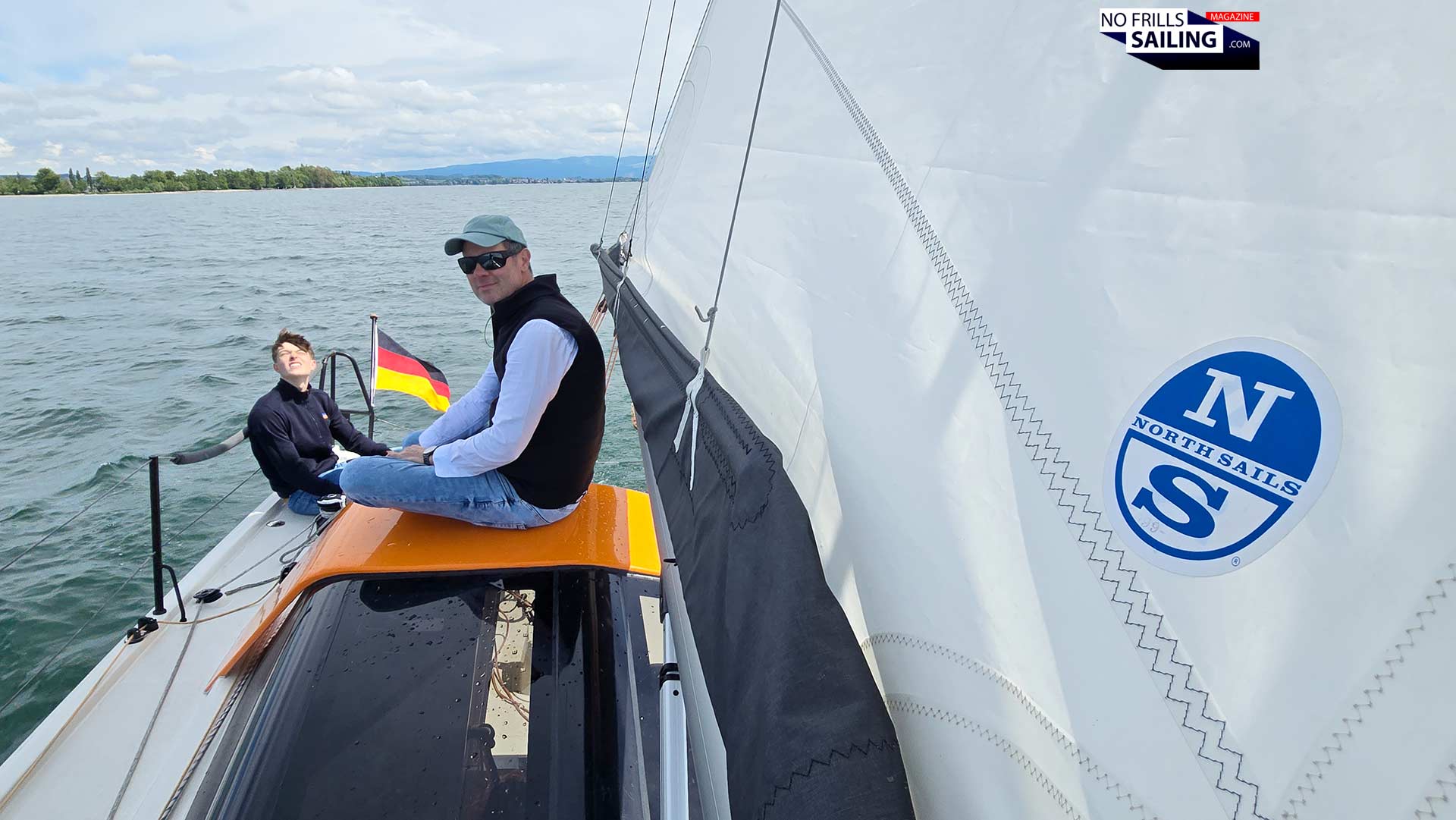
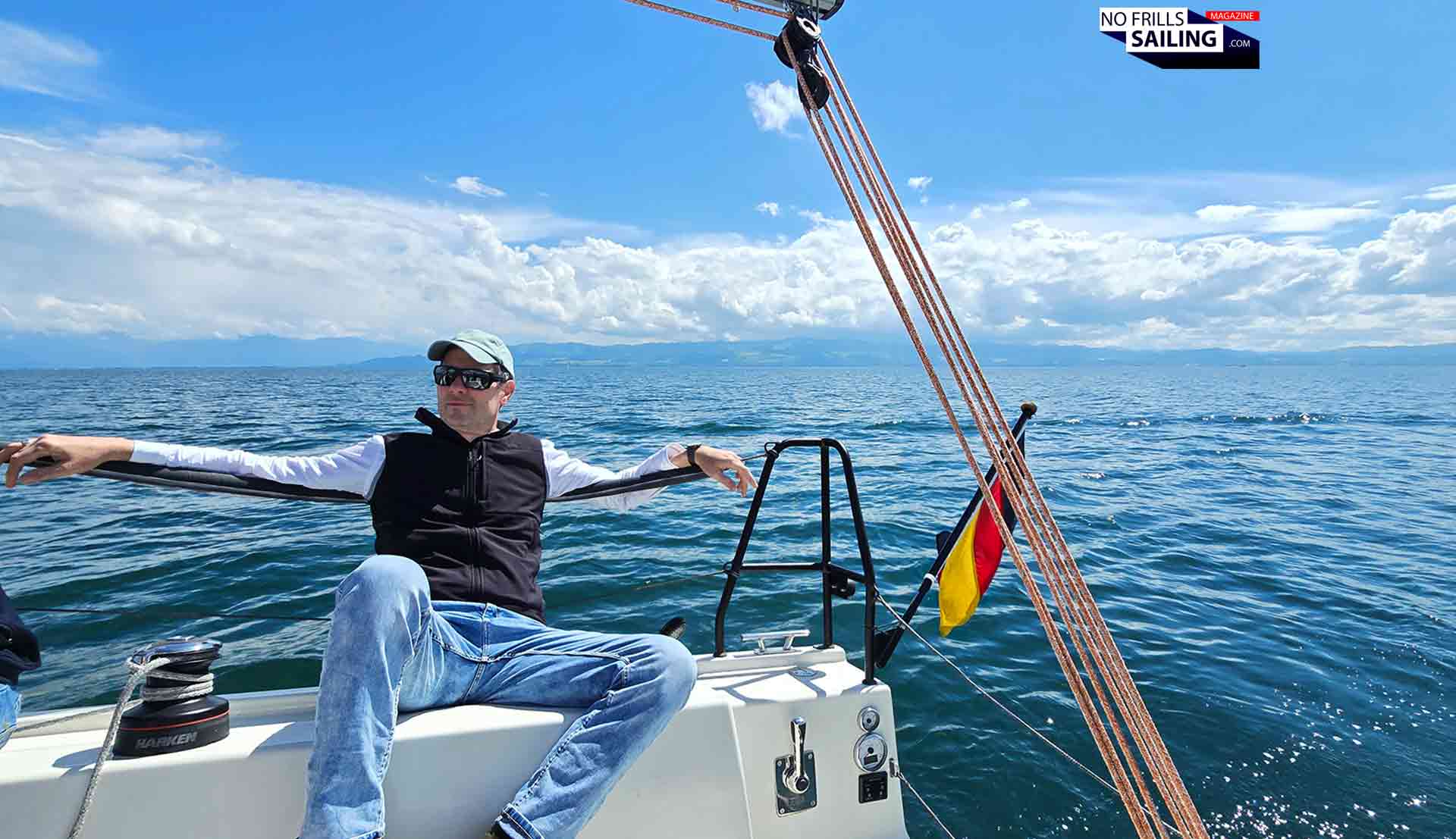
Christian´s favorite positions
He demonstrated his favorite seating positions: On top of the colorful dodger arch or leaning against it whilst sticking his feet out underneath the rail. Talking of the colorful arch: This signature feature is free for you to choose, in theory, all colors of the rainbow are possible. That said, back in the marina where many Bente boats have their home port, I will later get to see black, red, many blue-variations and also an apple-green boat. It is indeed part of the Bente-image, but it suits her agile sailing capabilities as well. She is indeed a boat for “young” people. And youth, we all now it, is a state of mind, not a number, right?
Evaluating a boat under deck
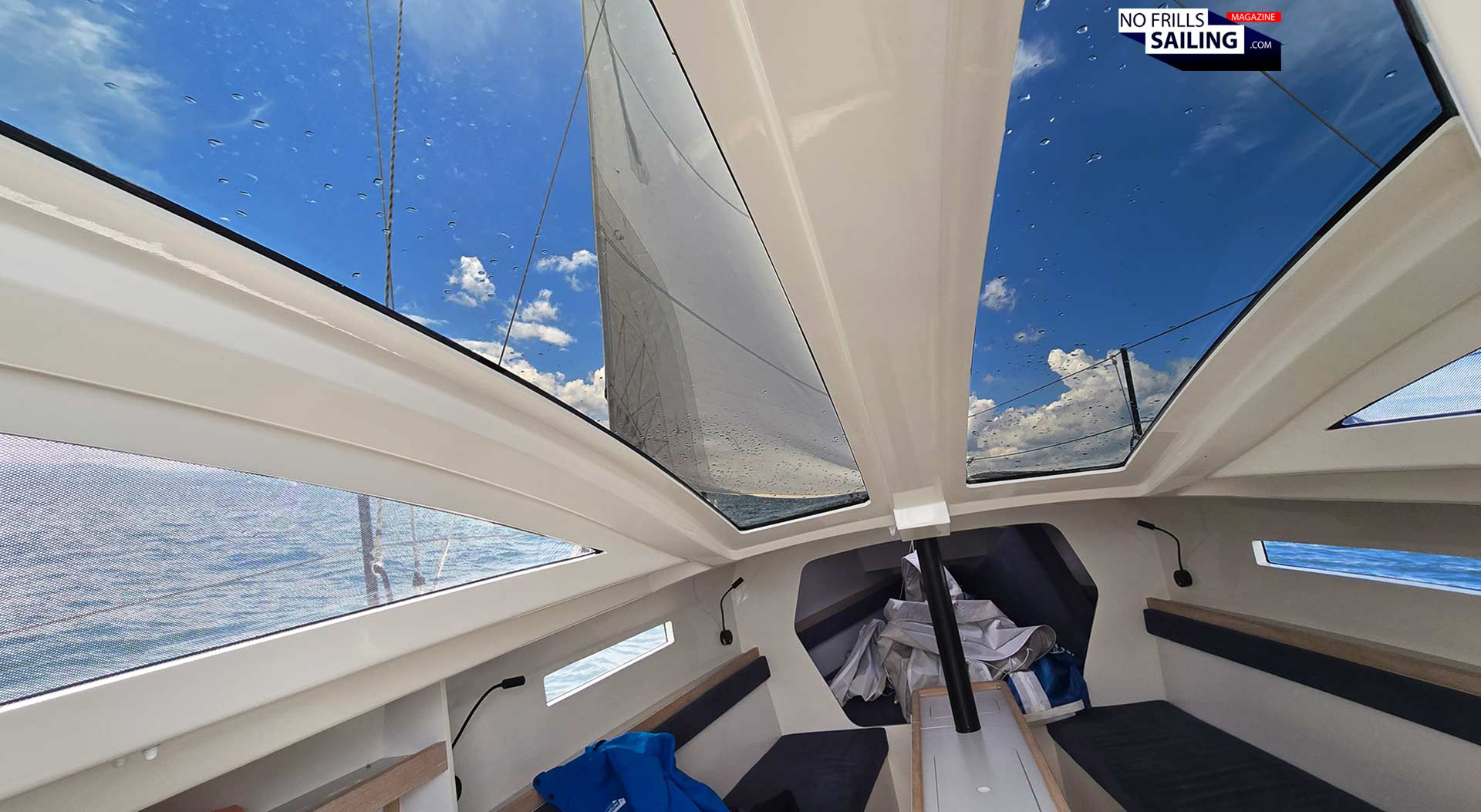
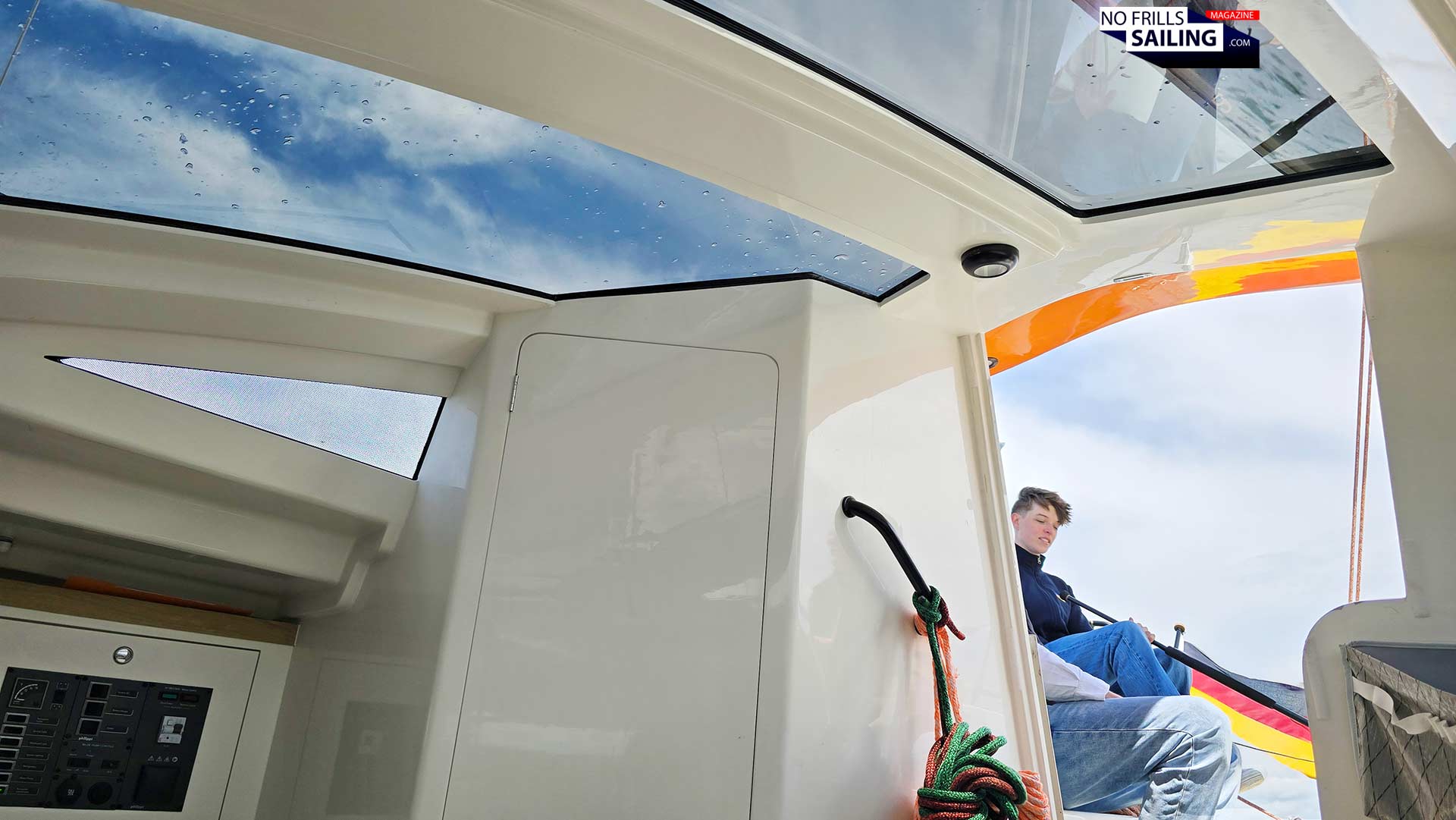
I handed over the steering tiller back to our skipper Finn again and went under deck. I do not want to show the interior here in full detail as you can just click on this link and enjoy a full in-depth walkthrough of the Bente 28 inside and on deck, made a few years ago – again with Christian being the host. But what I indeed want to put your focus on to is the amount of natural light coming through the huge glass dodger/coach roof windows of the Bente 28: This is absolutely amazing!
This is quite remarkable!
The whole boat´s interior is light suffused as the amount of sunlight entering down will reach the farthest corners of the boat. The view from inside out onto the blue sky and the sails is nothing short than breathtaking! The side windows are covered with a wrap that darkens just a tiny bit, the window-areas making the roof area are dark-tainted. Nevertheless, it´s really cool how much light still enters the boat! I would assume that people with a little disposition towards sea sickness will absolutely love it in here as you can always see what´s going on outside. Skippers, when sailing with autopilot, will have control over what the sails are doing, it´s also a great place for seeking refuge in bad weather but maintain watch.
Light suffused interiors
The downsides may be an accumulation of heat when the boat is exposed to direct sunlight. The glass-covered dodger may work like a green house, trapping heat inside. Ventilation is paramount, such as at least partial shading as well. I can also imagine that at night, when light is switched on inside, the large glass-fronts present an unrestricted view for passers-by on the jetty. Maybe then shading or obstructing the view is even more essential.
But Christian says that this is overcome by a chimney effect that will make sure that the inside of the Bente stays cool. Also, many Bente owners have their own strategies and little workarounds to deal with the cons of the large glass areas of the dodger. I believe that the pros by far outperform the downsides. Speaking of downsides: Wouldn´t it be cool if you never again miss one new article of NO FRILLS SAILING? If you are not subscribed yet, do it now: The monthly newsletter is free and contains teasers and links to every single article of the past month! That said, back aboard the Bente …
Better try a a boat at low winds!
We have been sailing now for roughly 45 minutes and have reached the farthest point of our journey. I already worked through my to-do list of things I wanted to probe the Bente 28 for: Sailing on all points of sails to determine her speed potentials were among the most important. Because, frankly, nobody wants to be on a slow boat, right? We went on to try out all major points of sails for three times so that I could determine a meaningful median. As a matter of fact, the wind began to die down soon so that TWS and of course the corresponding SOG-values decreased ever so slightly.
Wind drops …
I also checked the boat´s responsiveness to steering commands via tiller. The idea is to check her out in both frank and aggressive, large rudder angles as well as the finer, subtle steering impulses with the tiller. Latter is important for the autopilot as you would prefer it to steer smoothly and effortless, saving current consumption with lesser intense rudder-work than constant abrupt steering efforts. I found that the Bente 28 is very well balanced and really nimble, light-footed on the helm. Nice!
Time to relax
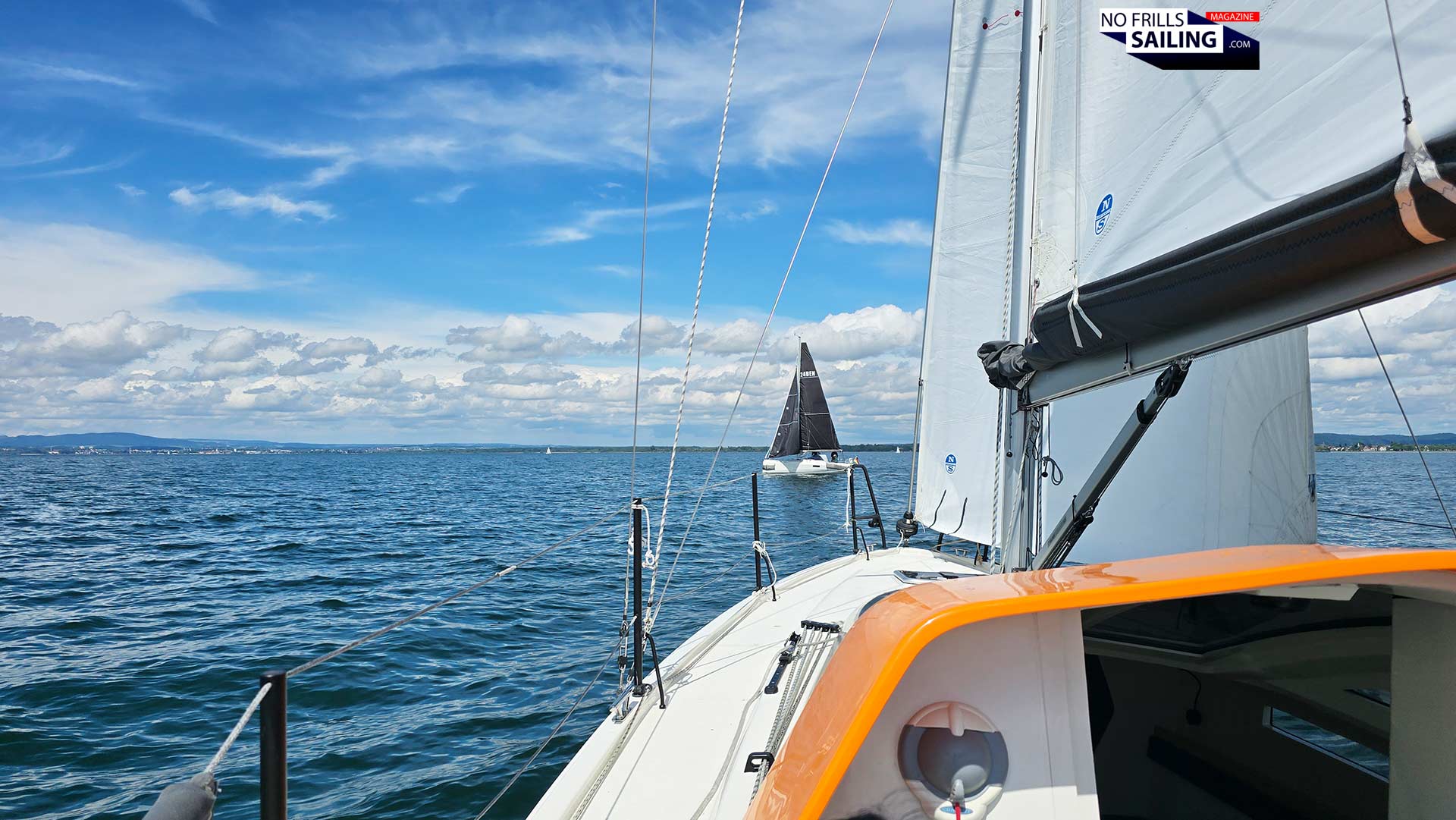
I spotted a boat in the distance, Christian was fast to identify it as a Bente 24. So I thought: “Let´s get her!” and set my sights on the fresh opponent. Both boats going upwind, it was easy to find a constant bearing and after a few minutes we were on par. The guys waved and shouted something funny, then I veered off and sailed on a broad reach back towards the entry to the marina. After a few moments, the smaller sister gybed, rolled in their jib and brought out a gennaker. Now, that´s going to be interesting, I thought. We were the bigger boat with more waterline, they had much more sails area, now sporting their light wind sail.
Let´s have a little match race
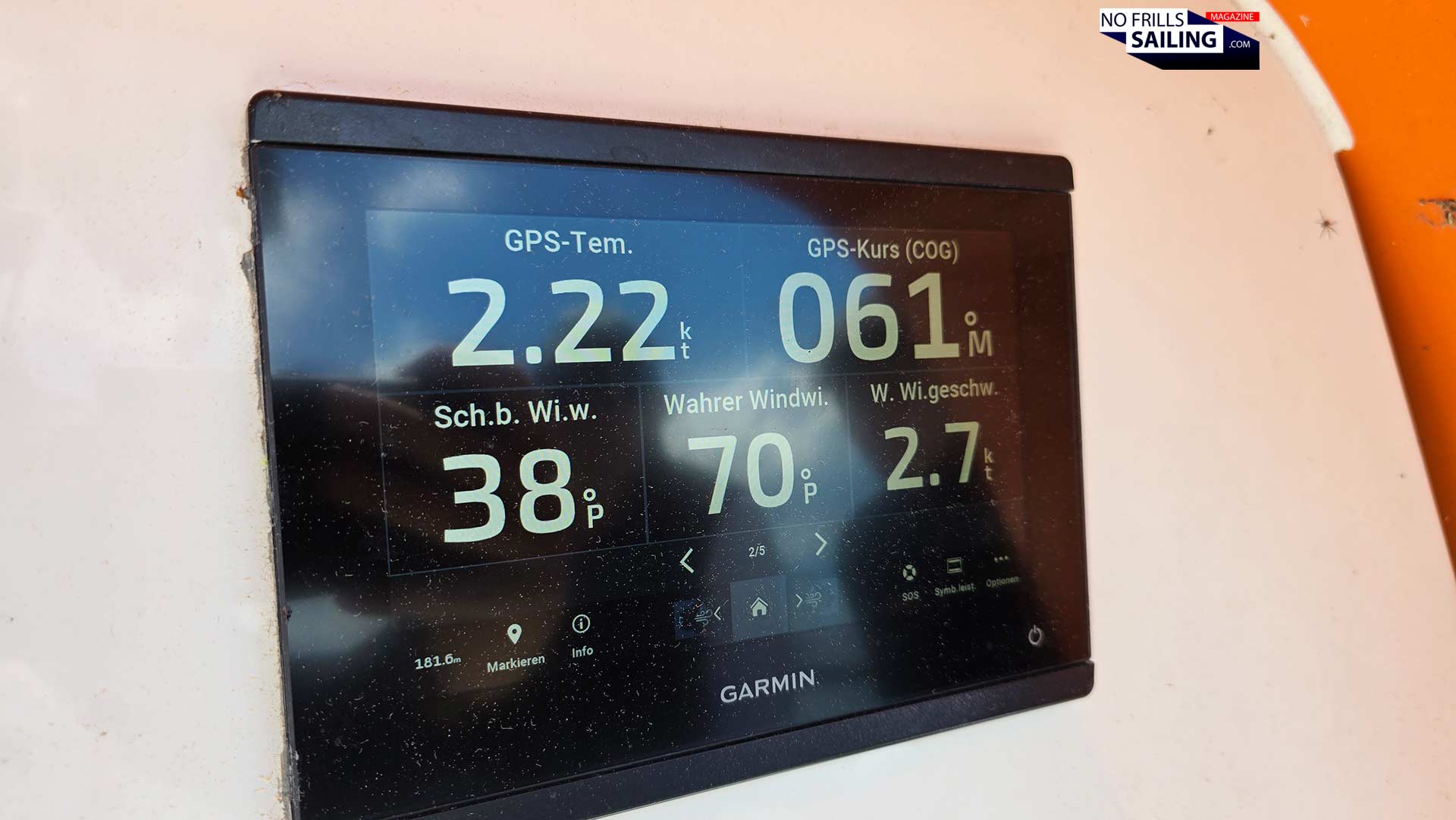
And the wind dropped further and further, now below a meager three knots. This is a windspeed most sailboats, even small one too, won´t move by themselves anymore. But the Bente 28 did! As the gennaker of our pursuer collapsed and the guys obviously had to start their outboard engine, we remained in sail-mode, albeit not very fast. But harvesting 2.2 knots of SOG out of 2.7 TWS, I would say, isn´t the worst figure. I remember a similar light wind sea trial last year, with five big beer-bellied people aboard, with equally impressive figures.
Wind drops even more
So that would be my suggestion: If you want to have a boat that is fun to sail, that is responsive and sportive: Try to have a sea trial in very, very light conditions. Try out the boat on all relevant points of sails, take nots of the values and compare those with the polar diagram delivered by the shipyard. Test her in maneuvers (tack and gybe) as well as her steering properties. If she sails well in no wind-conditions, fun will me manifold in moderate and strong breezes! And so we returned to the harbor.
Advertisement
About Bente and the future of the brand
The last couple of hundred meters, Christian talked about the Bente 28 and the future of the brand. Sales for the Bente 24 had been quite nice, with many almost 200 units already sold. The majority of which sails on inshore areas, like the Lake Constance. As for the second strike, the big Bente 39, the breakthrough is yet to come. But indeed, it´s a tough market right now with external circumstances not really helping to establish such a product. As for the Bente 28, she indeed was sitting on the sweet spot for compact sports-cruisers.
Still sailing though
The Bente 28 cannot be moved by your own car on a trailer, like her smaller sister, the 24. But her cool and fresh looks and – as we have now successfully established – her nice sailing capabilities, she should pose a serious threat to other brands and boats of this size. Yet, there have only been less than 20 Bente 28 sold by now. This is where the current crisis of hit the hardest: Lower to mid-income owners seeking daysailers and weekenders had been hit the hardest by the high prices.
Back at the pontoon
But there´s something up at the horizon, Christian tells me: With a brand new Bente 25 coming up, the young shipyard tried to minimize building costs without sacrificing quality, but also widening the range of potential clients. The new boat will be just a bit longer, but slimmer as the 24. This will increase her sailing capabilities. There will of course be the “cruising”-version with the signature Bente-coach roof as the colorful arch. But there are also two more versions. One, called the “open” will have no dodger and target more active-sailing oriented people and – something I find highly interesting – a sailboat specifically fitted with cool extras for inclusive sailing with handicapped people. This will for sure be a separate article!
The Bente family
As for now, we tie up the Bente 28 on the pontoon, put back again her dodger-tarp and I thank Christian and skipper Finn for the great day out. The Bente 28 proved to be a fun boat to sail, even in such testing conditions with almost no wind at all. I hope for the dedicated and passionate team that the can not only acquire more owners for the 28 – of which there are already boats sailing in Japan or a 24 South America, but also for the large Bente 39. I look forward to the new Bente 25, especially the version for disabled sailors and I hope to being able to present this story to you.