Boat shows are also a great occasion for smaller and new brands to showcase their products or new ideas. It´s also great for introducing new ideas or solutions to a wider public. Cannes Yachting Festival may not have the track record of being a trade fair of innovations, but now and then – if you look closely – you´ll be able to find a hidden gem. Like this one: Chantier Naval Borg of Marseille presented the in my view most interesting boat of the Festival in 2026: The “Fifty” …
“Hidden gem” may be a very worn out term, but in this case it fits neatly. Roaming the quays of Vieux Port during Cannes Yachting Festival upon arrival on my first day, I was looking for the most interesting boats about which I´d love to make a detailed article. That´s what I do on every boat show, bringing back walkthroughs or yacht-description articles for you guys. In Cannes, there´s a “special corner”, I´d say. And this year I would again found a very interesting sailboat here.
Cramped in between plastic: The beautiful “Fifty”
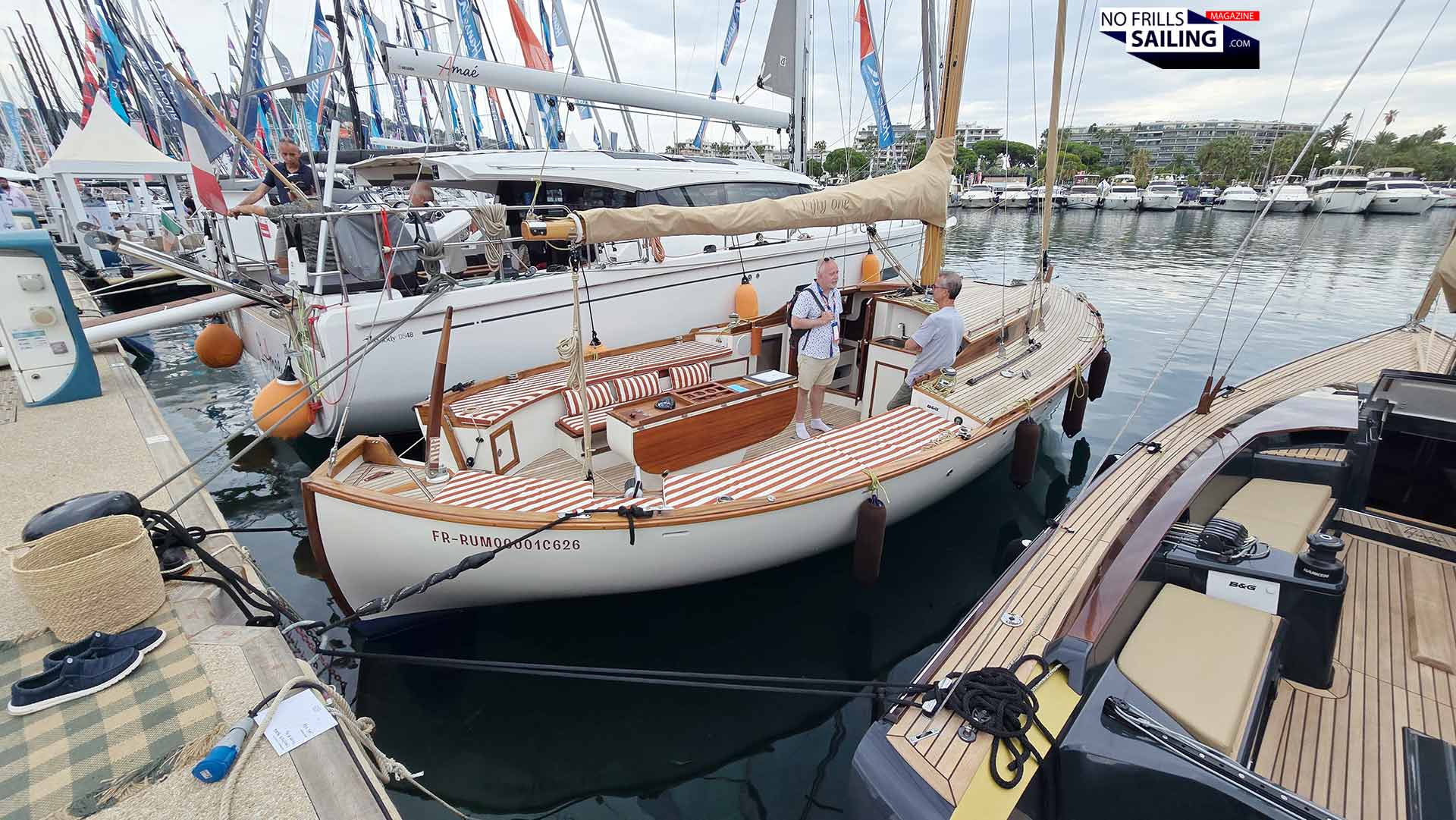
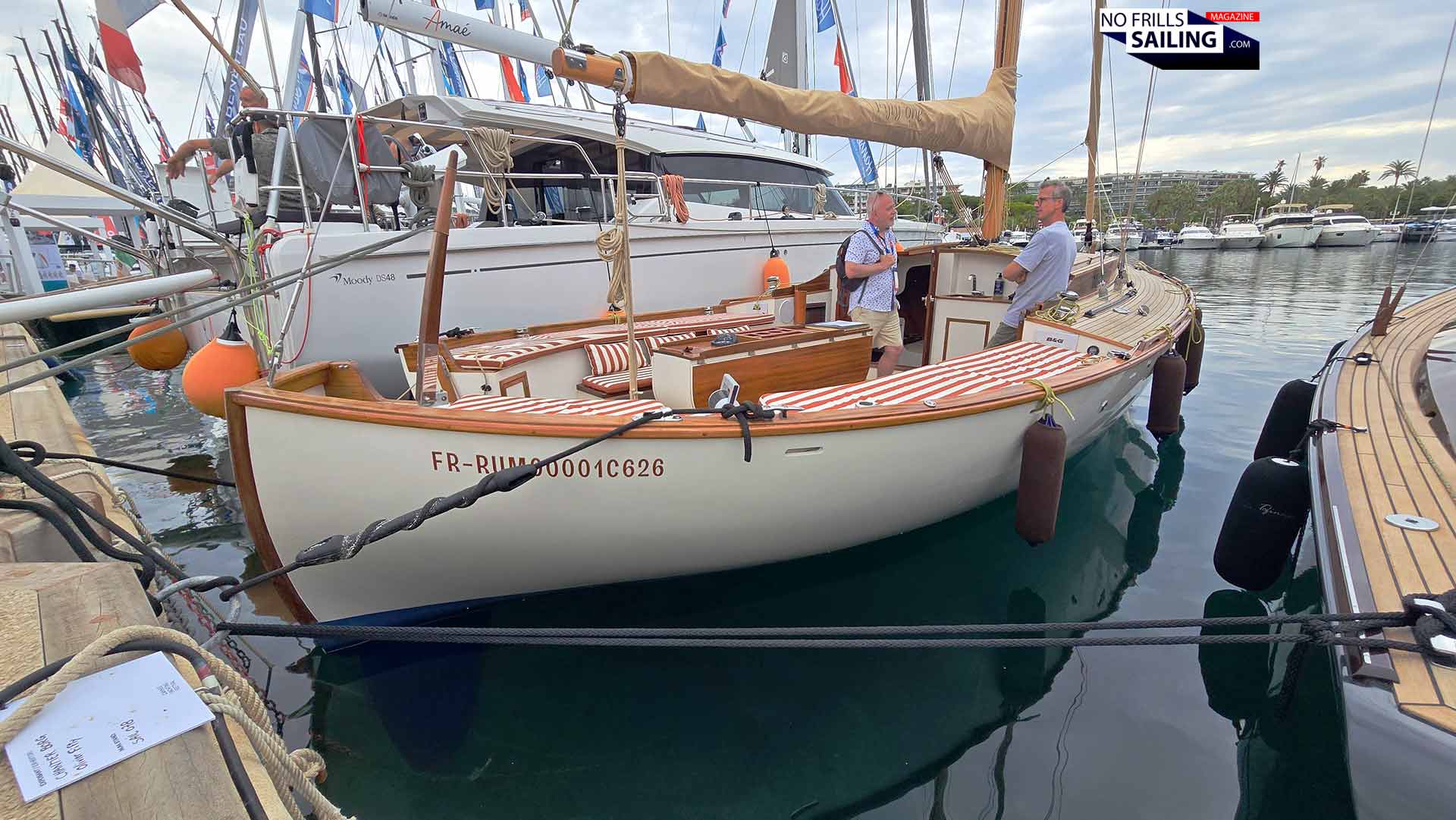
Right there at the very, very farthest end of the sailboat exhibition, literally squeezed in between a huge Polish catamaran brand and Hanse Yacht´s Moody, where two small boats. Unusually small for the Cote d´Azur boat show. Two years ago I´ve “discovered” Dutch boat brand Leonardo Yachts here with their beautiful, classy Eagle boats. This time, it was a small Toufinou and this beauty … a completely anachronistic, retro boat. A double-ender. Quite nothing like anything on display here. And: So beautiful!
Hidden between a lot of plastic
Advertisement
The stand? Not even a counter. Just a doormat to get rid of your shoes. Two guys smiling, inviting me aboard. No gimmickry, no marketing stuff anyway. Just a boat that speaks for itself. I walked by three times, spoke with one of the guys and then found half an hour of spare time to really delve into it. What was this boat all about? Where is it from and what the heck does a classy double-ender do on an haute volée show like Cannes?
A classic double-ender.
In fact, this boat is as French as French a boat can get. Built by the Marseille based shipyard Chantier Naval Borg, it resembles the traditional lines of a pointu type boat. These boats belong to a family of traditional wooden fishing and working boats which were used in the Alps-departments along the French coast about a Century ago. Very mediterranean and, if you will, “at home” here at the southern French coast. Pointus – or barquette marseillaise as the Frenchmen would prefer it to be called – would be between four and nine meters long and feature a single cabin.
This is a wooden sailboat. What a beauty!
I am welcomed by the two guys from Chantier Naval Borg who are seemingly happy that somebody “discovered” their beautiful boat. Here, at the end of the quay, literally all exhibited boats and big brands are behind you – I´d say that easily 99 percent of people walking by were in their way to the shuttle boats for the power boat harbor. So here we are: Aboard the most anachronistic, most interesting and most dissenting exhibit of the 2026 Cannes Yachting Festival. And boy, what a true beauty she was!
Made in Marseille with pride.
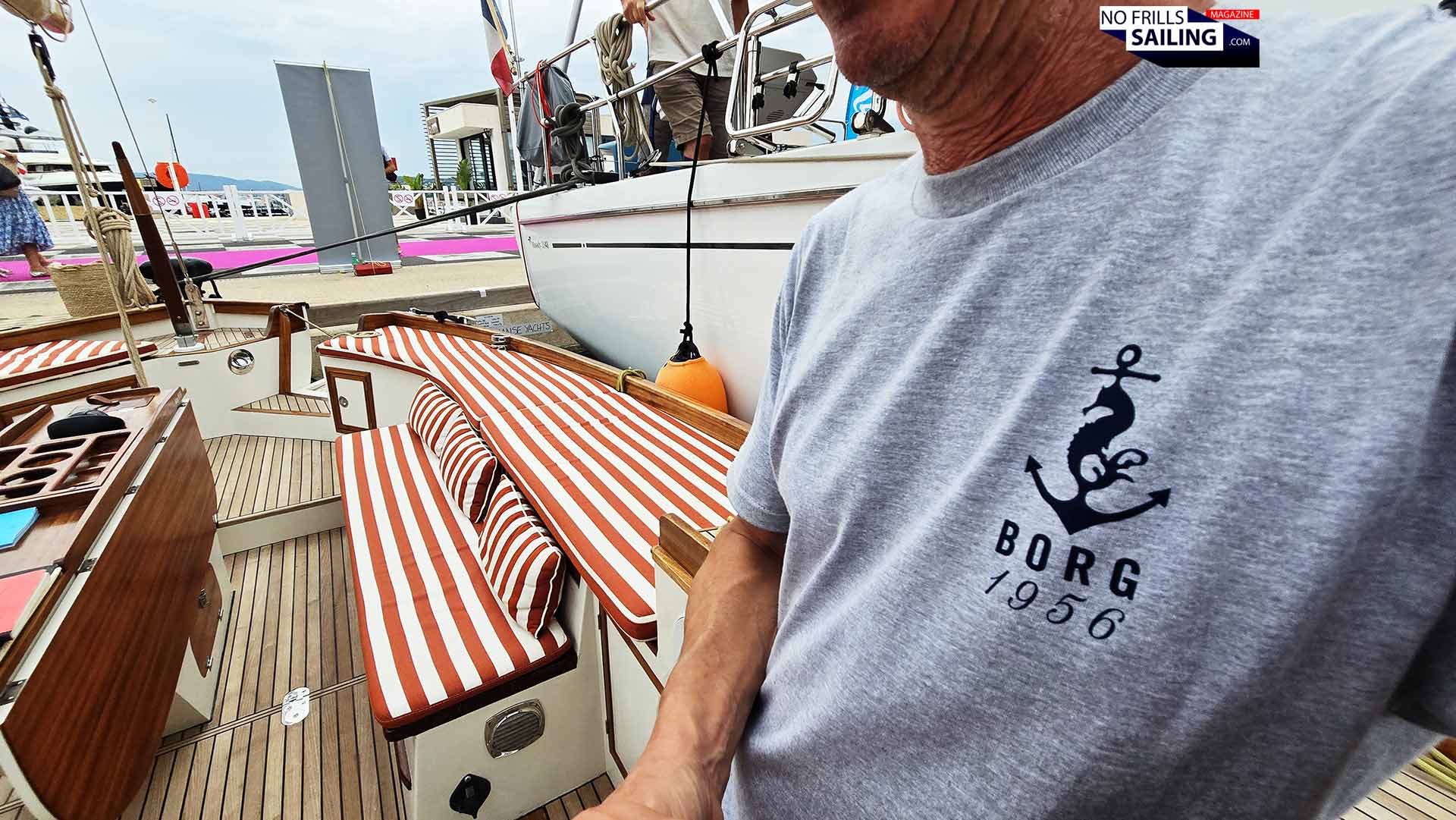
Chantier Naval Borg has been founded back in 1956 in Marseille as a wooden boatbuilding shipyard specializing in repairs and refits of timber-built boats. They are truly proud and widely renown for their carpentry skills and traditional craftsmanship, earning the prestigious “Entreprise du Patrimoine Vivant” label in 2008. This award honors companies which honors French companies that possess rare, renowned or ancestral know-how of excellence. It was their mastery of traditional boatbuilding techniques and the immense importance of the shipyard for preserving the living history of these beautiful marseillaise double-enders. But this boat, called the “Fifty”, is not a refurbished one – it´s a complete new build.
Reviving the old traditions
And as I am right new investing in the revival of an historic boat, Peter Norlin´s Omega 42, it was compulsory for me to check out their Fifty with pleasure. So the Fifty features a quite beamy hull that is some 3.5 meters wide and 9.20 meters long. This gives it a nice initial stability and enables the boat to enter shallow waters – her draft is 1.60 meters. She bears a 400 kilogram keel bulb, completing her overall displacement of 3.2 tons.
Anachronistic? Maybe. But so beautiful.
The double-ender design with the distinctive carved stem head, the capian, make her indistinguishable from other traditional designs. The Fifty is meant to be a high-end low-impact boat, skipping plastic where possible. But later more on that. She is a simple sailboat boasting sailing experience and active sailing over luxury and comforts. Which does not mean that there is no comfort aboard. What strikes my eyes first and foremost are the countless details. This little 30 footer is an exhibition of boatbuilding craftsmanship at its best.
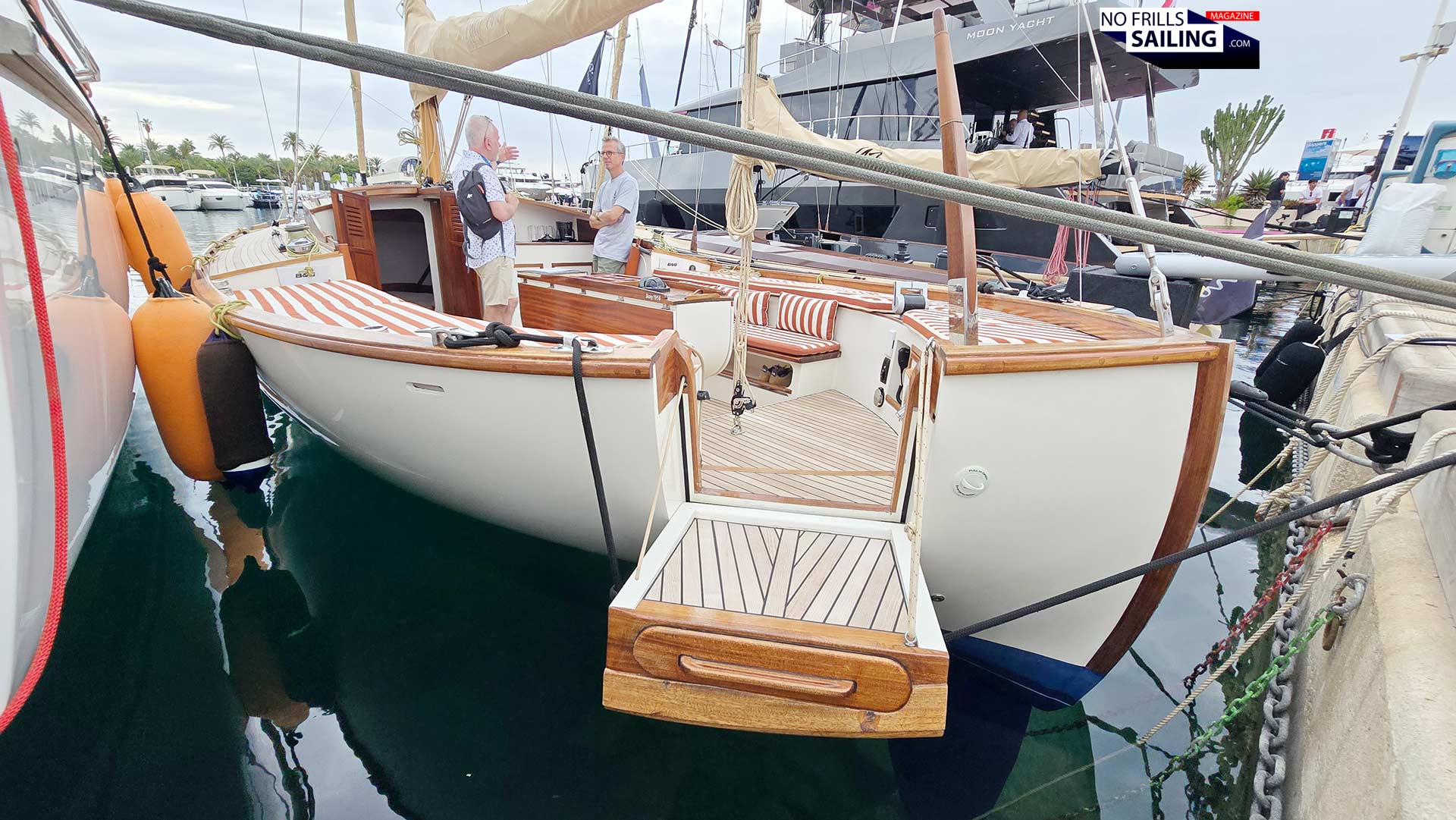
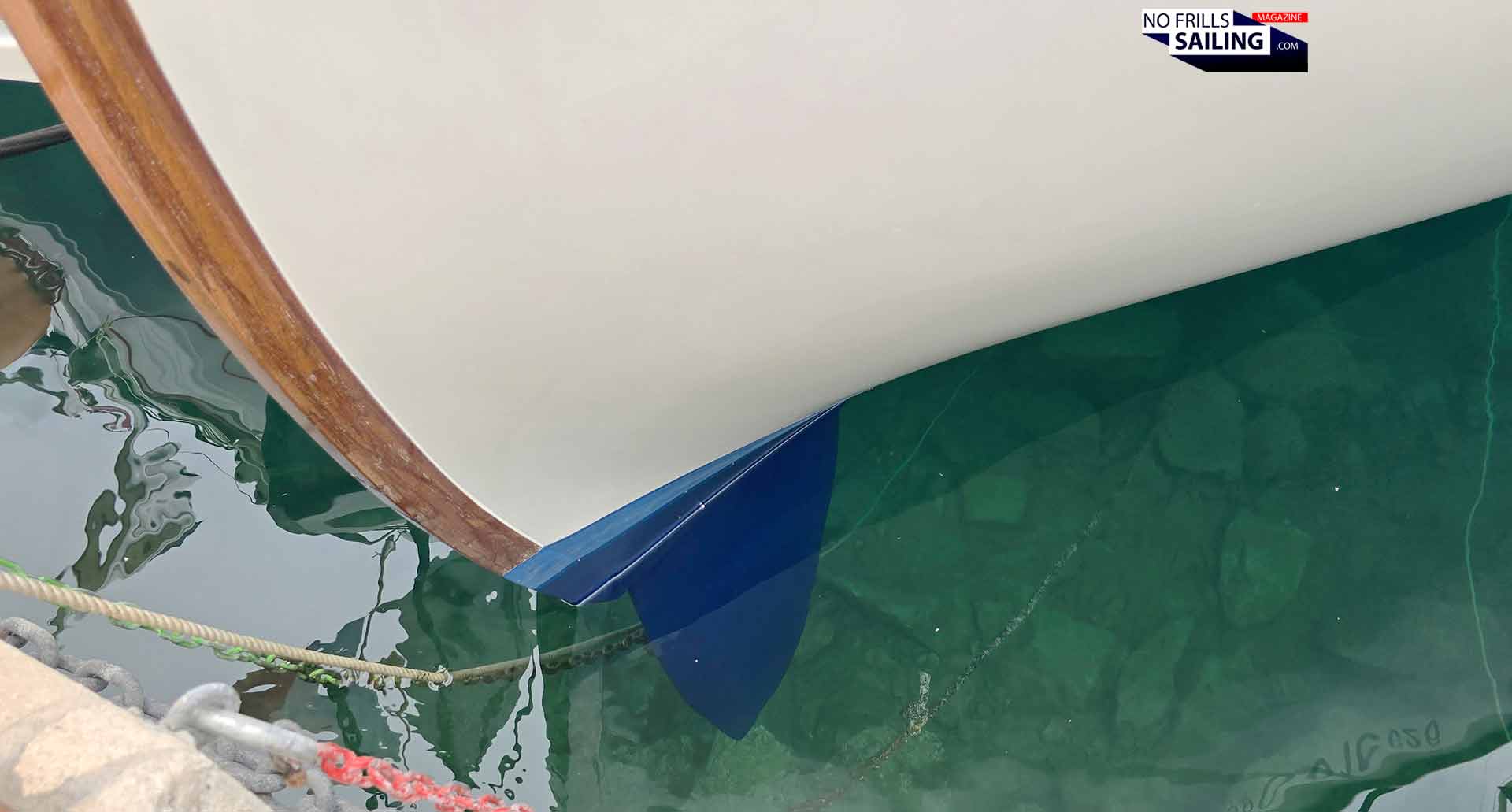
Single spade rudder on tiller.
In this, the above mentioned label honoring their significance and importance for French culture is only awarded to companies which adhere to very, very strict rules. France is known for its pride and vigilance protecting their national treasures, from Camembert to Champaign, from Croissants to … well, apparently, boats as well. Such a company must use rare equipment and traditional tools, local and authentic raw materials, it must display rare know-how and transfer this to new generations (through internships) and of course it must be anchored geographically in the said region. This award is to be renewed in a five year turn. They take it very seriously here.
Wooden boatbuilding at its best
Chantier Naval Borg deserves it and might be a role model of an Entreprise du Patrimoine Vivant for sure. The level of craftsmanship on display in the “Fifty” is breathtaking. This boat is a full wooden sailboat. Her structure is made from oak, ash, mulberry and acacia which gives it a stiff and sturdy character. Yet, the wooden framework is flexible enough to master even the worst weather which can easily occur in this area of the Mediterranean.
Details, details …
The hull is made utilizing the classic strip planking technique. In the old days, before epoxy resin, thicker planks made of pinewood had been used. The “Fifty” sports multiple layers of red cedar sheets, laminated on top of each other in alternating angles. This is a modern way of making stiff and sturdy hulls, something I´ve seen in various manufactures specializing in wooden boatbuilding. You may know that I am a huge fan of wooden boats, trying to obtain as many stories about people trying to bring back this traditional but very modern boatbuilding material to contemporary yachts. You may click on this hashtag #woodenfuture to check out many more articles on this topic. But back to “Fifty”.
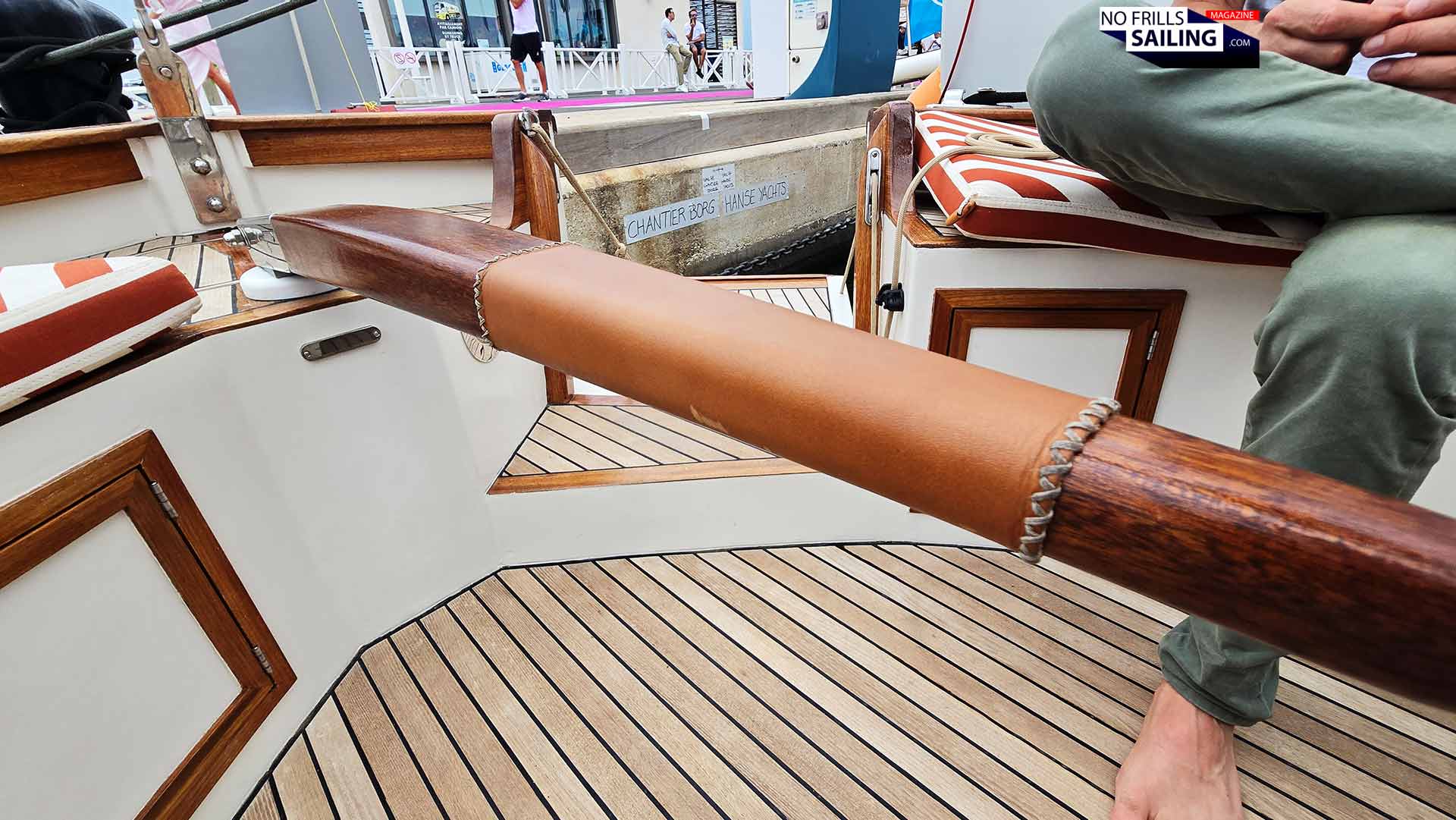
What a beautiful tiller!
Another nice detail was the tiller. As I am about to have the tiller for my Omega 42 made as well, I am constantly looking for inspiration here. I fancy the multi-layered laminated design by Linjett (check out this picture), but the tiller aboard “Fifty” was also very nice: Carved out of one massive piece of timber, it featured a beautiful thick leather handle with high grade stitching. Isn´t that just awesome to look at?
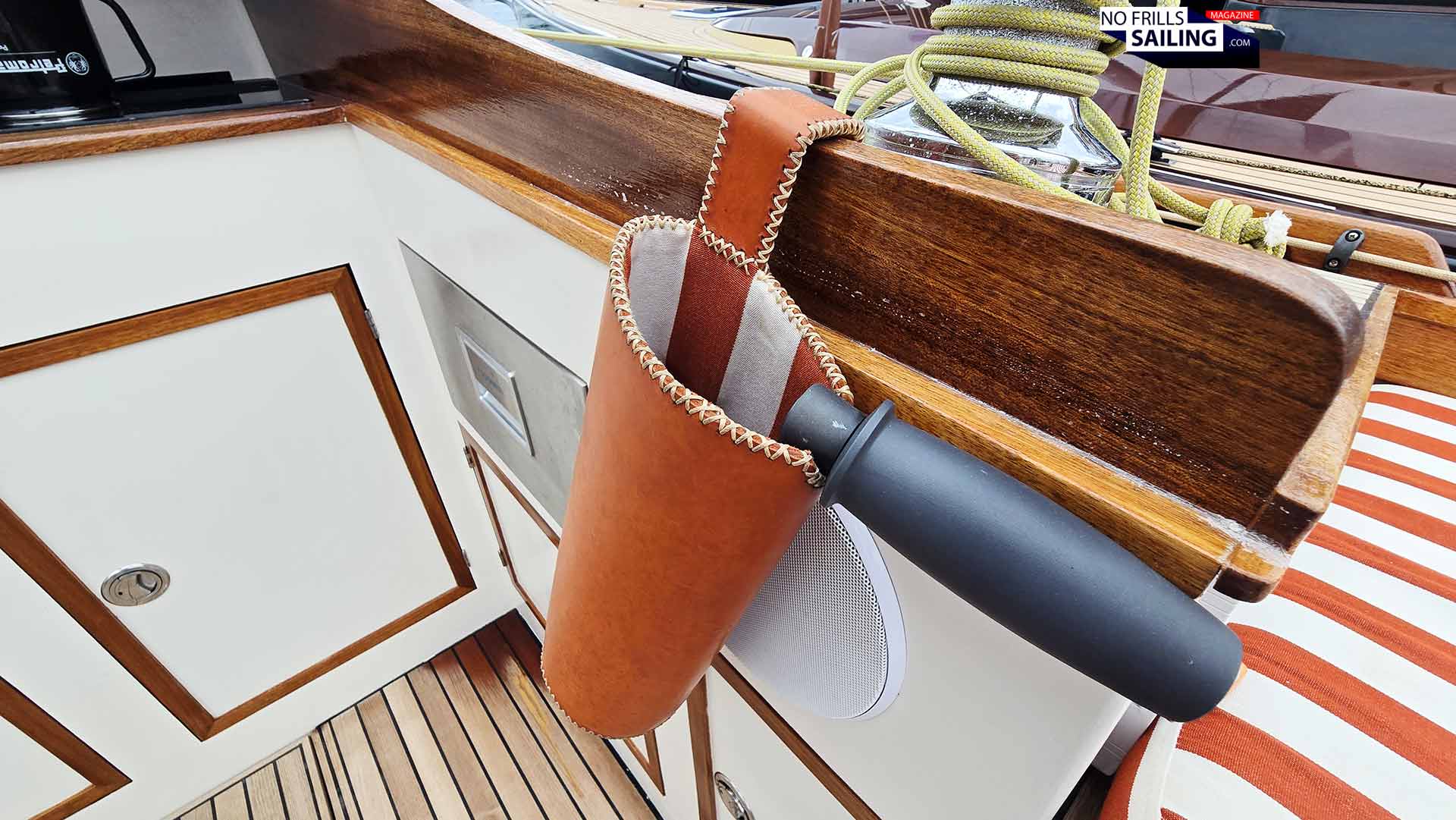
Awwww …
There´s much more leatherwork apparent in the “Fifty”: The holder for the handle is not just some plastic piece from the local chandlery. It´s a craftsman´s piece of work. Again, thick leather, nicely shaped and stitched together with great skills. A display of mastery and patience. A simple, little detail, that in turn adds so much to the overall atmosphere and effect of this boat. Simple, beautiful and lasting. Which brings us to the “theme” of this boat.
Avoiding plastic where it is possible
The “Fifty” is not a boat like any other. It is not meant to being built in the dozens or even hundreds. Chantier Naval Borg claims that it can do one or two boats per year. These are all hand built yachts. It comes with its price, that is, like always when it´s about high quality handcraft, not a bargain. 450.000 to over 500.000 Euros is the budget you should place on the desk when going for this beauty. A unique, handmade specialty. Chantier Naval Borg wants to bring back sailing like it was done a Century ago – high end, but low impact.
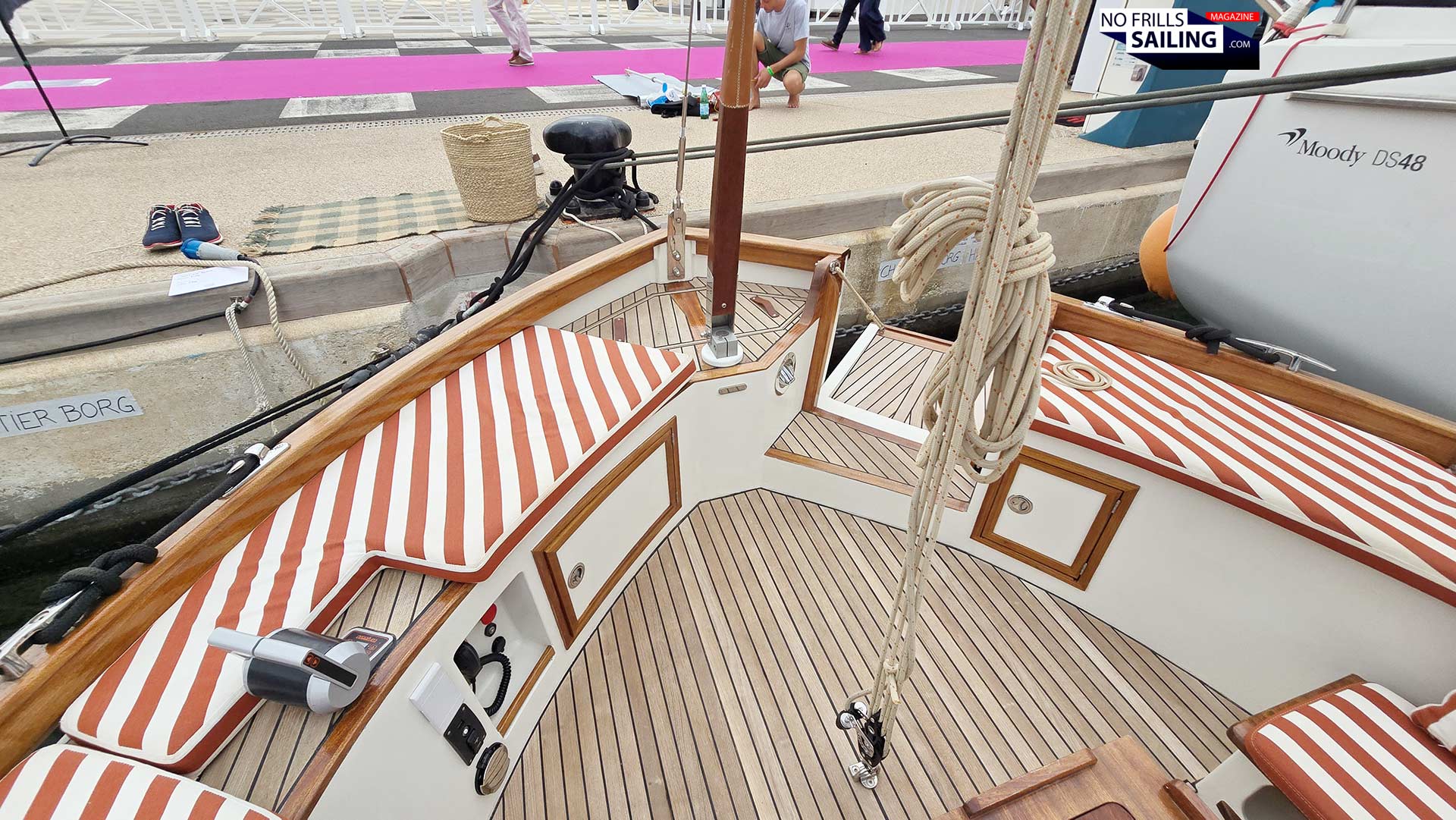
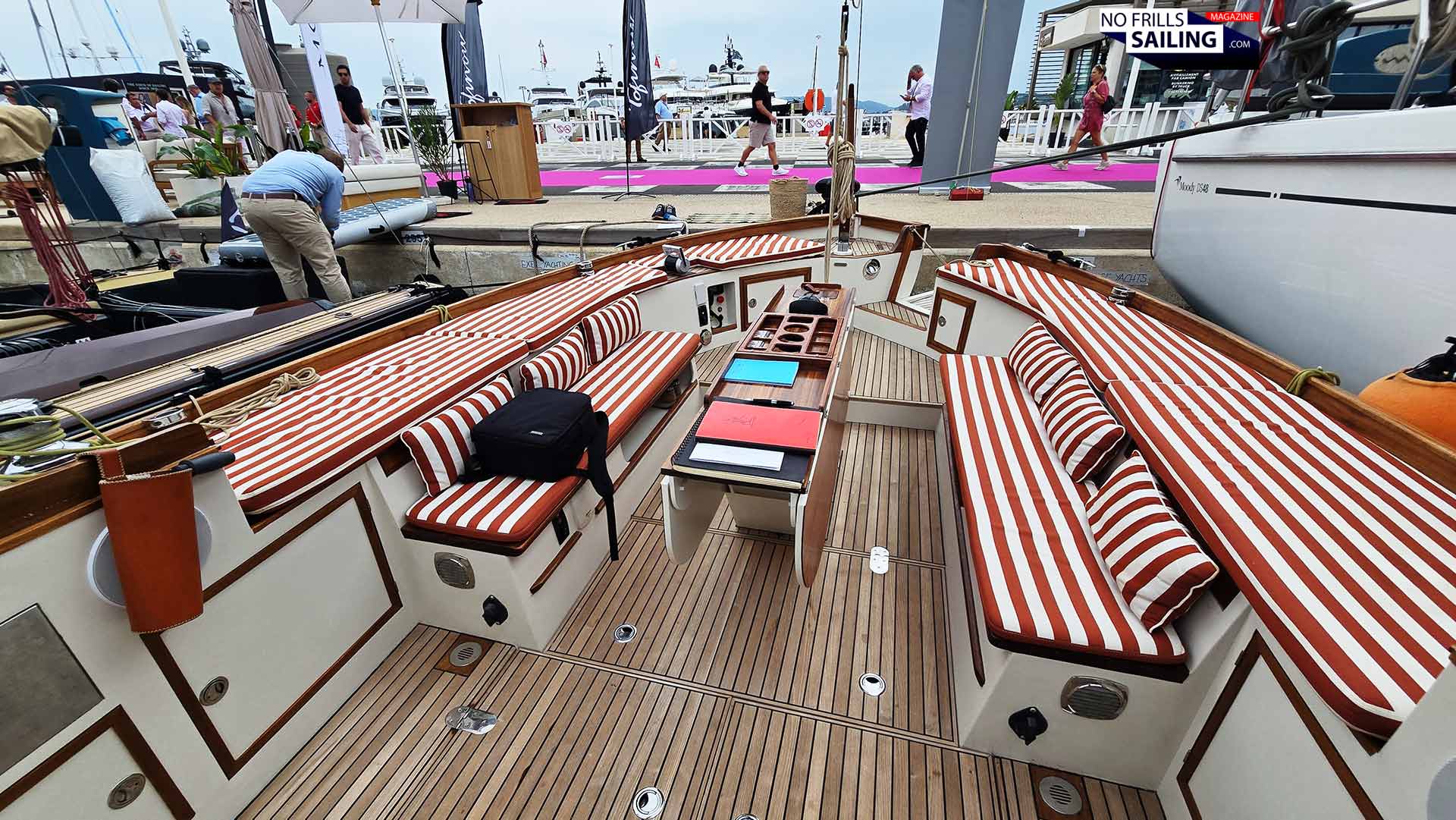
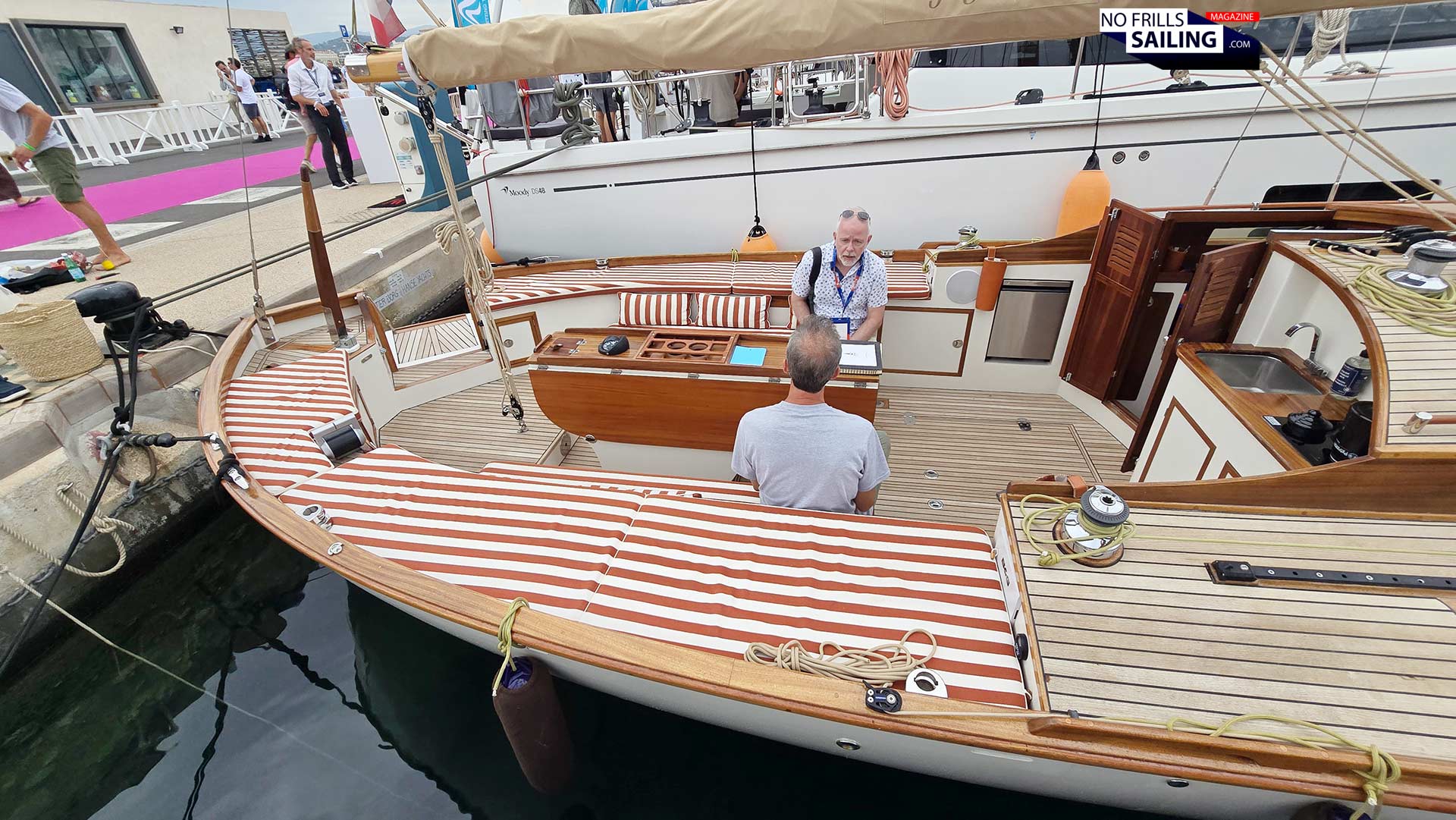
The huge cockpit seating area
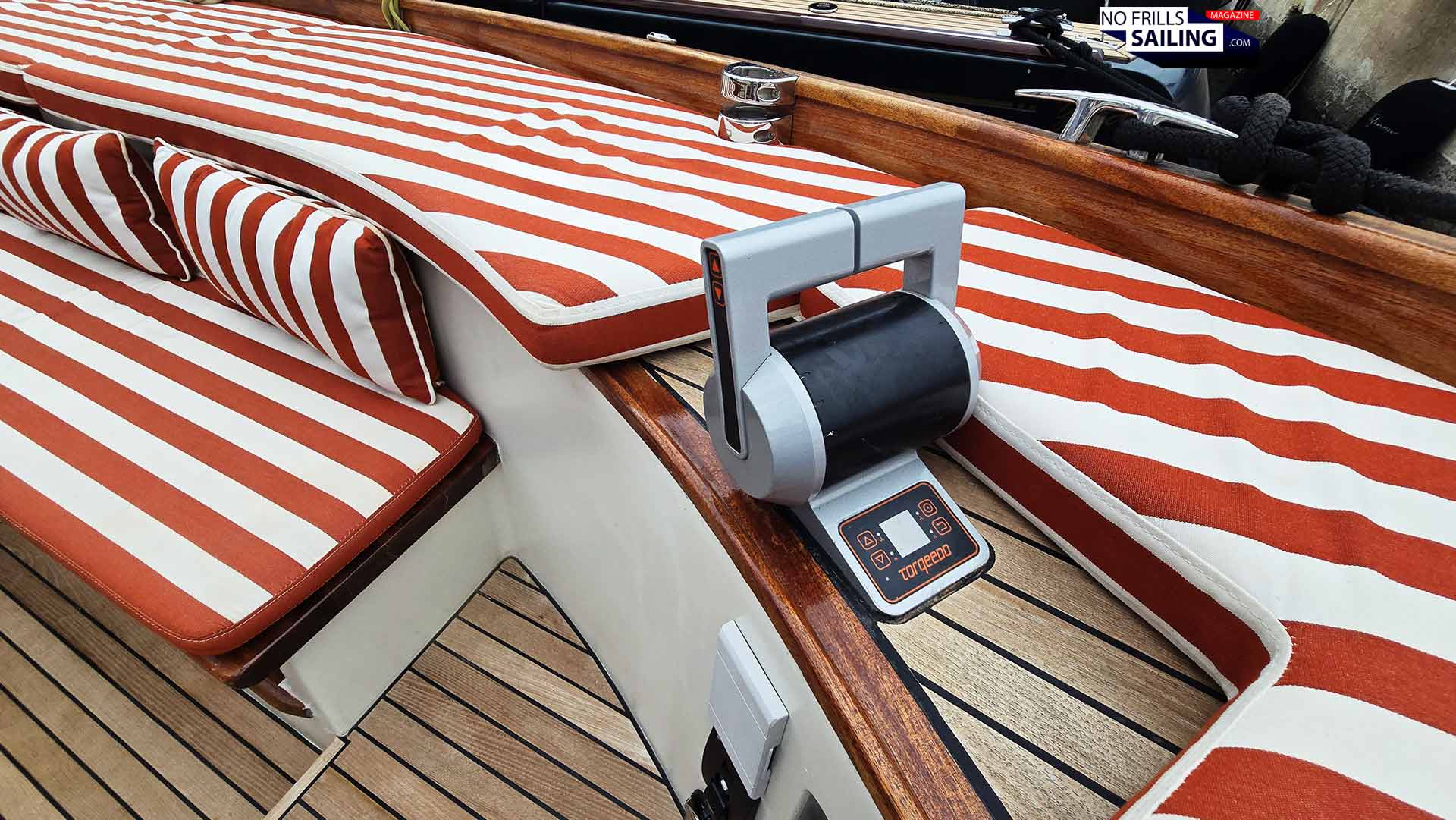
Therefore, plastic is avoided wherever possible. Of course, you cannot deny synthetic crude-oil based materials altogether, but their aim was to make as much as possible from timber or other natural materials, like leather. Everything “new”, everything that is modern technology and products, is “hidden” or mounted in such a way that it won´t disturb the clean “historic” look. A quick test on that: Can you spot the Torqeedo electric drive handle in the picture above? No? Case made.
Powered by the wind & Torqeedo
Being a sailboat, the “Fifty” as well needs an engine. Back in the days, fishermen would mount any Diesel and even petrol engines they could get. For this new build, the shipyard went for all-electric propulsion by German market leader Torqeedo. That´s not one but two 4 kWatts pod drives mounted underneath the waterline. These are powered by a 40 kWatts lithium-battery which will enable the boat of traveling about eight hors with six knots or 12 hours with five knots. But, of course, this is just her auxiliary engine. She is a very capable sailing machine by heart.
A classic rigging: Short hand capable
The “Fifty” sports a mainsail and a furling foresail which both amount to 42 square meters of sails area. That is not all too much, but she´s not a racing yacht, guys. The sloop rigged version can also be built with a cutter-rigging on request for the ambitioned sailors. With this configuration the “Fifty” is said to sail quite vividly and nimble on her single spade rudder. Back in the days, these boats were used to catch and transport fish, so you can be sure that the unity of capable hull and the power of the sails will make for a decent sailing experience.
Sloop rigged.
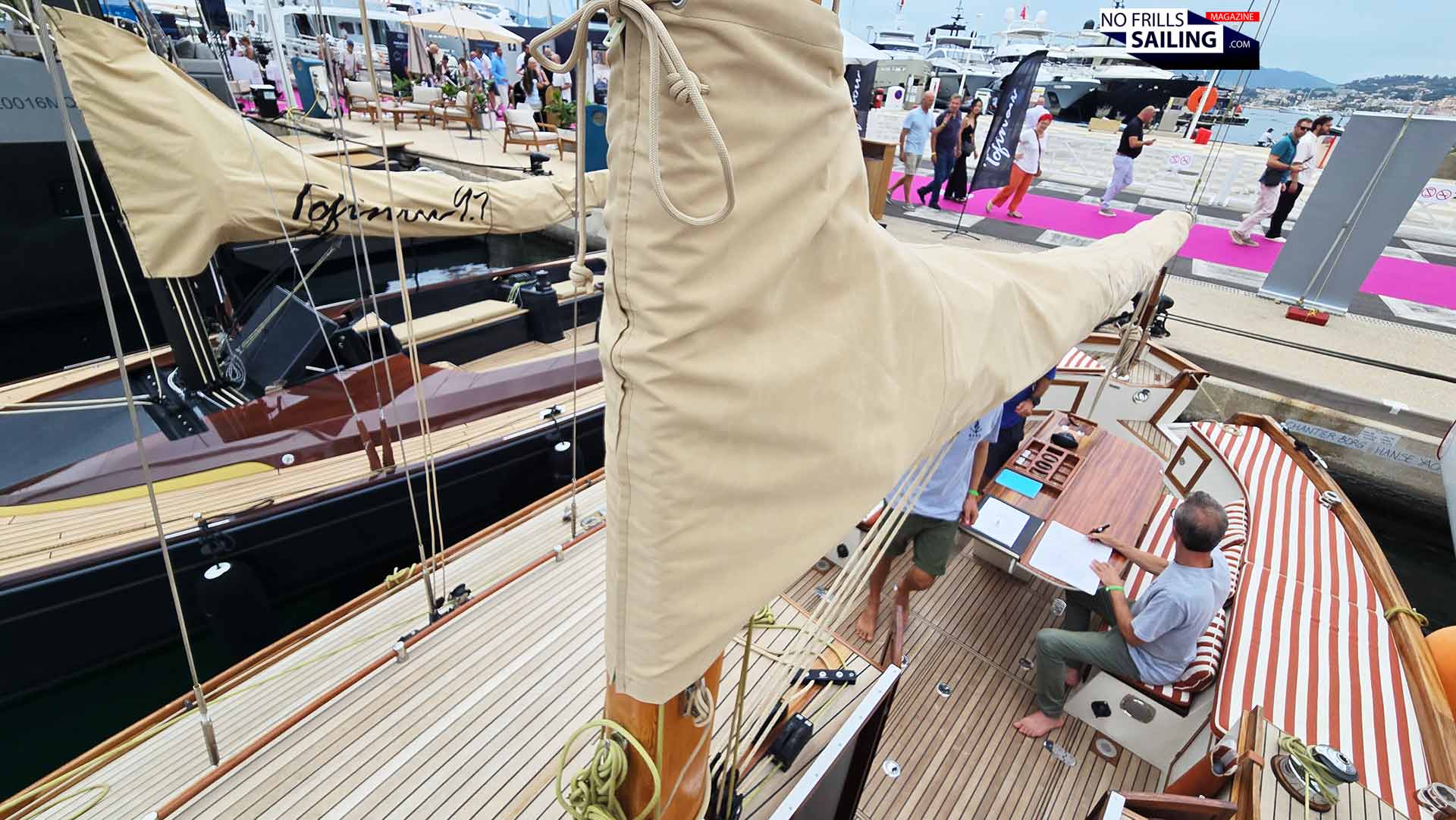
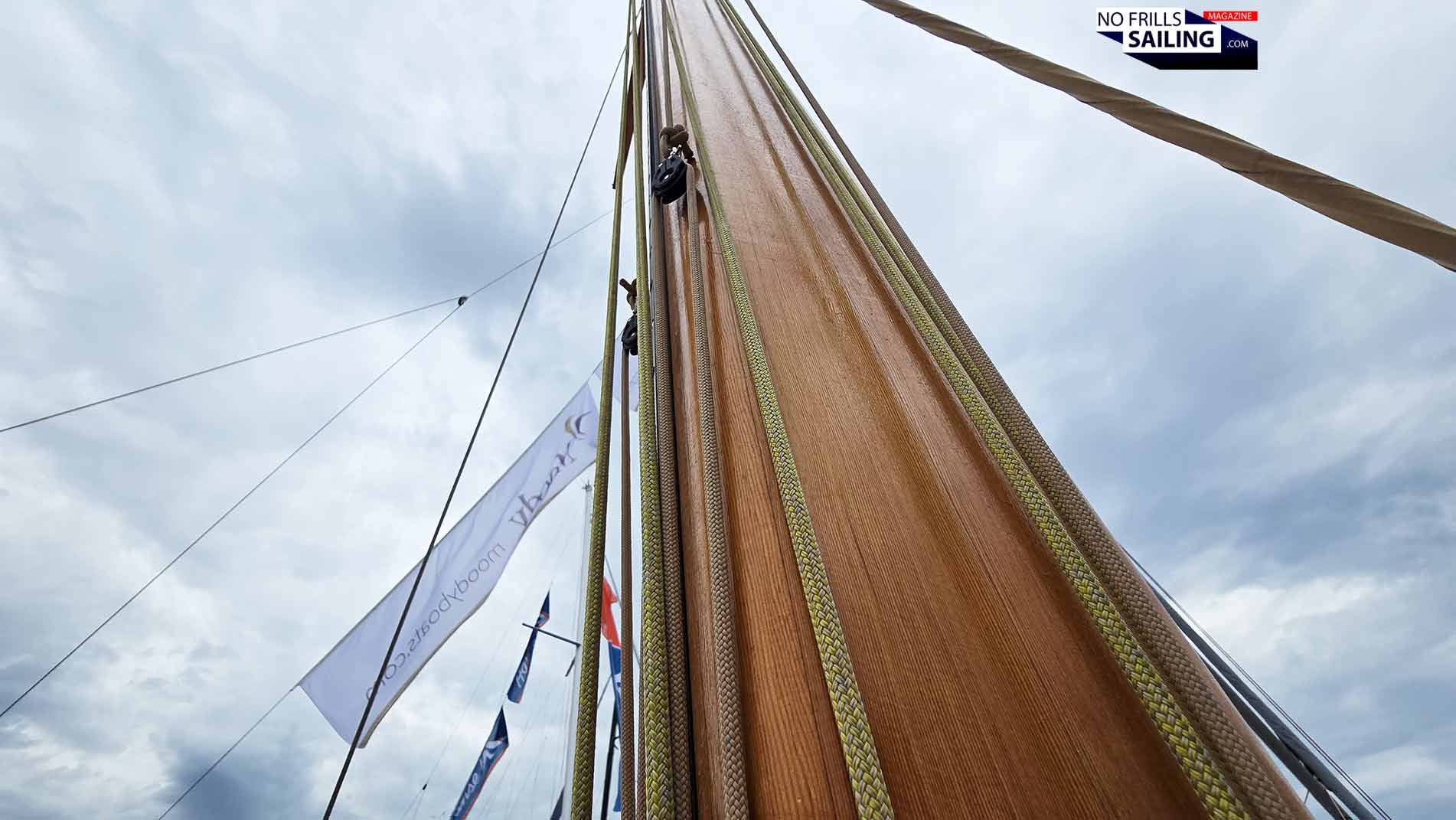
The mast of the “Fifty” as well as her boom are of course not made from modern materials. It would be a nice touch, if you ask me, if there would be a carbon mast, but of course, here we have wooden spars. The nicely curved mast is made from timber, of course. It looks like a one-piece massive mast, nicely glossy painted and made to withstand the challenges of the weather and the sun. The boom could be laminated together to achieve maximum stiffness.
A one-piece wooden mast
As everything else aboard “Fifty”, the standing rigging, especially mast and boom, are subject of customization, as the shipyard states. So maybe I could have my carbon spars at last? The ropes are of course modern. You can have classy hemp-ropes if you want, but their tear strength, stretch-characteristics and handling comforts are far inferior over modern ropes. Also, this is a decision of the owner, but even “Fifty” sported a st of modern ropes – albeit in a classy color and design.
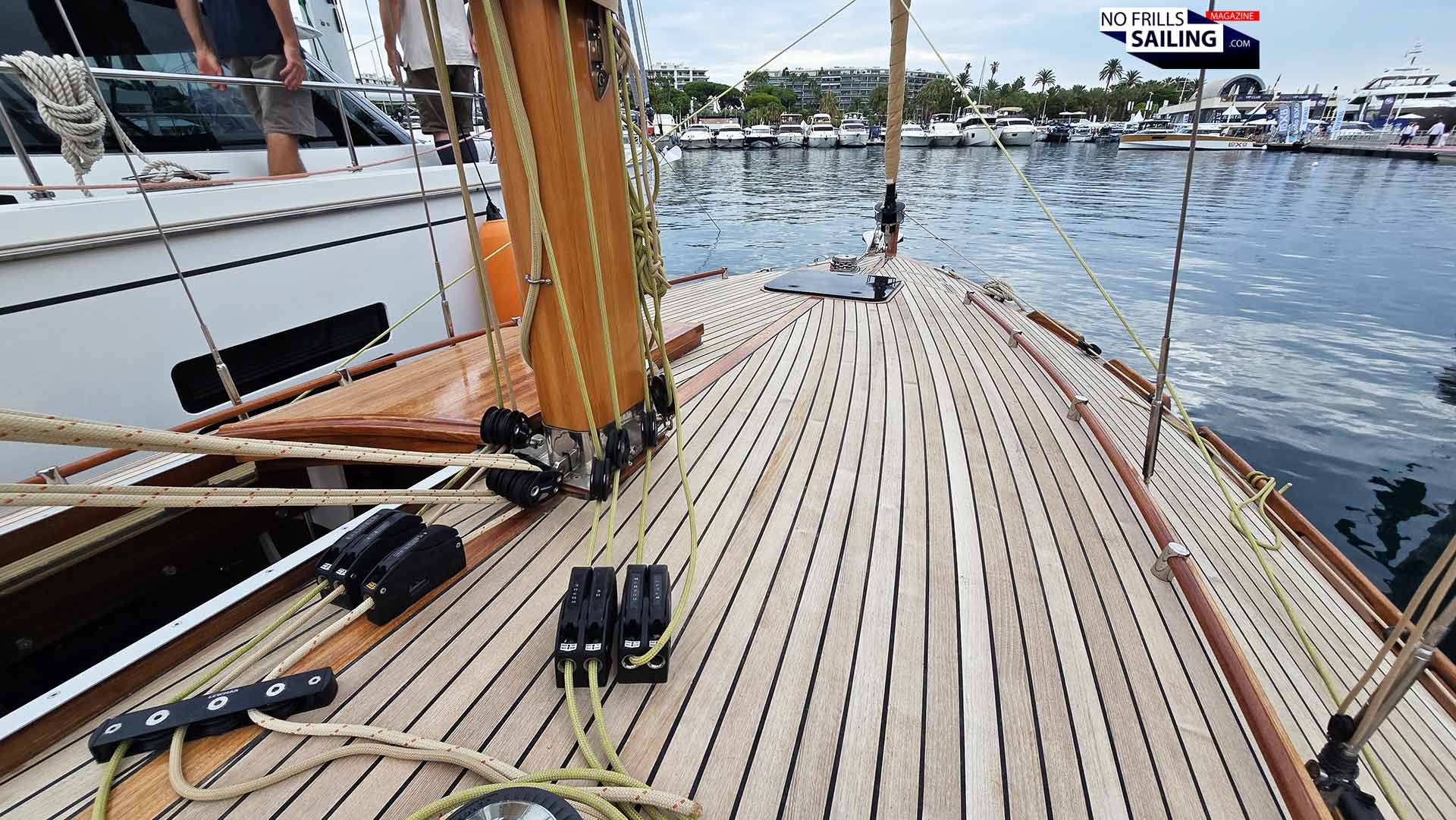
Trimmer´s working area
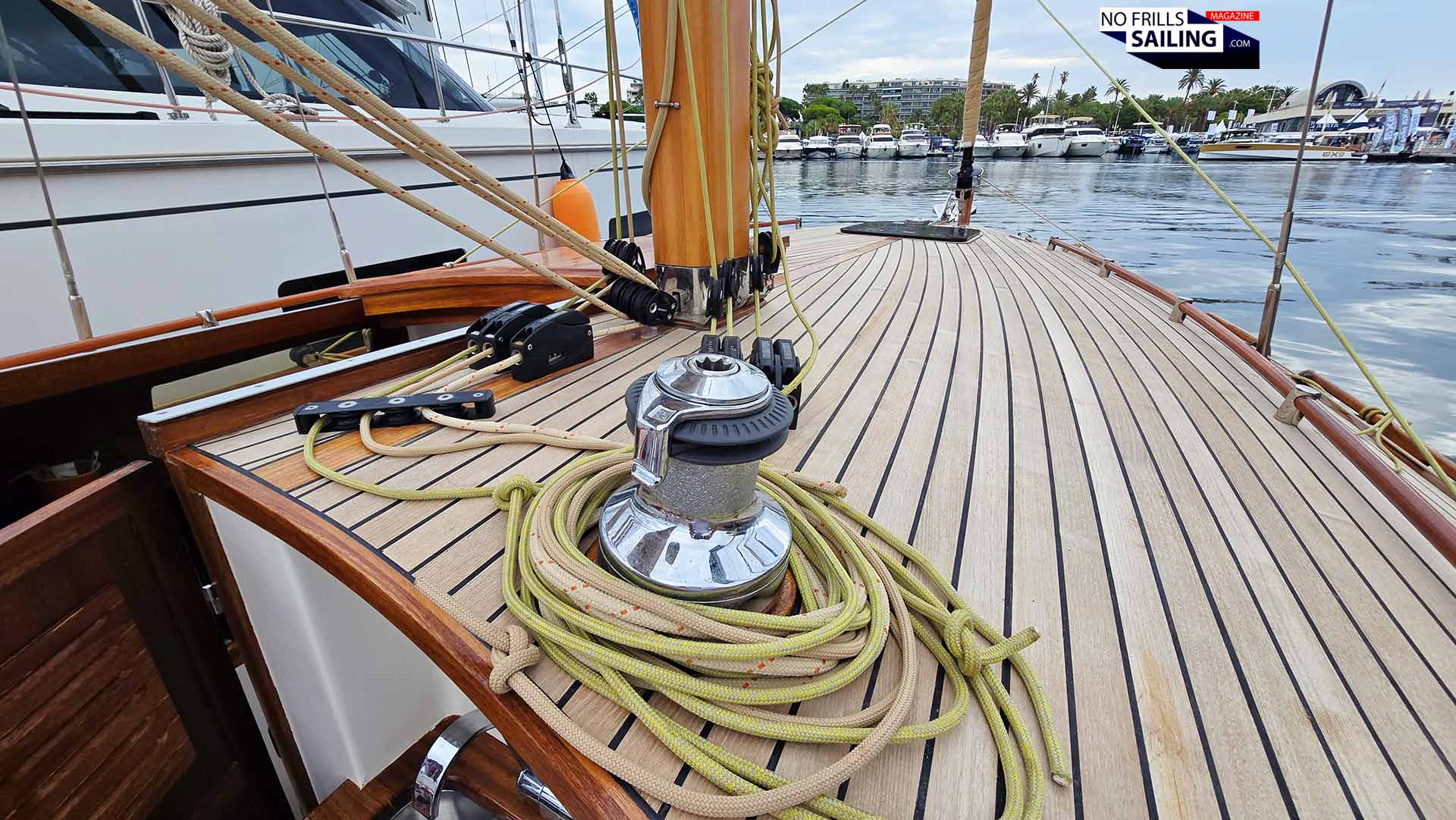
Looking at the layout for sailing the “Fifty”, it´s pretty straightforward. There are modern jammers (a concession to modern marine products and one of the rare plastic parts aboard) for handling the mainsail, reefing and trimming. Also a lashing for the boom vang and the cunningham. All of these lines are operated utilizing one single central winch mounted to the starboard side on the coach roof.
All at hand, easy to work here
The foresail of the “Fifty” is a modern Genoa on a furler, operated from the cockpit. There are two Genoa winches mounting to either side of the boat on the coamings. Standing back here in this area leaves the sail operator a lot of room to roam about and work the sails. This is much more workspace than on classic boats. Also, due to the nature of the deep deck and the high surrounding coamings and coach roof, even in bad weather and high seas you will have a safe standing and lots of grab handles to secure yourself.
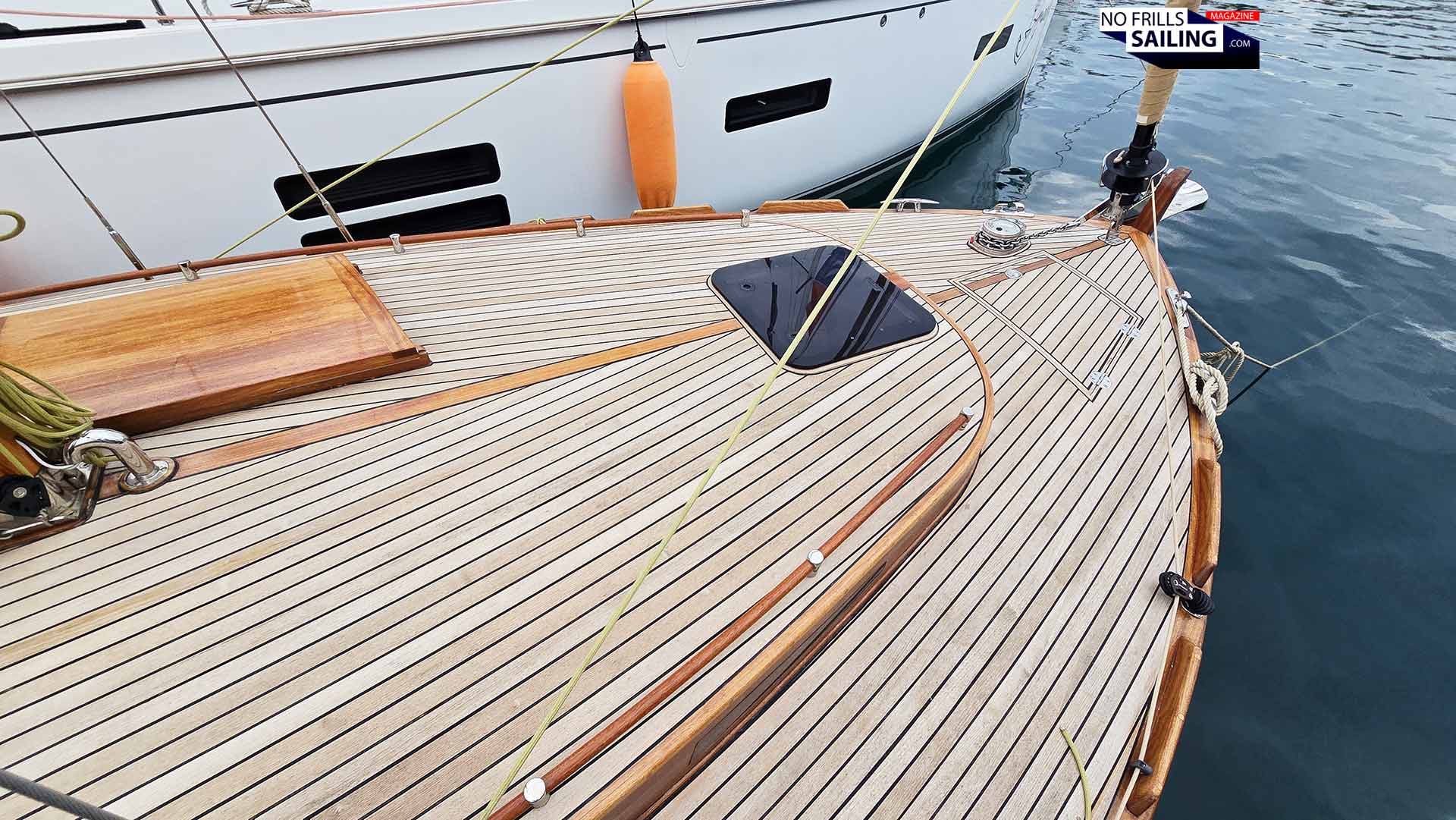
Clean fore deck: Sunbathing anyone?
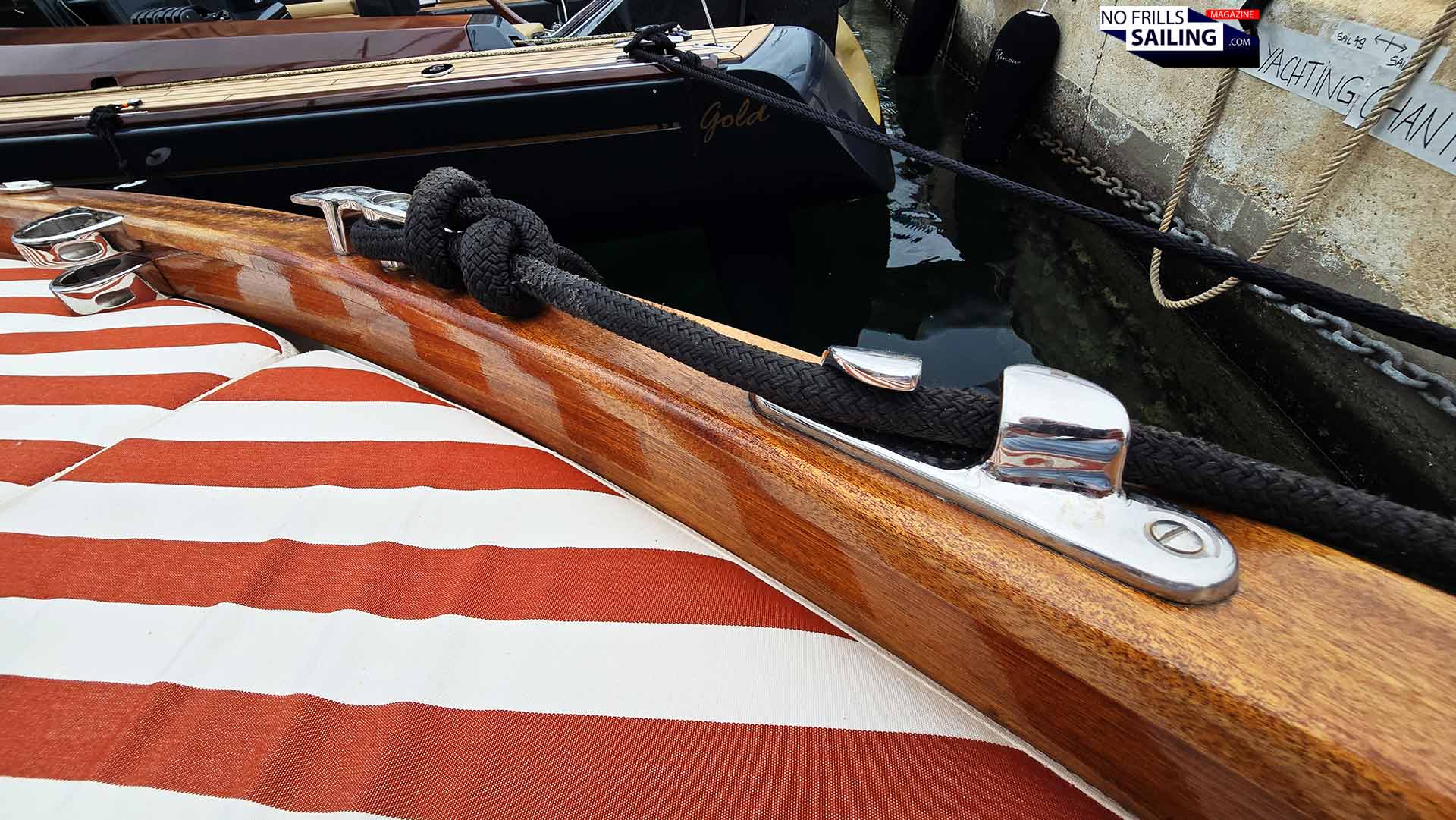
A notice on the woodwork of the deck: This is done in French acacia, which is a traditional local product. Another proof for the fact that Teak as a principal decking material can be substituted not only with PVC or other synthetic products, but also with natural material. That said, with many companies, like Beneteau Group experimenting with Iroko, “Fifty” prooves that local timber is possible. And doesn´t it look just awesome?!
Attainable dinghy cruising
So, what is this boat all about? Who is going to buy such a boat anyway? As said earlier, this is not a mass-product (anymore), with traditional fishery extinct, nobody “needs” a barquette anymore. But that´s not the point. It´s not even the point with our Omega 42-project too! I guess, the guys in the shipyard are looking for this one guy annually, maybe two, who really fell in love (!) with this type of boat. It´s not about making money. It´s about enabling people to experience something very special. Something, that is otherwise largely long gone.
Genoa winches to either side.
And I think that there´s indeed a market for a boat like this too! Two or three years ago by chance I stumbled upon the YouTube channel of an Englishman named Roger Barnes. He sails a dinghy. Not only that, he is cruising with that boat, in England but also along the northern French coast. It´s a very different, very raw and very exciting way of sailing. It combines what I called “micro cruising” and enjoyed myself back in the day when I´ve still had my GEKKO, First 27 SE sailboat. But he combines this micro-cruising with the rare, natural and very restrained comforts. It´s really worth a visit.
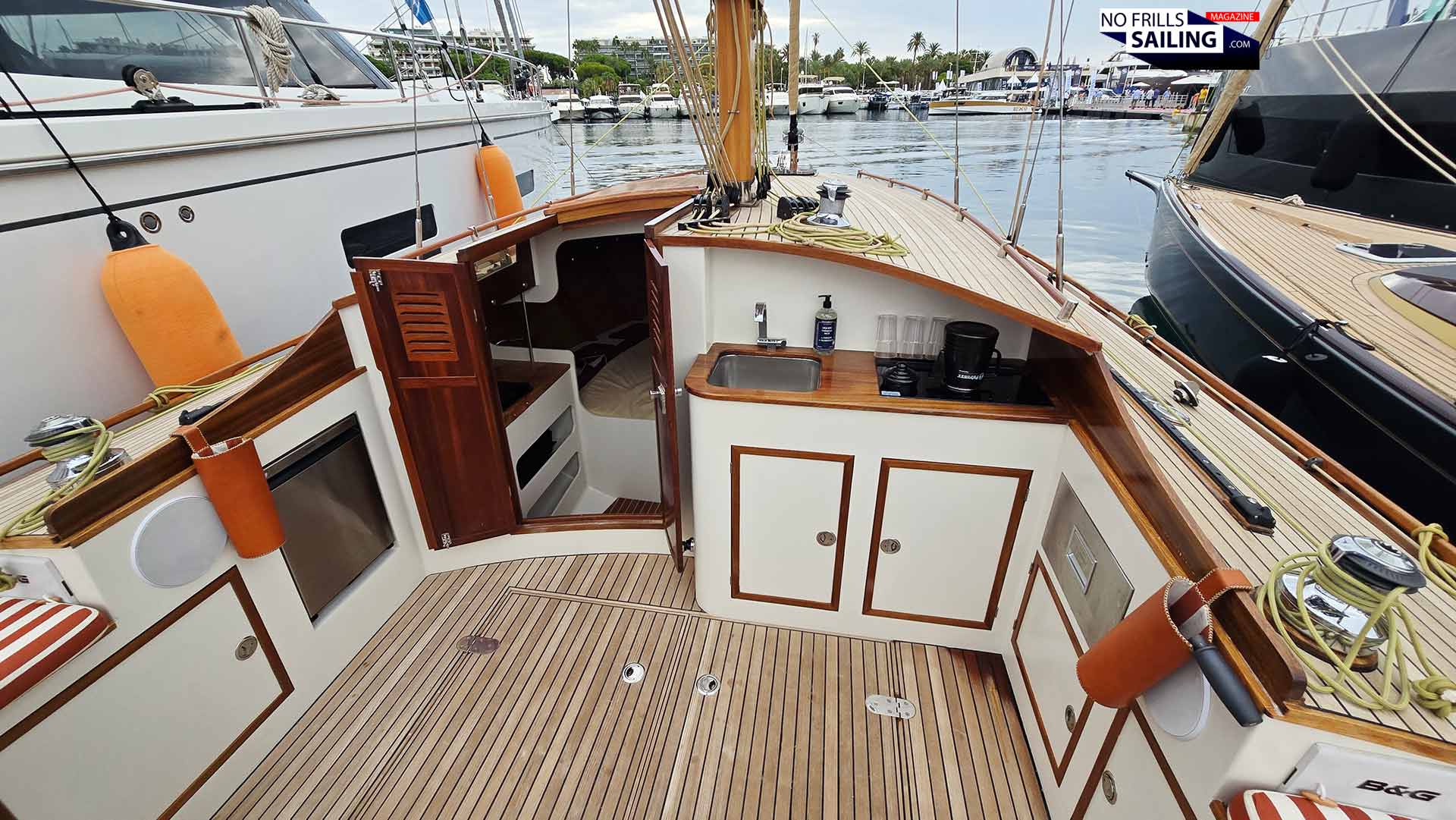
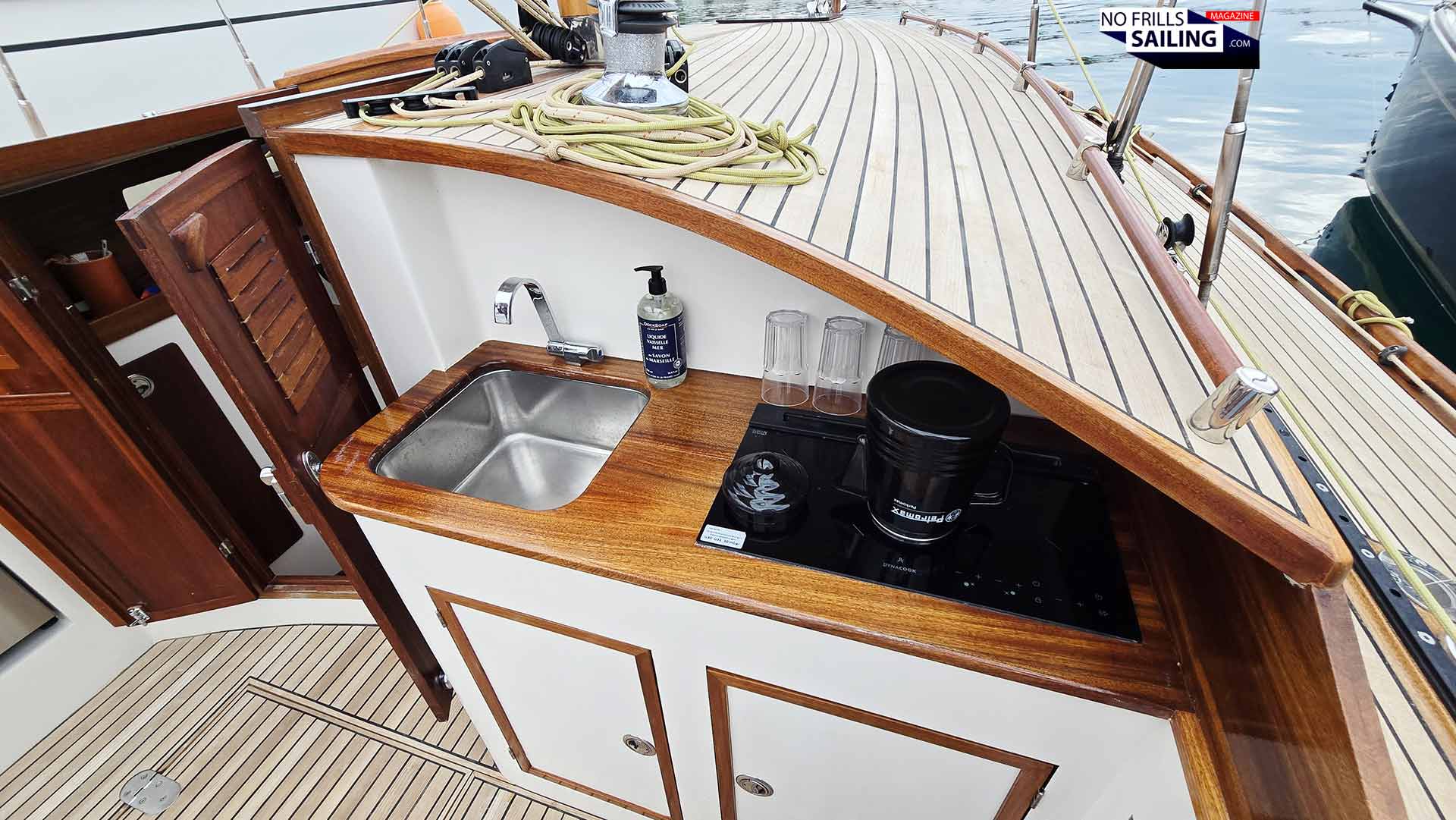
The open-air galley
“Fifty” in this might be in between: Offering at least a nice outboard galley with a modern ceran induction cooktop, a tap with a sink and some stowage. This “outdoor galley” or wet bar may also feature a fridge. Everything´s there to prepare a nice simple one-pot meal or your hot beverage underway. That said, this is a true “nice weather boat”, of course. I cannot really imagine this in higher latitudes or in sailing areas with lots of precipitation though. But let´s check out how it is like under deck.
Under deck: Onboard comforts
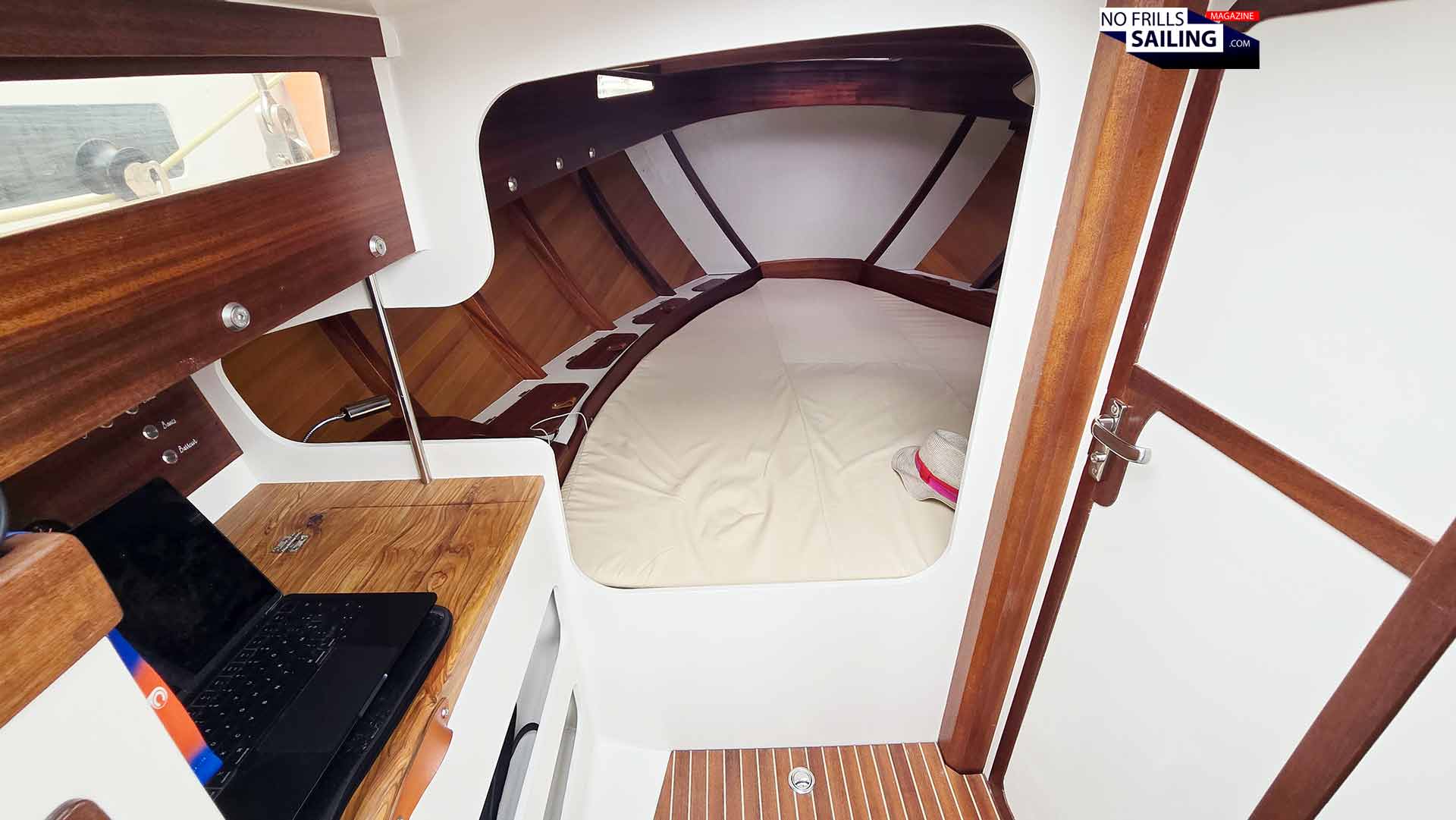
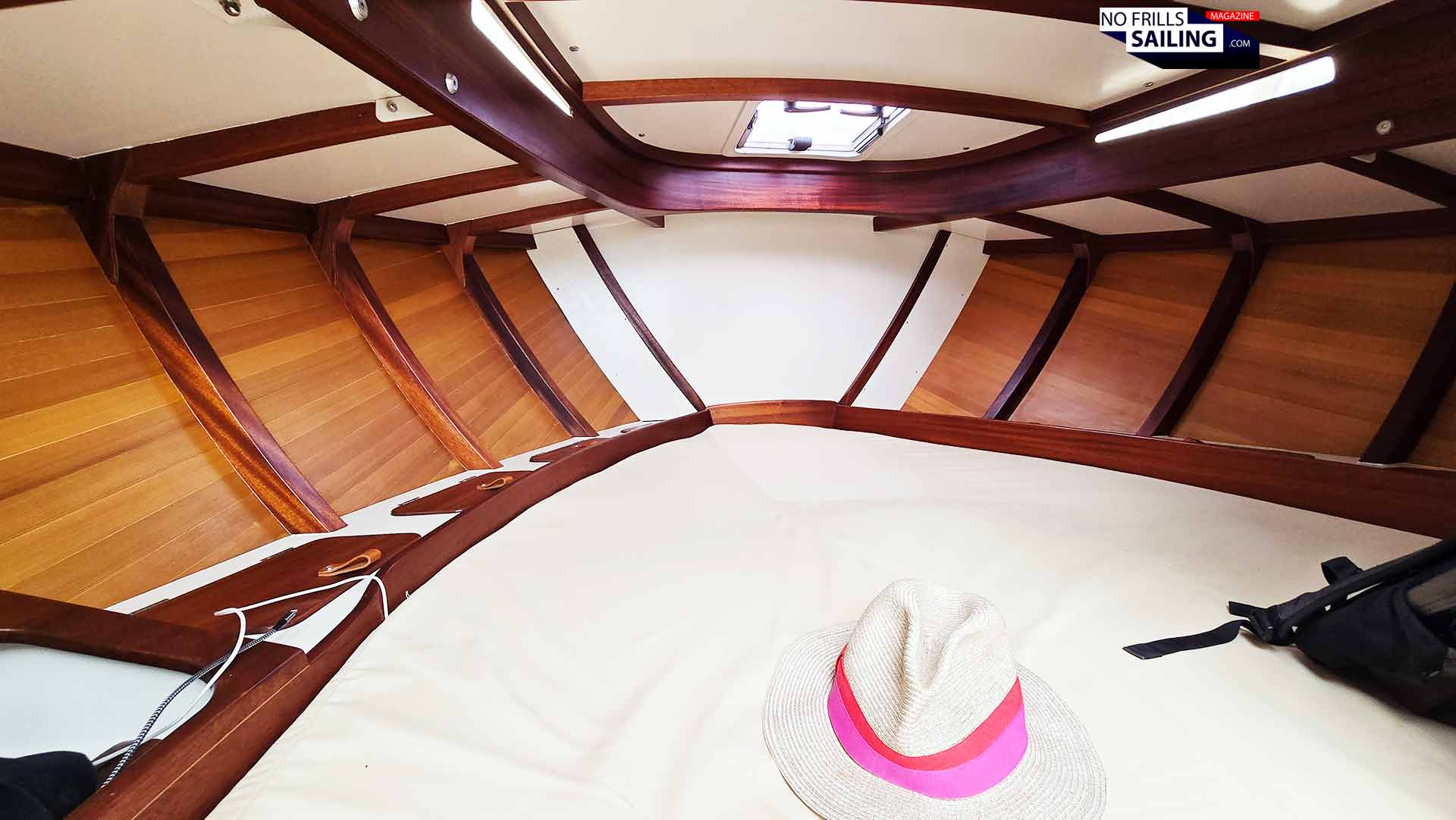
Looking into the “saloon” one realizes that the “Fifty” is a non-cabin yacht. There´s a large berth in the bow area, covering the complete forward section of the boat. It is so large, that you may sleep even transverse to the longitudinal axis here, which maybe cool when the boat is underway sailing with heeling.
Down below decks … cozy!
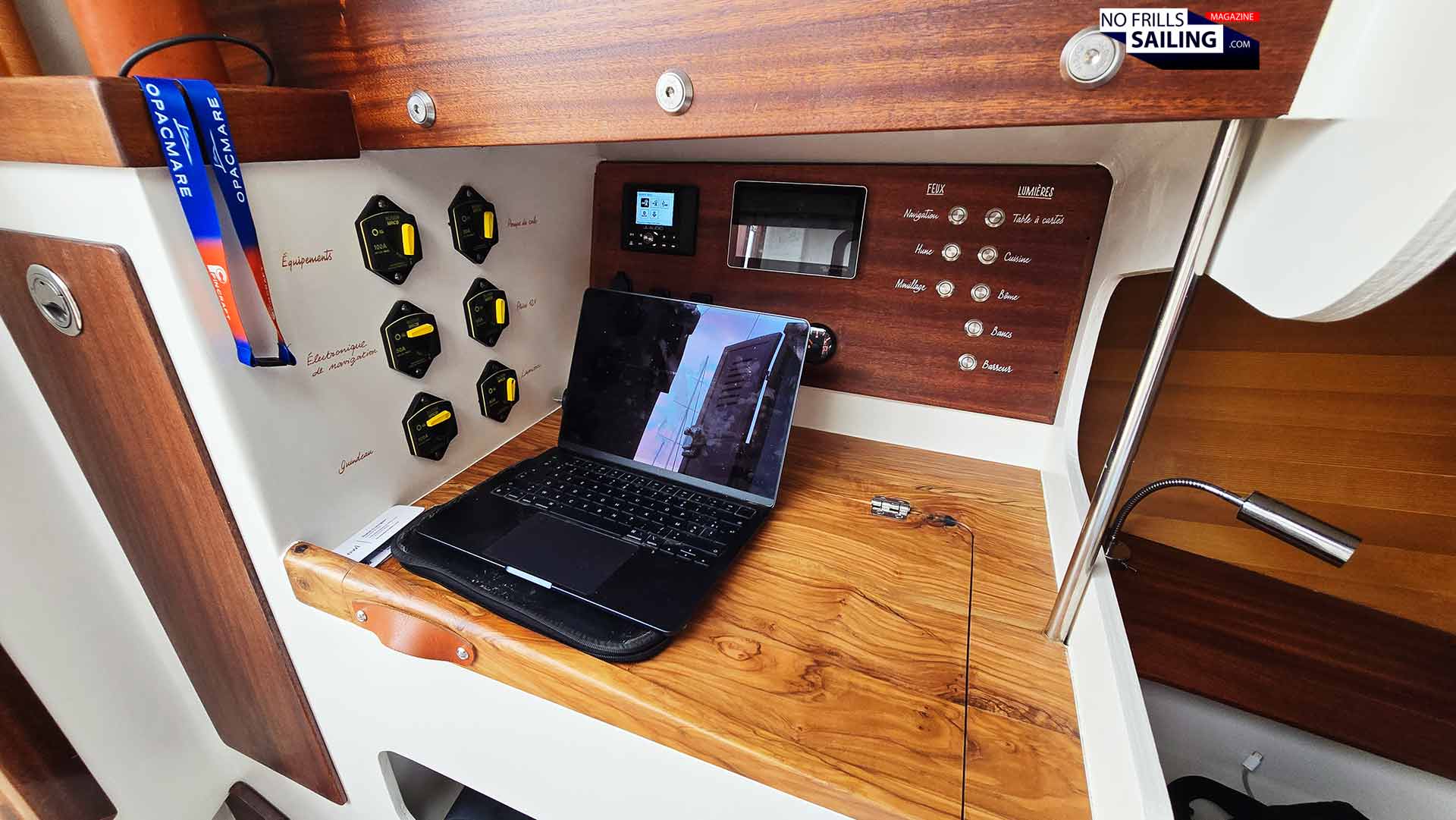
To port side is a little locker and chart table/nav station. This is reduced to the minimum, just as I have it in my Omega 42. If you want to “work” here, you may be standing upright, no place to sit down. But as we have already established, this is a summer sailing boat, so you might as well just want to take your charts, logbook or laptop outside and work at the cockpit table. But, oh boy, look at these details:
Look at the switch panel …
The main switch panel is a piece of art with its handwritten labels. Charging display and onboard energy management display – that´s all, reduced to the minimum. You might want to add a VHF as well or maybe a secondary chart plotter or Orca navigation device here. The worktop down here is made of a massive slab of Olive tree timber, adding a very tasty touch to the feeling down here below.
The matchless beauty of wooden boats
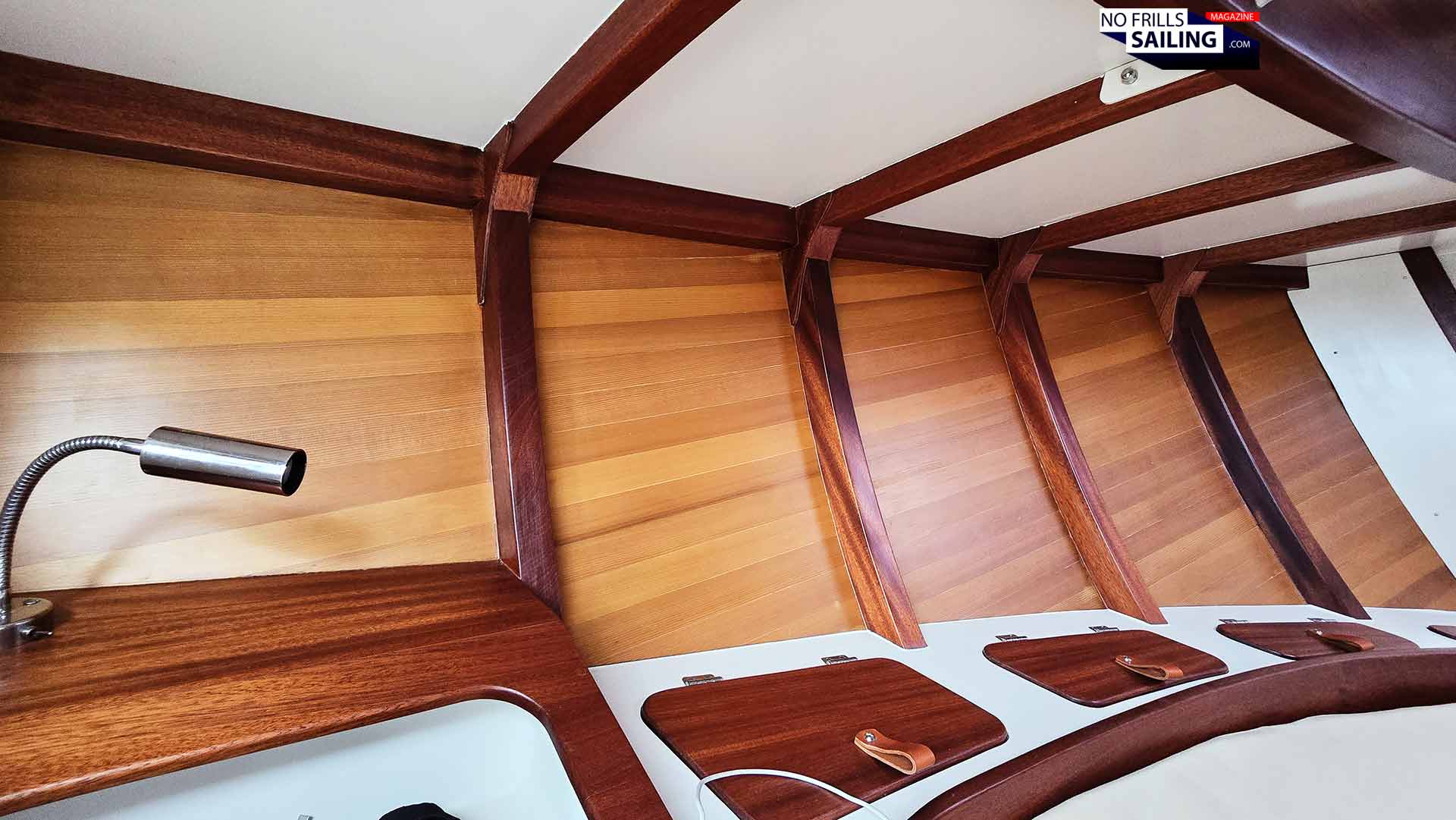
Which brings me to the core of this article: The matter of wooden boats. If I could afford – and maybe I will be able someday – I would surely choose a wooden boat over a plastic yacht. Fiberglass has many, many advantages and is a really cool material, but it simply lacks the natural feel, the haptics and the warmth of timber. Also, the smell down here is so much different!
All so nice …
In a wooden boat, you don´t need to add “design”. The beauty is in the structure and the material itself. The frame of the “Fifty” is varnished and lacquered, the ceiling and bulkheads painted white and the strips of the laminated hull are just glossy-painted clear wooden parts. There´s simply no need for fancy design. This is so much apparent on historic tall ships, like the CUTTY SARK or PEKING, but the same effect is clearly visible on modern wooden yachts, like the “Fifty”. Even the expoxy-plywood boats of RM Yachts – a brand that I missed here in Cannes by the way – does that very nicely.
Colors, materials, haptics
Down here, the raw wooden appearance makes you feel at home and protected at an instant. Where modern yachts stack panels and veneers on top of each other, add fabrics, mirrors or other facings and garnish everything with intriguing indirect LED-effects, the “Fifty” doesn´t need any of this. It´s really a revelation. We as humans tend to find an instant connection to wooden structures: Be it the tree house as kids, the cabin by the lake or this wooden sailboat – things made out of wood seem to touch us emotionally and convey a sense of being at home. And being safe. I absolutely loved the atmosphere down here! Just imagine, being at anchor, the wind up there in the rigging … and there´s just the warm light of a petrol lamp. Must be pretty awesome!
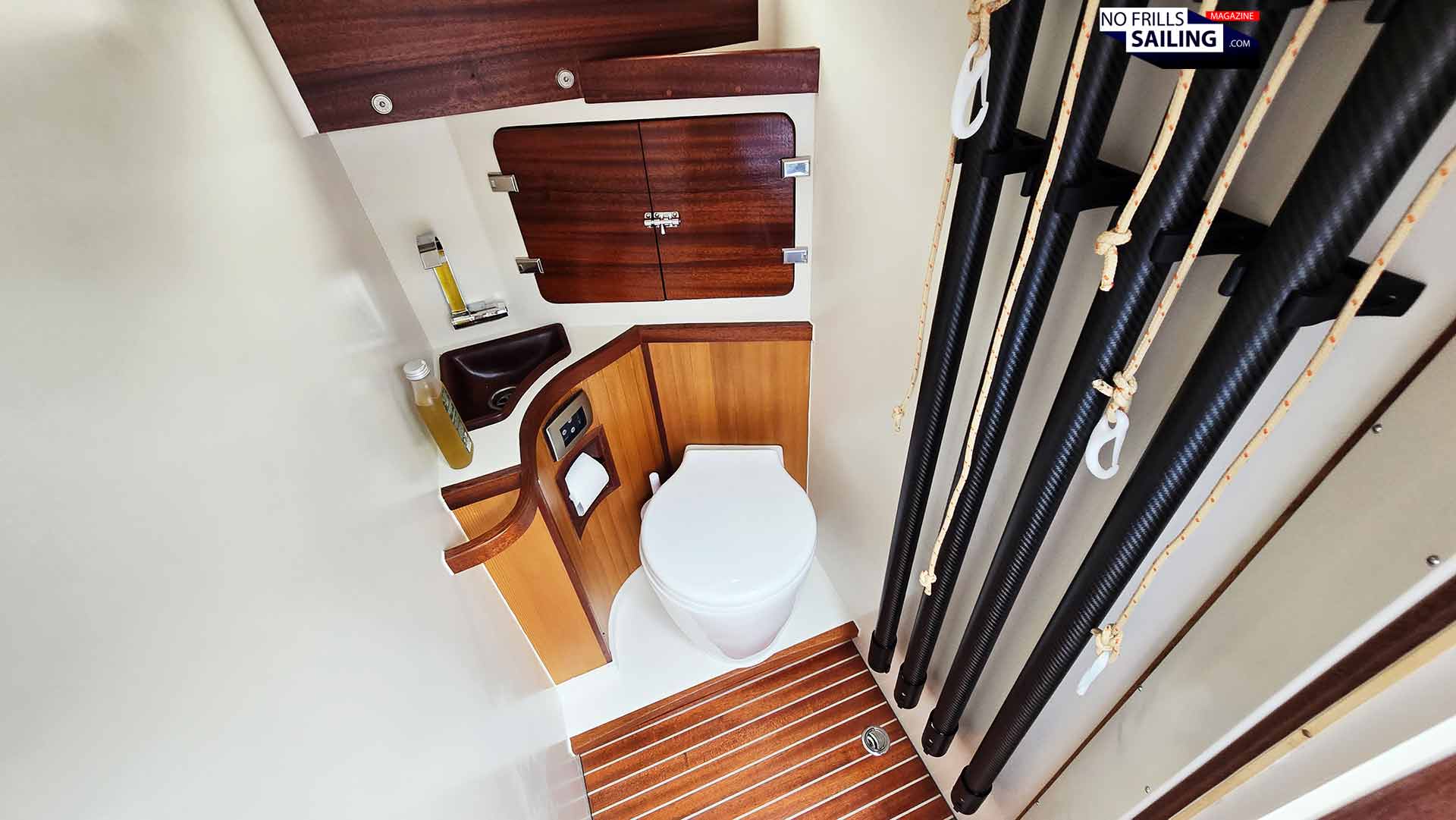
The bathroom of the “Fifty”
Last not least, of course the “Fifty” features a modern marine toilet: Having plenty of current at hand thanks to the lithium battery, the shipyard treats the owners with another concession to modern life in form of a high-class electric toilet. Nice. The bathroom is fairly small, again, reduced to what it is meant to do. No waste of space, no exaggeration, not stupid frills. The “Fifty” really reminds me of my own new boat in this respect too.
Speaking of reminders: If you don´t want to miss any new article here on NO FRILLS SAILING and on my new YouTube channel, you may just invest three seconds and subscribe to the newsletter. That´s one single email at the end of each month, containing shortcuts to every of the 10 new articles and videos you can expect. Would be great to have you as a new subscriber!
Advertisement
A showcase of how it´s done …
Is the “Fifty” going to be huge commercial success? No, I don´t think so. But that´s fine, because it doesn´t have to. As long as the occasional owner will have his dram boat built, everything is fine. The “Fifty” – like so many other small batch series boats – is something for true connoisseurs and enthusiastic sailors. In this, Chantier Naval Borg has made not only a perfect showcase for marine craftsmanship, but also for a strategy of how to navigate the current crisis in pleasure craft boatbuilding. The niche will be the winner, albeit in only small numbers.
I absolutely loved this boat!
The occasional visitor aboard this fine craft was a testament that even on such a crowdy, loud and colorful occasion like the Cannes Yachting Festival – in addition to such a “hidden” location at the rear end of the exhibition – a product like the “Fifty” will draw in attention. Maybe not the attention of the crowds. But maybe that´s not what it is all about here anyway. Well done, Borg guys, this was my favorite boat of all Cannes Yachting Festival 2026!
You´d like to read more about wooden boatbuilding?