
I´ve sold precisely one hundred yachts in my little “career” as Beneteau boat dealer. This is a not a bad thing, considering the fact that I´ve only been active for about four years. Buying a series production boat is pretty straightforward: Two to six pages options, you tick your boxes, we talk about details and your boat goes into production. Buying an Oyster however – and this is maybe true for other high-grade brands and semi-custom boatbuilders – is a very much different thing. I´ve met in Cannes with Oyster Yachts Project Manager Luke Porter to talk about a typical customer journey at England´s prime yacht builder.
Of course did I meet up with the mates at Oyster Yachts during Cannes Yachting Festival: Familiar faces like Stephen Parkinson, with whom I was sailing the fantastic 675 and Richard Gibson, who gave me a detailed guided tour of the Wroxham production facilities were among them. And also new faces – of which you will get to know one particular very well in the course of this article.
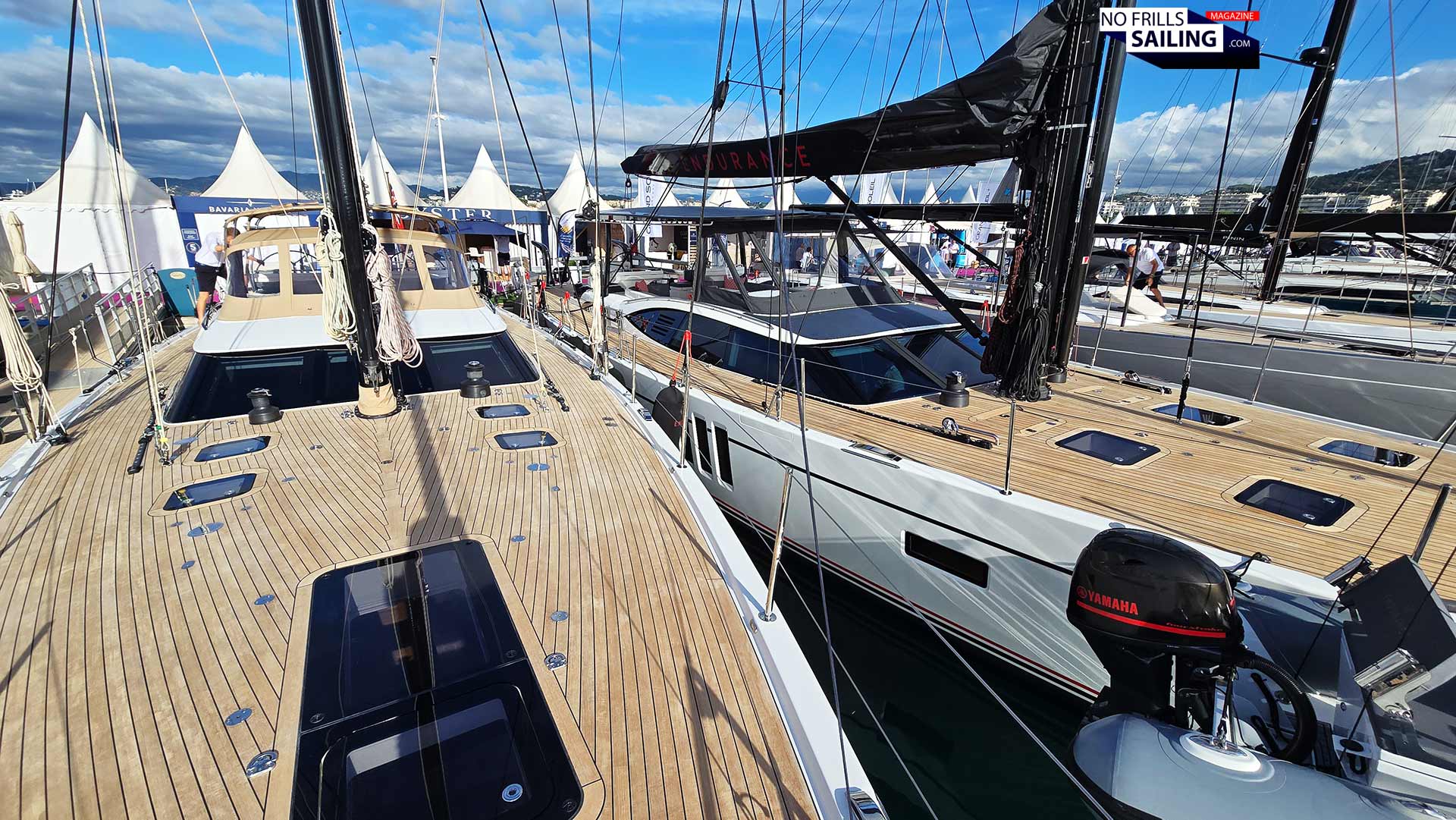
I think it was a great show for Oyster this year: With another edition of their famous Oyster World Rally coming up, the new 515 in the making which will be their new entry-level boat substituting the already fantastic 495 and – very surprising for the whole industry – the Oyster Catamaran announced, the English shipyard made a huge impact here at the Croisette. But this time I don´t want to talk about a specific boat, I´m more interested in the buyer´s perspective today: What is it like, to buy an Oyster?
Hustle and bustle in Ipswich
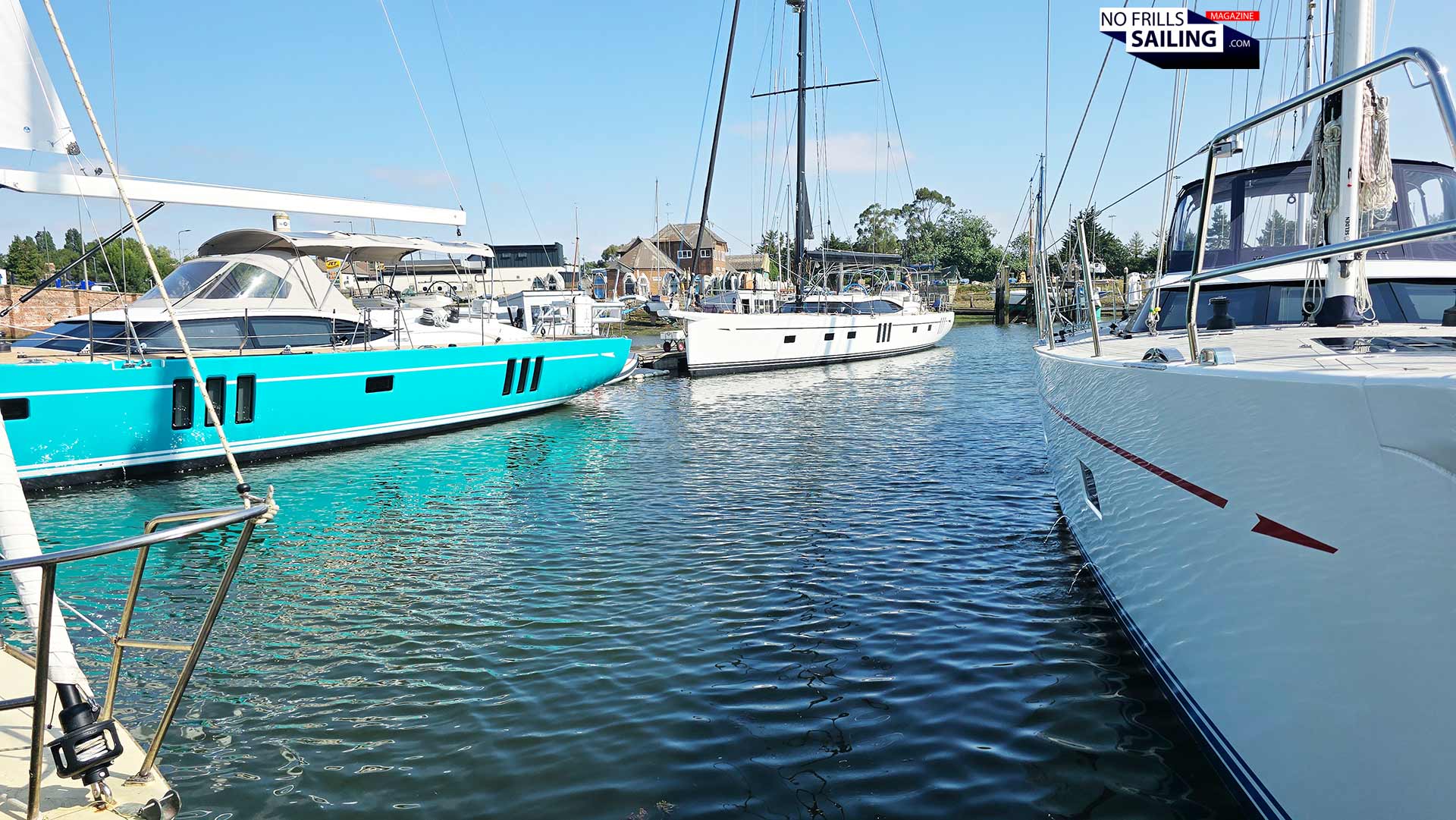
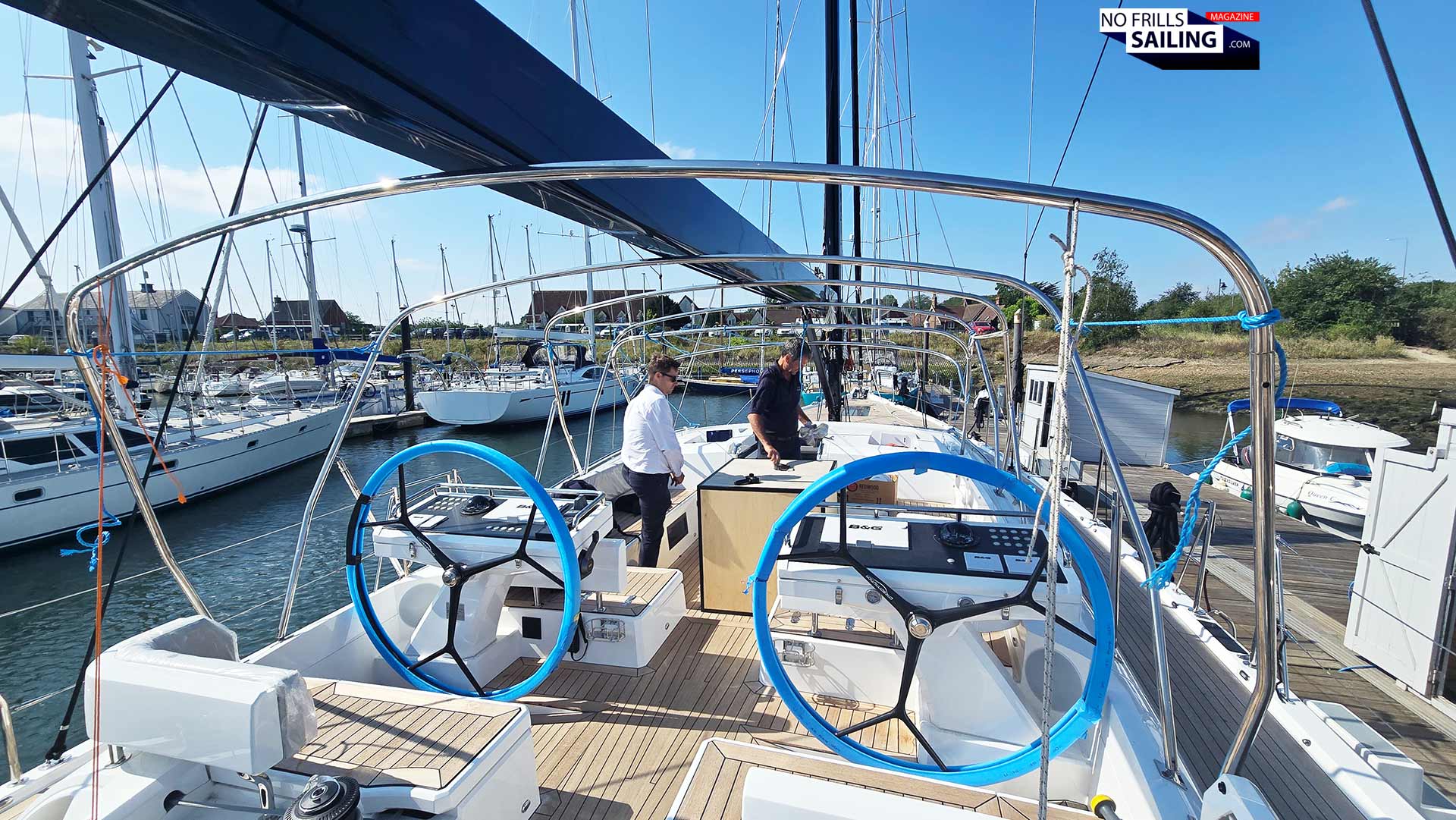
Rewind a few weeks. I´m in Ipswich/UK standing on the pontoons at Fox´s Marina. Three brand new Oysters are moored to the jetties, another older boat is tied up in the course of the day, checking in for some maintenance I guess. There´s a lot going on here: Commissioning time! Every single Oyster, after being finished back in Wroxham and rolled out of the sheds, is transported by heavy duty trucks to Ipswich at the River Orwell. Final works, commissioning and first splash of any boat takes place here. And also the handover to the clients.
Three to five people work on each boat. There´s a lot to do: Unpacking the matrasses, calibrating the systems, filling up the tanks, rigging the sails … the list seems endless. The guys know their parts and work with precision and determination. Going through the checkpoints, step by step, day by day, the new boat will be readied for client handover and subsequently, for the challenges of the great wide world: These yachts start their years long journeys around the planet exactly here, at this place. When explaining the procedures, Richard emphasizes that any owner opting for an Oyster is assigned their own project manager. And this I find interesting. Because, back at Beneteau, nothing like this was common. Usually me, the dealer, would be trying to be the interface between owner and shipyard. Whilst I had practically nothing to do when a Beneteau was in the process of being built, that´s completely different from what happens here at Oyster.
Meeting Luke Porter: Project Manager at Oyster Yachts
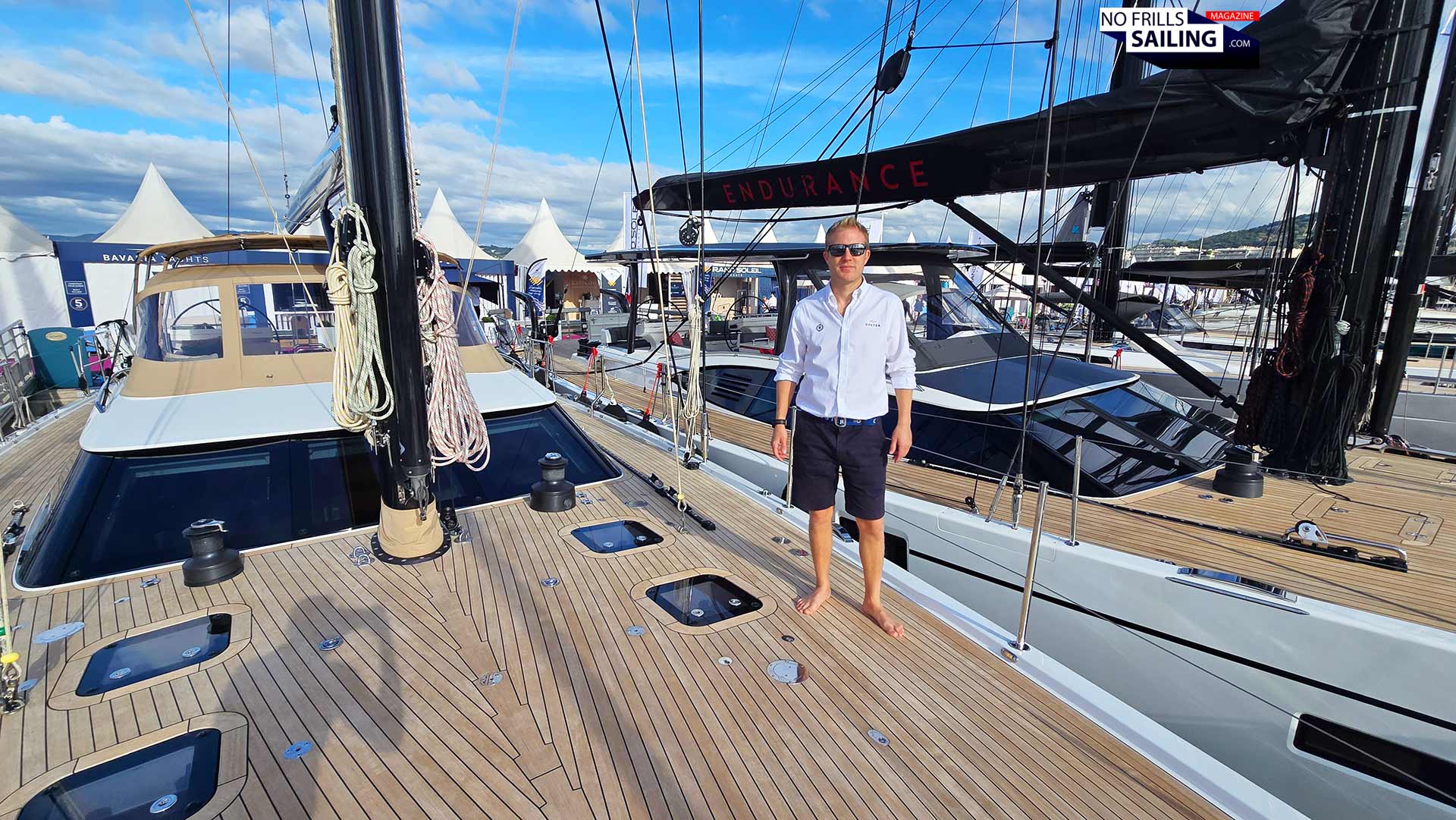
I arrive – being German that´s part of my DNA – very early at the boat, long before the boat show opens. I have a date with Luke Porter, who is an Oyster Project Manager and also happens to be here at the show as a boat guide for visitors. We scheduled an early meeting for an interview, because I was interested how the customer journey at Oyster looks like and what´s this all about, having your own project manager. I sat down, preparing my set of questions and my notebook. Luke was on the phone. It was 08.35 in the morning.
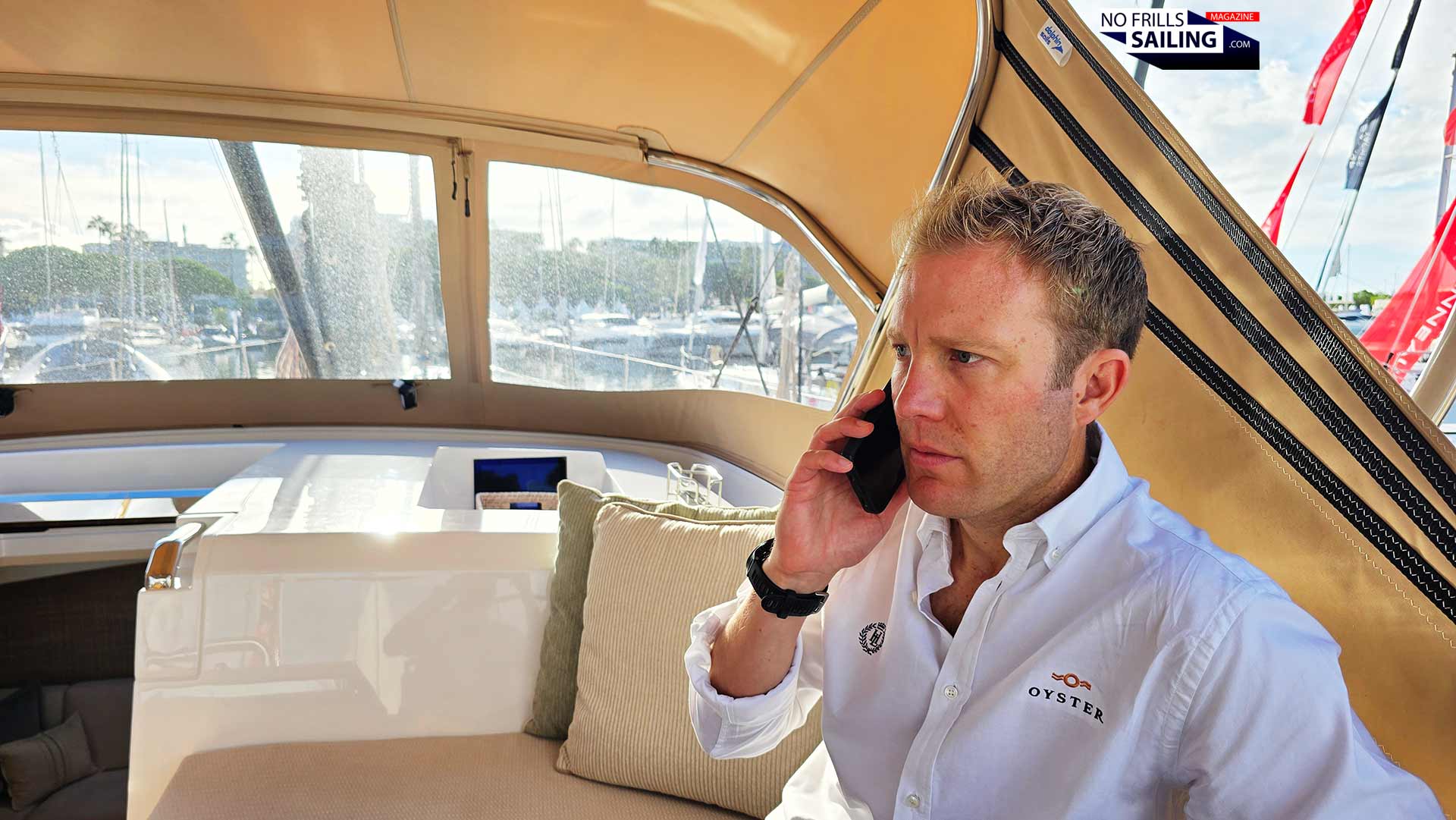
Although I didn´t really listen to the phone call and couldn´t comprehend what it was all about, I learned something right there without even asking: Although this early and although Luke was attending this boat show, he was reachable for his clients. Apparently he was talking with a client about his project: Reciting timetables, milestones and certain decisions to be made. He did this from the back of his hand: No computer, no notes, nothing. First thing learned: Your Oyster project manager literally knows any aspect of your ship´s details. At any time. Well, at least Luke does …
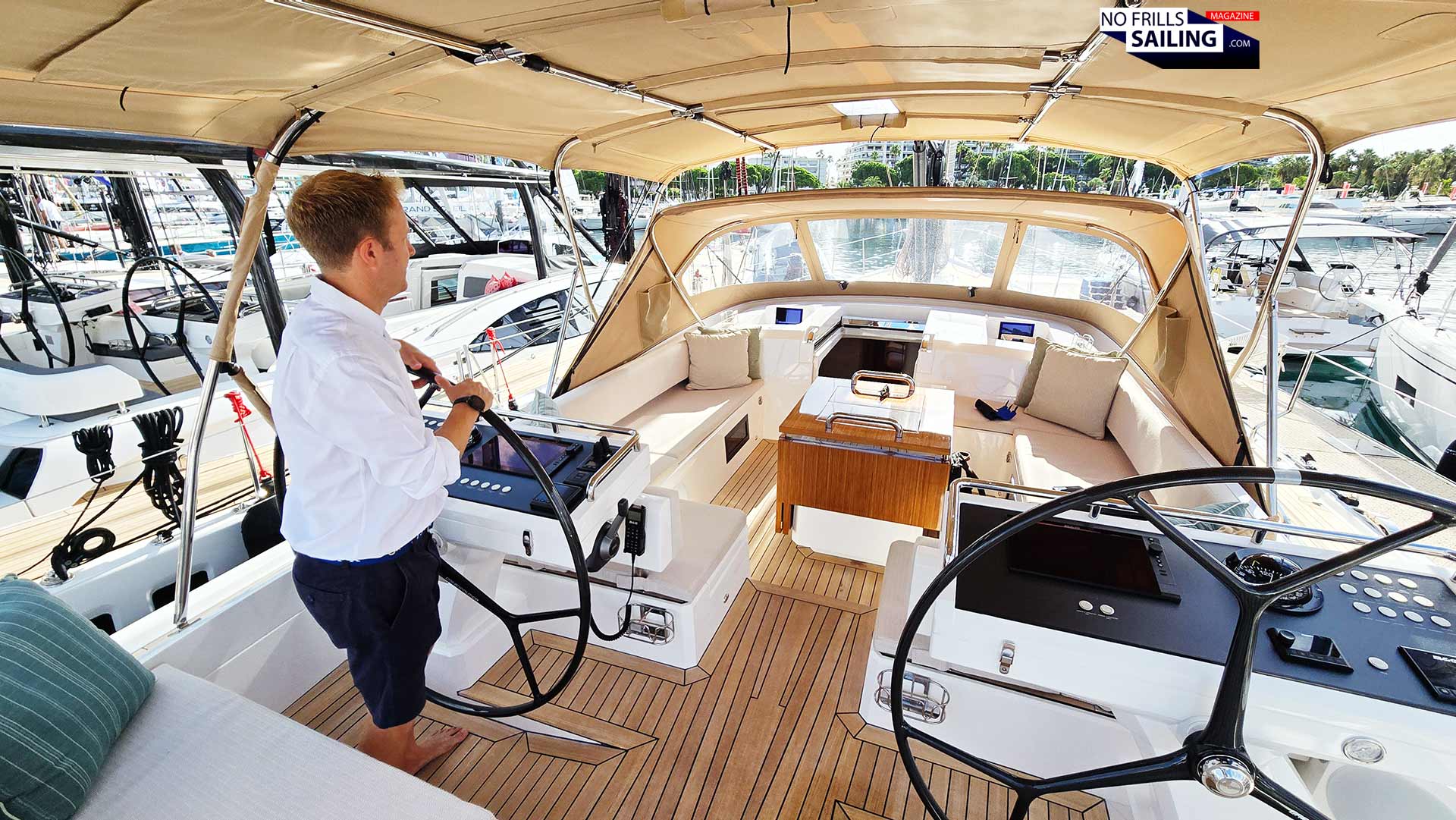
Then he hung up, apologized – for which there was absolutely no cause – and promised to dedicate the coming hour completely to my questions. Now, let´s start then, shall we?
Lars Reisberg | NO FRILLS SAILING.com: “Luke, first of all, can you describe in short your position and since when are you with Oyster? Are you a sailor yourself and why did you want to join the Oyster-crew in the first place?”
Luke Porter | Oyster Yachts: “Okay Lars. Well, I am one of five project managers at Oyster Yachts. Having joined the brand in 2013, I worked on superyachts as crew before. I have sailed in dinghies my whole life, so you could say that I am a sailor. After meeting my girlfriend – who used to live in Ipswich – I decided to choose a more shore-based life. And since I´ve had so much experience with superyacht owners and this kind of boats, I applied at Oyster, who agreed to welcome me to their crew.”
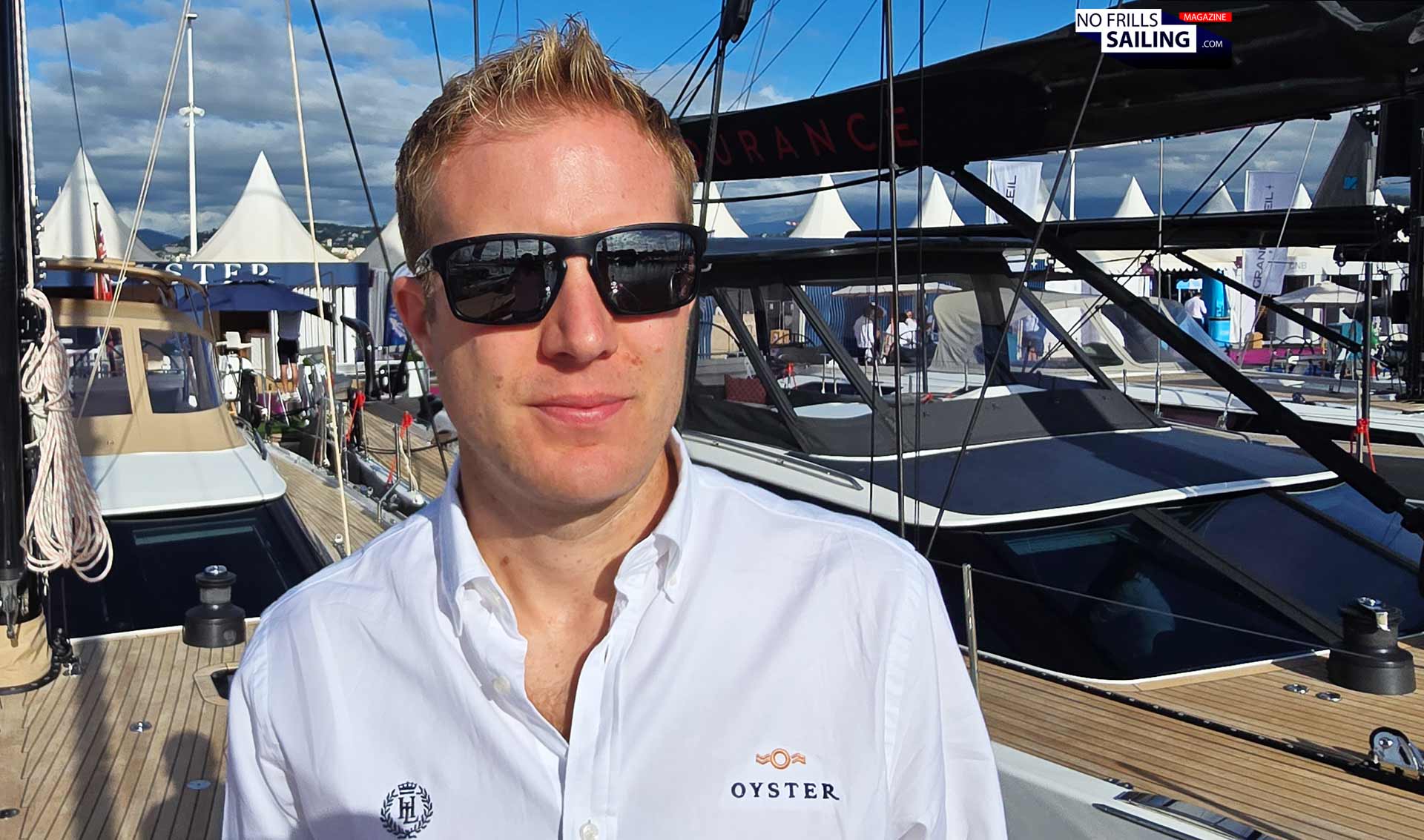
Lars Reisberg | NO FRILLS SAILING.com: “So, imagine me buying an Oyster – which would be so cool – when signing a purchase contract with the shipyard, I learned that project managers like you are assigned to every client: Please describe your work.”
Luke Porter | Oyster Yachts: “Yeah, right. So, if you decide to come forward and sign a contract, the shipyard assigns one of us to you. Depending on the size of the boat, a project manager at Oyster usually has a maximum of five boats at the same time they takes care of. Five, when these are smaller units, less, when the boats grow in size. I usually do 565, 595 and 675-yachts, which are also my most beloved of our product range. In short: We are the point of contact between client and shipyard. Anything the shipyard wants to know from you is funneled through the project manager. Vice versa, if the customer has a question or wants something, they will articulate this through me.”
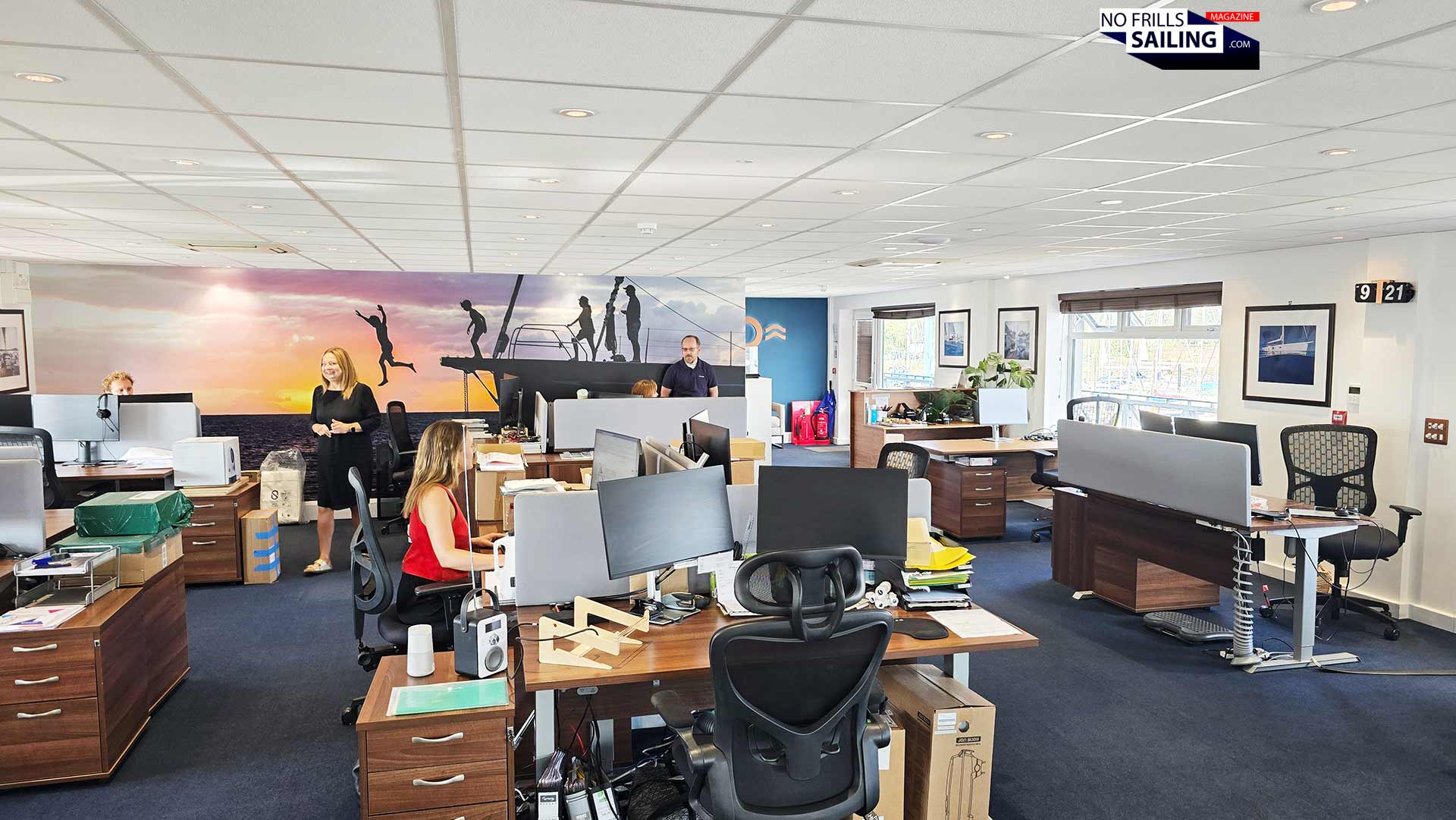
Luke Porter | Oyster Yachts: “Usually, my job – and the customer journey here at Oyster – consists of three stages. That´s the sales, which is done by our Sales department, then, after signing the contract, we the Project Managers take over. We are your wingmen over the course of the build, up to and including delivery and handover. After that, our After Sales department takes over. That´s the “Oyster journey” of a client. You´ve already said it right: Buying an Oyster is in no way comparable to a series production boat. There are many more decisions to be made for our yachts, than just opting for different packs, upgrades and cushion colors. Also, it is so complicated and intricate, that it is better to spread these decisions over a longer period of time, whilst the boat is in the shed, than to force all these decisions onto our customers before building process starts. And because it is so much and so complicated, it needs us to guide the clients through.”
More than three hundred decisions make an Oyster
Lars Reisberg | NO FRILLS SAILING.com: “Let´s delve deeper into this. What are these decisions and when do they have to be made? Why is it important for a client to have a project manager as his wingman?”
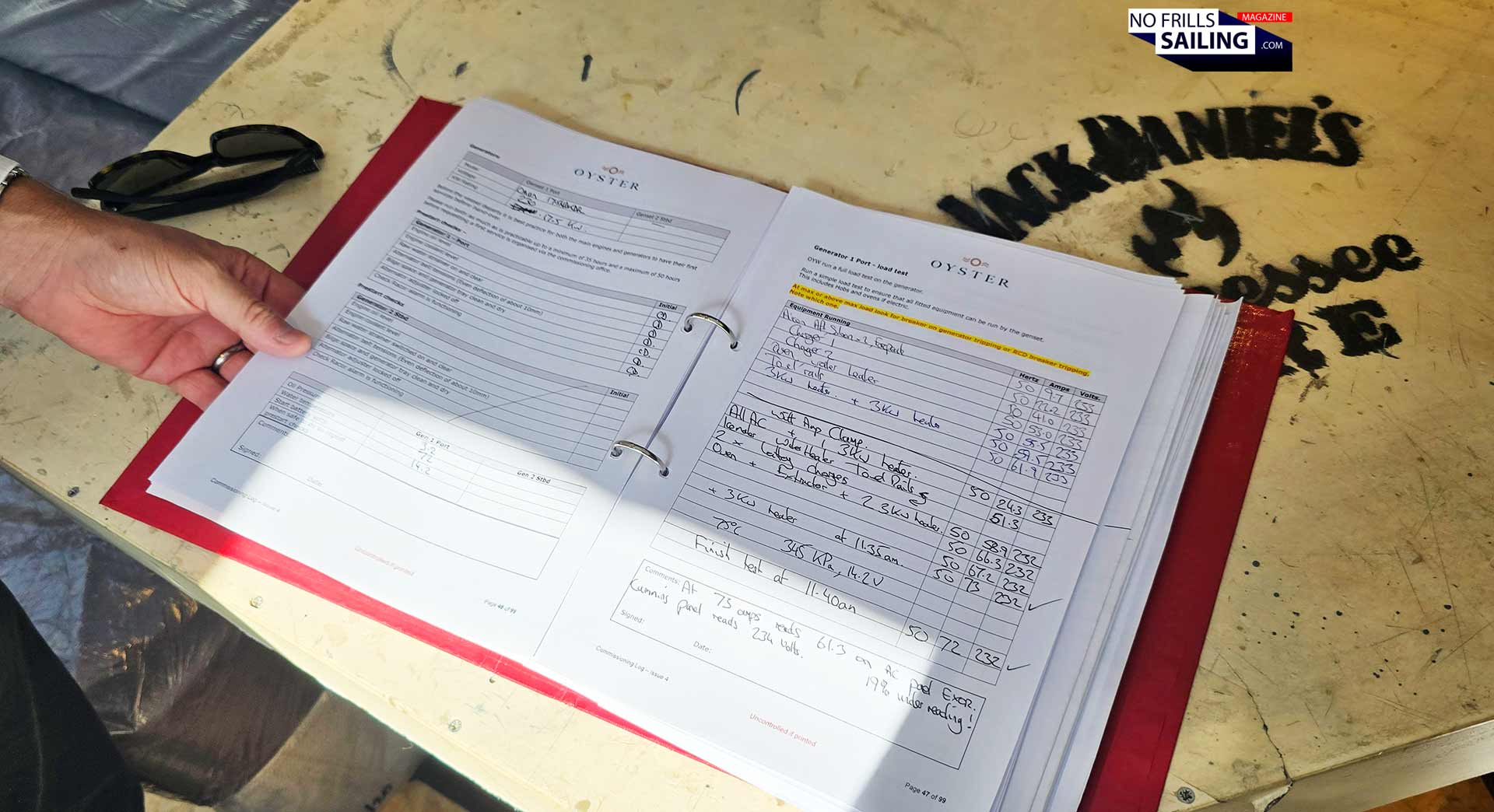
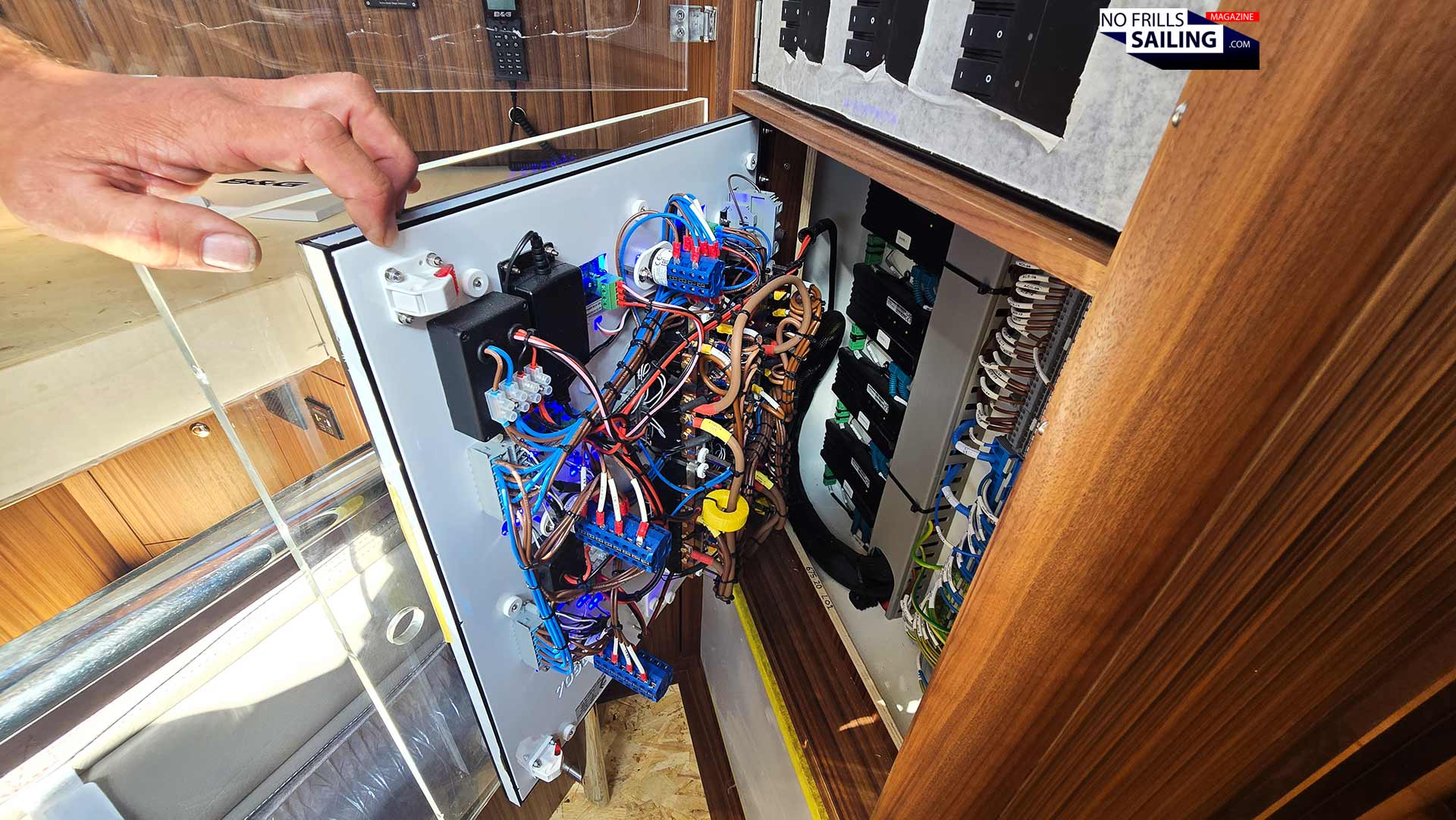
Luke Porter | Oyster Yachts: “So, first of all, we have something we call the Master Work List. This is the main document of each boat, containing everything. Every tiny bit, every decision. Since an Oyster is a very customizable boat and we offer the greatest possible freedom of choices for our clients, it makes building each boat complicated. Of course we try to obtain as many of these details before building starts. But we also want to conserve as much freedom of choice for our customers for as long as possible. Because frankly, some decisions can only be made if you can really see it in your half-finished boat. It´s not seldom that our owners need to see something first, before they can imagine the rest, and then make a decision. Just for your imagination: Our standard work list documents contains two to three hundred items every owner must decide upon. And that´s just our list – often owners have prepared their own set of wishes and extras, we of course also take care of!”
Lars Reisberg | NO FRILLS SAILING.com: “What´s your job like on a daily basis?”
Luke Porter | Oyster Yachts: “Well, usually I communicate the status of your yacht in the building shed every week. I go there, take pictures the boat and tell each client about what we are currently doing in the boat. This is done via whatsapp or, if something needs to be decided upon, via email. We communicate in written form, but we are also video-chatting or talking. There are a lot of decisions coming up – not only here in our shipyard, by the way, but also from suppliers, like the sailmaker, the mast builder or the upholsterer. And of course, customers come to Wroxham to check their boats in person. This is happening – depending on where the customer lives – two or three times throughout the building process. I´ve only had one single boat where I´ve never ever met the owner, all the others at least come once or twice to see their yachts.”
Luke Porter | Oyster Yachts: “The intensity of my counseling work depends on the customers. Some are experienced sailors and have already realized custom boat projects successfully. They know what it´s all about. Others, especially newcomers and first-time-buyers, need more explanations and guidance. If you ask me, I especially enjoy working with first-buyers. Somehow, it´s really satisfying for me if I can show them certain ways, sometimes explain differences or guide them in their decisions. I think, making a dream of a yacht come true is the most exciting and rewarding part of this job, indeed.”
Without a project manager, customers would quickly be lost
Lars Reisberg | NO FRILLS SAILING.com: “So, what would happen, if there were no project managers?”
Luke Porter | Oyster Yachts: “Honestly, customers could get completely lost! We are very, very specific in what we need to know to build the boats. These are literally hundreds of detailed, intimate decisions – which of course need to be explained and showcased. It´s much more, than just box-ticking. People underestimate the complexity of a custom or semi-custom yacht …”
Lars Reisberg | NO FRILLS SAILING.com: “… which I can only confirm! I have a semi-custom yacht in the building shed as well and the level of detailed decisions is overwhelming! Also, the impact even smaller decisions have on everything is awe-inspiring! And my boat is only a very basic 42-footer – imagine the complexity of a fully specced luxury 80-footer?!”
Luke Porter | Oyster Yachts: “Exactly! So, when it comes to daily business, we usually start with the sail plan. Then it´s all about the interior design of your yacht. You´ve seen what our carpenters can do back in the shipyard, it´s just awesome! So here are many, many decisions waiting for any new customer. But have no fear, we take care of every detail.”
Lars Reisberg | NO FRILLS SAILING.com: “So, let´s imagine we are done with building the boat. Now she is completed. What´s a normal handover like at Oyster? I remember my old days: One to two days for mid-sized Beneteau boats, maximum three days for our 60-feet flagships. What´s it like to receiving an Oyster?”
Luke Porter | Oyster Yachts: “You have seen it in Ipswich yourself: After preparing the yacht for handover and thoroughly testing, the boat is completely checked and made safe to go offshore. Usually, a handover for a 60 or 70-footer Oyster yacht lasts a full week, four to five days. I essence, we start with our so-called “stem to stern”-program, which takes the owner through every detail of the boat. We show any detail, how it works, we train them how to use the things and also present solutions for possible trouble shooting. Half a full day is dedicated to the onboard IT-systems, another half day is extensive user manual studies and training. We also sail with the boat and of course train the clients how to safely land and cast off. Depending on the customers, the itinerary may adapted to their wishes and needs. So, it´s one full week. Very hard work, but also, very rewarding and satisfying!”
No client is like the other
Lars Reisberg | NO FRILLS SAILING.com: “So your service as Project Manager ends after handover, right? Do you hold contact with special owners sometimes?”
Luke Porter | Oyster Yachts: “After handover the boat is transferred to our After Sales department. But of course, having been in such a close contact with the clients for sometimes over a full year, with weekly or often daily intense communications, it´s never really “over” after handover. Even after 13 years with Oyster, I still receive pictures from my very first clients and their yachting adventures. It´s sometimes a very close relationship: You get to know the family members, their dogs, their kids and even grandmothers or grandchildren. The nicest thing is, that it is so multifaceted: No client is like the other. There´s always something new, something unexpected. And something for me to learn.”
Lars Reisberg | NO FRILLS SAILING.com: “But tell me then, Luke, you must be full of stories about “special”, quirky or nerdy owners? I am! Is there anything crazy, strange or outstanding in your projects which could highlight your impact as a project manager?”
Luke Porter | Oyster Yachts: smiles, thinks for a while “Well, sure there are a lot of personal stories, which I rather keep for myself, honestly. But there is a very nice occasion that shows how fruitful the customer-shipyard relation can be. It happened a few years ago. A customer asked me to integrate the headsail furler into the bow sprit. It was something we´ve had never done before. So our engineers had to redesign the whole bowsprit and even parts of the bow area. In the end, we built it, fitted it to his boat and he was extremely satisfied … come on, I show it to you …” Luke takes me to the bow and points to the bowsprit.
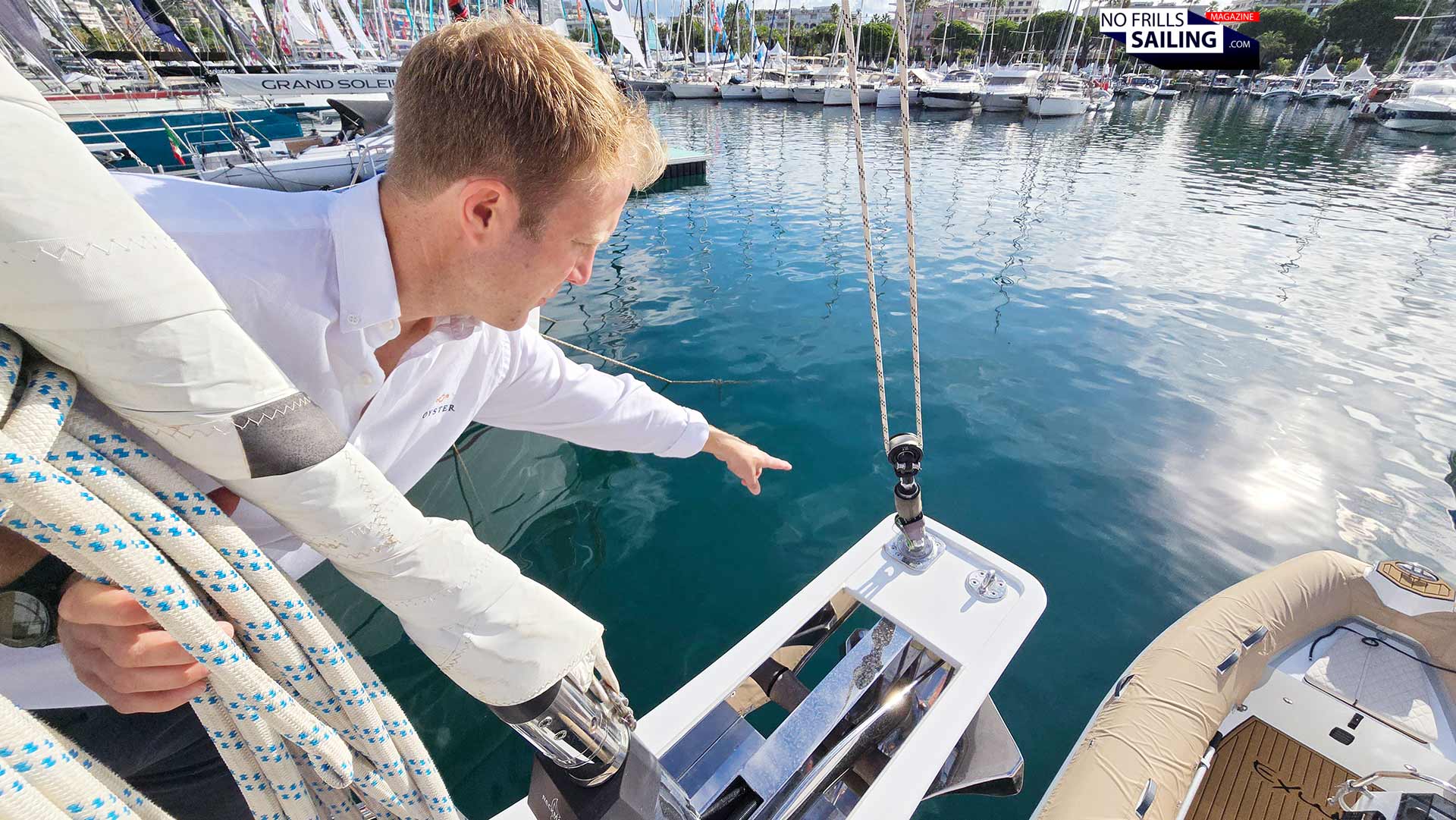
Luke Porter | Oyster Yachts: “Now, the cool part of this story is, that we all found this solution so cool, so stylish and so much better, that from this day on, this once one-off custom solution became standard for all Oyster yachts. We have integrated headsail furlers in the bowsprit for every owner. I think this little story underlines the importance of good project management – and how sometimes customizations can be fruitful for the whole undertaking, not only for the one client asking for it. It´s a nice exchange, not a one way, as it works in just so nicely in both directions. If you listen closely to what your customers tell you, you can learn and improve ever so slightly. This is another aspect I like so much about my job.”

Speaking of “listening” – if you do not want to check frequently if there´s a new article published here on NO FRILLS SAILING.com, you may as well just subscribe to the free monthly newsletter. Receiving one little email per month, it contains shortcuts to all up to ten new articles. Never miss any cool story. But back to Luke aboard the Oyster now.
It´s not just the boat that is so special
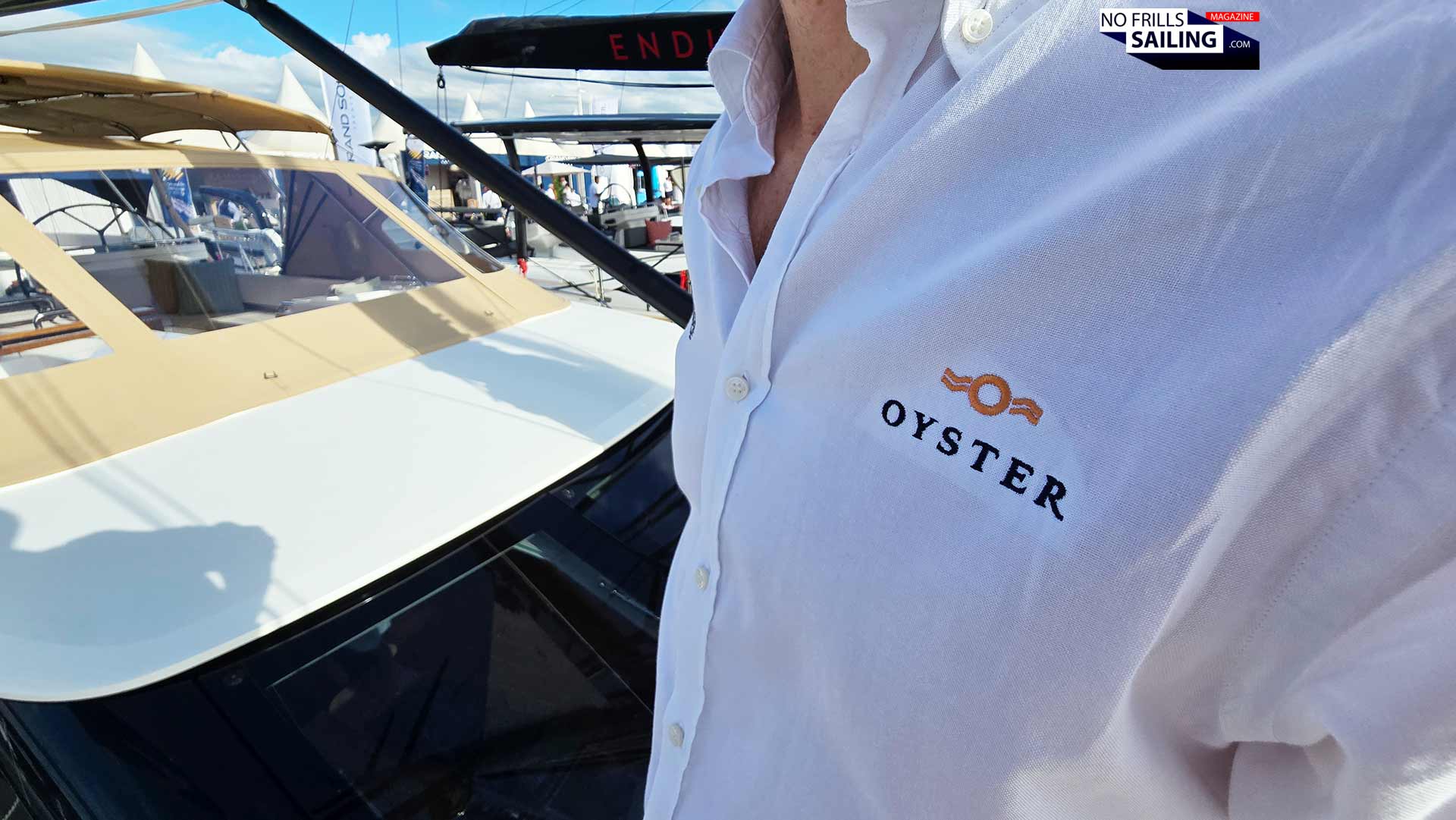
Having been to Oyster in Wroxham and Ipswich now and getting to know so many people who make up the staff of this shipyard, I more and more realize what should be a matter of course, but we often seem to forget or underrate: Any brand, any product, any company is only as good as the people it´s made of. Sitting here with Luke aboard this fantastic Oyster 745 and listening to his story fostered my belief that it´s the staff which makes a difference. Much more in a business where the products are 100 percent handmade – defined by individuals, from the designers like Rob and Tom Humphreys to the workers in the shed who build it to people like Luke.
It´s the work of the project manager, this I understood now, that will make sure that not an item is forgotten, that every nook and cranny of your new yacht is shaped, colored and placed exactly in the way and where you want it. And that your dream yacht will in the end really be what this brand promises: A one-of-a-kind super luxury sailboat that will take you and your family around the world, creating unforgettable unique memories.
Thanks Luke for this insight into your exciting job!
Want to read more about Oyster?
All Oyster-related articles by clicking on the hashtag #oyster
Talking to Rob and Tom Humphreys about the Oyster of the future.
Which impact even small custom decisions can have on your boat project