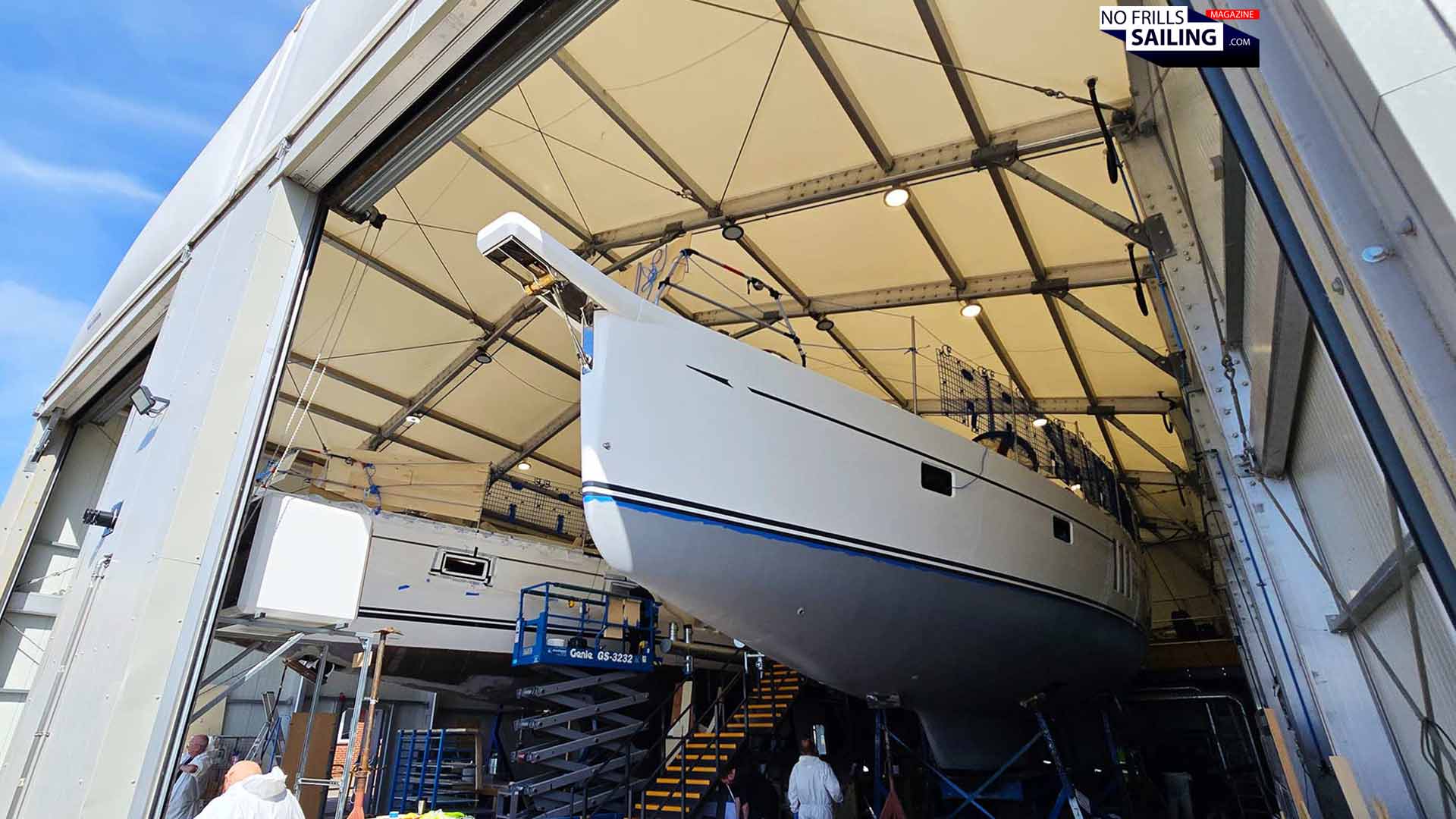
Not only do the customer expectations for true oceanic blue water cruising yachts exceed those of ordinary vacation-boats, Oyster clients are looking for spotless quality both in a structural and luxury sense. How does the shipyard make sure that their yachts will cope with the raging elements offshore? How is a constant high level of finishing quality assured? This article delves deep into four top-notch specialties of Oyster´s yacht production. Buckle up!
You may have read the very first article of my shipyard visit and got a pretty nice overview about what´s going on in Wroxham/UK at Oyster. Though it was exciting and inspiring to see how those big luxury yachts are made, I asked Richard Gibson, Oyster Group Sales and Marketing Director, to grant me some deeper access to the production to take my research a bit further. And he agreed.
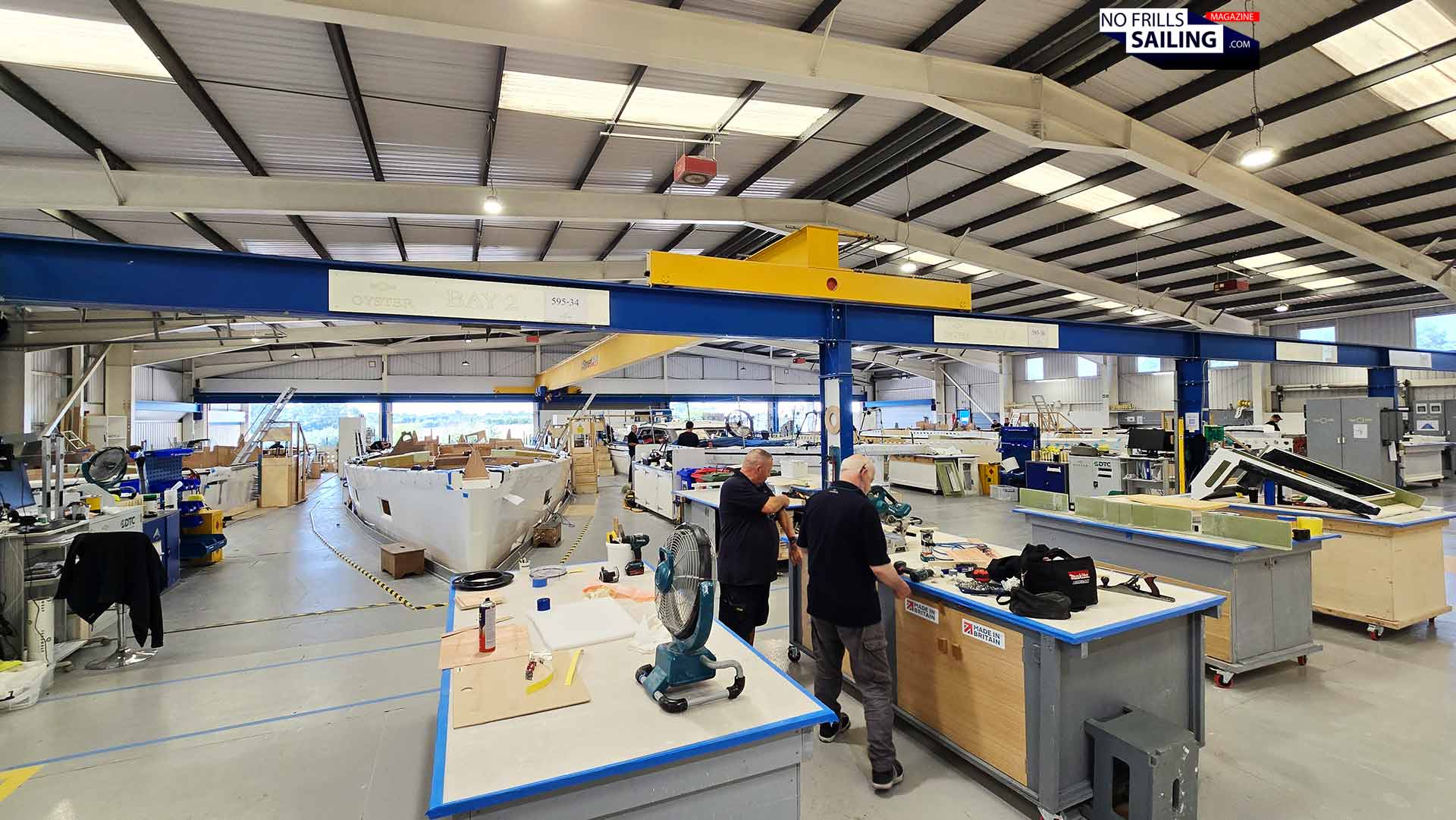
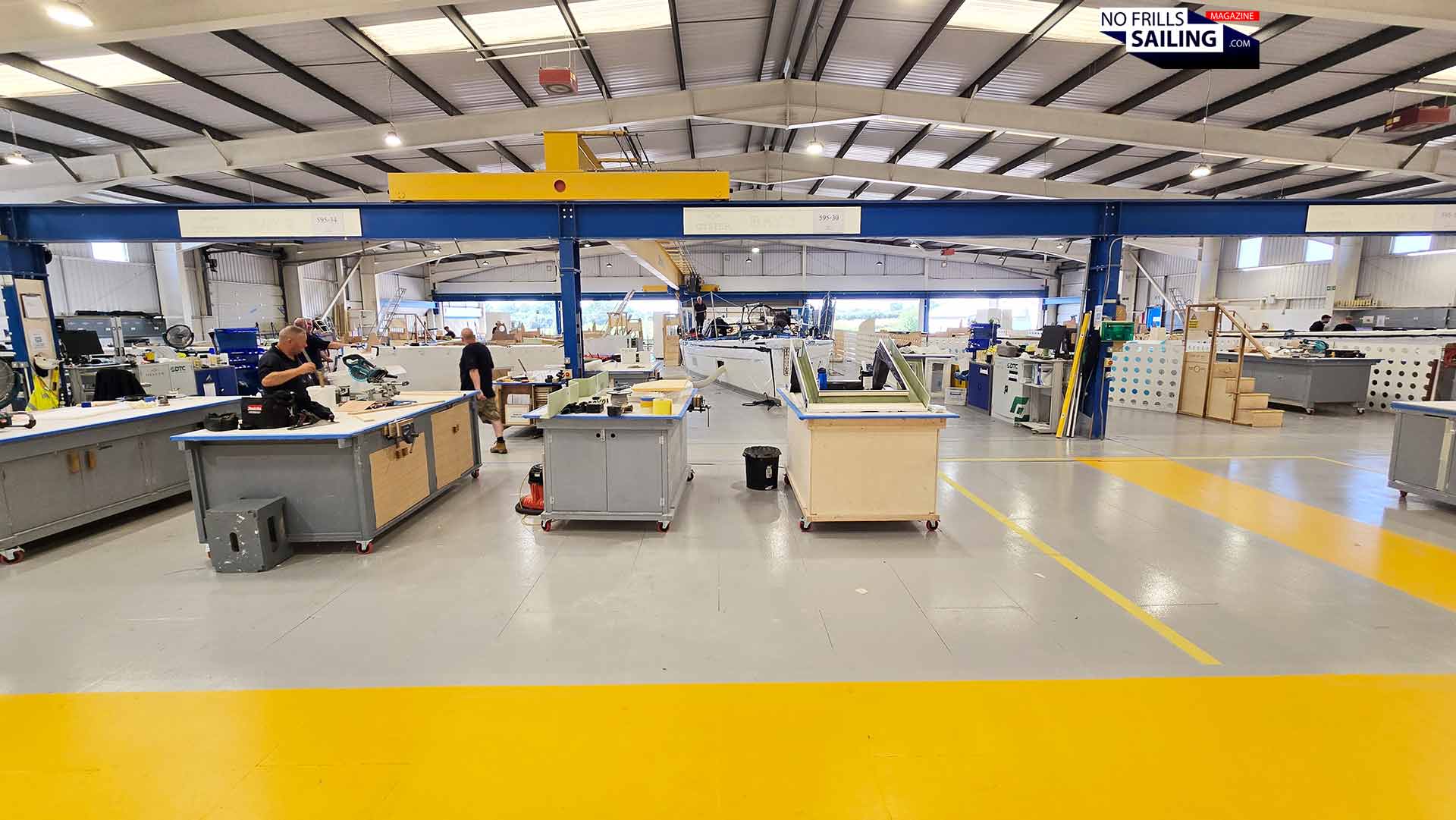
Entering the main production hall
See, if you are ready to spend two million upwards for a yacht, you are probably not looking for a daysailer or coastal cruiser. This is a job any decent made series production boat may accomplish in a satisfactory way. You are certainly looking for a true blue water sailing yacht, capable of tackling the long haul, coping with the worst offshore weather conditions. You of course ask for maximum safety – and maximum comforts. So let´s take a look at some of the major key points any prospective Oyster owner wants to be sure of for his new yacht.
Structural integrity and stiffness of an Oyster
Advertisement
It´s often said that aluminum is the best boatbuilding material when it comes to offshore and “go anywhere”-sailing. Although in the eye of the beholder and certainly blessed with some advantages over glassfiber, that’s not quite true. GRP boats – if built properly – can easily withstand the test of the oceans. Oysters frequently sail around the globe, take on the Cape Horn and even sail into the farthest northern and southern areas including the growler- and iceberg infested Arctic and Antarctic areas. The key is structural integrity and stiffness.
Let´s look at the structural side of an Oyster
As you may have probably read in the first article of my shipyard visit here in Wroxham, any Oyster´s hull and deck are made with vinylester resin and highest quality Lloyd´s of London-approved materials. Oyster bets on hand layup lamination as this makes sure that the hulls are laminated by skilled and experienced master craftspeople step by step, layer for layer, to achieve the stiffest and most robust outcome. However, vacuum infusion is also used – but only where it makes sense.
Frames, girders and bulkheads
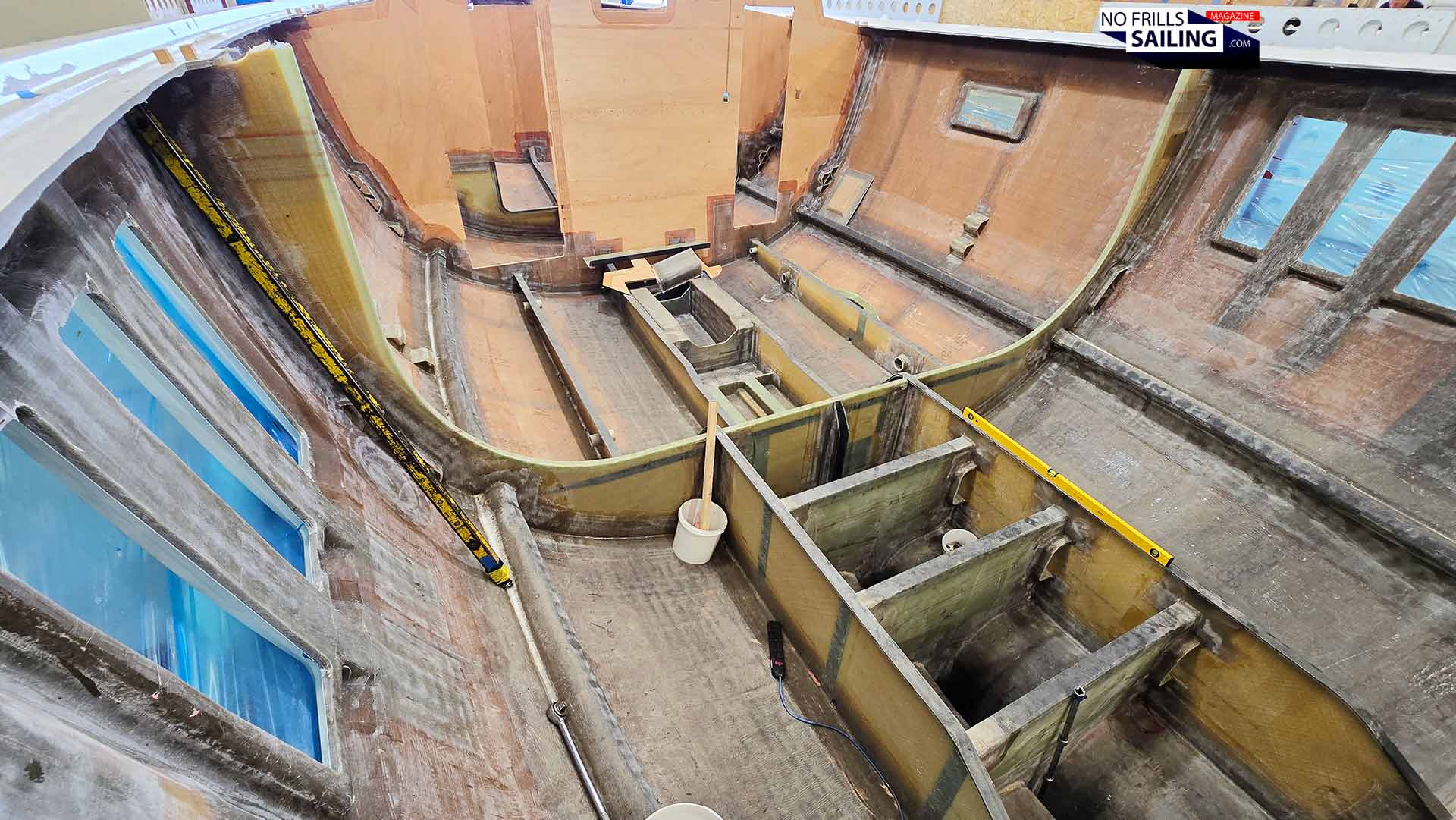
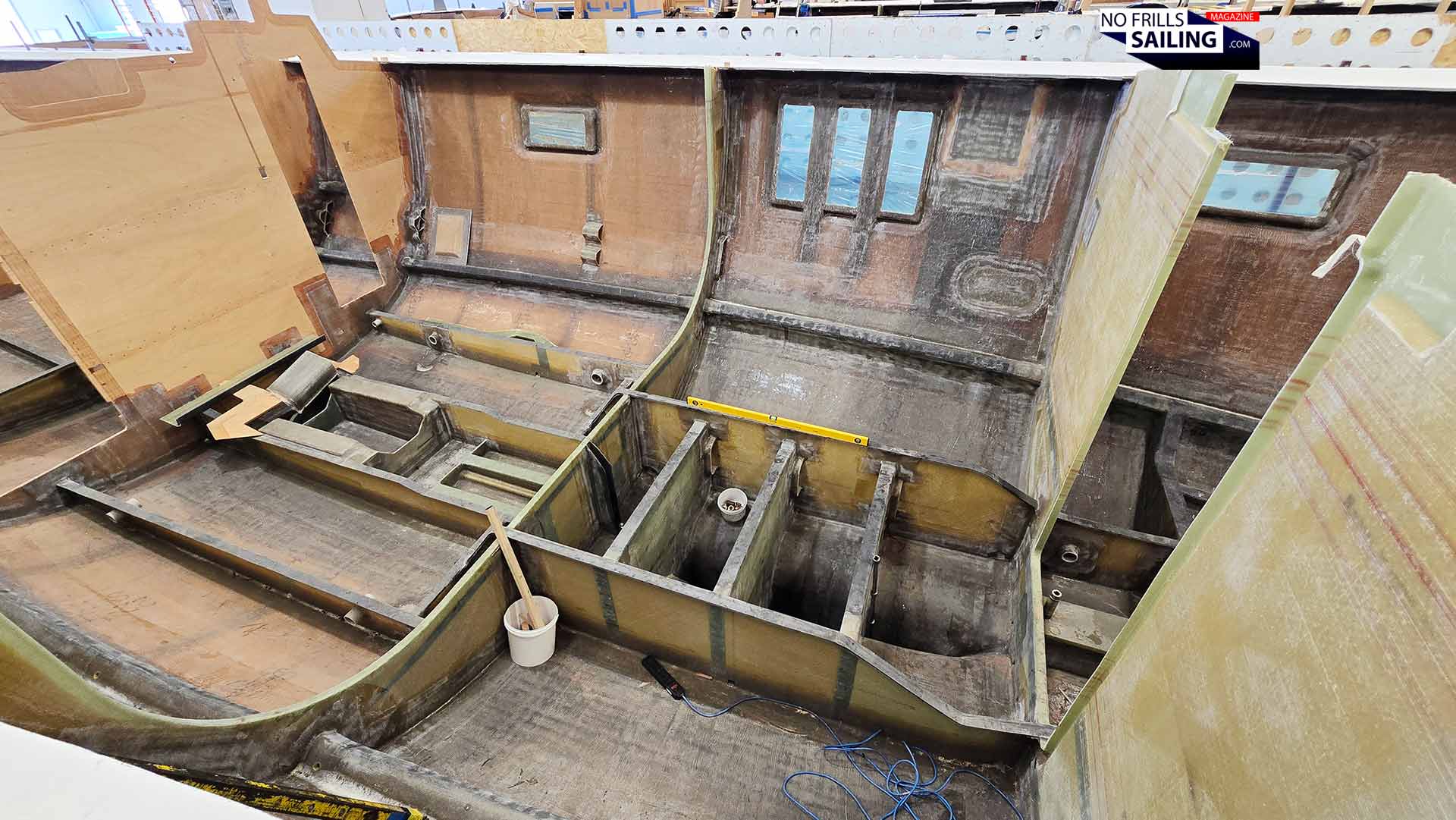
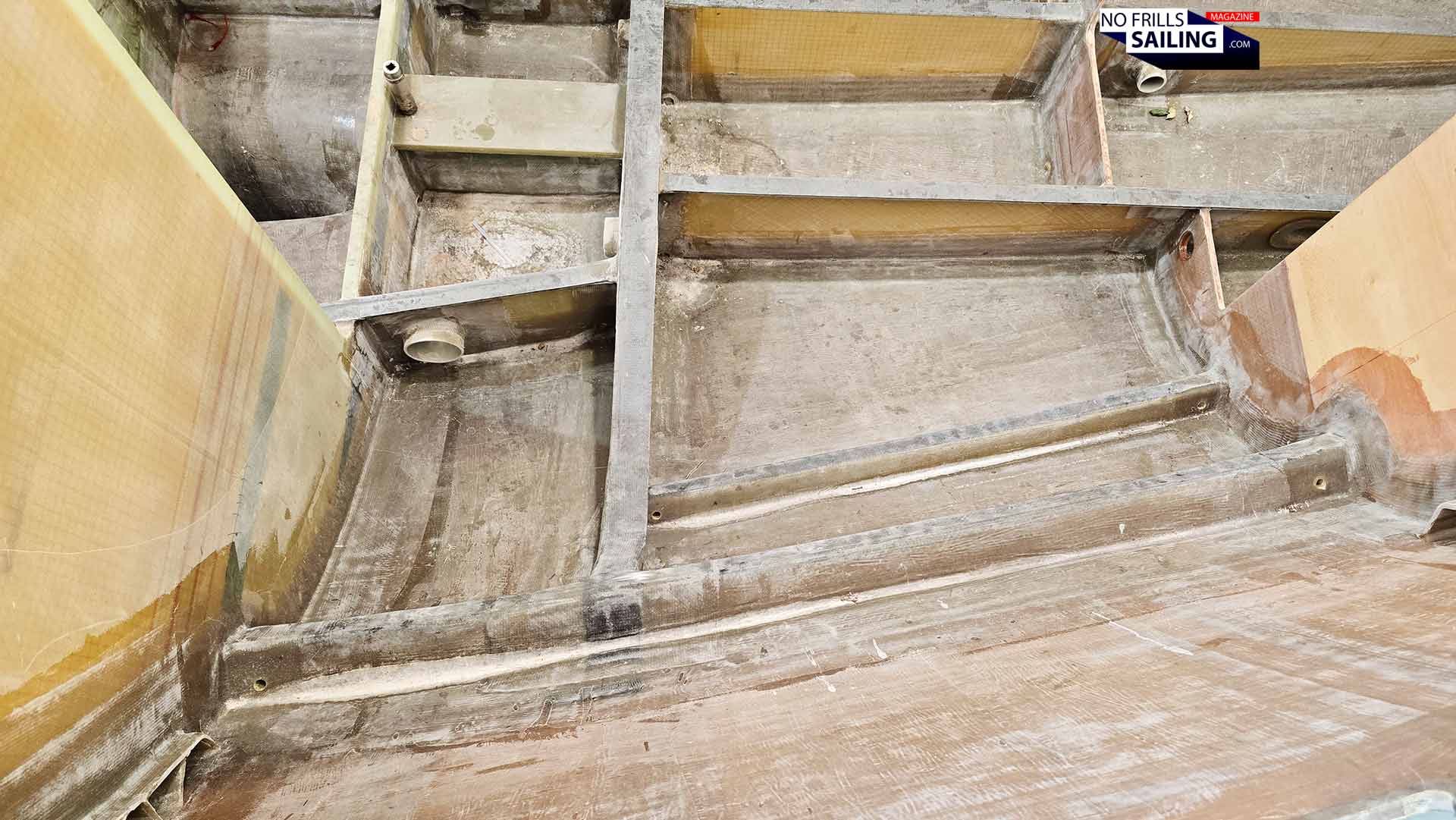
As stiff as the hull may be, you need a specific ”inlay” of structural elements which will further stiffen the hull. These are longitudinal reinforcements, called “stringers” and also “girders”, which have the shape of frames and reinforce the hull towards side-pressing forces. Both these parts are manufactured with foam cores (PVC and Divinicell) utilizing vacuum infusion. It makes sense here, because that way maximum stiffness versus light weight can be achieved. Whereas most of the series production boatbuilders still use the outer hull-inner hull method invented by Michel Dufour in the Sixties, Oyster does not put a heavy inner hull into its boats. Instead, a carefully constructed and lightweight built maze of L- and T-beams is used. These are laminated to the massive bottom of the hull to reinforce the ground structure of the yacht and finally make it able to take on the loads of the rigging, the torque of the main engine and the leverage of the keel underneath it.
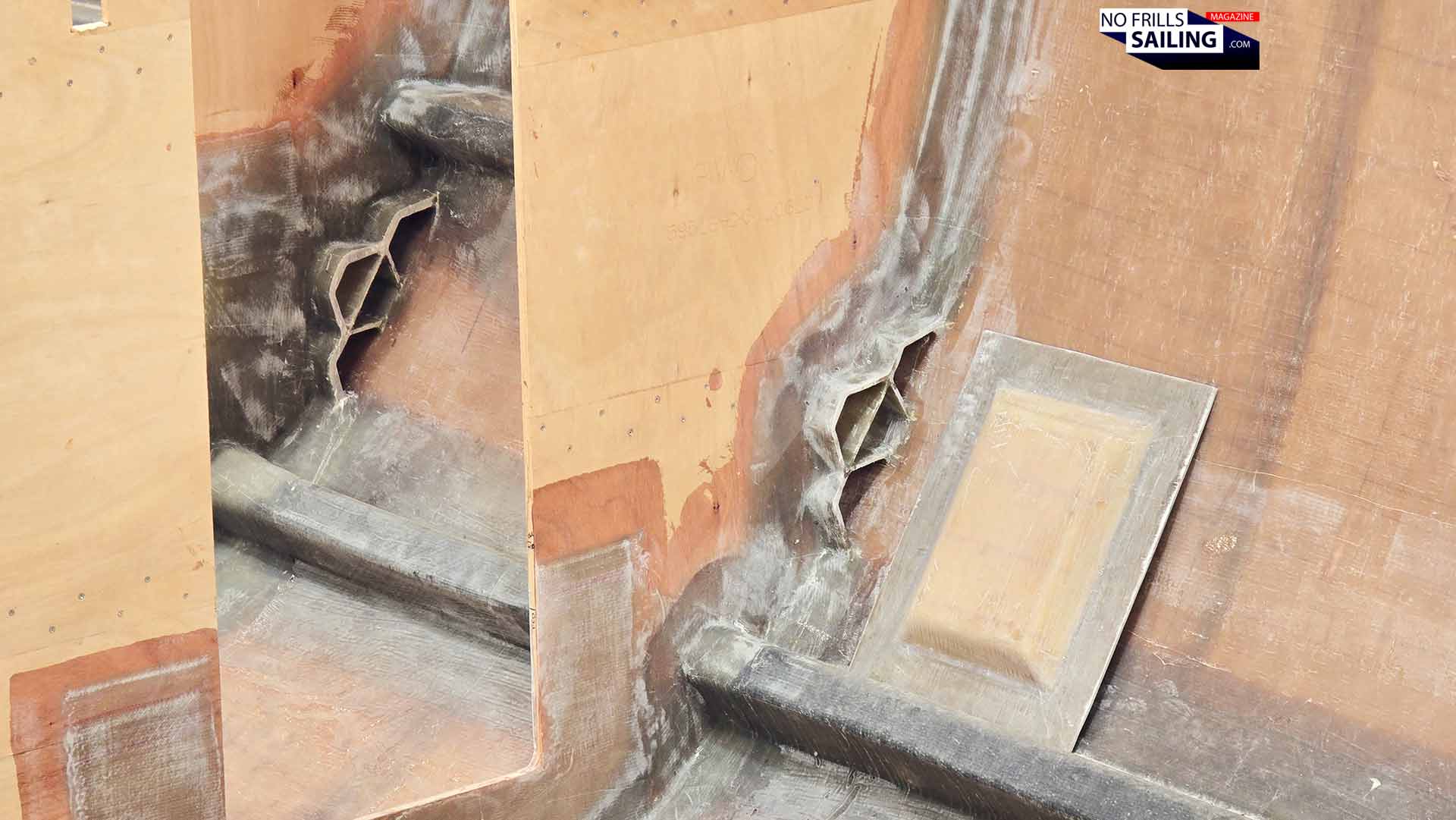
Note the nice cable-thrus
All the bulkheads are strategically placed to ensure maximum structural integrity. The bulkheads stiffen the hull´s sides and prevent the boat from being “squeezed” and take also on the torsion, as the hull tends to flex and become “twisted” when sailing through the waves. There are two types of bulkheads used in an Oyster. Depending on the area and setup, many bulkheads covering the complete width of the boats are made from special boatbuilding plywood, extra strong and stiff. Partial bulkheads can be made of wood or a composite laminate with a hard foam core and GRP. Either way, bulkheads in an Oyster are always laminated to the hull – not glued – to make sure that maximum stiffness is achieved.
Drainage holes everywhere
You may have also noticed the beautiful cable-feedthroughs, which at Oyster aren´t simple boreholes, but elaborate extra stiffened GRP-parts which do not weaken the structural integrity in that area. Also, in the picture above, you can clearly see the multitude of drainage holes which make sure that any water ingress, no matter where it may come from, will ultimately find its way to the bilge. No standing water anywhere inside the yacht! Everything is handmade, but manufactured and placed within the hull with utmost care and precision. I´ve rarely seen such an elaborate GRP-hull. Honestly.
Modular manufacture. Where it makes sense.
Another detail that struck my mind was the non-modular approach here at Oyster. When you look at the big production boat manufacturers, like Hanse or Beneteau, these are very proud of their modular manufacturing. Apart from a few – mostly just one or two – bulkheads, all of the structural integrity of their boats must be provided by furniture and cabin-modules which are completely pre-fab outside the yacht, hauled into the hull by crane and then glued or laminated to it. It´s easier, it´s faster and of course cheaper to do it this way. Well, not so here at Oyster.
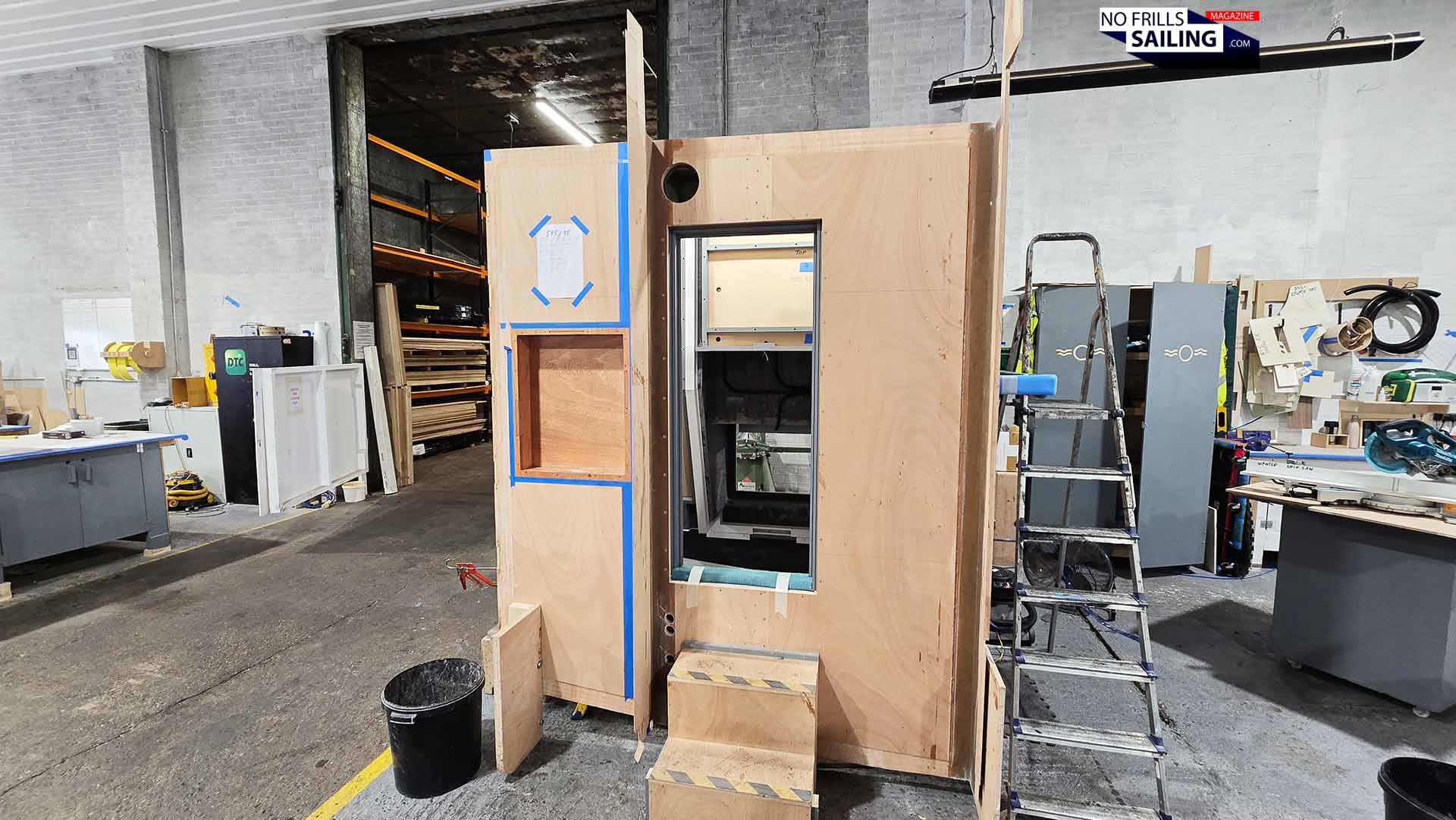
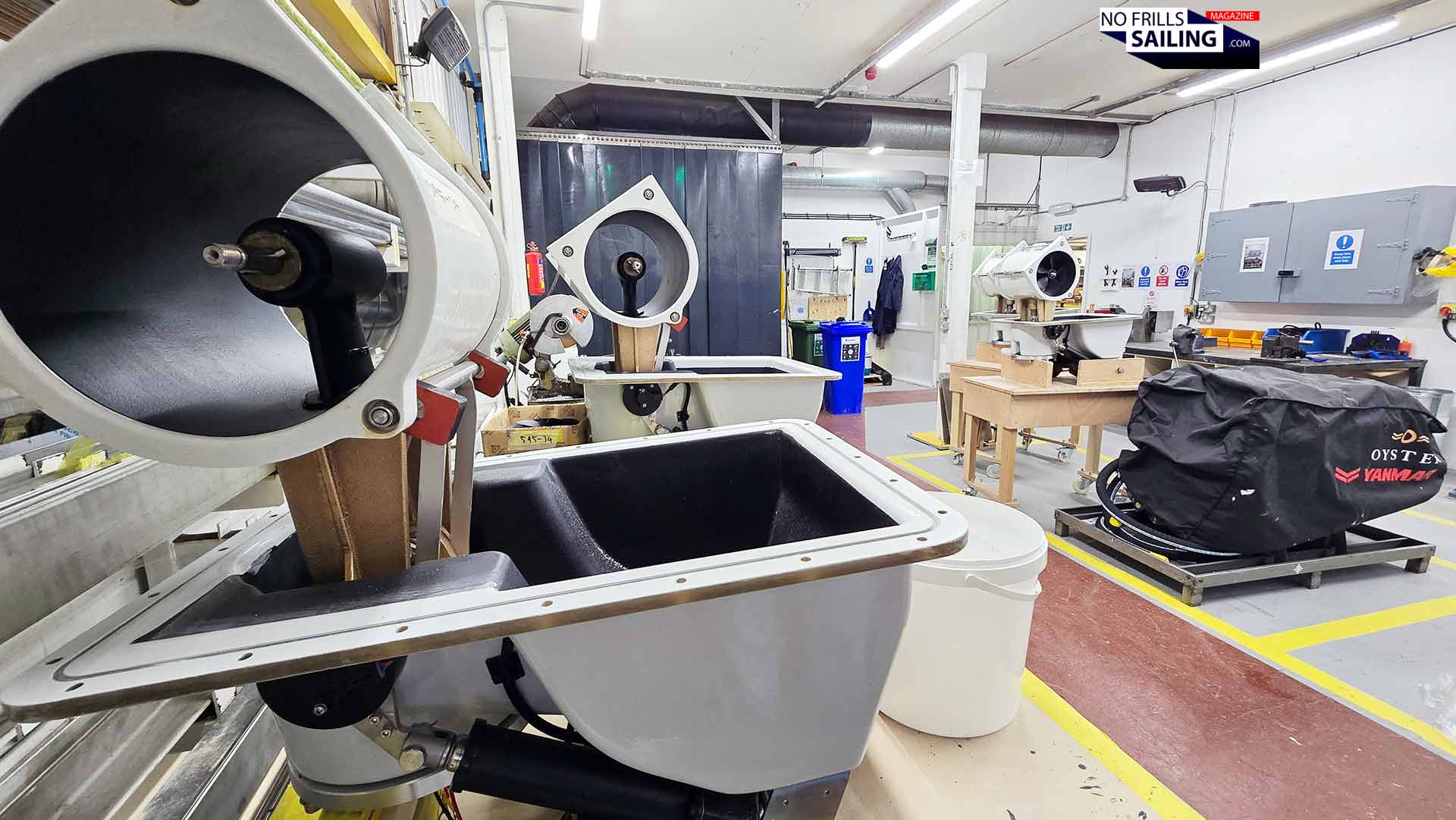
The engine room module
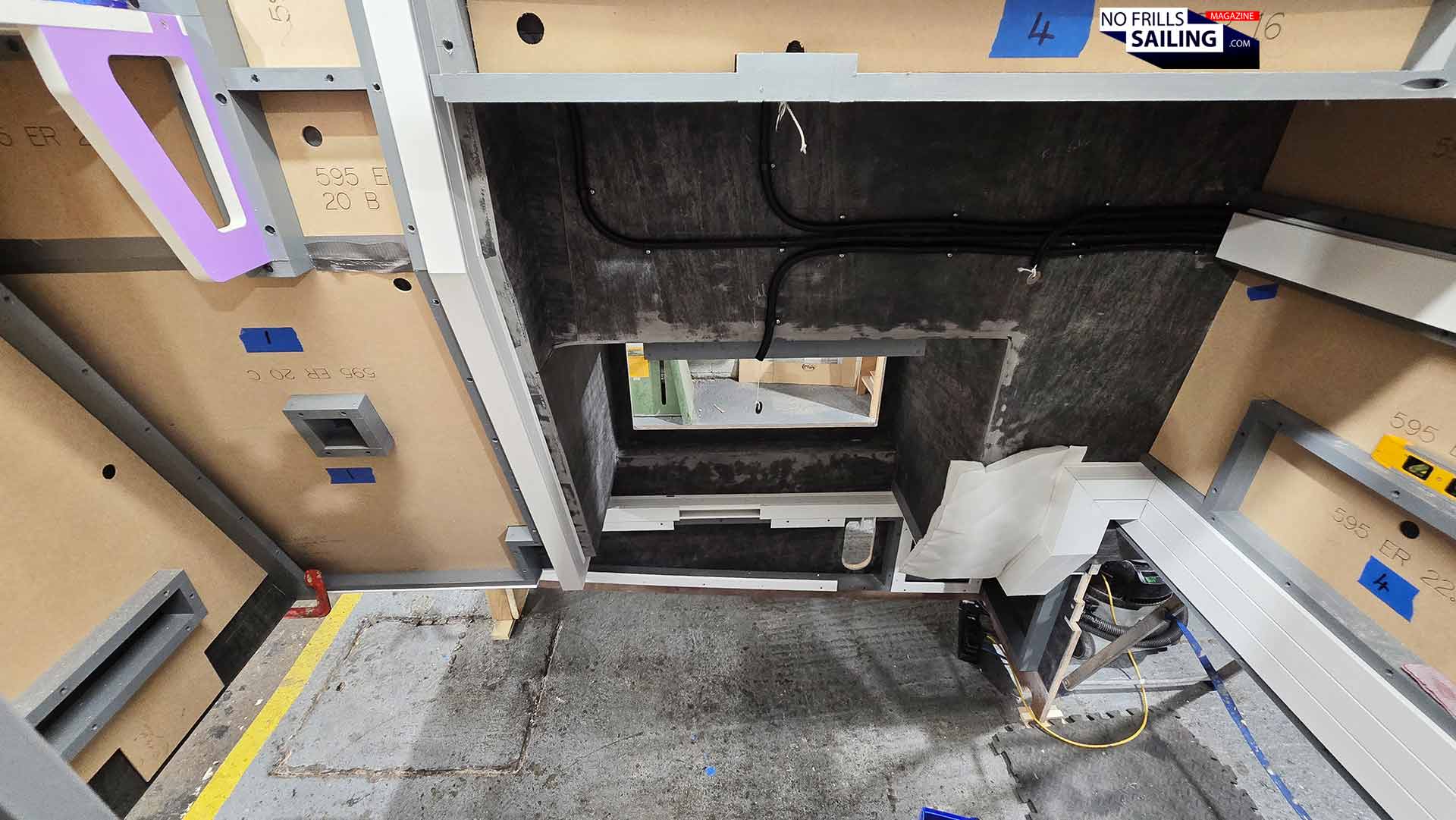
As far as I could see it, there is not but one module being made outside of the yacht, although Oyster utilizes this approach more an more. Apart from cupboards, the island beds or galley worktops, Oyster´s furniture and joinery is made separately in a more classic, manufacture-like way and fitted one by one to the yachts. Furthermore, the joinery for most part does not have to give structural integrity or stiffness to the yacht, which frees the designers and engineers from certain boundaries in their style and setup. The one module Oyster in fact is making outside the yacht is the engine room. In the picture above you can see such a module from the outside, here´s an inside look of the still empty raw module:
The module from inside
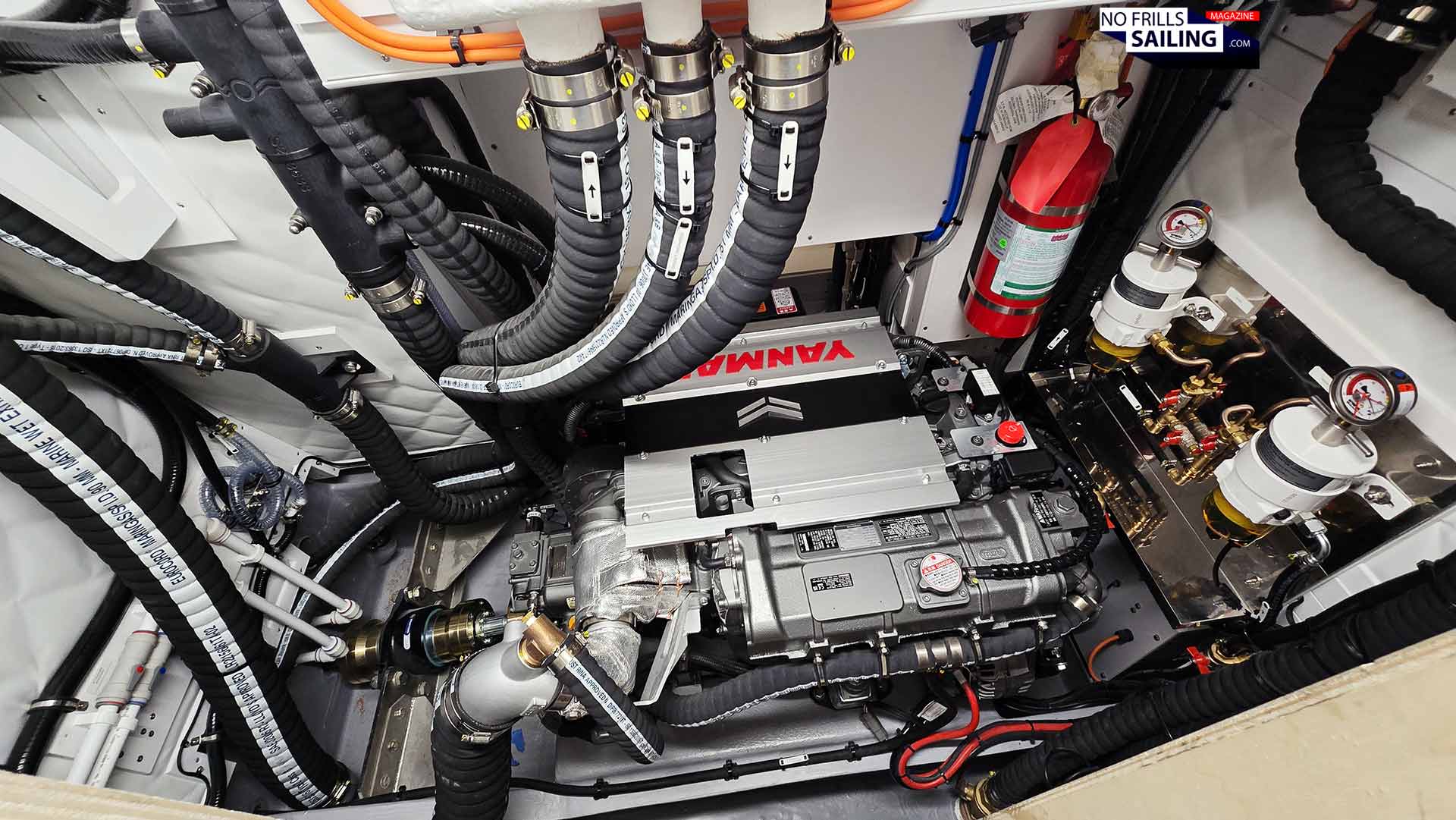
As fitting all the piping, the wires, the auxiliary machinery and most of all, the sound-absorbing panels would be too tedious if done in the cramped environment aboard the yacht, Oyster´s engineers designed the boats in a way so that the module can be made comfortably and more effectively outside in a workshop adjacent to the big production halls. Here´s more space to move freely and to access both the inside and the outside of the engine room. In the end, this module is the one and only bigger pre-fab part that is put into this particular Oyster. And this is how it looks like when it is finished and everything is installed:
A finished engine room.
When I will be sailing the Oyster 675 a day later (stay tuned for this exciting upcoming article!), I will put a special emphasis on the sound level when running under engine. Spoiler: It´s barely perceivable. Not only will I not be able to determine if the engine is running or not by sensing vibrations (cause there are none), there will be a satisfying silence, a meager humming, when the yacht will be motoring. That said, finding a good night´s sleep aboard under engine is guaranteed. This is because the shipyard invests a lot into soundproofing the engine room model, see how thick the insulation is.
Third party supply and parts: Quality matters
I have sold one hundred sailboats myself during my short 4-year “career” as a boat dealer. Still today, although out of active selling business for more than 1.5 years now, I have sometimes loose, sometimes tight contact with dozens of my clients. Some became friends. If I am contacted, it´s mostly because something broke or stopped working aboard their yachts. And of course, I try to solve their problems, even if I´m not working in that field anymore. Anyway, what I want to refer to is the third-party part problem. Every boatbuilder faces this. You can put as much effort into your own stuff, you will have to rely on the quality of the parts delivered by your suppliers.
Checking all parts thoroughly before fitting
This goes for the big parts, like the rigging, engines of course or the genset, but also for the hundreds and hundreds of smaller things: The washing/drying machine installed, the boiler, the pumps, the little switches, even the cables, terminals, valves et cetera, et cetera. It goes without a saying that as an Oyster supplier you must deliver highest quality. Oyster chooses Yanmar as their principal engine supplier for the smaller models: Lightweight Diesel engines made in Japan. What cannot be manufactured by themselves, must pass a rigid test-scheme and regular quality controls.
Third party parts commissioning
All parts delivered to the shipyard will be meticulously checked and tested before they are greenlit to be used in a yacht. You will later in this article see the effort that goes into wiring here at Oyster as an example of these efforts. Whereas on production boats for example chart plotters are only switched on after fitting for once to see if they power up, here the whole NMEA 2000-system is not only checked, but calibrated and pre-set to adhere to the customer´s wishes (and “speak” his language). This is where the working hours go into …
Toyota at Oyster – the 6S Lean Management-System
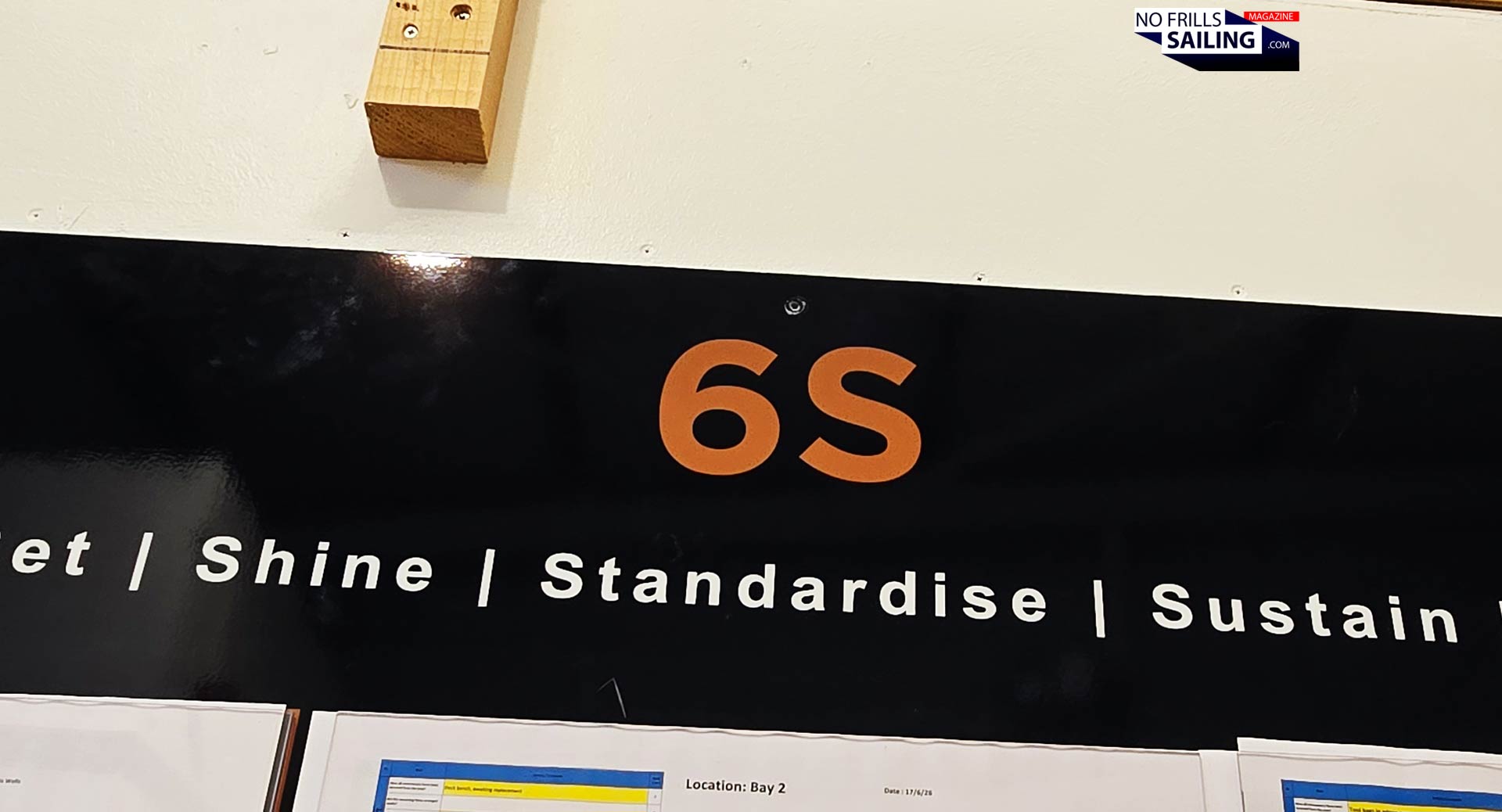
When it comes to quality management, Oyster has implemented the so-called “6S”-system. We briefly walk by a big chart in one of the workshops and Richard, who shows me around, barely notices it – because it´s a daily matter of course for the people working here. But I stop and ask: What does 6S mean in detail and how does it influence the safety and quality of the yachts?
A clean, tidy place: Wow
As you can read in the poster, the six “S” stand for sort, set, shine, standardize, sustain and safety. It´s a system that has originally been developed (then with 5 “S” steps) in Japan by the Toyota car company. The initial idea was to reduce and finally eliminate waste production. The sixth “S”, the safety one, was then seen as a matter of course, but had since been included, just to be sure. The six “S”-pillars are internalized by every single worker here at Oyster and become a normal habit in all of their proceedings. It´s really fascinating! In short: “Sort” means to always separate needed from unneeded items, remove clutter and have a clean workplace. “Set (in order)” means to arrange these items in a logical way to always quickly find what´s needed and save time. The “Shine”-pillar is particularly interesting: It requires the workers to deeply clean their workplace to being able to identify defects or equipment wear. I particularly like that one – and look at the pics, how clean it really is here!
Applying Japanese principles
Furthermore, by “standardizing” the efficiency is raised. For example, certain rules and worksteps, easy to get color-coding or clear step-by-step schedules eliminate a waste of time and make sure that every worker uses the most efficient way to reach the set goals. Lastly, a really Japanese one, “sustain” encourages the workers to develop habits and build up self-discipline keeping up high their work outcomes, regular audits will make sure that everyone runs at their highest levels at any time. Having understand that 6S-approach enables me to see the production with a bit different eyes now …
Oyster´s pride: The Joinery
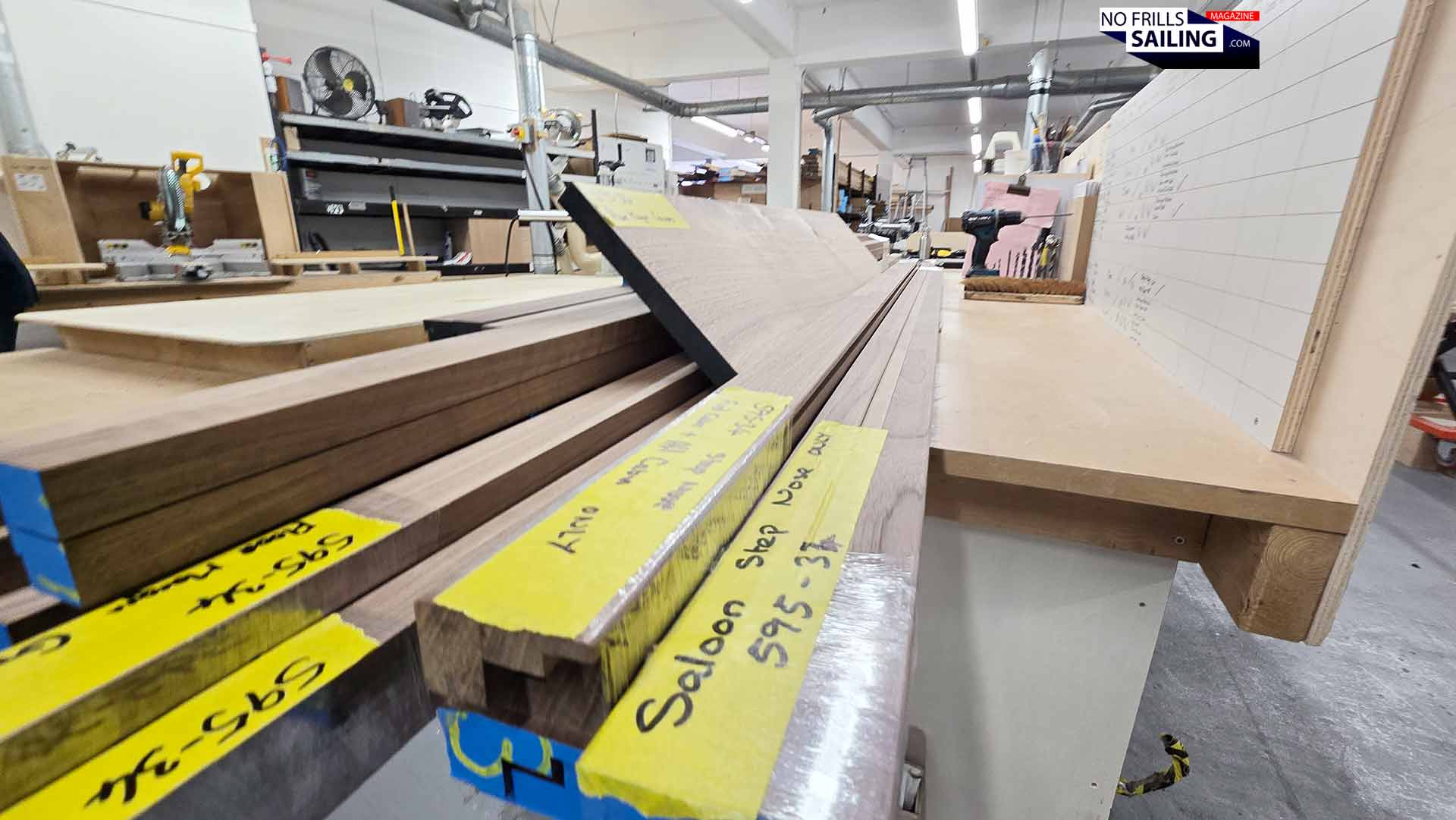
One of the most awe-inspiring details in any Oyster I have seen anywhere is of course the joinery. Their furniture is not only practical in a seafaring context but also beautifully arranged, thought through and absolutely beautifully handcrafted. This has mainly two reasons: First, Oyster makes everything inhouse, eliminating the need to rely on third party products, and secondly, they make everything inhouse: Literally, from thick planks and logs to wonderfully crafted grab rails, scantling or chart tables.
If you could smell this scent …
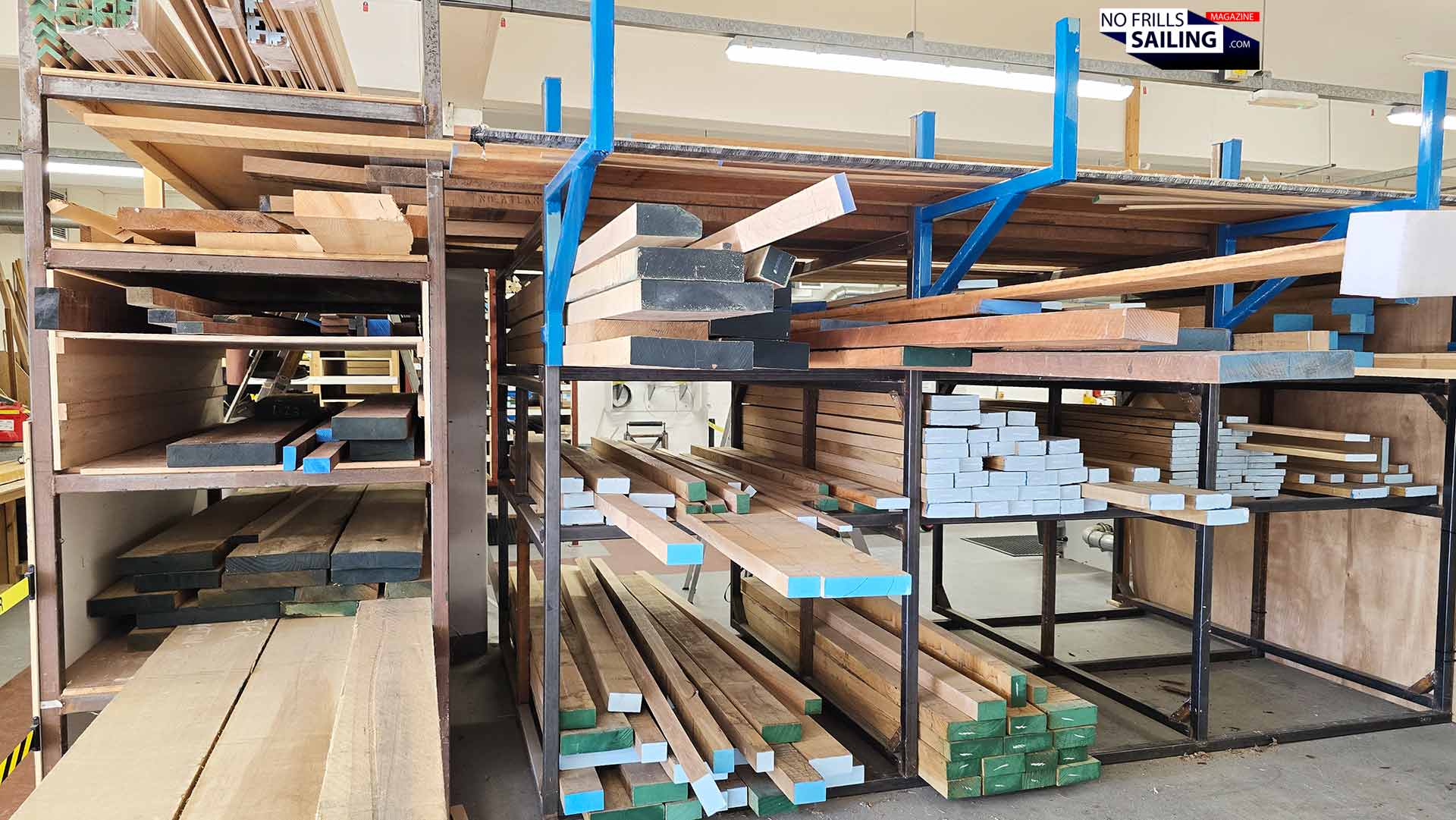
As we walk through the timber storage at Oyster, a wonderful scent of freshly cut wood fill my nostrils. There´s Mahogany, Teak and – the best odor of them all – Lebanese Cedar. With an Oyster, owners get to choose from a vast variety of finished for boatbuilding-suited timber they want to opt. In most series production boats you either get to choose between “dark” and “light” wooden style, mostly a kind of Walnut and White Oak. Apart from that, ALPI-veneers have taken over most of the market for boat joinery. That´s definitely not the case at Oyster.
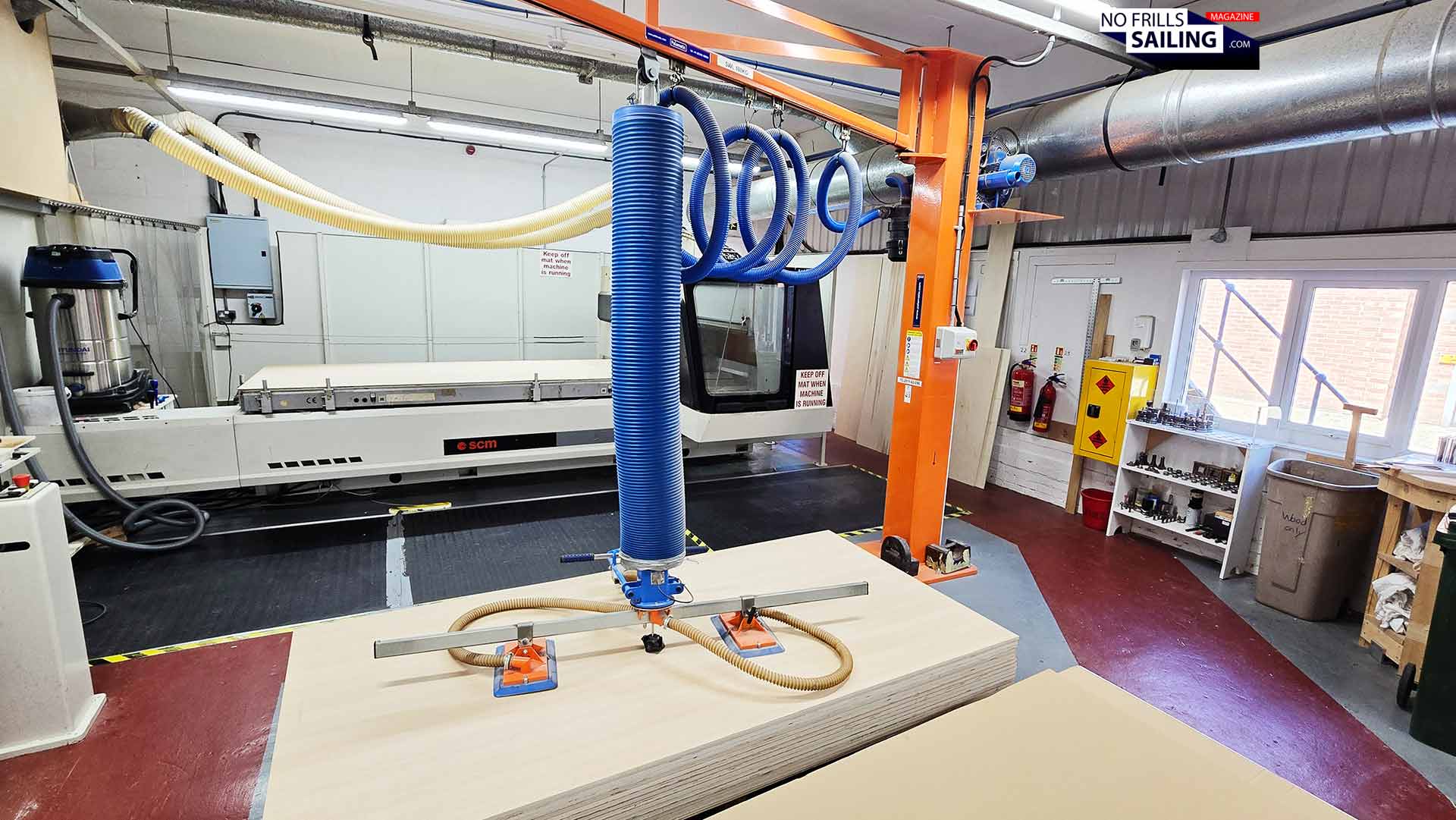
CNC-cutting
If you go to sign a purchase contract with Oyster, you may opt for the said White American Oak for achieving a light-suffused, modern look. This time, it´s not ALPI, it is of course real oak tree timber and thick veneer. Furthermore, there´s Cherry, Walnut or Maple if you go for a more special, individual look. Of course, Oyster still offers real Teak, which is imported plantation grown in India. The massive parts are produced by skilled carpenters and joiners, utilizing both state-of-the-art CNC machines and other computer-aided equipment, and precision machinery 30, 40 or more years old. Their carpenter´s workshop offers an interesting assortment of a century worth of tools.
Lebanese cedar for the carcasses
The overwhelming scent of fresh wood, so tempting and nice, comes from the Lebanese Cedar. Most of the carcasses of the cupboards, shelves, lockers and cabinets made by these craftsmen are made from this timber. This will have a profound effect on the finished boat: Did you ever wonder why your sailing clothing smells a bit … well, strange … after one or two weeks cruising around? This is because most of ordinary boat´s joinery is made up of plywood that has been treated with chemicals to become stiffer and waterproof. This scent diffuses over time, but it also diffuses into your clothes.
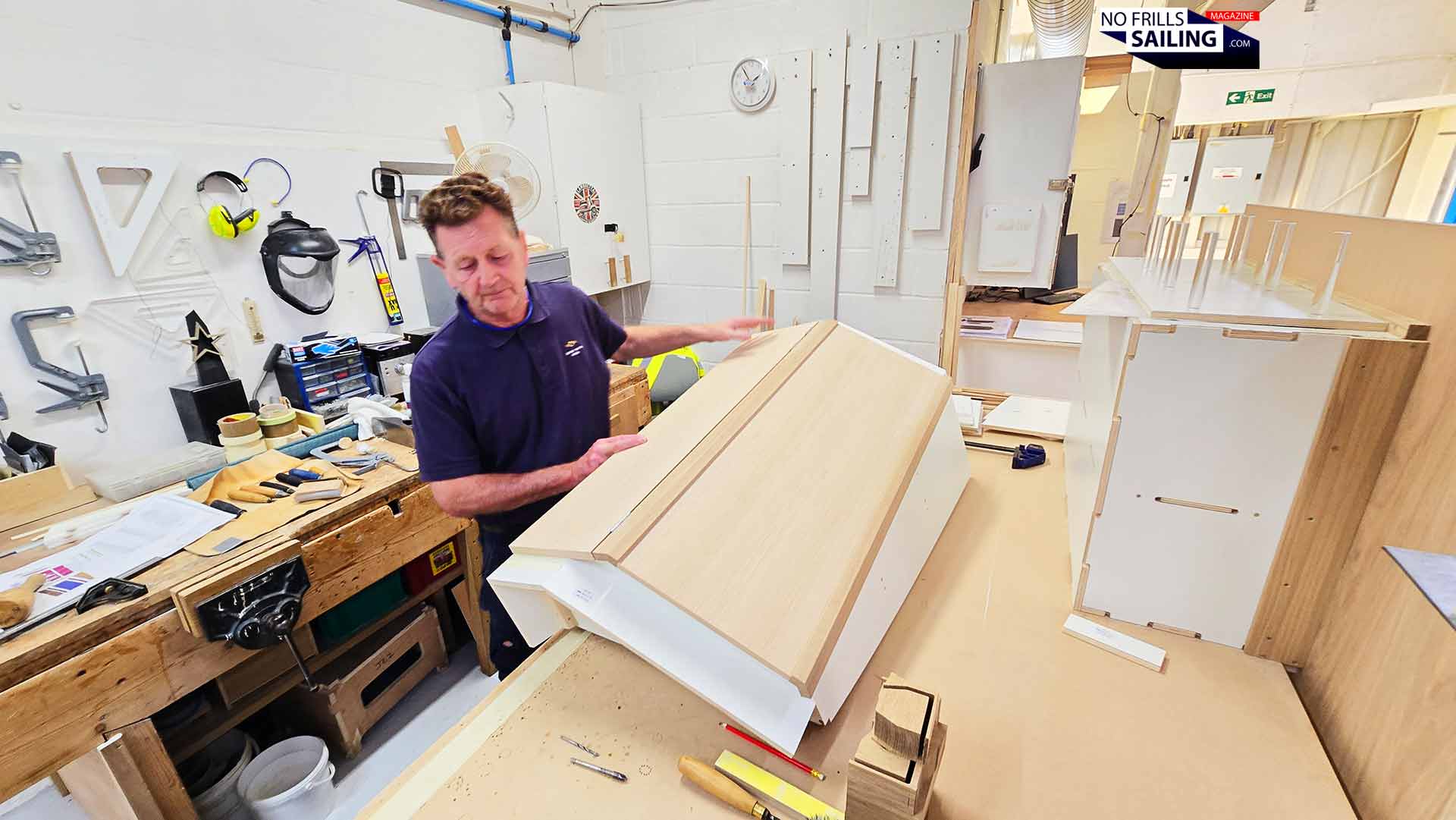
Proud craftsmen and their work
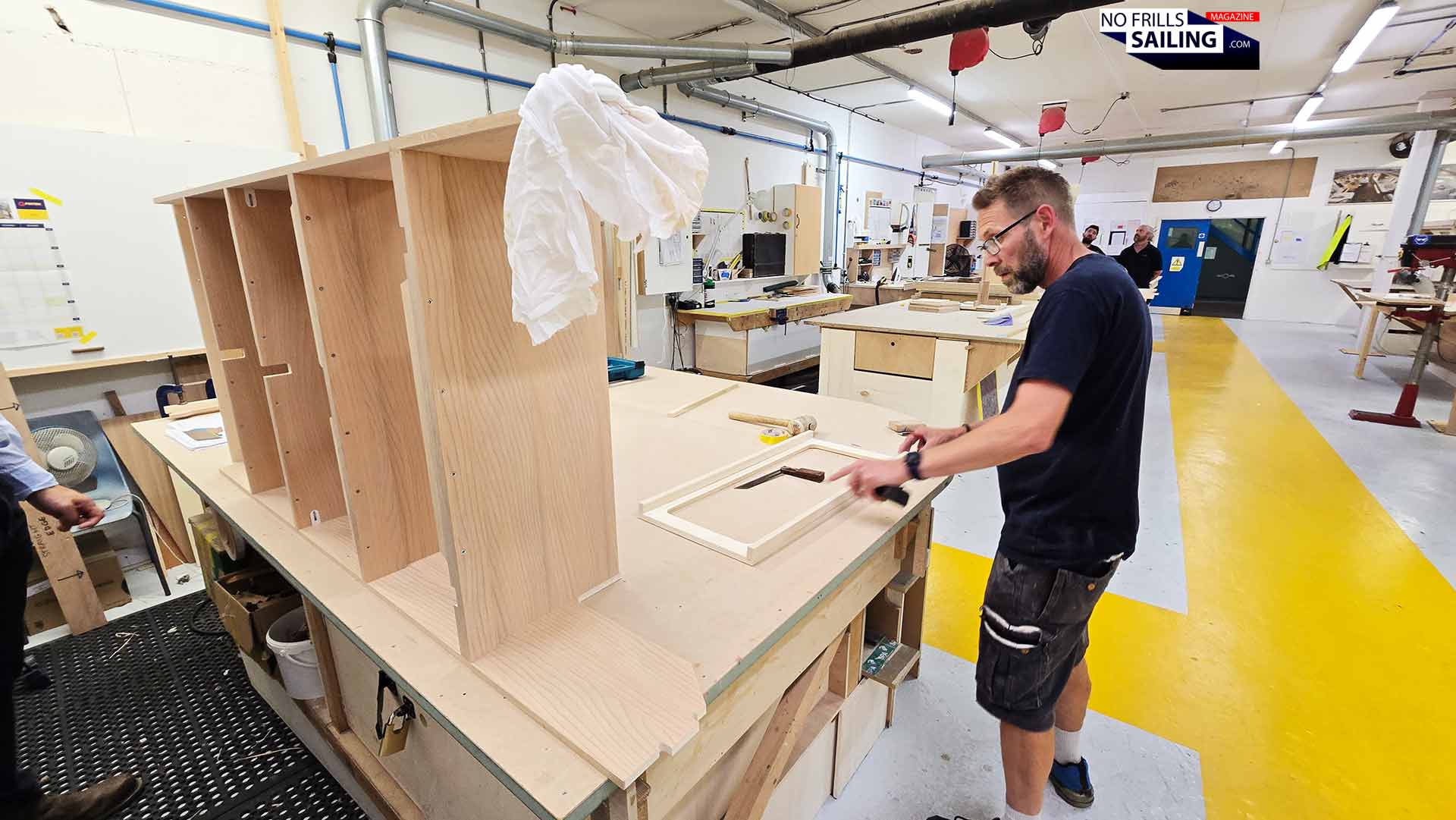
We stand next to one carpenter who is currently working on a small locker. The carcass is already pre-lacquered and he is now finishing the front parts: Beautifully arranged oak, a mixture of massive scantlings and thick veneered fronts. By the way, most boatbuilders in the series segments utilize 0.6 to 1.5 millimeters of veneer – here at Oyster, it´s between 2 and 3 millimeters! That way, even if there´s a scratch, you can always repair the joinery without having to change parts for good.
Handcrafted unique items
There´s another mind blowing detail here at Oyster: Choosing the type of wood is not the end. You get to choose the grain style, the “cut” of it too. You may either have uniform, straight grain or more a “lively” design. That said, are you the “quarter sawn”-type or do you prefer a “crown cut”? I am definitely more on the crown-cut side. But it even does not stop at this, as you may also decide about the orientation of the grain in your yacht: Should it be arranged horizontally or vertically?
Massive wooden part manufacture
Latter is a classic alignment where the grain kind of “flows” from the ceiling to the floor. The horizontal alignment however makes the boat appear even wider. The continuous grain spans from one side to the other: A true highlight of craftsmanship! But it´s not just the big things which are impressive. The details are worth a detailed look too. As already said, all of the massive wooden parts are sawn, milled and sanded in form by the carpenters of the shipyard.
Ready to being assembled
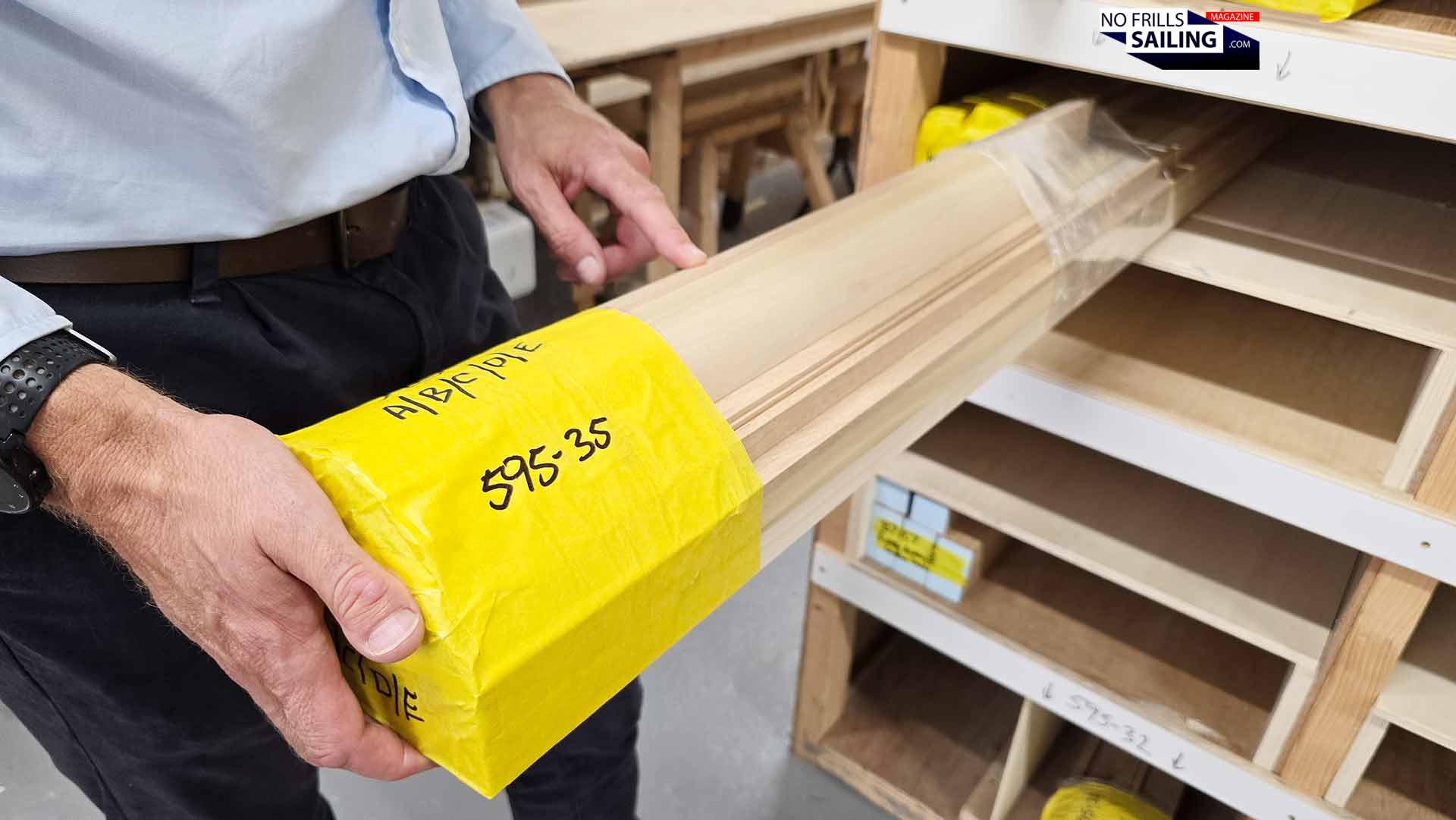
As we stop by a large storage rack, Richard pulls out a package that says “595-35”. Obviously these are oak-parts manufactured for hull number 35 of Oyster´s currently bestselling model, the 595. The parts are pre-fab by the carpenters, marked and protected to be stored here until needed aboard to be fitted. The finishing quality is absolutely spotless, no knotholes or growth defects, just absolutely joinery precision. Eye-candy, for sure.
From bulkheads to the complete furniture
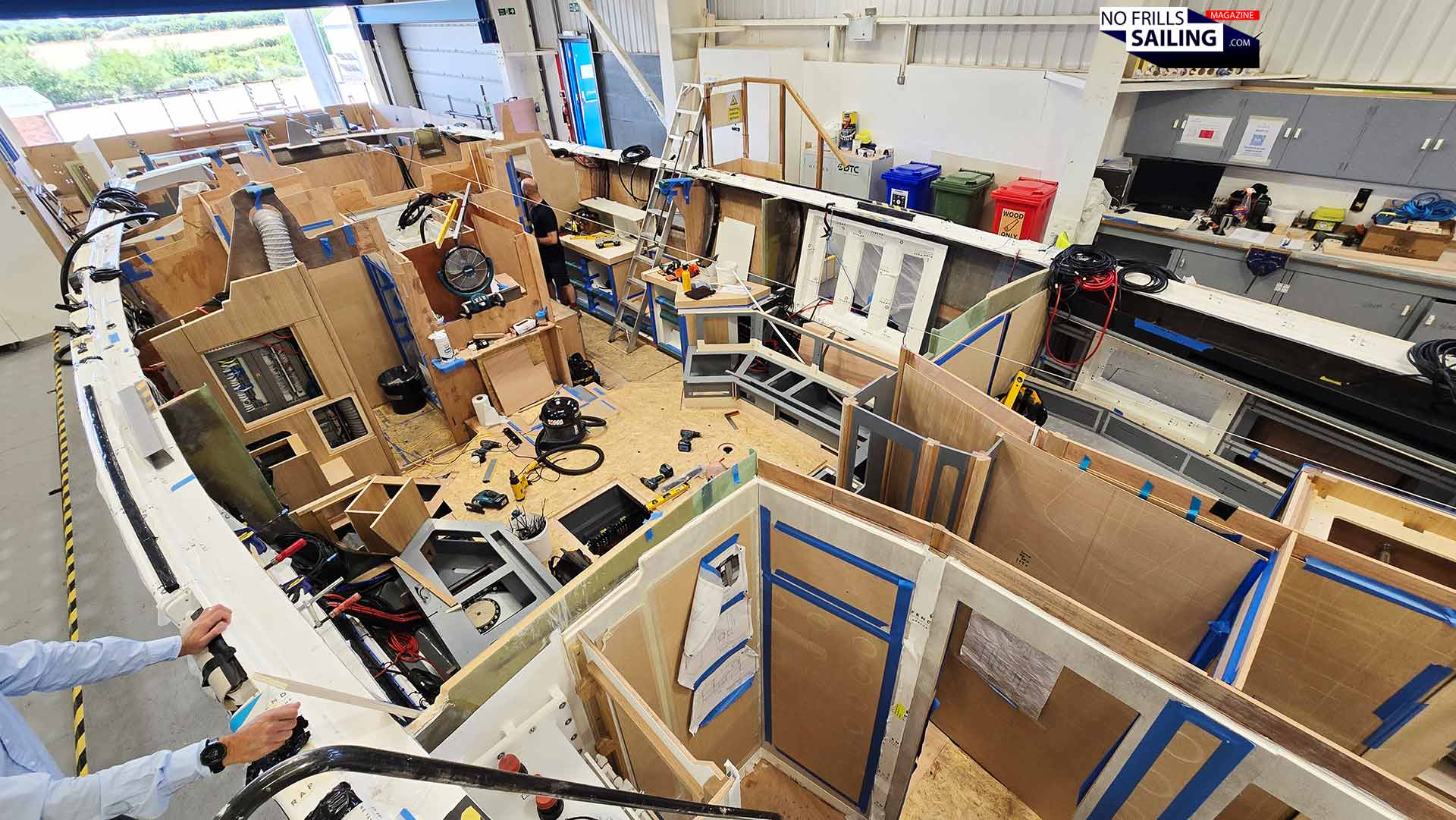
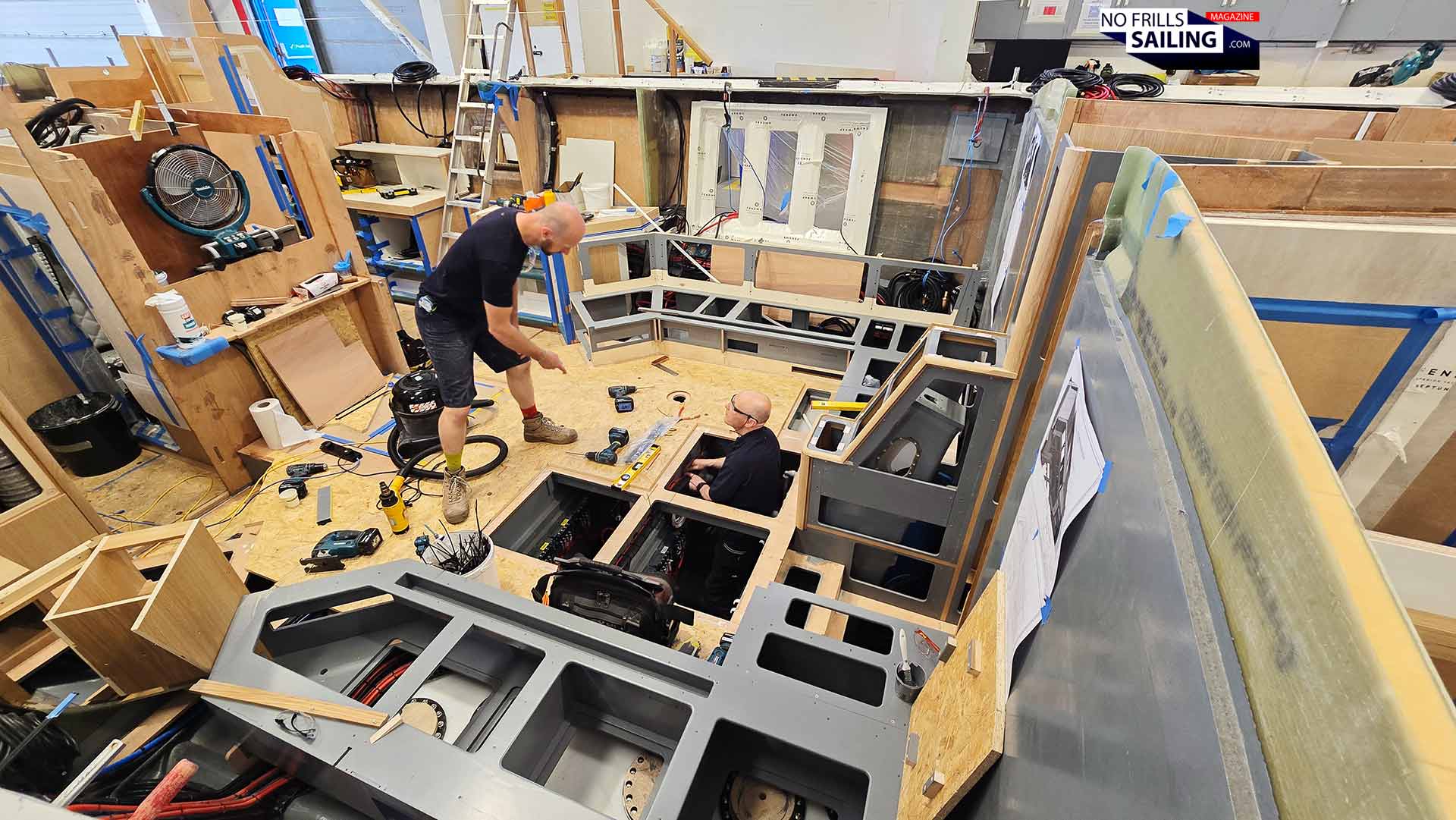
And this is where we head next: Into the big workshop. In this hall alone no less than six yachts can be built simultaneously. Having started with the bare hulls as they arrive from nearby lamination facility in Ashmanough (check the previous article if you are interested in how Oyster makes hulls and decks in the first place), interior fitting will start right away: Principal structure-giving bulkheads are already in place, now it´s time to fit the cabin-walls and base parts for the interior. Like the floor-installation (painted grey) and covered with makeshift floorboards made of chipboards.
Next step_ Interior fitting
Any furniture that is now fitted and installed will instantly be covered with either cardboard or plywood to protect the fine timber from being scratched or bumped into – because there is still a long, long way to go before the boat is finished! Parts people are working on may be uncovered for the duration of the work step, but will be protected again shortly thereafter. As you will see in a later article (yep, there´s a third and last article coming up about the Oyster shipyard), most of the parts aren´t varnish nor painted yet. But still: protection is key, minimizing later efforts for possible repairs.
By the way, if you do not wish to skip any new article, you may just subscribe to the NO FRILLS SAILING newsletter right away! It´s free and will be delivered to your inbox monthly, comprising the total of no less than ten new in-depth articles about various topics so that you can have a quick overview of what´s new – and with a simple click you can start reading what´s of most interest. If you haven´t already, subscribe now! Anway, back to the shipyard, where another absolute highlight awaits me, something I haven´t seen at all in any of the shipyards I had visited before …
A look into the electric department
First of all, you know, I kind of hate electric stuff. Although my daddy was a skilled and trained electrician, these genes may have passed on me. Wiring, volts and amperes, that´s nothing for me! Maybe this is the reason why I kept the electric installations and range of electronics used in my own new sailboat to an absolute minimum – to a point where I skipped even 12 volts lighting, supplanting it with single USB-lights. Now, that´s not a way for an Oyster, of course: These yachts are on the exact opposite of the electric spectrum of boatbuilding.
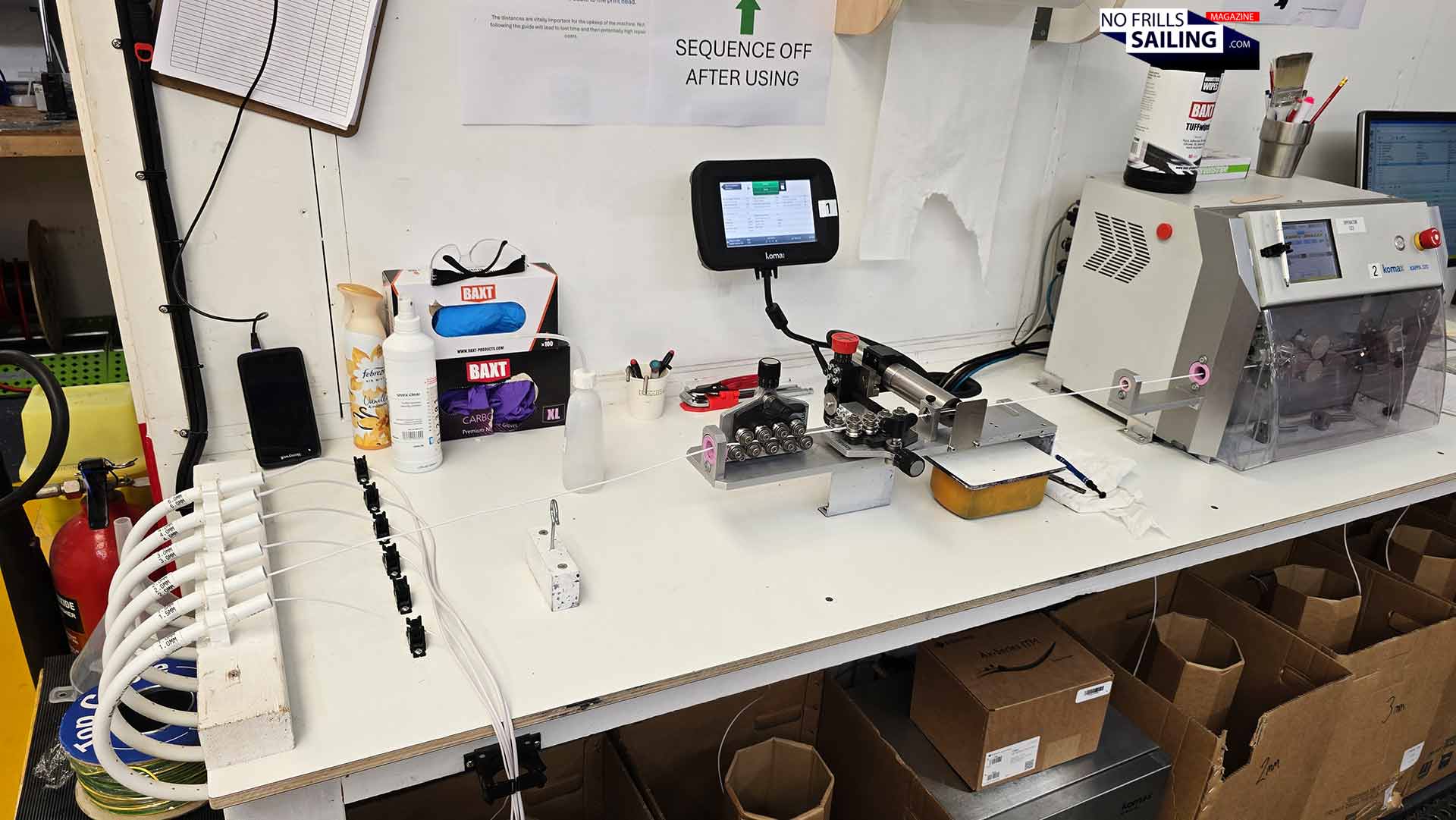
A printer for wire-labeling
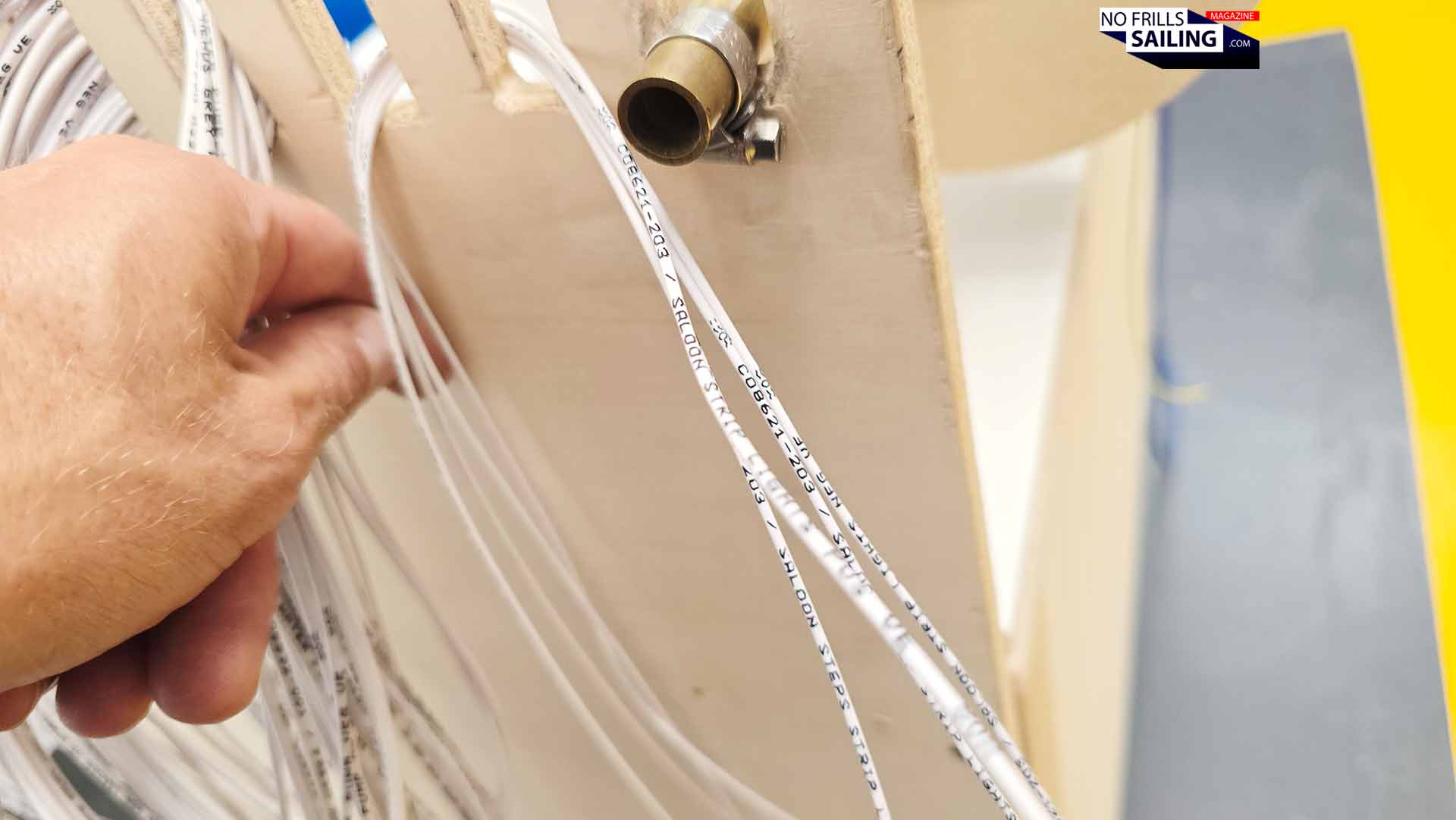
Luxury and onboard amenities are often current consumers, so both the energy concept of these yachts and the wiring (including fuses and main switch boards) are of utmost importance. That said, the first thing Richard shows me here is the wire-printer. You´ve heard right: A printer where they mark wires. Cables of various diameters are fed into this machine, that can be programmed to print onto the cables what these are meant for. This is done from the start to the end (!) of each single wire built in any Oyster! Can you imagine?!
All wires are labeled. All!
Anytime you take away a panel and see a cable, it will instantly tell you what it is used for. Usually on boats, a cable is only marked at its beginning and its end. If at all! And often these markings are either codes, for which you need a plan or schedule that encodes the markings, or these are hand-written labels where you rely on the writing capabilities of the electrician. Often those are unreadable as they degrade over time. Well, here´s the Oyster way: Any cable has continuously imprinted why it is there and what it does. Wow!
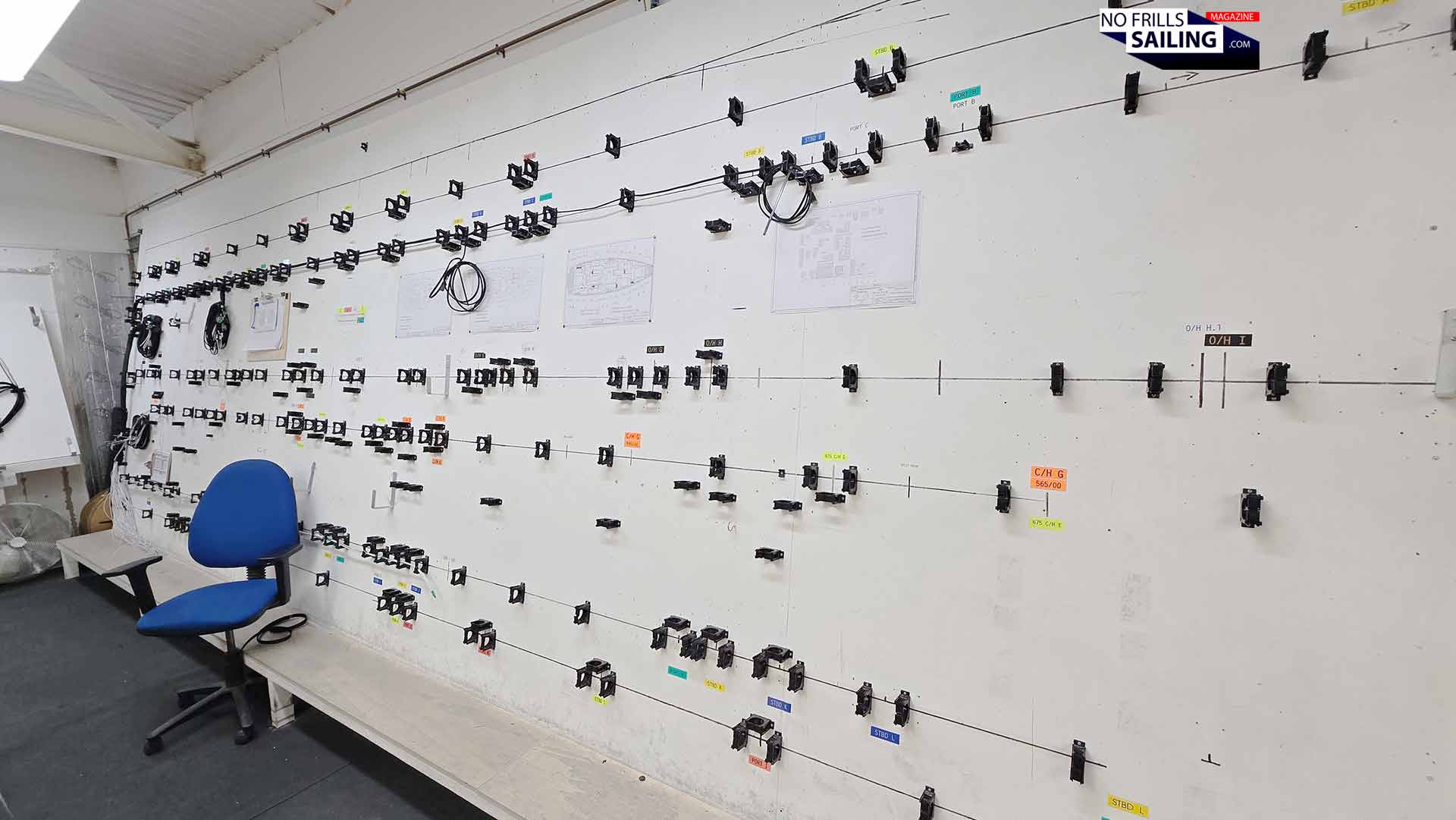
The “loom board”: Ingenious!
And then there is the “loom board”. I´ve never seen anything like this in any shipyard before. It´s a simple, easy system, but so ingenious that I wonder what I haven´t got this self-evident idea. It works as following: On the board there are dozens of black clips into which an empty cable ducts can be placed. Now, the pre-fab cables and wires can be put into the ducts, forming “S”-shaped curves all along the board, until having reached the desired length. To make sure they have the exact length, the board has markings for each Oyster type, from the 50-footer to the flagship, for any loom that needs to be made.
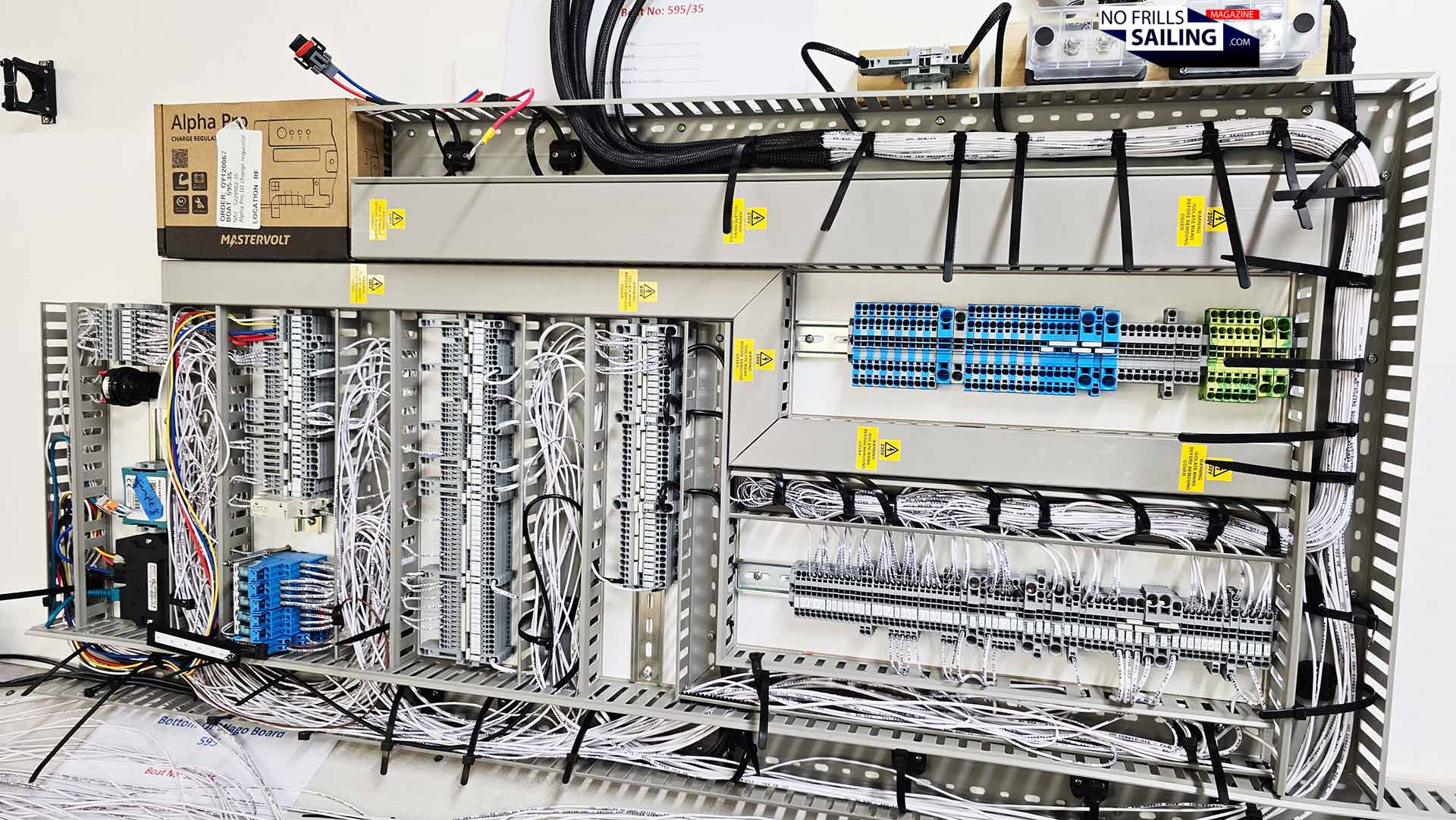
Pre-wiring of an Oyster´s main switch box
All looms utilized in an Oyster are produced here: The backbone for the electronic navigation, the cables for the galley, the aircon … you name it. It´s a simple, yet so complex system. But it will save so much time, ultimately, and limit the error-factors because the board simply tells you how long a specific wire for any loom should be. Impressed? There´s even more! All the looms will be pre-connected to the main fuse and switching unit. And not only connected, but also powered up.
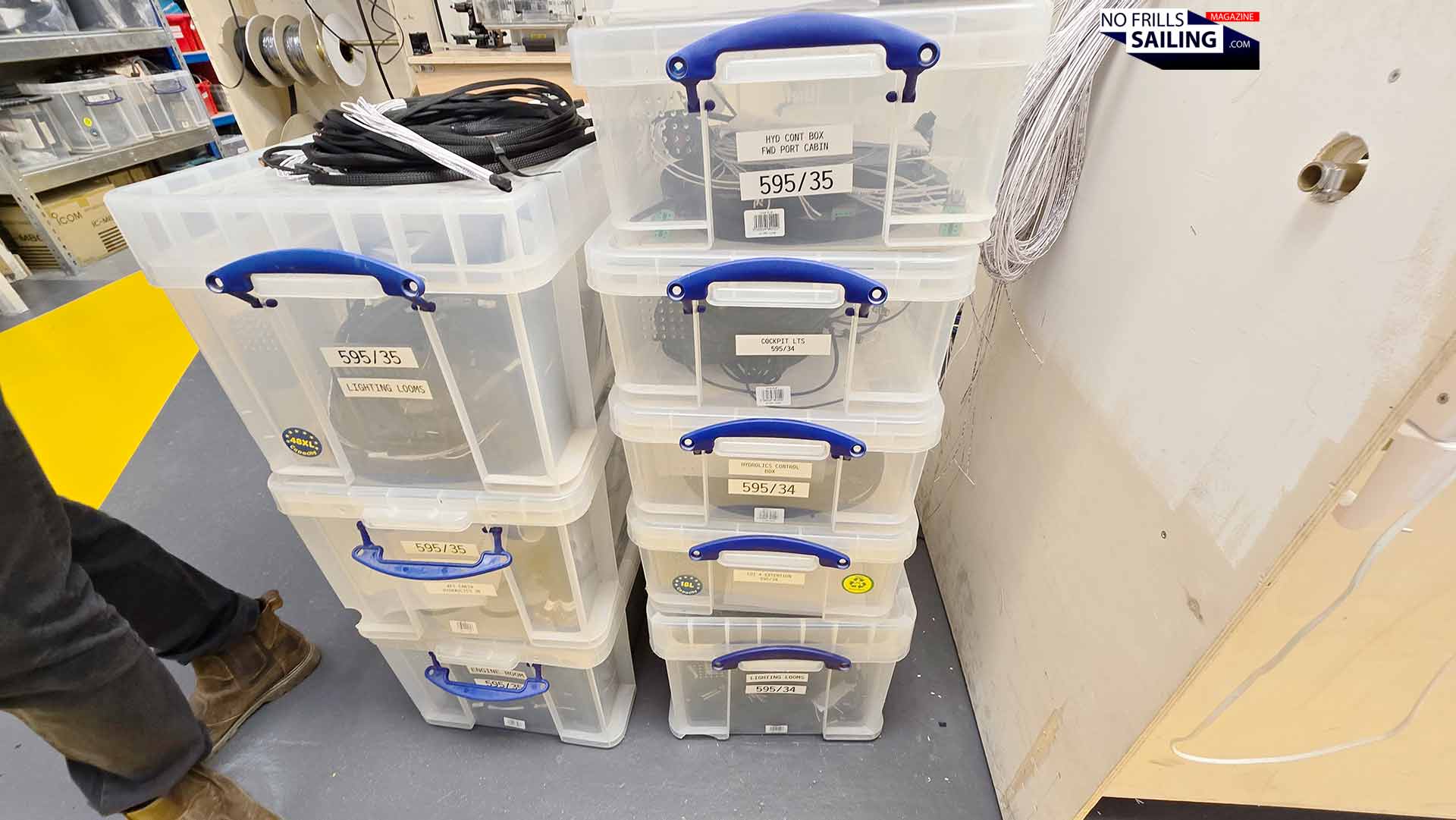
Looms ready to go aboard
This way, the electricians can test all looms and make sure that everything is in order and functioning flawlessly before it is fitted to the boat. Imagine these hundreds of meters of wires being installed (and hidden behind panels) and something is not working: The search for the fault can last for hours, we all know this from our own boats. Here at Oyster, everything has been tested with real currents and checked, before it will be put into the baskets ready to be installed on board. This way, I think, electric installations will be fun even for an “E-grumpy” like me!
Tradition meets modernity
Speaking of codes and plans: As so many things are indeed already monitored and worked with by the digital onboard management systems (we will later see the impressive main switchboard at the chart table), some need manual input. Such as the dozens of valves managing the fresh water- or fuel-systems. Are the valves in your boat marked as well? Mine are, but with ordinary Dymo-stickers. These will fade, loose grip in the moist environment and surely fall off at some point.
Durable labels for sure!
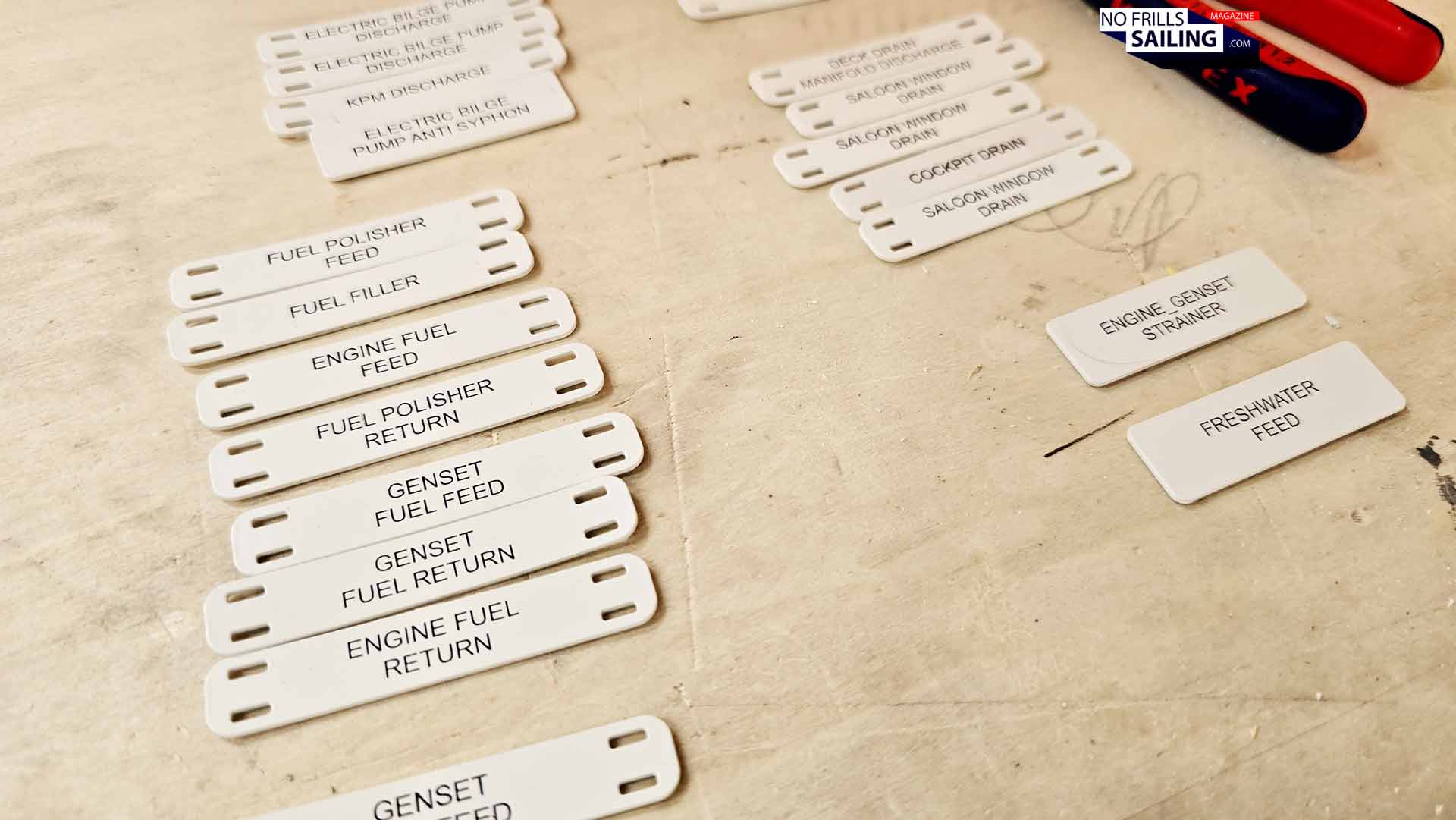
Again, not with an Oyster. We check the interior of another yacht that is a bit further in production. On a worktop (protected, of course) in the galley a rich assortment of labels is presented, just about to be fitted to where they belong. These are big, perfectly readable plastic chips which will be clipped on or fastened to their locations. They will neither lose color over time nor dissolve even in most moist bowels of the ship. A classy, old-fashioned way of doing it, but too expensive for most production boats. Standard on an Oyster. On the other hand, I find a number of 3D-printed parts.
3D printed parts: Clever
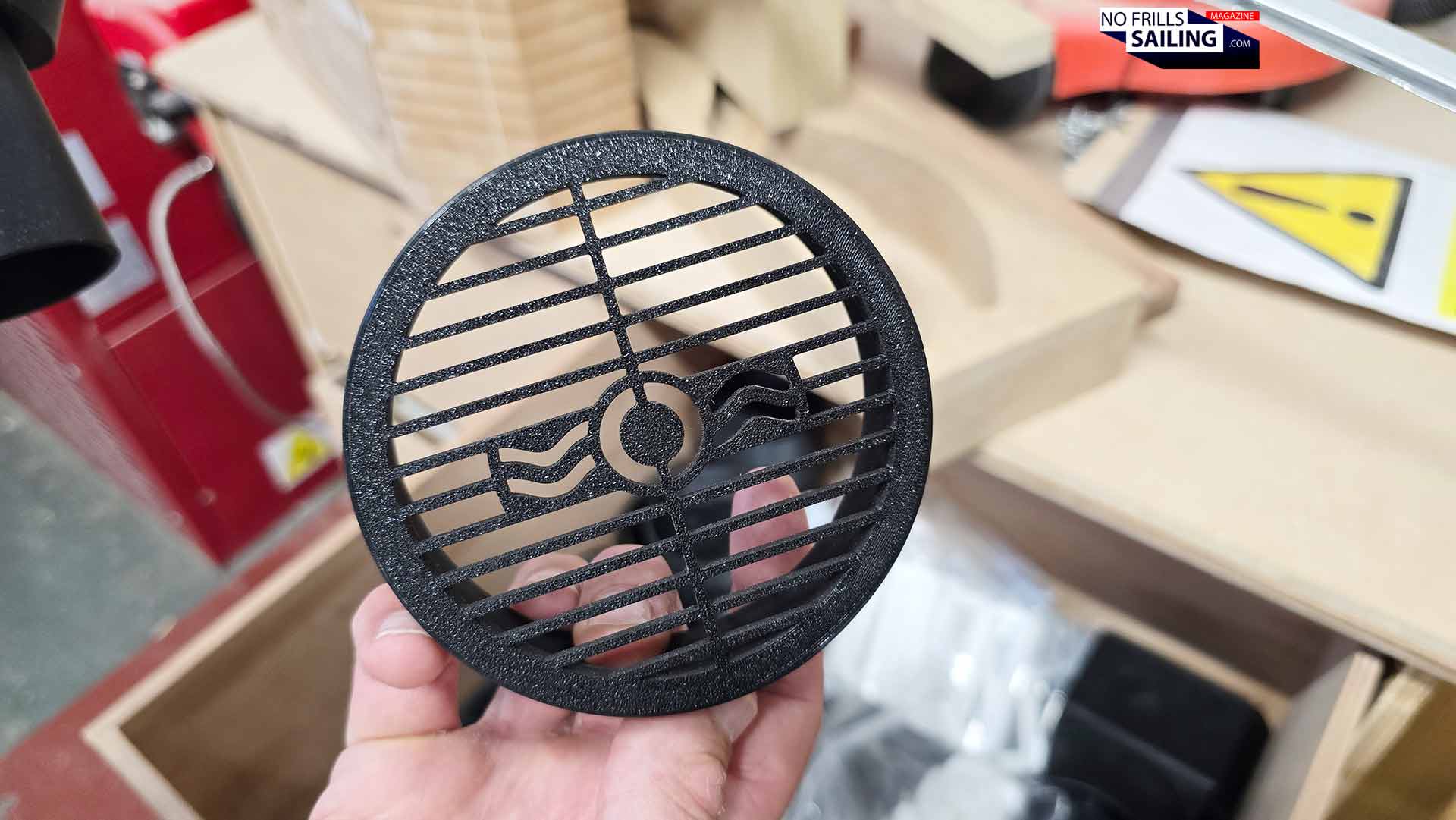
For example some air ventilation outlets: Back in one of the workshops two or three of the latest 3D-printers are running all day to produce proprietary Oyster-branded plastic parts for a multitude of applications. It´s simply faster and easier to have them made quickly inhouse, than find a third party manufacturer. Besides, Richard notes: The quantities of those parts are so low, that it´s probably cheaper to do it here as many big plastic producers only start their machines when a certain minimum of parts is ordered. So it´s nice to see how both classic and modern production methods are used here.
Wiring it all up
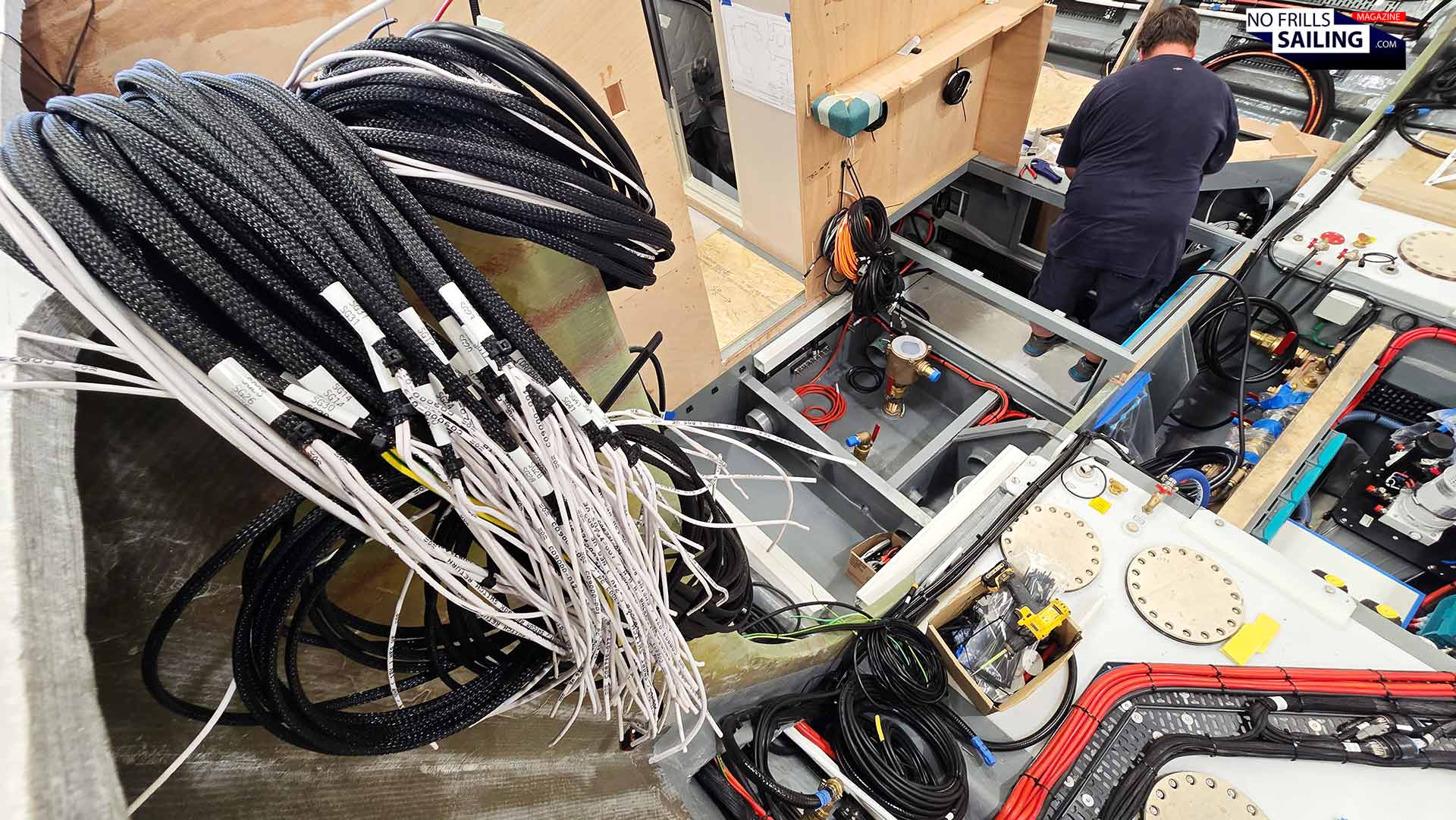
Having seen behind the curtain, it is now time to take a look at how this all comes together aboard the yachts. We check on a yacht that has not received her deck yet. I can see a number of yacht electricians working in the ship, the pre-fab looms either coiled up still, awaiting to be connected to their consumers, or already installed waiting for further connections. By looking at the amount of wires alone, I get a bit dizzy: How by any chance can these guys keep their oversight? It´s all pretty fascinating for me.
A lot (!) of looms …
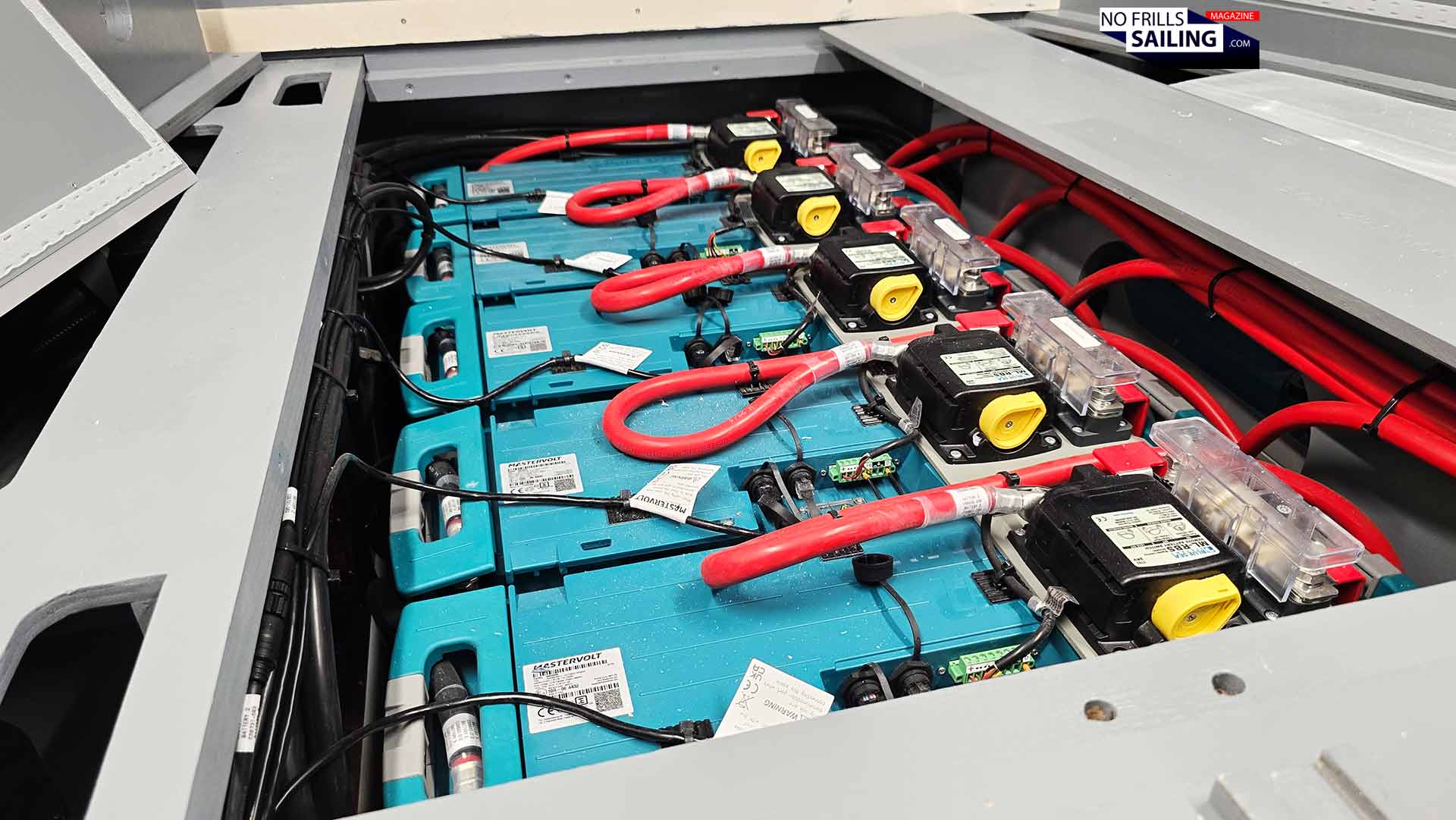
All those current eaters need … well, juice, of course! Oysters are luxury yachts and so their battery banks are correspondingly well-sized. I take a look at one massive lithium batteries bank installed underneath a bed in one of the large fore-cabins. As a standard, Oyster uses Mastervolt products for the most part, again relying on top-notch third party equipment. I am suddenly happy that I as well went for Mastervolt in my new boat, of course in a far smaller and simpler set-up than seen here.
That´s what I´d call a battery bank …
The guys working here even tell us that they have recently fitted the first yacht with those brand new carbon-lithium batteries, which was a custom request from the owner. It´s certainly worth a deeper article, I take a note in my brain, as both lithium-carbon-dioxide (Li-CO2) and lithium-carbon-monofluoride-batteries (Li-CFx) are on the rise. Their up to seven times higher capacity, practically failsafe safety and extended shelf life of 10 to 20 years make them especially interesting for marine applications. So, there you go: Even when it comes to details of your Oyster´s energy concept, you are invited to actively and heavily customize your yacht.
Working deep down in the maze of the bilge
I stand there and remain calm for a few minutes, watching the electricians do their work. It looks so easy and they do it in complete confidence: Wiring up hundreds of loose ends to the right places, never get confused or deviated. I couldn´t do that job, for sure, I would go crazy or, more realistic, freeze in awe when getting handed the first loom with 20 or 25 wired wildly run riot out of it. Nope, we´ll leave that to the pros …
Secondary and alternative energy production
Speaking of energy consumption on board and its subsequent production: Of course, every Oyster is equipped with its powerful Diesel engine which is not solely used for propelling the yacht when needed, but also to quickly reload the battery banks with its efficient and quick alternator capacity. As a secondary power generation method the yachts sport a capsuled genset which is primarily used for recharging and running the aircon when at sea. It will also provide for 230/110 vols alternating current if you need high amps, other wise the big inverters will do as well. But what about solar?
Custom fixed bimini
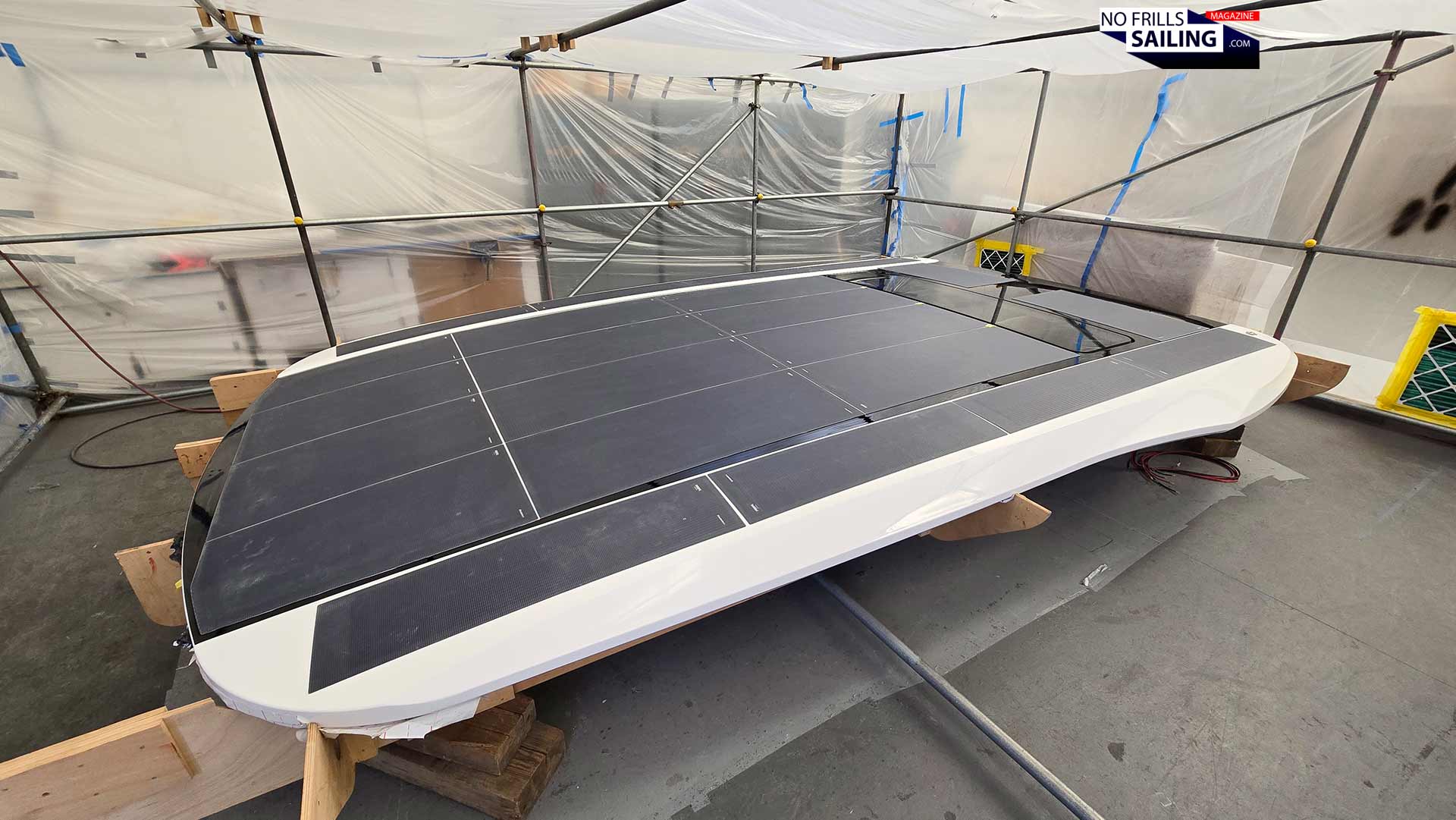
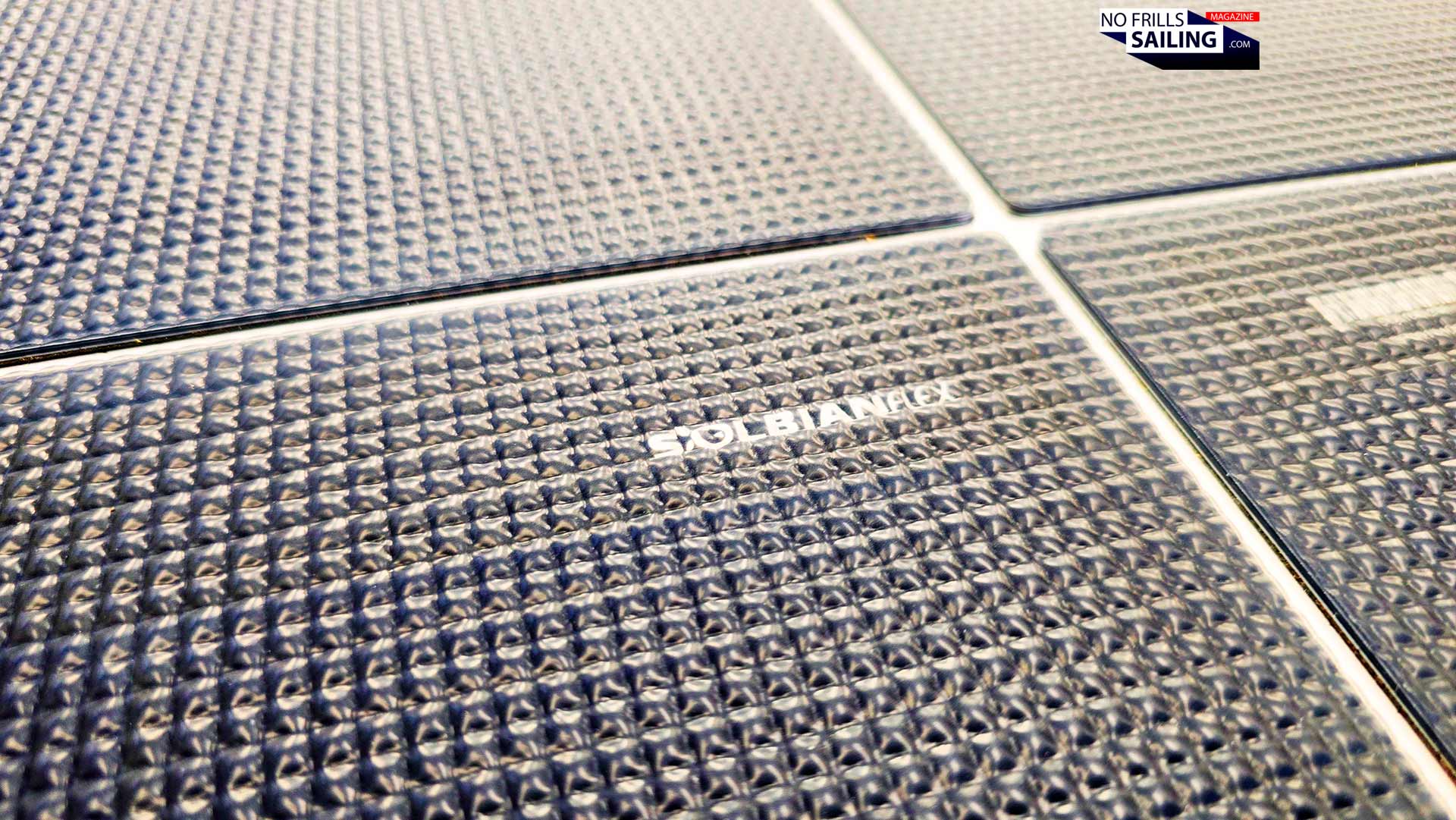
On request, Oyster can fit solar capacity of course! Richard leads me to a makeshift climatized shed where a custom made hard bimini is currently drying. This part has been designed and produced to not only create a nice shade in the cockpit, but also put a large array of solar power right into the bright shining sun. I am happy to see that – again – Oyster goes for high class products here, acknowledging Solbian as their supplier for these panels.
I know that brand …
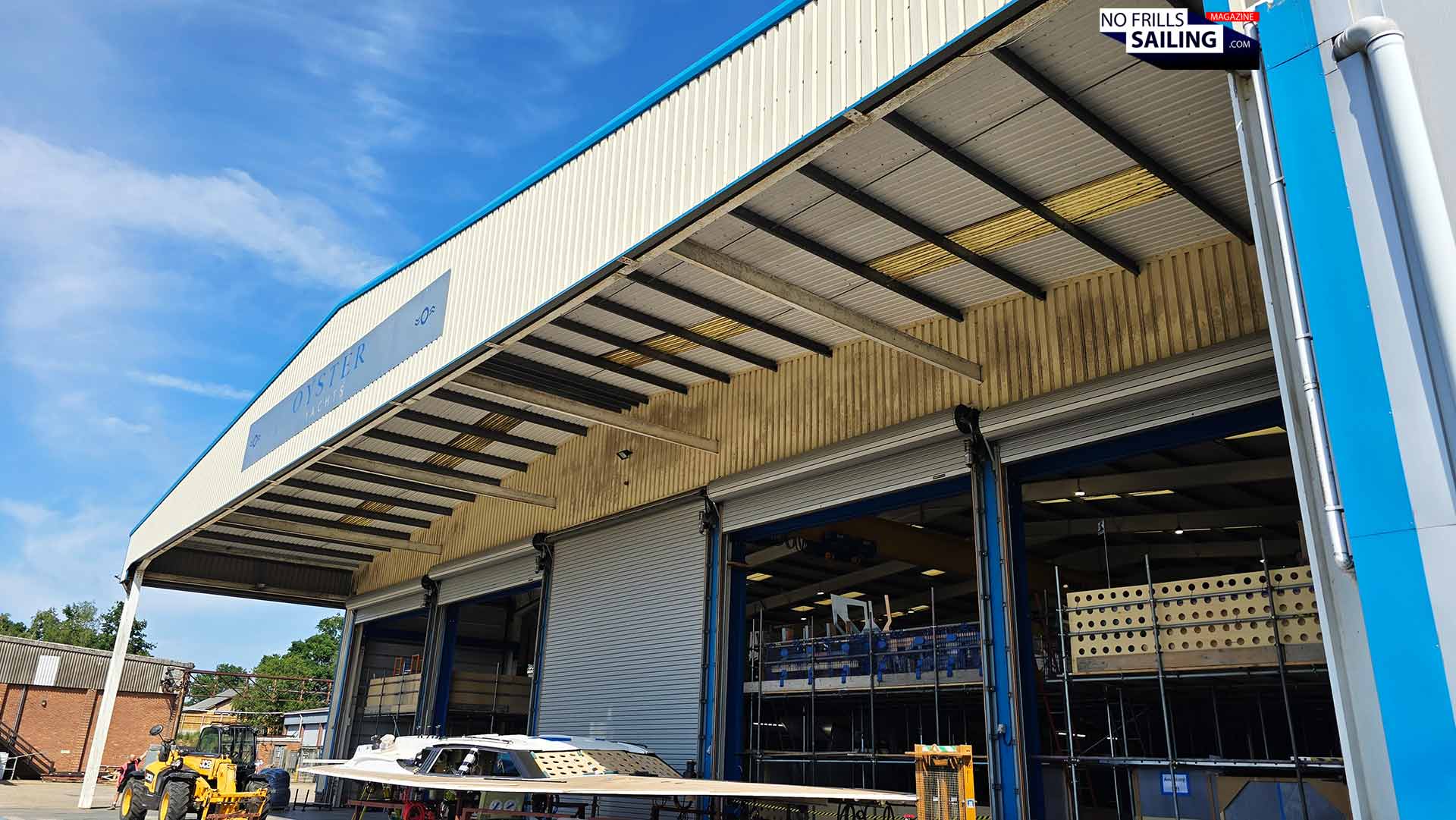
Richard tells me that upon purchasing an Oyster, clients are welcome to discuss their needs and wishes for the power concept of their yachts. Secondary and “green” power generation is possible to be fitted to any boat. Be it solar, as shown, but also hydro-generators, wind-turbines or even fuel cell systems. Anything is possible. So this concludes our tour inside the shipyard and I hope my focus on these four “highlights” have shown a light on the high level of quality produced here in Wroxham. We leave the factory, back again out in the sun, as another part raises my attention …
Deck treatment at Oyster yachts
Out in the sun there´s a deck section parked, my chance to take a closer look. If you have read the first of this three-article series you may have noticed the complexity of the multi-shaped deck designs here at Oyster. Where most boatbuilders try to simplify their deck design as much as possible to minimize laminating efforts, Oyster sports a very intricate and complex deck design, which is another hallmark of this brand.
Another deck in the making
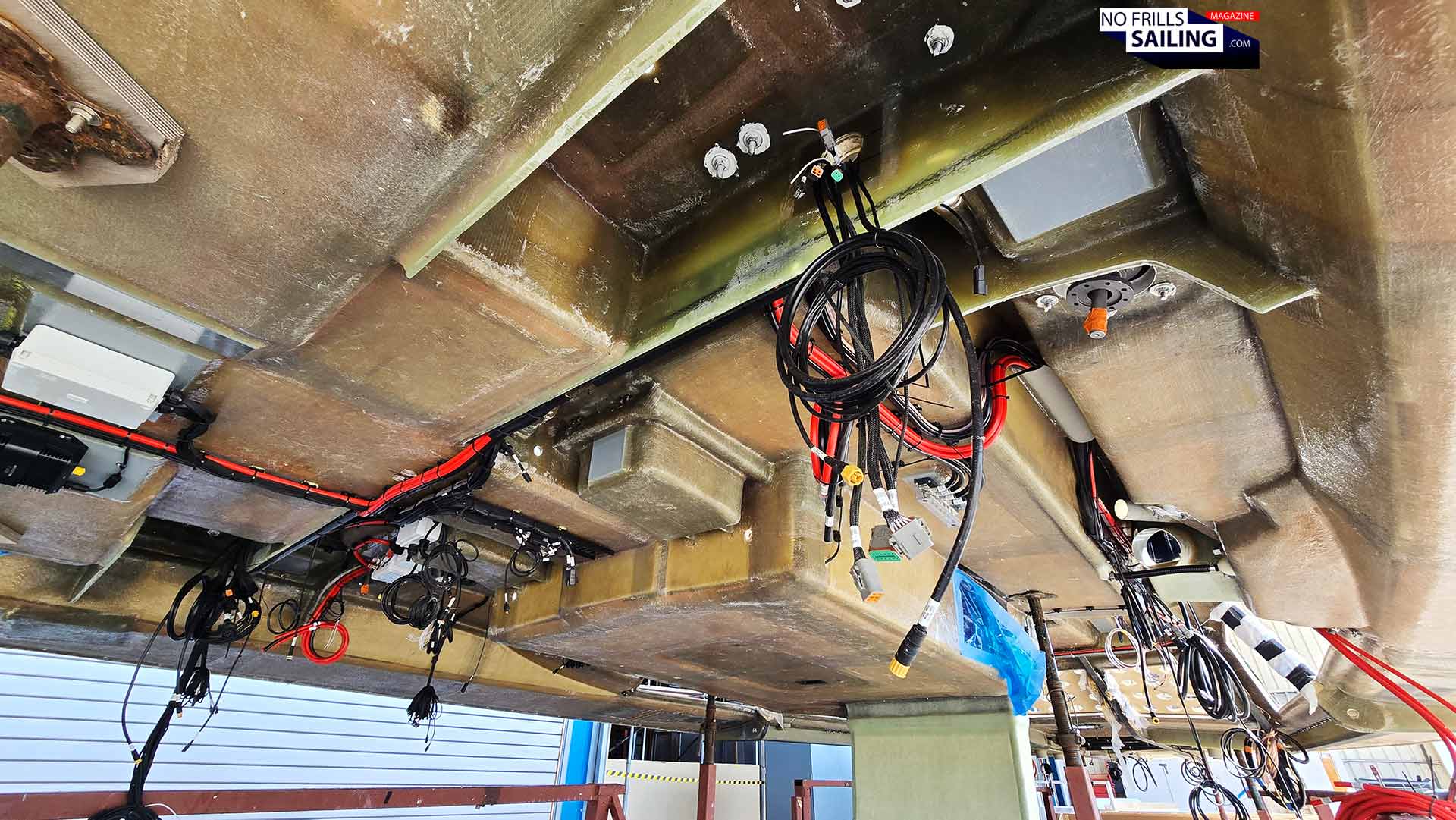
This deck is currently in the fitting mode: The iconic “cat eye”-windows which make the raised saloon of an Oyster so easily recognizable even from afar haven´t been installed yet, but there´s so much to see. For example, going down on my knees and taking a look underneath, I can spot not only the structural framework and supportive beams laminated, but also much of the underside of the deck hardware such as electric winches and their wiring. Up on top, fitting of the decking has started.
Pre-wiring underneath
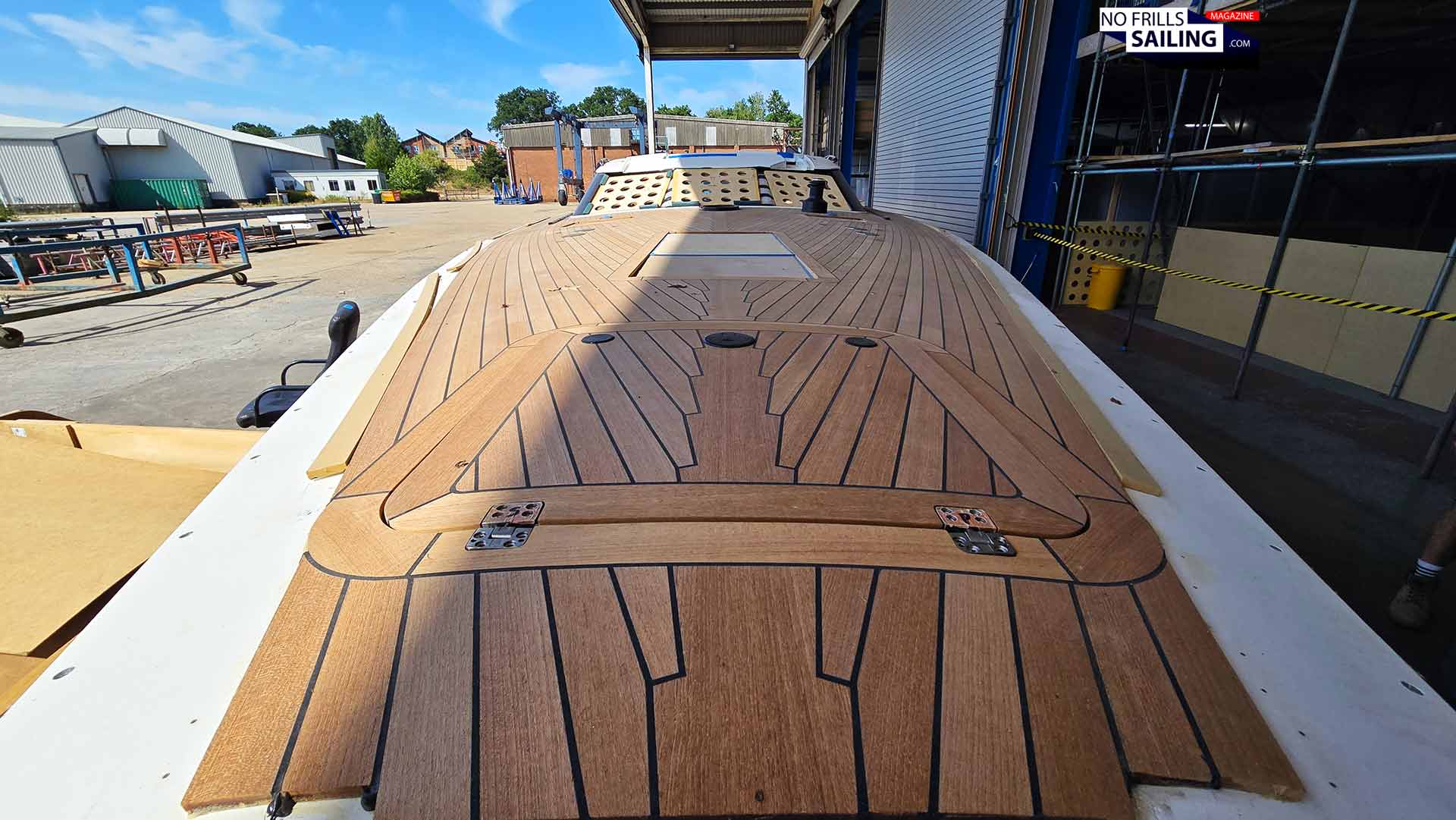
I am especially sensible with that. For one reason, my own boat had received her decking last week as well so my memories are still fresh of how important and profoundly changing a proper decking is for any boat! As for Oyster, real teak is utilized, as already said, after the embargo of forest grown timber from Birma, there´s plantation grown teak from India used now. The deck is manufactured the old way batten by batten. I like the modern style of the king plank and the details like the embrasure around the skylight hatches. It smells so good! Nothing beats the scent of a fresh teak deck. Although, discussing with Richard, teak alternatives are of course a topic for many clients. Again, anything is possible here in Wroxham.
Awesome joinery: Note the king plank.
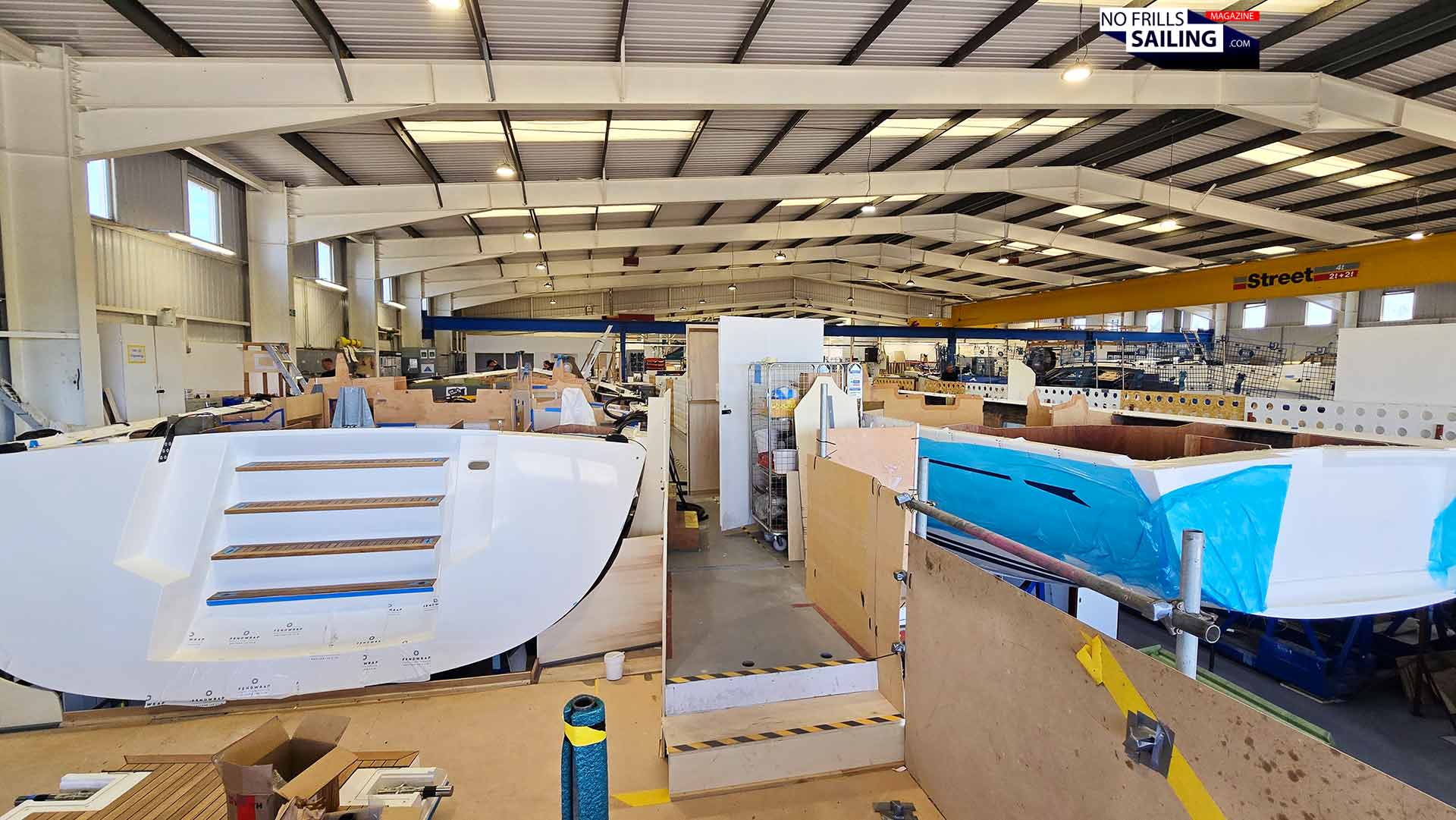
This particular deck will be finished being set up and readied for its great day in a few days. Then it will go on top of one of the Oysters shown in the picture above. In this, you can nicely distinguish the two principal versions any Oyster can be ordered: There´s the classic stern on the left hand sight – probably my choice as I love the classy look! – and the extended transom on the right hand side, which offers considerably more storage area in the back of the yacht, proper big jet-powered dinghy stowage and more volume in general. Either choice will require a deck, of course.
Classic or extended transom for you?
Unfortunately there wasn´t a deck due for fitting to its hull as I would have love to see how Oyster does it. Having been apparent when my own new sailing yacht received her deck, I can remember the tense atmosphere, the high level of concentration and the up and down of stress, excitement and calm. As well as my Omega 42, an Oyster´s deck is bolted and screwed to the hull as well as glued. This way, maximum bonding, force distribution and stiffness is made sure. But again, not today.
Advertisement
Off for commissioning …
So that was it, basically: I hope this intimate insight into the four specialties of Oyster has enlightened you and cleared the question once and for all – is Oyster a high quality brand and worth their money? Hell, yeah! So many specialists, skilled craftsmen and experts in their respective fields are striving towards excellence every day. Every single question I was asking had been answered with so much competence and in detail, simply showing not only the insane level of expertise here, but also the level of pride each of the staff members take in their work. It´s soothing, re-assuring and amazing.
Excited to see the next step: Commissioning!
Stay tuned for the third and last article of this shipyard-tour, where I take a further detailed look at the finishing works on the Oyster, namely the amazing varnishing and paint jobs and the incredible amount of details the guys care for to finish the yacht, readying it for its transport to Ipswich, where the boats will be put into the water for the first time at legendary Fox´s Marina. There´s so much more to discover …
You may also check out these Oyster-related articles: