With soaring boat prices thanks to inflation, post-Covid trouble, high wages and raw materials going through the roof, many sailors rethink what they should buy as their next boat. At the same time, the way of sailing and utilizing sailboats has changed every so slightly. Which more and more brings smaller boats into the focus again – and with it, boats built in high quality. Because: Small must not mean cheap! Here´s an example of a shipyard that kind of operates in the shadow, wrongly. Winner Yachts may be the brand you have been looking for all the time!
This article fits just as perfect after my deep research into the building quality of Oyster Yachts – of which a concluding article is in the works, no worries. Why? Because high class craftsmanship, boatbuilding expertise and absolute focus on best quality is not proprietary to the English luxury brand, but is also celebrated by many smaller shipyards offering a staggering and awe-inspiring build.
A Winner Yachts in Northern Germany
“Why go far afield when the good is close at hand?”, is a famous German saying, coined by our national poet Johann Wolfgang von Goethe. I basically means, that many good things are often found not far away, but may be just around the corner. This is literally the case for Winner Yachts, a brand that I was familiar with, of course, but never really cared for, to be honest. Because, as another famous saying goes, “the grass is always greener on the other side”, right? But in this case, I am going to be taught a very different lesson!
The boat manufacture I completely did not have on my radar
Advertisement
Christoph Becker, CEO of Winner Yachts, is a very sympathetic, lush guy. I know him since many years, because the boating business, especially here in Germany, is a circle with a very limited amount of “members”. I´d say that there are less than 200 relevant persons, people to know. Christoph is one of them. Back in the day when I was an active boat dealer for Dufour Yachts, we´ve had our offices next to each other in the marina, also, we met during the dozens of boat shows. Anyway, I know him, but never really cared for Winner Yachts. Which is a shame, as you are about to find out.
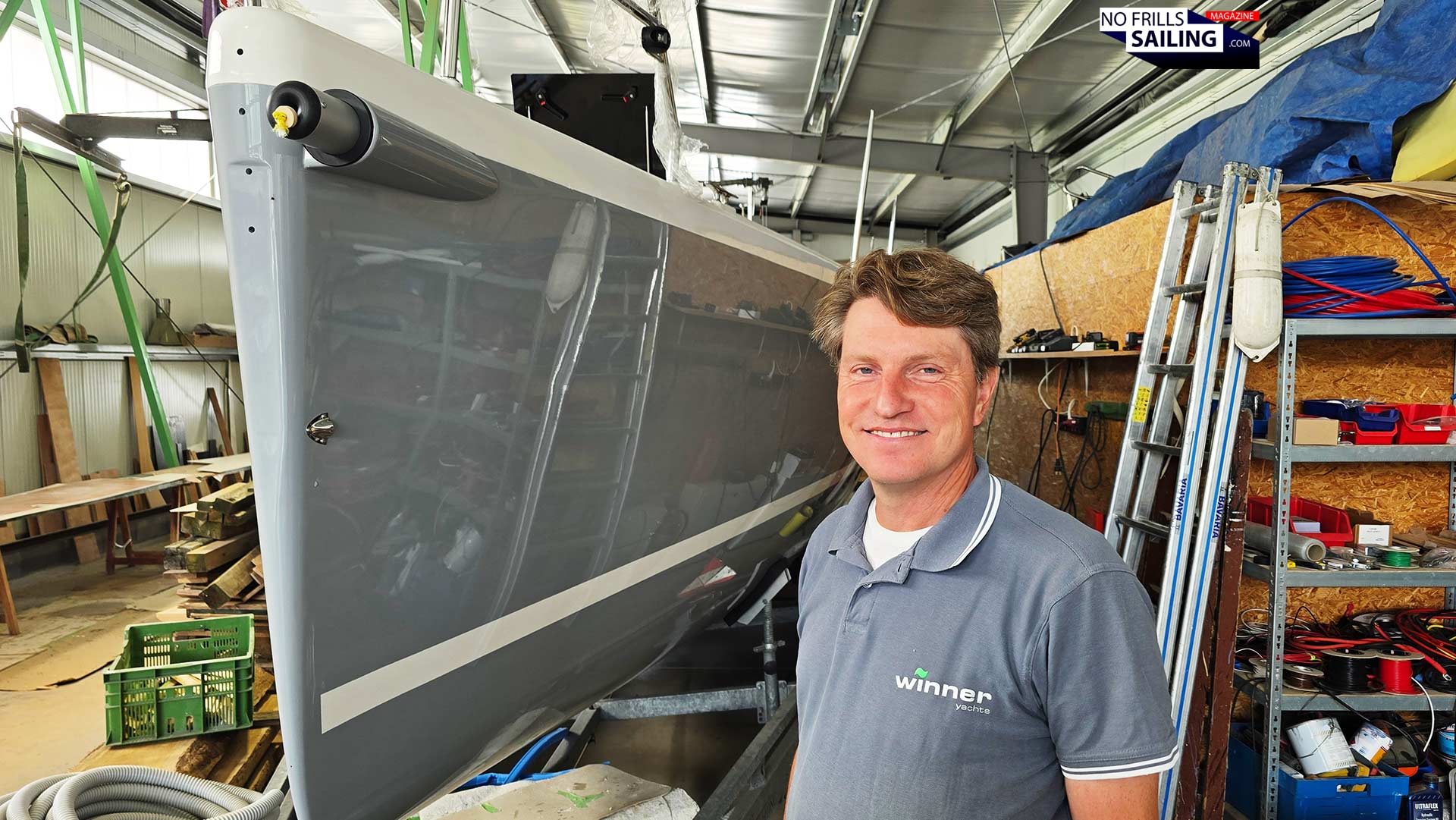
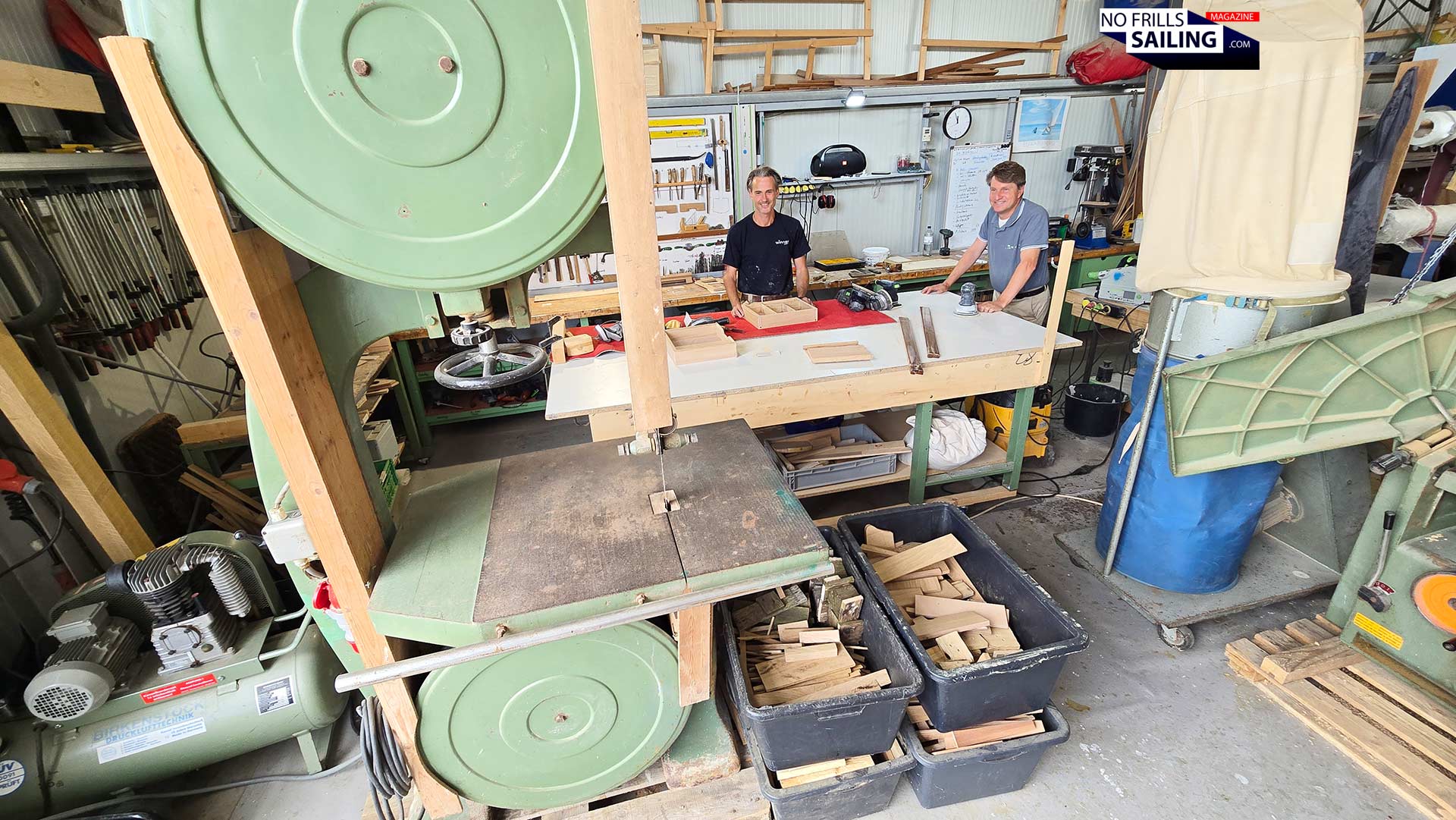
CEO Christoph Becker welcomes me in the shed
Winner Yachts used to be a Dutch company based in Enkhuizen and Medemblik, founded back in 1986. So that´s the first big thing to learn: It´s a brand with a tradition of 40 years, after all! It used to be affiliated with Contest Yachts, sporting smaller sailboats in the sub 30 feet range. Renowned Van de Stadt design bureau came up with the designs, the boats today are still Van de Stadt-designs, which is a staple for fast, stiff and well performing sailboats “for sailors”. Christoph Becker used to be a Winner Yachts dealer for twelve years when the then-owners decided to close down the business. I guess, it was back in the time when everyone thought there wasn´t any money to be made with small boats, that the gold mine was the larger margins of big yachts.
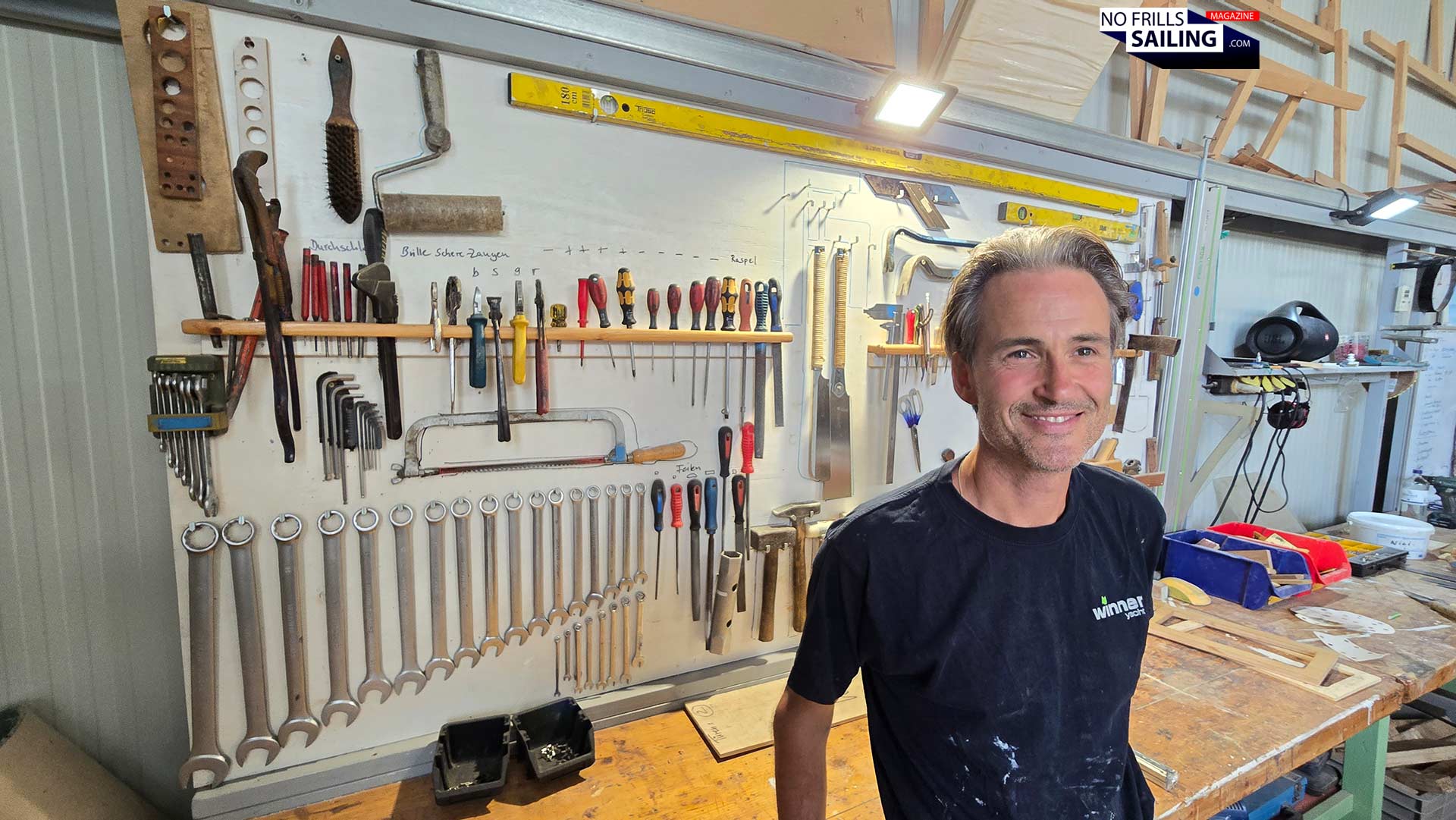
His master boatbuilder: Nici
So that was a problem for Christoph: Not only in an economic sense but also because he really believed in these fine boats. So, what to do? After careful considerations he bought the brand and most of the hardware (especially the molds!) and after a brief period of manufacturing in the Netherlands, transferred the company and its production to Germany. In 2014, principal GRP manufacturing is done by a high-class glassfiber-manufacture in the Netherlands, delivering absolutely stunning hulls and decks, as he will later show me. The building process, all of the interior manufacturing, the carpentry and joinery as well as fitting and finishing is done in Germany. Not very far from where I live.
Let´s have a look at the Winner production
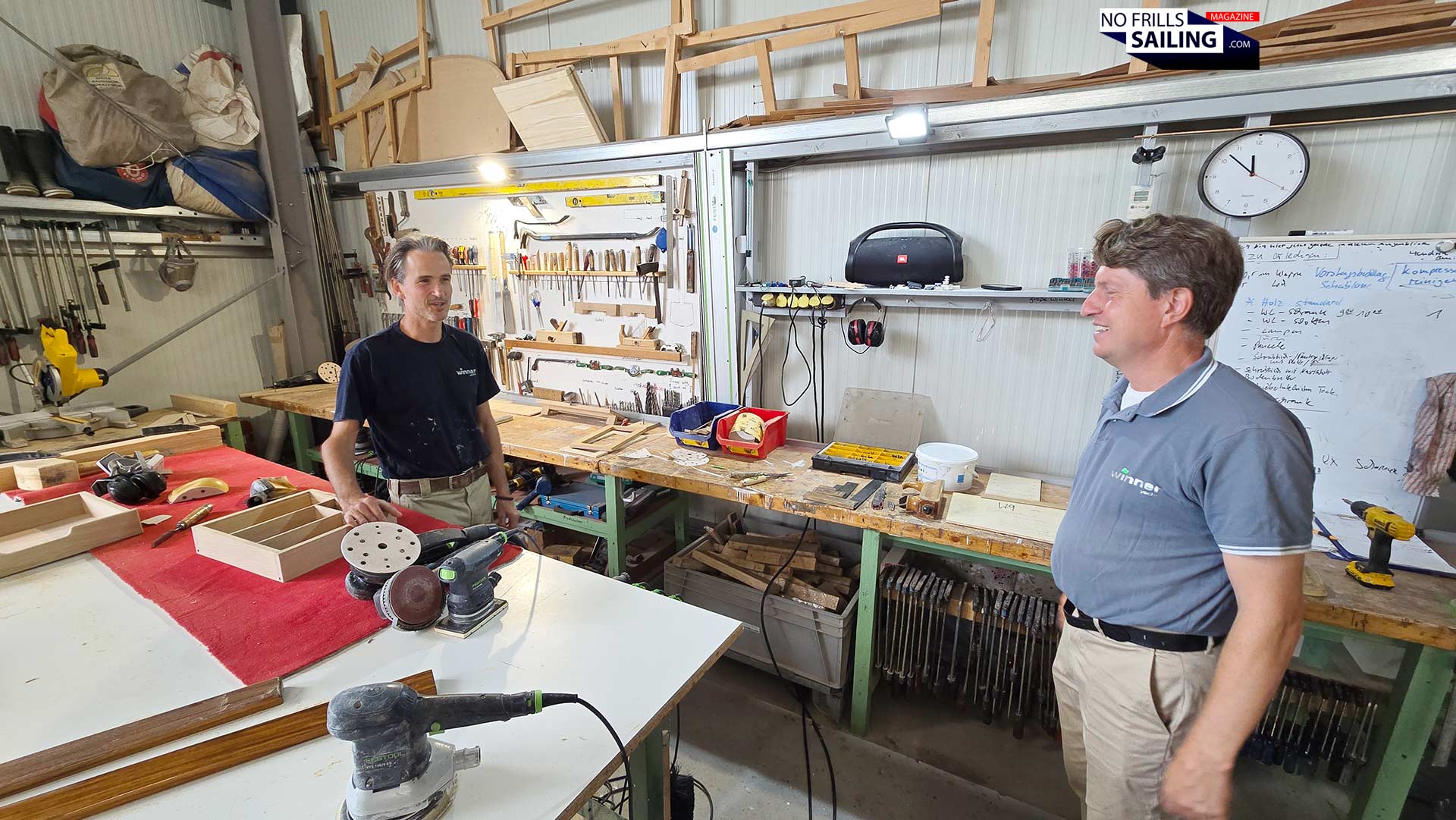
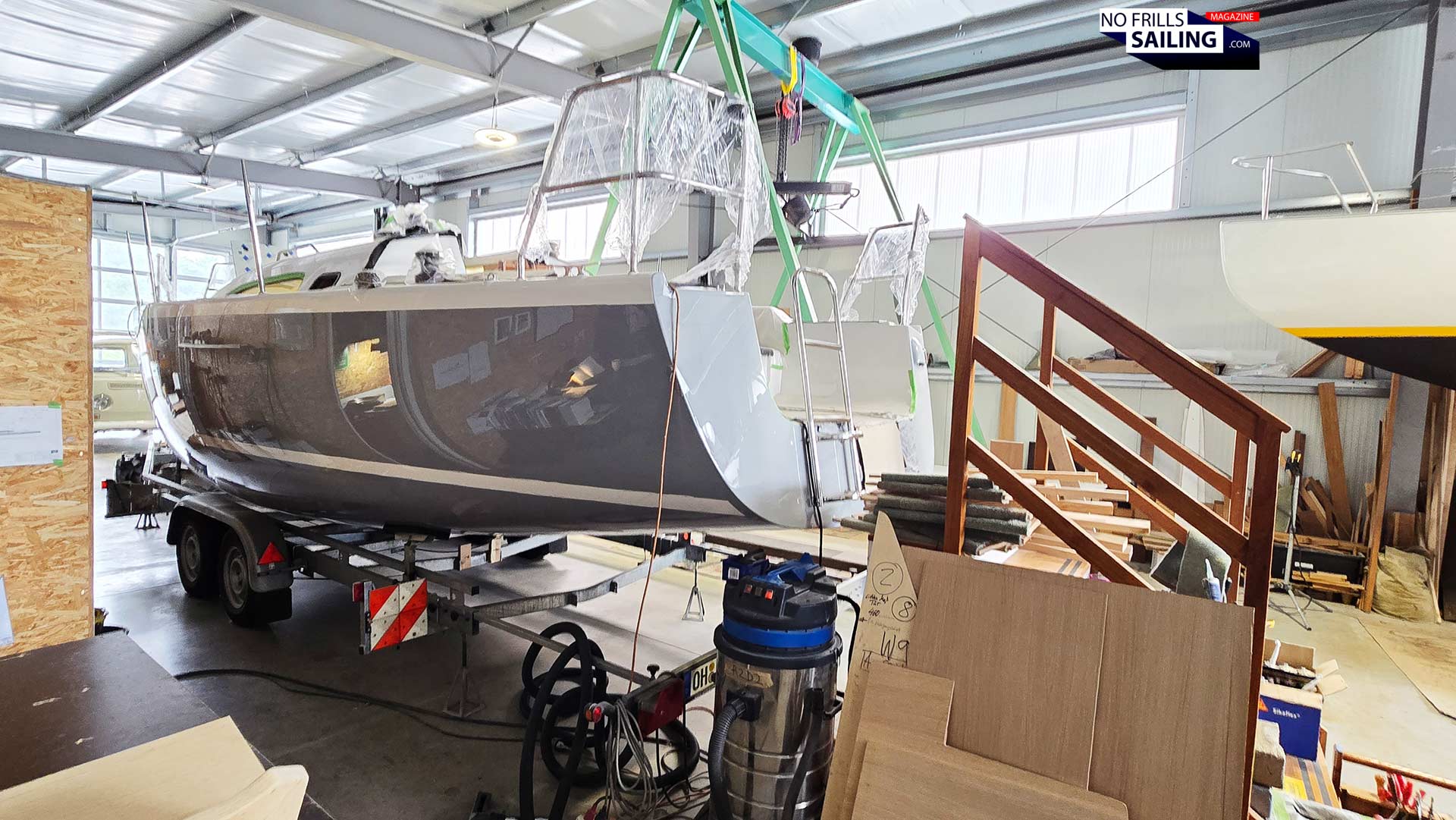
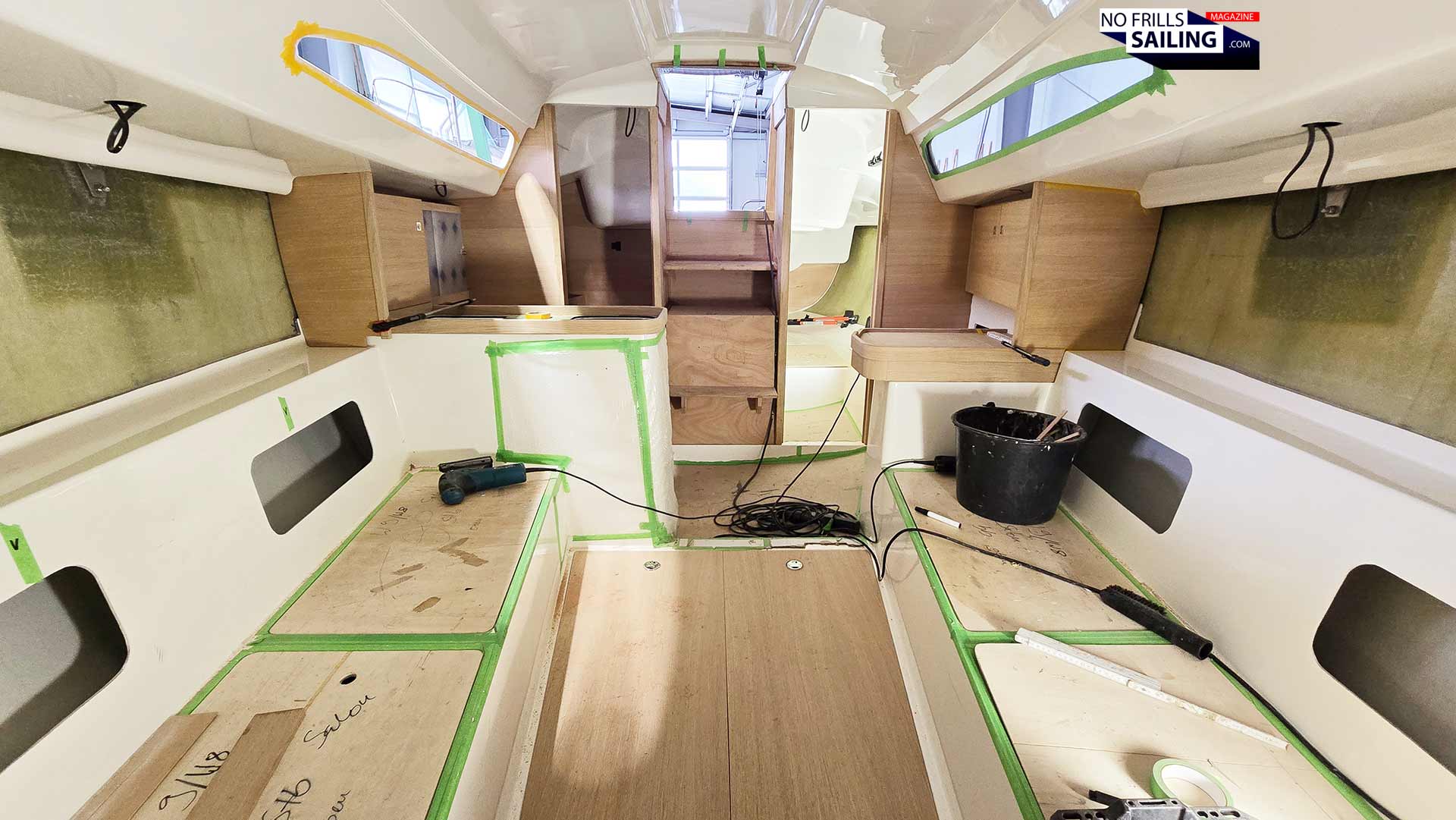
It’s a 40 minute drive from Luebeck to the small village of Ahrensbök, located just 15 kilometers north of Luebeck. Here, Winner Yachts has a large production hall that can take on two, maybe three yachts at once. Currently, Christoph has one new Winner 9 in production. When I arrive, I am also greeted by Nicki, the carpenter and boatbuilder – central person to the incredible finishing quality and attention to stunning detail. If every yachts has a ship´s kobold aboard, on a Winner, he is certainly a friend of Nicki. So, what does a Winner set apart from most of the other smaller boats?
Van de Stadt designs for sailing connoisseurs
First of all it´s the boat´s design, to begin with. It reminds me a bit of my Omega 42, which my absolutely no means is a boat that ticks a single of modern day´s boxes, when it comes to new boats. The Winner 9, as seen here, is a far more recent Van de Stadt-design, but as you will see, she does for many details not appeal to the usual Med-style vacation sailor. You know that I was a Beneteau dealer for nine years, right? So you probably know that I´ve sold a lot Oceanis 30.1 to which I will refer in the course of this article: Both boats share almost the same dimensions, but other than that … not very much.
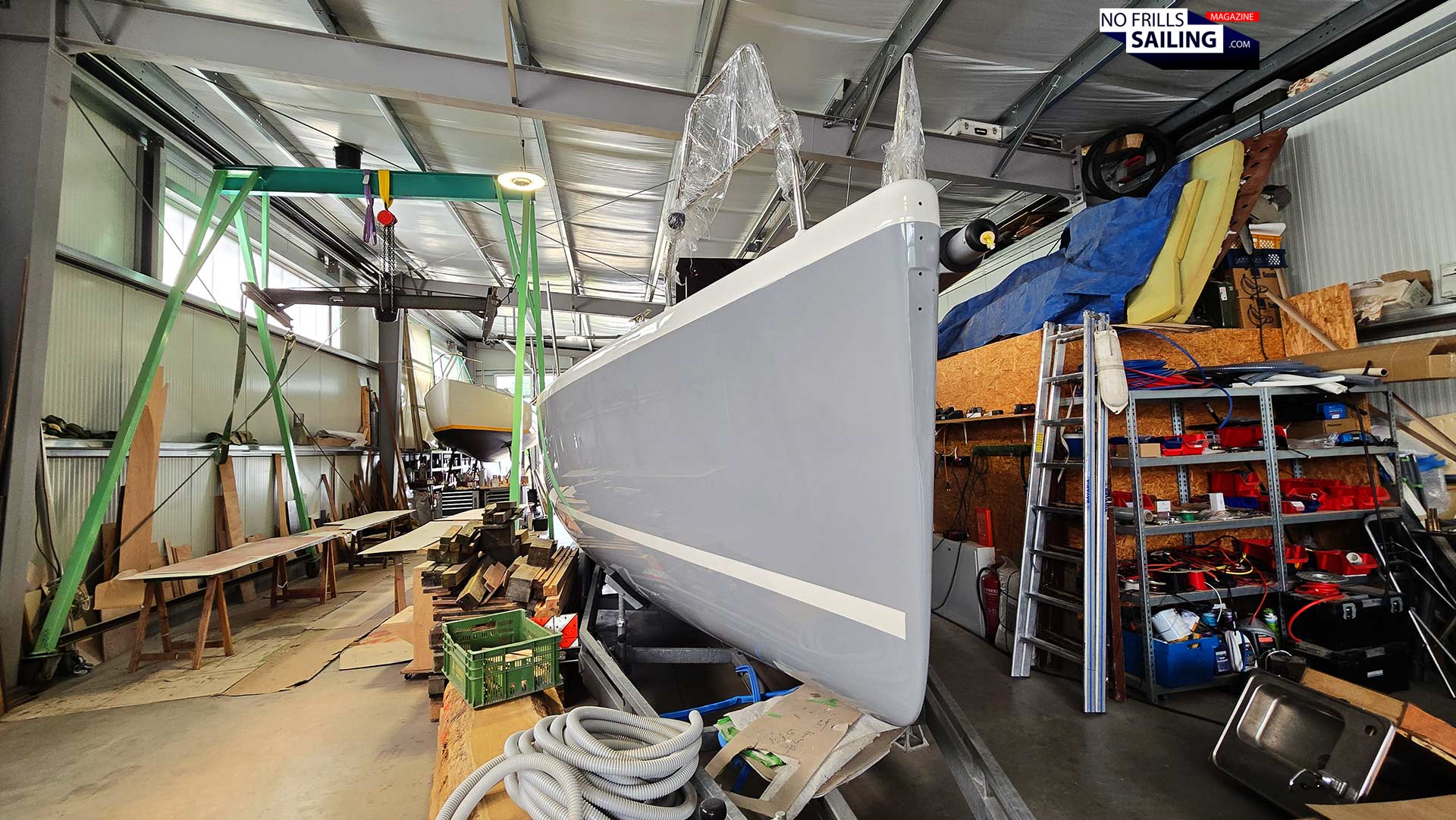
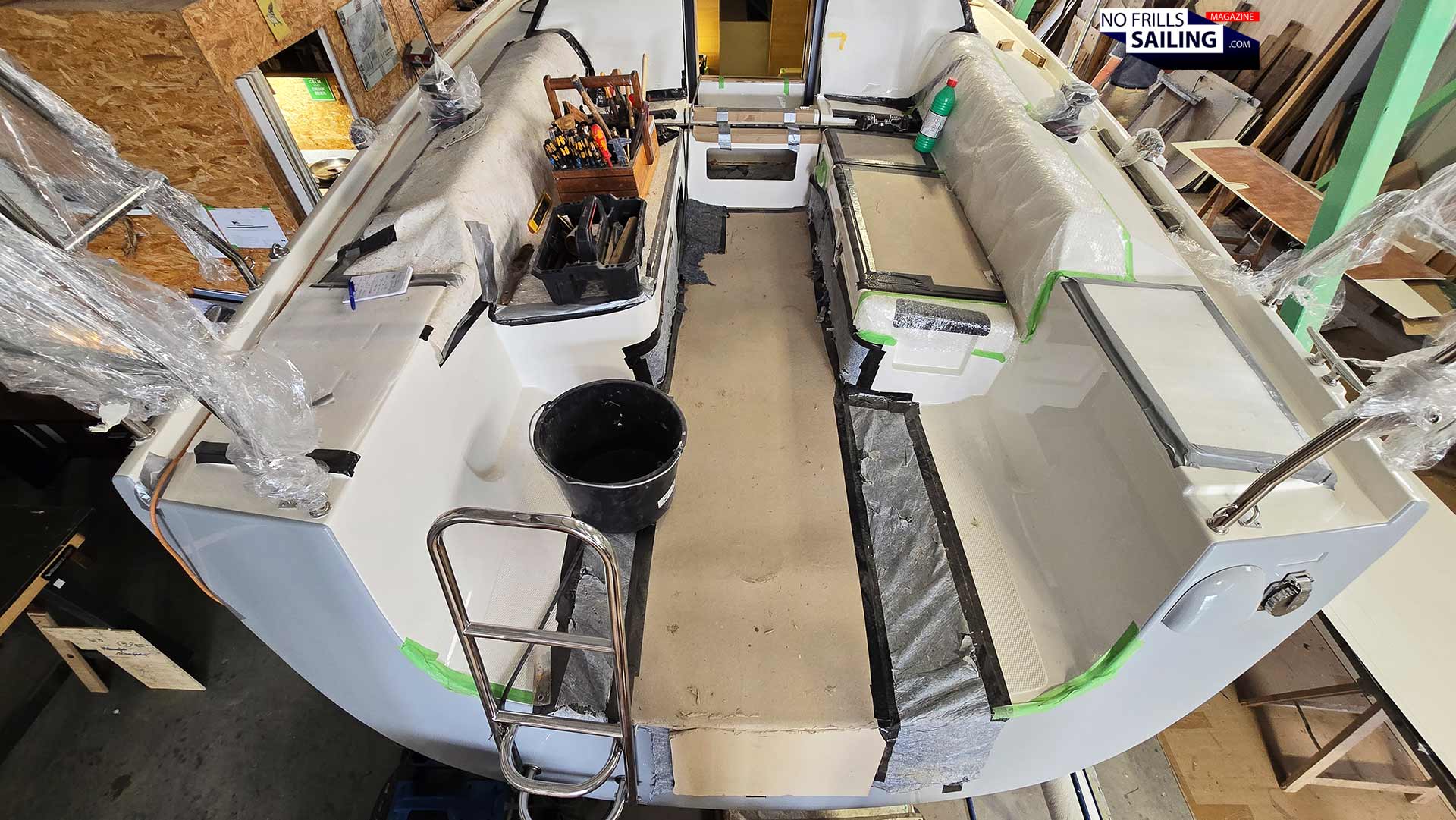
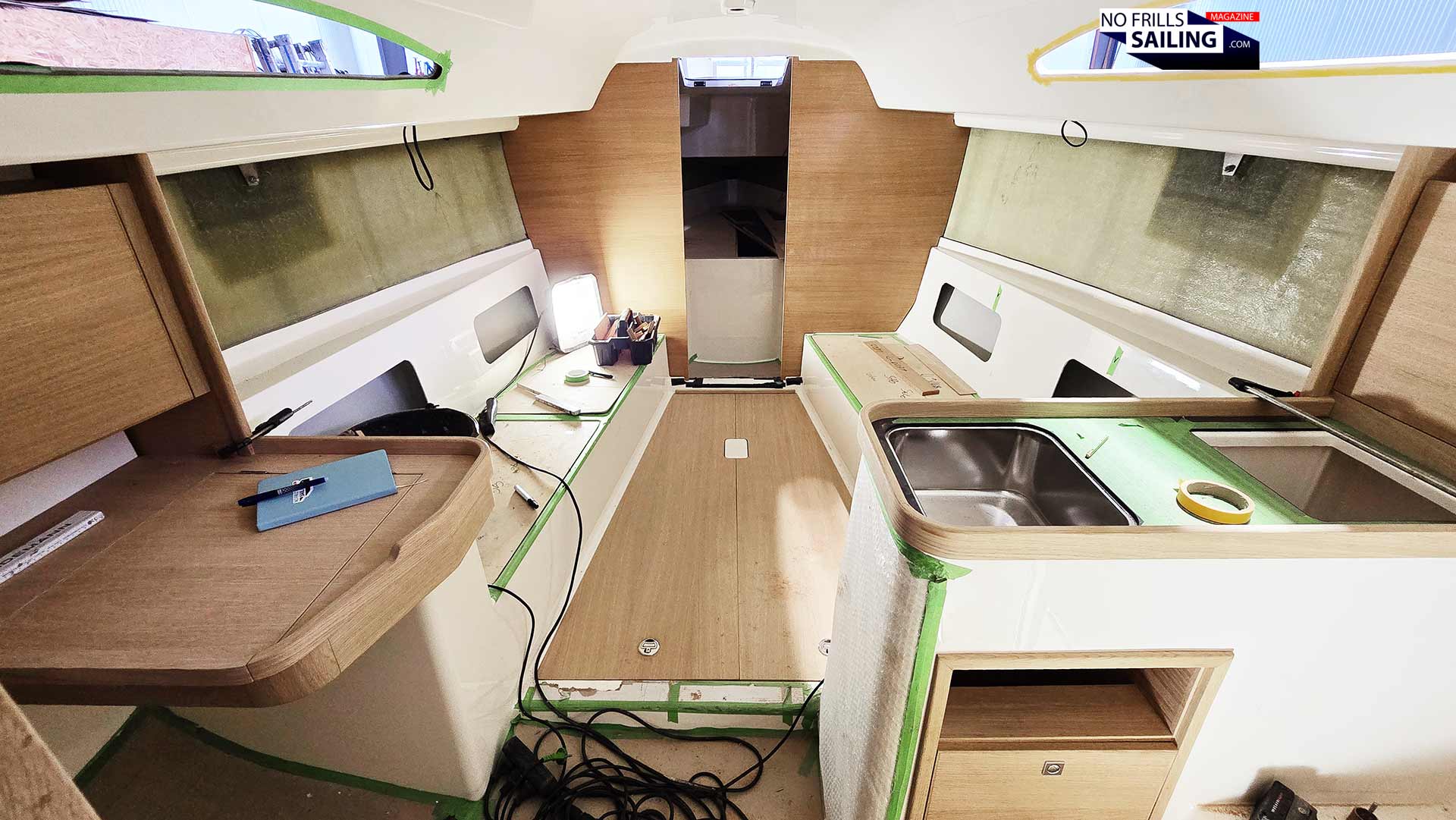
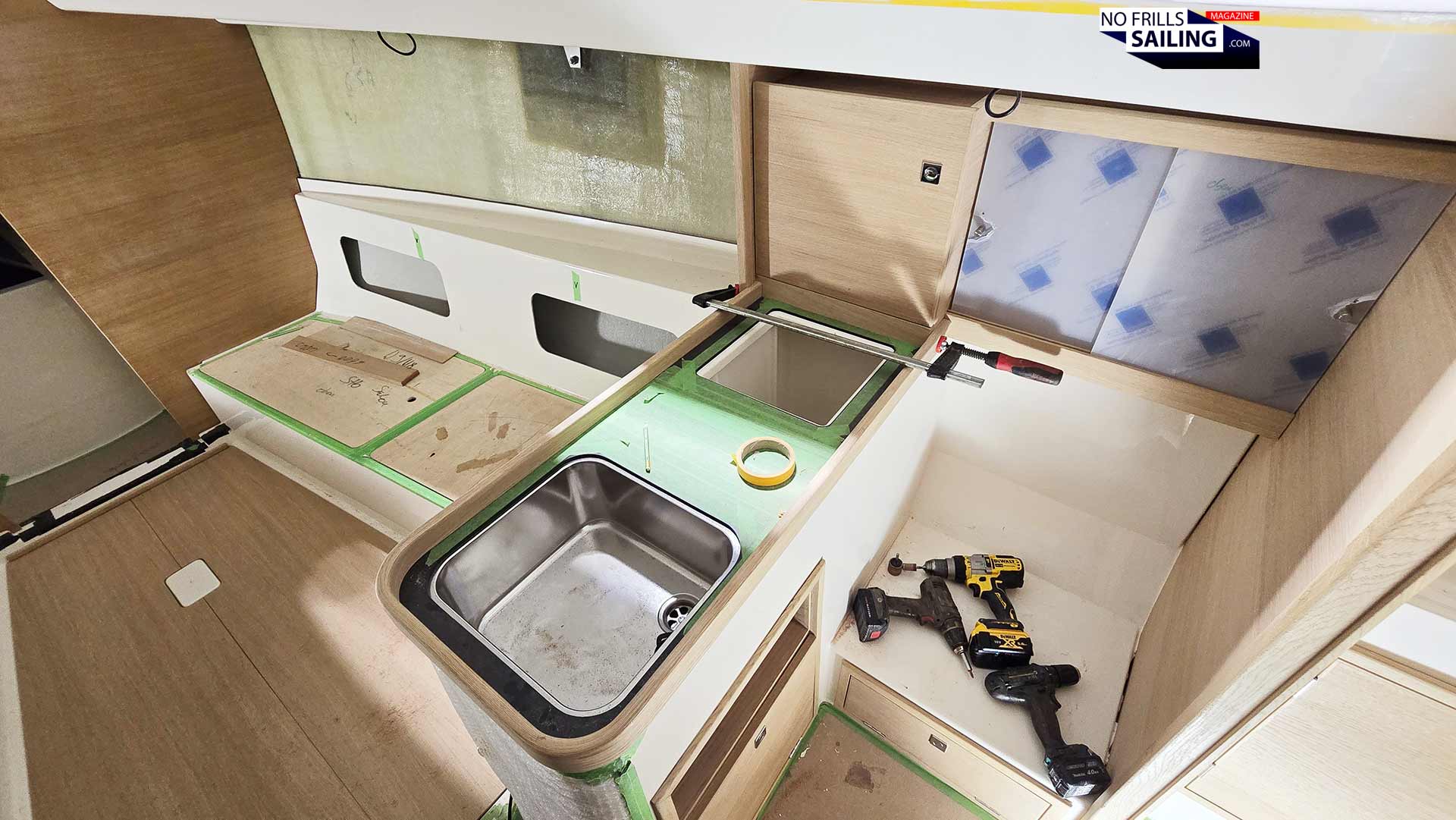
A new Winner 9 currently under construction
Cees van Tongeren, one of the designers at Van de Stadt, designed the Winner 9 back in 2013, so she is a “recent” boat and of course a modern design. The Oceanis 30.1 has been introduced in 2019, designed by Finot-Conq. As with any Dutch designs, sailing capabilities, agility and stiffness were the most prominent demands on the briefing, whereas with the Oceanis, large volume, big cockpit and “yacht feeling” had been prioritized. Both boats follow different philosophies. The latter is made for a nice sailing holiday. The Winner is made for nice sailing.
Van de Stadt-design: Sailing for sailors
She sports almost the same length, which is 30 feet, and on paper has almost the same width (2.99 m for the Oceanis compared to 2.96 m for the Winner) but her profile is much, much slimmer. The Winner´s stern section is a classic tapered form, whereas the Oceanis, staying true to modern cruising designs, carries all of her width from the chain plates to the transom. That said, the Winner offers less standing height inside (but I was able to stand upright in the whole saloon whatsoever), and far less volume in the aft section – a trade in for more sailing versatility and far superior performance.
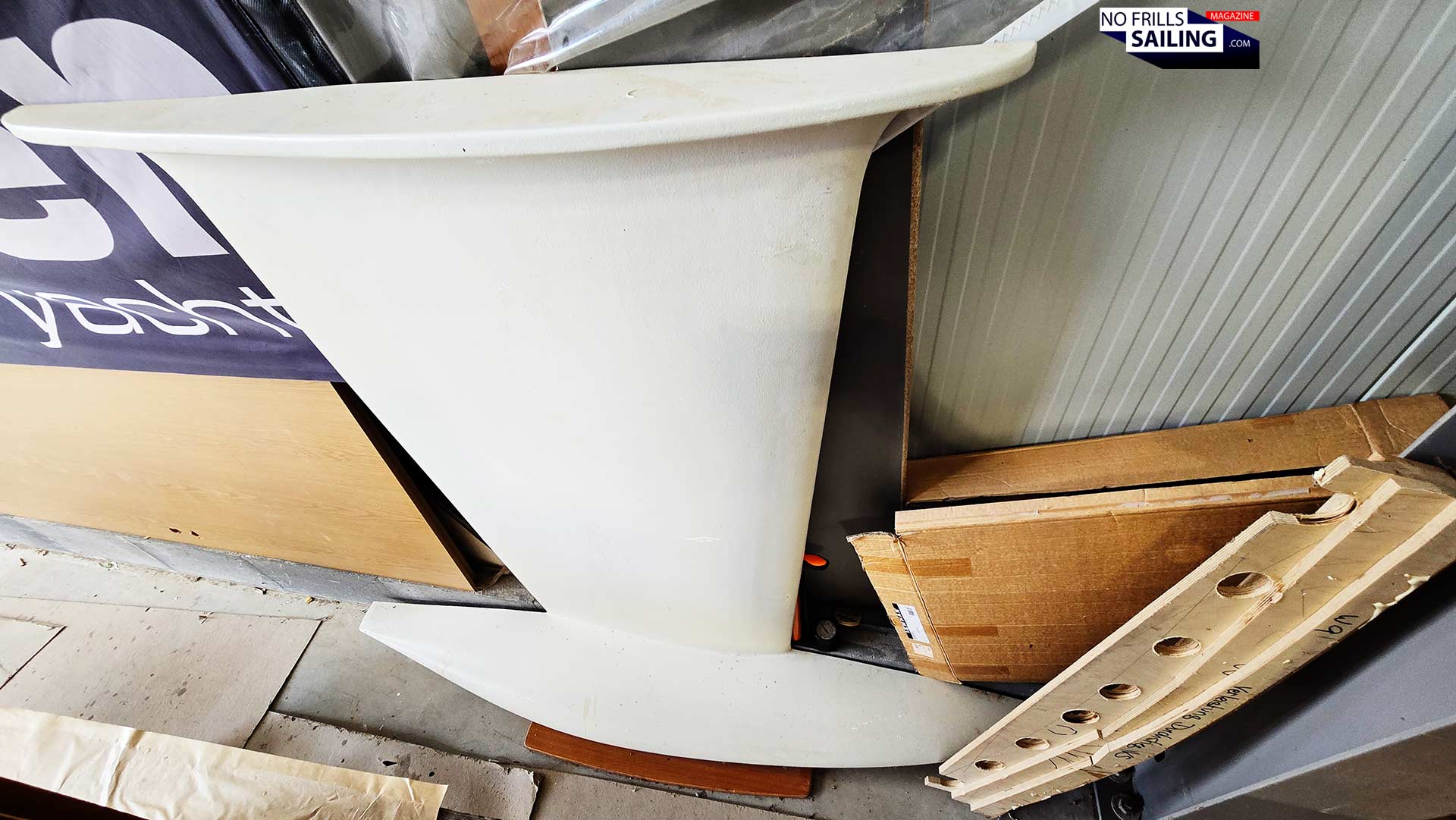
Half model of the modern T-keel
Looking at the weight and sails area, there should be no more questions: An empty Oceanis 30.1 will weigh in some 4.2 tons, carrying a bit less than 40 square meters of canvas, with 25-30 percent ballast. The Winner 9 displaces 3.5 tons (almost one 700 kilogramm less!) and brings 48 square meters of canvas to the wind – supported by almost 40 percent of ballast in a modern T-keel. That said, it should very well contextualize the Winner 9 in her character as a sailboat: She is a powerful, fast sailboat made for active sailors seeking the sensation of real sailing. But that´s only the numbers. The real surprise is the building quality.
Semi-custom boatbuilding – one-off quality
As I was roaming the workshop, Nicki carried on his work and Christoph let me do my thing, I was a bit reminded of the shipyard where my own new yacht is currently under construction as well as on … Oyster! No, seriously, Winner Yachts kind of breathed the vibe of a fine combination of ultimate, traditional artisan handcraft work, a lot of “from scratch”-attitude, but also combined with lots of (albeit “hidden”) modern manufacturing.
Everything (!) is made inhouse
That said: Winner makes serial production boats but offers the full range of customization. When it comes to the interiors, essentially, any owner can change, adapt, leave out or add details just as he pleases. In this, as Nicki is making the cabinets, the joinery, the chart table and so forth, everything is a handcrafted one of a kind. His joinery – and I did my research on him! – has a reputation of being spotless and almost artistic within the community. Remember my article on my Omega 42 receiving her PVC deck? When I told Ralph that I was going to meet Christoph and Nicki at Winner, he went on a full 20 minute praise for their work …
Joinery at its best
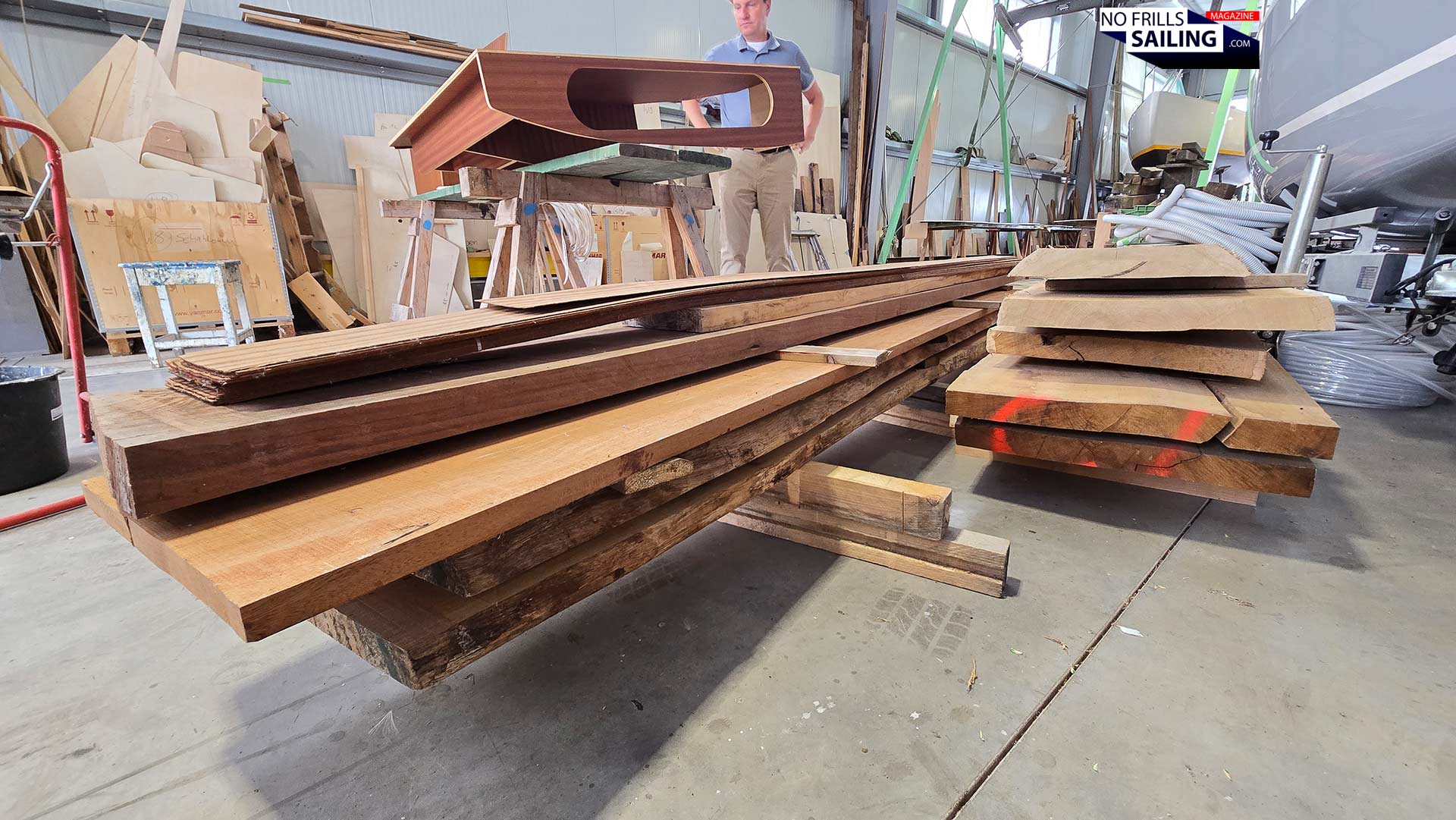
Starting with the thick raw planks of precious timber, anything that will be made for your new Winner boat is handcrafted here. I can see thick, wonderful Oak tree planks with a nice, spotless grain. There´s also some Teak and a well-stocked storage of high-grade boatbuilding plywood, Okoumé or Mahogany timber. This workshop smells just awesome, as you may imagine. But it´s not “only” traditional boatbuilding here. In fact, as Christoph tells me, Winner Yachts had always been on the more open and innovative side, but maybe failed to communicate it.
Innovative from the start
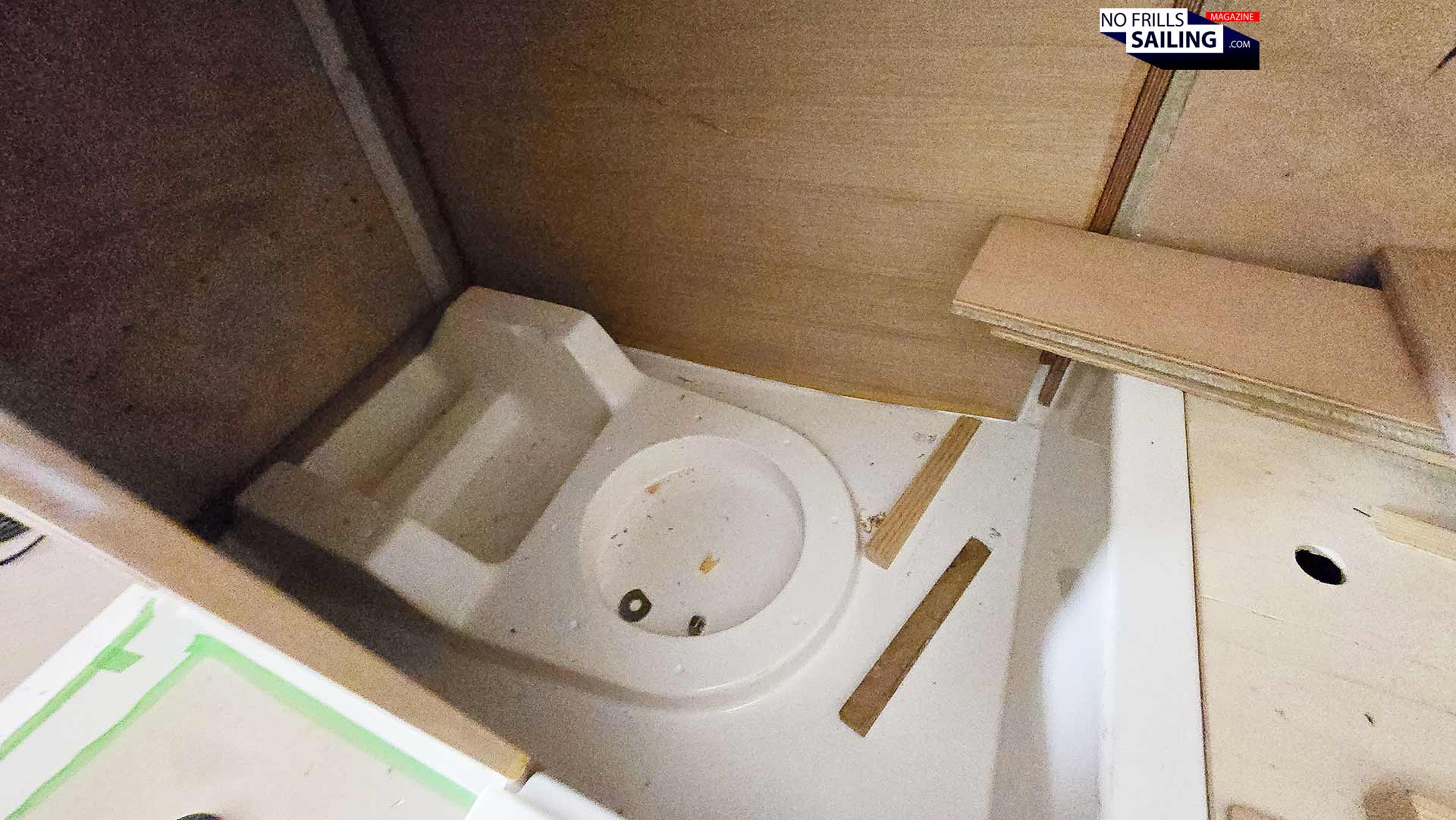
Inside the boat I take a look at the – still – empty base mount for the engine. This is interesting: Any Winner boat, from the start, features the base mount for Diesel propulsion as well as the ring mount for the saildrive. Yet, far, far earlier than most of the other manufacturers, Winner started to fit electric engines. This was way before it became a trend and “customary” for brands to offer a “blue”, or electric, version of their sailboats. All Winner Yachts are available with E-Propulsion electric pod-drives and all-electric powered solutions, as most of their boats are sold to either in-water areas or used for coastal cruising. Now, here´s the trick: If a customer wants, he can anytime switch to Diesel. Without hustle. As everything has been installed already. In the end, almost 50 percent of his German-produced Winner Yachts out on the water are fully electric, Christoph says, which is a much higher e-share than most of the brands I know.
Electric propulsion from the start
So from the start there was this innovative element in Winner. Of course, being a small company and essentially a 2-person show now, marketing budgets are very, very restricted. Winner became a word-of-mouth product. A hidden champion. Many of Christoph´s clients follow oral recommendations of owners or discover his fine boats by chance. The more I see here in the workshop, the more I think that his boats deserve a much wider exposure! So, you start at the decision between electric and combustion propulsion. But what about the structural stuff?
Excellence wherever you look …
Christoph, upon taking over the Winner Yachts production, shifted hull and deck production back to the Netherlands as they had briefly been made in Poland. Only a few units are Polish-made, now every singly new Winner is indeed coming from where the brand initially has been born. These guys indeed make high-class products. As Christoph confirms, after doing some research among possible places, he had finally found a specialized composite shipyard that delivers absolutely spotless quality. Indeed, the raw hulls he receives from his manufacturer are stunningly clean, smooth and defect-less.
Each Winner is a custom boat
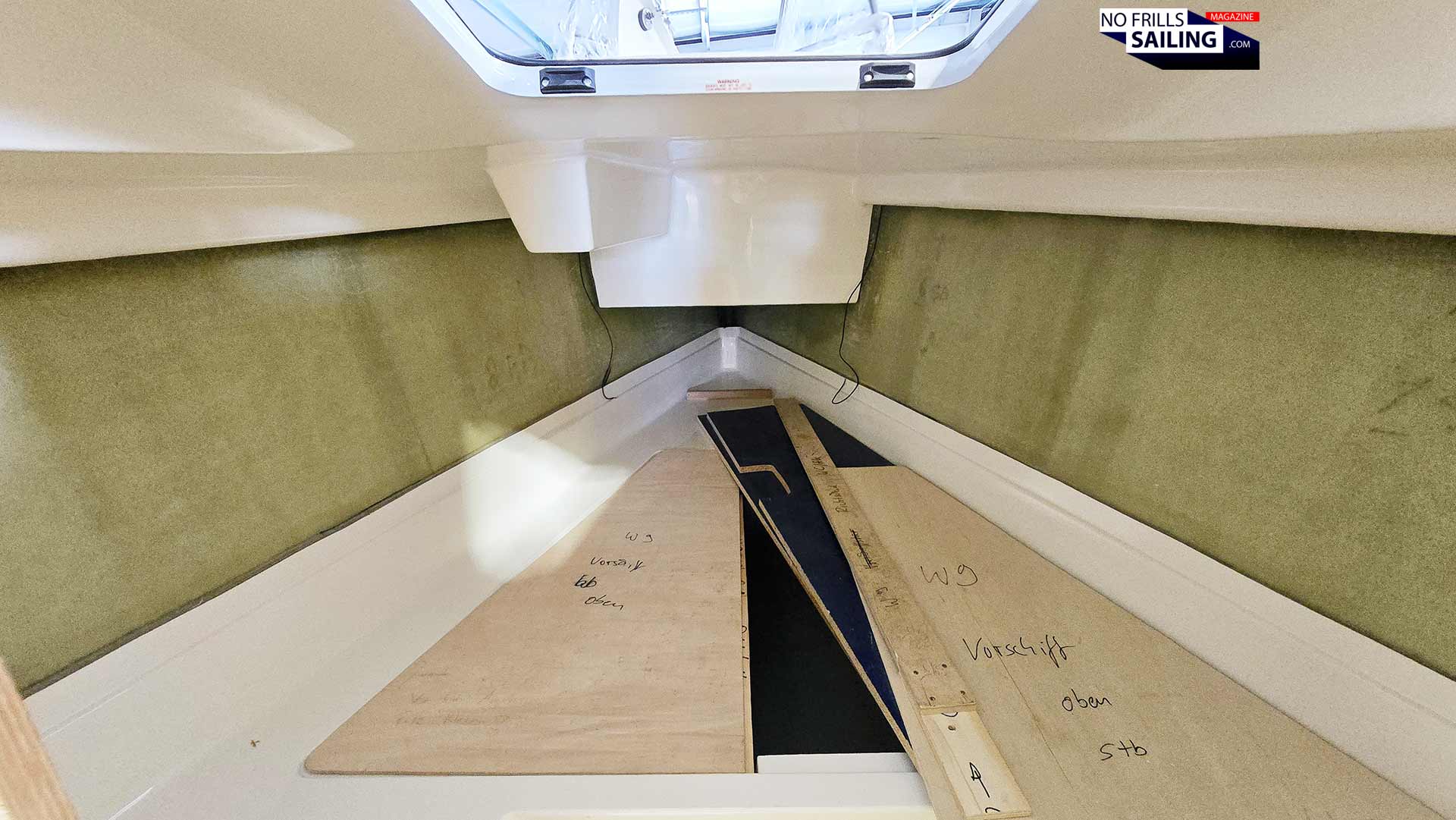
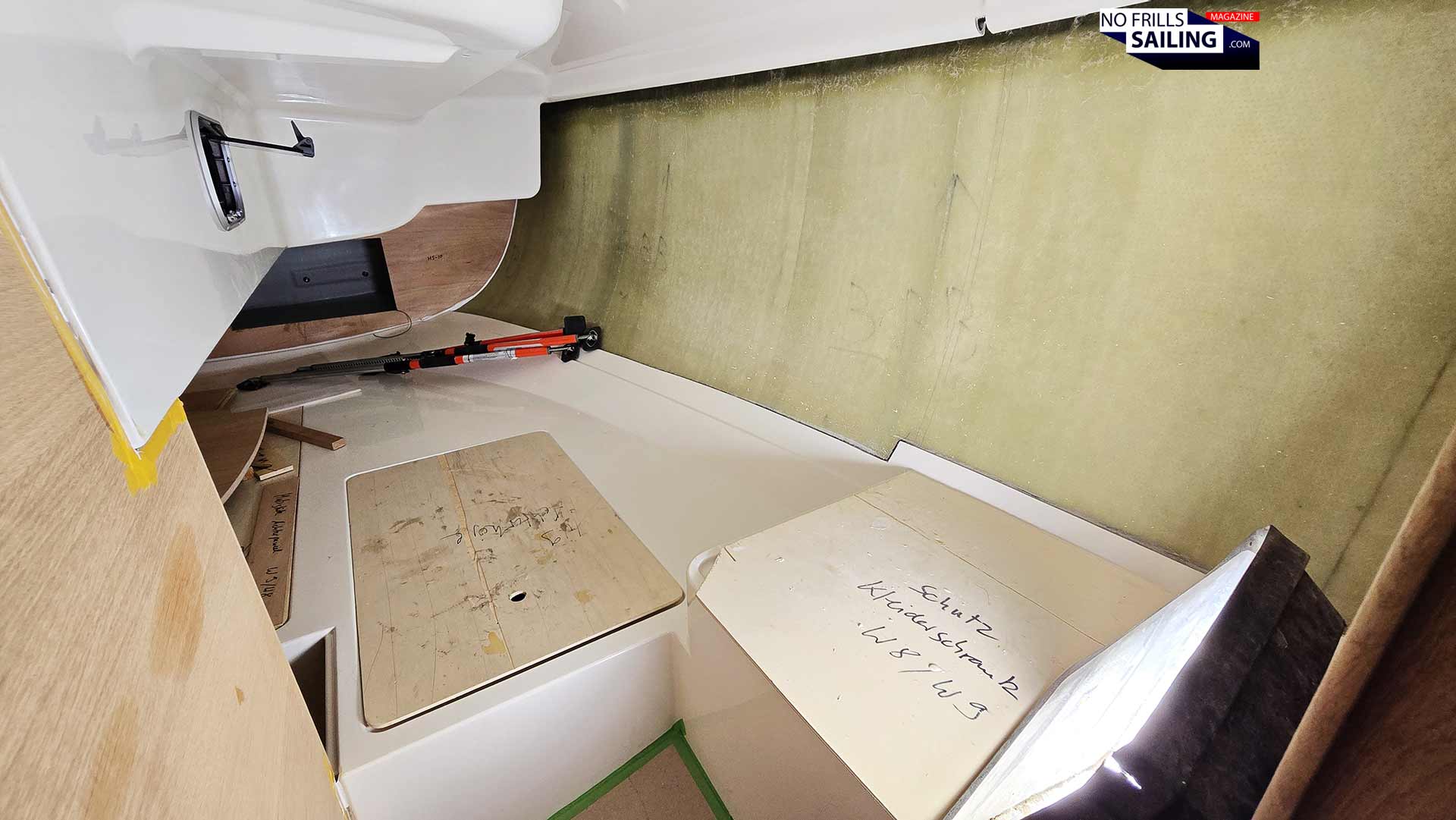
The Winner 9 sports a double-shell GRP design with two hulls and two decks forming a rigid and stiff structure. You can see it in the picture below: The outer and inner GRP hull are clearly visible. Winner Yachts switched to complete Vinylester production as early as 2019, reducing osmosis-risk furthermore. The hand laid laminate is a monolithic up to waterline, with Coremat-sandwich above the waterline. The deck is a lightweight hand-layup with Divinicell foam core.
Double GRP-shells
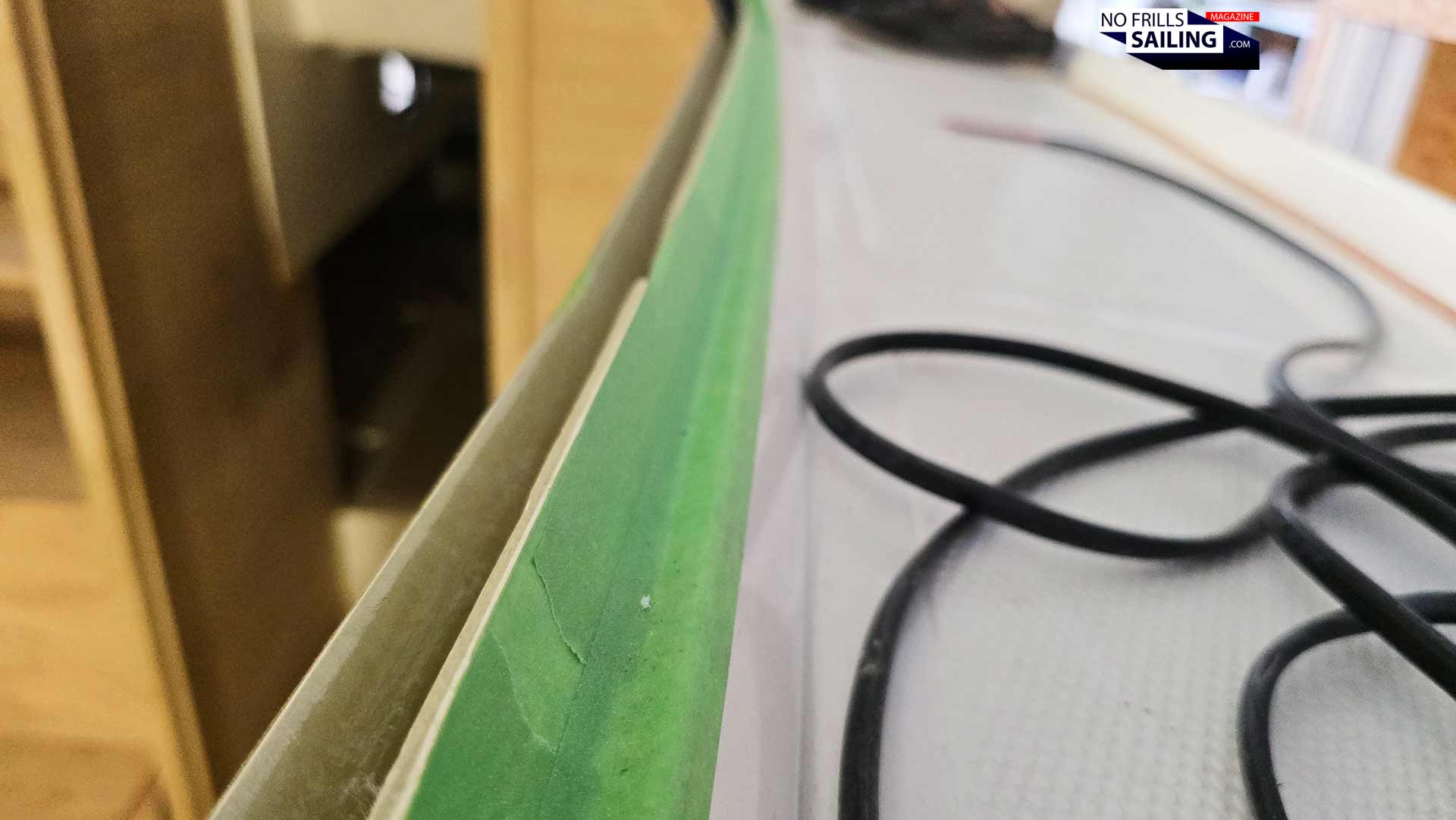
By providing this double-shell design, a Winner is extremely stiff and comes with a lot of torsional rigidity. Deck and hull are laminated to each other, which makes for a fully eclosed body, which comes with a long term leakage prevention. Along the seam where deck and hull are joined, a nice custom rub rail is installed as a standard. A Winner boat is always a very functional and practical boat as well. With Winner, when deck and hull are joined, this is done with the hull still sitting in her mold! That´s a new one …
High grade glass with ceramic embrasure
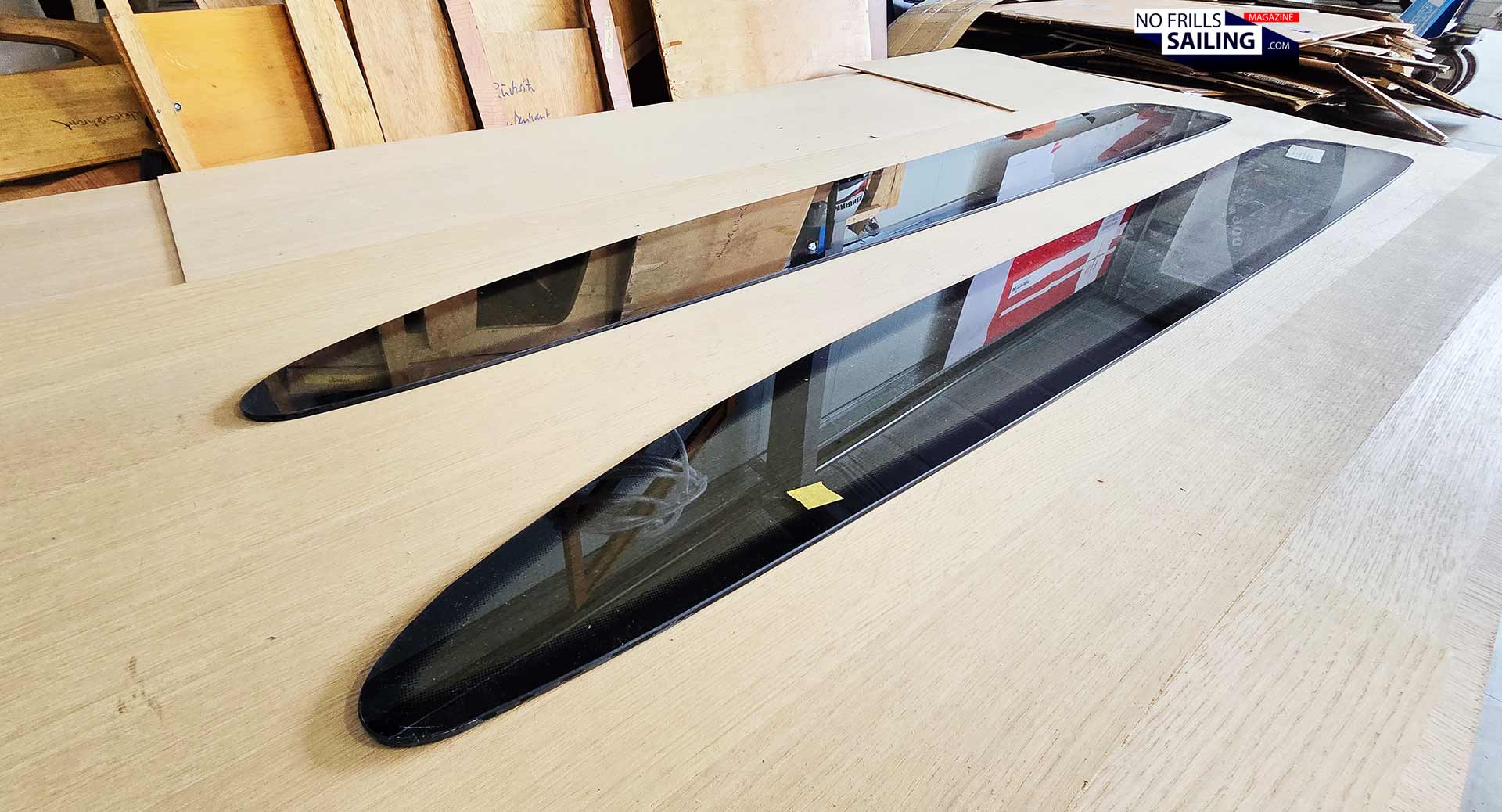
The fact that principal bulkheads and the deck are glued and laminated to the hull within the mold with the boat only retrieved from it after it had been bonded firmly, makes for an extremely accurate, symmetrical and beautiful finish. That´s a thing with boats where hulls and decks are joined after demolding, Christoph explains: The seams, the margins for gaps and clearances are much smaller if done the “Winner-way”, which is understandable. As I can see it, all materials are top shelf. Like the coach roof windows for example: High grade tempered glass with ceramic embrasure. Acrylic? No way!
Are there real sailors out there?
Before discovering the interiors of this vivid 30-footer, we roam the deck of the Winner 9 to get a deeper understanding of her character. Standing on the bow, looking abaft, I can clearly see the nice bent shape of her hull, becoming a bit slimmer to the stern. Being a boat that is used in coastal cruising, developed by the Dutch designers with the sometimes harsh weather and wind conditions of the North Sea and English Channel in mind, they clearly had upwind sailing and pointing capabilities in mind.
Only top-shelf third party equipment!
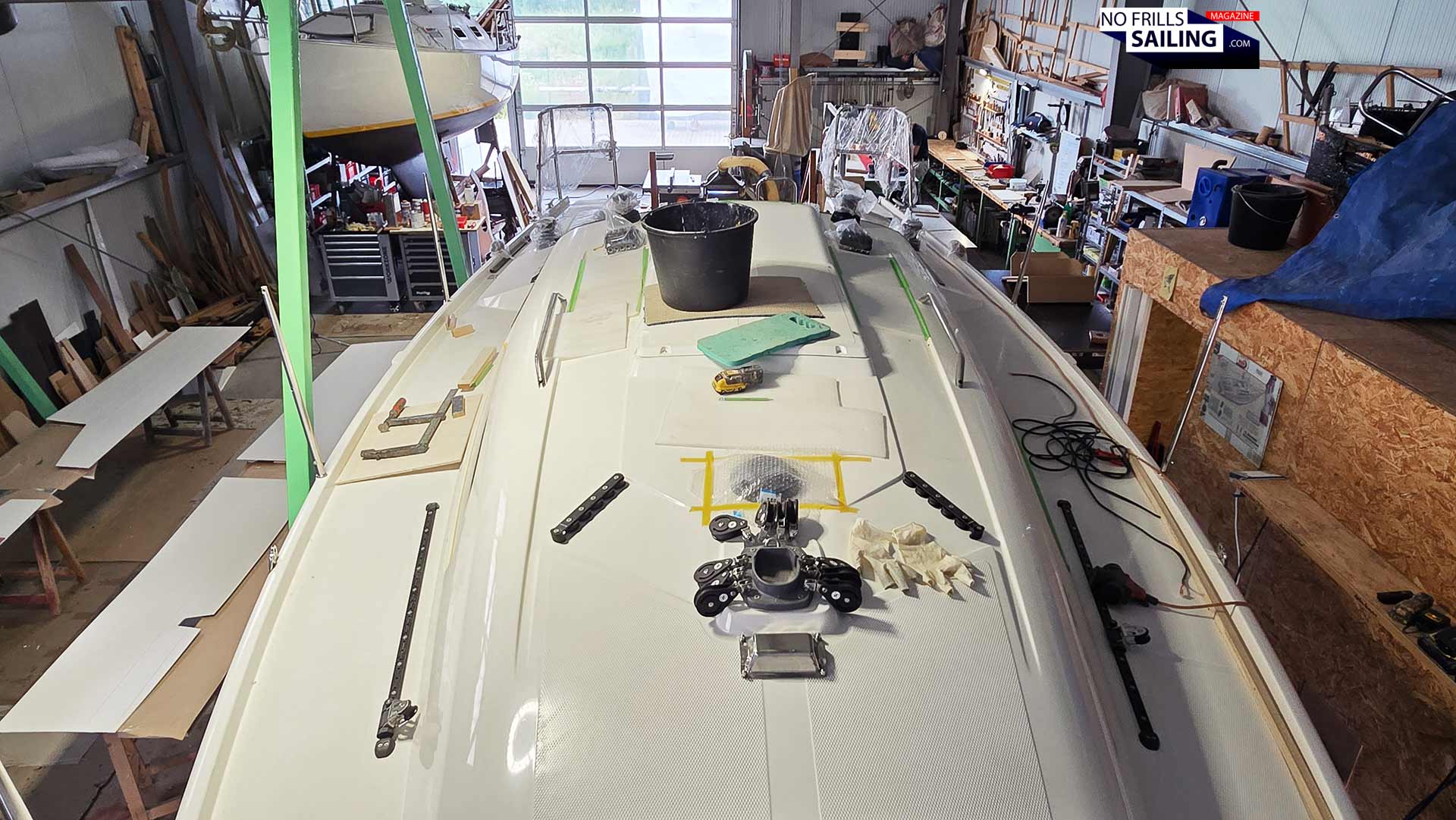
And there´s a lot to see here. Things which are telling a story of a thought-through boat in the first place, but also a story of constant improvement. Certainly not, like it is the case with so many others, for the sake of saving cost and more profit, but for making the sailing experience more exciting, for adjusting the boat ever so slightly to adhere to the customer´s needs and their feedback. Take the bowsprit, for example.
Innovation for sailors
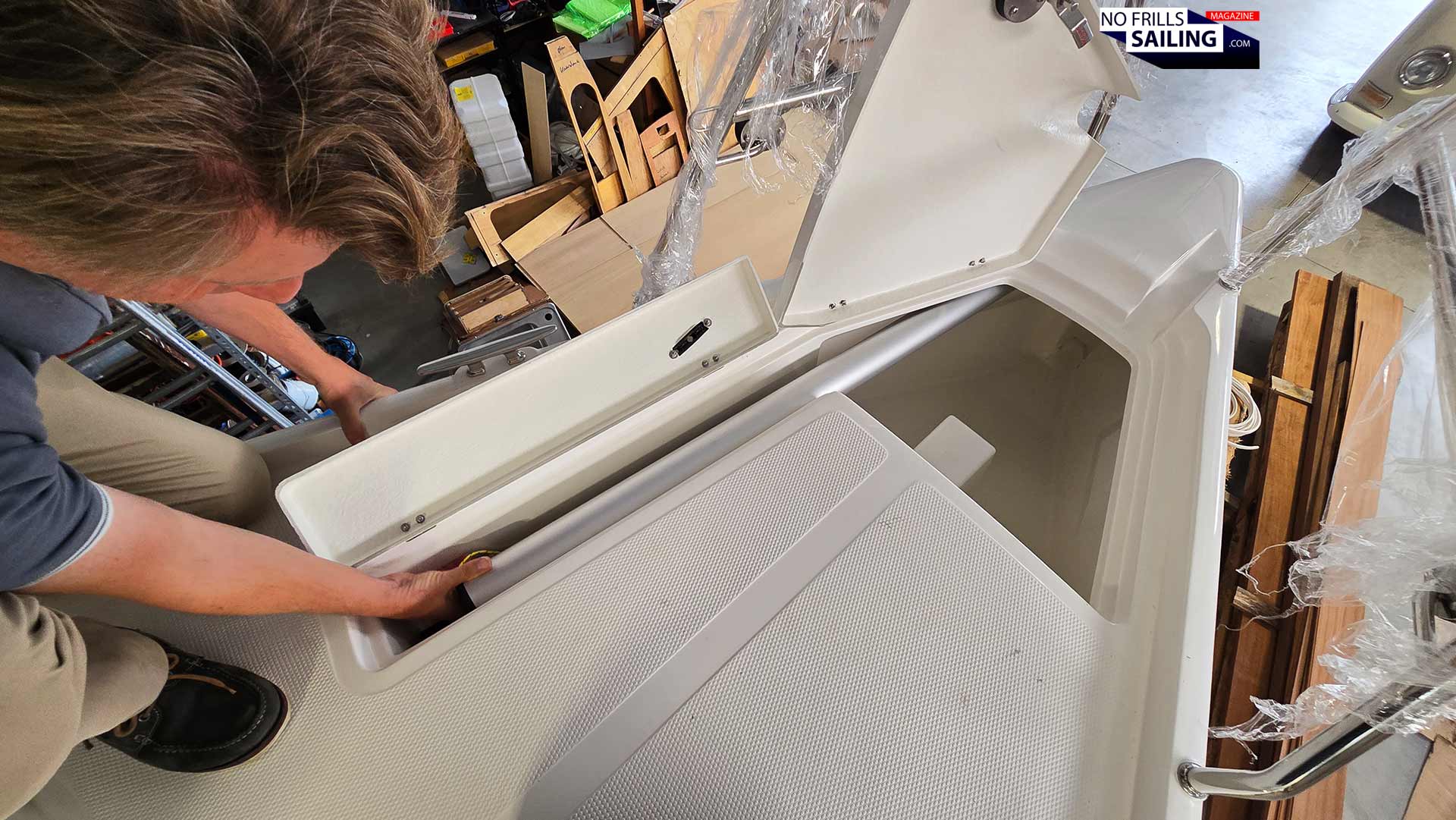
In many “ordinary” cruising yachts, these are fixed GRP-parts which will also house the anchor. In performance-oriented boats, as it was for example the case as well in my last boat, the First 27 SE, the bowsprit often needs to be much longer so that bigger forestay lengths can be achieved to size up the Gennaker or Code 0 sail area. Same in the Winner 9: This bowsprit is also extendable. But here´s the thing: Instead of having it penetrating the hull and somehow having to deal with possible leakage into the fore cabin, the housing is under deck, underneath a nicely accessible lid. But the real cool thing is the retrieving and extending mechanism.
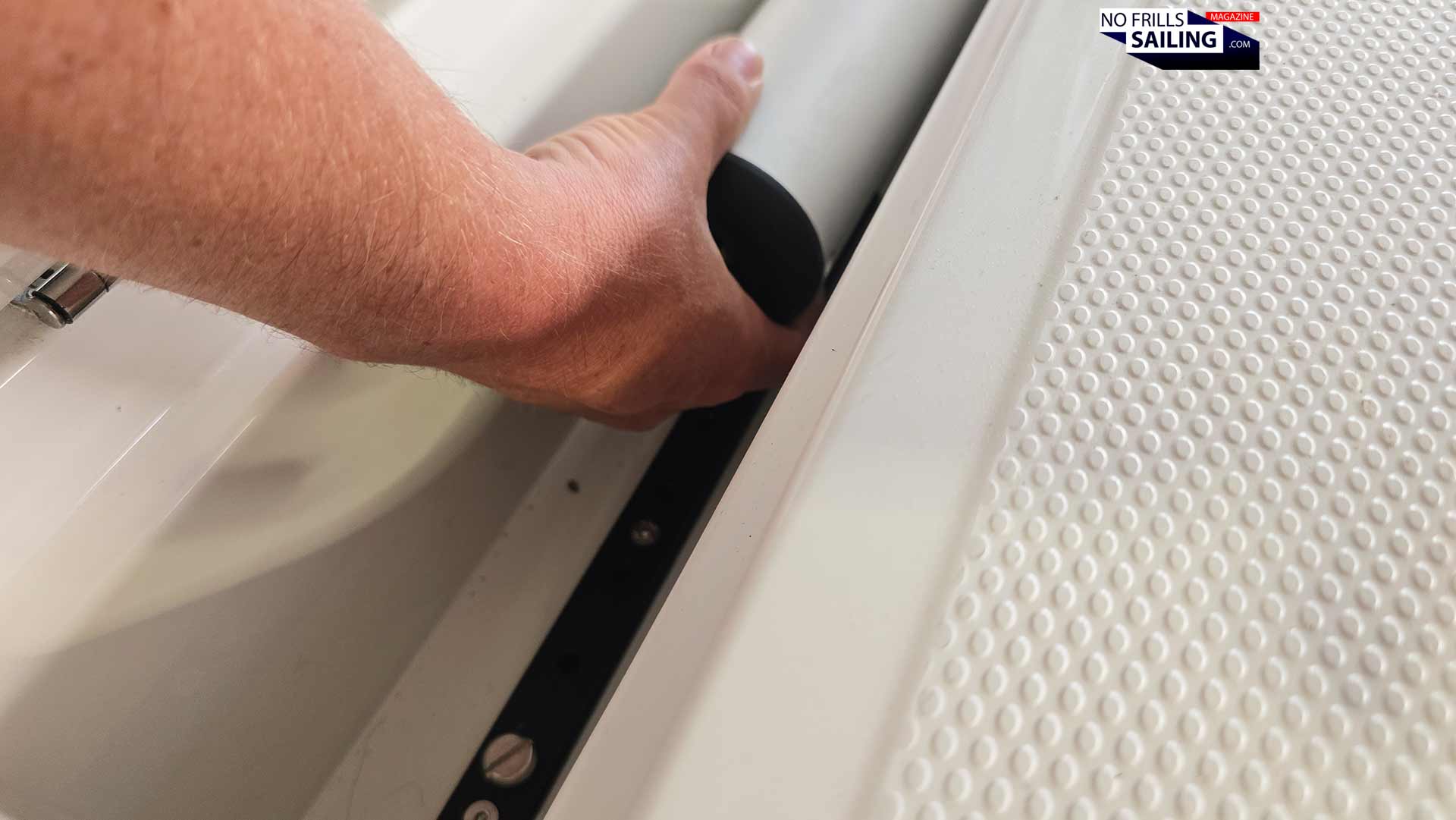
Bowsprit sliding on traveler
The bowsprit can be moved out and retrieved from the, which in itself is nothing special. But Christoph shows a little detail: The spar is resting on a traveler rail which significantly reduces friction and makes operating it a no-brainer. They´ve tested a number of setups in order to increase usability comforts and reduce possible errors in operation, coming up with this nice and simple setup. This is just one of the many little and bigger upgrades and adjustments the boat has received over time. It may be a 15 years old design, but she has been improved ever so slightly.
The quality-budget spiral
Which brings us to Christoph´s problem. Or, let´s call it, the problem any boatbuilder has to deal with right now. I call it the quality-budget spiral. I´ve published quite a number of articles dealing with the current market situation. And I´ve also thought a lot and spoke a lot with many people inside the industry about the causes and their effects on boating, short-, mid- and long-term. Let´s not delve deeper into this but reduce it to the outcome: New boats have become so expensive that sales are down. Period. It´s a full blown crisis. Winner Yachts suffers as well – maybe more than others.
Winner 9 – their 30 ft yacht
Because as a small brand with no more than two to three units per year, the plummeting market affects Christoph much more, than, let´s say, the large volume boatbuilders. And here´s the thing: The difference between customer expectations and their willingness to pay the price for such a high grade of quality has grown even bigger. Demand is high, because facing the high budgets a client expects to getting delivered top-shelf quality (and rightly so, I think!). But at the same time, as Christoph (and many other insiders) confirm, the willingness to pay for quality artisan handcraft is on a sharp decline. It´s even worse …
Truly a work of art
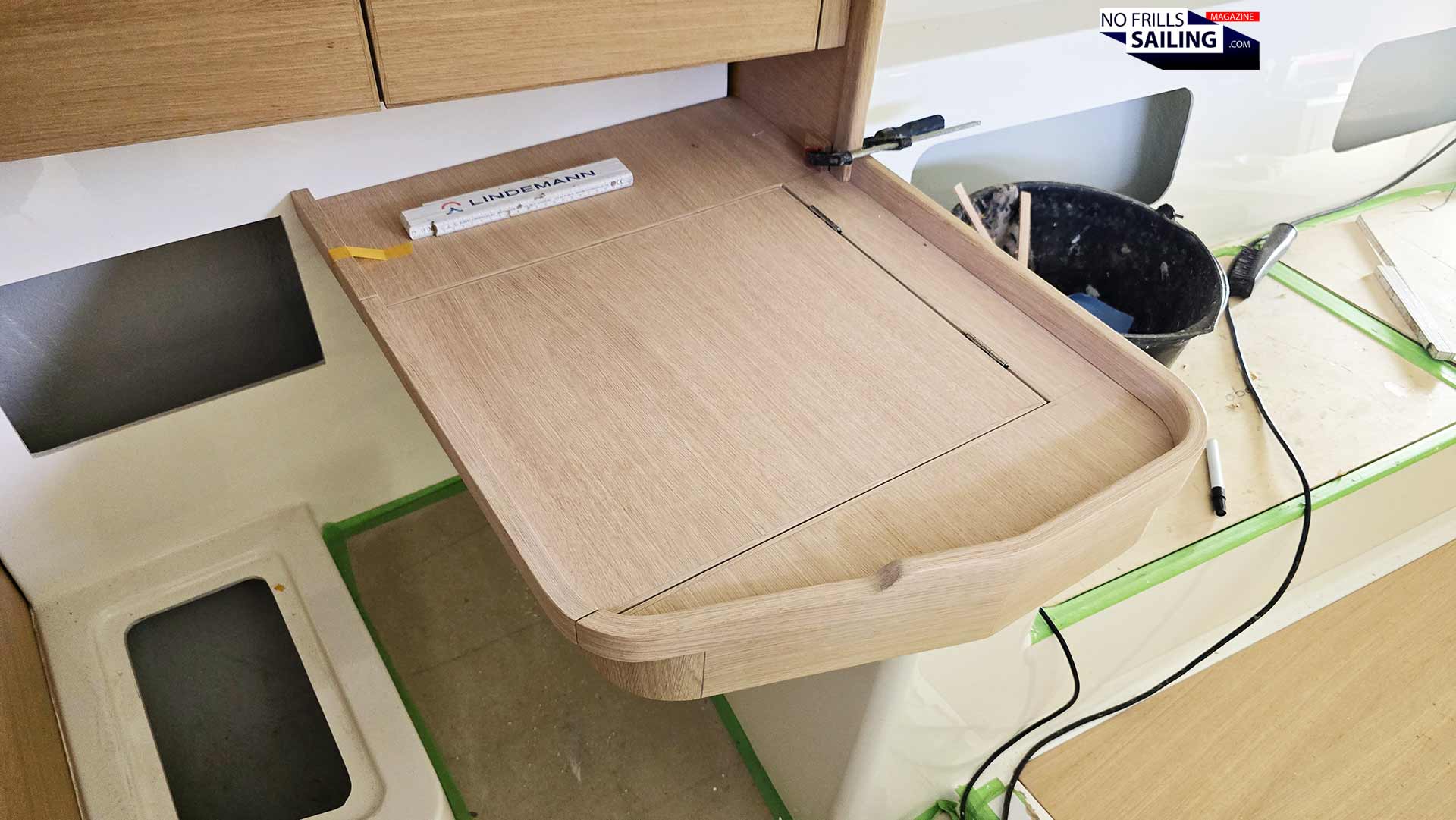
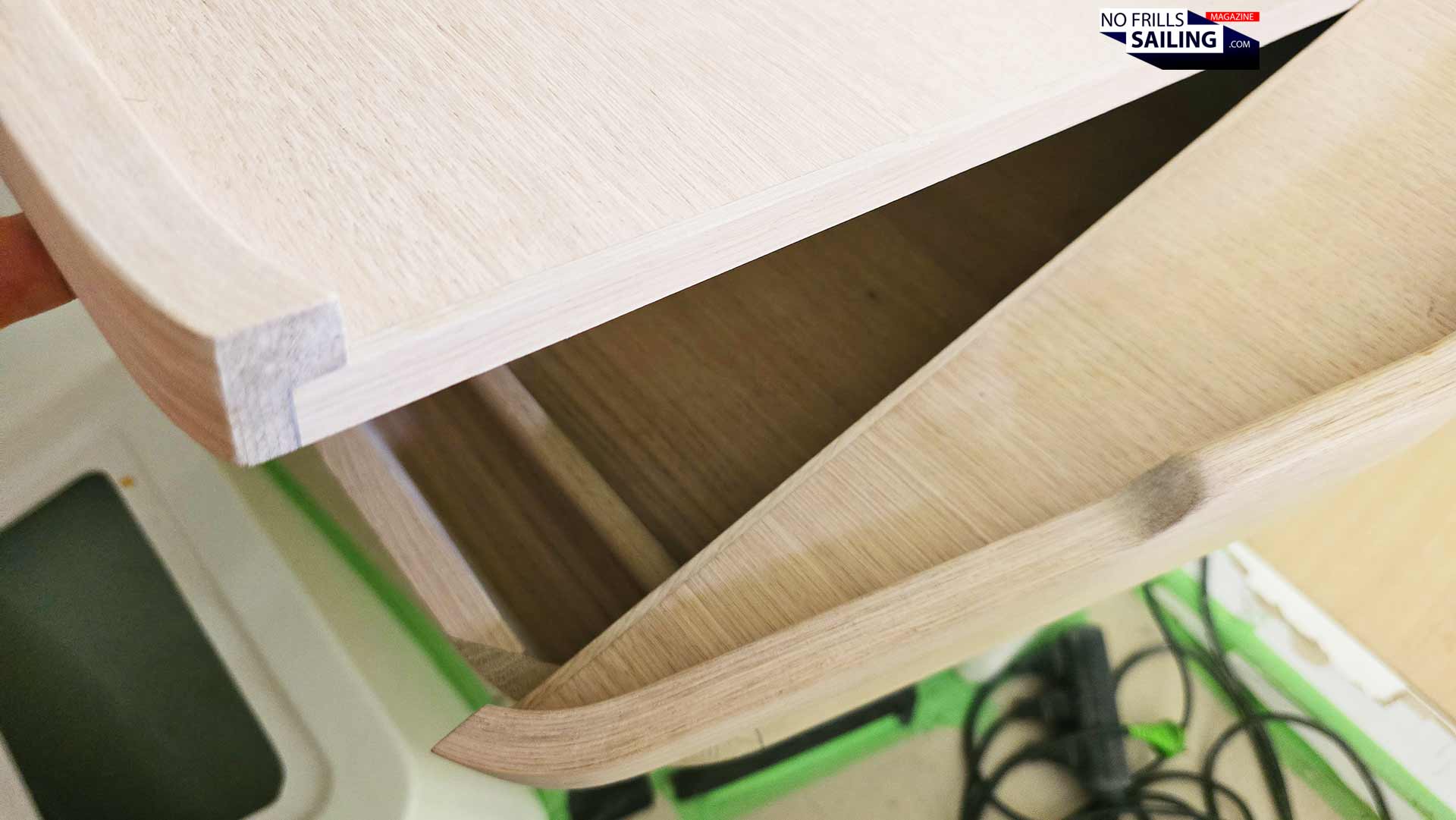
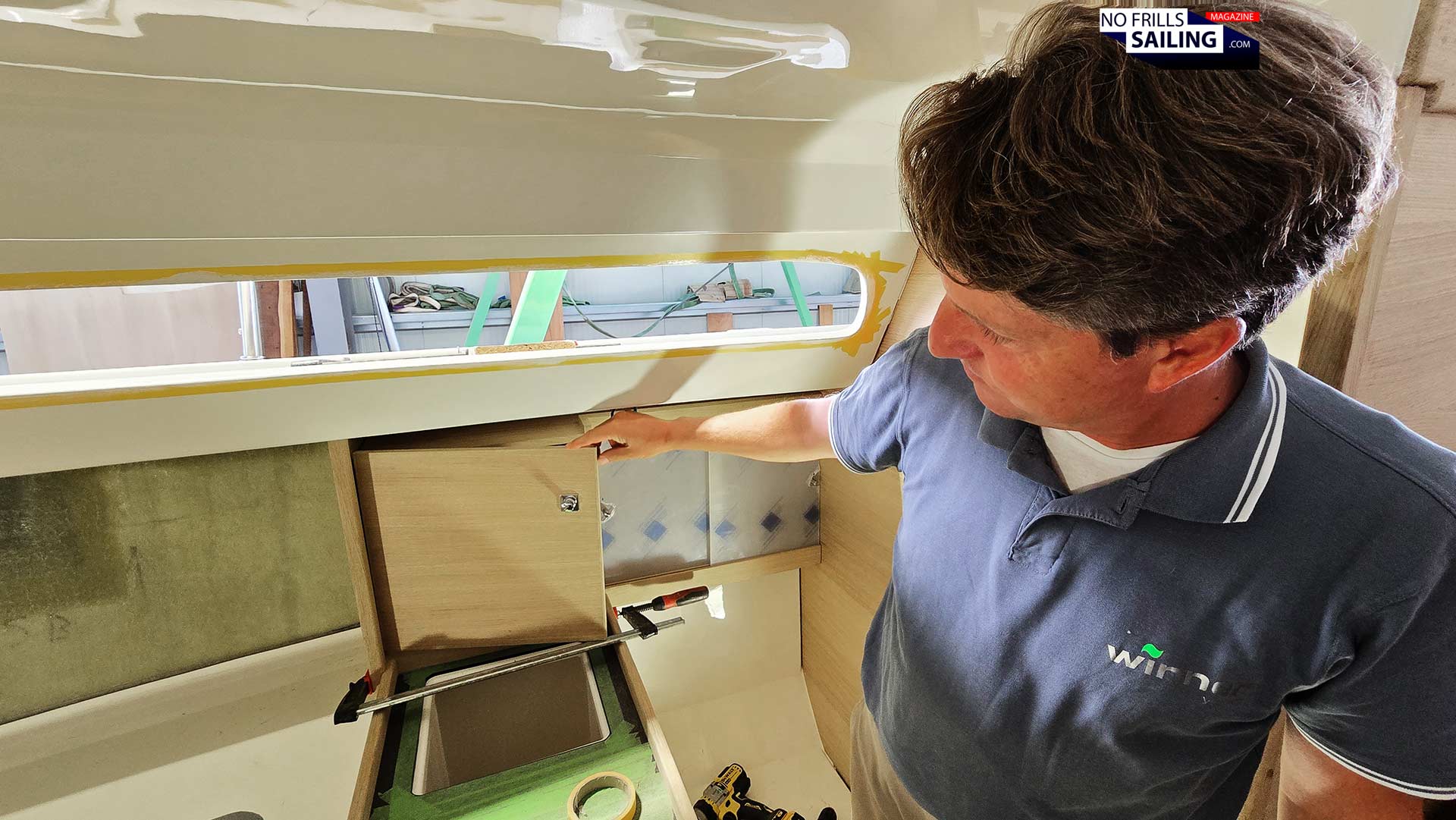
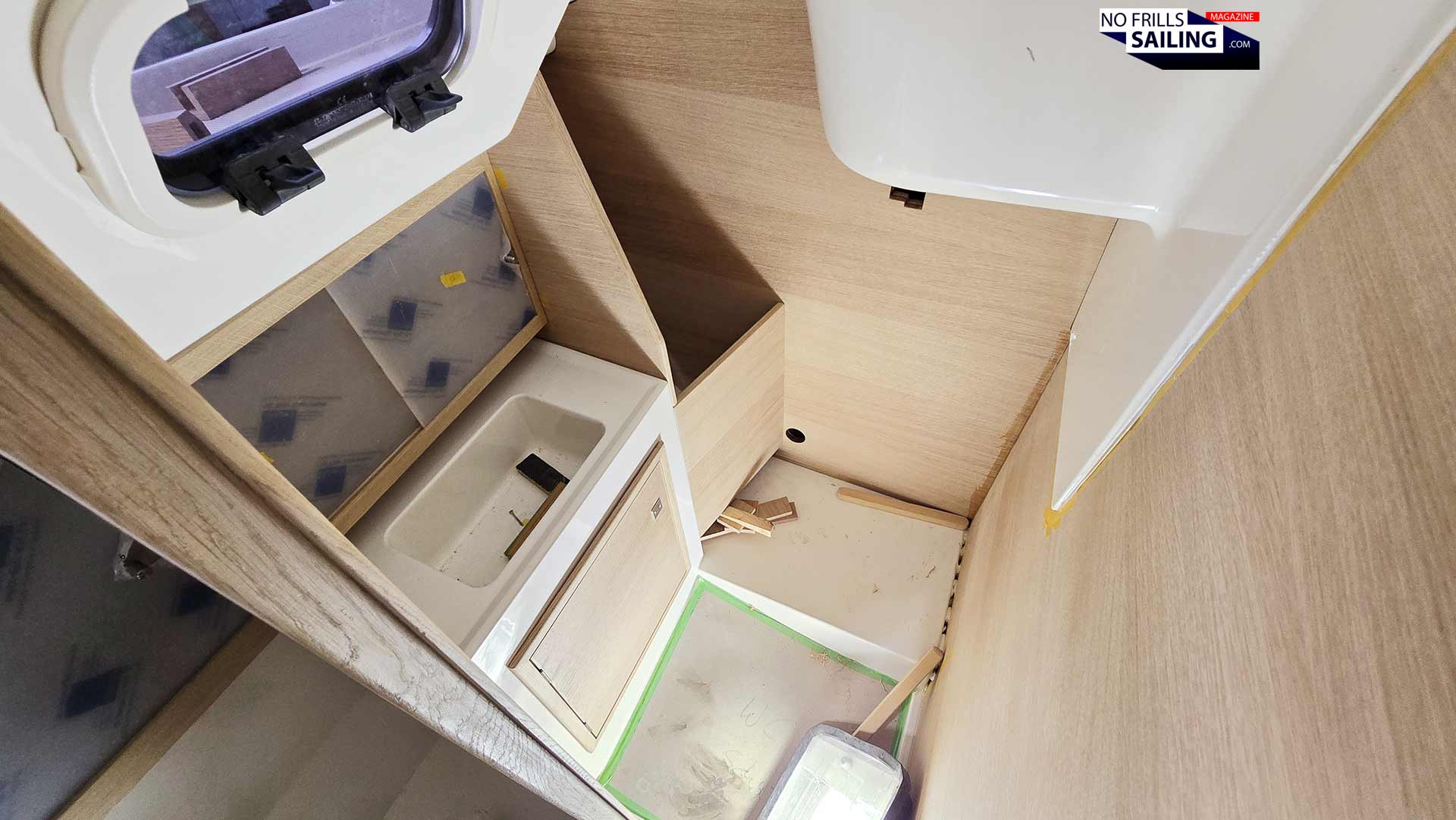
“Let´s take this chart table, for example”, he suggests. Inside the Winner 9 this is one of the first joinery parts already finished (without painting though) by Nicki. It´s a literal piece of art. The level of detail is awesome. High-grade thickly (!) veneered plywood, massive wooden details and a wonderfully, very laboriously laminated embrasure are a true attention-getter! I have built a chart table myself and I can see how much effort and accurate handcraft cumulates into this piece of carpentry. “But”, as Christoph says: “not many people acknowledge this level of craftsmanship anymore!”
Look at the joinery details!
It´s simply a matter of very, very few comparable pieces like these in other boat. People may have become used to seeing the boat joinery of the industrial builders: “Quality. Chocolate. Squared.”, as you will: Fast production, modular, easy and cheap made stuff. Especially when it comes to boat interiors. And there you have it: What can you do when your clients don´t even recognize the good stuff anymore? It´s a double trap: The demand for high quality but un-willingness to pay for it on the one hand and the inability to even detect it.
Lots of massive & laminated wood
I can see many parallels to my own boat here in the Winner 9: Back in the day, when I was planning the level of interior fittings, the scope of work needed to produce it – and by that the sum of working hours, ending up in a budget – it was a constant trial of balancing out my strive for design and beauty on the one hand, my demand for classic, beautiful boatbuilding and my ability to pay for it. In the end, I think, we´ve found a very nice solution for my own boat´s interior. But this is a special project, a one-off full custom boat. Christoph has to sell more than one. By that, he absolutely needs to come up with a certain standardization, or limits set for individualization, in order to being able to offer an attractive price. It´s even harder in a high-price phase like now.
How to react to a market in recession?
So, what´s his solution? I´d call it a somewhat radical, but also very logical step. “In the end it is very, very simple”, he says. “I need to get down the cost for such a boat in order to even stay within the shortlists of sailors.” The magic word is modularity. Not in the sense of manufacturing cheap modules, but to offer a boat that becomes highly modular in its interior outfit so that you can leave out many things and suddenly start at a very modest price.
“Who is paying for custom quality anymore?”
“Right now, for a nicely specced, complete Winner 9 you should have a budget of around 180.000 Euros exVAT at hand.”, he says. That´s including all the nice woodworks and magic joinery from the masterful hands of Nicki. Most of these parts are modules anyway, so that to begin with, you do not need to fit them to the boat right from the onset. “The joinery of a Winner 9 makes up a total of 60 percent of it´s price in the end”, Christoph states. That´s more than half of the whole budget for the high class woodworks! “In the end, a well-specced Winner 9 can cost as much as 250.000 Euros. And more!” For many, that´s clearly a red line crossed.
Let´s re-think boating!
So if especially joinery quality isn´t even recognized by many nor needed in the first place, why not leave it out then? Having calculated the savings capacity, Nicki and Christoph have developed a boat that is kind of “stripped” of the most laborious and therefore most costly parts: That´s the cabin doors (canvas instead), the chart table (instead there will be a nice little laptop-table), the saloon, galley and bathroom cupboards (instead there will be practical canvas-based pouches), any laminated wooden parts (substituted by massive strips) and of course the extensive side panels, which will be substituted by Gisatex-lining.
The aim is to get down the price …
“It won´t be a cheap boat, by any means!”, Christoph insists. The aim was not to reduce quality. The alternatives the new Winner 9 M (for “Modular) will come up with will be equally high grade, but essentially much simpler to manufacture. “The saloon table for example: it´s a huge item on the list and to make one is an absolute working hours eater! But there are so many ready-made solutions, so why not offer them?” Instead of the beautiful but expensive handmade artisan table, the Winner 9 M will incorporate the Swedish Lagun-system. Hearing this, I have to smile unwillingly. Because this is exactly what I did in my Omega 42!
… without sacrificing quality.
We reduced the joinery to the simplest – but still good-looking – version. We threw out most of the laborious parts, but retained high-grade craftsmanship in a few bits & pieces here and there which will be the eye-catchers. I threw out the real wood ceiling as well because it is so expensive to make it, instead, there will be a nice solution with felt. So, the idea with my Omega 42 as well as with Christoph´s Winner 9 M was not to make a cheap boat, but to have a good-looking yacht that hits a certain budgetary threshold. For the Winner 9 M, he says, this sweet spot is around 140.000 Euros base price exVAT. And they will achieve this.
Are you a Winner 9 M-type?
“But the cool thing is”, Christoph says: “Owners will not have to stick forever with the “stripped” version! That´s the ingenuity of the “M”-concept. Because, opting for the modular version also means that every module can be retrofitted if needed or wanted at any time. So, for example, if you choose to have the large aft cabin cabinet later, no problem: Nicki will make one and it can be fitted without a problem. Same goes for the other cupboards and many details originally left out. I find, this is the most interesting aspect of the 9 M – you can “upgrade” anytime you wish.
Craftsman´s pride: This is boatbuilding!
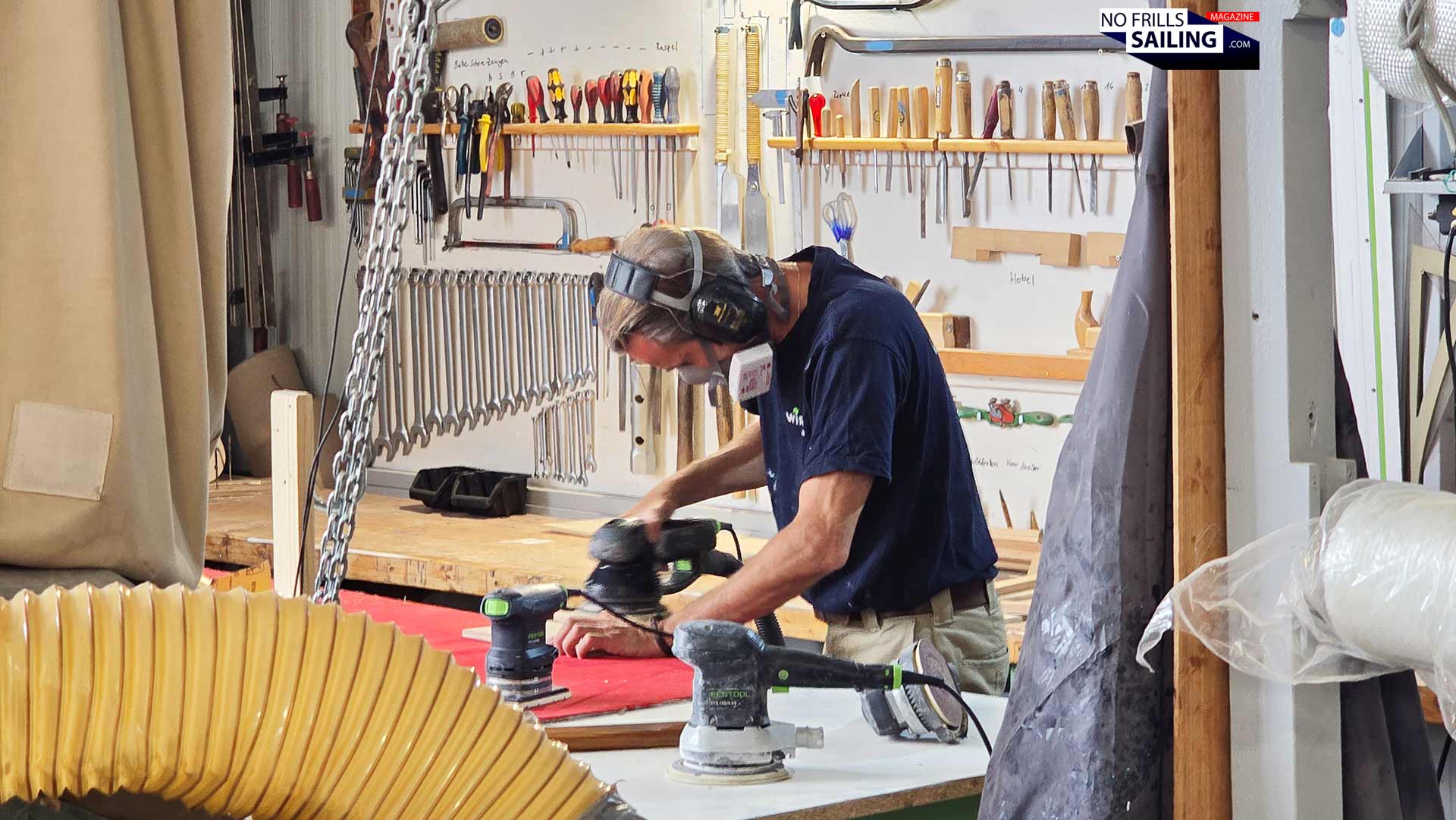
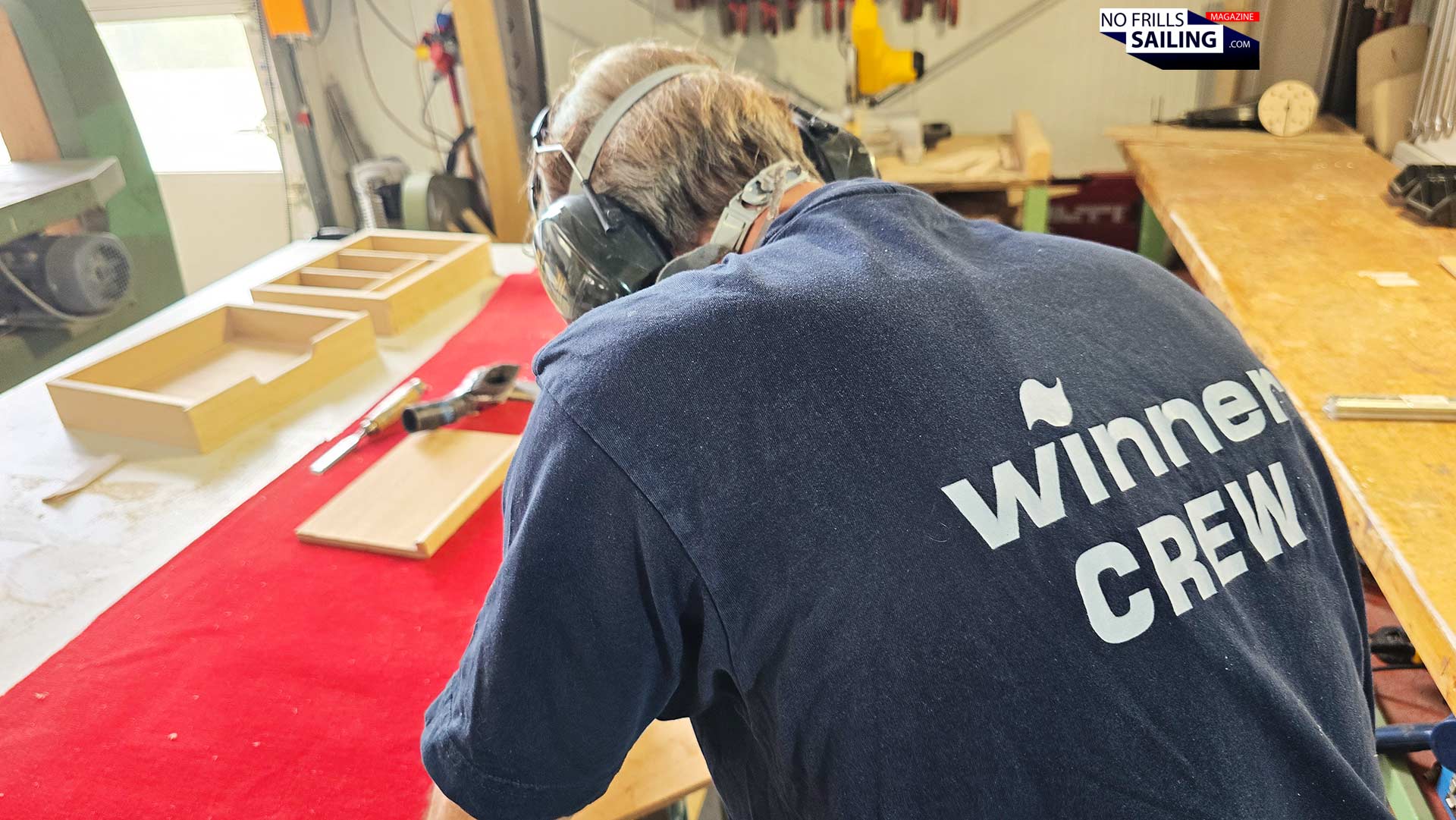
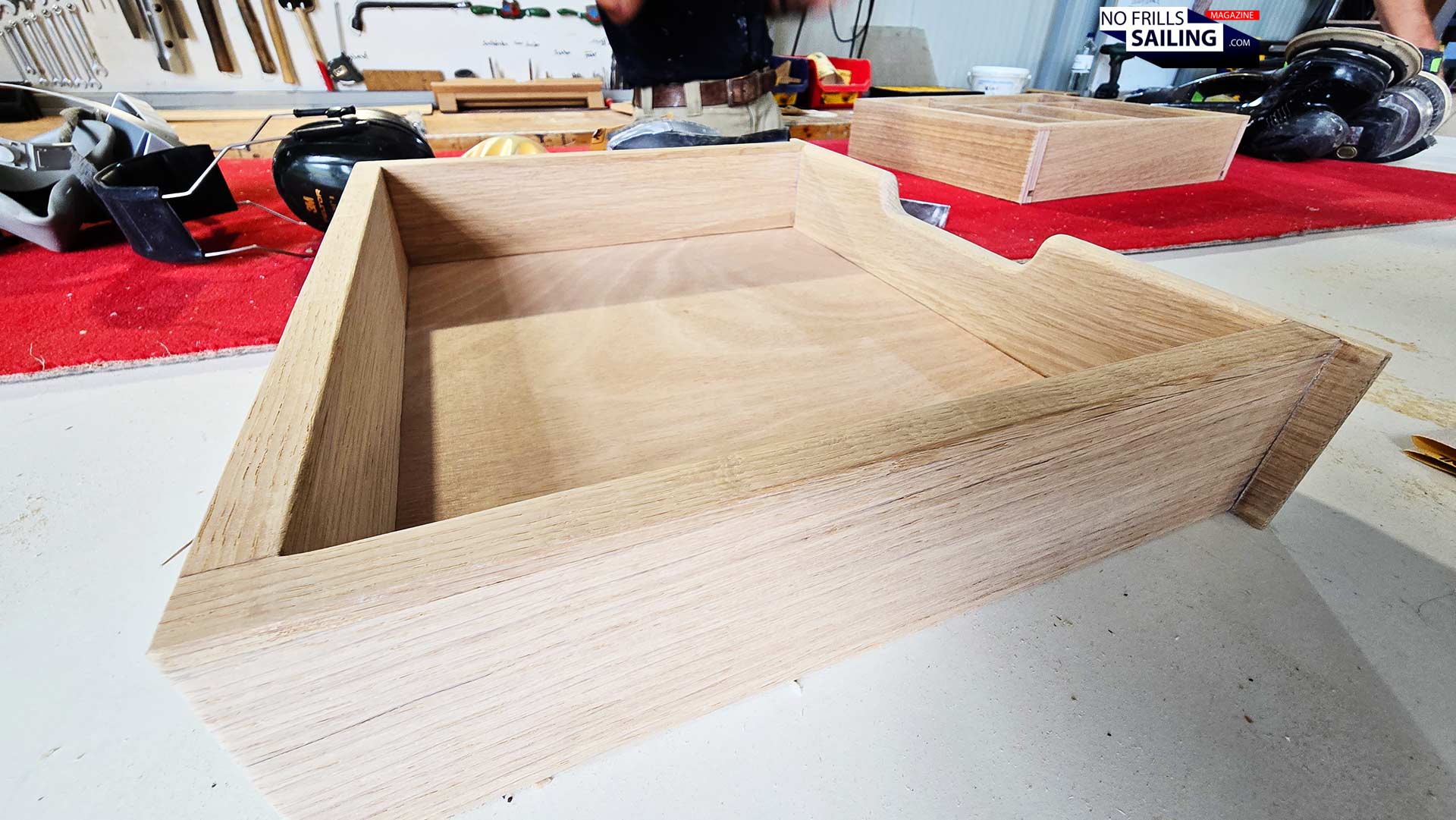
But every medal has its two sides, right? What may become a very interesting offer to a market stressed out by high prices is a tough thing, especially for a proud and talented craftsman like Nicki. This master boatbuilder is the artisan brain of any Winner. His efforts and care goes into any detail. I observe him working for a longer period. Currently he was making a drawer for the galley. A “simple” wooden drawer where later the owner´s cutlery would be stored. It seemed to me as if he was in his own world …
A look over a craftsman´s shoulders
With his ear-protection on, he really dived into the process. De-coupled from the rest of the world, there was just the wooden parts, his tools, his eyes and his hands. Christoph assures that Nicki won´t stop until he would have achieved the perfect fit, the cleanest surface and the best outcome. As there is just one boat in the shipyard in the manufacturing process at any given time, clients opting for a Winner Yacht can be sure that Nicki will have a 100 percent exclusive focus on their – and only their – boat!
CAD? Well … nope.
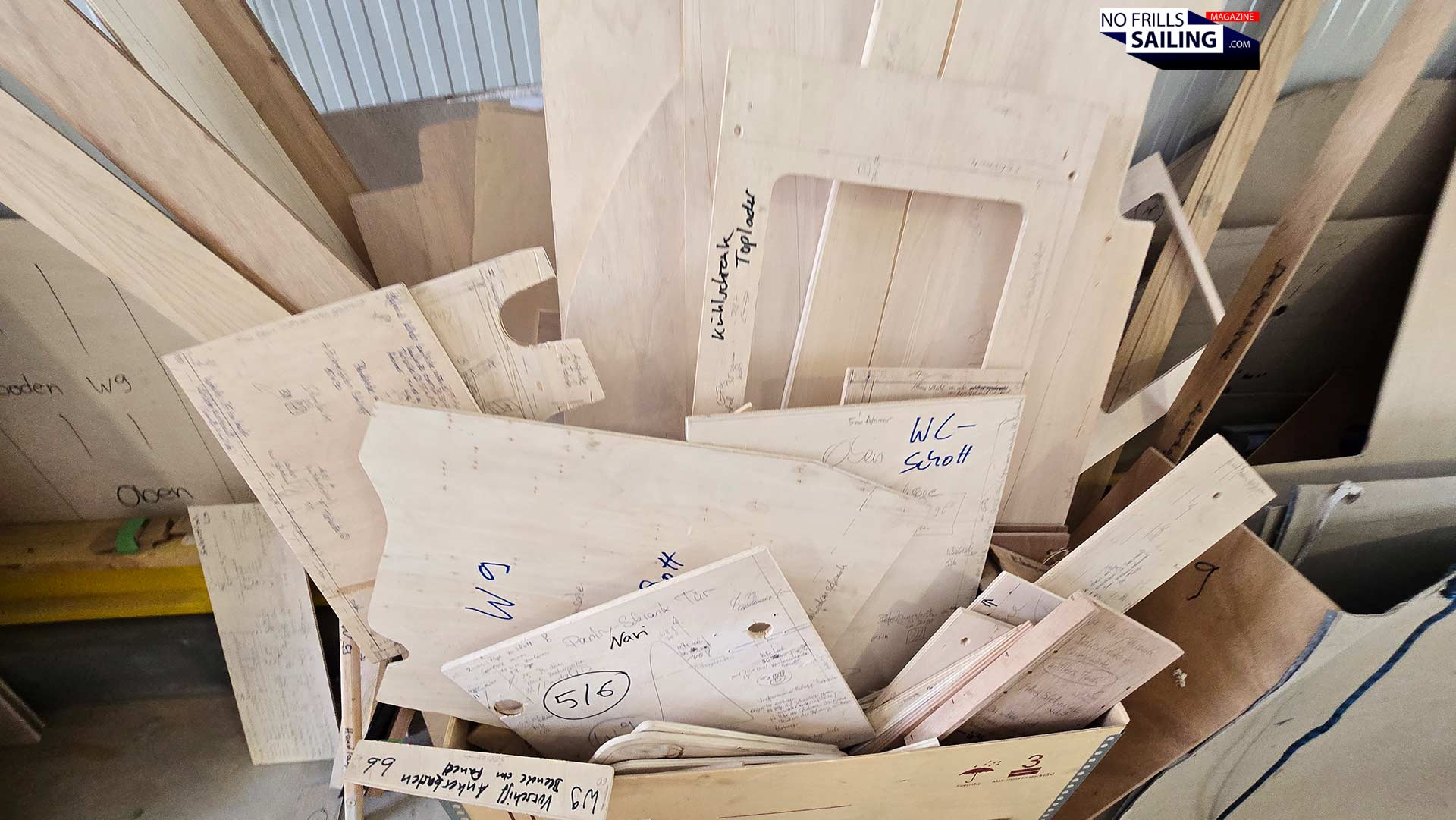
That is why coming up with a “stripped” version was a hard pill to swallow, especially for Nicki, Christoph tells me. And I can feel him: As a craftsman, it must break his heart to being tasked with finding a solution to replace his own work, right? The level of how deep the link between Nicki and his craftsmanship and the boats go, I can literally touch with my own hands as we approach the “library” of the shipyard. Maybe the “holiest” of places here in Ahrensboek. Because here, all the jigs, models and patterns are … how do I call this? Archived?
A true treasure trove
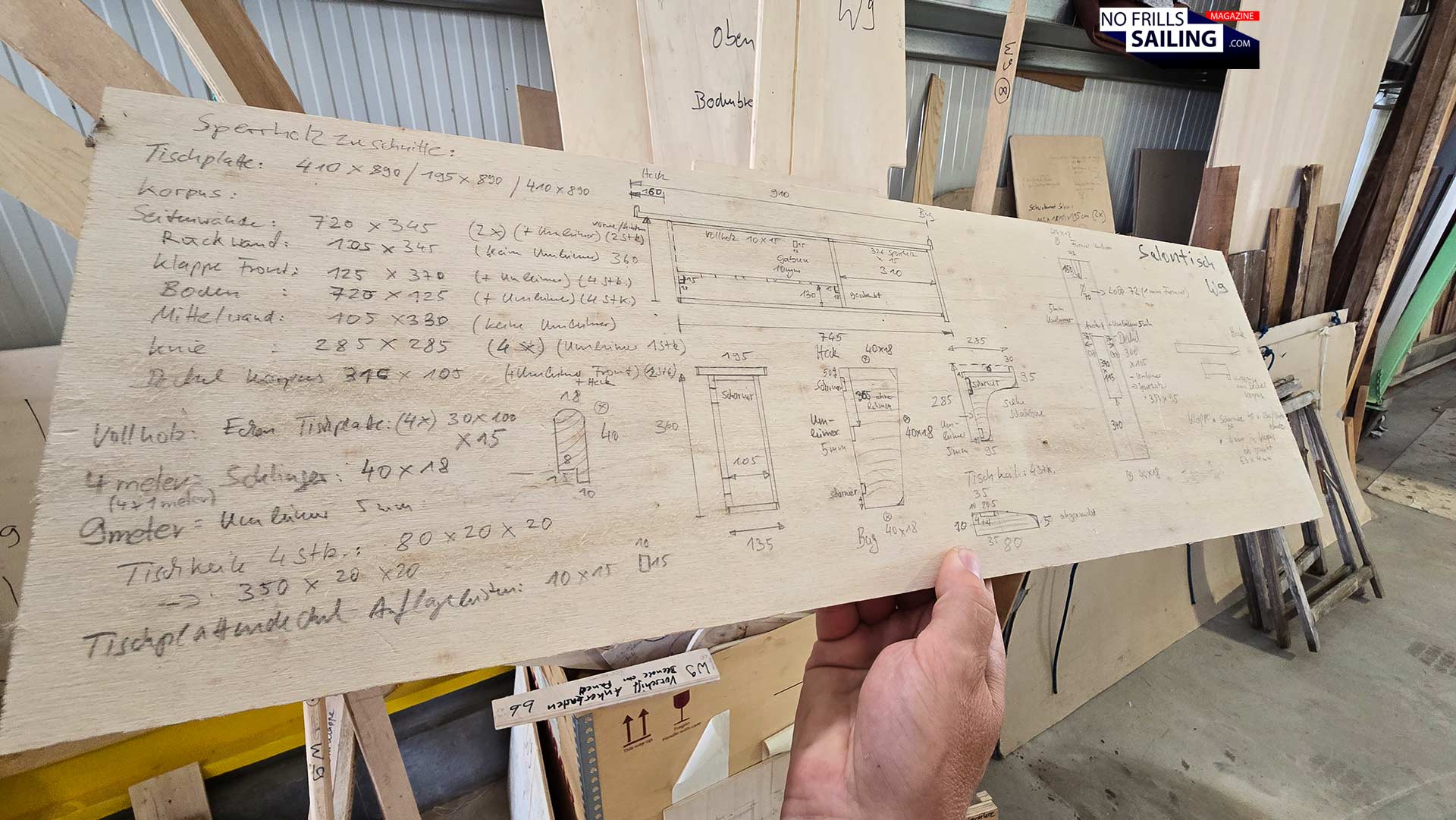
Of course, Christoph assures me, the Winner Yachts are there in digital form, as elaborate CAD-models. But over the years, they have also developed a system of their own here. For any given part of the boat, any joinery or carpentry, any fitting and their dozens of iterations a corresponding wooden gauge model exists. Christoph pulls out one of these “holy scriptures” containing the complete plan for a saloon table. There are dozens and dozens of them. Many contain information that go back on Nicki´s refinements. It´s fascinating to see that not everything in our modern world consists of zeros and ones, right?
Lots and lots of working hours
This reminds me of the old artisan secrets of guild craftsmen, relaying their wisdom and knowledge from generation to generation. In these wooden sheets, the experience and learnings from so many boats is inscribed. Isn´t that just beautiful? Isn´t that such a nice, re-assuring counterpart to those modern-day VR-based and AI-optimized CNC-ready high-tech boats? This way or the other, the Winner-way is a very special one!
Just … awwwwww
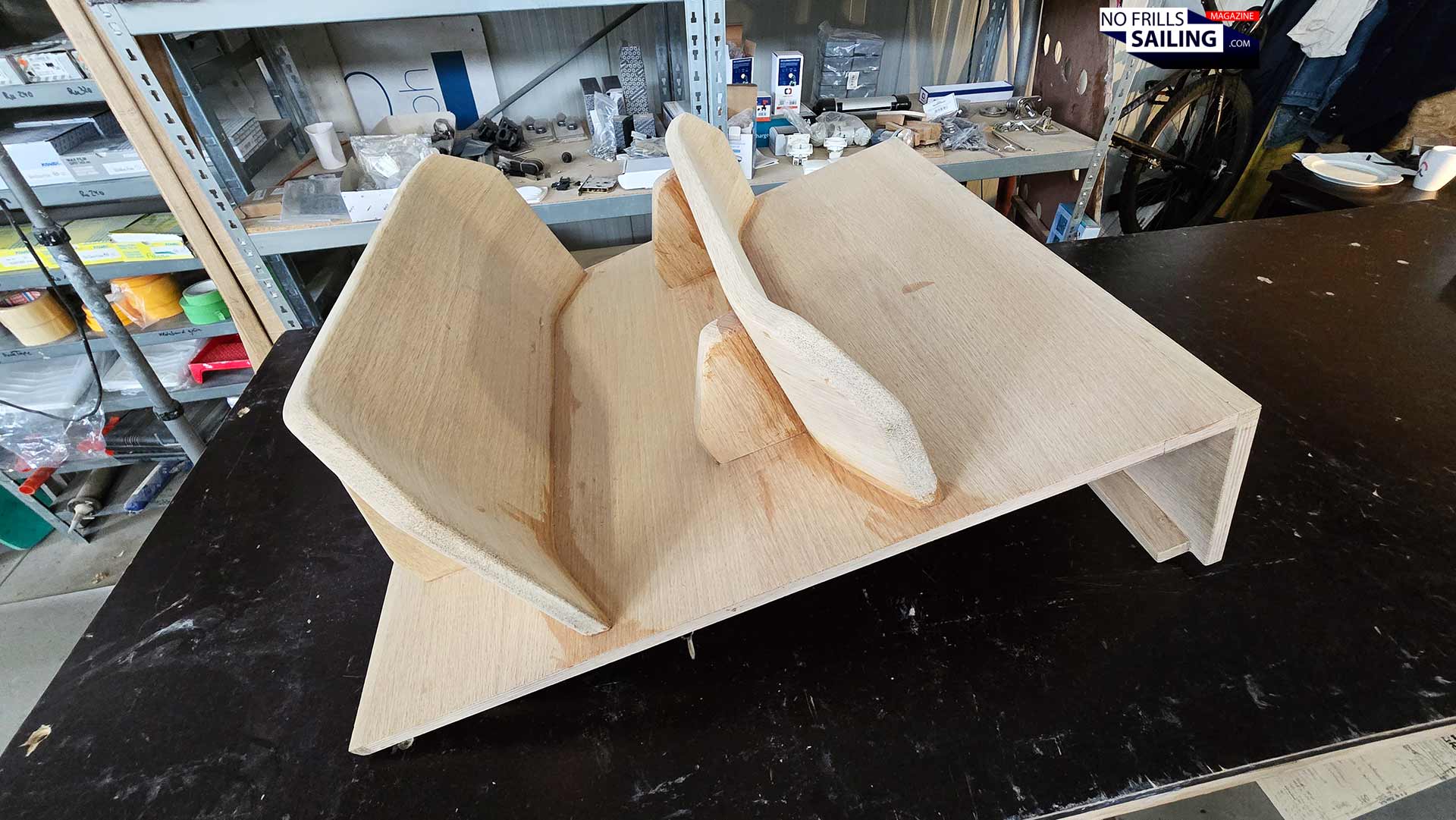
“In each of our boats,” Nicki specifies, “there are at least three of those big, thick oak tree planks.” I bet Nicki can see the finished parts within the huge pre-sawn log at any given time. And as much as I can perfectly well understand the urge to come up with the Winner 9 M-concept in order to make an offer that is competitive and attractive for a market under stress, it breaks my heart to imagine a Winner without a cutlery-drawer or such a nicely shaped laminated entryway-ladder like these.
Laminated steps. Very nice!
As much as I can see my own new boat in the Winner 9 M concept, I would hate to skip those laminated steps, which are the outcome of so much effort, dedicated working hours and handcrafted art! But in a way, as I conclude, I am the perfect example of a Winner 9 M client. Because honestly: As much as I truly appreciate this absolutely fantastic work of the carpenter – I wouldn´t have the budget to pay for his handcrafted art either! And as it is the case with my Omega 42, only the reducing of working hours made it possible for me to sign a purchase contract in the first place. So I guess, it might work.
Nine layers of glossy paint.
Do I need glossy painted parts with no less than nine hand-lacquered layers? No, probably not. But do I appreciate them and do those brighten up my smile when looking at them? Yes, of course! After defining which boat you want to go for, deciding about its specification is the most complicated part. Christoph insists that with the Winner 9 M, there´s no compromise in terms of sailing capabilities and “outside” fittings: hull, deck, rigging, fittings – everything will remain the same. High class, no compromise. The “reduction” takes only place inside the yacht.
„Many people simply cannot see it!”
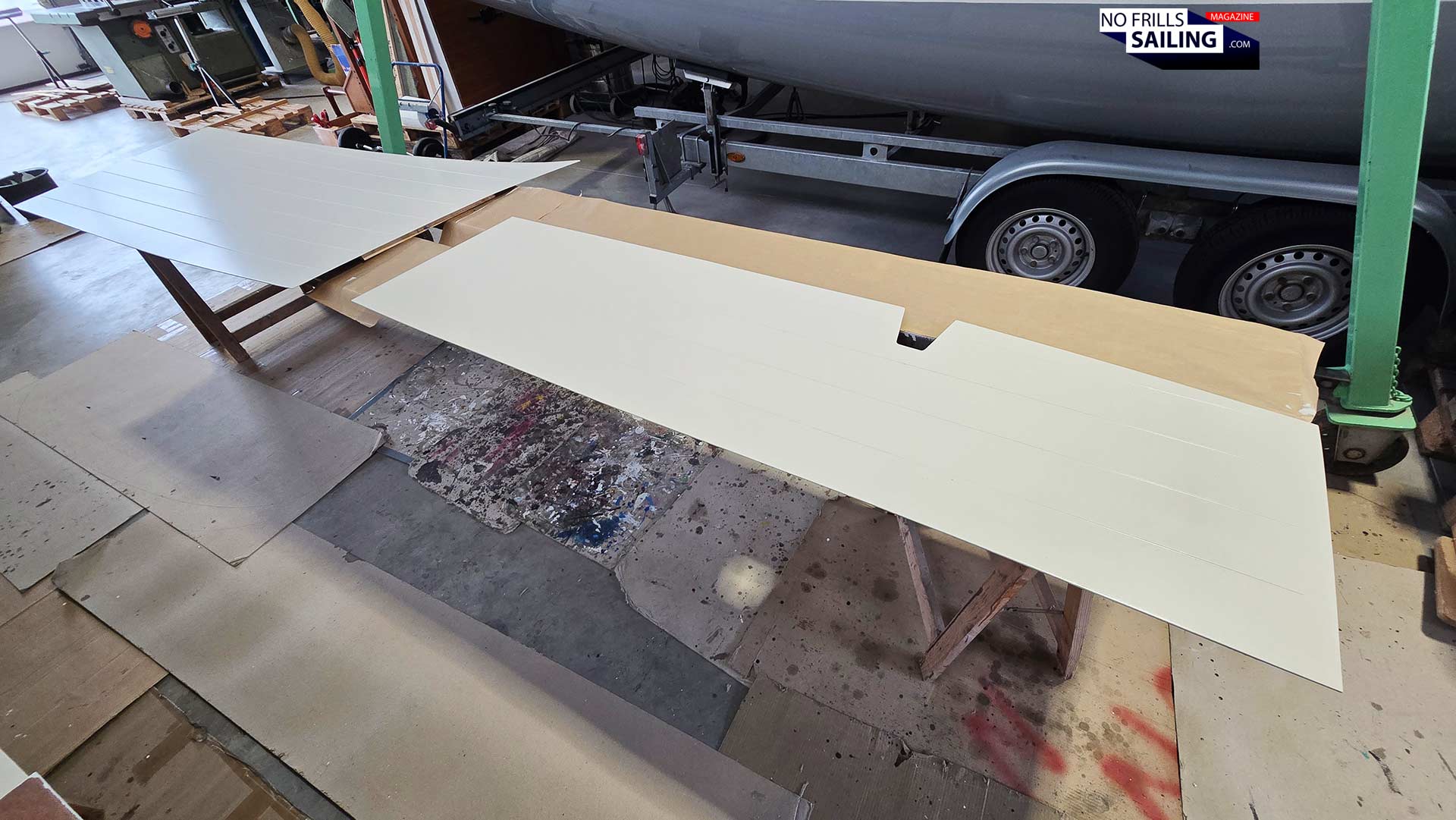
Can this work? I think so! Behind the boat we see another example of what Christoph means. There, the side panels for the Winner 9 are laid out for drying. Not dissimilar to roofing panels. As I have tried to make new roofing panels for my King´s Cruiser 33 a few years ago, I know exactly (and painfully!) how hard it is to manufacture an accurate, spotless quality. Christoph points to the longitudinal recesses within the panels …
A closer look: Side panels
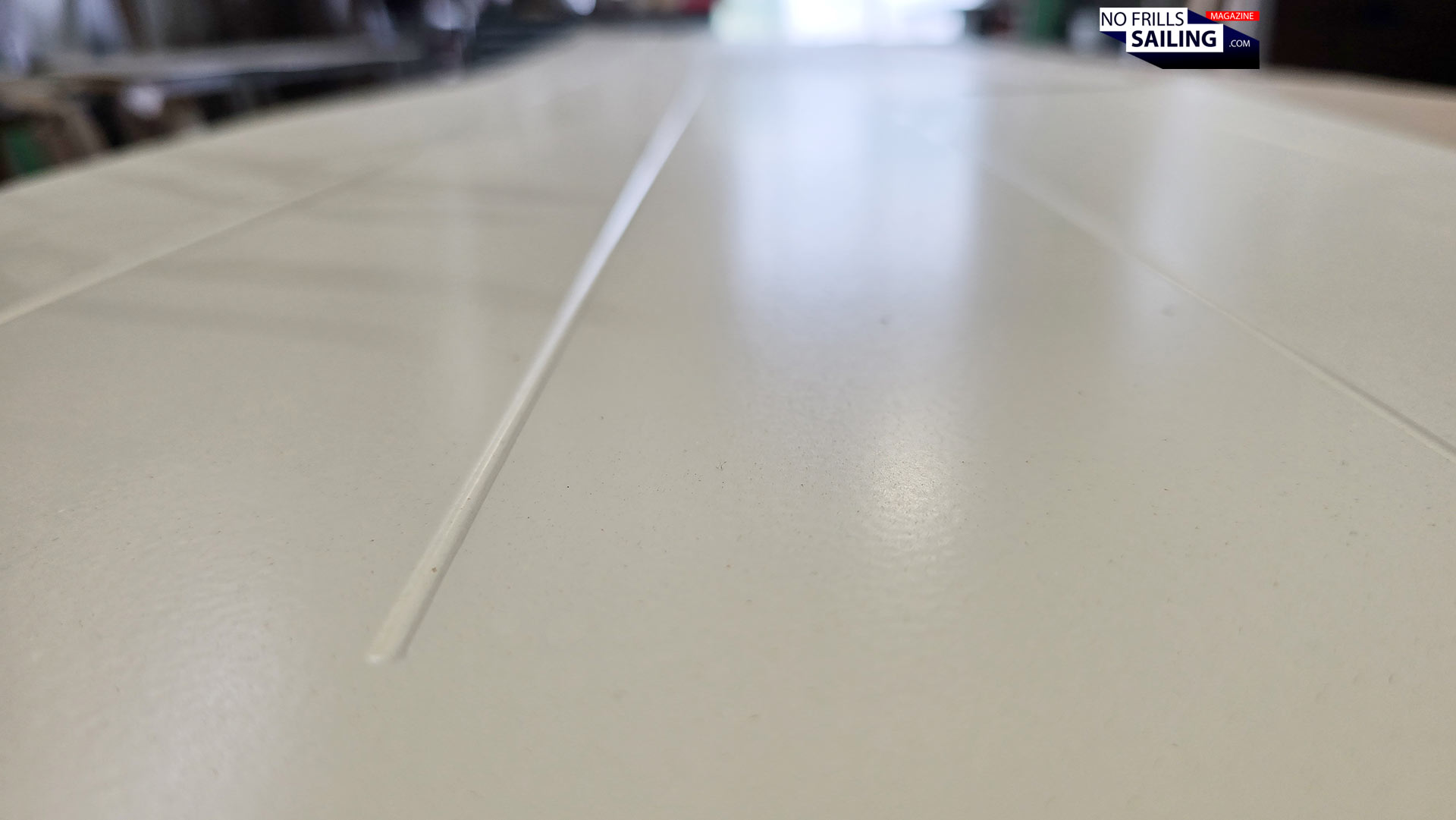
“Do you see these decorative lines?” Of course I do. “These are carefully milled into the panels. Then, by hand, of course, Nicki will sand them and smooth them out so that even the tiniest ridge is deburred.” This, Christoph explains, is very time consuming and therefore eating up working hours. “But be honest, Lars: Would you have recognized this? I mean, these are just simple lines, right? Would you have thought that those would increase the budget that much?” Nope, I wouldn´t. And so wouldn´t many prospect buyers as well. It´s often not a question of being stupid, negligent or incompetent: Many of those elaborate details aren´t easily visible, even for the studied eye.
“Most people simply don´t see it!”
And slowly I begin to understand the painstaking process that it must have been for Christoph, as the responsible salesman and boss of Winner Yachts as well as for Nicki, his talented and committed craftsman. How would it be possible to get down the cost without sacrificing the core DNA of their brand? Without betraying their own aspirations and nonetheless their dozens of happy clients and sailors already underway in a Winner? I think they have found a formula that has the potential to boos up sales, by introducing a starting point that is much more price-attractive, without suffering quality and sailing-wise.
Advertisement
The „Winner formula“: Innovation meets tradition
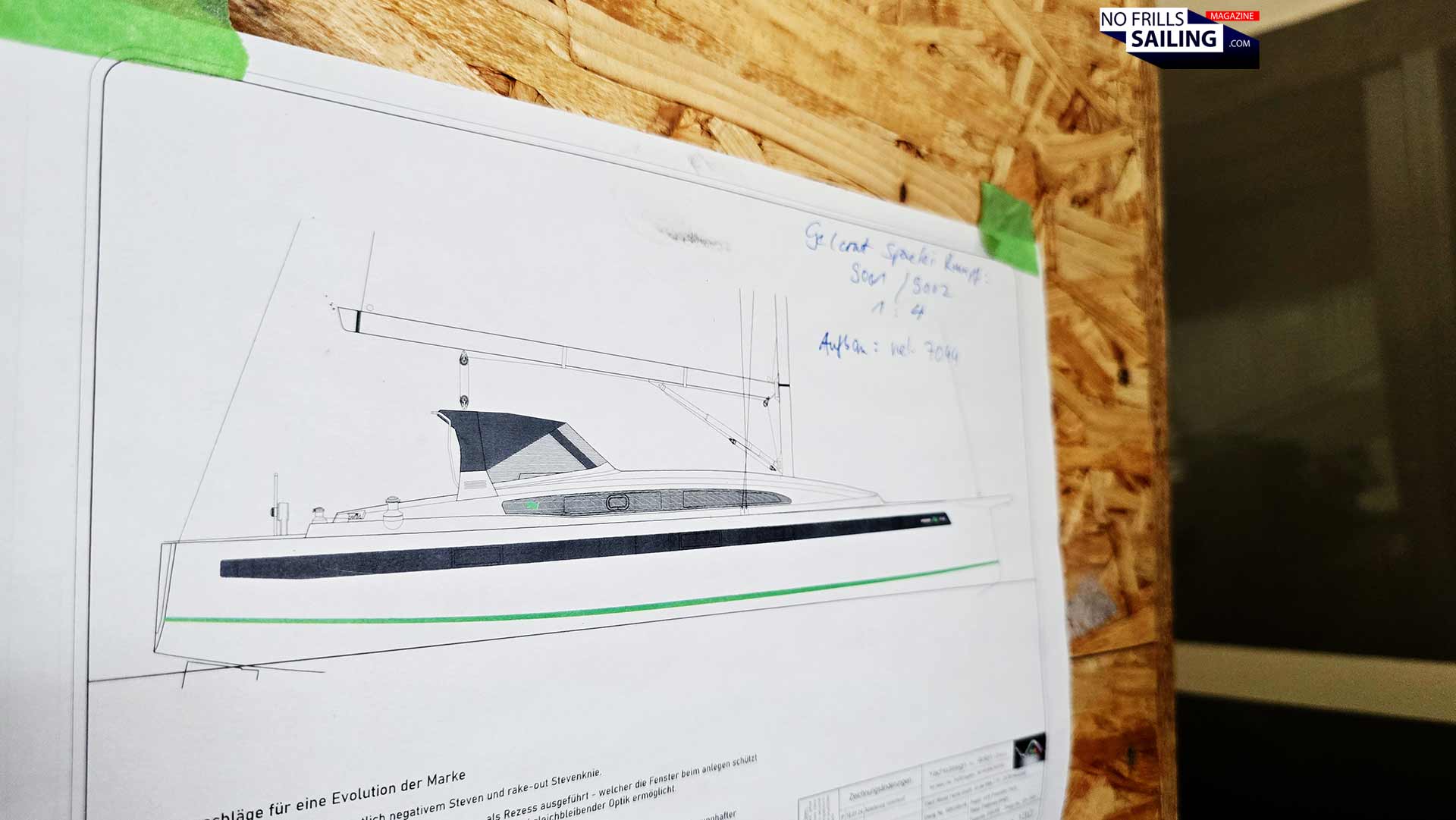
The next generation sailing yachts made by Winner are already in the drawer: Up on a wall I can see a design study that may one day become reality. A very modern, sleek cruising yacht that kind of reminded me of the current JPK cruisers, sporting a negative stem, integrated bowsprit or a mainsheet arch. “Yes, we can start working on this boat right away”, Christoph says, but also confirms that in the current situation of the new boat market it needs more than just a nice design.
Next gen Winner yacht already in the drawer
Up until the situation eases and smaller manufacturers like Winner Yachts will be able to move more freely, it’s the aim of Christoph to further develop and upgrade the current design range of boats. Winner Yachts are available as either 8 meter or 9 meter (30 feet) boats. Christoph insists that they will continue to focus on the highest possible quality for the GRP and structural parts, including steel-frame cages for the keel-attachment and of course Nicki´s joinery artwork, no matter if reduced or in full blossom.
Upholding boatbuilding traditions
In the end I am intrigued of having had the chance to meet these guys, just in my neighborhood. The good things are often not far away. What´s left for me to see is for one a finished Winner 9 so that I can show you the outcome of Nicki´s work in full extend and also to sail one, don´t you think? In this I hope I will be able to deliver these articles in the near future. For now, Nicki, Christoph, thanks so much for letting me roam your workshop – what a wonderful and enriching experience this was!