Taking care of the onboard safety measures for your yacht is not only your obligation as a skipper, but should be a matter of course for anyone casting off for an offshore trip. Wearing a life jacket is only one (however major important!) part of the chain that makes sure that in an event of MOB rescue can be prompt an successful. Fitting a life jacket with a Personal Locator Beacon increases the chances of survival greatly. Here´s why …
I know, I know, nobody really likes to think about the worst case scenario and all the bad things which could happen in sailing. We tend to exclude the risk and real life dangers of sailing, pointing to the statistics which say that our beautiful hobby is really safe and that there´s just a miniscule possibility that a MOB with injuries or more serious outcomes will happen to us. Or to our sailing family members.
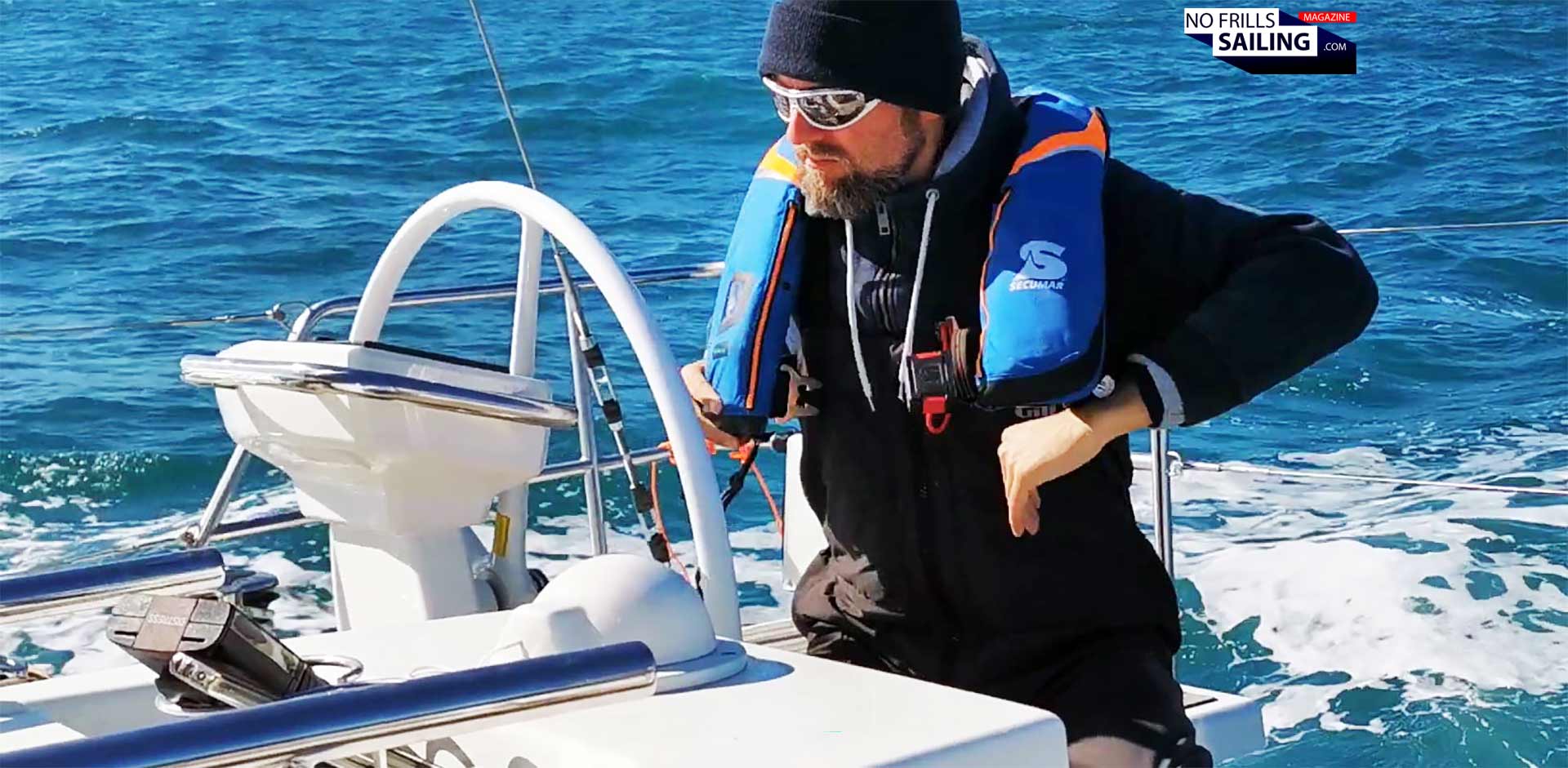
I am wearing Secumar ever since I sail
Or to our onboard guests. Well, the odds may are indeed make for some relief and I personally can say that in my immediate orbit of friends and sailing acquaintances – knock on wood! – nothing like this ever happened in more than 10 years of actively sailing now. But, I know a load of people who ultimately know someone who went overboard, got injured and even died. Ah, stop: I lied to you. Indeed I “know” somebody directly: Chinese pro skipper Guo-Chuan, who a few days after we did our interview went overboard his 100 ft racing trimaran and vanished. Well. There you have it!
Man Over Board Prophylaxis: How to?
Advertisement
As the day when my new boat is put into the water and I quit my worthless, boat-less landlubber existence to become a proper skipper again, comes closer and closer, I begin to stock up my safety equipment slowly so that I have everything at hand when ALPHA is floating. As I am both a mostly single-hand skipper and sailing father with two kids, safety is of utmost concern for me! And I can tell you, I´ve experienced quite a few near-accidents with possible MOB as an outcome when I was still sailing my GEKKO back in the day. In fact, I rarely wore my life jacket when weather was fine, wind was low and I “felt” safely. I am going to change that profoundly!
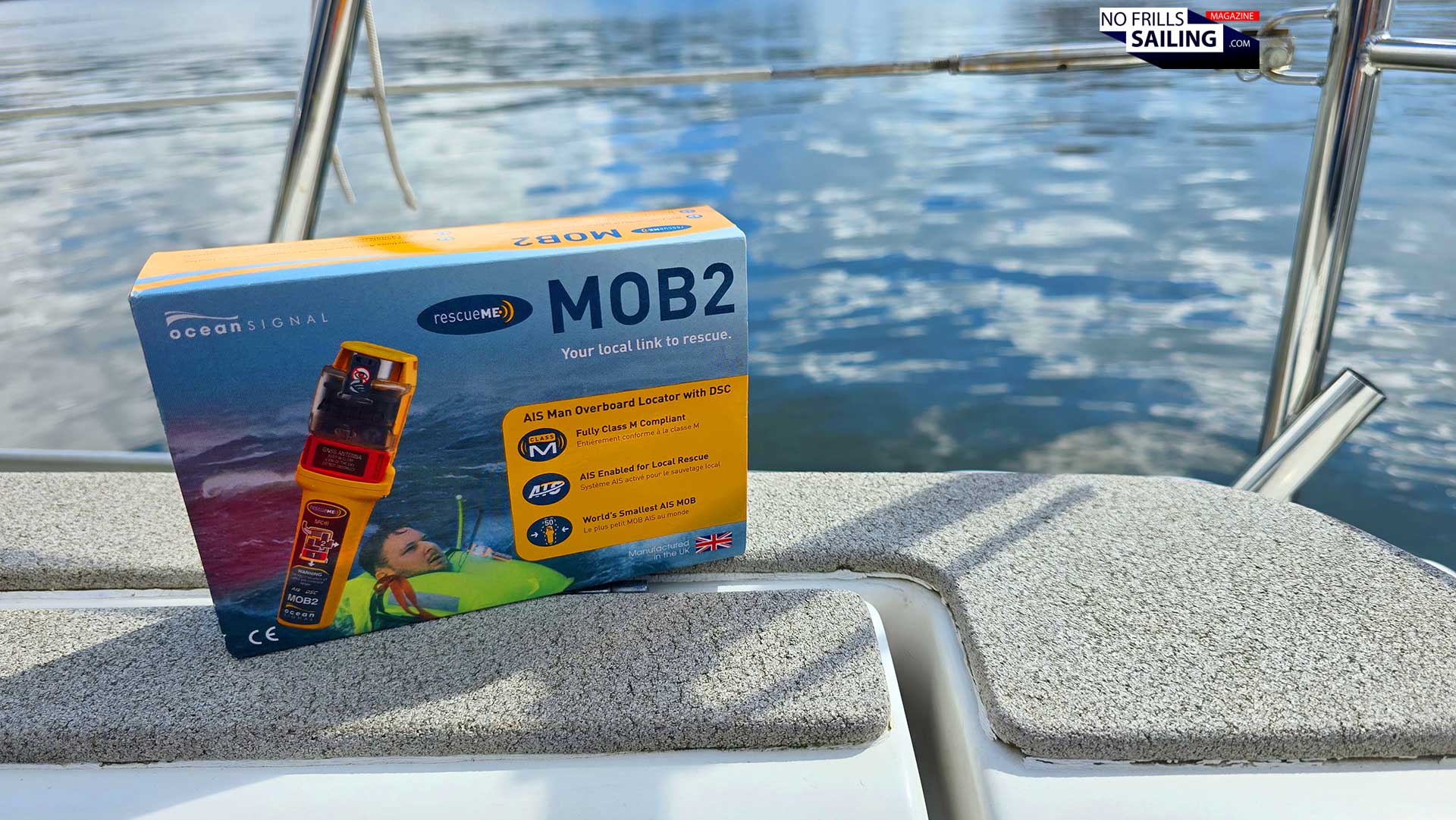
The MOB2 by Ocean Signal
Secondly, I will go for a Personal Locator Beacon – short termed “PLB”- having this fitted to my life jacket for sure! Because, surviving a MOB-situation and return to the water surface even when injured or unconscious is one thing. Shortening the time for the rescue and making it possible to locate me in the vastness of the ocean is a major, major upgrade in this matter. PLBs have become so small-sized, so convenient and also budget-wise attractive that hardly any skipper might find an excuse not to get one. This week I visited my friend Nils at Blue Yachting in Bremen – Allures & Garcia dealer – and Gotthardt in Bremen – marine specialist and wholesaler – to take a thorough look at two models which I think are perfect for this job. Let´s take a closer look at these products!
How a modern Personal Locator Beacon (PLB) works
Basically, there are two different variants. One, the “classic” gadget, if you will, that is essentially a small-sized EPIRB. Once triggered in a man overboard-event, it will utilize the same COSPAS-SARSAT satellite-based 406 MHz-rescue chain we all know of in relation with the EPIRB. GPS data in connection with your boat´s MMSI will be transmitted to the nearest MRCC (Maritime Rescue Center) which will then coordinate the on-scene rescue. A pretty huge undertaking, a fascinating network that has saved hundreds of seafarer´s souls so far. Those PLBs are still in use and are suggested for sailors and crews in really remote off-grid regions.
Small, lightweight, very convenient: MOB2
For “ordinary” sailors like us, coastal skippers, offshore sailing in or along the major trade routes, new PLBs are now available. These do not trigger the COSPAS-SARSAT-chain. Called “AIS-PLB” such a small gadget is utilizing VHF frequency, 121,5 MHz. Just like your active class-B AIS system, these PLBs have a digital transmitter that will send a rescue-signal all along with your GPS-position and an MMSI. This is the one I´d suggest to “normal” sailors like us. Why? Because those AIS-based Personal Locator Beacons have the advantage that not just the MRCC sees the MOB´s position, but all ships nearby with an AIS-target display (which is essentially standard for all modern electronic chart plotters right now). Including your own boat!
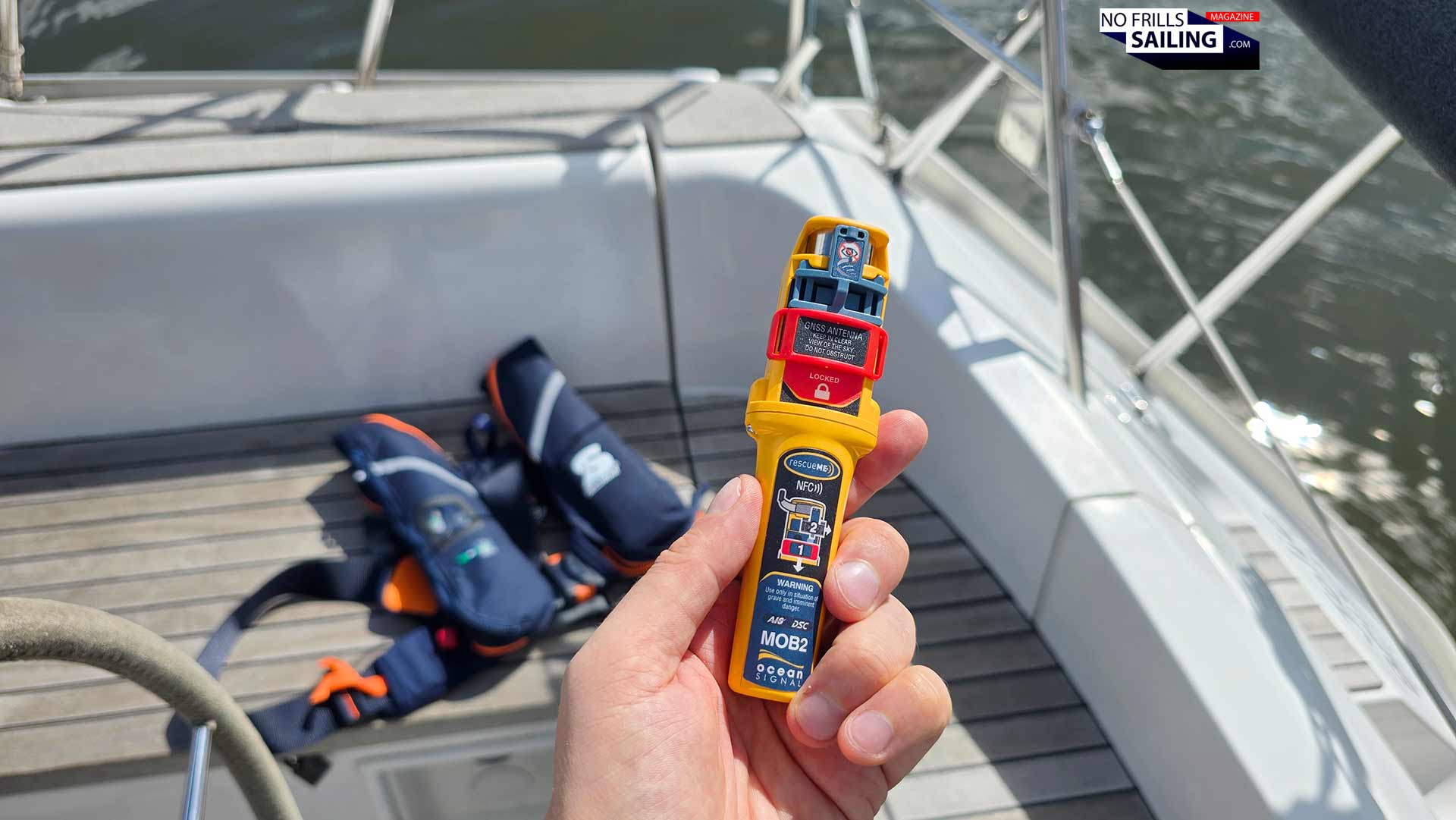
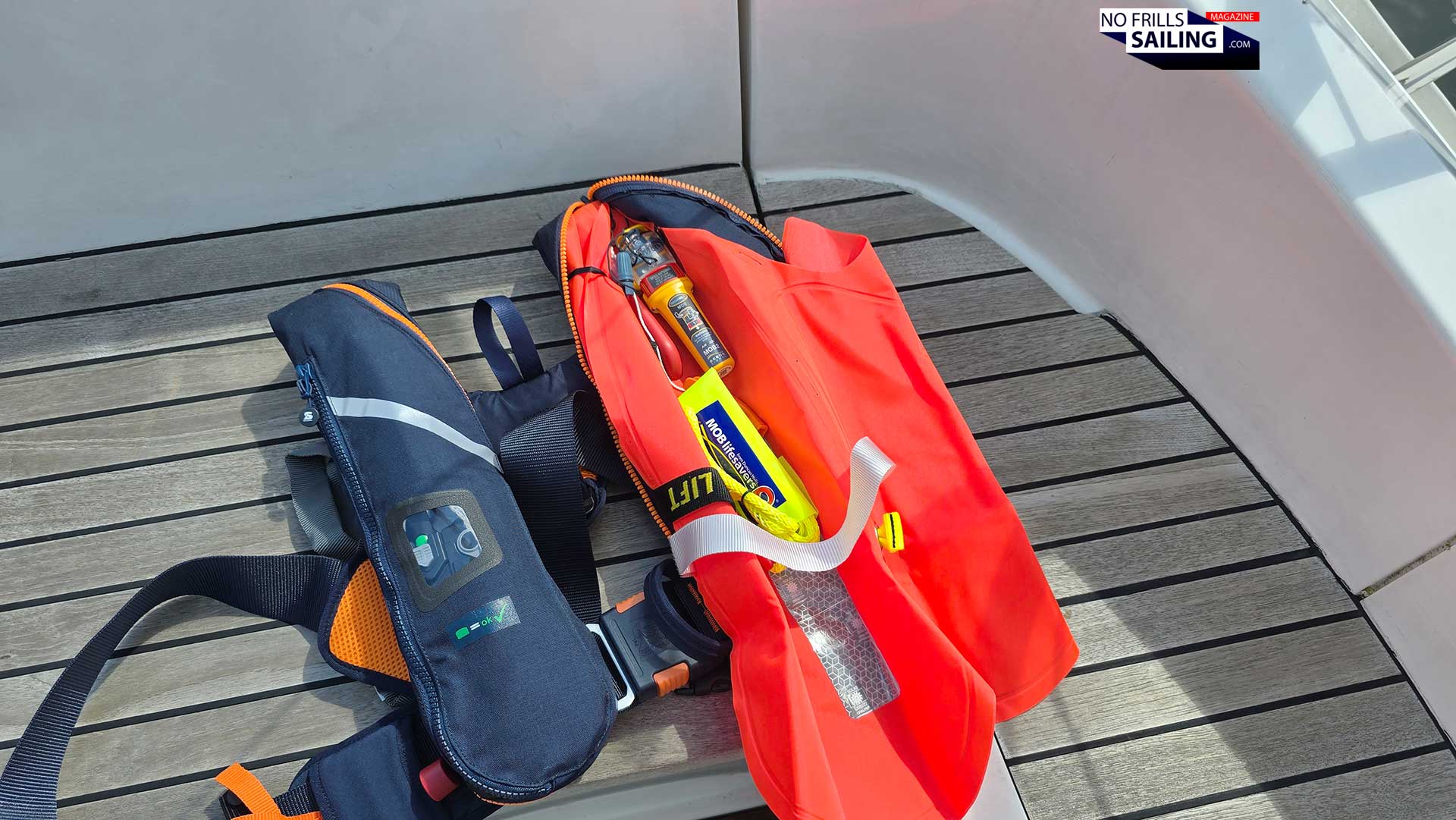
It´s fitted inside the life-jacket
This is a nightmare scenario (and it does happen this way quite often in realiy): You have the night watch and for some reason you go overboard. As the boat sails on autopilot and everything is fine, it takes minutes, sometimes hours, for anyone of your crew members (who are sleeping down under deck) to notice that you are gone. Hitting the MOB-button doesn´t make any sense now: Every minute your MOB goes unnoticed, your position becomes almost impossible to dead-reckoned. The PLB will trigger your SOS instantly and mark your live position on all of the chart plotters which are in range. Alarms will go off, people will notice quite quickly! This is the fastest and – from my point of view – most promising technique to get others to help you: Knowing where you are, finding you even in the darkest night, in fog or in storms will be much, much easier!
AIS PLBs – small, convenient and effective
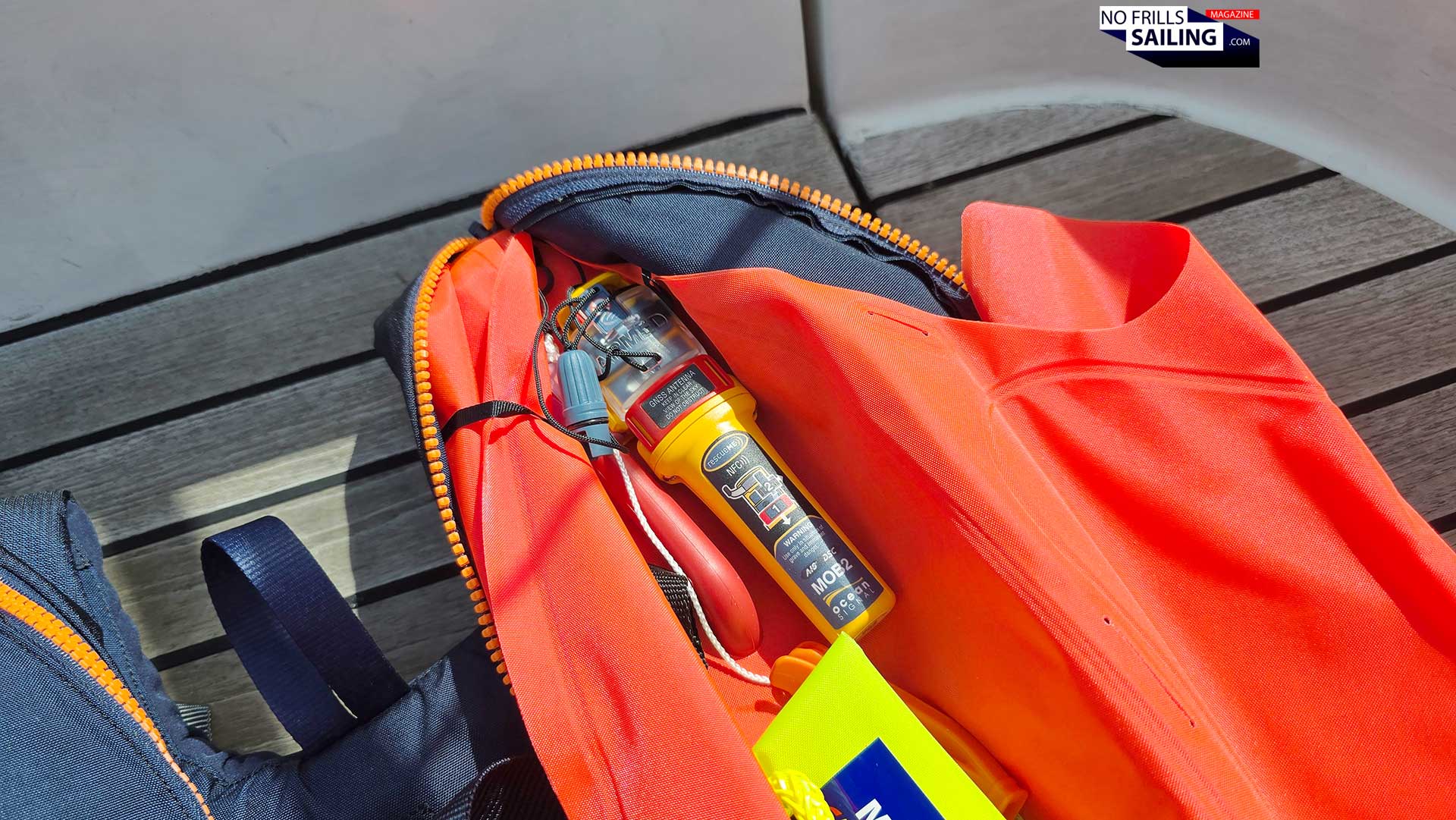
One of the PLBs I took a look at is the MOB2 by Ocean Signal. This one is very neat, small-sized and has a miniscule weight. It triggers AIS-signals via DSC and has a GPS-device incorporated as well. The gadget is class M compliant of course and may be utilized both in Europe and the adopting regions. An integrated LED-strobe will indicate your position visually. The device is fitted to the uninflated floating body of the life jacket. It is triggered when the jacket inflates mechanically, but it can also activated by hand.
A closer look …
Nice thing about the MOB2 is that you can program the device yourself: Utilizing NFC, the device may take on your personal MMSI, but via smartphone app you can check battery status, initiate self-tests and see the test-history of the device. Current price for the MOB2 is around 400 Euros exVAT, which I find is absolutely reasonable facing the huge increase of active safety measures! I would say that at least the active watch up on deck should carry one PLB, so that you don´t have to spend too much money for all crew-members. But there´s one catch, though …
The crux with the trigger
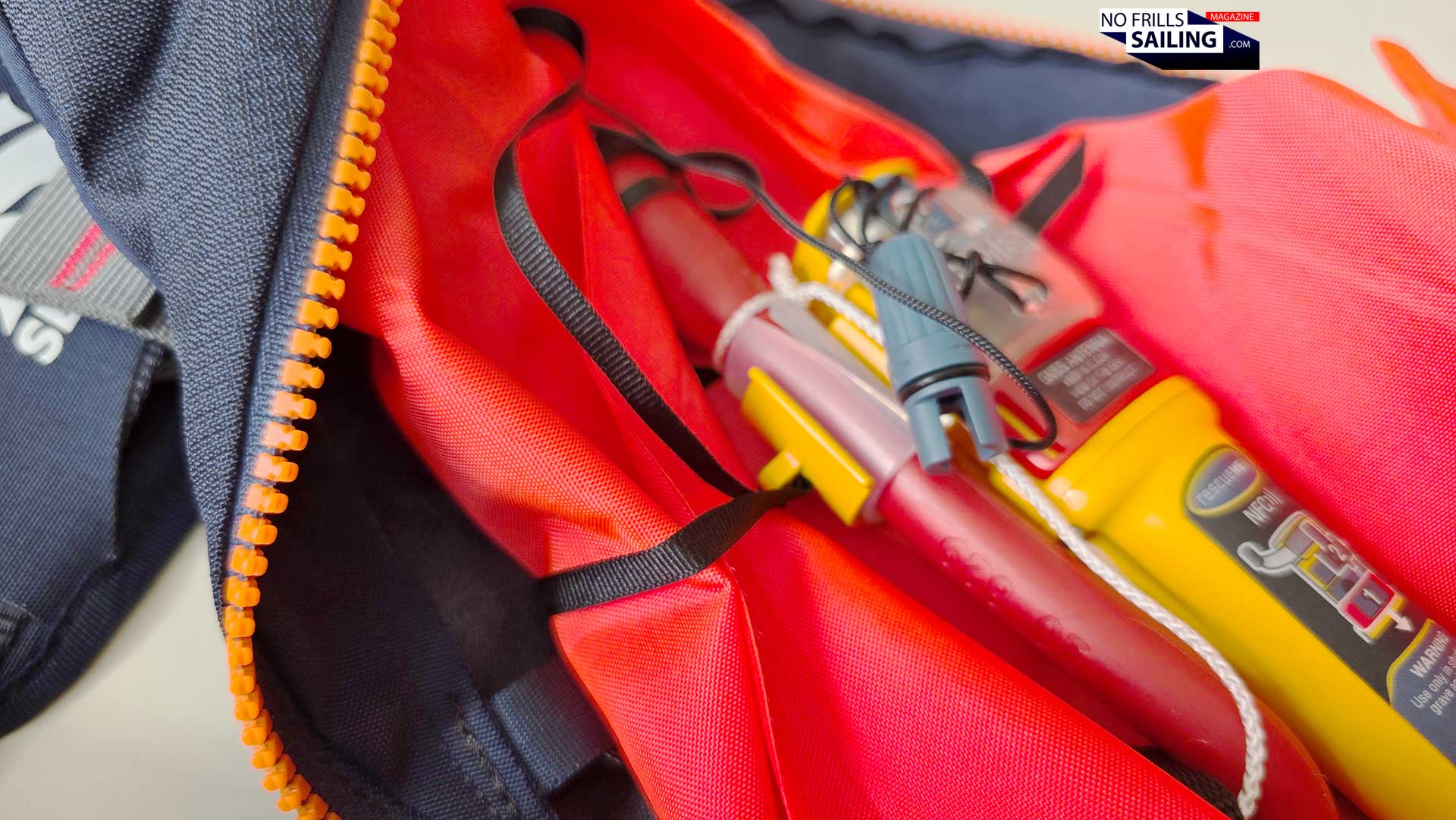
Most PLBs are activated by mechanical means. Look closely to the photograph above and below: You may see that there is a black lashing attached to the PLB which goes around the floating device of the life jacket. Imagine falling overboard: The life jacket inflates and so does the size of the floating device. It will kind of force open the loop around it, making the little lashing pull out the safety pin of the PLB. This is the way it is activated. I must say, I personally don´t like this mechanism: First of all, you have to open the life-jacket and fumble around with the floating device. If not fitted correctly, too loose or too tight, the PLB won´t activate. Or worse, due to some unfortunate fiddling with the jacket, it gets triggered without a MOB even happening.
Notice the black lashing
Once activated, it can be stopped, no problem. And if in case of a man over board happening it does not activate, you can do it by pushing a button. Yet, what if your head´s got banged by the boom and you are unconscious? Who will pull the trigger for you now? You see, that´s a problem right there. MOB2 is a great thing, for sure, but I am not 100 percent sure that this is the right thing. So, let´s look at the other gadget. Because this one took care of the trigger-problem.
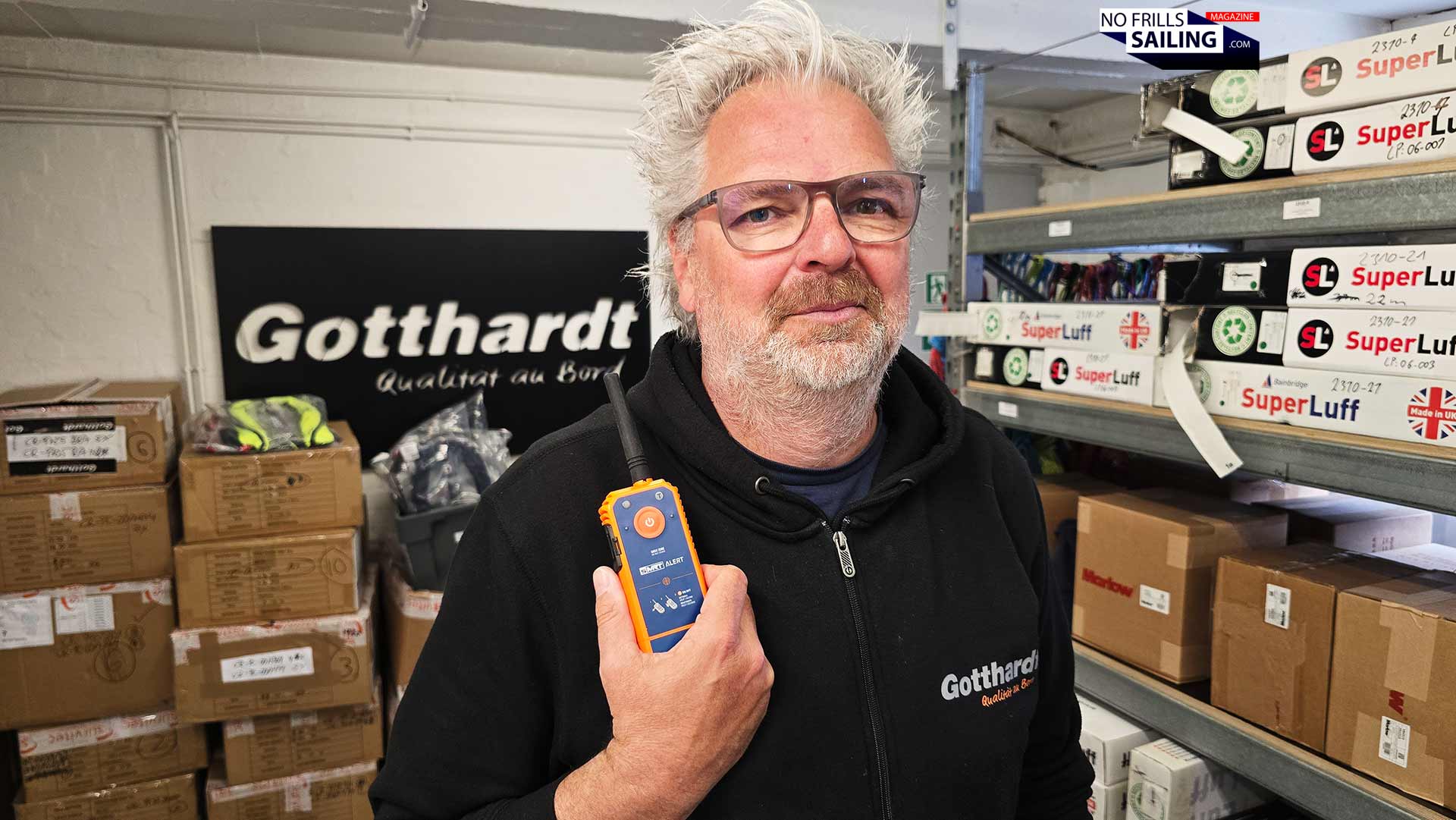
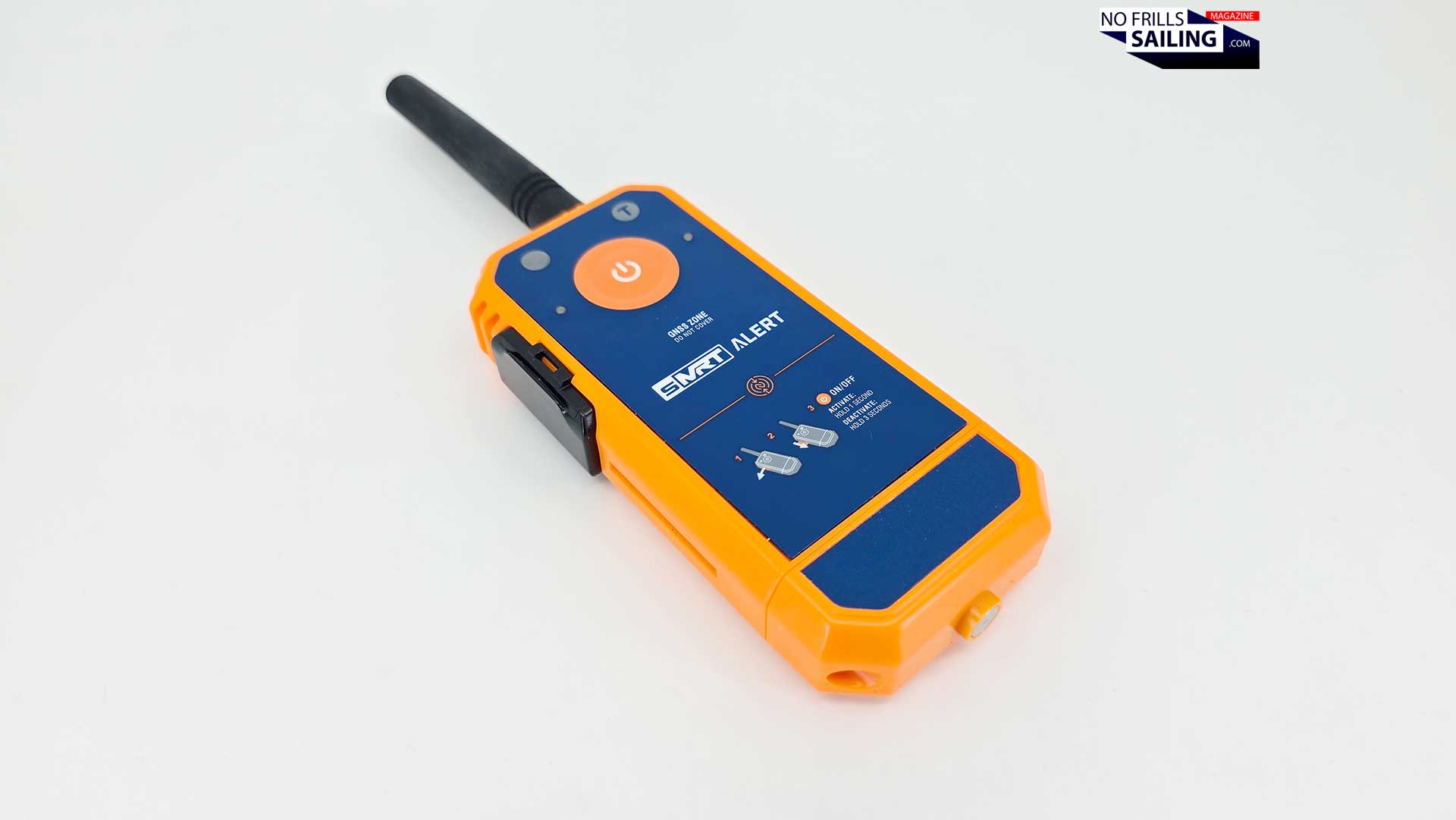
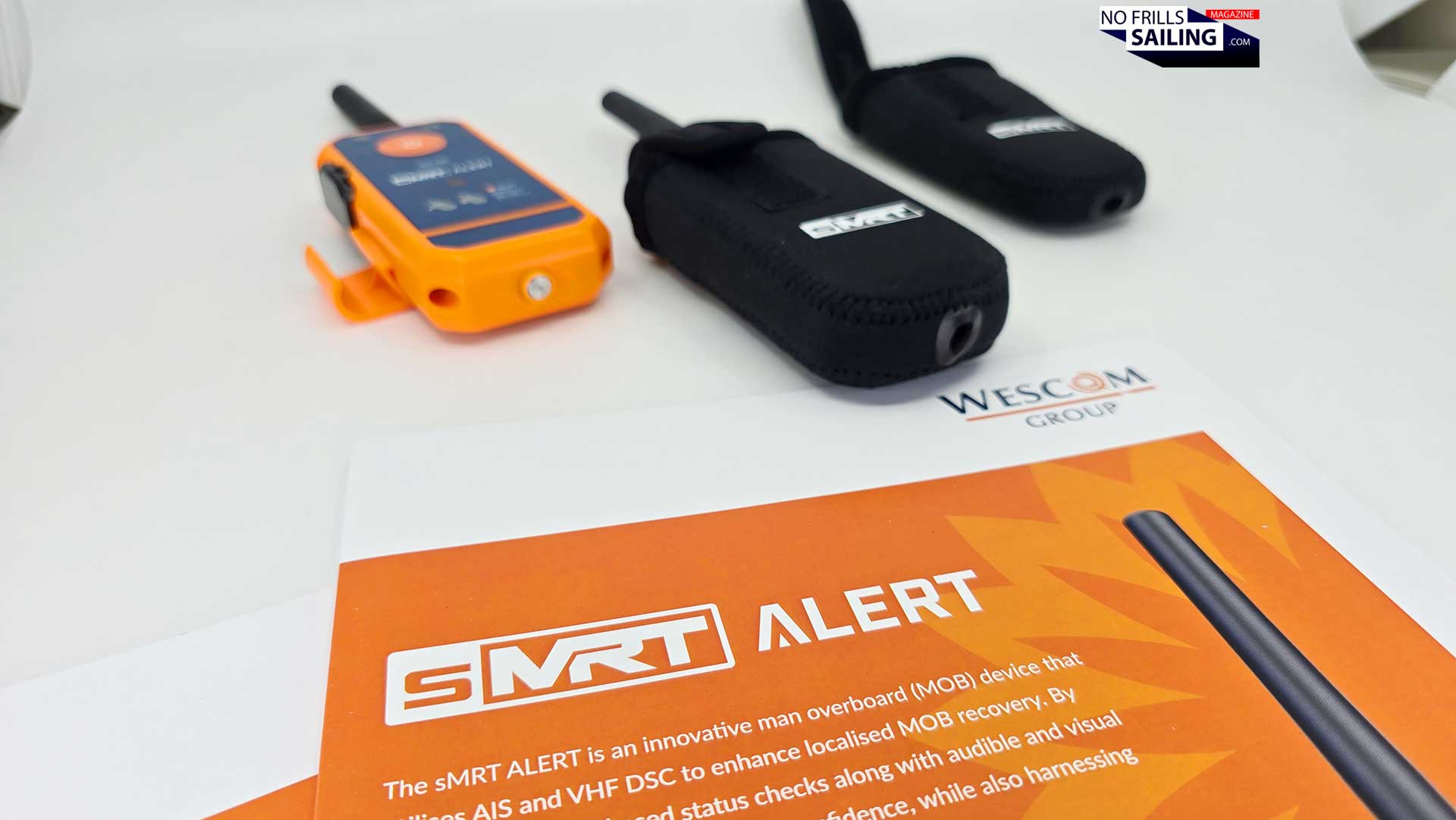
With the “SMRTAlert”, or “smart alert”, Wescom´s engineers took care of exactly this shortcoming. First of all, this device is triggered automatically by water contact. There is no fiddling with your floating device in your life jacket anymore, no need to rely on mechanics to work. After two seconds of water-contact, the sensor will activate the alarm and off it goes! Gotthardt´s safety equipment specialist Markus shows me how it works in the testing-room in the basement of their HQ in Hamburg. It´s really convenient.
Markus shows an alternative: SMRTAlert
The SMRTAlert-gadget is slightly bigger as the MOB2, it resembles a little lightweight walkie-talkie. Like the MOB2, the SMRTAlert will send on AIS-channels 1 and 2 (which is class M) and additionally on VHF DSC channel 70. It has a pre-programmed MMSI that indicates the MOB on the surrounding AIS-displays when triggered, additionally you can put in your own MMSI as well via NFC programming. Wescom says that the integrated Lithium battery won´t need a recharge within five years, which I find is a remarkable runtime! There are LED-strobes as well (30 Candela!) and it is rated IP68 waterproof up to 10 meters of depth.
Small & lightweight as well
Now comes the best part: As of today, the budget needed for a SMRTAlert-unit is a bit over 300 Euros exVAT! This is almost 25% cheaper than the Ocean Signal-gadget! Well, guys, there´s not a lot thinking needed for me to make a buying decision here! Automatic triggering via water (of course it also has the manual activation possibility), the long battery life (which is the same with MOB2, to be fair) and another very interesting feature of this product makes it number one choice for me personally.
The “free carry”-option: Nice feature!
I usually put on my own life jacket only when the weather gets shitty. This means, increase wind speeds with over 20 knots and/or wave heights. Those two usually come with much more rocking and violent motion of the boat and heeling: All of these are risk factors which increase the possibility of falling, stumbling and eventually going overboard. Secondly, I wear it during night time, of course. But here´s the thing: In nice weather, hot temperatures and “risk-free” sailing, I never wear it. Instead, I think of acquiring a kind of tackle to connect me via tether to the boat, a harness-only option. As I had painfully to acknowledge after Guo Chuan´s death – life lines can indeed break!
Here´s the trick!
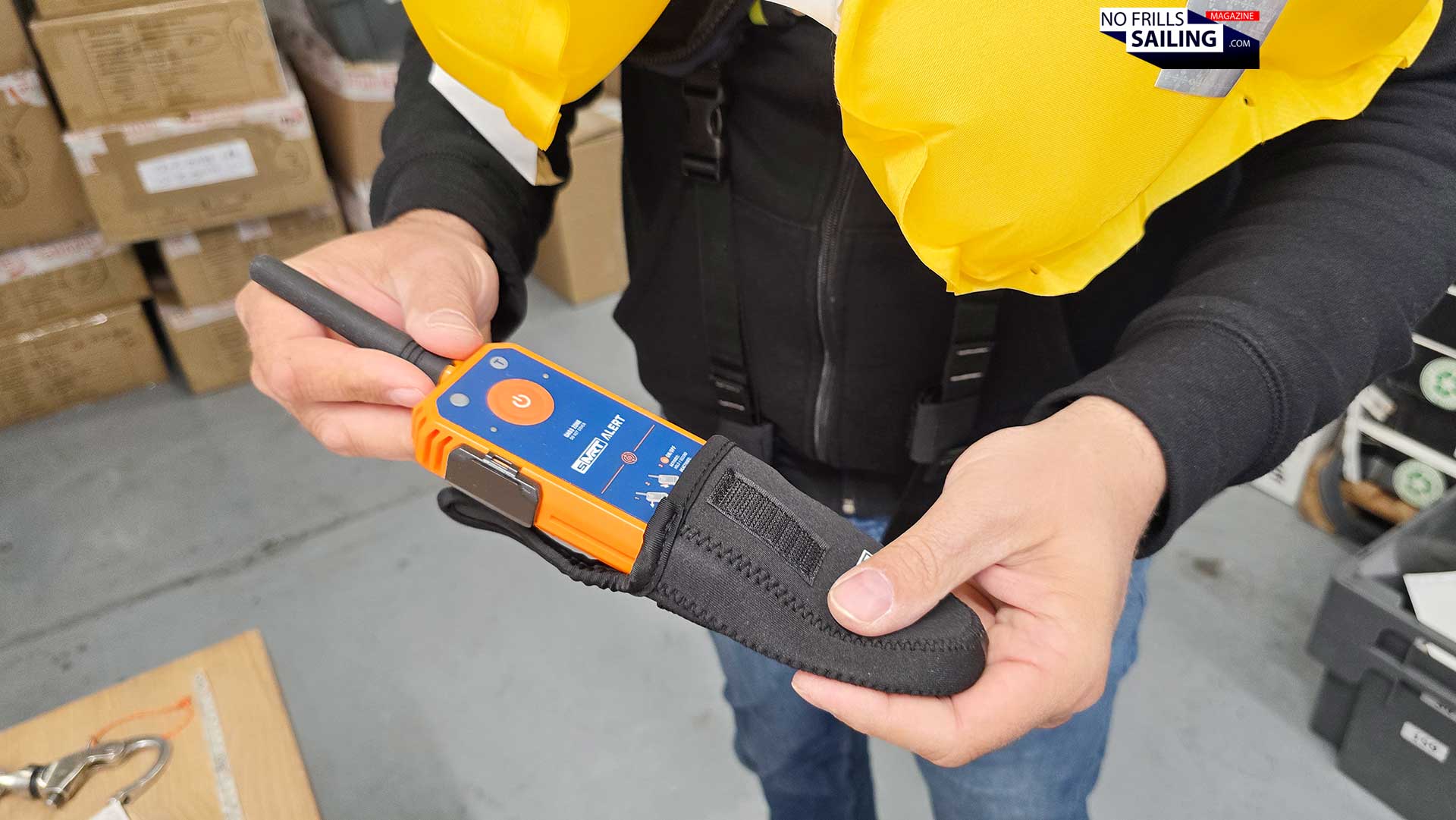
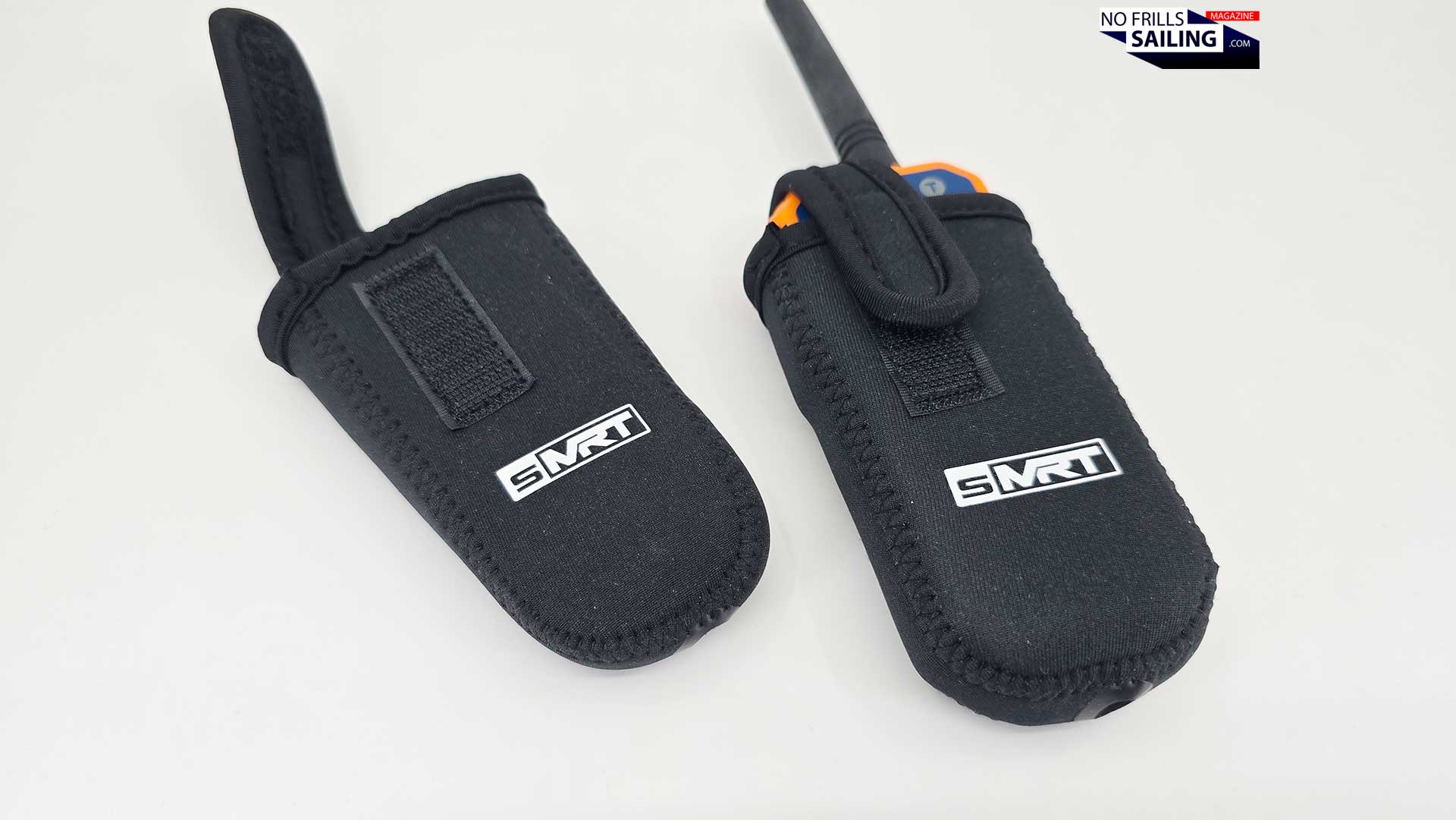
So I´d need a PLB that I can fit to my tackle-harness as well. As the MOB2 is kind of permanently fixed within the life jacket and due to its mechanical triggering device, it renders this product useless for this surplus application case. And this is where the SMRTAlert really scores well: Because it is not permanently interlooped with the floating device, I can take it off the life jacket, put it in a purpose made neoprene case and conveniently fit it everywhere I want!
So much more practical!
This is the ultimate feature for me! Now it is very easy to hand over the PLB when a new watch shift is entering up on deck during long-haul sailing and it is even possible to wear it on your belt or fitted to a tackle. It is this one add-on feature that really convinced me personally to order one of these. Apart from the nice 100 Euros bargain, which itself is the price for a high-grade lifebelt/harness (and a Hamburger at the marina´s restaurant). So, what do you think?
Effectively increasing finding and rescuing an overboard person
For me, fitting a PLB – whatever product or brand you prefer, this is irrelevant – to your life jacket will increase the chance of finding you our a member of your crew or family in a case of emergency and man over board manifold. Seeing the AIS-blip on the chart plotter´s display, regularly updated by a life position, is much more effective than hitting a MOB-button and second guessing where the person might be. Finding your way back to the MOB will thus be much faster, giving both you as the rescuer as the rescued person more time and energy for the hardest part: Getting him back aboard the ship!
Small & lightweight as well
I will fit my SMRTAlert just as it pleases me either to my life jacket, as demonstrated by Markus in the picture above, when sailing through the night, or to my safety-harness and even my shorts´ belt when sailing during daytime and in warm, nice weather. Of course, when there is a new shift of watch relieving me from my duty, I´ll just hand over the thing and that´s it! Perfect! As I wrote at the start of this article, if you think of maybe getting one yourself: Sailing in the remotest regions where there is hardly any chance for other ships within VHF range (which is at sea level transmitting some five nautical miles) would require the “old school” EPIRB-PLBs, utilizing COSPAS-SARSAT.
Advertisement
Why the life-jacket + PLB-combo should be your offshore standard
There is simply no reason to argue against having such a device as standard equipment fitted to your life jacket! Let it be 500 Euros or Dollars maximum, it´s money well spent. Investing in your own, your family´s and your guest´s safety is a good decision that speaks for your level of attention and good seamanship. Having heard dozens of tragic stories about senseless loss of life at sea, this is surely the one big thing that must never happen on your yacht: Injuring or – god forbid – the death of a fellow crew member. Because you saved a couple of hundred Euros … I could never forgive myself!
Which one do you go for?
So, no matter for which device you opt, I suggest you contact your local chandlery, safety equipment specialist or renowned sailing school to do your own research. With a well-informed mature buying decision and this relatively limited amount of budget needed, you can indeed increase the level of both active and passive safety aboard your yacht manifold. Thanks to Nils and Markus for showing me the products and our vivid, fruitful discussions!
What do you think of PLBs? Do you already have one or more for your boat? Do you have any practical expertise or experiences with the everyday use of a personal locator beacon? I am looking forward to your constructive comments. And if you want to not miss any new of the 10 monthly articles published on this sailing blog, make sure you subscribe to the monthly newsletter right away! Be safe out there – and have a good time sailing with a good feeling.
Important articles about MOB and rescue, which might be of interest for you: