As the third most interesting sailboat brought to you back from Cannes Yachting Festival 2026 I´ve decided to as well choose a rather unusual yacht. Not the brand – Hallberg-Rassy is a frequent and loyal exhibitor at the Cote d´Azur – but the size. I found it rather telling and revealing that the Swedes brought a mid-size cruiser to the Croisette. Their latest addition to the fleet, the all-new Hallberg-Rassy 370. Why is this so interesting? Well, it shows that even here were the Haute Volée retains one of their last resorts in of Europe, a new modesty has arrived.
We live in very challenging times. Economically, politically and from a societal standpoint, Europe struggles to define it´s place and role in a new multipolar world. This goes for any branch, but those new rifts and shifts emerge undeniably impactful and awe-inspiring within the boating industry. I´ve written about that many times often and I think I will have to continue to do so.
So, how´s Hallberg-Rassy coping?
“Interesting” in the sense that I, partially as an observer, partially as a customer and partially as well as a professional supplier myself (though a rather small one), can take a look at these changes from many different perspectives. I find it most interesting to watch how the different players of the industry react to these profound challenges. How they try to solve short-term problems and, much more revealing, how they try to give an answer to those big, big questions and hopefully secure their share of the cake for a mid- and long-term perspective.
Interesting, how different brands react to the current market situation
Advertisement
I think, looking an boats nowadays cannot take place without having these things in mind. Of course, I could easily do my standard walkthough of every new yacht I see and explain the boats from stern to bow, but I think this would only be half as interesting without at least trying to paint a broader picture. I mean, Magnus Rassy could have brought just one yacht alone – the impressive Hallberg-Rassy 57 – and this would have been just as fine. Cannes is indeed the perfect location to show your flagships. But he didn´t.
An unusually “small” boat at Cannes …
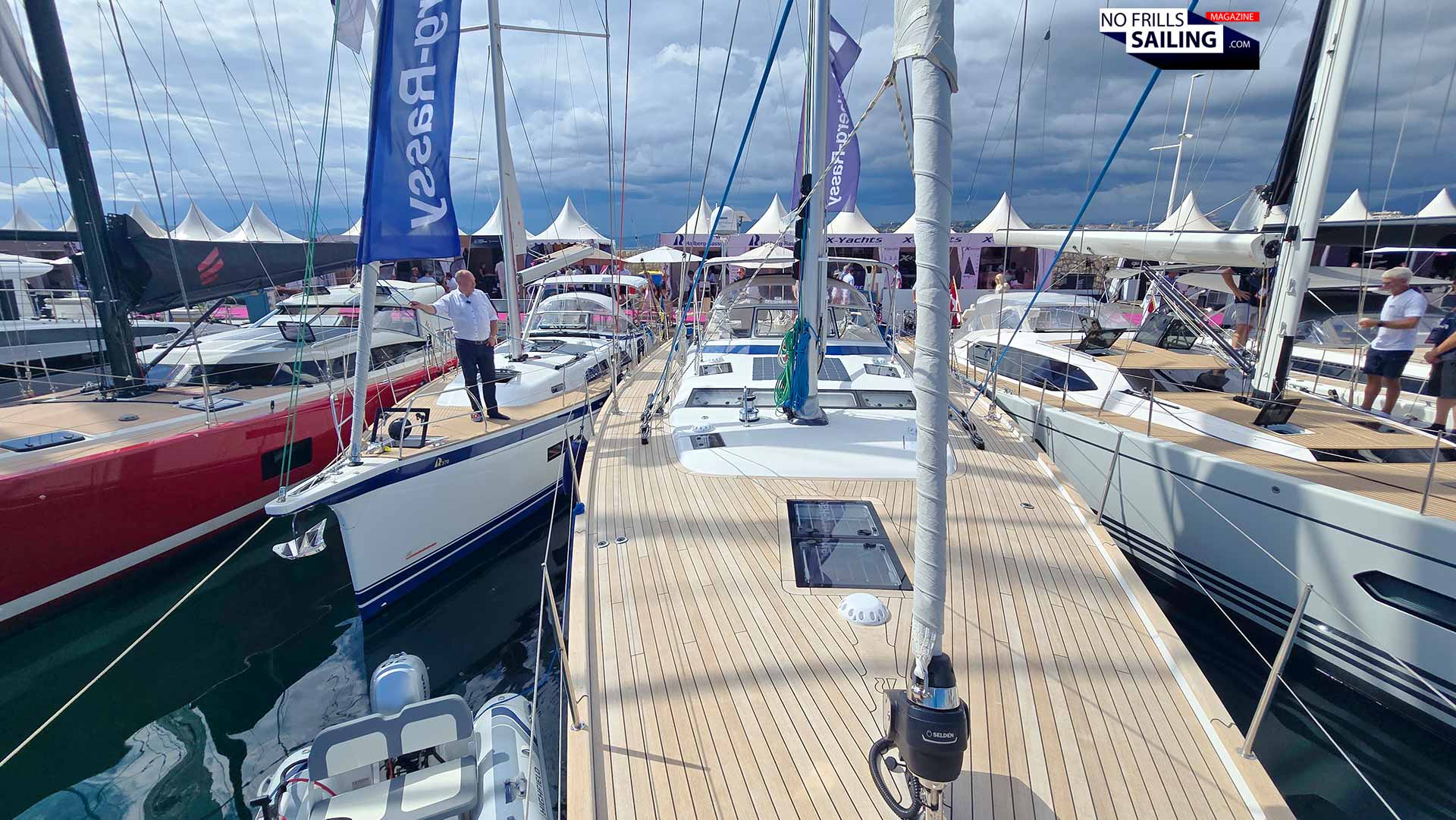
Almost as sweet as a baby next to her mother, the “tiny” Hallberg-Rassy could have easily been overlooked. Although even Hallberg-Rassy boats tend to become wider in the stern sections adhering to the overall trend of having more beamier yachts, but with just 3.75 meters width, she indeed was one of the smallest exhibits of Cannes Yachting Festival. So what´s the point in showing such a small boat here at the Croisette? Magnus Rassy for sure does not make decisions just out of nowhere or fun – especially if they cost a lot of money.
I think this is brilliant!
I haven´t asked him about this in particular – now that I am writing this I regret it! – but I assume he did make this choice because small- or mid-sized yachts do matter again for shipyards! This is a new thing. During the past two decades, up to the profoundly changing cataclysm of Covid, small size boats were considered the “necessary evil”, a must-have for shipyards. They´ve had those in their portfolio because, well, because they had to. But margins for smaller yachts are considerably smaller than those of the big units. The price war, both with end-customers and also with the competitors, was most fiercly fought down there at the small end of the product range. So, most efforts, most quality, most emphasis was naturally given onto the large units. But that has changed. Even for sub ten meter yachts the average Joe now needs 200 k easily.
Magnus at the sharp end
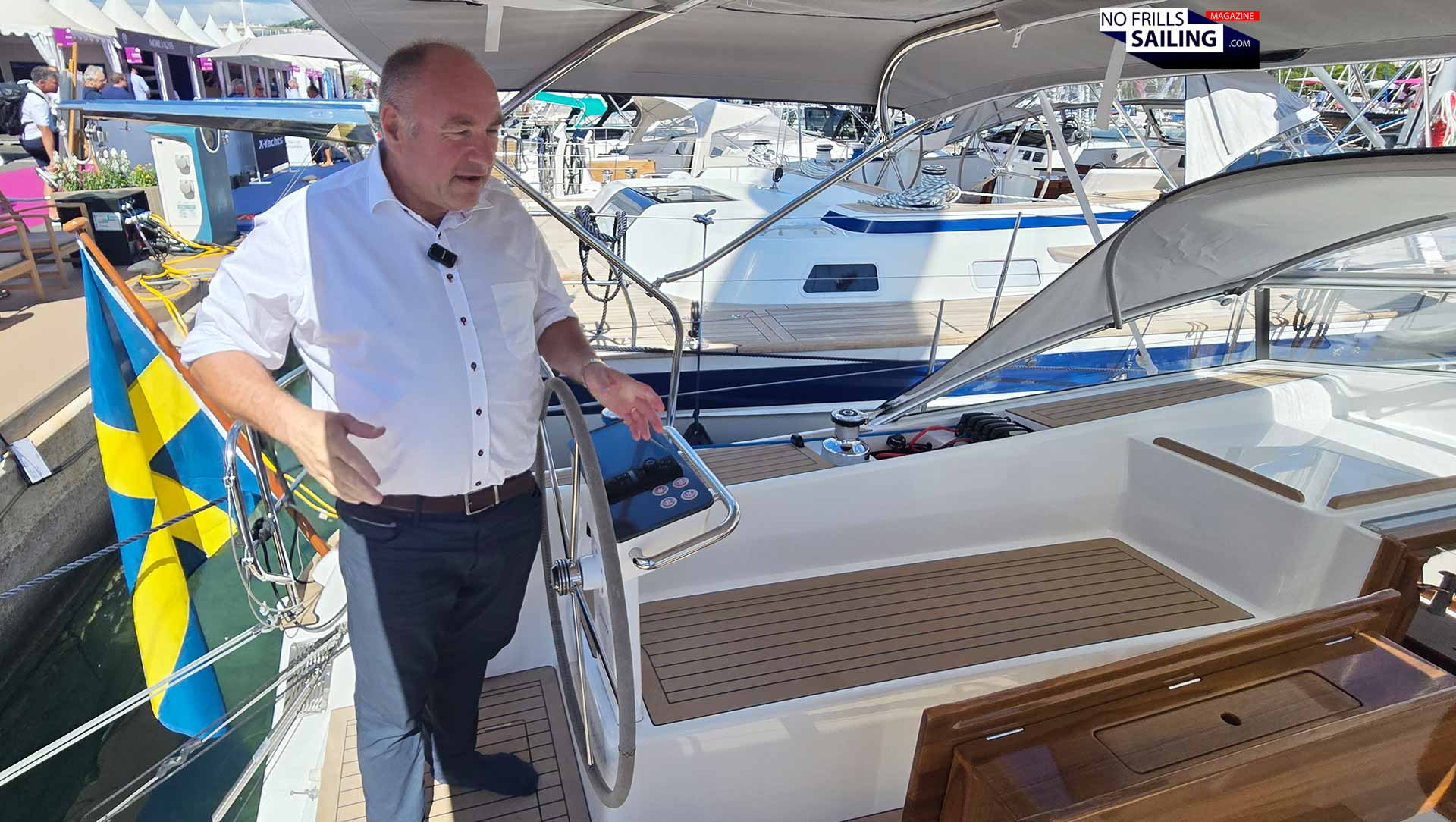
So, is it possible to earn some better money now even with smaller units? Maybe. One thing, I believe, is true as well: People who are now willing to spend their fortunes on boats – even smaller sized yachts – demand much more quality! According to the principle: “If I have to pay such high prices, I want the real thing!” So here we are: Magnus Rassy happily agreed to take me on a tour through his new 37-footer, and I will take you with me. Magnus is a phenomenon. There are less than a handful shipyard owners around who take on the “burden” of boat shows, of boat tours. Magnus is a prime example of a family business owner.
Magnus Rassy insists on presenting his new boats himself
He is at the sharp end, always was. Maybe his strategy to sell (or rather, to present) boats by himself has not been developed just to counteract the current hard times. Since I´ve been into sailing, I watched Magnus on his boats. Following the boat show-circus, making full eight hour shifts, tirelessly explaining and showing. And not only that: He is really invested into his product. He not just recites technical data. He talks about the boats as if they were his kids. This unique combination of aura, credibility and also this sympathetic, real and customer-focus approach without any perimeter is the best sales strategy you can have, I think. More so in times like this. There are not very many people in the business doing this so consistent.
“She sails like a goddess” – aboard the new Hallberg-Rassy 370
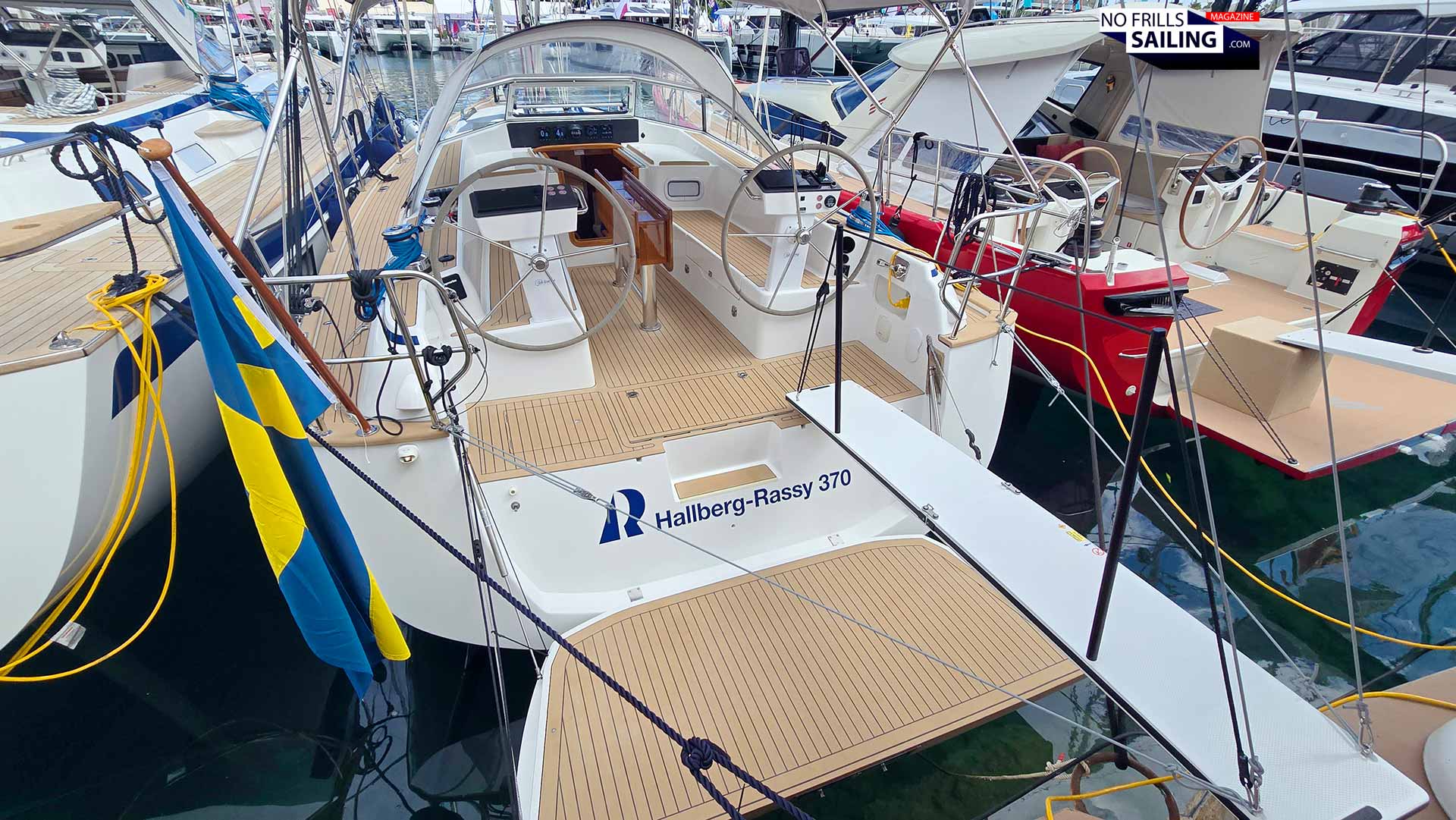
I board the new Hallberg-Rassy 370 via the huge bathing platform. Magnus is a tall guy and so the pictures feel a bit out of proportion: This boat is much bigger than it appears on pictures, believe me. Hallberg-Rassy yachts are a phenomenon. The biggest sailing magazine of Europe, the YACHT, does a huge annual survey. I don´t know for how many years, but for decades now Hallberg-Rassy thrones with a lot of headstart on top of the most beloved sailing yacht brand of Germany. She´s a dream yacht par excellence. Albeit, many other consider it “dated”.
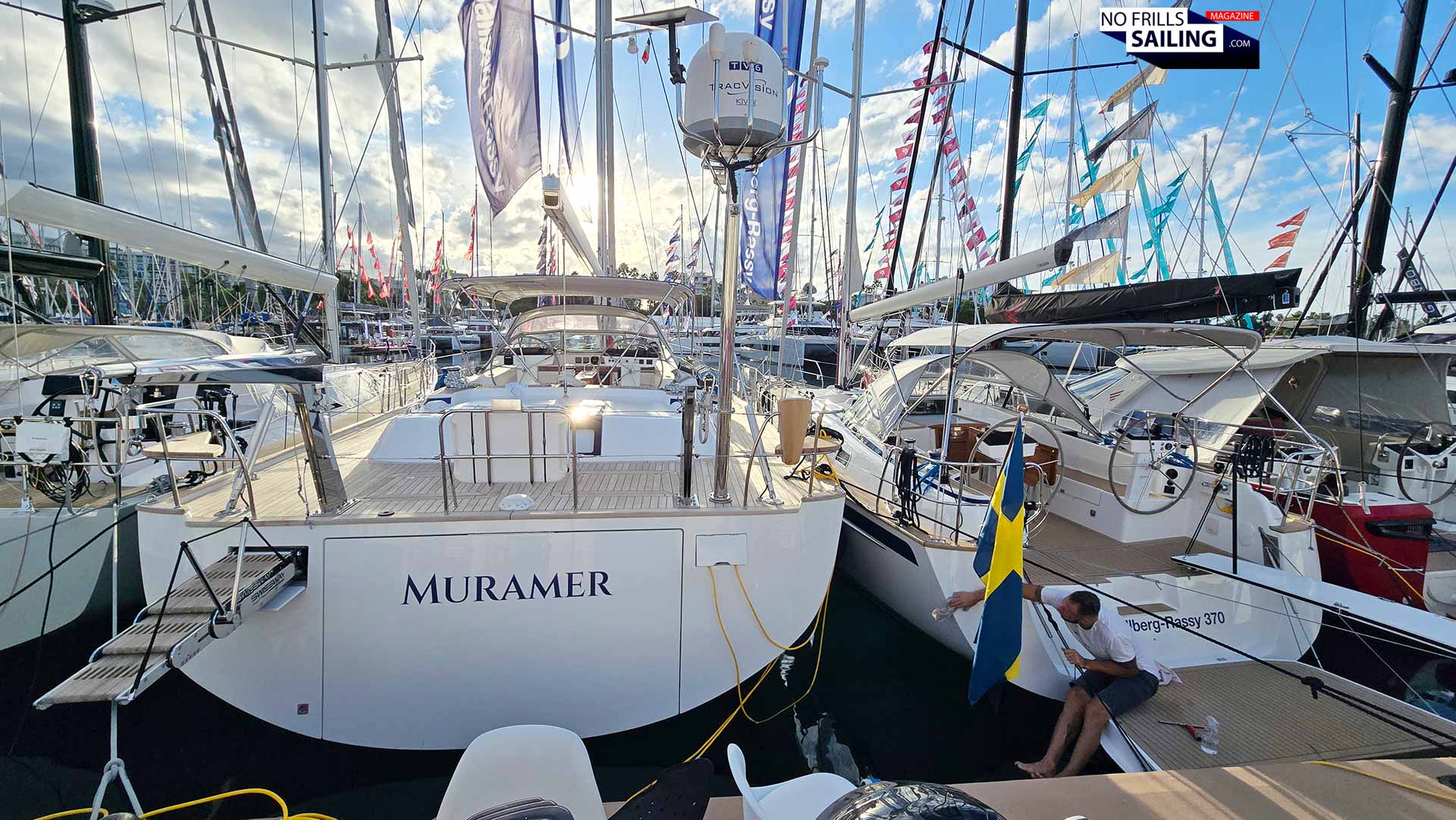
The large bathing platform
But I cannot see anything dated here. These boats retain what is proven in decades of sailing boats: Like the high coamings, the safe cockpit, the rigid windshield and other features. For the bigger yachts starting at 40 feet, Hallberg-Rassy features the center cockpit configuration, which is considerably smaller than aft cockpits, but offer the uncompromising luxury of large aft owner´s cabins. All series production companies have abandoned this layout long ago. Hallberg-Rassy sticks to it. On the other hand, Magnus is open for changes – if these make sense and won´t compromise the brand´s DNA all too much. I still remember the fuzz around his then-new 44 …
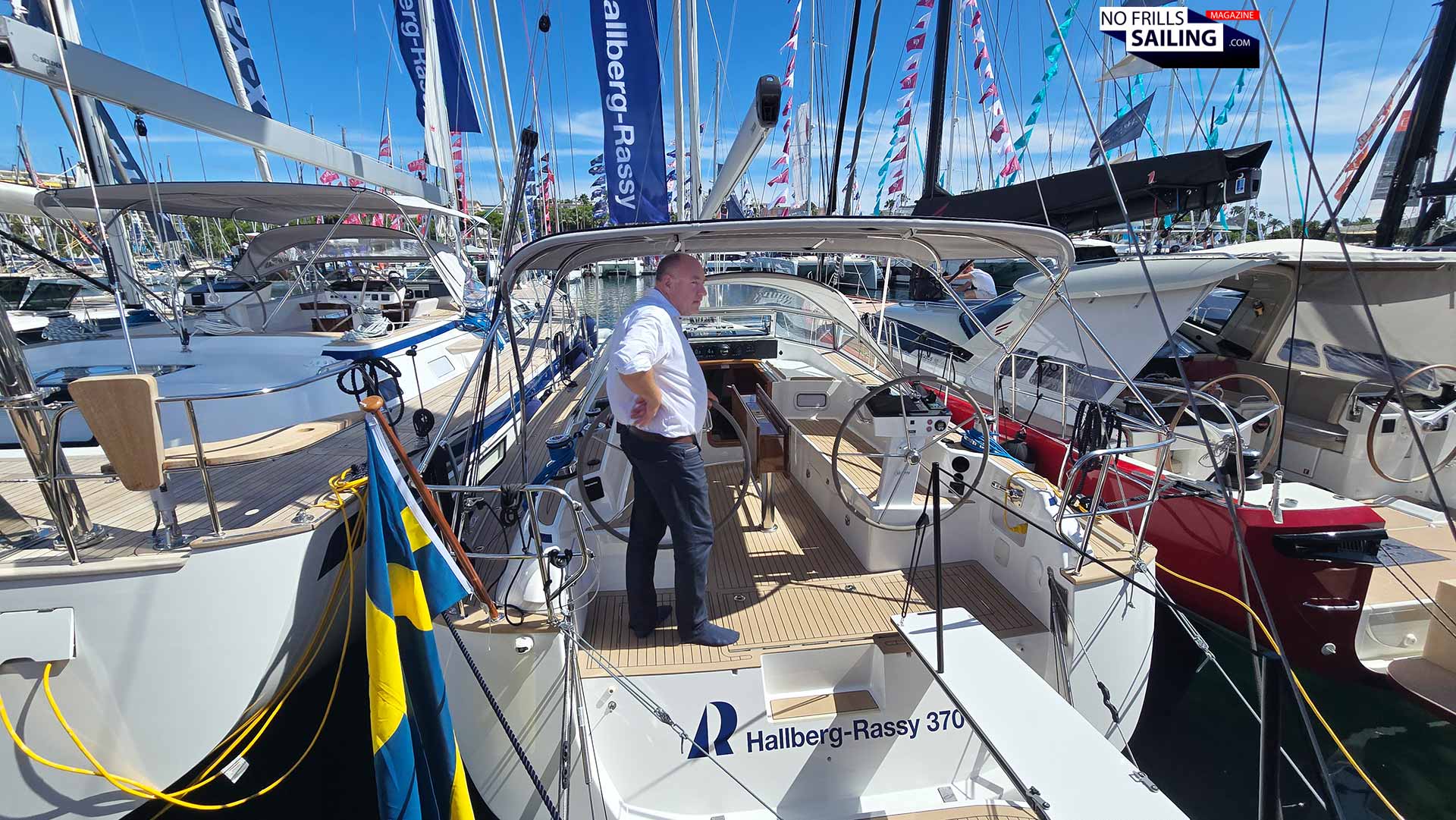
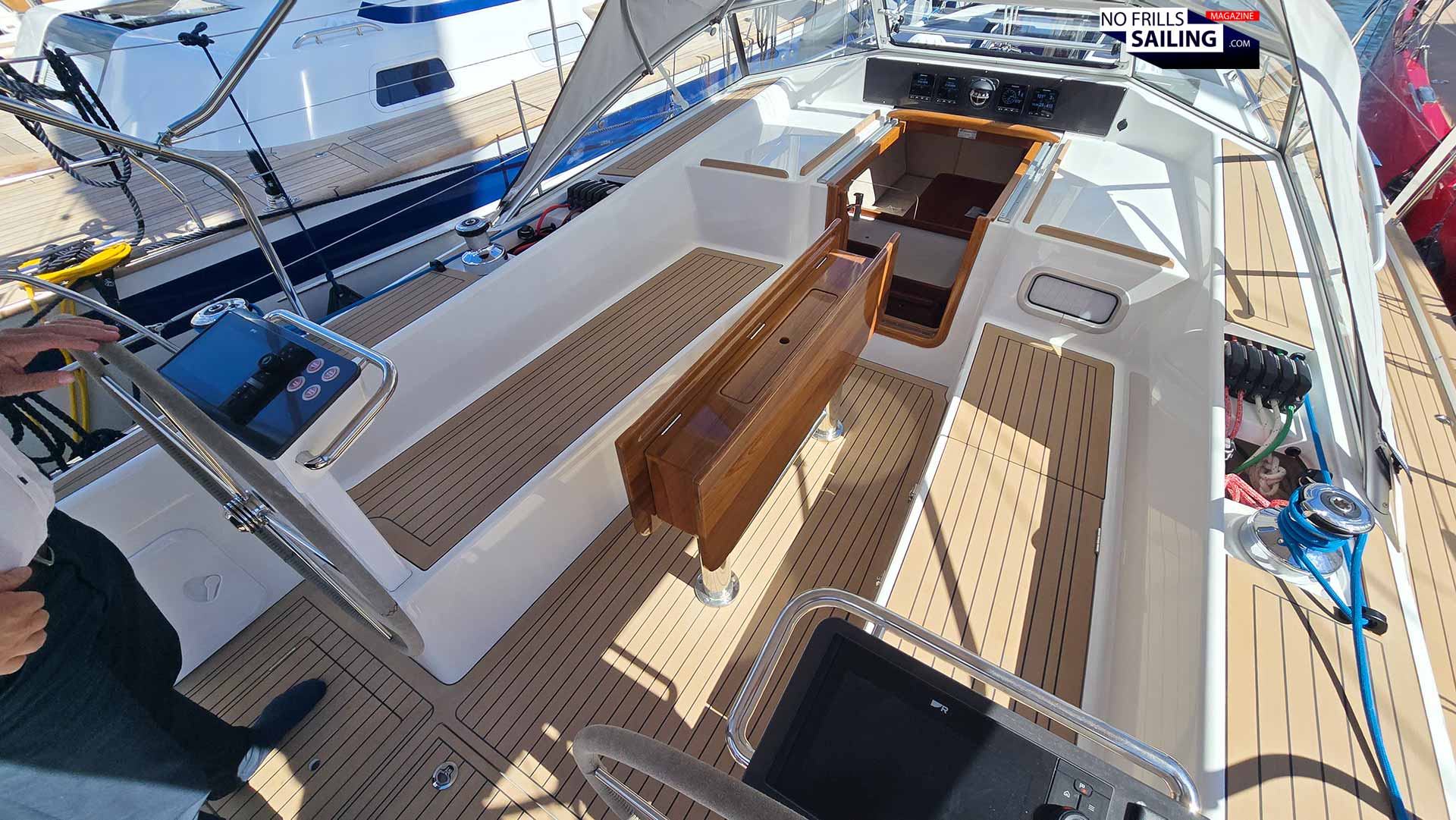
Explaining the cockpit
Very cautiously. Very gently and with utmost care Magnus, together with the brand´s decade long loyal principal designer, German Frers, applied course changes which made it possible to change the boat´s appearance, open them up a bit for current trends and also win over new customers. For example, the modern-day Hallberg-Rassy comes with wide stern sections. Double rudder configurations. Stuff that wasn´t even thinkable in the wildest dreams twenty years ago. But these changes are rather subtle. It´s still a Hallberg-Rassy.
The modern, latest iterations will surely remain their “classic -status” for comparable periods as their immortal predecessors. This is a walk on ice, of course. I have nothing but the greatest respect for the work of Magnus: Preserving the heritage of what his father Christoph and Harry Rassy had started and built up. But at the same time, readying the shipyard and its products for a new Century. For new customers. For new horizons.
A small sized yacht? By no means!
Maybe the message of Magnus here in Cannes was also a bit like this: “Calm down, guys! A boat with 12.13 meters length overall is by no means “a small boat”! I never forget when I met the first ever owner of my first ever boat, the beautiful Pelle Petterson designed King´s Cruiser 33. I´ve made an article about this: This guy, one of the upper ten percent of Hamburg´s ship broker elite of the old days, told me that this yacht at his time, 1975, was considered “big”. It was a dream yacht only a few could afford. Maybe one learning of the current high prices is a return to a new normal in boat sizes? 50-footers for average earners? Those time are gone …
Classic layout: Owner-couple!
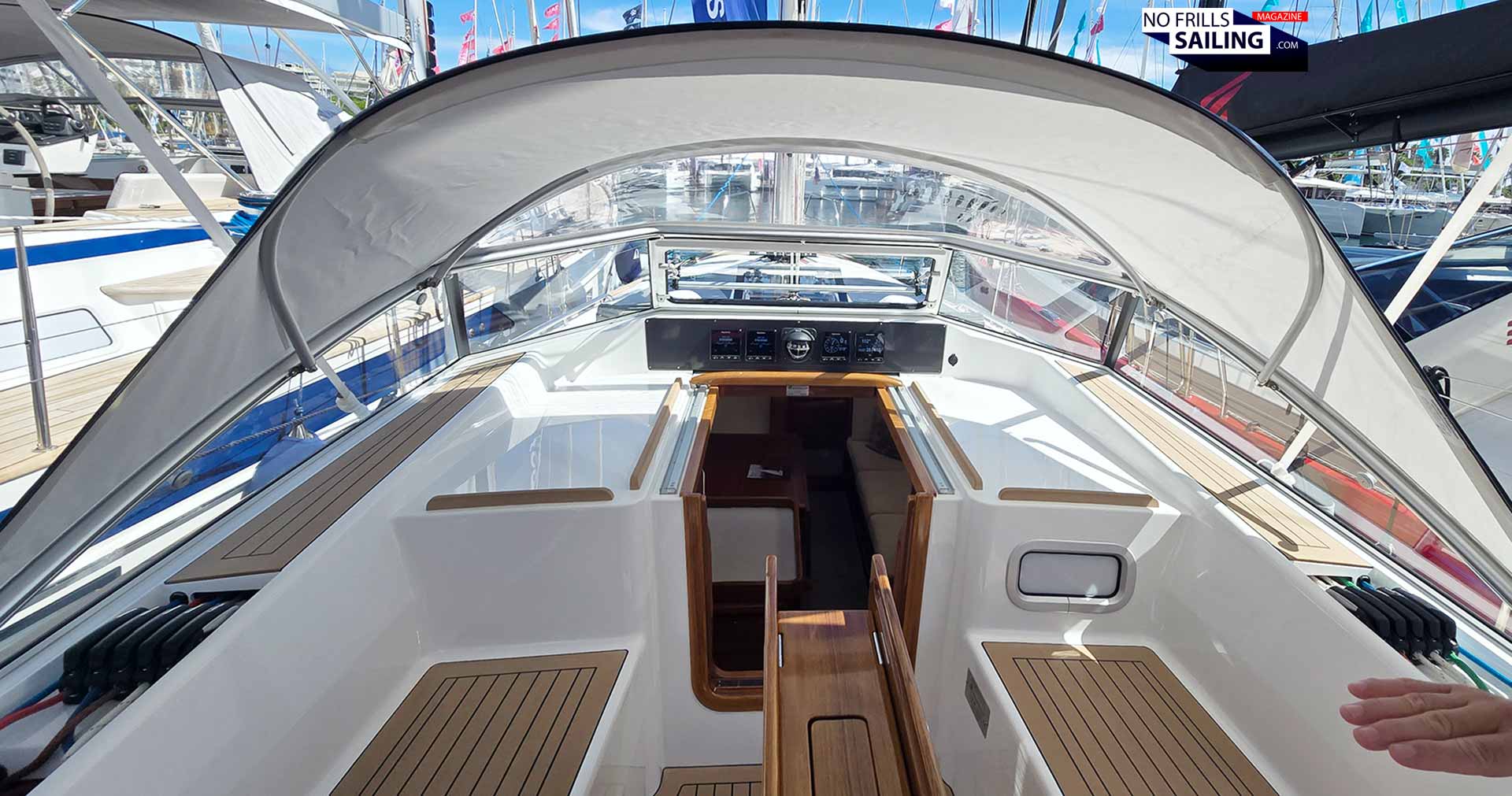
As for the Hallberg-Rassy 370, the cockpit is more than sufficient for the usual sailing couple. As this brand targets predominantly private owners (I know of no Hallberg-Rassy in the charter industry), the sailing couple is a good starting point. What do these two need? Two benches, a nice cockpit table and enough surplus space for the occasional guests, be it the kids flying in or the new acquaintances from the pontoon.
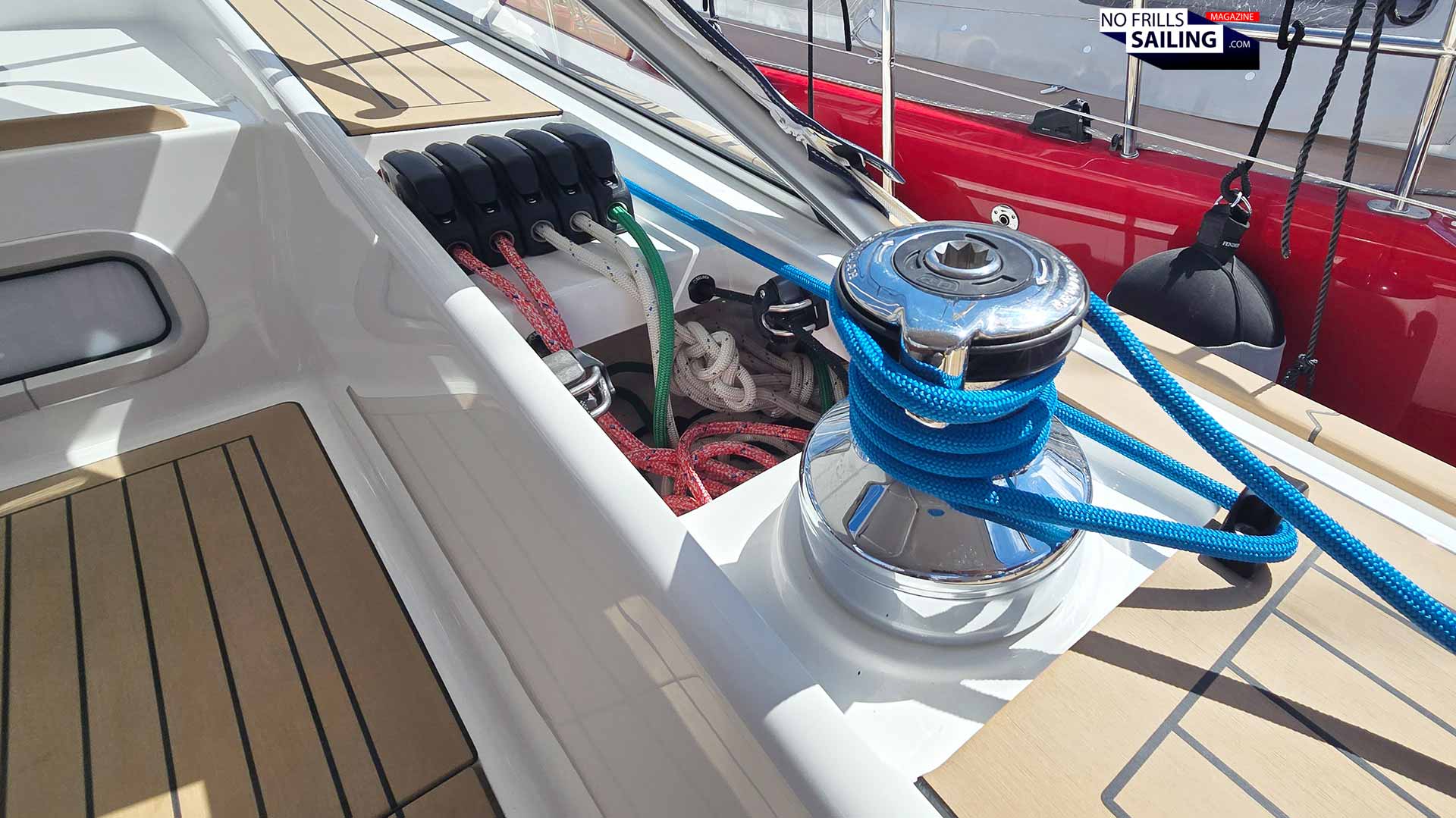
All lines are hidden
In this, the cockpit is designed not only to look nice, but also to make for comfortable, easy and safe sailing. The winch layout is adapted to owner´s sailing. Where other brands – especially the big series production companies – fancy the “everything to the stern!”-approach because the helmsman should handle the sails by himself (in charter there´s mostly only one aboard capable of doing so), it´s different here on the Hallberg-Rassy. Magnus assumes – and right so! – that he and she can sail. So the working winches are placed in the middle of the coamings. Another set of gennaker sheet winches is located right in front of the wheels far aft. It´s a layout for active sailors.
Push button sailing, of course!
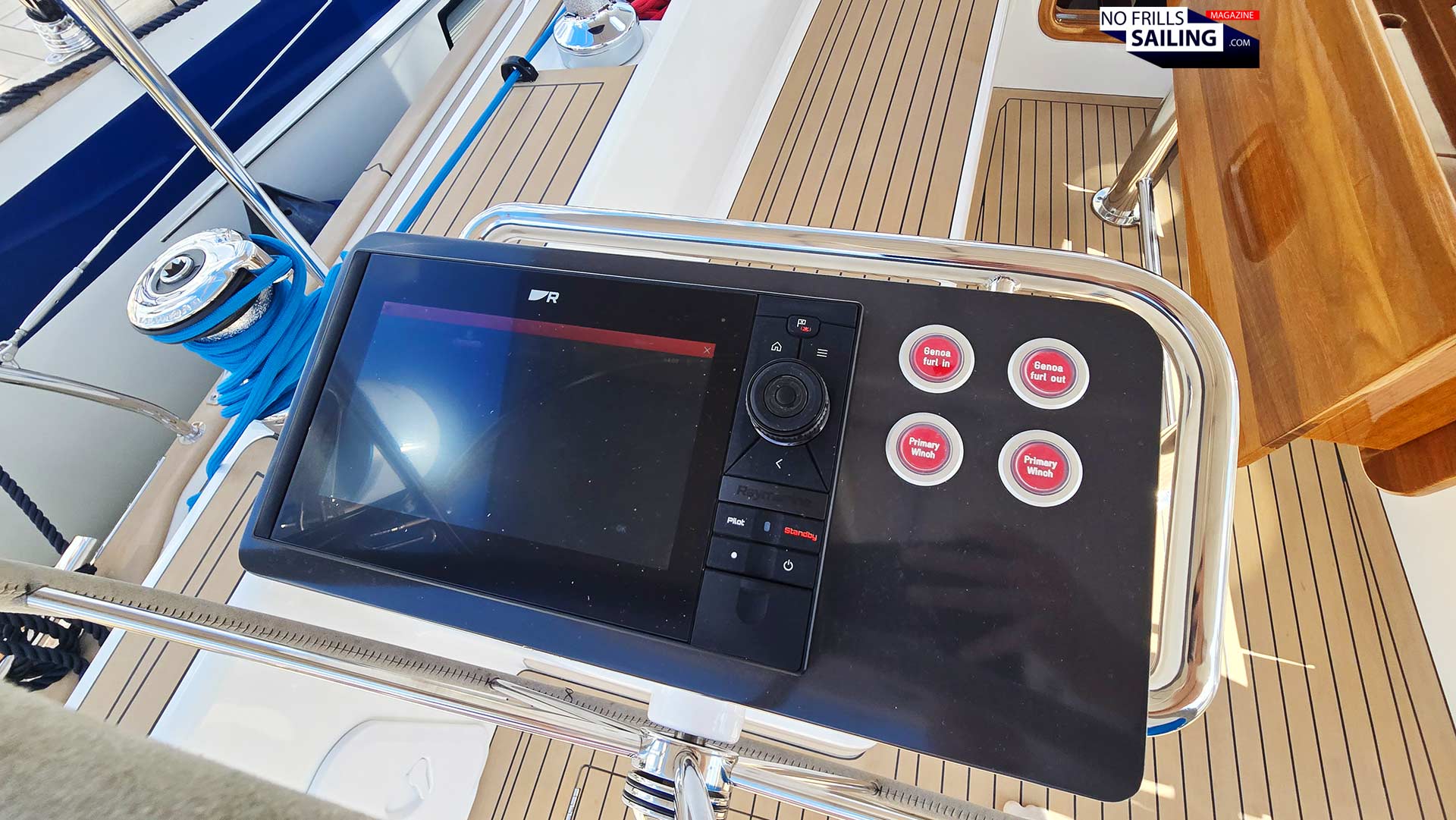
But that does not mean that this new smaller Hallberg-Rassy is a workhorse that demands real physical efforts. I mean, you could crank the handle if you want. But otherwise, push-button-sailing is a standard for Hallberg-Rassy yachts. Magnus was a first mover in the consequent introduction of electric winches and other gadgets into cruising. So, yes, even this small Hallberg-Rassy can be sailed with a touch of the helmsman´s fingers.
Keeping up the Hallberg-Rassy core values
Hallberg-Rassy stands for rugged, rigid, seaworthy and strong reliable sailboats. These yachts can go anywhere, did go anywhere and go on going anywhere in the world. That´s what they are made to cope with: High seas, real weather conditions and long haul travels. Of course, the bulk of Magnus´ owners will never round the Horn or even cross the Atlantic Ocean, but that´s not his fault. He continues to make them the way so that they can go, even if the owners decide to use them as Aperol Spritz-bases in the Med. That said, the new Hallberg-Rassy 370 features everything a proper Hallberg should have.
Well protected
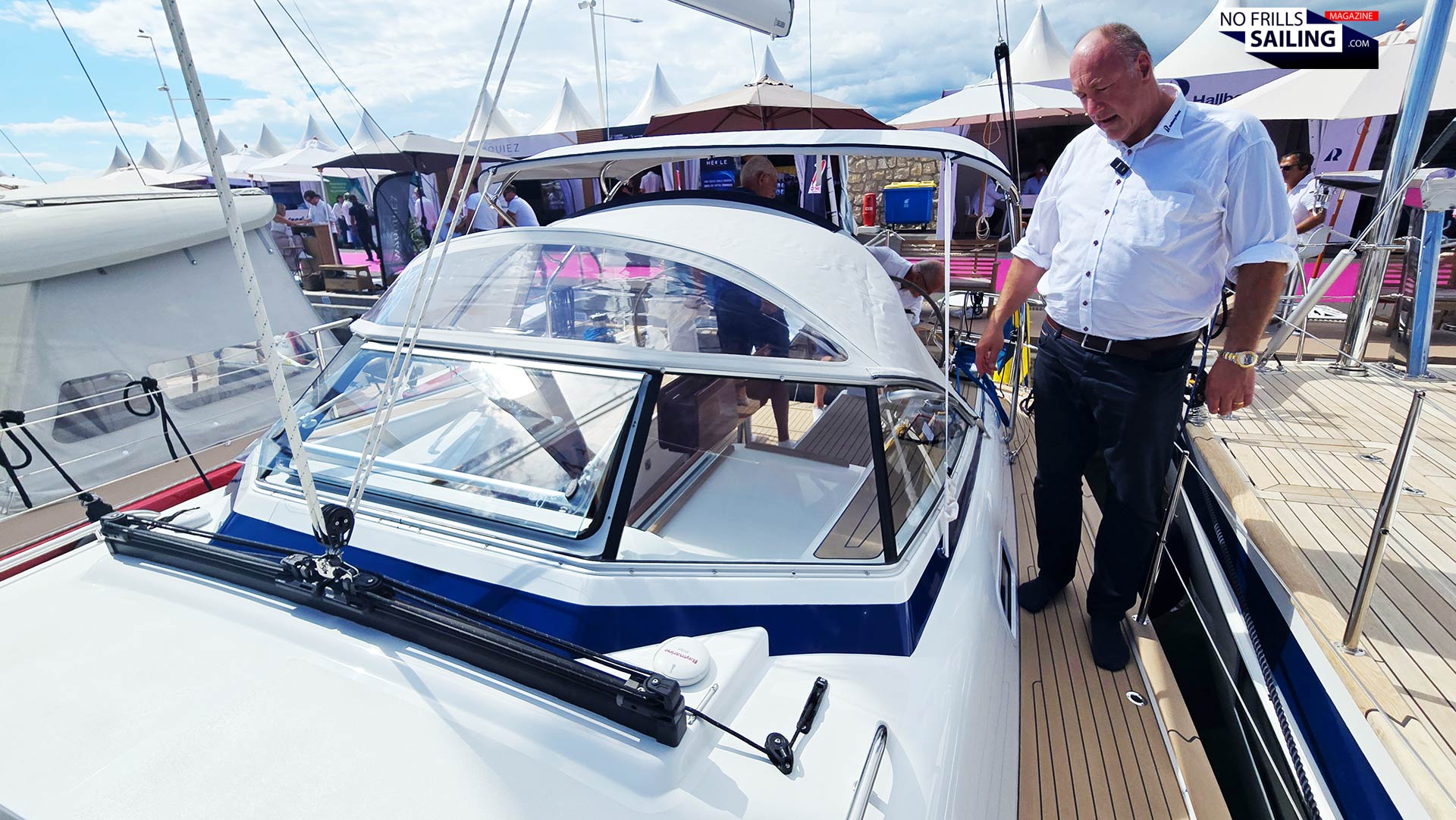
There is this ground-solid construction, the seaworthy displacement-focus and stiffness within the construction. Still, every bulkhead is laminated from both sides into the hull and deck. Hull and deck-joints are laminated over. Clearly visible features are, for example, the rigid windshield which now has become a rather iconic design feature, but it still can take on tons of water in heavy seas and hence protect the crew from ingress and spray. This windshield is not a fancy reminiscence, like the wind spoiler on a Honda, that only looks “kinda cool”, but has no real purpose.
Windshield, traveller … everything´s there
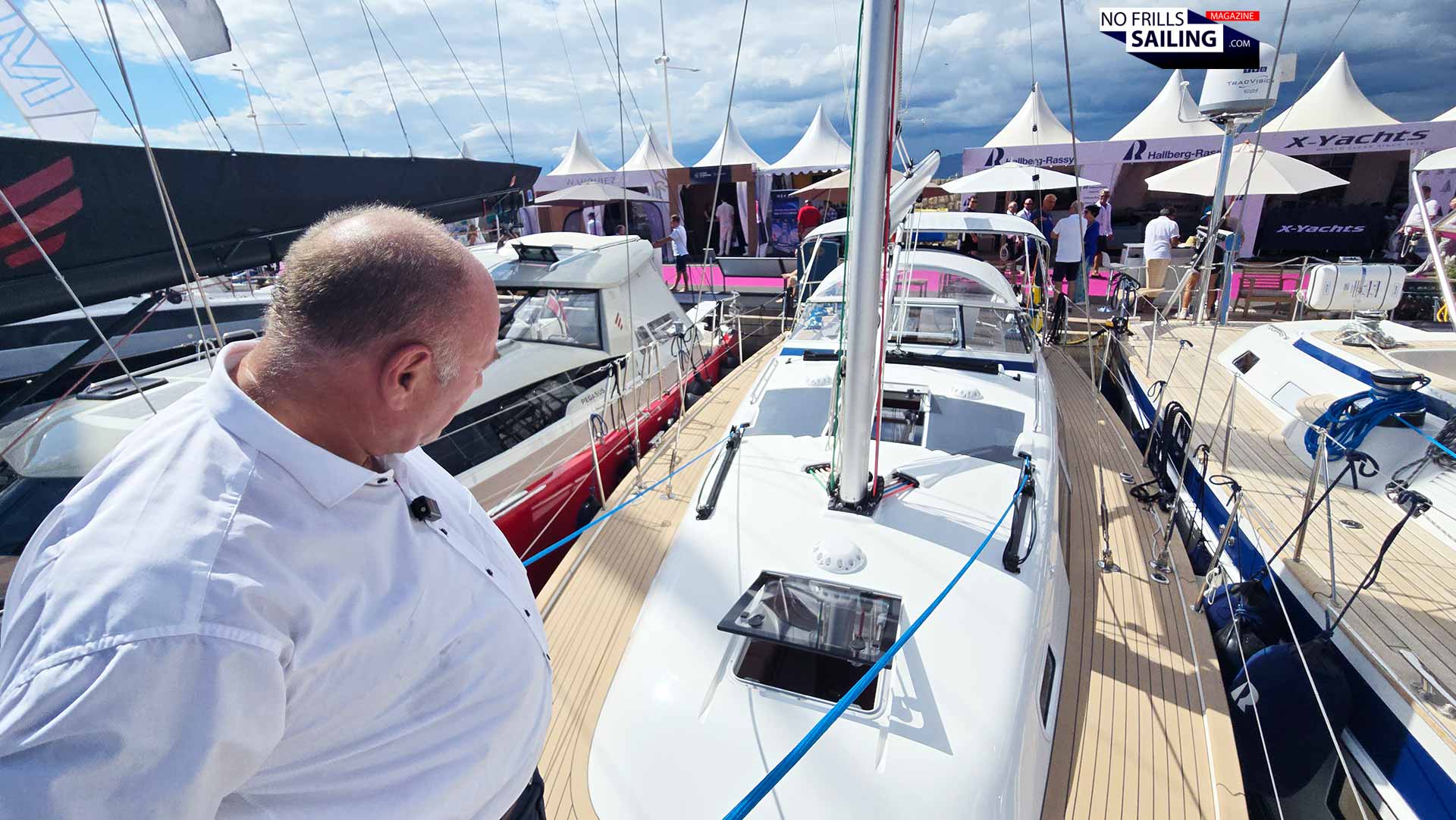
Protection an safety is a real concern when designing a Hallberg-Rassy, Magnus confirms. He still goes on making these boats real offshore-ready. It´s not a marketing gag. In front of the windshield I see the mainsheet traveler. This is also an indicator for something. Where most – if not all – big production companies and also luxury brands abstain from fitting these essential trim instruments (which has a reason, of course!), these boats still feature them. Why? Because Magnus considers a traveler a very important part of the palette of tools a good sailor should have. Or shall I say, a “real” sailor should have?
Clean and neat: The running rigging
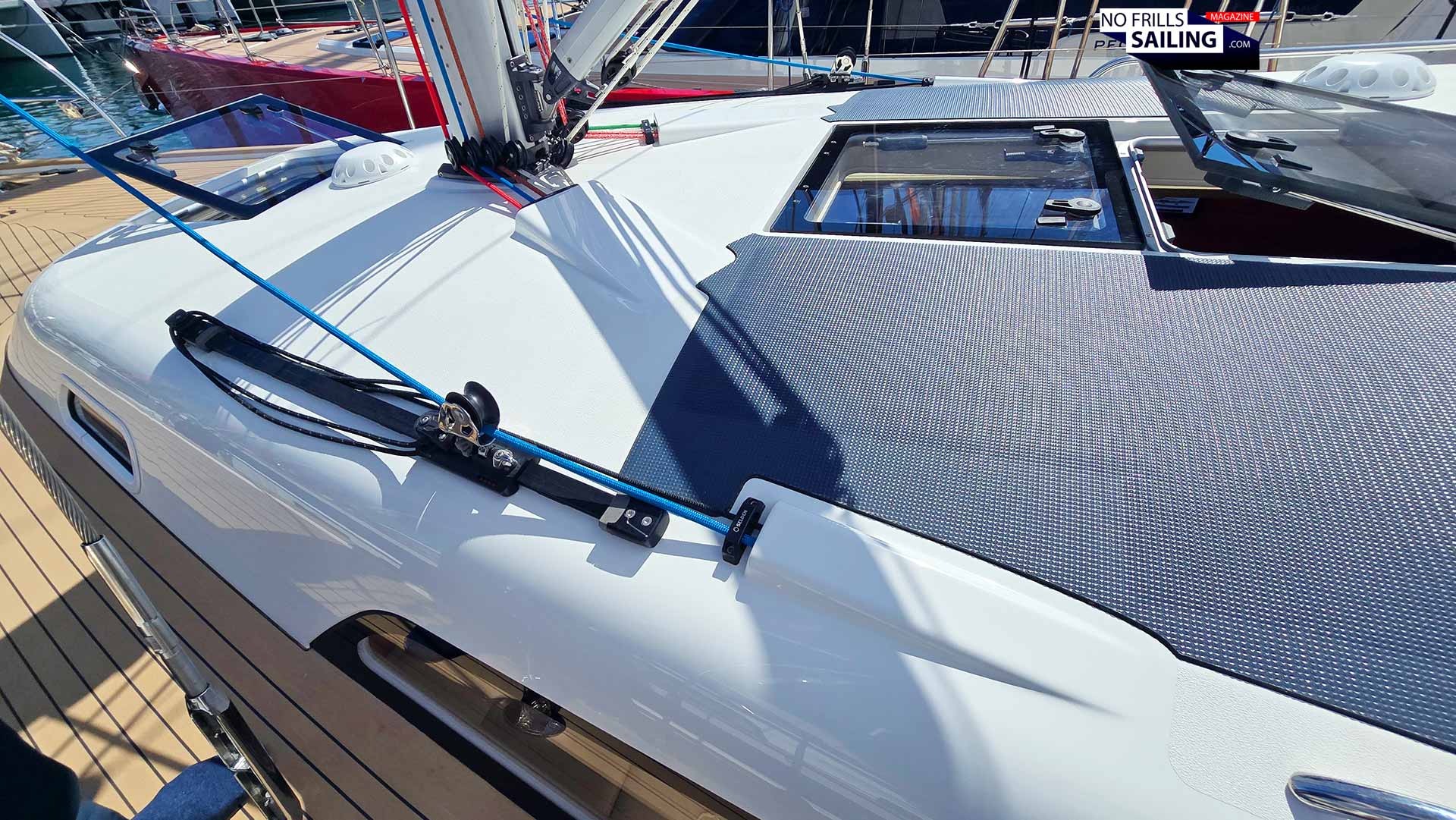
Retaining, preserving the core values, but also at the same time incorporate what makes sense. And adds a real value. This can be seen everywhere aboard, but let´s stay on deck and look at these two details: First, there´s the solar power. Now, as a loyal reader of NO FRILLS SAILING you may know that I have a kind of love-hate-relationship with solar. What bothers me most is the beta-testing attitudes of many companies in this area. But undeniably, “free of charge” charging power is a gain – moreover if you are travelling long distances. So Magnus incorporates these into his boats.
It´s a thorough Hallberg-Rassy!
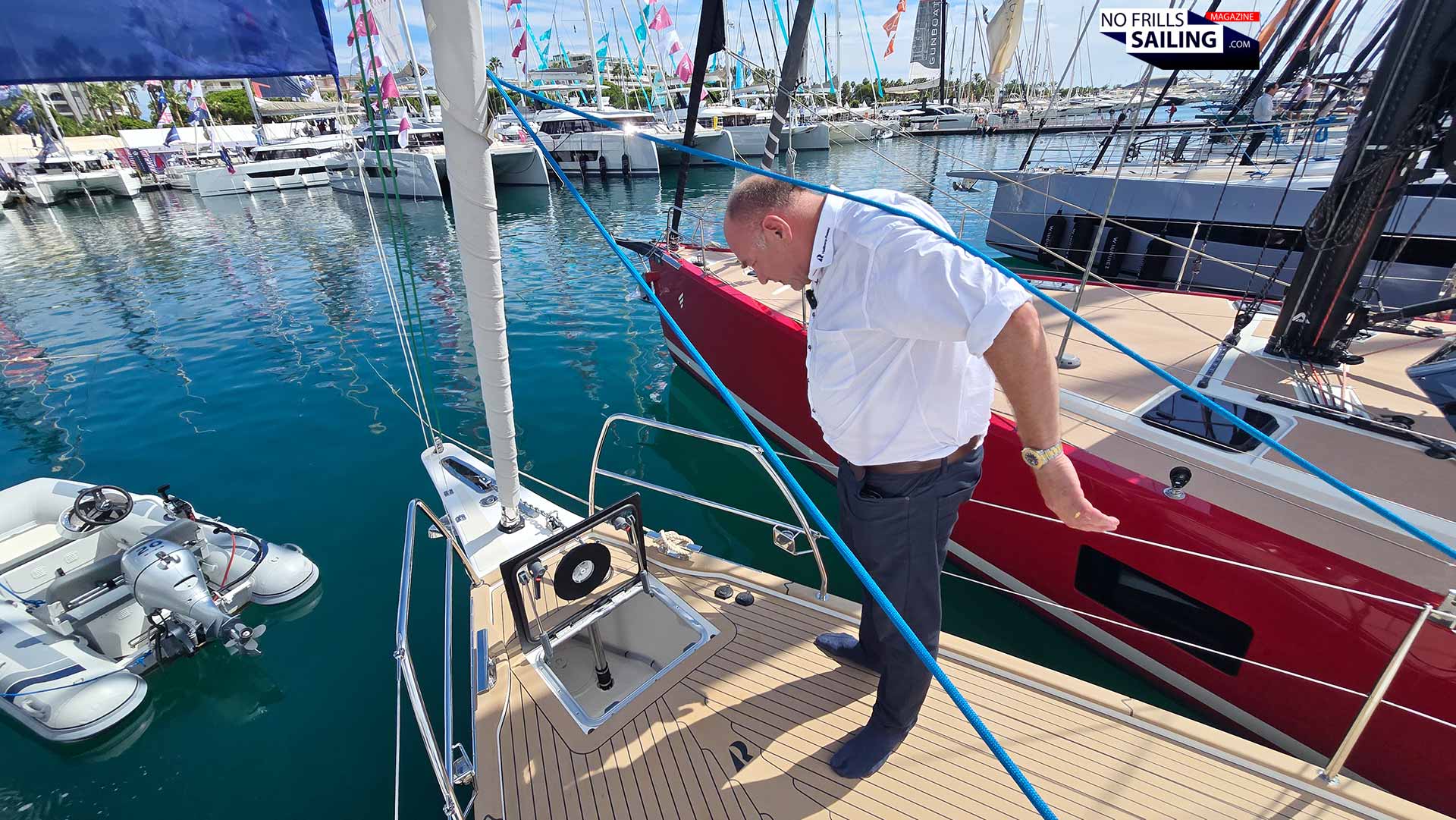
Another nice details are the hidden ropes. Yes, it´s much harder and a real pain in the ass to change ropes, if one breaks or is damaged. But having subsurface ropes is not only just a cosmetic plus, it simply also reduces the risk of tripping over. How many times have I slipped or stumbled upon ropes? So, here again, a trend taken over because it makes sense.
Modernizing the brand. Ever so slightly.
I´ve already mentioned it: Magnus Rassy has the burden of being the one who must develop the brand and the products, make them appeal to new customers, win over a whole new customer base and modernize it. Why? Because if he wouldn´t, this brand would simply vanish. I´m sure about that. The old customer base of well-situated sailing couples traveling the coasts and occasionally cross the ocean is shrinking. The new customers have less and less time. And they do not sail those long routes anymore. It´s more any more weekend-sailing. Overnighters. Med cruising. Of course, he has to find an answer for that. And make a proposal.
No bold steps, but those which make sense
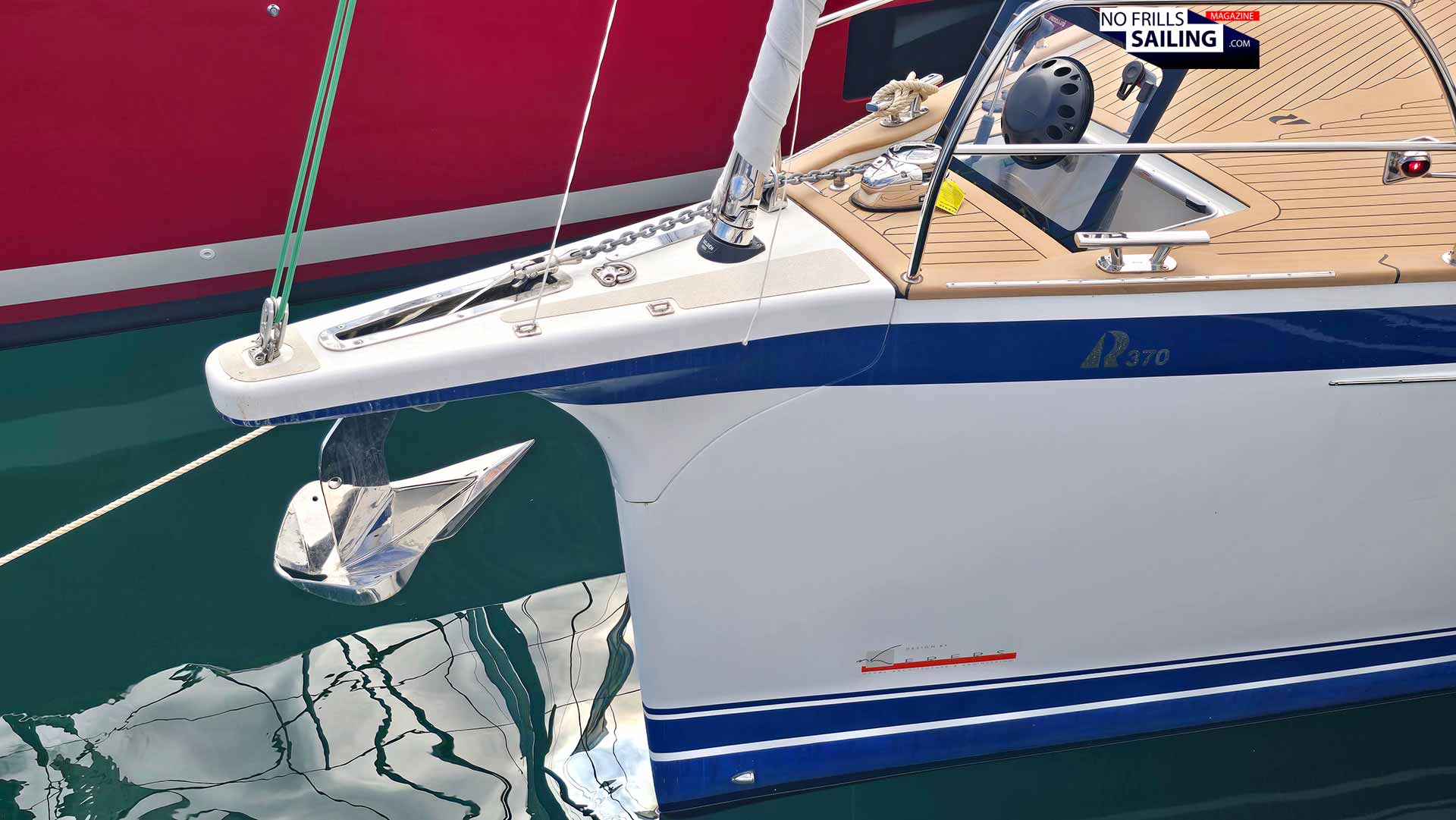
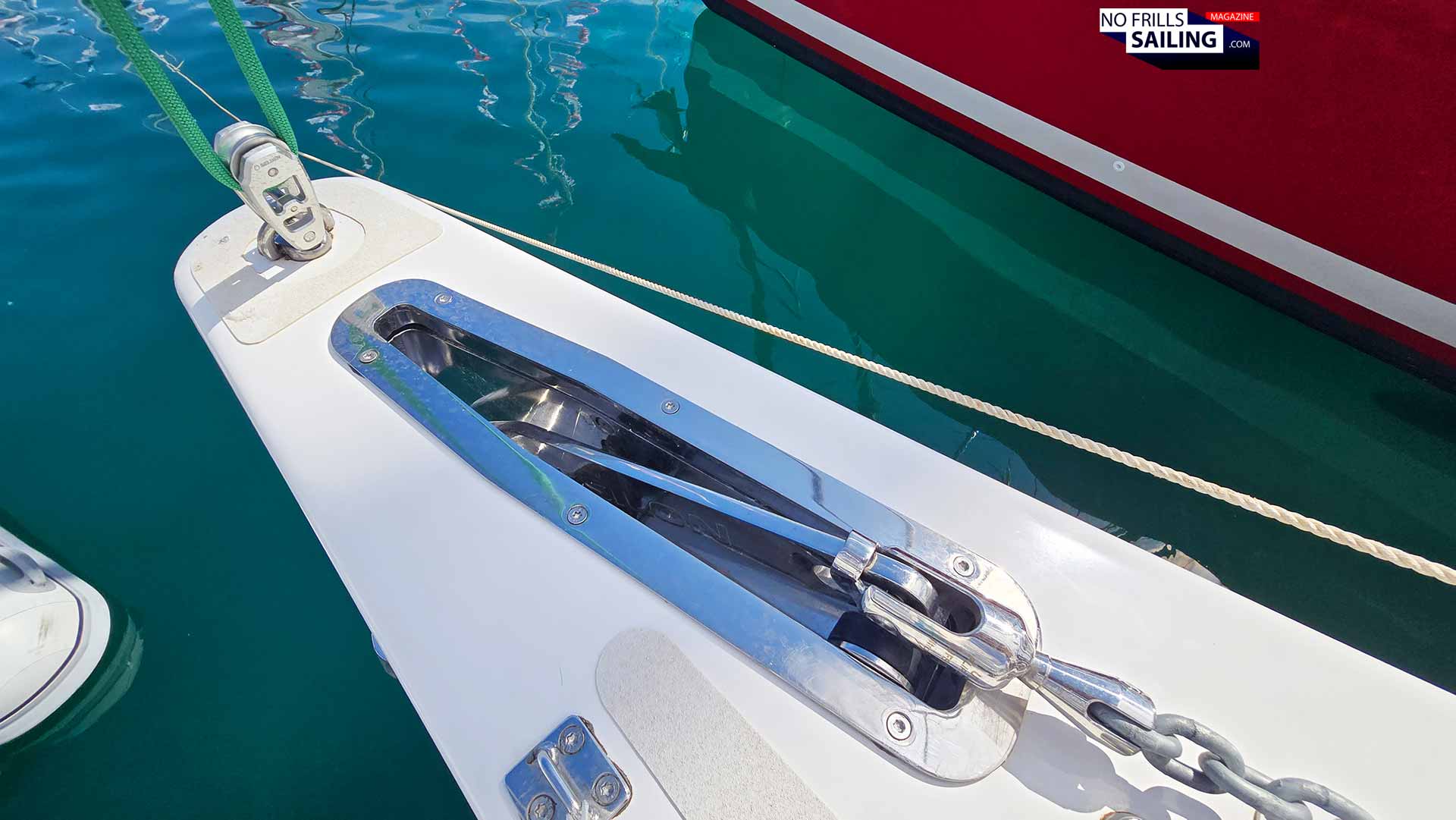
I am sure that the design teams, Magnus and German Frers are discussing these topics vividly as well! They cannot ignore the new facts. If they would carry on making the “old” boats, they would surely lose more and more market share. Frers, an icon himself, takes these steps with utmost respect for the history of Hallberg-Rassy, which for the last +30 years is his own work, but also in a way so that both the old client- and fanbase nor those new customers won´t be “shocked” or alienated. A good example is the wonderful solution they have found to integrate the bowsprit into the hull. It may be just a little stroke with a pencil, but it´s ingenious in its simplicity, yet complex beauty.
Beautiful & practical solutions
What I like most about this approach is the fact, that they don´t play around. This is not done for the sake of good looks alone. It always has to stand up against the demands of real sailing. That means, that this “beautiful” bowsprit must be capable of offering two strong attachment points for light wind sails. Also, it must be strong and wide enough to serve as platform to board the boat when moored bow-first. At last, it should not just only take on the anchor, but also offer it a decent housing, protecting the GRP from the steel. This bowsprit alone is worth a design prize!
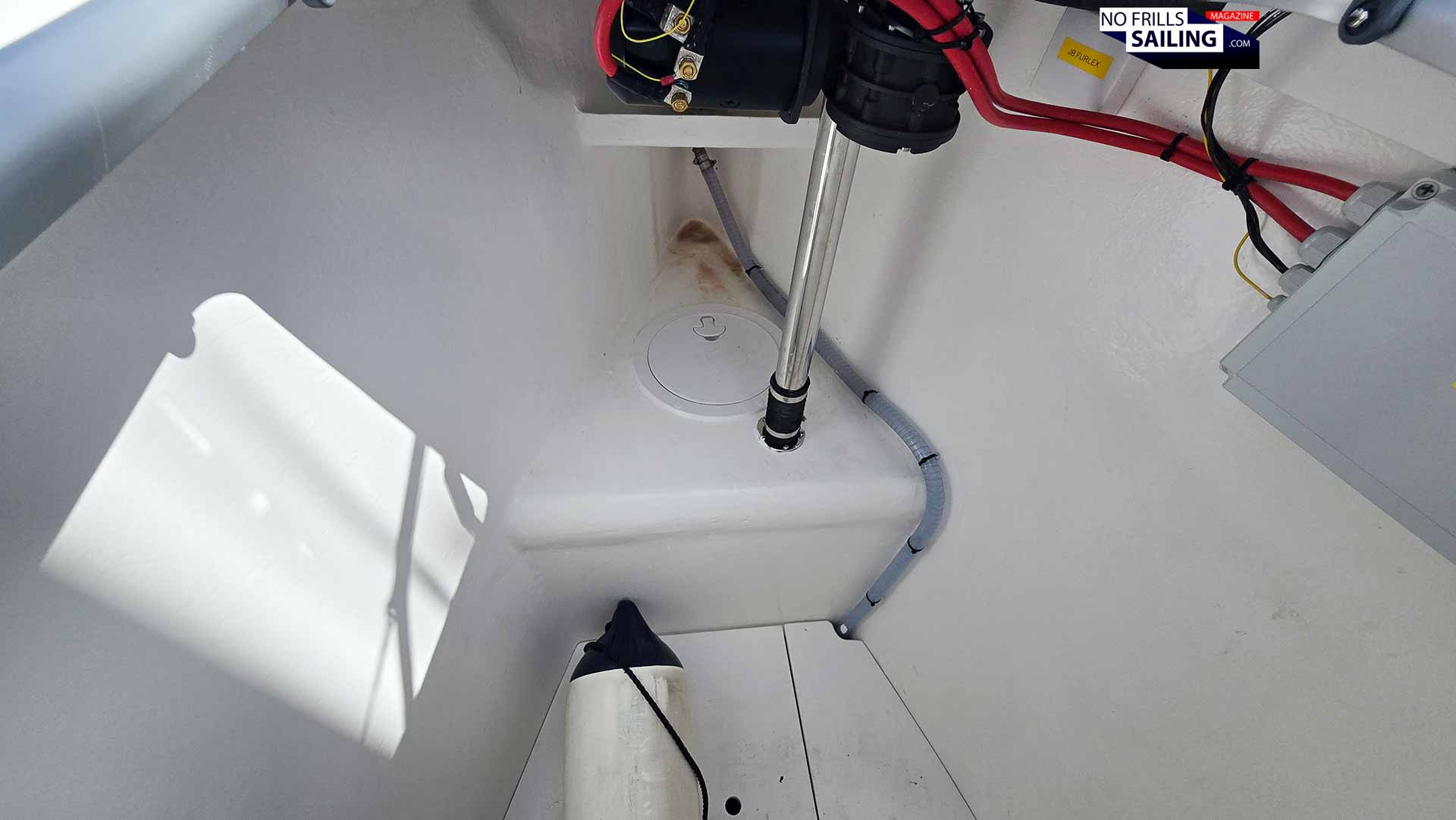
The huge anchor chain locker
And then there is this immense volume! This new Hallberg-Rassy 370 offers a considerably widened bow section, which can best be seen by looking into the huge anchor chain locker. Speaking of which: The chain is funneled through a steel pipe down to the lowermost section of the locker. This is covered by two floorboards. In top there´s a huge locker room for your gennaker, the Code 0, fenders and even for folding bikes and lots of other “wet” stowage. As I said – form and function.
At the end, it´s a luxury product
Which brings us to the interior of this boat. So, let me get this straight: Of course is Hallberg-Rassy an “upper brand”, meaning, these yachts range at the top end of the price scale. Even though there are no official price lists online, you should have a budget of around 550.000 Euros (including VAT) ready at hand. That´s a lot of money, of course! But even a comparably sized Beneteau 37.1 clocks in at around 350.000 Euros all in nowadays. Any boat is a luxury product. That´s for sure. So, what does an owner of the Hallberg-Rassy get, comfort wise?
Let´s check out her interiors …
At first there´s the “no plastic visible” rule here. Look closely: There is absolutely no spot within the Hallberg-Rassy where GRP would be openly visible. This is really a great effort, covering everything with panels and nice veneers. I know this first hand myself: I´ve had the same question recently with my shipyard currently building my new boat. Covering up the few left over visible spots of the hull near the floor boards alone would have cost me 1.500 to 2000 Euros. Just the floor! So, here, aboard the new 370, there´s no plastic visible whatsoever.
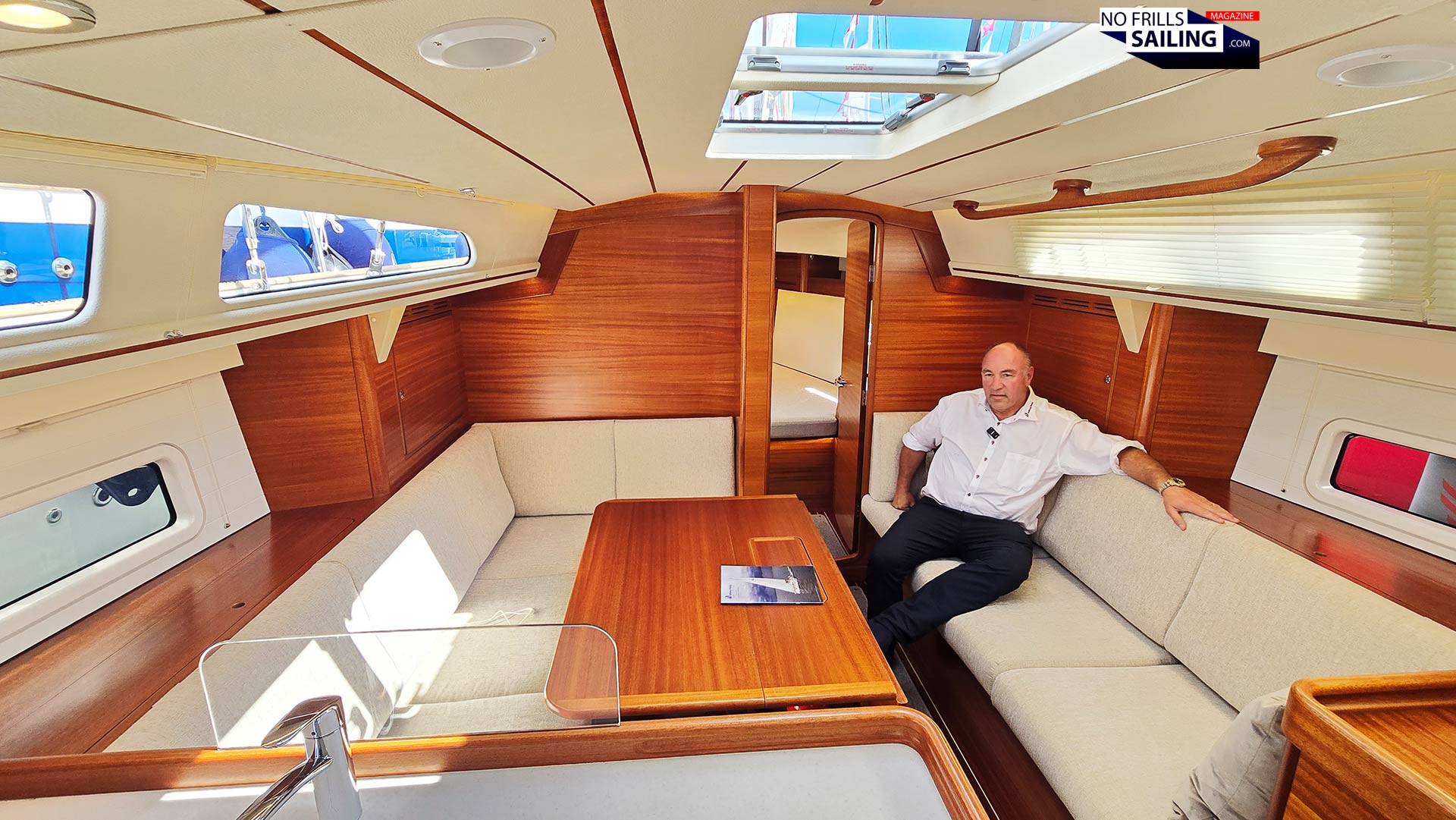
Cozy. At home.
And then, of course, there´s the joinery. Everything is handmade by master carpenters, utilizing the best raw materials. The Hallberg-Rassy shipyard in Sweden is not like the large “conveyor belt”-like factories I use to visit. It´s more a manufacture. Many parts are elaborate single copies, like the manifold laminated wooden parts or the massive partes utilized for the joinery. The surfaces are spotless, most of the carpentry features continuous grain. I´ve visited a few of those shipyards, like Linjett or Winner, and I know what it needs to keep up such a quality – delivering this consistently.
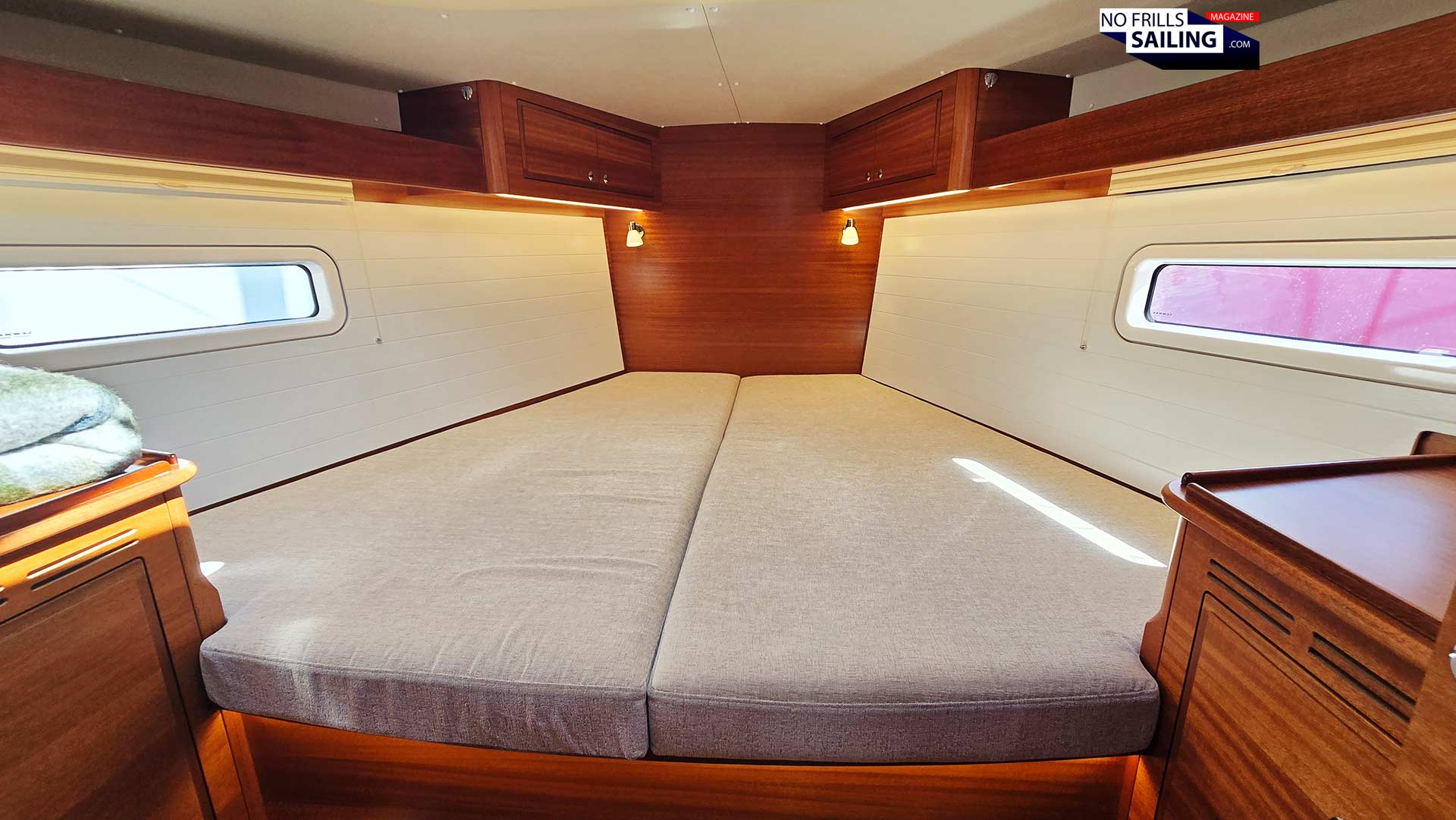
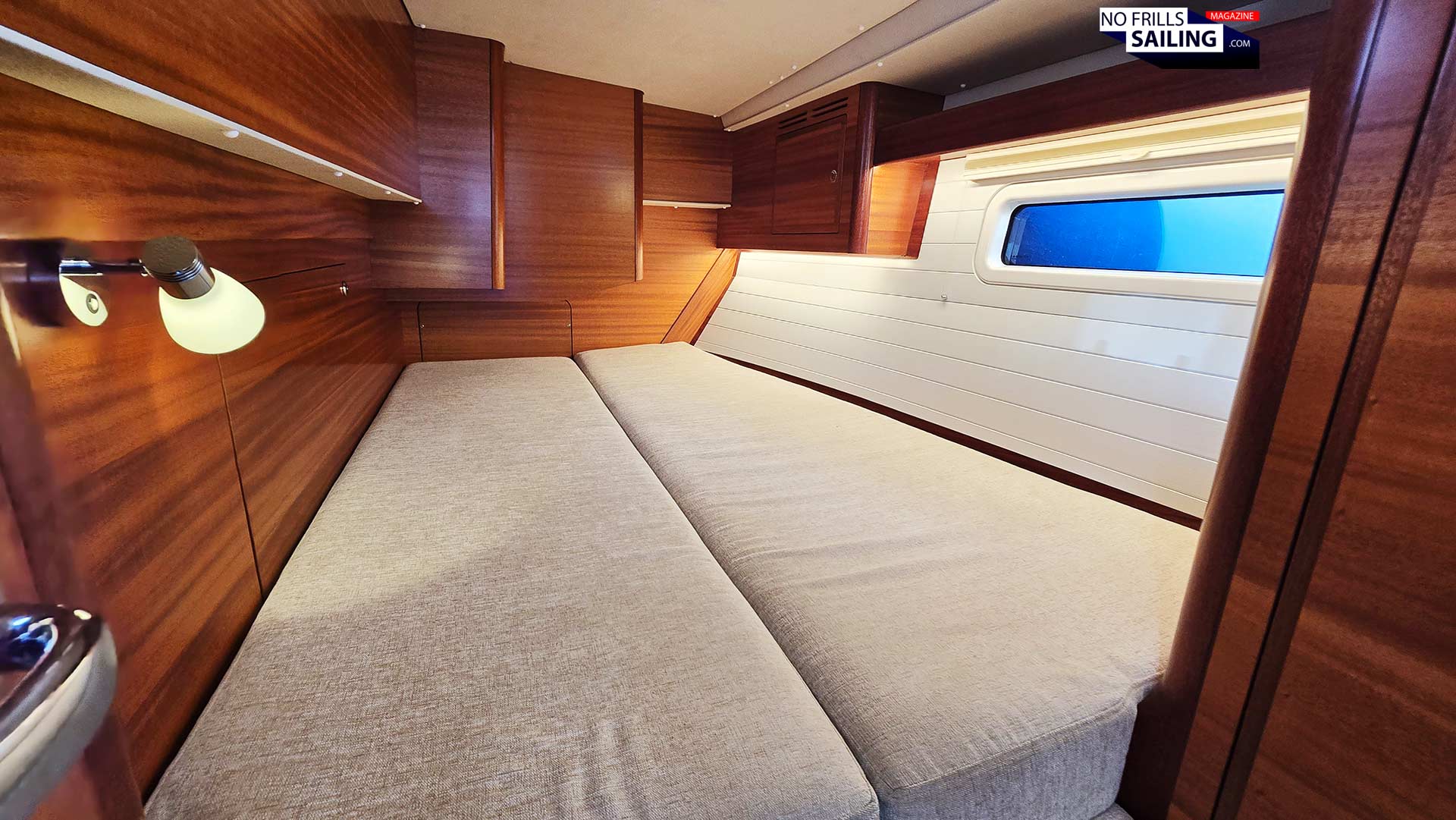
A large aft cabin!
Apart from the feel aboard the Hallberg-Rassy, I like the aft cabin most. Usually, the front cabins or the owner´s cabins receive the biggest attention. Most care and invest by the shipyard goes in here, because this is where the owners – the customers who buy the yacht – will spend their time when under deck. That said, aft cabins – often “only” for guests or even used as storage rooms, are kind of neglected. But not aboard the 370. This cabin is equally lush fitted with abundant wooden panels, continuous grain of course, nice details and high-grade joinery. Being “just” the guest aboard this boat? It´s your five star upgrade you can and will be very happy about!
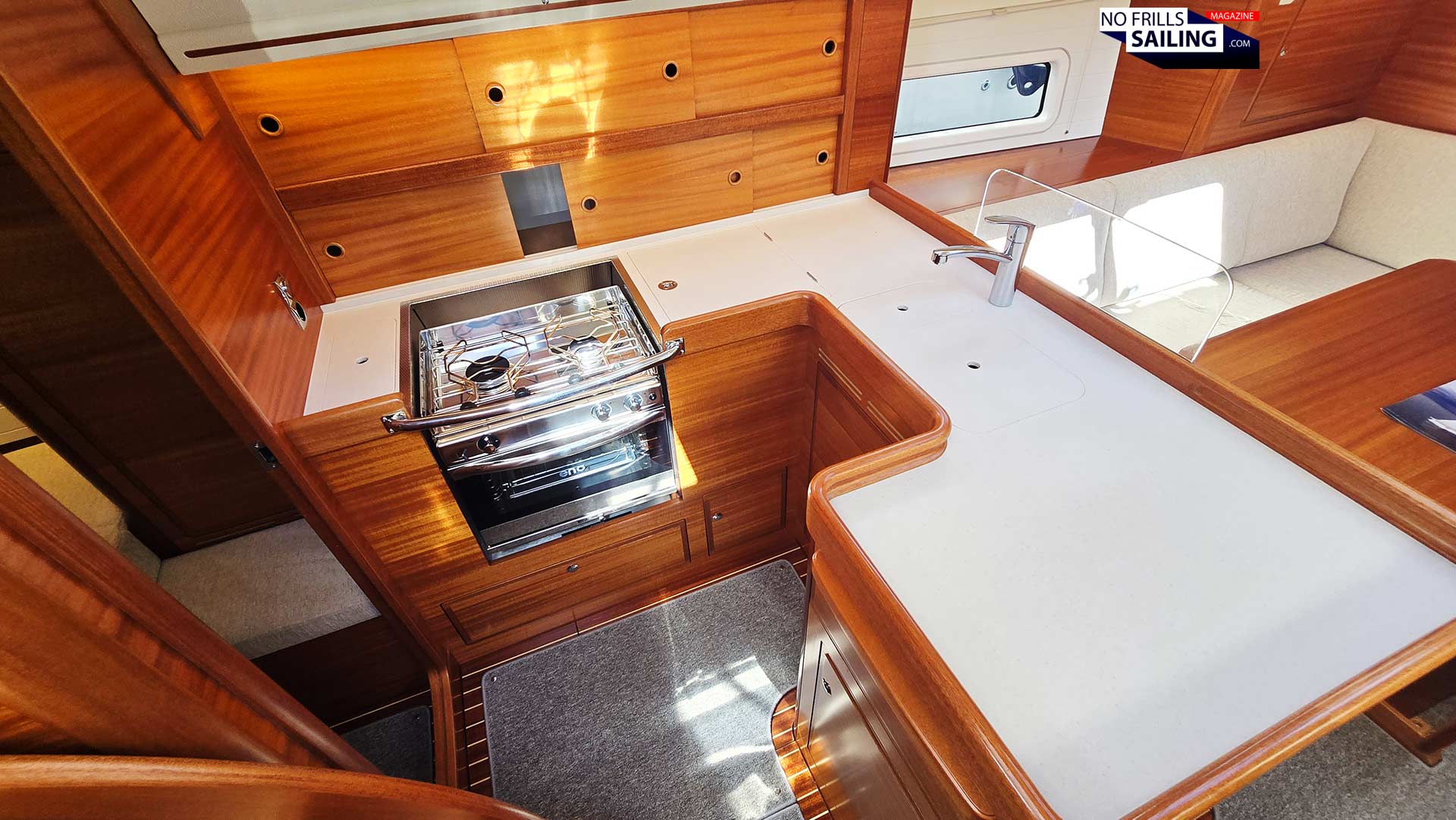
Classic L-galley with loads of stowage
The galley features the classy L-format. It´s a proven and seaworthy layout where the location of each part of the equipment has been done because countless ship´s cooks have confirmed their placement at these locations in millions and millions of miles sailed. The stove, the fridge, the sink and the cupboards – everything is where it should be. Without even checking the galley beforehand, I am absolutely sure, any half decent skilled sailor would feel instantly at home and could start preparing a meal here right away. There you have it: Preserve what is proven.
Creating internal volume
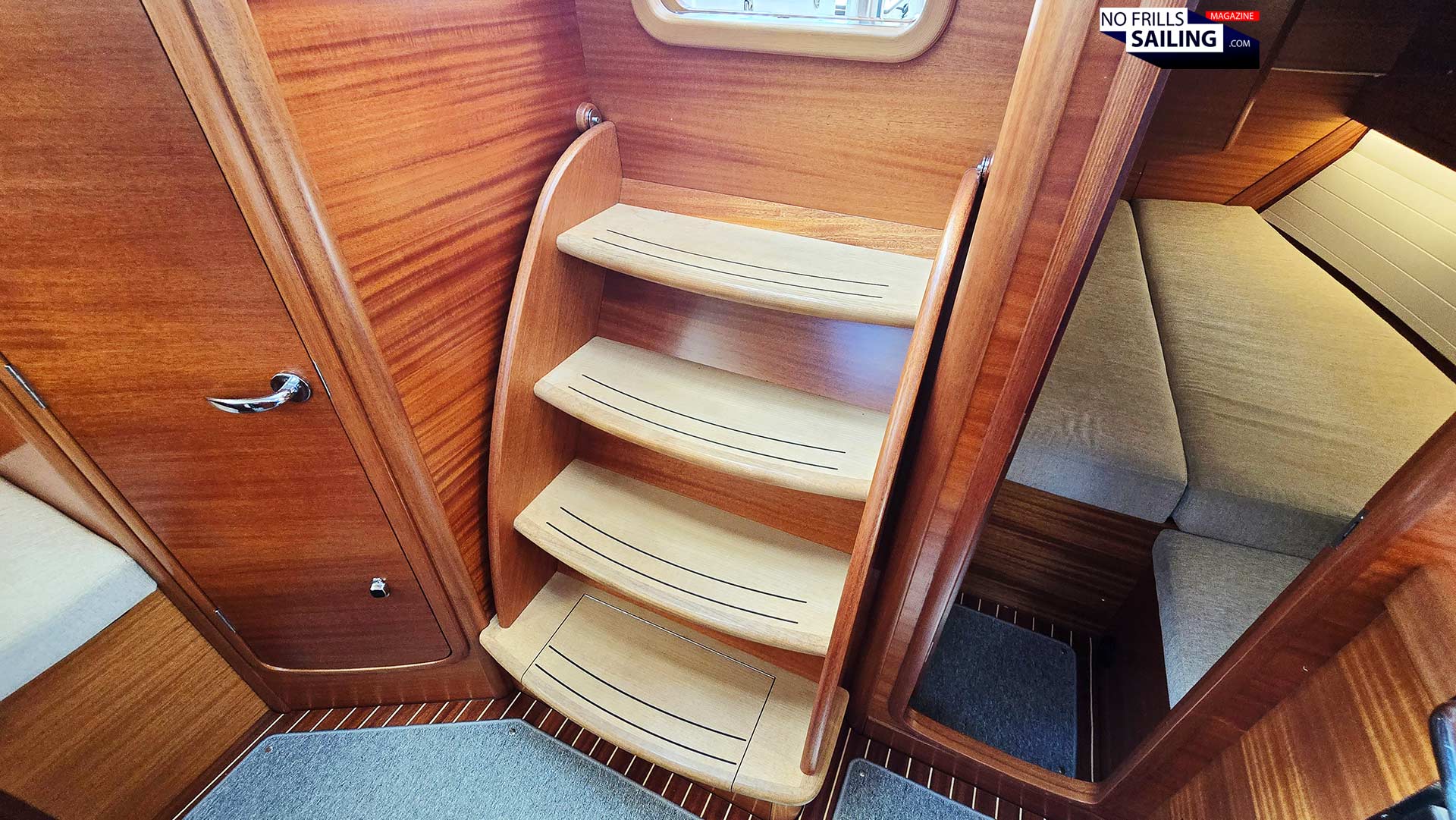
And then there are these sudden bangs, I shall call them. These happen very, very scarcely with Hallberg-Rassy, but when they do, they mean something. This new 370 offers considerably more internal volume than her predecessors. It´s really stunning! Again, the pictures I have taken can by no means convey the true size of the saloon, even without “big boy” Magnus. At first, this yacht has a relatively steep entryway ladder down into the saloon. I personally love it, because reducing the angle reduces the consumption of area dramatically. Yes, on the other hand, steep entryways are harder to climb and may be tricky especially in high seas. But, honestly, even less hard slopes make people fall frequently. So, that´s one thing. But there´s more.
Where´s all the space from?
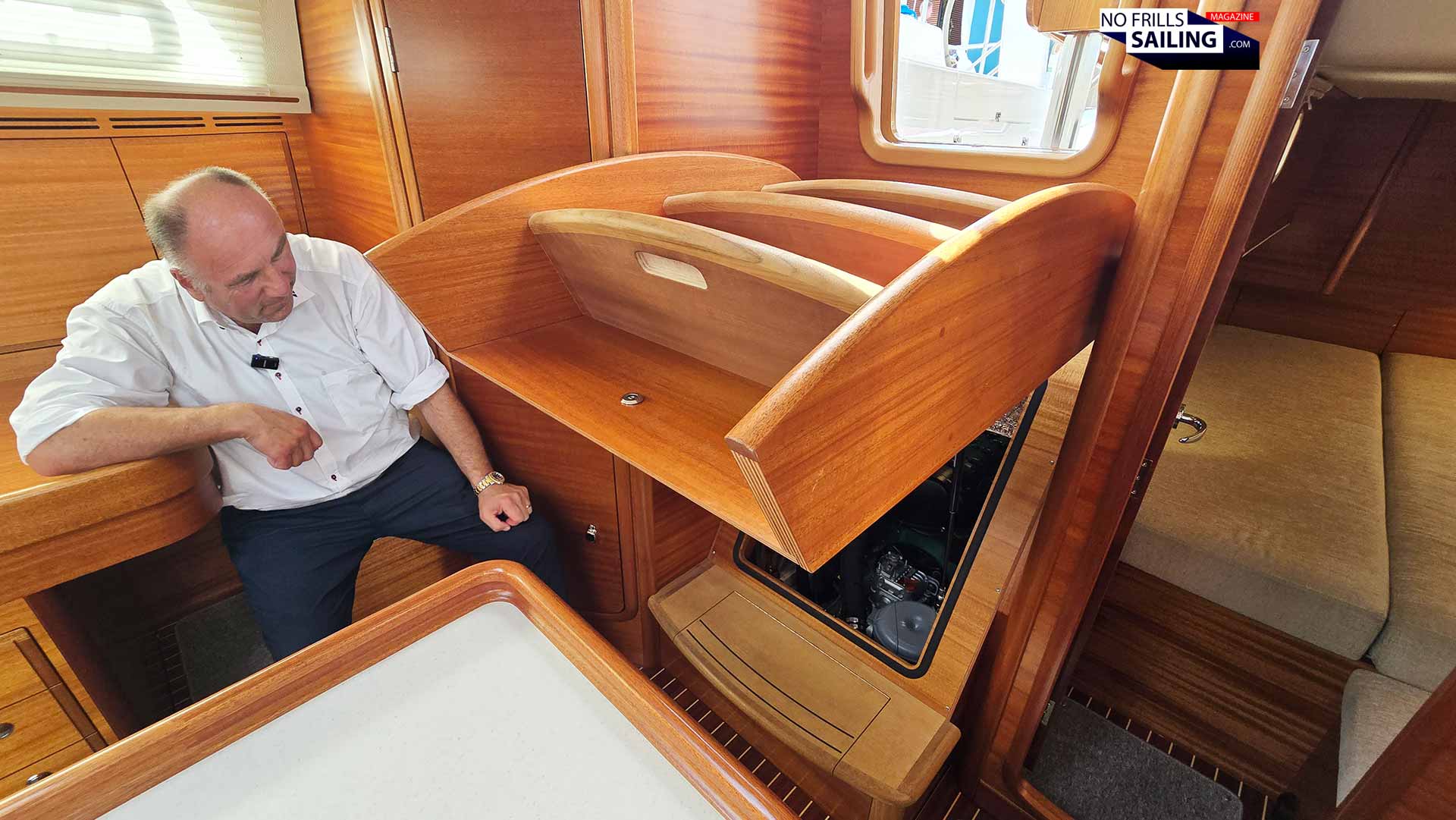
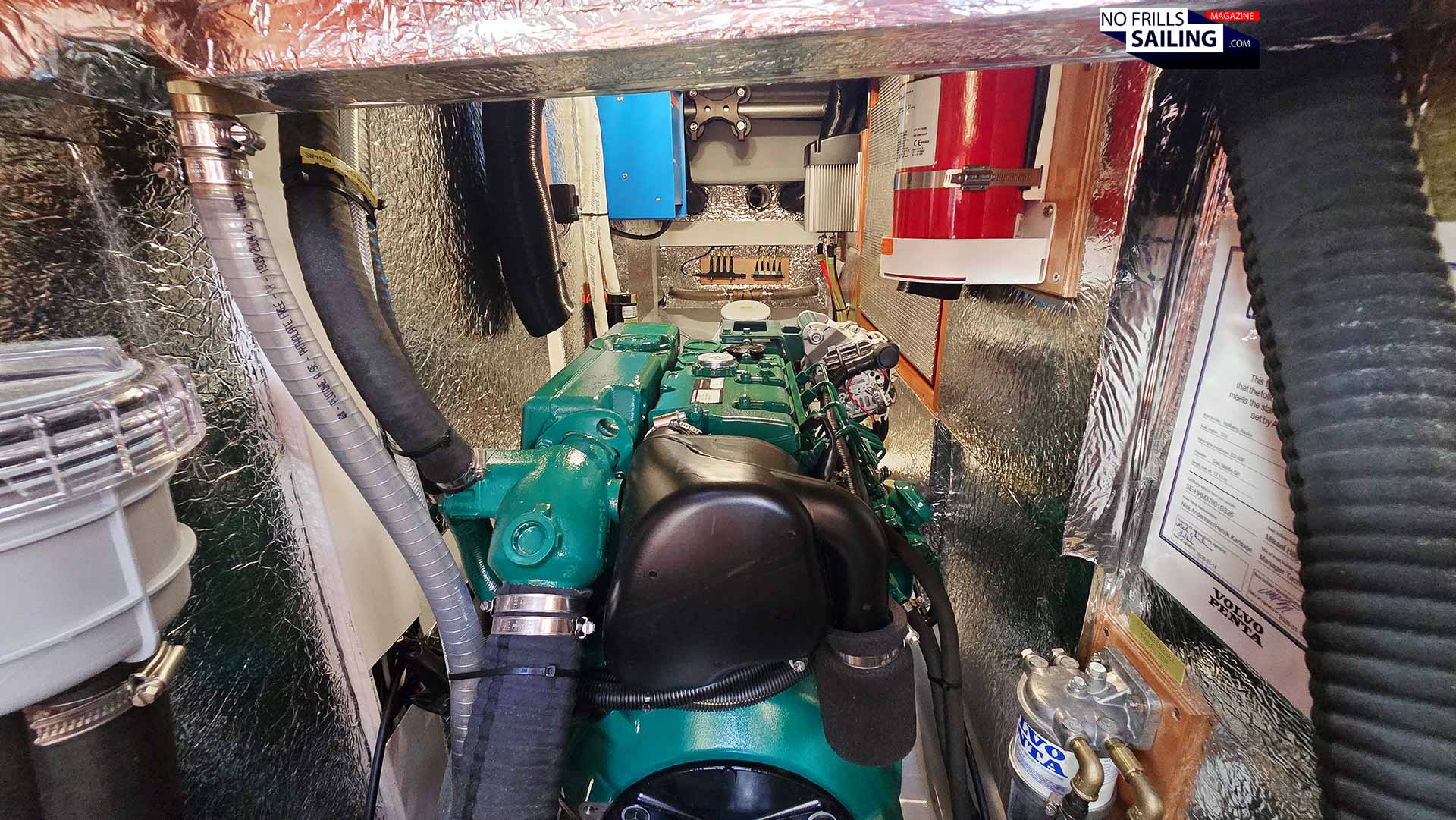
The “secret” of the enormous plus of usable space in the new Hallberg-Rassy is hidden underneath the entryway ladder. Magnus lets it slide open, to give free sight into the engine room. I have to look twice to fully understand what has been done here. Magnus explains: They “flipped” the engine 180 degrees! Essentially, the engine is mounted “facing backwards” with the saildrive-unit located in front of it. This move saves easily 1.50 meter or more in the saloon!
Magnus shows his latest “trick”
The outcome of this is that your habitual maintenance and engine check-up routines will need to be revisited. What was usually in front of the engine – oil filter, impeller, fan belt and such – is now behind it. It´s still fairly easily reachable, but not anymore “through the front door”. Also, if big-time maintenance or repairs are on the horizon, like changing the sail drive or having to completely take it out (or the engine), this might come with more hustle. But changing an engine is always trouble, right?
180 degrees “flipped” – the engine.
Another impact of this might be the mass distribution. Designers try to have all the heavy parts near the keel and/or the pivotal points of a yacht. Especially wide-sterned boats react very, very sensible to masses which are located near the stern. Try it yourself: On your next sailing trip, move all people as far aft as you can. At least on my last boat, having myself and my kids at the stern would let my First 27 SE sail half a knot slower, easily. Which impact the flipping of the engine and moving is as far abaft as possible has on the 370 I cannot tell. At least Magnus says: “She sails like a goddess!”
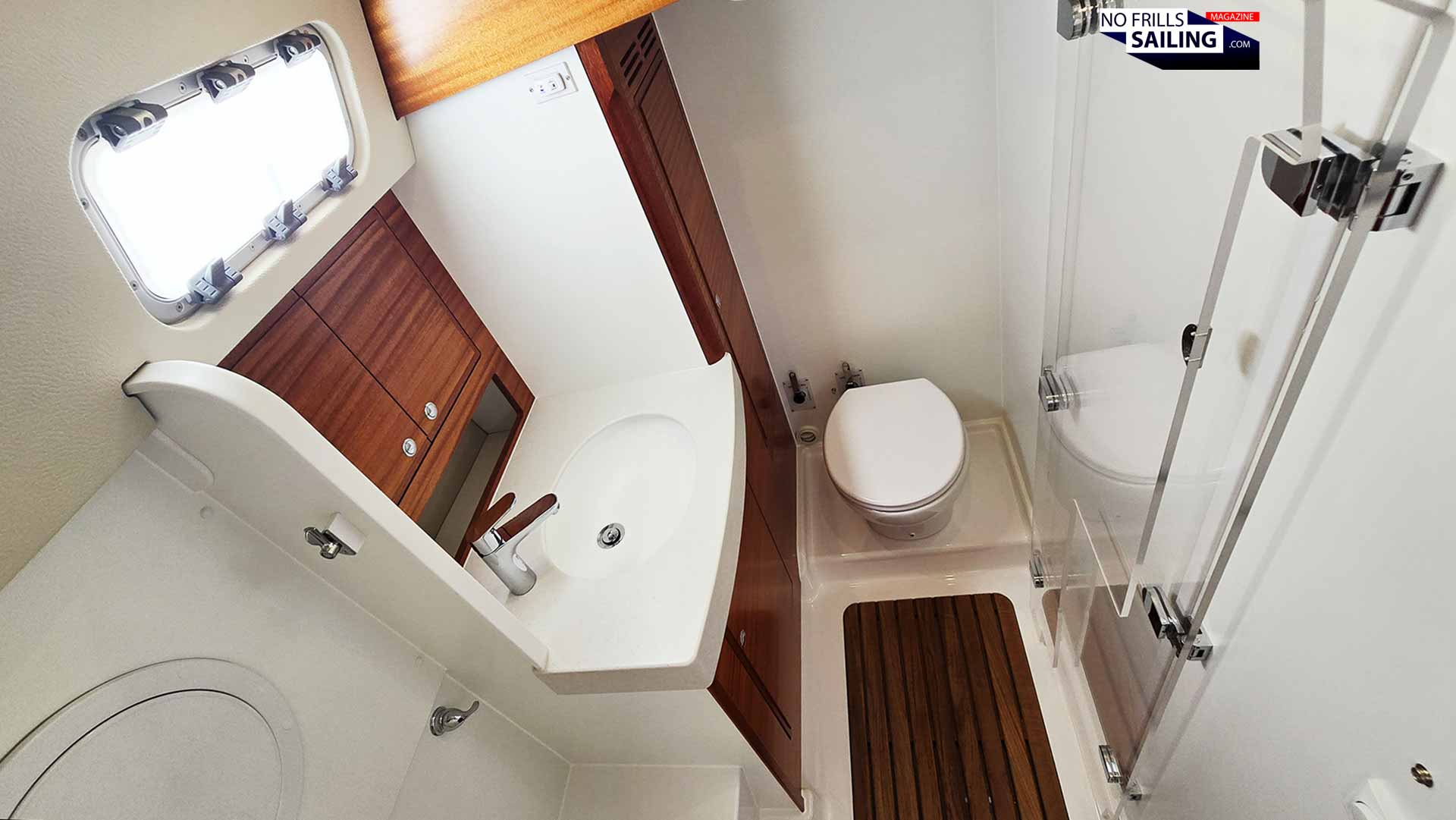
That´s a big bathroom
In any case, what it did influence to the better is the internal volume. You can see it in the saloon, in the aft cabin and also in the bathroom. Although here Hallberg-Rassy does indeed fit as less wooden stuff as possible … because it´s a wet room … the bathroom is comparably beamy and comfortable for a boat that size. Separable shower, a nice grating, lots of stowage. It´s a very clean and functional room. Which I like: Who needs excessive luxury for a place where usually there´s just hygiene and pooping? I like this! The bathroom of my new yacht adheres to the same principles: Clean, neat, practical and that´s it. Well done, Magnus!
People are more and more looking for quality
Yes, they do! And that´s the good news in all this talking about the ongoing crisis in the boating industry. As I said it: Customers who are willing to spend these high prices notwithstanding the huge budgets will insist on better quality. They don´t accept the laziness and fucking around with quality of the past ten, twenty years. This is most valid for the big series production companies who have been focusing on profit maximization and delivering cheap boats into the charter market.
Magnus rejoicing …
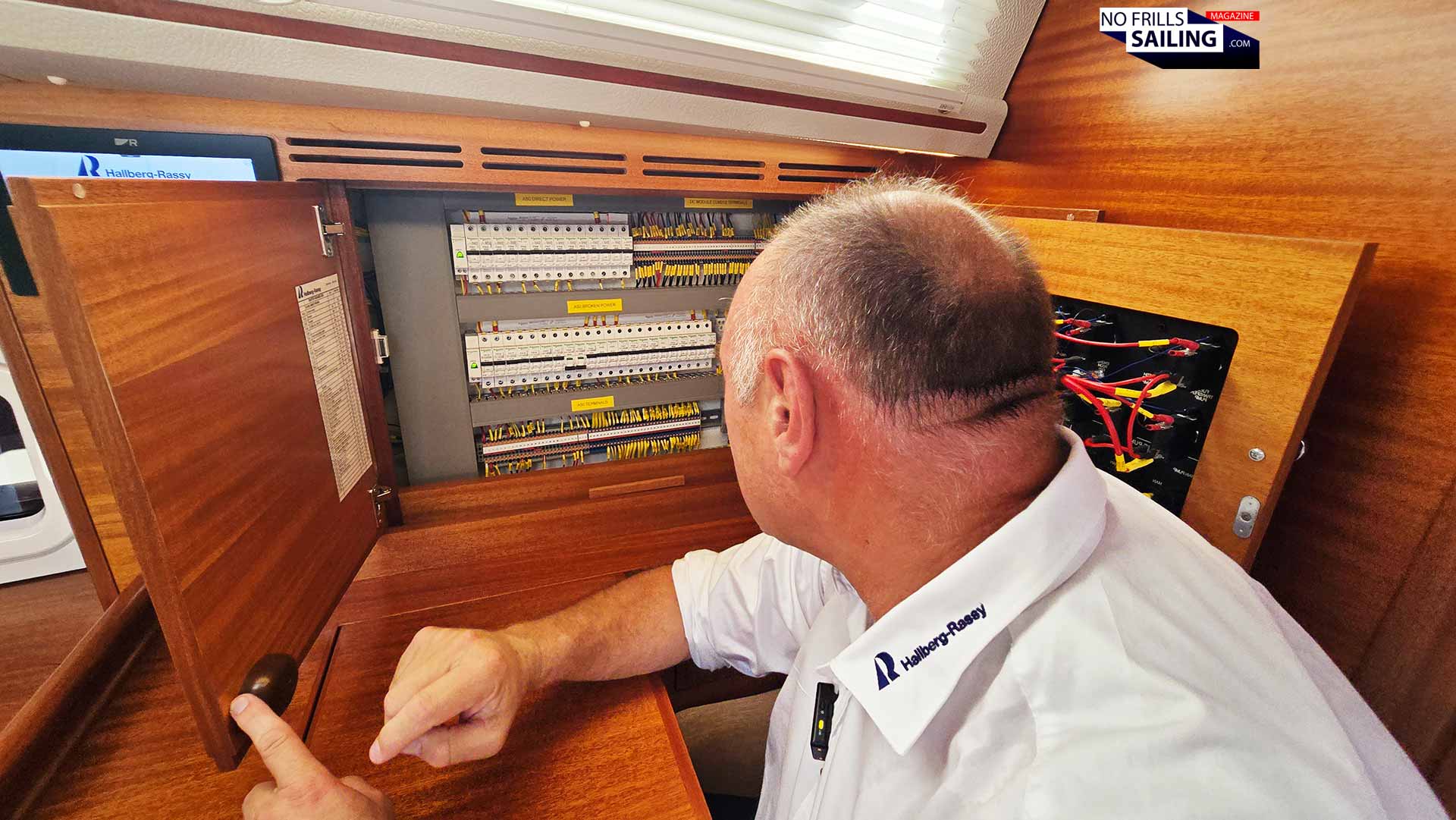
I am absolute sure about this: Only brands delivery significantly improved quality will survive! That said, Magnus opens the main switch panel to show the electric installations. You can´t see it in the picture above, but I´ve seen it: His smile, his admiration, his pride. This is not only a role model clean installation, this is an invest in working hours and elaborate product where customers normally don´t look! Taking care of the hot spots is easy. Improving quality where people most of the time hang around and look at, is a quick win. But the real extra mile is where customers don´t look. Where there´s no quick win.
It´s in the details!
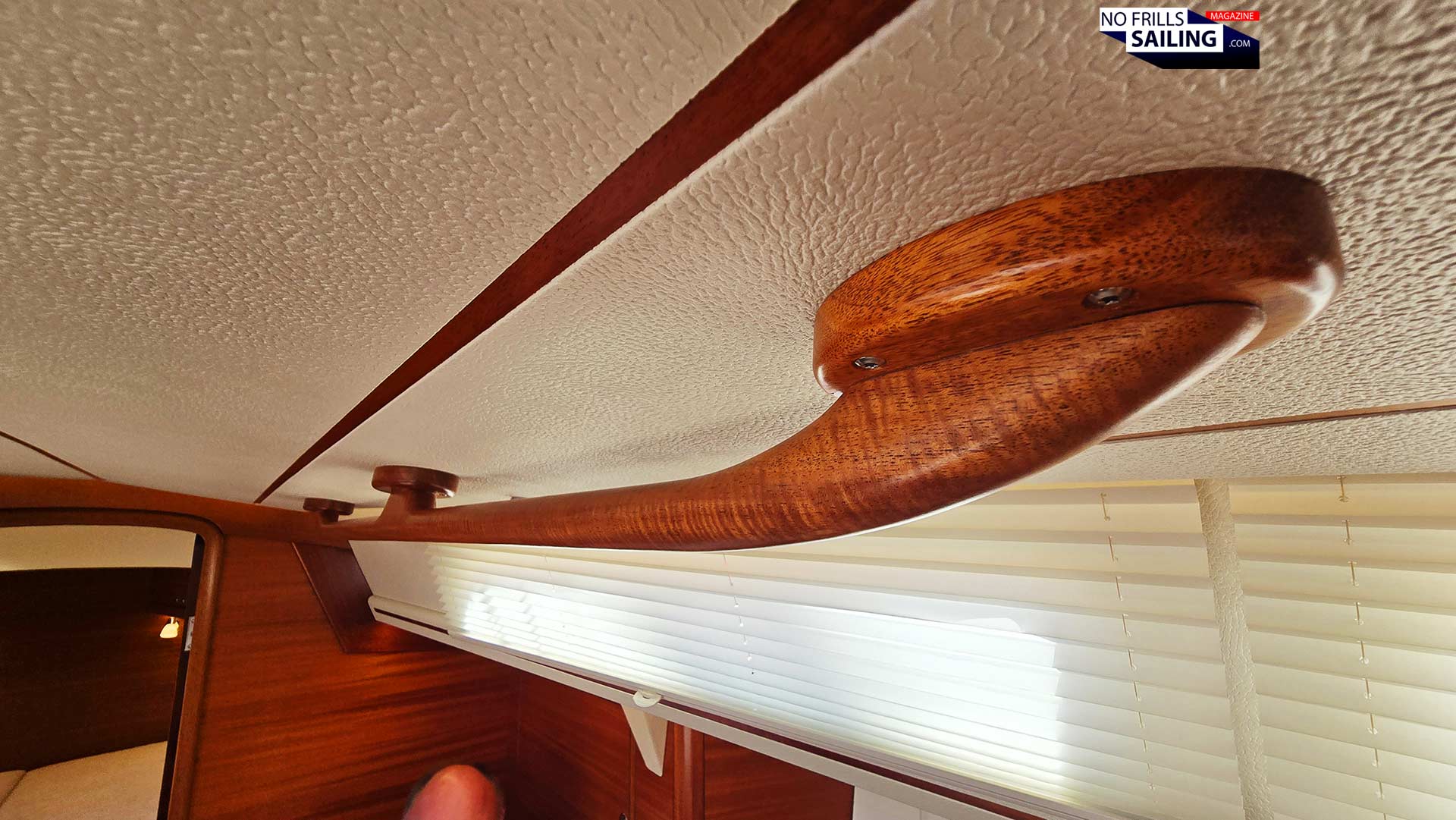
The Hallberg-Rassy avoids, as it seems, where it can, to fit standard parts. The grab rails are custom made. The handles for the doors are unique – at least I haven´t seen those on other boats. It´s an “original” yacht. How often have I encountered myself being puzzled about the interchangeability of boats. All too many yachts not just look the same, but they are equipped the same. Which, again, is okay. But if you seek something special (for your money), of course one fancies the extraordinary, the one-off. And this all – let me repeat – in a 37-footer! Not on the 70-feet flagship.
Advertisement
Credibility. Modesty. And competence.
So. That was it. My round tour aboard the all-new Hallberg-Rassy 370 with Magnus Rassy himself. The boat, to be honest, this time was only secondary. This time I truly and deeply watched Magnus. His attitude, not only towards me, but towards any visitor aboard. He is a guy you can ask anything about the boat. Of course, there´s Michael Schmidt of Y-Yachts next door, there´s the boss of Nautor´s Swan and even the big guys of Dufour or Beneteau. But could you ever imagine receiving a boat tour from them? Magnus does it. Not only for journalists, like me. But surely he would do it … for you.
He is his best salesman, indeed.
In this, he is so approachable, so relatable. But also, the knowledge about the yachts compiled of decades in boatbuilding in sailing make him an encyclopedia on feet. He´s not bragging around, nor have I ever heard any bad word about his competing brands or other yachts. This modesty and humble style make him believable and so trustworthy. Even during our tour, he would sometimes veer off conversation and kind of focus onto certain details. I am sure he did make a note to himself in his head for later discussing these details with German Frers or his team. You don´t find a second Magnus like him. At least rarely. Like Paolo Semeraro for his Neo Yachts, it´s these people who are really, personally, invested in their products, who will master this crisis best, I´m absolutely sure about that.
Caring for every detail. Personally.
So, what´s left there for me to do? At first, I need to ultimately sail one of these new Hallberg-Rassy boats. Are they really so much different? It would be cool to have a thorough sea trial, but not the usual nice weather two hours photo-ops, but maybe in winds over 25 knots and significant waves. To really get a hold on what these boats are meant and made to do – to bring you safely and in comfort to your dream destinations. All over the world.
Thanks for the tour, Magnus. It was a true pleasure!