
You know that I am a bit biased when it comes to First boats, formerly know as Seascape. I had my own First 36 specced and a purchasing contract ready to sign, when I decided to go for the Omega 42 instead, but my fascination and admiration for these boats never ceased to be present. As my eighth boat brought from the world´s biggest boat show, Boot Duesseldorf, I therefore present in this article the all-new First 36 SE. For me, she was the most exciting boat of the whole show, albeit the shipyard had toned down the volume during her world premiere.
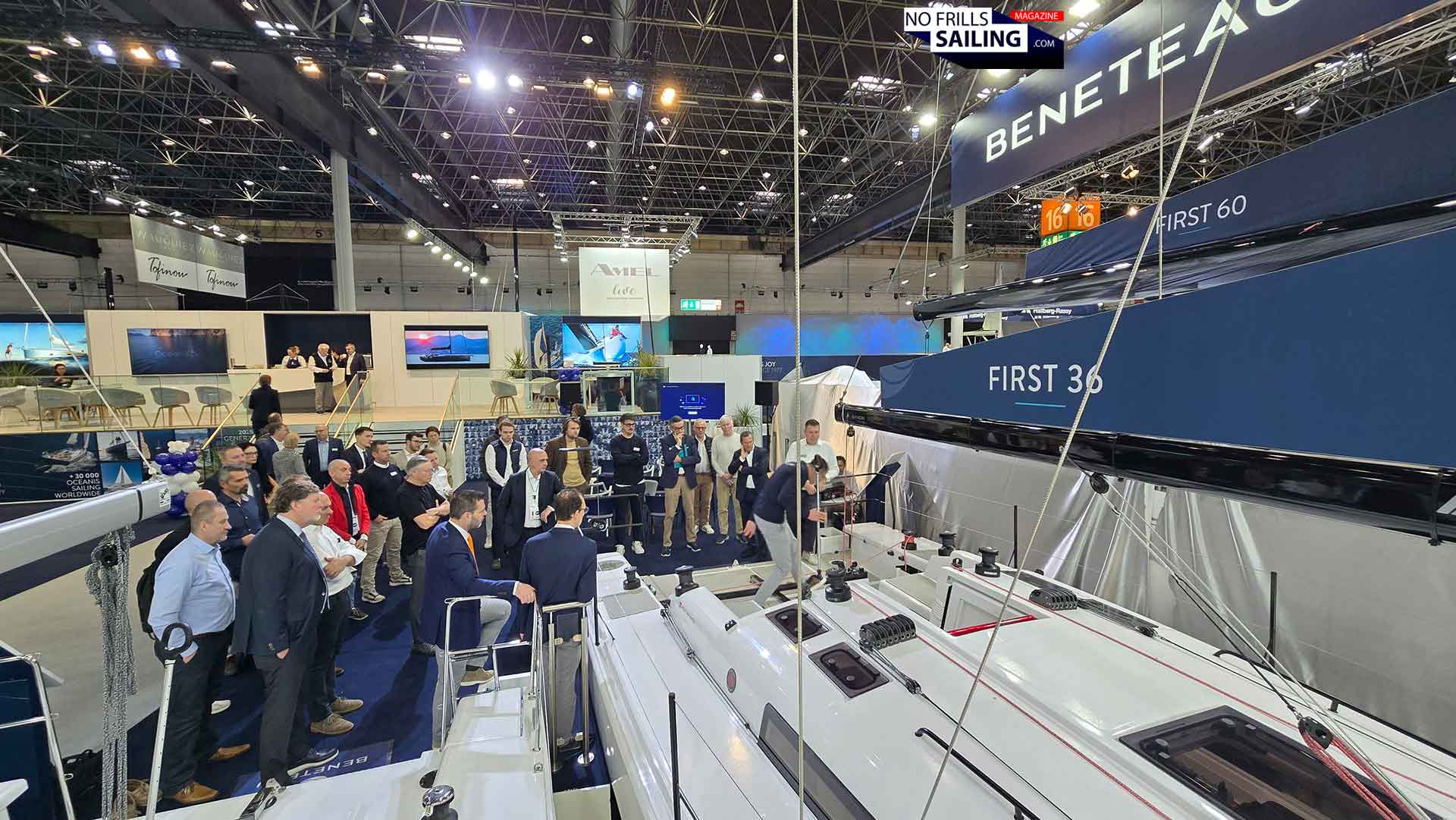
You may ask yourself: What´s about this ship that it needs a thorough walkthrough? Isn´t it the usual performance version derived from the standard boat? Well, this may be the case with other brands, with Seascape however it´s different: Before they put the red “SE”-stickers onto a boat, much more needs to be happening. And so I invite you to this detailed walkthrough on and below deck of the new First 36 SE, which indeed for most part, is a completely different boat than her “standard” sister.
The “GT” for Porsche is the “SE” for the First
In fact, she is so different, that the Beneteau shipyard insisted in detailed briefings for the official dealerships before the boat show opened to the public. It took Tit Plevnik more than half an hour in fast-forward mode to explain and show what they have changed in order to squeeze out the maximum performance of Sam Manuard´s hull. If you´re not familiar with the new Beneteau First code, here´s the simple baseline: When she comes with “SE”, she´s the real deal.
The First 36 has been launched back in 2022 with a massive campaign. At that time, this yacht marked a major step forward for the small Slovenian boatbuilder. They had achieved quite a remarkable track record in making superfast, planing race-ready and regatta-winning boats which were combining sailing fun, simplicity and onboard comforts in a new, unique way. Free of box rules or rating systems, the then named Firsts were a complete new breed of boats. The First 36 would be a great challenge: There´s a big difference between building 24- and 27-footers and making such a big boat like the First 36.
More than 450 kilograms lighter. But how?
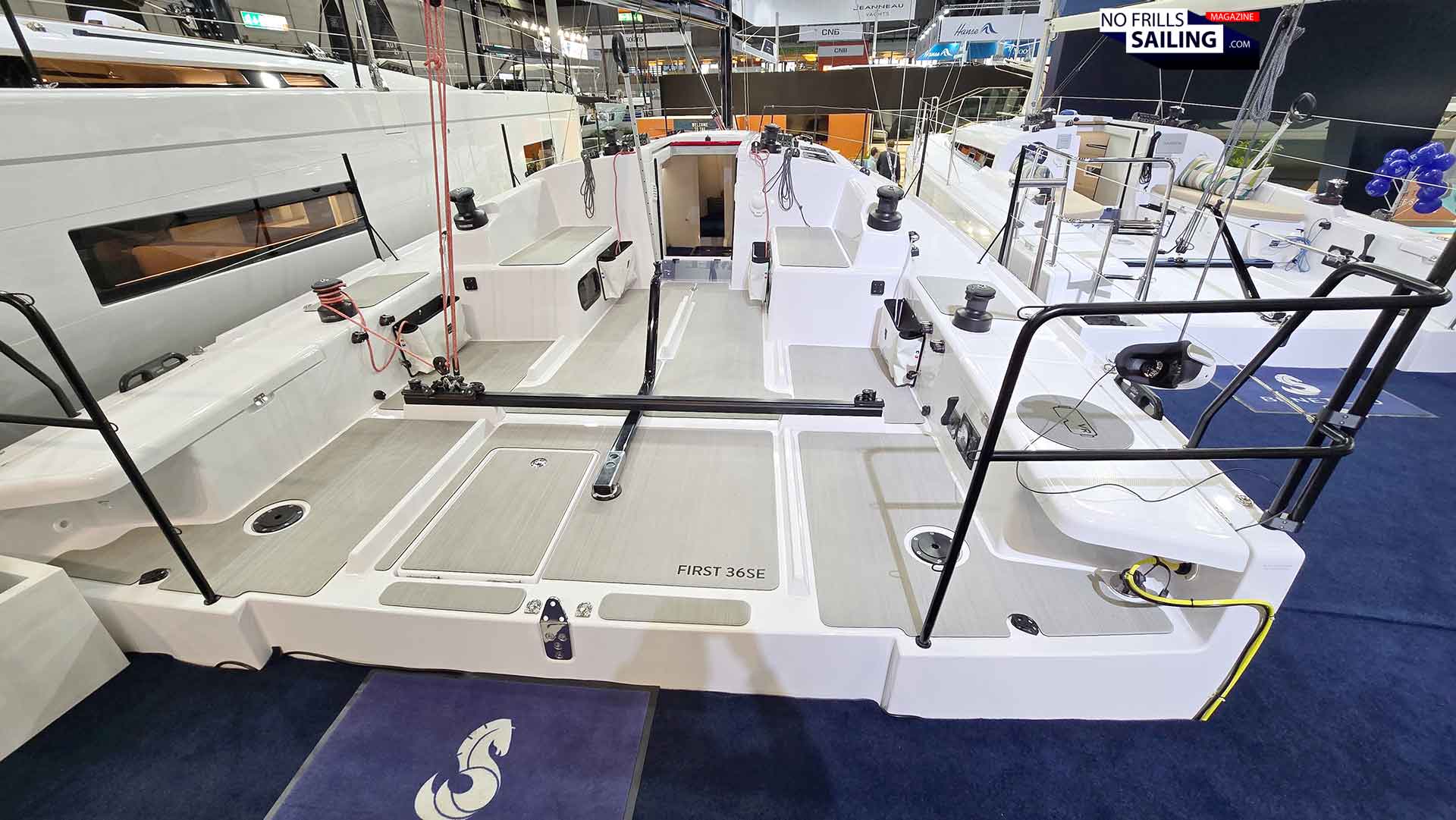
And now, four years later, at last, the long awaited SE-version enters the market. Basically, the standard First 36 had been stripped of everything “comfortable” and unnecessary”, like wooden applications, panels, veneers and decorative elements. The First 36 SE therefore is a bit more than 450 kilograms lighter than the standard version. Standing behind her impressively 3.80 meters wide transom, you immediately understand why:

No double wheel steering anymore! Instead, a single carbon made tiller will work the steering mechanism under deck. The heavy Jefa-steering posts and the whole steering mechanism below alone was more than 100 kilograms. In fact, a boat as vivid and fast as the First 36 needs a tiller-steering! It´s much faster for the helmsman, allows for agile and prompt reactions and will transfer much more feedback from the waterflow around the rudder blades to the helmsman. Also, even if you put markings on the steering wheel, you never really know how the rudder is positioned: With a tiller, it´s clear from just one blick of an eye. So that´s the first thing: Tiller steering for the First 36 SE. Nice!
I feel the GEKKO-vibes. And I love it!
As I step aboard this hull #002 I suddenly felt at home. Literally, because my old First 27 SE GEKKO – apart from being much smaller – had the same atmosphere, the same feeling to her. This is boosted by the soft haptic of the SeaDek material used to secure some anti-skid for the cockpit area. You know that I love this EVA-foam, material so much that I even utilize it for the interior flooring of my own new boat.
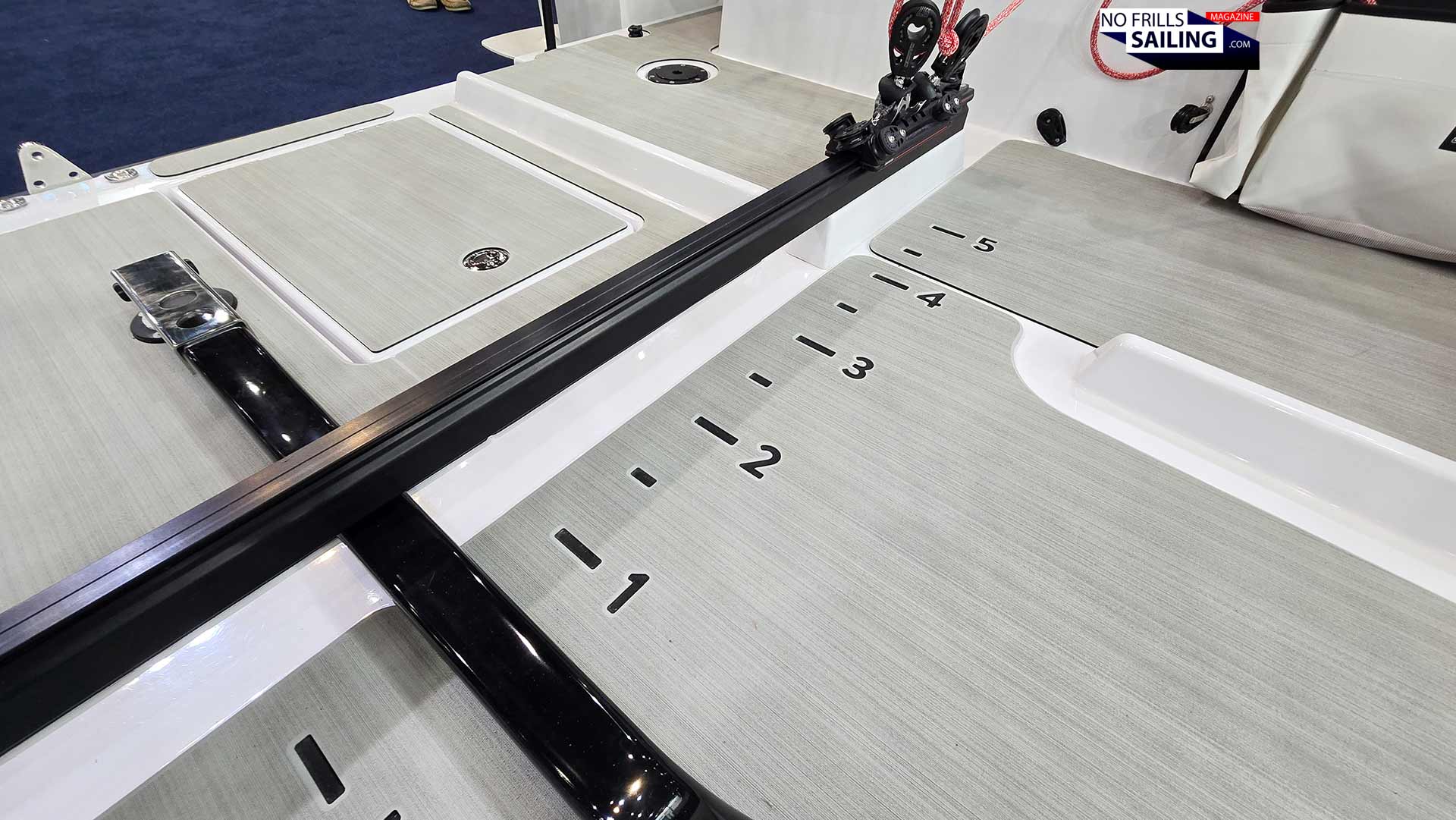
The aft area of the cockpit is dominated by the mainsheet traveler. This very important sail trim feature runs from one side to another. It has been mounted on two raised GRP bases so that the tiller runs forward underneath it: A proven setup from the First 27 SE. I don´t know if I like the numbers/markings etched into the floor, but you surely can go for a different design or style.
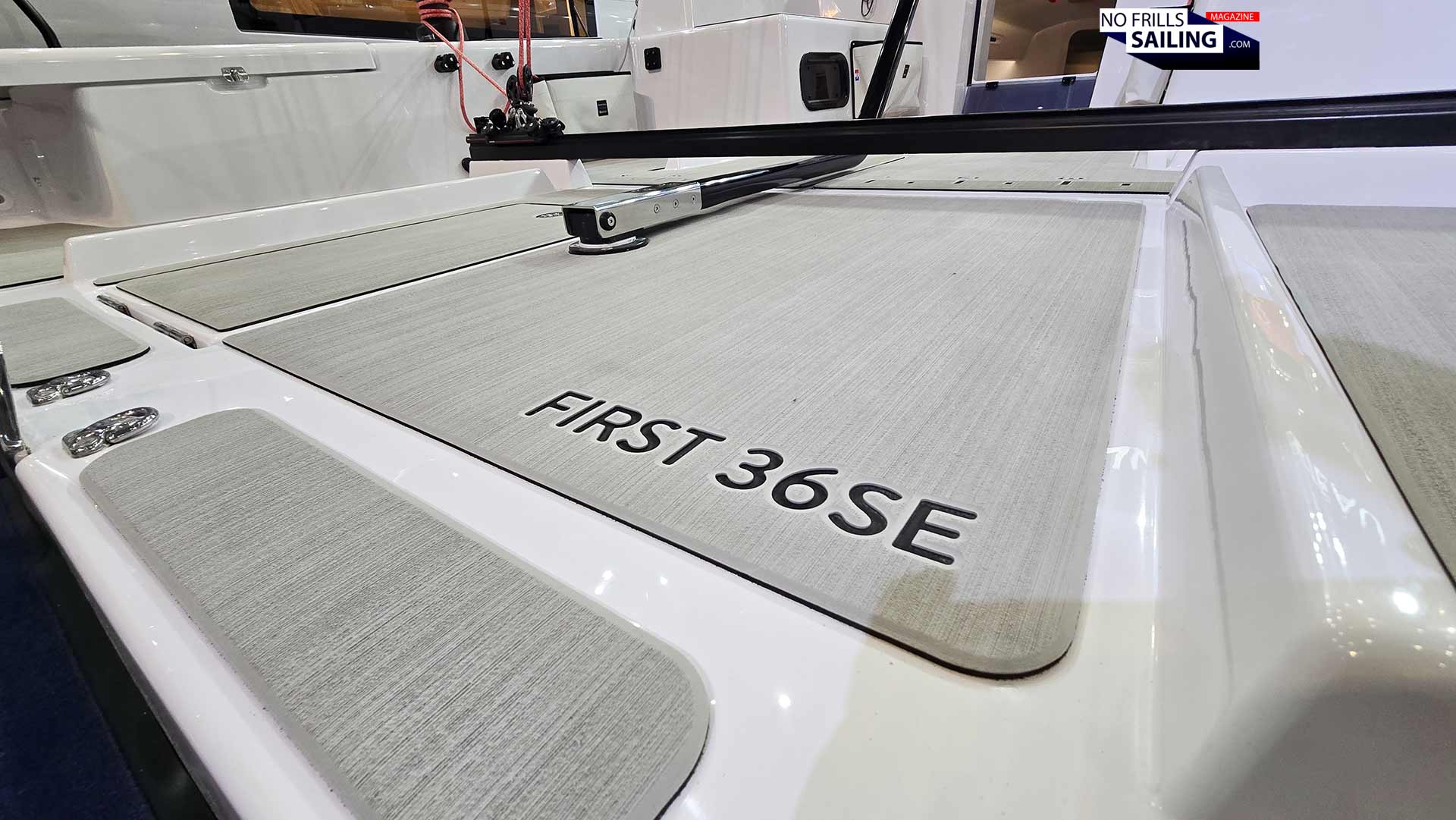
The First 36 SE´s cockpit is optimized for single- and double handed racing, although the position for single mode is the preferred one. With the tiller well within reach, you can both work the mainsheet (to your right), the Jib sheet (to your left) and the traveler (between your legs) – when sailing on a portside tack, vice versa when sailing on starboard tack. Working winches for halyards, reefing lines and such end on the coachroof on winches to both sides of the entryway down, Gennaker and/or Code 0 will be sheeted to one of the aft winches. Perfect.
All-out racer? Well, not quite …
Speaking of the entryway down: Much of the excess weight that had been shaved off the First 36 SE would have been found down here. You may open my POV-walkthrough article parallel to this one and switch from picture to picture to really comprehend and understand the differences. So, let´s go down now and have a first general look into the First 36 SE interior:
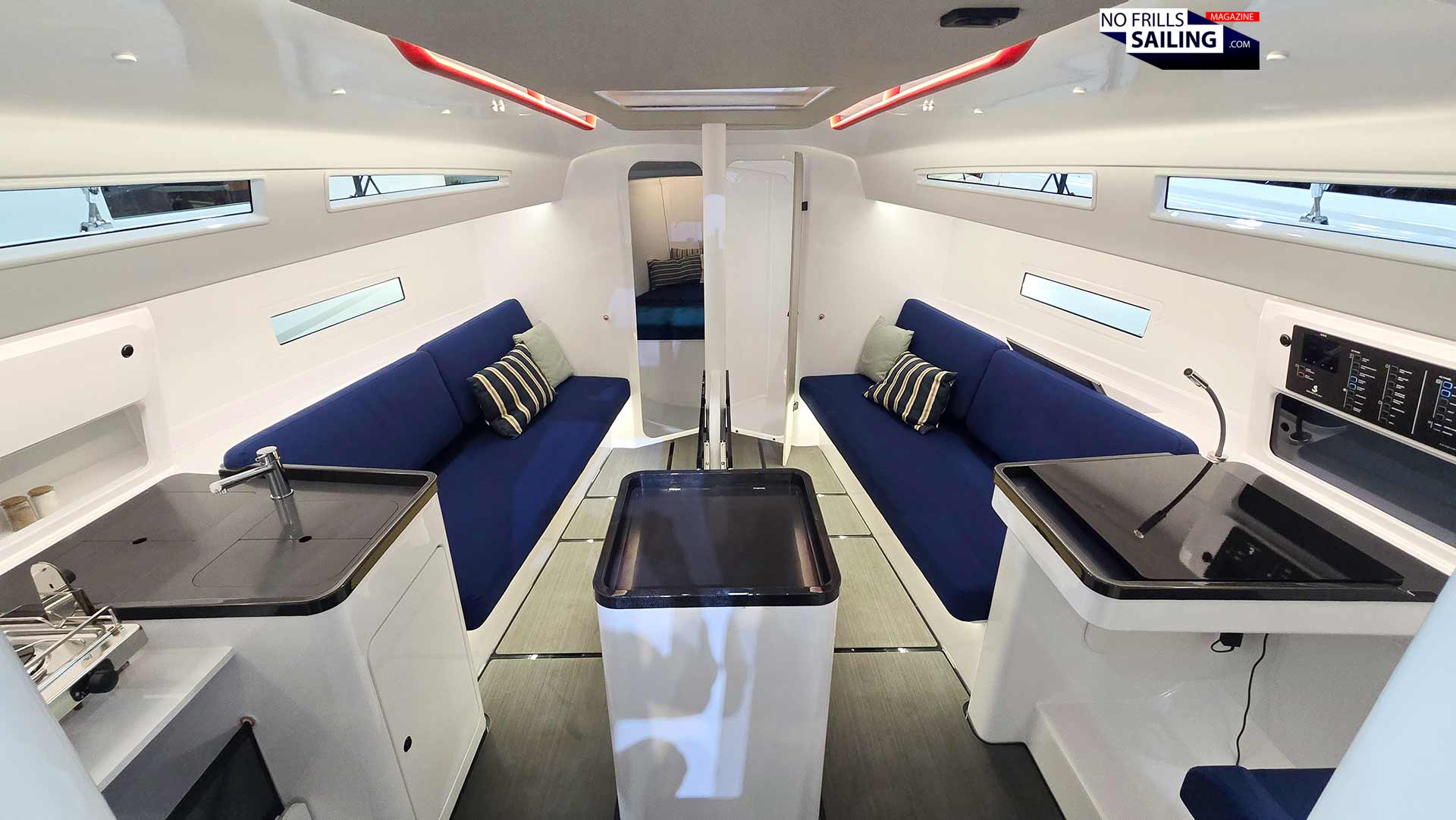
Structurally, the standard and this SE-version are the same. There is no difference in the production methods, which for both is vacuum infusion, and no individual parts have changed. But as you can see clearly, the SE bears less decorative elements, no wooden parts at all anymore and she clearly looks “stripped”. Design-wise, more “racy” colors dominate the scene now: Strong colors, black lacquered surfaces, a shiny blue for the cushions and of course the aggressive red for the metal parts, like the massive grab handles.
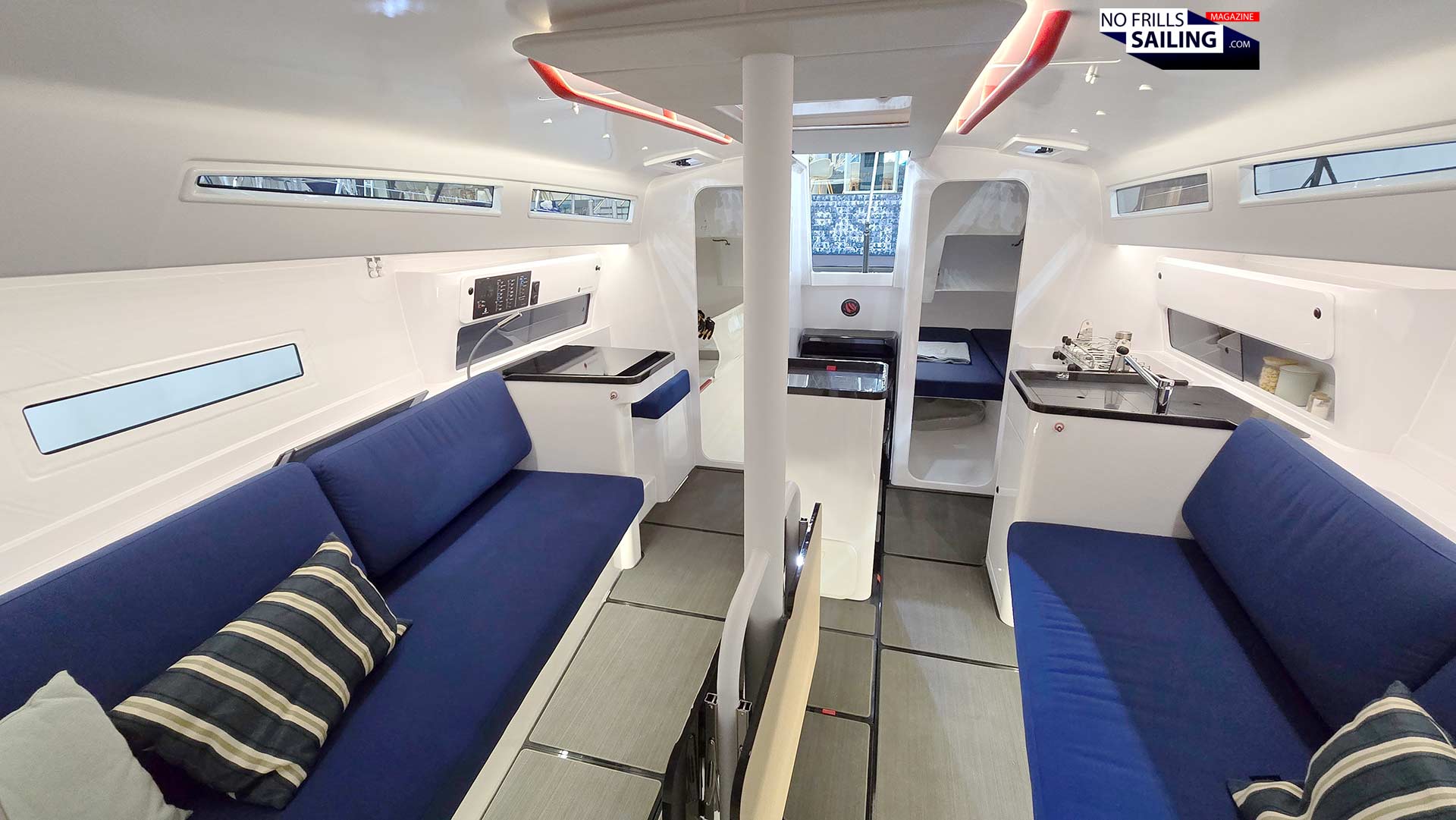
In this, I am sure you are surprised now. The interior looks far from “stripped”. A bit colder from its impression, but less comfy? No. The First 36 SE offers the same amount of onboard comforts as her standard sister. The nice, wide salon benches (with the clever fold-behind backrest-cushions) can be turned to berths in matter of a second. There´s a fold-up central table and the same layout for galley, nav station and cabins. I imagine changing the straight blue cushion color to my GEKKO´s orange again – she´d be perfect!
A hardline slimming diet
I remember talking to Seascape-boss Andraz Mihelin back in 2022 about the all-new First 36 and I asked him if there would be an SE-version. He was hesitant at first: Stating that they were all so excited and delighted with the metrics of the finished new boat and her great performance, that it would be anyway extremely hard to squeeze out more. Now, a few years later, we can see where they made the cuts: For example here:

The standard First 36 comes with standard boat building plywood, veneered with First-style faux Teak. This boat´s floor boards however are made of extremely lightweight composite. Even though they are fitted with SeaDek EVA-foam, they only weigh a few couple of grams. You can easily lift them with two fingers. I don´t know how much this saves in kilograms, but the difference is striking.
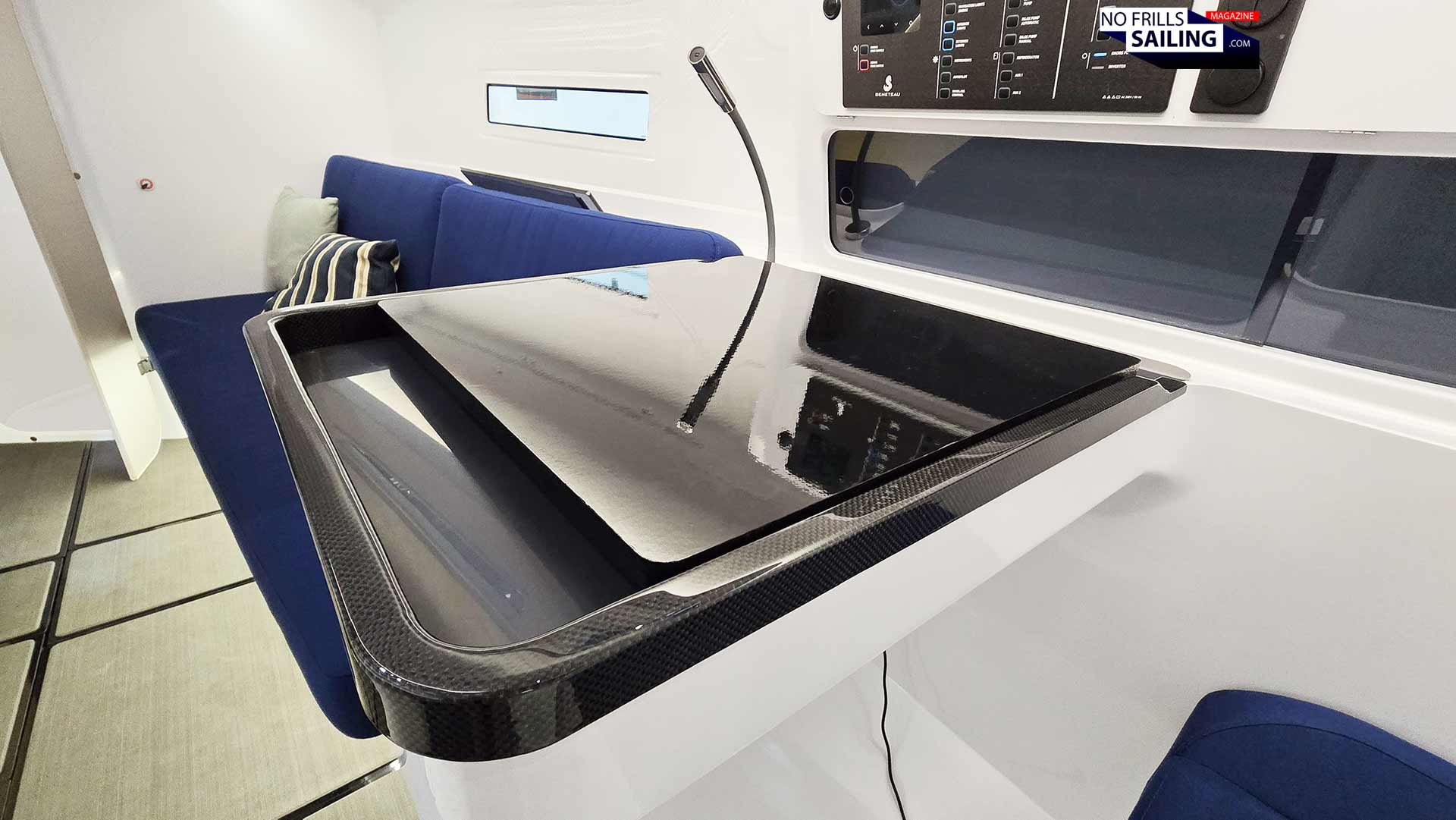
All of the massive wooden parts (in the case of the First 36 laminated) have been removed. Instead, the shipyard had fitted nicely done carbon fiber fiddles and embrasures, as you can see, around the fridge and chart table. All in all, it feels very significant, reasonable and looks just beautiful.

That´s one big difference, by the way, looking at most of the other brands: These boats are “all out” racers, barren, stripped, not very welcoming and certainly not comfy. In here, on the other hand, I could easily envision myself relaxing after a race, welcoming friends or celebrate with the guys.
Reducing the galley to a minimum
Of course, the word “comfort” is pretty elastic. As you may know, Seascape – now First – have always been passionate advocates for a simpler, more based approach to fill the term “onboard comfort” with life. The First 36 SE, although still their biggest boat built I Slovenia, is no exemption from this.
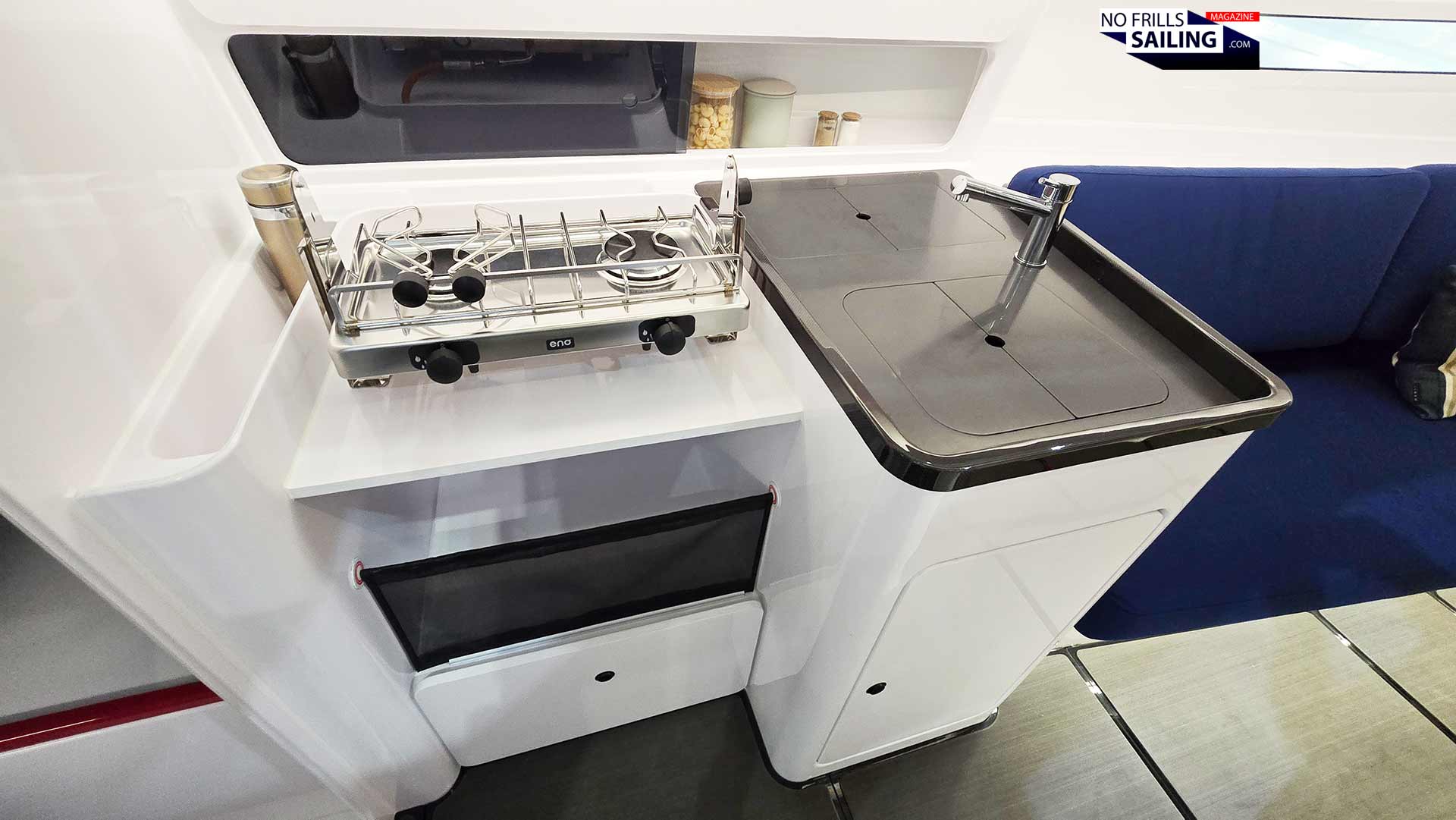
This can best be seen in the ship´s galley. As I said earlier, from a structural standpoint it´s the same boat as the standard version, but the differences are in so many details. For example, in the Firs7 36 SE – to save weight – the heavy standard 2-flame gas stove has been removed. Who needs an oven anyway? Instead, a 2-flame stove only is installed, gimbaled of course. I don´t know the exact weights, but a standard 2-flame plus oven from Eno or the Force 10 burner weighs in at some 25 kilograms. The burner-only solution comes at 6 to 7 kilograms. You see?

It´s a kilogram shoved off here, one or two more canceled there. This is how you take away the weight, as it sums up. Even on a grams-scale, for example: I think it makes sense to remove even smaller “heavy” things, just as the wooden fiddles, and bring in carbon fiber composite parts. This is the strength of this material: Saving weight in large quantities. And by the way, it looks absolutely sick! The First 36 SE has a way more aggressive, modern and racy look than her standard sister.
Three cabins – or none
Again, comforts – or at least the basic layout – haven´t changed. Overall, the First 36 SE itself remains a 3-cabin boat. There are two large, symmetric cabins in the rear and a forepeak in the bow of the ship. Position of bulkheads and therefore overall measurements haven´t changed at all. But again, there are some profound changes. Let´s take a look inside the rear cabins.

As with the standard First 36 as well, the SE-version is highly adaptive when it comes to the amounts of bunks. Fully crewed, it´s six adults in three cabins plus two more on the convertible berths in the salon. Each aft cabin is fitted with easy to remove bunks and cushions. In the picture above you can see the configuration when occupied with people, the picture below shows the emptied cabin, utilized as wet-clothes dry room or stowage:
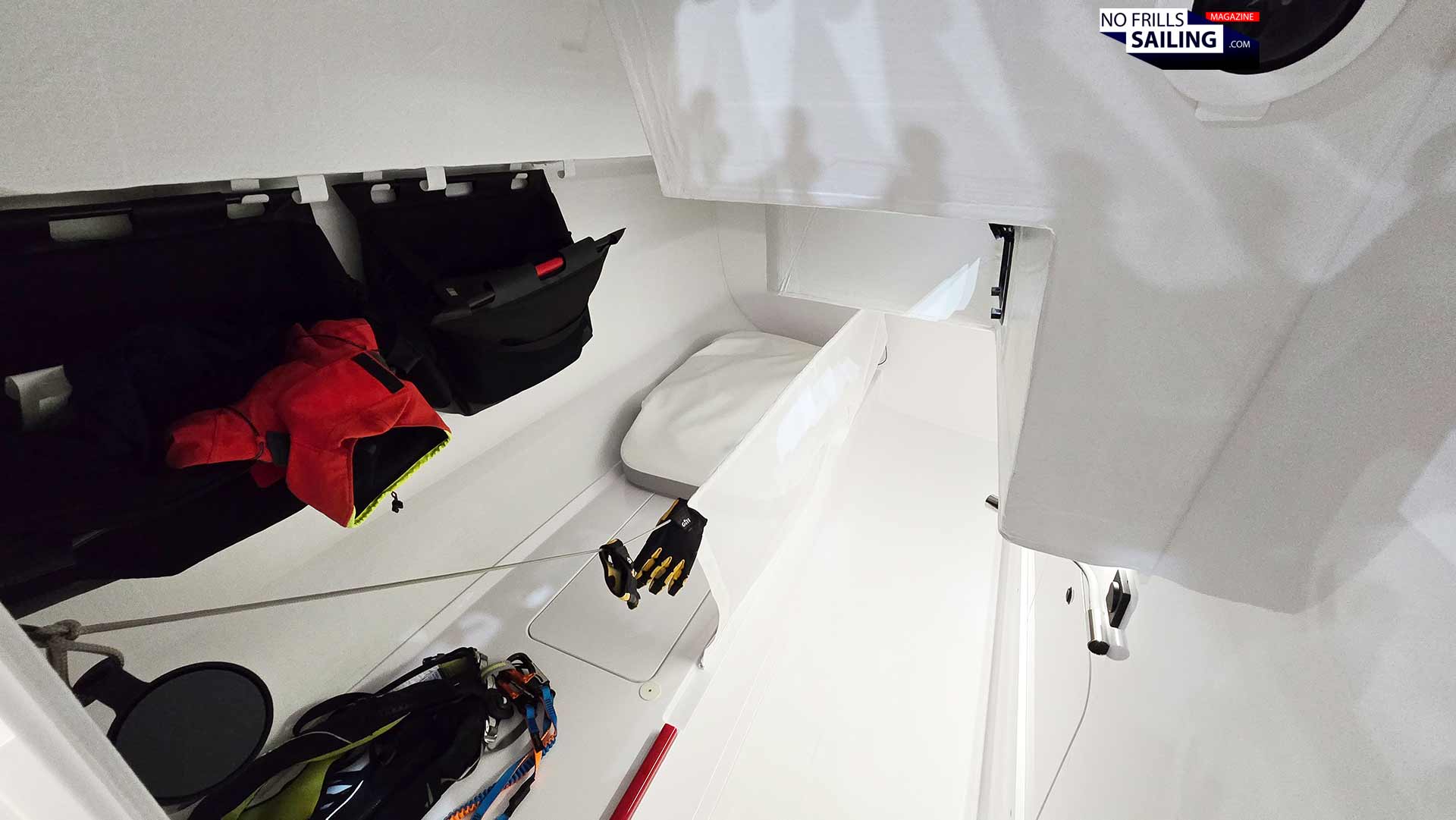
As you may already guess, Seascape has taken out every single piece of wooden furniture. There are no cabinets for clothes anymore. Instead – and I really appreciate this, rejoice! – there are the ingenious First carrier bags. You may be familiar with these from the First 24 SE and/or the 27 SE. Easy to use, extremely practical and so simple, yet highly practical, those carrier bags are a signature feature of Seascape and embody best their “simple, cool and useful”-approach to cruising comforts.

You take them home, empty, fill them up with clothes and simply hang them in place where you want. If filled up with dirty clothing again after the trip, you just take them off the wall and bring them home. No need for big travel bags or lengthy repacking, no need to waste stowage for empty travel bags. I love these! As for the front cabin, nothing changes here as well:
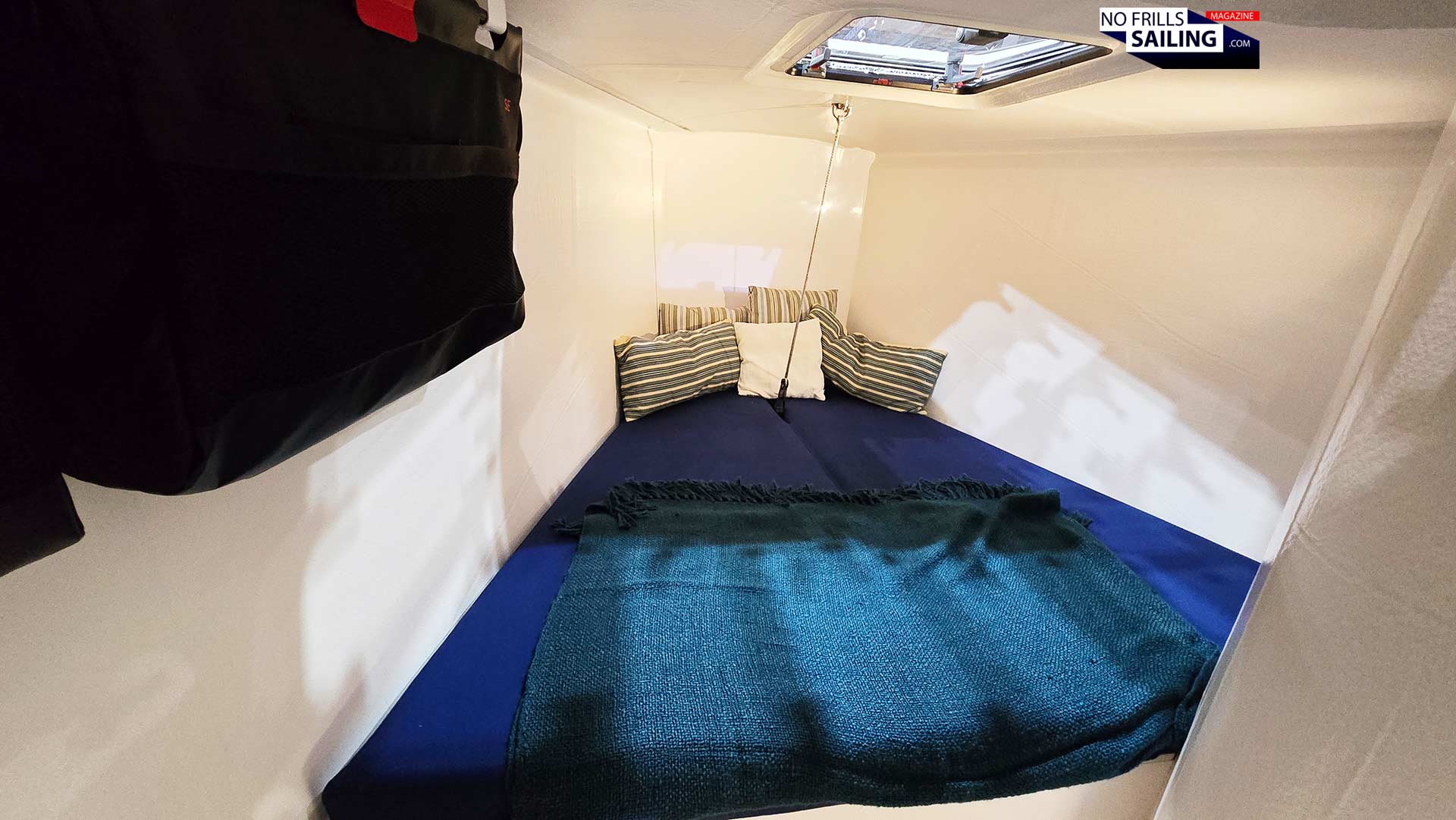
Well, maybe for the fact that the attachment point for the inner forestay up on deck is extended through the cabin and secured to a chain plate between the two mattrasses. If no inner stay is needed for the small Jib, the Dyneema-lashing can be easily removed so that you get your full-sized double front cabin back. Many racing crews however will surely mainly use the front cabin as sails locker and utilize the aft cabins. But anyway, three full cabins, if needed.
May be still an issue: The bathroom situation aboard the First 36 SE
Yepp, one issue with the First 36 isn´t solved still, even not with the First 36 SE: The issue of the bathroom. Many people, including myself, are waiting for a classic two-cabin version where the mini-bathroom is put to its original position to starboard aft, taking the volume of one aft-cabin, but therefore offering much more decent space. Although Seascape says that they are thinking of it, this version isn´t here as of now.
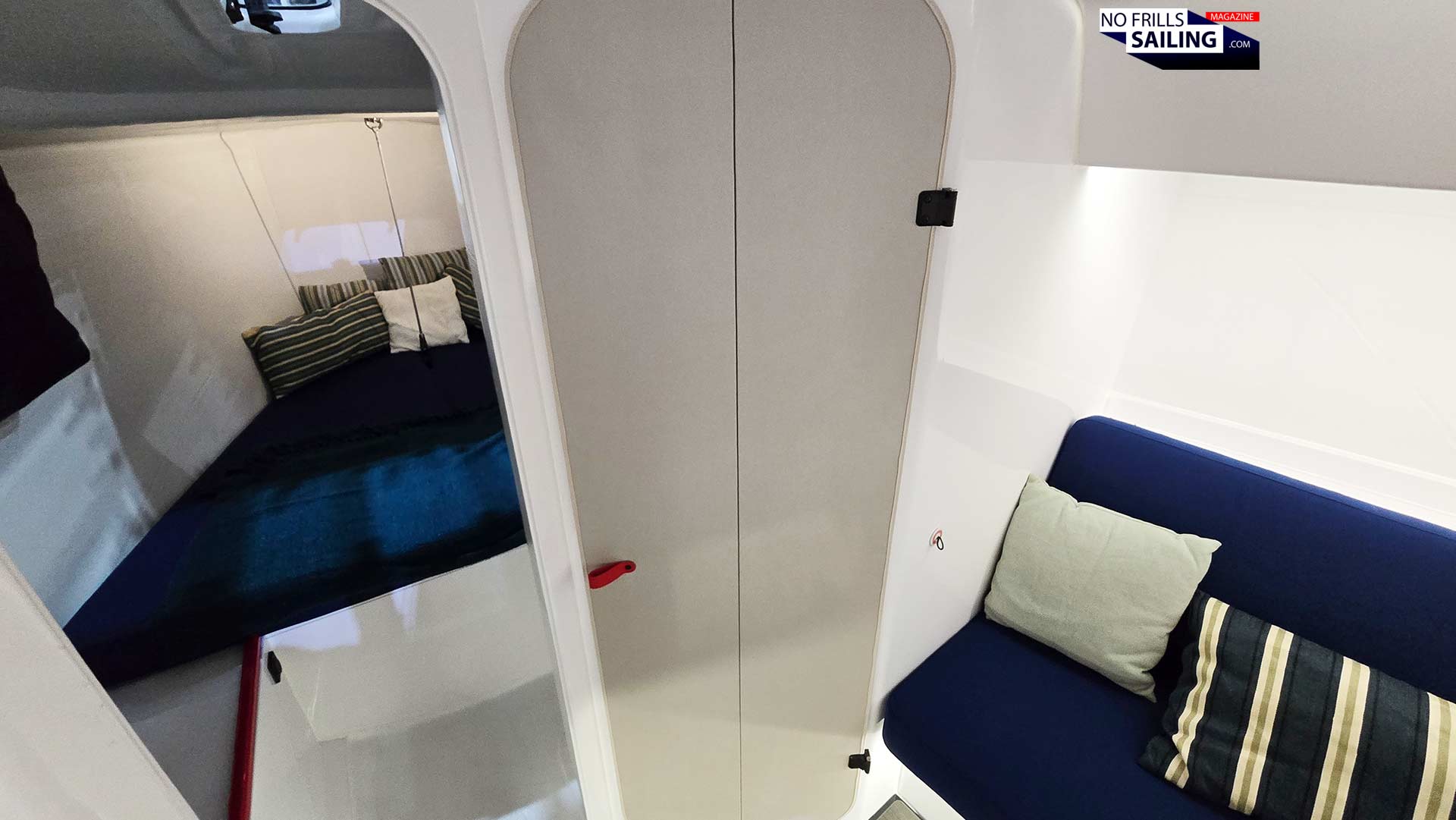
So, still, the SE comes with the tiny front bathroom, located at the forward end of the salon. But as you can see, something´s different: There are no doors. For no cabin, to be precise: Again, to save weight, Seascape designers decided to get rid of every door in the whole ship. Which indeed makes sense: The door frame is massive wood, doors are usually made of veneered plywood. These could weigh from 5 to 10 kilograms, which, in a boat like the First 36 SE with four of them all in all will add up sufficiently.
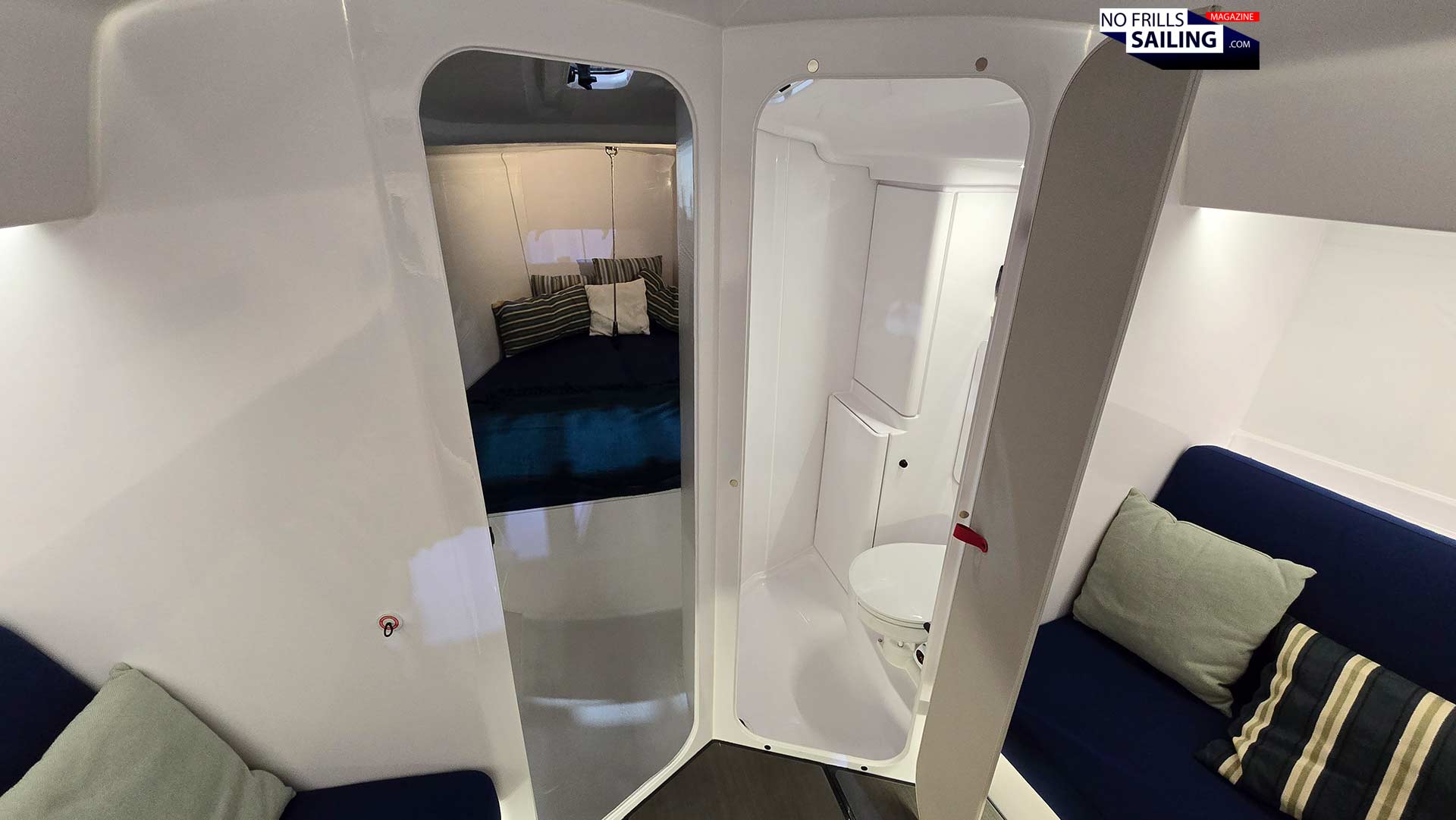
Instead, the cabins are completely open. No door whatsoever. As for the bathroom, one of the proven signature features from the smaller Firsts has been transferred to the big 36: The magnetic folding doors. I absolutely love these! You may check my article about the ingenious versatility and flexibility these lightweight doors give to the First 27 SE´s small heads, nevertheless, thus creating privacy and intimacy for your personal hygiene. Same now for the 36 SE, and it really works fine.
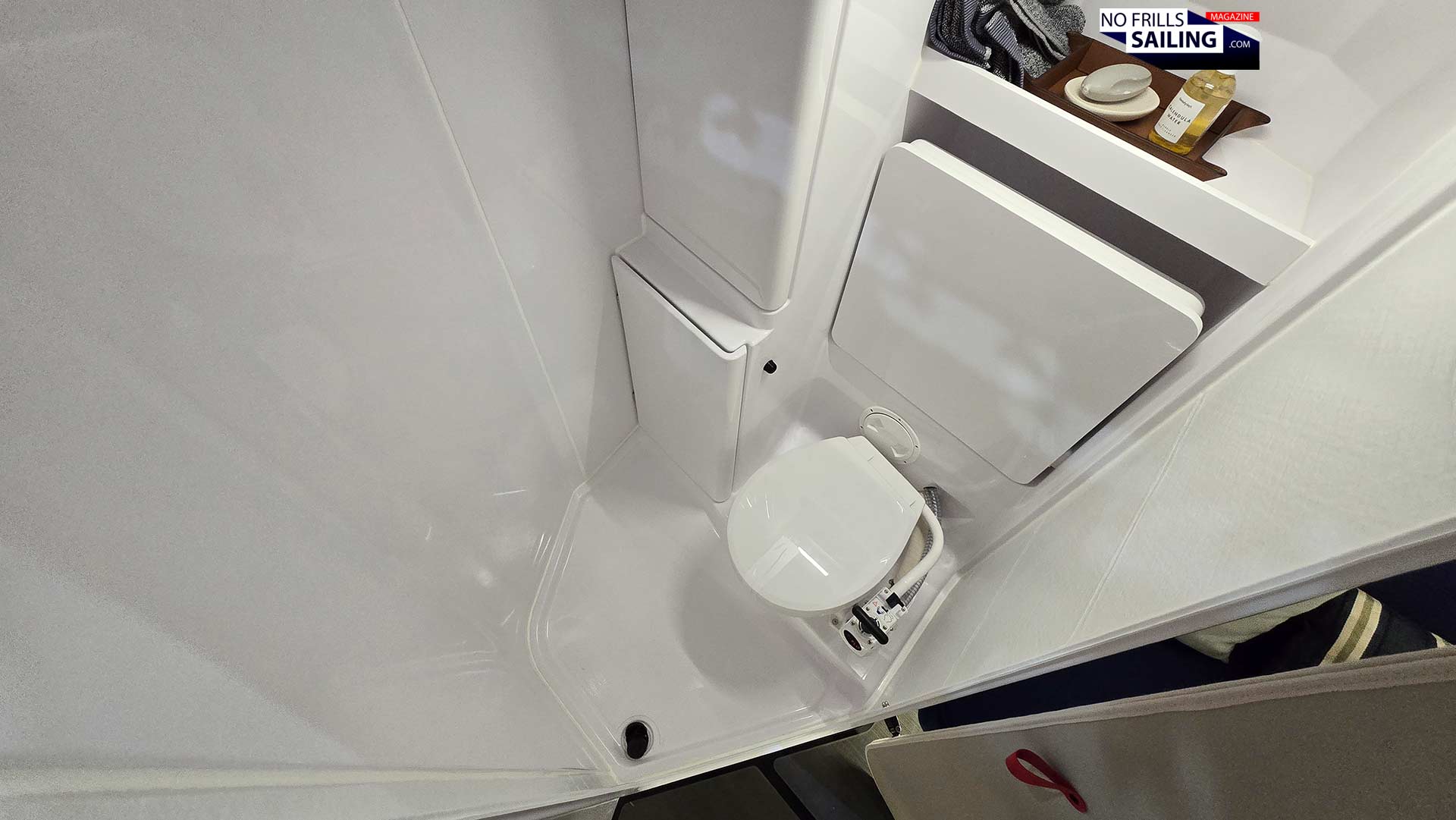
The head as it is comes with all the pluses and the minuses we´ve discussed with the standard 36 as well. It´s very small, but decent. You can take a dump here, sit down and relax, but also fold down the little washbasin, get shaved or brush your teeth. Even showering is possible. But it´s really cramped in here. Kristian Hainsek, the other founder of Seascape, commented on this with his very unique and dry humor: “Do you want to shit comfortably or sail fast?” Well. You decide. For an all-out racer like the 36 SE I find this solution absolutely sufficient, for the more fast cruising-oriented standard 36 I´d still wish to have a 2-cabin big bathroom alternative.
Race hard – relax in style
No doors: So how to arrange privacy aboard, you may ask yourself now? Well, to be honest, I for myself decided to get rid of all the cabin doors in my own new boat as well! Firstly it was a decision purely driven by budgetary reasons, because those two doors not being built it saved quite some money. As I will be mostly sailing alone or with my own family, simple (but nice) curtains will be as sufficient to create visual privacy – door or not, any sounds made aboard a sailboat will be heard anyway. So, that´s the overall comforts situation aboard the First 36 SE.
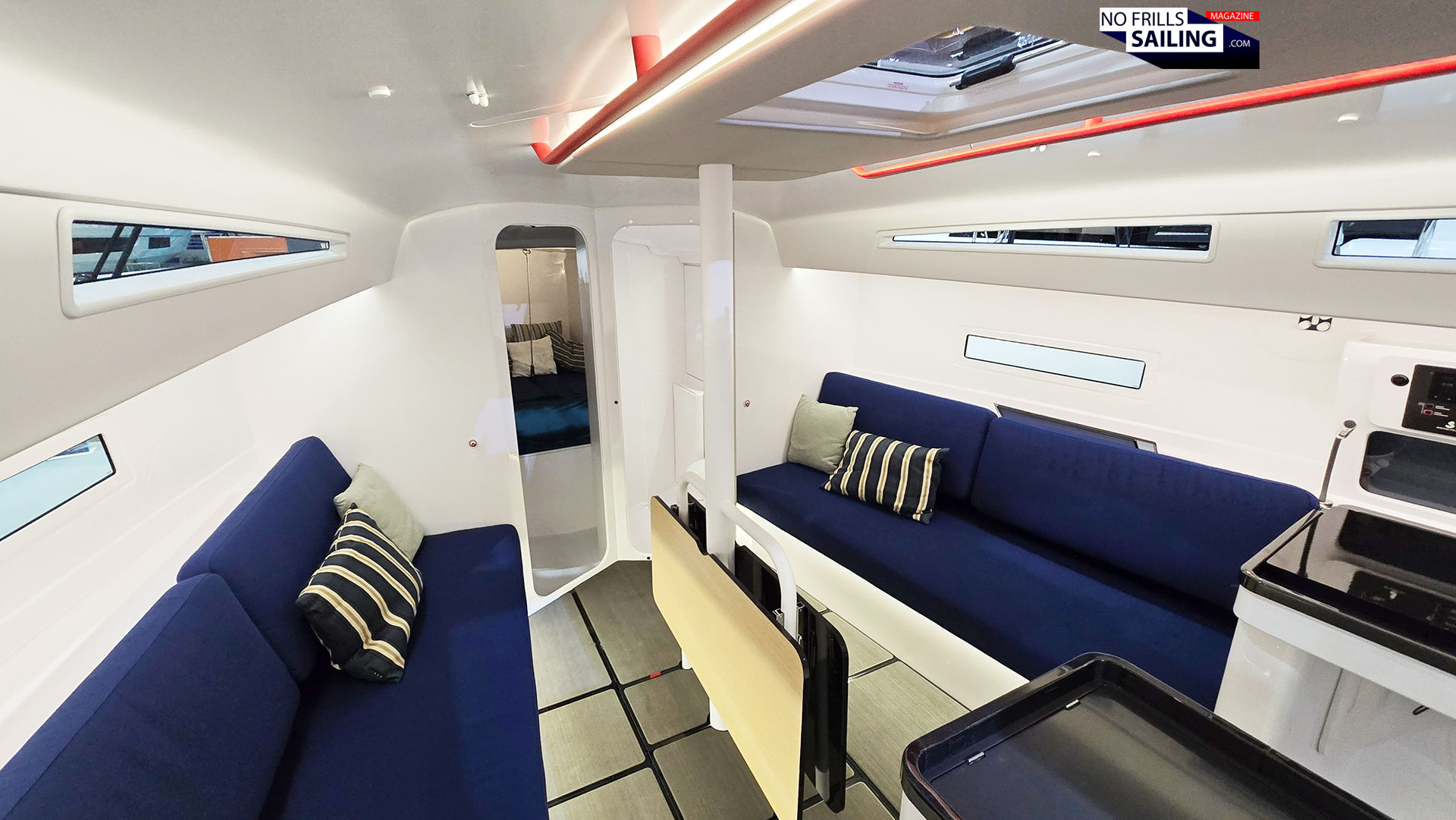
Do you like it? I just loved it! This is a “true” First, classy, hot-blooded, uncompromising in many ways but at the same time stylish and sexy. This goes for her outward appearance as well as her interiors. She doesn´t appear “empty” or cold like so many other racing-oriented boats, like the SunFast or the JPK, so I could indeed really think that introducing this yacht to the market will boost sales to more “serious” racers. Why?
… but will she win races?
That´s the queston, right? I am sure we will see first results in the coming season of 2026. As for now, the shipyard provided a very stunning VR-experience for the boat show visitors, enabling them to live through the powerful sailing performance of the First 36 SE first hand. There was a VR-helmet mounted at the starboard coaming of the boat. When started, it showed a 360 degree film from one of the sea trials of hull #001 in Slovenia. That´s 19 knots SOG in 23-24 knots of wind! Absolutely exhilarating! You may check this video here. One of the reasons of this stunning performance is of course Sam Manuard´s hull.
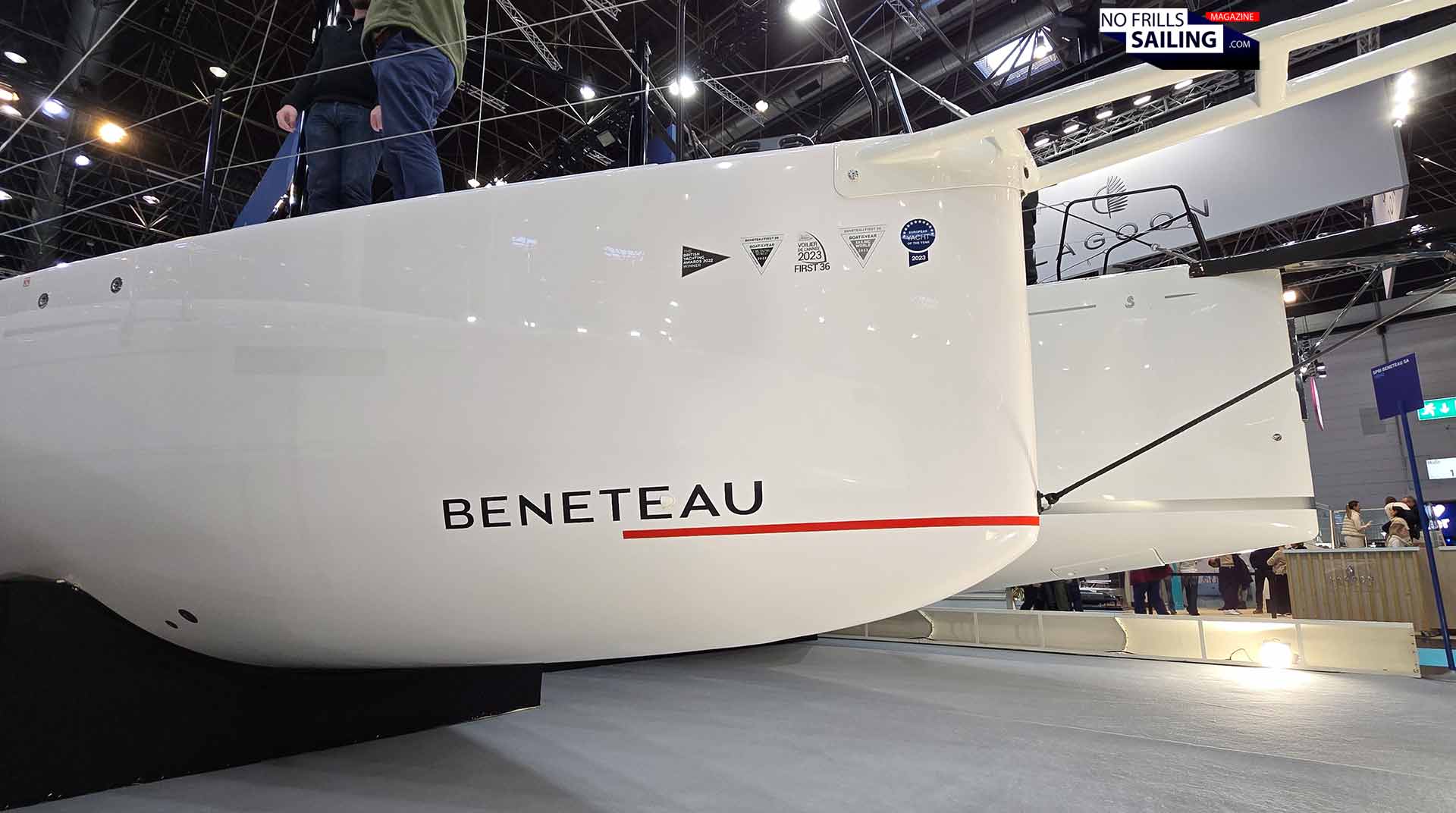
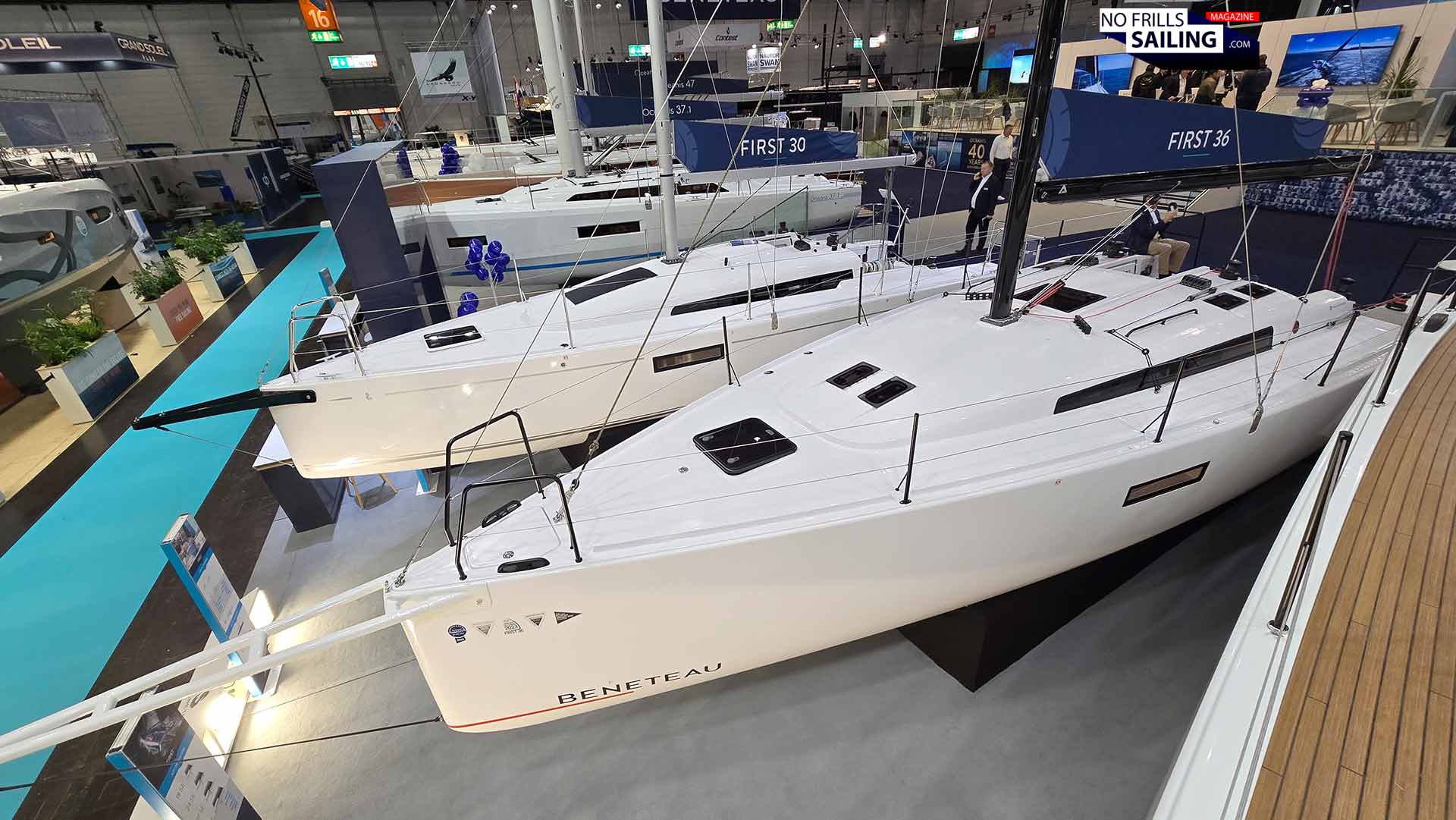
I leave the boat and walk on ground level up in front of her, to take a closer look on her bow. In the picture above you can see the First 36 SE bow section in the foreground (red waterline sticker) in comparison to the bow of the First 60 (which will get her walkthrough-article in a few days as well), the same hull as the Oceanis Yacht 60. You can see, that it has a more bulky volume, the entry area at the front end is rounded. When looking at the 36 SE-bow from dead-front, you can as well adumbrate a kind of “flat” area: This is latest IMOCA and Class 40-technology for better planing.
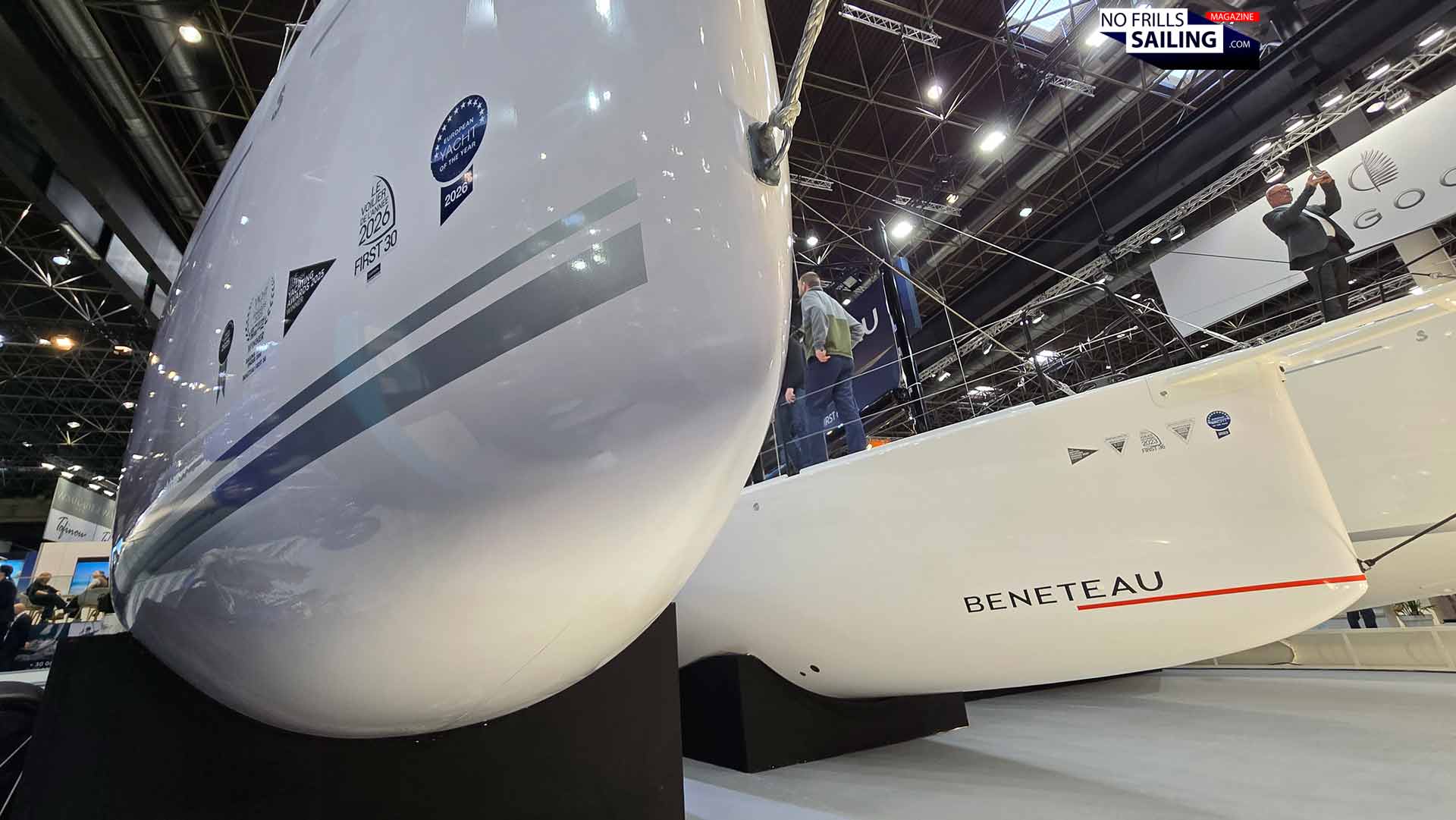
Even in comparison to the newer, smaller First 30, as seen in the picture above. The sum of all the measures described in this article, the First 36 SE will start planing earlier and will be even more nimble when firing up her engines. Rigging-wise, as it is customary for a true “SE”, she will be available with a carbon mast as well to reduce weight further. Interesting sidenote: There´s still (in standard) an aluminum boom, because as they say, the weight saving compared to a carbon composite boom is negligible, but will add 4.000 or so Euros …
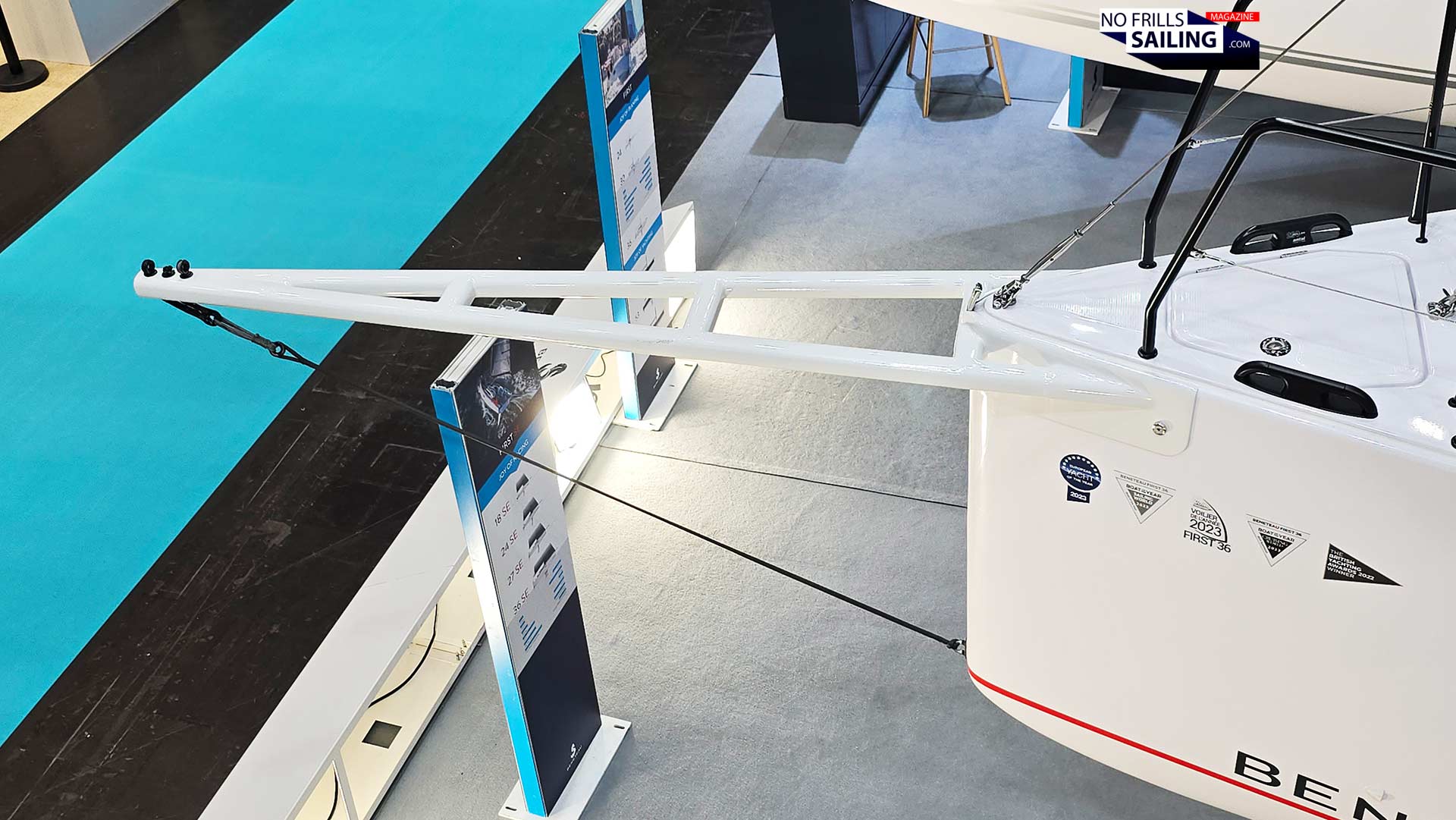
What indeed is different is the all-new massive 2-meters fixed bow sprit. For the boat on display it has been custom painted white on owner´s request, the standard one will be pure carbon, glossy painted. By that, the forestay lengths for the lightwind sails increases just a bit, thus increasing their sails area, but the main reason for having this elongated bow sprit is to have more attachment points for those and insure a better separation of the sails.
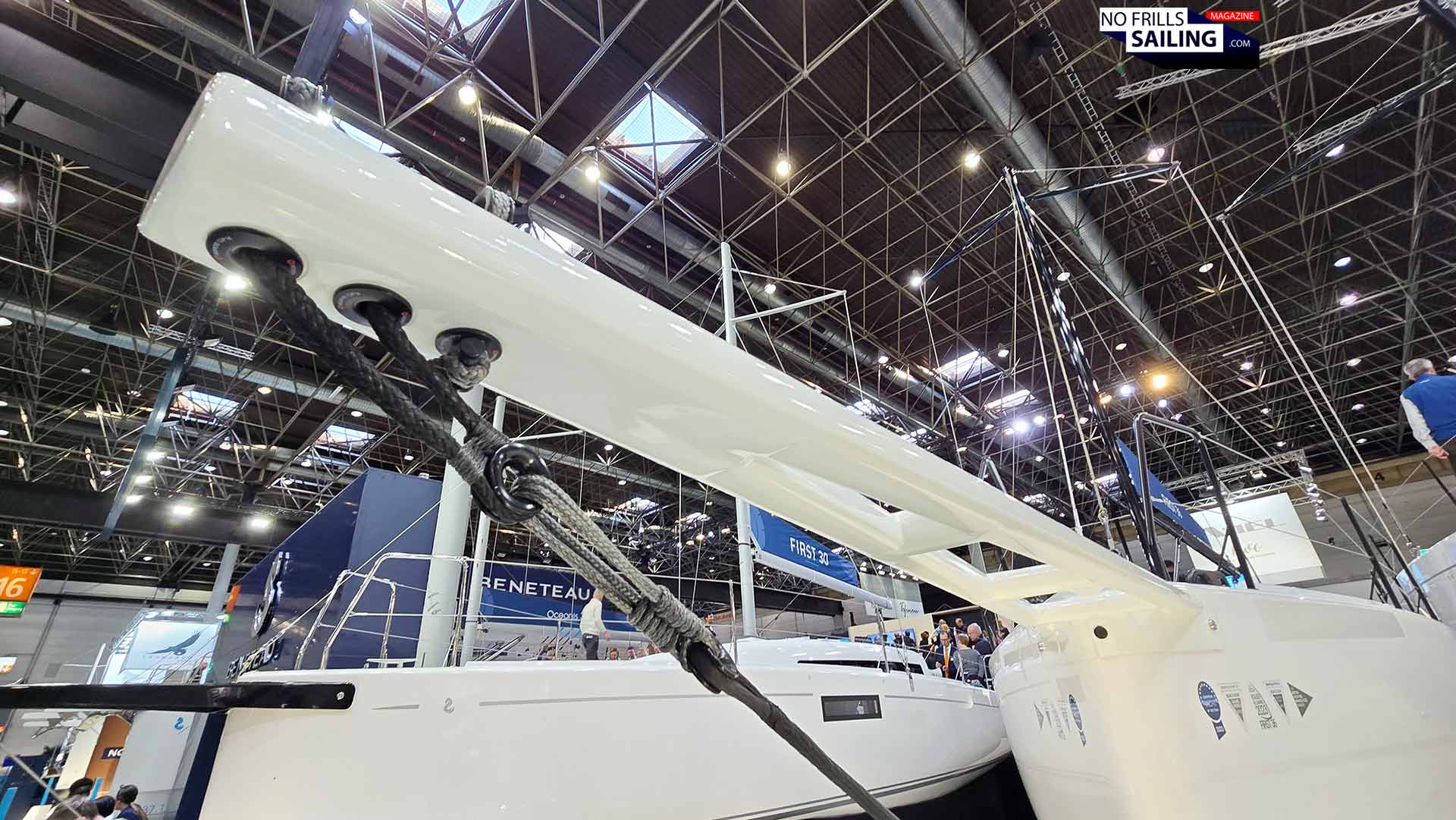
In this you might be surprised that the First 36 SE carries an identical sails area as her standard sister. That´s 42 square meters for the square top mainsail and 38 square meters for the Jib. So all the increase of power, agility and planing capabilities are derived from massive the weight saving. This, the First 36 SE was “rewarded” even with a better ORC rating: Whereas the standard 36 races in Class B and C with an APH of 540 to 560, the new First 36 SE (also placed in Class B) comes with a reduced handicap of minus 20-40 points, which makes the boat now even more interesting for racing sailors or crews with real ambitions. That the First 36 can indeed win is a proven fact, I am sure, we will see the SE stirring up racing fields all over the place very soon.
The most interesting and radical boat of the whole boat show …
… at least for me personally. As I have stated in my overall review of this year´s boat show, it felt that most exhibitors played it safe. No real innovations, no really big bangs, no real highlights. I know, this is always a very personal assumption: Maybe for you the world premiere of the all-new Jeanneau Sun Odyssey 455 was the go-to highlight of the boat show. For me though, it was the First 36 SE: She´s a real bomber, a real difference to the standard boat and ah-so sexy!
Lastly you may ask: “What´s the boat gonna costing me?” Well, that´s the catch, Seascape-made boats never have been price-attractive, nor are their counterparts made by JPK & Co. That´s all vinylester, vacuum-infusion, carbon fiber and upper shelf equipment. The First 36 SE will add further 50.000 to 80.000 Euros or Dollars to the budget – still, as for any all-out racer – without sails of course. But as rumor has it, order books are starting to fill up, so I guess somebody made something right here. Well done, guys – she´s a true sexy hotshot and a hell of a boat!
You might as well check out these related articles:
POV: Walkthrough aboard the “standard” First 36
Even a bit more uncompromising: Tuning a First 36 to the max
First 36 at Fastnet and how a charter-boat won the Middle Sea Race