The L30 class is a little insider´s tip for sailors who have real racing ambitions but at the same time want a boat that offers some decent – even cruising – comforts. In this, the L30 has become a respected class among sailors in Europe and, growingly, in the United States. I´ve met with ex-professional sailor, initiator of the class and designer of the L30, Rodion Luka at a very deciding moment. Because he was about to decide where the next new L30s are being built.
Now it all makes sense to you, I guess. You´ve probably asked yourself why the heck would this guy drive to Hungary in the first place?! It’s a landlocked country, so what´s there interesting to see in context with sailing? Well, you´ve surely checked my amazing tour at the carbon composite heroes of Pauger and latest, my intense factory tour at Ullmann Ropes. But that´s not all.
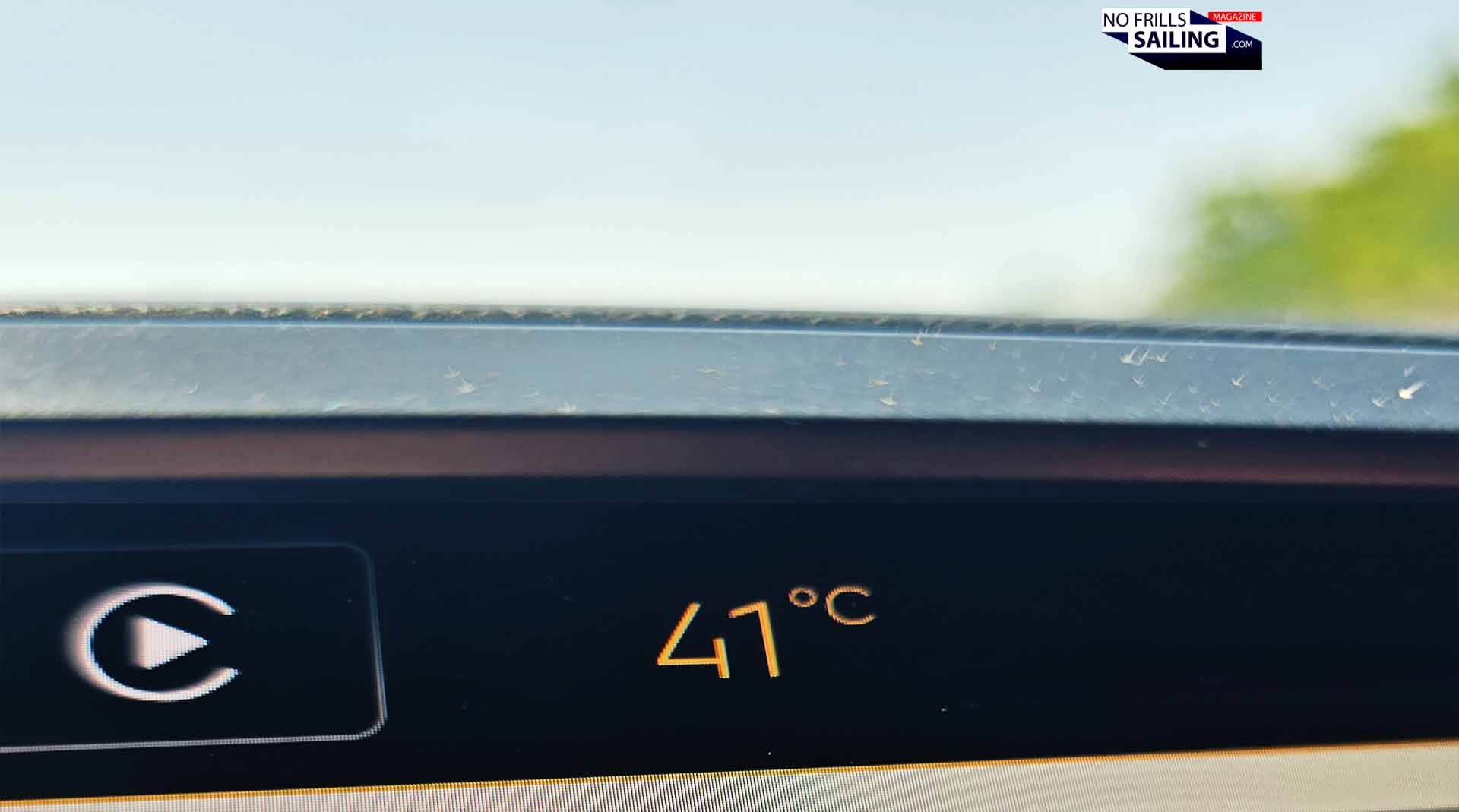
That´s very hot …
I mean, I could have come here in spring or autumn, when temperatures would be a bit more bearable, but of course I would later enjoy a day off at the lush beaches of fantastic Lake Balaton as well. Thanks to the AC in my car, the 41 to 42 degrees Celsius were fine – unless I got out of the car. This time I´ve had an appointment with Rodion Luka at Code Yachts, where the L30 is build. Or shall I say, had been built until now?
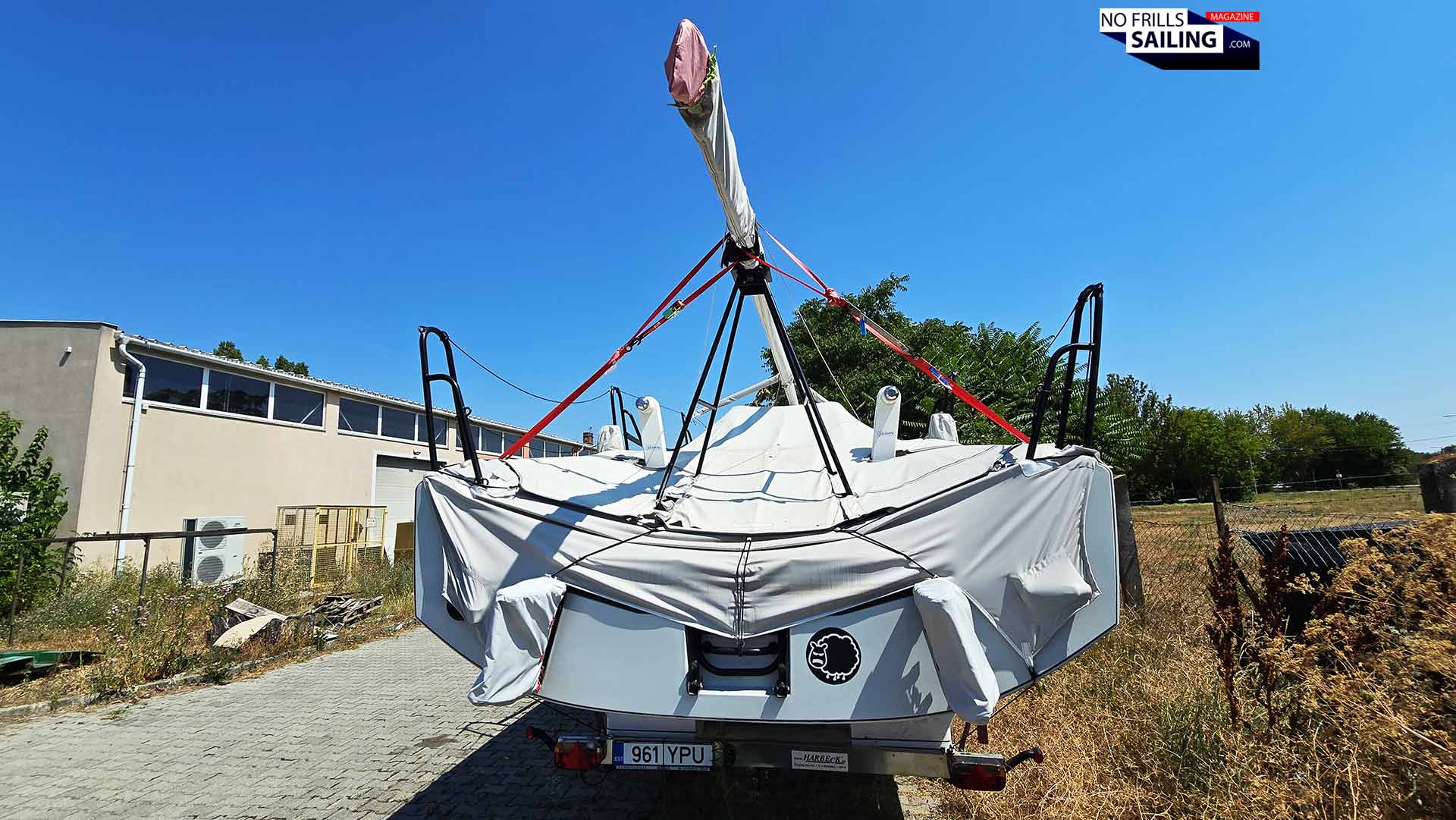
Arriving at Code Yachts in Hungary
Advertisement
Code Yachts is not a small name in the business. Their products earned high respect within the sailing scene: The Code 8 is an ultra-light carbon racer with canting keel, their most sold boat. They have also build the Code 10, a 12 meter racer, also with canting keel, which is said to be very potent and trailerable. Yet, when I arrived, something seemed a bit off …
Arriving at Code Yachts
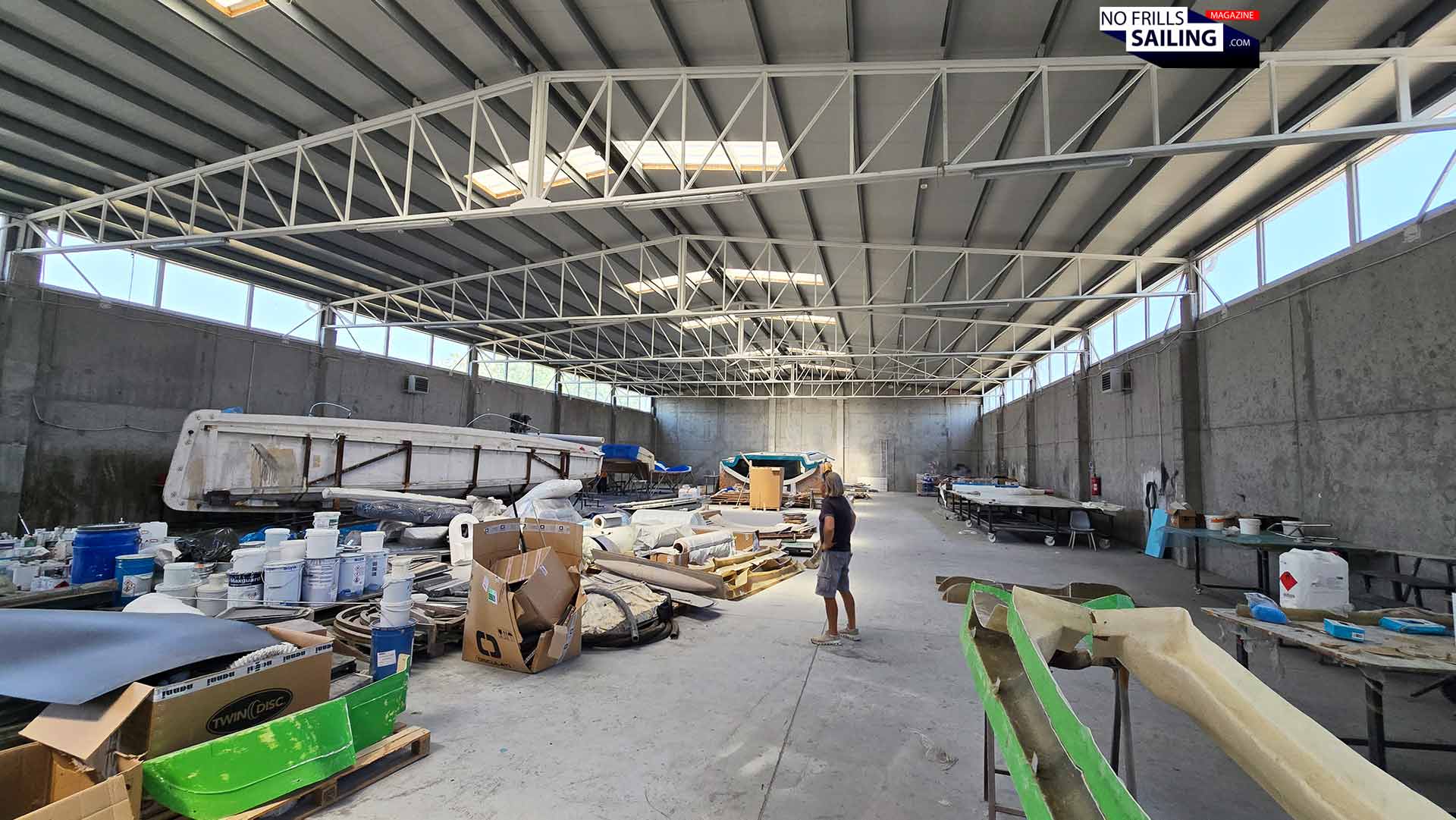
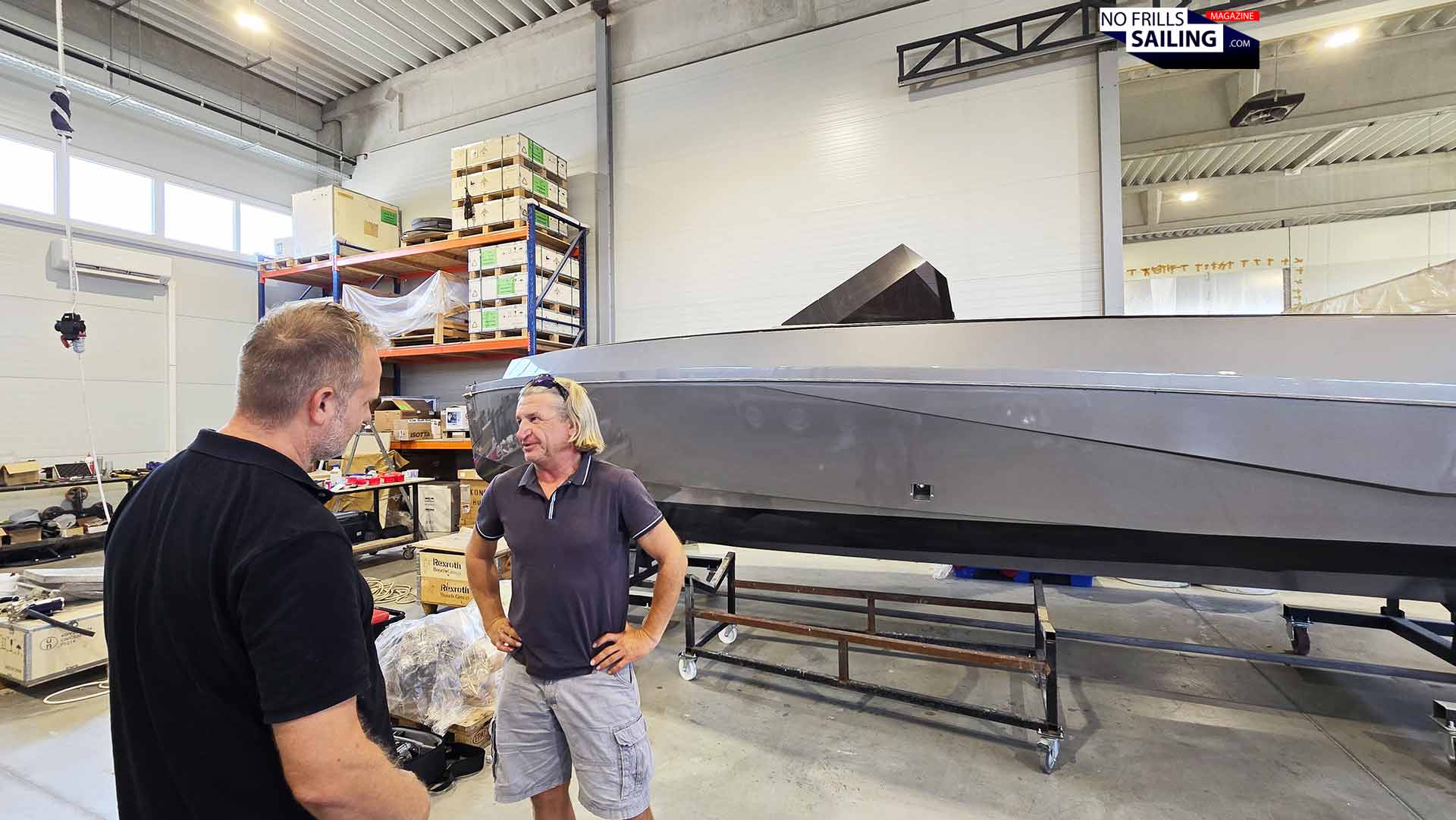
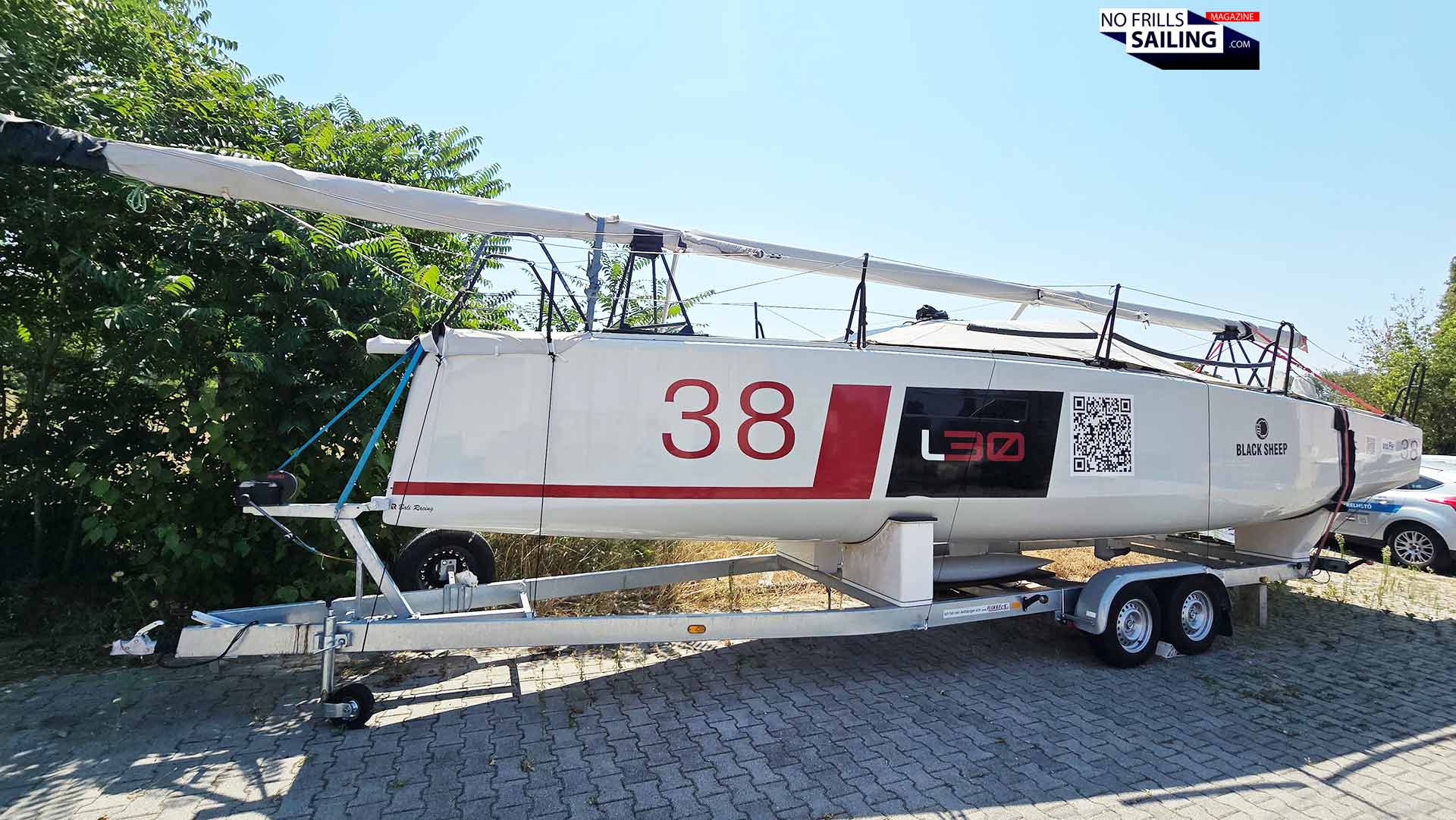
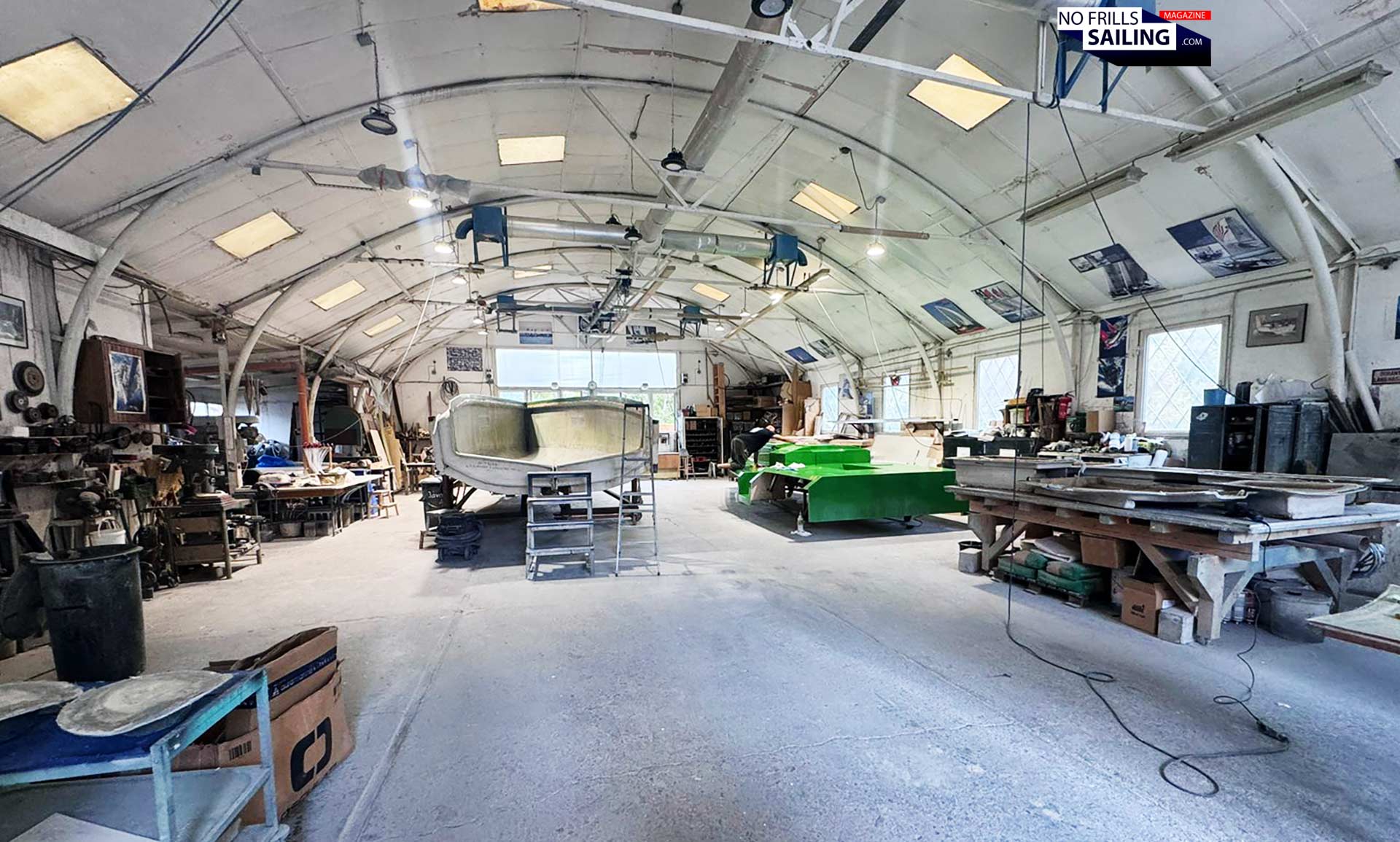
There was a finished L30 on its trailer under a tarp outside, the whole premises looked a bit … let´s say, neglected. Grass was growing wildly, stuff laying around. It was around 11 o´clock, a normal working day, yet there were no parked cars of employees and hence no workers to be seen at all. Rodion greeted me, standing in the large production hall. I took a look around. Now, there indeed was something really off here …
“Well, that´s super timing indeed!”
Another guy joined, Rodion told me it was the CEO of Code Yachts, and he introduced me to him. We shook hands. He smiled, quite bitterly, and said: “Super timing for a photo-session …” Apparently, Code Yachts was about to be shut down. Stuff had been put together on heaps, piles of raw materials, tools and waste. Most of the production facility was empty. Only one single mold, Rodion´s boat, was to be seen. I must say, it felt very strange, or awkward. Like attending a funeral, uninvited.
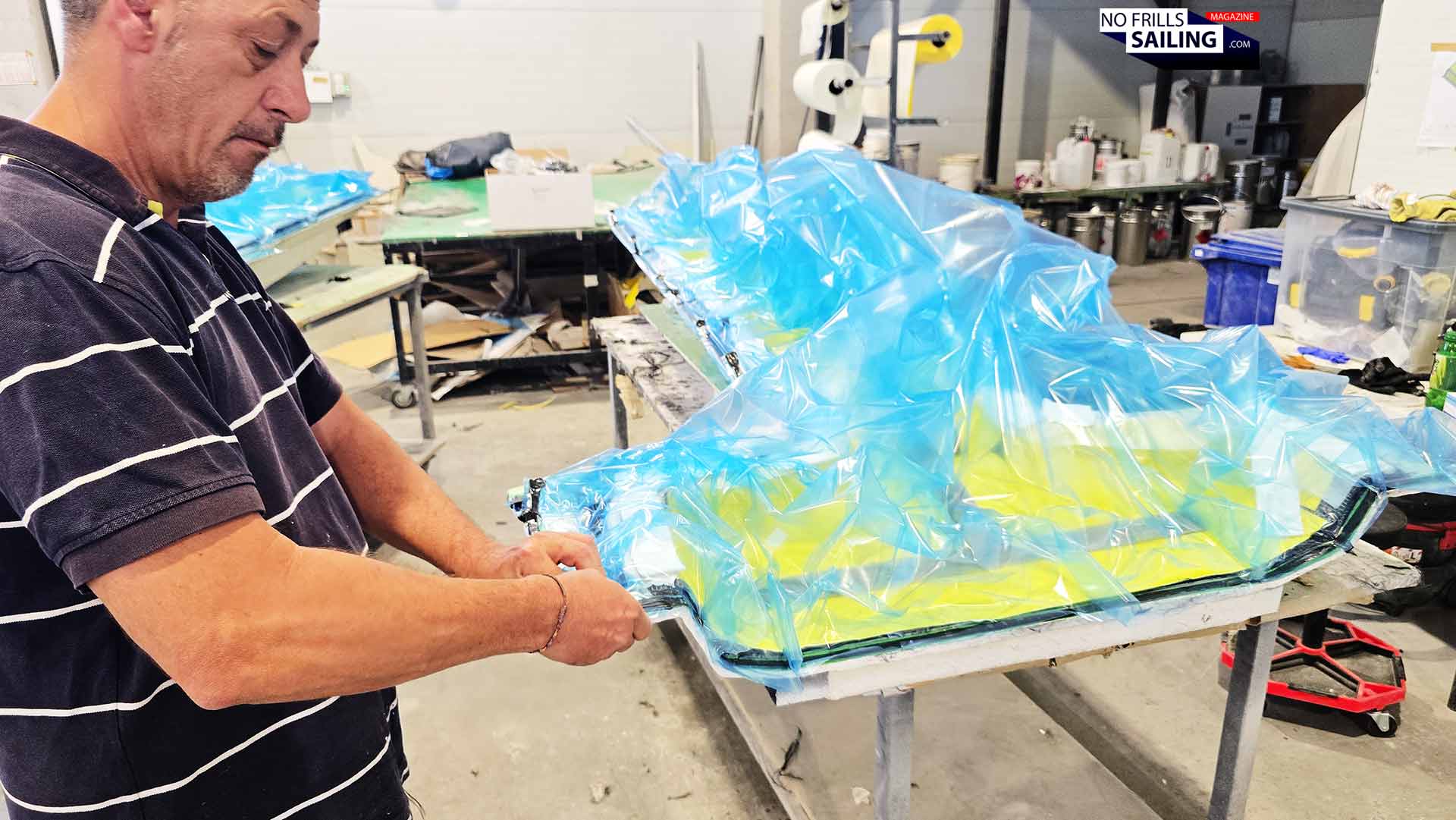
The last Code Yachts-produced L30 starts infusion process
Anyway, that´s what it was. There is no official statement about the current status of Code Yachts to be found and I did not have the impression that the CEO wanted to speak to me. But of course, I wasn´t here at all to talk about the future of Code Yachts, but I wanted to see how the L30 is being built. Fortunate as I was, the mold was “active” with the very last Code Yachts-produced L30 hull prepared for infusion. Since I had first met Rodion during a boat show at Lake Constance a few years ago and received a thorough walkthrough from him, I never really lost sight of this boat. The 10-meter performance-cruising segment of the boat market was and is a sweet spot for me. And not just for me.
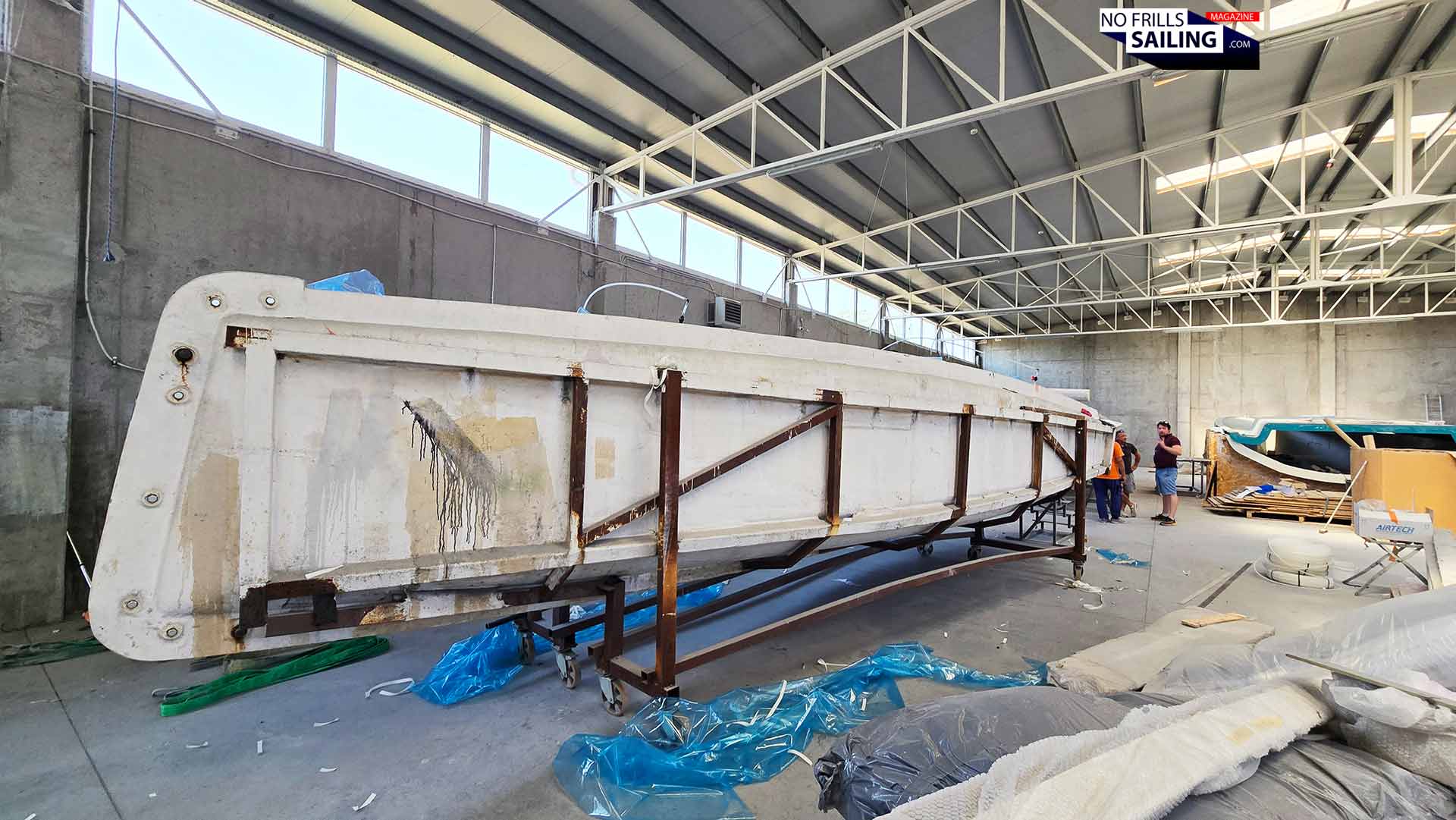
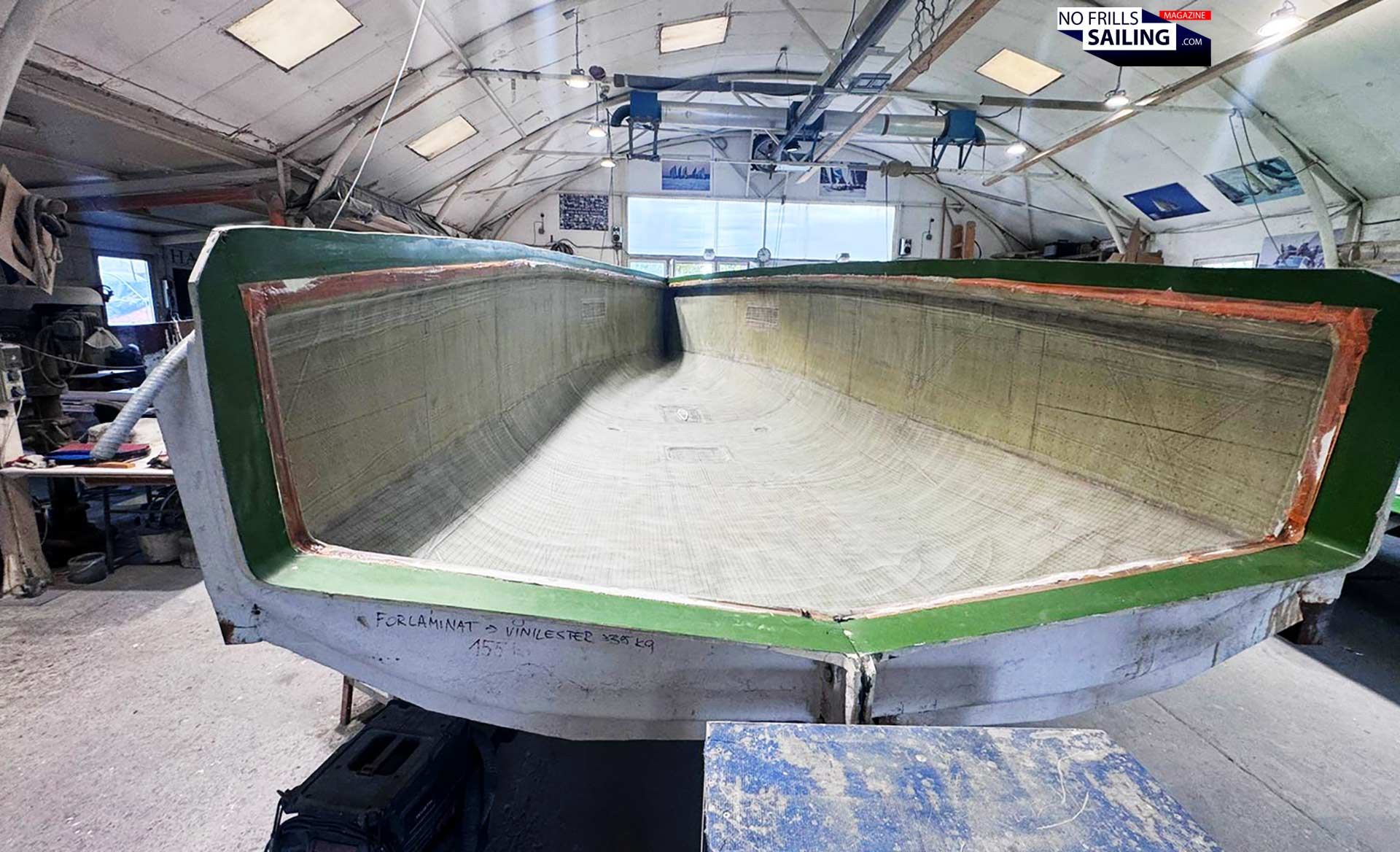
The hull mold of the L30
You can clearly see the modern, aggressive lines of the L30 by just looking at its mold. The boat has been designed as a strict one-design class back in 2014. The basic key points, the looks and capabilities are ideas from Rodion Luka. Naval architecture and detailed design was done by the renowned Slowenian naval architect Andrej Justin of Justin Design. Here the circle closes: Justin is behind the Code yachts, the RC44 of Pauger Composites and some other high-potential racers.
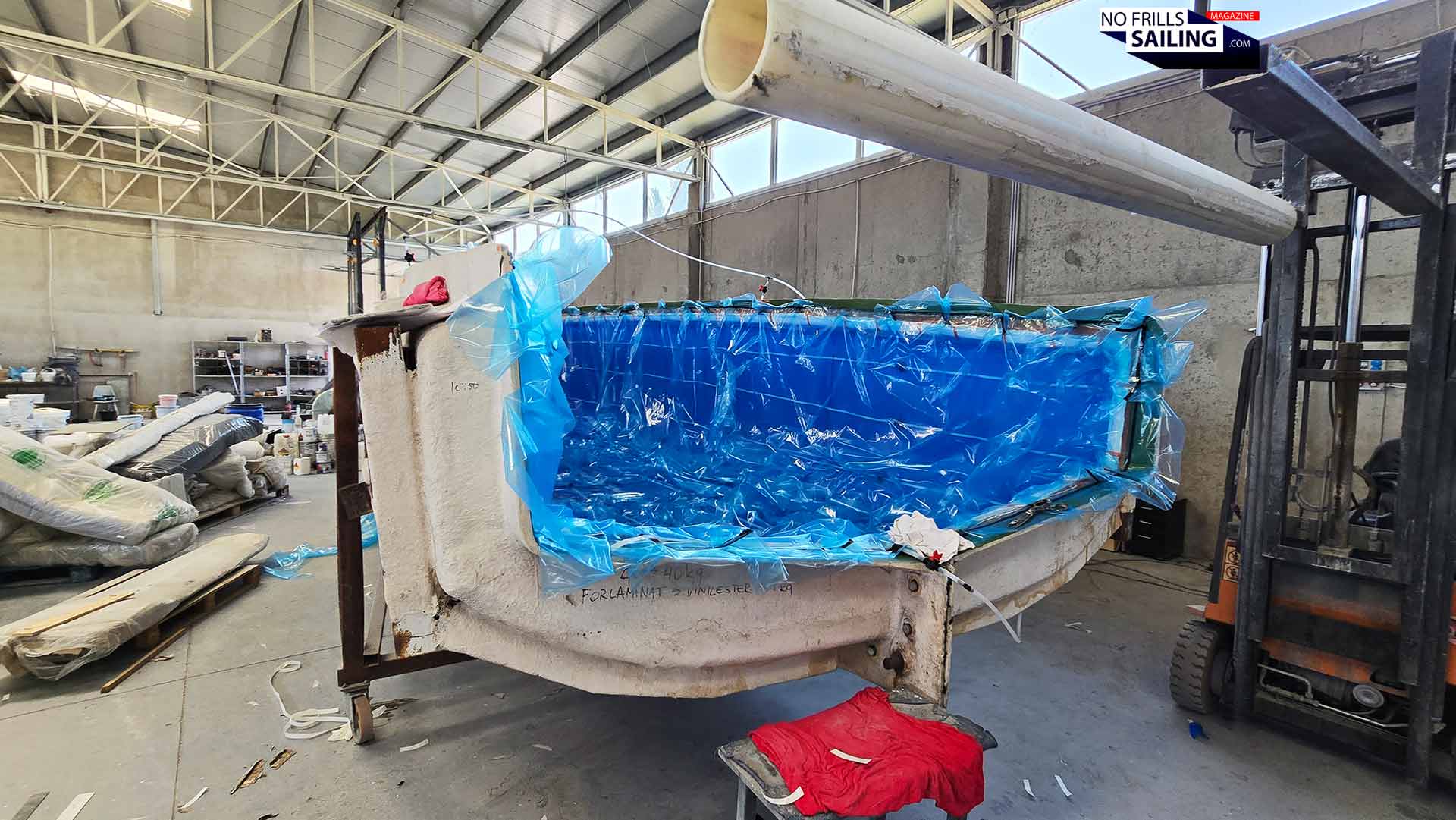
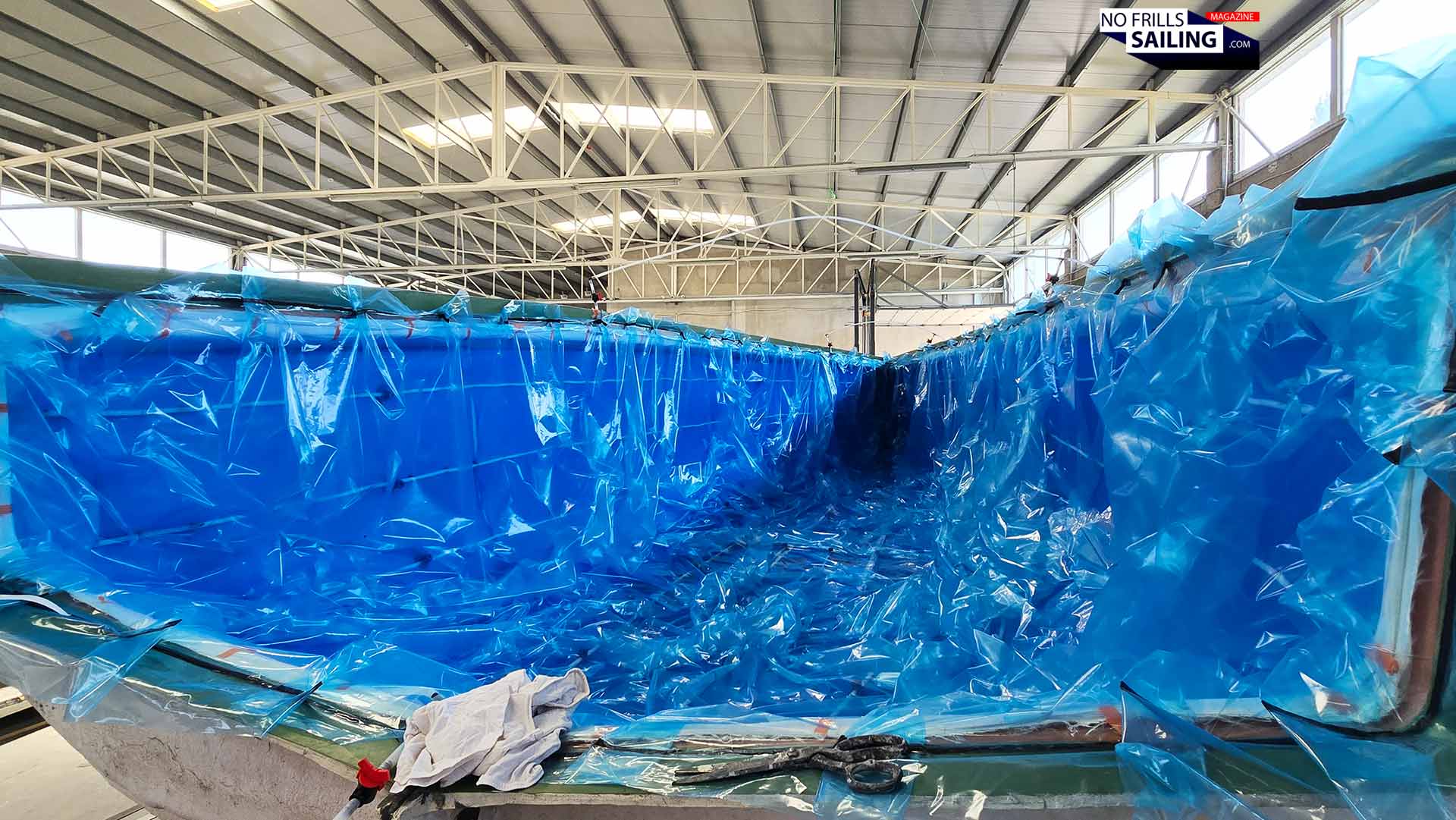
Infusion for the last Code-produced L30
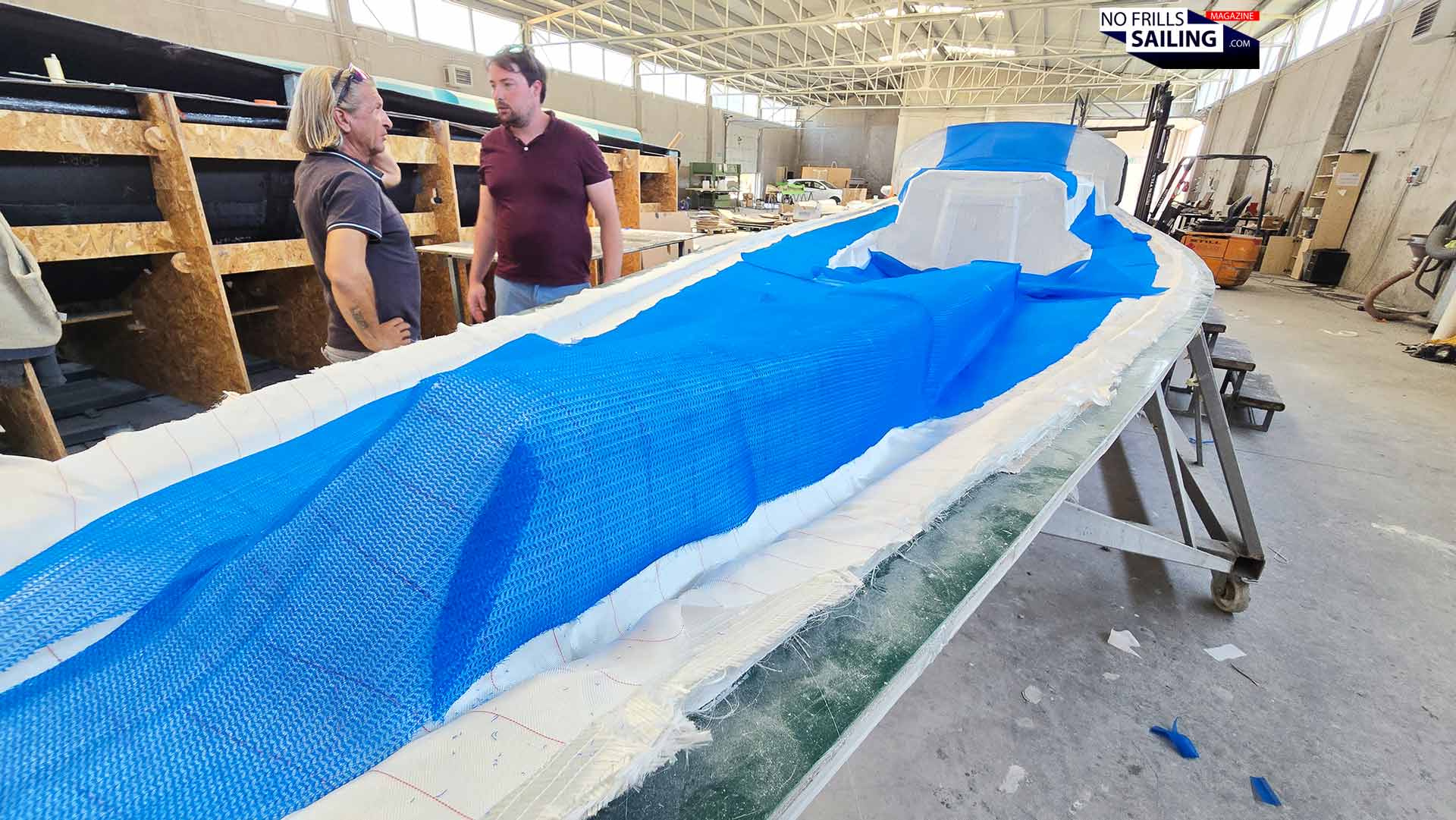
I am allowed to roam freely in the almost-empty hall as Rodion and the CEO are discussing the schedule for this last boat. Nearing the mold, I can clearly see how the vacuum bags have already been placed and sealed. Pipes are leading to the vacuum pump nearby, ready to being switched on to suck out the air underneath the thick plastic layer. Other pipes would then inject the vinylester resin, which together with the glass fiber and e-glass sandwich layers would make the lightweight hull (and deck) for this new boat.
Strictly one design: The L30 as a racing boat
So what´s the L30 all about then? To understand this boat, you have to understand her maker. Rodion Luka is an ex-professional sailor who has a track record which incorporates a world champion title on the 49er in 2005 or an Olympian silver medal won at the 2004 Olympic Games in Athens, again on the 49er. Rodion also was helmsman aboard the Open 70 KASATKA during Volvo Ocean Race of 2008 for Team Russia, which is a hair raising story in itself I guess. And here the “trouble” starts, let´s say.
Boon and bane of one-design boats
Because Rodion is Ukrainian. And what followed after 2014 we all know very well. Being Commodore of the Kiev Yacht Club and voted Ukrainian Sportsman of the Year 2005, he became the president of the Ukrainian Sailing Association in 2005. You can imagine the personal and off-sailing trouble Rodion has been and still is going through with the war going on. But that shouldn´t be the topic of this article, nevertheless, the situation in his home country directly impacts the L30 as well. Because, before the war, Ukraine too was a big player on the boating market: I remember Marc Lombard´s beautiful aluminium-yachts of the Futuna brand being manufacture here, or the “best ventilators for boats” – still made in Ukraine.
Everything must be strictly identical
Obviously, Luka had to find a solution for his L30 project. After the first L30 had been built at Slowenia with Oceantec (another big name in racing boats), he shifted production to Lwiw in Ukraine. Up until 2022 many L30 boats had been made there, before production switched to Hungary. Today, some 40 units had been built and delivered, mostly to Europe and increasingly to the United States. Rodion – as a pro-sailor – knows, that selling boats isn´t enough nowadays. People are seeking sensations, the thrill of sailing, competition. And so everything surrounding the L30, which is a vivid racing calendar for the class, is organized too. With growing success.
Strictly one design: The L30 as a racing boat
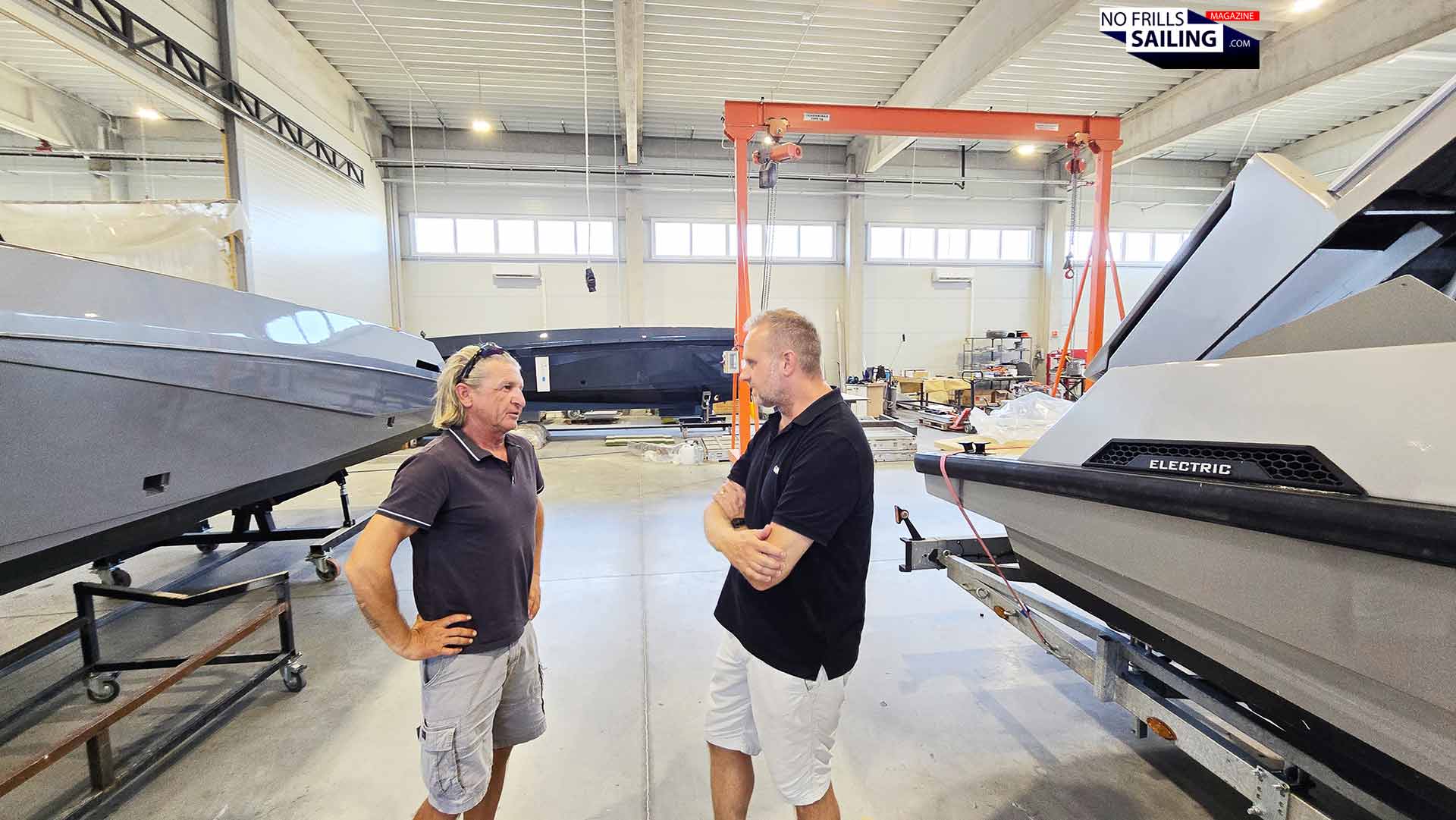
It´s boon and bane at the same time. Because, offering a strictly one-design boat makes many things easy, yet is complicating others very much. For once, as a one-design class, every single boat must be absolutely identical to the others. Identical. The margins in weight, measurements and such are miniscule. That said, the bar is much, much higher for any manufacturer than in ordinary series production. That said, I follow Rodion on a 15 minute drive from Code Yachts to one of the eligible new production sites for the L30: Como Yachts.
It´s a question of craftsmanship
As it seems, my “looking at the L30 production”-visit turned out to become a “looking at other shipyards as well”-trip. The Como Yachts CEO welcomed us very warmly and instantly allowed me to shoot whatever I wanted. The production hall was brand new, only a two, three years old. Como Yachts manufactures electric powerboats under their own brand, to be launched next year. High class composite manufacture and their skilled craftsmanship posed a promising setting for maybe having the next L30 made here for Rodion.
Rodion Luka at Como Yachts
Both engaged in a vivid discussion, all the while I was roaming the premises to take my pictures. The point for Rodion is – and that´s the real challenge – to make sure that even the latest 2026 produced L30 have exactly the same properties as the first L30, made ten years ago. Otherwise, the regattas organized in all around Europe and the US are worthless. Having seen the Figaro 3-production back then when this boat started, I know very well that this is very hard even if you have one single production for the whole fleet – I can´t imagine the hustle to organize this in multiple, different sites.
Ramping up production for increased demand
But what can he do? With Code Yachts closing (or whatever is going on there), Rodion has no other chance than to seek an alternative. That is because apparently his L30 and the racing events associated with his class meet an increased demand by potential buyers. Out of the 40 units built and in the water already, some 30 boats are regularly racing and attending the class-events as well as other races.
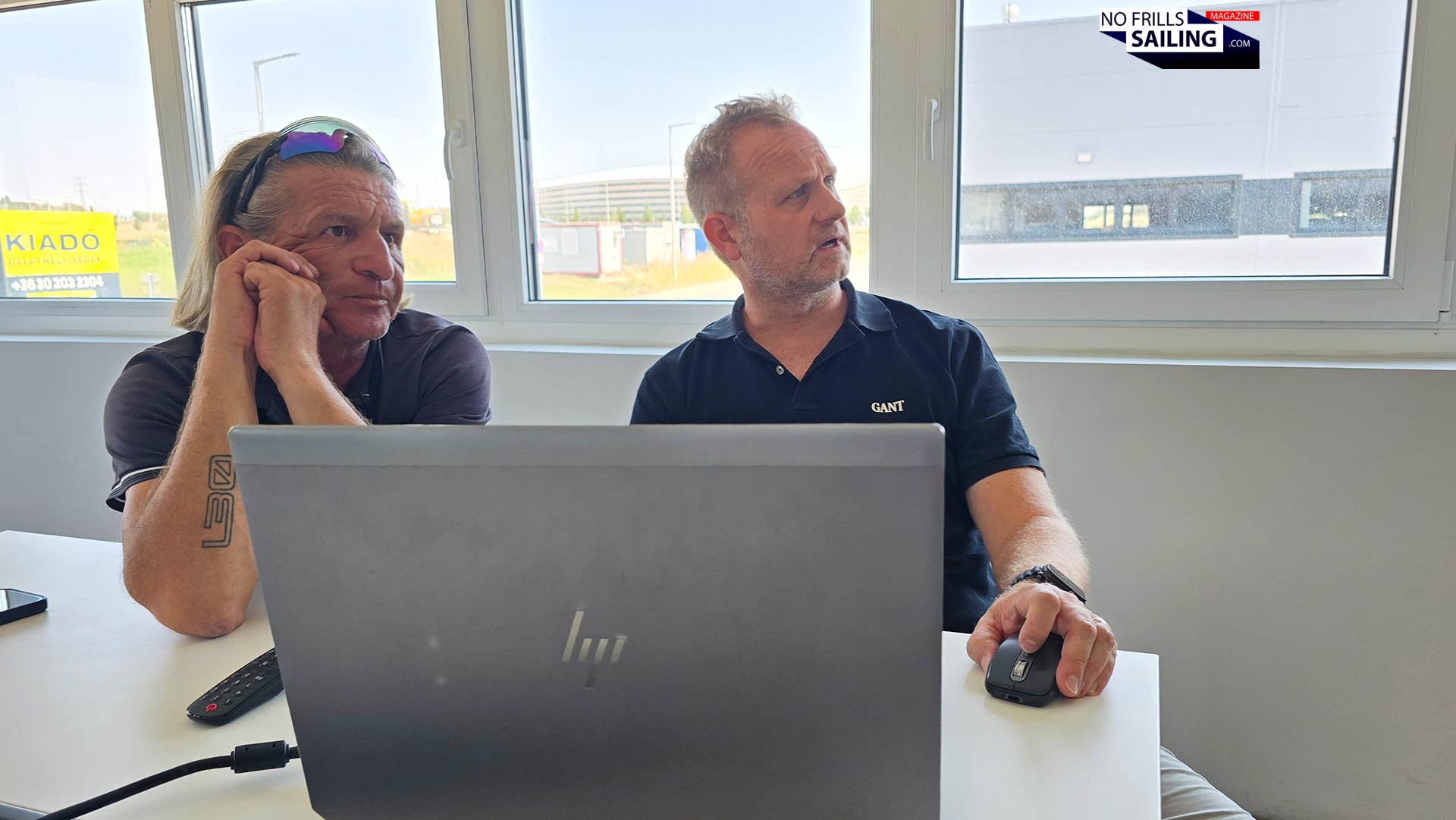
Sitting down to discuss the details
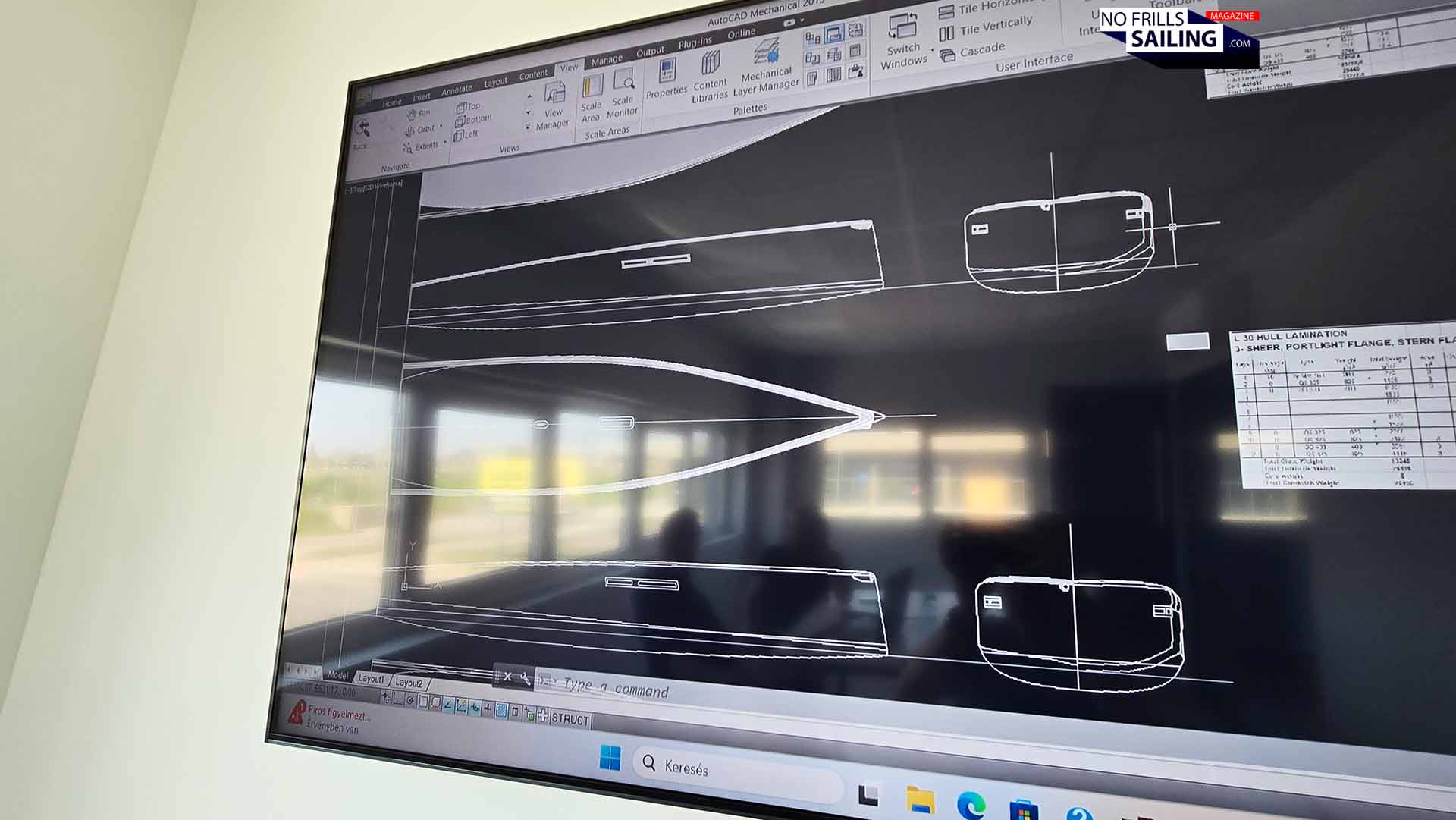
We proceed into the meeting room of Como Yachts and the manager opens his laptop. I take some pictures quickly and of course leave the meeting soon, as both are starting to discuss their possible partnership. For once, there are two main obstacles to overcome for Rodion: First, he needs to make sure that the new L30-production is meeting the tight specs of the boat and above all the quality. In this, he had provided the guys with all digital data needed to familiarize with the project.
Technical and quality demands are high
This goes as deep as the specific details of the glass fiber layup for making hull and deck or the exact amount of resin. Rodion, of course, knows his L30 inside out. He also knows about the demands of his prospect buyers, because he is in close contact with the owners of the boats. Collecting their feedback, supervising the development of the class, his demands are strict and, for large parts of the technical matters, non-negotiable. Secondly, there is the boat market.
Can this be the new production site?
With prices for raw materials, energy costs and labor soaring – even here in Eastern Europe – Rodion faces the same challenges as every boat builder worldwide right now. Together with inflation and literally a new catastrophe every week, selling boats has become very hard indeed, because the budgets needed to acquire and maintain those are as high as never before. So how can he combine his high demands for quality and precise production with the urge to still being able to offer the boats for an attractive, competitive price? I guess this is, what both were discussing then behind closed doors.
New markets – new opportunities
I have published a number of articles commenting on the current market situation and what shipyards are doing to react. As for Rodion and his L30-class, the impact seems to be not as destructive or harmful as for some other brands. For once, the story of the L30 as an Ukrainian product is a story of reacting to crisis. Rodion is a master in this. Secondly – and I have stated this many times before – I am sure that in a broad crisis, the way out is the niche. The L30 is such a niche product: It´s just one boat, not a range from 10 to 20 meters like Beneteau or Hanse has to take care of. It´s a small, highly mobile and reactive production. Small to no overhead, very few mouths to feed.
Spreading the word of the class
On the other hand, the product itself is perfectly well suited to master the crisis. It´s a small boat, still affordable: With a base price of around 110.000 Euros exVAT and a “ready to race”-price of some 170.000 Euros exVAT including the trailer the L30 is indeed to a very attractive and competitive price offer! If you check my L30-walkthrough, you will see that this boat can be used as an all-out racer and at the same time can become a nice cruising boat for your summer-vacation. That´s interesting for a broader potential client base. And there´s more: The United States!
L30 – not a black sheep at all!
Rodion for many years is a part-time resident in the US, enjoying the Florida summers and the boating community. In fact, there are around ten L30 boats already in the US – with inquiries and demand growing. The L30 is predestined for export to the US, despite the Trump tariffs, because the yacht has deliberately been developed from the onset to fit neatly into a standard container to being shipped abroad. So, how is production of future boats for the L30 class secured?
By the way, if you haven´t already subscribed to the monthly newsletter, you should: It´s free and it´s so convenient. You´ll receive an email once a month, containing all up to 10 new articles and – new – the links to the fresh YouTube-videos. Hence, you never miss any new exciting story. And now, back to Hungary …
Advertisement
A final decision has been made
Some two weeks after my trip to Hungary Rodion sends me two new pictures. He has finally made his decision. After visiting a few production site – like Como Yachts with me – he has now signed a contract with Nautic Boats. As the last Code Yachts-made L30 of which I had seen the infusion process about to being started, has been demolded a few days before, the L30 molds have also freshly arrived at Nautic Boats as well.
A final decision: Nautic Boat in Budapest!
Nautic Boats is located in the south of Budapest, Hungary´s bustling capital. It has a track record of making excellent racing boats. Founded already back in 1986, they have mainly made lightweight racers for the domestic market, utilizing modern composite materials, such as Kevlar and epoxy, this family business seems to be the perfect new production site for the L30. Rodion sends me a thumbs up: A new chapter has been started right now!
All the best, L30!
So, I wish him and his L30-class all the best! With another boat freshly sold to Germany a few days ago, I renew my pledge to Rodion that I´d love to try out one of his L30 under sails soon. Which is indeed the last thing that´s open: How does an L30 feel on the helm? How fast is she and does she really live up to the hype? With a strong L30 community at the Lake of Constance I am sure we can arrange such a sea trial soon. In the meantime, let´s see how the new L30 made by Nautic Boats will roll out from the shed: Rodion is planning the race calendar for the 2027 season, with the World Championships clearly being the crown jewel, as well as the European and North American Championships on the horizon. Thanks for this intimate insight behind the curtain of managing a one-design class, it´s production and proliferation, Rodion!
You may also be interested in checking out these related articles: