The proverbial saying that only in very low winds the true capabilities of a great sailboat design will reveal themselves are ultimately true: When I test sail a new sailboat, I hope for a low 5 to 7 knots true wind, because this is the “sweet spot” for boats: Yachts capable of squeezing out comparably high boat speeds although there´s no wind at all, will usually perform very, very well in moderate and “nice” conditions as well. Boats failing in low winds … it´s difficult. For this article I went out with a Saare 38.2 – and yet again was taught a very interesting lesson.
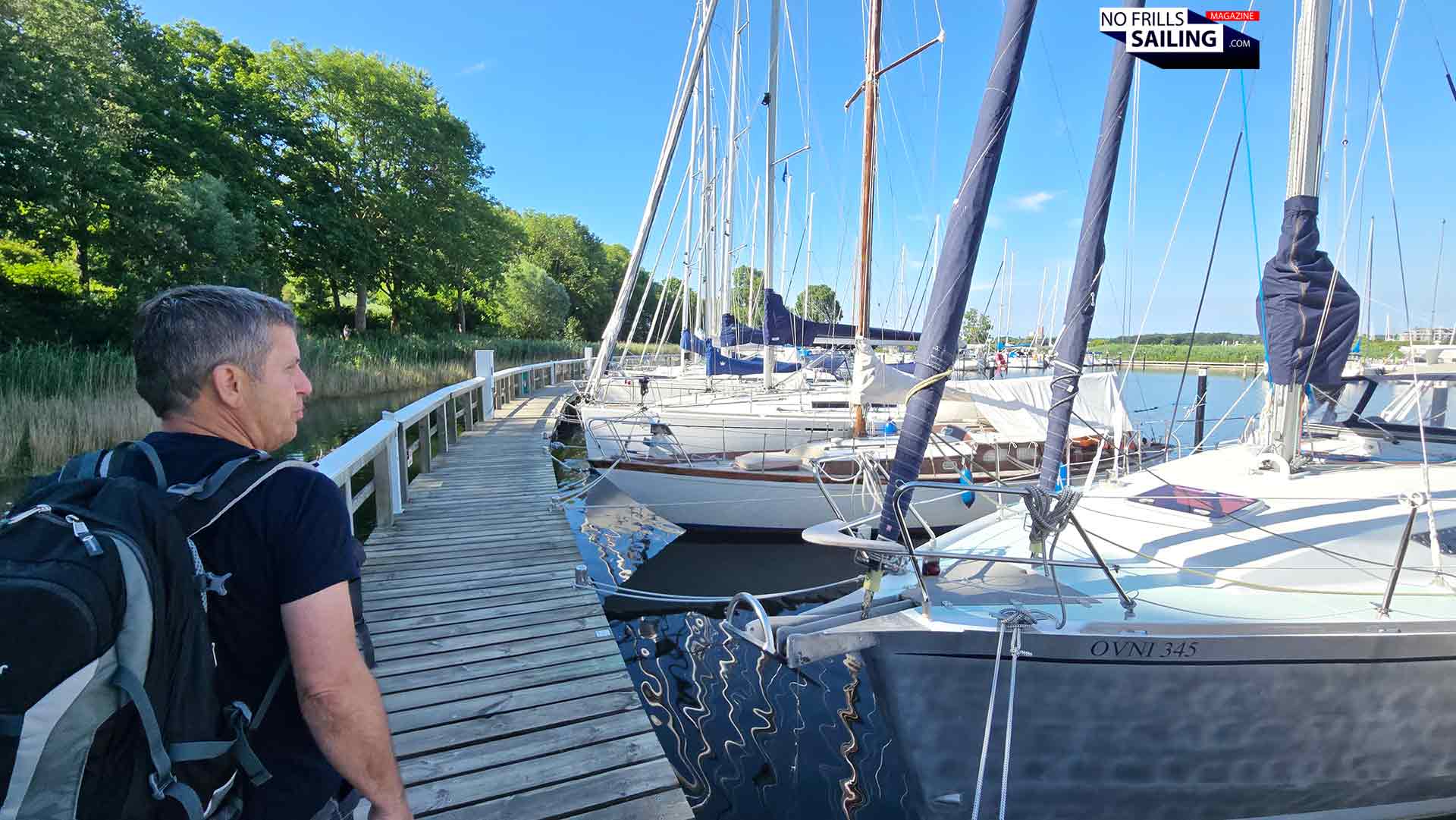
It´s still relatively early in the morning, just a few minutes to nine, when Stefan waved and walked up upon me, opening the gate of the pontoon entrance. I have an appointment for a little sea trial with him today, we are going to sail his Saare 38.2, a boat which I had inspected earlier this year during Boot Duesseldorf show, read my detailed walkthrough article here. Today I am going to deliver on my promise to one day sail one of these. Here we are.
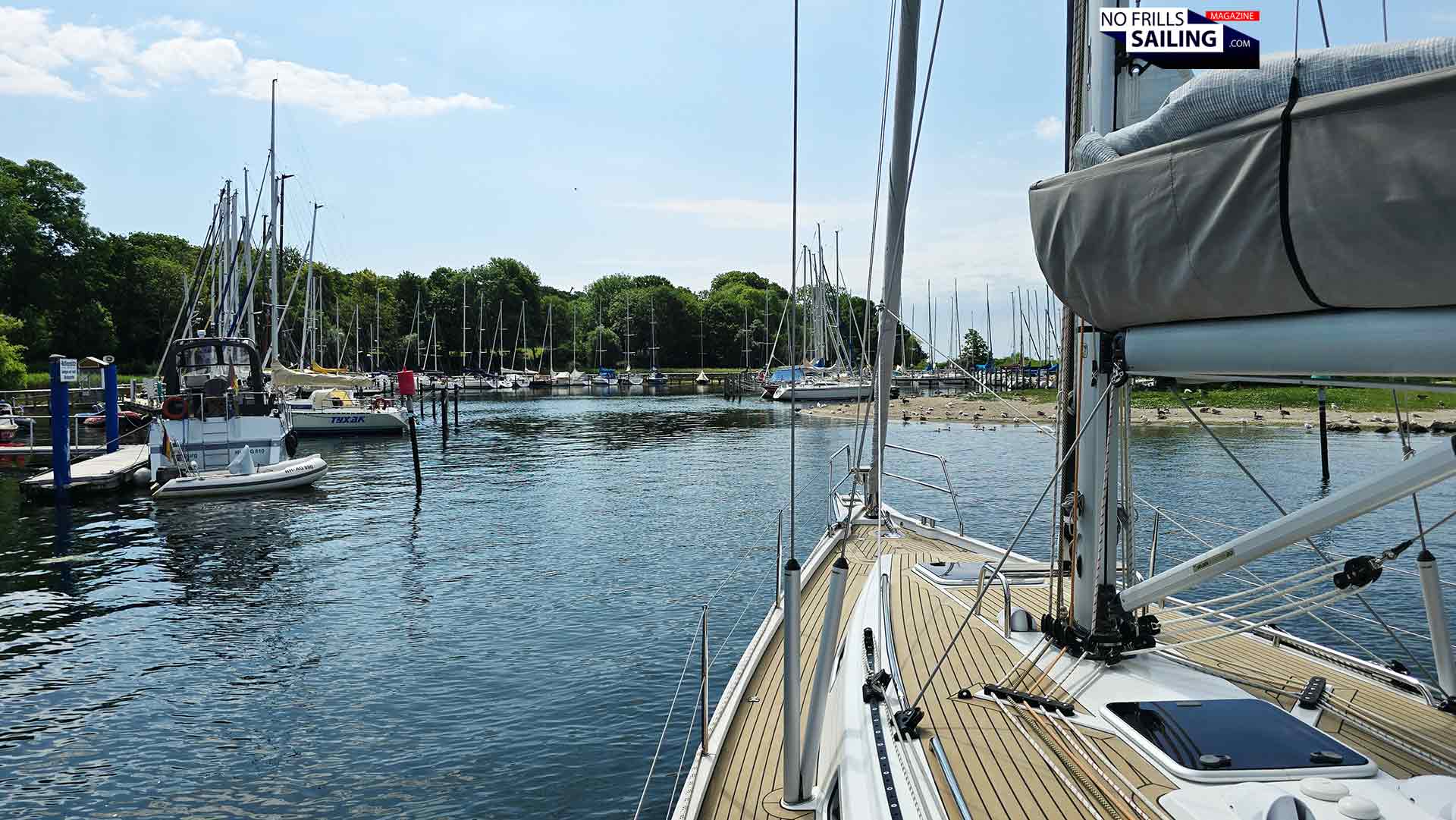
At last: In the famous “round harbor”!
In fact, Stefan´s boat is moored at the famous ring-shaped marina of Neustadt. I used to have both my King´s Cruiser 33 and my First 27 SE here in Neustadt as well, but vis-à-vis in the big ancora marina. The “ring harbor” is a well renown sailing club with very, very limited berths. It´s as Swedish as Germany can get and I´ve often watched boats moored here, feeling a bit envy: It is so beautiful and picturesque! So, two flies with one stroke today: Can it get any better? Yes, it can!
Saare … what?
Advertisement
You are not familiar with the brand name “Saare Yachts”? That´s no shame, because many non-Germans don´t know this shipyard. Saare is a German-found and funded brand that builds high-class cruising yachts ranging from 38 to 47 feet. The shipyard is located on the beautiful Estonian island of Saaremaa. It´s more a manufacture, not a shipyard in the sense of a huge enterprise. Their annual output is just a few boats: High craftsmanship, individualization, quality and rock-solid building are the cornerstones of Saare Yachts. As I am walking right behind Stefan on the ring-shaped pontoon, his boat finally came into sight.
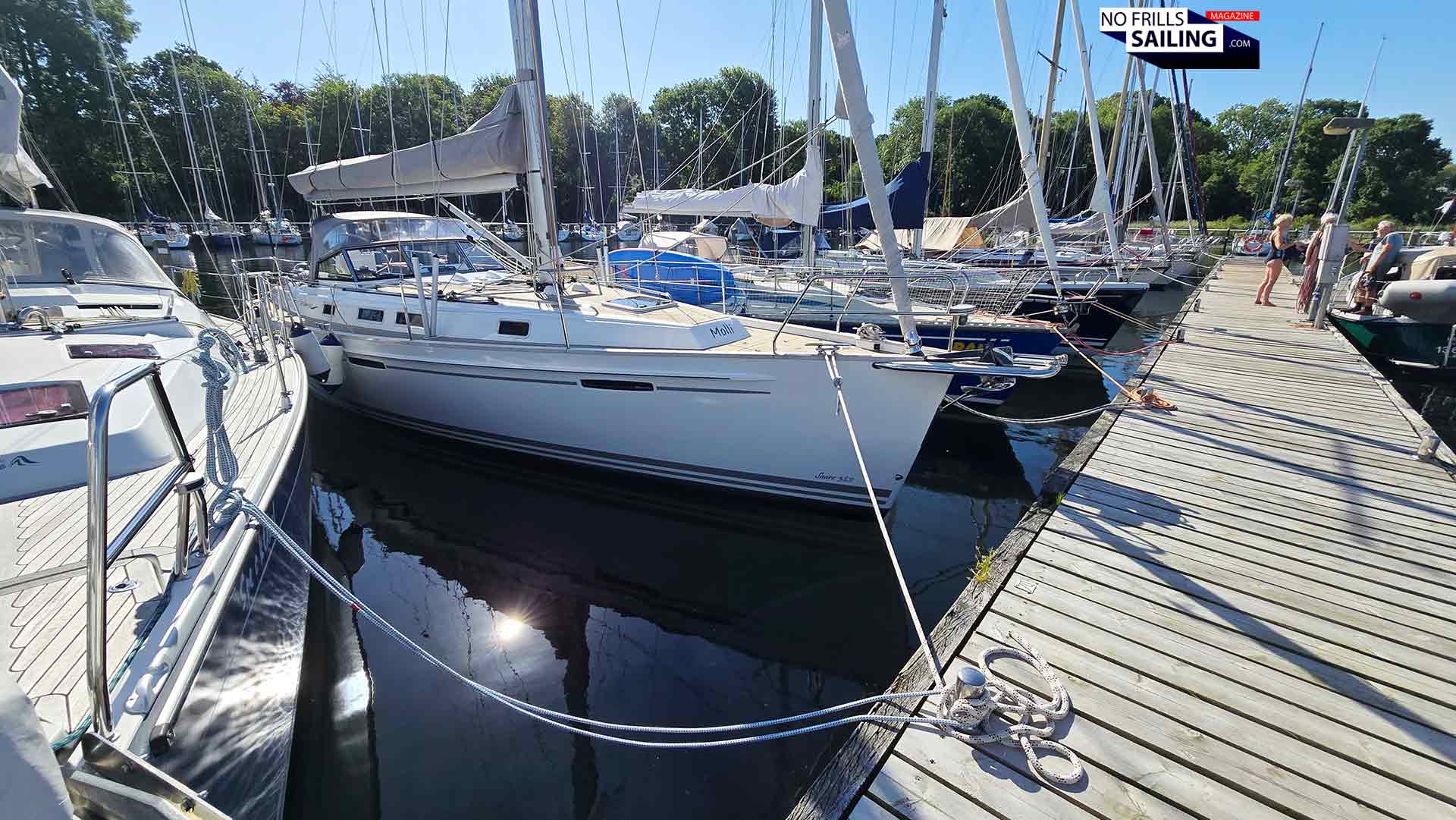
There she is: The Saare 38.2
The Saare 38.2 is a “classic” sailing yacht in the best sense. You will later see, what I mean. If you ask me to contextualize the Saare brand in between other sailboat makers, I´d say you will get an absolute masterpiece in terms of building quality, comparable to Linjett. It´s a boat made for sailors, skipping many of the more “trendy” so-called must-haves, like double steering wheels or other gadgets. As Stefan (and some other sailing friends of mine) has assured me, you´ll also get awe-inspiring performance. Something, admittedly, the boat does not convey at first glance. But wait for it …
Safe and sturdy!
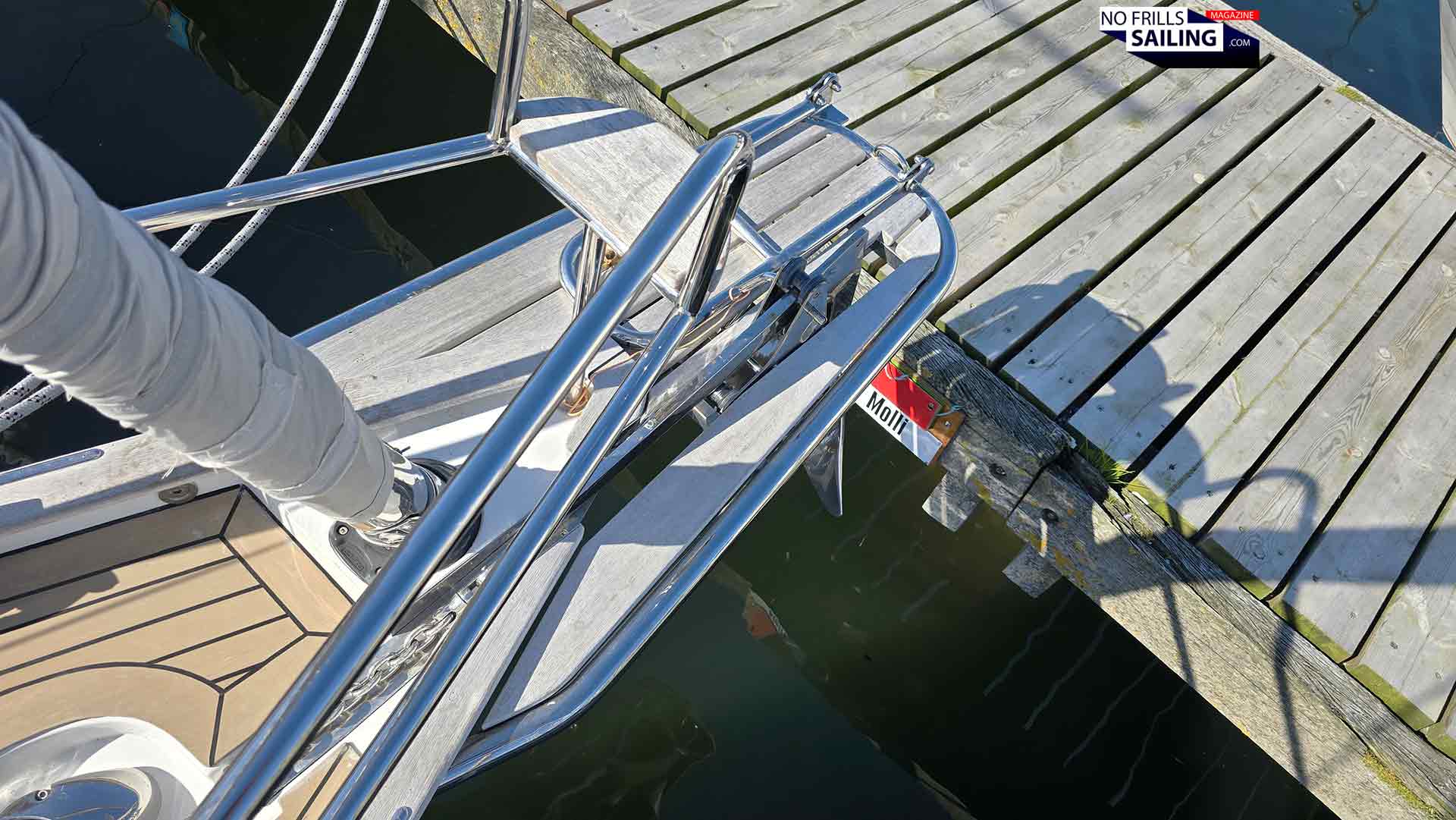
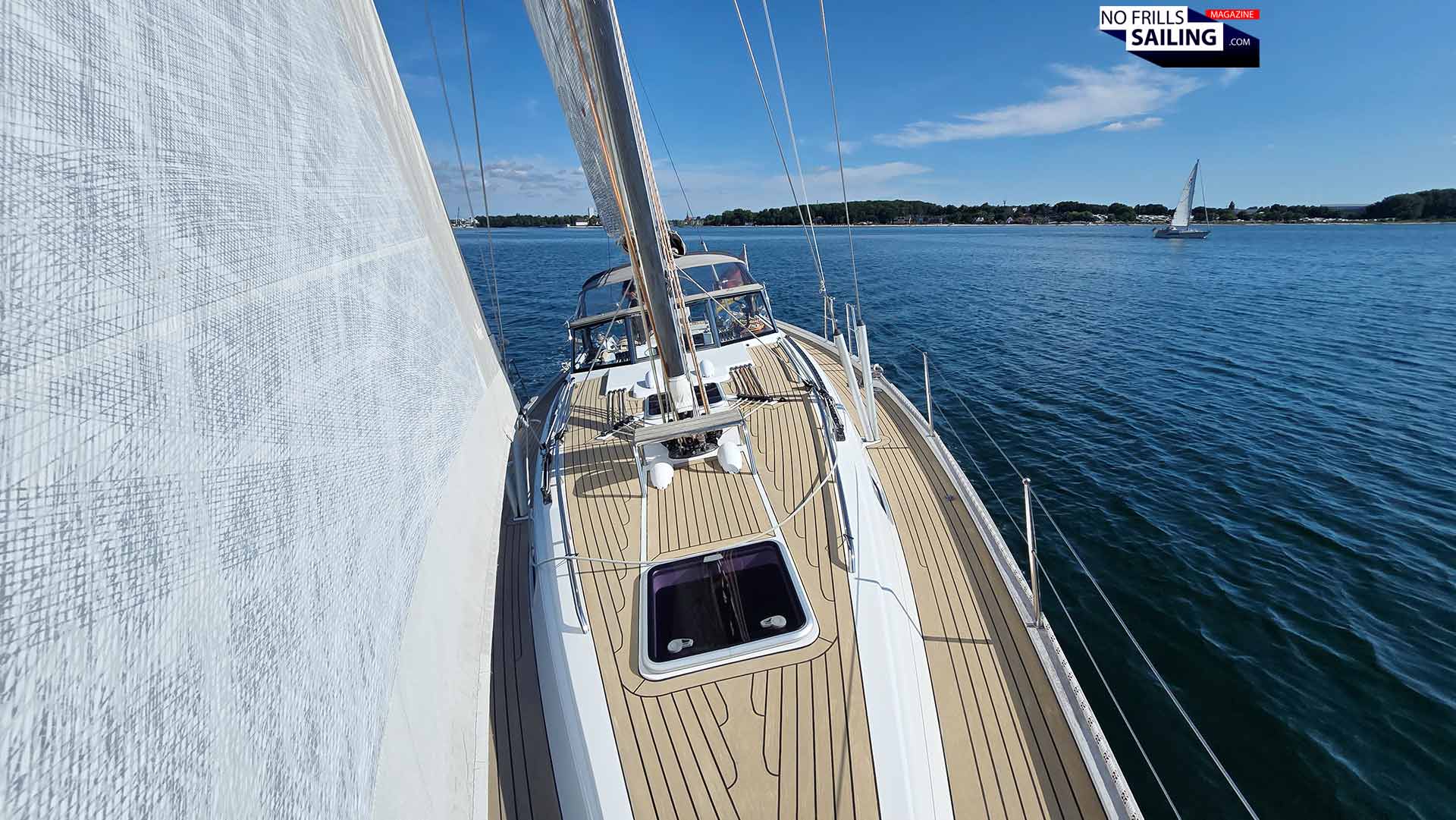
She also a very practical boat that won´t ever skip real-life sailing compatibility for style. Moored bow-first, as it is still a custom here in the Baltic Sea, I can board the boat with ease because there´s a huge, sturdy bow-platform with a wide step tread, allowing for easy and safe boarding. This will be much more important when stone-mooring in the archipelago. This platform at the same time acts as anchor-roller and attachment point for Gennaker and/or Code 0. I remember my first encounter with the Saare 38.2 back in January on the boat show: There are interesting details and so many “Aha!”-moments scattered almost everywhere aboard this boat.
It´s in the details
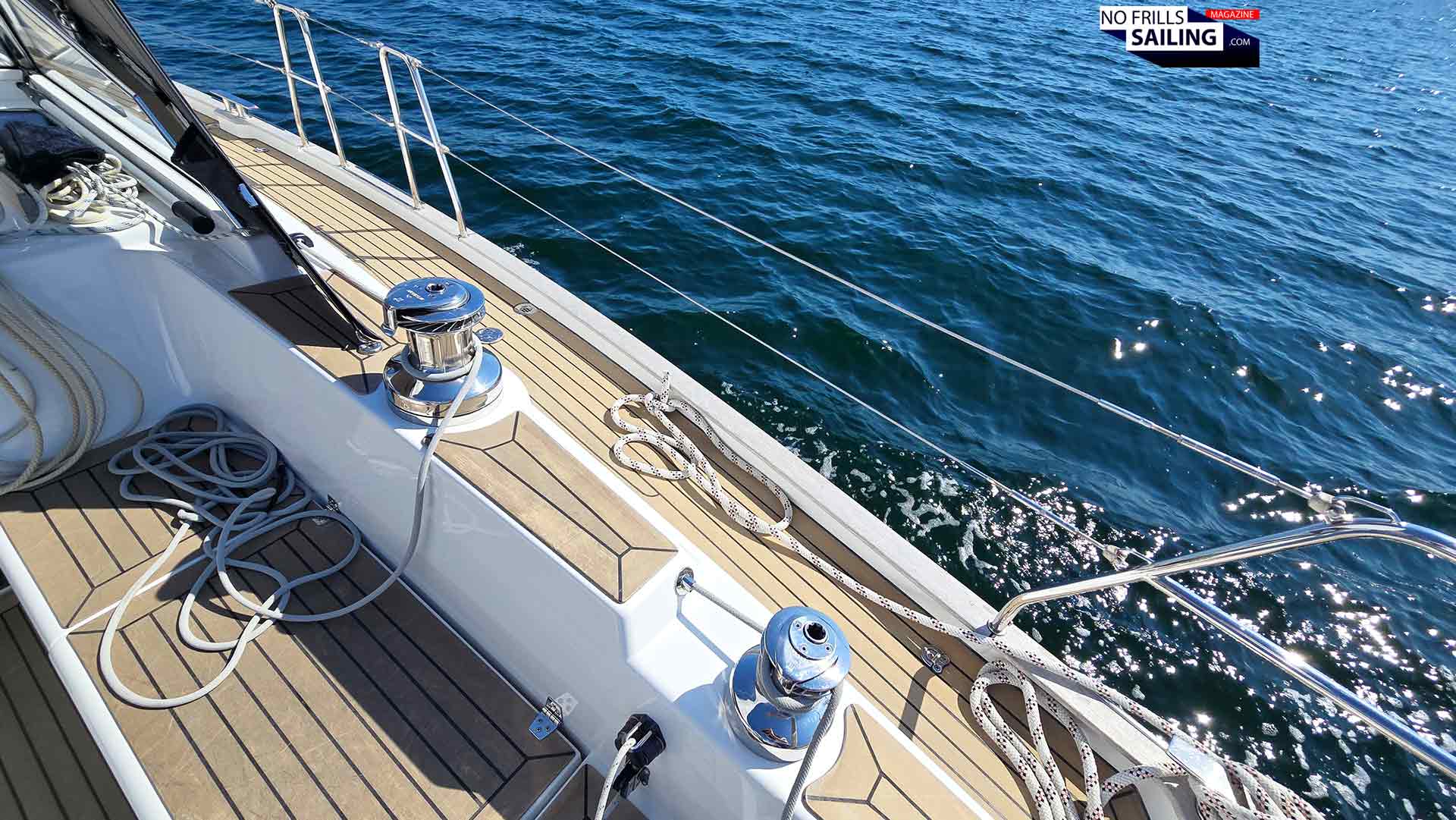
For example the toe rail. You might have wondered in the first pictures above acknowledging her comparably high freeboard. Well, a part of it is due to the raised toe-rail. This is part of the laminated hull and makes for a very wide, robust and safe detail all along her deck. When sailing with a steep heeling, this toe rail will provide a safe grip for your feet. Such a part becomes even more important the more wave wash and spray is on deck – we all have more or less experience with slippery wet decks and their hazards, right?
Even more sturdier and safer …
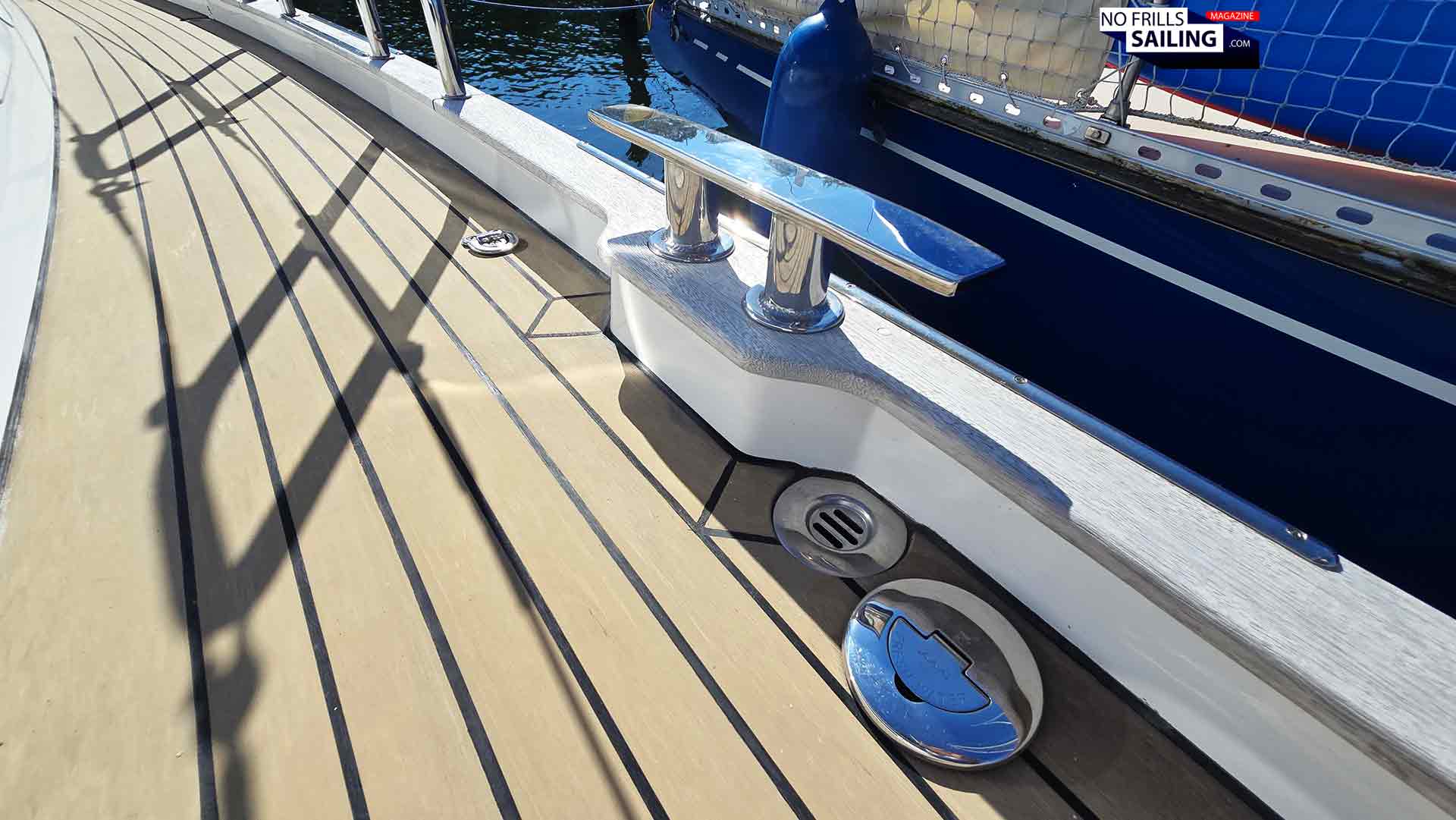
Another nice detail are the massive cleats: Look at these beauties! You maybe know that I went for the beautiful Nomen cleats for my new yacht, but these are also nice to look at. And if you think they are oversized, well, they are not! I´ve seen a lot of hair cracks and even ripped-out cleats on many occasion because of the fact that some brands trend to install inferior quality and, much more, underdesigned cleats on their boats. Well, looking at these stainless-steel buddies I am sure that it would take a really severe storm to damage those.
Makes sense: PVC-deck material
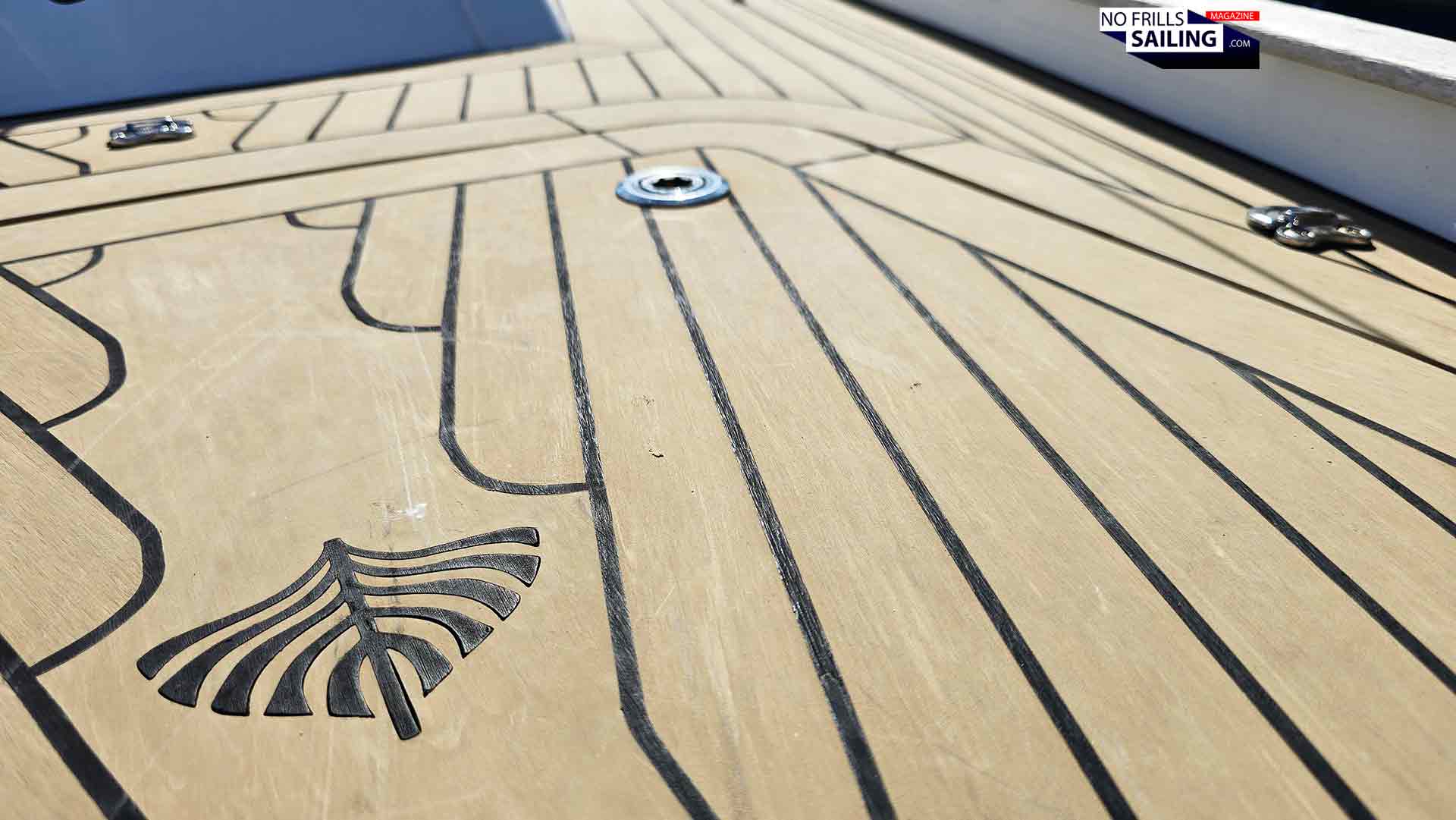
Everything aboard the Saare is made for sailing. And for sailors. The boat´s practical features are well thought-through and reality-proven by many sailing generations. Why install heavy and maintenance-intensive teak decks, when PVC-decks provide a similar nice look and offer almost the same benefit? At Saare, it seems, they don´t fish for compliments. They don´t do things just to make you become the star of the pontoon. Practicality, sturdiness and stability seem to be the guiding premises for these boats.
Casting off, single handed
As I already know the interior and don´t want to waste too much of Stefan´s precious time, we cast off immediately. A 38-footer is an impressive boat size for single handed sailing. She weighs some eight tons and is a fully equipped cruising yacht. Yet, Stefan handles her like a dinghy. Of course, he is a keen and experienced sailor, but I am astonished how quick the boat is ready to go and how fast he clears the landlines and steams out of his berth. Although the boat is equipped with a bow thruster, maneuverability with single rudder (placed inside the flow of the propeller) is excellent. No thruster needed, even not inside the relatively narrow harbor.
Hoisting the main sail
Once clear of the marina, he puts her nose into the wind – still within the Neustadt old harbor, a bustling pleasure, fishing and even military harbor – and hoists the mainsail. This is done by pushing the button of the electric halyard winch. I cannot stress this often enough: At least the main halyard winch should be electrified on your yacht, if your boat is bigger than 35 feet. It´s so much more convenient and easy! On the other hand, electric Genoa winches – from my point of view – are only on boats bigger than 45 feet costumary.
No wind. But: We are sailing!
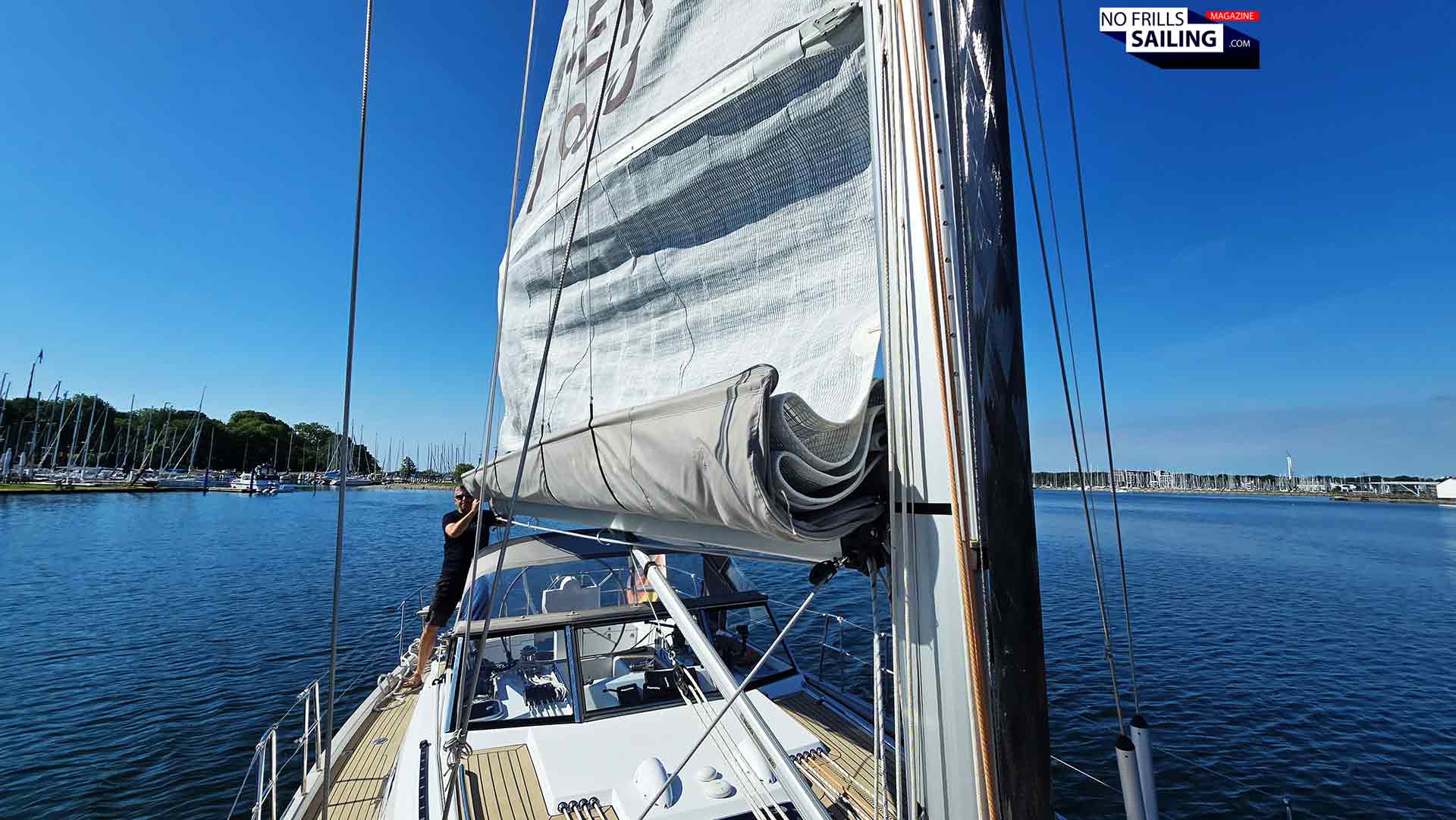
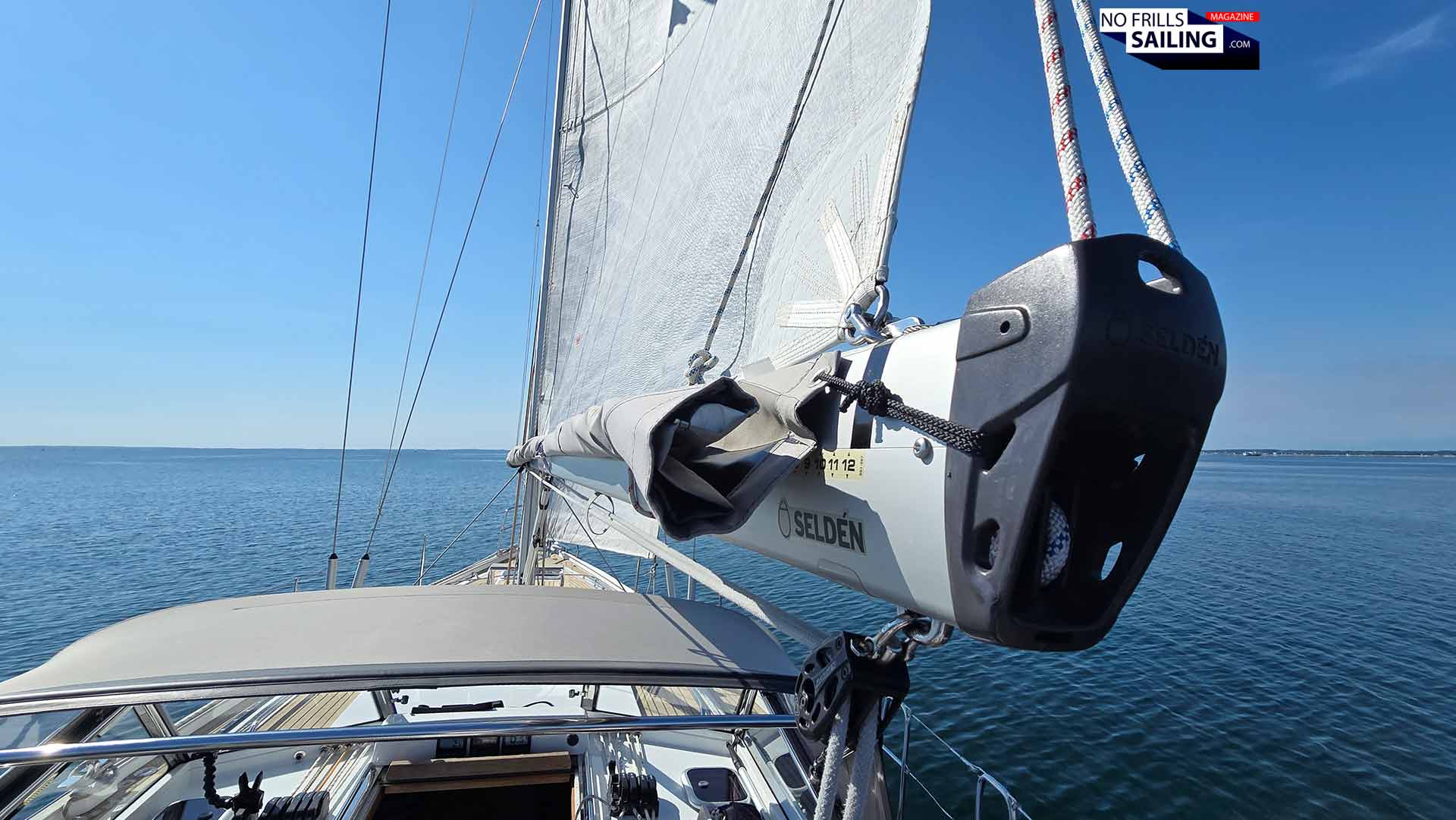
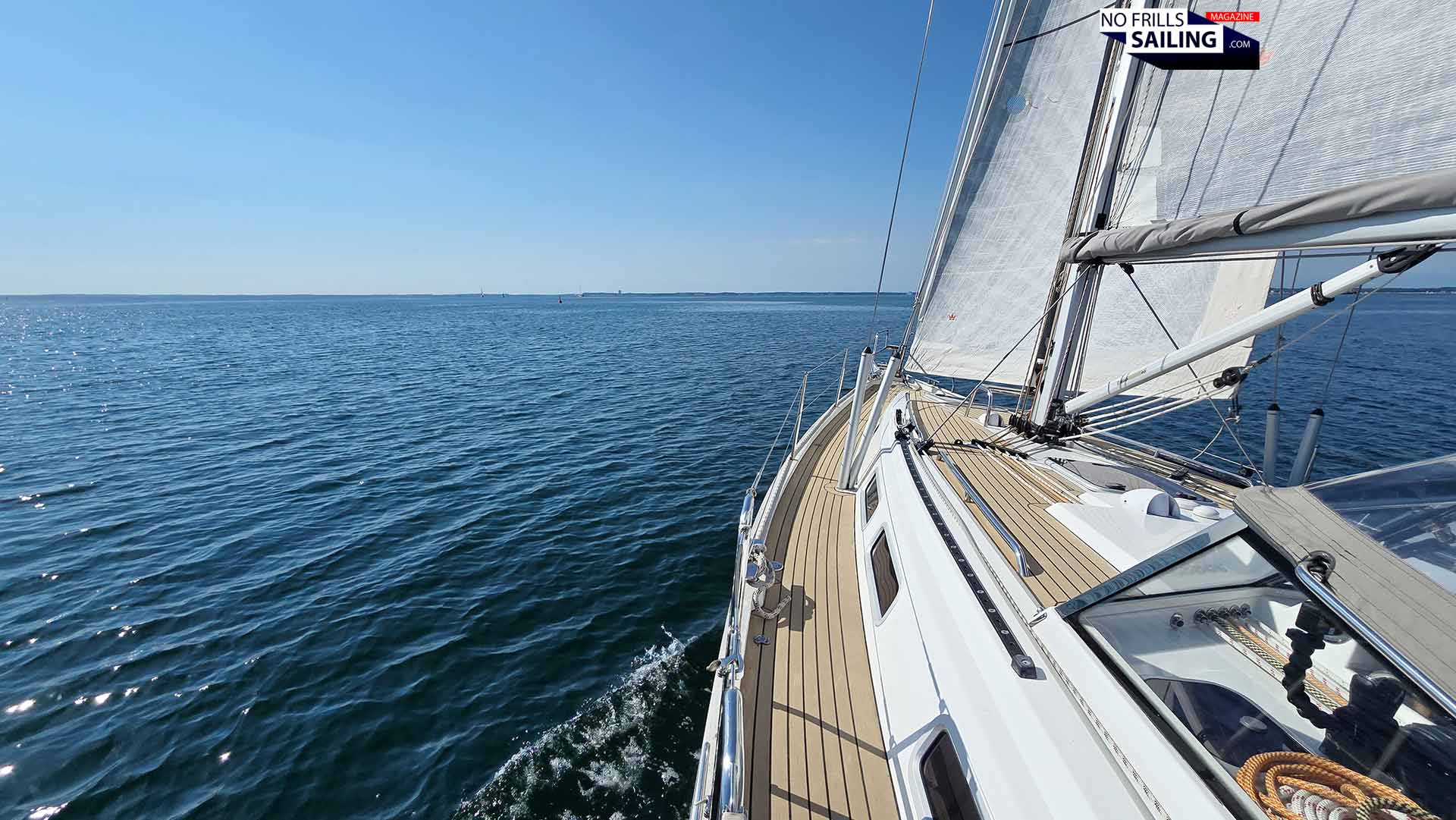
Once the main is up, he kills the Diesel, turns around the boat and we slowly sail out of the buoyed waterway. Before us lies the Luebeck Bay, one of the two main sailing hotspots of Northern Germany (next to Kiel Bay). As predicted and wished for, there is indeed very, very low wind. Seldom the water curls, the little puff doesn´t even have a little cooling effect. High summer in Germany. Yet – we are sailing! Although the Saare 38.2 is equipped with large Genoa tracks, Stefan sails her with the Jib exclusively. This sail is unfurled in a matter of seconds, and off we go.
The Saare cockpit layout: Made for sailors
I am honest: I was inclined at first to try to compare the Saare 38.2 to the Linjett 39, which I had the pleasure to test-sail last year. On first glance both boats seem similar, but again, it´s in the details. The Linjett offers a much more “modern” approach, especially when it comes to the actual sailing procedures. The Saare however is much more conservative, and this is best seen when looking at her cockpit layout:
Six winches cockpit: Exemplary!
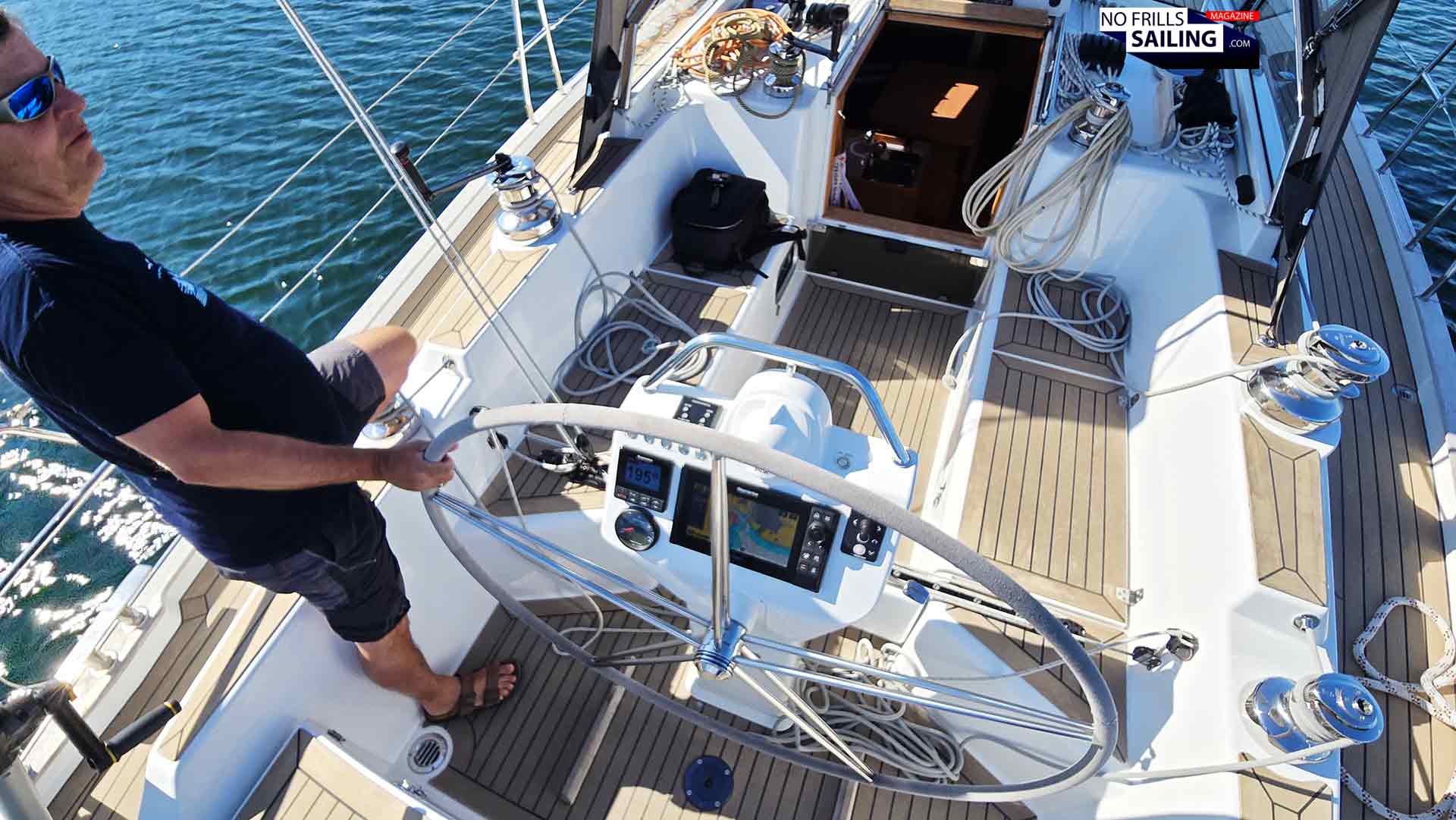
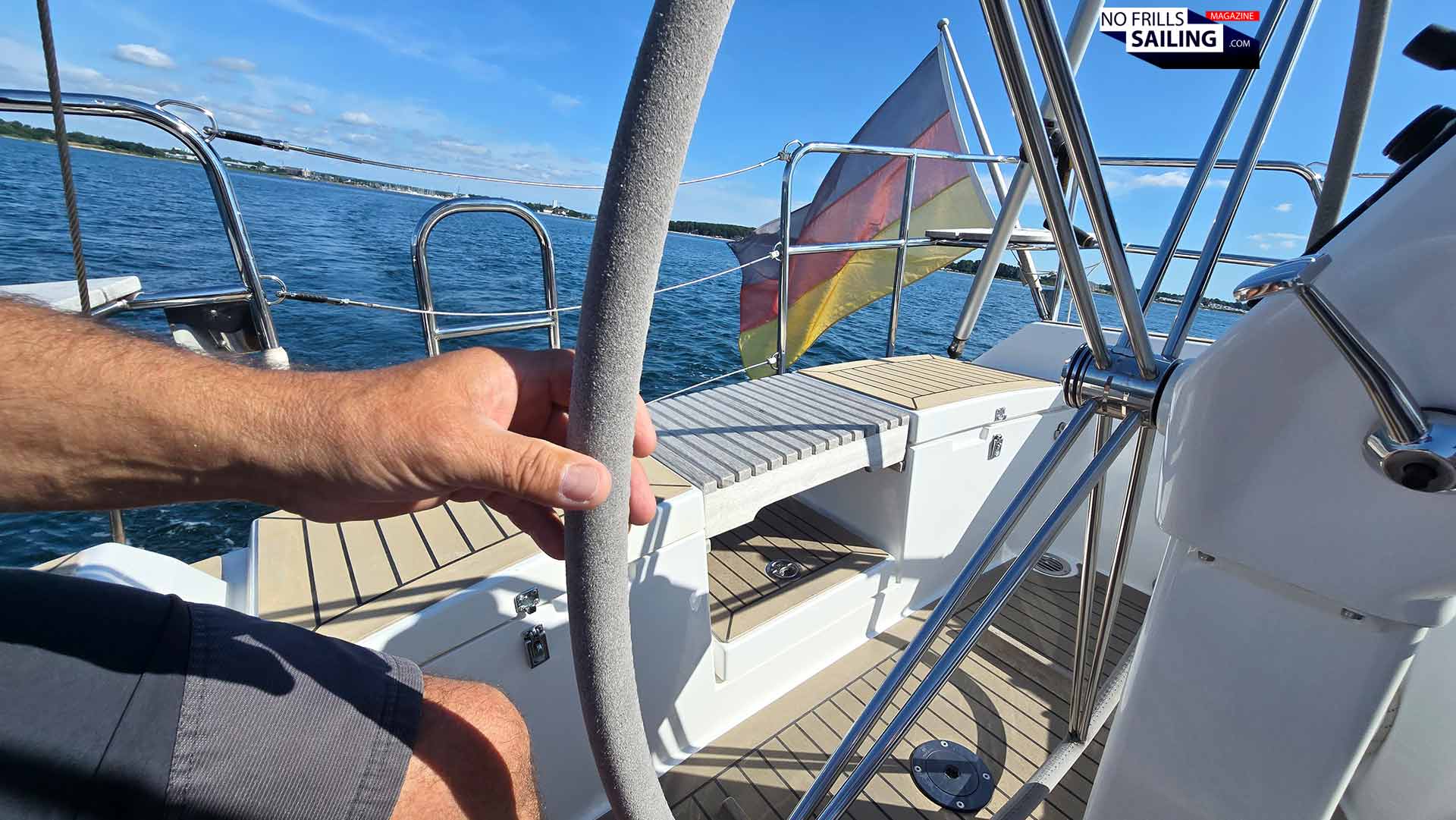
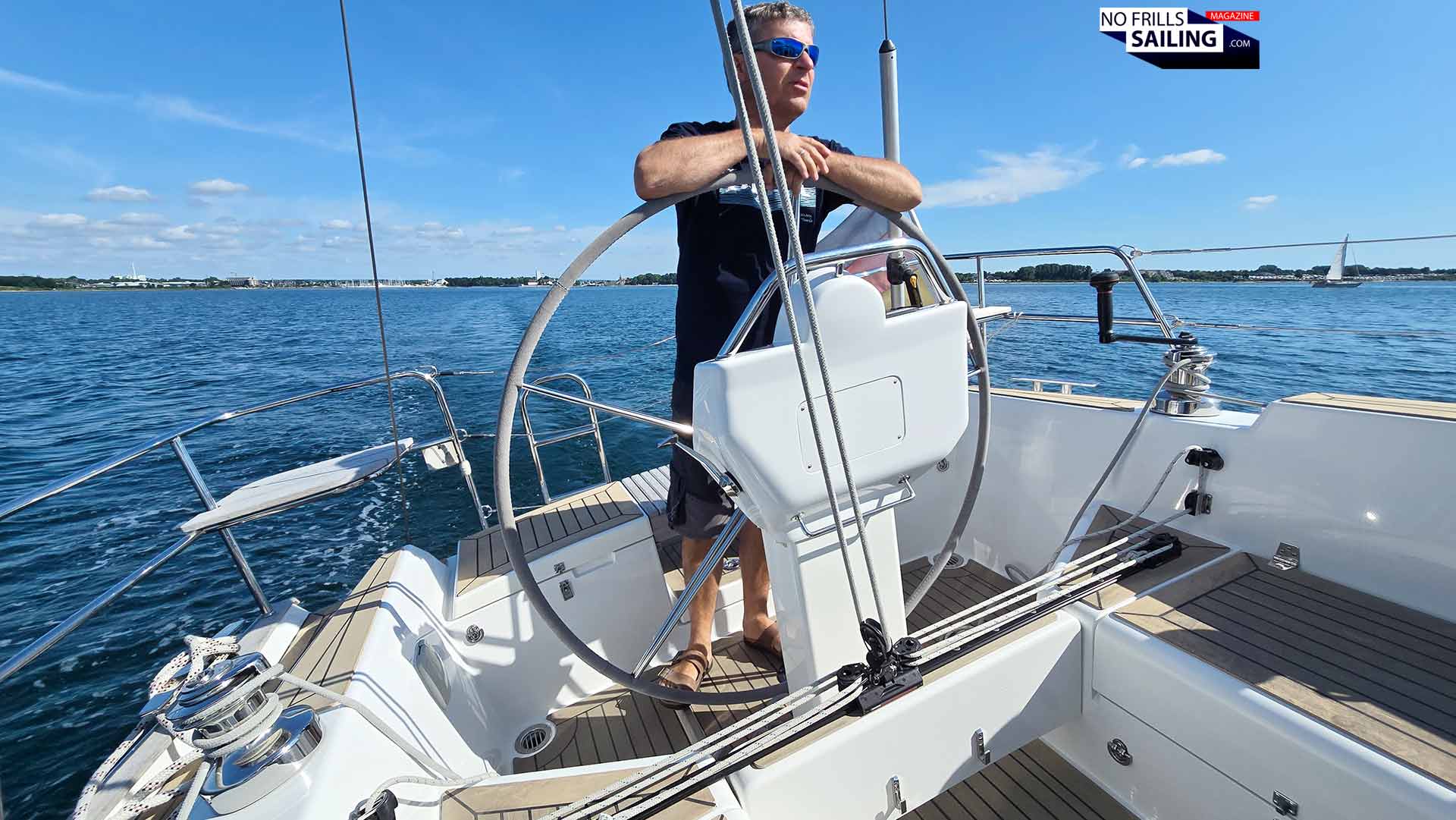
First of all you will instantly notice that the usable cockpit area is much smaller. This is by design: Because of the fact that more than 90 percent of the time “him and her” are sailing as a two-person combo anyway, there´s simply no need for large dancefloor-sized cockpits! There´s also no fixed cockpit table obstructing safe sailing positions, though there are solutions if you need one moored or at anchor. Likewise, the Saare does not sport double wheel steering, instead, there´s one single large steering wheel mounted on a central helm station.
Note the clean lines
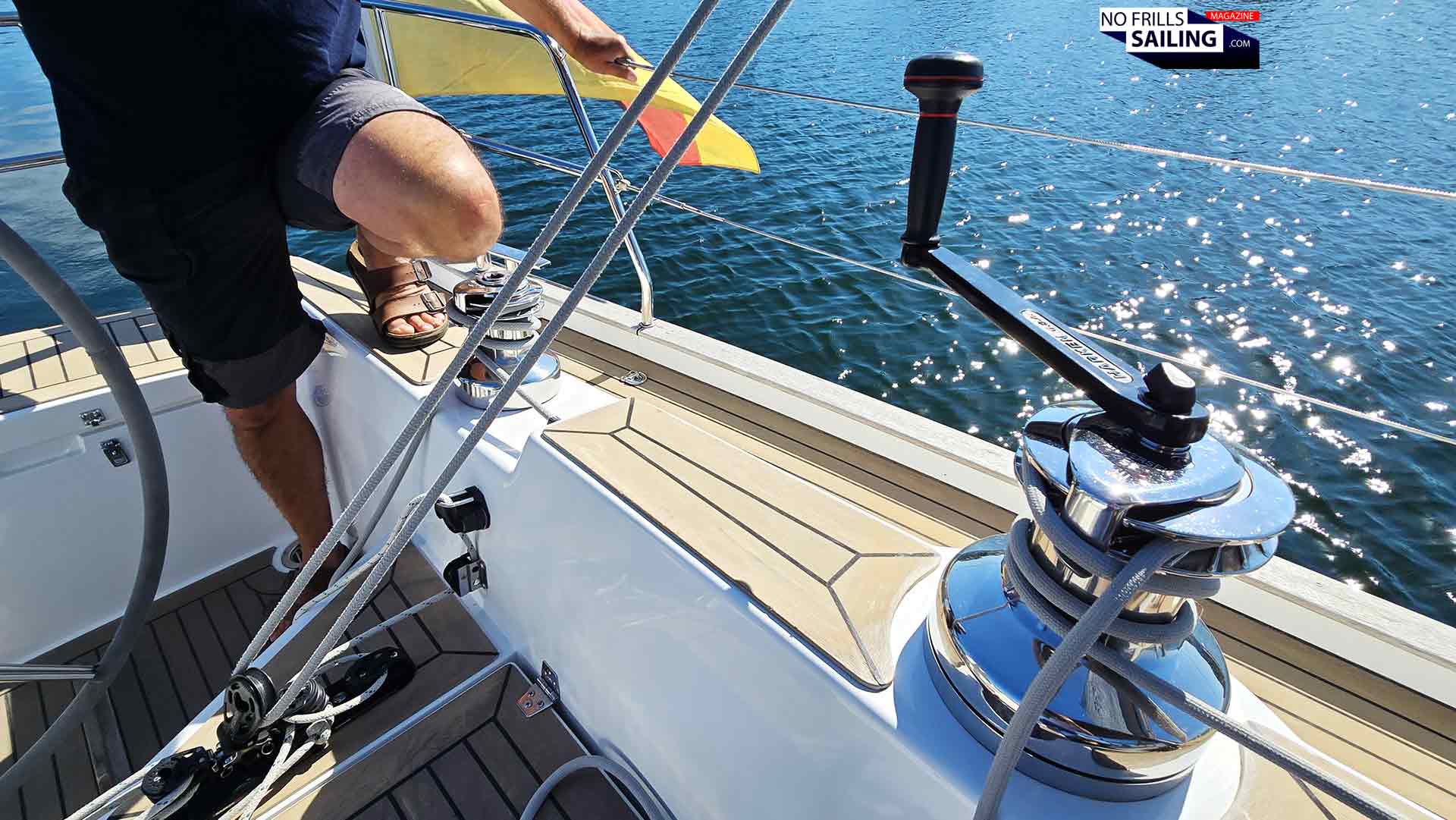
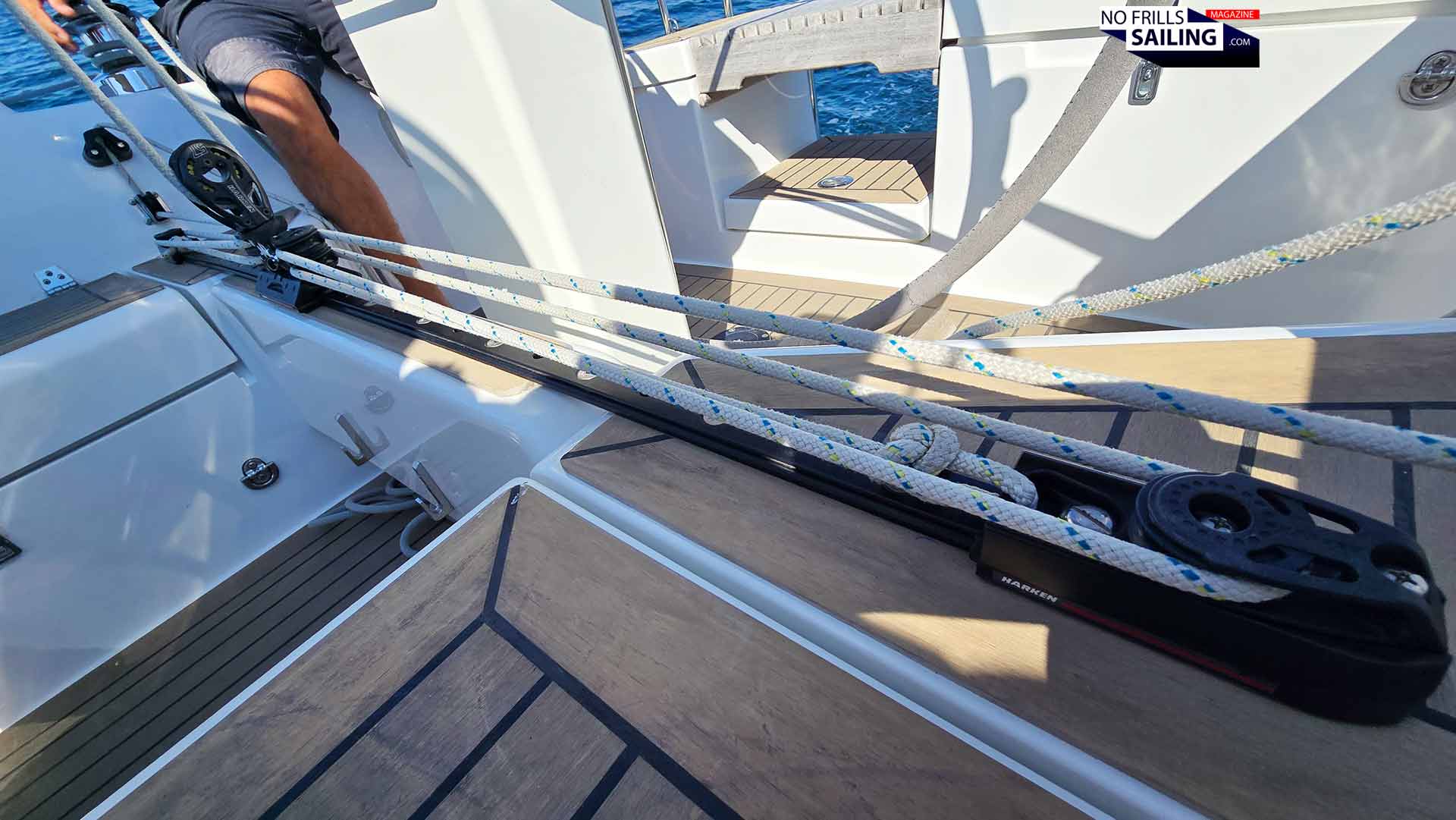
Winches. For decades especially the large production boat companies have trained us to accept less and less winches. Up to a point where you can buy (and sail) a modern Dufour with just one single winch! What may be acceptable in low-aspiration charter business, is a no-go for true sailors. The Saare comes with a classy six-winches-setup. There are your two working winches on the coach roof next to the entryway down, two winches on the coamings and two large drums abaft where the Gennaker sheets could be put on or, as in Stefan´s case, the mainsheet is worked via German system. Six winches, which offers the ultimate freedom for any style of sheeting your boat.
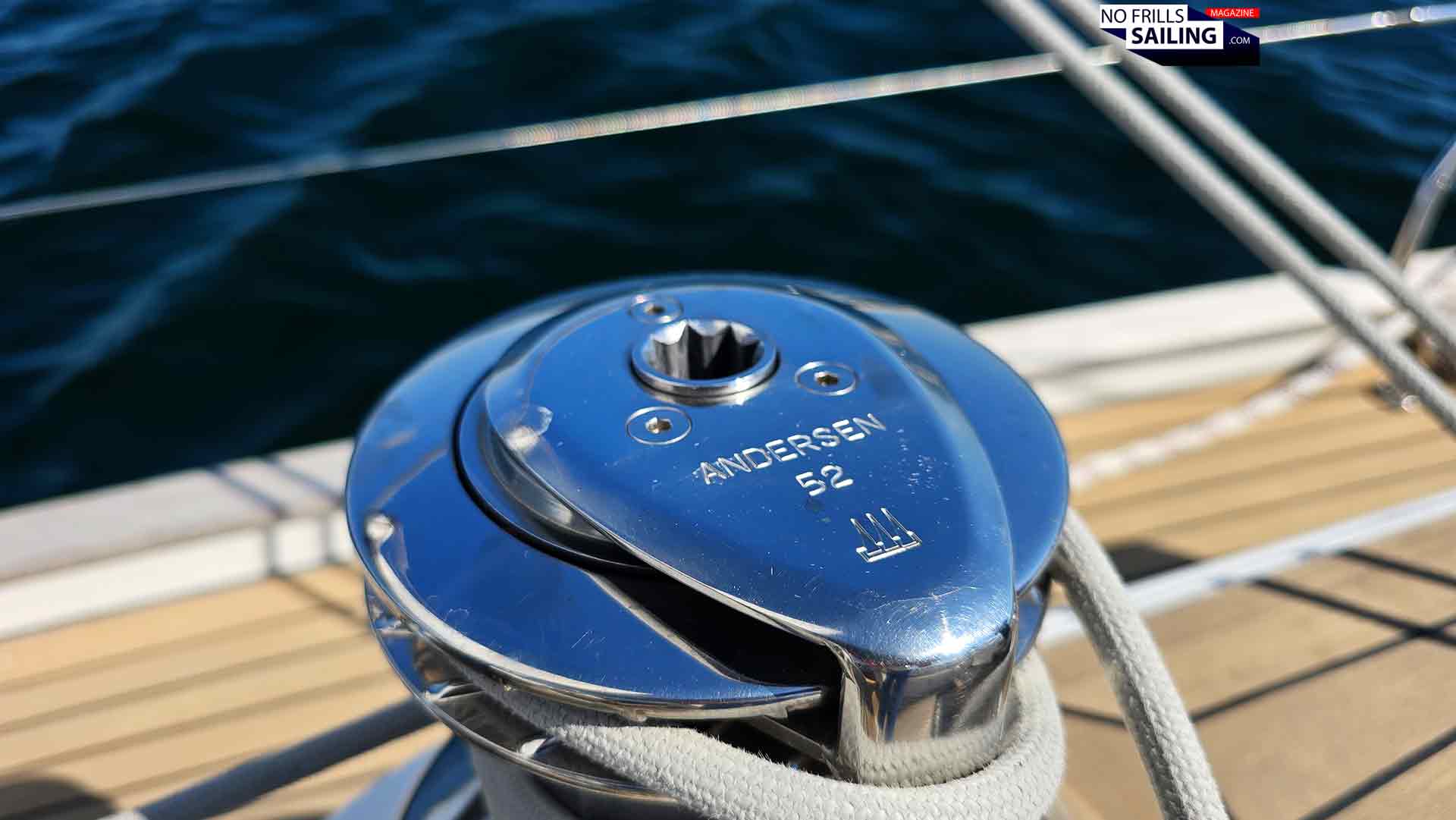
Andersen, what else?
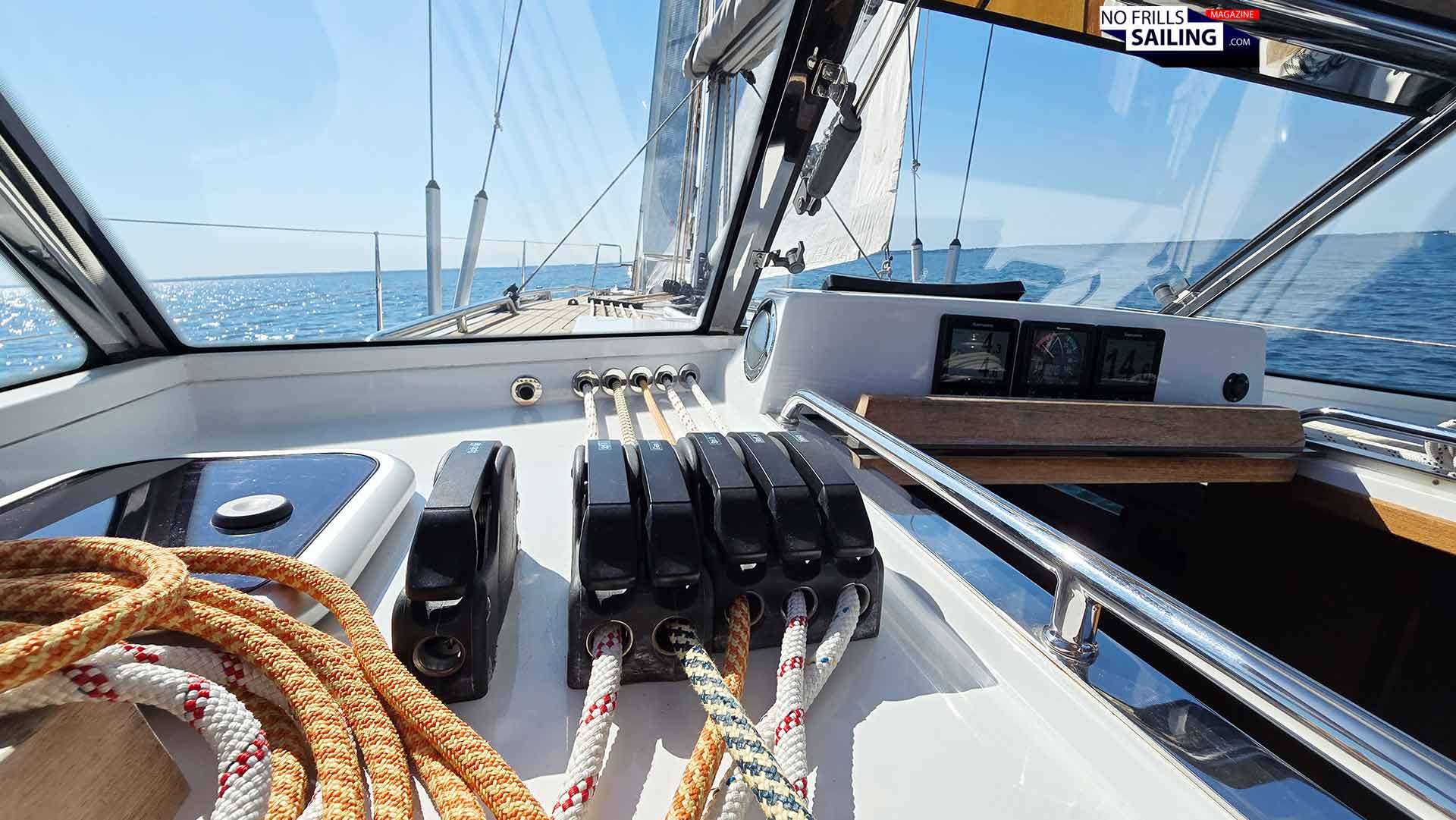
As you may have seen in my walkthrough-article, the Saare 38.2 can be ordered according to your sailing preferences. For example, you can have a mainsheet-arch where the attachment points for the mainsheet are mounted on top. Or you can have a classic mainsheet, like the one on Stefan´s boat, as well as a German mainsheet-rigged version. What´s your choice? At the same time, as “conservative” as it may feel, the Saare sports a rope management that has most of the ropes running under deck, which makes for a very clean and tidy appearance, no rope salad though.
A fixed rigid windshield
Of course, Stefan went for the Andersen winches, which in my opinion should be a matter of course for such a beautiful boat. Clearing the harbor, we steer free from land and the wind freshens up a bit. Not much, some 5 to 6 knots maximum. Yet we are sailing, and we aren´t sailing all too slow, as I was about to find out soon. Because, one of the specialties of the Saare, as my sailing friends have told me beforehand, are her beating capabilities. And we are now about to find out how she holds up against the wind.
Impressive upwind performance … in very low winds
So here we are, close-hauled. Still back inside the harbor, wind was “blowing” with 2.3 knots true. Yet, the boat sailed along withs just over two knots. That´s impressive, for a start. Now, outside of the harbor, we have a 5.5 to 5.8-breeze, which is nothing more than a puff of hot air. Yet, the Saare 38.2 is moving at a steady 4.9 knots SOG pace, which I find very interesting. Stefan agrees. He emphasizes that this boats displaces a bit more than eight tons, yet, look at us – practically no wind and still we are sailng.
Andersen, what else?
Another remarkable feature is the tacking angle. Of course, the faster and steadier you go, the better it becomes. Stefan performs a few tacks, which are exercised fast and without any hustle, and even in this low wind environment it´s an 80 degrees tacking angle in total. When sailing in more moderate in steadier winds, this yacht is able to beat to windward well under 40 degrees, without significantly giving way to leeward! Would you have thought of this performance on the first glance?
Clean main sail trim
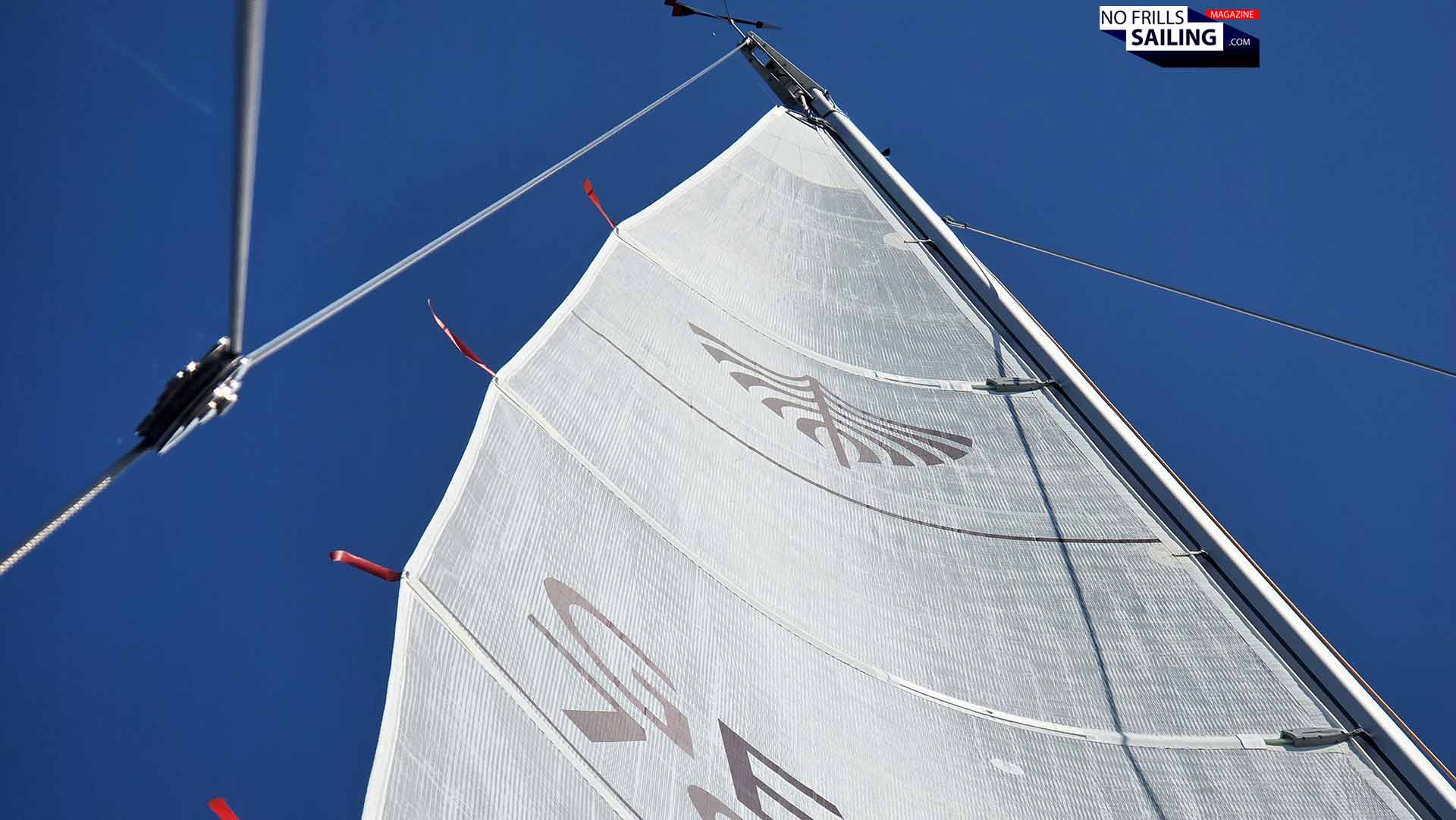
In fact, the Elvström laminate sails, once finetuned, propel the boat with perfect efficiency. She feels steady on course, just like your Volvo family sedan would do, yet displays a lustful and agile steering property, more akin to a dinghy than fitting such a classic cruising yacht. Stefan is frolicking, he tells me that even though there´s not much wind today, he could attend a regatta right now! Which, by the way, is something he and his Saare are regularly taking part of.
Marching through regatta fields
Stefan tells me that he has been a sportive and quite competitive sailor since his childhood. His last boat was an X-Yacht XP-38. I raise my eyebrows: Really? He tells me how he went from owning this thoroughbred Scandinavian style cruiser-racer to this Saare 38.2: The X was a fine yacht, yet – like any old sportscar-driver would agree – she was stressful to master and very demanding. “And for what?”, he asks: “For arriving 15 or 20 minutes earlier?” After just one year owning the XP-38 he decided to sell her right away and look for a new yacht.
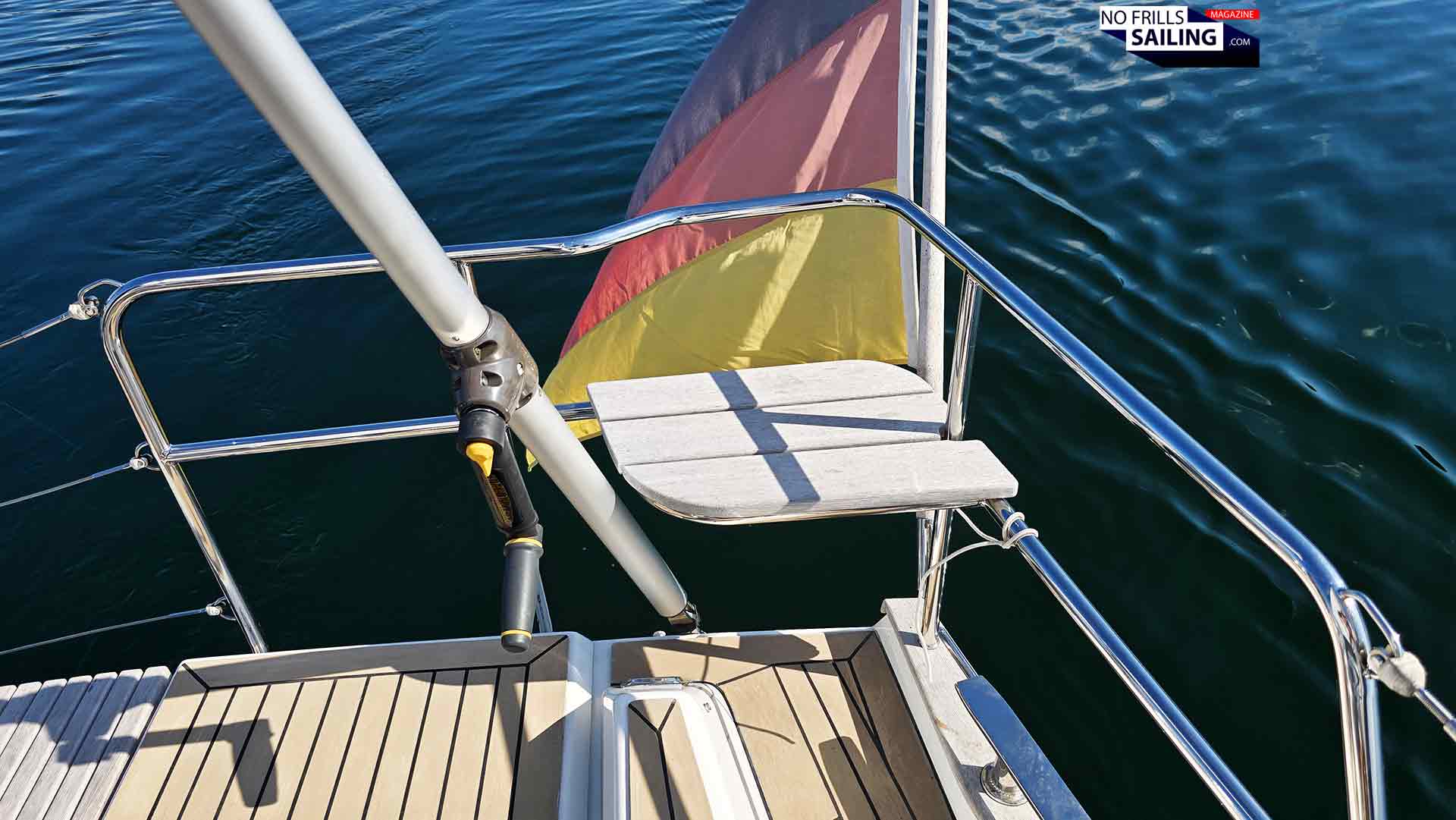
Of course: Dolphin seats!
Something less stressfull, he thought, but also not all-too complacent. It should be a boat that would enable him (and his family) to enjoy sailing on a vacation with all the amenities and comforts a modern sailing yacht should offer. Yet, at the same time, she should be capable of sailing quick, powerful on every point of sail and sturdy even in foul weather. Having owned an X-Yacht, he of course was a bit “spoiled” by the high level of building quality and craftsmanship, so that no production boat came into consideration.
Note the high coamings
In the end, Saare promised to build a yacht that would come as close as a boat could get to his conception of an ideal mid-sized sailboat. “And she is such a great performer in our Wednesday´s regattas!”, he tells me with this glow in his eyes. A few years ago he even participated in the famous Midsummer Sail race, occasionally sailing on eleventh place. Fighting hard with all-out raceboats, their skippers couldn´t believe their eyes when they realized, back in harbor, who and which boat this fast and annoying AIS-blip in reality was!
That. Is. Sailing!
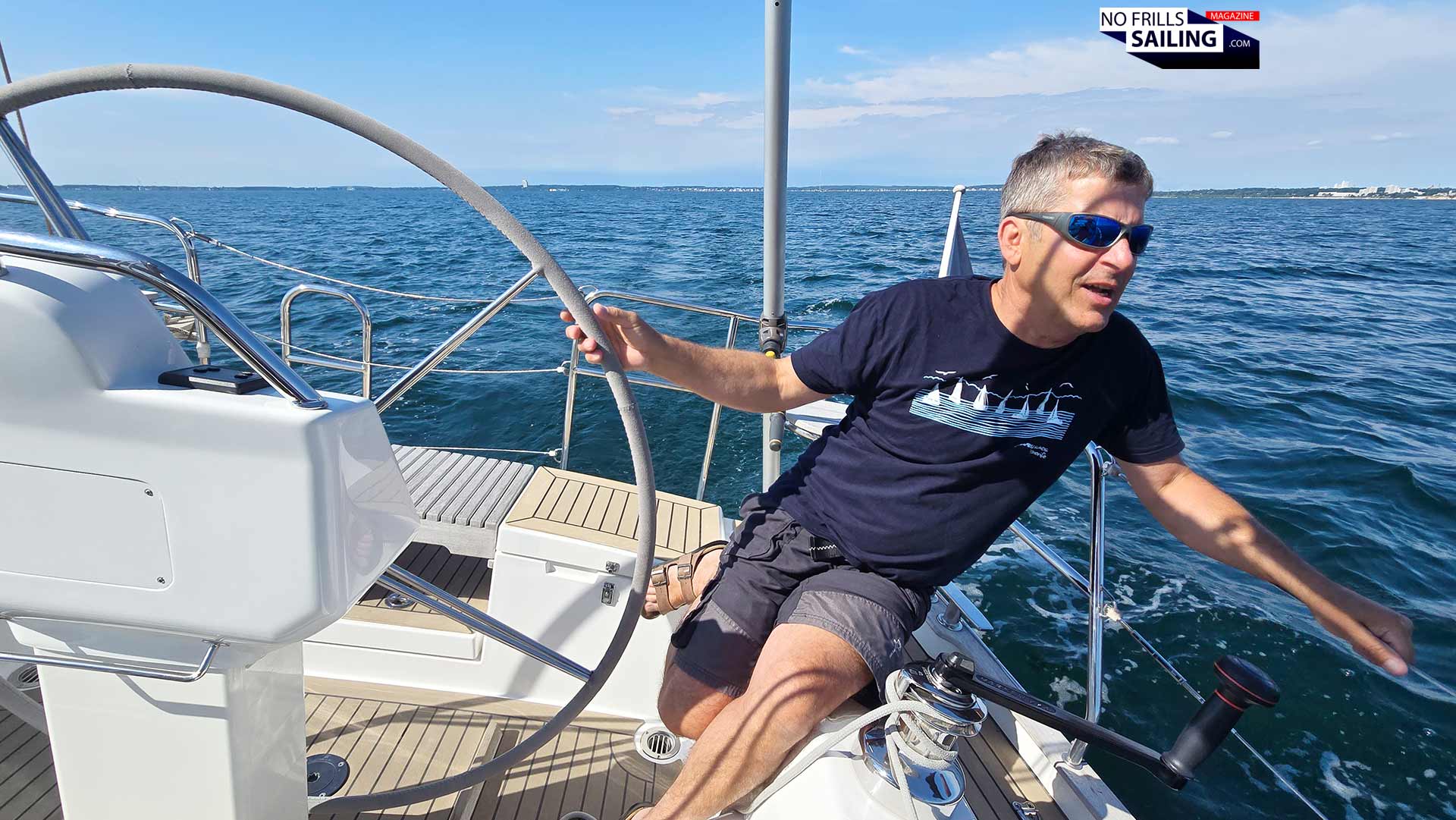
“Upwind, especially between 18 and 20 knots, it is very hard to beat the Saare!”, he says with a grim smile. “Tested for you on many occasions.” And I believe him on the spot: Even now, in these very, very light conditions, the boat feels so light, sails so easy and effortless. Any finger´s tip on the steering wheel is instantly transformed into a change of sailing direction. Just like a dinghy. Impressive! I briefly take the helm and validate my observation: Thanks to the large diameter of the steering wheel and its large leverage, helming this boat does not require any muscle power. At the same time, the boat can be steered very precisely with relatively less effort.
Featherlight, impressive gust response
After a few minutes, something even more impressive happened: Just for a brief moment, a little tiny gust came to life. Not much, an increase of a mere knot or so. But it was sufficient enough to unfold is invisible force onto the boat. The Saare instantly began to heel over, much, much more than before, and she sprung to life in the best sense of the word! Before the gust, we were sailing along, hovering around a steady 4.6 to 4.8 pace. But now, it was different …
In a short gust: Instant speed!
It did not last long, let´s say a minute or so, but windspeed increased to 7.4-7.5 knots. Enough for me to sit down at the displays and observe the numbers. As the boat was steered by the auto-pilot, nothing changed at all: The sails trim remained the same, steering habits as well. But the numbers were telling. In this little 7.4 gust, the boat sported along with 5.2-5.4 knots SOG, which I found pretty impressive.
Note the heel
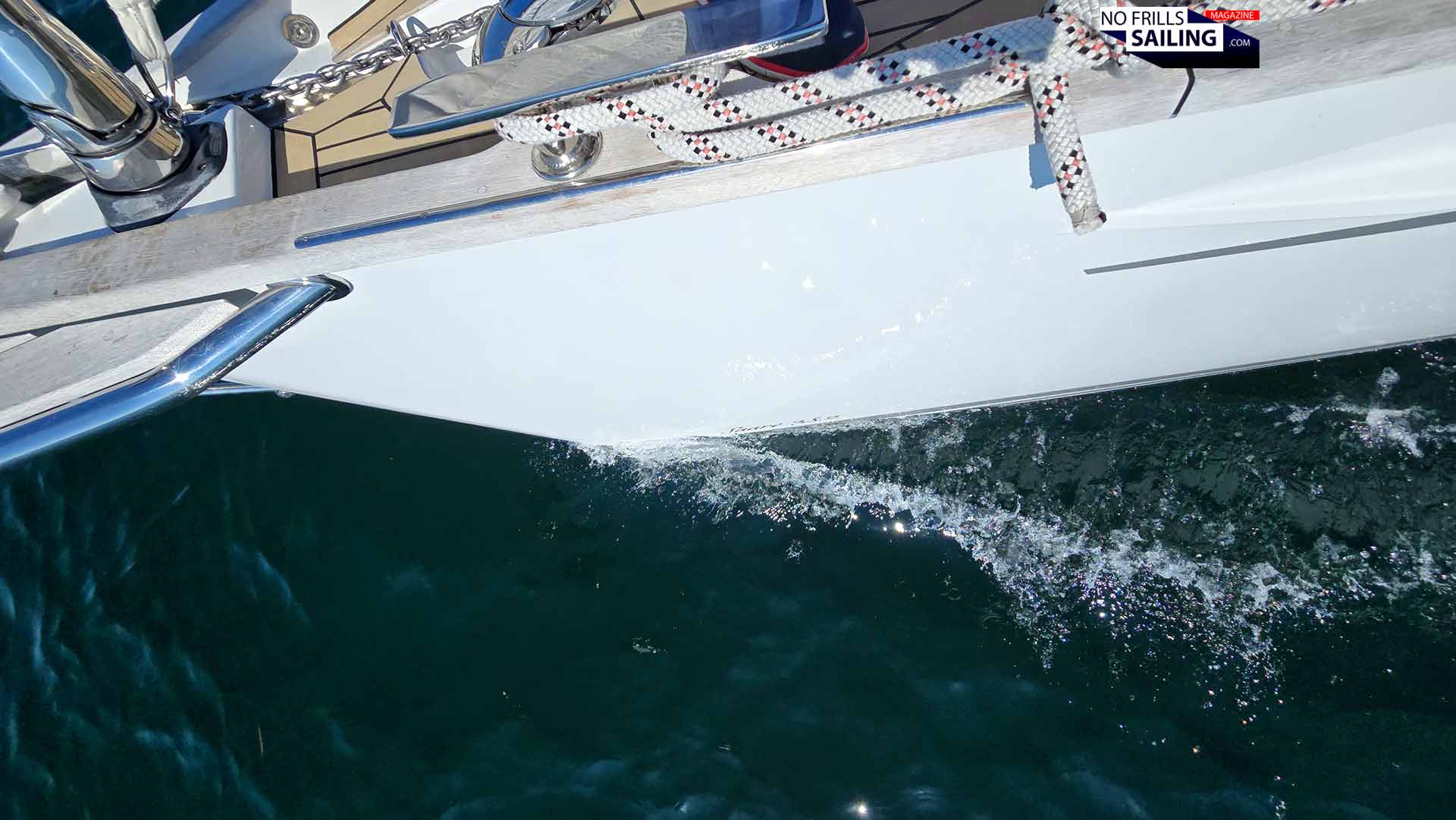
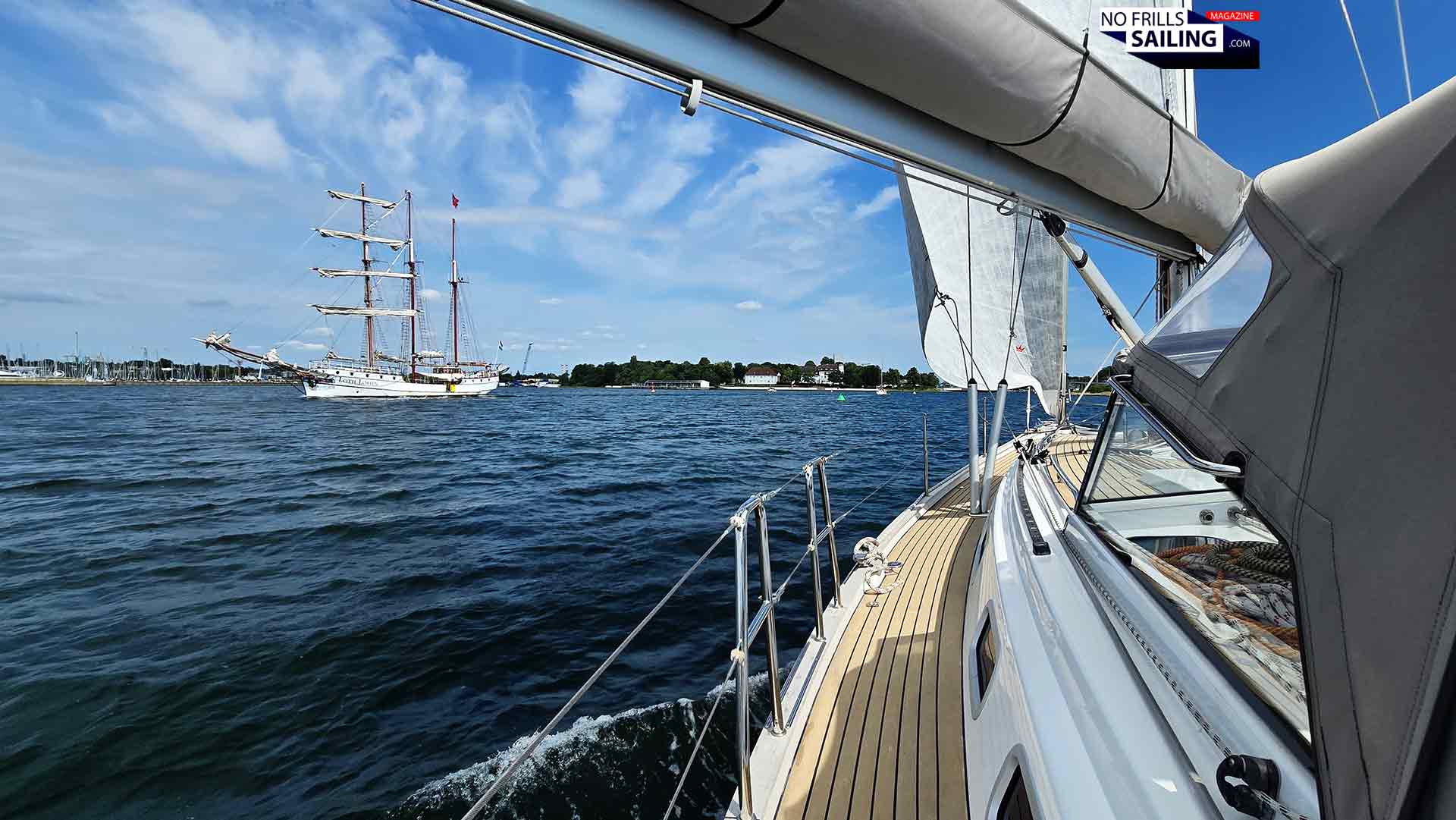
Most impressive was the intensity and speed in which the boat transformed the sudden gust into sheer acceleration. Light like a feather, it felt, she effortlessly harnessed the wind and transformed it into boat speed. Which is so important! Look at the picture above: There´s another boat steaming alongside us. They didn´t even try to sail, but instead used their engine to travel along. What´s a normal cruising speed for a boat that size? Around five knots? There you have it! I´d rather sail in a calm than having to bear the constant annoying hum of the Diesel …
A boat for sailing connoisseurs
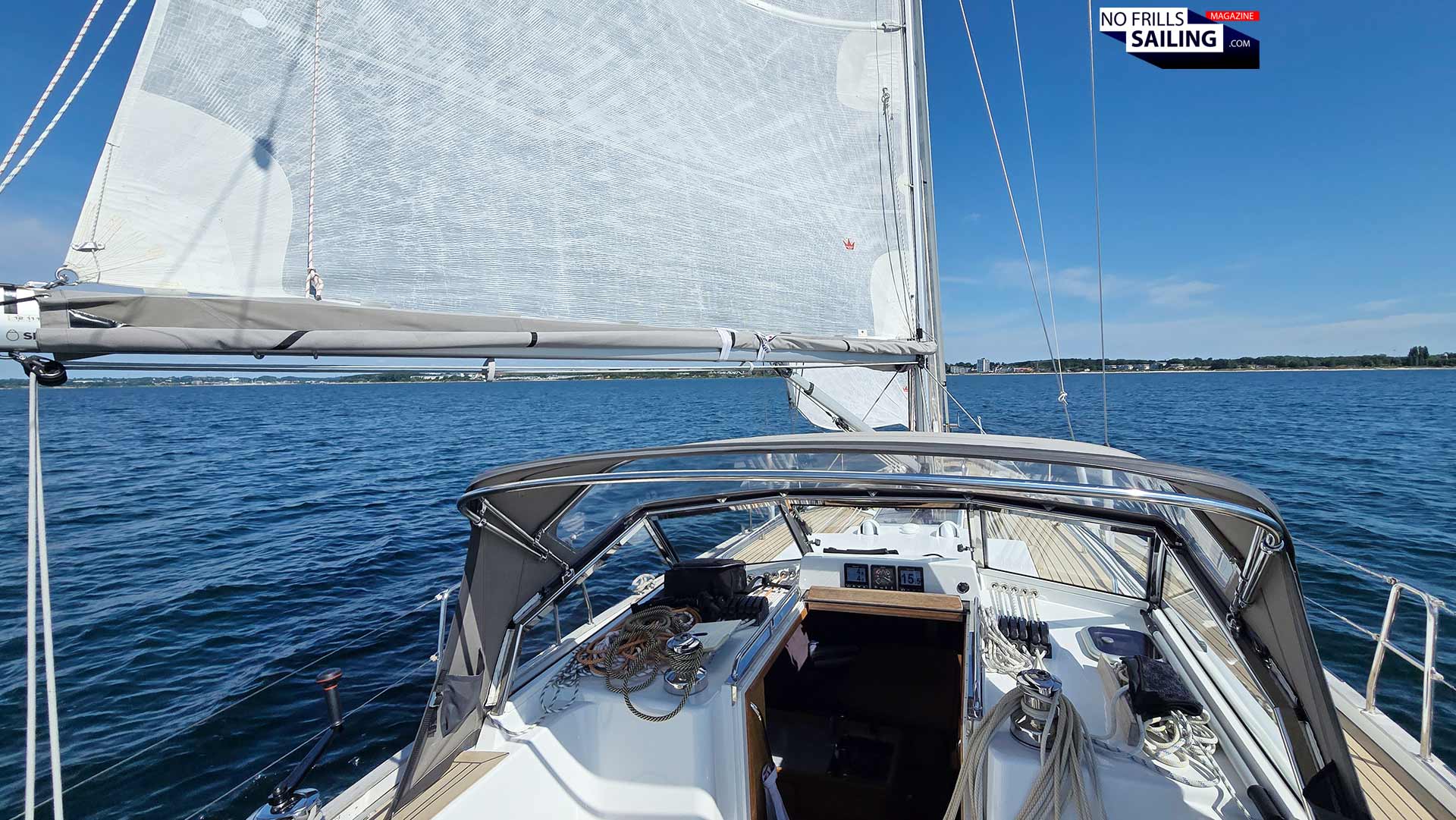
Stefan used this brief moment of more wind to sit down, deactivate the auto-pilot and take over the helm. In this, the Saare offers a wide range of seating positions. What´s obvious is the high coamings to either side of the cockpit: For once, it creates a deep, safe space inside so that even in foul weather, extreme wind and wave conditions, you will always be snug and cozy in here. On the other hand, it´s a perfect height for supporting your back. Do you also hate these low-coaming Mediterranean cruisers breaking your back?
Steering with two fingers
The Saare 38.2 – at least Stefan´s version – comes with a mainsheet traveler that had been mounted just in front of the steering post. This way, it eats up less space of the cockpit and at the same time allows for quick response and efficient fine trim of the main sail. As I ave already explained, if you order your Saare, you can have your boat without it or put it onto the mainsheet arch. Of course, having it right here is the optimum in terms of forces exerted into the structure and sails trim.
Mainsheet traveler – a must
I think, this is the biggest difference of Saare to Linjett: It´s a rather “hands-on”-boat that remains true to “classy” sailing, whereas Linjett tries to combine borrowings from the more lush Mediterranean sailing-style with Scandinavian sailing traditions. Hence, the Saare might target the more sailing-oriented sailor. Should I compare the Saare to other Scandic brands? As Hallberg-Rassy more and more offers wide-sterned double rudder yachts, Arcona under Nils Jeppesen tends to mimic the modern, but classy X-Yachts and Najad also offers more modern concepts … no, I don´t think that there is a contemporary brand doing the same as Saare does. In fact, this yacht feels much closer to my Omega 42, than to any of the above. But that’s, of course, just my opinion …
By the way, if you do not want to miss any more articles like this one, why don´t you subscribe to my monthly newsletter? It´s free and makes live so easy. Every month you´ll receive an email with all articles of the past 30 days. Choose you favorite, click and enjoy a nice read. But now, back aboard the fine Saare 38.2 …
Reaching and downwind: Nimble on the rudder
After two hours of lush cruising, we set a homebound course. But before, I´d like to check on the boat´s performance on the other points of sail. Stefan veers off to a road reach. In yet another short “burst” of 7.8 knots true, the boat manages to sail at 5.8-6.0 knots SOG – but I´d like to emphasize that no fine trim on the sails had been done. So that´s just a rough. I am sure with a little effort, she could have squeezed out maybe a third or even half of a knot more.
Running downwind
When the wind returned to its meager 5.7 to 5.9 knots true, the Saare, steering on a 100 to 110 degrees wind angle, at least made a good 4.8 knots SOG on average. Which, again, could have been a bit faster if we´d have invested in a bit more fine trim. But temperatures and the radiant hot sun were already burning our skin – Stefan also had forgot to bring his hat. He assured me that if we´d hoisted the 120 square meters of Gennaker, this would have been a very, very different situation: The boat would be nearly as fast as the wind.
Still not bad at all!
So, as a last measure, Stefan put her just before the wind on a running course. Of course, for a full displacement yacht, the downwind points of sails are the Achilles´ heels. I think that between 100 and 170 degrees TWA modern, wide-sterned and possibly planing-optimized hulls are much, much faster. And displacement designs perform, well, okay-ish. The Saare showed a low 3 knot-speed (again, 5.8 knots TWS) on 160 degrees TWA, in a short 8.4 knots burst she was able to reach 5 knots of SOG in 140 degrees TWA. That´s okay, but of course, no match for the flat-bottomed planing hulls.
Who is a Saare made for?
Going back to harbor, I am thinking about the main target group for such a boat. A Saare 38.2 is not a bargain, at all. The manufacture in Estonia has not a high output of boats, the level of craftsmanship, attention to details and vertical depth of manufacture is very, very deep. Everything is upper shelf here on board, no corner cut, no efforts avoided. Clearly, Saare is a brand for sailing connoisseurs and for people who know what they want. She is not a beginner´s boat, although, if you can start your sailing career with this one, you´d call yourself a lucky man.
Contemplative sailing
She is a true cruiser, made for extensive sailing trips and long haul cruising. Optimized, of course, for the Baltic and North Seas, she stays true to the best of European and Scandinavian sailing traditions. She´s a boat for people who seek active sailing, quick passage making and traveling long distances, yet in comfort and – above all – with a certain sea-kindness. This boat, Stefan strongly underlines as well, will not wear you down over the course of your sailing trip. On the contrary, she is made to keep your spirits up and high.
Heading back to her berth
And again, looking at her size, I don´t feel that she is too small. In fact, 38 feet – that´s 11.40 meters hull length and 10.16 meters waterline length – doesn´t sound that much, but it is absolutely sufficient for the usual sailing couple. Offered in a owner´s front cabin only-version and two-cabin version, the focus group for this boat seems clear: Travel, discovery, having a good time with your (sailing) partner. She is a very special boat indeed and if you count yourself to either one of them above, you should definitely have a look at the Saare at one of the European boat shows!
Advertisement
So much to see, still.
Stefan finally takes down the sails, which, again, is a matter of a few minutes. Starting the Diesel engine, we pull into the ring harbor once again. At last, this is the cherry on top of this perfect sailing day: I finally have the privilege to moor in this picturesque marina! He is circling the boat with ease and precision into its berth. Yes, this is his home and he has probably done it a thousand times over, but it´s also at least a bit due to the effective, large single rudder that the boat can be maneuvered with such precision.
Ah, what a sight!
“By the way, she is even more impressive when going backwards”, he adds, but of course this wasn´t the case today. So here we are. That was a near perfect little dash out. The Saare 38.2 had proven to be a very nice performer. She was able to transform a very low wind situation into quite impressive forward motion. During the few gusts I witnessed an awe-inspiring sudden translation of excess wind energy into even more movement. When passing bigger ships, her hull managed to iron out the steep, choppy waves. All in all, this experience makes me want to sail her in stronger conditions which, I am sure, she will master like an ace. Note to myself: I should talk to her design, the legendary Finn Karl-Johan Strahlmann, to find out more about the intricacies of her hull.
A perfect day!
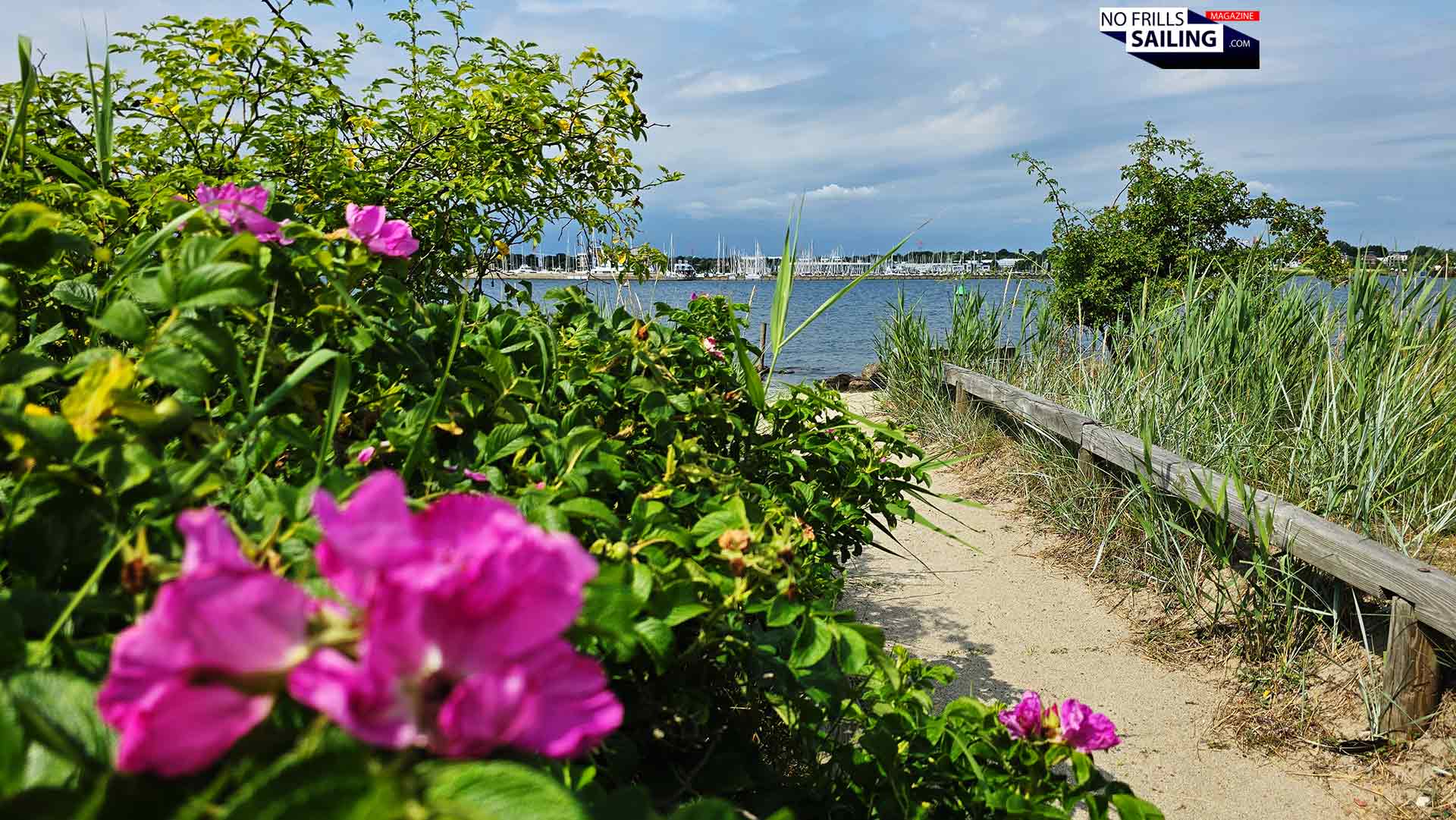
So I say “Thank you so much, Stefan!” and wave goodbye to him and his beautiful boat. Walking the round jetty towards the exit gate, I couldn´t resist but to check out the club-owned, private little sand beach, directly facing the open Luebeck Bay. Ah, what a dream location this is … as I mentioned earlier, it doesn´t get any more Swedish than this in Germany … what a perfect day this was, indeed!