
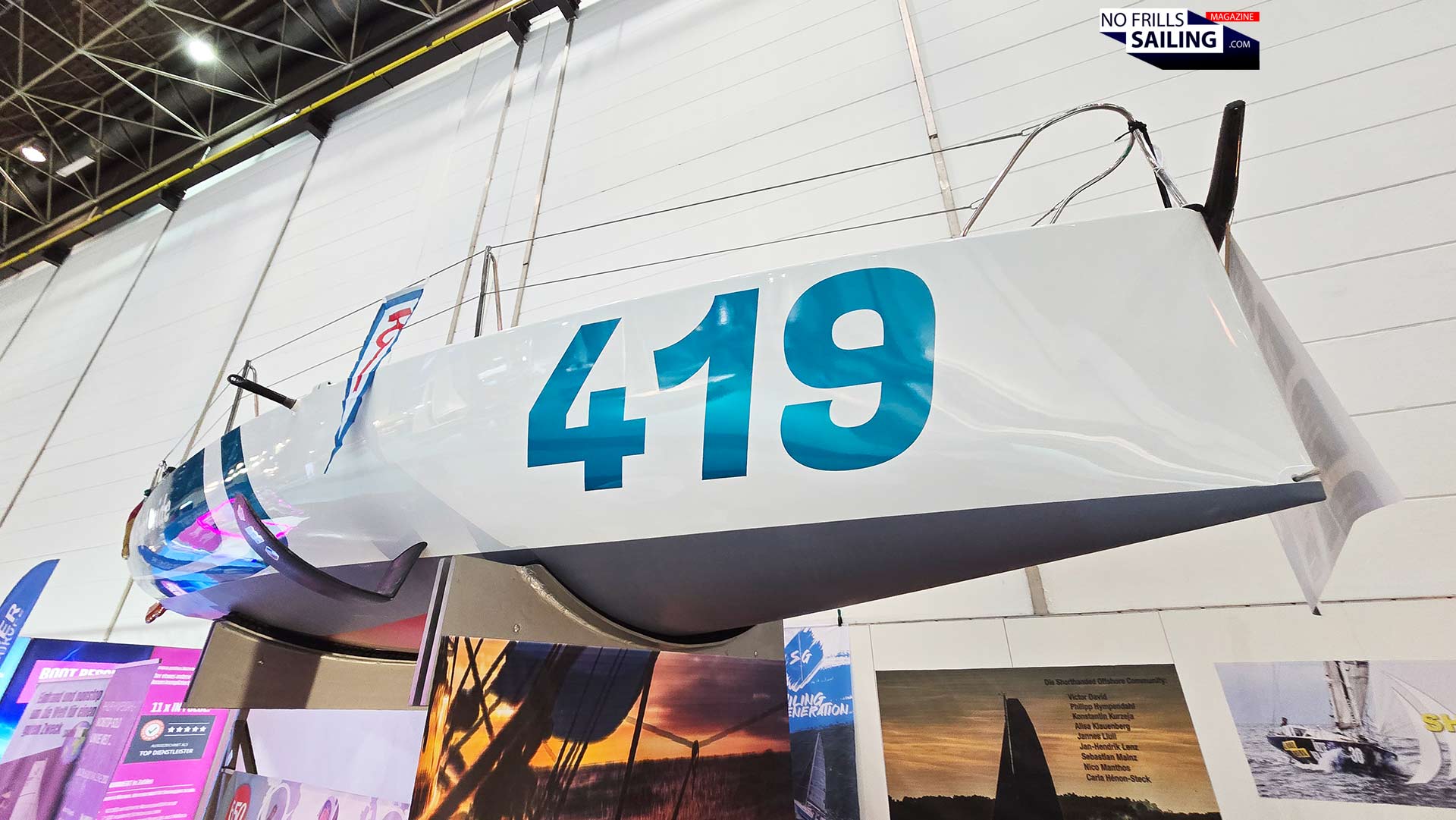
This year, my Boot Duesseldorf-articles will be kind of special, or let´s say, different: I do have a couple of traditional walkthroughs for you in the pipeline, no worries, but this time I also tried to look for more stories off the beaten tracks. This is one of them. Aside the usual exhibition halls where the big brands had their newest sailboats on display, the show always has a hall dedicated to sailing clubs, yachting associations, classes and … special projects. One of which is this beautiful Classe Mini 650, christened MR. BRIGHTSIDE:
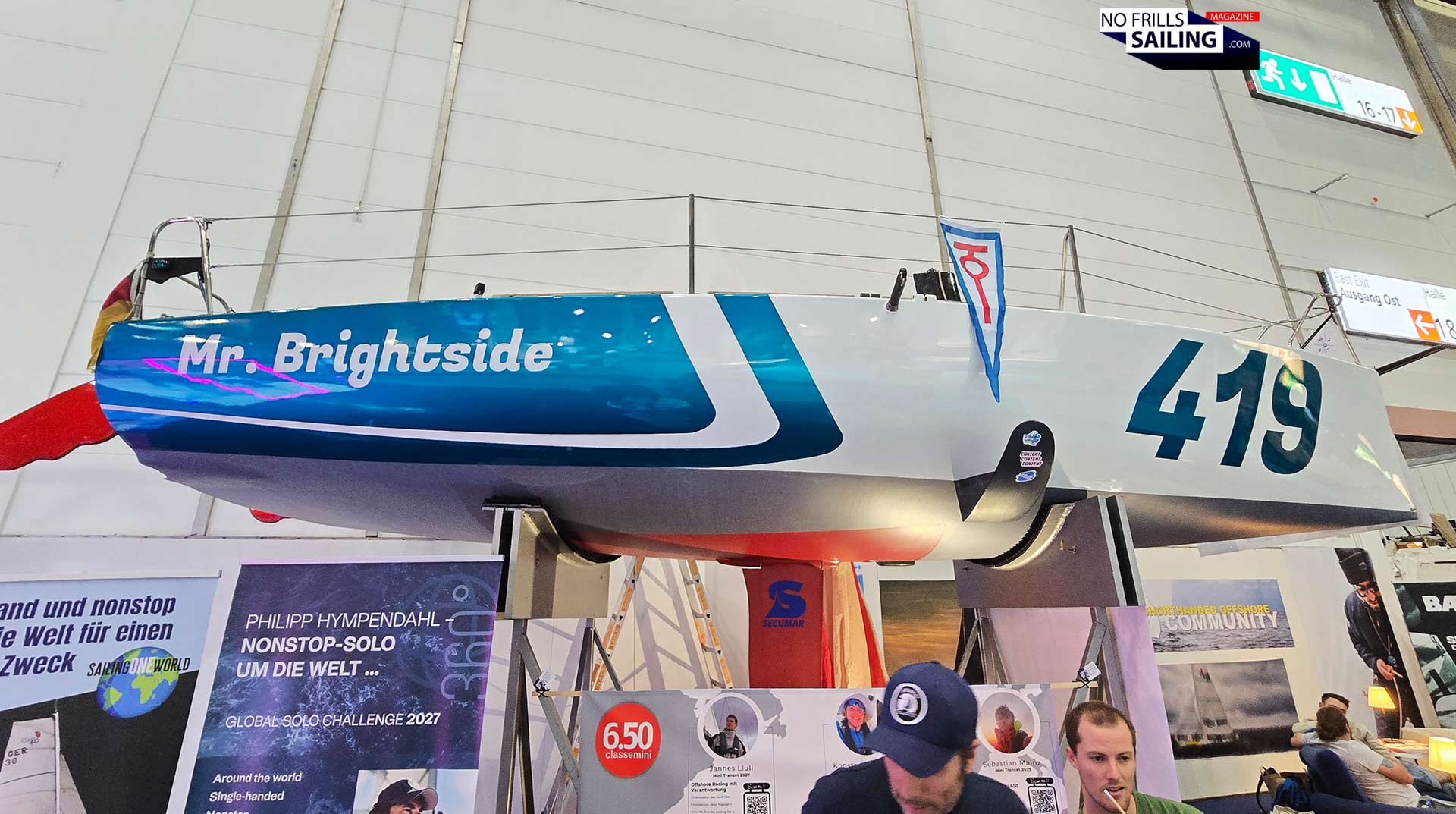
The boat resided high up above the visitor´s heads on its transport rack, which if course was due to the deep thin racing keel. You know from various past articles that I have a special connection to small boats, especially those Minis. And as such it was a matter of course that I approached the stand and asked for the skipper. To my surprise, this turned out to be one of the youngest offshore Mini skippers I knew: 21 years old German Jannes Llull, who had just acquired the boat. And who now is training hard to qualify for the 2027 edition of the Mini Transat race.
Let it fly! Foils for the Mini 650

His campaign is a story of its own and I am thinking of publishing a more detailed article on this – because I guess there are many of you, dearest readers, who are maybe planning a similar project as well, happy to receive hints and tricks from someone who has already been there. That said, this article shall have its focus on the boat itself, not too much on the skipper. Why? Because this is a special Mini.
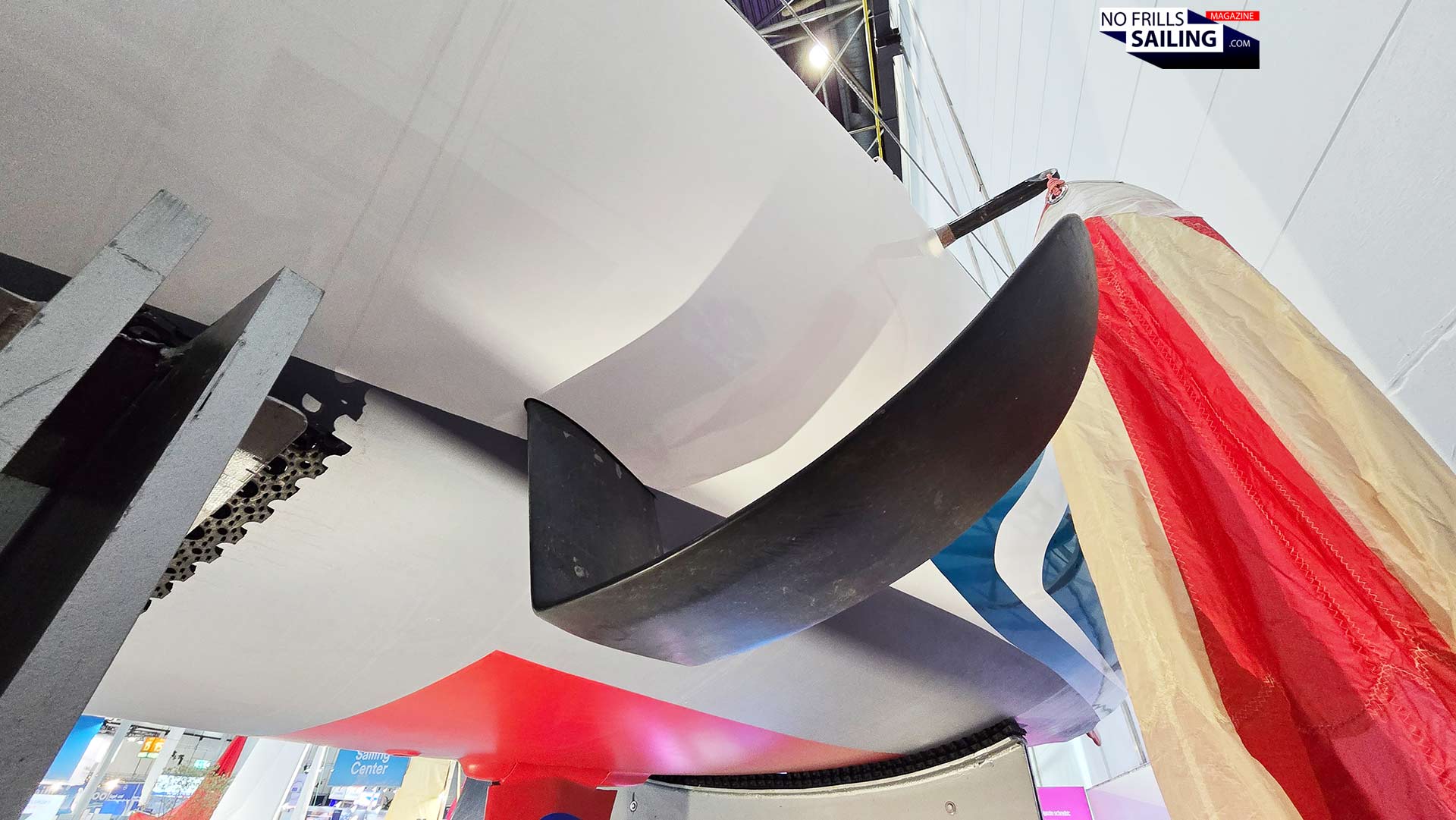
MR. BRIGHTSIDE is a 2003 built series design by Sebastian Magnen. These boats had been manufactured by Technology Marine. Jannes recently acquired her from the previous owner – and just from the first glance I could spot some heavy upgrades and unusual equipment which makes her so interesting. So I asked Jannes to give me the full boat tour, especially emphasizing on her heavy upgrades. So we start with the foils.
These are massive carbon fiber-made foils which are said to stabilize the boat, counter-balance the heeling and eventually lift her up and make her fly. Jannes says he has never tested her real abilities in strong wind and foiling conditions, but will do so as soon as the first sun rays of this spring season will hit the water: MR. BRIGHTSIDE is set to being based in Lorient for his upcoming qualification campaign.
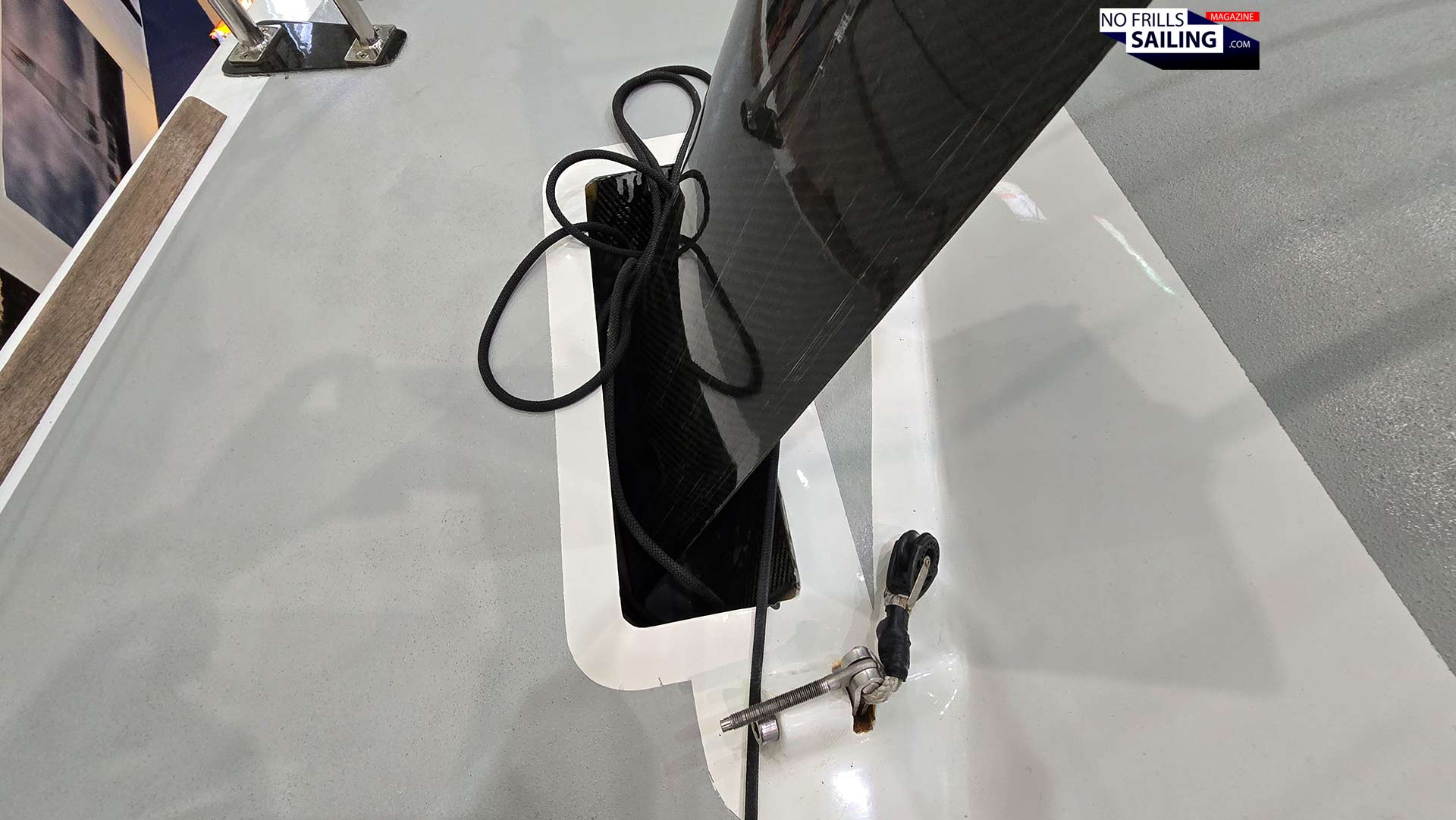
The integration of foils into the boat happened in two steps: At first the boat had been equipped with simple daggerboards. These are straight, fin-like boards lowered to the respective leeward-side of the boat. Not “flying”, but limiting leeway and securing a safer, more solid straight due course is their job. Later, these daggerboards had been replaced by L-shaped carbon fiber foils. We climb onto the deck of the boat and kneel at the foils. I am interested in how they work.
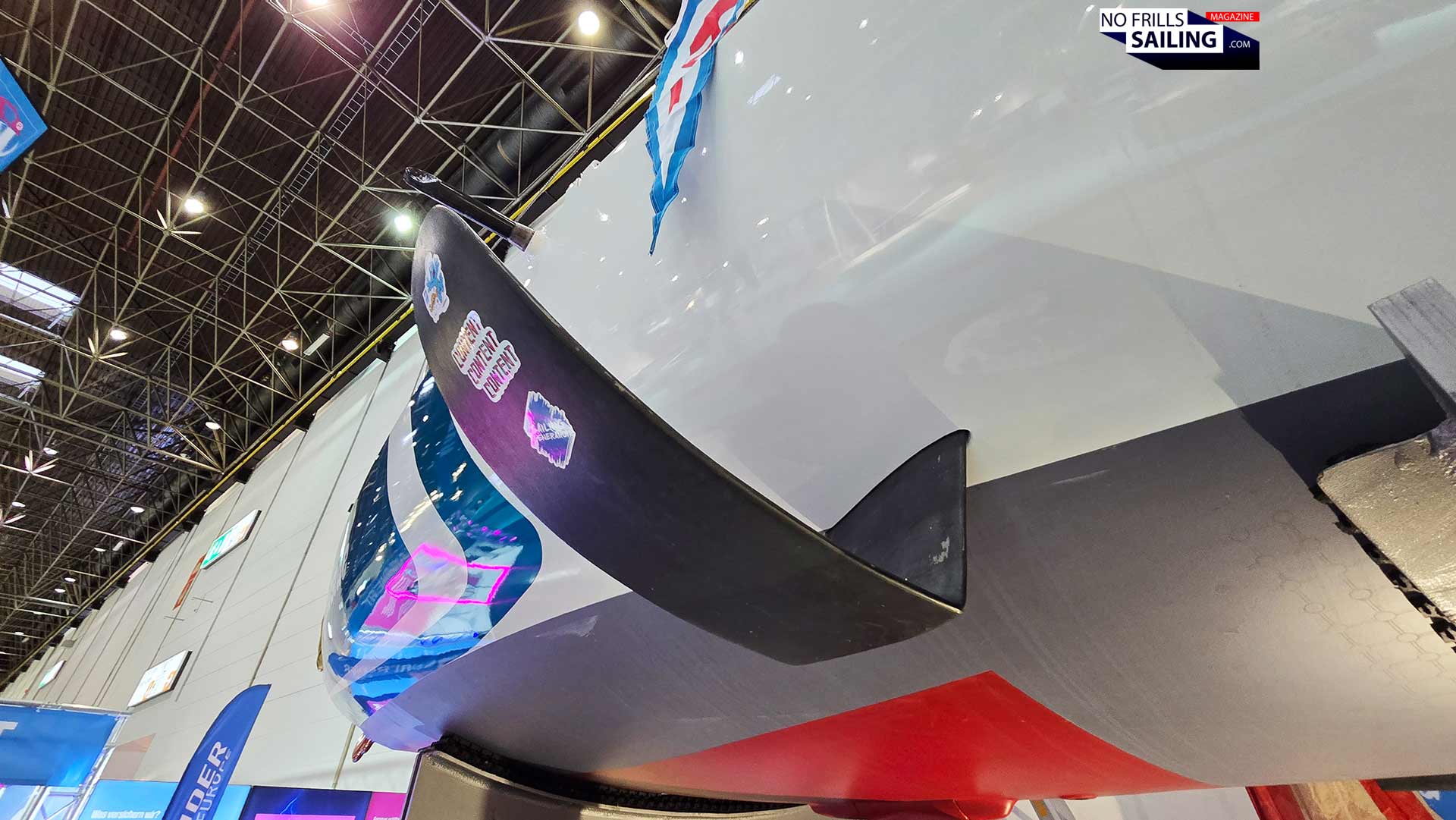
Inside the housing, or box through which the foils are lowered into the water, are much wider and bigger as the foils themselves. Jannes explains that this is a kind of crash-prevention: The inner part of the housing is lined with a thick type of foam in which the foil gets raised and lowered. In case of some flotsam hitting a foil at high speeds – Classe Mini 650 with foils can go as fast as 20 knots! – the collision energy will be absorbed (at least that´s the plan) mostly by this foam-buffer and hopefully eliminated before breaking the GRP-structure, which, of course, would result in a catastrophic water ingress.
The adventure of a lifetime
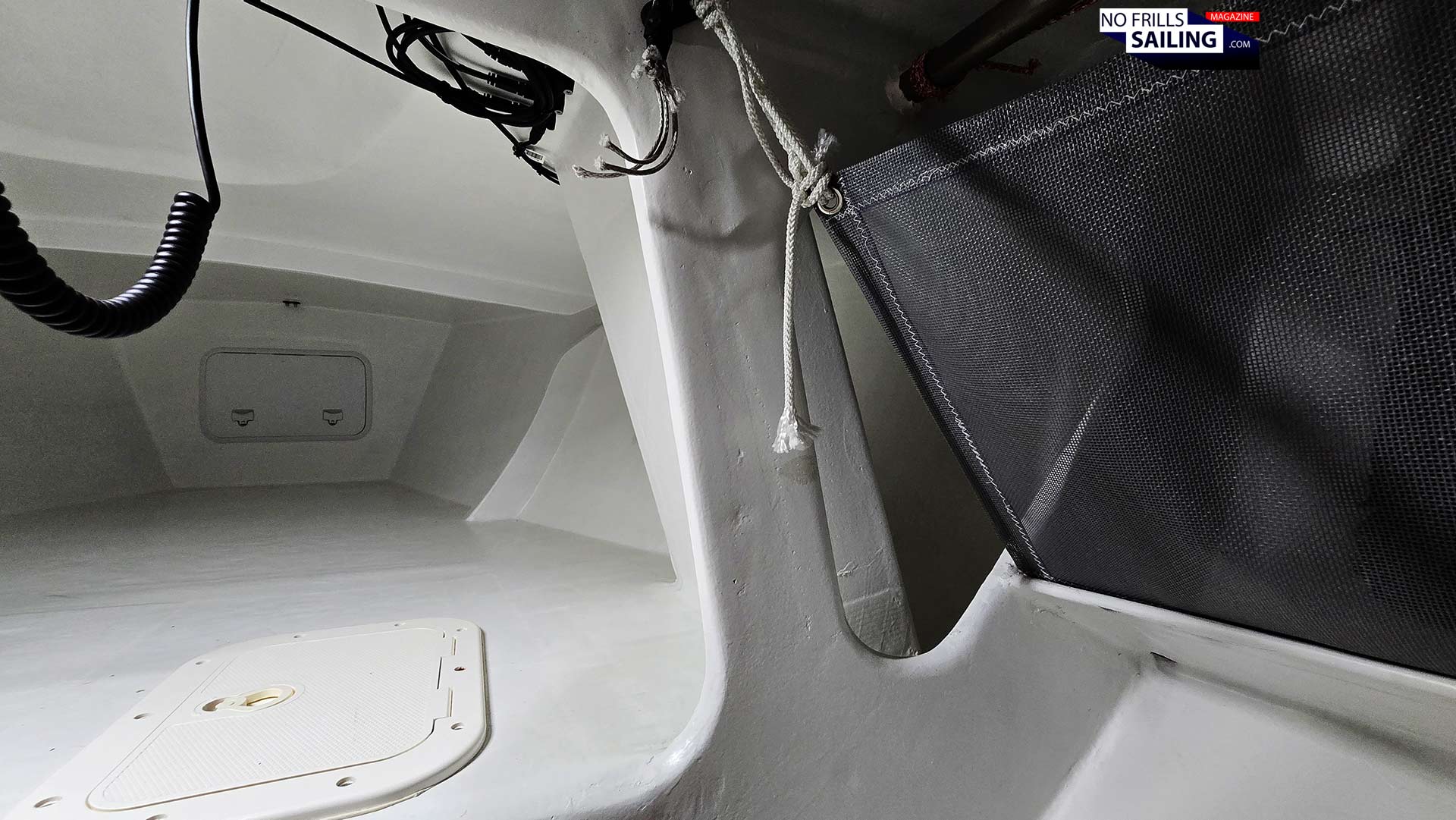
Jannes takes a seat at portside, I wedge myself in to the skipper´s seat vis-à-vis. I am 47 years old now and seriously, as much as I am excited for this kind of adventure and the Mini boats, I can´t even comprehend how strenuous and exhausting it must be to sail this boat! I mean, aboard other Minis I have seen up until now there was at least a bit of “comfort” in terms of a berth, or at least a place to put your sleeping bag on soft sail bags. But due to the canting keel´s operating lashings, MR. BRIGHTSIDE is essentially cut in half – Jannes says that this very position will be the one he is going to use for relaxing and getting some sleep when sailing.
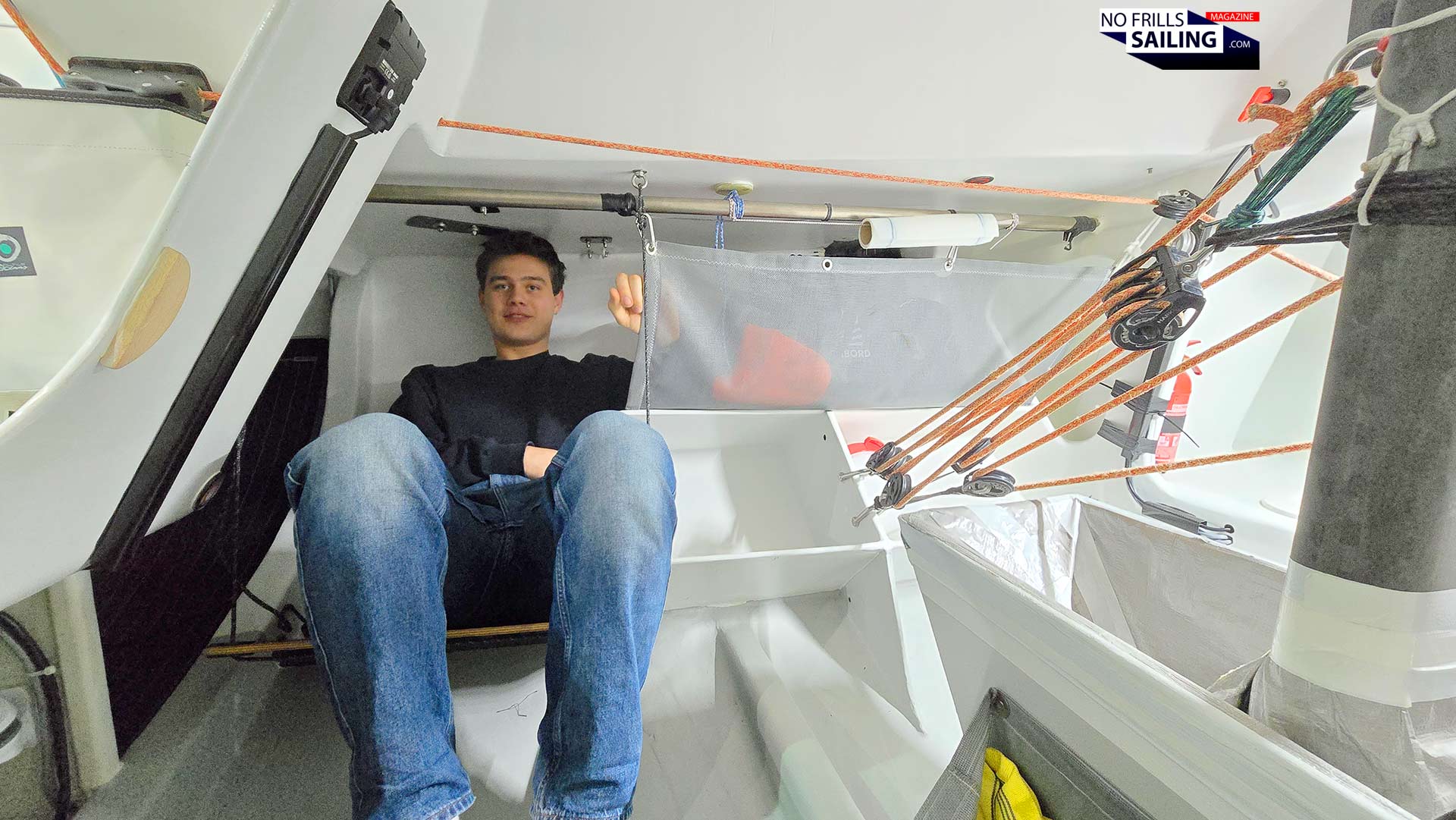
Well, my back started to hurt by just sitting still down here: No comparison to what this place will be looking like when surfing over the waves downwind in the Atlantic Ocean! Jannes is very optimistic and full of energy: This is his boat, this is what he will be working with. He is so sure and determined – the blessing of being young. I am really happy for him: Just finished his A-levels, starting to study at the university, this is the best time in your life to tackle such an adventure: No kids to take care of, no commitments, no debts to anyone. Best decision ever, Jannes – I envy you, be sure!
Tubercle leading edge rudder blades
As we conclude the explanatory tour of the foils of MR. BRIGHTSIDE, which is a surprisingly simple lashing, we proceed back into the cockpit of the boat. I remember very well when Nautor´s Swan introduced their then-new tubercle leading edge rudder blades in he ClubSwan 50. It was kind of a sensation, but later remained limited to one-offs and racing yachts. This design didn´t make its way into production boats. Janne´s racer has them – and I seize the chance to gather a closer look.
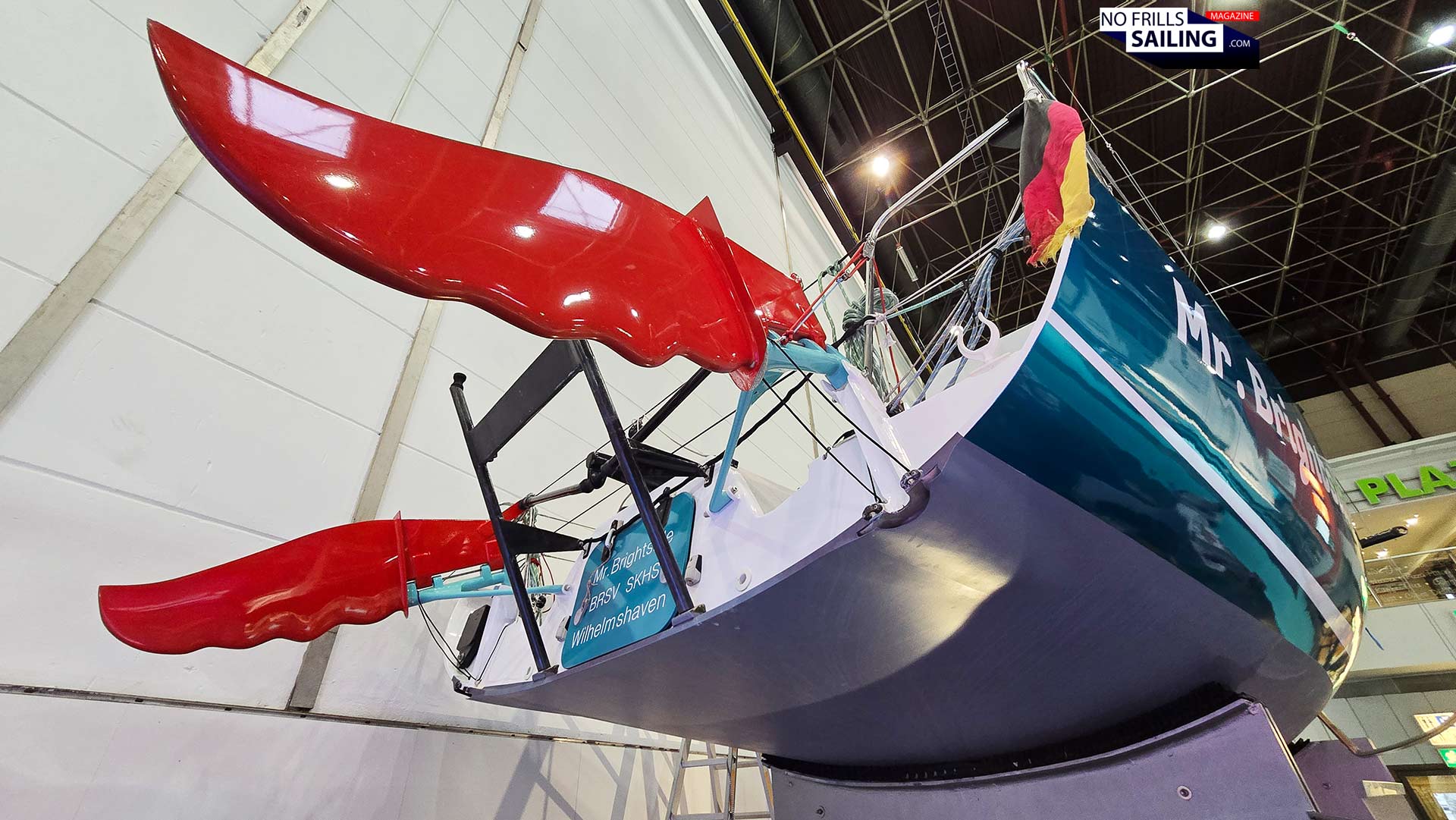
What are the advantages of such a design? It is said that leading-edge tubercles, copied from whale-fins, allow higher stall angles or delay the stall of a blade sufficiently. Also, the tubercles are supposed to reduces vortexes and ventilation propagation, making the boat able to being steered more smoothly, more precisely and safer. The boat will become more predictable in handling – which is a huge asset when sailing fast! The rudder blades of MR. BRIGHTSIDE are definitely a work of art! These are made just beautifully, I like the organic design. Also, if you look closely, you can see that the underside of the Mini´s hull has been re-designed and formed in such a way that the connection between rudder and hull becomes as seamless as possible, further reducing vortexes and drag. Nice!
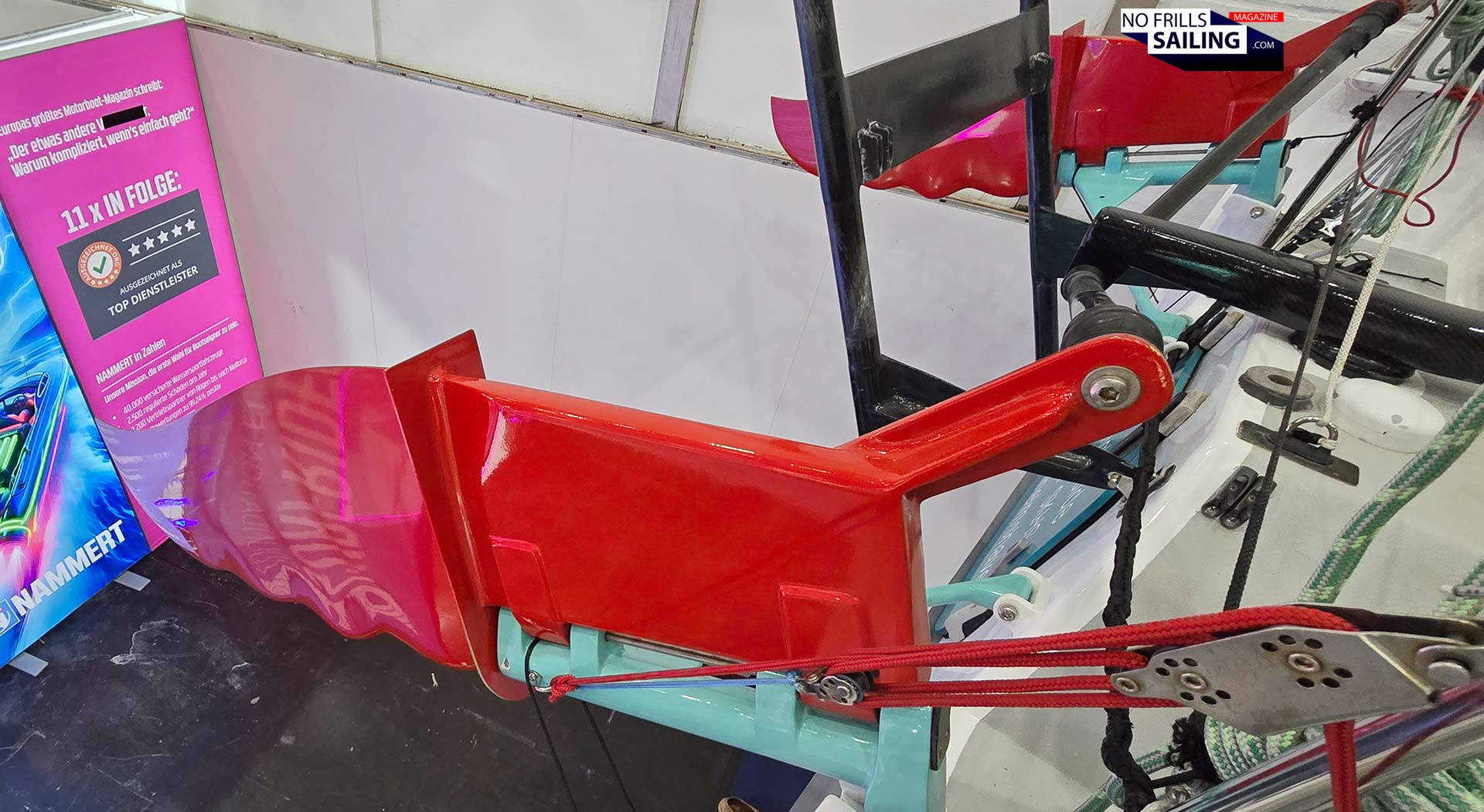
The mechanics for lowering and raising the rudders are very simple: Again, “keep it simple” should always be the main philosophy in any boat. Same goes for rigidity: The steering mechanics remind me of the Mini´s bigger sisters, the Class 40 or IMOCAs. Thick rods and levers, designed to take on the huge loads when holding the boat on course, but also to withstand certain abrupt spikes when hitting floating objects when underway. It´s both slender and robust, a fine display of mechanical engineering and boatbuilding craftsmanship.
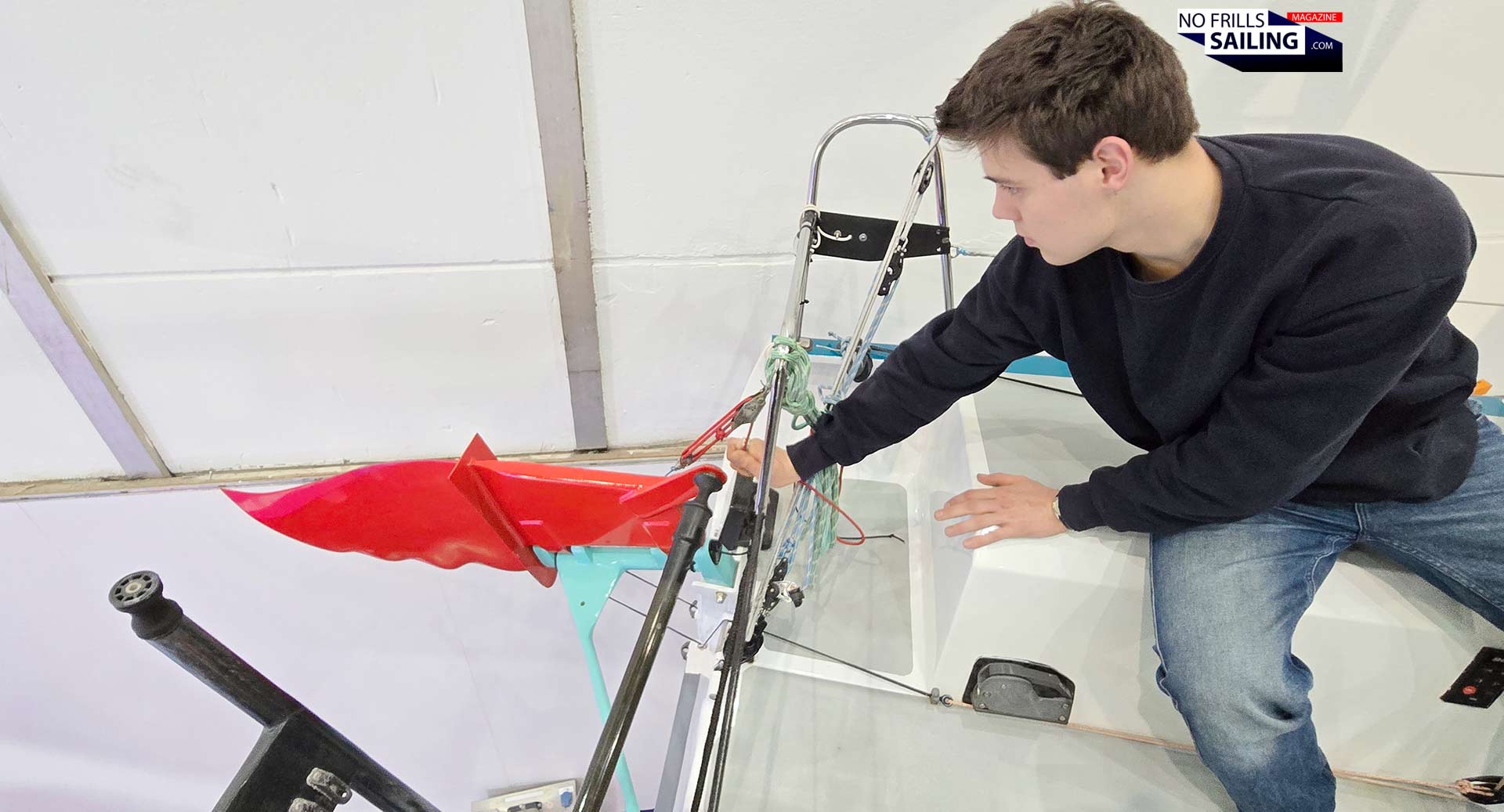
Jannes demonstrates how he lowers one of them blades into the water and quickly retrieves it again when not needed. For most part of the Mini Transat race, the boats are racing downwind, often under Gennaker or even double foresails. In this, despite sailing on a running course, a constant heeling is achieved, making the windward rudder the one that goes up as it won´t contribute all too much to sailing and steering, rather even more inducing drag. The leeward rudder will remain the sole prime blade used for steering.
A true racing boat
It is apparent that Jannes´s boat had undergone significant “tuning” by her previous owners. One of which concerns the cockpit very much. As you can see on the picture below, the mainsheet traveler track has been re-located from being at the stern more into the middle of the cockpit. According to Jannes, this allows for better handling ergonomics when underway. Sitting on the coamings, the skipper now has everything in front of him: Winches, mainsheet traveler lines and the mainsheet itself. That´s on the pro-side.
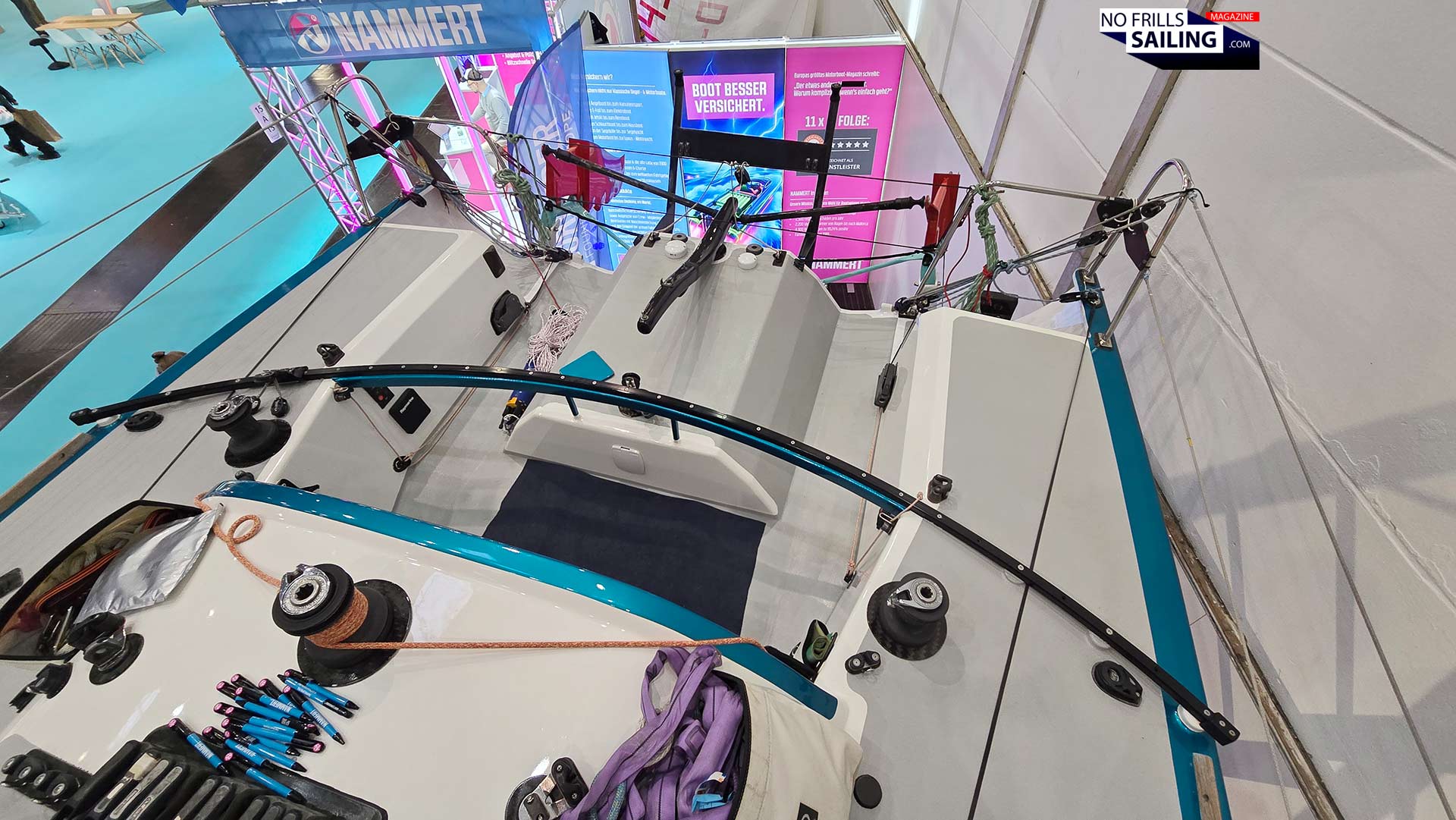
But on yachts, every pro comes with a price to pay. In case of MR. BRIGHTSIDE that´s again cutting the cockpit area into two halves. It´s the same as below deck due to the canting keel´s lashings, above deck the already limited cockpit area is now even more cramped. Jannes nods but says that this is a racing boat – everything she is designed for is to go as fast as possible. Comforts of the skipper are of no concern at all. It´s nevertheless very interesting to look at it: The 2027-edition of Mini Transat will go to Salvador de Bahia in Brazil, first time not finishing in the Caribbean. One month aboard this racing bath tub? Sounds amazingly crazy, right?
Even more stability: Canting keel!
Last detail I was especially interesting to see was the canting keel. Usually these types of appendages are fitted to much larger vessels, notably the IMOCA Class among them. The idea is to have a ballast that can be swung off the centerline of the boat – that’s why the term “fixed keel” for our ordinary yachts. By doing so, the lever counteracting the heeling tendency of the boat is increased almost twice – stability and upright-most sailing guaranteed.
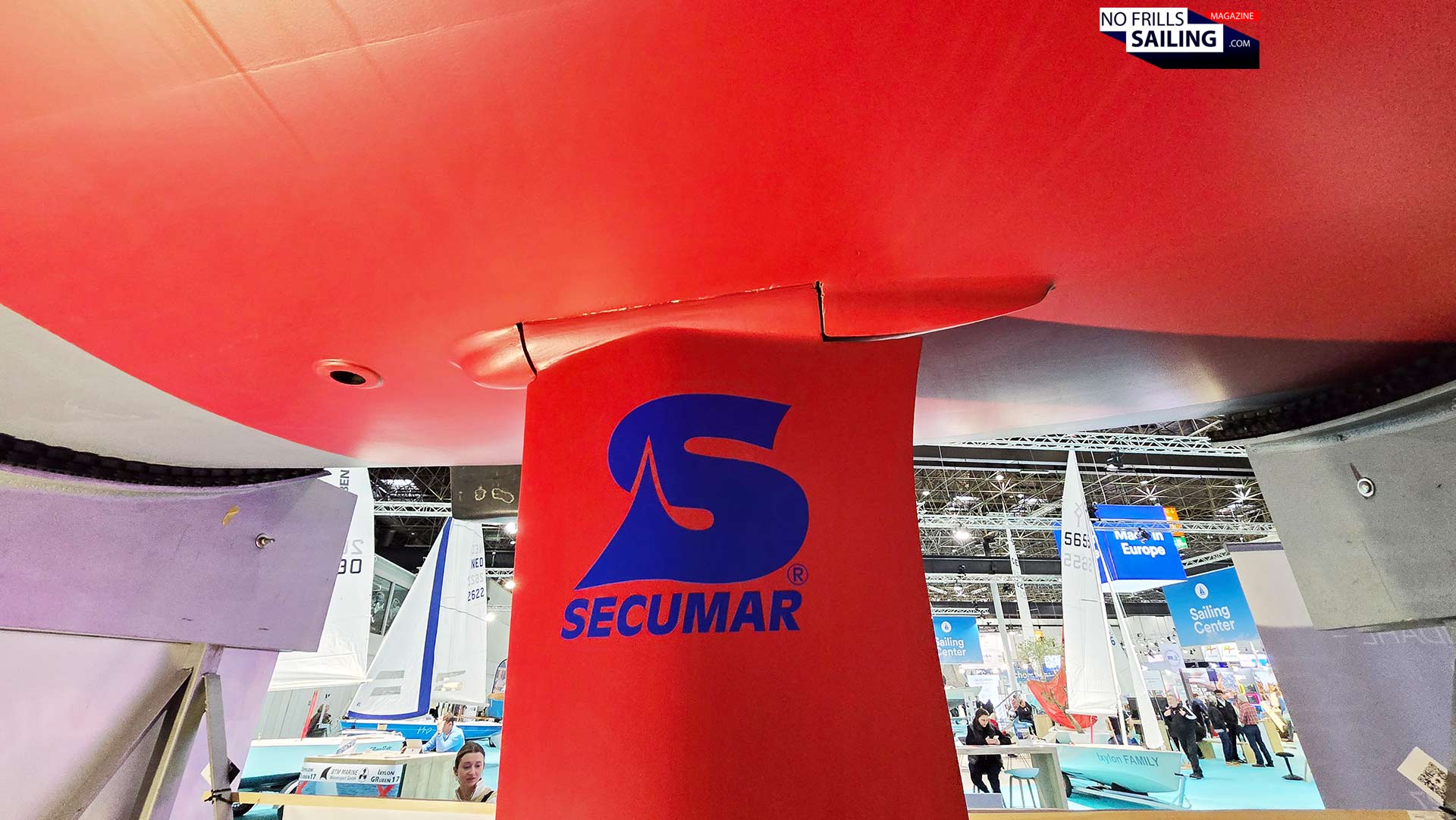
MR. BRIGHTSIDE´s canting keel is a deep carbon fiber fin with a narrow beaver-tail lead bomb attached. It´s also a very beautiful piece of craftsmanship and engineering. Rigid, sturdy and delicate at the same time. As the class rules stipulate, both the keel and surrounding hull area as well as the rudder blades are painted in signal-red. I am especially happy that Secumar turns out to be one sponsor of Jannes´s campaign, making sure he is equipped with the best safety stuff possible. But how is a canting keel operated?
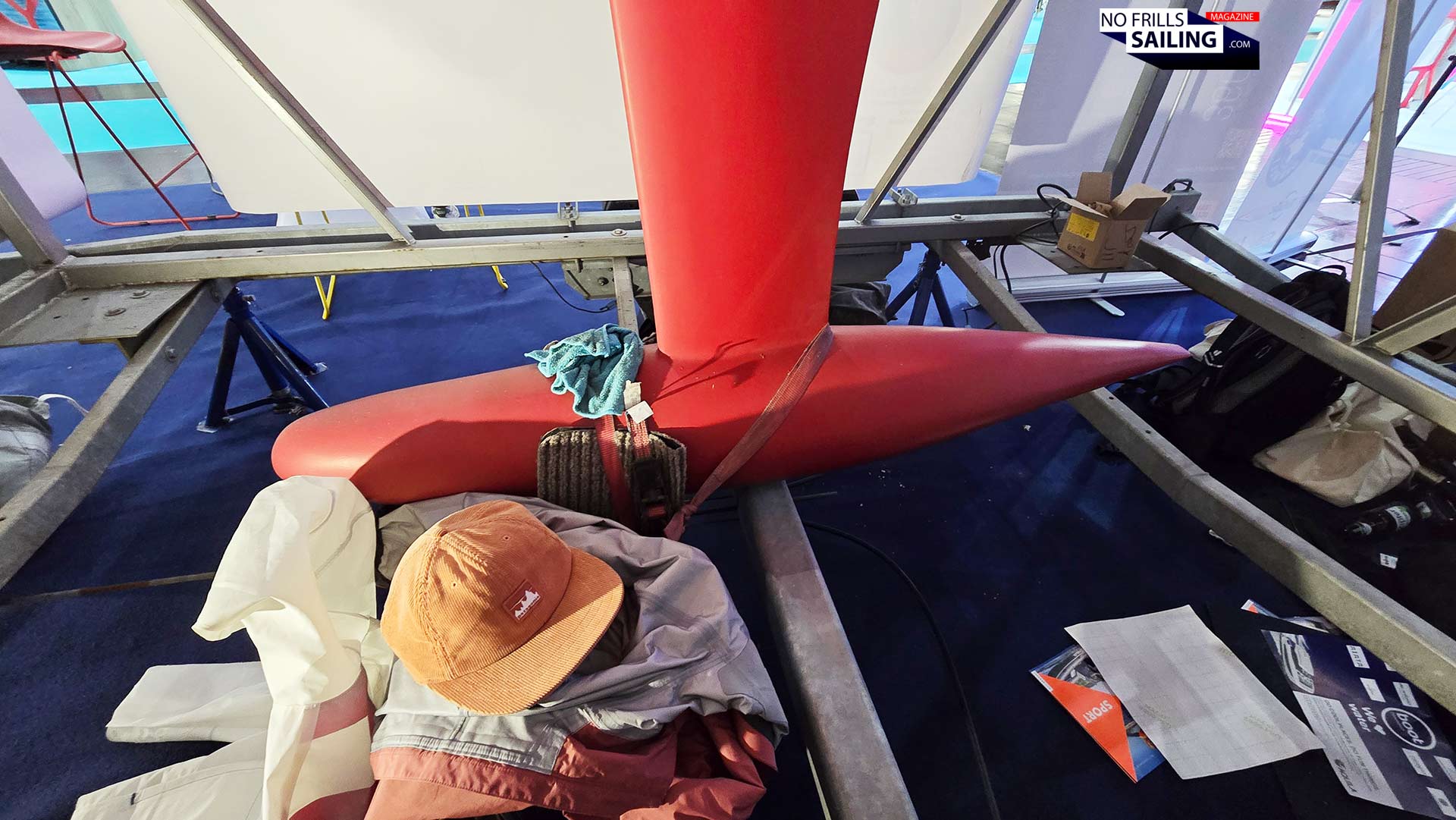
As you can imagine, having such a high mass of ballast attached to such a long lever requires a lot of power to move. On modern IMOCAs and Class 40-boats this is done by pushing a button and utilizing hydraulics, this is of course no option for the Mini 650. Even for this little boat, the weight of the ballast for a Classe Mini 650 is set to weigh around 400 kilograms. This includes both the bulb at the end of the keel-fin and possible water ballast. Jannes says that his boat is equipped with ballast tanks, but he doesn´t use them. It´s also said that foil-assisted Minis, by creating lift and counter-acting heel – often have less weight in the keel, sometimes reducing ballast to 300 kilograms.
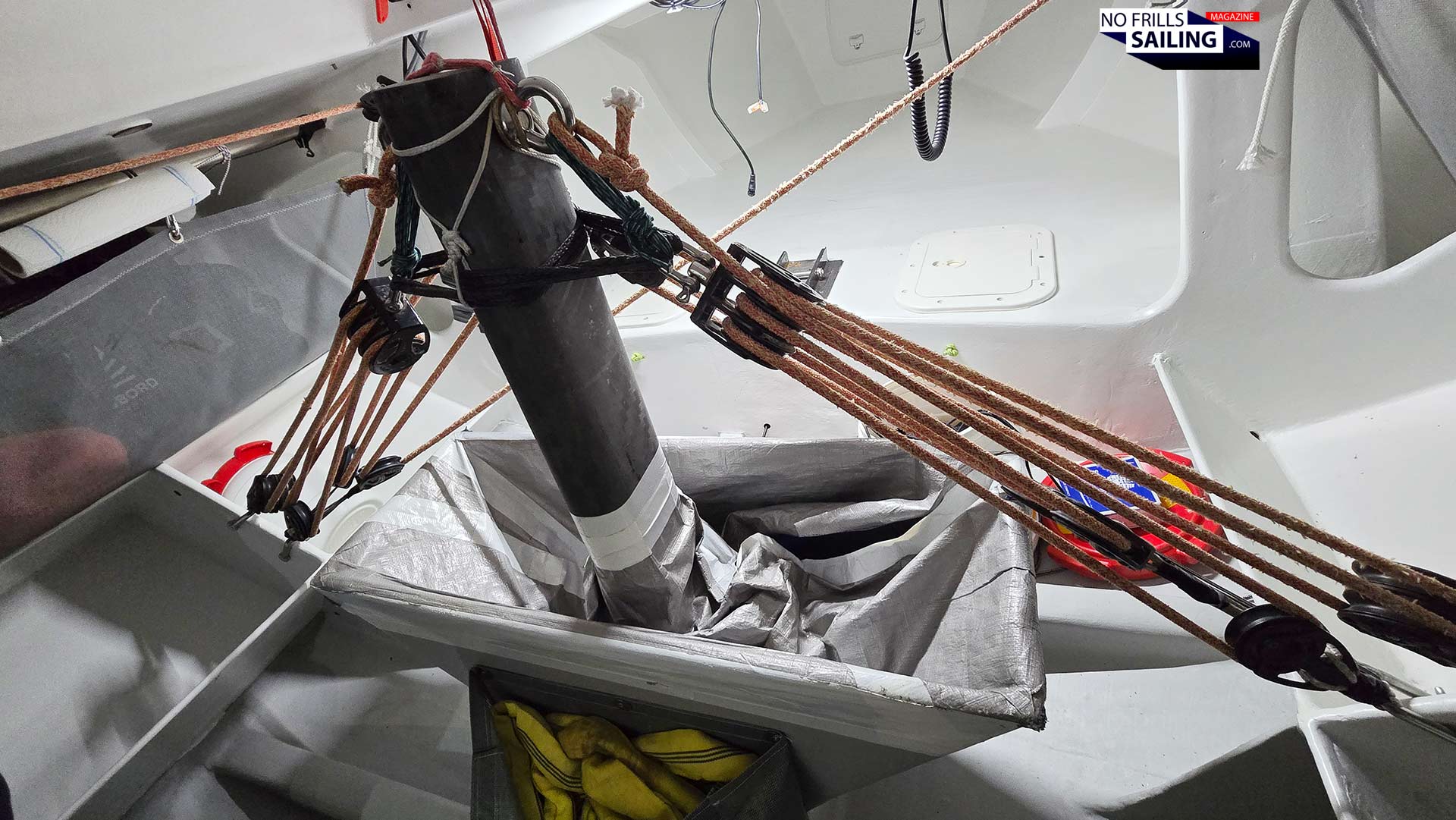
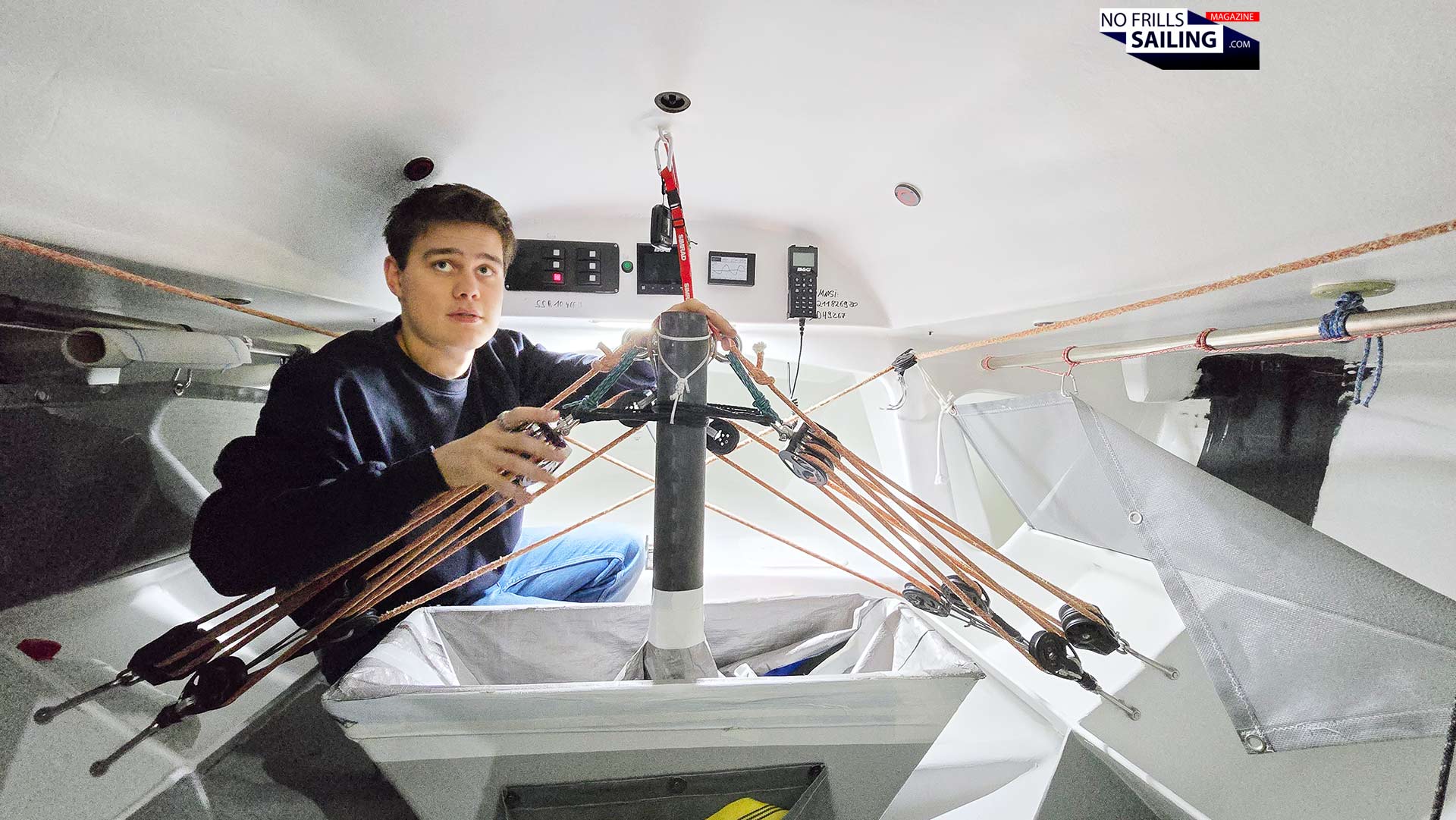
In any case, this heavy bulb must be moved. Thanks to physics, snatch pulleys do the trick here. As you can see, two massive hoists will bring the keel to a maximum canting angle of around 40 degrees to windward. The pulley is operated from the cockpit (via winch) and secured by a simple sheet block. Because of the 1:6 reduction ratio, the supposed 300 kilograms only amount to 50, which is quite easy to work with. Fascinating, isn´t it? It´s even rigid enough so that the whole boat can be lifted by attaching straps to the caning keel´s upper part …
A tight schedule for the skipper
Jannes knows his way inside out on MR. BRIGHTSIDE. This young man is full of joy and enthusiasm, yet there´s also a kind of skill and understatement, which is interesting given his very young age. For him the race is on: There´s the whole qualifying process to pass and of course, before, getting to know his boat under sails as she has been bought only a few months ago. Additionally, he has set up his fundraising campaign – because, as we all know – sailing is a very expensive sport. So, if you seek a representative for your brand, company or product, consider his sailing adventure as the perfect backdrop for communications …
It´s around 100.000 Euros he needs to sustain his dream of accomplishing the Mini Transat 2027. Apart from that, his ambitions grow even bigger: Limiting the negative impact of his sailing ambitions on the planet is if utmost concern for him. Launching no less than the most sustainable Mini Transat-campaign to date is a big issue for the young skipper. He is gathering all data possible to try and offset the effects elsewhere. Putting his boat into a container to bring it back from Brazil? Not for him: Jannes plans to sail back to Europe with MR. BRIGHTSIDE. Which, in my opinion, could turn out to be the far more interesting sailing adventure.
Thanks for the walkthrough, Jannes – this was so interesting! We loosely agree on a meeting in February when the boat will be brought to the Baltic Sea for first sea trials before he sets off to Lorient. If weather conditions permit, I will try to at least have a little dash out around the Luebeck Bay area to see MR. BRIGHTSIDE under canvas – and maybe get a taste of what it´s like to pushing her into foiling mode. Wish me luck!
More Classe Mini 650-articles you also might want to check out:
Mini Transat with 650-skipper Lizzy Foreman
Building the Dudley Dix-Mini in your own shed, parts 1 and 2
Sailing a scow-bow Vector Mini